
Colorful Diapers smell bad? Soon new diapers lock not just liquid but odour too: Study

Activated carbon is used in kitchen fans to eliminate food odours. A new dissertation from the University of Gothenburg shows that activated carbon could also eliminate the smell of urine from diapers. Experiments with the odour molecule p-cresol show that activated carbon, which largely consists of the carbon variant graphene, can lock in odour instead of it being released to the surroundings.

Modern diapers can absorb and lock in a lot of liquid, meaning they do not have to be changed as often as in the past. But odour is still a problem. In a dissertation by Isabelle Simonsson at the University of Gothenburg, she looked at a specific odour molecule and discovered that in the right setting, it can choose to remain in the liquid and not cause foul odour.

“The odour molecule is called p-cresol and is an organic, volatile hydrocarbon. It’s what causes the strong odour associated with pig farming and horse stables. p-Cresol is also found in human urine and is hydrophobic, which means it avoids water. That’s one of the reasons why it is released from urine into the surrounding air, in other words, that the odour spreads,” says Isabelle Simonsson.
Electrically charged surfaces can adsorb odour

Manufacturers of diapers and other hygiene products have long known that an electrically charged surface can adsorb odour. There is even an old patent covering this, but a great deal has involved conducting tests on different materials and seeing what works. The tests have not resulted in a solution.

The main goal of the dissertation is to investigate what material properties are important for adsorbing odour molecules in urine. One of the materials used was activated carbon, which is found in almost every kitchen fan these days to neutralise odour; it is also an inexpensive and environmentally friendly material.

Tests with carbon materials that had been manipulated in various ways showed that carbon with the least charge was most effective at attracting p-cresol molecules from the liquid, resulting in less odour. Activated carbon, consisting mainly of the carbon variant graphene, was best at capturing the odour molecule.

“Our findings show a direct ‘ion-specific effect’ on the material’s properties and adsorption capability in synthetic urine. Activated carbon has a large surface area, which is good at adsorbing odour molecules,” says Simonsson.

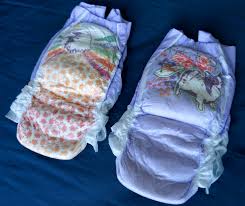
Baby Diapers/wikipedia

Salts in urine enhance the effect

The same effect was not achieved in tests in which p-cresol was dissolved in water, which is due to the salts in urine. The salt ions, including sodium, reduce the water solubility of organic molecules, which then bind to the activated carbon instead.

The dissertation primarily involved fundamental research, but its findings may be useful in many industrial processes, including for the mining industry, water and sewage treatment, the development of new hygiene products, pharmaceuticals and construction materials.

“These results are promising, but there are obstacles to developing an odourless diaper. Like colour. Can you sell a diaper that’s black?”


Kaun Banega Crorepati 14: Visually impaired contestant is a fan of Big B’s ‘Black’ movie

Mumbai, Sep 12 (IANS) A visually impaired contestant Aneri Arya shared with megastar Amitabh Bachchan that she is a big fan of his 2005 movie ‘Black’ starring Rani Mukerji on ‘Kaun Banega Crorepati 14’.

Directed by Sanjay Leela Bhansali ‘Black’ released in 2005. It also stars Shernaz Patel and Dhritiman Chatterjee in supporting roles. The film narrates the story of Michelle, a deaf-and-blind woman, and her relationship with her teacher Debraj, an elderly alcoholic who himself later develops Alzheimer’s disease.

Arya also says that she connects with the story of the film as she herself is blind and there is huge support she gets from her teacher.

She mentions: “Sir, you have played the role of a teacher in the film (Black) and with your influence, Rani Mukerji’s character was able to express herself and grow. Just like that, even I have a teacher, my PhD guide, Dr Sunil Shah.”

Kaun Banega Crorepati 14

For Aneri nothing was more exciting than taking the hotseat and telling Big B about her favourite book to movie and food.

Hailing from Surat, Gujarat, the 26-year-old ‘KBC 14’ contestant is an assistant professor of English at Shree Bhaikaka Sochitra Government Arts and Science College. During a conversation with the host she gives credit to her parents for helping her to complete her studies and also speaks about Gujarati cuisine.

Aneri says: “Mr Bachchan and I shared a lot of conversations, I told him about my favourite book, ‘The Metamorphosis’ by Franz Kafka and my favourite film of his, ‘Black’. My parents also conversed with him during the show and my mother told him about sending me out of the nest while my father told him about how proud he is of my journey.”

Aneri Arya will be taking the hotseat in the quiz-based reality show ‘Kaun Banega Crorepati 14’ on Sony Entertainment Television.

The environmental injustice of beauty

Women of color have higher levels of beauty-product-related chemicals in their bodies compared to white women, according to a commentary published today in the American Journal of Obstetrics and Gynecology. The authors say even small exposures to such toxic chemicals can lead to health problems. They go on to say that reproductive health professionals must be prepared to counsel patients who have questions about such exposures. And health professionals can also promote policies that will protect women, especially women of color, from harmful chemicals in cosmetics and other personal care products.

“Pressure to meet Western standards of beauty means Black, Latina and Asian American women are using more beauty products and thus are exposed to higher levels of chemicals known to be harmful to health,” says Ami Zota, ScD, MS, an assistant professor of environmental and occupational health at Milken Institute School of Public Health (Milken Institute SPH) at the George Washington University. “Beauty product use is a critical but underappreciated source of reproductive harm and environmental injustice.”

Zota and Bhavna Shamasunder at the Occidental College in Los Angeles co-authored the commentary.

The authors point out that the beauty product industry is estimated to bring in more than $400 billion globally. They also say that previous studies have documented that Black, Latina and Asian-American women spend more on beauty products than the national average, often because of marketing practices that emphasize a European standard of beauty.

For example, women of color buy products like skin lightening face cream which often contain hidden ingredients such as topical steroids or the toxic metal mercury, Zota says.

Black women are known to suffer more anxiety about having “bad hair” and are twice as likely to experience social pressure to straighten their hair. Hair products like straighteners or relaxers are likely to contain estrogen and can trigger premature reproductive development in young girls and possibly uterine tumors, the commentary says.

Other studies show that beauty and personal care products contain multiple, hidden chemicals that are linked to endocrine, reproductive or development toxicity. They can be especially dangerous for women age 18 to 34, the authors say. Women in this age group are known to be heavy buyers, purchasing more than 10 types of beauty products per year. Such women and their offspring may experience heightened vulnerability to such chemicals, especially if exposure occurs during sensitive periods such as pregnancy.

Marketing efforts have also encouraged Black women to use douching products with messages about uncleanliness and odors. A study done by Zota and colleagues in 2016 found that in a national sample of reproductive age women, those who reported douching frequently, had 150 percent higher exposures to a harmful chemical known as DEP. This chemical, often found in fragranced beauty products, may cause birth defects in babies and has also been linked to health problems in women, Zota says.

At the same time, research suggests that low-income women of color are more likely to live in an environment with high levels of pollutants contaminating the air, soil and water. Thus women of color are not only heavy users of beauty products but may also be exposed to toxic chemicals simply by living in a more polluted home or neighborhood.

“For women who live in already polluted neighborhoods, beauty product chemicals may add to their overall burden of exposures to toxic chemicals, says Bhavna Shamasunder, as assistant professor in the Urban and Environmental Policy Department at Occidental College. “Certain racial/ethnic groups may be systematically and disproportionately exposed to chemicals in beauty products since factors such as institutionalized racism can influence product use.” In the commentary, the co-authors warn that multiple exposures to chemicals in beauty products and in the environment add up and can interfere with healthy reproduction and development.

Health professionals can advance environmental justice by being prepared to counsel their patients about the risks of exposures to hidden chemicals in beauty products. And the authors say that health care providers and researchers should call for health protective policies such as improved testing and disclosure.