London’s Far-Right Rally Sends Shockwaves Through South Asian Communities

London witnessed one of its most dramatic confrontations between far-right activists and anti-racism campaigners in recent memory this weekend. A march led by Tommy Robinson, founder of the English Defence League, drew an estimated 110,000 to 150,000 supporters, marking it as one of the largest right-wing gatherings in decades.

While organizers claimed even higher turnout, the rally descended into violence, leaving 26 police officers injured, four seriously, and 25 protesters arrested. For South Asians in the UK, who make up one of the country’s largest ethnic minority blocs, the violent rhetoric and size of the rally raise fresh concerns about rising hate crimes, and their identity of belonging.

The event, branded the “Unite the Kingdom” march, was celebrated by Robinson as a “tidal wave of patriotism.” Yet for many observers, the gathering was less about unity and more about exclusion. Anti-immigrant chants, placards criticizing multiculturalism, and speeches targeting Muslim communities made clear the undercurrent of hostility.

ALSO READ: Massive Anti-Immigration Rally in London Turns Violent, 26 Police Officers Injured

South Asians, particularly Muslims of Pakistani and Bangladeshi heritage, were indirectly placed in the crosshairs of this rhetoric. The clash between Robinson’s supporters and counter-protesters organized by Stand Up to Racism only deepened the sense that Britain’s immigrant communities are caught in the middle of an escalating ideological battle.

The South Asian footprint in the UK

According to the 2021 Census (ONS), South Asians form about 9.3% of the population in England and Wales. The breakdown highlights their importance in Britain’s demographic fabric:

  • Indian-origin population: ~1.86 million (3.1%).

  • Pakistani-origin population: ~1.59 million (2.7%).

  • Bangladeshi-origin population: ~0.6 million (1.0%).

  • Sri Lankan, Nepali and other South Asians: collectively ~0.3 million.

These communities are not just statistically significant; they are deeply woven into Britain’s social, cultural, and economic life. Indians form the backbone of the NHS’s medical workforce, Pakistanis and Bangladeshis drive the retail, hospitality, and transport sectors, while newer groups like Nepalis contribute heavily to service and defense.

The London rally revives memories of earlier flashpoints when South Asians became targets of xenophobia. Hate crime data from the Home Office shows a persistent rise in racially and religiously motivated offenses, with spikes often following political events such as Brexit or terror attacks. In 2022–23, police recorded over 109,000 hate crimes, with nearly 70% related to race.

South Asians, especially Muslims and Sikhs who are often mistakenly identified as Muslims, report a heightened sense of vulnerability after such rallies. Grassroots organizations warn that even when physical violence is limited, the psychological toll of being depicted as outsiders can erode trust in institutions and fray inter-community ties.

Generational divides: Young South Asians feel the heat

Second- and third-generation South Asians in Britain are often proud to identify as both British and Asian. However, far-right mobilizations complicate that identity. University campuses have seen rising incidents of racial harassment, and South Asian students often bear the brunt of verbal abuse in public spaces.

Gen-Z South Asians in London spoke on social media about avoiding certain neighborhoods during the rally and expressed anger at being indirectly portrayed as incompatible with Britishness. This sentiment echoes findings from the British Social Attitudes Survey, which noted that younger minorities increasingly feel less secure about their status in society compared to a decade ago.

The rally also arrives at a politically sensitive moment with elections looming in the UK, where immigration is again a headline issue. Far-right rhetoric influences mainstream parties, pushing them to adopt stricter stances on asylum and border control.

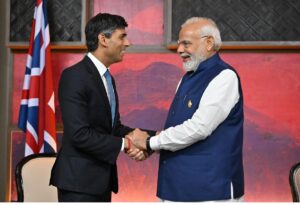
Rishi Sunauk with Indian PM Narendra Modi

South Asian communities, however, are no longer passive observers. They represent influential voting blocs in constituencies across London, Birmingham, Leicester, and Manchester. Indian-origin politicians like Rishi Sunak, the former Prime Minister, and several Labour MPs of Pakistani and Bangladeshi origin reflect this growing political clout. But, many community leaders worry that rallies like Robinson’s could polarize voters further, hardening stereotypes and complicating their engagement with both major parties.

A global echo chamber

The London march did not exist in a vacuum. Elon Musk’s video address to the rally, criticizing Britain’s political class and invoking free speech anxieties—gave it international attention. Experts warn that far-right groups across Europe and North America are increasingly coordinated, sharing slogans, strategies, and even celebrity endorsements.

For South Asians, this global networking of extremist rhetoric is alarming. Indian, Pakistani, and Bangladeshi diaspora communities in the U.S. and Canada have already faced the spillover effects of anti-immigrant sentiment. Analysts fear that what starts on London’s streets can embolden similar rhetoric abroad, further tightening the pressure on immigrant communities.

ALSO READ: U.S. Immigration Policy Shift: No Renewal for Humanitarian ‘Migrant Parole’ Program

Despite anxieties, South Asian communities have demonstrated resilience in the face of hostility. Community organizations, interfaith groups, and student associations mobilized rapidly during the London rally, ensuring counter-demonstrations remained visible and peaceful.

Several South Asian MPs condemned the violence, while business leaders highlighted the economic contributions of migrants. The NHS, universities, and city councils used the moment to reaffirm the importance of diversity in sustaining Britain’s institutions.

The London rally was framed by organizers as an assertion of patriotism, but for Britain’s South Asians, it was a stark reminder that questions of belonging are far from settled. While the community has built a visible and influential presence across sectors, the persistence of far-right mobilization threatens to undo decades of integration.

For now, South Asians are cautiously navigating rising hostility while shaping Britain’s future through political engagement, cultural leadership, and economic dynamism. As one activist in Leicester put it after the rally: “They want us out, but Britain cannot run without us.”

Elon Musk Followers Reach 200 Million Mark on X, First in Twitter’s Journey

Tech billionaire Elon Musk has become the first person to reach 200 million followers on X, the social media platform he acquired in October 2022 for $44 billion. Musk, the owner of X, now leads in followers ahead of former US President Barack Obama, who has 131.9 million, and football superstar Cristiano Ronaldo, with 113.2 million followers as of October 3.

Other celebrities in the top five include singer Justin Bieber, with 110.3 million followers, and Rihanna, who ranks fifth with 108.4 million. Indian Prime Minister Narendra Modi recently crossed the 100 million mark.

Musk recently revealed that X has over 600 million monthly active users (MAUs) and around 300 million daily active users (DAUs). However, there have been reports suggesting that a significant number of Musk’s followers may be inactive or fake accounts, though no official statement has been made regarding these claims.

According to Musk, X has evolved into “the group chat for Earth,” with global users driving its traffic. He has expressed ambitions of transforming X into an “everything app,” enabling users to share media, make payments, and engage in various other activities.

Despite this growth in users, X faces financial challenges. Earlier this week, Fidelity, a global investment firm, cut the value of its stake in X by 78.7%, implying that the platform’s current value is around $9.4 billion, significantly lower than the original $44 billion purchase price. Neither X nor Musk has commented on this valuation report.

SpaceX Launches Double Satellite, Deploys 46 Satellites in Record Time; Crew to Return Tomorrow [Watch Live]

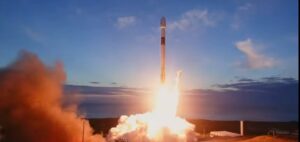
US private space agency SpaceX completed the flawless deployment of 46 Starlink internet satellites into low-Earth orbit within a span of just six hours on Monday, heralded as the Elon Musk-owned firm’s reusable Falcon 9 rocket embarked on its mission from Space Launch Complex 40 (SLC-40) at Cape Canaveral Space Force Station in Florida.

SpaceX and NASA are targeting as early as Monday, March 11 at 11:05 a.m. ET for Dragon to autonomously undock from the International Space Station. After performing a series of departure burns to move away from the space station, Dragon will conduct multiple orbit-lowering maneuvers, jettison the trunk, and re-enter Earth’s atmosphere for splashdown off the coast of Florida almost 19 hours later at approximately 5:50 a.m. ET on Tuesday, March 12.

Live webcast coverage of Crew-7’s return to Earth will begin on X @SpaceX about 15 minutes prior to undocking.

Watch live.

Aboard the spacecraft will be Crew-7 NASA astronaut Jasmin Moghbeli, ESA astronaut Andreas Mogensen, JAXA astronaut Satoshi Furukawa, and Roscosmos cosmonaut Konstantin Borisov, who flew to the space station on Dragon when Falcon 9 launched the spacecraft from Launch Complex 39A (LC-39A) at Kennedy Space Center in Florida on Saturday, August 26.

The company confirmed in an official statement that the first batch of 23 satellites blasted off at 4:35 am IST, marking the 11th successful flight for the first-stage booster. Notably, this booster has previously supported missions such as Crew-5 and GPS III Space Vehicle 06. Shortly after liftoff, the Falcon 9’s first stage returned to Earth, executing a flawless vertical landing on the SpaceX drone ship “Just Read the Instructions” in the Atlantic Ocean.

SpaceX launches 60 Starlink satellites June 3, 2020 / SpaceX

SpaceX confirmed the deployment of the initial 23 Starlink satellites via Twitter approximately an hour after liftoff.

Subsequently, the second set of 23 Starlink satellites launched at 9:39 am Indian time, marking the 17th flight for its first stage booster. This booster has a notable history, having supported missions like Sentinel-6 Michael Freilich and DART. Following separation, the first stage is slated to land on the droneship “Of Course I Still Love You” stationed in the Pacific Ocean.

These accomplishments come on the heels of SpaceX’s recent launch of 23 Starlink satellites. With over 5,000 operational Starlink satellites currently in orbit and approval to launch up to 12,000, SpaceX continues to push the boundaries of satellite internet connectivity.

In 2024 alone, SpaceX has already completed 22 orbital missions, with plans to conduct a staggering 144 launches by year’s end.

Elon Musk on selling spree: Puts Twitter statue, 100 other items at HQ on auction

Elon Musk is bent upon squeezing Twitter assets as he has placed hundreds of items from its San Francisco headquarters up for auction online, including the bird statue and other office assets.

In December 2022, after Musk revealed that Twitter spends $13 million a year on food service, and now the company said it will be selling at least 265 kitchen appliances online, and the bidding will start at just $25.


The auction is online on the Heritage Global Partners’ website, the company administering the auction. Even, the company’s neon Twitter Bird light electrical display is currently priced at $22,500 with just under 10 hours left to bid.

A 190 cm planter in the shape of an @ symbol is already fetching $8,000. Moreover, the blue bird statue is currently priced at $20,500.

The auctions also include some of the kitchen appliances, including several high-end La Marzocco espresso machines and a fizzy drink fountain complete with an ice dispenser.

Twitter

The microblogging platform is also offloading a pair of Herman Miller coffee tables, which currently cost $2,200.

Last week, Musk, who failed to pay the rent for Twitter headquarters in San Francisco, asked its remaining staff in Singapore to stop coming to the office and work remotely as the company has reportedly failed to pay the monthly rent.

Twitter has been sued as it failed to pay $136,250 rent for its office space in San Francisco.  Now, the company is planning to shed its co-working spaces in Delhi and Mumbai after Bengaluru and Singapore offices.

Starlink satellite link is global now, declares SpaceX chief Elon Musk

Tech billionaire Elon Musk on Monday announced that Starlink, the satellite Internet division of his rocket company, is now active on all the continents, including Antarctica, connecting the entire world on one internet provision at a speed of around 50-200 Mbps.

On the microblogging site Twitter, Musk wrote, “Starlink is now active on all continents, including Antarctica. Another batch with lasers reaches orbit” he said after the deployment of 54 Starlink satellites was confirmed by the company.

Recently, a report said that the McMurdo Station in Antarctica has nearly 1,000 people living and working there during the summer and they already have satellite internet, which is not reliable in rough conditions.

There is currently a 17 Mbps link for everyone, according to the US Antarctic Program. But with Starlink, the internet service will be better and not patchy like earlier, the report had said.

The McMurdo Station blocks scientists from using Netflix and video calls, with the exception of Skype or FaceTime sessions once a week at a public kiosk or mission-critical communications.

Twitter saga continues after Zatko revelations; Parag ridicules false claims

Twitter’s Indian-origin CEO Parag Agrawal has lashed out at the company’s former security chief Peiter ‘Mudge’ Zatko terming his claims false and riddled with inaccuracies.

Reacting to ongoing saga over bots controversy with Zatko, who was fired in January, he said, “We are reviewing the redacted claims that have been published, but what we’ve seen so far is a false narrative that is riddled with inconsistencies and inaccuracies, and presented without important context.”

Zatko claimed that Twitter lied about the actual number of bots on its platform and misled federal regulators about users’ data safety, substantiating Tesla CEO Elon Musk’s takeover bid and withdrawal from the move.

“There are news reports outlining claims about Twitter’s privacy, security, and data protection practices that were made by Mudge Zatko, a former Twitter executive who was terminated in January 2022 for ineffective leadership and poor performance,” Agrawal said in an internal message sent to the staff.

Zatko also alleged that the Indian government forced the micro-blogging platform to hire a “government agent” and allow him access to users’ sensitive data, a claim that was trashed by Twitter.

Agrawal said that this is frustrating and confusing to read, “given Mudge was accountable for many aspects of this work that he is now inaccurately portraying more than six months after his termination”.

“But none of this takes away from the important work you have done and continue to do to safeguard the privacy and security of our customers and their data,” he told employees.

Zatko’s disclosure before SEC

According to Zatko’s disclosure before the US Securities and Exchange Commission (SEC), Twitter has “major security problems that pose a threat to its own users’ personal information, to company shareholders, to national security, and to democracy”.

Agrawal said that given the spotlight on Twitter, “we can assume that we will continue to see more headlines in the coming days — this will only make our work harder. We will pursue all paths to defend our integrity as a company and set the record straight.”

SpaceX launches 60 more Starlink satellites, Internet to become much cheaper now

Elon Musk-run SpaceX on Wednesday, November 25, 2020, launched another successful mission carrying 60 more Starlink satellites on its Falcon 9 rocket into low-Earth orbit that will join the rest in beaming affordable Internet. The reusable Falcon 9 rocket, which made a record-breaking seventh trip this time, was SpaceX’s 16th Starlink mission and the company has to date launched nearly 1,000 small satellites for its constellation.

SpaceX, in its presentation to the Federal Communications Commission (FCC), claimed that the Starlink internet performance tests showed  download speeds of between 102Mbps to 103Mbps, upload speeds of 40.5Mbps to not quite 42Mbps, and a latency of 18 milliseconds to 19 milliseconds.

“Once these satellites reach their target position, we will be able to roll out a fairly wide public beta in the northern US and hopefully southern Canada,” SpaceX CEO Elon Musk said in a tweet. “Other countries to follow as soon as we receive regulatory approval,” he added.

It is expected that there will be gigabit speeds on offer, meaning up to 1Gbps Internet speeds, with a fairly low latency of up to 25ms.Starlink plans to offer these Internet services for around $80 per month, which is priced at par if not lower than similar speed broadband plans in most countries, including India.

The company is geared up for a public beta of the affordable satellite broadband service.

Elon Musk joins trend, deletes SpaceX, Tesla Facebook pages

As Delete facebook is gaining momentum, SpaceX and Tesla chief Elon Musk has removed the verified official pages of his top companies on Friday, minutes after a comment on Twitter in support of the #DeleteFacebook movement.

Soon after deletion, Elon Musk quipped, “What’s Facebook?”. Earlier, WhatsApp co-founder Brian Acton urged his followers to delete Facebook by tweeting it’s time to delete Facebook following the data breach scam.

Musk, CEO of both SpaceX and Tesla, soon said, “I didn’t realize there was one. Will do.” Within 30 minutes, the verified Facebook pages of SpaceX and Tesla, Inc were removed.

The saga of Facebook has entered an unprecedented phase when its CEO Mark Zuckerberg admitted that more than 50 million users’ data had been compromised by political research firm Cambridge Analytica.

The boycott “#DeleteFacebook” started soon after prompting Musk’s reaction.

Spacex Founder Elon Musk’s BFR Mega Plan Not Practical in 50 Years

Speaking at the International Astronautical Congress in Adelaide, Australia, SpaceX founder Elon Musk revealed the hysteric side of his vision to transport passengers from New York to Shanghai in 39 minutes and sending humans to Mars in 2022 and not beyond as estimated.

“Most of what people consider to be long-distance trips could be completed in less than half-an-hour,” Musk said. Thundering applause to his vision was all that mattered instantly as global media went crazy to give the news headline status and now that the brouhaha subsided, the other side of the story is emerging.

Cost and benefit analysis has shown that the idea is as crazy as the initial failures that had beset SpaceX in its inaugural years.

Here is the time schedule making rounds for the flight at a maximum speed of 27,000 km/hr (17,000 mph) across the world:

* New York to Shanghai in 39 minutes
* Los Angeles to New York in 25 minutes
* Los Angeles to Honolulu in 25 minutes
* London to Dubai in 29 minutes
* New Delhi to Tokyo in 30 minutes

However, airlines industry has remained reluctant to respond as the aviation history is replete with many mega plans going bust before or after take off. The grounding of Concorde supersonic planes is not out of memory of many air travel experts.

Much before the birth of Elon Musk’s SpaceX, Concorde aircraft flew for 30 years from 1976 to 2003 at a cost of $7000 for New York-London flight in 3.5 hours but crashes and safety concerns had cemented its commercaial viability assigning the aircraft to museums now. What Elon Musk is proposing is to bring down the time ten times down but leaving the big safety concern to what he aptly termed Big F**king Rocket.

Other concerns to such aviation plan have not come forth as analysts are still counting on its viability. What one could surmise at this point is that this hysteric plan is beset with flaws of unforeseen hurdles.

First of all, global cities are not in seas as rockets of SpaceX are designed to land on seas and not on landscape. The travel from cities to launchpad is not in Musk’s BFR plan still.

Secondly, safety concerns are given a go-by as SpaceX history is not without failures and no insurance company would come forward to foot the bill as crashes would frequently block any take offs.

Thirdly, the plan is commercially unviable as $2900 for any Trans-Atlantic flight may make the whole idea a luxury or once-in-lifetime experience for many. It may perhaps end up as a tourist attraction than a regular aviation mode.

Finally, Elon Musk is alone in his vision and not backed by other global billiionaires and not certainly by Branson-likes who would go planned to carry out such mega space projects. For now Musk should focus on Mars travel in 2022 than earth-bound unsafe space travel.