“We carry a bag of clothes instead of a school bag,” she told UN News.
Diana and other students shared their eagerness to get back in the classroom, speaking from schools that have been converted into shelters for Gaza’s displaced, where most of the 2.3 million Palestinian residents have been forced to move multiple times during the nearly two-year-long war sparked by the Hamas-led terror attacks and Israel’s subsequent offensive.
Nearly 660,000 children remain out of school, according to the UN agency for Palestine refugees, UNWRA. In one UNRWA school corridor now transformed into crowded living quarters, Diana explained her ordeal.
“We no longer play or learn,” said Diana, a child displaced with her family from the Shujaiya neighbourhood in Gaza City. “There is no education now. We live inside the school, where we are displaced, eating and sleeping.”
A child from Gaza, who lost her father during the war, said “two years of our lives are gone for nothing.”
Searching for food instead of school supplies
Misk lost her father during the war. She said her tragedy was compounded by the loss of learning.
“Two years of our lives were wasted,” she said. “If it weren’t for the war, I would now be preparing for school, buying pens and school supplies. Now, we search for water and food, running after water and community kitchens.”
She fought back tears as she continued.
“We are children,” she said. “We want to live like other children. My father was killed in the war. What is my fault that I became an orphan at an early age? What is my fault that I was deprived of my family and everything?”

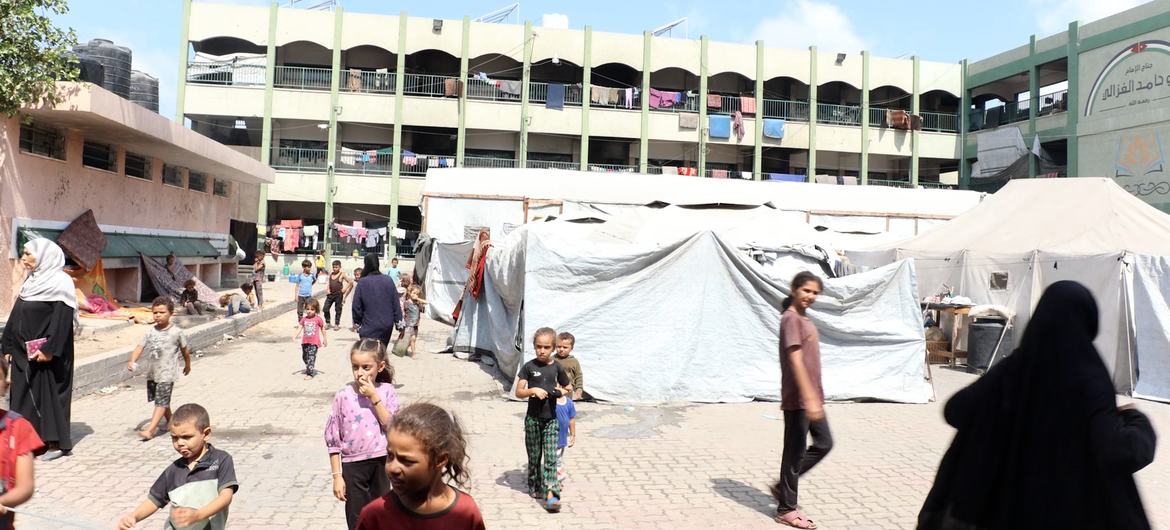
Many displaced people in Gaza have found shelter in UNRWA schools.
‘We were learning and getting diplomas’
Nine-year-old Jana said she wants to go back to studying.
“We live in a school, and we want to go back to studying there,” she said. “We were displaced because of the war and now, there is no food or drink.”
We want to go home and live a normal life. This is not life.
Maya said life before the war “much nicer”.
“Children went to school, learned and received their diplomas,” she said.
Instead of focusing on her homework, Malak searches for plastic and cardboard to use as fire starters for cooking. She hopes the war will end so she can return to school.
“We want the war to end,” she said. “We want to go home. We want to go back to school. We want to do something useful. It’s been so long since we ate healthy food. We want to go home and live a normal life. This is not life.”
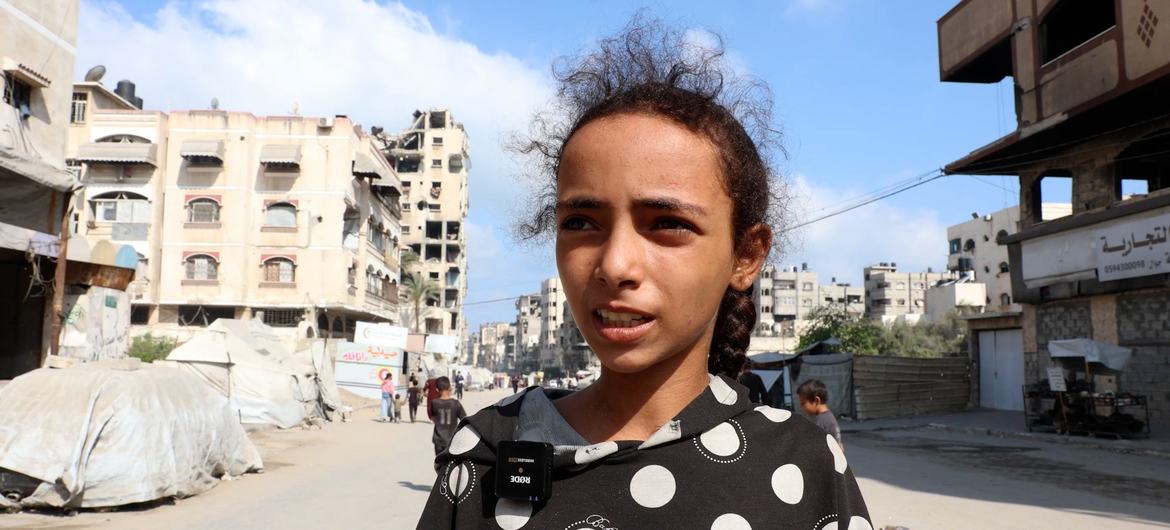
Malak hopes the war will end so she can return to school.
Deprivation of education
UNRWA, established in 1949 to serve Palestine refugees, warned that as students have been deprived of education, they are at risk of becoming “a lost generation”.
“The war in Gaza is a war on children and must stop. Children must be protected at all times,” the UN agency said in a statement, noting that “nearly one million children in the Strip are suffering from profound psychological trauma.”
More than 90 per cent of Gaza’s schools have been either destroyed or severely damaged. Repairing and reconstructing them will take significant resources and time, according to a recent UN report.
West Bank: Classes are silent in Jenin camp
Some 46,000 Palestine refugee children are also set to begin a new school year in UNRWA schools across the West Bank.
The schools remain a safe haven for children, providing them with quality education and support amid escalating violence and displacement, said Roland Friedrich, director of UNRWA affairs in the West Bank.
“This time last year, I opened the school year with children in Jenin camp,” he said.
“Now, these students have been forcibly displaced from their homes, and UNRWA schools in the camp stand silent.”
Of the more than 30,000 Palestinians displaced in the northern West Bank, more than one third are children from the Jenin, Tulkarm and Nur Shams camps.
“In East Jerusalem, for the first time in our history, UNRWA has been prevented from opening its six schools after they were forcibly closed by Israeli authorities in May, affecting some 800 children,” he said.
“Only some of these students have been able to enroll in other schools.”
Violation of children’s right to education
Mr. Friedrich warned that this not only violates the right to education for Palestine refugee children, but also breaches Israel’s obligations as a Member State of the United Nations.
Regardless, UNRWA continues to be the second-largest provider of education in the West Bank after the Palestinian Authority, reaching students through schools, training centres and hybrid learning modalities.
“This back-to-school season, we are proud of our students and teachers who continue to show resilience in the face of hardship,” he said. “We wish all children a school year filled with excitement for learning, friendships and curiosity.”
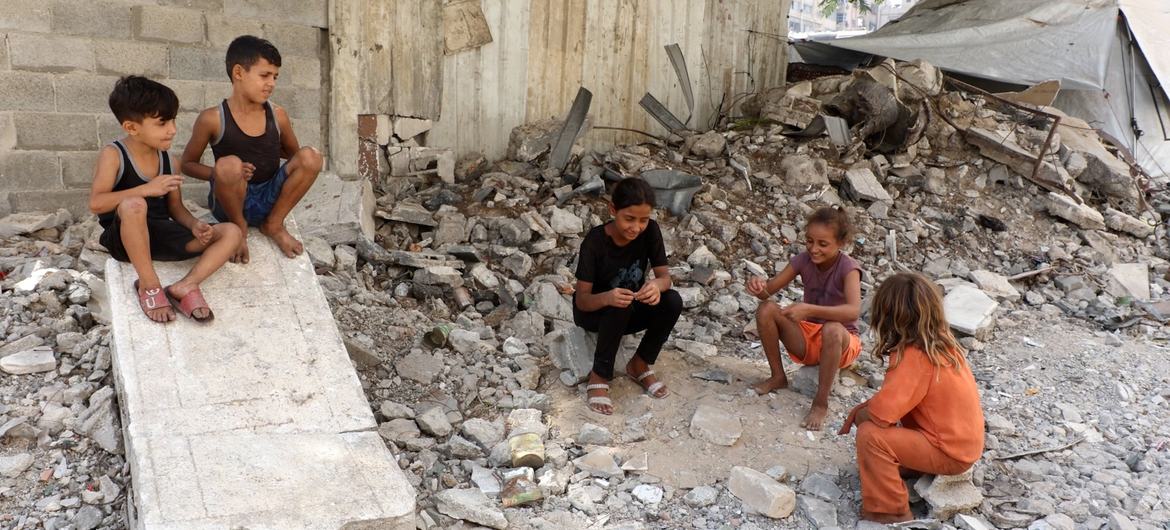
UNRWA said around 660,000 children in Gaza have been deprived of education for the third consecutive year due to the ongoing war.