About Arun Kumar N

Arun has been associated with India International Times since 2018 and he has been a key reporter in covering science and space related stories. He can be reached at arunKnn@indiainternationaltimes.com.

Indigenous youth meet trailblazers ahead of Nelson Mandela Day

Accompanied by their parents and mentors from the midwestern state of Wisconsin, the group wore handmade ribbon skirts and vests featuring seven coloured bands, each symbolizing a Sustainable Development Goal (SDG) of personal significance, such as good health and gender equality.

Also visiting the UN in New York for the first time that day was Brenda Reynolds, a social worker from Canada and a member of the Fishing Lake First Nation. She was joined by her husband, Robert Buckle, and 12-year-old granddaughter Lillian, and wore one of her own ribbon skirts for the occasion.

Ms. Reynolds will be awarded the 2025 United Nations Nelson Rolihlahla Mandela Prize on 18 July. The Prize, presented every five years, recognizes two individuals whose life work exemplifies service to humanity. Ms. Reynolds will receive the award alongside Kennedy Odede, a social entrepreneur from Kenya.

Mirian Masaquiza Jerez, a UN Social Affairs Officer, and Brenda Reynolds, a recipient of the 2025 United Nations Nelson Rolihlahla Mandela Prize, brief Indigenous youth visiting UN Headquarters in New York.

Agents of change

After a UN tour (unanimously enjoyed) and a quick stop for lunch and souvenirs at the UN Bookshop (where one plushie hummingbird was traded for a green turtle named “Coral”), the group settled into a briefing room.

Onstage, Ms. Reynolds was joined by Mirian Masaquiza Jerez, a Kichwa woman from Ecuador and a Social Affairs Officer at the UN Department of Economic and Social Affairs (UNDESA), easily recognized in the UN corridors for always wearing traditional regalia from her Indigenous community of Salasaka,

“Wherever you go to public spaces, wear who you are,” she said.  “The UN is the place to raise your voice. Be free to be who you are.”

Encouraging them to speak their languages and honour their cultures, Ms. Masaquiza urged the young students to see themselves as agents of change.

“You didn’t come by invitation. You came because you belong,” she said. “You are the future. You are the present. As Indigenous, we have the space. Use it.”

A painful past

Ms. Reynolds shared her personal story with the group, reflecting on her early career as a counsellor at Gordon’s Indian Residential School in Saskatchewan, the last federally funded residential school to close in Canada.

She described seeing children as young as five separated from their families for a year at a time and issued shirts with numbers instead of their names written inside: “The only other time I had seen people identified that way was when Jewish people had numbers tattooed on them.”

During her first year at Gordon’s in 1988, a young girl confided that she had been abused. By the next morning, 17 would come forward, launching what would become the province’s first major residential school abuse case.

Ms. Reynolds, then labeled a “troublemaker,” went on to help shape the Indian Residential Schools Settlement Agreement and advise the Truth and Reconciliation Commission. Her work has impacted hundreds of thousands of Indigenous People across Canada.

The room echoed with laughter, knowing nods and tears, and phrases from Ojibwe and other languages represented by the Indigenous Peoples in the room, including Potawatomi, Ho-Chunk, Ojibwe, Menomonee, Oneida, Navajo, Hawaiian, Pacific Islander, and Afro-Indigenous communities.

Brenda Reynolds, a recipient of the 2025 United Nations Nelson Rolihlahla Mandela Prize, poses with a statute of the late South African President at UN Headquarters in New York.

Coming full circle

The youth came from the Daughters of Tradition and the Sons of Tradition, part of a long-running healing initiative by Milwaukee’s Healing Intergenerational Roots (HIR) Wellness Institute, which supports Indigenous communities with no-cost, comprehensive mental healthcare and other services.

The founder, Lea S. Denny, wants Indigenous youth to see themselves in positions of power. This particular group has been together for eight years, with some heading off to college in the fall.

One father, attending with his three daughters, reflected on raising Indigenous youth in the digital age. “We want them to access the world out there,” he said, “but also protect the inside world we want to hold dear.” He said he also offered the advice that “if you don’t see yourself on the screen, sometimes you have to be the first.”

The day finished with hugs and exchanges of handmade leis as a symbol of the breath of life and sharing a good life source.

They will reunite on 18 July to see Ms. Reynolds accept the Mandela Prize in the General Assembly Hall.

Before then, a planned detour to visit Times Square.

Meanwhile, Ms. Reynolds and her family discussed their plans for a Broadway show. On the way out, she paused to hug a life-sized bronze statue of Nelson Mandela, a gift from the South African Government to the UN.

“I started my work with children,” she said. “And today, I spoke to children. This feels full circle for me.”

Source link

SECURITY COUNCIL LIVE: Emergency meeting on rising tensions in Syria

The Security Council met on Thursday afternoon for an emergency session on Syria after deadly violence in the south and a wave of Israeli airstrikes that reportedly hit military sites and key locations in Damascus. Khaled Khiari, a senior UN political affairs official briefed ambassadors, warning that renewed bloodshed could derail prospects for a credible, inclusive political transition and widen regional fault lines. UN News App users can follow here.

Source link

Pakistan reels under monsoon deluge as death toll climbs

Punjab, Pakistan’s most populous province, reported at least 63 casualties and 290 injuries in the past 24 hours, pushing the nationwide toll since the seasonal rains began on 26 June to over 120 fatalities, according to the National Disaster Management Authority.

The unfolding crisis – rising rivers, forecasts of further downpours, fragile rural homes collapsing and transport links severed – has revived stark memories of the catastrophic 2022 floods that submerged a third of the country and affected more than 33 million people.

More intense rainfall is forecast over parts of central and northern Pakistan in the next 72 hours. Weather forecasters have warned of “exceptional high” flood levels of up to 450,000 cusecs at some locations along the Jhelum River. One cusec equals one cubic foot of water – equivalent to 28.4 litres or 7.5 gallons – per second.

There are also fears of glacier lake outburst floods in the Khyber Pakhtunkhwa and Gilgit Baltistan regions.

Wider UN contingency – major stock gaps

Managed by the Office for the Coordination of Humanitarian Affairs (OCHA), the UN presence in Pakistan released an inter‑agency monsoon contingency plan earlier this month.

The plan lays out response triggers, sector roles and arrangements for floods, storms and landslides – under the leadership of the Government.

However, pre-positioned aid supplies remain far below projected need, with key sectors such as protection, nutrition, and shelter and non-food items, facing severe gaps.

These shortfalls underscore the urgency of pre‑positioning relief items and securing rapid financing if the rains intensify.

Building resilience

Amid the emergency, the UN World Food Programme (WFP) and the Government of Pakistan this week launched a climate-risk project in Khyber Pakhtunkhwa’s Buner and Shangla districts.

The initiative will establish early warning systems, train communities in safe evacuation and strengthen local capacity for disaster response.

Recurring climate shocks are a driver of hunger and malnutrition, threatening lives, livelihoods and entire food systems,” said WFP Country Director Coco Ushiyama.

“This project represents a multi-layered investment in early warning systems and action.”

Flashbacks of 2022 devastation

The escalating disaster once again reveals Pakistan’s vulnerability to climate shocks.

In 2022, unprecedented monsoon floods killed more than 1,700 people, displaced millions and devastated water systems, leaving millions more in desperate need. The disaster also inflicted immense economic damage estimated at nearly $40 billion, and reversed years of development efforts.

Experts warn that erratic monsoon patterns, amplified by climate change, are hitting the country – and others across the southern Asian – harder each year.

Source link

UN rights chief condemns the killing of scores of civilians in Sudan

Since 10 July, the UN human rights office, OHCHR, has verified that the Rapid Support Forces

 (RSF) have killed at least 60 civilians in North Kordofan’s Bara locality, while civil society groups have reported that up to 300 were killed.

The Sudanese Armed Forces (SAF) also hit two villages in West Kordofan from 10 to 14 July, killing at least 23 civilians and causing more than 30 injuries.

Most recently, on Thursday, an SAF airstrike in Bara killed at least 11 civilians who were all members of a single family.

According to the High Commissioner’s statement, these deaths come amid worrying reports that the RSF is mobilising for an offensive on the capital of North Kordofan state, El Obeid.  

Continued concern for El Fasher  

At another major hotspot in the Sudan conflict, the besieged city of El Fasher in North Darfur state, the RSF has conducted multiple attacks recently. They include a ground attack on 11 and 12 July, which reportedly resulted in civilian casualties.  

The High Commissioner subsequently “expressed continued concern for the safety of civilians in El Fasher.”

“Callous disregard for civilians’ lives and safety”

The statement stressed that the High Commissioner “deplored the killing of dozens of civilians by both parties.”

“It is distressing that more than two years since the conflict began parties to the conflict in Sudan continue to demonstrate callous disregard for civilians’ lives and safety,” he said.  

“An escalation of hostilities in North Darfur and Kordofan will only further aggravate the already severe risks to civilians and the dire humanitarian situation in a conflict that has already wrought untold suffering on the Sudanese people,”  

Mr. Türk urged those with influence to prevent further escalation and ensure parties uphold their obligations under international law, including the protection of civilians.  

The High Commissioner renewed his calls for the warring parties to ensure safe and unimpeded access to humanitarian aid and to prevent violations of international law.  

“All alleged violations must be fully and independently investigated and those responsible brought to justice,” he concluded. 

Source link

Ukraine: UN and partners launch Winter Response Plan amid escalating hostilities

Amidst escalating hostilities and continued strikes on critical infrastructure, Ukraine is once again bracing for another harsh winter.  

As the cold season brings heightened risks, especially for people near the frontline, displaced persons living in collective sites, and other vulnerable populations, the Winter Response Plan aims to deliver essential multisectoral humanitarian assistance to over 1.7 million people from October through March.  

Serving as a tool for advocacy, resource mobilisation and coordination with Government authorities, the plan caters to the most vulnerable groups, including older people, persons with disabilities, and children.  

Life-saving assistance

“As temperatures drop, millions across Ukraine will struggle to keep warm -especially in communities near the front line and among vulnerable displaced people,” said Mathias Schmale, the UN Humanitarian Coordinator for Ukraine.  

Humanitarian organizations will help insulate and repair damaged homes, provide heaters, fuel, blankets, and warm clothing, prepare shelters for extreme cold, deliver cash for heating and utilities, and coordinate services in high-risk areas.  

Additional strain

“Every winter puts additional strain on people already worn down by years of war,” Mr. Schmale said.  

Areas most affected by cold in the winter are predominantly concentrated in northern and eastern Ukraine along the frontline.  

People in these areas are exposed to harsh winter conditions, compounded by heightened vulnerability, and severely damaged infrastructure resulting from ongoing conflict and persistent airstrikes.

Displaced people residing in collective sites are also among the most vulnerable during winter, as recent monitoring of such sites indicates that nearly 60 per cent of these sites continue to face winter-related gaps.  

Source link

From crisis to classroom: How the UN supports education in conflict zones

Of the 234 million school-age children affected by conflict globally, 85 million children are completely out of school.  

The figures are “unprecedented,” Helena Murseli, who leads the UN Children’s Fund’s (UNICEF) Global Education in Emergencies team, told UN News

© UNICEF/Jospin Benekire

UNICEF’s Helena Murseli.

“These are not isolated incidents. They are part of a global pattern of escalating conflict that affects children’s right to learn,” she said.  

Childhood without education

In the short and long-term, the consequences of missing out on education during violent crises are severe.

“Education is not just lifesaving, it’s also life-sustaining and life-changing,” Ms. Murseli emphasised.

“When schools close, families also lose their anchor. Children miss the structure, the safety, the normalcy that education provides,” she said. “The day-to-day reality becomes about immediate survival, rather than building a future for them.”

Ms. Murseli stressed that the long-term impacts are just as or even more significant. “Education breaks cycles of conflict and poverty. When entire generations miss school, countries lose the human capital needed for recovery and development. We risk creating what we call a ‘lost generation’—children who grow up knowing only crisis, without the skills or hope to rebuild their society.”

Sudan: The world’s largest education crisis

In terms of numbers, Sudan is the world’s largest education emergency. An estimated 19 million children are out of school, and 90 per cent of schools are closed nationwide due to ongoing violent conflict.

To help address this crisis, Ms. Murseli highlighted that over 2.4 million children have returned to school through more than 850 UNICEF-run Makanna centres – meaning “our space” in Arabic.  

UNICEF has also supported over 250,000 children with holistic education services, providing students with water, sanitation, nutrition and protection so they’re able to successfully continue their studies.  

The also organization utilises solar-powered tablets for education, “perfect for a country with more than 10 hours of daily sunshine,” said Ms. Murseli.

© UNICEF/Ahmed Mohamdeen Elfatih

Children in Kassala, Sudan, study with the help of digital tablets.

Additionally, a $400 million Transitional Educational Plan led by the UN’s education organization (UNESCO) aims to restore access to education and vocational training.

Looking ahead, UNICEF’s education support project in Sudan plans to support relatively stable states with printed materials and remote learning tools. 

Systematic destruction of schools in Gaza

The war in Gaza and the destruction of 95 per cent of educational infrastructure has left over 660,000 children out of school – nearly all of Gaza’s school-aged population.

Many former UN-run schools are now being used as shelters for displaced people.

A report to the UN Human Rights Council found that Israeli forces systematically destroyed education infrastructure in Gaza and described these actions as possible war crimes. 

Learning with what’s available

According to Ms. Murseli and the UN Palestinian refugee agency (UNRWA) more than 68,000 children in Gaza have been reached through temporary learning spaces offering education and psychosocial support.

UNICEF is also recycling pallets into school furniture and converting supplied boxes into tables and chairs.  

© UNICEF/Mohammed Nateel

In addition, digital tools to study literacy and numeracy lessons have been provided to nearly 300,000 Palestinian refugee children. 

Ukraine: education under fire

Within Ukraine, 5.3 million children face barriers to education, and around 115,000 are completely out of school due to the ongoing war.

With many schools on the front lines either closed or operating remotely, over 420,000 children attend school fully online, while 1 million use a hybrid model. 

However, ongoing energy shortages have reduced access to online learning to as little as two and a half hours each day, and in-person school is often disrupted by indiscriminate attacks.

In Russian-controlled areas of Ukraine, the UN Human Rights Office said that authorities are enforcing a militarised, patriotic curriculum and banning the Ukrainian language – actions that violate international law, which requires occupying powers to respect children’s national identity and education.

Catch-up classes and safe spaces

UNICEF has established 150 student learning centres in frontline areas and offers twice-weekly catch-up classes in maths and Ukrainian language.  

To adapt to the situation on the front lines, Ms. Murseli also highlighted UNICEF’s running of schools in underground metro systems and bomb shelters.

© UNICEF/Kristina Pashkina

Children study in a shelter in Kharkiv metro in Ukraine.

In 2025, the organization aims to help over 500,000 children across the country access formal education and recreational activities.  

To increase safety, UN Ukraine has also launched an initiative to create protected shelters for students and staff during air raids. 

The costs of inaction

As crises deepen and humanitarian funding continues to decline, education programmes have faced dramatic cuts.  

Ms. Murseli underscored that as humanitarian funding could drop up to 45 per cent by the end of this year, “despite being families’ top priority in emergencies, education receives only 3 per cent of humanitarian aid.”

“I think we are at the critical turning point where we need urgent prioritisation of education and not further cuts,” she said.  

Amid rhetoric of a “humanitarian reset” – saving funds by making the humanitarian system more effective – Ms. Murseli emphasised that holistic education programmes that provide students with the humanitarian resources to thrive are the key to withstanding crises and development in the aftermath.

“We’re talking about 234 million children’s future and ultimately, global stability and development. The cost of inaction far exceeds the investment needed to get every crisis-affected child learning,” she concluded.  

Source link

We need to value women in sport, UN rights chief says

The playing field is still far from level,” Mr. Türk said.  

In the past few years, topflight women’s sporting competitions have achieved increased global prominence with around a billion people watching the FIFA Women’s World Cup in 2023. This visibility and attention have prompted important conversations about stereotypes and power dynamics in women’s sports.

He noted that certain groups face barriers and discrimination in the women’s sporting world — LGBTIQ+ women, women wearing headscarves, women with disabilities and women from marginalized ethnic and racial groups.  

We need to build up a world of sport in which women and girls, in all their diversity, are equally valuable, visible and paid.”

A ‘stark’ pay gap

While professional male footballers earn, on average, $1.8 million annually at the top clubs, women athletes at top clubs have an average income of $24,000. And the average woman athlete, not at top clubs, earns even less than that, rounding out to approximately $10,900 per year.  

“Without a stable income, women are forced to take other jobs, leaving them with less time and energy to focus on training and improving,” Mr. Türk said.  

The wage gap is made even more unsustainable by a lack of sufficient protections in the workplace – minimal, if any, maternity leave – and few places to​​ turn to for redress when harassment occurs.  

Women are also very underrepresented in leadership of professional clubs and federations. Of the 31 federations, women chaired only three.

Despite such sobering statistics, some federations have begun to institute changes, enshrining maternity and adoption leave and establishing pay equity agreements.  

Driving social change

Mr. Türk called on Member States to institute comprehensive anti-discrimination systems which promote pay equality and ensure that violence and harassment in sports is brought to justice.  

He also said that the media can and should be a “force for good” in portraying women’s success stories in sports and by ensuring that their coverage is accurate and ethical.  

Sports can drive social change … and inspire and promote fairness, respect and equal opportunities for all. Today let’s champion a sporting world where women and girls can thrive.” 

Source link

Gaza war: UN officials warn of unspeakable conditions as children bear the brunt

Tom Fletcher, the UN Emergency Relief Coordinator, said there was no “vocabulary” left to adequately describe conditions on the ground.

Food is running out. Those seeking it risk being shot. People are dying trying to feed their families. Field hospitals receive dead bodies, and medical workers hear stories firsthand from the injured – day after day after day,” he said.

Starvation rates among children reached their highest levels in June, with more than 5,800 girls and boys diagnosed as acutely malnourished.

“Last week, amid this hunger crisis, children and women were killed in a strike while waiting for the food supplements to keep them alive.”

UN Emergency Relief Coordinator Tom Fletcher briefs the Security Council

A classroom full of children, lost every day

UNICEF’s Executive Director Catherine Russell told ambassadors that an average of 28 children are killed in Gaza every day – “the equivalent of an entire classroom.”

Over the past 21 months, more than 17,000 children have been killed and 33,000 injured across Gaza.

Many of those children, she said, were struck “as they line up for lifesaving humanitarian aid – further proof that there is no safe place for civilians anywhere in Gaza.”

Children are not political actors. They do not start conflicts, and they are powerless to stop them. But they suffer greatly, and they wonder why the world has failed them,” she added.

“And make no mistake, we have failed them.”

Critical infrastructure collapse

Gaza’s health system “is shattered,” Mr. Fletcher reported – only 17 of 36 hospitals and 63 of 170 primary health centres are even partially functioning; shortages mean up to five babies share one incubator.

Seventy per cent of essential medicines are out of stock, half of all medical equipment is damaged, pregnant women are giving birth without care, women and girls manage their periods without basic supplies.

Meanwhile, water production capacity has plummeted leaving the entire enclave (95 per cent) facing water insecurity.

With clean water increasingly difficult to access, children have little choice but to drink contaminated water,” Ms. Russell said, noting that this is increasing the risk of disease outbreaks.

UNICEF Executive Director Catherine Russell briefs the Security Council

Aid impeded, fuel at trickle levels

Mr. Fletcher further described the scale of challenges to moving something as simple as a bag of flour into Gaza.

He noted multiple layers of approvals that Israel requires, scanning, re‑loading, multiple handoffs, damaged roads, delays at holding points, insecurity and desperate civilians grabbing supplies off trucks.

Last week – after almost 130 days – some fuel entered Gaza, as Israeli authorities agreed to allow two trucks in per day, five days a week. However, petrol – fuel for ambulances and other critical services – has not been permitted.

Between 19 May and 14 July, just 1,633 aid trucks – about 62 per cent of loads submitted for clearance – entered Gaza, far below the average of 630 daily truckloads moved during the previous ceasefire, Mr. Fletcher said.

Appeals to Israel, Hamas – and the Council

Both officials pressed for immediate, safe, sustained, demilitarised humanitarian access through all available crossings, consistent fuel flows, protection of civilians at distribution points, and restoration of the UN‑led aid pipeline that briefly functioned during earlier pauses in fighting.

They also reiterated the UN’s call for the immediate and unconditional release of all hostages held in Gaza and called on all parties – including Hamas and other armed groups – to respect international humanitarian law.

Mr. Fletcher asked the Security Council to assess whether Israel, as the occupying power, is meeting its obligations to ensure food and medical supplies reach civilians.

“We hold all parties to the standards of international law in this conflict. We don’t have to choose – and in fact, we must not choose – between demanding the end to the starvation of civilians in Gaza and demanding the unconditional release of all the hostages,” he said.

“We must reject antisemitism – we must fight it with every fibre of our DNA. But we must also hold Israel to the same principles and laws as all other States.”

From diamonds to dirt: Sierra Leone youth bring land back to life

But now, parts of the land have been restored. Crops are beginning to flourish and bees are buzzing around once again.

The people responsible for this change are a hodgepodge group – former taxi drivers and miners, people who barely finished secondary school and some with higher education degrees. The unifying factor? Most have youth on their side.

There is life beyond mining [but] we all grew up with the mentality that diamond is the only solution,” said Sahr Fallah, chairman of the Youth Council in Kono.

Over 44 percent of the 1.3 billion people aged 15-24 are employed in agrifood systems. However, this group often does not have the same access to resources as older generations. Moreover, they are sidelined in the conversations which might change this systemic exclusion.

© UNICEF/Olivier Asselin

Young men work on a diamond mining site near Koidu, Sierra Leone. (file)

A lot of the time, what we find is that young people are included in policy processes but it is a little bit tokenistic. They don’t feel like their voice really matters,” said Lauren Phillips, a deputy director at the Food and Agriculture Organization (FAO).

Decent work = economic growth

The High-Level Political Forum on Sustainable Development in New York has been convened this week and next, to discuss progress – or lack thereof – towards the globally agreed Sustainable Development Goals (SDGs), one of which guarantees decent work for all.

Despite this commitment, over half of the global workforce remains in informal employment, according to the Secretary-General’s report on the SDGs released Monday. This means that they do not have adequate social or legal protections.

Decent work must be at the heart of macroeconomic planning, climate and diesel transitions and social recovery strategies,” said Sangheon Lee, director of employment policy at the International Labor Organization (ILO).

Don’t ignore youth

Like other vulnerable groups, young people face unique challenges in the agrifood sector. Specifically, they often lack land rights and will struggle to act collectively to protect their interests.

“If you are not looking at data with a lens of age or gender, you are actually missing part of the story,” Ms. Phillips said.

Among these assets are land titles – which the elderly may be reluctant to pass down because of insufficient social protections. Youth also are less able to access credit so they can invest in themselves and their families.

Betty Seray Sam, one of the young farmers in Kono, said that her family never used to come to her when they were going through a crisis – they knew that she had no money and a child to support.

Young farmers load tomatoes onto trucks in Nubaria, Egypt.

But now, through an agricultural job in Kono, she can support her family during times of crisis.

This project has had a rippling effect for the youth in terms of not only improving their livelihoods but also the livelihoods of their families,” said Abdul Munu, president of Mabunduku, a community-based farmer’s organization in Kono.

Bee a farmer

Providing training to young people in agrifood systems is absolutely essential to ensure that they can practice sustainable agriculture.

In Chegutu, Zimbabwe, FAO has helped establish Bee Farmers Schools where young people are taught how to support apiaries through hands-on training activities.

“The idea is that one of the apiaries can be turned into a classroom where youth from different parts of a district can come just like a school,” said Barnabas Mawire, a natural resource specialist at FAO.

This training has helped support local youth beekeepers to move beyond local and small-scale honey production to a fully-fledged business model that has the potential to not just fight poverty but actually create local wealth.

Evelyn Mutuda, the young entrepreneurs representative in Chegutu, aspires to plant Jacaranda trees which she says will improve the quality of the bees’ honey and enable the beekeepers to export beyond local markets.

“We want to maximize all the profits so we can become better and bigger,” Ms. Mutuda said.

From Facebook to TikTok

Being able to form labour associations is one of the key factors of decent work. This sort of collective action is even more important for youth in agrifood who often lack the social capital to enact real policy change.

“Young people are just starting out, making bonds within their group but also with people outside of their group. Those bonds are important…because there is power in numbers,” Ms. Phillips said.

She also noted that young people are forming these bonds across geographic distances, often by using technology. Agrifood influencers on Instagram and TikTok, for example, are increasingly shaping conversations about the sector.

Ms. Phillips also noted that it is important to think of collective action for youth as intergenerational.

“While the report is focused on young people, it’s not ignorant of the fact that young people live in families…There is a lot which talks about the need for solidarity between generations,” Ms. Phillips said.

Youth optimism

The next generation will be the stewards of the food we eat, so integrating them into that system now is essential for future food security and sustainability.

Many youth integrate tradition with innovation, creating sustainability and community resilience,” said Venedio Nala Ardisa, a youth representative at the Asia Indigenous Peoples Pact, at an online side event during the high-level forum.

Angeline Manhanzva, one of the beekeepers in Chegutu, said that the opportunity to become a beekeeper changed her life. One day, she dreams of owning her own bee farm.

“I will be an old person who has so much wealth and is able to buy her own big land to keep my hives and process my own honey.” 

Source link

Unprecedented Afghan returns are ‘a test of our collective humanity’

Roza Otunbayeva, the Secretary-General’s Special Representative for Afghanistan, made the appeal during a visit to the Islam Qala border crossing with Iran on Tuesday where she witnessed the daily influx of tens of thousands of returnees.

She also met returnee families, aid partners and regional de facto officials.

Alarm bells should be ringing

What should be a positive homecoming moment for families who fled conflict decades ago is instead marked by exhaustion, trauma, and profound uncertainty,” said Ms. Otunbayeva, who also heads the UN Assistance Mission in Afghanistan (UNAMA).

“The sheer volume of returns – many abrupt, many involuntary – should be setting off alarm bells across the global community,” she added.

It is a test of our collective humanity. Afghanistan, already grappling with drought, and a chronic humanitarian crisis, cannot absorb this shock alone.” 

Local communities overstretched

Since January, more than 1.3 million have been largely compelled to head back to Afghanistan – a country where 70 per cent of the population lives in poverty. 

Women and children face the gravest risks, UNAMA said, as they are returning not only to dire economic hardships but to a context where their access to basic services and social protections remains severely constrained.

The UN has repeatedly highlighted the assault on women’s rights under Taliban rule, including bans affecting higher education, employment and freedom of movement.

Reintegration support critical

The returns are happening at a time when humanitarian operations remain woefully underfunded, forcing agonising choices between food, shelter, and safe passage.

Ms. Otunbayeva also underscored the critical need for immediate reintegration assistance as initial evidence shows that stabilising return communities requires urgent livelihood programmes and community infrastructure investments. 

She warned that without swift interventions, remittance losses, labour market pressures, and cyclical migration will lead to devastating consequences.

These could include the further destabilization of both returnee and host populations, renewed displacement, mass onward movement, and risks to regional stability.

‘We cannot afford indifference’

She urged donors, development partners, and regional governments not to turn away and abandon Afghan returnees.

“What we are witnessing are the direct consequences of unmet global responsibilities,” she said. “We must act now – with resources, with coordination, and with resolve.” 

Meanwhile, the UN in Afghanistan is calling for an integrated approach that resources humanitarian needs while scaling up assistance in areas of return.

At the same time, regional dialogue – including with Iran, Pakistan, and Central Asian states – must be prioritized to halt disorderly returns and uphold the principle of voluntary, dignified and safe repatriation.

“Afghanistan’s stability hinges on shared responsibility: We cannot afford indifference,” said Ms. Otunbayeva. “The cost of inaction will be measured in lives lost and conflicts reignited.” 

Source link

World News in Brief: Haiti funding cuts bite, civilian suffering intensifies in Myanmar, Belarus deaths in custody alert

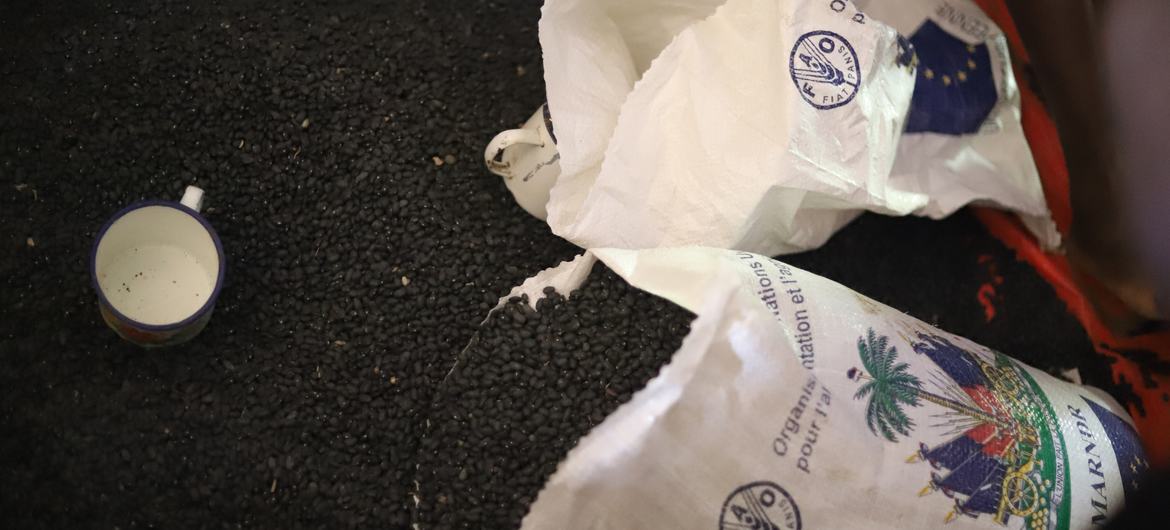
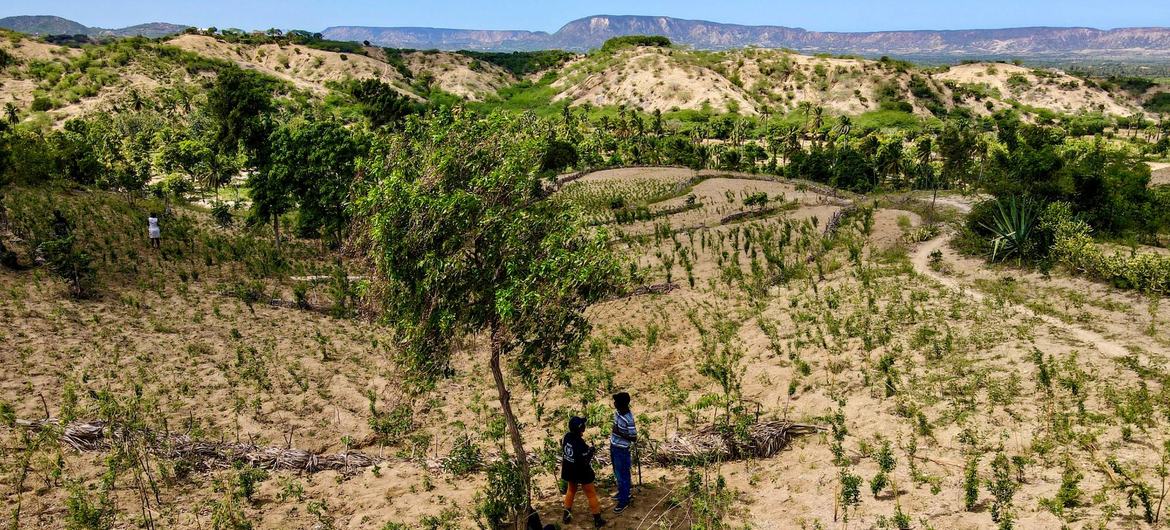
Ongoing violence is compounding the country’s food crisis, disrupting local food production in critical areas such as the commune of Kenscoff and the Artibonite department, often considered the breadbaskets of Haiti.

While the UN and its partners are responding “wherever and whenever possible,” UN Spokesperson Stéphane Dujarric said this Wednesday that humanitarians have only been able to reach 38 per cent of the population they aim to support.

Multiple roadblocks

“This is due to ongoing violence and insecurity, severe underfunding of the response, and the obvious access challenges,” he said.

Over halfway through the year, Haiti is the least-funded of the many humanitarian appeals that the UN coordinates – despite shortfalls for food security in the country being at extreme levels – with just over two per cent of the $425 million needed this year received to date.

Myanmar: Intensifying conflict impedes humanitarian aid

Almost four months after Myanmar’s devastating earthquake, the UN is deeply concerned over the plight of civilians caught up in the country’s devastating and continuing conflict between the military regime and opposition armed groups.

As fighting intensifies, civilians are particularly vulnerable, with increasing attacks on infrastructure.

According to reports, an air strike hit a monastery in Sagan Township in Sagaing Region on 11 July, killing 22 people and injuring at least 50 others. The monastery had been providing shelter to displaced people who had fled nearby villages.

A displacement camp in North Shan State was also reportedly hit by an airstrike over the weekend.

‘Broader pattern’

“These incidents are part of a broader pattern of attacks affecting people across Myanmar,” said Mr. Dujarric, with frequent reports of people being killed, injured or displaced by violence.

Such insecurity also impacts the ability of humanitarian teams to reach people in need: with one in three people now facing acute hunger, and the current monsoon season having caused flooding, “the UN urgently calls on all parties to respect human rights and international humanitarian law,” he said.

Belarus: Rights experts urge probe into deaths in custody of opposition activists

Top independent human rights experts called on Belarus on Wednesday to launch urgent investigations into the deaths of several people jailed for political dissent.

The experts – who are known as Special Rapporteurs – highlighted the case of 61-year-old businessman Valiantsin Shtermer. He died in May 2025 while serving his sentence in a so-called “Correctional Colony” in Šklou.

Mr. Shtermer had been jailed for making critical remarks about Russia’s full-scale invasion of Ukraine. Despite his serious medical condition, he was allegedly denied adequate care in prison.

Fifty-year-old opposition activist Vitold Ashurak meanwhile, also died shortly after being placed in an isolation in the same prison.

According to the Special Rapporteurs, Mr. Ashurak was a member of the Belarusian National Front who was jailed for violating public order during protests related to the disputed 2020 presidential elections.

We must not ignore these deaths

“These deaths must not be ignored,” said the experts, who added that there were strong grounds to believe that they resulted from abuse or neglect linked to the exercise of fundamental rights.

“It is of the utmost importance to thoroughly investigate the alleged instances of ill-treatment and neglect that resulted in the deaths of Shtermer, Ashurak, Puškin and other persons designated as political prisoners by human rights defenders,” the Human Rights Council appointed experts underscored.

“There are strong reasons to believe that these individuals lost their lives in retaliation for exercising their civil and political rights, including the rights to freedom of expression and peaceful assembly.”

The independent experts voiced concern that some opposition figures had been stigmatised and labelled as “extremists” or even “terrorists”.

Special Rapporteurs report regularly to the Human Rights Council. They are not UN staff and do not receive payment for their work.

Source link

Syria: UN chief urges de-escalation as Sweida violence escalates, Israel strikes Damascus

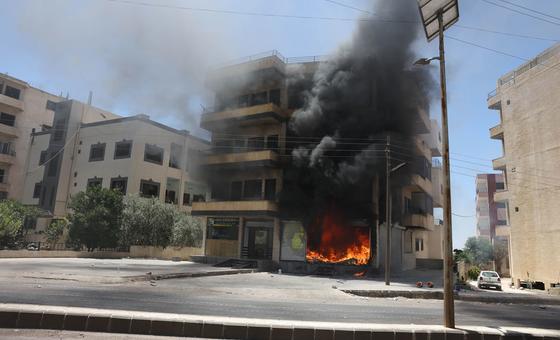
News reports estimate that the sectarian violence in the predominantly Druze city of Sweida, south of the capital, has killed more than 200.

Israel explained its attacks in the heart of the capital and on pro-government forces in Sweida as a defensive move in support of the Druze community, which has a significant presence within Israel and in the Israeli-occupied Golan.  

The strikes on the defence ministry in Damascus also hit an area near the presidential palace, according to news reports and Syrian authorities.

Pledging to protect the Druze minority but also following up on its threat to attack any Syrian military operations taking place south of the capital, Israel said it would intensify strikes if government forces did not withdraw from the region, according to news reports.

Syrians ‘robbed’ of opportunity for peace

“The Secretary-General is alarmed by the continued escalation of violence in Sweida” and “unequivocally condemns all violence against civilians,” said UN Spokesperson Stéphane Dujarric on Wednesday.  

It was the second day in a row that the UN chief has intervened to highlight the increasing civilian toll and “reports of arbitrary killings and acts that fan the flames of sectarian tensions and rob the people of Syria of their opportunity for peace.”  

Mr. Guterres further condemned Israel’s “escalatory airstrikes” on Sweida, Daraa and central Damascus, together with “reports of the IDF’s redeployment of forces in the Golan,” the highly-contested mountainous region along the border of the two countries. 

The UN also called on Israel to cease any violations of Syria’s sovereignty and respect for the 1974 Disengagement of Forces Agreement

The UN chief also reiterated the need to support “a credible, orderly and inclusive political transition in Syria in line with the key principles of Security Council Resolution 2254.”

Extending his condolences to the people of Syria, the Secretary-General reiterated his call for an immediate de-escalation of violence measures to facilitate humanitarian access.  

Civilians in peril

Mr. Dujarric said UN humanitarians were warning that “the deadly hostilities continue to put civilians at risk, with ongoing reports of significant displacement and damage to critical infrastructure, including water, electricity and telecommunications networks,” Mr. Dujarric said.  

Access to Sweida and the impacted areas remains severely constrained due to insecurity and road closures, and civilians are unable to reach shelters.  

The UN Humanitarian Coordinator in Syria, Adam Abdelmoula, said that the UN and its humanitarian partners plan to assess the needs and provide essential assistance in Sweida as soon as conditions allow.

Mr. Dujarric underscored that medical services in Sweida and the neighbouring Daraa Governorate are overstretched and hospitals are almost at capacity.  

While the World Health Organization (WHO) has dispatched emergency medical supplies to Daraa, deliveries to Sweida have yet to get through due to the fighting. 

Displacement, poverty and insecurity fueling violence against women in Gaza

In the past three months, a third of Gaza’s population (714,000 people) have been forced to move once again, separating families and dismantling local support systems.

Women and girls are bearing a heavy burden, fearing for their lives on the streets – at delivery points, and in overcrowded, makeshift shelters that lack privacy and security – as many sleep in the open.

“Women have experienced immense loss, including the death or imprisonment of relatives. Looking for water, living without any privacy, and constantly worrying – it’s exhausting,” one case worker told UNFPA.  

Many young girls are also being pushed into child labour and forced marriage in efforts to cope with devastating hunger.

Suhair who works at a safe space for women and girls in Gaza’s central Deir El-Balah Governorate.

Safe spaces in big demand

In response to this crisis, on Wednesday, UNFPA reported a sharp increase in victims seeking help at their safe spaces, which provide shelter and psychological support.

However, according to the women working there – many of whom are also displaced, conditions are extremely difficult, and there are far too few facilities for the number of women and children in need, making it difficult to reach those most at risk.

For instance, displacement orders have disrupted services and caused providers to lose essential equipment and files, forcing them to restart operations from scratch.  

Even as staff receive accounts of abuse, incidents remain vastly underreported due to stigma, fear of retaliation, and the collapse of health and justice systems.

“Despite all the difficulties, I continue to support abused women and girls,” said Asmaa, who works at a UNFPA-supported safe space in Gaza and has been displaced ten times since the war began.

Severe supply and fuel shortages

Fuel shortages are crippling critical infrastructure across Gaza. The UN has warned that humanitarian operations may collapse entirely, and an estimated 80 per cent of health facilities are expected to run out of fuel in the coming days.

As UNFPA attempts to shift to remote support, fuel shortages have triggered telecommunications blackouts, cut off survivor hotlines and made remote assistance largely inaccessible.

Since the blockade was imposed on 7 March, no agency supplies have entered Gaza, leaving essential items such as menstrual hygiene kits severely depleted.

Due to these shortages, three UNFPA safe spaces have closed, while the remaining 14 are functioning at severely limited capacity.

Despite the many challenges, the reproductive health agency and its case workers continue to try their best to help women and girls. “We feel the urgent needs of women and recognise the importance of supporting them. A small effort can make a big difference in their lives,” one caseworker stressed.

© UNFPA/Women’s Affairs Centre

Salma, left, is a mother of four and gender-based violence case manager in Khan Younis.


Source link

SECURITY COUNCIL LIVE: ‘Aid must go where needs are greatest’ in Gaza, urges UN relief chief

The UN Security Council is meeting on the escalating humanitarian crisis in Gaza, where fresh Israeli evacuation orders have uprooted tens of thousands amid relentless bombardment claiming hundreds of civilian lives in recent weeks – many of them children. “Food is running out. Those seeking it risk being shot. People are dying trying to feed their families,” UN relief chief Tom Fletcher has just told ambassadors. Follow our real-time updates and key moments through our live UN Meetings Coverage page. UN News App users can join here.

Source link

Sudan: UNICEF condemns weekend attacks that killed 35 children

At least 24 boys, 11 girls and two pregnant women reportedly were among the victims of the violence, which occurred over the weekend in communities around the city of Bara, including the villages of Shag Alnom and Hilat Hamid. 

UNICEF fears that with dozens more injured and many still missing, the number of child casualties could rise further.

‘A complete disregard for human life’

“These attacks are an outrage,” Executive Director Catherine Russell said in a statement issued on Tuesday.

“They represent a terrifying escalation of violence, and a complete disregard for human life, international humanitarian law, and the most basic principles of humanity.”

Former allies turned rivals – the Sudanese Armed Forces (SAF) and the paramilitary Rapid Support Forces (RSF) – have been battling for control of the country since April 2023 and fighting has intensified recently in the Kordofan region which encompasses three states.

End the violence now

“UNICEF condemns the attacks in the strongest possible terms,” said Ms. Russell.

She called on all parties to end the violence immediately and to uphold their obligations under international law, including international humanitarian law, as well as the principles of distinction, proportionality and precaution.

The UNICEF chief stressed that civilians – particularly children – must never be targeted. Furthermore, all alleged violations must be independently investigated, and those responsible held to account.

Impunity cannot be tolerated for violations of international law, especially when children’s lives are at stake,” she said.

Ms. Russell extended the agency’s deepest condolences to the families of the victims, and to anyone impacted by this heinous violence.

No child should ever experience such horrors,” she said. “Violence against children is unconscionable and must end now.” 

Source link

Gaza: More misery as new evacuation orders impact tens of thousands

Those impacted by the orders have been told to relocate to the “already overcrowded” coastal strip at Al Mawasi, according to the UN Office for the Coordination of Humanitarian Affairs (OCHA), late Tuesday.

Al Mawasi near Khan Younis lacks “the basics for survival”, the UN agency insisted. It has also seen nearly two dozen strikes on displaced Gazans sheltering in tents there between 18 March and 11 April, the UN human rights office said

As the war drags on well into its 21st month, Gaza’s most vulnerable people continue to struggle to survive.

Dialysis emergency

They include Musbah Zaqqout, 70, one of 230 patients receiving lifesaving dialysis at Al-Shifa Hospital in Gaza City. His treatment has been disrupted by persistent supply shortages that reduced sessions from three to two per week at the end of last month, the UN World Health Organization (WHO) warned on Tuesday.

“He suffered a lot when dialysis was not available,” said Mr. Zaqqout’s wife, Saadia. “He was suffocating and was frequently admitted to the hospital, to the point where he fell into a coma, lost focus and didn’t recognize anyone.”

With support from partner organization KS Relief, WHO delivered dialysis supplies and fuel for Al-Shifa Hospital, so that it could resume dialysis treatment and other lifesaving services.

“Thank God, after restarting dialysis, his condition improved,” Mrs. Zaqqout said, while the UN health agency reiterated its calls for sustained entry of food, fuel, and health aid at scale through all possible routes.

“Critical shortages of fuel and medical supplies persist across Gaza,” WHO warned. “Without urgent and sustained replenishment, health care services risk coming to a grinding halt.”

Child malnutrition tragedy

Echoing those concerns, the UN agency for Palestinians, UNRWA, warned on Wednesday that it is increasingly difficult to help Gazans. Already, one in 10 of the children brought to its clinics suffers from malnutrition. The condition was unheard of in the enclave before the war, but it more than doubled in children under five between March and June, amid the near-total Israeli siege.

“It’s becoming more and more difficult for us to continue providing services,” said UNRWA’s Louise Wateridge. “At least 188 UNRWA installations – over half of all our installations in the Gaza Strip – are located within the Israeli-militarized zone, under displacement orders, or where these overlap.”

In an update, Ms. Wateridge said that only six UNRWA health centres and 22 of the agency’s medical points remain operational today, in addition to 22 mobile medical points inside and outside shelters.

Nearly 60 per cent of essential medical supplies are now out of stock, according to the UN agency. “Children are dying before our eyes, because we do not have the medical supplies or sustained food to treat them,” it said.

Key medicines run out

As a direct result of the Israeli blockade on Gaza which began on 2 March, UNRWA said that it has “now run out of” medicines for high blood pressure, antiparasitic and antifungal medicine, medicine for eye infections and inflammation, all skin treatments and oral antibiotics for adults.

Providing clean water to the war-shattered enclave remains a massive challenge and only two UNRWA main water wells still function. Ten were operational before the war. Another 41 smaller wells are operational in UNRWA shelters.

For the past two months in north Gaza, UNRWA has been forced to stop providing water and sanitation services for around 25,000 displaced people in shelters, owing to displacement orders issued by Israeli forces.

“The restrictions on the entry of fuel continues placing life-saving services at a severe risk,” the UN agency said. “Critical water services are at risk of shutting down if sustained fuel supplies are not permitted entry.”

Source link

First Person: How many more children must die before the world acts?

Juliette Touma, the director of communications for the UN agency for Palestine refugees, UNRWA, has visited Gaza several times during and before the war and has been reflecting on the children she has met there and in other conflict zones.

“Adam has been on my mind lately, more so than usual.

I met Adam years ago in the Yemeni port city of Hudaydah, back then under siege and heavy bombardment. In the very poor hospital ward, there lay Adam, 10 years old, weighing just over 10 kilogrammes. He could not speak, he could not cry. All he could do was make a hoarse sound of breathing. A few days later, Adam died from malnutrition.

A malnourished child inside a hospital in Sana’a, Yemen.

Deadly malnutrition

A couple of years before that, my colleague Hanaa calls from Syria late at night. She was in tears and could barely say a word. Hanaa eventually told me that Ali, a 16-year-old boy had died. In yet another town under siege, caught up in a war not of his making, he had also died from malnutrition.

The following morning, my supervisor, an epidemiologist, said “for a boy of 16 to die of malnutrition, that says a lot. He’s practically a man. It means there’s no food at all in that part of Syria.”

Back in Yemen in one of the few functioning children’s hospitals in the capital Sana’a, I was walking through the children’s ward during the peak of a cholera outbreak. Boys 15 and 16 years old, struggling to stay alive.

They were so weak and emaciated, they could barely turn around in their beds.

These images and stories haunted me over the years as they have for several among us who worked in severe hunger or famine-like situations.

The author plays with students enjoying the “summer fun weeks” games in an UNRWA school in the Gaza Strip in 2023. (file)

Fatal hunger grows in Gaza

In 2022, when I had the great pleasure of going in and out of Gaza, I would visit children in UNRWA schools. Immaculately dressed, healthy looking, smiling, eager to learn, jumping up and down in the school playground to the sound of music.

Back then, Gaza was already under a blockade for more than 15 years. Food was, however, available on the markets through imports via Israel and locally farmed produce. UNRWA was also giving food aid to over one million people.

Images of Adam and Ali were quickly pushed to the back of my memory until a few weeks ago when they suddenly reappeared.

A growing number of children are being screened for malnutrition in Gaza.

Babies can survive, but will they?

Our Gaza teams started sending alarming photos of emaciated babies. The rates of malnutrition are rapidly increasing, spreading across the Gaza Strip. According to the World Health Organization (WHO), more than 50 children died of malnutrition since the siege began on 2 March.

UNRWA has meanwhile screened over 242,000 children in the agency’s clinics and medical points across the war-torn Strip, covering over half the children under age five in Gaza.  One in 10 children screened is malnourished.

Ahlam is seven months old. Her family was displaced every month since the war began, in search of non-existing safety. Shocked and her body weakened, Ahlam is severely malnourished. Like many babies in Gaza, her immune system has been damaged by trauma, constant forced displacement, lack of clean water, poor hygiene and very little food.

Ahlam can survive, but will she?

Bombs and scarce supplies

There are very little therapeutic supplies to treat children with malnutrition as basics are scarce in Gaza. The Israeli authorities have imposed a tight siege blocking the entry of food, medicines, medical and nutritional supplies and hygiene material, including soap.

While the siege is sometimes eased, UNRWA (the largest humanitarian organisation in Gaza) has not been allowed to bring in humanitarian assistance since 2 March.

Last week, Salam, another malnourished baby, died. She was a few months old. When she finally reached the UNRWA clinic, it was too late.

Meanwhile, eight children queuing for therapeutic support against malnutrition were killed when the Israeli forces hit the clinic they were in. One of my colleagues who drove past the clinic a few minutes later told me she saw mothers looking out into the abyss, weeping in silence, just like Adam did.

How many more babies must die before the world takes action?

Why should babies die of malnutrition in the 21st century, especially when it’s totally preventable?

At UNRWA, we have over 6,000 trucks of food, hygiene supplies and medicines outside Gaza waiting for the green light to go in.

The aid will mainly help little girls like Ahlam. UNRWA also has more than 1,000 health workers who can provide boys and girls with specialised nutritional services.

Amid the daily livestream of horrors we get from Gaza on our screens, one cannot help but ask how many more Ahlam’s and Salam’s have to die before taking action?

How much longer until a ceasefire is reached so that bombs stop falling on emaciated and dying children?”

Scores killed in Sudan’s Kordofan region as fighting intensifies

Amid ongoing communication disruptions in the area, confirming the exact civilian death toll remains difficult, but reports indicate that at least 300 people – including children and pregnant women – were killed in attacks on villages in Bara locality, North Kordofan State, between 10 and 13 July.

During the same period, a series of attacks – including an air strike on a school sheltering displaced families – reportedly killed more than 20 people, in the villages of Al Fula and Abu Zabad in West Kordofan State.  

OCHA is also alarmed by reports of renewed shelling in Al Obeid, the capital of North Kordofan State, “deepening fears and insecurity among civilians,” the humanitarian coordination agency reported.  

Tragic civilian toll

With thousands of people reportedly killed since the beginning of the conflict between former military allies-turned rivals over two years ago, the crisis in Sudan continues to take a devastating toll on civilians. 

These incidents are yet another tragic reminder of the relentless toll the conflict is taking on civilians across Sudan,” OCHA reported.

The office emphasises that civilians and civilian infrastructures – including schools, homes, shelters and humanitarian assets – must never be targeted, and called on all parties to the conflict to “fully respect their obligations under international humanitarian law.”

Toll from displacement

Described as “the largest as well as the fastest growing displacement crisis globally,” by the UN refugee agency (UNHCR) in February 2025, displacement continues amid the fighting.

People fleeing North Kordofan, as well as El Fasher in North Darfur State, continue to seek shelter in the rest of Sudan, including Northern State, with humanitarian partners on the ground reporting more than 3,000 displaced people arriving in the locality of Ad-Dabbah since June.

Although some have received food assistance, the steady influx of newly displaced families is putting additional strain on already stretched resources.  

With the rainy season approaching, OCHA warned that further hardship is likely, particularly as heavy rain and strong winds destroyed shelters and food supplies for about 2,700 displaced people in eastern Sudan this past Sunday. 

Source link

Seeding gender empowerment: Women farmers in Peru contend with climate change

Ácora, located in the southeast corner of Peru almost 3,800 kilometres above sea level, is one of the Peruvian regions which has been most impacted by climate change – endangering crop production and biodiversity in addition to worsening food insecurity.

“It was not like this before, the climate has changed a lot,” said Pascuala Pari, head of the Sumaq Chuyma Association in Ácora.

Around the world, women farmers like Ms. Pari, who already face a series of intersectional challenges, are working tirelessly to secure their livelihoods despite an increasingly untenable climate situation.

Women in particular shoulder the burden of food insecurity as traditional caregivers which is intensified during climate crises,” said Bochola Sara Arero, a youth representative from the World Food Forum, at a side event during the ongoing UN High Level Political Forum on Sustainable Development on Monday.

Intersecting goals

The forum in New York has been convened to discuss the Sustainable Development Goals, adopted in 2015 to promote global development for current and future generations.

[The forum] is going to be a major way to assess how we’re doing with respect to the critical issues of sustainability and achieving greater prosperity globally,” said Bob Rae, President of the Economic and Social Council (ECOSOC), at a press conference for correspondents in New York on Tuesday. 

With only 18 per cent of these internationally agreed upon goals on track to being met by 2030, the Secretary-General António Guterres has called for urgent action and sustained multilateralism to address this gap.

Mr. Guterres has also said that this forum is a unique opportunity to discuss the intersection between various goals, including the intersection between gender equality and climate change.

A bipolar climate

Last year in Ácora, dealing with a climate that oscillated between drought and torrential rains was next to impossible for the women who relied on the land.

Crops would not grow and agrobiodiversity was under threat. In a country where 17.6 million people already experience food insecurity, this dual threat had the potential to wreak havoc on livelihoods.

In response, Ms Pari and other women in Ácora formed seed banks. Not only do organizations like seed banks preserve indigenous agrobiodiversity, they also help sustain the livelihoods of women in the region.

“Our crops were in danger of extinction, but now people are harvesting again and we are changing that,” said Fanny Ninaraqui, leader of the Ayrumas Carumas Association.

Seeds that are not planted can be traded or bartered with other seed bank owners. Over 125 varieties of native crops have now been preserved across the region.

“I am happy with my little seed bank … Now I have all kinds of quinoa: black, red, white. This supports me economically because I preserve and sell my products at local markets,” Ms. Pari said.

© UNDP/MINAM/PPD/Nuria Angeles

Aymara communities in Ácora are working to recover and conserve their agrobiodiversity.

Once shut, doors open for women farmers

In addition to climate challenges, women farmers also face a lack of legal rights. Specifically, they often do not have titles to their land.

According to the Secretary-General’s Sustainable Development Report, released Monday, 58 per cent of the countries with available data lacked sufficient protection for women’s land rights.

“Women’s land rights are fundamental for women’s voice and agency, livelihoods and well-being and resilience as well as for broader development outcomes,” said Seemin Qayum, policy advisor at UN Women.

The in-depth report also noted that less than half of women had secure rights to land, with men being twice as likely to have land deeds and other protected property rights. [1]

Experts say that insufficient legal protections not only negatively impact economic outcomes for women, they also sideline women’s needs and voices in policymaking. Therefore, it is essential to institute legal protections which formally recognize women as farmers.

“When you are recognized as a farmer, a world of possibilities, a world of resources – opportunities for representation and rights – become available to you. Doors open,” said Carol Boudreaux, Senior Director of Land Programs at Landesa.

© UNDP/MINAM/PPD/Nuria Angeles

Another method implemented is the rehabiWaru warus in Thunco: an ancient farming technique with canals and raised beds to manage droughts and floods.

Beyond legal protections

While legal land rights are essential, they are not in and of themselves enough to empower rural women.

“Initiatives that aim to change discriminatory social norms and institutions are also needed,” said Clara Park, senior gender officer at the Food and Agriculture Organization (FAO).

Women in Ácora recognize that it is not just climate change which is negatively impacting their livelihoods – they are also grappling with unequal social norms.

“When you are young and a woman, someone always tries to limit your progress,” Ms. Ninaraqui said.

In Ácora, international and civil society organizations, including the UN Development Programme (UNDP), have worked to help women establish their seed banks and ensure that these women have the capacity to manage them long-term.

“I can lead, I can teach what I have learned, now I feel I have this capacity,” Ms Pari said.

Intergenerational knowledge

Women like Ms. Pari and Ms. Ninaraqui are part of the Aymara indigenous community in Ácora. For them, the seed banks are a form of innovation which allows them to build upon indigenous knowledge regarding agrobiodiversity.

“We are recovering the seeds from our grandparents’ time,” said Ms. Pari.

And as they save these seeds, Ms. Pari said they are also thinking of the future.

“Today, I would tell more women to keep going, to not be discouraged by what others think, and to take initiative like I did,” said Ms. Pari.

Source link

Ukraine: Civilians under fire in record numbers as attacks surge

According to the UN human rights office, OHCHR, at least 139 civilians have been killed and 791 injured so far in July alone.

“The devastating physical and psychological impact on civilians of repeated attacks in this and other conflicts cannot be captured by numbers alone,” said OHCHR spokesperson Liz Throssell on Tuesday.

Escalating attacks

On the night of 12 July, Russian forces reportedly launched nearly 600 Shahed-type unmanned attack and decoy drones, along with 26 missiles, killing two civilians and injuring 41.

Damage was reported across multiple regions, including Chernivtsi, Lviv, Cherkasy, Volyn and Kirovohrad – all far from active combat zones. Earlier that same week, Russian forces reportedly launched a record-breaking 728 long-range drones in a single 24-hour period.

June marked the deadliest month for civilians in over three years.

“People are having to spend hours sheltering (…) in basements, corridors and available refuges such as metro stations,” said Ms. Throssell. “In some cases, they’re unable to get to shelter at all.”

Health under pressure

The UN World Health Organization (WHO) meanwhile has verified 2,504 attacks on health facilities and personnel in Ukraine since the start of the full-scale invasion by the Russian Federation on 24 February 2022.

These strikes have hit hospitals, ambulances and first responders, including in so-called “double tap” attacks where secondary strikes follow the initial impact.

“This means more than two attacks every day…Healthcare is not a safe place for patients and healthcare workers,” said Dr. Jarno Habicht, WHO Representative in Ukraine.

Access to healthcare remains especially limited in frontline areas, where personnel and supplies are scarce.

Only 69 per cent of residents in those areas have seen a primary care doctor, compared to 74 per cent nationally. WHO mobile teams operating in 82 locations have conducted more than 7,500 consultations in 2025 so far.

The psychological toll is also wearing people down. A recent assessment found that seven out of 10 people reported anxiety, depression or severe stress over the last 12 months, while one in two said they had experienced significant stress in just the past two months.

To address this, WHO and national partners have trained more than 125,000 health workers and expanded mental health services through more than 220 community resilience centres.

Despite continued deliveries of trauma kits and medical supplies by UN and humanitarian partners, the response remains critically underfunded. As of mid-July, only 35.5 per cent of the required $129 million for 2025 has been secured, leaving more than two million people without adequate medical support.

Call for accountability

In Geneva, Ms. Throssell highlighted the UN human rights chief’s calls for an immediate end to hostilities and for efforts toward a just and lasting peace.

“The Russian Federation’s full-scale armed attack on Ukraine must urgently be halted and work on a lasting peace in line with international law must intensify,” Volker Türk said in a statement.

The High Commissioner emphasized that any sustainable solution must include accountability for serious human rights violations, the return of deported children, protection for civilians in occupied areas, humane treatment of prisoners of war, and restoration of humanitarian corridors.

Source link