Record starvation and malnutrition in Gaza; more West Bank displacement

That warning comes from the UN World Food Programme (WFP) in a tweet posted on Tuesday, calling for more aid to be allowed into the enclave by Israeli authorities. 

Gaza’s Ministry of Health reported that five people died over the past 24 hours due to malnutrition and starvation, the UN Office for the Coordination of Humanitarian Affairs (OCHA) said in its latest update.

This brings the total number of malnutrition-related deaths to 227, including 103 children, since October 2023.  

Still not enough aid

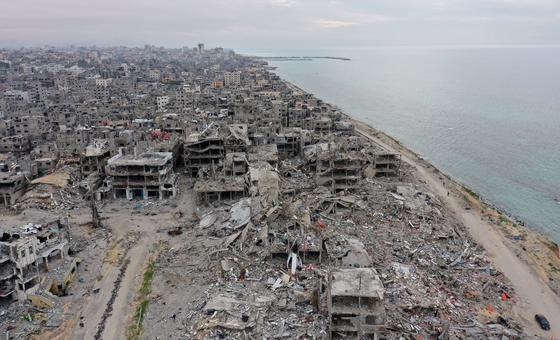
Humanitarians continue to decry the low level of supplies entering Gaza, which remains a fraction of what is needed to meet the immense needs of the roughly 2.1 million people living there.

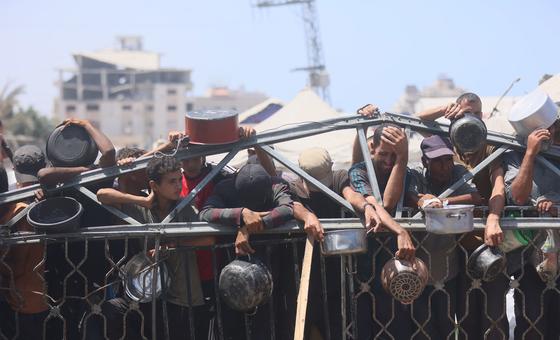
One third of the population is not eating for days on end, and half a million are on the brink of starvation, WFP emphasised.

The agency is calling for at least 100 trucks a day to be allowed into Gaza, much faster approvals and clearances, and for no armed presence or shooting near humanitarian convoys and food distribution sites, among other measures.

Humanitarian missions face obstructions

Although the UN and partners continue to do everything possible to bring assistance in, humanitarian movements still face significant delays and other challenges. 

UN Spokesperson Stéphane Dujarric outlined the situation for journalists attending the regular media briefing at Headquarters in New York. 

He said on Monday humanitarians had formally asked Israel to coordinate 16 missions – including the collection of food, medical supplies and fuel – from the Kerem Shalom and Zikim border crossings, the only two aid corridors in operation.

Other missions involved moving goods and personnel within Gaza, from south to north and within the southern part of the Strip. 

‘Precious time’ wasted

Out of the 16 missions, four were facilitated and three were denied; another four were impeded but eventually were fully accomplished,” he said.

Of the remaining missions, two were cancelled by the respective organizations and two more that involved collection of food and health supplies from the Kerem Shalom crossing were impeded and unable to be completed.  Another mission was impeded but was still ongoing.

“Efforts to coordinate humanitarian movements often drag on for hours due to unpredictable clearances by the Israeli authorities, wasting precious time,” he added. 

West Bank unrest

OCHA also updated on the situation in the occupied West Bank, where another Palestinian Bedouin community was displaced on Monday due to violence by Israeli forces and settlers. 

Israeli forces raided the community of Ein Ayoub in Ramallah governorate and ordered the immediate eviction of its roughly 100 Palestinian residents.

Many of these people have no alternative means of shelter, OCHA said. 

Source link

Gaza: UNESCO condemns ‘unacceptable’ killing of journalists

“I condemn the killing of journalists Anas Al-Sharif, Mohammed Qreiqeh, Ibrahim Zaher, Mohammed Noufal, Moamen Aliwa, and Mohammed Al-Khaldi and call for a thorough and transparent investigation,” UNESCO’s Director-General, Audrey Azoulay, said in a statement on Tuesday.

Five of the six worked for the influential Qatari-based media organization, Al Jazeera: Anas Al-Sharif and Mohammed Qreiqeh were on air correspondents, while Ibrahim Zaher, Mohammed Noufal and Moamen Aliwa worked as camera operators. Mohammed Al-Khaldi was a freelance photojournalist.  

They were reportedly killed by an Israeli attack on a tent used by media personnel at the entrance of Al-Shifa Hospital in Gaza City.

Blatant, premeditated attack

The Israeli Defense Forces (IDF) alleged that 28-year-old correspondent Anas al-Sharif was a serving Hamas operative. Al Jazeera strongly denies this, describing the attack as an “assassination” and “yet another blatant and premeditated attack on press freedom.”

The UN Human Rights Council-appointed independent expert on freedom of expression issued a statement on 31 July denouncing an Israeli military spokesperson’s “repeated threats” and “unfounded accusations” against Mr. Anas Al-Sharif, flagging it as “a blatant attempt to endanger his life and silence his reporting” in Gaza.  

Condemning the attack in the strongest possible terms on Tuesday, two special rapporteurs described the killings as “an attempt to silence reporting on the ongoing genocide and starvation campaign” in Gaza.

“It is outrageous that the Israeli army dares to first launch a campaign to smear Anas Al-Sharif as Hamas in order to discredit his reporting and then kill him and his colleagues for speaking the truth to the world,” the experts said, demanding an immediate investigation into the killings and full access to international media, which Israel currently bars from entering Gaza.

Special Rapporteurs and other independent experts are appointed by and report regularly to the Human Rights Council. They work in their individual capacity, are not UN staff and receive no payment for their work.

Violation of international law

UNESCO chief Ms. Azoulay stressed that targeting journalists reporting on conflicts is unacceptable and violates international law.  

She also reiterated her call to respect UN Security Council Resolution 2222, which was unanimously adopted in 2015 to protect journalists, media professionals and associated personnel in conflict situations.

Since October 2023, UNESCO has reported at least 62 journalists and media workers killed in the line of duty in Palestine, excluding deaths in circumstances unrelated to their work, while OHCHR reports that at least 242 Palestinian journalists have been killed in the same time frame. 

The world has the tools to end Haiti’s crisis – it’s time to use them

“I often feel that I cannot even find words any longer to describe the situation. Is it alarming, is it acute, is it urgent? It is all of that and even more.”

The phrase she ultimately settled on was “strikingly horrific.”

Haiti is currently facing a protracted and worsening humanitarian crisis – with gang violence expanding beyond the capital of Port-au-Prince, civilians are increasingly bearing the brunt of this terror. Additionally, Haiti is one of five countries worldwide experiencing famine-like conditions.

Woeful crisis response

Amidst this horror, Haiti’s humanitarian plan is only nine per cent funded, making it the least funded humanitarian response plan in the world according to Ms. Richardson.

But despite these challenging and protracted circumstances, Ms. Richardson was also keen to emphasise that political will and funding could ensure that the current crisis does not have to be Haiti’s future.  

Haiti’s destiny does not need to be misery and despair,” she said. “As much as Haiti has spiralled down in a negative [way], Haiti can quickly spiral up again.”

Beyond the figures

Over 1.3 million people have been displaced in Haiti as a result of violence – the  largest number in Haiti’s history – and almost half of the country is suffering from emergency food insecurity.   

These numbers have become so big that it can be hard to conceive of the actual human impact behind them.

“All of that is just figures. Beyond every figure, there is a mother, a child, a father, a young person,” she said.

Sometimes these numbers also obscure certain livelihoods. For example, the number of 1.3 million displaced obscures those left behind, perhaps because they physically could not flee as violence encroached on their neighborhood.  

Ms. Richardson said that she has heard many stories like this.

“These could be people in a wheelchair or an elderly relative that they simply have to leave behind. They cannot move with them.”  

Ask yourself, what more can you do?

Ms. Richardson said that there is much about Haiti’s current situation that she finds frustrating – most specifically the fact that the international community has identified the solutions to mitigate, if not completely stop, the crisis.

“We have tools, but the response from the international community is not on par with the gravity on the ground,” she said.  

For example, the Multinational Security Support mission (MSS) has half of the personnel and very little of the equipment it needs to fulfil its mandate.

Additionally, while sanctions on political leaders with gang ties are slowly taking hold, they are insufficient. Similarly, the international community is not doing enough to stop the flow of guns.  

“These tools need to be given the proper support and investment in order to carry out their full mandate. There has to be a way of stopping arms coming into Haiti,” Ms. Richardson said.

Calling on States to ask themselves what more they can do to end the humanitarian crisis, Ms. Richardson said that the world must multitask.  

‘A divided heart’

Ms. Richardson will be taking a new post in Libya as of 1 September , and as she prepares to leave behind her years of work in Haiti, she told journalists that she has a divided heart.

On the one hand, this is a humanitarian crisis of “striking” proportions that the world seems to have forgotten. But. if the international community was able to embrace the solutions before them, the crisis could end. 

Haiti can turn the page

We cannot do what we do if we are not optimistic. Of course, we think that there are solutions. Of course, we think that the future is brighter than the present.”

Ms. Richardson said that this optimism comes in part from Haiti’s “honourable and brilliant” past and from the resistance she has seen on the ground.  

“Every condition is there to turn the page…Haitians are extremely ready for this, for the country to have a more positive echo in the international community.” 

Source link

Yemen: ‘Regional turmoil continues to erode prospects for peace,’ Security Council hears

Yemen continues to be one of the world’s most food-insecure countries following over 12 years of war between the Saudi-backed coalition supporting the internationally recognised Government and Ansar Allah – as the rebels are officially known – with  17 million going hungry, according to UN aid coordination office, OCHA.

Despite a fragile but long-lasting ceasefire, regional turmoil continues to erode prospects for peace and stability. Without a political solution, “current cycles of violence – local and regional – along with economic devolution and endemic humanitarian need, will persist,” Ramesh Rajasingham, Director of OCHA’s Coordination Division, told ambassadors.

However, hopes for a lasting peace deal remain: “Reaching a sustainable solution to the situation in Yemen is not only possible, it is essential,” said Special Envoy Grundberg.

Concerning developments

Although frontlines have barely shifted, July saw the Houthi’s fortify their positions, including around Hudaydah City, and launch a significant assault on Government forces in Sa’adah Governorate – developments Mr. Grundberg told the Security Council were “concerning.”

Since October 2023, the Houthis have been targeting Israel as well as commercial ships in the Red Sea, in solidarity with the Palestinian cause in Gaza.

In the past month, the Houthis have continued missile exchanges with Israel, further destabilising Yemen and commerce in the region.

For Yemen to have a real chance for peace, it must be protected from being further drawn into the ongoing regional turmoil emanating out of the war in Gaza,” Mr. Grundberg said, calling for and end to Houthi strikes against civilian ships in the Red Sea.

In the conflict at home, “the parties need to take actions that build trust and good faith,” he said, as the UN aims to establish a path for further talks.

“Unfortunately, we have seen the opposite in the last month with unilateral and escalatory decisions that risk deepening divisions within institutions and state structures,” said Mr. Grundberg.

Food insecurity

In some parts of Yemen, hunger and malnutrition are extreme – especially in areas of displacement. A needs-assessment mission in July found children from displaced families dying from starvation in such a camp in the Abs District of Hajjah Governorate.

These are children who have died not from war wounds, but from hunger – slow, silent, and preventable,” Mr. Rajasingham said.

Half of Yemen’s under fives are suffering from acute malnutrition, and nearly half overall from stunting, leaving them much more vulnerable to dying from common illnesses.

Where healthcare is desperately inadequate and support services are unavailable to many, “this is a life-or-death gamble for children,” he said.

Mr. Rajasingham called for increased funding to scale up emergency food and nutrition support across the country, as humanitarian organizations remain on the ground, despite limited resources and operational challenges.

Path forward

Meanwhile, the Office of the Special Envoy for Yemen continues to work towards de-escalation along the frontlines.

In order to establish a path for talks, “it is essential that measures that build trust and improve the day to day lives of Yemenis continue,” Mr. Grundberg said.

“I urge dialogue between the parties, which is the only way to bring about long-term sustainable solutions on all matters,” he said. 

First Person: Echoes of war as aid arrives in Syria’s historical city

Eleonora Servino was on the first UN aid convoy to Suweida, which saw a recent escalation of violence that left many dead and thousands displaced.

As the International Organization for Migration (IOM) chief of mission to Syria, Ms. Servino said the difference on the road to Bosra is stark.

“You know that feeling when you visit somewhere as a tourist, how the memories embed themselves in your mind? Happy, peaceful places filled with stunning sights, delicious food, warm smiles and a relaxed mood. That’s how I remember Bosra, Syria, 20 years ago.

©UNESCO/Véronique Dauge

The ancient city of Bosra, Syria, a UNESCO World Heritage site, in 2015. (file)

Rivals ancient Italian relics

I went to see its ancient Roman theatre, a [UN Educational, Scientific and Cultural Organization] UNESCO World Heritage site. I recall the perfectly preserved brickwork in the tunnels leading to the stage, the intricate carvings.

Everything rivalled, even surpassed, the monuments in my native Italy. I felt at home, with a shared history. 

Recently, I returned for very different reasons.

IOM chief of mission to Syria Eleonora Servino (right) on the first UN aid convoy to the city of Sweida.

Tourists long gone

Syria has endured 14 years of brutal civil war, displacing millions. The tourists are long gone. But now, with the war over and stability slowly returning, people are coming back. My organisation, IOM, has just been officially allowed to resume operations. One of my first acts as chief of mission ad interim was to take the road back to Bosra.

It’s the only route to As-Sweida governorate, which recently experienced weeks of violence, leaving many dead and over 168,000 displaced.

I was part of the first UN assessment mission. With support from OCHA [UN humanitarian agency] and the Syrian Arab Red Crescent, the convoy delivered 40 truckloads of aid from various agencies and organizations.

© UNOCHA/Ali Haj Suleiman

Hostilities erupt in Sweida in July 2025. (file)

‘Signs of violence everywhere’

Signs of violence were everywhere. The streets were eerily quiet in Sweida. No traffic. None of the hustle and bustle you’d expect in a city that once had a population of over 70,000.

Burnt out buildings, wrecked cars and a pervading sense of tension dominated the landscape. 

We visited three areas where internally displaced people have found shelter, either within host communities or in communal centres. People have opened their homes to those forced to flee. But, the lack of electricity, water, and the blocked main road are straining resources, making everything more difficult despite the goodwill and humanitarian spirit of ordinary citizens.

‘People are still in shock’

The need for humanitarian assistance is clear, from what we saw and what we heard. People are still in shock. We spoke to individuals who have lost so much: homes, families, possessions, livelihoods.

Our DTM (displacement tracking matrix) teams are on the ground conducting regular surveys. The needs are basic yet essential: food, cash, hygiene items, clothing, cooking sets, fuel and shelter materials.

We are a vital part of humanitarian community, advocating for and supporting those displaced by the conflict. We will continue working to keep access open and improve it, ensuring people get what they need.”

Source link

Gaza health system ‘catastrophic’ as hospitals overwhelmed and medicines running out, WHO warns

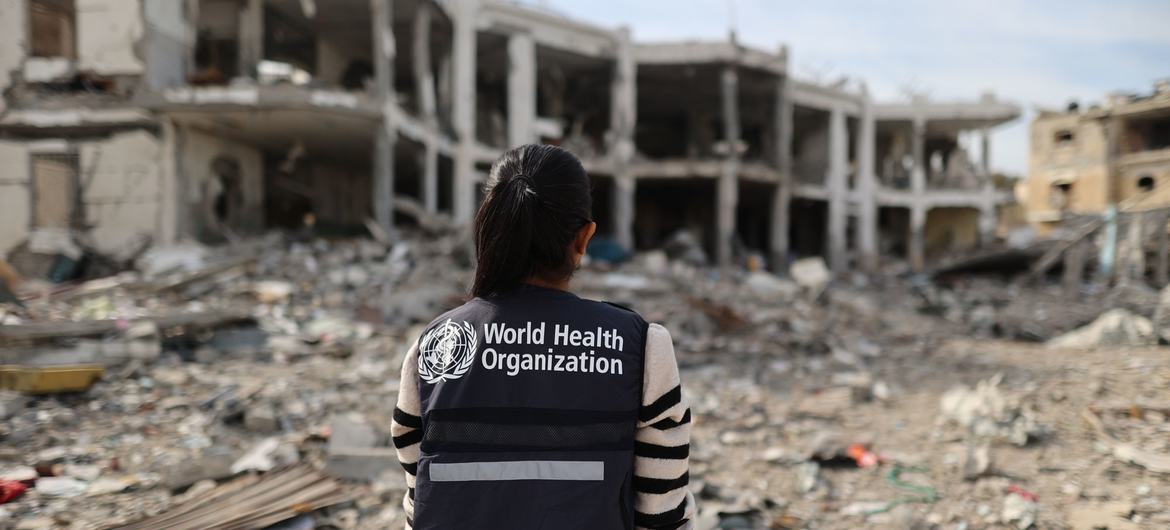
Fewer than half of Gaza’s hospitals and under 38 per cent of primary healthcare centres are partially functioning – or are doing so at minimal levels – said Dr. Rik Peeperkorn, World Health Organization (WHO) Representative for the West Bank and Gaza.

Bed occupancy in major facilities is exceeding limits by large margins – Shifa Hospital is at 250 per cent capacity, Nasser at 180 per cent, Al-Rantisi at 210 per cent and Al-Ahli at over 300 per cent.

Critical supplies running out

“The critical shortage in medications and consumables continue and have only exacerbated, with 52 per cent of the medicines and 68 per cent of consumables at zero stock,” Dr. Peeperkorn told journalists in Geneva, speaking from Jerusalem.

Hospitals are particularly overwhelmed by injuries from food distribution areas, which are also driving persistent shortages of blood and plasma,” he added, noting that since 27 May, at least 1,655 people have been killed in those areas and more than 11,800 injured.

The crisis has been exacerbated by displacement orders in Gaza City that now place WHO’s own warehouse in an evacuation zone. Hospitals, primary care centres and ambulance facilities are also located inside or near these areas, threatening further disruption to services.

Malnutrition worsening

Hunger and malnutrition are worsening rapidly.

Since the start of 2025, 148 people have died from malnutrition, including 49 children – 39 of them under five years old. Nearly 12,000 children under five were diagnosed with acute malnutrition in July, the highest monthly figure to date, with more than 2,500 suffering from the most severe form.

New threat from meningitis

Disease outbreaks are adding to the pressure.

Suspected meningitis cases reached 452 between July and early August – the highest number since the escalation began. Guillain-Barré syndrome, a rare post-infection disorder, has also surged, with 76 suspected cases since June.

Both conditions are harder to treat due to “zero stocks” of vital medicines, including intravenous immuneoglobulin and anti-inflammatories, Dr. Peeperkorn said.

Access challenges

Access for international medical teams and supplies remains a major obstacle.

Dr. Peeperkorn said that international medics face entry denials, while key items such as ICU equipment, anaesthesia machines and cold chain supplies continue to be held back.

Though WHO managed to bring in 80 trucks of medical supplies since June, he stressed that procedures are slow and unpredictable, with many shipments delayed or denied.

We need multiple crossings into Gaza opened, procedures simplified, and access impediments lifted,” he said. “We hear about more humanitarian supplies being allowed in – but it’s not happening, or it’s happening far too slowly.”

World News in Brief: Sudan’s agony continues, Colombian presidential candidate dies, the world celebrates the steelpan

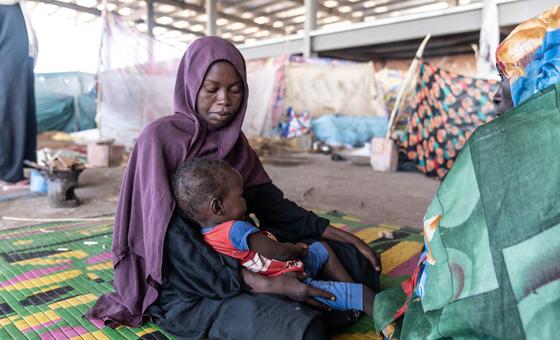
The Director of Operations and Advocacy at the UN aid coordination office (OCHA), Edem Wosornu, warned on Monday that over 60 people reportedly died from malnutrition during a single week in the besieged government-controlled city of El Fasher in North Darfur State. Most of the deaths are those in vulnerable groups, such as women and children. 

Famine was first detected in the Zamzam displacement camp in North Darfur about a year ago, likely expanding to other areas since.    

OCHA is also concerned about ongoing violence in the Kordofan region, including reports of attacks on villages in North Kordofan just last week. Eighteen civilians were reportedly killed and dozens more were wounded.

“It is tragic that we need to underscore on a regular basis that civilians must never be targeted, and all parties must uphold their obligations under international humanitarian law,” said UN Spokesperson Stéphane Dujarric at Monday’s daily briefing in New York.  

Cholera outbreak and response

The UN and humanitarian partners continue to scale up the response to cholera in Sudan, where 100,000 cases have been recorded nationwide since July 2024.  

Since 21 June, there have been 5,300 suspected and confirmed cases and 84 deaths due to the waterborne disease in North Darfur State. Most of these have been in the Tawila locality, where around 330,000 civilians displaced from the Zamzam Camp and El Fasher are sheltering in dire conditions.

UN partners are on the ground responding with cholera treatment centres, but overcrowding, poor sanitation, limited access and the ongoing rainy season are accelerating the spread of disease and restricting aid delivery.  

Nonetheless, on 10 August, a new vaccination campaign supported by the World Health Organization (WHO) began in Khartoum State, targeting 1.1 million people.

Guterres deeply saddened by death of Colombian presidential candidate

Secretary-General António Guterres released a statement on Monday expressing his deep sadness over the death of Colombian presidential candidate and former senator, Miguel Uribe, sending condolences to his family and the Colombian people.

Mr. Uribe’s death followed two months in intensive care after he was shot multiple times during what was reportedly a targeted attack at a campaign rally in the capital of Bogotá on 7 June.  

UN High Commissioner for Human Rights, Volker Türk, also released a statement expressing his shock and sadness over the death of the presidential candidate.

The top UN officials both noted the active investigations are ongoing into the shooting. A teenager who is believed to have carried out the attack has been arrested but the motive is still unclear, according to news reports.  

Mr. Türk stressed that this death “is a stark reminder of the importance that Colombia’s upcoming elections be conducted with respect for the lives of all, free from violence and in a climate that allows for safe and inclusive participation.”  

The UN rights chief said his office in Colombia will continue to assist Colombian authorities and civil society in their human rights work ahead of the upcoming election.

In the same vein, the Secretary-General urged Colombia’s authorities to take all necessary measures to ensure a peaceful election and security for all candidates taking part.

Let’s hear it for the Caribbean’s own steelpan

11 August marks World Steelpan Day, celebrating the exuberant musical instrument that originated in Trinidad and Tobago and is now enjoyed worldwide.

The steelpan, otherwise known as a steel drum, has roots in the early 20th-century carnival percussion groups of the Caribbean islands and is played with rubber-tipped sticks.

The UN recognises the joyous steelpan for its rich cultural and historical significance as well as its role in promoting sustainable development and diversity.

In honour of the day, the UN General Assembly is encouraging activities that raise awareness of the cultural significance of the beloved instrument and its connection to the Sustainable Development Goals (SDGs).

This celebration highlights how music and culture can foster inclusive and sustainable communities worldwide. 

Source link

Gaza: Guterres urges probe into killing of journalists, as child malnutrition deaths rise

The reporters – five of whom worked for the Al Jazeera media network – were killed in a targeted Israeli strike in Gaza City the previous day. 

These latest killings highlight the extreme risks journalists continue to face when covering the ongoing war,” UN Spokesperson Stéphane Dujarric said during his regular media briefing from New York.

“The Secretary-General calls for an independent and impartial investigation into these latest killings.” 

Respect the press

Mr. Dujarric pointed out that at least 242 journalists have been killed in Gaza since the war began nearly three years ago.

“The Secretary-General underscores that journalists and media workers must be respected, they must be protected and they must be allowed to carry out their work freely, free from fear and free from harassment,” he said.

© UNICEF/Mohammed Nateel

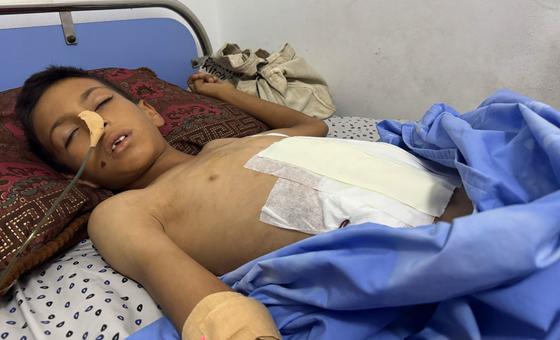
A child suffering from malnutrition lies on a bed in the Patient Society Hospital in Gaza City.

Hungry children dying

Meanwhile, the number of children in Gaza who have died from malnutrition since October 2023 has surpassed 100, according to the Gazan health authorities, the UN aid coordination office, OCHA, said in an update.

More than a third of the population is not eating for days at a time, according to the UN World Food Population (WFP).  Furthermore, acute malnutrition is spiking, with over 300,000 children at severe risk.

This comes amidst a recent warning by the UN Food and Agriculture Organization (FAO) that a mere 1.5 per cent of cropland in the enclave remains both accessible and undamaged, “signaling a near-total collapse of the local production of food.”

Aid taken from trucks

On the aid front, the UN and its partners collected food and hygiene kits from the Kerem Shalom/Karem Abu Salem border crossing on Wednesday.

“However, supplies were offloaded directly from these trucks before reaching their destination, given the extreme desperation pervasive in Gaza today,” OCHA said.

The agency stressed that people there “need a predictable lifeline – not a trickle of aid – so they do not feel they need to take desperate measures to survive.”

WFP said that just to cover basic humanitarian food assistance needs, more than 62,000 metric tonnes are required to enter Gaza every month, and so far, humanitarians have not been permitted to bring in enough supplies to support the population. 

Fuel shortages continue

Humanitarians also collected fuel from the Kerem Shalom crossing on Wednesday. Israel is allowing, on average, the entry of about 150,000 litres of fuel daily, which is still far below the minimum required. As a result, life-saving operations continue to be at risk.

The Palestine Civil Defence organization has warned that more than half of their ambulances have stopped operating across Gaza due to the shortage of both fuel and spare parts. 

“Israeli authorities must allow aid to enter through all crossings and via all available corridors so that humanitarians can deliver – at scale, in a safe and dignified manner – to reach the most vulnerable, including women, children and older people,” OCHA said. 

Source link

Safe seas key to global prosperity, Security Council told

Keeping sea routes safe today while also addressing emerging challenges was the focus of a debate in the UN Security Council on Monday which was convened by Panama, president for the month of August.

Arsenio Dominguez, Secretary-General of the International Maritime Organization (IMO), told the Council that last year, a workforce of just 1.9 million seafarers moved over 12.3 billion tonnes of goods, essentially “keeping global trade afloat”. 

Safety and security fundamental

He said the maritime sector has proved to be “remarkably resilient” in the face of geopolitical challenges.

“Yet resilience cannot breed complacency,” he warned.  

The safety and security of the maritime sector is fundamental to economic stability, sustainable maritime development and to livelihoods.”

Multiple threats

The threats are numerous. Nearly 150 incidents of piracy and armed robbery were reported in 2024 alone. In some regions such as Southeast Asia, incidents are surging, according to the International Criminal Police Organization (INTERPOL). 

Beyond piracy, international vessels plying the Red Sea have also come under attack against the backdrop of the war in Gaza.

Meanwhile, trafficking continues – including drugs, endangered wildlife and protected timber – and organized crime groups tap into criminal supply chains to move weapons, operatives and illicit goods to finance their operations.

Seafarers work in the engine room of a Chinese registered ship in the Port of Genoa in Italy. (file)

A ‘network’ under attack

Maritime routes were “the world’s first truly global network,” connecting distant shores for thousands of years, said Valdecy Urquiza, INTERPOL Secretary General.

“Today, and more than ever, that same network is exploited by criminals who threaten navigation, trade, communication – and with them, the global stability essential to sustainable development,” he told the Council.

He said the “poly-criminality at sea” is “making criminals more resilient, and enforcement more complex” as new and less visible dangers arise.

“As ports go digital – with automated vessel management, cargo tracking and logistics – vulnerabilities are emerging faster than they can be secured. Ports are facing a wave of cyber intrusions targeting the power, communication and logistics systems they rely on.” 

Furthermore, “cybercriminals can weaponise artificial intelligence to attack with greater speed, scale and precision.”

Global coordination, environmental action

In response to the situation, IMO has developed binding mandatory requirements, for example to address international ship and port security as well as cybersecurity threats.

The UN agency has also supported projects to boost regional capacity, including information sharing. This is in addition to establishing partnerships with the UN Office on Drugs and Crime (UNODC), INTERPOL, regional entities and donor States, aimed at strengthening national capabilities and building trust.

“While addressing maritime security, we must not lose sight of our responsibility to protect the ocean,” said Mr. Dominguez.

Maritime safety and security and environmental stewardship go hand in hand. Support for countries to develop and enhance response capabilities for maritime pollution incidents including from oil spills is ongoing.”

A ship passes through the Panama Canal in Central America. (file)

Perspectives from the Panama Canal

The Council also heard from the agency responsible for the operation of the Panama Canal, one of the world’s most important maritime corridors.

Ricaurte Vásquez Morales, CEO of the Panama Canal Authority, shared perspectives from “one of the most emblematic channels for human cooperation,” highlighting the strength of “principles-based neutrality.”

The Panama Canal is governed by an international treaty which safeguards equal access to all nations in times of peace or war,” he said, speaking in Spanish.

“This promise, which is incorporated in our Constitution, has enabled a small country to contribute stability to global trade, shielding this infrastructure from geopolitical tensions that also too often stymied progress.”

His remarks also showcased how the Canal has been under Panamanian administration for the last 25 years – a period which saw the completion of a third set of locks in 2016. As a result, the cargo volume transiting its waters increased by 50 per cent, while maintaining the same annual transit of roughly 13,500.

Climate adaptation

Like the IMO chief, Mr. Vásquez Morales also emphasised the need to address climate change. The Panama Canal experienced a drought over the past two years and this “global wake-up call” sparked water conservation efforts, logistical adjustments and the building of an artificial lake.

“Today, the canal boasts technologies that strengthen climate resilience,” he said.

“It creates financial mechanisms and ensures water and environmental security, while at the same time implementing efficient governance to harness the rapid progress in artificial intelligence and collaborating to strengthen cyber security on our roads and our logistics systems.”

Commitment, peace and solidarity

Concluding his remarks, Mr. Vásquez Morales insisted that “the Panama Canal is living proof that global public goods can be administered with equity, responsibility and vision.”

“Through sustained cooperation, constant adaptation and steadfast commitment to the principles of international law, the Canal will remain a safe and efficient route ready to serve not only this generation, but also many more to come,” he said.

“We trust that by working together, we will be able to keep open, not only waterways, but also the channels of understanding peace and solidarity.” 

Source link

Young people take the lead for a more sustainable future

Observed each year on 12 August, the Day draws attention to the rights, contributions and challenges of young people everywhere.

This year’s theme, “Local youth action for the SDGs and beyond,” emphasises how grassroots youth engagement is vital to achieving the Sustainable Development Goals (SDGs) and shaping more just, inclusive societies.

Young people are bold innovators, resilient organizers and essential partners in achieving the Sustainable Development Goals,” UN Secretary-General António Guterres said in a message marking the day.

“They are driving sustainable development, building more inclusive communities, forging peace and demanding a fairer, greener and more just future.”

Youth-led solutions work

Mr. Guterres also had a direct message to young people worldwide.

To every young person: your voice, ideas and leadership matter,” he said.

“Let us work together to support youth-led solutions and build a more just, peaceful and sustainable world, from the ground up.”

A generation that believes…

Today’s young people are coming of age at a moment of extraordinary global change.

According to UN data, half of the world’s population is 30 or younger, a number which is expected to rise to 57 per cent by 2030. Those under 25 today will make up over 90 per cent of the global prime-age workforce by 2050.

In addition, an international survey of over 27,000 respondents in 26 countries on challenges faced by people in public lives revealed that 67 per cent believe in a better future, with 15 to 17-year-olds expressing the most optimism.

Despite their immense potential for good, young people continue to face systemic challenges.

© UNICEF/Siegfried Modola

Young men from the Rohingya community receive electrician training at a refugee camp in southern Bangladesh.

Chronic job shortage

Youth unemployment, although at a 15-year low, still stands at 13 per cent globally.

Among 10 to 19-year-olds, one in seven experience a mental health disorder. In low- and middle-income countries, nearly six in ten 10-year-olds cannot read and comprehend a simple paragraph.

International Youth Day 2025 aims to highlight not only the urgency of these issues, but also the solutions already being forged by youth themselves – in their communities, cities and countries.

As Mr. Guterres emphasised: “Global progress begins in communities. And in every corner of the world, young people are leading the way.

Nairobi to host global commemoration

This year’s official observance will take place in Nairobi, Kenya, organized in collaboration with UN-Habitat, the UN agency focused on sustainable urban development.

Tuesday’s event will bring together youth leaders, city officials, policymakers and UN officials to showcase solutions and strategies for strengthening youth engagement in local development.

International Youth Day was first proclaimed by the UN General Assembly in 1999, building on the World Programme of Action for Youth adopted in 1995.

Source link

Four years on, here’s what total exclusion of women in Afghanistan looks like

Four years after Taliban fighters retook the capital Kabul on 15 August 2021, gender equality agency UN Women is warning that the situation for women and girls in Afghanistan is increasingly untenable.  

And without urgent action, this untenable reality will become normalised and women and girls will be fully excluded.

The Taliban is closer than ever to achieving its vision of a society that completely erases women from public life,” UN women said in a press release on Monday.

UN Women’s warning came just as the UN Assistance Mission in Afghanistan (UNAMA) released its latest report on the human rights situation between May and June, detailing harshening enforcement of regulations against women and death threats against female humanitarians.  

A society which is against them

The edicts which the Taliban have passed restricting women and girls’ rights interact together to create an inescapable cycle which relegates women to private spaces and increases their vulnerability. 

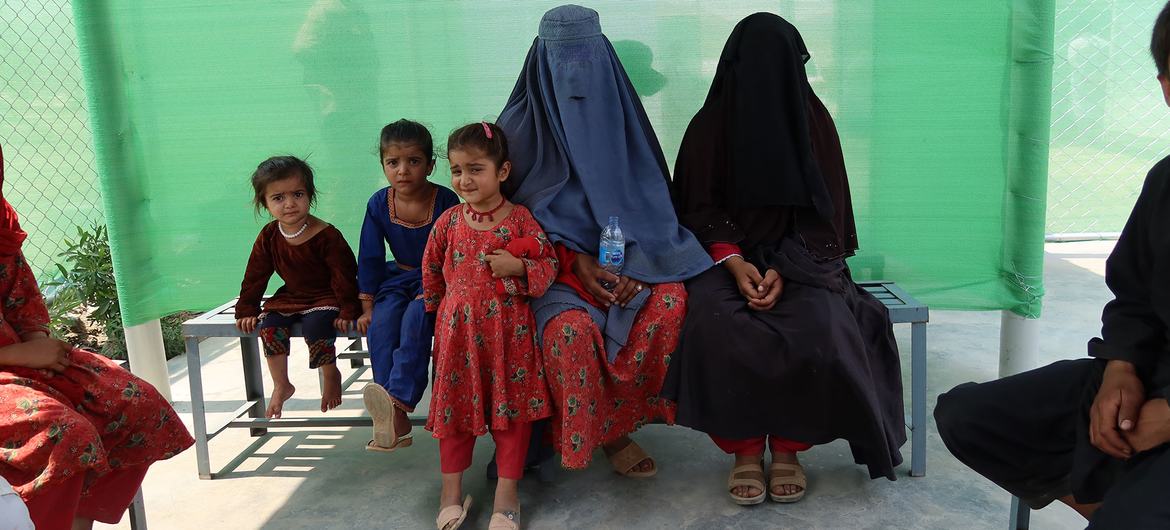
In most cases, including for humanitarian workers, women are not allowed to move freely in public without being accompanied by a mahram, or a male guardian. 

In its report, UNAMA noted a change in the enforcement of mahram requirements, with the de facto Taliban authorities instructing private businesses and health clinics to refuse services to all women who were not accompanied by a mahram.  

In certain regions, the authorities have also begun to strictly enforce hijab regulations, including by requiring women to wear a chador, a full body covering. In Herat, if they were not doing so, women are being banned from public spaces.   

Out of opportunities 

In addition to impeding women’s movements in public spaces, the Taliban has also banned women and girls from secondary and higher education.  

Taken together, these two edicts have profound ramifications at all levels of society. Now, not only is it functionally impossible for women to receive educational degrees, it is also unduly difficult for them to get jobs and enter into training programmes.  

As a result, over 78 per cent of Afghan women are not in education, employment or training.

This means that almost half of the work force is not contributing to the economy in measurable ways, a huge problem for a country whose economy has been devastated by sanctions and climate shocks.

UNAMA’s report noted that the de facto authorities continue to affirm that Islam permits women to work – even as other edicts seem to discourage it.  

An unhealthy cycle

But it’s not just the economy which is suffering. In some cases, these edicts can literally be a matter of life or death.

“The results are devastating. Women are living shorter, less healthy lives,” the UN agency said.

Take healthcare for instance. If women are not allowed to enter higher education, they cannot become doctors. And if women are banned from receiving treatment from male doctors – which they are in certain regions – they cannot expect to live healthy lives.  

UN Women estimates that impediments to receiving healthcare for women in Afghanistan will increase maternal mortality by 50 per cent by 2026.  

Child marriage is also becoming more common, and women are increasingly subjected to violence, inside and outside of their homes. In some cases, de facto authorities were the ones involved in or enforcing forced marriages.  

Solidarity in Afghanistan

It is not just in public that women’s voices are being excluded – 62 per cent of women feel that they cannot even influence decisions at home. This comes amidst a curtailing of expression rights more generally, with many private media outlets closing and social media accounts being monitored, according to the UNAMA report. 

UN Women emphasises that despite having little to hope for, Afghan women remain resilient. They continue to look for moments of solidarity and hope for a different future.  

In May, some women working for the UN were subjected to explicit death threats in relation to their work, but they continue to deliver lifesaving and life-building services.  

One woman whose grassroots leadership organization lost all of its funding in 2022 continues to work to support women in smaller ways.  

“I will continue to stand strong as a woman, supporting other Afghan women. I go to remote areas and collect [women’s] stories, listen to their problems and this gives them hope. I try my best and that also gives me hope,” she said.  

A dangerous precedent

In total, since 2021, almost 100 edicts which restrict how women and girls move through society have been instituted and enforced. In four years, not a single one has been overturned.  

Susan Ferguson, UN Women’s representative in Afghanistan, said that this lack of progress must be understood beyond the Afghan context.

“This is not only about the rights – and futures – of Afghan women and girls. It’s about what we stand for as a global community,” Ms. Ferguson said.

If we allow Afghan women and girls to be silenced, we send a message that the rights of women and girls everywhere are disposable. And that’s an immensely dangerous precedent.” 

Source link

Security Council voices deep concern over deadly escalation in Syria’s Sweida region

Unrest began on 12 July when mutual kidnappings escalated into armed conflict between Druze groups and Bedouin tribes, drawing in Syrian security forces.

The violence spiralled, with reports of extrajudicial executions, desecration of corpses and looting. Footage circulated widely on social media fanned sectarian tensions and disinformation.

Nearly 200,000 displaced

In a presidential statement adopted on Sunday, ambassadors said they were “deeply concerned” by the recent fighting, which has included “mass killings” and led to the internal displacement of some 192,000 people.

The Council “strongly condemns the violence perpetrated against civilians…and calls on all parties to adhere to the ceasefire arrangement and to ensure the protection of the civilian population.”

The 15-member body reminded all sides of their obligations under human rights and international humanitarian law, stressing in particular the duty to “respect and protect” all medical and humanitarian personnel.

Council members urged all parties to allow “full, safe, rapid and unhindered humanitarian access” to affected communities in the heavily-Druze Sweida area and across Syria, in line with the principles of humanity, neutrality, impartiality and independence.

They also underscored the need to ensure the humane treatment of all combatants, including those who have surrendered, are wounded, detained, or have laid down their arms.

Protection for all

The statement called on the Syrian interim authorities to protect all Syrians “regardless of ethnicity or religion” and warned that “there can be no meaningful recovery in Syria without genuine safety and protection for all Syrians.”

The Council welcomed the interim authorities’ condemnation of the violence and their commitment to investigate those responsible, but urged them to ensure “credible, swift, transparent, impartial, and comprehensive investigations… in line with international standards.”

Reaffirming resolutions including 2254 (2015), the Council reiterated its “strong commitment to the sovereignty, independence, unity, and territorial integrity of the Syrian Arab Republic” and called on all States to avoid “negative or destructive interference” that could further destabilise the country.

The statement also recalled the 1974 Disengagement Agreement and the mandate of the UN Disengagement Observer Force (UNDOF) tmonitoring and patrolling the contested Golan on the Syria-Israel border, urging all parties to abide by its terms to maintain calm.

On the threat of terrorism, the Council cited the latest report of its Analytical Support and Sanctions Monitoring Team, voicing “grave concern over the acute threat posed by foreign terrorist fighters” in Syria. It urged the country to take decisive measures against ISIL (Da’esh) and Al-Qaida, in line with relevant resolutions.

Looking ahead, the Council repeated its call for “an inclusive, Syrian-led and Syrian-owned political process” based on resolution 2254, to safeguard the rights of all Syrians and enable them to “peacefully, independently and democratically determine their futures.”

Source link

Aid blockade deepens Gaza crisis as malnutrition deaths rise, warns UNRWA

“For over 150 days, not a single truck from UNRWA has been permitted to deliver food, medicine or other essentials into Gaza,” the agency said on Friday. “This denial of access is costing lives every single day.”

Nearly 100 children dead from malnutrition

According to Gaza’s Ministry of Health, cited by the UN, at least 61,158 Palestinians have been killed and more than 151,000 injured since October, amid relentless Israeli bombardment and ground operations.

UNRWA said nearly 350 of its own staff are among the dead since Israel’s military operation in Gaza began following the 7 October 2023 Hamas-led terror attacks.

Many civilians have been killed while sheltering in schools or tents, or while queuing for food.

Food insecurity is now acute. UN data show 193 people — including 96 children — have died from malnutrition since the start of August, with July seeing the highest monthly rate of acute malnutrition recorded in children under five.

Soaring prices

Wheat flour prices have soared by up to 15,000 per cent compared to pre-war levels. “Sustained, large-scale deliveries are the only way to stabilise food supplies and prices,” UNRWA stressed.

Health services are close to collapse. More than half of essential medical supplies are already out of stock, and hospitals have been forced to ration fuel for generators. UNRWA teams have nevertheless managed over 1.5 million health consultations since March, but “without resupply, our ability to save lives is dwindling,” the agency warned.

Vast scale of displacement

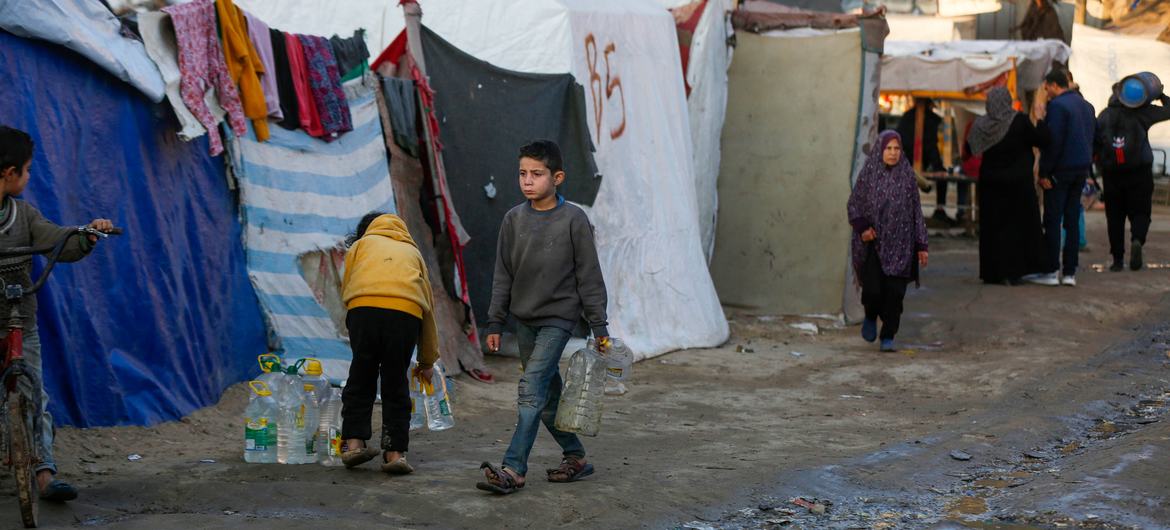
Displacement is on a vast scale: 1.9 million people — around 90 per cent of Gaza’s population — have been forced from their homes, many repeatedly. Nearly 100,000 are crammed into over 60 UNRWA-run shelters.

In the northern Israeli-occupied West Bank, around 30,000 people from Nur Shams, Tulkarm and Jenin refugee camps remain unable to return home due to Israel’s “Iron Wall” military operation, ongoing since January.

The agency urged immediate, unhindered humanitarian access. “We need the world to act — to open the crossings, to stop the suffering, and to uphold the most basic principles of humanity,” it said.

The UN Security Council is due to meet in New York in emergency session on Sunday morning local time to discuss the Israeli cabinet’s endorsement of a military takeover of Gaza City which is home to around one million Palestinians.

From crisis to cultivation: Haiti’s farmers build resilience one seed at a time

Instead of having seeds which sprout reliably, farmers contend with batches which may grow only 40 or 50 per cent of the time. This not only diminishes their yield and profit but also decreases their ability to sustain their livelihoods.  

The Food and Agriculture Organization (FAO) is working with the Ministry of Agriculture in Haiti to change this by localising the seed economy and training members of organized seed banks known as Groupements de Production Artisanale de Semences (GPAS).   

“We realised that most of the seeds were of doubtful quality, that is to say they were not adapted to certain climate conditions… and as long as they are not well-adapted and are not good quality, we will have weak production,” PierreFrantz Jacques, a former farmer and one of FAO’s seed bank project managers, told UN News. 

UN Haiti/Daniel Dickinson

Seed banks in Haiti work to provide farmers with high quality seeds.

There are now over 200 GPAS located throughout Haiti, which cultivate high-quality seeds to distribute to other farmers with the goal of increasing farmers’ yields and reducing dependency on foreign seed and food imports.  

Especially today, these groups play an important role with more than half of the country facing emergency food insecurity and with agricultural production threatened by armed violence due to increased gang activity.  

“GPAS, in providing seeds of quality, contributes to the improvement of agricultural productivity and food security in communities,” Mr. Jacques said.  

A beginning amidst catastrophe

Around two-thirds of Haiti’s population relies on agriculture for their livelihoods, most of them are small farmers. However, because of recent globalizing forces, these farmers only produce 40 per cent of Haiti’s food, creating an untenable food situation through which Haiti has become dependent on exports.  

Throughout the past decades, various FAO programmes in Haiti have worked to support seed production as one approach to reducing the trade deficit. The GPAS programme in particular was revitalized in 2010 following the catastrophic 7.0 earthquake which devastated Haiti and its agricultural sector.  

FAO works to distribute high quality seeds in Haiti to stabilize crop production.

During this humanitarian crisis and while helping with the provision of emergency assistance, FAO looked beyond the immediacy of the crisis and began considering what it would mean to rebuild the agricultural sector.  

“Immediately, we need to have resources from humanitarian assistance dedicated to resilience activities. You have to prepare for later from the beginning,” said Pierre Vauthier, FAO’s Representative in Haiti.  

In 2010, this meant recognising that seed systems in Haiti were insufficient, with many farmers dependent on external sources and varieties of low-quality permeating the formal and informal market.  

From emergency to resilience

This is where GPAS came in, giving them high-quality, first-generation seeds (semences de base) with which to jumpstart their enterprises. The groups were also trained in best practices for cultivation, harvesting and financial management.  

While this training does rely on scientific research and technological advances, it also seeks to deploy local knowledge of ecosystems.  

In this vein, ultimately, it is the GPAS farmers who pick the seed varieties they want to cultivate, with many choosing local species which are already well-adapted to the environment and already a part of local agricultural traditions.

“The farmers and locals know their environment, all the particularities. They know the type of soil, the type of climate. And this knowledge is passed down from generation to generation,” Mr. Jacques said.  

Climate shocks have plagued Haiti’s agricultural sector.

Additionally, FAO works to provide seed banks with silos and other tools to practice proper storage. This is particularly important during climate shocks, enabling farmers to better protect stocks despite extreme weather events.  

“We can consider the seeds as an adaptation tool which allows farmers to continue to cultivate crops even during extreme conditions,” Mr. Jacques said.  

Ultimately, a program like GPAS is at the heart of what FAO does, Mr. Vauthier said — yes, FAO facilitates humanitarian assistance, but their real expertise lies in what comes after, in creating self-sustaining communities.  

“Resilience can give communities back dignity. It can make your brain think in a very different way, not as assisted but as someone taking control of his own life,” Mr. Vauthier said.  

One seed matters

Haiti is facing a protracted crisis — 1.3 million people displaced, almost six million facing emergency food insecurity, impending climate shocks for which the country is ill-prepared and armed violence which is brutalising communities.  

In this context, perhaps it is hard to believe that one seed matters. But for FAO, sometimes change needs to be small, to be locally sustainable before it is exported to the entire country. These changes may not be revolutionary, Mr. Vauthier said, but they do work and they do last.  

Seed banks are much the same, according to Mr. Jacques.  

“What happens is that farmers are less dependent on other human beings. They are capable of producing their own seeds… they will contribute to reinforcing autonomy and food security,” he said.  

Source link

‘There is no military solution’ to end Israel-Palestine conflict, Security Council hears, as starvation stalks the Gaza Strip

Two top UN officials warned that the Israeli cabinet’s green light this week for a fresh offensive aimed at gaining total military control of Gaza City – home to around one million Palestinians – would only risk igniting “another horrific chapter” of displacement, death and destruction.

Miroslav Jenča, Assistant Secretary-General for Europe, Central Asia and the Americas, told ambassadors that Israeli Prime Minister Benjamin Netanyahu’s proposed plan for “defeating Hamas” and the establishment of an alternative civilian administration that is neither Hamas nor the Palestinian Authority, risked “yet another dangerous escalation” that would destabilise the entire region.

However, according to Israeli media reports, the senior political affairs official continued, the Israeli plan foresees the displacement of all civilians from Gaza City by 7 October, affecting some 800,000 people – many previously displaced.

Reports indicate that forces would then surround the city for three months.  This would reportedly then be followed by an additional two months to seize control of central Gaza’s camps and clear the entire area of Palestinian armed groups.

Calamitous plan

If these plans are implemented, they will likely trigger another calamity in Gaza, reverberating across the region and causing further forced displacement, killings, and destruction – compounding the unbearable suffering of the population,” said Mr. Jenča, calling for a full, immediate, and permanent ceasefire, the unconditional, immediate release of all hostages and compliance with international humanitarian law by Israel.

He said there was no military solution to end the conflict adding that planning for Gaza’s future “as we address the urgency of developments on the ground today,” is critical.

Mr. Jenča called for establishing political and security frameworks to ease the humanitarian crisis, while beginning recovery and reconstruction efforts that address the legitimate concerns of both Israelis and Palestinians – in line with realising a two-State solution.

United Palestine

“Critically these frameworks must facilitate a legitimate Palestinian Government that can reunify Gaza and the West Bank, including East Jerusalem, politically, economically and administratively.”

Furthermore, it must be made up of a united leadership representing all of Palestine. He called on the Palestinian Authority to “advance its stated goal of holding elections” to this end.

‘This is starvation’: Rajasingham

Senior humanitarian affairs official Ramesh Rajasingham told ambassadors that hunger-related deaths were already rising, ahead of any new mass-displacement policy for Gaza City.

“Whatever lifelines remain, are collapsing under the weight of sustained hostilities, forced displacement and insufficient levels of life-saving aid.”

He said with local authorities documenting the deaths of 98 children from severe acute malnutrition – 37 since 1 July – “this is no longer a looming hunger crisis – this is starvation.”

The head of the humanitarian affairs coordination office (OCHA) in Geneva said he was extremely concerned over the “prolonged conflict and further human toll that is likely to unfold following the Government of Israel’s decision to expand military operations in Gaza.”

“This marks a grave escalation in a conflict that has already inflicted unimaginable suffering.”

‘Grim milestone’

“A grim milestone has also been crossed in the humanitarian community,” he lamented, noting that over 500 humanitarian workers have been killed in Gaza since hostilities escalated, including at least 167 women. Smear campaigns against aid operations continue unabated.  “As we approach World Humanitarian Day, we must insist on the protection of all aid workers,” he added.  

States – all those with any influence – must look within our bruised collective conscience and summon the courage to do what is necessary to end this inhumanity and pain, he said.

Civilians must be protected, and hostages must be released unconditionally.  Arbitrarily detained Palestinians must be freed. Israel must agree to and facilitate humanitarian relief operations, both into and within the Gaza Strip, to reach the population in need.

The International Court of Justice’s (ICJ) provisional measures in the case on the application of the Genocide Convention in Gaza remain in place, the top OCHA official added, including the demand that Israel take immediate and effective measures to enable the provision of urgently needed basic services and humanitarian assistance.

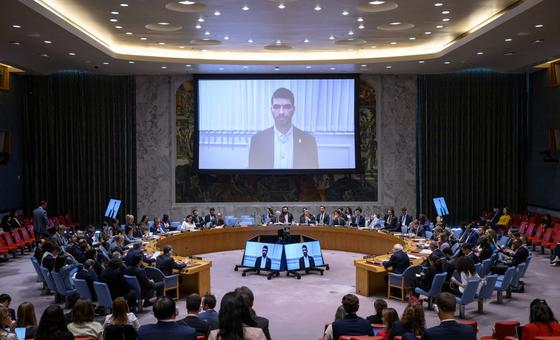
SECURITY COUNCIL LIVE: Ambassadors meet in emergency session, amid starvation in the Gaza Strip

The UN Security Council is meeting in New York following the Israeli cabinet’s decision to again expand its military operation inside the Gaza Strip and take full control of the key population centre of Gaza City. UN chief António Guterres described it as a “dangerous escalation” for the two million civilians trapped in the enclave as well as the remaining Israeli hostages still held captive. Follow our Meetings Coverage Section’s live reporting of the crisis meeting and UN News app users can follow here.

Source link

Preparing for the next flood: Protecting women’s health in Bangladesh

Sunamganj is a district in the wetland ecosystem in northeast Bangladesh, which is particularly vulnerable to climate change. Floods arrive quickly and suddenly and can last for weeks. They disrupt life, displace families and cut off access to services.

For the over 670,000 women of reproductive age living in the area, increasingly extreme weather events are threatening their access to reproductive healthcare.

Preparation and planning

To help prepare for these crises, UNFPA is training reproductive-aged women to protect themselves and their children during the next flood.

Shakila Akhter, a 24-year-old mother of two, was eight months pregnant during the last flood.

“Thanks to the training I received, I knew what to carry, how to prepare and how to protect my family,” she recalled. She now uses family planning tools she didn’t know about before: “I want to choose when I’m ready for another child.” 

She also underscored the link between climate change and these severe floods: “We understand that the climate has changed over the past 20 years. In Bangladesh, the flood season has become longer, sudden floods are more frequent, heatwaves have intensified, and winters are now shorter.  

“So, we all should be prepared to manage it to survive.”

Local volunteers

This training is made possible by volunteers trained to help others prepare for climate shocks.

Shakila Begum, 26, began volunteering with just two days of training. She works with the Climate Resilience Health System and Community initiative – supported by the UNFPA and the Swedish International Development Cooperation Agency – which educates women on topics from menstruation to childbirth during floods.

Ms. Begum is now the point of contact for 75 families, helping them with issues like family planning and maternal healthcare.

“One woman had dangerously high blood pressure just before giving birth,” she recalled. “I advised her family to go to the local hospital, where she safely delivered – completely free of cost.”

UNFPA Representative Catherine Breen Kamkong (centre) meets Shakila Begum (right, in green), a 26-year-old volunteer with the Climate Resilience Health System and Community Project in Sunamganj.

Empowerment through safe spaces

The initiative also offers safe community spaces where women can learn about sexual and reproductive health.

In Kurban Nagarn, an area in Sunamganj, volunteers have begun hosting “street dramas”. The volunteers act out scenes related to issues such as maternal health, disaster preparedness and child marriage prevention, with over 500 people attending each performance.

Taskira Hauque Tazin, a local student, is one of the moving theatre’s core members. She has attended many conferences in Bangladesh and abroad, where she shares her experiences and is recognised for her work.

“I feel proud to work for women’s empowerment and to support underprivileged communities. Through these plays, we raise awareness so that women don’t fall behind. We want to stop early marriage, promote girls’ education, and ensure that women get access to maternal health care,” she said. “Whether it’s in the sun, rain, or storm – we’ll keep doing this work for the people.”

Villagers gather for an afternoon street drama in Bodipur, Kurban Nagar Union, Sunamganj, as part of the Climate Resilience Health System and Community Project.

Anima Akhter, a 24-year-old mother in Kurban Nagarn, explained that the street dramas provide a safe space for difficult conversations: “We want to share our problems, especially about our bodies – but we often can’t speak.”

With the support of local volunteers, Anima delivered her youngest child safely at the hospital.  

Amina’s husband, Nurul, now accompanies her to community sessions and has become a role model in the community, receiving training from volunteers to teach his neighbours about women’s and girls’ health.  

“Since my wife underwent training, I took it very seriously and felt inspired to help our neighbours, especially concerning women’s and girls’ health,” he said. “I regularly talk about these important messages with other men at the tea stall, encouraging them to be prepared for disasters and to take the same precautions.  

“I urge them to seek help from service providers if they face any problems, especially concerning pregnant women’s deliveries and family planning methods.”  

Anima Akhter, 24, with her husband Ruhul Amin, 30, a steelworker, and their two children outside their home in Bodipur village in Kurban Nagar Union.

Ongoing challenges

But challenges remain despite the best efforts of the UNFPA and other UN partners.

In flood-prone villages in Sunamganj, over half of deliveries still occur at home.

Many women and girls also still feel shame discussing topics like menstruation, and cultural norms often restrict women who attempt to generate their own income.

These vulnerabilities faced by women and girls are exacerbated by climate-related disasters, which often hit them the hardest.

Continued commitments

From 28 to 31 July, global experts convened at the Global Symposium on Climate Justice and Impacted Populations in Brasília, co-hosted by UNFPA and the Government of Brazil.  

There, leaders worked to address the disproportionate impact of climate change on women and girls. The event called for gender-inclusive climate negotiations and a renewed commitment to understanding the impact climate change has on sexual and reproductive health and rights.

Diene Keita, Acting Executive Director of UNFPA, highlighted the gendered impact of climate change at the event: “The evidence tells us that climate change is increasing the risk of maternal mortality, disrupting access to contraceptives and increasing the risk of gender-based violence.”

“Our collective efforts need to strengthen the resilience of women, girls and health systems to withstand and adapt to climate shocks,” Ms. Keita stressed. “Being prepared, responding rapidly, and building forward better must be central pillars for our work.” 

Africa’s ‘land-linked’ economies poised to drive continent’s prosperity

“We stand at a pivotal moment, one that marks a profound shift from viewing these nations as isolated and constrained by geography to recognizing them as dynamic land-linked economies at the heart of Africa’s socio-economic resurgence,” said Samuel Doe, Resident Representative of the United Nations Development Programme (UNDP) in Ethiopia.

A new UNDP position paper – Africa’s Land-Linked Economies: Pathways to Prosperity and Development – explores the new narrative for African LLDCs, “rewriting the story from one of geographic limitation to strategic advantage”.

Mr. Doe, speaking on behalf of UNDP in Africa, presented the paper at a news conference on the margins of the Third UN Conference on LLDCs (LLDC3), which has been under way since Tuesday in Awaza, Turkmenistan.

“For decades, Africa’s LLDCs have been defined by their lack of direct access to the sea, often perceived as a disadvantage that limits trade, growth and development,” he said.

“Today, Africa’s LLDCs are leveraging their strategic centrality and regional connectivity to become vital hubs of economic activity, trade and innovation.”

He cited, among others, Rwanda’s 130,000-hectare Kigali Logistics Platform – a bustling regional hub, connecting Uganda, the Democratic Republic of Congo and Burundi with the coastal economies of Kenya and Tanzania.

In addition, Ethiopia facilitates crucial trade routes from South Sudan to Djibouti – including shortening freight transit by rail from 72 hours to 12 hours – and leverages its national airline, emerging as a vital global air transport connector that bridges Africa with international markets.

Meanwhile, Botswana, Malawi, Zambia and Zimbabwe anchor the pivotal North-South corridor, linking southern Africa to broader continental markets.

Globally, LLDCs account for seven per cent of the world’s population but contribute to only about 1.1 per cent of world trade.

UNDP notes that although African LLDCs’ contribution to global trade may be minimal, they supply regional and continental markets with strategic goods and services, including diamonds, copper, gold, coffee, sugar, as well as textiles and apparel.

‘Land-linked shifts the narrative’

A critical element of the shift taking place on the continent is the African Continental Free Trade Area (AfCFTA), which came into effect in January 2021 and represents the world’s largest free-trade area with a market of 1.2 billion people.

Most African LLDCs are members of the AfCFTA, which is already reducing trade barriers, unlocking vast opportunities for LLDCs to actively participate in and benefit from intra-African and global trade, according to UNDP.

“Land-linked flips the narrative: inland countries become bridges, not barriers. With AfCFTA, LLDCs can turn geography into a competitive edge – moving goods, services, and data faster and more affordably across Africa and beyond,” said Mr. Doe.

The shift also requires coordinated policy reforms, as well as leveraging innovation, inclusive governance, resilience and financing to drive sustainable and inclusive growth.

The paper also cites digital connectivity as a “transformative pathway” for African LLDCs to transcend geographic constraints and establish direct linkages with regional and global markets.

According to the 2024 International Telecommunication Union (ITU) Facts and Figures, 39 per cent of the population in LLDCs is online, with internet access in African LLDCs reaching up to 20 per cent.

The current digital landscape, though challenging, demonstrates that African LLDCs are positioned to leverage innovative connectivity solutions that bypass traditional dependencies on coastal neighbouring countries, according to the UNDP paper. These notwithstanding, LLDCs continue to rely on neighbouring coastal countries for undersea cable access.

“We are also concerned that landlocked developing countries do not have easy access to submarine cables” Cosmas Luckyson Zavazava, Director of the ITU Telecommunication Development Bureau, told reporters in Awaza.

“And for those that are doubly landlocked, it is a bigger challenge because you must have good relations with your neighbours for you to be able to communicate.”

Find all our coverage on LLDC3 here.

Source link

‘Nuclear weapons have no place in our world,’ UN chief tells mayors in Nagasaki

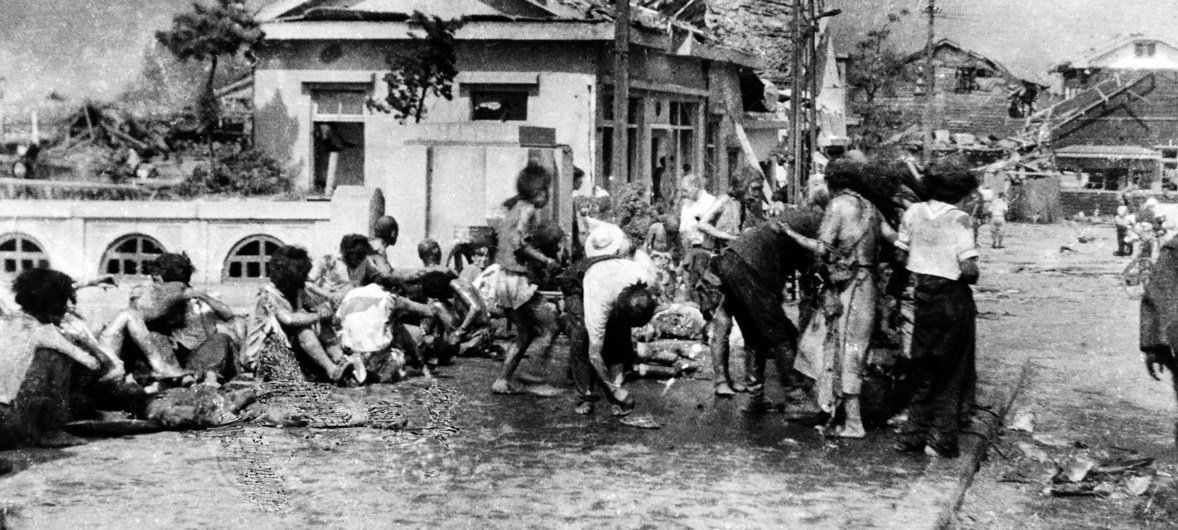
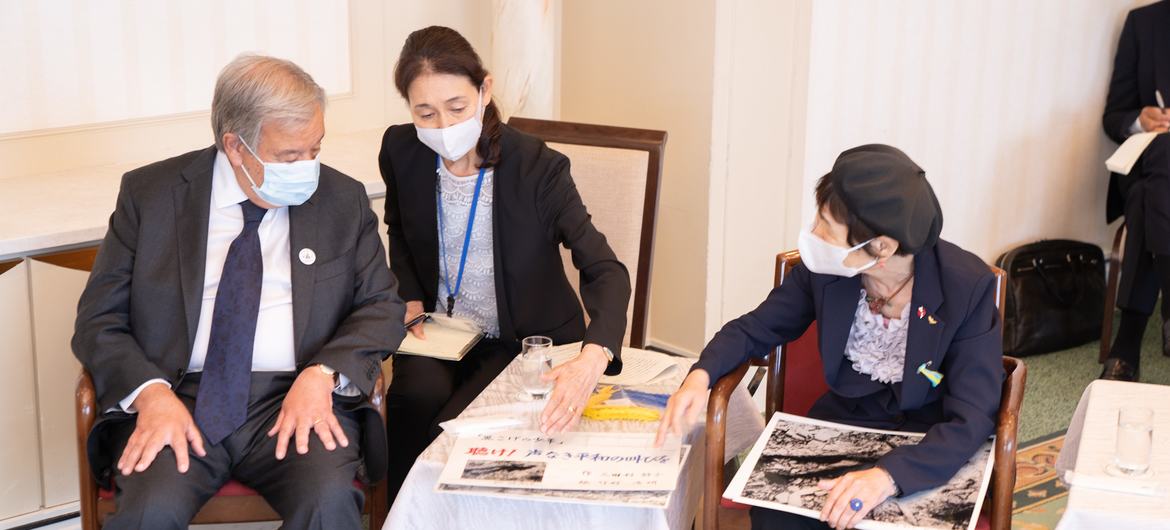
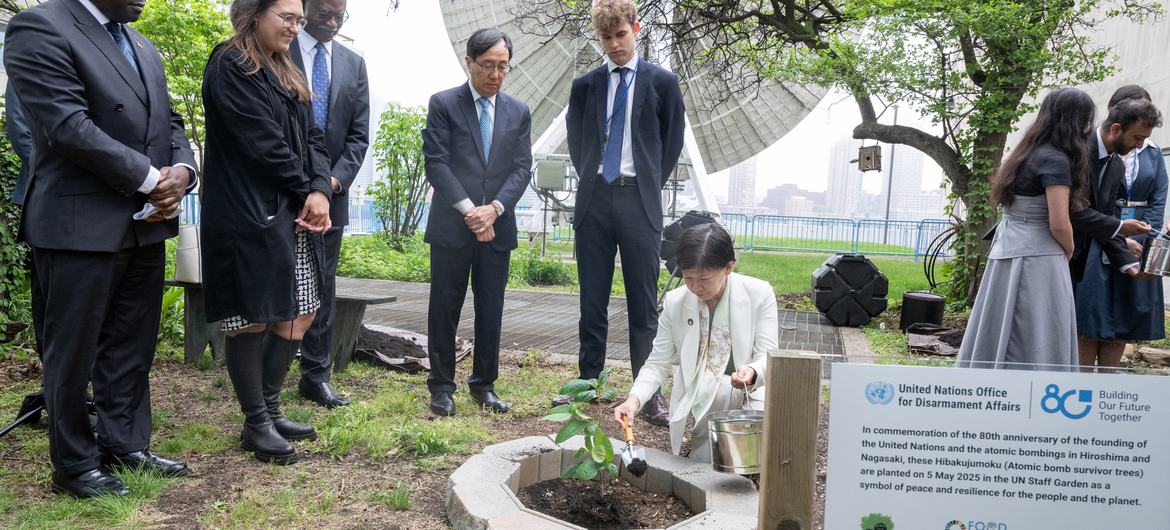
Inspired by the hibakusha, survivors of the atomic bombings at the end of World War Two who turned their suffering into a powerful appeal for peace, António Guterres renewed his call for a world free of nuclear weapons in a video message to the 11th General Conference of Mayors for Peace in Nagasaki.

United against nuclear weapons, the conference is an opportunity for mayors from around the world to discuss and adopt key priorities in support of global denuclearisation.

‘No place in our world’

“Nuclear weapons have no place in our world,” said Mr. Guterres in his video-message, as they only offer the “illusion of safety and the certainty of devastation,” he said.

Calling for the total elimination of nuclear weapons, the Secretary-General urged all participants at the conference to “keep mobilising communities, inspiring young people, and building peace from the ground up.”

“I urge all States to recommit to nuclear disarmament,” he said.

A better world

I commend Mayors for Peace for your unwavering commitment to a better world,” said Secretary-General, as the organization aims at creating real momentum for the realisation of a peaceful world without nuclear weapons.

In honour of the hibakusha, and in the memory of the victims of Hiroshima and Nagasaki, Mr. Guterres made an impassioned call for action to end the nuclear threat once and for all.

Read more about the work of the hibakusha here in previous UN News coverage, and listen to this extraordinary story of survival in our Lid is On podcast:

Source link