UN refugee agency urges support to end displacement for millions of Syrians

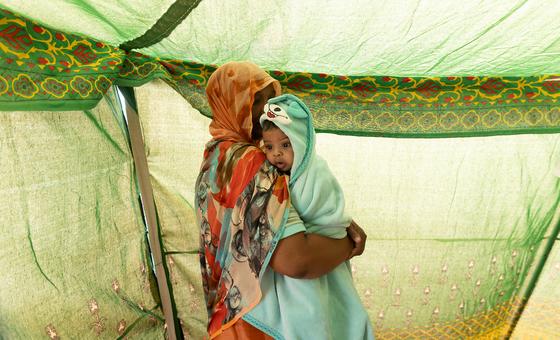
That’s the message from Kelly Clements, Deputy High Commissioner with the UN refugee agency, UNHCR, speaking on Tuesday after concluding a five-day visit to Lebanon and Syria.

“The international community cannot afford to be mere observers, assessing and judging the developments in Syria,” she said.

“They must take an active role supporting stabilization and recovery efforts, helping Syrians rebuild and reshape their country.”

Homeward bound

More than 1.2 million people have returned to Syria since the fall of the Assad regime last December.  Roughly 850,000 have crossed back from Lebanon and elsewhere in the region.

UNHCR has scaled up support to those choosing to return, including by providing money and transportation, to ensure the process is dignified and sustainable. 

Meanwhile, returns continue inside Syria, with more than 1.7 million internally displaced people (IDPs), including just over 880,000 individuals who have departed from IDP sites in the north.

Commitment to cooperate

During her visit, Ms. Clements met with top government officials, refugees who have recently returned to Syria, and newly arrived refugees in Lebanon. 

In meetings with Lebanese Prime Minister Nawaf Salam and other cabinet members, she expressed appreciation for continued generosity in hosting Syrian refugees and committed to further cooperation in supporting voluntary returns.

Since January, nearly 200,000 Syrian refugees have returned from Lebanon. Many more have indicated that they plan to follow in the coming months, especially after the authorities waived exit fees for those who overstayed their residency.

Ms. Clements also met a group of Syrian refugees who arrived in Lebanon in the past few months after fleeing recent violence back home.  

“It’s been a dynamic period where we see both Syrians returning, but also others becoming newly displaced,” she said. 

“We count on the international community to continue supporting Lebanon and UNHCR’s work here,” she added.  “Millions of Syrian refugees are still in neighbouring countries, and the world must not forget about them.”

Return and rebuild

In Syria, Ms. Clements met with Social Affairs Minister Hind Kabawat as well as the governors of Homs and Idleb. She also spoke to recently returned refugees who shared their hopes to rebuild their lives and their country. 

“I saw up-close how people have preserved their will to return, stay and rebuild despite the harsh reality of destruction and lack of services following 14 years of war,” she said. 

 UNHCR and partners have expanded support to areas in Syria that are seeing high numbers of returns. 

Ms. Clements visited rural Damascus and met returnees who received shelter assistance and support to start small businesses. She also helped inaugurate a newly habilitated civil registry office in Idleb governorate, which the agency supported.

She stressed that UNHCR and partners are on the ground in Syria doing their part, “but there is so much more to be done and the international community’s commitment to support such efforts is critical.” 

Source link

Daily malnutrition deaths continue as Israeli forces push further into Gaza City

Military activities continue in and around Gaza City, but also in the south, taking a heavy toll on civilians, including deaths, injuries and further displacement,” said UN Spokesperson Stéphane Dujarric at the daily press briefing in New York: “Our colleagues report that people continue to flee, mainly towards the coast.”

More than 76,000 people have been newly displaced since mid-August, with most occurring in the north, he said, citing the latest reports from UN agencies on the ground that are monitoring population movements. More than 23,000 people were displaced from northern Gaza.

Coastal areas are also crowded with tents, forcing many people to flee from Gaza City in the north towards central areas, according to the UN humanitarian coordination agency, OCHA.

Famine response: ‘We can do this again’

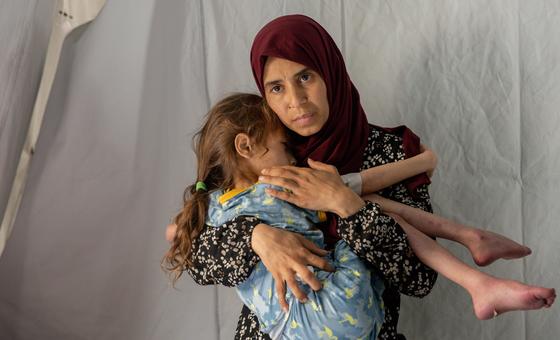
Daily reports of malnutrition deaths continue, the UN Spokesperson said. Since the start of the nearly two-year-long war, more than 300 people, including many children, have died of malnutrition in the Strip, according to local authorities.

The World Food Programme (WFP) reported that the situation “continues to deteriorate”, the UN Spokesperson added, adding that families without able-bodied members to fetch food are facing the highest risks.

As such, the UN agency resumed last week its distribution system of digital vouchers, reaching 22,000 people, including vulnerable groups, following a five-month pause.

“We and our partners are continuing to transport aid and other medical supplies to and from the crossings [into Gaza], but the current situations on the ground have not yet allowed us to resume community-based distribution,” Mr. Dujarric said. “Only a ceasefire will ensure necessary conditions for a massive response to prevent famine from spreading further.”

During the previous ceasefire from January to March, he said “we reached nearly every single person in the Gaza Strip with lifesaving aid, and we can do this again.”

Obstacles delay urgent aid deliveries

WFP said obstacles include supply shortages and violent unrest around convoys which is making distributions “nearly impossible”.

According to the UN humanitarian agency, the movement of aid teams inside Gaza remains heavily restricted. OCHA also reported that about one in three planned missions were “impeded or outright denied by Israeli authorities” between Friday and Monday, the UN Spokesperson said.

As a result, many missions could not be completed, he said, also noting that strict Israeli inspections continue to significantly delay aid clearance at Ashdod Port.

Visas for top Palestinian officials blocked

News reports indicated that the United States announced last week that it would not issue visas to senior Palestinian leaders ahead of the high-level General Assembly meetings later this month at UN Headquarters in New York.

That includes a conference on 22 September where Heads of State and Government are expected to endorse a political declaration adopted by leaders attending an international conference in late July, endorsing the two-State solution.

Responding to a reporter’s question on the matter, Mr. Dujarric said “the participation of a senior Palestinian delegation to the conference is essential.”

UNRWA chief levels charge of ‘scholasticide’

Philippe Lazzarini, Commissioner-General of the UN agency for Palestine refugees, UNRWA, raised alarms at what would have been the start to the school year for more than 600,000 children in Gaza.

Gaza is in ruins; so is its education system,” he said in a statement on Monday. “Instead of going back to school, like most children around the world, around 660,000 girls and boys in Gaza will be sifting through the rubble, desperate, hungry, traumatised and mostly bereaved.”

The longer they stay out of school with their trauma, the higher the risk they become “a lost generation, sowing the seeds for more hatred and violence”, the UNRWA chief warned.

“Ceasefire is the only way forward to reverse the famine and the ‘scholasticide’ hitting the children of Gaza,” he said.

Source link

Sudan: Hundreds feared dead in Darfur landslide

Up to 1,000 people are feared dead in the tragedy, which occurred on Sunday in Tarsin village, located in the Jebel Marra range on the border of Central and South Darfur states.

The landslide was triggered by days of heavy rain.

“I extend my heartfelt condolences to the families of the victims and to the people of Sudan at this tragic time,” Luca Renda, interim UN Humanitarian and Resident Coordinator in the country said in a statement.

Meanwhile, the UN and partners are mobilizing to provide support to the affected population.

The humanitarian community stands in solidarity with the people of Sudan and will spare no effort to ensure that aid can reach those in need without delay,” he said.

Refuge amid war

The UN migration agency IOM expressed sadness over the loss of life due to the catastrophic landslide, which is among the deadliest disasters in Sudan’s recent history.

The tragedy comes amid the brutal ongoing war between the Sudanese Armed Forces (SAF) and a militia group known as the Rapid Support Forces (RSF) that has displaced millions since April 2023.

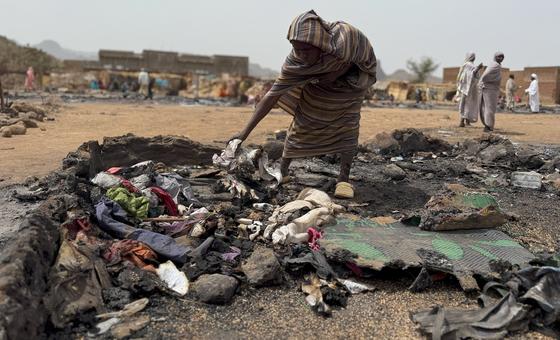
The Marrah Mountains have become a refuge for families fleeing violence in the besieged city of El Fasher in North Darfur and surrounding areas.

“The area remains largely inaccessible to humanitarian organizations due to ongoing conflict and restrictions, compounding the hardship of those affected,” IOM said.

The agency urged all parties to the conflict to ensure the safety of aid workers and civilians, in line with international humanitarian law. 

Source link

WHO sounds alarm as mental health conditions soar past one billion worldwide

Disorders such as anxiety and depression are exacting a heavy toll on individuals, families and economies, yet most countries are failing to provide adequate support.

Mental health problems are widespread across every society and age group and remain the second leading cause of long-term disability. They drive up healthcare costs for families and governments while costing the global economy an estimated $1 trillion each year in lost productivity, UN health experts said.

Way off track

The findings are detailed in two new reports: World mental health today and the Mental Health Atlas 2024.

Together, they show that while there has been some progress since 2020, the world is still far off track in tackling the scale of the crisis. The reports will help to inform debate at a UN high-level meeting on noncommunicable diseases and mental health, to be held late this month in New York.

Transforming mental health services is one of the most pressing public health challenges,” said WHO Director-General Dr Tedros Adhanom Ghebreyesus.

Investing in mental health means investing in people, communities and economies, an investment no country can afford to neglect. Every leader has a responsibility to act urgently and to ensure mental health care is treated not as a privilege, but as a basic right.”

Troubling gaps, uneven progress

The reports highlight several stark findings:

  • Women are disproportionately affected by mental health conditions, with anxiety and depression most common among both sexes.
  • Suicide claimed an estimated 727,000 lives in 2021 and is a leading cause of death among young people. On current trends, the world will fall far short of the UN target to reduce suicide deaths by a third by 2030, managing only a 12 per cent reduction.
  • Median government spending on mental health remains at just two per cent of health budgets, unchanged since 2017. While high-income countries spend up to $65 per person on mental health, low-income countries spend as little as four cents.
  • The mental health workforce is dangerously thin in many regions. There are just 13 mental health workers for every 100,000 people worldwide.
  • Fewer than one in 10 countries has fully moved to community-based care, with most still relying heavily on psychiatric hospitals. Almost half of inpatient admissions are involuntary, and more than one in five patients remain hospitalised for over a year.

Despite these challenges, there have been some positive developments. More countries are integrating mental health into primary healthcare and expanding early intervention programmes in schools and communities.

Over 80 per cent of countries now include mental health and psychosocial support in emergency response, up from less than 40 per cent in 2020. Telehealth services are also becoming more widely available, though access is still uneven.

Call for systemic change

WHO is urging governments to step up investment and reform, warning that the current pace of progress is too slow to meet global goals. Key priorities include:

  • Fairer financing of mental health services
  • Stronger legal protection and rights-based legislation
  • Greater investment in the mental health workforce
  • Accelerated shift towards community-based, person-centred care

The UN health agency stresses that mental health should be treated as a fundamental human right. Without urgent action, millions will continue to suffer without support, and societies will bear rising social and economic costs.

For more information on how the UN overall is advocating for more resources to support mental health and wellbeing, check out this story from our colleagues at www.un.org

Shanghai Cooperation Organization summit: Guterres calls for strengthening multilateralism

The Eurasian bloc, comprising 10 member states, is the world’s largest regional organization by population and geography.

Mr. Guterres told leaders that “we are moving towards a multipolar world”, which is both a reality and an opportunity.

He said emerging economies are reshaping trade, diplomacy and development, but at the same time, injustices and divisions are widening.

Principled leadership needed

He stressed the need for principled leadership to strengthen multilateralism, uphold the rule of law, and deliver for people everywhere.

“The Shanghai Cooperation Organization is uniquely positioned to help shape a more peaceful, inclusive, and sustainable future,” he said.

The UN chief highlighted four priority areas, starting with peace and security.

Peace in Gaza and beyond

He pointed to the situation in Gaza, where the scale of death and destruction is horrific and famine has taken hold.

“We need an immediate and permanent ceasefire; the immediate and unconditional release of all hostages; and unimpeded, safe and sustained humanitarian access,” he said.

“And we must advance concrete and irreversible steps toward a two-State solution – the only path to a just and lasting peace for both Palestinians and Israelis.”

Mr. Guterres also addressed the war in Ukraine, saying “it is past time for a ceasefire leading to a just, comprehensive and sustainable peace – in line with the UN Charter, international law, and UN resolutions.”

He also called for protection of civilians, fostering dialogue and securing peace in Sudan, Myanmar, the Sahel, Afghanistan and beyond.

“Your leadership in diplomacy and de-escalation is essential, as are your efforts against terrorism and transnational threats,” he told leaders.

Reform and climate action

The Secretary-General called for reform of the global financial architecture to ensure fair representation for developing countries.

“We are no longer in 1945 – and our institutions must reflect today’s realities,” he said.

The third area for action concerns confronting climate change.

“We are reaching a tipping point and need meaningful reductions of emissions. G20 countries – responsible for 80 per cent of global emissions – must lead,” he said.

He urged all governments to submit new climate action plans before the COP30 UN climate conference in Brazil this November. 

“We must also set a clear path to delivering $1.3 trillion by 2030.  Developed countries must honour their commitments. And we need a breakthrough on adaptation,” he added.

He called for doubling adaptation finance, scaling up early warning systems, building resilient infrastructure and phasing out fossil fuels while speeding up the transition to renewable energy.

Cooperation on technology

The final area for action is digital cooperation as new technologies bring both opportunities and risks.

He said the UN General Assembly has just established two mechanisms – an Independent Scientific Panel and a Global Dialogue on governance of artificial intelligence (AI) – to give all countries a voice and prevent fragmentation.

“These mechanisms mark a breakthrough for global AI cooperation – leveraging the unique convening power of the United Nations,” he said.

Put people first

In conclusion, he said that as the UN marks its 80th anniversary, countries must strengthen international cooperation for the 21st century and always put people first.

In this regard, he welcomed China’s Global Governance Initiative, announced that day, which “is anchored in multilateralism and underscores the importance of safeguarding the international system with the UN at its core and the international order underpinned by international law.”

Source link

Cooling La Niña could be back, but global temperatures set to rise: WMO

Latest data shared by the World Meteorological Organization (WMO) indicates a 55 per cent likelihood that sea surface temperatures in the equatorial Pacific will cool to La Niña levels from September to November.

About 90 per cent of the excess heat from global warming is stored in the ocean, making ocean heat content a critical indicator of climate change. 

“For October to December 2025, the probability of La Niña conditions slightly increases to about 60 per cent. There is little chance of El Niño developing during September to December,” WMO said in an update.

According to the UN agency, there is a smaller chance (45 per cent) that Pacific temperatures will stay as they have for the past six months, when neither the cooling La Niña nor its opposite number, the warming El Niño, caused unusual spikes or dips in sea surface temperatures.

Lifesaving insight

The UN agency’s forecast for the El Niño Southern Oscillation phenomenon is an important climate intelligence tool which could “save thousands of lives when used to guide preparedness and response actions”, insisted WMO Secretary-General, Celeste Saulo.

The information could also translate into millions of dollars of savings in agriculture, energy, health and transport, she said.

Important as La Niña and El Niño are in shaping our climate by altering ocean surface temperatures and impacting changes in winds, pressure and rainfall patterns, human-induced climate change is still “increasing global temperatures, exacerbating extreme weather, and impacting seasonal rainfall and temperature patterns”, WMO noted.

Each year of the past decade has been the top 10 warmest on record, the UN agency warned earlier this year, with 2024 the hottest yet, with “exceptional land and sea surface temperatures and ocean heat”.

Citing six international datasets, WMO said that global average surface temperature was 1.55 °C (34.79F) above the 1850-1900 average.

“Blazing temperatures in 2024 require trail-blazing climate action in 2025,” said UN Secretary-General Antóno Guterres at the time. “There’s still time to avoid the worst of climate catastrophe. But leaders must act – now,” he insisted.

Other key climate phenomena that influence global temperature include the North Atlantic Oscillation, the Arctic Oscillation and the Indian Ocean Dipole. Their impact on surface temperatures and rainfall are monitored by WMO and published in regular Global Seasonal Climate Updates (GSCU).

The latest Update indicates that for September to November, temperatures are expected to be above normal in much of the Northern hemisphere and large parts of the southern hemisphere.

Rainfall predictions are expected to be similar to those typically observed during a moderate La Niña, the WMO assessment noted.

Afghanistan quake: Aid teams still scrambling to reach survivors

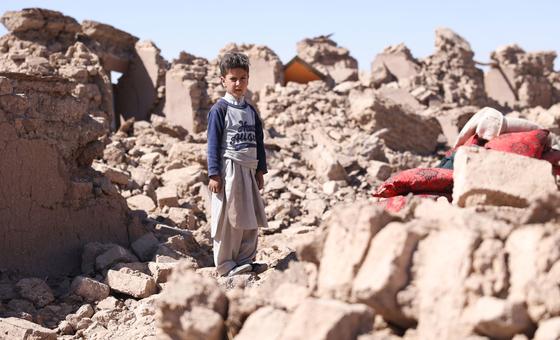
The magnitude six quake has already left more than 800 dead and at least 2,000 injured, but the total impact could be in the “hundreds of thousands”, according to the UN’s top aid official in the country, Indrika Ratwatte.

Speaking from Kabul, Mr. Ratwatte said that mud and wooden roof structures were predominant in the affected mountainous provinces.

“When the walls collapse, the roof is what basically falls on individuals, kills them or suffocates them,” he said. “Since this happened in the night, everybody was sleeping,” the senior UN aid official explained, indicating that many more people may be trapped under the debris.

Massive loss of homes, livestock

Hundreds of thousands could be impacted, “as in houses destroyed, injured, casualties, livestock lost and any livelihood systems that they had”, Mr. Ratwatte explained.

In the first critical 24 hours after the earthquake hit, access was “very limited”, owing to landslides and rockfalls triggered by the tremors.

“This has posed a huge challenge to us as we deploy right now,” Mr. Ratwatte said, stressing that 20 emergency assessment teams have been mobilized alongside 15 mobile teams “which will enhance the humanitarian flights from Kabul to Jalalabad”, capital of the affected Nangarhar province.

The UN Humanitarian Air Service has scheduled additional flights connecting Kabul and Jalalabad for personnel and cargo to scale up the response.

The aid official also said that the UN and others are trying to set up or repair damaged mobile networks as there is “zero connectivity” with some affected communities, “and even to bring in helicopters and land,” another challenge for the de facto authorities.

“It’s not easy to get to these areas and keep shuttling injured individuals,” he said.

Disease danger

Mr. Ratwatte underscored the importance of protection work, “including psychosocial support for individuals who lost family and loved ones”. He also stressed that it was urgent to dispose of bodies and dead livestock to prevent waterborne diseases, “which can happen very, very fast”.

One of the first responders in the affected areas was the Afghan Red Crescent. Joy Singhal, Acting Head of Delegation for Afghanistan of the International Federation of Red Cross and Red Crescent Societies (IFRC), said that more people could have been saved if road access were easier.

“Our staff and volunteers sometimes have to [walk] for about four to five hours to reach some of those remote villages,” he said. Once they reach their destination “they have to walk back and bring those affected and wounded people into the city centre…the two hospitals there are overwhelmed.”

Disaster, time after time

Afghanistan has long faced what the UN’s Humanitarian Coordinator Mr. Ratwatte called “systemic humanitarian challenges”. Half of its population – or some 22.5 million people – need assistance, while food insecurity has been aggravated by recent drought. Sweeping funding cuts to humanitarian programmes since the beginning of the year have meant that “hundreds” of aid facilities have had to close.

“The earthquake comes at a time where vulnerable communities are going to be super-exposed to additional stresses,” Mr. Ratwatte said.

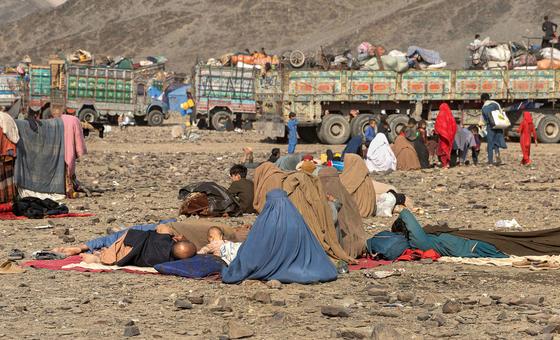
Another major challenge is the return in 2025 of 2.4 million Afghan refugees from Iran and Pakistan, whom communities in the country have been “struggling to integrate”, said UN refugee agency (UNHCR) spokesperson Babar Baloch.

“More than half of these are deportations, people who have been put on buses and other forms of transport and left at the borders to go home, and it has already put a further restraint on our ability to support,” Mr. Baloch said.

Deported regardless 

He also stressed that the majority of returnees are heading precisely to the earthquake-affected areas. In another “worrying” development, Sunday marked “the end of grace period for registered Afghan refugees in Pakistan” and UNHCR is preparing for “significantly more returns” in the coming days.

“These people already with very little resources are now returned to a disaster zone,” Mr. Baloch said.

“We are at breaking point in terms of response to the multiple humanitarian shocks in the country,” the UN’s Mr. Ratwatte insisted.

The $2.4 billion humanitarian response plan for Afghanistan for 2025 is only 28 per cent funded, “and here we have an emergency on top of the crisis situation”, he concluded.

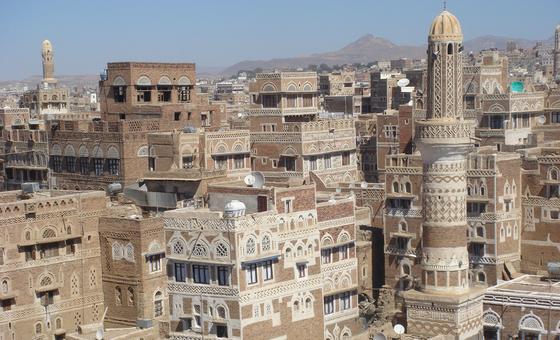
Guterres condemns detention of more UN staff in Yemen

He said the Houthis entered the premises of the World Food Programme (WFP) in the capital, Sana’a, and seized UN property, in addition to attempting to enter other UN premises in the city.

The Houthis, also known as Ansar Allah, have been battling Yemeni Government forces, backed by a Saudi-led coalition, for control of the country for over a decade.

Since October 2023, they also have been targeting Israel as well as commercial ships in the Red Sea, in solidarity with the Palestinian cause in Gaza.

Release all detained personnel

Mr. Guterres strongly reiterated his demand for the immediate and unconditional release of the staff members and all other personnel from the UN, international and national non-governmental organizations, civil society and diplomatic missions, who have been arbitrarily detained for over a year and those held since 2021 and 2023.

“The personnel of the UN and its partners must never be targeted, arrested or detained while carrying out their duties for the UN,” he said.

“The safety and security of UN personnel and property as well as the inviolability of UN premises must be guaranteed at all times.”

The Secretary-General added that the UN will continue to work tirelessly to secure the release of the detained staff members and, together with its partners, will continue to support the people of Yemen and their aspirations for a just and lasting peace.

UN envoy concerned

Meanwhile, the UN Special Envoy for Yemen said on Sunday that he was “following with great concern” recent developments in the country, where Houthi-controlled areas have continued to be subject to Israeli strikes following Ansar Houthi attacks against Israel.

Hans Grundberg reiterated that Yemen cannot afford to become a battleground for a broader geopolitical conflict, stressing that these attacks need to stop.

The Special Envoy continues to urge all sides to use available diplomatic channels to de-escalate the situation.

Mr. Grundberg was also deeply concerned by the civilian deaths and injuries in the recent Israeli attacks. Additionally, according to Houthi statements, several senior Houthi officials and political interlocutors were killed and injured.

He called on all sides to protect civilians and civilian infrastructure, in line with international law.

Source link

Aid effort underway after Afghanistan quake ‘wipes out’ villages

“I stand in full solidarity with the people of Afghanistan after the devastating earthquake that hit the country earlier today,” the Secretary-General said in an online message. “I extend my deepest condolences to the families of the victims and wish a speedy recovery to those injured. The @UN team in Afghanistan is mobilized and will spare no effort to assist those in need in the affected areas.”

On the ground, several UN agencies reported devastation across four eastern provinces of Afghanistan including Nangarhar and Kunar, where staff and humanitarian partners are already supporting relief efforts. 

Hundreds of houses are believed to have collapsed in remote hillside communities, where many likely crumbled on top of others located on terraces further downhill.

“When an earthquake of this magnitude happens, the homes basically tumble on top of each other,” Salam Al-Jabani from the UN Children’s Fund (UNICEF) told UN News. “And because it was so late at night, families were at home sleeping and that’s why we see such big losses.”  

The UN Humanitarian Air Service has scheduled additional flights connecting Kabul and Jalalabad for personnel and cargo to scale up the response. 

Trapped inside

Witnesses reported that the earthquake happened at around midnight local time, heightening fears that many Afghans may still be trapped under the rubble of their homes. The UN Children’s Fund (UNICEF) reported that many youngsters had been killed, as first responders said that poor phone and signal quality was impacting rescue and assessment activities.

The tremor’s epicentre is estimated to have been only around eight kilometres (six miles) underground, causing buildings to shake in the Afghan capital, Kabul, and in Pakistan’s capital city, Islamabad, according to reports.

Among those providing assistance are the UN Assistance Mission in Afghanistan (UNAMA), the UN aid coordination office (OCHA) the UN World Health Organization (WHO) and many more.

“As reports of deaths and injuries from the #earthquake in eastern region of #Afghanistan continue to emerge, @WHOAfghanistan teams are on the ground in hospitals and health facilities, supporting the treatment of the wounded and assessing urgent health needs,” the UN health agency said.

“We are actively delivering essential medicines and supplies and deploying health teams to affected areas to help #SaveLives.”

How the UN helps

United Nations teams are on the ground in more than 160 countries, working with the authorities and partners on joint programmes in communities to promote climate action, food security, gender equality and safety of civilians.

The UN has been present in Afghanistan since 1949; the global body’s work there is driven by the Resident Coordinator, Indrika Ratwatte, as head of a country team which includes around 20 UN agencies and international organizations such as the World Bank and Asian Development Bank.

International appeal

Also on the ground to provide assistance, the UN refugee agency, UNHCR, noted that up more than 2,000 people have been likely injured in the province of Kunar alone. It is feared that the trading city of Jalalabad may have suffered a “very high death toll”, said UNHCR spokesperson Babar Baloch.

The UN agency is among those rushing lifesaving support to affected areas including medical equipment, shelter, clean water, tents and blankets. It underscored how the emergency has added “death and destruction” to Afghanistan’s many other existing human challenges that include drought and the return of millions of nationals from neighbouring countries.

Mr. Baloch insisted that the scale of this disaster “far exceeds the current capacity of local authorities and communities… We are appealing to the donor community globally to support urgently required relief efforts. Afghans need our support and assistance now, before it’s too late for many others.”

Aid teams will have to overcome challenging terrain to help some of the most remote communities who can only be reached on foot, OCHA noted.

It said that the de facto authorities have deployed heavy machinery to Nurgal and Chawkay districts to remove road blockages and that some sections have reportedly been reopened. Critically injured people have also been airlifted by helicopterto Jalalabad and Asadabad hospitals which are now the main referral points for victims in Nangarhar and Kunar provinces.

But “a number of isolated communities” can only be reached by foot with travel time currently up to three hours from the point of obstruction, OCHA noted, highlighting those in Dewagal Valley in Chawkay district and Mazar Valley in Nurgal district, Kunar province.

The earthquake is one of the worst to hit Afghanistan and comes less than two years since three deadly 6.3 magnitude quakes shook Herat on the other side of the country. They struck on 7, 11 and 15 October, killing 1,480 people and injuring 1,950 others across 382 villages, leaving widespread destruction.

Source link

UN chief calls for justice and ‘real change’ for people of African descent

In a message released ahead of the Day, Mr. Guterres honoured the “extraordinary” contributions of people of African descent across every sphere of human endeavour. The Secretary-General also recognised the “long shadows” of slavery and colonialism, which include systemic racism, unequal economies and societies, and the digital divide (between those who are able to benefit from digital technology, and those who don’t have access).

Mr. Guterres hailed the Global Digital Compact – adopted in 2024 as part of the Pact for the Future, which promotes a multilateral system that reflects today’s realities and delivers for everyone, everywhere – as a step forward, citing commitments to tackle discrimination and hate speech in digital technologies. “White supremacy and dehumanising narratives,” wrote the UN chief, “are amplified by social media, and, too often, racial bias is encoded in algorithms.”

“Eighty years after the United Nations Charter reaffirmed the equal rights and inherent dignity of every human being, and sixty years since the adoption of the International Convention on the Elimination of All Forms of Racial Discrimination,” he concluded, “it is long past time to right historic wrongs.”

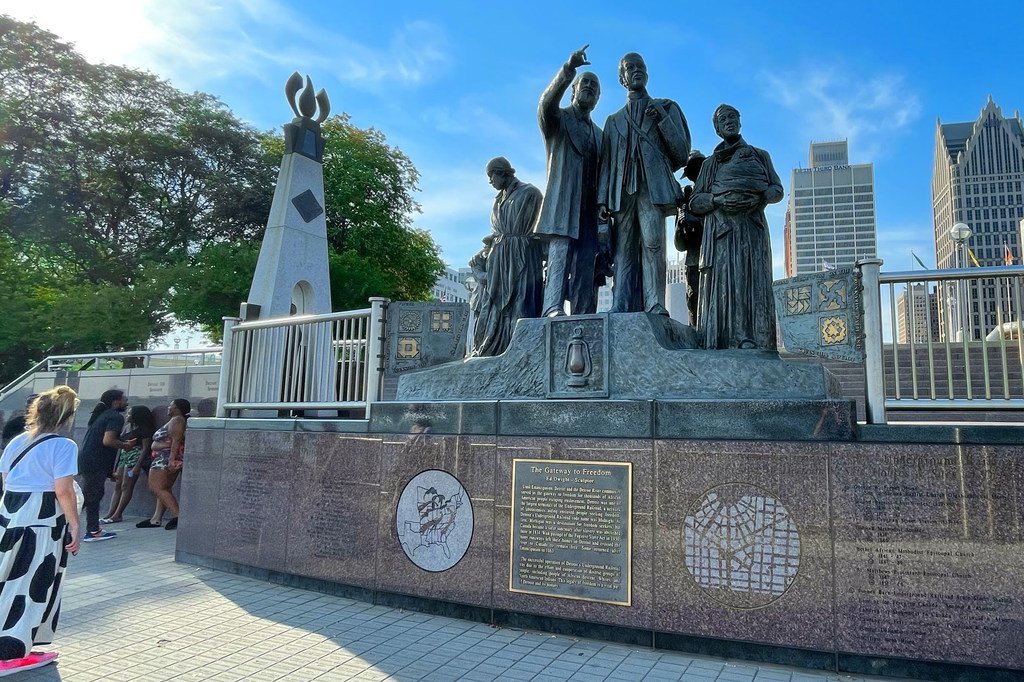
The Gateway to Freedom: International Memorial to the Underground Railroad in Detroit, Michigan, dedicated in 2001.

A decade of action

This year’s International Day is the first to take place during the second International Decade for People of African Descent, which runs from January 1, 2025, to December 31, 2034. The decade, which embraces the theme “People of African Descent: Recognition, Justice, and Development,” aims to highlight the importance of acknowledging the rights and contributions of people of African descent. Mr. Guterres has called for the next ten years to drive “real change,” including working towards a United Nations Declaration on the full respect of people of African descent’s human rights.

The first Decade saw more than 30 countries change their laws and policies to tackle racial discrimination and address specific issues faced by people of African descent – in some cases for the first time. The Permanent Forum on People of African Descent, was created, and new International Days were launched to celebrate the contributions of the diaspora, including those of women and girls.

Building on the progress made between 2015 and 2024, the second Decade seeks to amplify global efforts toward justice and development for individuals of African descent and create a more equitable future, in which the aspirations and rights of people of African descent are fully recognised, honoured, and celebrated.

Source link

‘Our livelihoods have been cut off’, say West Bank farmers ahead of olive harvest

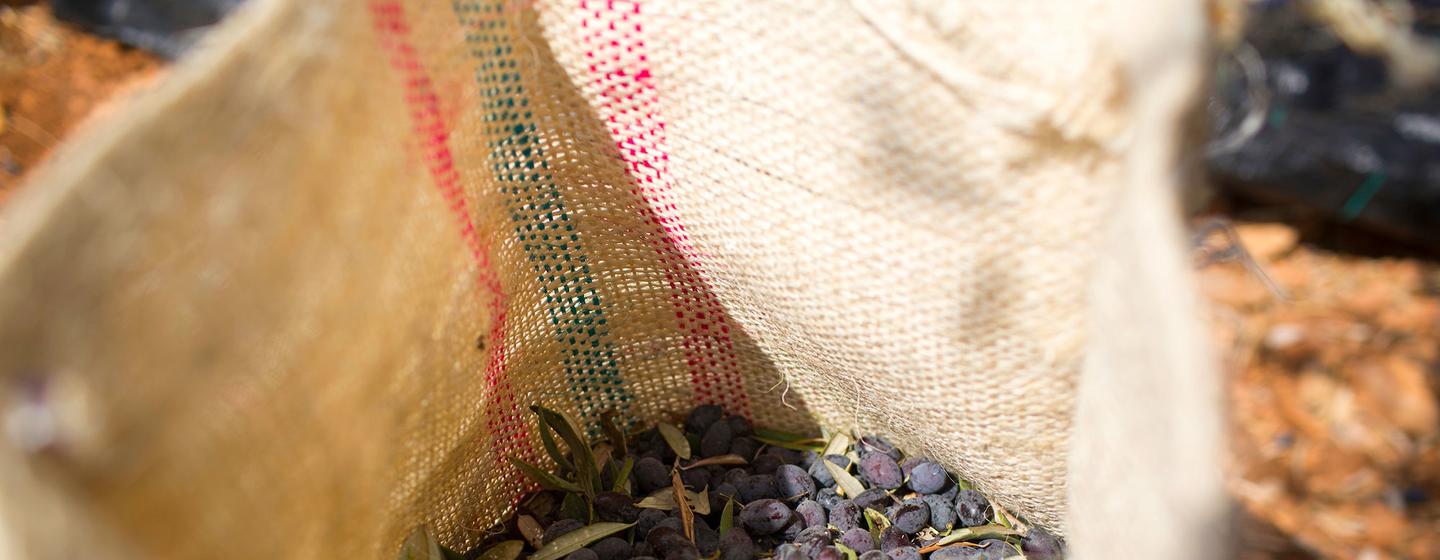
Like thousands of Palestinian farmers, he faces growing restrictions from Israeli forces and settlers, who have made the olive harvest season – running from September to November – a time of uncertainty and struggle.  

In recent years, the UN Food and Agriculture Organization (FAO) has supported olive farmers and cooperatives to improve access to and management of land and water resources, introduced sustainable practices such as intercropping, and helped them increase food production and income by using natural resources more efficiently.

The olive harvest is both a primary source of livelihood for thousands of families and an integral part of Palestinian heritage.

Yet, attacks on the harvest threaten such heritage and hinder Palestinian farmers’ work and way of life – as settler attacks reach their highest level in at least two decades, according to the UN aid coordination office, OCHA.

‘Unprecedented’ risks

“As the West Bank gears up for the annual olive harvest, the message from farmers is clear: This year’s harvest season is marked by uncertainty, and livelihoods are under unprecedented risk,” said Ciro Fiorillo, FAO’s Head of Office in the West Bank and Gaza Strip.  

The combination of State policies and settler violence has prevented Palestinians from accessing tens of thousands of dunums of farmland and pasture, one dunum equating 1,000 square meters.

These restrictions have contributed to the destruction of the local economy and the displacement of thousands of Palestinian herders and farmers, in conditions that may amount to forcible transfer, according to the UN human rights office (OHCHR).

Olives and olive oil production in the West Bank are a cornerstone of Palestinian culture.

“Our livelihoods have been cut off. Olive crops are the primary source of income for farmers,” a Palestinian farmer from Kufr Qaddum village, told UN News.

Land access denied

“For two years now, we have been denied access to our lands,” Yousef, a Palestinian farmer from Kufr Qaddum told UN News. All land in the northern area of the village has been sealed off with an iron gate following the most recent escalation between Iran and Israel.

Yousef’s family owns over 300 dunums of land, primarily cultivated with olive trees, located near the Israeli Kedumim settlement, in Qalqiliya Governorate.  

Since Hamas’s attack on Israel in 2023, they have had no access to their land, including during the harvesting season.  

“These lands cover approximately four to five thousand dunams. We have been prevented from accessing them,” Yousef said, adding that “this issue [affected] all farmers across the entire West Bank.”   

Mohammed, a Palestinian farmer from Kifl Harris, a village located near the Israeli Ariel settlement in Salfit Governorate, has been denied access to over 3,000 dunums of olive-cultivated land located within the settlement boundary. This restriction has completely cut off the ability of Kifl Harris’s farmers to tend to and harvest their groves.  

“The olive season is our main economic lifeline as farmers and employees in both the public and the private sectors,” Mohammed told UN News, adding that Palestinian farmers had not been given a reason for being denied access.

“After settlers installed a caravan on our family’s land, access to more than 200 dunums of farmland, much of it planted with olive trees, was restricted,” Ahmed, a farmer from Khalet Al Luza told OCHA.  

Harassment from settlers

“We have endured all kinds of harassment from settlers and the [Israeli] army,” Yousef from Kufr Qaddum told us.  

In an advisory opinion from July 2024, the International Court of Justice (ICJ) concluded that Israel’s continued presence in the Occupied Palestinian Territory is unlawful and that it is under an obligation to end its unlawful presence “as rapidly as possible”.

Settlers installed a caravan on a Palestinian family’s land in Khalet Al Luza, West Bank.

“Settler attacks have affected all farmers. I, personally, have been prevented from reaching my land, and we’ve been subjected to repeated attacks by settlers and the army, including theft of olive crops, theft of olive harvesting equipment, vehicle vandalism, cutting down olive trees, and threats,” Yousef said.  

In a statement published on 30 July, the UN human rights office (OHCHR) warned of escalating Israeli settler violence “with the acquiescence, support, and in some cases participation” of Israeli forces.

It stated that Israeli Government “policy and legislative actions appear aimed at emptying certain areas of the West Bank of the Palestinian population, advancing the settlement enterprise, and consolidating the annexation” of large parts of the West Bank.  

“We urge you to work with international institutions through peaceful means to achieve a result that enables us to access our lands safely and harvest the fruits of our olives and trees,” Yousef pleaded.

“Together with our resource partners, FAO is committed to continuing supporting local olive cultivation, which is as important to livelihoods and food security as it is to Palestinian culture and tradition,” said Mr. Fiorillo. 

*Names in this story have been changed to protect the identities of those featured.

Source link

Ukraine: ‘Diplomatic momentum’ at risk amid large-scale Russian strikes

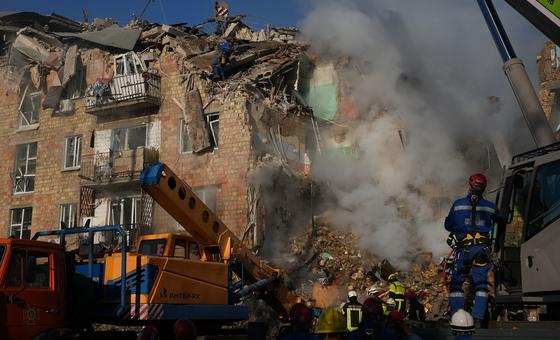
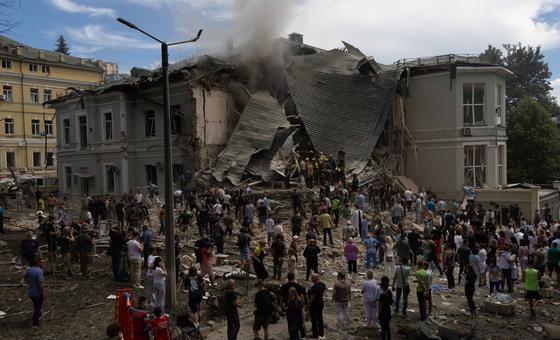
Miroslav Jenča, Assistant Secretary-General for Europe, Central Asia and the Americas, was speaking a day after the latest wave of Russian airstrikes across the country, with at least 23 people killed in the capital, Kyiv.

“The mounting death toll and devastation caused by the intensifying fighting over the summer, run counter to the significant efforts over the past few months to give diplomacy a chance,” he said.

Young lives lost

According to Ukrainian officials, Russia launched 598 drones and 31 missiles across Ukraine overnight between 27 and 28 August. 

Four children aged between two and 17 were among those killed in Kyiv and 64 people were injured. Several buildings were damaged in 33 locations across all 10 districts of the city.

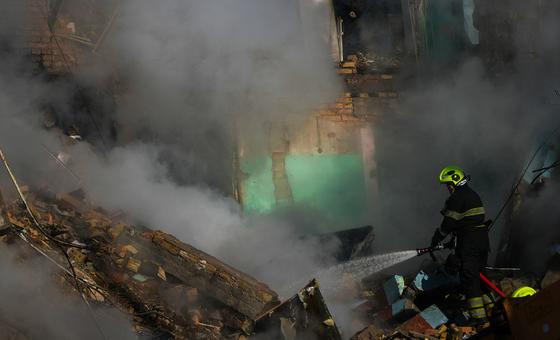
“Most of the fatalities occurred in the Darnytskyi district of Kyiv, where a missile reportedly struck a five-story residential building, demolishing it from the first to the fifth floor,” he said.

Civilian casualties also were reported in five other regions – Chernihiv, Kharkiv, Zaporizhzhia, Donetsk and Kherson – and a train depot in Vinnytsia region was reportedly hit.

Dangerous escalation

Mr. Jenča said these strikes “are only the latest in the brutal escalation of country-wide aerial attacks.”

The full-scale Russian invasion of Ukraine began in February 2022.  In July, the UN human rights office, OHCHR, recorded rising civilian casualties across 18 regions and the capital.

Last month “set a new, tragic record for monthly casualties”, with 286 killed and 1,388 injured – the highest number since May 2022, the top UN official said.

The impact of the conflict has also been felt by civilians in Russia. Local authorities have reported casualties there, including in the border regions of Belgorod, Kursk and Bryansk.

Russian officials also reported that a fire broke out after a Ukrainian drone was shot down near the Kursk Nuclear Power Plant.

Although the UN is unable to verify these reports, the growing impact of the conflict on civilians in Russia is of concern, he said, reiterating UN condemnation of attacks against civilians and civilian infrastructure.

Winter support

“We are also concerned about the impact of the expanding and escalating fighting on the humanitarian situation in Ukraine as we are entering the fourth winter of the full-scale war,” he continued.

He underlined the UN’s full commitment to supporting civilians, adding that targeted winter support preparations are underway for 1.7 million people, though more donor funding is urgently needed.

Diplomatic efforts welcomed

On the diplomatic front, he said the Secretary-General has welcomed recent efforts led by the United States President. This includes separate meetings this month between Donald Trump and Vladimir Putin, in Alaska, and another between the Presidents of the US and Ukraine and European leaders in Washington.

The UN has also welcomed earlier rounds of direct talks between senior Ukrainian and Russian officials held in Istanbul between May and July, and commended prisoner exchanges that have continued to take place as a result.

Appeal for de-escalation

“However, as large-scale attacks against civilians persist and civilian casualties rise, the current diplomatic momentum is at risk of rapidly fading if the focus on the need to end the violence and engage in genuine peace talks is not maintained,” he said.

“We therefore urge all concerned to urgently de-escalate the situation and to redouble efforts to create conditions for inclusive diplomatic efforts towards a cessation of hostilities and a just peace.” 

Mr. Jenča concluded his remarks by renewing the Secretary-General’s appeal for a full, immediate and unconditional ceasefire. 

Source link

World News in Brief: Executions surge in Iran, nuclear test threat, Burkina Faso declares top official unwelcome

At least 841 people have been put to death by the Government of Iran since the beginning of the year, with ethnic minorities and migrants “disproportionately targeted”, said OHCHR spokesperson Ravina Shamdasani.

Some executions have been carried out publicly, she added, with seven reported this year based on available information: “The real situation might be different. It might be worse given the lack of transparency in the use of the death penalty.”

Imminent executions

Eleven people now face imminent execution; six have been charged with “armed rebellion” owing to their alleged membership of the Mojahedin-e-Khalq group.  

Five others are on death row in connection with their participation in the 2022 protests, following the death in police custody of Mahsa Amini, who was detained by Iran’s so-called morality police for not wearing her hijab correctly.  

Ms. Shamdasani reiterated calls from UN rights chief Volker Türk for Iran to impose a moratorium on the application of the capital punishment, as a step towards its abolition.

UN chief warns against ‘playing with fire’ as nuclear test threat looms

UN Secretary-General António Guterres has issued a stark warning on the International Day against Nuclear Tests, urging world leaders to halt the threat of renewed detonations.

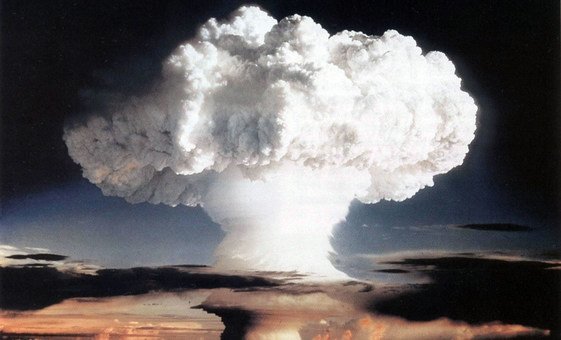
“Stop playing with fire. Now is the time to silence the bombs before they speak again,” he said in his message, which coincides with the 80th anniversary of the first nuclear test on 16 July 1945 – in the New Mexico desert under the Manhattan Project.

A deadly legacy

Since then, more than 2,000 nuclear tests have been carried out worldwide.  

Atmospheric tests in the early decades of the nuclear era spread radioactive fallout across continents, contaminating land and seas, displacing communities and leaving survivors facing health crises passed down through generations.

The international day was declared by the UN General Assembly in 2009, following Kazakhstan’s closure of the Semipalatinsk test site.

It has since become a rallying point for governments, civil society and campaigners pressing for an end to nuclear testing and progress towards full disarmament.

Mr. Guterres stressed that nuclear testing remains a grave danger amid rising geopolitical tensions. He urged States to ratify the Comprehensive Nuclear-Test-Ban Treaty (CTBT), adopted by a large majority in 1996 but still not in force nearly three decades later.

“We must never forget the horrific legacy of over 2,000 nuclear tests,” the Secretary-General said. “The world cannot accept this.”

Burkina Faso declares UN Coordinator persona non grata  

The UN chief has expressed regret of the decision by authorities in Burkina Faso to declare the UN’s Resident and Humanitarian Coordinator in the country, Carol Flore-Smereczniak, persona non grata.

In a statement on Friday, António Guterres said that the transitional authorities had announced the diplomatic sanction declaring her unwelcome, on 18 August.

The UN chief expressed “full confidence” in her “professionalism and dedication and in the broader United Nations system in Burkina Faso.”

During her tenure, Ms. Flore-Smereczniak – who has now left the country – led UN efforts working closely with the Burkinabe authorities to support development initiatives and provide humanitarian assistance.

UN will continue to support Burkinabe

The statement stresses that the UN Charter makes clear the doctrine of persona non grata does not apply to UN officials, as staff members appointed by the Secretary-General are responsible solely to the Organization, and Member States undertake to respect their exclusively international character.

In line with the Charter, the United Nations enjoys privileges and immunities, including the right of its staff to remain and carry out their mandated work.

“Only the Secretary-General, as the Chief Administrative Officer of the Organization, has the authority to decide – after careful investigation – on the withdrawal of any United Nations official.”

Mr. Guterres reaffirmed the UN’s commitment to continue supporting the people of Burkina Faso, and to keep working with the national authorities.  

Source link

Teachers are the ‘guardians of our future’, says UN deputy chief

Their work, said UN Deputy Secretary-General Amina Mohammed, is “the beating heart of education, the cornerstone of sustainable development, and the guardians of our future.”

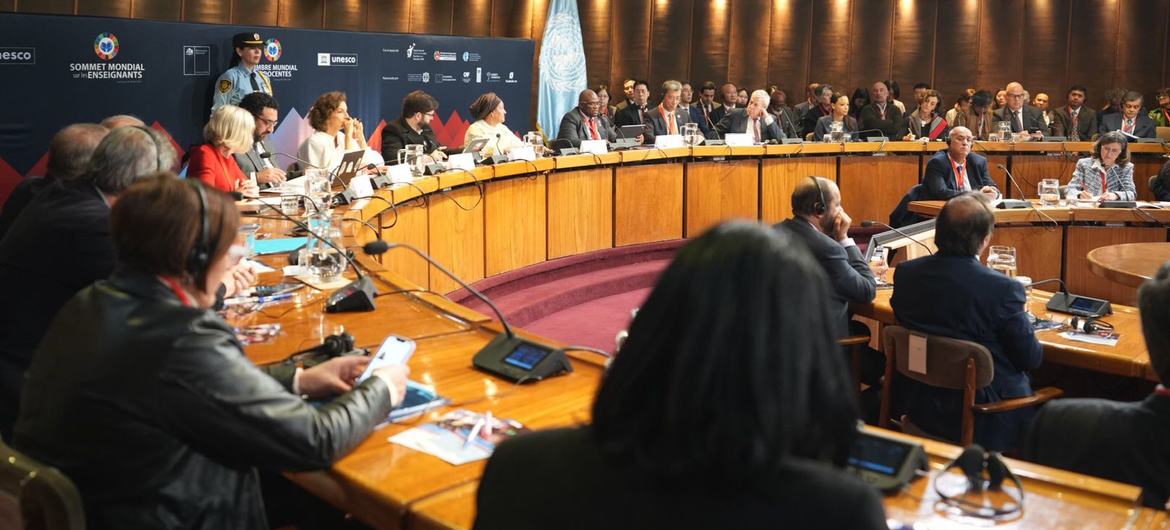
Speaking Thursday at the opening of the UNESCO World Summit on Teachers in Santiago, Chile, Ms. Mohammed called for urgent global action to address the deepening teacher crisis.

“Let us honour their influence with the policies and the respect that teachers need, and future generations deserve,” she urged, laying out a five-point plan to support educators and strengthen education systems worldwide.

A crisis with global consequences

The deputy UN chief warned that the world is facing a “deepening teacher crisis” that threatens progress across the Sustainable Development Goals.

“We are failing our teachers,” she said, pointing to a global shortfall of 44 million educators needed to meet universal education targets by 2030.

She described the crisis as “a slow-burning emergency” that is undermining learning outcomes, widening inequalities, and weakening the social fabric of communities. “We must respond to those truths,” she said.

No single actor can fix this alone

UNESCO Director-General Audrey Azoulay also addressed the Summit, emphasizing the complexity of the challenge. “No single actor will be able to bridge the gaps we see, and that is what brings us together here in Santiago,” she said.

Ms. Azoulay highlighted the multiple causes behind the crisis: low and often delayed salaries, an aging teacher workforce, surging school enrolments without matching resources, and persistent gender inequalities – especially in STEM fields. Tackling these issues, she said, requires “level heads and clear thinking.”

The numbers are stark

To meet global education goals by 2030, the world must recruit 44 million teachers – more than double the population of Chile. Yet, instead of progress, gains are being reversed.

“Too many young teachers are leaving within their first years,” Ms. Mohammed said, citing low pay, heavy workloads, and lack of professional development. “Ultimately, we are asking the impossible of teachers: to build the future without the tools, trust and conditions they need.”

Financing the future

The cost of recruiting the teachers needed by 2030 is estimated at $120 billion annually. But education financing is falling short.

“More than 40 per cent of the world’s population lives in countries where governments spend more on debt interest payments than on education or health,” she warned.

Aid to education is projected to drop by 25 per cent between 2023 and 2027, with a 12 per cent fall already recorded last year.

Deputy Secretary General Amina Mohammed delivers remarks to the World Summit on Teachers in Santiago, Chile.

Five areas for urgent action

Ms. Mohammed laid out a five-point plan to tackle the global teacher crisis:

  1. Elevate the profession: Implement the High-Level Panel’s recommendations — fair pay, stable contracts, safe workplaces, manageable class sizes, investment in upskilling, and clear career pathways.
  2. Finance education: Make education a top budget priority. Expand domestic funding, pursue debt relief, and consider a Global Fund for Teachers in Emergencies.
  3. Advance gender equality: Recognize and elevate women’s leadership in a profession dominated by women but often lacking female decision-makers.
  4. Support digital transformation: Train teachers to lead inclusive digital learning, especially as AI reshapes the job market. Equip classrooms and prioritize human agency.
  5. Protect teachers in crisis zones: From Gaza to Sudan and Ukraine, educators are risking their lives. “We owe them more than admiration – we owe them protection, resources, and unwavering support.”

From Summit to action

Ms. Mohammed urged leaders to turn the summit’s outcomes into concrete commitments ahead of the World Social Summit in Doha this November.

She proposed:

  • National teacher compacts with time-bound targets on recruitment, retention, and pay.
  • A financing track that links aid and debt swaps to teacher investments.
  • A teacher-led digital pact to set standards for AI and ed-tech, with funded training.

“Quality education is the foundation of everything we hope to achieve with the Sustainable Development Goals,” she concluded. “Without teachers, none of it is possible.”

Source link

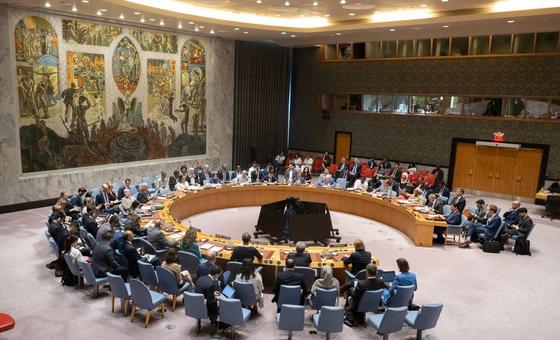
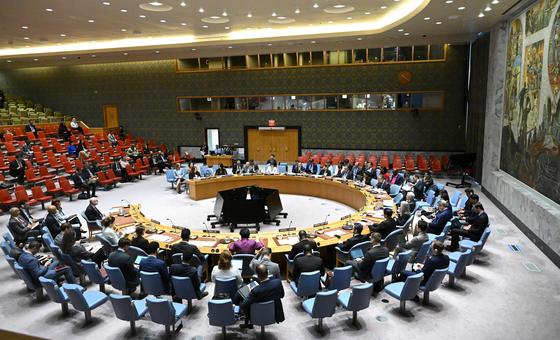
SECURITY COUNCIL LIVE: Push for peace in Ukraine could rapidly fade if large-scale Russian attacks continue

The UN Security Council met in emergency session in New York on Friday afternoon following overnight strikes early on Thursday by Russia on Ukrainian cities including the capital, which left at least 23 dead, including four children. Assistant Secretary-General Miroslav Jenča told ambassadors that diplomatic momentum towards a possible peace deal was “at risk of rapidly fading” if large-scale attacks by Moscow continue. Follow our live meetings coverage below. 

Source link

Despite Taliban ban, over 90 per cent of Afghans support girls’ right to learn

Four years after the Taliban takeover in August 2021, the scale and severity of the women’s rights crisis continues to intensify. Afghanistan is the only country in the world where girls are prohibited to attend secondary school.

Yet, in a nationwide door-to-door survey of over 2,000 Afghans, more than nine in 10 supported girls’ right to learn.

It is clear: Despite the existing bans, the Afghan people want their daughters to exercise their right to education,” said Sofia Calltorp, UN Women’s Chief of Humanitarian Action, at a press conference in Geneva on Friday.

‘Education is the difference’

A protracted humanitarian crisis continues in Afghanistan coupled with systemic and institutionalised restrictions on women and girls’ rights.

Ms. Calltorp insisted that it is more important than ever to continue investing in Afghan women’s community organizations, which offer healthcare, mental health support and a chance to connect.

In a country where half the population lives in poverty, education is the difference between despair and possibility,” she said, voicing their yearning to be back in a school environment.

This is almost always the first thing girls tell us – they are desperate to learn and just want the chance to gain an education,” said UN Women’s Special Representative in Afghanistan, Susan Ferguson.

A year after the introduction of a stricter so-called morality law codified a sweeping set of restrictions, the new alert highlights the deepening normalisation of the women’s rights crisis.

NGO work ban

The Taliban’s ban on women working for NGOs – announced nearly three years ago – continues to have a devastating impact, said UN Women.

More than half of NGOs in Afghanistan report that it has affected their ability to reach women and girls with vital services.

A UN Women survey conducted in July and August found that 97 per cent of Afghan women said it had negatively impacted them.

Source link

Sudan: Guterres calls for ceasefire in El Fasher, deplores ‘relentless’ militia attacks

António Guterres said he was “appalled by the relentless attacks” by the Rapid Support Forces (RSF) militia on the North Darfur state capital, UN Spokesperson Stéphane Dujarric said in a statement.

The paramilitary group and the Sudanese Armed Forces (SAF) have been battling for control of devastated country since April 2023 and El Fasher has been the epicentre of fighting for more than 500 days.

Shelling, incursions and summary executions

Recent weeks have seen near-continuous shelling in the city and repeated deadly incursions into the adjoining Abu Shouk displacement camp, where famine conditions were identified last December.

Since 11 August, the UN has documented the killing of at least 125 civilians in the El Fasher area, including summary executions – although the actual number is likely to be higher.

“The Secretary-General is alarmed at the grave risks of serious violations of international humanitarian law as well as violations and abuses of international human rights law, including ethnically motivated ones,” said Mr. Dujarric.

Aid awaiting entry

Meanwhile, supplies are pre-positioned near El Fasher, but the UN and partners continue to face obstacles in moving them into the city.  

Some 70 trucks of humanitarian assistance are currently waiting in Nyala, South Darfur, a top official with the UN aid coordination office OCHA said on Thursday in New York.

Mr. Dujarric also noted that repeated attacks on humanitarian personnel and assets in North Darfur have occurred over recent months.

Ceasefire and a lasting peace

“The Secretary-General calls for an immediate ceasefire in and around the El Fasher area,” he said.

Furthermore, the UN chief “insists that immediate steps must be taken to protect civilians and enable the safe, unhindered and sustained delivery of humanitarian assistance into the area, and to allow any civilians seeking to leave the area voluntarily to do so safely.” 

 In the interim, the Secretary-General’s Personal Envoy for Sudan, Ramtane Lamamra, continues to engage the warring parties and “stands ready to support genuine efforts to halt the violence and establish an inclusive political process that the people of Sudan demand.” 

Source link

The descent into ‘a massive famine’ in Gaza has begun, relief agencies warn

Although the private aid platform run by the US and Israeli-backed Gaza Humanitarian Foundation continues to receive its own supplies, “we are on a descent into a massive famine”, insisted Jens Laerke, spokesperson for the UN aid coordination office, OCHA, on Friday.

Referring to the latest catastrophic assessment of food insecurity in Gaza from the UN-backed IPC group of experts, Mr. Laerke noted that 500,000 people are in the worst possible situation today, with another 160,000 expected to be added to that number in the coming weeks.

Everyone lacks food

“They all need food,” he told journalists in Geneva. The entire Gaza Strip needs food. There would not have been declared famine had there been sufficient amounts of food.”

In a related development, the UN World Health Organization (WHO) highlighted the growing risk of communicable diseases in Gaza, with 94 suspected cases of Guillain-Barré Syndrome now reported.

The disease can cause paralysis and is treatable in hospital with intravenous immunoglobulin or plasma exchange, according to WHO. “But these two [treatments] are at zero stock, as are anti-inflammatories,” said WHO spokesperson Christian Lindmeier, referencing ongoing Israeli aid restrictions impacting humanitarian relief supplies entering Gaza. “These deliveries must be urgently expedited as much as surveillance and testing capabilities.”

Between 20 and 26 August, out of 89 attempts to coordinate relief missions with Israeli authorities across Gaza, 53 were facilitated, 23 were initially approved but then impeded on the ground, seven were denied and six had to be withdrawn by the organizers, OCHA said in an update.

More to come on this developing story…

Source link

World News In Brief: Iran sanctions, Yemen floods appeal, new SDG advocates

“I can tell you that the Secretary-General is aware that today, the Security Council received this joint letter from the three countries,” UN Spokesperson Stéphane Dujarric told journalists.

The three European nations were signatories to the 2015 Joint Comprehensive Plan of Action (JCPOA), an agreement that granted Iran sanctions relief in exchange for strict limits on uranium enrichment, stockpile levels and centrifuge use, alongside robust monitoring and verification by the International Atomic Energy Agency (IAEA).

Snapback clause

The agreement includes a so-called “snapback mechanism” that allows for the reinstatement of sanctions within 30 days if Iran is found to be non-compliant. 

“The Secretary-General urges the JCPOA participants and the Security Council to continue negotiations to find a diplomatic solution that ensures the peaceful nature of the Iranian nuclear programme and brings about economic benefits to the people of Iran,” Mr. Dujarric said.

He said the coming weeks offer “a window of opportunity” to deescalate tensions and pursue a peaceful resolution.

The Secretary-General also underscored the urgency of avoiding a renewed military conflict, and prioritising dialogue. 

In Yemen, IOM appeals for support amid deadly flooding

The UN migration agency, IOM, appealed on Thursday for international support for war-ravaged Yemen, after violent storms devastated communities, destroying homes and sweeping away livelihoods.

Latest assessments by the International Organization for Migration across 73 displacement sites indicate that well over 46,000 people have been affected.

Yemen has been in crisis since Houthi rebels took up arms against the internationally-recognised Government, seizing control of the capital Sanna’a in 2014.

An uneasy truce largely holds but clashes continue internally, together with Houthi attacks on Red Sea shipping and exchanges of airstrikes with Israel rooted in the Gaza conflict.

‘Another devastating blow’

“The floods in Yemen are another devastating blow for families who have already lost so much,” said Abdusattor Esoev, IOM’s Chief of Mission in Yemen.

The governorates of Ibb, Sana’a, Ma’rib, Al Hodeidah, and Ta’iz are among the worst hit, with floods damaging homes, farmland, and public infrastructure.

The latest crisis in Yemen mirrors last year’s devastating floods, which caused widespread damage and loss of life.

This year’s storms have been even more intense and demonstrate how climate change is deepening vulnerabilities across the country and pushing communities further into crisis, IOM said.

UN chief welcomes two new sustainability advocates

The UN chief welcomed two new Sustainable Development Goals (SDGs) advocates on Thursday: Masai Ujiri, Co-Founder of Giants of Africa and former Vice-Chairman and President of the Toronto Raptors; and Muniba Mazari – an award-winning advocate for disability rights, inclusion, and gender equality.

“The SDG Advocates play a vital role in inspiring global action and ambition to achieve the Sustainable Development Goals,” said Secretary-General António Guterres.

Through his non-profit Giants of Africa, Mr Ujiri uses basketball as a transformative tool to create opportunities for youth across Africa and beyond.

“Sport doesn’t just unite people – it breaks down barriers, builds hope and transforms entire communities,” he said.

Pakistan’s ‘Iron Lady’

Ms Mazari, known as the “Iron Lady of Pakistan” has inspired millions through her personal story and her commitment to championing marginalised communities after a spinal cord injury left her using a wheelchair.

“Inclusion is not a privilege; it is a right. I am proud to be an SDG Advocate and to elevate the voices of those who are often unheard,” she said.

Mr Ujiri and Ms Mazari join a global cohort of leaders committed to accelerating progress and inspiring action across all 17 SDGs.

Source link

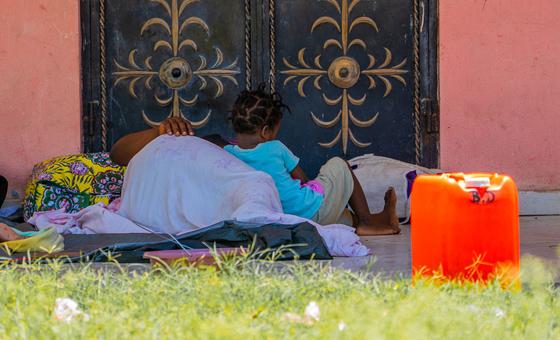
‘The people of Haiti are in a perfect storm of suffering,’ warns UN chief

Six million people are in need of humanitarian assistance, while 1.3 million people – half of them children – having been forced to flee their homes, he added.

‘Shamefully overlooked’

Haiti now ranks among the five hunger hotspots worldwide that are of “highest concern,” said the UN chief. Yet it remains the world’s least funded humanitarian appeal. Less than 10 per cent of the $908 million needed has been received.

The UN chief lamented the level of international neglect, describing Haiti as “shamefully overlooked and woefully underfunded,” as armed groups continue to block humanitarian access and attack aid workers.

Due to the lack of resources, around 1.7 million people risk receiving no humanitarian assistance at all. “This is not a funding gap. It is a life-and-death emergency,” he said, urging donors to act before lifesaving operations grind to a halt.

Across the country, basic services have collapsed, and mass displacement has left children without education, healthcare or any sense of safety. As of April, gang violence had interrupted the schooling of some 243.000 children, as attacks on schools continued.

‘Unimaginable suffering’

The head of the UN Children’s Fund (UNICEF), Catherine Russell, told ambassadors Haiti’s youth are enduring “unimaginable suffering amidst the brutal armed violence.”

She noted that last year the UN in Haiti had verified more than 2,000 grave violations against children – a nearly 500 per cent increase on the previous year.

The Caribbean nation last year was among the five worst offenders worldwide, Ms. Russell added, including cases of summary execution.

Even more concerning, she said, was the 700 per cent increase in cases of recruitment and use of children by armed groups, alongside a 54 per cent increase in killing and maiming, according to Ms. Russell.

Children now account for a staggering 50 per cent of all active gang members in Haiti.

“I ask Members of this Council to use all available leverage to protect children,” she said, and to support “concrete actions” which will prevent violations from spiralling still further.

‘Signals of hope’

Despite the bleak outlook across Haiti and soaring levels of violence and lawlessness, “there are emerging signals of hope,” said the Secretary-General.

Closer coordination between the Prime Minister’s Task Force, the Haitian National Police and Security Council-backed Multinational Security Support Mission (MSS) is improving operations on the ground, he said.

But, more decisive international support is required to protect and expand these fragile gains.

The Kenyan-led mission was authorised by the Security Council in October 2023 and aims to help over-stretched Haitian authorities stem the gang violence and restore national security, especially in the capital.

Mr. Guterres welcomed efforts by the Security Council to advance his proposal to strengthen the MSS through UN logistical and operation support, and urged ambassadors “to act without delay and authorise an international force, supported by the UN through logistical and operational backing, and predictable financing.”

Source link