Security Council: UN peacekeeping mission in Lebanon extended for a ‘final time’

But the resolution stipulates it will then begin a one year “orderly and safe drawdown and withdrawal of its personnel”, in close consultation with the Lebanese Government.

The UN Interim Force in Lebanon (UNIFIL) was established by the Security Council in 1978 to oversee the withdrawal of Israeli troops from the south and has played an important role in monitoring security in southern Lebanon ever since.

The mission’s ‘blue helmets’ are mandated to implement resolution 1701 which brought an end to hostilities between Israeli forces and Hezbollah militants in 2006.

Since the formal end of fighting between the two sides last November which devastated areas of southern Lebanon, UNIFIL has been supporting the national army’s (LAF) mission to establish full control of the south – but Israel continues to have a presence in violation of Lebanese sovereignty.

Continuing role during drawdown

During the withdrawal period after the end of next year, the resolution says UNIFIL is authorised to continue providing security and assistance to UN personnel, while continuing to “maintain situational awareness” around UNIFIL outposts and bases.

It will also “contribute to the protection of civilians and the safe civilian-led delivery of humanitarian assistance.”

Furthermore, the resolution calls on the Secretary-General to present options by 1 June next year for the future implementation of resolution 1701 to establish a permanent end to fighting between Israel and militants in Lebanon.

Negotiations went down to the wire this week, with the United States acting Permanent Representative telling Thursday’s meeting it was already time for Lebanese forces to assume greater responsibility, without UN peacekeepers.

Penholder France led negotiations over the mandate, and their representative told ambassadors that UNIFIL’s ongoing efforts were vital: “Any premature withdrawal could undermine or even weaken the efforts of the Lebanese Government” in the south, he said.

Source link

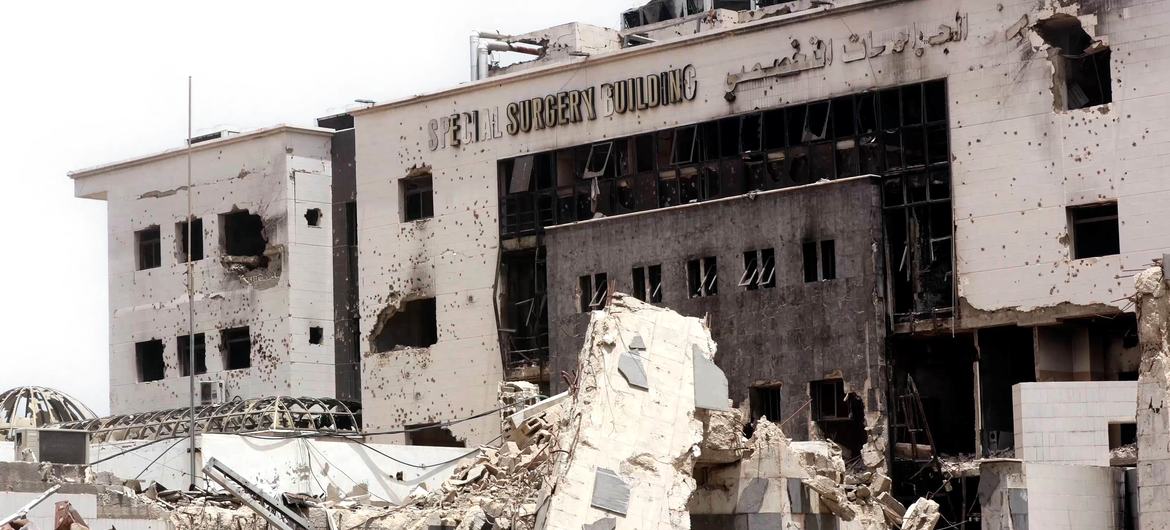
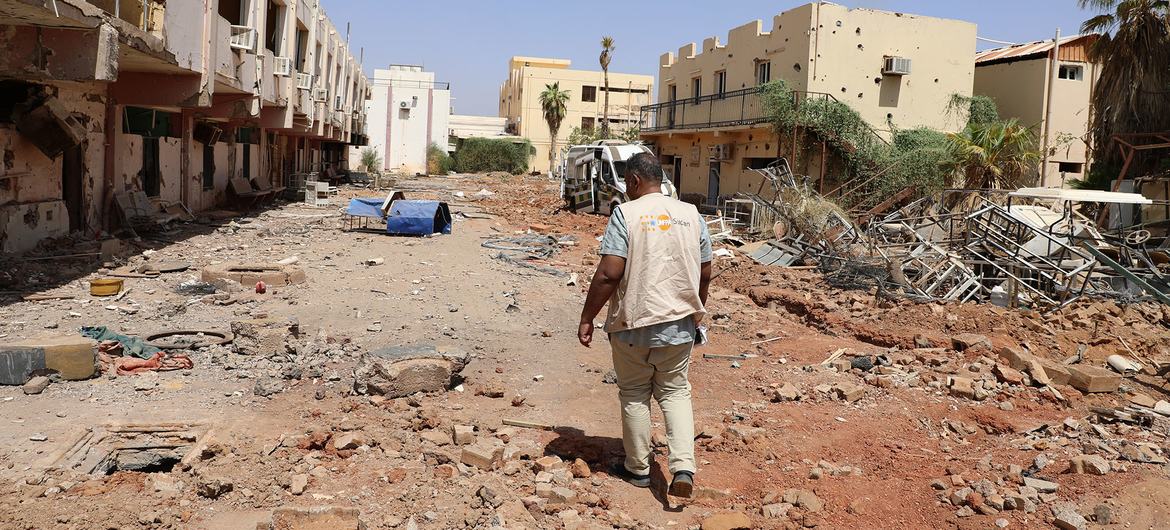
Sudan: A staggering 30 million are in need, as war grinds on

Edem Wosornu, Director of Operations and Advocacy for the humanitarian affairs office, OCHA, briefed journalists on her recent visit to Sudan and neighbouring Chad – a critical entry point for aid and a haven for some 850,000 people who have fled fighting between the Sudanese army and the Rapid Support Forces (RSF) militia. 

The war erupted in April 2023 and has created one of the world’s largest humanitarian crises, with some 30 million people needing assistance.  

Homes, hospitals and schools have been destroyed, and basic services have ceased. Malnutrition and food insecurity are on the rise.

Aid trucks waiting

Ms. Wosornu voiced concern over the situation in El Fasher, which has been under siege for 500 days, with fresh shelling reported that morning. The North Darfur capital is also in the grip of deadly cholera which “doesn’t care whether you’re in uniform or a civilian”.

She said some 70 trucks from the World Food Programme (WFP), the UN Children’s Fund (UNICEF), and the World Health Organization (WHO) are waiting in Nyala, South Darfur, to enter the city.

Meanwhile, two other cities – Kadugli in South Kordofan state and El Obeid in North Kordofan – are also under siege.

“We have some good news”, Ms. Worsonu said, announcing that UNICEF trucks have delivered assistance to hundreds of thousands of people in Kadugli in recent days. 

Khartoum now ‘a ghost town’

The senior OCHA official recalled that Sudan was once the “breadbasket” of the Horn of Africa, but last year famine conditions were reported in the Zamzam camp in North Darfur. 

The current lean season finds some 680,000 people nationwide in a state of catastrophic food insecurity.

Although fighting has died down in the capital, Khartoum, she said the sheer scale and destruction is devastating, with “streets and buildings littered with explosive remnants of war”. The once vibrant city is now “completely a ghost town” with a “palpable sense of trauma everywhere”. 

However, she also witnessed signs of hope.  She saw “a city trying to come back to life, people sweeping the streets, a population determined to come back to what they once were. But it will take, of course, many, many, many years.”

In Chad, she thanked the authorities for their support, including ensuring that the Adre border with Sudan remains open. 

The war has made travel within Sudan extremely difficult, so humanitarian aid has to go from Douala in Cameroon through Chad’s capital, N’Djamena, and onto several more cities before arriving at Adre for entry into Darfur – “a mammoth effort”, she said.

More funding and aid access

Ms. Wosornu concluded by making four “key asks” to the international community, including for sustained improvements in aid access and more funding. 

“What we need is 55 cents per person, per day. That’s it for Sudan,” she said. 

Harder to deliver were her final plea to the warring parties for a lasting peace and an end to the fighting.

“Our humanitarian partners are also saying that this needs to stop so we can continue to deliver assistance,” she said. “Because after the war and everything has stopped, and when the guns are silenced, people still need recovery.”  

Source link

SECURITY COUNCIL LIVE: Haiti ‘shamefully overlooked’, warns Guterres

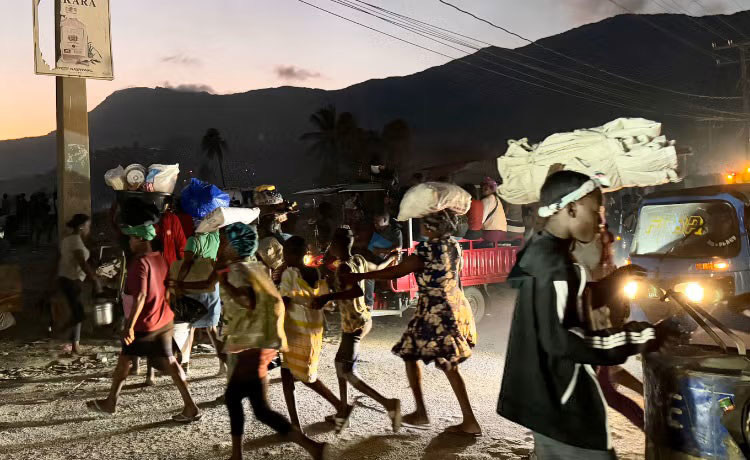
Haitians are enduring a “perfect storm of suffering” the UN Secretary-General António Guterres told the Security Council on Thursday as gang violence continues to paralyse daily life across the island. Around 1.3 million people – half of them children – have fled their homes and six million are relying on humanitarian assistance. Follow our live Meetings Coverage as the latest crisis debate unfolds.

Source link

Israel’s plan to take over Gaza City marks ‘new and dangerous phase’: Guterres

“Israel’s initial steps to militarily take over Gaza City signals a new and dangerous phase,” he told journalists in New York.

“Expanded military operations in Gaza City will have devastating consequences. Hundreds of thousands of civilians – already exhausted and traumatized – would be forced to flee yet again, plunging families into even deeper peril. This must stop.”

‘Endless catalogue of horrors’

Mr. Guterres was speaking ahead of a Security Council meeting on the situation in Haiti but stopped to brief reporters on the “unfolding tragedy that is Gaza”, where “yet more unconscionable Israeli strikes” have occurred.

Incidents include the two airstrikes on Nasser Hospital in Khan Younis earlier this week which killed civilians, including medical personnel and journalists, “all with the world watching”.

The Secretary-General said “these attacks are part of an endless catalogue of horrors” and called for accountability.  

“Gaza is piled with rubble, piled with bodies, and piled with examples of what may be serious violations of international law,” he said.

“Hostages taken by Hamas and other groups must be released and the atrocious treatment they have been forced to endure must stop. Civilians must be protected.”

© UNICEF/Mohammed Nateel

A displaced family sit outside their tent in Gaza.

Unparalleled destruction and famine

Mr. Guterres stressed that “the levels of death and destruction in Gaza are without parallel in recent times”.

He said that “famine is no longer a looming possibility – it is a present-day catastrophe.”

People are dying from hunger, yet Gaza’s food, water and healthcare systems have been systematically dismantled.

Israel’s obligations

“These are the facts on the ground. And they are the result of deliberate decisions that defy basic humanity,” he said. “Israel, as the occupying Power, has clear obligations.”

He said Israel must ensure the provision of food, water, medicine, and other essentials.  This is in addition to agreeing to and facilitating far greater humanitarian access to Gaza, and protecting civilians and civilian infrastructure.

Mr. Guterres said the International Court of Justice (ICJ) has given binding provisional measures which must be implemented in full and immediately.

They include the obligation to take all steps to ensure unfettered humanitarian and medical assistance to Palestinians throughout the Gaza Strip “without delay and in full cooperation with the United Nations.” 

UN staff killed, aid efforts blocked

Meanwhile, the UN and partners are doing all they can, he said.  This is often at great personal risk, as tragically 366 UN personnel have been killed. 

“Day after day, our efforts are being blocked, delayed, and denied,” he said. “This is unacceptable.”

Settlement expansion in the West Bank

Mr. Guterres also addressed the situation in the West Bank, describing it as “profoundly alarming”.

He said Israeli military operations, settler violence, demolitions, and discriminatory policies are driving displacement and deepening vulnerability. 

Furthermore, the relentless expansion of settlements is fracturing communities and cutting off access to vital resources.

The Israeli authorities recently approved of a plan for the construction of thousands of settlements in the E1 area. He said this would effectively separate the northern and southern West Bank, representing “an existential threat to the two-state solution” between Israelis and Palestinians. 

“I repeat: the Israeli settlements in the occupied West Bank including East Jerusalem have been established – and are being maintained — in violation of international law,” he stressed.   

“Israel must cease such actions and comply with its obligations.”

‘No more excuses’

The Secretary-General concluded his remarks by emphasizing that there is no military solution to the conflict.

“I appeal once again for an immediate and permanent ceasefire, unfettered humanitarian access across Gaza, and the immediate and unconditional release of all hostages,” he said.

“Starvation of the civilian population must never be used as a method of warfare. Civilians must be protected. Humanitarian access must be unimpeded,” he added, ending with a plea for “No more excuses.  No more obstacles.  No more lies.” 

Ukraine: Toddler among four children killed in Russia’s attacks on Kyiv

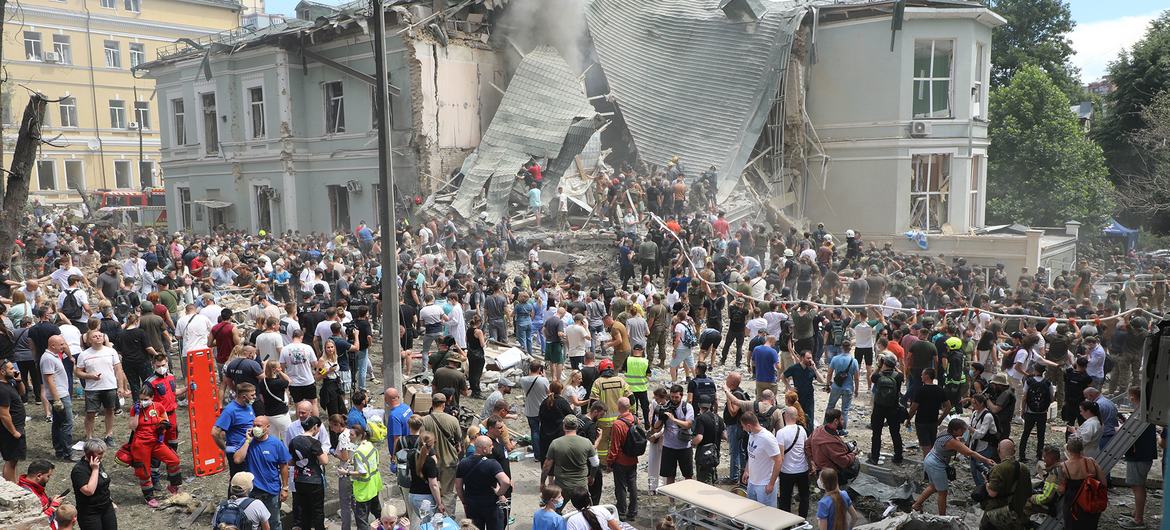
The youngest victim of the bombing raid was two-and-a-half years old, according to the UN Children’s Fund, UNICEF, which released video footage showing smoke billowing from a Kyiv apartment block with a massive hole where its roof had been.

Leading condemnation of the attacks, the UN Secretary-General said that targeting civilians and civilian infrastructure violated international humanitarian law. [They] are “unacceptable and must end immediately”, followed by a ceasefire resulting in a “just, comprehensive, and sustainable peace in Ukraine”, he insisted, in a statement issued by his Spokesperson. 

Eyewitness testimony

Speaking to UN News after visiting the shattered building and its residents, UNICEF Representative, Munir Mammadzade, insisted that nowhere in Ukraine is safe today. The air-raid alert in Kyiv lasted almost 12 hours, he noted.

The senior UN official also condemned the “continuous attacks” reportedly involving ballistic missiles and drones by Russia, which launched a full-scale invasion of Ukraine in February 2022.

“I’m just back from one of the sites that were impacted, severely…and still, the search and rescue operation is continuing,” he said. “Across the city, there were four kids confirmed killed and more than 10 injured; most likely these numbers will go up.”

Media reports indicated further damage to civilian infrastructure including Ukraine’s railways. Russian attacks have also continued closer to the front line, targeting key energy infrastructure ahead of winter, Mr. Mammadzade warned.

Winter is main threat

In Kyiv and in frontline areas, plummeting temperatures are “the biggest challenge”, the UNICEF senior official insisted, in an appeal to donors and partners to support the UN agency’s winterization plan by contributing more to its Ukraine humanitarian fund, which faces a 40 per cent funding shortfall.

People within 10 kilometres (around six miles) of the front line “require immediate support”, the UNICEF official said, so that “families and children can survive and most importantly, have their livelihoods protected”.

Back to school

The development comes as the country’s children prepare to return to school against a backdrop of ever-present air-raid sirens that are “becoming kind of a norm”, even if the impact of the war on many youngsters’ mental health is as serious as it is common.

“We know that even if war ends today, [it] will be for generations to come,” Mr. Mammadzade explained, pointing to sudden mood swings linked to post-traumatic stress and feelings of hopelessness among children he has met in frontline areas including Donetsk, Sumy and Kharkiv.

“What they basically fear the most is about their lives and unfortunately, quite often, they mention to us that they don’t have dreams or any hopes,” he continued. “What they only need is peace – and this peace to happen as soon as possible – so that they can go back to normalcy.”

In his renewed call for a ceasefire, the Secretary-General insisted that it should fully uphold Ukraine’s “sovereignty, independence and territorial integrity, within its internationally recognized borders, in line with the UN Charter, international law and relevant UN resolutions”.

Source link

Latin America and Caribbean: Millions more children could face poverty due to climate change

Even worse, the number could triple if countries do not meet their commitments to reduce greenhouse gas (GHG) emissions and to ensure that climate financing prioritises social and climate resilience services for children.

The finding comes in a report by the UN Economic Commission for Latin America and the Caribbean (ECLAC) and the UN Children’s Fund (UNICEF), published on Thursday in Panama.

Bearing the brunt

The report examines the potential effects of extreme weather events on increasing poverty levels among children and youth, along with national efforts to reduce GHG emissions as well as strategies to adapt and reduce losses and damage caused by climate change.

The 5.9 million figure represents the most optimistic scenario. However, if governments are slow in implementing actions to address mitigation and adaptation, as well as loss and damage, the number could reach 17.9 million.

Roberto Benes, UNICEF Regional Director for Latin America and the Caribbean, said that children and adolescents bear the greatest burden of climate change. 

Their developing bodies are more vulnerable to cyclones, heatwaves and other extreme phenomena which at the same time disrupt their families’ livelihoods and their education.

“If children and young people don’t have the resources to meet their basic needs and develop their potential, and if adequate social protection systems are not in place, the region’s inequalities will only be perpetuated,” he said.

Protect children and youth

Yet despite their vulnerability, climate finance does not prioritise the resilient services for health, nutrition, education, water and sanitation that children and young people need, to ensure their optimal cognitive and physical development. 

In Latin America and the Caribbean, only 3.4 per cent of all multilateral climate finance is dedicated to children, according to the report.  This is happening at a time of funding cuts and reduced development aid amid unprecedented needs.  

The report recommends that regional governments take action, including by strengthening the climate resilience of social services and critical infrastructure to better protect children and youth, with a particular focus on the first 1,000 days of life.

Authorities are urged to increase child-sensitive climate policy financing, with actions that specifically target the needs of children at different ages.

They also must promote greater climate awareness, education, empowerment and participation of children and youth. Additionally, environmental and climate education should be included in school curricula and educational programmes.

The report further recommends that countries promote adaptive social protection and emergency response policies that account for the specific needs of children and adolescents. 

Source link

Sudan: ‘Devastating tragedy’ for children in El Fasher after 500 days of siege

Around 260,000 civilians – including 130,000 children – remain trapped in the area’s main camp for internally displaced people, enduring desperate conditions without aid for more than 16 months.

The Rapid Support Forces (RSF), which has been battling forces of the military government for control of Sudan for over two years, has cut off all supply lines.

RSF militia have been besieging the city since May last year and it is the last urban area still under government control.

“We are witnessing a devastating tragedy – children in Al Fasher are starving while UNICEF’s lifesaving nutrition services are being blocked,” said Catherine Russell, UNICEF Executive Director.

Deadly violence

Reports this week point to yet another mass-casualty incident, with seven children reportedly killed in an attack on Abu Shouk camp for internally displaced people, on the outskirts of El Fasher.

Since the start of the siege in May 2024, more than 1,100 grave violations have been verified in El Fasher alone, including the killing and maiming of over 1,000 children.

Meanwhile, at least 23 children have been subjected to rape, gang rape, or sexual abuse. Others have been abducted, recruited, or used by armed groups, said UNICEF.

Health and education facilities have also come under sustained attack, with 35 hospitals and six schools struck, killing and injuring many, including children.

Aid blocked

Meanwhile, the UN aid coordination office (OCHA) warned Wednesday that the already dire situation in North Darfur continues to worsen.

“Blocking humanitarian access is a grave violation of children’s rights, and the lives of children are hanging in the balance,” Ms. Russell said, reiterating UNICEF’s call for immediate and full access to El Fasher.

The toll on children is catastrophic, the agency suspension of medical services due to depleted supplies has left an estimated 6,000 children suffering from Severe Acute Malnutrition (SAM) without treatment, UNICEF said.

Without therapeutic food and medical care, these children face an extremely high risk of death. News reports indicate at least 63 people, mostly women and children, died of malnutrition in just a single week.  

UNICEF continues to call for unimpeded humanitarian access for the delivery of therapeutic food, medicines, clean water, and other essentials.

Cholera outbreak

The siege is colliding with Sudan’s worst cholera outbreak in decades. More than 2,400 deaths have been reported since July 2024.

In overcrowded camps around Tawila, Zamzam and El Fasher, children weakened by hunger are now especially vulnerable to cholera and other deadly waterborne diseases.

“Children must be protected at all times, and they must have access to life-saving aid,” said Ms Russell.

Source link

Iraq unveils historic migration plan to boost development and stability

Unveiled on Wednesday, it creates new opportunities for work, education and family reunification, while strengthening migration governance and placing migration at the heart of stability and economic development.

It is being led by Iraq’s ministry for migration and the displaced, with the support of the International Organization for Migration (IOM) and the Government of the Netherlands – translating Iraq’s global commitments into national action.

Migration minister Evan Faeq Gabro said that it represents a “vision for Iraq’s future that upholds human dignity”, serves national interests, and supports the Global Compact for Migration.

Iraq is setting an example for the region and beyond, showing how national leadership and genuine partnership can turn migration into an engine for dignity, opportunity, and development,” said Ugochi Daniels, IOM’s  Deputy Director General for Operations.

Origin and destination

Iraq is both a country of origin and destination, with some two million nationals currently living abroad, while thousands more are weighing emigration.

In the past seven years, over 58,000 people have returned to Iraq, rebuilding their lives at home.

Meanwhile, the country also hosts some 370,000 migrant workers, mainly engaged in semi-skilled sectors such as construction and domestic work.

Iraq’s five-year National Plan to Promote Safe, Orderly and Regular Migration emphasises data-driven decision-making, stronger institutional coordination and calls for closer private sector involvement.

Stability and development

“This national plan demonstrates that when policies are grounded in evidence and shaped by people’s needs, migration can benefit migrants, communities, and the country as a whole,” said Ms Daniels.

Th new policy responds to Iraq’s current migration realities, framing migration as a tool for national development and stability, says IOM.

“Today, we are here to commit ourselves to ensuring that migration is about dignity, safety, and opportunity for migrants, their families, and the communities they join,” said Claudio Cordone, UN Deputy Special Representative in Iraq.

The plan outlines a vision for a future that upholds human dignity and serves the national interest.

UN calls for decisive steps to end conflict as Gaza and West Bank crises deepen

“Today the world looks on in horror as the situation in the Occupied Palestinian Territory continues to deteriorate to levels not seen in recent history,” said Ramiz Alakbarov, UN Deputy Special Coordinator for the Middle East Peace Process, speaking from Jerusalem.

He began by focusing on Gaza, which is “sinking deeper into disaster, marked by rapidly mounting civilian casualties, mass displacement, and, now, famine”, with no end in sight to the conflict.

Worst fears becoming reality

He said that “unthinkably, Gaza’s population is now facing yet another deadly escalation” following Israel’s announcement of its decision to take over Gaza City, which is ongoing.

“For a population already struggling to survive, Palestinians in Gaza are seeing their worst fears become reality in front of their eyes,” he said.

“Expanded military operations in Gaza City will have catastrophic consequences, including displacing hundreds of thousands.” 

Air strikes intensify

Mr. Alakbarov briefed the Council alongside Joyce Msuya, UN Assistant Secretary-General for Humanitarian Affairs, and two guests: Inger Ashing, Chief Executive Officer at Save the Children International, and Ilana Gritzewsky, an Israeli hostage who survived Hamas captivity in Gaza.

He reported that Israeli military strikes have intensified throughout the Strip, hitting tents housing displaced people, schools, hospitals, and residential buildings.  

Since 23 July, at least 2,553 Palestinians have been killed, according to the health authorities. Of this number, some 271 were reportedly killed attempting to collect aid, including in the vicinity of militarized distribution sites.  

Additionally, over 240 journalists have been killed since the war began on 7 October 2023 following deadly Hamas-led attacks on Israel. 

Although the UN and partners are working tirelessly to assist the people in Gaza, “the security risks are extremely high, and current mitigation measures are woefully insufficient,” he said.

“On my recent visit to Gaza, I was stunned at the scale of the destruction and suffering. I met humanitarian workers risking their lives to deliver aid, while themselves living in intolerable conditions,” he added.

Meeting with survivors and families of hostages

The UN official also visited affected communities in Israel and met survivors of the 7 October terror attacks and family members of some of the hostages. 

“I saw the shattered homes of Nir Oz, where one in four residents was either murdered or abducted on 7 October. I met survivors who carry unbearable loss and trauma,” he said.

Around 50 people, including one woman, are still being held by Hamas and other Palestinian armed groups in Gaza, and 28 are believed to be deceased. 

Videos released by Hamas and Palestinian Jihad depicting emaciated Israeli hostages were deeply disturbing, he said, stressing that ill-treatment and abuse of hostages constitute a blatant violation of international law.

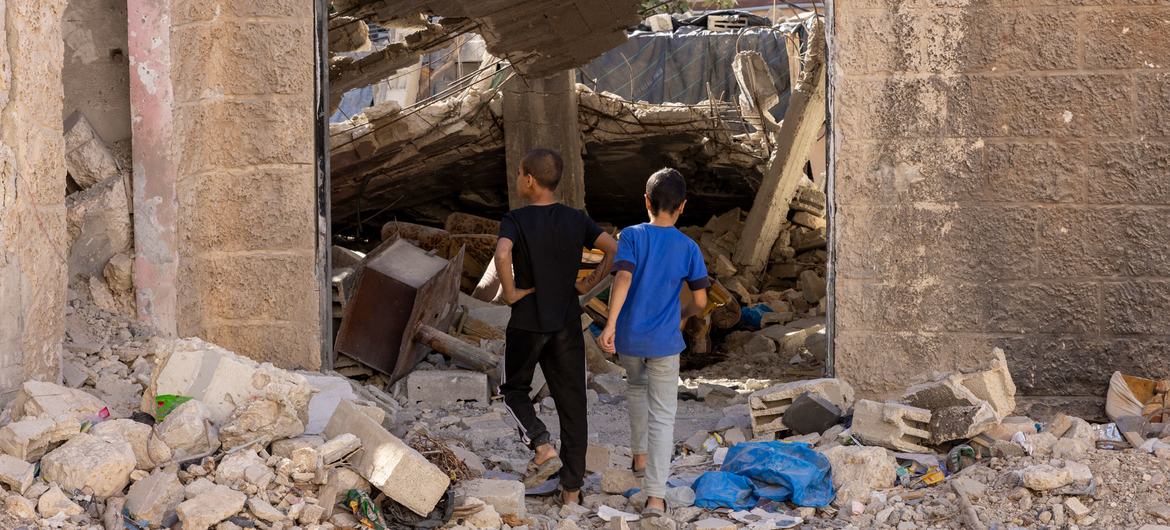
Children in the Jenin refugee camp in the West Bank looking at the destroyed shelters following recent military operations. (file)

West Bank violence

Meanwhile, the situation in the occupied West Bank, including East Jerusalem, “continues to spiral dangerously downward” and “the territory envisioned for a future Palestinian State is shrinking, while a one-State reality of unlawful occupation and perpetual violence is rapidly advancing.”

Israeli security forces have continued operations in northern cities and refugee camps, displacing more than 32,000 people. Furthermore, security forces killed nine Palestinians, four of them children, during the three-month reporting period. 

Attacks by Israeli settlers also have continued, resulting in three Palestinians killed, damage to Palestinian property and displacement.  At the same time, attacks by Palestinians against Israelis have also continued, with no fatalities reported in the last month.

Settlement expansion 

Since the start of the war in Gaza, settler attacks have escalated in frequency and become more violent and deadly.  They have increasingly led to forced displacement, with settlers then moving in and establishing outposts. At the same time, Israel is “fast-tracking settlement expansion, including in the most highly strategic areas.”

Mr. Alakbarov recalled that the Israeli High Planning Committee recently approved a plan for the construction of more than 3,400 housing units in the E1 area.  

“If implemented, the move would effectively sever the connection between the northern and southern West Bank. As such, it would further undermine the possibility of a viable and contiguous Palestinian state,” he warned. 

Israeli authorities also continued to demolish Palestinian-owned structures, he added, and 175 Palestinians, including 70 children, have been displaced.

Regional tensions

Mr. Alakbarov noted that the developments in the Occupied Palestinian Territory are taking place amid a volatile regional context, with more exchanges of fire between Houthi rebels in Yemen and Israel forces occurring this week, along with continued Israeli strikes in Lebanon and an incursion in Syria.

Stressing the need for a ceasefire in Gaza and the release of all hostages, he said “what is needed now is bold action to resolve the conflict, end the occupation and re-establish a political horizon.”

In this regard, he welcomed the High-Level Conference on the Implementation of the Two-State Solution co-chaired by France and Saudi Arabia, held at UN Headquarters in June. 

Uphold the two-State solution

“The message from the international community is clear: the two-State solution remains the only viable path toward a just and lasting resolution of the Israeli-Palestinian conflict,” he said.

He urged the international community to work collectively to advance practical steps, including through engagements during the high-level week of the UN General Assembly in September.

“With Gaza immersed in a situation so horrendous that it defies basic humanity and with the West Bank facing genuine threats to its long-term existence, we can no longer wait,” he said. 

Gaza famine ‘a created catastrophe’

Ms. Msuya’s briefing centered around the recent Integrated Food Security Phase Classification (IPC) analysis confirming that famine is occurring in Gaza governorate – phase 5 conditions – and is expected to spread in the coming weeks.

She drew attention to some of the numbers, saying over half a million people currently face starvation, destitution and death, which could exceed 640,000 by the end of September.  

Approximately one million Gazans are in emergency phase 4 and over 390,000 face phase 3 crisis conditions, she continued.

At least 132,000 children under five are expected to suffer from acute malnutrition between now and the middle of next year, while the number of those who risk dying has tripled to over 43,000. 

Among pregnant and breastfeeding women, the number is predicted to rise from 17,000 to 55,000.

“Let us be clear: This famine is not a product of drought or some form of natural disaster,” she said. “It is a created catastrophe – the result of a conflict that has caused massive civilian death, injury, destruction and forced displacement.”

End this ‘human-made crisis’

Ms. Msuya urged the Council to ensure an immediate and sustained cessation of hostilities to save lives and stop famine from spreading.

She also called for the immediate and unconditional release of all hostages and for civilians and critical infrastructure to be protected.

Furthermore, safe, rapid and unimpeded humanitarian access through all entry points must occur, and aid – including food, medicine, water, fuel and shelter – has to be delivered to all people in need.

Her final request was for the restoration of commercial flows of essential goods at scale, market systems, essential services and local food production.

Ending this human-made crisis demands that we act as if it were our mother, our father, our child, our family trying to survive in Gaza today,” she said. 

A former hostage’s appeal

Ms. Gritzewsky recalled the moment her life was brutally changed on 7 October 2023.

She was grabbed by the hair, punched in the stomach, thrown against a wall, and “touched everywhere,” all while being filmed by the terrorists.  Taken to Gaza, she fainted at the time of her sexual assault.

“Nothing will be the same again,” she said, referring in particular to her broken jaw and pelvis.

Ms. Gritzewsky said she received no medication and did not see a doctor during the 55 days of captivity, even though she had raised concerns about her anaemia and colitis.

She is now fighting for the release of the hostages, particularly her partner, Matan, and made a passionate appeal to the Security Council to act for the release of all those still being held.  

Source link

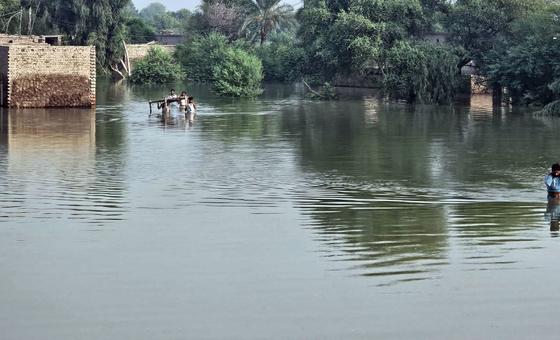
Pakistan floods leave villages cut off as monsoon devastation continues

Aid agencies are continuing to work tirelessly to reach the hardest-hit areas.

The National Disaster Management Authority (NDMA) said nearly 800 people have died since late June – almost three times the toll during the same period last year.

Khyber Pakhtunkhwa province has been hardest hit, where flash floods and landslides swept away homes and schools in mountainous districts, cutting off entire villages and communities.

Punjab – the country’s most populous province – is also on high alert as rising waters on the Sutlej, Ravi and Chenab rivers threaten downstream communities. Authorities fear that upstream water levels and near-full reservoirs could trigger further flooding in the coming days.

Glacier outbursts compound crisis

In Gilgit-Baltistan, so-called glacier lake outburst floods (GLOFs) have added another layer of devastation – destroying homes, water systems and power infrastructure in remote valleys.

These floods occur when heavy rains or rising temperatures cause glacial lakes to burst through natural barriers, suddenly releasing vast amounts of water and debris. With little warning, they are often catastrophic.

Experts warn that climate change is accelerating glacial melt in the Himalaya–Hindu Kush region, increasing the number and size of unstable lakes and heightening risks of such disasters.

Over a million affected

The humanitarian toll is widespread, with more than one million people affected nationwide.

Many families are sheltering with host communities rather than in relief camps, citing concerns over livestock and schooling. Health workers are reporting surges in malaria, fever and skin infections, stretching fragile health services.

Despite major efforts led by federal and provincial authorities, supported by the UN and humanitarian partners, critical gaps remain.

Communities cut off

The most acute needs are in remote mountain areas, where landslides block access and residents face worsening disease, hunger and water shortages, according to the UN aid coordination office, OCHA.

The UN Children’s Fund (UNICEF) said children face heightened risks, with schools damaged, safe water scarce and protection needs rising. The agency has dispatched hygiene kits and helped restore key water supplies.

The World Health Organization (WHO), for its part, is leading disease surveillance and control operations, in a bid to contain outbreaks.

Hunger and disease in Gaza will only worsen from ‘man-made’ famine: WHO

In an online alert, the UN agency said that disease and hunger will only increase, unless all Israeli impediments to aid delivery at scale are removed and access is allowed across the Strip.

The UN aid coordination office, OCHA, confirmed on Wednesday that some aid is allowed into the enclave every day, albeit far too little to meet the huge level of needs.

OCHA’s Olga Cherevko returned this week to a UN-supported community kitchen in Gaza City that she last visited in March, which had been struggling to stay open even then during the total blockade.

Community resilience

It had been forced to close – but managed to reopen again 10 days ago: “They’re now feeding 5,000 people a day, making meals hot meals for people in need in the neighbouring communities,” she said.

“Of course, the number of meals being cooked every day remains severely insufficient because the volume of supplies entering remains severely insufficient, and the only way for us to stop famine is by ensuring that more supplies are entering every day.”

The WHO appeal comes two days after at least 20 people were killed in a double strike on Nasser hospital in southern Gaza, with four health workers and five journalists among the victims.

Across the Gaza Strip today, WHO said that more than half a million people are trapped in famine, with destruction to food and health services, and to water and sanitation systems.

‘Act without delay’

The UN General Assembly-mandated Palestinian rights committee issued a statement on Wednesday reminding that the famine is projected to spread in the coming days, if Israel fails to allow in more food aid.

“This catastrophic man-made disaster comes on the heels of two years of near total Israeli destruction and blockade of Gaza and relentless military assaults that have decimated civilian infrastructure, including food production capacities and all other means of subsistence,” the committee said.

“This is a grave breach of international law. States must act without delay to fulfill their legal obligations towards bringing a rapid end to this catastrophe and illegal situation.”

More to follow…

UN peacekeeping mandate in Lebanon faces scrutiny ahead of Security Council vote

As members of the UN Security Council negotiate the renewal of the UN peacekeeping force in Lebanon (UNIFIL) ahead of a 31 August deadline, the mission’s future role and capacity are under intense debate.

UNIFIL has long been a stabilising presence in southern Lebanon, working alongside the Lebanese armed forces, mediating between parties, and supporting local communities.

A key part of its mandate is to implement Security Council resolution 1701, which brought an end to the 2006 hostilities between Israel and Hezbollah militants.

Yet challenges remain, from Israeli military positions inside Lebanon to Hezbollah’s arsenal and the broader question of how resolution 1701 – which calls for a complete end to hostilities – can be fully implemented.

According to media reports, last-ditch negotiations are underway over the mission’s future, with some diplomats warning of risks to border stability and others voicing tepid support or pressing for full withdrawal.

Earlier this week, Andrea Tenenti, spokesperson for UNIFIL, sat down with UN News’s Nancy Sarkis to discuss the mission’s effectiveness, the risks of a non-renewal, and what is at stake for Lebanon, Israel, and regional stability.

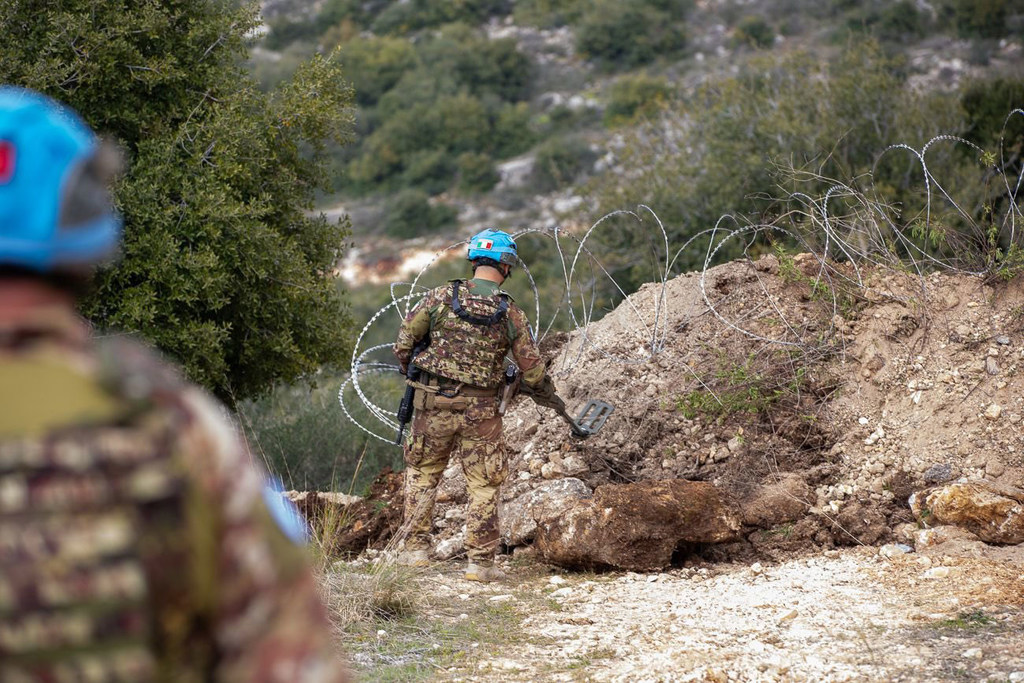
UNIFIL peacekeepers on patrol (file)

This interview has been edited for clarity

UN News: UNIFIL’s mandate, which expires at the end of August, needs to be renewed by the UN Security Council. Why is this renewal important, and how do you assess UNIFIL’s effectiveness so far?

Andrea Tenenti: The renewal comes after a long crisis that has devastated the region and destroyed most of the areas close to the Blue Line. It would show the importance of maintaining an international peacekeeping operation to assist the Lebanese army [Lebanese Armed Forces, or LAF] in their full deployment.

That’s what we have been doing from the very beginning, and in the last several months since November, after the cessation of hostilities, the LAF has brought more troops to the south, and we have been working with them in being deployed in all these positions, although the real challenge at the moment is that we still have Israeli Defense Forces [IDF] positions present in the south of the country.

UN News: To what extent are the Lebanese armed forces ready to assume full responsibility in southern Lebanon without the support of peacekeepers, and what challenges do they face in doing so?

Andrea Tenenti: Right now, the Lebanese army don’t have the capacities and capabilities to be fully deployed. There is a financial crisis in the country, and they need capacity and capability support from UNIFIL, and the financial support of the international community to have a sustainable presence and to bring State authority to the south.

The Lebanese army and authorities have demonstrated their full commitment to resolution 1701. However, they cannot be fully deployed if the IDF are still present; the presence of the IDF in the south is a violation of Lebanese sovereignty and resolution 1701. There needs to be commitment from both sides.

UN News: If the UNIFIL mandate is not renewed, what are the potential consequences for regional stability?

Andrea Tenenti: The situation is much better than before, but very, very fragile. Anything could jeopardise the situation in the south. A lack of renewal would create a real vacuum for stability of the region. It would create a very dangerous precedent and situation for the stability of the country, and it would make impartial monitoring very difficult.

UN News: UNIFIL has faced criticism from Lebanon, Israel, and internationally. How do you respond to these criticisms, and what step can be taken to strengthen trust and credibility?

Andrea Tenenti: Criticism goes with the job of any peacekeeping mission. In order to be impartial, staying in the middle and trying to assist the parties in the implementation of the mission’s mandate, you will be criticised by both sides.

Sometimes, the criticism is driven by a misconception of the mission’s mandate. For example, resolution 1701 does not call for UNIFIL to disarm Hezbollah. This is not our mandate. We are to support the Lebanese army to do it, and that’s what we are doing right now.

On the Lebanese side, we have been criticised for patrolling without the Lebanese army, but as part of 1701 we are tasked to operate either with the Lebanese army or independently.

This is something that the Lebanese army and Lebanese authorities know very well. Sometimes it’s a matter of disinformation and misinformation about the role of the mission, and we are trying to counter that as much as we can.

UN News: What is your vision for UNIFIL’s role in the coming years, and do you see it as a short-term necessity or as a part of a long-term regional security framework?

Andrea Tenenti: At the moment, UNIFIL is very much needed to support the stability of the region, bring back the Lebanese army to the south – and return State authority that has been not present for a very long time. But it has to be a south free from occupation – that’s the only way to move forward.

The goal of the mission has always been to leave and hand over all our capabilities and tasks to the Lebanese authorities, but a lot needs to be done. To ensure stability in the region, we have to be pragmatic on the timetable.

Source link

World News in Brief: More deaths in Ukraine, lengthy detentions in Egypt, AI governance, US postal tariffs

Since Friday, 11 civilians have been killed and more than 90 wounded, according to the authorities. Schools and energy infrastructure also were damaged.

The Donetsk region in eastern Ukraine was the most affected, with the town of Kostiantynivka particularly hard hit. 

Six other regions – Sumy, Kharkiv, Kherson, Mykolaiv, Dnipro and Zaporizhzhia – were also impacted, with homes, schools, ambulances and power infrastructure in front-line areas sustaining damage.

In response, aid organizations have distributed repair materials, hot meals and drinks, in addition to providing psychological support.

Families on the run

Meanwhile, humanitarians continue to support people fleeing hostilities in the Donetsk and Dnipro regions.

OCHA said over 2,000 people, many of them children, were evacuated from Donetsk between Friday and Monday. 

“With growing pressure on the transit site in the town of Pavlohrad, authorities and aid organizations opened new facilities in the village of Voloske, Dnipro region, and the town of Lozova, Kharkiv region,” the agency said.

Evacuees receive medical and psychosocial support, hot meals, water and hygiene supplies, and can register for cash assistance before moving on to safer areas. 

At the same time, humanitarians are also supporting arrivals in other parts of Ukraine.

Egypt urged to end ‘rotation’ detention practice targeting Government critics

The UN human rights office, OHCHR, called on Tuesday for Egypt to end a practice known as “rotation” which allows Government critics to be held arbitrarily and for prolonged periods even after serving their sentences or completing maximum pre-trial detention.

Human rights defenders, activists, lawyers, journalists, peaceful protesters and political opponents are among those who have been targeted.

The latest case concerns poet Galal El-Behairy, who was arbitrarily detained after completing a prison term on 31 July 2021 for writing songs and poetry critical of the Government. 

He has since faced similar charges in two different cases under the counter-terrorism law and the penal code. The latest charges were brought on 19 August 2025, extending his detention for at least 15 more days.

Suppressing critical voices

Rotation “has become a tool by which the Egyptian Government represses those perceived to be critical of its policies,” OHCHR Spokesman Thameen Al-Kheetan told journalists in Geneva.

“Most of those targeted by ‘rotation’ should not have been detained or jailed in the first place, as the charges brought against them are often related to the exercise of their legitimate rights to freedom of expression and peaceful assembly,” he said.

OHCHR urged the Egyptian authorities to immediately end the practice and release all those who have been subjected to it. 

UN announces two new mechanisms to promote cooperation on AI governance

The UN Secretary-General welcomed the General Assembly’s decision on Tuesday to establish two new mechanisms to promote international cooperation on the governance of artificial intelligence (AI).

The establishment of the UN Independent International Scientific Panel on AI and the Global Dialogue on AI Governance marks a significant step forward in global efforts to harness the benefits of the technology while addressing its risks.  

The development underlines commitment by Member States to build on the Global Digital Compact adopted as part of the Pact for the Future last September, UN Spokesperson Stéphane Dujarric told journalists in New York.

Fostering inclusion, informing decision-making

He said the Global Dialogue will provide an inclusive platform within the UN for States and stakeholders to discuss the critical issues concerning AI facing humanity today.

The Scientific Panel will serve as a crucial bridge between cutting-edge AI research and policymaking, he added.

“By providing rigorous, independent scientific assessments, it will help the international community to anticipate emerging challenges and make informed decisions about how we govern this transformative technology,” he explained.

The Secretary-General will soon launch an open call for nominations for the Scientific Panel, which will present its annual reports at the Global Dialogue on AI Governance to take place in July 2026 in Geneva and 2027 in New York.

In the interim, all stakeholders are urged “to support this historic initiative and contribute to building a future where artificial intelligence serves the common good of all humanity.”

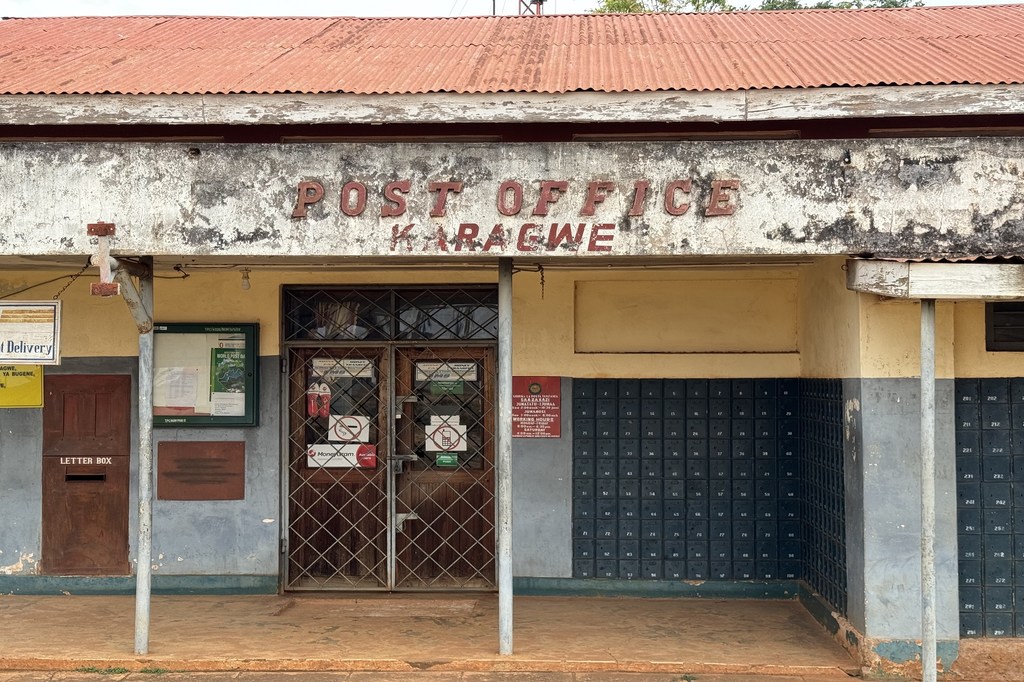
This post office was officially opened on 4 September 1981 in Karagwe District, Kagera Region in Tanzania

UN postal agency striving to keep packages moving ahead of US duty-free deadline

The UN postal agency says it is taking all possible measures to keep packages flowing to the United States after dozens of countries suspended service. 

“Maintaining the trust of the billions of people served by the postal network is our top priority,” said Universal Postal Union (UPU) Director General Masahiko Metoki. 

Starting on 29 August, the US announced that it will suspend duty-free “de minimis” measures for low-value packages.  

That means packages worth less than $800 will no longer be exempt from customs duties and may require new processing requirements. There is no impact on letters. 

A big change

The UPU noted that while each country has the sovereign right to adopt its own customs policies, the change “will entail considerable operational changes for postal operators around the world” – given the short notice. 

Postal services in at least 25 countries have suspended their outbound postal services to the US, citing uncertainties related to transit, according to the UPU. 

The UN agency says it is working to help countries adjust to new customs duty collection and remittance process and is in contact with the US Government to develop practical solutions.   

Source link

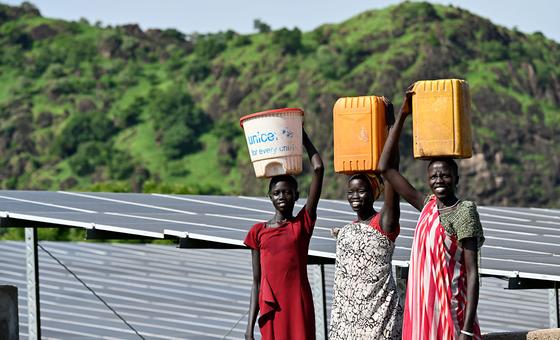
One in four still lacks access to safe drinking water and sanitation

The report from the World Health Organization (WHO) and children’s agency (UNICEF) issued as World Water Week gets underway, highlights persistent gaps in access, with vulnerable communities facing the greatest disparities.

Some 2.1 billion people still lack access to safely managed drinking water, while 106 million worldwide are forced to rely on untreated surface sources.

Water, sanitation and hygiene are not privileges, they are basic human rights,” said Ruediger Krech, Director of WHO’s Environment, Climate Change and Health Department.

Clear disparities

The report finds that people in least developed countries are more than twice as likely as people in other countries to lack basic drinking water and sanitation services, and over three times as likely to go without basic hygiene.

“These inequalities are especially stark for girls who often bear the burden of water collection and face additional barriers during menstruation,” said Cecilia Scharp, UNICEF’s head of water, sanitation and hygiene services.

Data from 70 countries reveal that while most women and adolescent girls have menstrual materials and a private place to change, many still lack sufficient supplies to manage their needs safely and with dignity.

‘We must act faster’

Some 1.7 billion people still lack basic hygiene services at home, including 611 million with no facilities at all.

“We must accelerate action, especially for the most marginalised communities, if we are to keep our promise to reach the Sustainable Development Goals,” said Mr. Krech.

“At the current pace, the promise of safe water and sanitation for every child is slipping further from reach – reminding us that we must act faster and more boldly to reach those who need it most,” said Ms. Scharp.

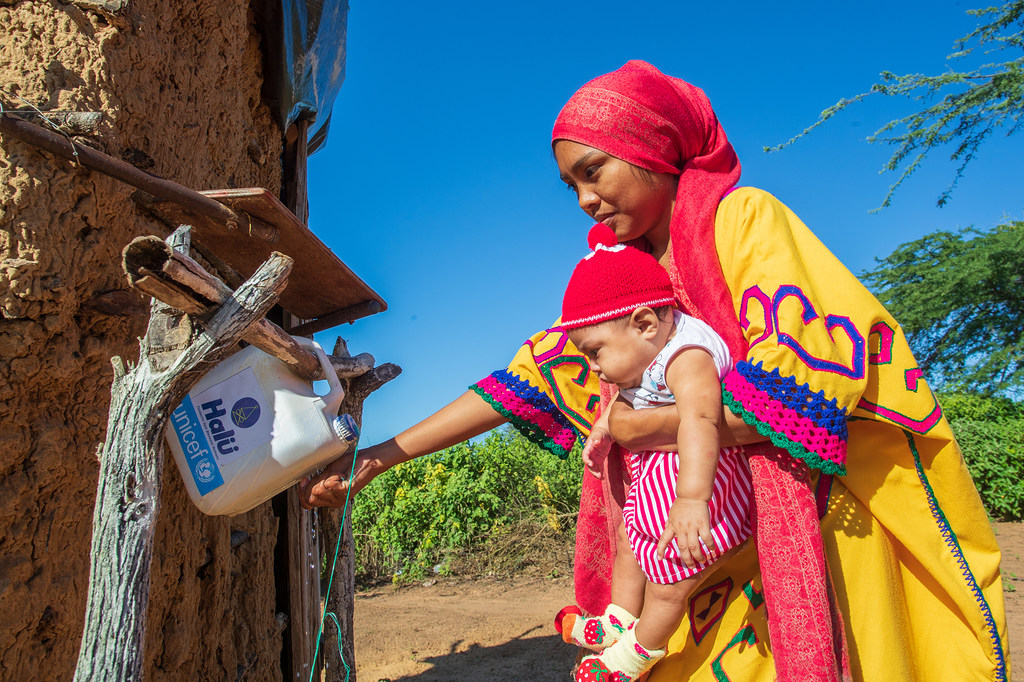
In the municipality of Manaure in La Guajira, Colombia, a woman washes her hands at an installation of hand-washing point known as tippy taps.

Source link

Thailand grants work rights to long-term refugees from Myanmar, UN welcomes resolution

Some 81,000 forcibly displaced people are hosted in temporary shelters along the Thai-Myanmar border where they have been living in the camps for decades.

Nearly half the refugee population were born under canvas, where displaced families have largely depended on humanitarian assistance.

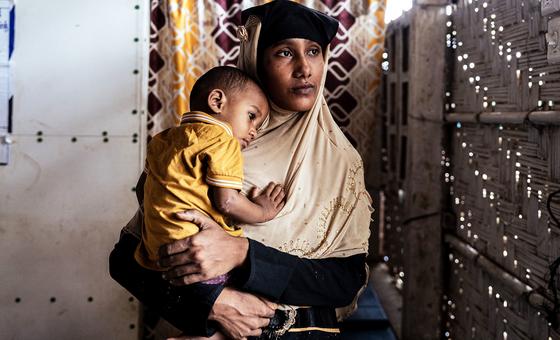
Over a million Rohingya, a mostly-Muslim minority from Myanmar, have fled conflict and persecution in multiple waves of displacement.

Monday marked eight years since the mass exodus of Rohingya from Myanmar’s Rakhine state in Myanmar and the UN on Monday called for greater international solidarity over their plight.

‘Turning point’

UNHCR’s Representative in Thailand, Tammi Sharpe, described the Government’s decision as a major “turning point.”

She said it would not only help refugees support themselves but also benefit local economies and strengthen Thailand’s long-term growth.

By unlocking the potential of these individuals, Thailand is not only upholding humanitarian principles but also making a strategic investment in its own future,” Ms. Sharpe said.

Although the new resolution covers a limited number, the UN agency said it would continue to advocate for wider refugee inclusion – offering support to the Thai Government in rolling out the new policy.

Aid cuts

The move comes at a time when aid budgets for displaced people worldwide are facing severe cuts.

For the UN agency, Thailand’s move could set a regional precedent for sustainable, rights-based refugee policies – and serve as a model for countries facing similar challenges, UNHCR said.

According to agency, $25.4 million is needed in 2025 to ensure operations covered by the Thailand-based international office is sustained – which also oversees operations in Cambodia, the Lao People’s Democratic Republic and Viet Nam.

Source link

Killing of journalists in Gaza hospital attack ‘should shock the world’: UN rights office

OHCHR Spokesperson Thameen Al-Kheetan said condemnation of the two strikes by Israeli forces on the Nasser Hospital in Khan Younis now needs to be channelled into a demand for accountability and justice for all those killed.

At least 20 died, including four health workers and five journalists, later named as Ahed Abu Aziz, Hussam al-Masri, Mariam Dagga, Mohammed Salama and Moaz Abu Taha. They worked for outlets including Middle East Eye, the Associated Press, Al Jazeera and Reuters.

Two strikes

Video taken at the scene shows a second strike apparently targeting rescuers who had arrived at the scene of the initial attack on southern Gaza’s largest medical facility on Monday.

“We know that one of the five journalists appears to have been killed in the first air strike while three others including the women journalist appear to have been killed in the second air strike. This is a shock and this is unacceptable,” said Mr. Al-Kheetan.

“At least 247 Palestinian journalists have been killed in Gaza since the 7th of October 2023,” he continued.

“These journalists are the eyes and the ears of the whole world and they must be protected…This raises many, many questions about the targeting of journalists and all of these incidents must absolutely be investigated and those responsible must be held accountable.

He added that OHCHR was continuing to corroborate the factual details of Monday’s strikes, adding that targeting journalists as well as hospitals is forbidden under international law.

The head of UN cultural agency, UNESCO – which advocates for press freedom and journalists’ safety – also condemned the killings, reiterating her call to respect UN Security Council resolution 2222, unanimously adopted in 2015 on the protection of journalists, media professionals and associated personnel as civilians in situations of conflict.

Audrey Azoulay said UNESCO is providing emergency assistance to journalists in the Gaza Strip, including psychosocial assistance, access to working equipment, and capacity-building

Investigations must ‘yield results’

Israeli Prime Minister Benjamin Netanyahu responded to the killings expressing regret, describing the incident as a “tragic mishap”. He said the Israeli military would carry out “a thorough investigation.”

The OHCHR spokesperson told journalists in Geneva that Israeli authorities had carried out investigations in the past, as the occupying power.

“But these investigations need to yield results. There needs to be justice. We haven’t seen results or accountability measures yet,” he said.

More to follow…

Source link

Gaza: UN calls for probe following deadly strikes on Nasser Hospital

At least 20 people were killed, including four health workers and five journalists, WHO Director-General Tedros Adhanom Gebreyesus said in a tweet.

Fifty other people were injured, including critically ill patients who were already receiving care.

Healthcare under attack

While people in Gaza are being starved, their already limited access to healthcare is being further crippled by repeated attacks,” Tedros remarked.

“We cannot say it loudly enough: STOP attacks on healthcare. Ceasefire now.”

He said the hospital’s main building, which houses the emergency department, inpatient ward, and surgical unit, was hit. 

The strikes also damaged the emergency staircase.

Global indifference and inaction

The head of UN Palestine refugee agency UNRWA also took to social media in the wake of the news.

Silencing the last remaining voices reporting about children dying silently and famine with the world’s indifference and inaction is shocking,” said Commissioner-General Philippe Lazzarini.

He called for compassion to prevail, saying “let us undo this manmade famine by opening the gates without restrictions, ⁠protecting journalists and humanitarian and health workers,” stressing the need for political will now.

The UN recently noted that more than 240 journalists have been killed in Gaza since the war began nearly two years ago following deadly Hamas-led attacks on Israel. 

Roughly 1,200 people were killed and 250 hostages were taken to the enclave, some of whom remain in captivity.

Guterres calls for investigation

UN Secretary-General António Guterres strongly condemned the deadly airstrikes and called for a prompt and impartial investigation.

These latest horrific killings highlight the extreme risks that medical personnel and journalists face as they carry out their vital work amid this brutal conflict,” UN Spokesman Stéphane Dujarric said in a statement. 

The UN Office for the Coordination of Humanitarian Affairs (OCHA) said that among the reporters killed was female journalist Mariam Abu Dagga who partnered with the agency last year on a photo essay depicting the dire situation in Gaza.

The Secretary-General reiterated that medical personnel and journalists must be able to perform their essential duties without interference, intimidation, or harm, in full accordance with international humanitarian law. 

He also renewed his call for an immediate and permanent ceasefire in Gaza, unfettered humanitarian access across the enclave, and the immediate and unconditional release of all hostages.

The Israeli Prime Minister’s office issued a statement later in the day saying the Government “deeply regrets the tragic mishap” which occurred at the Nasser Hospital. 

Famine spreading

The number of deaths in Gaza has surpassed 61,000, according to the local health authorities.

Last week, food security experts confirmed that famine has taken root in Gaza Governorate, projecting that it will spread. 

The Gaza Ministry of Health said on Tuesday that 11 people have died from malnutrition and starvation in the past 24 hours, bringing the overall total to 300.

Displacement deepens

Meanwhile, people across the enclave continue to be displaced while seeking safety and shelter.  

Humanitarians said that between 20 and 24 August, some 5,000 people are estimated to have been displaced from northern Gaza to Deir Al-Balah and Khan Younis. Roughly 8,000 more have been displaced to the west of Gaza City. 

Overall, new displacements have surpassed 800,000 since the end of the ceasefire in mid-March. 

Obstructions to aid delivery

At the same time, aid convoys in Gaza continue to face delays, movement obstructions and other challenges. 

On Sunday, only seven out of 15 humanitarian missions that required coordination with Israel were facilitated, including the collection of fuel from the Kerem Shalom border crossing for distribution to areas where it is needed most. 

“Four missions had to be either cancelled by the organisers or were denied outright by Israeli authorities,” OCHA said.

“The remaining ones were initially approved but then impeded on the ground and only partially accomplished, including the collection of food and vaccines from the crossings.”

Education on hold

As children around the world start heading back to school, their counterparts in Gaza continue to miss out on education.

Several education facilities that are being used as shelters for displaced people were attacked last week, according to aid partners.

“With local authorities announcing that final exams for over 35,000 high school students are due to be held in two weeks, the UN and its partners reiterate their call for the protection of education facilities in accordance with international law,” OCHA said. 

Source link

Putting water management at the centre of the climate change fight

Currently underway in Stockholm from 24 to 28 August, the 35th World Water Week meeting highlights the crucial link between water and global warming, under the theme, Water For Climate Action.

At the core of sustainable development and basic human survival, safe drinking water is critical for socio-economic development, energy and food production – and healthy ecosystems.

Meanwhile, reliable water supply is also at the heart of adaptation efforts in an increasingly warming world.

Landlocked countries

Improved access to water is creating new opportunities for people in some of the world’s most remote communities, particularly in landlocked developing countries (LLDCs). 

On Wednesday, UN-Water – which coordinates the UN’s work on water and sanitation – will bring together LLDCs that have demonstrated substantial progress towards ensuring the availability and sustainable management of water and sanitation for all, in line with the UN Sustainable Development Goals (SGDs).

This session will provide an opportunity for other LLDCs to draw lessons from the progress made by Bhutan, Rwanda, and Saudi Arabia in ensuring safe drinking water and effective water management.

Innovative financing

The lack of safely managed water, sanitation and hygiene services, severely impacts human well-being, dignity and opportunities – especially for women and girls.

Indeed, contaminated water, inadequate sanitation, and poor hygiene practices are still undermining efforts to end extreme poverty and control disease outbreaks in the world’s poorest countries.

On Thursday, UN-Water and partners will galvanise donors and other key collaborators to address financing gaps in water and sanitation provision.

Discussions will focus on different models and building alliances to unlock innovative funding mechanisms for safer universal access.

UN urges renewed solidarity eight years after forced exodus of Rohingya

More than 700,000 of them fled to neighbouring Bangladesh after armed attacks by a militant group against Myanmar security forces sparked a brutal military crackdown that began on 25 August 2017.

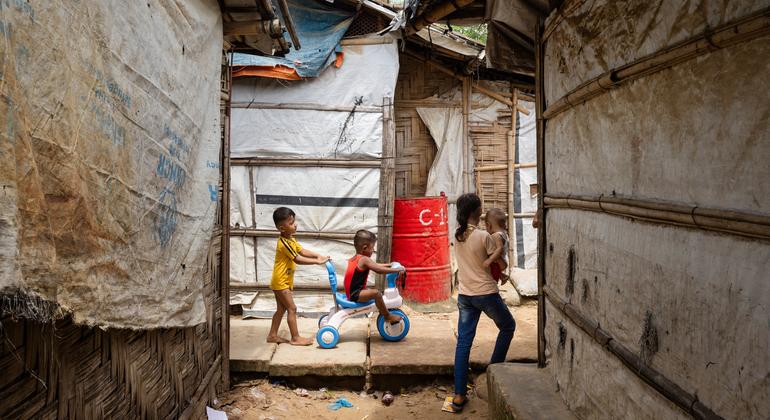
They joined thousands of others who had escaped earlier waves of violence and discrimination now living in refugee camps just across the border in the Cox’s Bazar district.

Violence and funding cuts

In a statement to mark the anniversary, UN Spokesman Stéphane Dujarric noted that the Rohingya people both in and outside Myanmar are facing a further deterioration of their already dire circumstances.

“In Rakhine State, Rohingya and other civilians are caught in the crossfire between the Myanmar military and the Arakan Army and subjected to forced recruitment, human rights violations and other abuse,” he said.

The ongoing violence has forced more Rohingya to flee, including to Bangladesh which is already hosting more than one million refugees from Myanmar. 

A military coup forced Myanmar’s democratically elected Government from power in 2021, fuelling armed insurgencies throughout Myanmar following a brutal military crackdown on protests.

Mr. Dujarric said reports of pushbacks, removals and deportations across the region raise serious concerns over potential violations of the principle of non-refoulement and shrinking asylum space.

This is happening amid funding cuts which are severely curtailing education, food assistance, healthcare, livelihood opportunities and protection services.

Protect all civilians

The Spokesman said UN Secretary-General António Guterres has repeated his call for the protection of all civilians in accordance with applicable obligations under international law. 

The Secretary-General also recalled his visit to Cox’s Bazar, Bangladesh, where he witnessed the resilience of Rohingya communities.

He stressed the urgent need for strengthened international solidarity and increased support, in parallel to efforts toward a comprehensive political solution that meaningfully includes the Rohingya and addresses their displacement and the root causes of the protracted crisis.

Hopes for upcoming conference

“The Secretary-General is hopeful that the 30 September High–level Conference on Rohingya and other minorities in New York, as mandated by the United Nations General Assembly, will draw renewed international attention to the urgency of finding durable solutions,” said Mr. Dujarric.

He added that the Special Envoy of the Secretary-General on Myanmar continues to engage all stakeholders towards ending the brutal civil conflict and supporting a viable Myanmar-led political process.

This should also lead to the voluntary, safe, dignified, and sustainable return of the Rohingya to Myanmar. 

Source link

Driven by hunger in Gaza, amputees are part of the collateral damage

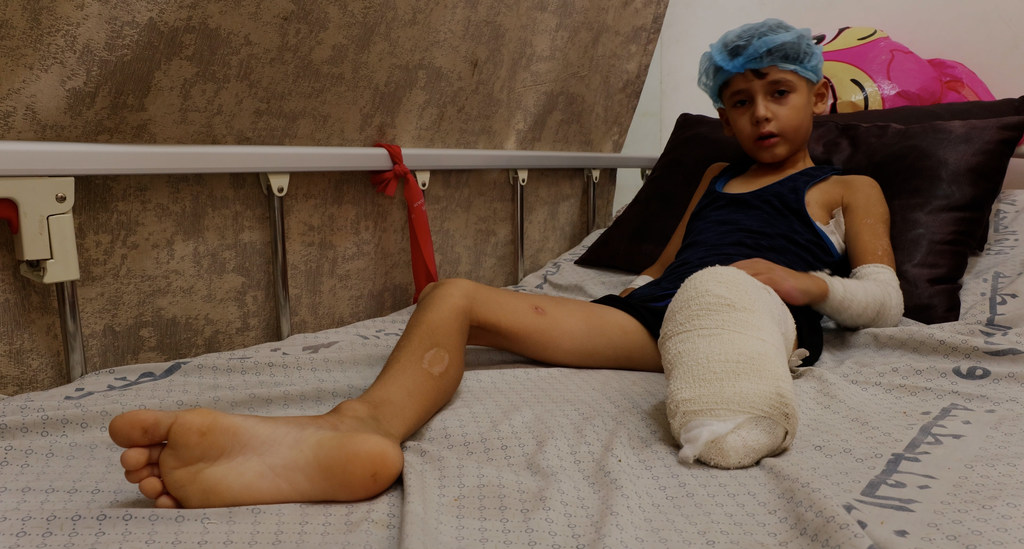
“I was going to buy falafel,” says Mohammed Hassan. “On the way home, I looked up and saw a rocket heading towards me. I tried to run, but it was too fast. I found myself pinned to the wall, and my foot had been blown off.”

Brought to Al-Shifa Hospital in Gaza City, the young boy looks down at his heavily bandaged left leg, and the stump where his foot used to be.

In another area of the hospital, a small child, Maryam Abu Alba, is crying in pain. “The neighbour’s house was bombed, and their home was hit,” says her grandmother. “One of her legs had to be amputated, and metal plates had to be inserted into the other one, which was fractured. She is in severe pain.”

Earlier this year, the UN humanitarian aid coordination agency OCHA estimated that 4,500 new amputees require prosthetics, in addition to the 2,000 existing cases requiring maintenance and follow-up care, while about 24,000 injured people required rehabilitation.

Health facilities are overwhelmed with many patients undergoing multiple surgeries without adequate medical supplies, including anaesthesia.

Palestinian child Mohammad Hassan sitting on a hospital bed in Gaza after his left leg was amputated by a strike.

Desperately seeking food

In May, as supply routes for UN humanitarian convoys were interrupted, the number of distribution points of aid dropped from 400 dotted across the Gaza strip to a handful of hubs operated by the Gaza Humanitarian Foundation.

Given the shortage of humanitarian aid and diminished capacity, thousands of Palestinians have been killed or injured since May while seeking food.  Among the wounded are children and parents who, despite losing limbs, continue to search for food and water.

This comes as a UN-backed food security report has just concluded that famine is confirmed in Gaza governorate, where half a million people are trapped in conditions of starvation, malnutrition and death.

Ibrahim Abdel Nabi was one of the many Palestinians who headed to the hubs in the hope of finding desperately needed provisions for their families.

In his tent at a displacement site in the coastal Al-Mawasi area of Khan Younis, Mr. Nabi, surrounded by his wife and children, explains how the journey ended in disaster and life-changing injuries.

“When I arrived at the Al-Alam area, west of Rafah, I was hit by an explosive bullet in my leg. I was bleeding for about an hour and a half, and no one came to help me. They were all trying to find food for their children.”

Eventually, a group of people came to his rescue and took him to the nearby Red Cross hospital.

“I stayed there for about a month and a half, undergoing about 12 operations. I became malnourished and lost a lot of blood. Infection spread, and more of my leg had to be amputated.”

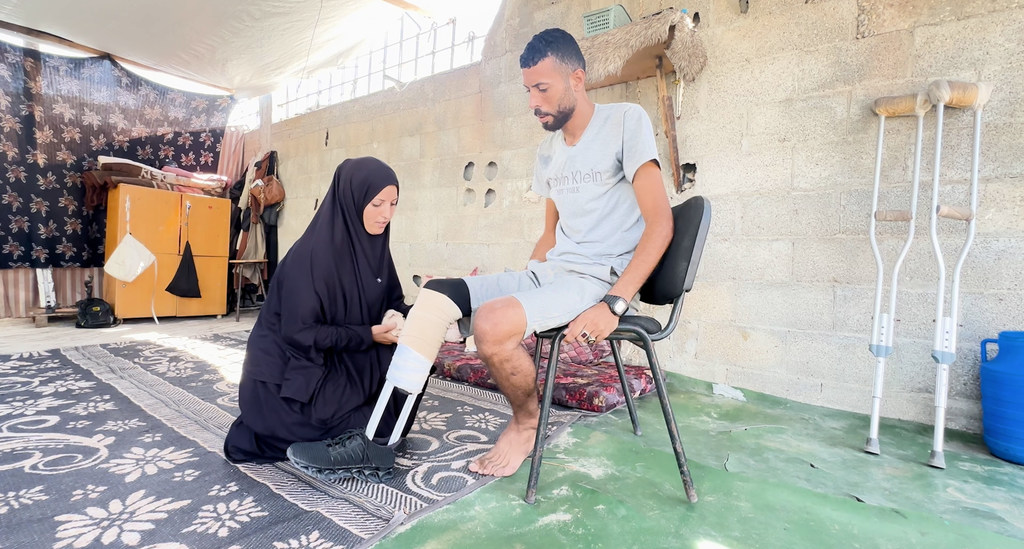
Ibrahim Abdel Nabi, a Palestinian displaced in Gaza, sitting on a chair while his wife helps him wear the handmade prosthetic limb.

‘I made my prosthetic leg’

As Mr. Nabi was trying to recover, he was aware that his family were still in need of food. Despite the pain, he decided to make a simple prosthesis from materials he could find to allow him to get back on his feet and make fresh attempts to find food and water.

“The prosthesis injures my leg,” he said. “It causes inflammation and increases the pain. We don’t have medical care or supplies, but I will use it no matter how much it hurts.”

As he speaks, Mr. Nabi’s wife begins to cry. “God willing, we will live through this experience,” she says.

Mr. Nabi gets up on crutches and heads to a nearby tent, where his wife helps him to put on the crude prosthesis.

“Don’t strain yourself,” she repeats, over and over. “Take your time. Walk slowly.”

Source link