UNHCR underscores plight of Rohingya refugees amid alarming reports

According to reports, one boat carrying 267 people from Cox’s Bazar in Bangladesh and Rakhine State in Myanmar, sank on 9 May, with only 66 survivors, UNHCR said. 

The following day, a second boat fleeing with 247 people capsized, leaving just 21 survivors. In a separate incident, reports indicate that on 14 May, a third vessel carrying 188 Rohingya was intercepted while departing from Myanmar.

Since August 2017, mass violence, armed attacks and human rights violations have forced hundreds of thousands of mainly-Muslim Rohingya to flee Myanmar’s Rakhine State to seek refuge in neighbouring Bangladesh, particularly in the Cox Bazar’s region.

Last week, UNHCR voiced alarm over reports that Rohingya refugees had been forced off an Indian navy vessel into the Andaman Sea. News reports said that dozens of refugees were detained in Delhi, blindfolded, flown to the Andaman and Nicobar Islands, then transferred to a naval ship and forced to swim ashore.

UN response

In Friday’s statement, Hai Kyung Jun, Director of UNHCR’s Regional Bureau for Asia and the Pacific, warned that the worsening humanitarian situation exacerbated by funding cuts to UN agencies is pushing more Rohingya to risk dangerous sea journeys.

She stressed the urgent need for stronger protection in first-asylum countries and greater responsibility-sharing to prevent further tragedies.

Deputy UN Spokesperson Farhan Haq highlighted during Friday’s press briefing that, with the annual monsoon season now underway, the perilous sea conditions reflect the desperation of those attempting to flee.

Rohingya refugees arrive in North Aceh, Indonesia, after a dangerous sea voyage from Bangladesh.

He also noted that so far this year, one in five people undertaking such sea journeys in the region has been reported dead or missing, underscoring the scale of risk and despair facing the Rohingya.

According to UNHCR data, as of 30 April, there are 1,272,081 Rohingya refugees officially displaced and stateless from Myanmar. Some 89 per cent are seeking asylum in Bangladesh and 8.8 per cent in Malaysia.

The refugee agency requires $383.1 million to sustain essential support for Rohingya refugees and host communities across Bangladesh, Malaysia, India, Indonesia, and Thailand in 2025. To date, only 30 per cent of that funding target has been met.

Source link

Public health champions honoured for work ‘beyond the call of normal duty’

But this is not universal. Many people worldwide struggle – unable to walk into clinics or explain their symptoms: “[These patients] do not line up on waiting lists. They wait, unknowingly, for inside understanding and the courage to seek care,” said Dr. Merete Nordentoft of Denmark, describing the patients with whom she has worked most closely.

Dr. Nordentoft was one of six public health champions to receive an award on Friday for “outstanding, innovative work in health development”, at the 78th World Health Assembly.

Each was honoured for their contributions to treating underserved communities and advancing the goal of healthcare for all.

“We celebrate the lifelong commitment and the relentless work accomplished by our very own health professionals across member states from every region of the world with one common goal – health for all,” President Teodoro Herbosa who presided over the awards ceremony.

Reaching vulnerable communities

Dr. Nordentoft received the Sasakawa Health Prize for her work on suicide prevention and with young patients undergoing their first psychotic episode. She was the first to receive this prize for mental health work, and emphasized the importance of early interventions which prioritize community-based care.

“With the right support, early enough, recovery is not only possible – it is likely,” Dr. Nordentoft said of her patients.

Many of the other award recipients have also spent their careers focused on healthcare policies and treatments which foreground integrated, community-based care. 

The principles for which Nelson Mandela fought urge us to pursue a policy of cooperation and partnership in sharing knowledge, science and resources – Dr. Majed Zemni

Professor Huali Wang of China and the Geriatric Healthcare Directorate of Kuwait were both awarded the Sheikh Al-Sabah Prize which honours research and policy done to support and advance healthy ageing.

Professor Wang was recognised in part for her work to integrate professional and family support networks for older adults with dementia. She dedicated her award to these families and everyone living with the complex illness.

The Kuwaiti Directorate was also honoured for the way in which they promoted high-quality, integrated care for older adults which “[preserves] the dignity, the rights and [recognises] the invaluable experiences of older persons.”

Dr. Jožica Maučec Zakotnik from Slovenia, who received the United Arab Emirates Foundation Prize, has also worked tirelessly to increase healthcare access and co-developed a new type of free-of-charge health care promotion centre scheme.

“Growing up in a less developed region in Slovenia, I set myself a task that the most disadvantaged communities would be given greater attention,” she said.

‘Force quit button’

Some of the awardees acknowledged that they were receiving these highly coveted awards during a time when global health is facing unprecedented challenges, specifically financial.

The proposed budget before the 78th World Health Assembly has been reduced by over $1.1 billion due to currently projected funding cuts.

“The global health world has just been hit with a ‘force quit’ button and we have been pushed to stop some of the things we really want to do,” said Dr. Helen Rees of South Africa, recipient of the Dr. LEE Jong-wook Memorial Prize for her work in HIV prevention and community-based health services. 

Dr. Majed Zemni of Tunisia received the Nelson Mandela Award for his patient-centred work in forensic medicine and in promoting the integration of medical ethics into policy. In his remarks, he noted the global civil rights icon’s legacy in also fighting for health policies.

“The principles for which Nelson Mandela fought urge us to pursue a policy of cooperation and partnership in sharing knowledge, science and resources,” Dr. Zemni said. 

Continuing the work 

Dr. Rees also emphasized the importance of seizing this moment to reimage global public health and uphold its sustainability.

“What we need now is action. We need good science and evidence-based policies so we can address the needs of all people, including the most vulnerable,” she said.

Dr. Tedros Adhanom Ghebreyesus, World Health Organization (WHO) Director General, also urged all of the recipients to continue their work towards a healthier and fairer world.

“At a time when the world faces many challenges, each of you is an inspiration and a reminder of the progress that can be made to improve health and well-being for all.”

Source link

Escalating violence drives food crisis across eastern DR Congo, warns WFP

Conflict has plagued the DRC for decades, particularly in the east. Armed clashes escalated sharply this year as M23 rebels wrested control of Goma, the capital of North Kivu, in January, followed by Bukavu in South Kivu a month later.

The security and humanitarian situation further deteriorated with recent outbreaks of anthrax and mpox in April and May, fuelled by overcrowded conditions and poor sanitation.

Deepening food insecurity

WFP’s latest report estimates that 7.9 million people are food insecure in the conflict-affected eastern provinces, with 28 million in need across the country.

Food production in Grand Nord, an important agricultural hub in eastern DRC, has been slashed due to recent conflict and displacement. In addition, the closure of Goma’s airport – critical for aid delivery – continues to disrupt operations.

Despite these challenges, WFP reached 1.1 million people in the east between January and March, providing school meals and take-home rations for 100,000 children, nutrition supplements for 340,000 children and pregnant or breastfeeding women – along with logistics and supply chain assistance.

Regional turbulence

The 140,000 Congolese who have fled to neighbouring countries since January – mainly Burundi, Uganda, Rwanda and Tanzania – have turned a national emergency into a regional crisis.

Refugee camps in these countries, already under strain from refugees from other countries, are struggling to absorb the new arrivals.

WFP warned that the surge in need is outpacing available resources. Budget constraints have forced the agency to make sharp cuts: food rations have been halved in Burundi, while cash support has also been halved in Rwanda.

In Uganda, the number of refugees receiving assistance has dropped from 1.6 million to 630,000. In Tanzania, food rations have been reduced from 82 to 65 per cent.

To sustain its emergency operations, WFP is appealing for $433 million to support its work inside the DRC through October.

Additional funding needs include $16.6 million to provide full food assistance in Burundi through 2025, $12 million to maintain full rations for refugees in Rwanda through 2025, $26 million to sustain operations in Uganda through 2025, and $18 million to provide just 75 per cent of full rations in Tanzania through April 2026.

Displaced families in the Bulengo camp on the outskirts of Goma face a dire and uncertain future as M23 authorities instruct them to dismantle their makeshift shelters.

Source link

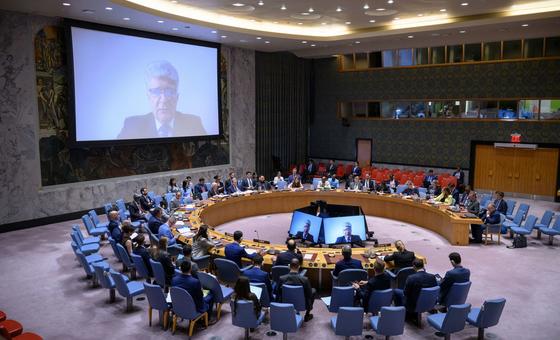
Diplomats prepare ground for June conference on two-State solution for Israel and Palestine

The preparatory session brought together UN Member States to align expectations and finalise arrangements for eight thematic roundtables that will help shape the conference’s outcome.

General Assembly President Philémon Yang urged countries to seize the crucial opportunity to finally make progress.

“The horrors we have witnessed in Gaza for over nineteen months should spur us to urgent action to end the Israeli-Palestinian conflict. The devastating cycles of death, destruction, and displacement cannot be allowed to continue,” he said.

“This conflict cannot be resolved through permanent war, nor through endless occupation or annexation. It will only end when Israelis and Palestinians can live side by side in their own sovereign, independent States, in peace, security, and dignity,” he added.

General Assembly President Yang addresses the preparatory meeting.

Concrete outcomes needed

Co-chairs France and Saudi Arabia emphasised the need for the June conference to go beyond reaffirming principles and achieve concrete results on the ground.

“We must urgently move from words to deeds. We must move from ending the war in Gaza to ending the conflict itself,” said Anne-Claire Legendre, Middle East and North Africa advisor to French President Emmanuel Macron.

“Faced with the facts on the ground, the prospects of a Palestinian State must be maintained. Irreversible steps and concrete measures for the implementation thereof are necessary.”

Alongside, she reiterated calls for a lasting ceasefire, an immediate influx of humanitarian aid and the release of hostages.

Historic moment

Manal bint Hassan Radwan, head of the Saudi Arabian negotiating team, called the moment “historic,” stating that the preparatory meeting must “chart a course for action, not reflection.”  

“Civilians continue to pay the price of a war that must end immediately. The escalation in the West Bank is equally alarming. Despair grows deeper by the day,” she said.

“This is precisely why we must speak not only of ending the war, but of ending a conflict that has lasted nearly eight decades,” she continued, adding efforts to end fighting and secure release of hostages and detainees must be “anchored in a credible and irreversible political plan that addresses the root cause of the conflict and offers a real path to peace, dignity and mutual security.”

Outcome document

The General Assembly decided to convene the conference in its resolution ES-10/24. Further details were outlined in resolution 79/81.

As outlined in General Assembly resolution 79/81, the Conference will produce an action-oriented outcome document entitled “Peaceful settlement of the question of Palestine and implementation of the two-State solution”.

The aim is to chart a clear and irreversible pathway toward a comprehensive, just, and lasting peace in accordance with UN resolutions.

About the Conference

The conference will include a plenary session with statements from the President of the General Assembly, the UN Secretary-General, and the co-chairs, followed by interventions from Member States and observers.

According to a concept note from the co-chairs, the conference will also feature eight thematic roundtables, each focused on critical dimensions of the two-State solution. 

The working groups include security arrangements for both Israelis and Palestinians, the economic viability of a Palestinian State, and humanitarian action and reconstruction.

Source link

UN rights chief calls on South Sudan’s warring parties to end renewed fighting

At least 75 civilians have been killed in hostilities between the national army (SSPDF) and the Sudan People’s Liberation Army-In Opposition (SPLA-IO) – which is both a political party and militia group loyal to First Vice President Riek Machar – and their respective allied armed groups, said UN human rights office, OHCHR, in a press release.

Thousands have been displaced from their homes.

South Sudan was plunged into civil war in 2013 between supporters of the President Salva Kiir and his rival Mr. Machar but a 2018 peace accord led to a fragile power-sharing agreement.

Escalating hostilities “portend a real risk of further exacerbating the already dire human rights and humanitarian situation,” said Volker Türk, head of the UN human rights office (OHCHR), urging all parties to the conflict to “urgently pull back from the brink.”

Intensifying hostilities

The latest armed violence erupted in February when a militia group identified as the White Army reportedly launched a series of attacks in Upper Nile State, OHCHR said.

Hostilities intensified between 3 May and 20 May with reports of indiscriminate aerial bombardments and river and ground offensives by the SSPDF on SPLA-IO positions in the states of Jonglei and Upper Nile.

Civilian displacement further increased on 21 May because of the SPLA-IO and allies’ counter-offensive in Jonglei State.

I urge all parties to uphold the 2018 peace agreement,” said the UN human rights chief, calling for the warring parties to “ensure protection of civilians and civilian objects,” and facilitating “humanitarian access in line with their obligations under international law.”

Concern of arbitrary detention

Between 5 and 26 March, at least 55 high-ranking government officials affiliated with the SPLM-IP, among them civilians, have been arrested across the country. Notably, South Sudan’s first vice-president, ministers, members of parliament and military officers were among the dozens of politicians who have been detained.

“I am concerned that many of the detentions are arbitrary in nature,” Mr Türk said, as these arrests were conducted without warrant or due process.”

Mr Türk called for the immediate and unconditional release of those arbitrarily detained, as he urged for authorities to grant the UN Mission in South Sudan (UNMISS) access to National Security Service detention sites to assess the welfare of those detained there.

Finally, the UN also urged the authorities to take “prompt, effective and meaningful” steps to halt the spread of hate speech in the country.

Source link

Guterres calls on Israel to accept UN’s ‘detailed, principled’ aid plan for Gaza

Addressing reporters outside the Security Council, António Guterres called once again for a permanent ceasefire to end the fighting between Israeli forces and Hamas militants, the immediate and unconditional release of all hostages and full humanitarian access so aid can flow in following nearly 80 days of Israeli blockade.

‘Cruellest phase’

He said Palestinians in the enclave are now “enduring what may be the cruellest phase of this cruel conflict,” with families being “starved and denied the very basics,” as Israel intensifies its offensive and promotes a new privatised aid distribution network reportedly due to begin on Sunday which would bypass the UN and partner organizations’ aid operation.

Israel has clear obligations under international humanitarian law to treat civilians in Gaza humanely, Mr. Guterres added, and “must not forcibly transport, deport or displace the civilian population of an occupied territory.”

He noted that despite authorising a “trickle of aid” to enter in recent days, supplies from only 115 out of 400 trucks have been cleared for collection and distribution – while nothing has reached the besieged north.

UN ‘working round the clock’

“We are working around the clock to get whatever aid we can to people in need,” the UN chief said, but “needs are massive – and the obstacles are staggering.”

Israel is causing unnecessary delays, imposing quotas on distribution and barring essentials such as fuel, shelter, cooking gas, and water purification supplies – are prohibited.

Furthermore, the lives of UN and other humanitarian staffers are being placed at risk if they continue to be prevented from distributing food parcels and flour to those in desperate need, the UN chief continued.

He said absent rapid, reliable, safe and sustained aid access, more Gazans will die – with profound long-term consequences.

Without making direct reference to the US-backed Israeli plan to create new distribution sites overseen by private contractors in coordination with the military, Mr. Guterres said the UN had been clear: “We will not take part in any scheme that fails to respect international law and the humanitarian principles of humanity, impartiality, independence and neutrality.”

5-point aid plan

Instead, he said the UN and partners had “a detailed, principled, operationally-sound 5-stage plan” – supported by UN Member States.

  1. Ensure the delivery of aid to Gaza
  2. Inspect and scan aid at crossing points
  3. Transport aid from crossing points to humanitarian facilities
  4. Prepare aid for onward distribution
  5. And transport aid to people in need

“We have the personnel, the distribution networks, the systems and community relationships in place to act,” said the UN chief. “The supplies – 160,000 pallets, enough to fill nearly 9,000 trucks – are waiting.

“This is my appeal for life-saving aid for the long-suffering people of Gaza: Let’s do it right.  And let’s do it right away.”

Source link

‘A silent crisis’: Obstetric fibrosis affects 500,000 women, yet it’s fully treatable

16 years – that is how long Dah had to live with the agonising condition, undergoing eight different surgical procedures before finally getting the fistula repaired.

In recognition of the over 500,000 women like Dah who are forced to endure what is a highly treatable condition, the International Day to End Obstetric Fistula is being marked on Friday.

Obstetric fistula is a medical condition which refers to the development of a small hole between the birth canal and the bladder or rectum, leading to leaking urine or faeces.

This year’s theme, “Her Health, Her Right: Shaping a Future without Fistula” will seek to make progress towards the goal of eliminating fistula by 2030.

Women’s bodies become battlegrounds — not only through sexual violence but through deliberate denial of reproductive rights and health
– Sima Bahous, Executive Director of UN Women

“Women’s bodies become battlegrounds — not only through sexual violence but through the deliberate denial of reproductive rights and health services” said Sima Bahous, Executive Director of UN Women.

‘A silent crisis’

It is often brought on by prolonged or difficult childbirth. Most of the half million women suffering the condition live in the Global South.

Many women who have a fistula experience social isolation and exclusion brought on by leaking urine or faeces. This, in turn, can lead to depression and exacerbated poverty.

Kambiré, a small business owner who lives in Bouna, lived with obstetric fistula for 23 years. She even had another child before getting medical assistance.

“I preferred to isolate myself because of the fistula,” she said. “I couldn’t sit for long for fear of getting wet.”

She only learned that it was treatable when listening to a radio show, inspiring her to go to a UN sexual and reproductive health agency (UNFPA)-supported hospital for treatment. Now, she owns a small pot-making business.

Kambiré had obstetric fistula for 23 years and now owns her own pot-making business.

Entirely preventable and treatable

UNFPA set the goal of elimination by 2030 – which seems doable given that, as a medical condition, it is both completely preventable and fully treatable.

Between 2003 and 2024, UNFPA supported nearly 150,000 surgical fistula repairs, 4,400 of which alone happened in Côte d’Ivoire for women like Dah and Kambiré.

Catherine, a mother of two in Bouna, also received medical assistance from a UNFPA-supported hospital.

“Now that I’m healthy, I’m happy. I can run my business and spend time with my friends,” she said.

Nevertheless, obstetric fistula has remained stubbornly persistent throughout the world due to disparities in global health systems.

UNFPA says that midwives are key to preventing fistula, and other childbirth injuries. However, there is a global shortage of over 900,000 midwives, 500,000 of which are in Sub-Saharan Africa.

Reproductive health education and empowerment are similarly essential to addressing and preventing obstetric fistula.

“The most effective shield we can offer women and girls is their own power, voice and leadership,” Ms. Bahous said.

Networks of solidarity

After Dah received successful treatment for her obstetric fistula, she, like Kambiré, began a seasonal food business through which she prepares and sells produce.

She has also banded together with other fistula survivors from Bouna to enhance community awareness and reduce stigma.

“When women lead, they protect not only themselves but their families and communities … The impact is transformative,” Ms. Bahous said.

Syrians face staggering needs amid insecurity and healthcare crisis

Wrapping up a visit to the country, Edem Wosornu, who heads operations and advocacy for the UN humanitarian affairs coordination office (OCHA) said that she could “feel the momentum for change” on the ground after years of suffering and hardship under the Assad regime ended with its overthrow last December.

But formidable challenges remain as 16.5 million Syrians require humanitarian assistance and protection, and needs are “staggering”.

Speaking from Gaziantep, a humanitarian hub in Türkiye just across the Syrian border, Ms. Wosornu noted an “encouraging trend of returns” since last December.

Over one million internally displaced people have come back to their areas of origin, she said, and more than half a million refugees have returned from neighbouring countries according to the UN refugee agency (UNHCR).

Devastated homes and opportunities

The OCHA official cited insecurity, damaged homes, inadequate services, lack of livelihood opportunities and the threat of unexploded ordnance as “key barriers” preventing people returning.

“People say, first and foremost they want security,” she stressed.

While the level of hostilities in the country has subsided, Ms. Wosornu said, localized tensions and clashes remain a “major concern”.

Remnants of heavy fighting pose a continued threat to civilians, said Dr Altaf Musani, the UN World Health Organization (WHO)’s Director of Health Emergencies.

He pointed to at least 909 casualties from unexploded ordnance since December 2024, including some 400 deaths – a majority of them women and children.

We’re starting to see the admission rates and consultation rates in emergency rooms increase… Children and women, going about their daily life, trying to get water, trying to get food, trying to rebuild,” are walking through agricultural land, roads and rivers where unexploded munitions could be hiding, he said.

Camp residents at highest risk

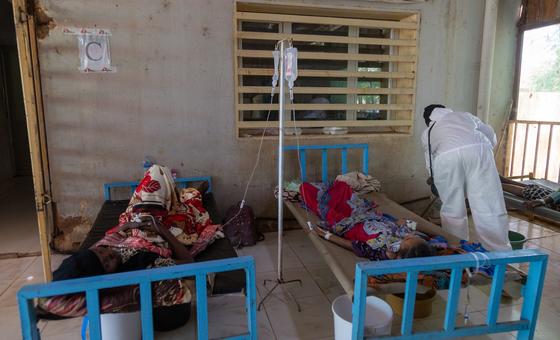
Diseases, such as cholera and acute watery diarrhoea, are spreading, Dr. Musani said, stressing that more than 1,444 suspect cases of cholera and seven associated deaths have been recorded.

“This is particularly in Latakia and Aleppo, particularly around displacement camps,” he said.

“We know that when cholera gets hold in camps, it can serve as a brush fire, increasing both morbidity and mortality.”

The WHO official warned that more than 416,000 children in Syria are at risk from severe malnutrition and that more than half of children under five suffering from severe acute malnutrition are not receiving treatment.

“From a public health standpoint, we need to be able to watch that risk and intervene and save those children,” he said.

Boys play in an informal camp in Syria.

Pregnancy dangers

Dr. Musani also noted that half of the maternity hospitals in northwest Syria have suspended operations since September 2024 owing to financial cuts, which humanitarians are “witnessing globally” but which are “really apparent” in Syria.

Underfunding of the humanitarian operation in Syria is already severe. Earlier this week, OCHA’s Coordination Division head, Ramesh Rajasingham, told the Security Council that out of the $2 billion required for the UN and its partners to reach eight million of the most vulnerable people from January through June 2025, only 10 per cent has been received.

The country’s cash-strapped health facilities face a lack of skilled workers and equipment, said WHO’s Dr. Musani. The war had pushed some 50 to 70 per cent of the health workforce to leave the country in search of other opportunities, and the health infrastructure is in dire need of investment.

The WHO official noted that for the health system – the “heartbeat of the nation” – the sanctions imposed on the country during the Assad regime had resulted in a lack of much-needed upgrades, compromising the purchase of new MRI machines, CT scanners, laboratory equipment and software upgrades.

Over the past two weeks, both the United States and the European Union have moved to lift the sanctions. OCHA’s Ms. Wosornu expressed hope that thanks to this development “we’ll see the impact on goods and services, on the cost of doing operations in the country, on the ability to move goods quicker into the country”.

But “it will take time”, she added. “I believe the people of Syria are hopeful that this will change their everyday lives.”

Aid teams highlight growing anxiety in Gaza after food is looted

“Fifteen World Food Programme trucks were looted late last night in Southern Gaza, while en route to WFP-supported bakeries,” the UN agency said. “These trucks were transporting critical food supplies for hungry populations waiting anxiously for assistance.”

The development is a blow to continuing efforts to help Gaza’s most vulnerable people after Israel allowed a limited number of aid trucks into Gaza earlier this week, following an 11-week total blockade.

Today, Gazans face “hunger, desperation and anxiety over whether more food aid is coming”, WFP said, noting that the uncertainty “is contributing to rising insecurity”.

“We need support from the Israeli authorities to get far greater volumes of food assistance into Gaza faster, more consistently and transported along safer routes, as was done during the ceasefire,” it insisted.

More to come on this developing story…

World News in Brief: UK cedes sovereignty over Chagos Islands, suffering in Sudan deepens, UN releases new emergency relief funds

Before granting Mauritius independence in 1968, Britain unlawfully separated the Chagos archipelago to create the British Indian Ocean Territory.

In doing so, it expelled 1,500–2,000 islanders to lease Diego Garcia, the largest island, to the United States for joint military use.

Under the agreement, the UK will lease the island of Diego Garcia for the next 99 years to continue operating its joint military base with the United States.

Value of diplomacy

The agreement signed on Thursday between the UK and Mauritius is “a significant step towards resolving a long-standing dispute in the Indian Ocean region” and “demonstrates the value of diplomacy in addressing historical grievances”, said UN Spokesperson Stéphane Dujarric in Thursday’s briefing.

Welcoming the signature of the agreement, the UN Secretary-General, urged both the UK and Mauritius to “continue engaging in constructive discussion”, in order to ensure that “the rights and aspirations of the Chagossians people are fully respected,” said Mr. Dujarric.

Sudan: Civilian Suffering Deepens Amid Drone Strikes

The civil war in Sudan, which erupted in April 2023 between the Sudanese Armed Forces (SAF) and the paramilitary Rapid Support Forces (RSF), has killed over 18,000 people and displaced 13 million, triggering a regional migration crisis.

Even before the war, humanitarian conditions and human rights protections were fragile, but in the past two years, they have become dire.

Of the 30.4 million Sudanese in need of assistance, the UN World Food Programme (WFP) is currently reaching 2.3 million with emergency food and nutrition support, as ongoing violence and infrastructure destruction compound the crisis.

Urgent ceasefire needed

Recent drone attacks on Port Sudan, once a vital entry point for aid, have further deepened the crisis. UN-designated expert Radhouane Nouicer warned Monday that these strikes on critical infrastructure “are putting lives at risk, worsening the humanitarian crisis, and violating basic human rights.”

On Thursday, Mr. Dujarric reported that attacks in Khartoum state have triggered a total electricity blackout, disrupting access to clean water and healthcare amid rising food prices and cholera outbreaks.

The blackout has exacerbated the spread of cholera and other waterborne diseases.

Mr. Dujarric also noted that ongoing insecurity displaced 47,000 people from Khiwai and Nuhud in West Kordofan this month, while another 1,000 were displaced this week from Abu Shouk camp and El Fasher in North Darfur.

At the Arab League Summit in Iraq over the weekend, UN Secretary-General António Guterres called for urgent multilateral action to end “appalling violence, famine and mass displacement,” and met with African Union leaders to encourage a push for a ceasefire.

Emergency relief funds released for DR Congo

The UN Central Emergency Response Fund (CERF) has allocated new funds to crisis situations, from Afghanistan to Zambia.

On Wednesday, CERF made $750,000 available to support cholera response in the Democratic Republic of the Congo, said Stéphane Dujarric, Spokesperson for the UN Secretary-General.

The emergency funds will enable the World Health Organization (WHO), the UN Children’s Fund (UNICEF), and partners to deliver critical aid, including timely cholera detection and response, medical treatment, risk communication, and community engagement.

In addition, CERF allocated $10 million to help more than 270,0000 people in vulnerable communities across South Sudan, where the threat of renewed civil war looms.

Ahead of the rainy season, CERF’s life-saving aid will notably target communities who have been impacted by overlapping crises, especially conflict and displacement in the states of Jonglei and Upper Nile.

CERF also allocated $9.5 million to support climate action initiatives in eight countries: Afghanistan, the Central African Republic, Chad, Mauritania, Niger, Somalia, Venezuela, and Zambia.

© UNICEF/Jospin Benekire

A UNICEF-supported cholera team add chlorine to water collected from a reservoir in Goma, in the DR Congo.


Source link

Civilians ‘trapped and terrorised’: UN sounds alarm over collapse of critical protections

Speaking at a high-level open debate in the Security Council on protection of civilians in armed conflict on Thursday, UN Emergency Relief Coordinator Tom Fletcher described a grim picture of accelerating harm, disintegrating norms and growing impunity.

The scaffolding built last century to protect us from inhumanity is crumbling,” he said.

“Those who will die as a result need us to act.”

Chilling numbers

According to UN figures, civilians accounted for most of the deaths in 14 armed conflicts last year, while displacement reached a record 122 million people globally.

Attacks on hospitals, schools, water systems and power grids also surged, leaving millions without essential services.

UN staff members and aid workers were caught in the crossfire, with over 360 aid workers killed – at least 200 in Gaza and at least 54 in Sudan – mostly national staff.

Warfare transforming

Mr. Fletcher warned that new technologies, including artificial intelligence (AI), are transforming warfare in ways that could further erode human oversight and legal accountability, while proliferation of misinformation is costing lives.

“False narratives and disinformation have undermined humanitarian operations and eroded trust in humanitarian actors…while those trying to report on the plight of civilians were also harmed,” he said.

According to UNESCO, the UN focal agency on protection of the press, at least 53 journalists were killed in armed conflict last year.

We are witnessing, therefore, an unravelling of the protection of civilians and respect for international humanitarian law.”

Women’s bodies are battlegrounds

UN Women Executive Director Sima Bahous expanded on the gendered dimensions of civilian harm, saying over 612 million women and girls are living in conflict zones today.

They are not simply collateral damage but direct targets of bombs, missiles and policies.

“Conflict-related sexual violence is a protection crisis that warrants its own attention,” she said, describing a growing pattern of “reproductive violence” and pointing to blockades on medical supplies, bombed maternity wards and skyrocketing maternal death.

In Gaza, over 28,000 women and girls have been killed since October 2023 – an average of one every hour, she said.

Tens of thousands have given birth under bombardment and siege, without anaesthetics, without postpartum care or clean water, and while being malnourished, displaced and traumatised.”

Destruction in northern Gaza.

Hold perpetrators accountable

Ms. Bahous urged the Security Council to recognise reproductive violence as a distinct category of harm and bring those responsible to justice.

She also highlighted the mental health impacts of conflict on women and girls – from depression and trauma to domestic violence and suicidal thoughts.

The threats extend into the digital sphere, where women activists and journalists are being pushed out of public life by online abuse, deepfakes and disinformation campaigns.

Enforce compliance with law

Both Mr. Fletcher and Ms. Bahous called for urgent action.

UN Member States must enforce compliance with international humanitarian law, fight impunity, and empower civilians – especially women – as agents of their own protection and bringing change.

Mr. Fletcher emphasised that even lawful military actions can cause disproportionate civilian suffering.

“[We need a] more comprehensive and people-centred approach,” he said, urging strong policy and operational measures to protect civilians and a deeper understanding of patterns of life and harm.

A child who lost his left leg after accidentally stepping on a landmine in his family’s paddy fields in central Myanmar.

Protection and peace inseparable

Recalling Security Council resolution 1325 on women, peace and security, Ms. Bahous called for sustained investment in women’s organizations, which are on the frontlines – protecting civilians – men, women, children and the elderly alike.

“Yet, they are under siege,” she said, noting that continued funding cuts will cost us the very women driving peace and recovery in the world’s most fragile contexts.

She concluded stressing that protection of women and their participation in peace “are inseparable”.

“The most effective shield we can offer women and girls is their own power, their own voices, and their own leadership…there is no pathway to peace that does not begin with the protection of women and girls.

Source link

Gaza: Strikes on houses and tents responsible for over half of deaths this week

629 Palestinians were reportedly killed over the past week, according to OHCHR in the Occupied Palestinian Territory.  

At least 358 were killed because of attacks targeting houses and tents for displaced people, with children and women accounting for at least 148 of the victims.

“The high number of strikes on shelters, in the context of the existing destruction of infrastructure in Gaza, raises grave concerns that not all strikes were targeting military objectives,” OHCHR said.

Journalists under fire

Furthermore, nine Palestinian journalists were killed last week, making it one of the deadliest for the profession since the conflict began in October 2023.

Although journalists have a deep sense of duty to their work, “they, too, are displaced, tired and hungry like the rest of the population of Gaza,” OHCHR said.

“However, it appears that in many instances, these journalists may have been deliberately targeted with the intention of limiting the flow of information on what is happening in Gaza and the scale of the impact that this war is having on civilians.”

The office said international journalists must be allowed into Gaza and their safety ensured.

Aid on the move

Meanwhile, lifesaving aid is making its way across the enclave following a nearly 80-day blockade.

UN aid coordination office OCHA confirmed that 90 trucks carrying nutrition supplies, flour, medicines and other critical stocks left the Kerem Shalom border crossing on Wednesday for multiple destinations inside Gaza.

Among the supplies were more than 500 pallets containing items such as ready-to-use therapeutic food and nutritional supplements which were offloaded at a warehouse in Deir Al-Balah belonging to the UN Children’s Fund (UNICEF).

The contents are being unpacked and repackaged into smaller loads for onward transportation to distribution points.

Workers pack freshly baked bread into bags for distribution at Al-Banna Bakery in Deir al-Balah, Gaza.

Famine risk persists

A handful of bakeries in south and central Gaza, supported by the UN World Food Programme (WFP), are also now operational and are back to baking bread, which is being distributed via community kitchens.

“However, after nearly 80 days of a total blockade of humanitarian assistance, families still face a high risk of famine, and far more aid is urgently needed into the Gaza Strip,” said Mr. Dujarric.

Food security experts recently warned that Gaza’s entire population, over two million people, are at risk of famine, with nearly half a million facing starvation.

Humanitarians underlined the critical need for Israel to facilitate the movement of aid convoys, including from southern Gaza into the north, so that all supplies can reach people in need wherever they are. 

“We also need to ensure the use of secure routes from Kerem Shalom onward into Gaza, as we did last night,” the Spokesperson said.

Strikes and shelling continue

Meanwhile, military operations continue across Gaza, with reports of strikes, shelling and fresh ground incursions.

The Al Awda hospital in North Gaza caught fire on Thursday, reportedly after being attacked. The medicine warehouse was heavily damaged, according to initial reports.

“Through coordination with Israeli authorities, OCHA facilitated the access of the Palestinian Civil Defense to the area, where they spent hours working to extinguish the fire,” said Mr. Dujarric.

He added that water wells in some areas of Gaza are shutting down as no fuel has been allowed in since the blockade.

“OCHA reports that Israeli authorities continue to deny our attempts to deliver fuel from areas where coordination is required,” he said. 

Healthcare under attack

The World Health Organization (WHO) warned that Israel’s intensified military operations continue to threaten Gaza’s already weakened health system. 

Four major hospitals have had to suspend medical services in the past week due to their proximity to hostilities or evacuation zones, and attacks. 

Only 19 out of 36 hospitals remain operational. Twelve provide a variety of health services, while the rest are only able to provide basic emergency care. 

WHO has recorded 28 attacks on healthcare in Gaza over the past week, and 697 attacks since October 2023. 

Source link

Kenya: Refugees facing ‘lowest ever’ emergency food rations amid funding crisis

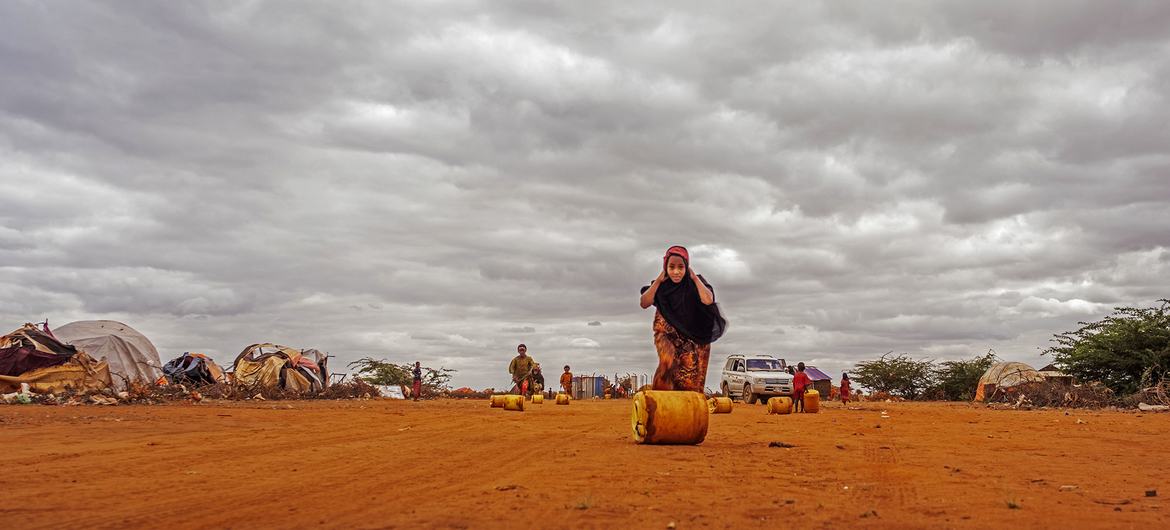
Over the past five years, the refugee population in Kenya has surged by more than 70 per cent – from approximately 500,000 to 843,000 – driven largely by conflict and drought in neighbouring Sudan and Somalia. Of these, around 720,000 people are sheltering in the Dadaab and Kakuma camps, as well as the Kalobeyei settlement.

In Sudan, the civil war that erupted in April 2023 has killed over 18,000 people, displaced 13 million, and left 30.4 million in need of assistance, according to the UN.

WFP provides emergency food and nutrition support to 2.3 million Sudanese as violence and the collapse of essential infrastructure deepen the crisis. 

In Somalia, severe drought has placed 3.4 million people – including 1.7 million children – at risk of acute malnutrition.

At the weekend, Secretary-General António Guterres recommended that the Security Council ensure financing for the African Union’s Support and Stabilisation Mission there (UNSOM), as the country continues to battle insecurity and attacks from Al-Shabaab militants.

Shrinking rations, rising need 

Previously, a monthly WFP ration for a refugee in the camps included 8.1 kilogrammes of rice, 1.5 kg of lentils, 1.1 litres of oil, and cash for purchasing essentials. That support has now been halved, and cash payments have stopped entirely.

Without emergency funding, food rations could drop to just 28 per cent of their original level. WFP is appealing for $44 million to restore full food and cash assistance through August.

Cuts compound existing crises

Although cuts to foreign aid by many developed nations this year has further constrained operations, WFP began reducing services for Kenya’s refugee population in 2024.

Many of the families arriving are already food insecure, and Global Acute Malnutrition (GAM) rates among children and pregnant or breastfeeding women exceed 13 per cent – three percent above the emergency threshold. Targeted nutrition programmes ended in late 2024 due to lack of resources.

Source link

Guterres strongly condemns killing of Israeli diplomats in US capital

The diplomats were gunned down on Wednesday night as they left an event at the Capital Jewish Museum in central Washington DC, where the American Jewish Committee was hosting a reception. 

They were identified as Yaron Lischinsky, 30, and Sarah Milgrim, 26, who were about to be engaged, according to officials and family members. A suspect was taken into custody.

Justice and sympathy

“The Secretary-General reiterates his consistent condemnation of attacks against diplomatic officials,” the statement said.

He called for the perpetrator to be brought to justice and extended his sympathies to the families and loved ones of the victims and to the Government of Israel.

The lone suspect, identified as Elias Rodriguez from Chicago, was apprehended shortly after the murders.  

He shouted pro-Palestinian slogans while in custody, according to media reports.

A ‘heinous antisemitic act’

The head of a UN platform that promotes intercultural dialogue and understanding also voiced his strong condemnation.

“This heinous antisemitic act is unacceptable and unjustifiable. My thoughts go to their families, their colleagues, and the State of Israel,” said Miguel Ángel Moratinos, High Representative for the United Nations Alliance of Civilizations (UNAOC).

Virginia Gamba, Acting UN Special Adviser on the Prevention of Genocide, called for an end to antisemitism saying “there is no place in the world where such a horrific antisemitic hate crime as the murders of Mr. Yaron Lischinsky and Miss Sarah Milgrim can be justified.” 

Senior politicians from across the world have also expressed their condemnation.

The killings occurred against the backdrop of the war in Gaza, which began on 7 October 2023 following Hamas-led attacks on Israel which left roughly 1,200 people dead while another 250 were taken hostage.  More than 53,000 Palestinians have been killed in Gaza, according to the health authorities.

Israeli foreign minister Gideon Sa’ar described the attack as “the direct consequence of the virulent and toxic antisemitic rhetoric against Israel and Jewish communities around the world that has been going on since October 7.”

‘An unbearable loss’

Mr. Lischinsky was a research assistant in the political department at the Israeli Embassy in Washington while Ms. Milgrim organized trips to Israel, according to media reports.

They were killed after attending the American Jewish Committee’s annual Young Diplomats reception which this year focused on response to humanitarian crises throughout the Middle East and North Africa.

The Spokesperson of the Israeli Embassy in Washington, Tal Naim, described their deaths as “an unbearable loss.”

She tweeted a photo of the couple below a message which said that “instead of walking you down the aisle, we are walking with you to your graves.” 

Source link

SECURITY COUNCIL LIVE: Ambassadors debate safety of civilians with 36,000 lives lost during conflict last year

We’re live as the Security Council convenes for its annual open debate on the protection of civilians in armed conflict, with briefings from UN relief chief Tom Fletcher and the head of UN Women Sima Bahous. Ambassadors will discuss evolving threats, including use of heavy weapons and the rise of lethal autonomous killing machines such as drones. The UN has documented a spike in deaths, with Gaza, Lebanon, Myanmar, Sudan and Ukraine among the hardest-hit. Mobile app users can follow here.

Source link

All eyes on Gaza as aid teams retrieve first lifesaving relief in months

“Today will be crucial. Truckloads of lifesaving aid finally on move again,” said top UN aid relief coordinator Tom Fletcher.

Hours earlier and in a major development, 198 trucks entered Gaza via the Kerem Shalom crossing in the south of the enclave, carrying nutrition supplies, medicines and wheat flour.

Announcing the news online, Mr. Fletcher reported that humanitarian organizations then retrieved “about 90 truckloads of goods” in a nighttime operation to prepare them for distribution.

But significant challenges remain “in loading and dispatching goods” Mr. Fletcher continued, citing security and looting concerns, “delays in coordination approvals and inappropriate routes being provided by Israeli forces that are not viable for the movement of cargo”.

No commercial or humanitarian supplies have been allowed into Gaza since 2 March, deepening an already catastrophic hunger crisis and sparking widespread condemnation from the international community.

According to the UN World Health Organization (WHO) at least 57 children have reportedly died from the effects of malnutrition, according to the local health authorities. The number is likely an underestimate and is expected to increase if the aid blockade continues.  

In their latest report, respected and UN-partnered food insecurity experts warned that nearly 71 000 children under the age of five are expected to be acutely malnourished over the next 11 months unless Gazans can access sufficient food and healthcare support.

Working through the night

Video footage published online Thursday by the UN World Food Programme (WFP) showed aid crews hurrying to offload sacks of flour from trucks at a floodlit warehouse.

Elsewhere in the storage hangar, other images showed large quantities of dough being made in an industrial mixer.

“Our teams are working non-stop to get bakeries running again,” the agency said, referring to the 25 facilities it had to close on 31 March when wheat flour and fuel ran out. 

“But it’s nowhere near enough to support everyone in need. We need more trucks, more food, in now,” the UN agency warned.

After 19 months of constant Israeli bombardment which continues today, one in five Gazans faces starvation, food insecurity experts have warned.

And reiterating the urgent need for more lifesaving supplies to enter the shattered enclave, the UN aid coordination office, OCHA, stressed that much more aid will be needed to avert a humanitarian catastrophe.

No fuel allowed in

No hygiene products or fuel have been allowed into the enclave by the Israeli authorities, the UN agency noted.

“The UN and its partners have been engaging with the Israeli authorities to identify the best possible route from Kerem Shalom onward into Gaza to ensure the flow of aid is not disrupted or suspended,” OCHA explained in its latest update. “Partners are in touch with community leaders in Gaza to mitigate the risk of looting and ensure that the supplies entering Gaza reach the people who rely on them.”

Meanwhile, Gazans continue to contend with daily bombardment and shelling across the Strip, with dozens reported killed on Tuesday.

A day later, OCHA noted that the health authorities on an urgent request for blood donors to treat the sick and injured.

“Amid the hostilities, large numbers of people continue to be displaced – once again fleeing for their lives amid intense bombing of their communities and with no safe place to seek shelter or supplies,” the UN agency said.

It reported that a full 80 per cent of Gaza is either subject to displacement orders or located in Israeli-militarized zones which require aid teams to coordinate their movements with the Israeli authorities.

“Partners report that over the past few days, almost half of people newly displaced have fled with none of their belongings,” OCHA said. “The ongoing displacement of Gaza’s population is putting immense pressure on humanitarian teams, especially when there is no food or other basic supplies to offer.” 

More to come on this developing story…

Source link

Four children dead in ‘horrific’ attack on school bus in Baluchistan: UNICEF

The attack which left others wounded, took place in the district of Khuzdar, about 250 kilometres south of Quetta, Balochistan’s provincial capital. The area has long been troubled by separatist insurgency and militant activity.

Deadly journey

The school bus, which was reportedly transporting students to a Pakistani military-run school, was completely destroyed in the explosion that occurred around 10 kilometers from the centre of Khuzdar. News reports said more than 40 students were on board when it was targeted by a vehicle-borne explosive device. 

The UN Children’s Fund (UNICEF) strongly condemned the horrific attack, calling for an end to the devastating violence.

“Earlier today, children in Balochistan set out on what should have been a routine journey – eager to begin another day of learning alongside friends,” the agency said.

Instead, they were caught in a brutal act of violence. Young lives, dreams, and futures shattered. Families devastated. The physical and emotional scars left for child survivors to bear.”

Never target children

According to news reports, no militant group has claimed responsibility so far for the bus bombing.

Children are not, and must never be, the targets of violence,” UNICEF said. The agency extended deepest condolences to the families impacted, reiterating that simply going to school should never be a “dangerous act” for any child.

Source link

Biodiversity loss demands urgent global action, says UN chief

In a message marking Thursday’s International Day for Biological Diversity, the UN chief raised alarm over the “lightning pace” of degradation of the natural world.

Biodiversity is the bedrock of life and a cornerstone of sustainable development,” Mr. Guterres said.

Yet humanity is destroying biodiversity at lightening pace, the result of pollution, climate crisis, ecosystem destruction and – ultimately – short-term interests fuelling the unsustainable use of our natural world.”

He stressed that no country, “however rich or powerful,” can address the crisis in isolation, nor thrive without the ecological richness that defines life on Earth.

Alarm bells ringing

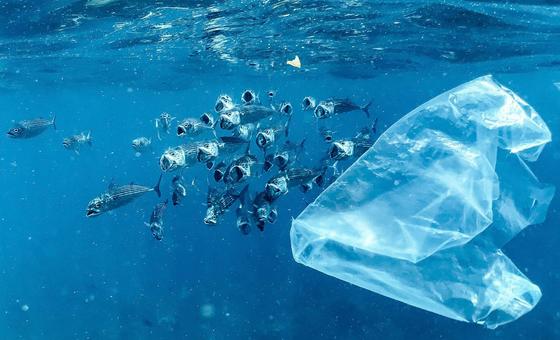
The International Day comes amid stark concern for the future: one million species are at risk of extinction, 75 per cent of land ecosystems and two-thirds of marine environments have been significantly altered by human activity.

Furthermore, if current trends continue, progress towards eight of the 17 Sustainable Development Goals (SDGs) could be jeopardized.

Mr. Guterres called for urgent implementation of the Kunming-Montreal Global Biodiversity Framework, the landmark agreement adopted to halt and reverse nature loss by 2030.

This includes delivering on national biodiversity action plans, scaling finance for conservation, shifting harmful subsidies, and supporting local communities, Indigenous Peoples, women and youth.

Live in harmony with nature

Biological diversity underpins food security, livelihoods, health and climate resilience.

Roughly three billion people eat fish for 20 a per cent of their animal protein intake, and 80 per cent of rural populations in developing countries rely on plant-based medicine.

Yet the destruction of natural habitats is also increasing the risk of zoonotic disease transmission, making biodiversity preservation a key factor in global health.

Living in harmony with nature and sustainable development is humanity’s path to a better world for all,” Mr. Guterres said, echoing this year’s theme.

“Together, let us take it.”

The International Day

The UN officially designated 22 May as the International Day for Biological Diversity in 2000 to increase understanding and awareness of biodiversity issues.

The date marks the adoption of the Convention on Biological Diversity in 1992.

Champions for Change: World football teams up with UN development goals

The Football for the Goals Forum brought UN leaders and some of the top voices in the world’s most popular sport to UN Headquarters in New York for the inaugural Champions for Change: Football and the UN Unite for the SDGs event.

The UN has long recognised the role of sport in advancing the SDGs – promoting peace, gender equality, health, and climate action – as affirmed in a General Assembly Resolution on Sport adopted in December 2022.

With unparalleled global reach, football holds a unique position to drive progress on these goals. Launched in July 2022, Football for the Goals is a UN initiative engaging the international football community to advocate for the SDGs.

Wednesday’s forum aimed to mobilise the football community for action across key SDG areas.

The kick off

After introductions from football executives, UN Spokesperson Stéphane Dujarric, UN communications chief Melissa Fleming, and the Qatari Representative to the UN, the opening panel – Bolstering Community Engagement with the SDGs – outlined the origins of Football for the Goals and explored how the football community can deepen its contribution to the SDGs.

This was followed by a brief discussion on the football sector’s commitment to climate sustainability.

The programme then shifted to some of the Forum’s most substantive panels, exploring how football both reflects global inequalities – between the Global South and North, and between men and women – and has the potential to help address them.

North-South divide

Júlia Pimenta of Street Child United highlighted that football organisations in the Global South, which serve the children who need support most, often lack adequate funding and must compete with well-resourced programmes in the Global North.

Sarah Van Vooren of Atoot in Nepal similarly noted that grassroots organisations connecting football and sustainable development, frequently lack the resources needed to reach their full potential.

When these organisations are properly supported, they can provide safe, educational environments for children – often with life-changing results.

Panellists emphasised that funding such initiatives is key to advancing SDGs related to education and reducing inequality.

© UNICEF/Truong Viet Hung

Young girls play football at school in Soc Trang Province, Viet Nam.

Levelling the gender playing field

Jayathma Wickramanayake, a policy advisor on sports partnerships at UN Women, noted that the gender equality agency is responsible for most of the targets under SDG 5 related to closing the gender gap.

She emphasised that progress has been slow – and in some areas, it’s even regressing – largely due to the persistence of rigid social norms, attitudes, and behaviours.

These norms often manifest in the sports world through unequal pay and incidents of sexual harassment. However, Ms. Wickramanayake and other panellists highlighted how sport can be a powerful tool to challenge stereotypes and empower women and girls to succeed – both on and off the pitch.

Source link

Urgent action needed to ‘pull Yemen back from the brink of catastrophe’

Tom Fletcher said that with “time and treatment” Noor was able to recover fully.

But what happens to a child such as Noor when treatments are limited and time runs out?

A group of 116 aid organizations, including 10 UN agencies, called on Tuesday for “urgent, collective action” to prevent Yemen from descending into a humanitarian catastrophe.

They warned that without such action, specifically increased funding, their ability to provide life-saving assistance will be severely curtailed.

Without immediate action, the vital gains achieved through years of dedicated assistance could be lost,” they said.

Non-stop crises

For more than a decade, Yemen has endured a series of crises – armed conflicts, climate disasters and economic decay. As a result, close to 20 million depend on humanitarian aid to survive and five million are internally displaced.

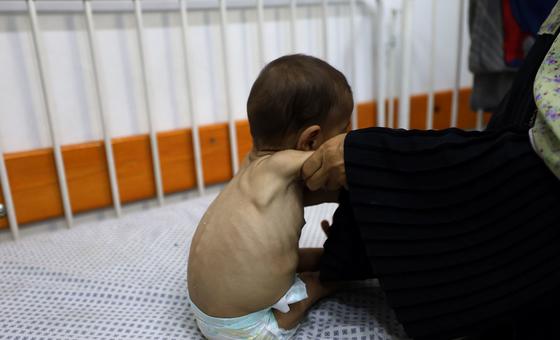
Half of all Yemeni children – some 2.3 million – are malnourished. Over 600,000 are severely malnourished, like Noor. Malnutrition also impacts over 1.4 million pregnant women, creating an intergenerational cycle.

The healthcare system is also in disrepair, with Yemen accounting for more than one-third of cholera cases worldwide and 18 per cent of related deaths. 20 per cent of children under the age of one are fully unvaccinated.

Providing humanitarian aid in Yemen has also come with extreme difficulties for aid workers, with some being arbitrarily detained, including UN staffers.

Strikes against the Hodeida port and Sana’a Airport have also damaged vital humanitarian pathways for food and medicine.

Time and treatment running out

The aid community’s call for urgent action comes amidst extensive funding shortages. The Yemen Humanitarian Needs and Response Plan is less than 10 per cent funded.

We urgently appeal to donors to scale up flexible, timely, and predictable funding for the Humanitarian Needs and Response Plan,” the aid organizations said.

Already, the UN and aid partners are working to minimize operational costs while maximizing aid provision and there is no doubt suffering will increase due to the reduction in aid.

In the first quarter of 2025, over five million people in Yemen received emergency food assistance, 1.2 million received clean water and sanitation services and 154,000 children were able to resume their education.

But without immediate funding, Emergency Relief Coordinator Fletcher estimates that there will be gaps in this aid as early as June or July.

Nearly 400 health facilities will be forced to stop operating, including 64 hospitals, which will impact over 7 million individuals. Funding for more than 700 midwives is also quickly drying up.

Call to the international community

While the humanitarian crisis in Yemen has been overshadowed by other vast humanitarian crises in Gaza and Sudan among other places, the 116 aid organizations emphasized that “donor support saves lives.”

The 7th Humanitarian Senior Officials Meeting will be held Wednesday and should be a moment to work to avoid catastrophe in Yemen, the aid organizations urged.

Now more than ever, swift and resolute support is crucial to prevent Yemen from sliding deeper into crisis and move towards a lasting peace,” they said.

Time and treatment are running out for children like Noor.

Source link