
$1 towards a girl’s education = $3 for the global economy: That’s how development works

Every dollar invested in girls’ education yields an average return of $2.80 – translating into billions in additional GDP. Similarly, each dollar spent on water and sanitation saves $4.30 in healthcare costs.

Simple math, not miracles

These aren’t miracles – they’re measurable outcomes. Maths doesn’t recognize gender or infrastructure; it simply reflects the truth in numbers. And those numbers make a compelling case: helping countries with the least resources benefits everyone, including those with the most.

Even a single dollar, strategically invested, can make a profound difference.

For example, allocating just $1 per person annually to combat non-communicable diseases could prevent nearly seven million deaths by 2030. Likewise, every dollar spent on disaster risk reduction can save up to $15 in recovery costs.

Yet despite such compelling evidence, development aid is often misunderstood – seen by some as mere charity, and by others as a vehicle for profiteering.

Equity, not charity

The latest UN Development Programme report on Afghan women entrepreneurs challenges the skeptics.

It highlights that these women are not seeking charity – they’re asking for a fair chance to succeed. Earning their own income gives them a measure of independence, which in turn strengthens the communities they live in.


Against all odds, they are generating income, creating jobs, and building fuller, more enriching lives.

Expanding access to public and private financing, guaranteeing loans, offering preferential terms in international markets, and reinforcing support networks can fuel business growth and foster a more prosperous future – whether in Afghanistan or Ecuador, or anywhere in between.

FFD4 faces strong headwinds

These examples – from education and health to entrepreneurship and disaster resilience – paint a clear, data-driven narrative: smart investments in development pay dividends for everyone.

That message should be front and center at the upcoming Fourth UN Conference on Financing for Development which will be held in the Spanish city of Sevilla, from 30 June to 3 July. But the summit, known by its clunky acronym FFD4, faces stiff headwinds.

Even as countries negotiating at UN Headquarters in New York agreed a week ago on a sweeping outcome document – set to be adopted at the close of the conference and intended to guide the future of global development aid – some nations are pulling back.

Notably, the United States has announced it will not send a delegation to Sevilla at all.

And even though there are some notable exceptions, including Spain, which has increased its development financing budget allocations by 12 per cent, the uncertain landscape ahead has led UN Secretary-General Antono Guterres to lament that “global collaboration is being actively questioned.”

This questioning is reflected in the $4 trillion annual deficit in development financing, as well as the abandonment of earlier commitments and delivery of aid by donors at what the Secretary-General has called “a historic speed and scale.”

Moreover, the Sustainable Development Goals, signed by all world leaders just 10 years ago, are a long way off track.

What is at stake in Seville?

Success in Sevilla “will require other countries to fill the global leadership vacuum and demonstrate credible commitment to multilateral cooperation, which is essential for our survival,” states Jayati Ghosh, professor of economics at the University of Massachusetts, Amherst.

Meaningful steps forward must include deep reforms of the international financial system. As it stands, it fails to meet the needs of developing countries while steadfastly protecting the interests of wealthier nations.

Consider this: developing countries face interest rates at least twice as high as those paid by developed nations. And today, the average rates charged by private creditors to these countries have reached their highest levels in 15 years.

What aid gives, debt takes away

Developing countries spent a record $1.4 trillion on external debt service in 2023, the highest in 20 years.

Meanwhile, in 2024, more than 1.1 billion people live in developing countries where external debt servicing accounts for more than 20 per cent of government revenue, and nearly 2.2 billion live in developing countries where the percentage is higher than 10 per cent.

Interest payment on this debt hinders development by preventing investment in health infrastructure and education services, to cite just two examples.

Debt restructuring is therefore essential, because much of the hope for development is lost in the give and take of aid and debt.

Promoting investment in what works

Eradicating hunger, advancing gender equality, protecting the environment, confronting climate change, and saving our oceans are not radical ideas.

Despite claims from some highly ideological viewpoints that the Sustainable Development Goals represent an extremist agenda, they are, in fact, a shared baseline – an urgent set of priorities that humanity demands and that the leaders of 193 countries committed to in 2015.

Despite the noise made by those who oppose development aid and multilateralism, they are a minority, says Spain’s Secretary of State for International Cooperation.

Ana Granados Galindo sees Seville as “a beacon of global solidarity.”

Meanwhile, as the world gears up for FFD4, mathematics, statistics, and Afghan women continue to work their common sense ‘development magic’.

Source link

Sudden escalation of trade tensions sends shockwaves through global economy

Tariff-driven price pressures are adding to inflation risks, leaving trade-dependent economies particularly vulnerable.

Higher tariffs and shifting trade policies are threatening to disrupt global supply chains, raise production costs, and delay key investment decisions – all of this weakening the prospects for global growth.

General slowdown

The economic slowdown is widespread, affecting both developed and developing economies around the world, according to the report.

In the United States, growth is projected to slow “significantly”, said DESA, as higher tariffs and policy uncertainty are expected to weigh on private investment and consumer spending.

Several major developing economies, including Brazil and Mexico, are also experiencing downward revisions in their growth forecasts.

China’s economy is expected to grow by 4.6 per cent this year, down from 5.0 per cent in 2024. This slowdown reflects a weakening in consumer confidence, disruptions in export-driven manufacturing, and ongoing challenges in the Chinese property sector.

Inflation risks

By early 2025, inflation had exceeded pre-pandemic averages in two-thirds of countries worldwide, with more than 20 developing economies experiencing double-digit inflation rates.

This comes despite global headline inflation easing between 2023 and 2024.

Food inflation remained especially high in Africa, and in South and Western Asia, averaging above six per cent. This continues to hit low-income households hardest.

Rising trade barriers and climate-related shocks are further driving up inflation, highlighting the urgent need for coordinated policies to stabilise prices and protect the most vulnerable populations.

Developing economies

The tariff shock risks hitting vulnerable developing countries hard,” said Li Junhua, UN Under-Secretary-General for Economic and Social Affairs.

As central banks try to balance the need to control inflation with efforts to support weakening economies, many governments – particularly in developing countries – have limited fiscal space. This makes it more difficult for them to respond effectively to the economic slowdown.

For many developing countries, this challenging economic outlook threatens efforts to create jobs, reduce poverty, and tackle inequality, the report underlines.

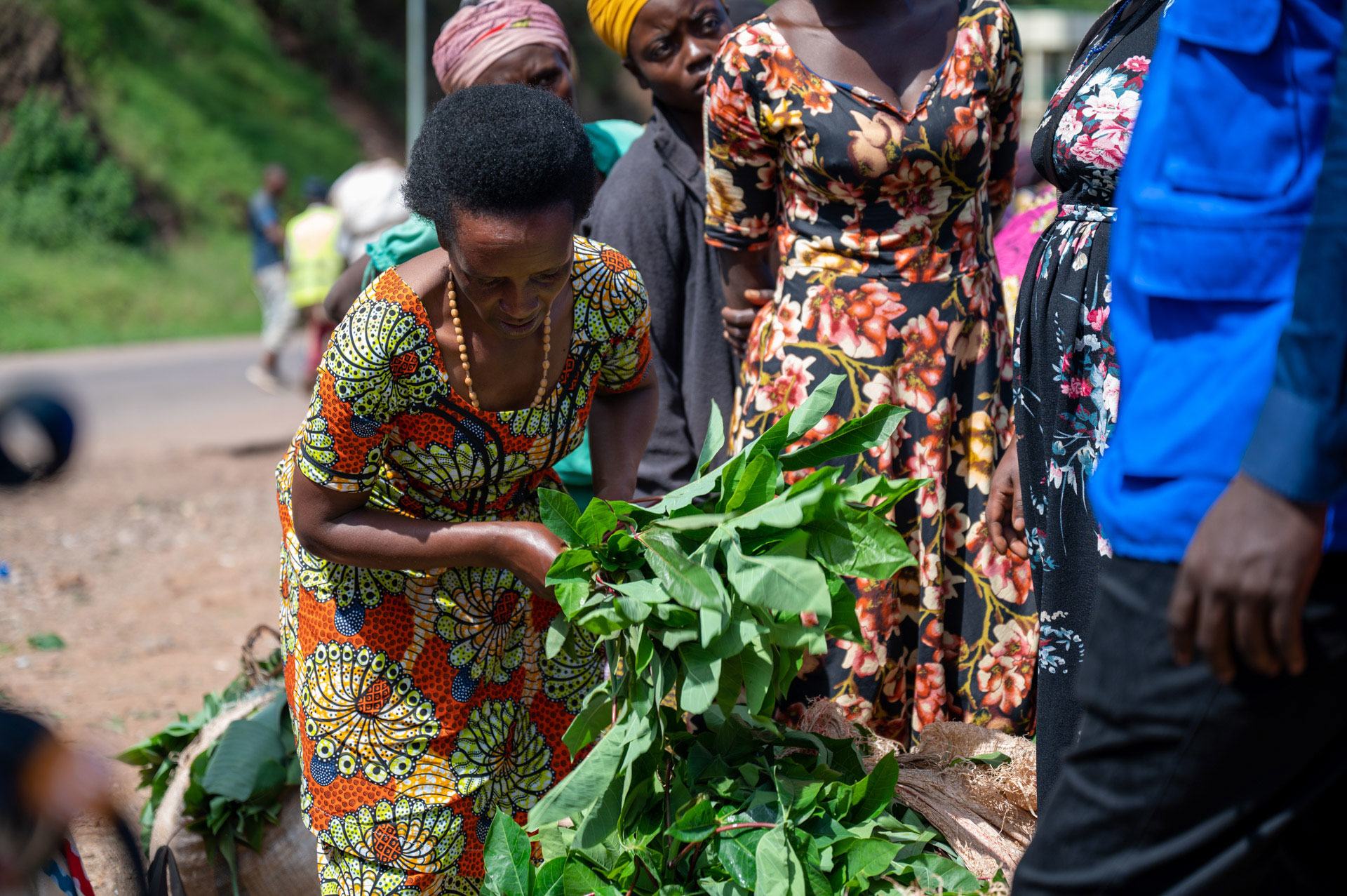
Francoise picks out vegetables to resell to the Congolese traders at the Elakat market in the DRC.


Source link

Handling volatile capital flows–the Indian experience

BY POONAM GUPTAADD COMMENT

Capital flows to emerging economies are considered to be volatile. Influenced as much by global liquidity and risk aversion as by economic conditions in receiving countries, capital flows move in a synchronous fashion across emerging economies. There are periods of rapid capital inflows, fueling credit booms and asset price inflation; followed by reversals when exchange rates depreciate, equity prices decline, financial volatility increases, and GDP growth and investment slows down. These periods of extreme flows have unintended financial and real implications for the recipient countries. Central banks typically react with a mix of policies to cushion their impacts, ranging from managing the exchange rate and liquidity, to using reserves, monetary policy and macroprudential tools, and calibrating the pace of capital account openness. Overtime, along with the underlying characteristics of the emerging market economies and their available policy space, this policy mix has evolved too.

Wary of excessive exchange rate volatility emerging market economies have traditionally tended to either peg their exchange rates or maintain defacto managed floats. Unable to raise external debt in domestic currency, emerging markets have typically held debts denominated in foreign currency, with exchange rate depreciation resulting in adverse balance sheet effects. A customary response to capital flows has been to manage the impact on exchange rate through procyclical monetary policy– loosening the monetary policy during periods of rapid capital inflows and high economic growth (to resist exchange rates appreciation) and tightening it during the reversals of flows and economic slowdowns (to moderate the extent of exchange rate depreciation).

However much has changed in emerging countries policy landscape in the last one and a half decade. After a series of high profile currency crises in the mid-1990s-early 2000s, many countries have moved from pegged exchange rate regimes to floating ones. They maintain less negative foreign currency positions, and have built a larger stock of reserves. An increasing number of central banks now operate under an inflation targeting framework, affording them a more definitive mandate to pursue monetary policy geared toward domestic policy imperatives. As a result countries now tolerate greater exchange rate volatility, while using their reserves when warranted; monetary policy is more countercyclical than before; and the use of macroprudential tools has become a more pervasive element of their policy mix.

My recent paper Capital flows and Central Banking-The Indian experience reviews India’s experience with handling capital flows, putting it in context with the experience of other emerging markets. It establishes three stylized facts.

  • First, India has increasingly become more financially integrated with the rest of the world. The pattern of capital flows it receives mirrors those in other emerging economies, pointing to the importance of common factors in driving capital flows to India. In the post liberalization period since the early 1990s, capital flows to India have evolved in three phases—a first phase from the early 1990s-early 2000s, during which capital flows increased steadily but remained modest compared to the size of the economy or monetary aggregates; a second phase of “surge” from the early 2000s-2007, when inflows increased rapidly, outpacing GDP and monetary aggregates; and a third period of volatility, starting in 2008 when capital flows reversed in the post Lehman Brother collapse period and again in 2013 during the taper tantrum and remained volatile. [1]
  • The policy mix that India has deployed has evolved in sync with the capital flow cycle and is consistent with the trends observed in other large emerging economies. Its exchange rate, which was largely pegged to the US dollar until the early 1990s, is increasingly more market determined. Just like in other emerging countries, India has built a large buffer of external reserves, and for the most part has used it to modulate excessive fluctuations in the exchange rate. While monetary policy focused on price stability during the first phase, it was also conditioned by the pace of capital inflows in later phases–money supply increased during the capital flow surge and was tightened during the stop episodes. Additionally macro prudential measures have been used countercyclically, e.g. they were strengthened during the surge to limit excessive risk taking and deter asset price inflation.
  • Particularly interesting is the countercyclical liberalization of capital account. Contrary to a common perception, India has steadily liberalized its capital account since 1991; while the pace of incremental liberalization has been conditioned by the capital flow cycle. The pace of liberalization of inflows slowed during the capital surge episode of 2003-2007, while outflows were liberalized rapidly. Inflows were then liberalized vigorously during the reversal of capital in 2008-09 and in 2013.

While the capital flows to emerging markets are expected to remain volatile in the years ahead, their policy mix is likely to evolve further. Specifically for India, the move to an inflation targeting framework will likely reinforce the domestic orientation in monetary policy; whereas due to a progressively liberalized capital account over the last two and a half decades, further scope to manage the pace of capital account liberalization seems limited. Going forward, reserve management and macroprudential measures are likely to play a larger role in responding to capital flow cycles; even as the markets, economy and policy makers develop greater tolerance for inevitable market determined adjustments in exchange rate.