About Arun Kumar N

Arun has been associated with India International Times since 2018 and he has been a key reporter in covering science and space related stories. He can be reached at arunKnn@indiainternationaltimes.com.

Aid effort underway after Afghanistan quake ‘wipes out’ villages

“I stand in full solidarity with the people of Afghanistan after the devastating earthquake that hit the country earlier today,” the Secretary-General said in an online message. “I extend my deepest condolences to the families of the victims and wish a speedy recovery to those injured. The @UN team in Afghanistan is mobilized and will spare no effort to assist those in need in the affected areas.”

On the ground, several UN agencies reported devastation across four eastern provinces of Afghanistan including Nangarhar and Kunar, where staff and humanitarian partners are already supporting relief efforts. 

Hundreds of houses are believed to have collapsed in remote hillside communities, where many likely crumbled on top of others located on terraces further downhill.

“When an earthquake of this magnitude happens, the homes basically tumble on top of each other,” Salam Al-Jabani from the UN Children’s Fund (UNICEF) told UN News. “And because it was so late at night, families were at home sleeping and that’s why we see such big losses.”  

The UN Humanitarian Air Service has scheduled additional flights connecting Kabul and Jalalabad for personnel and cargo to scale up the response. 

Trapped inside

Witnesses reported that the earthquake happened at around midnight local time, heightening fears that many Afghans may still be trapped under the rubble of their homes. The UN Children’s Fund (UNICEF) reported that many youngsters had been killed, as first responders said that poor phone and signal quality was impacting rescue and assessment activities.

The tremor’s epicentre is estimated to have been only around eight kilometres (six miles) underground, causing buildings to shake in the Afghan capital, Kabul, and in Pakistan’s capital city, Islamabad, according to reports.

Among those providing assistance are the UN Assistance Mission in Afghanistan (UNAMA), the UN aid coordination office (OCHA) the UN World Health Organization (WHO) and many more.

“As reports of deaths and injuries from the #earthquake in eastern region of #Afghanistan continue to emerge, @WHOAfghanistan teams are on the ground in hospitals and health facilities, supporting the treatment of the wounded and assessing urgent health needs,” the UN health agency said.

“We are actively delivering essential medicines and supplies and deploying health teams to affected areas to help #SaveLives.”

How the UN helps

United Nations teams are on the ground in more than 160 countries, working with the authorities and partners on joint programmes in communities to promote climate action, food security, gender equality and safety of civilians.

The UN has been present in Afghanistan since 1949; the global body’s work there is driven by the Resident Coordinator, Indrika Ratwatte, as head of a country team which includes around 20 UN agencies and international organizations such as the World Bank and Asian Development Bank.

International appeal

Also on the ground to provide assistance, the UN refugee agency, UNHCR, noted that up more than 2,000 people have been likely injured in the province of Kunar alone. It is feared that the trading city of Jalalabad may have suffered a “very high death toll”, said UNHCR spokesperson Babar Baloch.

The UN agency is among those rushing lifesaving support to affected areas including medical equipment, shelter, clean water, tents and blankets. It underscored how the emergency has added “death and destruction” to Afghanistan’s many other existing human challenges that include drought and the return of millions of nationals from neighbouring countries.

Mr. Baloch insisted that the scale of this disaster “far exceeds the current capacity of local authorities and communities… We are appealing to the donor community globally to support urgently required relief efforts. Afghans need our support and assistance now, before it’s too late for many others.”

Aid teams will have to overcome challenging terrain to help some of the most remote communities who can only be reached on foot, OCHA noted.

It said that the de facto authorities have deployed heavy machinery to Nurgal and Chawkay districts to remove road blockages and that some sections have reportedly been reopened. Critically injured people have also been airlifted by helicopterto Jalalabad and Asadabad hospitals which are now the main referral points for victims in Nangarhar and Kunar provinces.

But “a number of isolated communities” can only be reached by foot with travel time currently up to three hours from the point of obstruction, OCHA noted, highlighting those in Dewagal Valley in Chawkay district and Mazar Valley in Nurgal district, Kunar province.

The earthquake is one of the worst to hit Afghanistan and comes less than two years since three deadly 6.3 magnitude quakes shook Herat on the other side of the country. They struck on 7, 11 and 15 October, killing 1,480 people and injuring 1,950 others across 382 villages, leaving widespread destruction.

Source link

UN chief calls for justice and ‘real change’ for people of African descent

In a message released ahead of the Day, Mr. Guterres honoured the “extraordinary” contributions of people of African descent across every sphere of human endeavour. The Secretary-General also recognised the “long shadows” of slavery and colonialism, which include systemic racism, unequal economies and societies, and the digital divide (between those who are able to benefit from digital technology, and those who don’t have access).

Mr. Guterres hailed the Global Digital Compact – adopted in 2024 as part of the Pact for the Future, which promotes a multilateral system that reflects today’s realities and delivers for everyone, everywhere – as a step forward, citing commitments to tackle discrimination and hate speech in digital technologies. “White supremacy and dehumanising narratives,” wrote the UN chief, “are amplified by social media, and, too often, racial bias is encoded in algorithms.”

“Eighty years after the United Nations Charter reaffirmed the equal rights and inherent dignity of every human being, and sixty years since the adoption of the International Convention on the Elimination of All Forms of Racial Discrimination,” he concluded, “it is long past time to right historic wrongs.”

The Gateway to Freedom: International Memorial to the Underground Railroad in Detroit, Michigan, dedicated in 2001.

A decade of action

This year’s International Day is the first to take place during the second International Decade for People of African Descent, which runs from January 1, 2025, to December 31, 2034. The decade, which embraces the theme “People of African Descent: Recognition, Justice, and Development,” aims to highlight the importance of acknowledging the rights and contributions of people of African descent. Mr. Guterres has called for the next ten years to drive “real change,” including working towards a United Nations Declaration on the full respect of people of African descent’s human rights.

The first Decade saw more than 30 countries change their laws and policies to tackle racial discrimination and address specific issues faced by people of African descent – in some cases for the first time. The Permanent Forum on People of African Descent, was created, and new International Days were launched to celebrate the contributions of the diaspora, including those of women and girls.

Building on the progress made between 2015 and 2024, the second Decade seeks to amplify global efforts toward justice and development for individuals of African descent and create a more equitable future, in which the aspirations and rights of people of African descent are fully recognised, honoured, and celebrated.

Source link

‘Our livelihoods have been cut off’, say West Bank farmers ahead of olive harvest

Like thousands of Palestinian farmers, he faces growing restrictions from Israeli forces and settlers, who have made the olive harvest season – running from September to November – a time of uncertainty and struggle.  

In recent years, the UN Food and Agriculture Organization (FAO) has supported olive farmers and cooperatives to improve access to and management of land and water resources, introduced sustainable practices such as intercropping, and helped them increase food production and income by using natural resources more efficiently.

The olive harvest is both a primary source of livelihood for thousands of families and an integral part of Palestinian heritage.

Yet, attacks on the harvest threaten such heritage and hinder Palestinian farmers’ work and way of life – as settler attacks reach their highest level in at least two decades, according to the UN aid coordination office, OCHA.

‘Unprecedented’ risks

“As the West Bank gears up for the annual olive harvest, the message from farmers is clear: This year’s harvest season is marked by uncertainty, and livelihoods are under unprecedented risk,” said Ciro Fiorillo, FAO’s Head of Office in the West Bank and Gaza Strip.  

The combination of State policies and settler violence has prevented Palestinians from accessing tens of thousands of dunums of farmland and pasture, one dunum equating 1,000 square meters.

These restrictions have contributed to the destruction of the local economy and the displacement of thousands of Palestinian herders and farmers, in conditions that may amount to forcible transfer, according to the UN human rights office (OHCHR).

Olives and olive oil production in the West Bank are a cornerstone of Palestinian culture.

“Our livelihoods have been cut off. Olive crops are the primary source of income for farmers,” a Palestinian farmer from Kufr Qaddum village, told UN News.

Land access denied

“For two years now, we have been denied access to our lands,” Yousef, a Palestinian farmer from Kufr Qaddum told UN News. All land in the northern area of the village has been sealed off with an iron gate following the most recent escalation between Iran and Israel.

Yousef’s family owns over 300 dunums of land, primarily cultivated with olive trees, located near the Israeli Kedumim settlement, in Qalqiliya Governorate.  

Since Hamas’s attack on Israel in 2023, they have had no access to their land, including during the harvesting season.  

“These lands cover approximately four to five thousand dunams. We have been prevented from accessing them,” Yousef said, adding that “this issue [affected] all farmers across the entire West Bank.”   

Mohammed, a Palestinian farmer from Kifl Harris, a village located near the Israeli Ariel settlement in Salfit Governorate, has been denied access to over 3,000 dunums of olive-cultivated land located within the settlement boundary. This restriction has completely cut off the ability of Kifl Harris’s farmers to tend to and harvest their groves.  

“The olive season is our main economic lifeline as farmers and employees in both the public and the private sectors,” Mohammed told UN News, adding that Palestinian farmers had not been given a reason for being denied access.

“After settlers installed a caravan on our family’s land, access to more than 200 dunums of farmland, much of it planted with olive trees, was restricted,” Ahmed, a farmer from Khalet Al Luza told OCHA.  

Harassment from settlers

“We have endured all kinds of harassment from settlers and the [Israeli] army,” Yousef from Kufr Qaddum told us.  

In an advisory opinion from July 2024, the International Court of Justice (ICJ) concluded that Israel’s continued presence in the Occupied Palestinian Territory is unlawful and that it is under an obligation to end its unlawful presence “as rapidly as possible”.

Settlers installed a caravan on a Palestinian family’s land in Khalet Al Luza, West Bank.

“Settler attacks have affected all farmers. I, personally, have been prevented from reaching my land, and we’ve been subjected to repeated attacks by settlers and the army, including theft of olive crops, theft of olive harvesting equipment, vehicle vandalism, cutting down olive trees, and threats,” Yousef said.  

In a statement published on 30 July, the UN human rights office (OHCHR) warned of escalating Israeli settler violence “with the acquiescence, support, and in some cases participation” of Israeli forces.

It stated that Israeli Government “policy and legislative actions appear aimed at emptying certain areas of the West Bank of the Palestinian population, advancing the settlement enterprise, and consolidating the annexation” of large parts of the West Bank.  

“We urge you to work with international institutions through peaceful means to achieve a result that enables us to access our lands safely and harvest the fruits of our olives and trees,” Yousef pleaded.

“Together with our resource partners, FAO is committed to continuing supporting local olive cultivation, which is as important to livelihoods and food security as it is to Palestinian culture and tradition,” said Mr. Fiorillo. 

*Names in this story have been changed to protect the identities of those featured.

Source link

Ukraine: ‘Diplomatic momentum’ at risk amid large-scale Russian strikes

Miroslav Jenča, Assistant Secretary-General for Europe, Central Asia and the Americas, was speaking a day after the latest wave of Russian airstrikes across the country, with at least 23 people killed in the capital, Kyiv.

“The mounting death toll and devastation caused by the intensifying fighting over the summer, run counter to the significant efforts over the past few months to give diplomacy a chance,” he said.

Young lives lost

According to Ukrainian officials, Russia launched 598 drones and 31 missiles across Ukraine overnight between 27 and 28 August. 

Four children aged between two and 17 were among those killed in Kyiv and 64 people were injured. Several buildings were damaged in 33 locations across all 10 districts of the city.

“Most of the fatalities occurred in the Darnytskyi district of Kyiv, where a missile reportedly struck a five-story residential building, demolishing it from the first to the fifth floor,” he said.

Civilian casualties also were reported in five other regions – Chernihiv, Kharkiv, Zaporizhzhia, Donetsk and Kherson – and a train depot in Vinnytsia region was reportedly hit.

Dangerous escalation

Mr. Jenča said these strikes “are only the latest in the brutal escalation of country-wide aerial attacks.”

The full-scale Russian invasion of Ukraine began in February 2022.  In July, the UN human rights office, OHCHR, recorded rising civilian casualties across 18 regions and the capital.

Last month “set a new, tragic record for monthly casualties”, with 286 killed and 1,388 injured – the highest number since May 2022, the top UN official said.

The impact of the conflict has also been felt by civilians in Russia. Local authorities have reported casualties there, including in the border regions of Belgorod, Kursk and Bryansk.

Russian officials also reported that a fire broke out after a Ukrainian drone was shot down near the Kursk Nuclear Power Plant.

Although the UN is unable to verify these reports, the growing impact of the conflict on civilians in Russia is of concern, he said, reiterating UN condemnation of attacks against civilians and civilian infrastructure.

Winter support

“We are also concerned about the impact of the expanding and escalating fighting on the humanitarian situation in Ukraine as we are entering the fourth winter of the full-scale war,” he continued.

He underlined the UN’s full commitment to supporting civilians, adding that targeted winter support preparations are underway for 1.7 million people, though more donor funding is urgently needed.

Diplomatic efforts welcomed

On the diplomatic front, he said the Secretary-General has welcomed recent efforts led by the United States President. This includes separate meetings this month between Donald Trump and Vladimir Putin, in Alaska, and another between the Presidents of the US and Ukraine and European leaders in Washington.

The UN has also welcomed earlier rounds of direct talks between senior Ukrainian and Russian officials held in Istanbul between May and July, and commended prisoner exchanges that have continued to take place as a result.

Appeal for de-escalation

“However, as large-scale attacks against civilians persist and civilian casualties rise, the current diplomatic momentum is at risk of rapidly fading if the focus on the need to end the violence and engage in genuine peace talks is not maintained,” he said.

“We therefore urge all concerned to urgently de-escalate the situation and to redouble efforts to create conditions for inclusive diplomatic efforts towards a cessation of hostilities and a just peace.” 

Mr. Jenča concluded his remarks by renewing the Secretary-General’s appeal for a full, immediate and unconditional ceasefire. 

Source link

World News in Brief: Executions surge in Iran, nuclear test threat, Burkina Faso declares top official unwelcome

At least 841 people have been put to death by the Government of Iran since the beginning of the year, with ethnic minorities and migrants “disproportionately targeted”, said OHCHR spokesperson Ravina Shamdasani.

Some executions have been carried out publicly, she added, with seven reported this year based on available information: “The real situation might be different. It might be worse given the lack of transparency in the use of the death penalty.”

Imminent executions

Eleven people now face imminent execution; six have been charged with “armed rebellion” owing to their alleged membership of the Mojahedin-e-Khalq group.  

Five others are on death row in connection with their participation in the 2022 protests, following the death in police custody of Mahsa Amini, who was detained by Iran’s so-called morality police for not wearing her hijab correctly.  

Ms. Shamdasani reiterated calls from UN rights chief Volker Türk for Iran to impose a moratorium on the application of the capital punishment, as a step towards its abolition.

UN chief warns against ‘playing with fire’ as nuclear test threat looms

UN Secretary-General António Guterres has issued a stark warning on the International Day against Nuclear Tests, urging world leaders to halt the threat of renewed detonations.

“Stop playing with fire. Now is the time to silence the bombs before they speak again,” he said in his message, which coincides with the 80th anniversary of the first nuclear test on 16 July 1945 – in the New Mexico desert under the Manhattan Project.

A deadly legacy

Since then, more than 2,000 nuclear tests have been carried out worldwide.  

Atmospheric tests in the early decades of the nuclear era spread radioactive fallout across continents, contaminating land and seas, displacing communities and leaving survivors facing health crises passed down through generations.

The international day was declared by the UN General Assembly in 2009, following Kazakhstan’s closure of the Semipalatinsk test site.

It has since become a rallying point for governments, civil society and campaigners pressing for an end to nuclear testing and progress towards full disarmament.

Mr. Guterres stressed that nuclear testing remains a grave danger amid rising geopolitical tensions. He urged States to ratify the Comprehensive Nuclear-Test-Ban Treaty (CTBT), adopted by a large majority in 1996 but still not in force nearly three decades later.

“We must never forget the horrific legacy of over 2,000 nuclear tests,” the Secretary-General said. “The world cannot accept this.”

Burkina Faso declares UN Coordinator persona non grata  

The UN chief has expressed regret of the decision by authorities in Burkina Faso to declare the UN’s Resident and Humanitarian Coordinator in the country, Carol Flore-Smereczniak, persona non grata.

In a statement on Friday, António Guterres said that the transitional authorities had announced the diplomatic sanction declaring her unwelcome, on 18 August.

The UN chief expressed “full confidence” in her “professionalism and dedication and in the broader United Nations system in Burkina Faso.”

During her tenure, Ms. Flore-Smereczniak – who has now left the country – led UN efforts working closely with the Burkinabe authorities to support development initiatives and provide humanitarian assistance.

UN will continue to support Burkinabe

The statement stresses that the UN Charter makes clear the doctrine of persona non grata does not apply to UN officials, as staff members appointed by the Secretary-General are responsible solely to the Organization, and Member States undertake to respect their exclusively international character.

In line with the Charter, the United Nations enjoys privileges and immunities, including the right of its staff to remain and carry out their mandated work.

“Only the Secretary-General, as the Chief Administrative Officer of the Organization, has the authority to decide – after careful investigation – on the withdrawal of any United Nations official.”

Mr. Guterres reaffirmed the UN’s commitment to continue supporting the people of Burkina Faso, and to keep working with the national authorities.  

Source link

Teachers are the ‘guardians of our future’, says UN deputy chief

Their work, said UN Deputy Secretary-General Amina Mohammed, is “the beating heart of education, the cornerstone of sustainable development, and the guardians of our future.”

Speaking Thursday at the opening of the UNESCO World Summit on Teachers in Santiago, Chile, Ms. Mohammed called for urgent global action to address the deepening teacher crisis.

“Let us honour their influence with the policies and the respect that teachers need, and future generations deserve,” she urged, laying out a five-point plan to support educators and strengthen education systems worldwide.

A crisis with global consequences

The deputy UN chief warned that the world is facing a “deepening teacher crisis” that threatens progress across the Sustainable Development Goals.

“We are failing our teachers,” she said, pointing to a global shortfall of 44 million educators needed to meet universal education targets by 2030.

She described the crisis as “a slow-burning emergency” that is undermining learning outcomes, widening inequalities, and weakening the social fabric of communities. “We must respond to those truths,” she said.

No single actor can fix this alone

UNESCO Director-General Audrey Azoulay also addressed the Summit, emphasizing the complexity of the challenge. “No single actor will be able to bridge the gaps we see, and that is what brings us together here in Santiago,” she said.

Ms. Azoulay highlighted the multiple causes behind the crisis: low and often delayed salaries, an aging teacher workforce, surging school enrolments without matching resources, and persistent gender inequalities – especially in STEM fields. Tackling these issues, she said, requires “level heads and clear thinking.”

The numbers are stark

To meet global education goals by 2030, the world must recruit 44 million teachers – more than double the population of Chile. Yet, instead of progress, gains are being reversed.

“Too many young teachers are leaving within their first years,” Ms. Mohammed said, citing low pay, heavy workloads, and lack of professional development. “Ultimately, we are asking the impossible of teachers: to build the future without the tools, trust and conditions they need.”

Financing the future

The cost of recruiting the teachers needed by 2030 is estimated at $120 billion annually. But education financing is falling short.

“More than 40 per cent of the world’s population lives in countries where governments spend more on debt interest payments than on education or health,” she warned.

Aid to education is projected to drop by 25 per cent between 2023 and 2027, with a 12 per cent fall already recorded last year.

Deputy Secretary General Amina Mohammed delivers remarks to the World Summit on Teachers in Santiago, Chile.

Five areas for urgent action

Ms. Mohammed laid out a five-point plan to tackle the global teacher crisis:

  1. Elevate the profession: Implement the High-Level Panel’s recommendations — fair pay, stable contracts, safe workplaces, manageable class sizes, investment in upskilling, and clear career pathways.
  2. Finance education: Make education a top budget priority. Expand domestic funding, pursue debt relief, and consider a Global Fund for Teachers in Emergencies.
  3. Advance gender equality: Recognize and elevate women’s leadership in a profession dominated by women but often lacking female decision-makers.
  4. Support digital transformation: Train teachers to lead inclusive digital learning, especially as AI reshapes the job market. Equip classrooms and prioritize human agency.
  5. Protect teachers in crisis zones: From Gaza to Sudan and Ukraine, educators are risking their lives. “We owe them more than admiration – we owe them protection, resources, and unwavering support.”

From Summit to action

Ms. Mohammed urged leaders to turn the summit’s outcomes into concrete commitments ahead of the World Social Summit in Doha this November.

She proposed:

  • National teacher compacts with time-bound targets on recruitment, retention, and pay.
  • A financing track that links aid and debt swaps to teacher investments.
  • A teacher-led digital pact to set standards for AI and ed-tech, with funded training.

“Quality education is the foundation of everything we hope to achieve with the Sustainable Development Goals,” she concluded. “Without teachers, none of it is possible.”

Source link

SECURITY COUNCIL LIVE: Push for peace in Ukraine could rapidly fade if large-scale Russian attacks continue

The UN Security Council met in emergency session in New York on Friday afternoon following overnight strikes early on Thursday by Russia on Ukrainian cities including the capital, which left at least 23 dead, including four children. Assistant Secretary-General Miroslav Jenča told ambassadors that diplomatic momentum towards a possible peace deal was “at risk of rapidly fading” if large-scale attacks by Moscow continue. Follow our live meetings coverage below. 

Source link

Despite Taliban ban, over 90 per cent of Afghans support girls’ right to learn

Four years after the Taliban takeover in August 2021, the scale and severity of the women’s rights crisis continues to intensify. Afghanistan is the only country in the world where girls are prohibited to attend secondary school.

Yet, in a nationwide door-to-door survey of over 2,000 Afghans, more than nine in 10 supported girls’ right to learn.

It is clear: Despite the existing bans, the Afghan people want their daughters to exercise their right to education,” said Sofia Calltorp, UN Women’s Chief of Humanitarian Action, at a press conference in Geneva on Friday.

‘Education is the difference’

A protracted humanitarian crisis continues in Afghanistan coupled with systemic and institutionalised restrictions on women and girls’ rights.

Ms. Calltorp insisted that it is more important than ever to continue investing in Afghan women’s community organizations, which offer healthcare, mental health support and a chance to connect.

In a country where half the population lives in poverty, education is the difference between despair and possibility,” she said, voicing their yearning to be back in a school environment.

This is almost always the first thing girls tell us – they are desperate to learn and just want the chance to gain an education,” said UN Women’s Special Representative in Afghanistan, Susan Ferguson.

A year after the introduction of a stricter so-called morality law codified a sweeping set of restrictions, the new alert highlights the deepening normalisation of the women’s rights crisis.

NGO work ban

The Taliban’s ban on women working for NGOs – announced nearly three years ago – continues to have a devastating impact, said UN Women.

More than half of NGOs in Afghanistan report that it has affected their ability to reach women and girls with vital services.

A UN Women survey conducted in July and August found that 97 per cent of Afghan women said it had negatively impacted them.

Source link

Sudan: Guterres calls for ceasefire in El Fasher, deplores ‘relentless’ militia attacks

António Guterres said he was “appalled by the relentless attacks” by the Rapid Support Forces (RSF) militia on the North Darfur state capital, UN Spokesperson Stéphane Dujarric said in a statement.

The paramilitary group and the Sudanese Armed Forces (SAF) have been battling for control of devastated country since April 2023 and El Fasher has been the epicentre of fighting for more than 500 days.

Shelling, incursions and summary executions

Recent weeks have seen near-continuous shelling in the city and repeated deadly incursions into the adjoining Abu Shouk displacement camp, where famine conditions were identified last December.

Since 11 August, the UN has documented the killing of at least 125 civilians in the El Fasher area, including summary executions – although the actual number is likely to be higher.

“The Secretary-General is alarmed at the grave risks of serious violations of international humanitarian law as well as violations and abuses of international human rights law, including ethnically motivated ones,” said Mr. Dujarric.

Aid awaiting entry

Meanwhile, supplies are pre-positioned near El Fasher, but the UN and partners continue to face obstacles in moving them into the city.  

Some 70 trucks of humanitarian assistance are currently waiting in Nyala, South Darfur, a top official with the UN aid coordination office OCHA said on Thursday in New York.

Mr. Dujarric also noted that repeated attacks on humanitarian personnel and assets in North Darfur have occurred over recent months.

Ceasefire and a lasting peace

“The Secretary-General calls for an immediate ceasefire in and around the El Fasher area,” he said.

Furthermore, the UN chief “insists that immediate steps must be taken to protect civilians and enable the safe, unhindered and sustained delivery of humanitarian assistance into the area, and to allow any civilians seeking to leave the area voluntarily to do so safely.” 

 In the interim, the Secretary-General’s Personal Envoy for Sudan, Ramtane Lamamra, continues to engage the warring parties and “stands ready to support genuine efforts to halt the violence and establish an inclusive political process that the people of Sudan demand.” 

Source link

The descent into ‘a massive famine’ in Gaza has begun, relief agencies warn

Although the private aid platform run by the US and Israeli-backed Gaza Humanitarian Foundation continues to receive its own supplies, “we are on a descent into a massive famine”, insisted Jens Laerke, spokesperson for the UN aid coordination office, OCHA, on Friday.

Referring to the latest catastrophic assessment of food insecurity in Gaza from the UN-backed IPC group of experts, Mr. Laerke noted that 500,000 people are in the worst possible situation today, with another 160,000 expected to be added to that number in the coming weeks.

Everyone lacks food

“They all need food,” he told journalists in Geneva. The entire Gaza Strip needs food. There would not have been declared famine had there been sufficient amounts of food.”

In a related development, the UN World Health Organization (WHO) highlighted the growing risk of communicable diseases in Gaza, with 94 suspected cases of Guillain-Barré Syndrome now reported.

The disease can cause paralysis and is treatable in hospital with intravenous immunoglobulin or plasma exchange, according to WHO. “But these two [treatments] are at zero stock, as are anti-inflammatories,” said WHO spokesperson Christian Lindmeier, referencing ongoing Israeli aid restrictions impacting humanitarian relief supplies entering Gaza. “These deliveries must be urgently expedited as much as surveillance and testing capabilities.”

Between 20 and 26 August, out of 89 attempts to coordinate relief missions with Israeli authorities across Gaza, 53 were facilitated, 23 were initially approved but then impeded on the ground, seven were denied and six had to be withdrawn by the organizers, OCHA said in an update.

More to come on this developing story…

Source link

World News In Brief: Iran sanctions, Yemen floods appeal, new SDG advocates

“I can tell you that the Secretary-General is aware that today, the Security Council received this joint letter from the three countries,” UN Spokesperson Stéphane Dujarric told journalists.

The three European nations were signatories to the 2015 Joint Comprehensive Plan of Action (JCPOA), an agreement that granted Iran sanctions relief in exchange for strict limits on uranium enrichment, stockpile levels and centrifuge use, alongside robust monitoring and verification by the International Atomic Energy Agency (IAEA).

Snapback clause

The agreement includes a so-called “snapback mechanism” that allows for the reinstatement of sanctions within 30 days if Iran is found to be non-compliant. 

“The Secretary-General urges the JCPOA participants and the Security Council to continue negotiations to find a diplomatic solution that ensures the peaceful nature of the Iranian nuclear programme and brings about economic benefits to the people of Iran,” Mr. Dujarric said.

He said the coming weeks offer “a window of opportunity” to deescalate tensions and pursue a peaceful resolution.

The Secretary-General also underscored the urgency of avoiding a renewed military conflict, and prioritising dialogue. 

In Yemen, IOM appeals for support amid deadly flooding

The UN migration agency, IOM, appealed on Thursday for international support for war-ravaged Yemen, after violent storms devastated communities, destroying homes and sweeping away livelihoods.

Latest assessments by the International Organization for Migration across 73 displacement sites indicate that well over 46,000 people have been affected.

Yemen has been in crisis since Houthi rebels took up arms against the internationally-recognised Government, seizing control of the capital Sanna’a in 2014.

An uneasy truce largely holds but clashes continue internally, together with Houthi attacks on Red Sea shipping and exchanges of airstrikes with Israel rooted in the Gaza conflict.

‘Another devastating blow’

“The floods in Yemen are another devastating blow for families who have already lost so much,” said Abdusattor Esoev, IOM’s Chief of Mission in Yemen.

The governorates of Ibb, Sana’a, Ma’rib, Al Hodeidah, and Ta’iz are among the worst hit, with floods damaging homes, farmland, and public infrastructure.

The latest crisis in Yemen mirrors last year’s devastating floods, which caused widespread damage and loss of life.

This year’s storms have been even more intense and demonstrate how climate change is deepening vulnerabilities across the country and pushing communities further into crisis, IOM said.

UN chief welcomes two new sustainability advocates

The UN chief welcomed two new Sustainable Development Goals (SDGs) advocates on Thursday: Masai Ujiri, Co-Founder of Giants of Africa and former Vice-Chairman and President of the Toronto Raptors; and Muniba Mazari – an award-winning advocate for disability rights, inclusion, and gender equality.

“The SDG Advocates play a vital role in inspiring global action and ambition to achieve the Sustainable Development Goals,” said Secretary-General António Guterres.

Through his non-profit Giants of Africa, Mr Ujiri uses basketball as a transformative tool to create opportunities for youth across Africa and beyond.

“Sport doesn’t just unite people – it breaks down barriers, builds hope and transforms entire communities,” he said.

Pakistan’s ‘Iron Lady’

Ms Mazari, known as the “Iron Lady of Pakistan” has inspired millions through her personal story and her commitment to championing marginalised communities after a spinal cord injury left her using a wheelchair.

“Inclusion is not a privilege; it is a right. I am proud to be an SDG Advocate and to elevate the voices of those who are often unheard,” she said.

Mr Ujiri and Ms Mazari join a global cohort of leaders committed to accelerating progress and inspiring action across all 17 SDGs.

Source link

‘The people of Haiti are in a perfect storm of suffering,’ warns UN chief

Six million people are in need of humanitarian assistance, while 1.3 million people – half of them children – having been forced to flee their homes, he added.

‘Shamefully overlooked’

Haiti now ranks among the five hunger hotspots worldwide that are of “highest concern,” said the UN chief. Yet it remains the world’s least funded humanitarian appeal. Less than 10 per cent of the $908 million needed has been received.

The UN chief lamented the level of international neglect, describing Haiti as “shamefully overlooked and woefully underfunded,” as armed groups continue to block humanitarian access and attack aid workers.

Due to the lack of resources, around 1.7 million people risk receiving no humanitarian assistance at all. “This is not a funding gap. It is a life-and-death emergency,” he said, urging donors to act before lifesaving operations grind to a halt.

Across the country, basic services have collapsed, and mass displacement has left children without education, healthcare or any sense of safety. As of April, gang violence had interrupted the schooling of some 243.000 children, as attacks on schools continued.

‘Unimaginable suffering’

The head of the UN Children’s Fund (UNICEF), Catherine Russell, told ambassadors Haiti’s youth are enduring “unimaginable suffering amidst the brutal armed violence.”

She noted that last year the UN in Haiti had verified more than 2,000 grave violations against children – a nearly 500 per cent increase on the previous year.

The Caribbean nation last year was among the five worst offenders worldwide, Ms. Russell added, including cases of summary execution.

Even more concerning, she said, was the 700 per cent increase in cases of recruitment and use of children by armed groups, alongside a 54 per cent increase in killing and maiming, according to Ms. Russell.

Children now account for a staggering 50 per cent of all active gang members in Haiti.

“I ask Members of this Council to use all available leverage to protect children,” she said, and to support “concrete actions” which will prevent violations from spiralling still further.

‘Signals of hope’

Despite the bleak outlook across Haiti and soaring levels of violence and lawlessness, “there are emerging signals of hope,” said the Secretary-General.

Closer coordination between the Prime Minister’s Task Force, the Haitian National Police and Security Council-backed Multinational Security Support Mission (MSS) is improving operations on the ground, he said.

But, more decisive international support is required to protect and expand these fragile gains.

The Kenyan-led mission was authorised by the Security Council in October 2023 and aims to help over-stretched Haitian authorities stem the gang violence and restore national security, especially in the capital.

Mr. Guterres welcomed efforts by the Security Council to advance his proposal to strengthen the MSS through UN logistical and operation support, and urged ambassadors “to act without delay and authorise an international force, supported by the UN through logistical and operational backing, and predictable financing.”

Source link

Security Council: UN peacekeeping mission in Lebanon extended for a ‘final time’

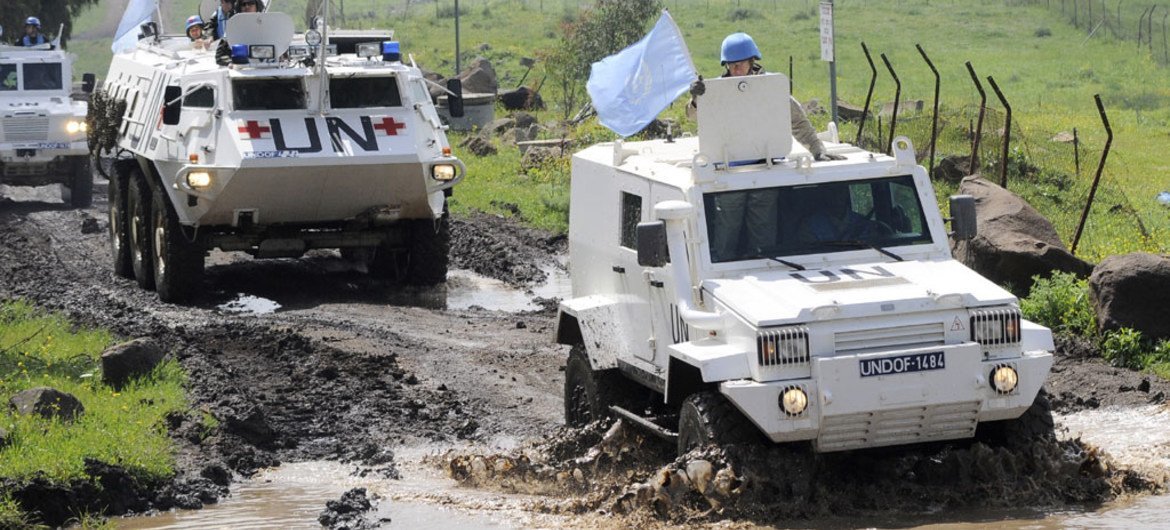
But the resolution stipulates it will then begin a one year “orderly and safe drawdown and withdrawal of its personnel”, in close consultation with the Lebanese Government.

The UN Interim Force in Lebanon (UNIFIL) was established by the Security Council in 1978 to oversee the withdrawal of Israeli troops from the south and has played an important role in monitoring security in southern Lebanon ever since.

The mission’s ‘blue helmets’ are mandated to implement resolution 1701 which brought an end to hostilities between Israeli forces and Hezbollah militants in 2006.

Since the formal end of fighting between the two sides last November which devastated areas of southern Lebanon, UNIFIL has been supporting the national army’s (LAF) mission to establish full control of the south – but Israel continues to have a presence in violation of Lebanese sovereignty.

Continuing role during drawdown

During the withdrawal period after the end of next year, the resolution says UNIFIL is authorised to continue providing security and assistance to UN personnel, while continuing to “maintain situational awareness” around UNIFIL outposts and bases.

It will also “contribute to the protection of civilians and the safe civilian-led delivery of humanitarian assistance.”

Furthermore, the resolution calls on the Secretary-General to present options by 1 June next year for the future implementation of resolution 1701 to establish a permanent end to fighting between Israel and militants in Lebanon.

Negotiations went down to the wire this week, with the United States acting Permanent Representative telling Thursday’s meeting it was already time for Lebanese forces to assume greater responsibility, without UN peacekeepers.

Penholder France led negotiations over the mandate, and their representative told ambassadors that UNIFIL’s ongoing efforts were vital: “Any premature withdrawal could undermine or even weaken the efforts of the Lebanese Government” in the south, he said.

Source link

Sudan: A staggering 30 million are in need, as war grinds on

Edem Wosornu, Director of Operations and Advocacy for the humanitarian affairs office, OCHA, briefed journalists on her recent visit to Sudan and neighbouring Chad – a critical entry point for aid and a haven for some 850,000 people who have fled fighting between the Sudanese army and the Rapid Support Forces (RSF) militia. 

The war erupted in April 2023 and has created one of the world’s largest humanitarian crises, with some 30 million people needing assistance.  

Homes, hospitals and schools have been destroyed, and basic services have ceased. Malnutrition and food insecurity are on the rise.

Aid trucks waiting

Ms. Wosornu voiced concern over the situation in El Fasher, which has been under siege for 500 days, with fresh shelling reported that morning. The North Darfur capital is also in the grip of deadly cholera which “doesn’t care whether you’re in uniform or a civilian”.

She said some 70 trucks from the World Food Programme (WFP), the UN Children’s Fund (UNICEF), and the World Health Organization (WHO) are waiting in Nyala, South Darfur, to enter the city.

Meanwhile, two other cities – Kadugli in South Kordofan state and El Obeid in North Kordofan – are also under siege.

“We have some good news”, Ms. Worsonu said, announcing that UNICEF trucks have delivered assistance to hundreds of thousands of people in Kadugli in recent days. 

Khartoum now ‘a ghost town’

The senior OCHA official recalled that Sudan was once the “breadbasket” of the Horn of Africa, but last year famine conditions were reported in the Zamzam camp in North Darfur. 

The current lean season finds some 680,000 people nationwide in a state of catastrophic food insecurity.

Although fighting has died down in the capital, Khartoum, she said the sheer scale and destruction is devastating, with “streets and buildings littered with explosive remnants of war”. The once vibrant city is now “completely a ghost town” with a “palpable sense of trauma everywhere”. 

However, she also witnessed signs of hope.  She saw “a city trying to come back to life, people sweeping the streets, a population determined to come back to what they once were. But it will take, of course, many, many, many years.”

In Chad, she thanked the authorities for their support, including ensuring that the Adre border with Sudan remains open. 

The war has made travel within Sudan extremely difficult, so humanitarian aid has to go from Douala in Cameroon through Chad’s capital, N’Djamena, and onto several more cities before arriving at Adre for entry into Darfur – “a mammoth effort”, she said.

More funding and aid access

Ms. Wosornu concluded by making four “key asks” to the international community, including for sustained improvements in aid access and more funding. 

“What we need is 55 cents per person, per day. That’s it for Sudan,” she said. 

Harder to deliver were her final plea to the warring parties for a lasting peace and an end to the fighting.

“Our humanitarian partners are also saying that this needs to stop so we can continue to deliver assistance,” she said. “Because after the war and everything has stopped, and when the guns are silenced, people still need recovery.”  

Source link

SECURITY COUNCIL LIVE: Haiti ‘shamefully overlooked’, warns Guterres

Haitians are enduring a “perfect storm of suffering” the UN Secretary-General António Guterres told the Security Council on Thursday as gang violence continues to paralyse daily life across the island. Around 1.3 million people – half of them children – have fled their homes and six million are relying on humanitarian assistance. Follow our live Meetings Coverage as the latest crisis debate unfolds.

Source link

Israel’s plan to take over Gaza City marks ‘new and dangerous phase’: Guterres

“Israel’s initial steps to militarily take over Gaza City signals a new and dangerous phase,” he told journalists in New York.

“Expanded military operations in Gaza City will have devastating consequences. Hundreds of thousands of civilians – already exhausted and traumatized – would be forced to flee yet again, plunging families into even deeper peril. This must stop.”

‘Endless catalogue of horrors’

Mr. Guterres was speaking ahead of a Security Council meeting on the situation in Haiti but stopped to brief reporters on the “unfolding tragedy that is Gaza”, where “yet more unconscionable Israeli strikes” have occurred.

Incidents include the two airstrikes on Nasser Hospital in Khan Younis earlier this week which killed civilians, including medical personnel and journalists, “all with the world watching”.

The Secretary-General said “these attacks are part of an endless catalogue of horrors” and called for accountability.  

“Gaza is piled with rubble, piled with bodies, and piled with examples of what may be serious violations of international law,” he said.

“Hostages taken by Hamas and other groups must be released and the atrocious treatment they have been forced to endure must stop. Civilians must be protected.”

© UNICEF/Mohammed Nateel

A displaced family sit outside their tent in Gaza.

Unparalleled destruction and famine

Mr. Guterres stressed that “the levels of death and destruction in Gaza are without parallel in recent times”.

He said that “famine is no longer a looming possibility – it is a present-day catastrophe.”

People are dying from hunger, yet Gaza’s food, water and healthcare systems have been systematically dismantled.

Israel’s obligations

“These are the facts on the ground. And they are the result of deliberate decisions that defy basic humanity,” he said. “Israel, as the occupying Power, has clear obligations.”

He said Israel must ensure the provision of food, water, medicine, and other essentials.  This is in addition to agreeing to and facilitating far greater humanitarian access to Gaza, and protecting civilians and civilian infrastructure.

Mr. Guterres said the International Court of Justice (ICJ) has given binding provisional measures which must be implemented in full and immediately.

They include the obligation to take all steps to ensure unfettered humanitarian and medical assistance to Palestinians throughout the Gaza Strip “without delay and in full cooperation with the United Nations.” 

UN staff killed, aid efforts blocked

Meanwhile, the UN and partners are doing all they can, he said.  This is often at great personal risk, as tragically 366 UN personnel have been killed. 

“Day after day, our efforts are being blocked, delayed, and denied,” he said. “This is unacceptable.”

Settlement expansion in the West Bank

Mr. Guterres also addressed the situation in the West Bank, describing it as “profoundly alarming”.

He said Israeli military operations, settler violence, demolitions, and discriminatory policies are driving displacement and deepening vulnerability. 

Furthermore, the relentless expansion of settlements is fracturing communities and cutting off access to vital resources.

The Israeli authorities recently approved of a plan for the construction of thousands of settlements in the E1 area. He said this would effectively separate the northern and southern West Bank, representing “an existential threat to the two-state solution” between Israelis and Palestinians. 

“I repeat: the Israeli settlements in the occupied West Bank including East Jerusalem have been established – and are being maintained — in violation of international law,” he stressed.   

“Israel must cease such actions and comply with its obligations.”

‘No more excuses’

The Secretary-General concluded his remarks by emphasizing that there is no military solution to the conflict.

“I appeal once again for an immediate and permanent ceasefire, unfettered humanitarian access across Gaza, and the immediate and unconditional release of all hostages,” he said.

“Starvation of the civilian population must never be used as a method of warfare. Civilians must be protected. Humanitarian access must be unimpeded,” he added, ending with a plea for “No more excuses.  No more obstacles.  No more lies.” 

Ukraine: Toddler among four children killed in Russia’s attacks on Kyiv

The youngest victim of the bombing raid was two-and-a-half years old, according to the UN Children’s Fund, UNICEF, which released video footage showing smoke billowing from a Kyiv apartment block with a massive hole where its roof had been.

Leading condemnation of the attacks, the UN Secretary-General said that targeting civilians and civilian infrastructure violated international humanitarian law. [They] are “unacceptable and must end immediately”, followed by a ceasefire resulting in a “just, comprehensive, and sustainable peace in Ukraine”, he insisted, in a statement issued by his Spokesperson. 

Eyewitness testimony

Speaking to UN News after visiting the shattered building and its residents, UNICEF Representative, Munir Mammadzade, insisted that nowhere in Ukraine is safe today. The air-raid alert in Kyiv lasted almost 12 hours, he noted.

The senior UN official also condemned the “continuous attacks” reportedly involving ballistic missiles and drones by Russia, which launched a full-scale invasion of Ukraine in February 2022.

“I’m just back from one of the sites that were impacted, severely…and still, the search and rescue operation is continuing,” he said. “Across the city, there were four kids confirmed killed and more than 10 injured; most likely these numbers will go up.”

Media reports indicated further damage to civilian infrastructure including Ukraine’s railways. Russian attacks have also continued closer to the front line, targeting key energy infrastructure ahead of winter, Mr. Mammadzade warned.

Winter is main threat

In Kyiv and in frontline areas, plummeting temperatures are “the biggest challenge”, the UNICEF senior official insisted, in an appeal to donors and partners to support the UN agency’s winterization plan by contributing more to its Ukraine humanitarian fund, which faces a 40 per cent funding shortfall.

People within 10 kilometres (around six miles) of the front line “require immediate support”, the UNICEF official said, so that “families and children can survive and most importantly, have their livelihoods protected”.

Back to school

The development comes as the country’s children prepare to return to school against a backdrop of ever-present air-raid sirens that are “becoming kind of a norm”, even if the impact of the war on many youngsters’ mental health is as serious as it is common.

“We know that even if war ends today, [it] will be for generations to come,” Mr. Mammadzade explained, pointing to sudden mood swings linked to post-traumatic stress and feelings of hopelessness among children he has met in frontline areas including Donetsk, Sumy and Kharkiv.

“What they basically fear the most is about their lives and unfortunately, quite often, they mention to us that they don’t have dreams or any hopes,” he continued. “What they only need is peace – and this peace to happen as soon as possible – so that they can go back to normalcy.”

In his renewed call for a ceasefire, the Secretary-General insisted that it should fully uphold Ukraine’s “sovereignty, independence and territorial integrity, within its internationally recognized borders, in line with the UN Charter, international law and relevant UN resolutions”.

Source link

Latin America and Caribbean: Millions more children could face poverty due to climate change

Even worse, the number could triple if countries do not meet their commitments to reduce greenhouse gas (GHG) emissions and to ensure that climate financing prioritises social and climate resilience services for children.

The finding comes in a report by the UN Economic Commission for Latin America and the Caribbean (ECLAC) and the UN Children’s Fund (UNICEF), published on Thursday in Panama.

Bearing the brunt

The report examines the potential effects of extreme weather events on increasing poverty levels among children and youth, along with national efforts to reduce GHG emissions as well as strategies to adapt and reduce losses and damage caused by climate change.

The 5.9 million figure represents the most optimistic scenario. However, if governments are slow in implementing actions to address mitigation and adaptation, as well as loss and damage, the number could reach 17.9 million.

Roberto Benes, UNICEF Regional Director for Latin America and the Caribbean, said that children and adolescents bear the greatest burden of climate change. 

Their developing bodies are more vulnerable to cyclones, heatwaves and other extreme phenomena which at the same time disrupt their families’ livelihoods and their education.

“If children and young people don’t have the resources to meet their basic needs and develop their potential, and if adequate social protection systems are not in place, the region’s inequalities will only be perpetuated,” he said.

Protect children and youth

Yet despite their vulnerability, climate finance does not prioritise the resilient services for health, nutrition, education, water and sanitation that children and young people need, to ensure their optimal cognitive and physical development. 

In Latin America and the Caribbean, only 3.4 per cent of all multilateral climate finance is dedicated to children, according to the report.  This is happening at a time of funding cuts and reduced development aid amid unprecedented needs.  

The report recommends that regional governments take action, including by strengthening the climate resilience of social services and critical infrastructure to better protect children and youth, with a particular focus on the first 1,000 days of life.

Authorities are urged to increase child-sensitive climate policy financing, with actions that specifically target the needs of children at different ages.

They also must promote greater climate awareness, education, empowerment and participation of children and youth. Additionally, environmental and climate education should be included in school curricula and educational programmes.

The report further recommends that countries promote adaptive social protection and emergency response policies that account for the specific needs of children and adolescents. 

Source link

Sudan: ‘Devastating tragedy’ for children in El Fasher after 500 days of siege

Around 260,000 civilians – including 130,000 children – remain trapped in the area’s main camp for internally displaced people, enduring desperate conditions without aid for more than 16 months.

The Rapid Support Forces (RSF), which has been battling forces of the military government for control of Sudan for over two years, has cut off all supply lines.

RSF militia have been besieging the city since May last year and it is the last urban area still under government control.

“We are witnessing a devastating tragedy – children in Al Fasher are starving while UNICEF’s lifesaving nutrition services are being blocked,” said Catherine Russell, UNICEF Executive Director.

Deadly violence

Reports this week point to yet another mass-casualty incident, with seven children reportedly killed in an attack on Abu Shouk camp for internally displaced people, on the outskirts of El Fasher.

Since the start of the siege in May 2024, more than 1,100 grave violations have been verified in El Fasher alone, including the killing and maiming of over 1,000 children.

Meanwhile, at least 23 children have been subjected to rape, gang rape, or sexual abuse. Others have been abducted, recruited, or used by armed groups, said UNICEF.

Health and education facilities have also come under sustained attack, with 35 hospitals and six schools struck, killing and injuring many, including children.

Aid blocked

Meanwhile, the UN aid coordination office (OCHA) warned Wednesday that the already dire situation in North Darfur continues to worsen.

“Blocking humanitarian access is a grave violation of children’s rights, and the lives of children are hanging in the balance,” Ms. Russell said, reiterating UNICEF’s call for immediate and full access to El Fasher.

The toll on children is catastrophic, the agency suspension of medical services due to depleted supplies has left an estimated 6,000 children suffering from Severe Acute Malnutrition (SAM) without treatment, UNICEF said.

Without therapeutic food and medical care, these children face an extremely high risk of death. News reports indicate at least 63 people, mostly women and children, died of malnutrition in just a single week.  

UNICEF continues to call for unimpeded humanitarian access for the delivery of therapeutic food, medicines, clean water, and other essentials.

Cholera outbreak

The siege is colliding with Sudan’s worst cholera outbreak in decades. More than 2,400 deaths have been reported since July 2024.

In overcrowded camps around Tawila, Zamzam and El Fasher, children weakened by hunger are now especially vulnerable to cholera and other deadly waterborne diseases.

“Children must be protected at all times, and they must have access to life-saving aid,” said Ms Russell.

Source link

Iraq unveils historic migration plan to boost development and stability

Unveiled on Wednesday, it creates new opportunities for work, education and family reunification, while strengthening migration governance and placing migration at the heart of stability and economic development.

It is being led by Iraq’s ministry for migration and the displaced, with the support of the International Organization for Migration (IOM) and the Government of the Netherlands – translating Iraq’s global commitments into national action.

Migration minister Evan Faeq Gabro said that it represents a “vision for Iraq’s future that upholds human dignity”, serves national interests, and supports the Global Compact for Migration.

Iraq is setting an example for the region and beyond, showing how national leadership and genuine partnership can turn migration into an engine for dignity, opportunity, and development,” said Ugochi Daniels, IOM’s  Deputy Director General for Operations.

Origin and destination

Iraq is both a country of origin and destination, with some two million nationals currently living abroad, while thousands more are weighing emigration.

In the past seven years, over 58,000 people have returned to Iraq, rebuilding their lives at home.

Meanwhile, the country also hosts some 370,000 migrant workers, mainly engaged in semi-skilled sectors such as construction and domestic work.

Iraq’s five-year National Plan to Promote Safe, Orderly and Regular Migration emphasises data-driven decision-making, stronger institutional coordination and calls for closer private sector involvement.

Stability and development

“This national plan demonstrates that when policies are grounded in evidence and shaped by people’s needs, migration can benefit migrants, communities, and the country as a whole,” said Ms Daniels.

Th new policy responds to Iraq’s current migration realities, framing migration as a tool for national development and stability, says IOM.

“Today, we are here to commit ourselves to ensuring that migration is about dignity, safety, and opportunity for migrants, their families, and the communities they join,” said Claudio Cordone, UN Deputy Special Representative in Iraq.

The plan outlines a vision for a future that upholds human dignity and serves the national interest.