About Arun Kumar N

Arun has been associated with India International Times since 2018 and he has been a key reporter in covering science and space related stories. He can be reached at arunKnn@indiainternationaltimes.com.

Air pollution is on the rise – but not everywhere, says UN weather agency

Air quality respects no boundaries,” said Lorenzo Labrador, Scientific Officer at the World Meteorological Organization (WMO). “The smoke and the pollution that issues from the wildfires in this record-breaking season in the Iberian Peninsula has been detected over Western Europe already [and]…can travel basically throughout the rest of the European continent.”

Presenting the latest WMO Air Quality and Climate Bulletin which crunches data from different global datasets, Mr. Labrador announced a continuing pattern of pollution “degradation” worldwide.

He pointed to a map of the world in 2024 showing telltale fine particle markers known as “PM 2.5” from wildfires concentrated in deep red blotches in Chile, Brazil and Ecuador, along with Canada, central Africa and Siberia.

The data confirms a disturbing trend in air quality loss already noted in previous years.

“We know that the wildfire season has the tendency to be stronger and longer every year, as a result of climate change,” Mr. Labrador explained.

China, Europe provide hope

In more positive news, the WMO scientist underscored a reduction in emissions in some parts of the world, “particularly eastern China and Europe, year on year”.

When we see that countries or regions or cities are taking measures to fight against bad air quality, it works,” said Paolo Laj, Head of WMO’s Global Atmosphere Watch (GAW) Programme.

A good example is eastern China, in cities such as Shanghai, where progress has been made to boost air quality by opening more parks and planting more trees.

And although there is still heavy vehicle traffic, many are now electric, WMO spokesperson Clare Nullis noted.

Despite these successes, very few cities worldwide have air quality levels below those recommended by the UN World Health Organization (WHO), stressed WMO’s Mr Laj. “This means that, despite recent improvements, air quality remains a significant public health concern.”

He explained that although main pollutants such as sulphur dioxide (SO₂) and nitrogen oxide (NOₓ) are decreasing as emission controls kick in, ground-level ozone levels – the main ingredient of smog – have not declined.

“This is partly a consequence of global warming, as ozone is a secondary pollutant formed through chemical reactions in the atmosphere that require sunlight,” Mr. Laj continued.

Covering wildfires, winter fog, shipping emissions and pollution in urban spaces, the WMO air quality bulletin highlights the close connection between air quality and climate change.

“Climate change and air quality cannot be addressed in isolation. They go hand-in-hand and must be tackled together in order to protect the health of our planet, our communities and our economies,” said WMO Deputy Secretary-General Ko Barrett.

The UN is leading efforts to tackle household air pollution which is one of the world’s greatest public health threats and particularly harmful for children.

“The good news is that cleaner cooking technology is plentiful, relatively inexpensive, and already helping to save lives,” insisted Martina Otto, Head of Secretariat of the Climate and Clean Air Coalition hosted by the UN Environment Programme (UNEP).

The challenge now is to get this technology into the hands of more people.”

Source link

Downpours stymy aid teams following deadly landslide in war-torn Sudan

The death toll has not yet been verified as ongoing downpours and rugged terrain are making it extremely difficult to reach the impacted communities, according to the UN migration agency, IOM.

To date, an estimated 150 people were displaced from Tarseen and neighbouring villages, with families now sheltering in nearby communities.

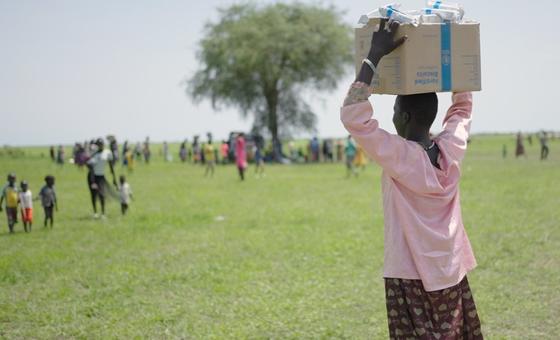
The UN humanitarian agency, OCHA, and partners have put a rapid response plan into operation. On Thursday, teams comprising nearly a dozen local and international non-governmental organizations and UN agencies went to the site, travelling part of the way by donkey because of the rugged terrain.

Their mission focused on confirming the number of people affected and assessing and responding to urgent needs, OCHA said.

Transporting critical supplies

Teams also transported critical supplies for up to 750 people, including medical kits, nutrition support, food rations, non-food items and other essential materials.

Mobile health clinics and emergency medical teams were also deployed to provide immediate care on the ground.

The response aims to support the survivors in Tarseen and neighbouring villages affected by the disaster.

The assessment’s findings will guide the scale-up of assistance, with UN agencies preparing to send more supplies to meet additional needs,” Mr. Dujarric said.

Flooding, escalating violence in North Darfur

Meanwhile, OCHA warned that the situation in El Fasher in North Darfur is worsening, amid escalating violence and now flooding. Local sources report that heavy artillery fire has killed dozens of civilians in recent days.

At the same time, humanitarian access continues to be impeded, and women and girls face grave protection risks, including from sexual violence.

Compounding the crisis in the area, heavy rains and flooding displaced 350 people in Korma Town on Monday, with latrines destroyed at the displacement site. Families have sought shelter with host communities.

Famine and cholera

In recent days, flooding in the Zamzam and Abu Shouk camps for displaced people close to El Fasher impacted 4,300 residents, destroyed 900 tents and damaged 2,300 houses, according to UN partners on the ground.

These incidents further deepen the horrific situation in a place that knows famine, and it has been fired upon and been abused,” the UN Spokesperson said.

Meanwhile, cholera continues to surge, with aid partners reporting nearly 8,000 cases in North Darfur and more than 3,800 cases in South Darfur since May, he said.

The outbreak has been heightened by the severe malnutrition, which has doubled in North Darfur over the past year, leaving children particularly vulnerable.

Sudan has been embroiled in war between rival militaries since April 2023.

“We and our partners are supporting the response to the outbreak by providing clean water, health services and conducting cholera vaccination campaigns, despite the serious logistical challenges,” Mr. Dujarric said.

Source link

World News in Brief: Afghanistan quake update, Guterres in Papua New Guinea, Ebola returns to DR Congo, UN condemns attack on peacekeepers in South Sudan

Since the initial earthquake on Sunday in eastern Nangarhar province, landslides and several strong aftershocks have disrupted the work of rescue teams.

In an update, the UN Children’s Fund, UNICEF, said that access routes remain blocked in various locations including the districts of Chawkay and Nurgal, both in Kunar province, although the authorities have deployed earth-moving machinery to restore access.

Latest estimates indicate that approximately half a million people have been affected – including 263,000 children – while at least 5,000 homes have suffered partial or total damage.

Tremors continue

Among the UN agencies operating there, UN Habitat noted that the earthquake had caused massive upheaval in a remote region where recent returnees from Pakistan and Iran were just beginning to settle.

“There are still more earthquakes every day in the region, causing landslides and making access even harder,” said UN Habitat’s Stephanie Loose in the capital, Kabul.

She noted that women and girls were the main victims because of strict rules preventing them from leaving their homes alone.

“Many of them, due to cultural norms or restrictions imposed, didn’t dare to leave their houses; nor are there sufficient female doctors in the country, and I understand they are not able to reach the women who would need it,” Ms. Loose said.

Papua New Guinea’s on the frontline of climate change, warns Guterres

Papua New Guinea and the Pacific islands are climate change’s “Ground Zero” whose precious rain forests and ecosystems deserve the world’s support to ensure they’re protected, the UN Secretary-General said on Thursday.

Speaking from Papua New Guinea where he visited the world’s third largest rainforest and sat down with civil society representatives, António Guterres highlighted the challenges brought about by climate change in the region.

It’s the first ever visit to the southwest Pacific nation by a sitting Secretary-General.

Earlier, he repeated his warning that the 1.5 degree limit on the rise in global temperatures agreed to under the 2015 Paris Agreement remains in jeopardy.

And although scientists say that it is still possible to limit global warming, the UN chief urged countries to unveil their new national climate plans to reduce emissions and “seize the opportunities” arising from the renewable energy revolution.

New Ebola outbreak declared in DR Congo

Health authorities in the Democratic Republic of the Congo (DRC) have declared an outbreak of Ebola virus disease in Kasai province where 28 suspected cases and 15 deaths – including four health workers – have been reported as of Thursday.

The outbreak is concentrated in the Bulape and Mweka health zones in Kasai Province, in the south-central region of DRC. Symptoms of the rare – but severe – and often fatal illness, include fever, vomiting, diarrhoea and haemorrhaging.

Samples tested on 3 September at the country’s National Institute of Biomedical Research in the capital Kinshasa confirmed the cause of the outbreak as the Ebola Zaire strain.

Experts deployed

A national Rapid Response Team assisted by UN World Health Organization (WHO) experts in epidemiology, infection prevention and control – as well as case management – has been deployed to Kasai province.

Communication experts have also been deployed to reach communities and help them understand how to protect themselves.

Additionally, WHO is delivering two tonnes of supplies including personal protective equipment, mobile laboratory equipment and medical supplies.

The area is difficult to reach and at least a day’s drive from the provincial capital Tshikapa, with few air links.   

“We’re acting with determination to rapidly halt the spread of the virus and protect communities,” said Dr Mohamed Janabi, WHO Regional Director for Africa.

“Banking on the country’s long-standing expertise in controlling viral disease outbreaks, we’re working closely with the health authorities to quickly scale up key response measures to end the outbreak as soon as possible.”

Cases likely to rise

Case numbers are likely to increase as transmission is ongoing.

The country has a stockpile of treatments, as well as 2,000 doses of the Ervebo Ebola vaccine already prepositioned in the capital city Kinshasa that will be quickly moved to Kasai to vaccinate contacts and frontline health workers.   

The DRC’s last outbreak affected the northwestern Equateur province in April 2022.

It was brought under control in under three months thanks to the robust efforts of the health authorities. In Kasai province, previous outbreaks of Ebola virus disease were reported in 2007 and 2008. In the country overall, there have been 15 outbreaks since the disease was first identified in 1976.

UN condemns attack on peacekeepers in South Sudan

The UN peacekeeping mission in South Sudan, UNMISS, has condemned an attack by a local armed group which targeted “blue helmets” in Western Equatoria state.

The militants subsequently seized a small cache of weapons and ammunition. The incident occurred while peacekeepers were conducting a patrol between Tambura and Mapuse.

“We emphasise that any attack against peacekeepers may constitute a war crime,” UN Spokesperson Stéphane Dujarric said at the daily press briefing in New York on Thursday.

“These peacekeepers are deployed to protect civilians at a time when access and security remain fragile across Western Equatoria,” he added.

Meanwhile, widespread flooding is also impacting hundreds of thousands of people in several parts of the world’s youngest nation, which became embroiled in civil war soon after gaining independence in 2011.

A fragile 2018 peace accord is in danger of unravelling amid fresh offensives and deteriorating humanitarian conditions.

Flooding affects 270,000

Local reports suggest that over 270,000 people are affected by flooding in 12 counties across four states.

These areas were already grappling with floods, displacement, food security and cholera, said Mr. Dujarric, with farmland, homes and humanitarian facilities now submerged, disrupting access to education, health, nutrition and water services.

UN humanitarians say overcrowding at relocation sites has led to tensions among displaced families at the same time, reports of waterborne diseases and snake bites are increasing public health risks.

Peacekeepers serving with the UN Mission in South Sudan (UNMISS) have increased their presence and intensified vehicle patrols, navigating treacherous, rain-soaked routes both day and night.

UN rights office worried over escalation in Gaza City, annexation plans for West Bank

Ajith Sunghay, Head of OHCHR’s Office in the Occupied Palestinian Territory (OPT), told UN News that the escalation has caused extensive destruction to residential buildings in southern parts of North Gaza governorate and in northeastern areas of Gaza City.

This has led to further civilian casualties and forced displacement.  Local health authorities reported that 816 Palestinians were killed between 26 August and 1 September – nearly double the number of fatalities compared to the previous week.

Nowhere to go

Roughly one million Palestinians reportedly remain in northern Gaza, and he said they are being pushed into increasingly smaller areas in the west of the enclave.

Many are unable to relocate – there are no safe areas and movement is dangerous. Others are still trapped in eastern Gaza City, with humanitarian workers unable to reach them,” he said.

Meanwhile, Israeli military attacks on people seeking aid continued across the Gaza Strip, where humanitarians are still struggling to bring in desperately needed supplies.  

OHCHR has recorded over 2,146 deaths in the vicinity of sites run by the US and Israel-backed Gaza Humanitarian Foundation (GHF), which began operations in late May, and along convoy routes.

West Bank warning

Mr. Sunghay also pointed to increasing reports of Israeli Government plans to “extend sovereignty” over the occupied West Bank or effectively annex parts of it.

He recalled that last July, the International Court of Justice (ICJ) “very clearly stated” that Israel has already incorporated large parts of the OPT – particularly East Jerusalem and Area C, where most settlements are located – into its territory, concluding that this amounts to annexation.

Israel “has done so, and continues doing so, with the unabated building of settlements and outposts and related infrastructure and with the forcible transfer of thousands of Palestinians from large swathes of the West Bank now controlled by the Israel forces and settlers,” he said.

“It has done so also by reshaping the West Bank with an extensive network of checkpoints, and gates which ensure freedom of action to settlers while segregating Palestinian towns and villages.”

Further expulsion threat

He warned that “any declaration of extension of sovereignty over the West Bank will have further catastrophic consequences on Palestinians” – not only on their right to self-determination but also on daily life. 

It would facilitate a further, massive expansion of settlements and legalization of existing outposts, and allow Israel to take full control of natural resources there without any restrictions.

“Further, Israel’s objectives to formally annex ‘as much as land possible with the least Palestinians in it’ as declared by some of its leaders, would clearly place Palestinians in the annexed areas at imminent risk of expulsion through increased settler violence, deprivation of political rights, expropriation of land and mass home demolitions,” he said.  

Source link

Finding strength amid sleepless nights: Ukraine’s hidden mental health toll

Speaking from the capital Kyiv which was rocked by some of the deadliest attacks of the war last week – and following a visit to the frontline region of Sumy – UN Women’s Representative in Ukraine Sabine Freizer Gunes described to UN News’s Nathalie Minard both the emotional exhaustion and the resilience she had witnessed.

The interview has been edited for clarity.

UN News: The situation for civilians in cities is drastic, with shelling and air raid sirens sounding for days and nights at a time. Could you describe your personal experience of living in a war zone?

Sabine Freizer Gunes, UN Women Representative in Ukraine: Living in a war zone like Ukraine is, on one hand, quite challenging, because as a UN official, we’re not allowed to bring our families here. So, one difficulty is living far away from one’s family.

Usually, in terms of the war situation and the attacks, they tend to happen at night. One of the clear challenges is being able to get through your week, when you’re woken up numerous times during the night. Sometimes there are attacks on Kyiv several days in a row. Sometimes it’s quiet for a week or 10 days.

Not knowing when you’re going to go to sleep, if you’re going to be able to sleep a full night, or if you’re going to have to wake up three or four times, if you’re going to have to go down to the shelter, if you’re going to have to check the news – I would say that mentally, that’s the most difficult thing. It’s not so much fear, it’s not knowing what your night is going to look like.

© UNICEF/Oleksii Filippov

A resident near the ruins of a residential building in Kyiv, watching as emergency crews search for survivors following a missile strike in the early hours of the morning on 28 August.

UN News: You were recently in Sumy, very close to the eastern frontline. Many people have left the East for safer locations, but others have chosen to stay. How is the UN and UN Women and partners helping them?

Sabine Freizer Gunes: It is quite extraordinary that many Ukrainians are staying in their frontline communities. And some of these places have been under attack since 2014. What we do see is that people are continuing to live their lives.

I just came back from Sumy, which is 20 kilometers away from the Russian border, and the city is still completely vibrant. Businesses continue, cafes, restaurants, and shops are still open. People are still walking down the street.

This is the situation in Ukraine: from one moment to the next, tragedy can strike.

Life seems quite normal during many hours of the day, but then there’s always something kind of hidden beyond that. For example, with some of our colleagues, their husbands may be fighting on the frontline, their fathers or their brothers may have disappeared.

There’s always that element which isn’t visible but is behind the reality of the people that are working.

UN Women works very closely through local women’s rights organizations. When we have an attack, we ask them what kind of assistance we can provide.

Very often, those are going to be kits that are specifically assembled to meet the needs of women, particularly elderly women. It’s elderly women who are generally the last ones to leave their homes.

They insist on staying in their house, in their small yards, because they believe that’s a much better outcome than going to live in a collective centre.

What we try to do then is to provide them with some basic items so that they can stay in their homes.

One thing that I saw yesterday in Sumy, I saw that women’s rights organizations were doing very different kinds of activities. They’re doing cultural activities, activities to support young people, they’re providing legal advice or psychosocial advice. They are helping women get new skills to start their own businesses.

On one hand, there’s an humanitarian crisis and we need to provide life-saving support, but on the other, in the same town, we’re also discussing recovery and development.

UNFPA’s mobile psychosocial support teams travel across Ukraine, including to the front lines, offering immediate emergency interventions as well as access to longer-term assistance.

UN News: Can you share the story of a woman that particularly moved you?

Sabine Freizer Gunes: One thing that really moved me recently was talking to six women who each represented a different NGO.

We were talking about our cooperation, and we asked them, “how have we helped you over the past several months?” And they said that one thing that they really benefited from was a retreat that we organized. I thought they were going to say that they benefited from material things that we gave them.

Instead, they said what they benefited from was a retreat, which was organized in western Ukraine, which is generally more peaceful. And we gave them five days to be in a quiet space where they could get to know each other, share experiences, and where they could sleep. One of them said, “this is the first time in three years that I got a decent night’s sleep”.

That was very powerful to hear, that giving space, a sense of normalcy to our partners can be incredibly powerful.

Listen to the full interview:

UN News: It’s three and a half years since Russia’s full-scale invasion of Ukraine. What are the most common impacts on women’s mental health you’ve encountered?

Sabine Freizer Gunes: Pretty much everybody who lives in Ukraine and who’s been living in Ukraine for the past three and a half years has some mental health issue. There is a clear effect of the war on everyone’s mental health. Regardless of who we’re working with at UN Women, we always include a mental health component.

In the war-torn Ukrainian town of Snihurivka, a groundbreaking initiative is training women as tractor drivers – a role traditionally dominated by men.

For example, we are currently training women to be bus drivers, to take over positions which used to be held by men, but now with the men at the front, women are needed to take up these jobs.

UN News: Do you see a rise in gender-based violence (GBV)? What are the specific mental health challenges faced by women survivors of conflict-related sexual violence; and how do you address them?

Sabine Freizer Gunes: Conflict-related sexual violence is a real challenge in Ukraine. But very often in conflict situations, conflict-related sexual violence (CRSV) is something that’s hidden under the rug.

Here in Ukraine, the Government itself has spoken about conflict-related sexual violence and really encouraged those who are survivors to speak openly about it and to seek remedies and reparations.

In Ukraine, the Office of the High Commissioner on Human Rights has documented 484 cases.

But it is expected that’s just the tip of the iceberg, that there’s a lot of cases that are not known because they’re occurring today in occupied territories, in territories occupied by the Russian Federation, but also people do not feel ready yet to speak about it.

For CRSV in Ukraine, what’s interesting is that there are also many cases against men. So out of those 484 cases, 350 cases are men, and 119 cases are women.

That is because a vast majority of those cases are cases that occur in detention. Survivors of conflict-related sexual violence need extensive psychological support.

UN News: What urgent gaps exist in providing support to women in Ukraine today? How are funding cuts affecting your activities?

Sabine Freizer Gunes: Funding cuts are having a massive effect on the ability to provide support and services to Ukrainian women and girls. What we find to be the most disturbing is the effect of the cuts on Ukrainian women’s rights organizations.

UN women carried out a study back in March, about a month after the US declared its cuts. We did a survey of 100 different women’s rights organizations.

Seventy-three per cent reported already significant disruptions to their operations due to the cuts. Thirty-two per cent expected that they may have to suspend their operations in the next 6 months. Sixty-seven per cent were already forced to lay off staff. And 50 per cent expected that there would be further layoffs.

Most worryingly, 60 per cent of the women’s rights organizations have been forced to reduce or to suspend their gender-based violence services.

This is directly affecting women and girls’ lives. You imagine if you were a woman who was living an abusive relationship, you know that there is a shelter down the road, and suddenly you say, okay, this is too much. You go to the shelter, you knock on the door, and nobody answers anymore because there’s no more funding to keep that shelter open.

Source link

World News in Brief: Pakistan floods, countries lag on climate reporting, concern over attack on peacekeepers in south Lebanon, cuts hit human rights investigations

In a statement released by his Spokesperson, the UN chief noted that the disaster driven by severe monsoon conditions had been exacerbated by climate change, impacting around 1.5 million people.

Hundreds of thousands of people need humanitarian aid while more than 3,000 homes, over 400 schools and some 40 health facilities have suffered some level of damage.

Solidarity with the people

“The Secretary-General commends Pakistani authorities for relocating more than one million people in Punjab. He expresses his solidarity with the Government and people of Pakistan, extends his heartfelt condolences to the families of those who have lost their lives, and wishes a swift recovery to those who have been injured.”

The UN and other humanitarian organizations are working closely with the Pakistani authorities to assess the full impact of the floods on communities, identify further needs and also address any gaps in the response.

The UN’s Emergency Relief Coordinator, Tom Fletcher, has released $600,000 from the Regional Humanitarian Pooled Fund for relief and recovery efforts, and discussions are underway with the Government on a specific response plan.

Dozens of countries lag on climate reporting, warns UN climate chief

UN Climate Change Executive Secretary Simon Stiell has warned that 37 countries have yet to submit one or more mandatory reports under the Paris Agreement’s transparency framework, stressing that “no country can be left behind.”

Speaking at the Global Transparency Forum in Songdo, Republic of Korea, the UNFCCC chief said the Enhanced Transparency Framework (ETF) is not just technical bookkeeping but “a vital enabling tool” for stronger climate action.

It helps governments attract investment, design more ambitious policies and accelerate progress on clean energy and resilience, he added.

‘Smart investment’

To date, more than 100 nations have submitted their first Biennial Transparency Reports (BTRs), which Mr Stiell called a “smart investment” bringing economic and social benefits.

Over 10,000 experts from 140 developing countries have received training on the ETF, with 1,200 certified reviewers and 1,400 officials now using its tools.

The first global synthesis of BTRs will be published ahead of November’s COP30 climate change conference in Brazil, offering an early snapshot of progress on mitigation, adaptation and support. Mr Stiell said the findings would guide the next Global Stocktake.

“What is measured can be acted upon. What is reported helps build trust. And what is shared becomes a force for change,” he stressed.

Lebanon: UN voices serious concern over Israeli attack on peacekeepers

The UN has expressed serious concern over an Israeli attack on peacekeepers clearing roadblocks in southern Lebanon on Tuesday.

Briefing reporters in New York on Wednesday, UN Spokesperson Stéphane Dujarric said Israeli military drones had dropped grenades in the vicinity of peacekeepers serving with the UN mission, UNIFIL, “who were carrying out mandated tasks in support of implementation of Security Council resolution 1701.”

That’s the resolution which authorises peacekeepers to monitor the cessation of hostilities agreement between Israel and Hezbollah of 2006 and support the Lebanese armed forces as Israel withdrew from southern Lebanon. UNIFIL patrols the Blue Line of separation.

In a statement on social media, UNIFIL described the drone attack as one of the most serious on its personnel since the cessation of hostilities agreement between the two sides last November. The mission stressed that Israeli forces had been informed in advance of the road clearance work.

Drones crossed into Israel

“One grenade impacted within 20 metres and three within approximately 100 metres of UN personnel and vehicles,” said the UN Spokesperson.

“The drones were then observed returning south of the Blue Line. Thankfully, none of our colleagues were injured.”

The Secretary-General stresses that any acts which endanger peacekeepers’ lives are “completely unacceptable”, Mr. Dujarric continued.

UN chief António Guterres is also demanding that the parties uphold their responsibilities “to ensure the safety and security of the peacekeepers and inviolability of UN premises.”

Funding cuts hampering the work of the Human Rights Council, says President

The Human Rights Council is set to meet on Monday in Geneva – an opportunity for UN Member States to discuss action to address conflicts around the world, as well as other issues of global importance, from climate change to disability rights.

Important as this work is, it’s feared that cost-cutting measures that are already affecting UN agencies and bodies like the Council could limit its reach, President Jürg Lauber told journalists on Wednesday.

This includes independent rights investigators known as Special Rapporteurs, he said: “When the Council decides to have an investigative mechanism or a special rapporteur or an issue, they need resources,” he said.

Research, travel impacted

“They need they get support from the Secretariat to do research, to write reports. They need to travel to a country to see the situation. There’s also less money available, which means they don’t get necessarily all the research and assistance they need to do their work,” he continued.

Mr. Lauber said it was “very clear” that dwindling financial resources were impacting meetings during Council sessions and the basic implementations of investigative mandates.

He added that the funding cuts could also prevent people or groups in countries of concern from sharing their testimonies with investigators.

And he noted that reduced funding could also limit how much technical support and advice the Council is able to give to governments seeking to promote and protect human rights.

Source link

‘Reparatory justice’ key to ending racism against Africans and their descendants

Doing so is key to dismantling systemic racism that is rooted in legacies of slavery and colonialism, it said.

Actions include formal apologies, truth-seeking, memorialisation and education measures, medical and psychosocial support, as well as compensation.

Past and present linked

For the most part, the report found that that amid some rollback of commitments to racial justice, measures taken by States, businesses, religious groups, universities, museums and others remain limited. 

To deliver reparatory justice, States and other actors must implement a comprehensive approach that includes reparations in various forms,” said UN High Commissioner for Human Rights Chief Volker Türk. 

“To be truly effective, this approach must squarely consider the web of links between the past and the present – at the individual and societal levels, in all areas of life – in order to dismantle unjust structures and systems designed and shaped by the past.”

Consider local contexts

Mr. Türk cautioned against a “one-size-fits-all approach” as reparatory justice should respond to the demands of affected communities.  

Initiatives and processes should be grounded in history and local context, respond to evolving demands of communities, and centre the specific experiences of women of African descent in particular,” he said.

The report recommends that Africans and people of African descent must guide the design and implementation of these measures through meaningful, inclusive and safe participation. 

Reviews, restitution and research

It also highlights initiatives already underway. For example, some countries have reviewed public spaces to identify, remove or contextualise statues and place names linked to persons who were involved in the transatlantic slave trade.

Museums in several European countries are also taking steps to address their collections’ links with the past.  

The restitution of cultural heritage is continuing, such as the return of so-called “Benin bronzes” – centuries’ old sculptures, plaques and other items looted from what is now Edo state in Nigeria. 

Additionally, some academic institutions have carried out or funded external research into their own history, issued apologies, advanced educational opportunities for communities and created memorials. Some business enterprises also have taken clear steps to acknowledge their links with the past. 

“Claims for compensation have been lodged before courts in multiple jurisdictions, and associated legal arguments have bolstered wider public movements and fostered political pressure for change,” the UN rights office added. 

The report calls for further research and policy proposals on broader structural and systemic issues, including in the areas of climate and environmental justice, as well as reforms to address the shortcomings of development aid and international financial and governance architecture.  

Source link

Attacks across Gaza intensify amid fear and hunger: ‘Leave me here,’ injured girl told fleeing family

A 14-year-old girl with cerebral palsy who depends on a wheelchair was among crowds fleeing Israeli military aircraft operations east of Rafah in Gaza on 13 October 2023, said committee member Muhannad Salah Al-Azzeh, who presented a report on the occupied Palestinian territories on Wednesday in Geneva. In the melee, she lost her wheelchair.

She was crawling on the sand and asking her family, telling them ‘you can leave me here’ because she felt that she was slowing them down,” he said.

Indeed, some people are unaware of evacuation orders being given in Gaza due to their disabilities since the start of the nearly two-year-long war triggered by the Hamas-led attack on Israel.

“This is one of the most serious issues because in regular situations, personal disabilities are excluded in emergencies, more excluded,” he said. “It’s more complicated for them.”

A woman in a wheelchair is carried across rubble.

States fail to protect rights of persons with disabilities

Following extensive interviews with individuals, delegations and organizations working in Gaza and the West Bank, the UN committee submitted a series of recommendations and serious concerns to Israel and the Palestinian Authority.

The situation in Gaza is a grave concern, Mr. Al-Azzeh stated.

“What we are witnessing there is highly concerning for us,” he warned. “We do believe that all the State parties to the Convention on the Rights of Persons with Disabilities, they really failed in one way or another to fulfill their obligations to protect and to ensure the minimum protection of persons with disabilities in the emergency situation.”

Citing grim cases reported to the committee since the start of war, he said in one instance, prolonged electricity shutdowns in Rafah left a mother unable to receive evacuation messages on her mobile phone, and she and her children subsequently died in an Israeli strike.

Nine-year-old Noor’s parents, who are deaf, have heavily relied on her to survive Israeli tank shelling and attacks. She has had to learn new signing vocabulary for the language of war, including tanks, armed quadcopters, shrapnel and aircraft, the committee representative said.

There are dozens of examples of people like Abdulrahman Al-Gharbawi, with cerebral palsy and a lower limb disability, he said. 

All nine times the 27-year-old graphic designer’s family has been forcibly displaced since the start of the war, his mother would carry his wheelchair while his father and brother would carry him.

‘Horrific’ situation in Gaza City

The UN Office for the Coordination of Humanitarian Affairs (OCHA) warned on Wednesday that further intensification of the continued offensive on Gaza City, amid ongoing famine, will push civilians – already battered and bereaved – into an even deeper catastrophe that world leaders must act decisively to prevent.

“Partners supporting displacement sites warned that the escalating hostilities in Gaza City are having horrific humanitarian consequences for people living at these sites, many of whom were previously displaced from North Gaza,” the UN agency said. “They say that many households are unable to move due to high costs and a lack of safe space to move to, with older people and those with disabilities especially affected.”

Partners report that between 14 and 31 August, more than 82,000 new displacements have been recorded, including nearly 30,000 movements from north to south, OCHA stated.

Chronic aid delivery obstacles

Meanwhile, humanitarian efforts continue to face chronic obstacles. While a trickle of aid is getting into the war-torn Gaza Strip, steep challenges remain, according to OCHA’s latest situation report.

Between 17 and 30 August, partners continued daily convoys to uplift humanitarian food aid from the Kerem Shalom and Zikim crossings, bringing more than 6,900 metric tonnes of wheat flour, food parcels and bulk food supplies into Gaza through the UN-coordinated aid mechanism, OCHA reported.

“However, nearly all of this aid was offloaded by hungry crowds or looted by organized groups along convoy routes, preventing targeted household distributions and delivery to partner warehouses,” the UN agency stated.

Since 20 July, when regular food cargo shipments from Gaza’s crossings resumed, less than 40 per cent of the 2,000 metric tonnes of food supplies required daily to meet basic humanitarian food assistance needs could enter the Strip, OCHA said.

Daily, civilians continue to be killed and injured by military forces or due to violence erupting among desperate crowds while trying to access aid, including in the militarised zone near checkpoints waiting for aid convoys and at non-humanitarian militarised distribution sites,” the UN agency reported.

‘Two per cent of food aid reached warehouses’

As of 30 August, 99 kitchens supported by 19 partners were preparing and distributing 468,000 meals daily across the Gaza Strip, with 155,000 in the north and 313,000 in central and southern Gaza, according to the OCHA report.

“Partners relied on the two per cent of food aid that safely reached warehouses, coupled with resources secured locally from markets,” the UN agency said.

“While representing an 80 per cent increase compared to the 260,000 daily meals prepared in early August, this remains far below the over one million meals produced in April with the humanitarian and commercial food stocks and cooking gas entered during the ceasefire.”

Families and children seeking food from a community kitchen in western Gaza City in late July. (file)

Famine response

The UN and partners continued integrated famine response efforts come on the heels of the UN-backed global hunger experts’ report finding famine conditions in parts of Gaza last month.

Efforts included scaling up cooked meal provision, promoting small-scale home gardening and community oven initiatives, expanding cash and voucher assistance and strengthening real-time monitoring and analysis systems.

“Intense advocacy continues with the Israeli authorities to increase the volume of humanitarian and commercial goods approved for entry, with a focus on fresh produce and fortified food, nutrition, health and cooking gas,” OCHA said in its report.

© UNICEF/Mohammed Nateel

Access to safe drinking water in the Gaza Strip has been severely compromised due to the ongoing war.

New supplies and critical shortages

For the first time in over five months, concentrated fodder for livestock owners entered Gaza. Approximately 60 metric tonnes were distributed to 600 livestock holders in Deir Al-Balah, OCHA said.

However, despite sustained advocacy, cooking gas has not entered Gaza for more than five months and is no longer available in markets, the UN agency stated.

“Firewood has also become increasingly unaffordable,” according to the agency. “Many people are reduced to using waste and scrap wood as alternative cooking sources, exacerbating health and environmental risks.”

Meanwhile, the UN relief agency for Palestine refugees’ (UNRWA) health facilities continue to serve around 132,000 patients with non-communicable diseases despite facing dire shortages of medical supplies. Insulin stocks will be exhausted within one to two weeks, leaving at least 16,000 diabetic patients without an essential part of their treatment, OCHA reported.

Access to clean water is severely limited. At the same time, hospitals remain lacking in essential supplies and continue to face overcrowding as daily attacks are seeing a rise in the numbers of dead and injured.

Source link

Guterres hails Papua New Guinea as an example of diversity, dialogue and climate action

António Guterres is the first serving UN Secretary-General to visit the country, which is celebrating 50 years of independence.

He praised its tremendous diversity, with over 800 languages spoken and countless traditions.

Commitment to peace, dignity and progress

“And yet, you have a shared commitment to speak with one voice – to having ‘one talk’ – for peace, for dignity and for progress,” he said.

“You are champions of multilateralism and international solutions. And that spirit is urgently needed in our world today.”

He said that “Papua New Guinea offers a number of powerful lessons to the world”, with the first being forging consensus through dialogue.

The country has spent the past half century working to build “a single nation out of many traditions, many islands, many tongues”, which has not been easy.

Last Saturday, 30 August, marked 24 years since the signing of the Bougainville Peace Agreement. The accord between the Government and separatists ended a decade of conflict and established the autonomous Bougainville region.

Mr. Guterres said that while the conflict left deep scars, Papua New Guinea and Bougainville have stayed the course of peace for more than two decades.

“You have shown the world the path of healing through dialogue, perseverance and mutual respect,” he said, adding that people in Bougainville will go to the polls on Thursday in the fifth autonomous election since the agreement.

Leadership in climate action

Another lesson from Papua New Guinea has been bold climate action.

This was the Secretary-General’s first visit to the Pacific region since the International Court of Justice (ICJ), the UN’s highest judicial body, issued a landmark advisory opinion affirming that addressing the climate crisis is a legal obligation under international law.

As Pacific countries played a central role, the advisory opinion “is a testament to the leadership of Papua New Guinea, Melanesia and the wider Pacific region, particularly your young people, who make up 60 per cent of your population”, he said.

A crucial voice

“Your voice will be integral again during the annual UN climate conference in Belem, Brazil,” he said, warning that efforts to limit global temperature rise to 1.5 degrees Celsius are in jeopardy.

He urged countries to submit new national climate plans that align with this goal, cover all emissions across their economies and accelerate the transition from fossil fuels.

Mr. Guterres also called for action on climate finance, including stepping up contributions to the loss and damage fund, while richer countries must honour their promise to double adaptation finance and deliver $300 billion each year over the next decade.

Furthermore, as many developing countries are “drowning in unsustainable debt”, reform of the current international financial architecture is needed to make it fairer and more representative. The same applies to the UN Security Council and other international institutions.

The UN Deputy Secretary-General, Amina Mohammed (centre right) joined a march in support of International Women’s Day in Port Moresby, Papua New Guinea, in March 2020.

Representation of women

The UN chief noted that Papua New Guinea once hosted peacekeepers, but today is a champion of peacebuilding and sustainable development.

He stressed, however, that “no story of peace or progress is complete without fully including half of the population”, highlighting another area where the country can set an example.

He recalled that UN Deputy Secretary-General Amina Mohammed was there five years ago for the national launch of the Spotlight Initiative — part of the world’s largest effort to end all forms of violence against women and girls, a challenge that exists in all societies.

In March, parliament devoted an entire day to testimonies on gender-based violence, marking a vital step.

“Ensuring greater voice and representation of women is not only a matter of justice — it is a matter of national strength,” he said.

“Families thrive. Communities grow stronger. And institutions become more responsive when we uphold the rights of all.”  

Funding cuts could push 6 million more children out of school, warns UNICEF

Official Development Assistance (ODA) for education is projected to fall by $3.2 billion – a 24 per cent drop from 2023 – with just three donor governments accounting for nearly 80 per cent of the cuts.

Such a decline would push the number of out-of-school children worldwide from 272 million to 278 million, UNICEF said – the equivalent of shutting every primary school in Germany and Italy combined.

“Every dollar cut from education is not just a budgetary decision, it’s a child’s future hanging in the balance,” said UNICEF Executive Director Catherine Russell.

Children in crisis hit hardest

The heaviest impact is expected in regions that are already vulnerable. West and Central Africa could see 1.9 million children lose access to school, while 1.4 million more could be pushed out across the Middle East and North Africa.

In total, 28 countries stand to lose at least a quarter of the education aid they rely on. Côte d’Ivoire and Mali face some of the steepest risks, with enrolment projected to fall by 340,000 and 180,000 students respectively.

Primary education will be hit hardest, with funding expected to drop by one-third. UNICEF warns this could deepen the global learning crisis and cost those children affected an estimated $164 billion in lost lifetime earnings.

In humanitarian contexts, the cuts could be devastating. In the Rohingya refugee response, 350,000 children risk losing access to basic schooling permanently.

Displaced children in a classroom in Baghdad, Iraq.

Call to protect education

The crisis will also threaten vital services. School feeding programmes – sometimes a child’s only reliable meal – could see funding halved, while support for girls’ education is likely to shrink. At least 290 million children who remain in classrooms could also face a decline in learning quality.

UNICEF is calling on donors to direct at least half of all education aid to least developed countries, safeguard humanitarian funding, and prioritise early years and primary schooling. It also urges reforms to make financing more efficient and sustainable.

“Education, especially in emergency settings, often serves as a lifeline,” Ms Russell said. “Investing in children’s education is one of the best investments in the future – for everyone.”

Source link

Gaza: With a suitcase for a school bag, classrooms have become shelters

“We carry a bag of clothes instead of a school bag,” she told UN News.

Diana and other students shared their eagerness to get back in the classroom, speaking from schools that have been converted into shelters for Gaza’s displaced, where most of the 2.3 million Palestinian residents have been forced to move multiple times during the nearly two-year-long war sparked by the Hamas-led terror attacks and Israel’s subsequent offensive.

Nearly 660,000 children remain out of school, according to the UN agency for Palestine refugees, UNWRA. In one UNRWA school corridor now transformed into crowded living quarters, Diana explained her ordeal.

“We no longer play or learn,” said Diana, a child displaced with her family from the Shujaiya neighbourhood in Gaza City. “There is no education now. We live inside the school, where we are displaced, eating and sleeping.”

A child from Gaza, who lost her father during the war, said “two years of our lives are gone for nothing.”

Searching for food instead of school supplies

Misk lost her father during the war. She said her tragedy was compounded by the loss of learning.

“Two years of our lives were wasted,” she said. “If it weren’t for the war, I would now be preparing for school, buying pens and school supplies. Now, we search for water and food, running after water and community kitchens.”

She fought back tears as she continued.

“We are children,” she said. “We want to live like other children. My father was killed in the war. What is my fault that I became an orphan at an early age? What is my fault that I was deprived of my family and everything?”

Many displaced people in Gaza have found shelter in UNRWA schools.

‘We were learning and getting diplomas’

Nine-year-old Jana said she wants to go back to studying.

“We live in a school, and we want to go back to studying there,” she said. “We were displaced because of the war and now, there is no food or drink.”

We want to go home and live a normal life. This is not life.

Maya said life before the war “much nicer”.

“Children went to school, learned and received their diplomas,” she said.

Instead of focusing on her homework, Malak searches for plastic and cardboard to use as fire starters for cooking. She hopes the war will end so she can return to school.

“We want the war to end,” she said. “We want to go home. We want to go back to school. We want to do something useful. It’s been so long since we ate healthy food. We want to go home and live a normal life. This is not life.”

Malak hopes the war will end so she can return to school.

Deprivation of education

UNRWA, established in 1949 to serve Palestine refugees, warned that as students have been deprived of education, they are at risk of becoming “a lost generation”.

“The war in Gaza is a war on children and must stop. Children must be protected at all times,” the UN agency said in a statement, noting that “nearly one million children in the Strip are suffering from profound psychological trauma.”

More than 90 per cent of Gaza’s schools have been either destroyed or severely damaged. Repairing and reconstructing them will take significant resources and time, according to a recent UN report.

West Bank: Classes are silent in Jenin camp

Some 46,000 Palestine refugee children are also set to begin a new school year in UNRWA schools across the West Bank.

The schools remain a safe haven for children, providing them with quality education and support amid escalating violence and displacement, said Roland Friedrich, director of UNRWA affairs in the West Bank.

“This time last year, I opened the school year with children in Jenin camp,” he said.

“Now, these students have been forcibly displaced from their homes, and UNRWA schools in the camp stand silent.”

Of the more than 30,000 Palestinians displaced in the northern West Bank, more than one third are children from the Jenin, Tulkarm and Nur Shams camps.

“In East Jerusalem, for the first time in our history, UNRWA has been prevented from opening its six schools after they were forcibly closed by Israeli authorities in May, affecting some 800 children,” he said.

“Only some of these students have been able to enroll in other schools.”

Violation of children’s right to education

Mr. Friedrich warned that this not only violates the right to education for Palestine refugee children, but also breaches Israel’s obligations as a Member State of the United Nations.

Regardless, UNRWA continues to be the second-largest provider of education in the West Bank after the Palestinian Authority, reaching students through schools, training centres and hybrid learning modalities.

“This back-to-school season, we are proud of our students and teachers who continue to show resilience in the face of hardship,” he said. “We wish all children a school year filled with excitement for learning, friendships and curiosity.”

UNRWA said around 660,000 children in Gaza have been deprived of education for the third consecutive year due to the ongoing war.

Afghanistan quake: Rescuers arrive on foot, survivors need everything

Latest updates from UN assessment teams who reached affected communities in mountainous Ghazi Abad district on foot on Tuesday underscored the urgent need to press on with the humanitarian response.

“The issue of getting people out from under the rubble is urgent,” said Salam Al-Jabani from the UN Children’s Fund, UNICEF, in Kabul. “People are saying what is urgently needed is people to help us bury the dead and get them out.”

Preliminary reports from Afghanistan’s de facto authorities now indicate that at least 1,400 people were killed and more than 3,100 injured when a magnitude six earthquake struck northeastern regions late on Sunday.

Casualty figures are expected to rise further as search and rescue teams reach affected areas, but some remote communities have yet to be reached. Access problems are the result of rockfalls and landslides triggered by the earthquake and heavy rains in the days before the disaster.

“Our teams had to leave their cars and walk two hours to get to Ghazi Abad,” explained Mr. Al-Jabani. “Other villages are six to seven hours’ walk away and still not reached…not even by the local authorities’ helicopters. 

Communications are also patchy or non-existent: “There is one cell tower near a health centre, otherwise it is dark,” Mr. Al-Jabani continued.

International response

As part of the international response, the UN has dispatched at least 25 assessment teams to the affected region and boosted humanitarian air service flights from Kabul.

For its part, the UN refugee agency, UNHCR, is deploying prepositioned essential relief items from stockpiles in Kabul, including tents, blankets and solar lamps.

Immediate priority needs include emergency shelter, medical supplies, drinking water and emergency food assistance.

But “getting medicines in is very hard…They are bringing essentials only on foot” from the nearest UNICEF-supported hospital, Mr. Al-Jabani noted.

Health care provision remains fragile, with medical staff at one damaged centre in Ghazi Abad with clearly visible cracks in the walls now treating people “outside, under trees”, as they are too afraid to stay inside, he added.

It is understood that thousands of local community members are now surging into the area to help the search and rescue effort, bringing with them water and food. “People in their thousands are moving in and out of the area,” the UNICEF official noted.


Source link

UN refugee agency urges support to end displacement for millions of Syrians

That’s the message from Kelly Clements, Deputy High Commissioner with the UN refugee agency, UNHCR, speaking on Tuesday after concluding a five-day visit to Lebanon and Syria.

“The international community cannot afford to be mere observers, assessing and judging the developments in Syria,” she said.

“They must take an active role supporting stabilization and recovery efforts, helping Syrians rebuild and reshape their country.”

Homeward bound

More than 1.2 million people have returned to Syria since the fall of the Assad regime last December.  Roughly 850,000 have crossed back from Lebanon and elsewhere in the region.

UNHCR has scaled up support to those choosing to return, including by providing money and transportation, to ensure the process is dignified and sustainable. 

Meanwhile, returns continue inside Syria, with more than 1.7 million internally displaced people (IDPs), including just over 880,000 individuals who have departed from IDP sites in the north.

Commitment to cooperate

During her visit, Ms. Clements met with top government officials, refugees who have recently returned to Syria, and newly arrived refugees in Lebanon. 

In meetings with Lebanese Prime Minister Nawaf Salam and other cabinet members, she expressed appreciation for continued generosity in hosting Syrian refugees and committed to further cooperation in supporting voluntary returns.

Since January, nearly 200,000 Syrian refugees have returned from Lebanon. Many more have indicated that they plan to follow in the coming months, especially after the authorities waived exit fees for those who overstayed their residency.

Ms. Clements also met a group of Syrian refugees who arrived in Lebanon in the past few months after fleeing recent violence back home.  

“It’s been a dynamic period where we see both Syrians returning, but also others becoming newly displaced,” she said. 

“We count on the international community to continue supporting Lebanon and UNHCR’s work here,” she added.  “Millions of Syrian refugees are still in neighbouring countries, and the world must not forget about them.”

Return and rebuild

In Syria, Ms. Clements met with Social Affairs Minister Hind Kabawat as well as the governors of Homs and Idleb. She also spoke to recently returned refugees who shared their hopes to rebuild their lives and their country. 

“I saw up-close how people have preserved their will to return, stay and rebuild despite the harsh reality of destruction and lack of services following 14 years of war,” she said. 

 UNHCR and partners have expanded support to areas in Syria that are seeing high numbers of returns. 

Ms. Clements visited rural Damascus and met returnees who received shelter assistance and support to start small businesses. She also helped inaugurate a newly habilitated civil registry office in Idleb governorate, which the agency supported.

She stressed that UNHCR and partners are on the ground in Syria doing their part, “but there is so much more to be done and the international community’s commitment to support such efforts is critical.” 

Source link

Daily malnutrition deaths continue as Israeli forces push further into Gaza City

Military activities continue in and around Gaza City, but also in the south, taking a heavy toll on civilians, including deaths, injuries and further displacement,” said UN Spokesperson Stéphane Dujarric at the daily press briefing in New York: “Our colleagues report that people continue to flee, mainly towards the coast.”

More than 76,000 people have been newly displaced since mid-August, with most occurring in the north, he said, citing the latest reports from UN agencies on the ground that are monitoring population movements. More than 23,000 people were displaced from northern Gaza.

Coastal areas are also crowded with tents, forcing many people to flee from Gaza City in the north towards central areas, according to the UN humanitarian coordination agency, OCHA.

Famine response: ‘We can do this again’

Daily reports of malnutrition deaths continue, the UN Spokesperson said. Since the start of the nearly two-year-long war, more than 300 people, including many children, have died of malnutrition in the Strip, according to local authorities.

The World Food Programme (WFP) reported that the situation “continues to deteriorate”, the UN Spokesperson added, adding that families without able-bodied members to fetch food are facing the highest risks.

As such, the UN agency resumed last week its distribution system of digital vouchers, reaching 22,000 people, including vulnerable groups, following a five-month pause.

“We and our partners are continuing to transport aid and other medical supplies to and from the crossings [into Gaza], but the current situations on the ground have not yet allowed us to resume community-based distribution,” Mr. Dujarric said. “Only a ceasefire will ensure necessary conditions for a massive response to prevent famine from spreading further.”

During the previous ceasefire from January to March, he said “we reached nearly every single person in the Gaza Strip with lifesaving aid, and we can do this again.”

Obstacles delay urgent aid deliveries

WFP said obstacles include supply shortages and violent unrest around convoys which is making distributions “nearly impossible”.

According to the UN humanitarian agency, the movement of aid teams inside Gaza remains heavily restricted. OCHA also reported that about one in three planned missions were “impeded or outright denied by Israeli authorities” between Friday and Monday, the UN Spokesperson said.

As a result, many missions could not be completed, he said, also noting that strict Israeli inspections continue to significantly delay aid clearance at Ashdod Port.

Visas for top Palestinian officials blocked

News reports indicated that the United States announced last week that it would not issue visas to senior Palestinian leaders ahead of the high-level General Assembly meetings later this month at UN Headquarters in New York.

That includes a conference on 22 September where Heads of State and Government are expected to endorse a political declaration adopted by leaders attending an international conference in late July, endorsing the two-State solution.

Responding to a reporter’s question on the matter, Mr. Dujarric said “the participation of a senior Palestinian delegation to the conference is essential.”

UNRWA chief levels charge of ‘scholasticide’

Philippe Lazzarini, Commissioner-General of the UN agency for Palestine refugees, UNRWA, raised alarms at what would have been the start to the school year for more than 600,000 children in Gaza.

Gaza is in ruins; so is its education system,” he said in a statement on Monday. “Instead of going back to school, like most children around the world, around 660,000 girls and boys in Gaza will be sifting through the rubble, desperate, hungry, traumatised and mostly bereaved.”

The longer they stay out of school with their trauma, the higher the risk they become “a lost generation, sowing the seeds for more hatred and violence”, the UNRWA chief warned.

“Ceasefire is the only way forward to reverse the famine and the ‘scholasticide’ hitting the children of Gaza,” he said.

Source link

Sudan: Hundreds feared dead in Darfur landslide

Up to 1,000 people are feared dead in the tragedy, which occurred on Sunday in Tarsin village, located in the Jebel Marra range on the border of Central and South Darfur states.

The landslide was triggered by days of heavy rain.

“I extend my heartfelt condolences to the families of the victims and to the people of Sudan at this tragic time,” Luca Renda, interim UN Humanitarian and Resident Coordinator in the country said in a statement.

Meanwhile, the UN and partners are mobilizing to provide support to the affected population.

The humanitarian community stands in solidarity with the people of Sudan and will spare no effort to ensure that aid can reach those in need without delay,” he said.

Refuge amid war

The UN migration agency IOM expressed sadness over the loss of life due to the catastrophic landslide, which is among the deadliest disasters in Sudan’s recent history.

The tragedy comes amid the brutal ongoing war between the Sudanese Armed Forces (SAF) and a militia group known as the Rapid Support Forces (RSF) that has displaced millions since April 2023.

The Marrah Mountains have become a refuge for families fleeing violence in the besieged city of El Fasher in North Darfur and surrounding areas.

“The area remains largely inaccessible to humanitarian organizations due to ongoing conflict and restrictions, compounding the hardship of those affected,” IOM said.

The agency urged all parties to the conflict to ensure the safety of aid workers and civilians, in line with international humanitarian law. 

Source link

WHO sounds alarm as mental health conditions soar past one billion worldwide

Disorders such as anxiety and depression are exacting a heavy toll on individuals, families and economies, yet most countries are failing to provide adequate support.

Mental health problems are widespread across every society and age group and remain the second leading cause of long-term disability. They drive up healthcare costs for families and governments while costing the global economy an estimated $1 trillion each year in lost productivity, UN health experts said.

Way off track

The findings are detailed in two new reports: World mental health today and the Mental Health Atlas 2024.

Together, they show that while there has been some progress since 2020, the world is still far off track in tackling the scale of the crisis. The reports will help to inform debate at a UN high-level meeting on noncommunicable diseases and mental health, to be held late this month in New York.

Transforming mental health services is one of the most pressing public health challenges,” said WHO Director-General Dr Tedros Adhanom Ghebreyesus.

Investing in mental health means investing in people, communities and economies, an investment no country can afford to neglect. Every leader has a responsibility to act urgently and to ensure mental health care is treated not as a privilege, but as a basic right.”

Troubling gaps, uneven progress

The reports highlight several stark findings:

  • Women are disproportionately affected by mental health conditions, with anxiety and depression most common among both sexes.
  • Suicide claimed an estimated 727,000 lives in 2021 and is a leading cause of death among young people. On current trends, the world will fall far short of the UN target to reduce suicide deaths by a third by 2030, managing only a 12 per cent reduction.
  • Median government spending on mental health remains at just two per cent of health budgets, unchanged since 2017. While high-income countries spend up to $65 per person on mental health, low-income countries spend as little as four cents.
  • The mental health workforce is dangerously thin in many regions. There are just 13 mental health workers for every 100,000 people worldwide.
  • Fewer than one in 10 countries has fully moved to community-based care, with most still relying heavily on psychiatric hospitals. Almost half of inpatient admissions are involuntary, and more than one in five patients remain hospitalised for over a year.

Despite these challenges, there have been some positive developments. More countries are integrating mental health into primary healthcare and expanding early intervention programmes in schools and communities.

Over 80 per cent of countries now include mental health and psychosocial support in emergency response, up from less than 40 per cent in 2020. Telehealth services are also becoming more widely available, though access is still uneven.

Call for systemic change

WHO is urging governments to step up investment and reform, warning that the current pace of progress is too slow to meet global goals. Key priorities include:

  • Fairer financing of mental health services
  • Stronger legal protection and rights-based legislation
  • Greater investment in the mental health workforce
  • Accelerated shift towards community-based, person-centred care

The UN health agency stresses that mental health should be treated as a fundamental human right. Without urgent action, millions will continue to suffer without support, and societies will bear rising social and economic costs.

For more information on how the UN overall is advocating for more resources to support mental health and wellbeing, check out this story from our colleagues at www.un.org

Shanghai Cooperation Organization summit: Guterres calls for strengthening multilateralism

The Eurasian bloc, comprising 10 member states, is the world’s largest regional organization by population and geography.

Mr. Guterres told leaders that “we are moving towards a multipolar world”, which is both a reality and an opportunity.

He said emerging economies are reshaping trade, diplomacy and development, but at the same time, injustices and divisions are widening.

Principled leadership needed

He stressed the need for principled leadership to strengthen multilateralism, uphold the rule of law, and deliver for people everywhere.

“The Shanghai Cooperation Organization is uniquely positioned to help shape a more peaceful, inclusive, and sustainable future,” he said.

The UN chief highlighted four priority areas, starting with peace and security.

Peace in Gaza and beyond

He pointed to the situation in Gaza, where the scale of death and destruction is horrific and famine has taken hold.

“We need an immediate and permanent ceasefire; the immediate and unconditional release of all hostages; and unimpeded, safe and sustained humanitarian access,” he said.

“And we must advance concrete and irreversible steps toward a two-State solution – the only path to a just and lasting peace for both Palestinians and Israelis.”

Mr. Guterres also addressed the war in Ukraine, saying “it is past time for a ceasefire leading to a just, comprehensive and sustainable peace – in line with the UN Charter, international law, and UN resolutions.”

He also called for protection of civilians, fostering dialogue and securing peace in Sudan, Myanmar, the Sahel, Afghanistan and beyond.

“Your leadership in diplomacy and de-escalation is essential, as are your efforts against terrorism and transnational threats,” he told leaders.

Reform and climate action

The Secretary-General called for reform of the global financial architecture to ensure fair representation for developing countries.

“We are no longer in 1945 – and our institutions must reflect today’s realities,” he said.

The third area for action concerns confronting climate change.

“We are reaching a tipping point and need meaningful reductions of emissions. G20 countries – responsible for 80 per cent of global emissions – must lead,” he said.

He urged all governments to submit new climate action plans before the COP30 UN climate conference in Brazil this November. 

“We must also set a clear path to delivering $1.3 trillion by 2030.  Developed countries must honour their commitments. And we need a breakthrough on adaptation,” he added.

He called for doubling adaptation finance, scaling up early warning systems, building resilient infrastructure and phasing out fossil fuels while speeding up the transition to renewable energy.

Cooperation on technology

The final area for action is digital cooperation as new technologies bring both opportunities and risks.

He said the UN General Assembly has just established two mechanisms – an Independent Scientific Panel and a Global Dialogue on governance of artificial intelligence (AI) – to give all countries a voice and prevent fragmentation.

“These mechanisms mark a breakthrough for global AI cooperation – leveraging the unique convening power of the United Nations,” he said.

Put people first

In conclusion, he said that as the UN marks its 80th anniversary, countries must strengthen international cooperation for the 21st century and always put people first.

In this regard, he welcomed China’s Global Governance Initiative, announced that day, which “is anchored in multilateralism and underscores the importance of safeguarding the international system with the UN at its core and the international order underpinned by international law.”

Source link

Cooling La Niña could be back, but global temperatures set to rise: WMO

Latest data shared by the World Meteorological Organization (WMO) indicates a 55 per cent likelihood that sea surface temperatures in the equatorial Pacific will cool to La Niña levels from September to November.

About 90 per cent of the excess heat from global warming is stored in the ocean, making ocean heat content a critical indicator of climate change. 

“For October to December 2025, the probability of La Niña conditions slightly increases to about 60 per cent. There is little chance of El Niño developing during September to December,” WMO said in an update.

According to the UN agency, there is a smaller chance (45 per cent) that Pacific temperatures will stay as they have for the past six months, when neither the cooling La Niña nor its opposite number, the warming El Niño, caused unusual spikes or dips in sea surface temperatures.

Lifesaving insight

The UN agency’s forecast for the El Niño Southern Oscillation phenomenon is an important climate intelligence tool which could “save thousands of lives when used to guide preparedness and response actions”, insisted WMO Secretary-General, Celeste Saulo.

The information could also translate into millions of dollars of savings in agriculture, energy, health and transport, she said.

Important as La Niña and El Niño are in shaping our climate by altering ocean surface temperatures and impacting changes in winds, pressure and rainfall patterns, human-induced climate change is still “increasing global temperatures, exacerbating extreme weather, and impacting seasonal rainfall and temperature patterns”, WMO noted.

Each year of the past decade has been the top 10 warmest on record, the UN agency warned earlier this year, with 2024 the hottest yet, with “exceptional land and sea surface temperatures and ocean heat”.

Citing six international datasets, WMO said that global average surface temperature was 1.55 °C (34.79F) above the 1850-1900 average.

“Blazing temperatures in 2024 require trail-blazing climate action in 2025,” said UN Secretary-General Antóno Guterres at the time. “There’s still time to avoid the worst of climate catastrophe. But leaders must act – now,” he insisted.

Other key climate phenomena that influence global temperature include the North Atlantic Oscillation, the Arctic Oscillation and the Indian Ocean Dipole. Their impact on surface temperatures and rainfall are monitored by WMO and published in regular Global Seasonal Climate Updates (GSCU).

The latest Update indicates that for September to November, temperatures are expected to be above normal in much of the Northern hemisphere and large parts of the southern hemisphere.

Rainfall predictions are expected to be similar to those typically observed during a moderate La Niña, the WMO assessment noted.

Afghanistan quake: Aid teams still scrambling to reach survivors

The magnitude six quake has already left more than 800 dead and at least 2,000 injured, but the total impact could be in the “hundreds of thousands”, according to the UN’s top aid official in the country, Indrika Ratwatte.

Speaking from Kabul, Mr. Ratwatte said that mud and wooden roof structures were predominant in the affected mountainous provinces.

“When the walls collapse, the roof is what basically falls on individuals, kills them or suffocates them,” he said. “Since this happened in the night, everybody was sleeping,” the senior UN aid official explained, indicating that many more people may be trapped under the debris.

Massive loss of homes, livestock

Hundreds of thousands could be impacted, “as in houses destroyed, injured, casualties, livestock lost and any livelihood systems that they had”, Mr. Ratwatte explained.

In the first critical 24 hours after the earthquake hit, access was “very limited”, owing to landslides and rockfalls triggered by the tremors.

“This has posed a huge challenge to us as we deploy right now,” Mr. Ratwatte said, stressing that 20 emergency assessment teams have been mobilized alongside 15 mobile teams “which will enhance the humanitarian flights from Kabul to Jalalabad”, capital of the affected Nangarhar province.

The UN Humanitarian Air Service has scheduled additional flights connecting Kabul and Jalalabad for personnel and cargo to scale up the response.

The aid official also said that the UN and others are trying to set up or repair damaged mobile networks as there is “zero connectivity” with some affected communities, “and even to bring in helicopters and land,” another challenge for the de facto authorities.

“It’s not easy to get to these areas and keep shuttling injured individuals,” he said.

Disease danger

Mr. Ratwatte underscored the importance of protection work, “including psychosocial support for individuals who lost family and loved ones”. He also stressed that it was urgent to dispose of bodies and dead livestock to prevent waterborne diseases, “which can happen very, very fast”.

One of the first responders in the affected areas was the Afghan Red Crescent. Joy Singhal, Acting Head of Delegation for Afghanistan of the International Federation of Red Cross and Red Crescent Societies (IFRC), said that more people could have been saved if road access were easier.

“Our staff and volunteers sometimes have to [walk] for about four to five hours to reach some of those remote villages,” he said. Once they reach their destination “they have to walk back and bring those affected and wounded people into the city centre…the two hospitals there are overwhelmed.”

Disaster, time after time

Afghanistan has long faced what the UN’s Humanitarian Coordinator Mr. Ratwatte called “systemic humanitarian challenges”. Half of its population – or some 22.5 million people – need assistance, while food insecurity has been aggravated by recent drought. Sweeping funding cuts to humanitarian programmes since the beginning of the year have meant that “hundreds” of aid facilities have had to close.

“The earthquake comes at a time where vulnerable communities are going to be super-exposed to additional stresses,” Mr. Ratwatte said.

Another major challenge is the return in 2025 of 2.4 million Afghan refugees from Iran and Pakistan, whom communities in the country have been “struggling to integrate”, said UN refugee agency (UNHCR) spokesperson Babar Baloch.

“More than half of these are deportations, people who have been put on buses and other forms of transport and left at the borders to go home, and it has already put a further restraint on our ability to support,” Mr. Baloch said.

Deported regardless 

He also stressed that the majority of returnees are heading precisely to the earthquake-affected areas. In another “worrying” development, Sunday marked “the end of grace period for registered Afghan refugees in Pakistan” and UNHCR is preparing for “significantly more returns” in the coming days.

“These people already with very little resources are now returned to a disaster zone,” Mr. Baloch said.

“We are at breaking point in terms of response to the multiple humanitarian shocks in the country,” the UN’s Mr. Ratwatte insisted.

The $2.4 billion humanitarian response plan for Afghanistan for 2025 is only 28 per cent funded, “and here we have an emergency on top of the crisis situation”, he concluded.

Guterres condemns detention of more UN staff in Yemen

He said the Houthis entered the premises of the World Food Programme (WFP) in the capital, Sana’a, and seized UN property, in addition to attempting to enter other UN premises in the city.

The Houthis, also known as Ansar Allah, have been battling Yemeni Government forces, backed by a Saudi-led coalition, for control of the country for over a decade.

Since October 2023, they also have been targeting Israel as well as commercial ships in the Red Sea, in solidarity with the Palestinian cause in Gaza.

Release all detained personnel

Mr. Guterres strongly reiterated his demand for the immediate and unconditional release of the staff members and all other personnel from the UN, international and national non-governmental organizations, civil society and diplomatic missions, who have been arbitrarily detained for over a year and those held since 2021 and 2023.

“The personnel of the UN and its partners must never be targeted, arrested or detained while carrying out their duties for the UN,” he said.

“The safety and security of UN personnel and property as well as the inviolability of UN premises must be guaranteed at all times.”

The Secretary-General added that the UN will continue to work tirelessly to secure the release of the detained staff members and, together with its partners, will continue to support the people of Yemen and their aspirations for a just and lasting peace.

UN envoy concerned

Meanwhile, the UN Special Envoy for Yemen said on Sunday that he was “following with great concern” recent developments in the country, where Houthi-controlled areas have continued to be subject to Israeli strikes following Ansar Houthi attacks against Israel.

Hans Grundberg reiterated that Yemen cannot afford to become a battleground for a broader geopolitical conflict, stressing that these attacks need to stop.

The Special Envoy continues to urge all sides to use available diplomatic channels to de-escalate the situation.

Mr. Grundberg was also deeply concerned by the civilian deaths and injuries in the recent Israeli attacks. Additionally, according to Houthi statements, several senior Houthi officials and political interlocutors were killed and injured.

He called on all sides to protect civilians and civilian infrastructure, in line with international law.

Source link