Indonesia’s national climate strategy aims to achieve net-zero emissions by 2060. A key component of this strategy is for forests to absorb 140 million tonnes of CO₂ annually, equivalent to taking 30 million cars off the road.
Riau’s contribution to this goal is critical.
The province has historically faced some of the highest rates of deforestation and land degradation, largely due to peatland drainage, fires and rapid land-use conversion to agriculture.
Green for Riau
Launched earlier this year, the Green for Riau initiative is transforming the implementation of forest-based climate solutions to these challenges.
“Economic and climate goals can very much co-exist,” said Abdul Wahid, Governor of Riau. “This is what our programme is about. We are proud to lead the way in showing that local action can deliver global results.”
The new initiative, a collaboration between the Government of Indonesia, the UN Environment Programme (UNEP) and the Food and Agriculture Organization (FAO), with support from the United Kingdom, is already finding local solutions to global problems.

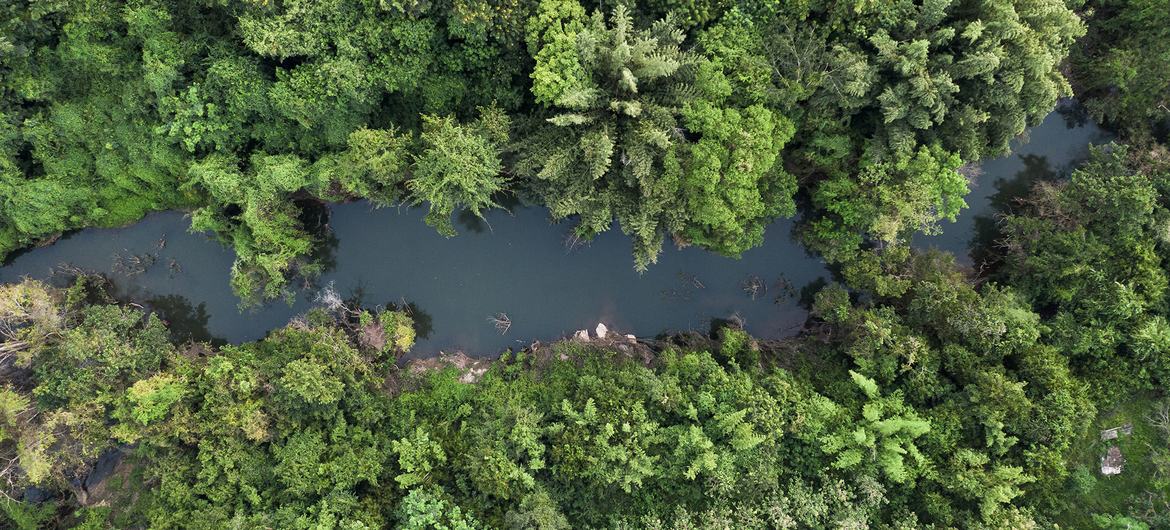
Indonesia is home to vast tropical rainforests.
Local leadership is key
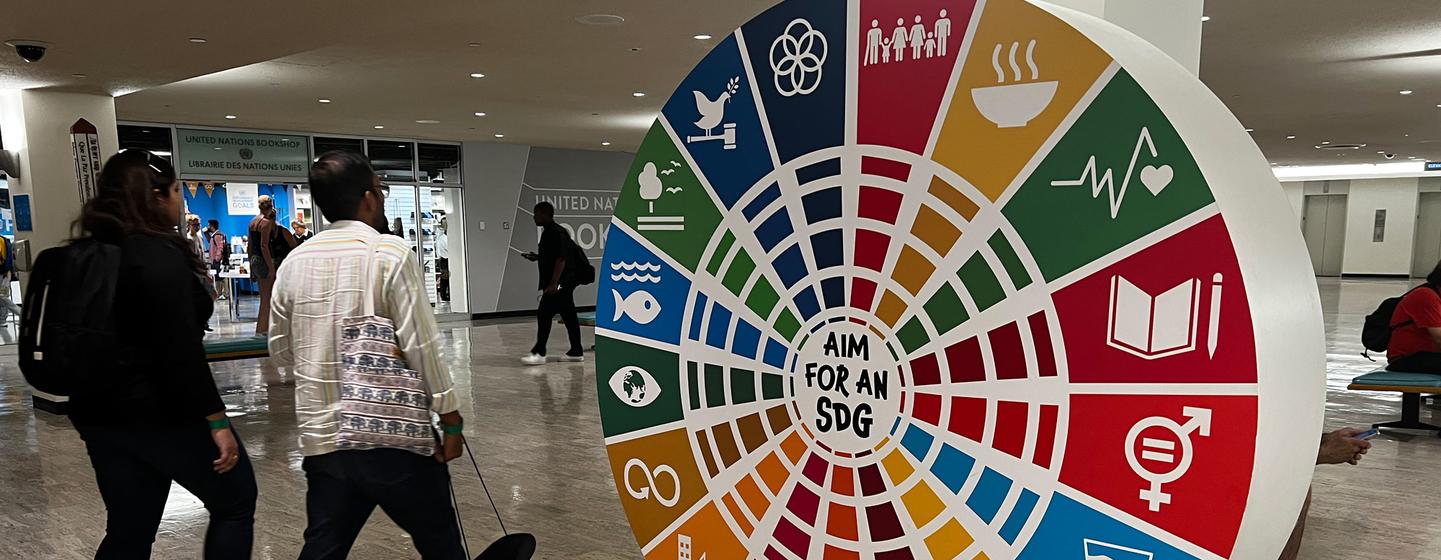
Local leadership is key to achieving the Sustainable Development Goals (SDGs). While national governments pass legislation and set up the policy framework, implementing these policies falls to local authorities who lead the transition to a green economy.
Nearly half of Riau’s seven million residents live in rural areas, many of whom depend on forests for their livelihoods. The initiative supports these communities through sustainable agroforestry, eco-tourism and non-timber forest products, ensuring that conservation efforts go hand-in-hand with economic development.
“By aligning provincial action with national climate goals, Riau is showing how the Sustainable Development Goals can be realised from the ground up,” said Gita Sabharwal, the UN Resident Coordinator for Indonesia, on her return from Riau last month. “This shows how local leadership can drive national and global impact.”
Rewarding emission reductions
At the heart of the transformation is the REDD+ mechanism, which stands for Reducing Emissions from Deforestation and Forest Degradation.
The mechanism supports and rewards measurable emission reductions. Riau, with nearly five million hectares of carbon-rich peatland is poised to become Indonesia’s first province to access REDD+ finance.
The approach is also about marrying technology with consent and customary knowledge. International organizations calculate carbon credits using artificial intelligence (AI) tools, satellite imagery, field verification and carbon forecasting models, in line with global REDD+ guidelines.
AI meets generations of local wisdom
Beyond forest monitoring, AI can generate robust data needed to unlock climate finance, supporting emissions tracking, reporting verification and benefit sharing.
You cannot entirely depend on AI for environmental decision making; it needs to take into account traditional practices developed from observing nature for generations
But, the effectiveness of these new technologies, particularly in environmental decision making, depends on the knowledge included as input.
To be transformative, AI systems must be designed to respect, integrate and learn from customary knowledge systems.
“You cannot entirely depend on AI for environmental decision making,” said Datuk H. Marjohan Yusuf, Chairman of the Council of the Malay Customary Institute of Riau.
“It needs to take into account adat, or local wisdom, traditional practices developed and learned from observing nature for generations.”
During the launch of Green for Riau, customary communities signed a joint declaration, aligning with national legal frameworks and policies that recognise and strengthen the rights and roles of customary communities in forest protection.
This commitment will guide the development of safeguards and the distribution of benefits in accordance with Indonesia’s Social Safeguards Information System in compliance with national and international standards.
“This project is not only protecting forests; it is also empowering communities,” said Marlene Nilsson, Deputy Director of UNEP in Asia-Pacific. “Riau’s leadership is a model for how to drive climate action while supporting livelihoods and biodiversity.”
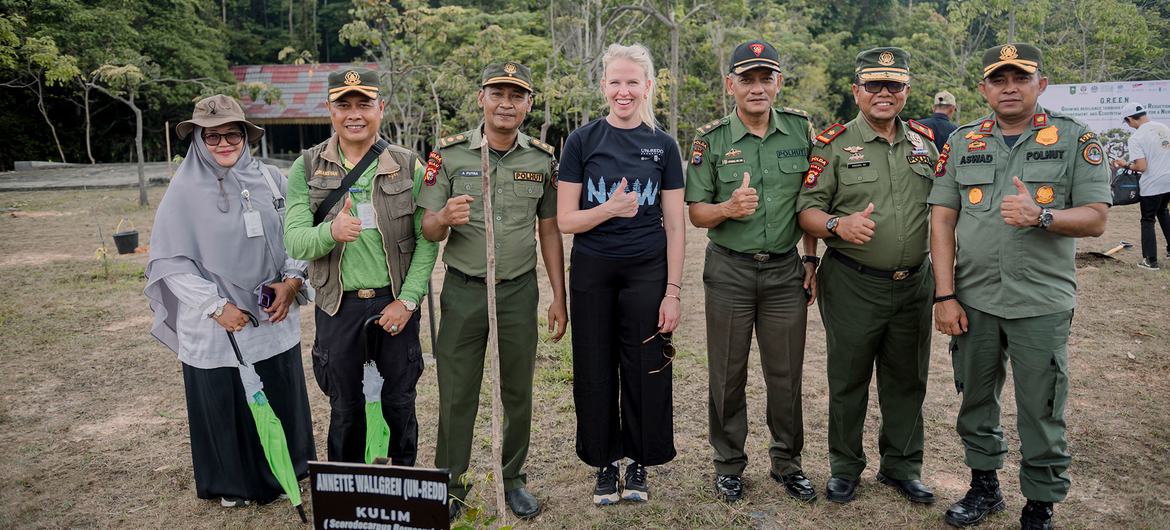
Green Riau is a joint effort with Indonesia, local leaders and UN agencies to protect forests and advance climate goals.
Model for inclusive climate finance
With UN support and community involvement, new schemes under REDD+ provide incentives to local populations to safeguard rather than exploit forests. This also strengthens land-use governance and sets up financial frameworks to attract both public and private investment into forests.
The benefits go beyond carbon. Riau is home to iconic and endangered species such as the Sumatran orangutan, tiger and elephant. Protecting these habitats safeguards biodiversity and enhances climate resilience.
The initiative is piloting REDD+ results-based payments at the provincial level, providing a scalable model for inclusive, high-integrity forest finance. This will be done through REDD’s facilitation of mutual recognition arrangements between the government and international carbon crediting programmes.
Forest transition could unlock millions
These efforts could unlock hundreds of millions of dollars annually in carbon finance and develop an investment pipeline, creating a sustainable funding stream for conservation and development.
“Riau is becoming the first Indonesian province to adopt global standards for sustainable forest management,” Ms. Sabharwal said. “This bold step will unlock high-integrity, results-based payments and demonstrates how global standards can translate into sustainable, inclusive growth.”
At the 2025 REDD+ investment roundtable in London, global investors expressed strong interest in supporting Riau’s forest transition, Ms Nilsson said, providing an example for other jurisdictions in Indonesia and beyond.
“The interest from financers signals that climate solutions rooted in local leadership and customary knowledge are not only just, but viable,” she said.