Fatwas, faith and fallacies: Myth-busting female genital mutilation in Africa

“Deep down, I knew what I had experienced was not something any girl should go through,” she emphasised. 

FGM was once considered an unavoidable rite of passage for young girls in the Mara region of the United Republic of Tanzania, but communities are making inroads.

Busting the myth

More than 230 million girls and women have been subjected to female genital mutilation (FGM) and are living with the deep, lasting and often life-threatening physical and mental consequences of it despite efforts to eradicate the horrific practice. 

In 2026, nearly 4.5 million girls are at risk of undergoing the procedure. 

One of the reasons FGM remains so entrenched is the false notion that foreign influence is driving efforts to abandon it. 

Ahead of the International Day of Zero Tolerance for Female Genital Mutilation, observed on 6 February, we’re busting this myth. 

‘Survivor leadership is changing my community’

When Ms. Albert joined a community dialogue supported by the UN agency, she heard other survivors openly sharing their experiences.

Olivia Albert leads a youth advocacy group in the Mara region of the United Republic of Tanzania

“When girls hear from someone who has lived through this, they listen differently,” she said.

“They find courage. Survivor leadership is changing my community. We cannot erase the past, but we can make sure the next girl grows up without fear and together, we will make that happen.”

Calling out misinterpretation

Religious leaders are also calling out misinterpretation, including Imam Ousmane Yabara Camara, a known and respected figure in Guinea’s Kindia prefecture. 

“Female genital mutilation is not a prescription of Islam,” he said. “Too many girls suffer from the severe health consequences of this practice. We must put an end to it.”

He suggested that the subject be brought into education to better help future generations live without FGM.

Today, thousands of children hear about it in schools that increasingly teach comprehensive sexuality education.

In Guinea’s Kindia prefecture, Imam Ousmane Yabara Camara is a known and respected figure, and one who has chosen to use his platform at the service of his community’s women and girls. .

New laws are turning the tide

In many countries where female genital mutilation is deeply entrenched, new legislation is slowly turning the tide.

In Djibouti, Eritrea and Somalia, Islamic scholars issued a national fatwa in 2025 stating that there are no religious grounds to justify FGM. 

“In our neighbourhoods, we now have two powerful shields: the Constitution and the fatwa,” said activist Nafissa Mahamoud Mouhoumed from Djibouti. 

“While the law reminds people of the legal consequences, the fatwa removes the religious excuse that was used for generations to justify FGM. This dual victory gives us, the activists on the ground, the ultimate confidence to talk to families and say ‘your faith and your country both protect your daughter.’”

Engaging men and boys 

In Ethiopia, three quarters of women and girls aged 15 to 49 have undergone some form of FGM. 

“We sat helplessly for years, watching women suffer through childbirth complications, sometimes losing both mother and baby,” recalled local district chief Mitiku Gunte. “We knew something was wrong, but we didn’t understand what or how to stop it.”

Mr. Mitiku is now an advocate with a joint programme led by UNFPA and the UN Children’s Fund (UNICEF), which together with the local administration engages hundreds of men and boys in the fight against the practice.

Through dialogues tailored for different segments of society – elder men, young unmarried men, women and youth – members of the community go door-to-door to speak to each group about their specific concerns and influences.

No medical justification for FGM

When carried out by a healthcare provider, FGM is often described as “medicalised”, but even with a professional present and sanitised equipment available, it is neither safe nor necessary, and there is never any medical justification for it.

In Ethiopia’s Hadiya Zone, a local elder leads a weekly information and discussion session on harmful practices.

“I often receive cases after the damage has already been done, with serious complications,” Dr. Maram Mahmoud, a family doctor in upper Egypt.

“I honestly didn’t expect this to have such an impact on my perspective, but now I better understand the different mindsets of those considering it, and I feel more confident in guiding them and explaining the serious harms, risks and consequences.”

Find out more about how UNFPA is helping to eradicate FGM here.

Source link

‘The UN is here to do the right things’: Envoy Colin Stewart bids farewell but keeps the faith

I started feeling very idealistic about the UN, and I’ve never lost that feeling,” Mr. Stewart told UN News in an exclusive interview.

In early August, he steps down as the Special Representative of the Secretary-General and head of the UN Peacekeeping Force in Cyprus (UNFICYP).

His departure comes at a moment of cautious optimism on the island. Just last week, the Secretary-General reported that talks between the Greek Cypriot and Turkish Cypriot leaders were “constructive”, with “common understanding” on new initiatives.

Mr. Stewart called the talks “an important step” in maintaining momentum.

“We are at a bit of a challenging moment for Cyprus because of upcoming elections in the north and other dynamics,” he explained. “The intent was to keep the ball rolling and keep the momentum going, and I think that succeeded.”

SRSG Colin Stewart speaks to UN News.

Peace by preventing sparks

Looking back at his tenure in Cyprus, Mr. Stewart likened UNFICYP’s daily work to stamping out sparks before they ignite.

“There are all sorts of activities happening in the buffer zone every day, each with the potential to escalate,” he said. “Our job is to prevent those sparks from bursting into flames. When I report to the Security Council that things are calm, it means we have been successful.

Our job is to prevent sparks from bursting into flames. When I report to the Security Council that things are calm, it means we have been successful.

The numbers bear out his point: in more than half a century of UN peacekeeping on the island, not a single shot has been fired between the two militaries.

Some people ask why the peacekeeping mission is still needed, given that it’s been peaceful for 50 years…the answer is simple – it’s peaceful because the mission has been doing its job. Without it, the deep mistrust between the sides could easily spiral into confrontation.”

Lessons on trust and empathy

Mr. Stewart also served as the Special Adviser on Cyprus, leading the Secretary-General’s good offices to support a comprehensive settlement. The greatest obstacle, he said, lies not in public sentiment but in political will.

The people get along fine,” he noted. “Millions cross from one side to the other every year without incident. But among political leaders, distrust runs so deep that even the idea of compromise is viewed negatively.

This distrust, he said, is rooted in decades of hardline narratives that portray the other side as an enemy rather than a partner. Breaking those narratives is essential.

“Peacebuilding requires not just negotiation but a willingness to dismantle these rigid narratives and build empathy,” he said. “And we do this all the time at an individual level. Bring two people who have each lost something in front of each other, and they can quite readily sympathise with each other and share a common grief.”

This belief in the power of empathy, he added, resonates far beyond Cyprus: in many conflicts, peace emerges when people begin to recognise the humanity – and suffering – on the other side.

Peacekeeping not one-size-fits-all

Mr. Stewart’s career has given him a panoramic view of peacekeeping’s evolution.

In Timor-Leste, he saw how UN support can help a fledgling state build resilience. In Addis Ababa, as part of the UN Office to the African Union, he witnessed the power of partnerships. And in Western Sahara, he experienced the limits of peacekeeping when a ceasefire failed to hold.

He highlighted that peacekeeping is not a one-size-fits-all mode – it is modular – “a bit of this and a bit that”, tailored to the circumstances and working with a wide range of partners.

I guess I have lived through the evolution of peacekeeping and seen many different aspects of it, [but] I am ever more convinced that peacekeeping is an absolutely essential tool for the international community.

A quiet exit

Now preparing for life after the UN, Mr. Stewart is clear: he has no plans to return in any advisory or consulting role.

“For me, retirement means retirement,” he said with a smile.

“I want to do all the things I’ve been postponing for my whole career – live in a house I own, spend time with my teenage son who is going to high school…that is the life that I have in mind.”

Idealism remains intact

Concluding the interview, I asked if he had any final words. As he looked around for ideas, I suggested, “maybe your first day on the job.”

He recalled his beginning in the United Nations, a journey that started with the referendum for self-determination in Timor-Leste in the 1990s, against the backdrop of intimidation, violence and a fragile security environment.

I started off feeling very idealistic about the UN, and I’ve never lost that feeling…the UN is here to do good things – the right things

“It was our watch, our responsibility to put on a free and fair vote,” he said, “and that was going to be impossible under these circumstances.” Yet, despite the odds, the Timorese vote went ahead, and the result was clear — a success against all expectations.

That was a very heady, exciting experience to start in the UN…it started me off feeling very idealistic about the UN, and I’ve never lost that feeling that, you know, the UN is here to do good things, to do the right things.

As he steps away from the UN, Mr. Stewart says that idealism remains intact.

It might take time, but we will succeed…even though people get discouraged because it’s very, very hard for all kinds of reasons that are out of our control, it’s a wonderful principle to be serving. So, I leave wishing only the best for my colleagues who will continue the fight.

Source link

Faith in finance: Indonesia’s innovative path to sustainable development

The Southeast Asian country has already raised close to $12 billion in thematic bonds, including blue bonds and Islamic investment instruments over the last seven years.

These efforts have been supported by development partners, including the United Nations.

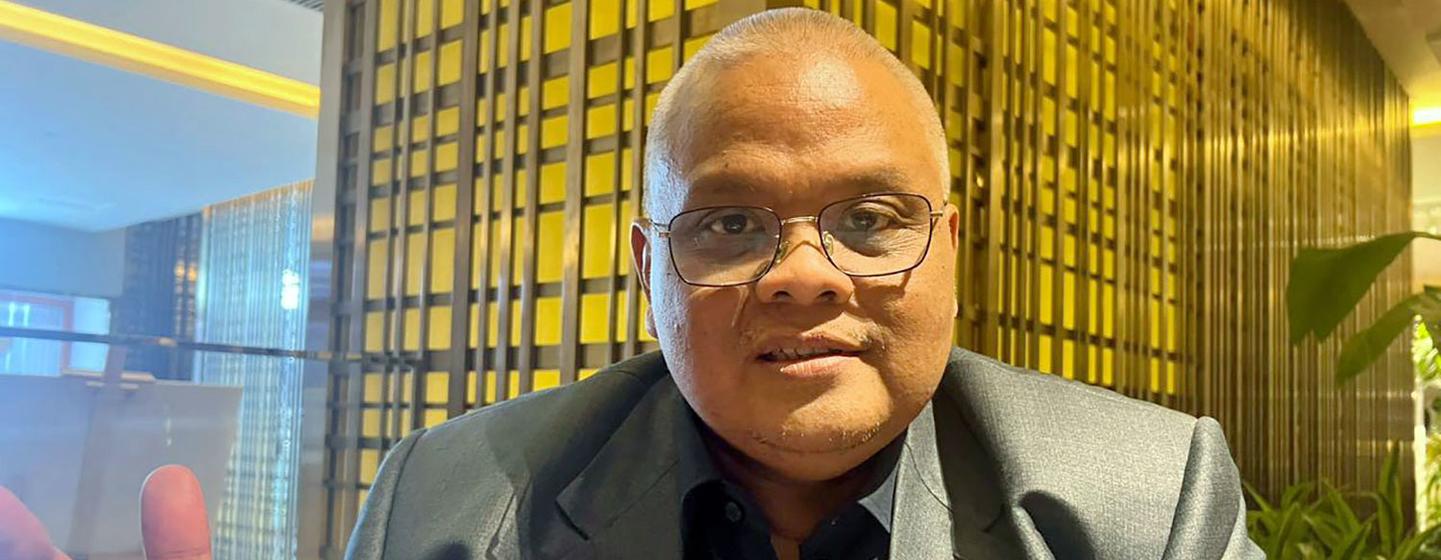
Putut Hari Satyaka, is the Deputy Minister for Development Financing and Investment at Indonesia’s Ministry of National Development Planning (Bappenas). He spoke to UN News ahead of a key UN conference on financing for development which begins in Sevilla on 30 June.

UN News: How much money is needed in Indonesia to achieve the SDGs and what is your estimated funding gap?

Putut Hari Satyaka: The existence of an SDG financing gap remains a significant challenge, especially to developing countries. Indonesia is no exception. The financing gap to fully achieve all 17 goals and their targets remains significant. With an estimated $4.2 trillion needed for Indonesia to achieve the SDGs, there is a $1.7 trillion financing gap that is yet to be resolved.

Putut Hari Satyaka, Deputy Minister for Development Financing and Investment at Indonesia’s Ministry of National Development Planning (Bappenas).

UN News: How can that gap be closed?

Putut Hari Satyaka:  We need an integrated and transformative approach, going beyond “business as usual”. For us, this means two things.

Firstly, we must enhance the use of public finances to be more efficient, resilient and transparent. This includes improving budgetary alignment with SDG targets, strengthening expenditure efficiency, and ensuring that resources are effectively prioritized and utilized for sectors generating spill-over transformative effects to sustainable development.

Secondly, we must be creative and innovative – meaning that we need to scale up the existing innovative financing methods and explore new ones. Some of the most prominent instruments and approaches are blended finance, thematic bonds and faith-based financing.

Indonesia has been making great progress in this regard. We have created an ecosystem of a wide range of innovative instruments, attracting a diverse range of stakeholders and entities, supporting necessary regulations, and developing the enabling environment to nurture the market.

UN News:  What is faith-based financing and what has been Indonesia’s experience so far?

Putut Hari Satyaka:  Faith-based financing, especially within the Indonesian context, refers to financial practices grounded in religious principles, most notably, in the principles of Sharia law in Islam.

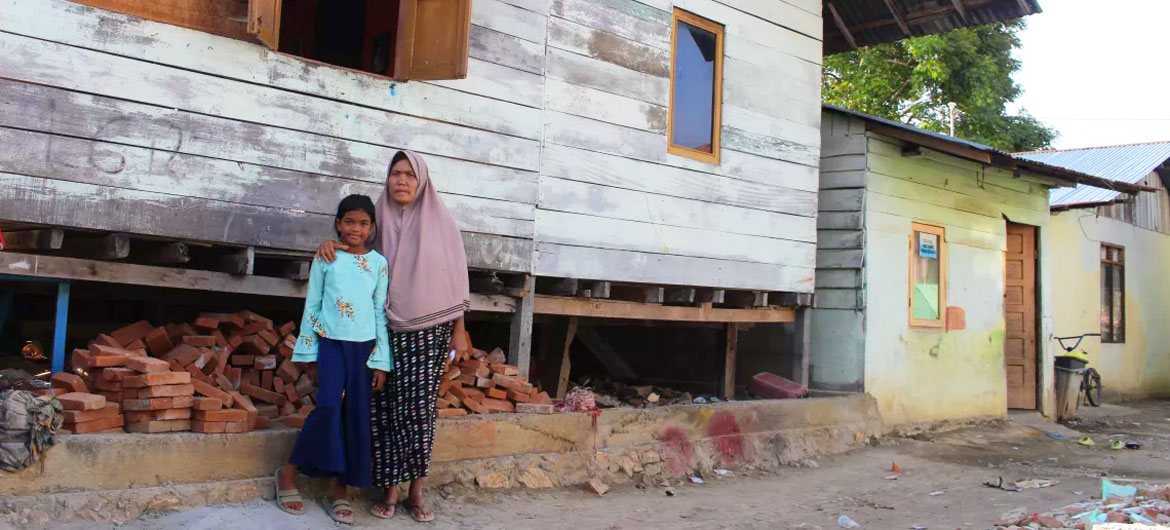
Families in Ache, Indonesia, have received faith-based cash grants to make improvements to their homes.

As Indonesia has 241.5 million Muslims, 85 per cent of the population, and faith-based social financing like zakat and waqf have been a long-standing practice, deeply rooted in our society.

What is new is the allocation of these instruments towards the SDGs. Indonesia has made strong progress in advancing Sharia finance as part of its inclusive growth agenda.

Sharia financing is now growing by 14 per cent a year, outpacing conventional finance. We are also championing scaling-up, green sukuk, which is a Sharia-compliant bond specifically issued to finance environmentally friendly projects.

This reflects Indonesia’s strong commitment to building a competitive financial ecosystem for faith-based instruments, and we will continue to strengthen collaboration, drive innovation, and ensure that faith-based financing plays a central role in our economic development.

UN News: Are you able to raise new funding through these faith-based instruments? Critics sometimes say this is just another way to reach the same funds you could get otherwise.

Putut Hari Satyaka: Yes, we are. With the world’s largest Muslim population, there is a massive potential in channeling faith-based financing towards the SDGs.

In 2018, Indonesia issued the world’s first sovereign green sukuk, raising $1.25 billion to fund renewable energy and climate adaptation projects.

Between 2019 and 2023, the government raised approximately $1.4 billion through domestic retail green sukuk, engaging individual investors in climate financing. This demonstrates the strong potential of green sukuk, both domestically and internationally.

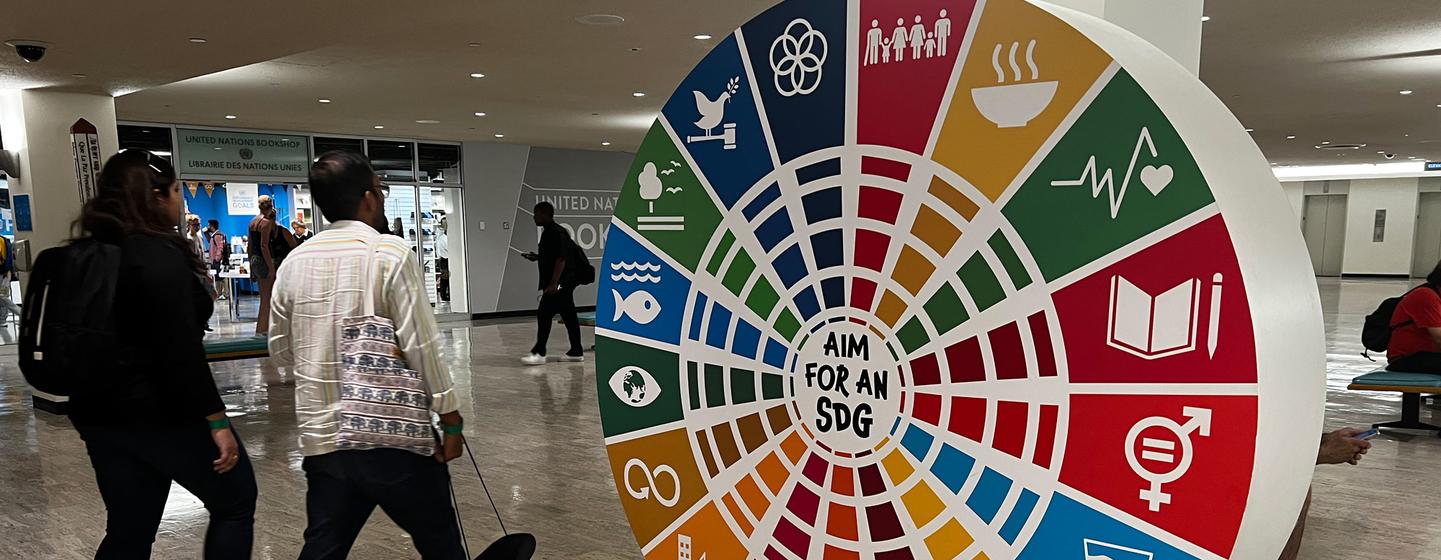
The 17 Sustainable Development Goals provide the blueprint for a more equitable world.


We also see great potential in Islamic Social Financing. Indonesia’s zakat potential is estimated at between $18 billion and $25 billion per year. The actual collection remains below 5 per cent of that potential, so there is clearly a vast opportunity to strengthen social finance.

UN News: What lessons have you learned over the years and what advice do you have for national or subnational governments interested in faith-based financing?

Putut Hari Satyaka: Although we have made great progress in faith-based financing, we have much room for enhancement, improvement and even exploration. Here are a few potential lessons:

First and foremost, awareness raising is key. As many view faith-based financing also as community-based financing, society’s participation in these instruments starts with their understanding of their importance and the way the money will be used.

Secondly, we see that the close coordination and concerted actions of relevant stakeholders are crucial. Overlaps are unavoidable without proper coordination. It is coordination – including with subnational governments, where we see room for improvement in order to scale-up faith-based financing in Indonesia.

Finally, building trust takes time. Faith-based financing relies heavily on public confidence, both in the institutions managing the funds and in how the funds are used.

Just like many other financing instruments, we have learned that transparency, accountability and consistent communication are essential to earn and maintain that trust.

Source link