About Arun Kumar N

Arun has been associated with India International Times since 2018 and he has been a key reporter in covering science and space related stories. He can be reached at arunKnn@indiainternationaltimes.com.

First Person: Documenting despair and finding hope amidst the rubble of Gaza

Some 21 months have passed since the 7 October armed attacks on Israel which sparked the current brutal conflict.

Thousands have died and much of Gaza has been laid to waste, but life must continue, according to the correspondent, who is remaining anonymous for security reasons.

“Those who live here in Gaza don’t need long explanations to understand the meaning of this war.

It is enough to listen for a few minutes: Planes buzz incessantly overhead, and airstrikes silence everything except fear which, although invisible, fills every space between our tents and seeps into our bodies.

© UNICEF/Mohammed Nateel

A young boy is rescued after he was caught in an attack on a school shelter.

At night, there’s absolute darkness except for the flashes of bombing.

We sleep knowing that waking up is not guaranteed.

Every morning in Gaza is a new attempt to live, and every evening a challenge to survive. This is the harsh reality we live in.

I am one of more than two million Palestinians living under the burden of displacement. I document stories of war and despair while experiencing their full bitterness.

Since our home was destroyed in November 2023, the tent has become our safety. My family, once part of my private world, is now part of the stories I share with the world.

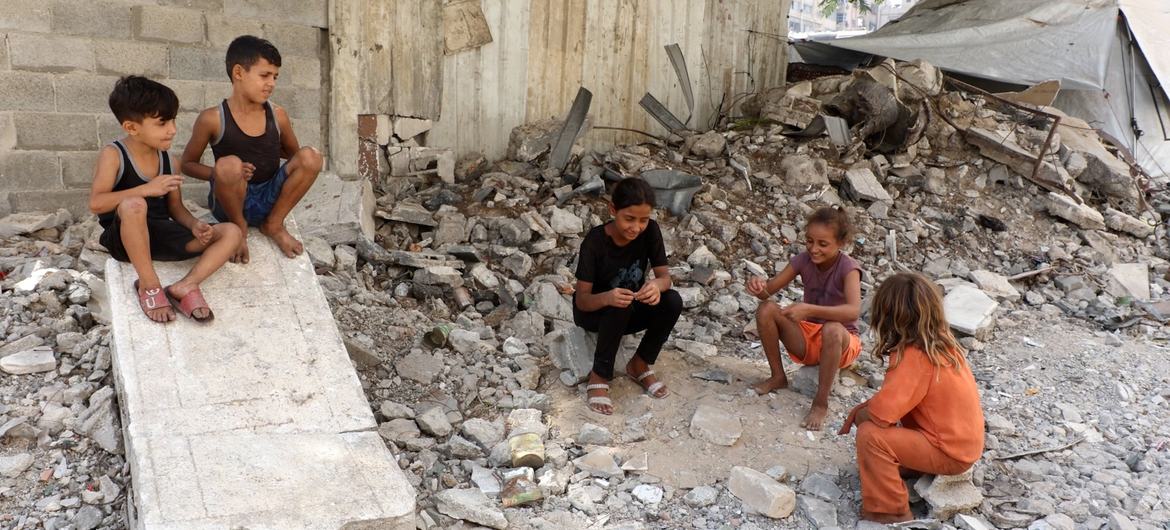
Here, life is simple and tragic.

Sleeping on the hard ground, cooking over firewood and the exhausting pursuit of a morsel of bread are no longer options, but a way of life imposed by the cruelty of war.

In the face of my eldest son, who is not yet 14, I see a reflection of a war that has stolen his childhood and imposed burdens on him greater than his years.

He has become an expert at water distribution routes, haggling for bread and carrying heavy gallons of water. I feel boundless pride in his courage, yet simultaneously a painful sense of powerlessness because I can’t protect him from what’s happening around us.

Oasis of hope

My wife is trying to create an oasis of hope for our other children. My two eldest daughters continue to learn online when the internet is intermittently working and to read whatever books are available.

My youngest daughter draws on worn pieces of cardboard while my youngest son, who is four, has no memory of anything other than the sound of explosions.

We stand helpless in the face of his innocent questions. There are no schools, no education, only desperate attempts to keep the brightness of childhood alive in them, in the face of a brutal reality.

More than 625,000 children in Gaza have been deprived of an education.

This is due to the destruction of schools and the lack of a safe environment in which to learn.

The future of an entire generation is threatened.

A drawing depicts people dying as they try to access food from a truck in Gaza.

Bearing witness

I work alongside other journalists. We wander between hospitals, streets and shelters.

We carry our journalistic equipment not only to document events, but also to be a voice for those whose voices have been silenced.

We film a child suffering from severe malnutrition, listen to the story of a man who has lost everything and witness the tears of a woman unable to provide food for her children.

We document a scene which is repeated daily: Thousands of people rush to reach a flour truck. They run after the trucks, collecting the last grains of flour from the ground.

They don’t care about danger as the hope of getting their hands on a loaf of bread is more precious than life.

Each time, casualties fall along the convoys’ routes and militarised distribution points.

We walk the streets, alert to every sound, as if we’re waiting for the end with every turn we make.

There’s no longer time for surprises or sadness, only constant tension and anxiety that has become part of the survivors’ DNA here.

This is the reality that cameras don’t capture, but it is the daily truth we try to explain to the world.

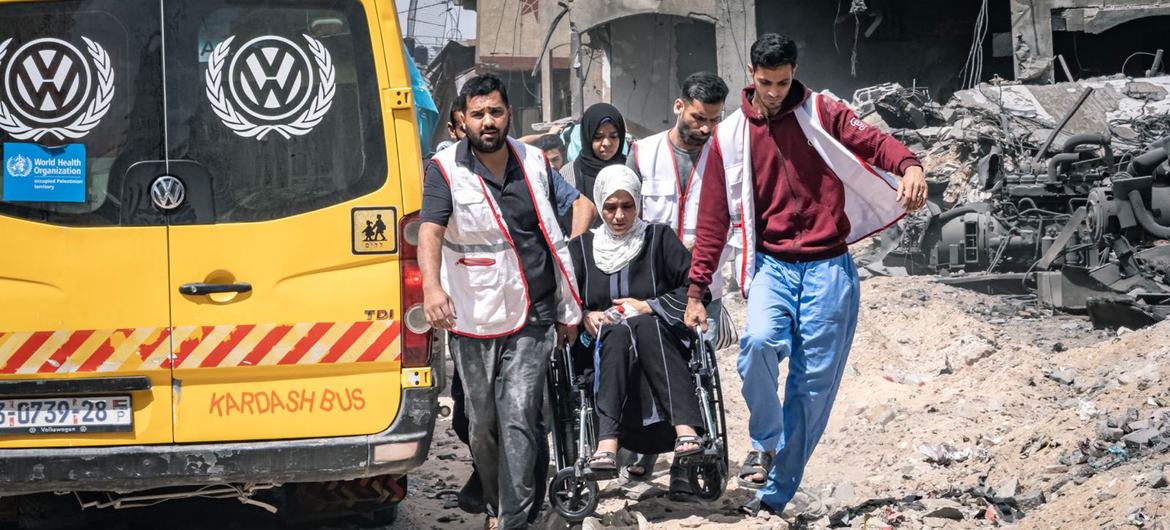
A WHO worker assesses a destroyed hospital in northern Gaza.

Tears of UN colleagues

We document the efforts of the United Nations and its various organizations.

I see staff sleeping in their cars to be closer to the crossings, and I see our UN colleagues crying as they listen to the stories of my fellow Gazans.

There is not enough aid. The crossings open and close abruptly, and some areas are deprived of supplies for days.

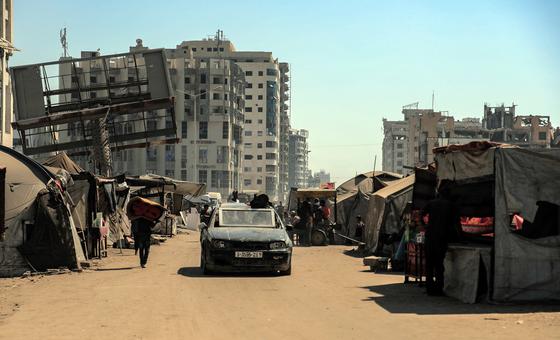
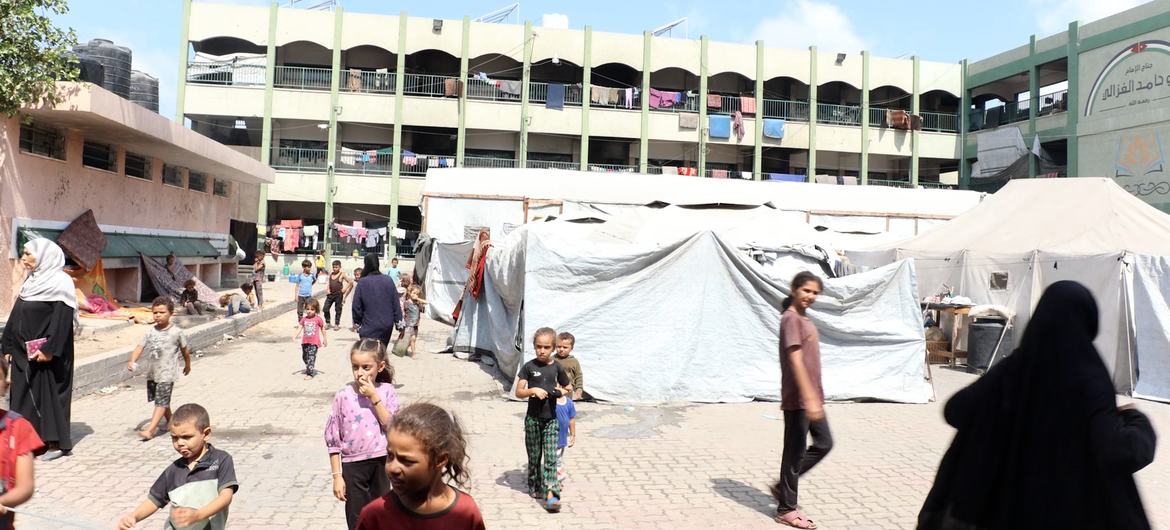
The western areas of Gaza City are overcrowded. Tents are spread out on every corner, on the sidewalks and among the rubble of destroyed homes, in dire conditions.

Empty markets

The value of the local currency has evaporated. Those with money in their bank accounts pay fees of up to 50 per cent to withdraw it, only to find themselves facing nearly empty markets. Whatever is available is being sold at exorbitant prices.

Vegetables are scarce, and when available, a kilogramme can cost more than $30. Fruit and meat are a distant memory.

The health system is in a state of complete collapse as 85 per cent of Gaza’s hospitals are no longer functioning and most dialysis and chemotherapy services have stopped.

Medications for chronic diseases are unavailable. I am unable to secure medicine for my parents, who suffer from diabetes and high blood pressure, and there is no hope of surgery which could save my brother’s arm, which was injured in an airstrike.

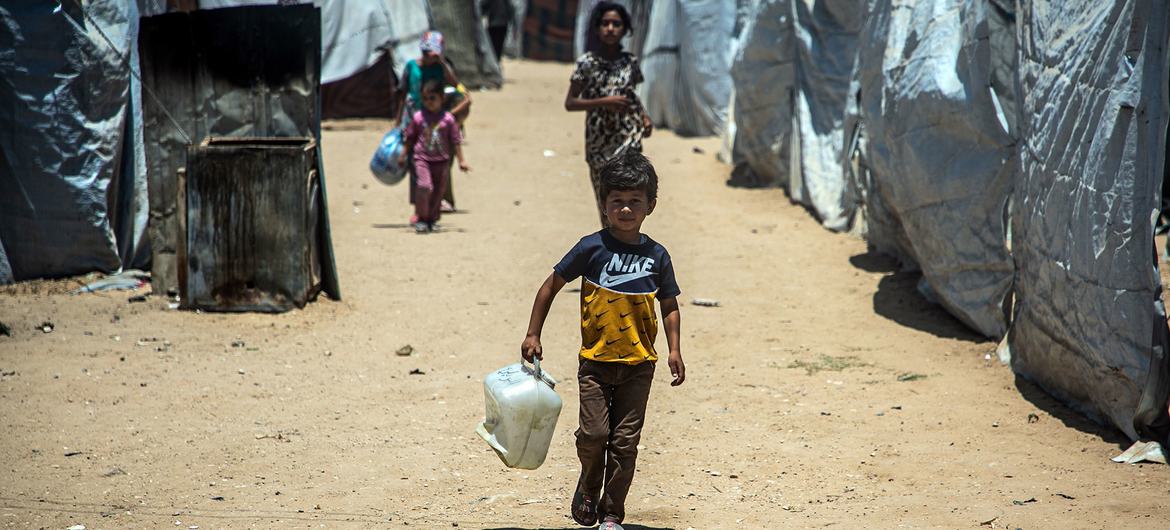
A young boy carries a water bottle through an area where people are living in tents.

Witness to everything

Sometimes, I feel caught between two identities, the journalist documenting the suffering and the human experiencing it.

But, perhaps this is where the strength of our journalistic mission from the Gaza Strip lies: to be a voice from the heart of the tragedy, to convey to the world the reality of what is happening on a daily basis.

Every day in Gaza poses a new question:

Will we survive?

Will our children return from their search for water?

Will the war end?

Will the crossings be opened so aid can be delivered?

From here, we will continue, because untold stories die and because every child, woman and man in Gaza deserves to have their voice heard.

I am a journalist.

I am a father.

I am displaced.

And I am a witness to everything.

Hunger in Gaza: Women and children face death in search of food

“I used to easily receive aid distributed by the UN,” Abir Safi, a displaced person from the Zeitoun neighborhood of Gaza City, told UN News. “Now, we get nothing. I risk my life by going to the Zikim crossing and returning with an empty bag. All I want is to return to my children with some food.”

Ms. Safi said she never imagined that providing for her children would become a deadly adventure. After losing her husband in the war, she found herself alone, facing the responsibility of supporting her family amid deteriorating humanitarian conditions.

She was among thousands of citizens who gathered along Rashid Street in northern Gaza, which connects the Zikim crossing to northern Gaza, hoping to receive humanitarian aid.

A horse-drawn cart carries the bodies of more than seven Palestinians killed while trying to reach aid.

‘Bullets over my head’

Our correspondent witnessed the arrival of thousands of Palestinians returning from a journey in search of food supplies. Thousands of emaciated bodies – men, women, and children – were caught in a scene that has become a daily occurrence. Everyone is running in search of the few aid trucks that reach northern Gaza.

The United Nations has the capacity and resources necessary to distribute aid in a safe, dignified manner to all those in need in the Gaza Strip. The organization continues to call for the lifting of restrictions imposed by the Israeli authorities on the entry and distribution of aid into Gaza.

The danger lies not only in the crowding and chaos, but also in the death that lurks around everyone. Fayza al-Turmisi, a displaced person from Shuja’iyya, described the horrific scene along Rashid Street in northern Gaza.

“They fire shells and bullets at us here. We are forced to lie on the ground. I hide among more than 200 men, and bullets fly over my head. If you raise your head, you get hit. If you stay on the ground, bullets fall around you.”

A young Gazan was injured while trying to obtain aid.

Between mourning and hunger

Mohammed Mudeiris, aged seven, said he lost his father in an airstrike just the day before. He doesn’t have the luxury of grieving for his father as he is now the sole breadwinner for his siblings.

Walking through the dense crowds, he extends his small hand, begging for a handful of flour to take back to his siblings.

“I am the eldest of my siblings,” he said. “My father was killed in an airstrike yesterday. I am trying to ask someone to give me a plate of flour or a meal from the aid that arrived today.”

Mohammed Mudeiris, a child who lost his father in an Israeli airstrike, coming to secure food for his siblings from aid trucks arriving via the Zikim crossing.

‘I risk my life to bring food to my children’

The race for food is not limited to men. Women are forced to take this risk, driven by the responsibilities of motherhood and the needs of their children.

“I throw myself into danger to bring food for my children,” said Asma Masoud, who was displaced from northern Gaza.

“We never get our fair share of aid,” she said. “My husband is paralysed, and there are widows and women like me who cannot provide food for their children.”

Highlighting that some young people take the aid and sell it at exorbitant prices that she cannot afford to buy, Ms. Masoud called on the world to ensure “a fair distribution mechanism and to allow UNRWA [the UN agency for Palestine refugees] and international organizations to do so”.

Aid should be distributed via text messages so that every person in need receives their share, as was the case before, she said.

“But now, only a few people are profiting and selling the aid,” she stated. “We cannot tolerate that. It is an injustice.”

Asma Masoud, a displaced woman from northern Gaza, returning from a search for food.

‘I don’t know how I’m going to feed my children’

Ms. Safi agreed with Ms. Masoud, complaining that “the beneficiaries now are largely thieves.”

“I’ve lost a lot of weight, and all my health is gone,” Ms. Safi said. “I don’t know how I’m going to feed my children. I want to receive aid with dignity. Aid used to come through the United Nations, and I could easily go and receive it, but now I don’t receive anything.”

I want to receive aid with dignity.

This chaotic system leaves behind widows, women, the elderly and many other complex humanitarian cases, such as Maqboula Adas, who supports her injured husband and her son who has a broken leg.

“My husband is injured and cannot move,” she explained. “My eldest son has a broken leg, and I also have three daughters. No one supports us except God. Every day I go to try to get some flour. If it weren’t for that, they would have died of hunger.”

Maqboula Adas, a displaced woman from Shuja’iyya.

Carts carry corpses

At the height of this tragedy, macabre scenes emerge. Instead of carrying bags of flour, a horse-drawn cart transports the bodies of at least seven Palestinians who were killed while trying to get aid.

While some young men carried sacks of flour on their backs, ambulances bring the wounded and dead from the northern regions. The achievement of getting food aid comes at a heavy price.

One young man was injured in the head and face while trying to collect aid.

“I came to collect aid, but today wasn’t my day,” he said. “I will come again despite my injury, and I hope God will provide for me next time.”

Thousands of Palestinians seeking aid arriving from the Israeli Zikim crossing in northern Gaza.

Risk of famine

Gaza is facing a severe risk of famine, with food consumption and nutrition indicators at their worst levels since the beginning of the current conflict, according to a warning issued by the Integrated Food Security Phase Classification (IPC). 

At least 147 deaths due to hunger and malnutrition have been reported, including 88 children. More than 28,000 cases of severe acute malnutrition have been recorded among children, according to reports from the World Health Organization and the World Food Programme.

Despite promises to facilitate the flow of aid, restrictions on the entry of food and fuel, along with ongoing attacks near the crossings, have prevented supplies from reaching those in need. In addition, the chaotic distribution of aid within Gaza has further complicated the situation and placed civilians at greater risk.

The UN human rights office (OHCHR) has documented the deaths of hundreds of people attempting to access aid amid ongoing gunfire and shelling near relief truck routes and military distribution points.

Abir Safi, a displaced woman from Al-Zaytoun neighbourhood.

‘If I get killed, who will take care of my children?’

Amidst this chaos, widow Enaam Siam, a mother of six, recounts her struggle for food.

“I am a widow and a mother of six orphaned children, one of whom is injured,” she said. “Every day, I go out amidst death to bring them food. I see the dead and wounded.”

She asked why aid is no longer delivered to warehouses and distributed via text message.

“If I am killed, who will take care of my children? There are thousands of women in a similar situation. We want safety, peace and a fair system that ensures aid reaches those in need.”

Source link

Dozens more migrants die after boat capsizes off the coast of Yemen

With many victims believed to be Ethiopian nationals, this heartbreaking incident highlights the “urgent need to address the dangers of irregular migration along the Eastern Route,” one of the busiest and riskiest migration routes in the world mainly used by people from the Horn of Africa, said the IOM in a statement on Tuesday.

Every life lost is a powerful reminder of the human toll of irregular migration,” said the agency.

Safer pathways

Since the beginning of 2025, IOM has recorded more than 350 migrant deaths and disappearances along the Eastern Route, with actual figures likely to be significantly higher.

The agency called for stronger international and regional cooperation to prevent further loss of life by expanding safe and regular migration pathways, enhancing coordinated search and rescue efforts, protecting survivors, and supporting their safe, dignified return and sustainable reintegration into their countries of origin.

Tackling root causes

Immediate lifesaving assistance and protection for vulnerable migrants must be prioritised, alongside targeted efforts to tackle the root causes of irregular migration,” said the agency.

Commending local authorities for their swift response, the IOM reiterated its commitment to supporting ongoing interagency efforts to identify and assist survivors, recover bodies, and provide support to affected families.

Working with partners to mobilise resources and deliver humanitarian assistance to people on the move, the IOM said this tragic loss of life is a reminder of the crucial need for “safe, regular pathways, strong protection systems, effective search and rescue operations, and accountability for smugglers and traffickers.” 

Source link

Mounting civilian casualties in Sudan as fighting intensifies

It has now been 842 days since conflict between troops from the military government and their former allies-turned-rivals in the paramilitary Rapid Support Forces erupted in Sudan, turning the country into the world’s largest humanitarian crisis.  

Heavy fighting continues in North Darfur State, with multiple civilian casualties reported in recent days – most notably during clashes in the state capital, El Fasher, on 1 and 2 August – following earlier violence between armed groups near the Abu Shouk camp for displaced people, which currently hosts 25,000 residents.  

Starvation threat

One year after famine was confirmed in Zamzam camp on the outskirts of El Fasher, the city remains under siege, with no food aid deliveries entering by road, leaving residents of the regional capital increasingly facing starvation.  

Prices of food items such as sorghum and wheat are more than four times higher than elsewhere in the country, while many families are unable to afford even the most basic items.  

“Limited cash assistance continues, but it is nowhere near enough to meet rising needs,” said Deputy UN Spokesperson Farhan Haq on Monday during the daily briefing in New York.  

Cholera menace continues

Meanwhile, cholera continues to spread across Darfur, with nearly 1,200 cases reported – around 300 of them children – in the locality of Tawila since late June.  

In South Darfur, health authorities have reported more than 1,100 suspected cases and 64 deaths since late May, as “shortages of medical supplies, clean water and sanitation services are severely hampering the humanitarian response,” said Mr. Haq.  

The UN Children’s Fund (UNICEF) warns that the lives of more than 640,000 under-fives are at heightened risk of violence, disease and hunger in the region.

Compounded crisis

In Blue Nile State, floods in Ed Damazine displaced more than 100 people and destroyed at least 200 tents at Al-Karama camp on 1 August, further compounding the challenges facing people who fled their homes due to conflict.  

Meanwhile, in Khartoum State, the presence of deadly landmines in multiple locations adds a dangerous new layer to the threats already faced daily by civilians.  

As OCHA’s Director of Operations, Edem Wosornu, visits Sudan this week to assess the humanitarian situation, the agency has called for sustained and expanded humanitarian access along with greater international support for the most vulnerable. 

Source link

World News in Brief: Uganda’s refugee funding crisis, academic freedom tested in Serbia, rural resilience in Afghanistan

Uganda has a progressive refugee policy which enables refugees to work and access public services. This coupled with its geographic proximity to crises has made it the continent’s largest refugee-hosting country.

“Emergency funding runs out in September. More children will die of malnutrition, more girls will fall victim to sexual violence, and families will be left without shelter or protection unless the world steps up,” said Dominique Hyde, UNHCR’s director for external relations.

UNHCR estimates that it costs $16 per refugee per month to provide essential services, but at this point, the agency will only be able to deliver $5 worth of aid each month.  

Funding missing

Most refugees are entering Uganda from war-torn Sudan, South Sudan and the Democratic Republic of the Congo – all countries which have been ravaged by protracted armed conflicts and acute food insecurity.  

These refugees are seeking shelter and life-saving aid, and many of them are children.  

In a recent visit to some of the refugee camps, Ms. Hyde met one 16-year-old girl who fled violence in South Sudan after losing her parents. She is now caring for her four younger siblings alone.  

“She dreams of going back to school, but survival is all she can think about,” Ms. Hyde said.  

Children like her depend on the aid which UNHCR and the Uganda government provide. But with only 25 per cent of the funding required, the aid is quickly disappearing.

“Uganda has opened its doors, its schools, and its health centers. This model can succeed, but it can’t do it alone,” Ms. Hyde said.  

A test of democratic resilience in Serbia as crackdown on protests continues

Independent human rights experts warned Monday that Serbia’s intensifying crackdown on protests and protestors — especially students, professors and civil society — violates international human rights and undermines democracy.  

The protests, which began in late 2024 in response to an infrastructural collapse which killed 16 people, have become a nationwide call for accountability, transparency and justice.

“What we are witnessing in Serbia is a systematic attempt to silence critical voices and dismantle the independence of academic institutions. This is not just a student protest — it is a test of human rights accountability and democratic resilience,” the experts said.  

Independent experts are appointed by the Human Rights Council in Geneva to monitor and report on special human rights matters. They are independent of the UN system and any government.  

Renewed commitment  

Since the end of June, the experts said that they have observed increasingly violent repression of protests, including unlawful arrests, prolonged detention and smear and surveillance campaigns against individuals. Some protesters have reportedly been seriously injured.  

Educational institutions in particular have come under pressure with some universities slashing faculty salaries and some high school teachers have been threatened with disciplinary action for supporting the protesters.  

“Instead of listening to young people’s voices, the Government has chosen to punish them. This approach not only violates international human rights standards, but also, by its very nature, undermines the very foundation of a democratic society,” the experts said.

The experts called on the Serbian government to renew its commitment to human rights and justice, stressing that academic freedom and access to justice are pillars of democracy.

New programme in Afghanistan seeks to rebuild farmer resilience

The Food and Agriculture Organization (FAO), in concert with the United Kingdom, is launching a new agricultural resiliency programme in Afghanistan in the hopes of improving production and nutrition throughout the country.  

Resilient Agriculture Livelihoods (ReAL) hopes to reach over 150,000 people in all eight regions of the country by the end of next May. It will specifically target small-scale farmers, landless labourers, livestock keepers and women and girls.  

“Afghanistan’s farmers are extraordinarily resilient, but repeated climate and economic shocks are eroding this strength. This project lays down important pathways to help farmers rebuild that resilience,” said Richard Trenchard, the FAO representative in Afghanistan.

Agricultural cornerstone

The ReAL program will work to expand market access for farmers in addition to managing climate risks in a way that will promote sustainable land use and enable communities to not rely on humanitarian assistance long-term.  

Between 2022 and 2024, FAO reached over 30.3 million people in Afghanistan with emergency food relief and long-term resilience projects, work which helped to decrease the food insecurity crisis by half.  

“In a country where agriculture sustains most lives, this is a short-term investment with long-term impact,” said Mr. Trenchard. 

Source link

UN urges MPs to deliver on development promises for 600 million in landlocked nations

Speaking at Monday’s Parliamentary Forum of the Third UN Conference on LLDCs, senior UN leaders stressed that political will, matched with national legislative action, is essential if a new decade-long development plan is to make a real difference.

There are 32 such countries globally, home to over half a billion people. Many are also among the world’s least developed, hindered by high transport costs, limited access to global markets, and heightened vulnerability to climate impacts.

Cost burden

“These challenges are persistent and structural,” said High Representative Rabab Fatima who leads the office championing LLDCs. “They stem not just from being landlocked but from limited infrastructure, narrow export bases, and lack of access to finance.”

The figures, she said, tell a stark story: LLDCs account for seven per cent of the world’s population but only one per cent of global GDP. Trade costs are 30 per cent higher than for coastal states. Just 61 per cent of LLDC populations have electricity access, compared to 92 per cent globally — and fewer than 40 per cent are connected to the internet.

“These are not just statistics. They reflect real human challenges,” said Ms. Fatima.

UN Secretary-General António Guterres (left) meets President Serdar Gurbangulyýewiç Berdimuhamedow of Turkmenistan, during his visit for the Third United Nations Conference on Landlocked Developing Countries being held in Awaza.

Be ‘champions of change’

She described the Awaza Programme of Action as “a milestone” and “a clear roadmap” to help transform structural disadvantages into opportunities. But she stressed that delivering on its goals requires action at the national level.

“Parliaments have a decisive role,” Ms. Fatima said. She urged lawmakers to align national strategies with the programme, secure financing, promote trade and integration, support good governance, and form parliamentary groups dedicated to implementation.

“You are lawmakers, you are budget-makers — and champions of change. Your leadership is essential to ensure that the Awaza Programme delivers tangible and lasting results for the 600 million people of LLDCs,” she told delegates.

Foundational role

President of the UN General Assembly Philémon Yang echoed her message, highlighting that “parliaments are essential to translating global commitments into measurable national progress.”

He emphasised that parliaments provide the legal framework for development in areas like infrastructure, innovation, and trade — and that they also hold the purse strings for key sectors such as education, healthcare, and climate action.

Addressing the urgency of environmental responsibility, Mr. Yang cited the July 2025 advisory opinion of the International Court of Justice (ICJ), which affirmed that climate action is a legal duty of all states.

Stronger cooperation

“Parliaments monitor government performance and ensure the efficient use of public funds,” Mr. Yang said. “Beyond policy and budgets, they are the bridge between the State and citizens.”

He also called for stronger inter-parliamentary cooperation — regionally and globally — to address the shared and specific challenges faced by LLDCs.

Concluding, Mr. Yang reaffirmed the UN General Assembly’s role as “the parliament of humanity,” committed to tracking progress and keeping LLDCs on the global development agenda.

“Let us strengthen this partnership between national parliaments and our global institutions,” he said, “so that we can deliver on the promise of sustainable development — a promise grounded in peace, prosperity, and dignity for everyone, everywhere.”

Source link

Geography shouldn’t define destiny: UN summit on landlocked nations opens in Turkmenistan

Urging global leaders to rethink development for landlocked nations, the UN chief declared: “We gather today to reaffirm a fundamental truth: geography should never define destiny.”

According to the UN Development Programme, of the 32 landlocked developing countries (LLDCs) worldwide, 16 are in Africa, 10 in Asia, four in Europe, and two in Latin America. Together, they are home to over 500 million people.

Trade barriers, debt distress, and deep inequality

Mr. Guterres outlined the “daunting challenges” LLDCs continue to face – steep barriers to trade, high transport costs, and limited access to global markets. He warned that the debt burden of these countries has reached “dangerous and unsustainable levels.”

Although LLDCs account for seven per cent of the world’s population, they represent just over one percent of global economic output and trade. “This is a stark example of deep inequalities that perpetuate marginalization,” said the Secretary-General, attributing this to “an unfair global economic and financial architecture that does not reflect the realities of today’s interconnected world”, as well as to the legacy of colonialism.

Decade of ambition: the Awaza Programme of Action

The task before the conference, known as LLDC3 and running in Awaza through Friday, is to find solutions to these challenges.

“LLDC3 is about launching a new decade of ambition – through the Awaza Programme of Action and its deliverables – and fully unlocking the development potential of landlocked developing countries,” said Mr. Guterres.

Adopted by the UN General Assembly in December 2024, that action plan represents a renewed and strengthened global commitment to support LLDCs’ development aspirations.

Four priorities for progress

The Secretary-General outlined four key priorities:

  1. Accelerate Economic Diversification & Digital Transformation
    • Invest in value-added industries, local innovation, and inclusive growth.
    • Bridge the digital divide to unlock AI, e-commerce, and smart logistics.
  2. Strengthen Trade, Transit & Regional Connectivity
    • Upgrade infrastructure and simplify cross-border procedures.
    • Integrate LLDCs into global value chains and reform trade systems.
  3. Advance Climate Action & Resilience
    • Double adaptation finance and build climate-resilient infrastructure.
    • Support LLDCs in green transitions with technology and partnerships.
  4. Mobilize Financing & Partnerships
    • Reform global financial systems to ensure fair, accessible funding.
    • Scale concessional finance and unlock climate investment at speed.

“The success of landlocked developing countries is essential to the success of the 2030 Agenda,” Mr. Guterres stressed.

“We have the knowledge, and we have the tools … Together, we can transform geography from a barrier to a bridge – connecting not just markets, but the peoples and cultures that give meaning to development.”

Speaking to reporters later, Mr. Guterres emphasized that the conference reflects a new era of cooperation taking shape across Central Asia – one grounded in mutual trust, shared priorities, and growing regional solidarity.
 
“At a time when multilateral cooperation is being tested, this spirit of partnership is more essential than ever,” he said.

Regional challenges, global solidarity

The session opened with a welcome from Turkmenistan’s President, Serdar Berdimuhamedov, who highlighted national initiatives to strengthen international cooperation in healthcare, climate action, and environmental protection.

He also drew attention to regional challenges such as the drying of the Aral Sea and falling water levels in the Caspian Sea, which is the world’s largest enclosed body of water and the setting for the Third UN LLDC Conference.

In his remarks, UN General Assembly President Philemon Yang noted the “rapidly approaching deadline for the 2030 Agenda” and called for decisive action and a renewed commitment to multilateralism and foundational values.

He emphasized that the three pillars of the UN Charter – peace, development, and human dignity – must remain at the heart of all efforts, and that actions must reflect the promise to leave no one behind.

Noting LLDCs’ vulnerability to climate change and structural challenges, Mr. Yang said these countries “must never lack access to opportunity, prosperity, or hope,” and called for international solidarity, infrastructure investment, and the practical realization of freedom of transit.

He also announced that the General Assembly had proclaimed 6 August as the International Day of Awareness on Landlocked Developing Countries, to be observed annually.

“The General Assembly will continue to serve as a global platform in support of these countries,” he said, emphasizing the importance of monitoring the Awaza Programme of Action and preparing for its high-level review in 2029.

Turning vulnerability into opportunity

Also addressing the opening session, Lok Bahadur Thapa, President of the UN Economic and Social Council, said LLDC3 is “a pivotal moment” for the 32 landlocked nations striving to overcome structural barriers to development.

Hailing from Nepal, which is both landlocked and least developed, he emphasized that the Awaza Programme of Action must serve as a “bold, ambitious, actionable, and future-oriented blueprint” to turn vulnerability into opportunity for over 570 million people.

Mr. Thapa underscored the urgency of addressing the “growing complexity, scale and urgency” of challenges facing LLDCs, including debt distress, climate impacts, and infrastructure gaps. Mr. Thapa urged the creation of an infrastructure investment facility for LLDCs, along with scaled-up climate finance, increased concessional resources, and accelerated technology transfer.

He also stressed the importance of regional cooperation and sustainable transport, praised Turkmenistan’s leadership, and reaffirmed ECOSOC’s commitment to advancing the Awaza Programme of Action – pledging to integrate LLDC priorities such as food security, youth empowerment, and climate resilience across all ECOSOC discussions and processes.

LLDC3 continues tomorrow, Wednesday 6 August, with roundtables and events on a range of topics, including connectivity and transport, South-South cooperation, youth engagement and more. Find all our coverage here.

Source link

Gaza: As aid trucks enter, videos of Israeli hostages and attack on Red Crescent staffers spark outrage

Meanwhile, on Thursday and again on Saturday, Palestinian Islamic Jihad and Hamas militants published disturbing videos of two emaciated Israeli hostages, sparking worldwide outrage and condemnation from UN leaders, including Secretary-General António Guterres on Monday.

The hostages pictured, Rom Braslavsk and Evyatar David, are two of the 49 are still being held in Gaza, including 27 the Israeli military says are dead.

At Monday’s daily briefing in New York, UN Deputy Spokesman Farhan Haq said the Secretary-General “was very shocked by this unacceptable violation of human dignity.”

UN rights chief Volker Türk added in a statement that he was appalled by the humiliating treatment of the hostages. Both he and the Under-Secretary-General for Humanitarian Affairs, Tom Fletcher, reiterated their call for an unconditional, immediate release of all hostages still being held since the 7 October terror attacks.

The High Commissioner said the “intolerable” sight of starvation in Gaza served as another reminder that the violence had to end. “Saving lives must be everyone’s priority.”

He called for Israel to immediately allow and facilitate rapid and unimpeded aid: “Denying civilians access to food may amount to a war crime, as well as potentially a crime against humanity.”

Attack on aid workers

On Sunday, the Israeli military reportedly struck the headquarters of the Palestinian Red Crescent Society in Khan Younis, killing one and injuring three other staff members.  

The facility is marked with the Red Crescent emblem and is thus protected under international humanitarian law.

The UN rights office (OHCHR) in Palestine expressed deep shock and outrage over these killings.

“These workers continue to engage in life-saving efforts putting their own lives at risk,” OHCHR said.

Aid entry  

Amid these controversies, the Director-General of the World Health Organization (WHO), Tedros Adhanom Ghebreyesus, posted on social media on Saturday, saying that since Friday, the agency had brought 24 trucks with medical supplies into Gaza.  

Items included essential medicines, trauma and surgery supplies, treatments for non-communicable disease and laboratory and water testing supplies.  

Mr. Haq also highlighted on Monday that in recent days, the UN and its partners have collected wheat flour, ready-to-eat rations and hot meals from crossing points into Gaza, but most of the cargo was taken by the hungry and desperate before reaching intended destinations.

Additionally, hygiene kits and nutrition supplies, including high-energy biscuits for pregnant and breastfeeding women and infant formula, have entered in the past week.

However, in the second week since the Israeli announcement of tactical pauses to allow safe passages for UN aid convoys, Mr. Haq said realities on the ground remain largely the same.  

This includes many challenges to delivering aid, resulting in the impediment of two of the 11 missions on Sunday and the full passage of only seven.

Famine-like conditions

This aid is still a fraction of what is needed, as a catastrophic food crisis worsens across the Strip.  

The World Food Programme (WFP) said it “is doing everything possible to distribute vital food assistance to families,” but reported on Sunday that over half a million people in Gaza are enduring famine-like conditions.  

The UN aid agency for Palestinians (UNRWA) released an audio of Manar, an employee who works within Gaza, on Monday. She said that “food is never enough,” and that many walk in the heat for hours to search for food and medical supplies.

The Commissioner-General for UNRWA, Philippe Lazzarini, underscored that this near-famine is largely due to deliberate efforts to dismantle the UN-coordinated humanitarian system through the Israeli and US-backed Gaza Humanitarian Foundation (GHF), which is responsible for the killing of nearly 1,400 starving Palestinians near its sites and convoy routes, according to Gaza’s health ministry.

Prioritising the GHF, Israel has prevented UNRWA – “the backbone of humanitarian response” – from bringing in assistance since 2 March, he said. 

The final straw? Plastic pollution talks get underway in Geneva

Unless an international accord is inked, plastic waste is projected to triple by 2060, causing significant damage – including to our health – according to the UN Environment Programme (UNEP).

The UNEP-led talks follow a decision in 2022 by Member States to meet and develop an international legally binding instrument to end the plastic pollution crisis, including in the marine environment, within two years.

The scale of the problem is massive, with straws, cups and stirrers, carrier bags and cosmetics containing microbeads just a few of the single-use products ending up in our oceans and landfill sites.

Supporters of a deal have compared it to the Paris Climate Accord in terms of its significance. They have also pointed to the pressure allegedly being brought to bear against a deal by petrostates, whose crude oil and natural gas provide the building blocks of plastics.

“We will not recycle our way out of the plastic pollution crisis: we need a systemic transformation to achieve the transition to a circular economy,” UNEP Executive Director Inger Andersen has insisted.

Circular argument

The aim of the deal is for it to encompass the full life cycle of plastics, from design to production and disposal “to promote plastic circularity and prevent leakage of plastics in the environment”, according to the text being used to guide the talks of the Intergovernmental Negotiating Committee (INC) gathering in the Swiss city.

At 22 pages, the INC document contains 32 draft articles which will be discussed line by line. The text is designed to shape the future instrument and will serve as a starting point for negotiations.

10-day stint

For 10 days from 5-14 August, delegations from 179 countries are due to pore over the INC text as they meet at UN Geneva, alongside more than 1,900 other participants from 618 observer organizations including scientists, environmentalists and industry representatives.

A key aim of the meeting is to share tried and tested ways of reducing plastic use such as non-plastic substitutes and other safer alternatives.

Ahead of the talks in Geneva, the respected medical journal The Lancet published a warning that the materials used in plastics cause extensive disease “at every stage of the plastics life cycle and at every stage of human life”.

According to more than two dozen health experts cited in the journal, infants and young children are particularly vulnerable. “Plastics are a grave, growing, and under-recognized danger to human and planetary health” and are responsible for health-related economic losses exceeding $1·5 trillion annually”, it noted.

To follow the plastic pollution talks live on UN Web TV, click here: https://webtv.un.org/en/asset/k16/k16cqrvu2w 

Leading the talks in Geneva is Jyoti Mathur-Filipp, Executive Secretary of the Intergovernmental Negotiating Committee (or the INC) on Plastic Pollution, and Head of the INC Secretariat.

“In 2024 alone, humanity was projected to consume over 500 million tonnes of plastic. Of this, 399 million tonnes will become waste,” she said.

Latest forecasts indicate that plastic leakage into the environment will grow 50 per cent by 2040. “The cost of damages from plastic pollution could rise as high as a cumulative $281 trillion between 2016 and 2040,” she maintained. 

The road to an international accord:

Five negotiation sessions towards a plastics treaty have taken place so far:

  • The first was in Uruguay in November 2022.
  • Two more followed in 2023 – in France and Kenya.
  • In April 2024, the Intergovernmental Negotiating Committee (INC) convened in Canada.
  • Most recently, discussions took place in Busan, Republic of Korea, at the end of last year. These talks were adjourned after delegations agreed to resume discussions in Geneva, under the leadership of the Chair of the Committee, Ambassador Luis Vayas Valdivieso of Ecuador.

Source link

Cholera spreads in North Darfur, 640,000 children under threat, UNICEF warns

More than 1,180 cholera cases – including an estimated 300 in children – and at least 20 deaths have been reported in Tawila, a town that has absorbed over half a million people fleeing violence since April.

Across the wider Darfur region, the toll is even more alarming: nearly 2,140 cases and at least 80 fatalities as of 30 July.

Despite being preventable and easily treatable, cholera is ripping through Tawila and elsewhere in Darfur, threatening children’s lives, especially the youngest and most vulnerable,said Sheldon Yett, UNICEF Representative in Sudan.

With hospitals bombed and many health facilities shuttered, Tawila – located just 70 kilometres from the besieged state capital El Fasher – has become a flashpoint of overlapping crises.

Limited access to clean water, poor sanitation and overcrowded camps have created ideal conditions for the disease to spread.

Deepening catastrophe

The cholera outbreak is unfolding against a backdrop of deepening catastrophe. Since the war between rival militaries erupted in April 2023, critical infrastructure has been decimated, millions displaced and food systems dismantled.

Famine has already been declared in at least 10 locations, including the vast Zamzam camp, with over a dozen more areas at risk.

Sudan’s extreme vulnerability to climate shocks – from droughts to devastating floods – has further compounded the crisis, leaving families to navigate the deadly intersection of conflict, hunger, disease and environmental collapse.

Over 640,000 children at risk

More than 640,000 children under five in North Darfur alone are now at risk. Recent assessments show that the number of children suffering from severe acute malnutrition in the region has doubled in the past year.

Children whose bodies are weakened by hunger are far more likely to contract cholera and to die from it,” UNICEF warned.

They cannot wait a day longer.

Call for action

UNICEF is urgently calling on all parties to ensure sustained, safe and unimpeded humanitarian access. Bureaucratic delays, looted aid convoys and active fighting have hampered the delivery of vital supplies, including vaccines, therapeutic food and medical kits.

The agency is scaling up its emergency response in Tawila and across Darfur, distributing Oral Rehydration Salts (ORS), chlorinated water and hygiene kits.

Nearly 30,000 people in Tawila now have daily access to safe drinking water, while outreach teams are raising awareness on prevention and early treatment.

Funds urgently needed

To support long-term containment, UNICEF plans to deliver more than 1.4 million doses of oral cholera vaccine and bolster treatment centres.

Additional supplies – soap, latrine slabs, plastic sheeting – are being readied, though access remains the greatest obstacle.

Since the outbreak was officially declared in August 2024, more than 94,000 cholera cases and over 2,370 deaths have been reported across 17 of Sudan’s 18 states. UNICEF says it urgently requires $30.6 million to fund its emergency cholera response.

Source link

Awaza gears up to host UN conference on landlocked developing countries

More than 20 heads of state and government and some 3,000 delegates from international organizations, civil society, youth, academia and the private sector are expected to attend the conference.

UN News is on the ground in Awaza, reporting on the event as it unfolds.

At the flag-raising, Foreign Minister Rashid Meredov formally welcomed participants. “Welcome to Awaza. I wish all participants success in the Conference,” he said.

UN High Representative Rabab Fatima expressed hope that the gathering would help “strengthen and expand partnerships among nations.”

Shared challenges and solutions

The opening ceremony, on Tuesday, will be attended by UN Secretary-General António Guterres, arriving from Almaty, Kazakhstan, where he spoke at the new Centre for Sustainable Development Goals for Central Asia and Afghanistan.

UN Secretary-General António Guterres (centre), alongside Deputy Prime Minister and Minister of Foreign Affairs Murat Nurtleu (left), and Permanent Representative of Kazakhstan to the UN Kairat Umarov (right), arriving in Almaty, Kazakhstan.

This Centre symbolizes the new era of cooperation in Central Asia – grounded in shared priorities and solutions,” he said.

Warning of “complex and interlinked challenges” including stalled poverty reduction, rising hunger and accelerating climate impacts, he stressed that Central Asia is already experiencing melting glaciers, shrinking water supplies and growing trade barriers.

The Centre, he added, can become “a vital pioneer” for implementing the Programme of Action for Landlocked Developing Countries, turning geographic constraints into opportunities through regional cooperation.

A city transformed

Awaza, a national tourist zone on Turkmenistan’s Caspian coast, has been transformed into a global forum.

Final deliveries of water stations, security scanners, screens and technical equipment continued Sunday at the large sports complex-turned-conference venue. UN technical staff and local teams worked around the clock to set up cameras, plenary halls and logistics for dozens of side events.

“A massive preparatory effort has been carried out jointly with the UN to create the necessary conditions for delegates and all participants,” said Aksoltan Atayeva, Turkmenistan’s Permanent Representative to the UN. “We take our responsibility seriously and are doing everything possible to ensure the best conditions and successful work.”

Final preparations being made at the venue of the LLDC3 conference in Awaza, Turkmenistan.

Beyond meetings

In a nearby pavilion, countries prepared exhibitions highlighting progress in transport, energy and communications.

“The Kazakhstan-Turkmenistan-Iran railway and the Turkmenistan-Afghanistan-Pakistan-India gas pipeline are among the key projects,” Annaberdi Kashanov at the Turkmenistan pavilion, told UN News.

There are 32 landlocked developing countries worldwide, home to over 500 million people. Many are also among the world’s least developed countries, facing structural challenges such as high transport costs, limited market access and vulnerability to climate shocks.

Robust infrastructure and improved connectivity remain critical to overcoming these barriers, facilitating trade and integration into global markets.

The LLDC3 conference aims to promote global partnerships to accelerate inclusive and sustainable development.

Source link

Violence in northern Mozambique forces thousands to flee, straining aid efforts

The displacement is the latest consequence of a cascade of overlapping emergencies in the country – including armed violence, climate shocks, disease outbreaks and a severe funding shortfall. Since January, over 95,000 people have fled insecurity in Cabo Delgado and humanitarian access is becoming increasingly fragile.

According to the UN Office for the Coordination of Humanitarian Affairs (OCHA), attacks by armed groups between 20 and 28 July triggered the displacement of at least 46,667 people across the districts of Chiúre, Ancuabe and Muidumbe.

Chiúre was the hardest hit, with more than 42,000 people uprooted – over half of them children.

Insecurity persists, and people on the move often lack civil documentation,” OCHA said in a humanitarian bulletin on Saturday. “These challenges may impact the ability of displaced people to move freely, safely access basic services and maintain their livelihoods.

Children separated from families

Attacks in Chiúre Velho, Ocua and Mazeze have driven families to Chiúre Sede, where they are sheltering in overcrowded conditions in the neighbourhoods of Bairro Micone and Bairro Namicir. Reports indicate a high number of unaccompanied or separated children.

Food, shelter and essential non-food items are reported as the most urgent needs, according to humanitarian partners.

The security situation in Ancuabe district also deteriorated rapidly. According to the UN International Organization for Migration (IOM), the number of displaced families nearly tripled in one week, reaching 444 households (1,946 people), including over 1,200 children. The violence forced residents of Nanduli village to seek refuge in Chiote and Ancuabe Sede.

In Muidumbe, fighters reportedly torched homes in Magaia village and opened fire near Mungue. Nearly 500 families fled to nearby displacement sites, where humanitarian access remains limited.

Protection concerns, limited funding

OCHA stressed that under international law, civilians must be allowed to seek safety and freely choose their destination. But insecurity, lack of documentation and involuntary relocations are compounding protection risks.

At the same time, the aid response remains severely underfunded.

As of July, only 19 per cent of Mozambique’s 2025 Humanitarian Response Plan has been funded. Of the $352 million requested, just $66 million has been received – forcing agencies to reduce their response targets by over 70 per cent. They now aim to assist only 317,000 people, down from the target of 1.1 million at the start of the year.

Urgent and sustained funding is essential to prevent further deterioration and address the escalating humanitarian needs that remain as acute and widespread as ever,” the OCHA report warned.

Source link

Hunger lines in Gaza: ‘Food is not enough’

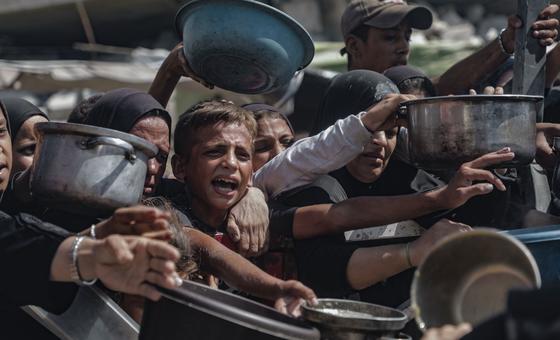
Earning a living has become a daily struggle, and hundreds of men, women and children stand in endless queues, under the scorching sun, outside the few community kitchens that serve nothing but lentil soup.

A community kitchen in western Gaza reveals a panorama of painful scenes amid displaced people suffering, their cries for help and their urgent appeals to the world, demanding an end to their tragedy and relief.

Community kitchen workers are busy preparing lentil soup while plastic bowls and empty plates are piled up behind an iron fence, waiting for a small amount that many may not be able to get a sip of.

After a bitter struggle, Ziad Al-Ghariz, an elderly displaced person from Gaza, managed to obtain a cup of lentil soup. He sat on the floor and began to take slow sips. He told UN News that he had not tasted bread for 10 consecutive days.

‘We are dying of hunger here’

“I eat the lentil soup distributed by the community kitchen,” he said. “I cannot afford flour at all. I do not have the money for it, so I try to get whatever the kitchen distributes. The people of Gaza are hungry.”

Young Mohammed Nayfeh says he spent four hours waiting for a meal for his family.

“I’ve been standing here for four hours, and I can’t get any food in the crowds and the sun,” he said. “We’re dying. We need support. We need food and drink. Where is the world? We’re dying here of hunger. Every day we eat only lentils. There’s no flour, no food, no drink. We’re dying of hunger.”

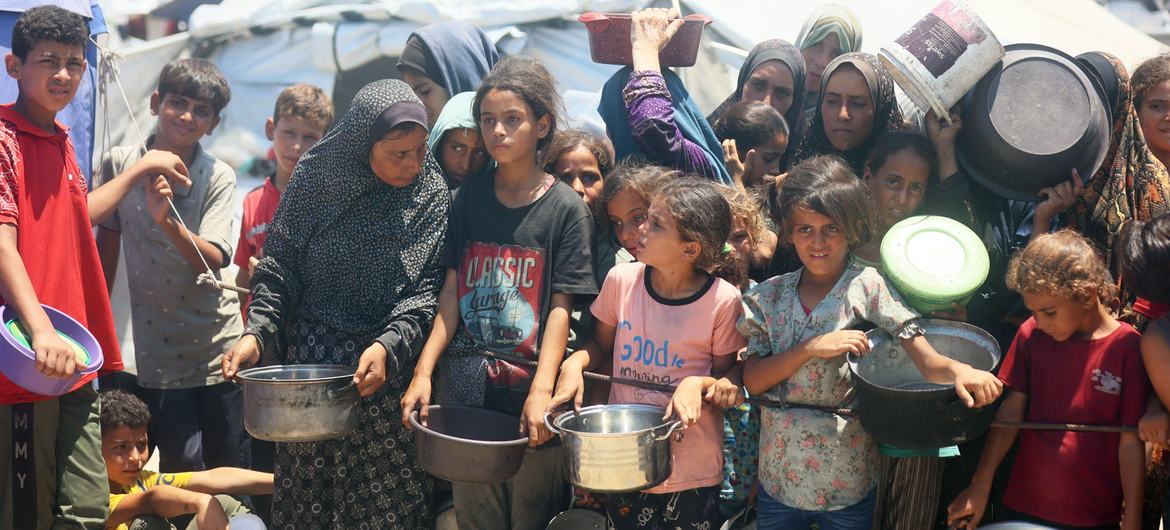
A group of displaced Palestinians gathering in front of a local community kitchen in western Gaza City.

Burn in the sun or get trampled

“Either we burn in the sun or we are trampled underfoot”

Umm Muhammad, a displaced person from the Shujaiya neighborhood, described the macabre scene around her.

“There is no water, no food, no bread,” she said. “The bitterness of the situation forces us to come here. In the end, we return with nothing. We either return burned under the sun or trampled underfoot due to overcrowding, and we return empty-handed. And no one listens.”

Hussam al-Qamari, who was also displaced from Shujaiya, said the situation is no longer acceptable.

“We are dying, and our children are starving to death,” she said. “So much is happening to the people of Gaza. Much of what is happening is unacceptable. An old man like me has been standing here since morning, carrying a bowl for his children to eat breakfast, and they still haven’t eaten.”

Um Muhammad, who fled from the Shujaiya neighbourhood in eastern Gaza City to its western areas, waits to get food.

From classrooms to queues for lentils

According to the latest findings from the United Nations Relief and Works Agency for Palestine Refugees (UNRWA), one in five children in Gaza City suffers from malnutrition, with cases increasing daily.

The image of this little girl standing behind an iron fence, holding her empty bowl waiting for a little lentil soup, encapsulates this horrific tragedy, for which children pay the heaviest price.

Bassam Abu Odeh, a displaced person from Beit Hanoun, made an appeal.

“We call on all the free people of the world and peace lovers to help us provide food and water until this famine imposed on us by the occupation ends. The trucks allowed into the area by the occupation are not even a drop in the ocean of needs. We have no one, but God.”

A young girl from Gaza waiting to fill her container with lentils.

‘Food is not enough’

Umm Rami, a displaced person from the Zeitoun neighborhood, said the necessities of life are lacking in Gaza, calling on the world to look at the people of the Strip with compassion.

“I came here to get a small amount of food to feed my children. “This is our reality now: we come to community kitchens for food, having once lived with dignity and respect in our own homes.”

She said food is not enough.

“We have reached a point where we stand in lines for food and water. As you can see, the lives of children now revolve around the lines for water and food. Food is not enough. We have only God. The world must look at us, and everyone must awaken their consciences.”

Undeniable risk of famine

According to a warning issued by the Integrated Food Security Phase Classification (IPC), Gaza is facing a severe risk of famine, as food consumption and nutrition indicators have reached their worst levels since the beginning of the current conflict.

The alert highlights that two of the three famine thresholds have been observed in parts of the Gaza Strip, with the World Food Programme (WFP) and the UN Children’s Fund (UNICEF) warning that time is running out to launch a comprehensive humanitarian response.

The UN Secretary-General said the alert confirms that Gaza is on the brink of famine. He said the facts are undeniable, and that Palestinians in Gaza are suffering a humanitarian catastrophe of epic proportions.

“This is not a warning, but a reality unfolding before our eyes,” he said.

He stressed the need for the aid trickle to become an “ocean”, with food, water, medicine and fuel flowing without hindrance.

“This nightmare must end,” he declared.

Death in search of food

The United Nations Office for the Coordination of Humanitarian Affairs (OCHA) said that days after the start of the tactical pauses announced by the Israeli authorities in Gaza, “we continue to witness casualties among those seeking assistance and more deaths from hunger and malnutrition.”

The UN office said that parents continue to struggle to save their starving children. Desperate and hungry people continue to unload small amounts of aid from trucks that manage to exit the crossings.

Although the UN and its partners are taking advantage of every opportunity to support those in need during unilateral tactical pauses, conditions for delivering aid and supplies are far from adequate, according to OCHA.

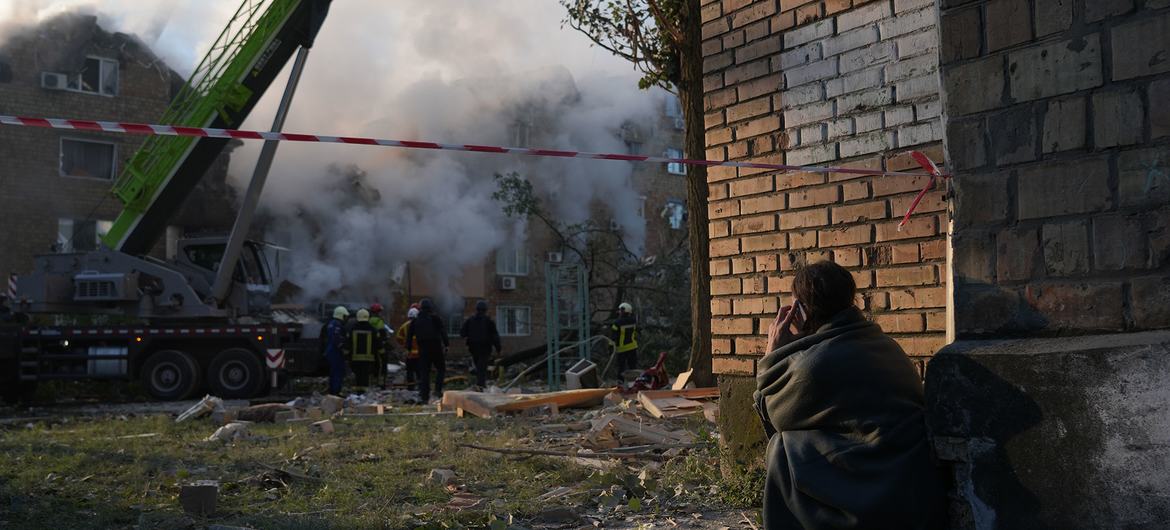
UN official decries deadly Ukraine strikes, urges return to diplomacy

Briefing ambassadors in the Security Council, Miroslav Jenča, Assistant Secretary-General for Europe in the Department of Political and Peacebuilding Affairs (DPPA), renewed the call for an immediate ceasefire and a return to diplomacy to end the devastation.

“Ukrainian people have endured nearly three-and-a-half years of unimaginable horrors, death, devastation and destruction. They urgently need relief from this nightmare,” he said.

He stressed that diplomacy, not fighting, needs to escalate in the coming days and weeks.

“Diplomacy that leads to real, tangible, verifiable and lasting results that would be felt by the long-suffering people on the ground,” he added, reiterating that the UN remains ready to support all efforts toward a just, lasting peace in line with the UN Charter and international law.

ASG Jenča briefs the Security Council.

Brutal attacks continue

Mr. Jenča described the “brutal” scale of the latest attacks.

Overnight between 30 and 31 July, a large-scale Russian aerial assault on Kyiv killed at least 31 people – including five children – and injured 159 others, 16 of them children. It marked the highest number of child injuries in a single night in the capital since the invasion began in February 2022.

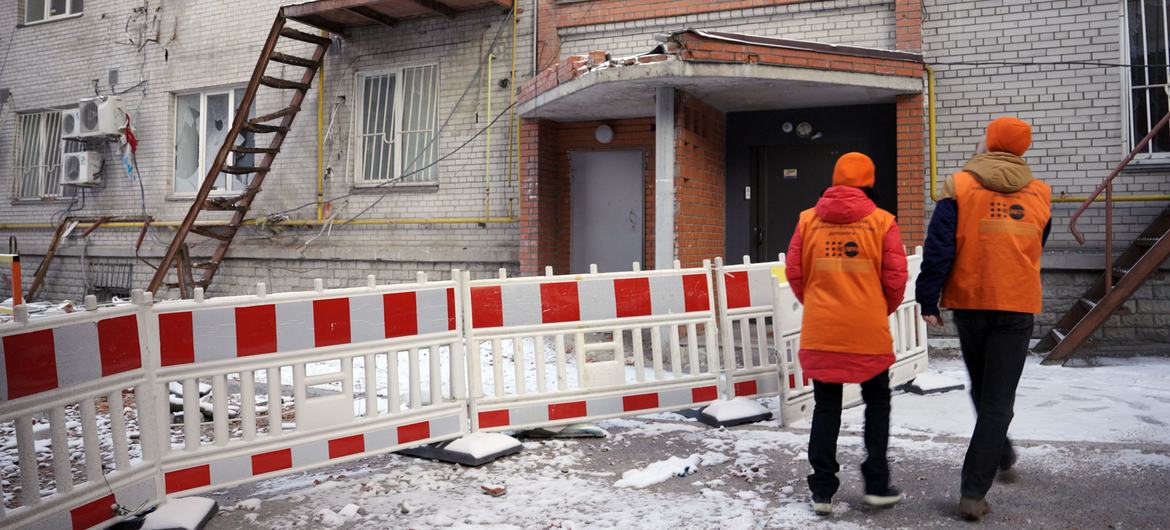
The strikes damaged 27 locations across four districts of Kyiv, including a school, a preschool, a paediatric hospital wing, and a university building.

“An entire section of an apartment block was also reportedly destroyed, leaving many trapped beneath the burning rubble,” said Mr. Jenča.

Humanitarian workers, including UN agencies and local partners, responded swiftly, delivering shelter kits, emergency psychosocial support and legal counselling to affected families.

Strikes beyond Kyiv

Beyond Kyiv, attacks were reported across at least seven regions – Vinnytsia, Donetsk, Dnipropetrovsk, Zhytomyr, Zaporizhzhia, Cherkasy and Chernihiv – with a total of at least 120 civilian casualties in a single night.

In Donetsk, two people were reportedly killed and 10 injured; in Kharkiv, one person was killed and seven injured. Additional casualties were confirmed in Sumy, Kherson and Zaporizhzhia.

In Kamianske, a hospital attack left three dead – including a pregnant woman – and 22 injured, many of them medical staff. In Novoplatonivka, Kharkiv region, six were killed while waiting for humanitarian aid.

“These continuing horrendous attacks are simply unacceptable,” said Mr. Jenča.

The UN human rights office, OHCHR, reports that since the start of the full-scale invasion thorugh June this year, more than 13,580 civilians – including 716 children – have been killed, and over 34,000 injured.

Casualties inside Russia

Mr. Jenča also noted civilian casualties inside Russia.

Between 25 and 29 July, Russian authorities reported attacks in Belgorod, Bryansk, Kursk, Leningrad and Rostov regions, resulting in at least six deaths and multiple injuries.

While the UN cannot verify these reports, Mr. Jenča expressed concern and reiterated that “attacks on civilians and civilian infrastructure are prohibited under international law and must stop immediately – wherever they occur.”

Abuses against POWs

He also detailed new allegations of abuse against Ukrainian prisoners of war (POWs).

According to OHCHR interviews with nearly 140 recently released male POWs, “nearly all…reported having been subjected to torture or ill-treatment,” including beatings, electric shocks, and suffocation.

OHCHR also documented credible reports of 106 executions of Ukrainian soldiers in Russian custody.

Source link

Gaza: ‘No one should ever be forced to risk their life to find food,’ says UN humanitarian agency

The months-long deprivation of most life-sustaining basic goods has led to a deepening of the crisis.  More than 100 people were killed, and hundreds of others injured, along food convoy routes and near Israeli-militarised distribution hubs in the past two days alone.  

As one in three people currently going days without food, OCHA reiterated that no one should ever be forced to risk their life to get something to eat.  

Ted Chaiban, Deputy Director of UN children’s agency UNICEF, who is fresh from a visit to Gaza, noted that “the marks of deep suffering and hunger were visible on the face of families and children.”

He was briefing journalists in New York about his five-day visit in Gaza, the West Bank and Israel. 

Grave risk of famine

“Gaza now faces a grave risk of famine,” he said, briefing journalists in New York about his five-day mission to the enclave, the West Bank and Israel.

“This is something that has been building up, but we now have two indicators that have exceeded the famine threshold.”  

The crisis can only be addressed through unrestricted flow of aid into Gaza, with commercial supplies also allowed to enter to help address people’s needs.  

Nearly a week since the Israeli announcement to allow the scale up of aid and tactical pauses to allow safe passage of UN convoys, OCHA reported that the aid that has entered Gaza so far remains insufficient, while UN convoys continue to face impediments and danger along the routes provided by the Israeli authorities.  

“Civilians must always be protected and community-level aid delivery at scale must be facilitated, not obstructed,” said OCHA.  

Starved, bombed and displaced  

“The children I met are not victims of a natural disaster. They are being starved, bombed, and displaced,” Mr. Chaiban said.  He noted that more than 18,000 boys and girls have been killed since the beginning of the war, “an average of 28 children a day, the size of a classroom, gone.”  

While in Gaza, Mr. Chaiban met with the families of the 10 children killed and 19 injured by an Israeli airstrike as they were queuing for food with their mothers and fathers at a UNICEF-supported nutrition clinic in Deir Al-Balah.  

Discussion with Israeli authorities

Engaging with Israeli authorities in Jerusalem and Tel Aviv, UNICEF “pressed for a review of [Israel’s] military rules of engagement to protect civilians and children,” Mr. Chaiban said.

Simultaneously, UNICEF also called for more humanitarian aid and commercial traffic to come in to stabilise the situation and reduce the desperation of the population.

“Children should not be getting killed waiting in line at a nutrition centre or collecting water, and people should not be so desperate as to have to rush a convoy,” he said.  

“What is happening on the ground is inhumane.” Mr. Chaiban said, hoping for a sustained ceasefire and a political way forward.  


Source link

World News in Brief: Hunger in the English- and Dutch-speaking Caribbean, climate and displacement crisis in Somalia, World Breastfeeding Week

Across the region, nations face food-related challenges notably due to geographical remoteness, lack of local available resources and exposure to climate change. 

“The Caribbean is particularly vulnerable to natural hazards and supply chain disruptions, which can cause increases in food prices,” said, Brian Bogart. head of WFP for the region.

“It’s deeply concerning that many people are struggling to afford the food they need,” he said. 

Supply chain challenges

Rising food prices are a major concern for the region, with food inflation consistently outpacing overall inflation rates, with local production efforts challenged by increasing operational costs. 

In 2025, 30 per cent of Caribbean people reported eating less than usual, a trend notably triggered by increased food costs and global geopolitical factors.

As the region significantly relies on imported agricultural inputs, “strengthening and diversifying supply chains and trade routes across the region is essential,” said Mr. Bogart. 

He added that in a region particularly impacted by climate disasters, “these efforts will help make food more accessible and affordable while supporting faster recovery in times of crisis.” 

A girl moves a container full of water at a site for displaced people in Dolow, Somalia. (file)

UN migration agency highlights deepening climate and displacement crisis in Somalia

Climate shocks and mass displacement caused by conflict have uprooted some 3.6 million people in Somalia, according to the International Organization for Migration (IOM). 

Almost half the population has been impacted by the climate crisis, the UN agency added.

IOM Deputy Director General Ugochi Daniels concluded a four-day visit to Somalia this week where she expressed solidarity for communities who continue to endure relentless droughts, floods and conflict.

Ms. Daniels also noted that communities are finding solutions to withstand the worst impacts of the climate crisis, but they need international support from the Green Climate Fund urgently.

IOM is active across Somalia in displacement sites and in rural and other fragile areas. Its work includes promoting land restoration and so-called “environmental peacebuilding”, which aims to reduce tensions over shared resources.

Another IOM initiative encourages Somalis to invest in their own development by providing additional funding.

Last year, communities contributed more than half a million dollars toward projects such as solar energy, clean water access and small-scale farming – investments all matched by more than $2 million from IOM. 

World Breastfeeding Week: Invest in health systems and policies to benefit mums and babies

This Friday (1 August) marks the start of World Breastfeeding Week and this year’s theme calls for investing in health systems as well as policies, laws and programmes that prioritize women, babies and breastfeeding.

The World Health Organization (WHO) said investing in breastfeeding support is one of the most powerful tools policy-makers have to improve public health, strengthen economies, and secure the well-being of future generations.

The UN agency explained that breastfeeding protects child health and improves survival, especially in the first months of life.  For infants, breastmilk is more than food: it also provides protection against many common illnesses like diarrhoea, pneumonia and infections.

Mothers also benefit as breastfeeding reduces the risk of postpartum haemorrhage, as well as breast and ovarian cancers, heart disease, and type 2 diabetes.

WHO urges governments to allocate dedicated funding for breastfeeding support, including for when new mums come home, along with maternity protections like paid leave after giving birth. 

Source link

LIVE: UN Security Council meets on crisis in Ukraine

The UN Security Council meets Friday afternoon to discuss the ongoing crisis in Ukraine, where recent attacks have left dozens dead or injured. A senior UN political affairs official is expected to brief on the situation. Follow our live coverage from UN News, in coordination with UN Meetings Coverage, for real-time updates and key developments from the chamber. UN News App users can follow the coverage here.

Source link

Africa’s push for HIV independence advances with first procurement of locally made medicines

The development marks a milestone for a region that bears nearly 65 per cent of the global HIV burden and has long depended on imports of lifesaving antiretroviral medicines and testing kits. But that may be starting to change.

The human immunodeficiency virus (HIV) weakens the body’s immune system, reducing its ability to fight infections and certain cancers. Without timely intervention, it can progress to acquired immunodeficiency syndrome (AIDS), the most advanced stage of infection.

In 2023, Kenya-based pharmaceutical company Universal Corporation Ltd became the first African manufacturer to receive World Health Organization (WHO) prequalification to produce tenofovir disoproxil fumarate, lamivudine and dolutegravir (TLD) – a first-line antiretroviral therapy for HIV.

Now, in a major step forward, the Global Fund – a worldwide partnership financing HIV, tuberculosis and malaria responses – is procuring this locally produced HIV treatment for Mozambique, making it the first time African-manufactured TLD has been deployed through this channel.

The procurement of the African-manufactured first-line HIV treatment by the Global Fund for Mozambique is a great milestone towards strengthening supply chain systems in Africa,said Meg Doherty, Director of WHO’s Global HIV Programmes.

This will contribute to better health outcomes for people living with HIV who need uninterrupted medicine supplies.

Building regional capacity

WHO says the achievement is part of a broader push to bolster local production capacity and improve access to essential health technologies across Africa.

The UN agency has been partnering with countries, manufacturers and global health organizations – including the Global Fund and Unitaid – to expand quality-assured African manufacturing.

“Local production of quality-assured health products is an urgent priority,” said Rogerio Gaspar, WHO Director for Regulation and Prequalification.

With every African manufacturer that meets WHO prequalification standards, we move closer to a more self-reliant, resilient and equitable health system.

Progress, but structural gaps remain

Despite the milestone, WHO cautioned that production alone is not enough. To ensure long-term sustainability, the agency is calling for advanced market commitments, fair procurement policies and ongoing technical support.

WHO also points to diagnostics as a critical gap. With shifting donor funding, many countries are under pressure to maintain HIV testing programmes, which are the frontline of prevention and treatment.

In a related effort, Codix Bio, a Nigerian diagnostics company, recently received a sublicense to manufacture rapid diagnostic tests for HIV.

Locally produced HIV rapid tests will help increase affordability, and address supply chain vulnerabilities and delays
– WHO Director Meg Doherty

Having locally produced HIV rapid tests will help increase affordability, and more broadly address supply chain vulnerabilities and delays in access to diagnostics,” said Dr. Doherty.

Sustaining impact amid funding strain

As part of its guidance, the UN health agency is also encouraging countries to adopt low-cost, WHO-prequalified rapid HIV tests, especially as the first test in national algorithms, which can significantly cut costs while maintaining service delivery.

While the latest update marks tangible progress, more action is needed.

“Locally manufactured TLD is a major step towards that goal,” WHO said, “but more action is needed.”

Source link

Gaza: Nearly 1,400 Palestinians killed while seeking food, as UN warns airdrops are no solution

Between 30 and 31 July alone, 105 Palestinians were killed and at least 680 more injured along the convoy routes in the Zikim area in North Gaza, southern Khan Younis, and in the vicinity of the GHF sites in Middle Gaza and Rafah, the office (OHCHR) said in a press release issued on Friday

In total, since 27 May, at least 1,373 Palestinians have been killed while seeking food; 859 in the vicinity of the GHF sites and 514 along the routes of food convoys.

OHCHR noted that most of the killings were committed by the Israeli military, and that while it is aware of the presence of other armed elements in the same areas, it does not have information indicating their involvement in the killings.

“[The office] has no information that these Palestinians were directly participating in hostilities or posed any threat to Israeli security forces or other individuals. Each person killed or injured had been desperately struggling for survival, not only for themselves, but also for their families and dependents,” it said.

Uphold international law

The office emphasized that intentionally directing attacks against civilians not taking direct part in hostilities and intentionally using starvation of civilians as a method of warfare by depriving them of objects indispensable to their survival, including willfully impeding relief supplies, are war crimes.  

“If part of a systematic or widespread attack on the civilian population, these may also constitute crimes against humanity,” OHCHR added, noting that the cumulative impact of these incidents and humanitarian access restrictions.

“Each of these killings must be promptly and independently investigated, and those responsible held to account. Urgent measures must be put in place to prevent recurrence,” it said.

Airdrops not effective

Meanwhile, the UN Relief and Works Agency for Palestine Refugees (UNRWA), underscored the need to open road crossings to supply aid at scale across the Gaza Strip.

“Airdrops are at least 100 times more costly than trucks. Trucks carry twice as much aid as planes,” UNRWA Commissioner-General Philippe Lazzarini said on social media.  

“If there is political will to allow airdrops – which are highly costly, insufficient and inefficient, there should be similar political will to open the road crossings,” he stressed.

Mr. Lazzarini further noted that UNRWA has 6,000 trucks loaded with aid stuck outside Gaza waiting permission to enter.  

During the ceasefire earlier this year, UNRWA and other UN agencies were able to bring in 500 to 600 trucks of aid each day.  

“Aid reached the entire population of Gaza in safety and dignity. It succeeded to reverse the deepening starvation without any aid diversion,” the UNRWA head said.

“Let us go back to what works and let us do our job.” 

Source link

Haiti: More than 1,500 killed between April and June, UN report finds

These numbers are similar to those from the first quarter of 2025 when 1,617 people were killed and 580 were injured.  

“Gang attacks in the Artibonite and Centre departments, and in the capital, continue to cause serious human rights violations and exacerbate an already dire humanitarian crisis,” said Ulrika Richardson, the UN Resident and Humanitarian Coordinator in Haiti.  

Gangs within and beyond the capitol

President Jovenel Moïse’s assassination in 2021 triggered widespread gang violence in the capital of Port-au-Prince. Today, the UN estimates that gangs control at least 85 per cent of the city.  In the past few months, many have begun to expand their influence in the Centre and Artibonite departments.  

In June alone, 45,000 people were displaced in Centre and Artibonite, meaning that the total number of displaced people across these two departments totals over 240,000, according to the International Organization for Migration (IOM).  

Between April and June, security forces were able to slow down the gang’s expansion in the capital, but the UN office in Haiti, BINUH.  noted that the situation still remains exceptionally volatile.  

As they expand their territory, gangs have committed human rights violations, according to the UN, including gang rape, extrajudicial killings, child exploitations, trafficking and murder.

“Gang members continued to resort to murders, gang rapes, and kidnappings to maintain their control over populations living in areas under their influence,” BINUH said.  

Different perpetrators

The UN has long warned that gangs are not the only groups committing human rights abuses and violations in Haiti — government security forces and local self-defence groups have also committed violations.  

Of the 1,520 people killed and 609 injured between April and June, most were in the capital or the Centre and Artibonite departments, with 24 per cent of them killed or injured by gangs.  

Security operations against gangs accounted for 64 per cent of the deaths and injuries during this period, with 73 documented cases of summary executions and one-third of the deaths occurring as a result of explosive drones.  

Self-defence groups, which have formed as a reaction against the gangs and security force’s inability to contain them, were responsible for 12 per cent of those killed and injured.  

Respect human rights

The humanitarian situation in Haiti is increasingly dire, with over 1.3 million people displaced and half of the population facing food insecurity.  

With the humanitarian response plan only 8 per cent funded, the UN Office for the Coordination of Humanitarian Affairs (OCHA) is calling on the international community to step up financial support.  

The report also urged the international community to continue to increase support for Haiti’s fight against gangs.  

“The report calls on the Haitian government, with the support of the international community, to strengthen the fight against gangs while strictly respecting human rights and standards on the use of force,” the UN Mission in Haiti said.  

Source link