Arun has been associated with India International Times since 2018 and he has been a key reporter in covering science and space related stories. He can be reached at arunKnn@indiainternationaltimes.com.
The development followed reports that the Israeli military has stepped up its ground offensive in Gaza City, ordering residents to leave the area.
Speaking from the south of the enclave, UNICEF’s Tess Ingram described the forced mass displacement of families as a “deadly threat for the most vulnerable”.
“It is inhumane to expect nearly half a million children battered and traumatized by over 700 days of unrelenting conflict to flee one hellscape to end up in another,” she insisted.
150,000 go south in a month
According to the UN’s humanitarian affairs coordination office, OCHA, over the past few days, partners monitoring the movement of people in Gaza counted almost 70,000 displacements heading south, and about 150,000 over the past month. The only available route, Al Rashid Road, was “very busy” when Ms. Ingram was there on Monday, she said.
The UNICEF spokesperson described meeting a mother who had walked for more than six hours from Gaza City to the South with her five children, “all dirty, thirsty and starving”, two of them with no shoes.
They are being pushed along with tens of thousands of others to “a so-called humanitarian zone” encompassing Al-Mawasi and surrounding areas, she said.
Sea of despair
Ms. Ingram described their destination as “a sea of makeshift tents, human despair” and services which are “insufficient” to support the hundreds of thousands already living there.
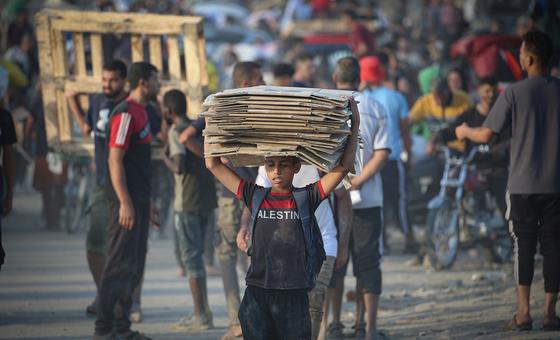
Child malnutrition in Gaza is “spiralling”, Ms. Ingram continued, pointing out that according to UNICEF estimates, some 26,000 children in the enclave currently require treatment for acute malnutrition – more than 10,000 in Gaza City alone.
Famine was confirmed late last month in Gaza City by UN-backed food insecurity experts.
Feeding centres closed
UNICEF’s Ms. Ingram said that owing to evacuation orders and military escalation more nutrition centres in Gaza City have been forced to shut this week, “cutting off children from a third of the remaining treatment sites that can save their lives”.
While humanitarians remain on site and continue responding to the crisis, “it is becoming harder with every bombardment and every denial”, she stressed.
According to OCHA, last Sunday out of 17 missions that humanitarian teams coordinated with the Israeli authorities, only four were facilitated, while seven missions were denied and others were impeded on the ground or had to be cancelled.
Ms. Ingram spoke of the dilemma desperate Gazans face: “stay in danger or flee to a place that they also know is dangerous.” She recalled that Al-Mawasi came under attack some two weeks ago, when eight children were killed while lining up for water; the youngest victim was three years old.
UN Budget Cuts and Reform Proposals Sent to ACABQ for Review
The United Nations has submitted revised budget estimates to the Advisory Committee on Administrative and Budgetary Questions (ACABQ), proposing a 15.1 per cent reduction in resources and an 18.8 per cent cut in posts in the regular budget compared with 2025. The support account for peacekeeping operations, which underpins missions worldwide, would also see reductions in the 2025/26 period.
The ACABQ, a subsidiary body advising the General Assembly, will assess the proposals before forwarding its recommendations to the Fifth Committee, where all 193 Member States decide on administrative and budgetary matters.
Targeted Reductions
In a letter to Member States, Secretary-General António Guterres explained that the cuts followed an extensive review of mandate delivery and resource allocation. Stressing that reductions were “targeted, not across the board,” he said they had been carefully calibrated to maintain balance across the UN’s three pillars—peace and security, human rights, and sustainable development.
Programmes that directly support Member States—particularly least developed, landlocked, and small island developing States—along with Africa’s development advocacy, the Peacebuilding Fund, and the Resident Coordinator system, will be shielded from reductions. Regional economic commissions will see only modest adjustments, while the Regular Programme for Technical Cooperation will continue to expand to strengthen capacity-building for developing countries.
“Reductions of this magnitude will entail trade-offs,” Guterres wrote, noting possible impacts such as narrowed scope, longer timelines, or reduced frequency of outputs. Mitigation measures will include prioritising high-impact work, pooling expertise, and relying more on virtual platforms and automation.
Reform Measures Under the UN80 Initiative
The budget revision is closely tied to the UN80 Initiative, launched in March 2025 to strengthen the Organisation amid rising global political and financial uncertainty. Alongside the cuts, the revised estimates introduce the first set of proposals under Workstream 1, focused on management and operations.
Key measures include:
Establishing administrative hubs in New York and Bangkok.
Consolidating payroll into a single global team across New York, Entebbe, and Nairobi.
Relocating some functions from high-cost duty stations (New York and Geneva) to lower-cost locations.
Vacating two leased New York buildings by 2027, with projected annual savings from 2028.
Collectively, these reforms aim to cut duplication, enhance quality, and protect mandate delivery while improving efficiency.
Three Workstreams of Reform
The UN80 Initiative is structured around three workstreams:
Efficiencies and management improvements – now reflected in the revised estimates, with further measures to come.
Mandate Implementation Review – a report submitted in August is under review by a new Informal Ad Hoc Working Group, meeting on 16 September.
System-wide realignments – proposals on structural and programmatic clusters will be presented later this week.
Together, the workstreams signal a major reorientation of UN operations, aimed at ensuring effectiveness, credibility, and sustainability.
Next Steps and Staff Engagement
The ACABQ will begin hearings this week before passing its recommendations to the Fifth Committee, with a final General Assembly decision expected by December. If approved, changes would be phased in starting 2026, with future budget cycles reflecting additional reforms from the UN80 workstreams.
In a separate letter to UN staff, Guterres acknowledged that the changes will affect daily work and professional life but pledged full support throughout the transition. “You will be fully engaged and supported throughout the process,” he assured, promising regular communication, consultation opportunities, and practical guidance.
Acknowledging the difficulty of the decisions, the Secretary-General emphasised accountability—beginning with him, but also extending to managers and staff. He urged that reforms be carried out with fairness, empathy, and professionalism, underscoring the shared responsibility of upholding UN values during the transition.
According to local reports, heavy shelling and assaults late last week in El Fasher, the capital of North Darfur state, killed at least six civilians and injured scores more, triggering fresh displacement from the already besieged city.
Sudan has been roiled in a brutal civil war between rival militaries – the Sudanese Armed Forces and the paramilitary Rapid Support Forces (RSF) and affiliated militias. Thousands of civilians have been killed, villages and farmlands destroyed, and nearly 12 million people driven from their homes – over four million as refugees into neighbouring countries.
The country also risks becoming the world’s largest hunger crisis in recent history as infrastructure, trade routes and supply chains lie in ruins. Famine has already been confirmed in the Zamzam camp, which once sheltered hundreds of thousands of civilians – and many more areas are at risk.
Humanitarians warn that essential services are breaking down. Water trucking to the only functioning hospital was suspended over the weekend and community kitchens shut down after running out of food.
Without urgent support, they warn that the most vulnerable people could face severe hunger within days. Across Darfur, hospitals remain under immense strain.
Nearly 100 wounded people, including women and children, were admitted to medical facilities in a single day last week, with several pronounced dead on arrival, according to reports from the medical charity Médecins Sans Frontières (MSF – Doctors Without Borders).
Survivors who managed to escape El Fasher described “unbearable” conditions in the city, which has endured more than a year of siege by the Rapid Support Forces (RSF) and allied groups.
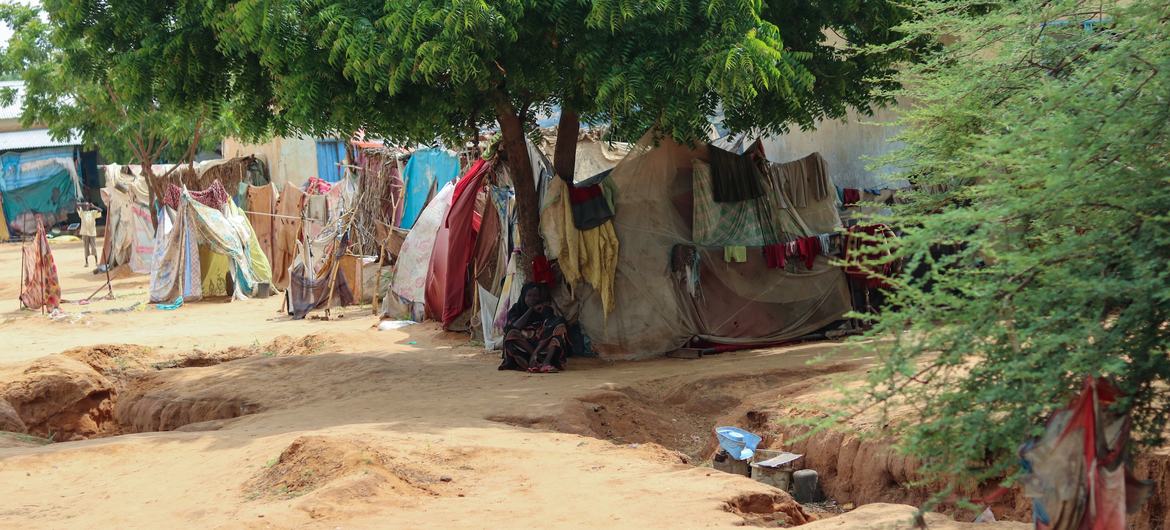
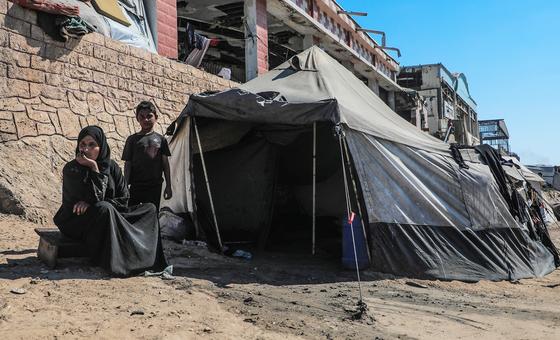
Children sit beside makeshift tents in El Fasher, North Darfur, where intensified fighting has left thousands trapped.
Drone strikes on 10 September hit multiple locations across Darfur, injuring scores. A strike landed just four kilometres (about 2.5 miles) from an MSF-supported hospital in Central Darfur, forcing staff to activate a mass casualty plan. The following day, two more strikes struck Nyala in South Darfur, reportedly killing at least four people, including a child.
The fighting is not confined to Darfur. In Khartoum, RSF airstrikes on 9 September damaged a power station, causing a blackout in parts of the capital and disrupting critical hospital equipment and services.
Disasters add to misery
Meanwhile, Sudan is grappling with natural disasters on top of conflict. A landslide triggered by heavy rains on 31 August in Sharg Aj Jabal, near the Central and South Darfur border, killed an estimated 400 people, half of them children, according to local reports.
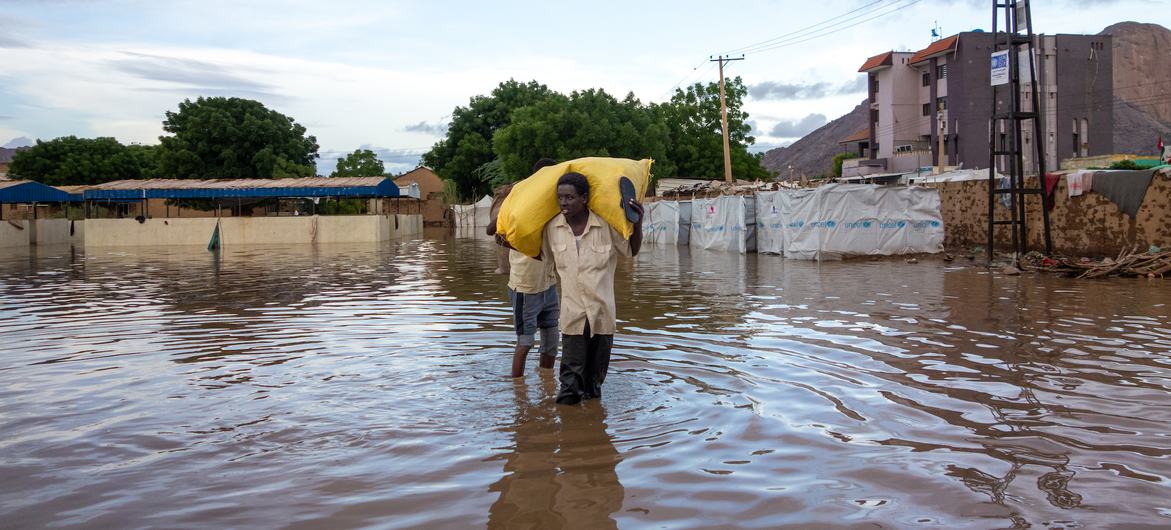
Furthermore, over 4,000 people were displaced and 550 homes destroyed in Aj Jazirah state in flash floods last week.
Every year, hundreds of thousands of people in Sudan are affected by heavy rains, flash floods and landslides.
The UN Office for the Coordination of Humanitarian Affairs (OCHA) stressed that civilians remain at the epicentre of the violence. “[We] once again call for an immediate cessation of hostilities, protection of civilians, safe and unimpeded humanitarian access, and increased international support to sustain life-saving operations across Sudan,” the Office said.
In Khartoum, OCHA reported some improvements in restoring basic services and security. Yet more than 800,000 people who have returned to the capital in recent months still urgently need assistance to rebuild their lives.
On the political front, the Secretary-General’s Personal Envoy for Sudan, Ramtane Lamamra, is currently in Port Sudan after concluding consultations in Nairobi.
According to UN Spokesperson Stéphane Dujarric, Mr. Lamamra has held “very constructive engagements” with Sudanese stakeholders across the spectrum as well as key international interlocutors.
“These discussions will help lay the groundwork necessary to support an inclusive process that can deliver a sustainable solution that preserves Sudan’s sovereignty, its unity and its territorial integrity,” Mr. Dujarric said.
He added that the UN also looks forward to working closely with regional partners, including the African Union, the east African regional bloc Intergovernmental Authority on Development (IGAD), and the League of Arab States, to restart efforts toward an intra-Sudanese dialogue.
Tedros Adhanom Ghebreyesus called the world’s first pandemic trety “a generational accomplishment”, while speaking at the start of a meeting of the Intergovernmental Working Group on the WHO Pandemic Agreement, taking place in Geneva through Friday. It comes four months after countries adopted the pact.
Tedros said the next step “is to bring this historic achievement to fruition” by finalizing the Pathogen Access and Benefit-Sharing (PABS) system. He urged countries to use this week to pave the way to developing the platform, with the ultimate goal of adoption next year.
“It is in every country’s interest that this process is not delayed any further. Because, as we are all aware, the next pandemic or major global health emergency is not a question of if, but when,” he said.
DR Congo: UN and partners support Ebola response in Kasai province
The Democratic Republic of the Congo (DRC) is facing an Ebola outbreak in Kasai province, located in the southwest, with 35 confirmed cases including 27 deaths.
The UN and partners are supporting the Government in the response, the Spokesperson for the Secretary-General said on Monday in New York. Stéphane Dujarric told reporters that partners working in health have facilitated the delivery of over 350 doses of the Ebola vaccine to the Bulape health zone, the epicentre of the outbreak.
“We have also mobilized rapid response teams focusing on case detection and surveillance, clinical case management, infection and prevention control, and risk communication and community engagement,” he added.
Meanwhile, health partners are mobilizing to contain the outbreak. He warned, however, that gaps in medical supplies and logistical capacity are hindering the response, and urgent funding is needed.
Ukraine: Dozens of casualties reported in weekend hostilities
Hostilities continued over the weekend in Ukraine, with the Donetsk region particularly affected, the UN Office for the Coordination of Humanitarian Affairs (OCHA) reported on Monday.
Several civilians have been killed and 40 injured in the region since Friday, while local authorities also documented damage to nearly 190 civilian facilities, including homes, schools, a hospital and a pharmacy.
Other parts of Ukraine also experienced hostilities which damaged homes, farmland and other civilian infrastructure. Nearly 5,000 people remain without electricity in the Zaporizhzhia region.
OCHA said the continuing violence has forced more than 2,700 people, including roughly 340 children, to flee their homes between 12 and 14 September.
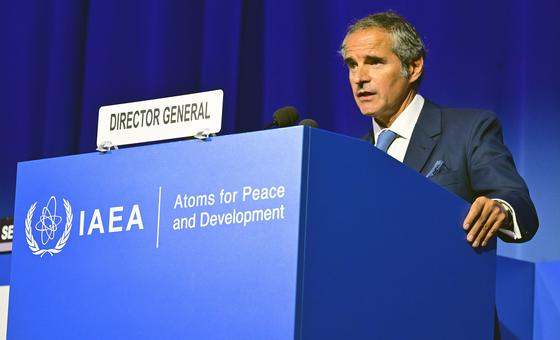
He stressed that their support for the non-proliferation regime, the Nuclear Non-proliferation Treaty (NPT), and the IAEA, is crucial.
“I urge Member States to recommit to a system that has been one of the most important foundations for international peace, even during the tensest decades of our generation,” he said.
He noted that the conference comes at a time when “acts of terrorism, multiple military conflicts, and the erosion of nuclear norms are all happening against a growing gap between poverty and prosperity.”
Mr. Grossi went on to speak about the ways in which the IAEA is working to stop the spread of nuclear weapons and is putting nuclear science to good use, including for cancer treatment, food security, plastic pollution monitoring, disease detection, and artificial intelligence.
Nuclear safety around the world
Earlier this year, Syria agreed to cooperate with the IAEA, and just last week, the agency reached an agreement with Iran to resume the implementation of nuclear safeguards – technical measures used by the IAEA to ensure that if countries make advancements in nuclear technology, they do so for peaceful purposes.
“When the IAEA confirms the peaceful use of a State’s nuclear material, confidence over nuclear activities is established,” said Mr. Grossi.
Meanwhile, in Ukraine, where nuclear power plants are at risk from conflict, the IAEA has sent over 200 missions and is “present on the ground at all the sites.”
But more challenges remain. The Democratic People’s Republic of Korea (DPRK) continues its nuclear weapons programme, while even countries abiding by the NPT, the landmark international agreement meant to abolish nuclear weapons, are debating adding them.
“Think for a minute about a world where instead of a few, we would have 20 or 25 countries armed with nuclear weapons,” he warned.
Peaceful uses of nuclear science
Three years ago, the IAEA launched its flagship programme, Rays of Hope, becoming a “catalyst for real, substantial progress in cancer care.” Through the initiative, concrete actions have been taken in 40 countries: hospitals have been built, radiotherapy machines procured, and physicists trained.
Additionally, the IAEA’s joint programme with the UN Food and Agriculture Organization (FAO), Atoms4Food, is helping boost food security and reduce the environmental strain arising from agriculture.
“In a world of abundance, 700 million people should not have to go to bed hungry every night,” he said.
Mr. Grossi highlighted more ways in which the agency is benefiting the people and the planet, including through its initiative supporting many countries in addressing plastic pollution and waste, and another on improving global preparedness for diseases.
An optimistic outlook
With powerful tools like artificial intelligence and machine learning, “the future is too exciting to miss.”
Nuclear energy can power artificial intelligence infrastructure, while artificial intelligence can improve nuclear technology. To further explore this mutually beneficial relationship, the IAEA will organise the first ever symposium dedicated to the topic in December this year.
Fusion energy, which has been progressing thanks to public and private capital, is another technological development soon expected to take off.
“Every challenge is an opportunity,” concluded Mr. Grossi. “Peace is not simply the absence of conflict. It is dynamic, hopeful striving that I see in what we do all around the world.”
The 69th IAEA General Conference will take place from 15-19 September in Vienna, Austria, where over 3,000 participants are registered to attend.
The situation “is having an appalling impact on civilians enduring suffering and starvation,” he told journalists in New York.
“The United Nations condemns the deadly escalation of the Israeli military offensive which took place over the weekend across Gaza City, with scores of people reportedly killed or injured,” he said.
“We reiterate our call for the protection of civilians and humanitarian personnel and full respect for international law.”
70,000 more uprooted
In a post on X on Sunday, the head of the UN agency for Palestine refugees, UNRWA, said that 10 of its buildings in Gaza City had been hit in the past four days alone, including seven schools and two clinics which were being used as shelters.
Almost 70,000 displaced people have headed south in the past few days, while UN partners counted 150,000 movements from north to south this past month.
Partners further reported that one third of malnutrition treatment facilities in Gaza City have shut down due to forced displacement orders, while the Ministry of Health today reported 425 deaths overall due to malnutrition and starvation in Gaza, about a third of which were children.
A call for ‘unimpeded humanitarian access’
Over the past few days, UN partners have managed to distribute 40,000 additional meals each day. As of Saturday, 558,000 daily meals were prepared and distributed by 20 UN partners to 116 kitchens.
“However, health services continue to be heavily constrained, since clinics have suspended their services due to insecurity and displacement orders,” warned Mr. Dujarric, adding that in Deir Al-Balah, only a few ambulances remain in order and are able to serve the thousands of people in need.
Additionally, 77 per cent of the road networks in Gaza have been damaged and according to UN aid coordination office OCHA, humanitarian aid continues to be obstructed.
On Sunday, only four of the 17 missions that the UN coordinated with the Israeli authorities were facilitated. Seven missions were denied, one of which was meant to deliver water tanks to the north, while another four were impeded in the field, and two were cancelled by the organisers.
Nevertheless, three humanitarian missions were accomplished, including the collection of fuel and food cargo from the Kerem Shalom/Karem Abu Salem crossing.
“Our humanitarian colleagues continue to call for unimpeded humanitarian access,” stressed Mr. Dujarric. “Aid should flow at scale through multiple crossings into and within Gaza, including the north.”
The world is retreating from gender equality, and the cost is being counted in lives, rights, and opportunities. Five years from the Sustainable Development Goals (SDGs) deadline in 2030, none of the gender equality targets are on track.
That’s according to this year’s SDG Gender Snapshot report launched on Monday by UN Women and the UN Department of Economic and Social Affairs, which draws on more than 100 data sources to track progress across all 17 Goals.
2025 marks three major milestones for women and girls: the 30th anniversary of the Beijing Declaration and Platform for Action, the 25th anniversary of United Nations Security Council resolution 1325 on women, peace and security, and the 80th anniversary of the United Nations, but with the new sobering data, it is urgent to accelerate action and investment.
Other findings in the report reveal that female poverty has barely shifted in half a decade, stuck at around 10 per cent since 2020. Most of those affected live in sub-Saharan Africa and Central and Southern Asia.
In 2024 alone, 676 million women and girls lived within reach of deadly conflict, the highest number since the 1990s. For those caught in war zones, the consequences extend far beyond displacement. Food insecurity, health risks, and violence rise sharply, the report notes.
Violence against women and girls remains one of the most pervasive threats. More than one in eight women worldwide experienced physical or sexual violence at the hands of a partner in the past year, while nearly one in five young women was married before the age of 18. Each year, an estimated four million girls undergo female genital mutilation, with over half cut before their fifth birthday.
Prioritizing gender equality
Yet, amid the grim statistics, the report highlights what is possible when countries prioritize gender equality. Maternal mortality has dropped nearly 40 per cent since 2000, and girls are now more likely than ever to finish school.
Speaking to UN News, Sarah Hendriks, Director of the Policy Division at UN Women, said that when she first moved to Zimbabwe in 1997, “giving birth was actually a matter of life and death”.
“Today, that’s no longer the reality. And that’s an incredible level of progress in a short 25, 30 years”, she added.
Technology, too, holds promise. Today, 70 per cent of men are online compared to 65 per cent of women. Closing that gap, the report estimates, could benefit 343.5 million women and girls by 2050, lifting 30 million out of poverty and adding $1.5 trillion to the global economy by 2030.
“Where gender equality has been prioritized, it has propelled societies and economies forward,” said Sima Bahous, Executive Director of UN Women. “Targeted investments in gender equality have the power to transform societies and economies.”
At the same time, an unprecedented backlash on women’s rights, shrinking civic space, and growing defunding of gender equality initiatives is threatening hard-won gains.
According to UN Women, without action women remain “invisible” in data and policymaking, with 25 per cent less gender data available now due to survey funding cuts.
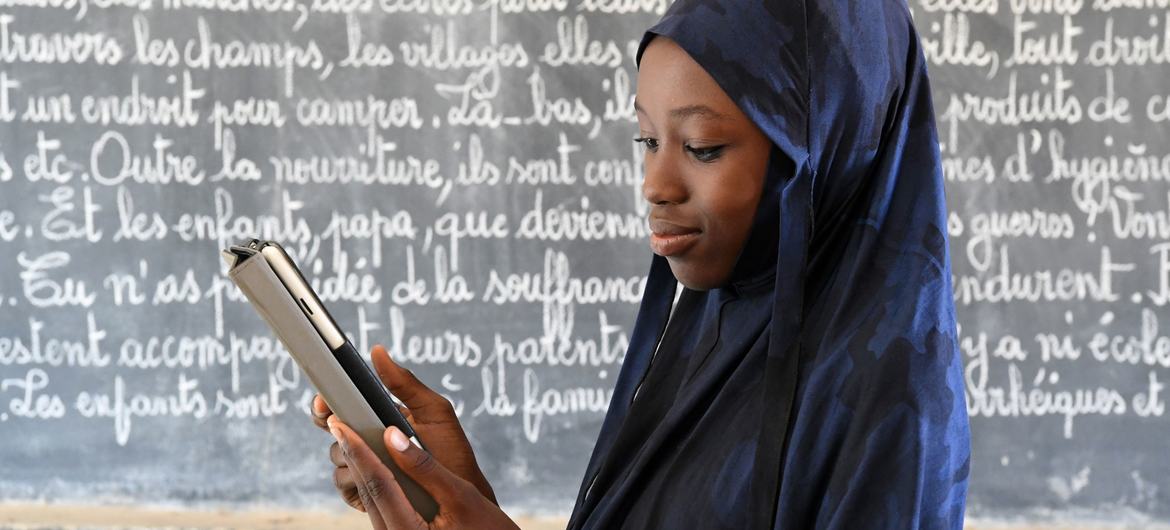
A girl uses a tablet during class at her school in Safi, South Niger.
“The Gender Snapshot 2025 shows that the costs of failure are immense but so are the gains from gender equality,” said Li Junhua, United Nations Under-Secretary-General for Economic and Social Affairs.
“Accelerated action and interventions focused on care, education, the green economy, labour markets and social protection could reduce the number of women and girls in extreme poverty by 110 million by 2050, unlocking an estimated $342 trillion in cumulative economic returns.”
But progress remains uneven, and often painfully slow. Women hold just 27.2 per cent of parliamentary seats worldwide, and their representation in local governments has stalled at 35.5 per cent. In management, women occupy only 30 per cent of roles, and at this pace, true parity is nearly a century away.
Marking 30 years since the Beijing Platform for Action, the report frames 2025 as a moment of reckoning. “Gender equality is not an ideology,” it warns. “It is foundational for peace, development, and human rights.” Ahead of the UN high-level week, the Gender Snapshot report makes clear that the choice is urgent: invest in women and girls now, or risk losing another generation of progress.
Ms. Hendriks shared UN Women’s message for world leaders: “Change is absolutely possible, and a different pathway is before us, but it is not inevitable, and it requires the political will, as well as the determined resolve of governments right around the world to make gender equality, women’s rights and their empowerment a reality once and for all”.
Anchored in the Beijing+30 Action Agenda, the report identifies six priority areas where urgent, accelerated action is needed to achieve gender equality for all women and girls by 2030, which include a digital revolution, freedom from poverty, zero violence, full and equal decision-making power, peace and security and climate justice.
UN Special Envoy Hans Grundberg told the Security Council on Monday that the turmoil in Yemen cannot be seen in isolation.
“Yemen is both a mirror and a magnifier of the region’s volatility,” he said, noting that progress toward peace is hampered by regional rivalries, cross-border dynamics, and internal divisions.
Mr. Grundberg highlighted a dangerous escalation in hostilities, noting repeated attacks on civilians and critical infrastructure. Military clashes in Al Dhale’, Ma’rib, and Ta’iz underscore the risk that miscalculations could trigger a return to full-scale conflict.
The Houthis, also known as Ansar Allah, have been fighting Yemeni Government forces, backed by a Saudi-led coalition, for control of the country for over a decade.
Hans Grundberg, UN Special Envoy for Yemen, briefs the Security Council on the situation in Yemen. He warned that Yemen’s conflict is unravelling within an already volatile regional landscape.
“Against the backdrop of the war in Gaza, we are seeing an alarming and dangerous intensification of hostilities between Ansar Allah and Israel,” he said, noting that a number of civilians were reportedly killed and injured, and critical infrastructure struck.
The Special Envoy warned that the current cycle of violence is dragging Yemen further from a peace process that could deliver sustainable, long-term peace and economic growth.
“This escalatory cycle must end…we need to get the focus back on Yemen – focus on both its internal challenges and on unlocking its great potential,” he stressed.
Spiralling humanitarian situation
The humanitarian situation is equally dire. UN Emergency Relief Coordinator Tom Fletcher told the Council that Yemen remains the third most food-insecure country in the world, with 17 million people already struggling to eat and an additional one million expected to face extreme hunger before February next year.
“Seventy per cent of households do not have enough food to meet daily needs – this is the highest rate ever recorded,” he said.
Mr. Fletcher highlighted that one in five households goes a full day without any food, while two million women and girls have lost access to reproductive health services amid funding shortfalls.
Despite funding gaps and a challenging operating environment, humanitarians continue to deliver aid where possible. In Hajjah, Amran, and Ma’rib, organizations have provided food, water, health, and nutrition services to tens of thousands.
More than 172,000 people affected by flooding received non-food items, shelter, hygiene kits, and clean water.
But Mr. Fletcher warned that ongoing hostilities, infrastructure damage, and the detention of UN staff severely hamper operations.
Twenty-two UN personnel have been recently arbitrarily detained by Ansar Allah; though one staff member was released, over 40 remain in detention, including a colleague who died while in custody.
Both top UN officials emphasised the urgent need for dialogue and adherence to international law. Special Envoy Grundberg urged Yemeni leaders to step back from unilateral actions and pursue a nationwide ceasefire, economic reforms, and inclusive political engagement.
Mr. Fletcher called for the immediate release of all detained aid workers and a secure operating environment, warning that funding cuts and conflict-related obstacles are costing lives.
“Detaining humanitarian staff does not help the people of Yemen. It does not feed the hungry, heal the sick, nor protect those displaced by floods or fighting,” he said.
“The people of Yemen, wherever they may live, must receive the humanitarian aid that they need. They deserve a future of greater security, justice and opportunity.”
The latest Cluster Munitions Monitor reports that over 1,200 people have been killed or injured in Ukraine since Russia’s full-scale invasion in February 2022. The actual toll is likely far higher, but it may take years to establish, said Loren Persi, team lead for the report.
Drawing parallels with conflicts in Syria and Yemen, where casualty figures emerged only years later, Persi told journalists in Geneva that a similar pattern could unfold in Ukraine.
Lao legacy
Equally, in Lao People’s Democratic Republic, which Mr. Persi described as the most contaminated country by cluster munitions, “it took decades” before surveys confirmed estimates that many thousands of people had been killed or injured by strikes from cluster munitions, which are generally understood to be a container from which submunitions are scattered.
The civil society publication, backed by UN disarmament research agency UNIDIR, notes Israeli allegations that cluster munitions were used in a ballistic missile attack by Iran in June 2025, and of reported but unverified use of the weapons in Gaza and southern Lebanon.
The report’s other findings note that the de facto forces in Myanmar have used “domestically produced”, air-delivered cluster bombs since around 2022, amid the ongoing civil war.
“Schools have been among the targets in rebel-held areas,” said the Monitor research specialist Michael Hart, highlighting their use in Chin state, Rakhine state, the Saigon region and Kachin state, among others.
Mistaken for toys
Submunitions – or bomblets, as they are also known – cause casualties and damage through blast impact, their incendiary effect and fragmentation. According to UNIDIR, a single attack can involve thousands of individual explosive units which are usually spread over hundreds of square metres.
“These munitions can be air-delivered or surface-launched, and can be used against armour, materiel and personnel,” UNIDIR explained, although it is “very clear…that civilians continue to bear the brunt” of suffering from the cluster emission remnants, Mr. Persi insisted.
As in previous years, children accounted for a high proportion (42 per cent) of casualties from the weapons in 2024, “which they often find interesting, think are toys or come across in play or on the way to school or when working in fields”, Mr. Persi continued.
Funding cuts impact
Funding cuts for humanitarian work have had a negative impact on countries impacted by the explosive weapons.
These include Afghanistan, Iraq and Lebanon, which had “made good progress” in clearing contaminated land, but who now “really struggle with funding…to get the clearance done, hence they slow down”, said Katrin Atkins, senior researcher at Cluster Munitions Monitor.
“Whole programmes” supported by USAID in the past including one in Lau have been discontinued, Mr. Persi noted.
“For decades, [the programme] was essential in providing both first aid in remote areas where there are cluster mine victims, which was clearly there to address the legacy of the bombings of the 60s and 70s,” he explained. “But also, the entire rehabilitation programme, including prosthetics… that was cut and as far as we know, not reestablished in any way.”
In the last 15 years since the Convention on Cluster Munitions, just 10 countries have used the weapons and “all of those are States not party to the international accord”, the Cluster Munition Monitor states.
A total of 18 countries have now ceased production of cluster munitions. All former producers are now States Parties to the Convention, aside from Argentina.
The report notes that 17 countries still produce cluster munitions or reserve the right to do so and none is a State Party to the Convention. They are: Brazil, China, Egypt, Greece, India, Iran, Israel, Myanmar, North Korea, Pakistan, Poland, Romania, Russia, Singapore, South Korea, Türkiye and the United States.
Bollywood’s recent weekend offerings highlight a striking divergence in audience response and box office performance. Among them, Param Sundari, starring popular actors and backed by significant promotion, has struggled to maintain momentum in its second and third weeks. The film’s performance underscores the unpredictable nature of Bollywood’s domestic market, where star power and marketing do not always guarantee sustained commercial success.
Param Sundari arrived with considerable expectations, driven by its vibrant marketing campaign and a cast that included established stars and rising talent. The film’s music, energetic dance sequences, and glossy production design were positioned as key selling points to attract younger demographics and multiplex audiences.
However, despite these efforts, initial audience feedback pointed to mixed reviews regarding narrative coherence and character arcs. Critics praised the film’s visual appeal and choreography but noted pacing issues and a predictable storyline, elements that often affect repeat viewership and word-of-mouth momentum.
Weekend Box Office Performance
Industry trackers report that Param Sundari collected modest figures during its latest weekend, reflecting a significant drop from its opening week. While precise totals vary, estimates suggest weekend collections hovered in the range of ₹3–5 crore, a notable decline compared to expectations. This contrasts sharply with other Bollywood releases, which, despite competing for attention, fared better due to stronger narratives or novelty appeal.
The occupancy trends indicate that urban multiplexes in metros such as Mumbai, Delhi, and Bengaluru saw moderate attendance, while single-screen theatres in smaller cities and towns reported even lower footfalls. Analysts attribute this disparity to both competition from regional hits and changing audience preferences favoring pan-India or globally themed narratives.
Param Sundari released alongside The Bengal Files and ongoing runs of regional blockbusters like Madharaasi and Lokah: Chapter 1 – Chandra. The latter titles, with their strong word-of-mouth and fan engagement, captured a significant share of audience attention, leaving less room for Param Sundari to perform.
Param Sundari
Additionally, the Bollywood landscape is experiencing a paradigm shift. Films that rely primarily on star power are facing challenges from content-driven releases and regional cinema with pan-India appeal. The success of films like The Kashmir Files and Gangubai Kathiawadi in recent years demonstrates that compelling storytelling often outweighs celebrity presence alone.
Social media reactions for Param Sundari have been mixed. While the film’s music tracks and dance numbers garnered appreciation, discussions around plot, character development, and engagement levels reflected disappointment among certain segments of the audience. Viral memes and humorous critiques have dominated online discourse, sometimes inadvertently keeping the film in public attention, though not translating into box office gains.
Viewer demographics indicate that younger audiences, who initially formed a strong part of the opening week crowd, were less inclined to return for repeat viewings. Critics highlight that the film’s core appeal, while visually rich, lacked narrative depth, reducing long-term engagement.
Param Sundari’s marketing campaign was robust, leveraging digital promotions, influencer partnerships, and music video launches to build pre-release anticipation. Distribution focused on maximizing screen presence in metropolitan cities and premium multiplex chains, aiming to target urban youth demographics.
However, the reliance on metro-centric strategies may have limited rural penetration, which, for Bollywood releases, often constitutes a substantial portion of total collections. In contrast, regional films such as Madharaasi and Lokah achieved broader reach across both urban and semi-urban markets, amplifying their box office resilience.
Critical Insights
The underperformance of Param Sundari highlights several key insights for Bollywood stakeholders:
Narrative Weight Matters: A strong storyline with emotional resonance is crucial for sustaining box office momentum beyond the opening weekend.
Competition With Regional Films: Regional cinema’s rising pan-India appeal requires Bollywood to compete not just with fellow Hindi films but also with high-quality regional releases.
Marketing Beyond Hype: Pre-release buzz is insufficient; sustained engagement through content and audience connect is critical for extended theatrical runs.
Audience Fragmentation: Urban multiplex audiences are increasingly discerning, while rural and smaller-city markets may respond differently, requiring a nuanced release strategy.
When compared to Baaghi 4 and The Bengal Files, Param Sundari illustrates the challenges Bollywood faces in balancing star-driven appeal with compelling content. While Baaghi 4 saw a drop in occupancy but benefited from franchise recognition, The Bengal Files leveraged topical storytelling to maintain steady collections. Param Sundari, despite high production values, struggled to achieve similar traction.
Future Bollywood Releases
The performance of Param Sundari may influence how studios approach mid-budget Bollywood projects. The reliance on aesthetics and dance-centric marketing alone appears insufficient. Audience expectations are shifting toward stronger scripts, character-driven narratives, and experiences that resonate emotionally or thematically.
For actors and producers, this signals the need to innovate within conventional Bollywood frameworks. Incorporating elements that offer novelty or align with current societal interests may prove decisive in future box office outcomes.
Param Sundari’s weekend performance serves as both a reality check and a learning opportunity for Bollywood. While its music, visuals, and star cast contributed to initial interest, the film’s inability to sustain momentum underscores the importance of content-driven appeal in today’s market.
In a landscape increasingly dominated by pan-India hits, regional cinema, and global releases, Bollywood must adapt strategies to align with evolving audience preferences. Param Sundari, despite underwhelming numbers, remains a talking point for industry analysis, providing insights into the changing dynamics of box office success in India.
Tamil cinema continues to assert itself as a powerhouse within India’s film ecosystem, with big-budget action entertainers driving both regional and pan-India revenue. The latest example is Madharaasi, starring Sivakarthikeyan and featuring Vidyut Jammwal in a pivotal antagonist role. In just a few days, the film has amassed nearly ₹50 crore, with analysts predicting it will soon cross the coveted ₹100 crore mark.
Over the past decade, Tamil cinema has demonstrated the ability to generate massive commercial returns without relying solely on Bollywood-style formulas. Films like Master, Leo, and Vikram have showcased the appeal of high-octane narratives combined with strong star power. Madharaasi continues this trajectory, delivering a blend of adrenaline-pumping action, engaging storytelling, and mass-appeal elements that cater to both metro and tier-2 audiences.
Industry trackers report that Madharaasi collected approximately ₹25 crore on its opening day, making it one of the highest openings for a Sivakarthikeyan-starrer. Strong word of mouth, coupled with strategic scheduling across multiplexes and single-screen theatres, has ensured steady collections. By the end of its first weekend, the film had already crossed ₹50 crore, cementing its status as a commercial hit.
The momentum is expected to continue in the following weeks, particularly as overseas collections from markets such as Singapore, Malaysia, and the UAE contribute significantly to the total. These regions, with large Tamil-speaking populations, often act as crucial revenue boosters for Tamil cinema’s big releases.
Star Power And Audience Appeal
Sivakarthikeyan, known for his charisma and mass appeal, anchors the film effectively, drawing audiences across demographics. Vidyut Jammwal’s inclusion as a formidable antagonist adds an edge to the narrative, bringing action credibility that resonates with thrill-seeking audiences.
The film also employs high-octane sequences, visually striking choreography, and a tightly woven screenplay that keeps viewers engaged. Its action-driven narrative ensures repeat viewing, a common feature of blockbuster Tamil films where audiences flock back to witness stunts and climactic showdowns.
Madharaasi exemplifies the increasing professionalism and scale of Tamil cinema. From elaborate sets to cutting-edge VFX sequences, the production quality rivals larger pan-India films. The promotional campaign has leveraged social media extensively, with teaser releases, behind-the-scenes content, and influencer-driven marketing fueling anticipation ahead of the premiere.
Madharaasi box office
Music has also played a pivotal role. The film’s soundtrack, released ahead of the movie, gained traction on streaming platforms, creating pre-release hype and helping draw audiences to theatres. Songs featuring Sivakarthikeyan and Jammwal’s on-screen confrontations became viral, amplifying the film’s visibility.
Timing has been a crucial factor in Madharaasi’s success. It avoided clashing with major Bollywood releases, focusing on maximizing occupancy across Tamil Nadu and Kerala. Its release coincided with school and college holidays, further boosting footfalls among younger demographics.
Regional And Pan-India Impact
While primarily a Tamil release, Madharaasi’s appeal extends beyond regional boundaries. Dubbed versions in Telugu, Kannada, and Malayalam are contributing to cumulative box office figures. Analysts suggest that Tamil films with universal action themes are increasingly able to compete with Hindi and Telugu blockbusters in non-Tamil-speaking regions.
This strategy of multi-lingual releases is reminiscent of the pan-India approach pioneered by Telugu cinema, and it reflects a larger trend where regional films are no longer confined by linguistic barriers.
With production costs reported at approximately ₹60 crore, Madharaasi’s rapid revenue generation ensures a high return on investment. The ₹100 crore benchmark is both a symbolic and financial milestone, underscoring the commercial viability of high-budget regional films. For distributors and exhibitors, the film has reinforced the profitability of Tamil action entertainers, encouraging further investment in large-scale projects.
Audience response has been overwhelmingly positive, particularly on social media platforms where discussions about stunts, dialogues, and performances have trended widely. Memes, reaction videos, and fan edits have contributed to a sustained marketing effect, ensuring the film remains in public discourse well beyond the opening weekend.
Critics have praised the film for balancing high-octane entertainment with a coherent narrative, a combination that ensures both commercial and critical appeal. While some noted predictable plot elements, the performances and production scale have mitigated potential criticism.
Madharaasi’s success exemplifies the growing trend of Tamil cinema exporting its content to wider Indian and international markets. With strategic multi-lingual releases, strong star power, and high-quality production, Tamil films are increasingly challenging the dominance of Bollywood and Telugu films in multiple regions.
The performance also highlights the potential of mid-to-high budget films in regional industries to deliver blockbuster returns, encouraging producers to invest in ambitious projects that balance storytelling with commercial appeal.
Tamil Cinema On The Rise
Despite its early success, challenges remain. Sustaining box office momentum beyond the first two weeks is critical. The arrival of other regional releases and potential Bollywood competition could impact long-term collections. Additionally, maintaining consistent quality in pan-India releases will be crucial for Tamil films seeking broader appeal.
Nevertheless, industry experts remain optimistic. The combination of star appeal, production scale, and audience engagement suggests that Madharaasi will comfortably cross ₹100 crore, further strengthening Tamil cinema’s standing in the Indian box office hierarchy.
Madharaasi is more than just another action entertainer, it is a testament to Tamil cinema’s evolving landscape. By nearing ₹100 crore in just a few days, it has showcased the market’s appetite for high-quality, action-driven films with universal appeal. For producers, distributors, and exhibitors, the film serves as both inspiration and blueprint for future pan-India successes.
Tamil audiences, meanwhile, have responded enthusiastically, proving that regional films with scale, star power, and compelling narratives can achieve blockbuster status, rivaling even the most dominant Bollywood and Telugu offerings.
The Malayalam film industry has long been admired for its storytelling finesse, sharp writing, and grounded realism. But when it comes to box office scale, it often found itself overshadowed by the pan-India juggernauts of Telugu and Tamil cinema. That perception is now changing. Lokah: Chapter 1 – Chandra has stormed past the ₹112 crore mark, cementing its position as one of the biggest Malayalam blockbusters of all time and underlining the industry’s evolution into a formidable commercial force.
Historically, Malayalam cinema has thrived on modest budgets and urban narratives. Its strength lay in critical acclaim rather than commercial clout. The emergence of directors experimenting with high-scale spectacles has shifted that balance. Lokah: Chapter 1 – Chandra epitomizes this shift, merging Malayalam cinema’s storytelling depth with the spectacle-driven appeal of pan-India productions.
Crossing ₹112 crore is no small feat for a regional film primarily driven by Kerala’s domestic market. The film’s success signals that Malayalam cinema can now consistently produce titles with nationwide, and even overseas, pull.
Box Office Trajectory: From Regional To National
Released in late August, Lokah: Chapter 1 – Chandra opened to packed theatres across Kerala. Within its first week, it had already grossed over ₹40 crore. Strong word of mouth and positive reviews ensured sustained momentum. As it expanded into Tamil Nadu, Karnataka, and the Gulf states—where the Malayali diaspora is significant—the collections accelerated.
Lokah Chapter 1: Chandra’ movie box office figures
By week three, the film had breached the ₹100 crore mark, becoming one of the fastest Malayalam titles to achieve that milestone. Its current tally of ₹112 crore underscores both its universal appeal and smart distribution strategy.
Why The Film Clicked
Several factors contributed to the film’s runaway success:
Star Power: The lead actor’s magnetic performance resonated with audiences, elevating the film from regional hit to national sensation.
Pan-India Storytelling: While deeply rooted in Malayalam culture, the narrative explored universal themes of power, betrayal, and resilience.
Visual Grandeur: High production values, elaborate sets, and cutting-edge visual effects rivaled those of Tamil and Telugu big-budget spectacles.
Music And Emotion: A powerful soundtrack, combined with emotional arcs, gave the film mass appeal across demographics.
To understand the significance of Lokah: Chapter 1 – Chandra, one must compare it with earlier milestones. Films like Drishyam and Lucifer were turning points, proving Malayalam films could compete at the box office. But Chandra has gone further, crossing revenue thresholds previously thought unattainable.
Where Lucifer stopped at around ₹125 crore worldwide, Chandra is on track to surpass it with its continued run in overseas markets. Trade experts predict a final tally near ₹140–150 crore, putting it firmly in pan-India blockbuster territory.
The Overseas Factor
The Gulf region has always been a stronghold for Malayalam cinema. Lokah: Chapter 1 – Chandra capitalized on this by launching aggressively in UAE, Qatar, and Oman, with multiple shows daily. The diaspora turned out in droves, making it one of the highest-grossing Malayalam films overseas.
Interestingly, the film has also done well in non-traditional markets like North America and Australia, aided by the rising curiosity around South Indian cinema post-RRR and KGF. This crossover appeal highlights Malayalam cinema’s growing recognition on the global stage.
While commercial performance has been stellar, critics have also lauded the film’s balance of scale and substance. Reviews praised its intricate screenplay, layered characters, and ability to weave grandeur without losing emotional depth.
On social media, the film has trended consistently, with fan edits, viral dialogues, and music reels amplifying its reach. The buzz has particularly resonated with younger audiences, who are increasingly engaging with South Indian cinema as “cooler” alternatives to Bollywood offerings.
The Pan-India Template
The film’s success underscores a larger industry trend: the “pan-India” model is no longer limited to Telugu and Kannada blockbusters. Malayalam cinema, once seen as too niche or arthouse for national expansion, is now firmly part of the conversation.
Producers are recognizing the need to balance authenticity with universal storytelling. Lokah: Chapter 1 – Chandra achieves this balance, presenting Kerala’s ethos while packaging it in a format digestible to audiences across India.
For the Malayalam industry, Chandra’s ₹112 crore haul is both validation and inspiration. It signals that investing in big-scale productions is viable, provided the content retains Malayalam cinema’s storytelling DNA. This could encourage more studios to experiment with higher budgets, advanced VFX, and broader distribution networks.
The film also raises expectations for its sequels. Being Chapter 1, the franchise model promises more to come, potentially creating a Malayalam cinematic universe that can rival its Telugu and Tamil counterparts.
Despite its success, challenges remain. Scaling consistently requires strong infrastructure, marketing muscle, and risk appetite. Malayalam cinema, known for its modest production ecosystem, must adapt to the logistical demands of pan-India blockbusters.
Another hurdle is linguistic accessibility. While dubbed versions have worked in Tamil Nadu and Karnataka, penetration in Hindi-speaking states remains limited. Building Hindi-market appeal will be crucial for future growth.
A New Dawn For Malayalam Cinema
Lokah: Chapter 1 – Chandra is more than a blockbuster; it is a statement of intent. By crossing ₹112 crore, it has demonstrated that Malayalam cinema can deliver not just critical gems but also mass-market spectacles. Its success contributes to what many are calling Malayalam cinema’s golden year, alongside other hits that have found both acclaim and box office validation.
As audiences across India embrace diverse storytelling, the barriers that once confined Malayalam cinema are fading. Chandra stands as a symbol of this transformation—a film that carries Kerala’s cinematic legacy into a bold new era of commercial dominance.
Horror has always been a niche genre in India, oscillating between cult classics and low-budget thrillers. Yet, the sustained success of The Conjuring franchise has rewritten that narrative, making supernatural horror a reliable box office draw. With The Conjuring: Last Rites crossing the ₹70 crore mark in India, the film has reaffirmed both the franchise’s popularity and the Indian audience’s growing comfort with global horror.
When The Conjuring debuted in 2013, few expected it to break through cultural barriers in India, where family dramas and star-driven vehicles ruled the roost. But James Wan’s taut storytelling and the chillingly authentic Ed and Lorraine Warren mythology struck a chord. Every installment since, Annabelle, The Nun, and The Conjuring sequels, has grown its fan base.
For Indian audiences, the blend of Hollywood-grade production with universal themes of fear, faith, and family protection made The Conjuring films resonate more than gore-heavy Western horror franchises. Last Rites is the latest example of this enduring formula.
Industry trackers reveal that Last Rites opened strong, with an opening weekend collection of nearly ₹30 crore. Multiplexes in Delhi, Mumbai, Bengaluru, and Hyderabad reported full houses, with late-night shows selling out, a rarity in the horror genre.
After three weeks in theatres, the film has now crossed ₹70 crore in India, placing it among the most successful Hollywood horror releases in the country. Globally, the film is inching towards the US$400 million mark, with India contributing a significant slice to its overseas revenues.
For context, this is more than many mid-tier Bollywood films this year, highlighting the widening gap between local star power and Hollywood franchises.
Why Indian Audiences Love The Conjuring
The appeal of The Conjuring franchise in India goes beyond jump scares. Experts cite several factors:
Brand Recall: The Warren family narrative has become as recognizable in India as the Fast & Furious ensemble. Each installment builds familiarity.
Word of Mouth: Horror thrives on community viewing, and Indian audiences relish collective theatre experiences, screams, laughs, and nervous chatter.
Faith Factor: The films’ religious undertones, exorcisms, priests, and demonic possession, find cultural echoes in India’s own myths and beliefs.
Youth Appeal: Gen Z audiences are leading the horror wave, often drawn by viral TikTok/Instagram reactions that amplify the scare factor.
Compared to other superhero blockbusters, horror films operate on modest budgets. Last Rites reportedly cost under US$40 million to make, yet its Indian box office alone has yielded nearly a quarter of that figure. The ROI makes horror an attractive genre for distributors and theatres, particularly in markets like India, where horror enjoys a communal pull.
The genre also benefits from repeat value. Fans often revisit screenings to watch friends’ reactions or relive scare sequences, boosting footfalls. OTT releases, when they arrive, sustain the hype, ensuring longevity of the franchise.
Last Rites enjoyed a relatively clean run in India with no major Bollywood releases clashing during its opening. This gap allowed the film to dominate multiplex schedules. Its release ahead of Halloween also positioned it well for extended traction, as horror films traditionally peak during festival seasons globally.
Meanwhile, regional releases like Lokah: Chapter 1 – Chandra and Madharaasi catered to different markets, allowing Last Rites to consolidate pan-India collections.
The film’s success also highlights Hollywood’s uneven year in India. While superhero tentpoles like Deadpool & Wolverine broke records, dramas and family titles underperformed. Horror, however, has been consistent, with films like The Nun II and Annabelle Comes Home doing solid business. Last Rites has built on that track record, positioning horror as Hollywood’s reliable weapon in India.
Audience Reactions And Cultural Fit
Social media reactions from Indian audiences underline how well Last Rites has connected. From memes about sleepless nights to viral clips of people screaming in theatres, the community-driven marketing has boosted its run.
Interestingly, cultural familiarity with ghost stories has helped. India has its own folklore of spirits, possessions, and haunted houses. This backdrop makes The Conjuring’s demonic universe more accessible, unlike Western slashers that often rely on niche tropes.
The ₹70 crore success of Last Rites raises tough questions for Bollywood. Despite mega budgets and big stars, many Hindi films have struggled to cross that benchmark this year. Hollywood horror, by contrast, is doing it with less noise, fewer stars, and relatively modest costs.
Some Indian filmmakers are now experimenting with horror-thrillers, recent examples include Stree and Bhediya, which mixed comedy with scares. But Hollywood’s slick production and global branding keep the bar high.
Distributors expect more horror franchises to capitalize on India’s appetite. The Nun III and rumored Annabelle spin-offs are already anticipated. At the same time, Netflix and Amazon Prime are pushing horror originals, hoping to capture the same audience on streaming.
For exhibitors, the lesson is clear: horror is no longer a niche weekend filler. It is a bankable genre that can deliver blockbuster returns with relatively lower investment.
Conclusion: Fear Is Profitable
The Conjuring: Last Rites is more than a box office hit—it is proof that horror has cemented its place in India’s mainstream entertainment. With ₹70 crore and counting, the franchise continues to defy odds, reminding us that fear, when packaged well, can be just as profitable as love stories or action spectacles.
For Indian audiences, the appeal lies in shared screams and heart-pounding nights. For Hollywood and theatres, it’s about steady revenue and expanding cultural dominance. And for Bollywood, it’s a wake-up call: perhaps the scariest competition comes not from rivals at home, but from ghosts abroad.
The Indian box office has traditionally been dominated by Bollywood blockbusters, pan-India Telugu or Tamil juggernauts, and Hollywood’s superhero spectacles. But in recent years, a new genre has been quietly and steadily building a following: Japanese anime. The release of Demon Slayer: Infinity Castle marks a watershed moment in this trend, as the film’s numbers from its opening weekend suggest anime is no longer a niche segment in India—it is becoming mainstream entertainment.
Japanese anime films were once confined to small screenings in select metros, catering to dedicated fan clubs and subculture enthusiasts. Titles like Your Name and Weathering With You hinted at the potential, but the real explosion came with the Demon Slayer franchise. Its earlier film, Mugen Train, set the global box office on fire in 2020, becoming the highest-grossing Japanese film of all time.
In India, the pandemic delayed the anime boom, but once theatres reopened, anime quickly became a crowd-puller. Today, Infinity Castle is riding on this momentum, pulling in audiences far beyond its traditional base. Multiplex chains are reporting strong occupancy, not just in metros like Mumbai, Delhi, and Bengaluru, but also in Tier-2 cities such as Pune, Kochi, and Lucknow.
Box Office Numbers: A Strong Opening
Industry trackers note that Infinity Castle collected over ₹12 crore in its first weekend in India, an impressive figure for an anime title. While it pales in comparison to Bollywood tentpoles, the significance lies in the scale of growth. Just three years ago, anime films would barely manage a crore in lifetime collections. The new release, buoyed by aggressive fan campaigns and smart positioning by PVR INOX, is already on track to cross the ₹25 crore mark in its theatrical run.
This is more than just a financial milestone; it signals a cultural shift. The Indian youth demographic, heavily influenced by streaming platforms like Crunchyroll and Netflix, is willing to pay theatre prices to watch their favorite anime in dubbed or subtitled formats.
The Demon Slayer franchise combines emotional storytelling, stunning animation, and intense battle sequences, making it accessible even to those new to anime. In India, the dubbed versions, particularly in Hindi and Tamil, are driving footfalls. Parents accompanying teenagers to screenings are discovering anime as a cinematic experience, not just animated content for kids.
Moreover, the timing of the release has worked in its favor. With limited Bollywood competition this week and no major pan-India releases, anime had the space to shine. The makers also tapped into social media trends, with fan art, cosplay events, and influencer promotions building buzz in advance.
Anime vs Hollywood in India
The rise of Infinity Castle comes at a time when Hollywood itself is struggling at the Indian box office. While superhero films like Deadpool & Wolverine continue to draw big numbers, other mid-budget films are faltering. Anime seems to have carved out a stable niche, with better cost-to-revenue ratios, especially after the success of Indian animation film Mahavatar Narsimha.
Trade experts argue that anime’s “event film” positioning, limited shows, fan-driven campaigns, and passionate word of mouth, creates an urgency to watch in theatres. This contrasts with Hollywood dramas or comedies, which often find themselves relegated to OTT.
The impact of Infinity Castle goes beyond ticket sales. Merchandise sales, from figurines to posters, are spiking online. Pop culture events in India now regularly feature anime cosplay, with Demon Slayer characters being among the most popular. This commercial ecosystem strengthens the franchise’s long-term prospects in India.
Streaming platforms, too, are beneficiaries. Fans who watched Infinity Castle are flocking to catch up on older Demon Slayer episodes on Crunchyroll and Netflix, driving up subscription retention. This creates a feedback loop where theatrical success boosts streaming, which in turn builds anticipation for future films.
Road Ahead For Anime In India
The success of Infinity Castle raises important questions for distributors and exhibitors. Will anime become a permanent fixture in India’s release calendar, or is it still too dependent on a handful of big titles? Industry insiders say more consistency is needed. Titles from franchises like One Piece, Jujutsu Kaisen, and Dragon Ball could sustain momentum, but their local distributors must ensure wide release patterns.
Additionally, Indian filmmakers are watching closely. With the younger audience embracing Japanese storytelling, studios may explore Indo-anime collaborations, a concept already popular in Southeast Asia.
Despite the glowing numbers, anime films still face hurdles in India. Ticket pricing is one. Premium screens with higher rates may alienate some fans, limiting reach. Language accessibility also remains uneven, while Hindi and Tamil dubs are common, Bengali, Telugu, and Marathi versions are rare.
Piracy is another challenge. The hardcore anime community is used to accessing content online, and leaks can dent box office momentum. Distributors need tighter release strategies to minimize this risk.
Turning Point For Indian Theatres
Demon Slayer: Infinity Castle is more than just a box office hit, it’s a signal of evolving tastes. Indian audiences, particularly Gen Z and millennials, are open to global pop culture influences beyond Hollywood. With strategic distribution, anime could become a ₹200–300 crore annual business in India over the next few years.
For theatres recovering from pandemic losses, this is welcome news. Anime screenings bring in younger audiences who may become lifelong moviegoers, ensuring cinemas remain relevant in a streaming-dominated era.
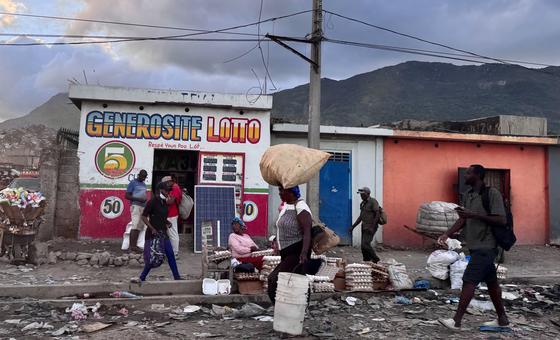
Representational Picture: Civilians left with no space safe to live in Haiti
The overnight assault on September 11 is the latest in a string of brutal incidents and ongoing gang violence that have plagued Haiti since last year. In a statement issued by his spokesperson, Mr. Guterres expressed “condolences” to the victims’ families and urged Haitian authorities to pursue justice.
“The Secretary-General is alarmed by the levels of violence rocking Haiti,” said Stéphane Dujarric. “He calls on Member States to expedite support for the Multinational Security Support mission to assist the Haitian National Police.”
Just two weeks ago, Mr. Guterres addressed the UN Security Council, painting a grim picture of Haiti’s unraveling state. “State authority is crumbling,” he said, as armed groups tighten their grip on Port-au-Prince and surrounding regions, forcing families to flee and disrupting daily life.
With six million people in need of aid and 1.3 million displaced, Haiti’s humanitarian crisis is deepening. Yet less than 10 percent of the $908 million appeal has been funded. “Shamefully overlooked and woefully underfunded,” the UN chief said, warning that 1.7 million people may receive no assistance at all.
Violence unabated turns risky in future
The latest massacre in Labodrie, where dozens were killed this week, underscores the growing brutality of gangs such as Viv Ansanm, which now dominate major neighborhoods and supply routes. Kidnappings, extortion, and targeted attacks have surged, forcing families to abandon homes and seek refuge in makeshift shelters.
Since the 2021 assassination of President Jovenel Moïse, Haiti has struggled to restore political order. A Transitional Presidential Council governs today, but its legitimacy is widely questioned. Elections have been repeatedly delayed, fueling frustration and allowing gangs to fill the vacuum.
The Haitian National Police remain outnumbered and outgunned, even as international backers try to bolster its capacity. A U.N.-authorized security mission led by Kenya has deployed, but with limited personnel and resources, its ability to restore order remains in doubt. Proposals to expand the force to 5,500 troops are still under discussion.
The humanitarian fallout is staggering. According to U.N. estimates, nearly 1.3 million Haitians are displaced within the country. Food insecurity has reached emergency levels, with shortages worsened by blocked roads, gang control of supply chains, and inflation that has put basic staples out of reach for many. Hospitals and clinics are closing or operating at half capacity due to insecurity and lack of supplies.
International donors, including the United States, Canada, and members of CARICOM, have pledged support, but relief has been slow to materialize on the ground. Washington sees the crisis not only as a humanitarian catastrophe but also as a potential migration trigger that could push thousands toward U.S. shores.
Analysts warn that without a decisive and coordinated effort, Haiti risks sliding further into state collapse. “The longer the vacuum persists, the more gangs will consolidate power and the harder it will be to rebuild institutions,” a regional expert noted.
For now, ordinary Haitians face the brunt of the crisis, caught between a fragile state, predatory gangs, and an international community struggling to mount an effective response.
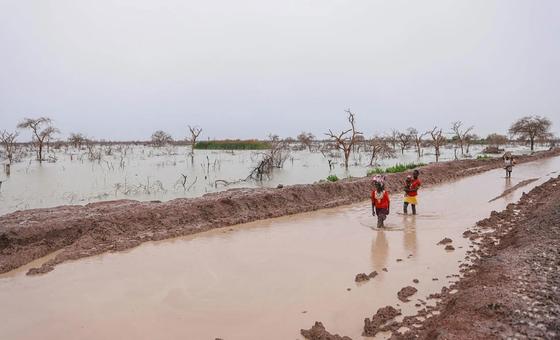
In recent weeks, widespread flooding has engulfed large parts of Jonglei, Upper Nile and Unity states in the north of the country.
The agency’s representative in South Sudan, Marie-Helene Verney, said that “if the flooding continues, up to 400,000 people are likely to be displaced by the end of the year, exceeding flood displacement levels seen in 2024.”
The situation is expected to be at its worst between September and October and threatens to “cut off entire communities, exacerbate hunger and heighten protection risks, particularly for women and girls,” Ms. Verney added.
For several years, South Sudan has faced an ongoing humanitarian crisis due to underdevelopment, disasters and conflict that has displaced many communities. Recurrent floods have exacerbated this displacement, destroyed homes, and threatened livelihoods across the nation.
“Homes, schools, health facilities, farmlands, and pastures have been flooded,” said the UNHCR representative, “devastating livestock and inundating safe water sources and latrines, which have worsened sanitation and heightened health risks.”
Stagnant water, combined with limited access to safe drinking water, is raising the threat of further disease outbreaks on top of the ongoing cholera crisis, which had already affected over 12,000 internally displaced persons (IDPs) and 3,100 refugees by the end of August.
UN continues providing aid
In 2025, UNHCR, in collaboration with the South Sudanese authorities and UN partners, has continued to provide life-saving aid, including cash, emergency shelters, and plastic sheeting to 150,000 of the most vulnerable flood-affected individuals.
Over the past five years work has been carried out to mitigate flood impacts by reinforcing dykes, prepositioning supplies, supporting livelihoods, and assisting displaced communities, including IDPs.
UNHCR has appealed for more funds to carry out its life-saving work. As of 31 July, it had only received a third of the nearly $300 million required to protect and assist displaced people and local host communities in the country.
In Unity state, which is 70 per cent underwater, UNHCR has significantly scaled down operations due to the funding shortfall, leaving thousands of people in a more precarious situation.
Supporting climate resilience
To mitigate the ongoing crisis in South Sudan, the United Nations Office for Project Services (UNOPS) recently signed a $9.9 million Climate Resilience Project in South Sudan with the Ministry of Water Resources.
UNOPS continues to support efforts to strengthen climate resilience and assist flood-affected and refugee-hosting communities in South Sudan.
Olga Cherevko, Spokesperson in Gaza for the UN aid coordination office OCHA, warned that history will not judge the international community “based on the speeches that we made” but rather on actions.
Speaking from Deir Al-Balah, she delivered a blunt message: “When Gaza burned, and children starved, and hospitals collapsed – did you act?”
Gaza City ‘death sentence’
She said this past Tuesday, Gaza City “was handed a death sentence”, with hundreds of thousands of battered civilians ordered to flee to an already overcrowded area where “even small animals have to search for spaces to squeeze between to move around.”
Across the Strip, the situation is dire. A friend texted her on Thursday saying that they tried to find space in the south, but there was none.
“His 8-year-old cousin was killed instantly in an Israeli strike together with several other children last week while waiting for some bread to be baked,” she told journalists at UN Headquarters.
The friend’s daughter, who recently turned two, has known nothing but war, she added.
Death, despair and destruction
“The unmistakable smell of death is everywhere – a grisly reminder that the ruins lining the streets hide the remains of mothers, fathers, children,” Ms. Cherevko continued.
“Humans who used to laugh, cry, dream. Their lives cut short by the war’s killing machines, many to never be found again.”
As humanitarians drove back into Gaza on Thursday, distraught people crowded around their convoy “pleading for this horror to stop,” she said.
“Dignity and hope have been stripped away, with every killing of a loved one, with every strike on a civilian lifeline, with every denial of access.”
She said that “the race against time, against death, against the spread of famine, feels as if we as humanitarians are running through quicksand. Even more so as humanitarian convoys are too often denied, delayed or obstructed by the Israeli authorities.”
Humanity shines through
She noted that even amid hardship “humanity shines”, pointing to “the Palestinian doctors, nurses and paramedics working around the clock, often without pay, medicine or electricity.”
This also includes aid workers from UN agencies, the Red Crescent and other organizations “delivering food, medicine and clean water under fire”, as well as ordinary people who share the little they have with strangers.
“In every act of care – a refusal to let cruelty define the future. Proof that even in the darkest times, the human spirit endures,” she said.
Hope and action
Ms. Cherevko shared that she is often asked if she has any hope left.
“Hope may be all we have left, so we must nurture it,” she said. “But hope alone won’t keep people alive. Urgent decisions are needed that must pave the way to a lasting peace before it’s too late.”
She stressed that “the people of Gaza are not asking for charity. They are asking for their right to live in safety, in dignity, in peace,” adding that “our humanity – yours, mine, all of ours – demands that we act now.”
She concluded her remarks by insisting that “today, and every day, is a new chance for the international community to match words with action. Don’t miss it as it might be the last.”
The meeting was requested by Poland after reporting that at least 19 violations by Russian drones of its territory overnight into Wednesday during a large-scale missile and drone strike against Ukraine.
The episode marked the most serious such incursion since the start of Russia’s full-scale invasion of Ukraine in 2022.
While Poland and its NATO allies reportedly downed several of the drones, the incident has heightened tensions across the region – and put the new threats posed by drone warfare at the heart of diplomatic debate.
Russia’s Defence Ministry said the strikes were aimed at Ukraine’s military-industrial targets and that it did not intend drones to stray across the border.
UN political chief to brief
UN’s political official, Rosemary DiCarlo, is expected to brief ambassadors. Poland’s deputy foreign minister will attend, alongside regional states and the European Union.
The incident has raised deep concern over spillover of the conflict in Ukraine.
Stay with UN News as we bring you live coverage of the meeting…
Rise of the drone
The reported incursion into Polish airspace highlights the growing role of drones in modern conflict.
Relatively inexpensive and easy to deploy, drones are increasingly supplementing – and in some cases supplanting – conventional military hardware.
Armies, armed groups and militias worldwide are rapidly adapting to their use, allowing for strikes and reconnaissance with lower risk to personnel.
However, malfunctions, loss of control and human error can lead to unintended strikes or impacts – especially when they’re deployed in towns and cities as opposed to the battlefield.
Analysts also say drones blur the line between traditional military operations and asymmetric warfare, raising the risk of unintended escalation across borders.
Rewrite as per earlier instructions: Nepal’s former Chief Justice Sushila Karki was appointed as Nepal’s first woman Prime Minister by President Ram Chandra Poudel who administered the oath of office on Saturday, in a ceremony attended by youth representatives, officials and foreign diplomats.
According to media reports, she has been tasked with organizing fresh elections within six months. She previously served as the only woman chief justice, leading the Supreme Court from 2016 to 2017.
“At this pivotal moment, the United Nations stands alongside the people of Nepal in their aspirations for peace, justice, transparency, accountability and progress,” said Hanna Singer Hamdy, UN Resident Coordinator in Nepal, in a statement. She also recognised the contributions of the President, the Chief of Army Staff and ‘GenZ’ youth leaders, noting that their efforts “helped make this transition possible.”
The UN remains committed to working with the Government to support stability, human rights and sustainable development, the statement added. An inspiration for girls and women Children’s Fund UNICEF congratulated Ms. Karki, saying her appointment “is an inspiration for girls and women,” and highlighted the importance of placing children’s rights at the centre of Nepal’s recovery.
Similarly, the UN Development Programme (UNDP), gender equality agency UN Women, and reproductive health agency, UNFPA, expressed support for her leadership, emphasising inclusive governance, gender equality, and the protection of women and youth. Nepal army soldiers at the Supreme Court after the complex was set on fire by protesters.
Grave challenges
The appointment comes amid grave challenges. The unrest began Monday as a self-styled “Gen Z protest” against corruption, nepotism and social media restrictions. Security forces opened fire on crowds, resulting in multiple deaths and injuries. Protesters stormed and torched key institutions, including the parliament, Supreme Court, federal and provincial government offices, and political party offices, while also targeting media outlets, schools, businesses and homes.
Jailbreaks occurred in several locations, and reports suggest some demonstrations may have been infiltrated by outside actors and groups, further complicating security. In response, the army assumed control of nationwide security late Tuesday, deploying troops across the Kathmandu Valley and imposing movement restrictions to stabilise the situation.
Children’s Fund UNICEF congratulated Ms. Karki, saying her appointment “is an inspiration for girls and women,” and highlighted the importance of placing children’s rights at the centre of Nepal’s recovery.
She said it was not the first time drones had been spotted beyond Ukraine’s borders “but it is the first time that multiple drones have flown so deep into a neighbouring country’s airspace.”
Ms. DiCarlo said the UN had no way of verifying any claims or counter-claims surrounding the incident and could only rely on publicly available information.
According to Poland, 19 Russian drones entered its airspace overnight on 9 and 10 September during a large-scale missile and drone assault on Ukraine. Polish authorities said some drones were pre-emptively shot down, and debris was later recovered across central and eastern parts of the country.
The episode marked the first time NATO allies used force to neutralize such drones.
Polish authorities reported temporary airport closures in Warsaw and Rzeszów and restrictions on air traffic in the east of the country. While no casualties were reported, residential areas in some villages sustained damage.
Russia’s Defence Ministry acknowledged carrying out strikes against Ukrainian targets during the same period but said it had no intention of engaging any targets in Poland. Belarus reportedly stated that some drones were deflected by Ukrainian countermeasures and veered off course, adding that it had alerted neighbouring countries as drones approached their airspace.
Poland invoked Article 4 of the North Atlantic Treaty (NATO treaty) following the incident, prompting emergency consultations among the 32 member states of the European security pact.
Civilian toll mounts in Ukraine
The briefing came against a backdrop of continued Russian strikes across Ukraine.
President Volodymyr Zelenskyy said more than 400 drones and 40 cruise and ballistic missiles were launched on 15 regions between 9 and 10 September, causing civilian deaths, including at least one in the capital Kyiv.
Impact in Russia and occupied regions
Ms. DiCarlo also highlighted the war’s toll in Russia and in Russian-occupied regions of Ukraine.
She reminded the Council that attacks against civilians and civilian infrastructure, wherever they occur, are prohibited under international humanitarian law and must stop.
“This week’s events underline the dangerous impact of this war on the security of the region and the risk of escalation,” she said.
“We, therefore, once again urgently call for a full, immediate and unconditional ceasefire in Ukraine. The end state must be a just, comprehensive and sustainable peace in line with the UN Charter, international law and relevant UN resolutions.”