Hunger and disease in Gaza will only worsen from ‘man-made’ famine: WHO

In an online alert, the UN agency said that disease and hunger will only increase, unless all Israeli impediments to aid delivery at scale are removed and access is allowed across the Strip.

The UN aid coordination office, OCHA, confirmed on Wednesday that some aid is allowed into the enclave every day, albeit far too little to meet the huge level of needs.

OCHA’s Olga Cherevko returned this week to a UN-supported community kitchen in Gaza City that she last visited in March, which had been struggling to stay open even then during the total blockade.

Community resilience

It had been forced to close – but managed to reopen again 10 days ago: “They’re now feeding 5,000 people a day, making meals hot meals for people in need in the neighbouring communities,” she said.

“Of course, the number of meals being cooked every day remains severely insufficient because the volume of supplies entering remains severely insufficient, and the only way for us to stop famine is by ensuring that more supplies are entering every day.”

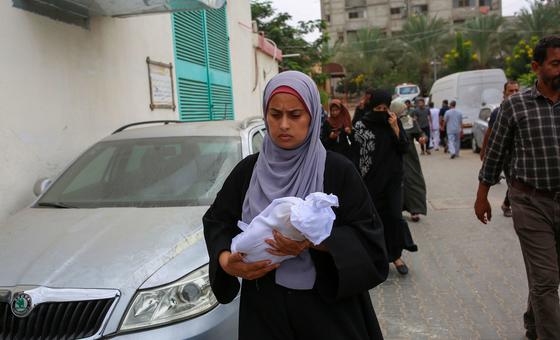
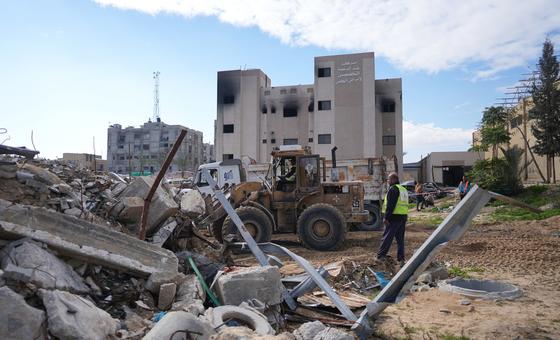
The WHO appeal comes two days after at least 20 people were killed in a double strike on Nasser hospital in southern Gaza, with four health workers and five journalists among the victims.

Across the Gaza Strip today, WHO said that more than half a million people are trapped in famine, with destruction to food and health services, and to water and sanitation systems.

‘Act without delay’

The UN General Assembly-mandated Palestinian rights committee issued a statement on Wednesday reminding that the famine is projected to spread in the coming days, if Israel fails to allow in more food aid.

“This catastrophic man-made disaster comes on the heels of two years of near total Israeli destruction and blockade of Gaza and relentless military assaults that have decimated civilian infrastructure, including food production capacities and all other means of subsistence,” the committee said.

“This is a grave breach of international law. States must act without delay to fulfill their legal obligations towards bringing a rapid end to this catastrophe and illegal situation.”

More to follow…

UN peacekeeping mandate in Lebanon faces scrutiny ahead of Security Council vote

As members of the UN Security Council negotiate the renewal of the UN peacekeeping force in Lebanon (UNIFIL) ahead of a 31 August deadline, the mission’s future role and capacity are under intense debate.

UNIFIL has long been a stabilising presence in southern Lebanon, working alongside the Lebanese armed forces, mediating between parties, and supporting local communities.

A key part of its mandate is to implement Security Council resolution 1701, which brought an end to the 2006 hostilities between Israel and Hezbollah militants.

Yet challenges remain, from Israeli military positions inside Lebanon to Hezbollah’s arsenal and the broader question of how resolution 1701 – which calls for a complete end to hostilities – can be fully implemented.

According to media reports, last-ditch negotiations are underway over the mission’s future, with some diplomats warning of risks to border stability and others voicing tepid support or pressing for full withdrawal.

Earlier this week, Andrea Tenenti, spokesperson for UNIFIL, sat down with UN News’s Nancy Sarkis to discuss the mission’s effectiveness, the risks of a non-renewal, and what is at stake for Lebanon, Israel, and regional stability.

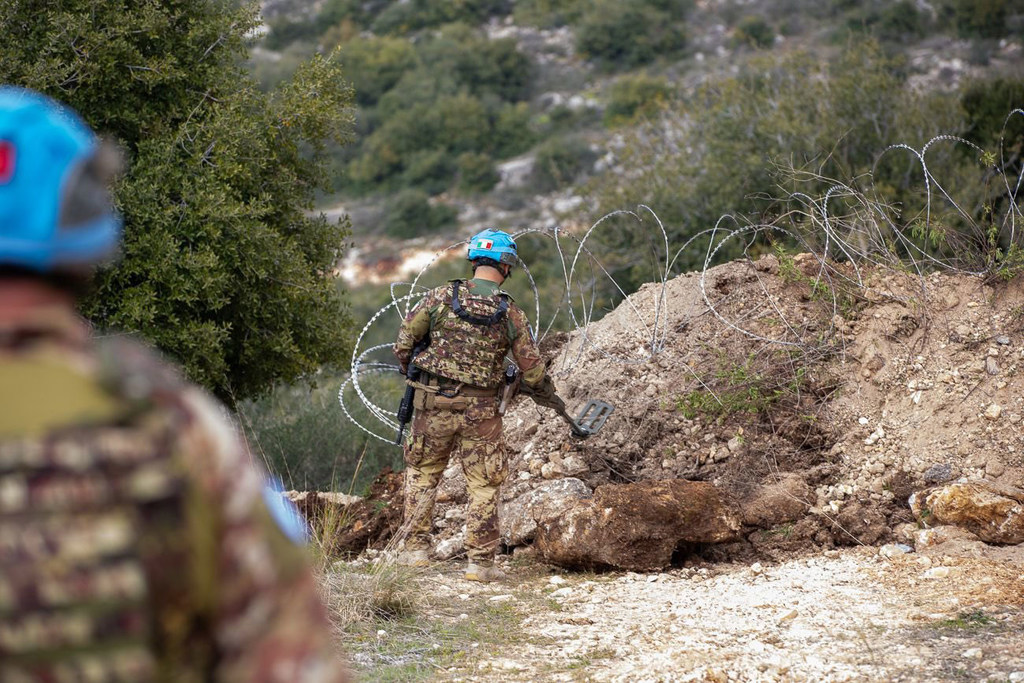
UNIFIL peacekeepers on patrol (file)

This interview has been edited for clarity

UN News: UNIFIL’s mandate, which expires at the end of August, needs to be renewed by the UN Security Council. Why is this renewal important, and how do you assess UNIFIL’s effectiveness so far?

Andrea Tenenti: The renewal comes after a long crisis that has devastated the region and destroyed most of the areas close to the Blue Line. It would show the importance of maintaining an international peacekeeping operation to assist the Lebanese army [Lebanese Armed Forces, or LAF] in their full deployment.

That’s what we have been doing from the very beginning, and in the last several months since November, after the cessation of hostilities, the LAF has brought more troops to the south, and we have been working with them in being deployed in all these positions, although the real challenge at the moment is that we still have Israeli Defense Forces [IDF] positions present in the south of the country.

UN News: To what extent are the Lebanese armed forces ready to assume full responsibility in southern Lebanon without the support of peacekeepers, and what challenges do they face in doing so?

Andrea Tenenti: Right now, the Lebanese army don’t have the capacities and capabilities to be fully deployed. There is a financial crisis in the country, and they need capacity and capability support from UNIFIL, and the financial support of the international community to have a sustainable presence and to bring State authority to the south.

The Lebanese army and authorities have demonstrated their full commitment to resolution 1701. However, they cannot be fully deployed if the IDF are still present; the presence of the IDF in the south is a violation of Lebanese sovereignty and resolution 1701. There needs to be commitment from both sides.

UN News: If the UNIFIL mandate is not renewed, what are the potential consequences for regional stability?

Andrea Tenenti: The situation is much better than before, but very, very fragile. Anything could jeopardise the situation in the south. A lack of renewal would create a real vacuum for stability of the region. It would create a very dangerous precedent and situation for the stability of the country, and it would make impartial monitoring very difficult.

UN News: UNIFIL has faced criticism from Lebanon, Israel, and internationally. How do you respond to these criticisms, and what step can be taken to strengthen trust and credibility?

Andrea Tenenti: Criticism goes with the job of any peacekeeping mission. In order to be impartial, staying in the middle and trying to assist the parties in the implementation of the mission’s mandate, you will be criticised by both sides.

Sometimes, the criticism is driven by a misconception of the mission’s mandate. For example, resolution 1701 does not call for UNIFIL to disarm Hezbollah. This is not our mandate. We are to support the Lebanese army to do it, and that’s what we are doing right now.

On the Lebanese side, we have been criticised for patrolling without the Lebanese army, but as part of 1701 we are tasked to operate either with the Lebanese army or independently.

This is something that the Lebanese army and Lebanese authorities know very well. Sometimes it’s a matter of disinformation and misinformation about the role of the mission, and we are trying to counter that as much as we can.

UN News: What is your vision for UNIFIL’s role in the coming years, and do you see it as a short-term necessity or as a part of a long-term regional security framework?

Andrea Tenenti: At the moment, UNIFIL is very much needed to support the stability of the region, bring back the Lebanese army to the south – and return State authority that has been not present for a very long time. But it has to be a south free from occupation – that’s the only way to move forward.

The goal of the mission has always been to leave and hand over all our capabilities and tasks to the Lebanese authorities, but a lot needs to be done. To ensure stability in the region, we have to be pragmatic on the timetable.

Source link

World News in Brief: More deaths in Ukraine, lengthy detentions in Egypt, AI governance, US postal tariffs

Since Friday, 11 civilians have been killed and more than 90 wounded, according to the authorities. Schools and energy infrastructure also were damaged.

The Donetsk region in eastern Ukraine was the most affected, with the town of Kostiantynivka particularly hard hit. 

Six other regions – Sumy, Kharkiv, Kherson, Mykolaiv, Dnipro and Zaporizhzhia – were also impacted, with homes, schools, ambulances and power infrastructure in front-line areas sustaining damage.

In response, aid organizations have distributed repair materials, hot meals and drinks, in addition to providing psychological support.

Families on the run

Meanwhile, humanitarians continue to support people fleeing hostilities in the Donetsk and Dnipro regions.

OCHA said over 2,000 people, many of them children, were evacuated from Donetsk between Friday and Monday. 

“With growing pressure on the transit site in the town of Pavlohrad, authorities and aid organizations opened new facilities in the village of Voloske, Dnipro region, and the town of Lozova, Kharkiv region,” the agency said.

Evacuees receive medical and psychosocial support, hot meals, water and hygiene supplies, and can register for cash assistance before moving on to safer areas. 

At the same time, humanitarians are also supporting arrivals in other parts of Ukraine.

Egypt urged to end ‘rotation’ detention practice targeting Government critics

The UN human rights office, OHCHR, called on Tuesday for Egypt to end a practice known as “rotation” which allows Government critics to be held arbitrarily and for prolonged periods even after serving their sentences or completing maximum pre-trial detention.

Human rights defenders, activists, lawyers, journalists, peaceful protesters and political opponents are among those who have been targeted.

The latest case concerns poet Galal El-Behairy, who was arbitrarily detained after completing a prison term on 31 July 2021 for writing songs and poetry critical of the Government. 

He has since faced similar charges in two different cases under the counter-terrorism law and the penal code. The latest charges were brought on 19 August 2025, extending his detention for at least 15 more days.

Suppressing critical voices

Rotation “has become a tool by which the Egyptian Government represses those perceived to be critical of its policies,” OHCHR Spokesman Thameen Al-Kheetan told journalists in Geneva.

“Most of those targeted by ‘rotation’ should not have been detained or jailed in the first place, as the charges brought against them are often related to the exercise of their legitimate rights to freedom of expression and peaceful assembly,” he said.

OHCHR urged the Egyptian authorities to immediately end the practice and release all those who have been subjected to it. 

UN announces two new mechanisms to promote cooperation on AI governance

The UN Secretary-General welcomed the General Assembly’s decision on Tuesday to establish two new mechanisms to promote international cooperation on the governance of artificial intelligence (AI).

The establishment of the UN Independent International Scientific Panel on AI and the Global Dialogue on AI Governance marks a significant step forward in global efforts to harness the benefits of the technology while addressing its risks.  

The development underlines commitment by Member States to build on the Global Digital Compact adopted as part of the Pact for the Future last September, UN Spokesperson Stéphane Dujarric told journalists in New York.

Fostering inclusion, informing decision-making

He said the Global Dialogue will provide an inclusive platform within the UN for States and stakeholders to discuss the critical issues concerning AI facing humanity today.

The Scientific Panel will serve as a crucial bridge between cutting-edge AI research and policymaking, he added.

“By providing rigorous, independent scientific assessments, it will help the international community to anticipate emerging challenges and make informed decisions about how we govern this transformative technology,” he explained.

The Secretary-General will soon launch an open call for nominations for the Scientific Panel, which will present its annual reports at the Global Dialogue on AI Governance to take place in July 2026 in Geneva and 2027 in New York.

In the interim, all stakeholders are urged “to support this historic initiative and contribute to building a future where artificial intelligence serves the common good of all humanity.”

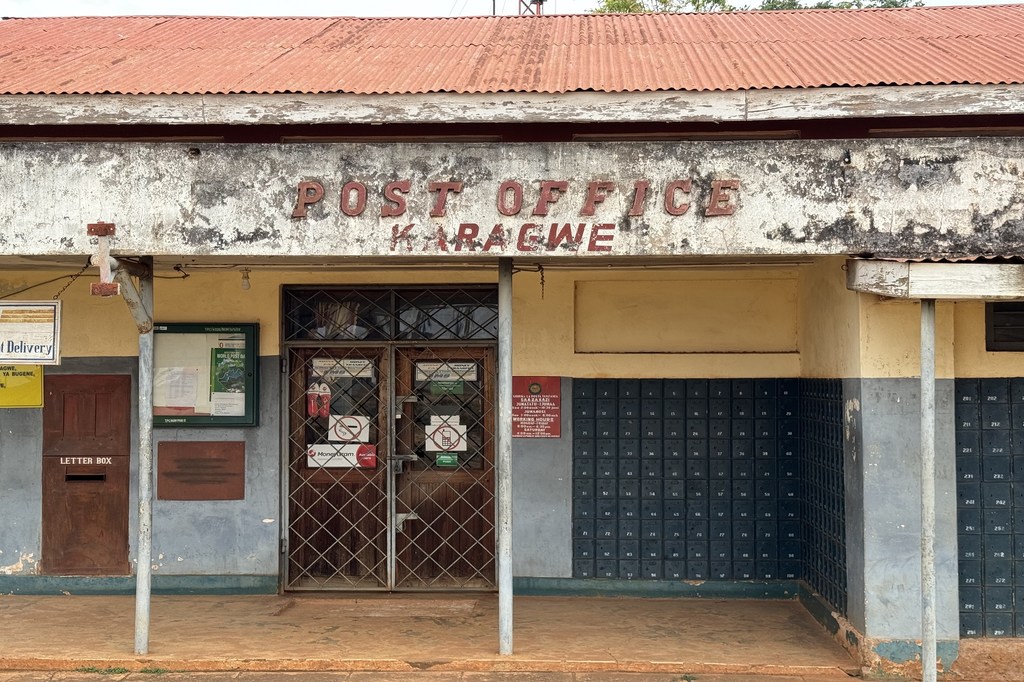
This post office was officially opened on 4 September 1981 in Karagwe District, Kagera Region in Tanzania

UN postal agency striving to keep packages moving ahead of US duty-free deadline

The UN postal agency says it is taking all possible measures to keep packages flowing to the United States after dozens of countries suspended service. 

“Maintaining the trust of the billions of people served by the postal network is our top priority,” said Universal Postal Union (UPU) Director General Masahiko Metoki. 

Starting on 29 August, the US announced that it will suspend duty-free “de minimis” measures for low-value packages.  

That means packages worth less than $800 will no longer be exempt from customs duties and may require new processing requirements. There is no impact on letters. 

A big change

The UPU noted that while each country has the sovereign right to adopt its own customs policies, the change “will entail considerable operational changes for postal operators around the world” – given the short notice. 

Postal services in at least 25 countries have suspended their outbound postal services to the US, citing uncertainties related to transit, according to the UPU. 

The UN agency says it is working to help countries adjust to new customs duty collection and remittance process and is in contact with the US Government to develop practical solutions.   

Source link

One in four still lacks access to safe drinking water and sanitation

The report from the World Health Organization (WHO) and children’s agency (UNICEF) issued as World Water Week gets underway, highlights persistent gaps in access, with vulnerable communities facing the greatest disparities.

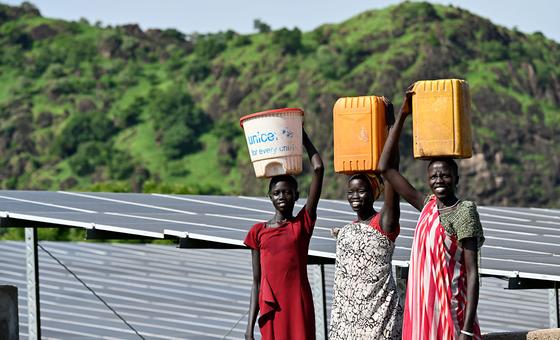
Some 2.1 billion people still lack access to safely managed drinking water, while 106 million worldwide are forced to rely on untreated surface sources.

Water, sanitation and hygiene are not privileges, they are basic human rights,” said Ruediger Krech, Director of WHO’s Environment, Climate Change and Health Department.

Clear disparities

The report finds that people in least developed countries are more than twice as likely as people in other countries to lack basic drinking water and sanitation services, and over three times as likely to go without basic hygiene.

“These inequalities are especially stark for girls who often bear the burden of water collection and face additional barriers during menstruation,” said Cecilia Scharp, UNICEF’s head of water, sanitation and hygiene services.

Data from 70 countries reveal that while most women and adolescent girls have menstrual materials and a private place to change, many still lack sufficient supplies to manage their needs safely and with dignity.

‘We must act faster’

Some 1.7 billion people still lack basic hygiene services at home, including 611 million with no facilities at all.

“We must accelerate action, especially for the most marginalised communities, if we are to keep our promise to reach the Sustainable Development Goals,” said Mr. Krech.

“At the current pace, the promise of safe water and sanitation for every child is slipping further from reach – reminding us that we must act faster and more boldly to reach those who need it most,” said Ms. Scharp.

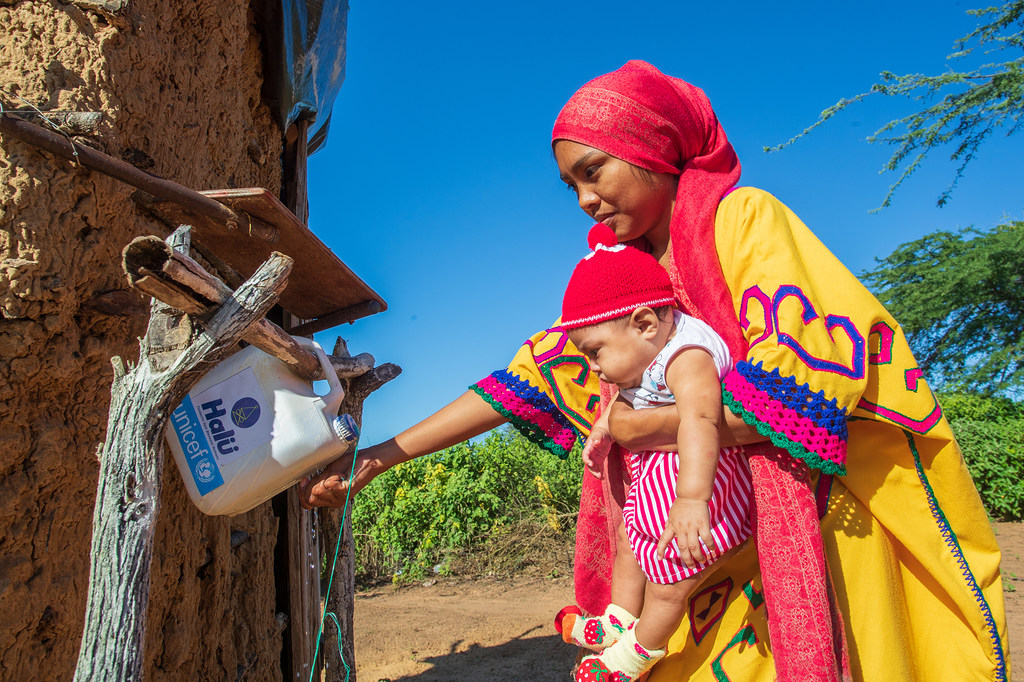
In the municipality of Manaure in La Guajira, Colombia, a woman washes her hands at an installation of hand-washing point known as tippy taps.

Source link

Thailand grants work rights to long-term refugees from Myanmar, UN welcomes resolution

Some 81,000 forcibly displaced people are hosted in temporary shelters along the Thai-Myanmar border where they have been living in the camps for decades.

Nearly half the refugee population were born under canvas, where displaced families have largely depended on humanitarian assistance.

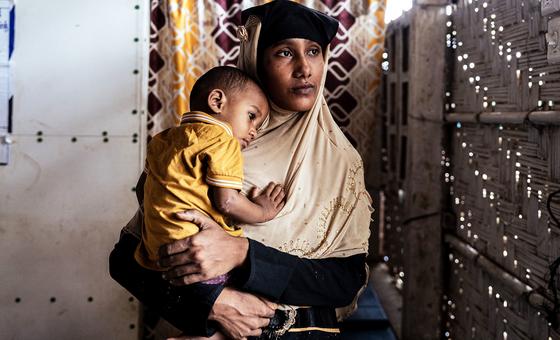
Over a million Rohingya, a mostly-Muslim minority from Myanmar, have fled conflict and persecution in multiple waves of displacement.

Monday marked eight years since the mass exodus of Rohingya from Myanmar’s Rakhine state in Myanmar and the UN on Monday called for greater international solidarity over their plight.

‘Turning point’

UNHCR’s Representative in Thailand, Tammi Sharpe, described the Government’s decision as a major “turning point.”

She said it would not only help refugees support themselves but also benefit local economies and strengthen Thailand’s long-term growth.

By unlocking the potential of these individuals, Thailand is not only upholding humanitarian principles but also making a strategic investment in its own future,” Ms. Sharpe said.

Although the new resolution covers a limited number, the UN agency said it would continue to advocate for wider refugee inclusion – offering support to the Thai Government in rolling out the new policy.

Aid cuts

The move comes at a time when aid budgets for displaced people worldwide are facing severe cuts.

For the UN agency, Thailand’s move could set a regional precedent for sustainable, rights-based refugee policies – and serve as a model for countries facing similar challenges, UNHCR said.

According to agency, $25.4 million is needed in 2025 to ensure operations covered by the Thailand-based international office is sustained – which also oversees operations in Cambodia, the Lao People’s Democratic Republic and Viet Nam.

Source link

Killing of journalists in Gaza hospital attack ‘should shock the world’: UN rights office

OHCHR Spokesperson Thameen Al-Kheetan said condemnation of the two strikes by Israeli forces on the Nasser Hospital in Khan Younis now needs to be channelled into a demand for accountability and justice for all those killed.

At least 20 died, including four health workers and five journalists, later named as Ahed Abu Aziz, Hussam al-Masri, Mariam Dagga, Mohammed Salama and Moaz Abu Taha. They worked for outlets including Middle East Eye, the Associated Press, Al Jazeera and Reuters.

Two strikes

Video taken at the scene shows a second strike apparently targeting rescuers who had arrived at the scene of the initial attack on southern Gaza’s largest medical facility on Monday.

“We know that one of the five journalists appears to have been killed in the first air strike while three others including the women journalist appear to have been killed in the second air strike. This is a shock and this is unacceptable,” said Mr. Al-Kheetan.

“At least 247 Palestinian journalists have been killed in Gaza since the 7th of October 2023,” he continued.

“These journalists are the eyes and the ears of the whole world and they must be protected…This raises many, many questions about the targeting of journalists and all of these incidents must absolutely be investigated and those responsible must be held accountable.

He added that OHCHR was continuing to corroborate the factual details of Monday’s strikes, adding that targeting journalists as well as hospitals is forbidden under international law.

The head of UN cultural agency, UNESCO – which advocates for press freedom and journalists’ safety – also condemned the killings, reiterating her call to respect UN Security Council resolution 2222, unanimously adopted in 2015 on the protection of journalists, media professionals and associated personnel as civilians in situations of conflict.

Audrey Azoulay said UNESCO is providing emergency assistance to journalists in the Gaza Strip, including psychosocial assistance, access to working equipment, and capacity-building

Investigations must ‘yield results’

Israeli Prime Minister Benjamin Netanyahu responded to the killings expressing regret, describing the incident as a “tragic mishap”. He said the Israeli military would carry out “a thorough investigation.”

The OHCHR spokesperson told journalists in Geneva that Israeli authorities had carried out investigations in the past, as the occupying power.

“But these investigations need to yield results. There needs to be justice. We haven’t seen results or accountability measures yet,” he said.

More to follow…

Source link

Gaza: UN calls for probe following deadly strikes on Nasser Hospital

At least 20 people were killed, including four health workers and five journalists, WHO Director-General Tedros Adhanom Gebreyesus said in a tweet.

Fifty other people were injured, including critically ill patients who were already receiving care.

Healthcare under attack

While people in Gaza are being starved, their already limited access to healthcare is being further crippled by repeated attacks,” Tedros remarked.

“We cannot say it loudly enough: STOP attacks on healthcare. Ceasefire now.”

He said the hospital’s main building, which houses the emergency department, inpatient ward, and surgical unit, was hit. 

The strikes also damaged the emergency staircase.

Global indifference and inaction

The head of UN Palestine refugee agency UNRWA also took to social media in the wake of the news.

Silencing the last remaining voices reporting about children dying silently and famine with the world’s indifference and inaction is shocking,” said Commissioner-General Philippe Lazzarini.

He called for compassion to prevail, saying “let us undo this manmade famine by opening the gates without restrictions, ⁠protecting journalists and humanitarian and health workers,” stressing the need for political will now.

The UN recently noted that more than 240 journalists have been killed in Gaza since the war began nearly two years ago following deadly Hamas-led attacks on Israel. 

Roughly 1,200 people were killed and 250 hostages were taken to the enclave, some of whom remain in captivity.

Guterres calls for investigation

UN Secretary-General António Guterres strongly condemned the deadly airstrikes and called for a prompt and impartial investigation.

These latest horrific killings highlight the extreme risks that medical personnel and journalists face as they carry out their vital work amid this brutal conflict,” UN Spokesman Stéphane Dujarric said in a statement. 

The UN Office for the Coordination of Humanitarian Affairs (OCHA) said that among the reporters killed was female journalist Mariam Abu Dagga who partnered with the agency last year on a photo essay depicting the dire situation in Gaza.

The Secretary-General reiterated that medical personnel and journalists must be able to perform their essential duties without interference, intimidation, or harm, in full accordance with international humanitarian law. 

He also renewed his call for an immediate and permanent ceasefire in Gaza, unfettered humanitarian access across the enclave, and the immediate and unconditional release of all hostages.

The Israeli Prime Minister’s office issued a statement later in the day saying the Government “deeply regrets the tragic mishap” which occurred at the Nasser Hospital. 

Famine spreading

The number of deaths in Gaza has surpassed 61,000, according to the local health authorities.

Last week, food security experts confirmed that famine has taken root in Gaza Governorate, projecting that it will spread. 

The Gaza Ministry of Health said on Tuesday that 11 people have died from malnutrition and starvation in the past 24 hours, bringing the overall total to 300.

Displacement deepens

Meanwhile, people across the enclave continue to be displaced while seeking safety and shelter.  

Humanitarians said that between 20 and 24 August, some 5,000 people are estimated to have been displaced from northern Gaza to Deir Al-Balah and Khan Younis. Roughly 8,000 more have been displaced to the west of Gaza City. 

Overall, new displacements have surpassed 800,000 since the end of the ceasefire in mid-March. 

Obstructions to aid delivery

At the same time, aid convoys in Gaza continue to face delays, movement obstructions and other challenges. 

On Sunday, only seven out of 15 humanitarian missions that required coordination with Israel were facilitated, including the collection of fuel from the Kerem Shalom border crossing for distribution to areas where it is needed most. 

“Four missions had to be either cancelled by the organisers or were denied outright by Israeli authorities,” OCHA said.

“The remaining ones were initially approved but then impeded on the ground and only partially accomplished, including the collection of food and vaccines from the crossings.”

Education on hold

As children around the world start heading back to school, their counterparts in Gaza continue to miss out on education.

Several education facilities that are being used as shelters for displaced people were attacked last week, according to aid partners.

“With local authorities announcing that final exams for over 35,000 high school students are due to be held in two weeks, the UN and its partners reiterate their call for the protection of education facilities in accordance with international law,” OCHA said. 

Source link

Putting water management at the centre of the climate change fight

Currently underway in Stockholm from 24 to 28 August, the 35th World Water Week meeting highlights the crucial link between water and global warming, under the theme, Water For Climate Action.

At the core of sustainable development and basic human survival, safe drinking water is critical for socio-economic development, energy and food production – and healthy ecosystems.

Meanwhile, reliable water supply is also at the heart of adaptation efforts in an increasingly warming world.

Landlocked countries

Improved access to water is creating new opportunities for people in some of the world’s most remote communities, particularly in landlocked developing countries (LLDCs). 

On Wednesday, UN-Water – which coordinates the UN’s work on water and sanitation – will bring together LLDCs that have demonstrated substantial progress towards ensuring the availability and sustainable management of water and sanitation for all, in line with the UN Sustainable Development Goals (SGDs).

This session will provide an opportunity for other LLDCs to draw lessons from the progress made by Bhutan, Rwanda, and Saudi Arabia in ensuring safe drinking water and effective water management.

Innovative financing

The lack of safely managed water, sanitation and hygiene services, severely impacts human well-being, dignity and opportunities – especially for women and girls.

Indeed, contaminated water, inadequate sanitation, and poor hygiene practices are still undermining efforts to end extreme poverty and control disease outbreaks in the world’s poorest countries.

On Thursday, UN-Water and partners will galvanise donors and other key collaborators to address financing gaps in water and sanitation provision.

Discussions will focus on different models and building alliances to unlock innovative funding mechanisms for safer universal access.

UN urges renewed solidarity eight years after forced exodus of Rohingya

More than 700,000 of them fled to neighbouring Bangladesh after armed attacks by a militant group against Myanmar security forces sparked a brutal military crackdown that began on 25 August 2017.

They joined thousands of others who had escaped earlier waves of violence and discrimination now living in refugee camps just across the border in the Cox’s Bazar district.

Violence and funding cuts

In a statement to mark the anniversary, UN Spokesman Stéphane Dujarric noted that the Rohingya people both in and outside Myanmar are facing a further deterioration of their already dire circumstances.

“In Rakhine State, Rohingya and other civilians are caught in the crossfire between the Myanmar military and the Arakan Army and subjected to forced recruitment, human rights violations and other abuse,” he said.

The ongoing violence has forced more Rohingya to flee, including to Bangladesh which is already hosting more than one million refugees from Myanmar. 

A military coup forced Myanmar’s democratically elected Government from power in 2021, fuelling armed insurgencies throughout Myanmar following a brutal military crackdown on protests.

Mr. Dujarric said reports of pushbacks, removals and deportations across the region raise serious concerns over potential violations of the principle of non-refoulement and shrinking asylum space.

This is happening amid funding cuts which are severely curtailing education, food assistance, healthcare, livelihood opportunities and protection services.

Protect all civilians

The Spokesman said UN Secretary-General António Guterres has repeated his call for the protection of all civilians in accordance with applicable obligations under international law. 

The Secretary-General also recalled his visit to Cox’s Bazar, Bangladesh, where he witnessed the resilience of Rohingya communities.

He stressed the urgent need for strengthened international solidarity and increased support, in parallel to efforts toward a comprehensive political solution that meaningfully includes the Rohingya and addresses their displacement and the root causes of the protracted crisis.

Hopes for upcoming conference

“The Secretary-General is hopeful that the 30 September High–level Conference on Rohingya and other minorities in New York, as mandated by the United Nations General Assembly, will draw renewed international attention to the urgency of finding durable solutions,” said Mr. Dujarric.

He added that the Special Envoy of the Secretary-General on Myanmar continues to engage all stakeholders towards ending the brutal civil conflict and supporting a viable Myanmar-led political process.

This should also lead to the voluntary, safe, dignified, and sustainable return of the Rohingya to Myanmar. 

Source link

Driven by hunger in Gaza, amputees are part of the collateral damage

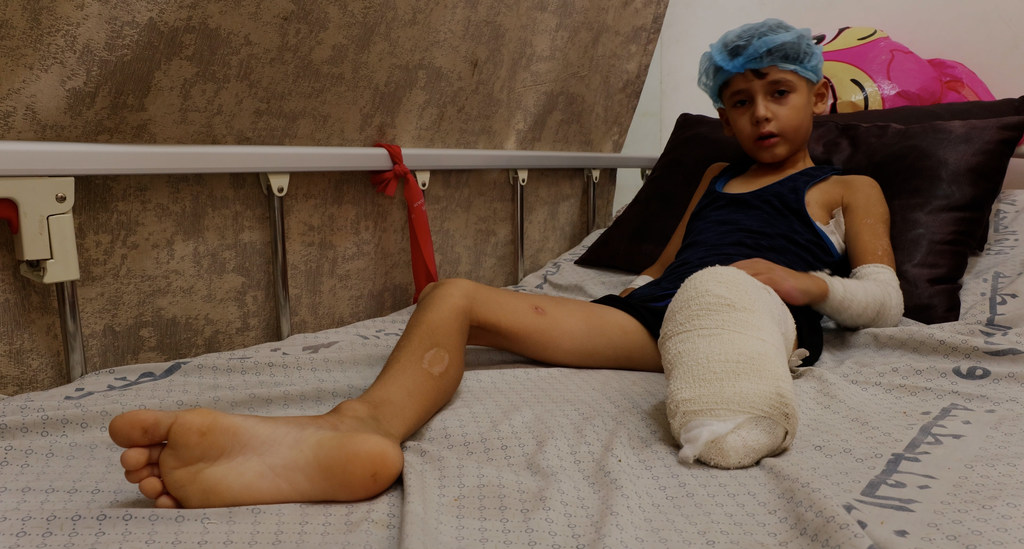
“I was going to buy falafel,” says Mohammed Hassan. “On the way home, I looked up and saw a rocket heading towards me. I tried to run, but it was too fast. I found myself pinned to the wall, and my foot had been blown off.”

Brought to Al-Shifa Hospital in Gaza City, the young boy looks down at his heavily bandaged left leg, and the stump where his foot used to be.

In another area of the hospital, a small child, Maryam Abu Alba, is crying in pain. “The neighbour’s house was bombed, and their home was hit,” says her grandmother. “One of her legs had to be amputated, and metal plates had to be inserted into the other one, which was fractured. She is in severe pain.”

Earlier this year, the UN humanitarian aid coordination agency OCHA estimated that 4,500 new amputees require prosthetics, in addition to the 2,000 existing cases requiring maintenance and follow-up care, while about 24,000 injured people required rehabilitation.

Health facilities are overwhelmed with many patients undergoing multiple surgeries without adequate medical supplies, including anaesthesia.

Palestinian child Mohammad Hassan sitting on a hospital bed in Gaza after his left leg was amputated by a strike.

Desperately seeking food

In May, as supply routes for UN humanitarian convoys were interrupted, the number of distribution points of aid dropped from 400 dotted across the Gaza strip to a handful of hubs operated by the Gaza Humanitarian Foundation.

Given the shortage of humanitarian aid and diminished capacity, thousands of Palestinians have been killed or injured since May while seeking food.  Among the wounded are children and parents who, despite losing limbs, continue to search for food and water.

This comes as a UN-backed food security report has just concluded that famine is confirmed in Gaza governorate, where half a million people are trapped in conditions of starvation, malnutrition and death.

Ibrahim Abdel Nabi was one of the many Palestinians who headed to the hubs in the hope of finding desperately needed provisions for their families.

In his tent at a displacement site in the coastal Al-Mawasi area of Khan Younis, Mr. Nabi, surrounded by his wife and children, explains how the journey ended in disaster and life-changing injuries.

“When I arrived at the Al-Alam area, west of Rafah, I was hit by an explosive bullet in my leg. I was bleeding for about an hour and a half, and no one came to help me. They were all trying to find food for their children.”

Eventually, a group of people came to his rescue and took him to the nearby Red Cross hospital.

“I stayed there for about a month and a half, undergoing about 12 operations. I became malnourished and lost a lot of blood. Infection spread, and more of my leg had to be amputated.”

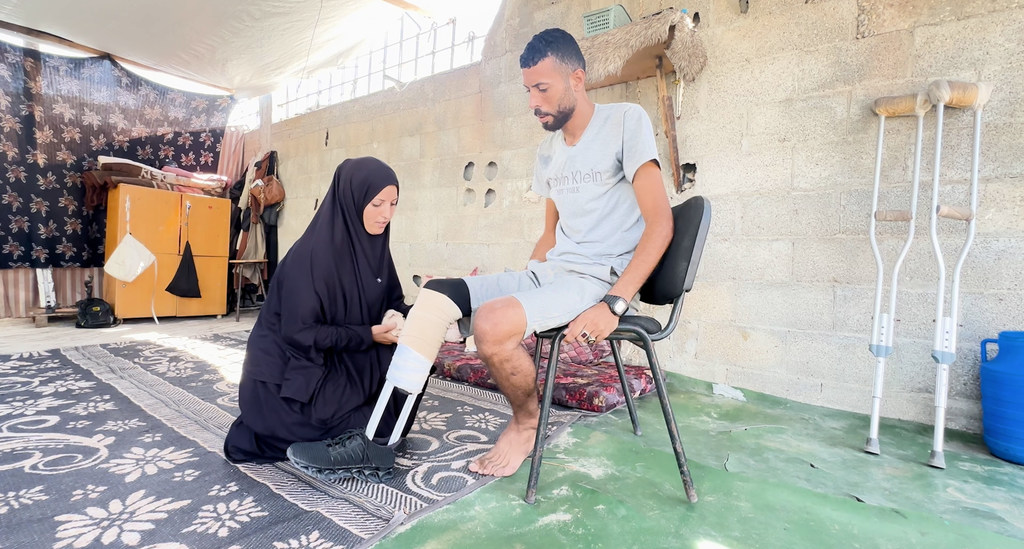
Ibrahim Abdel Nabi, a Palestinian displaced in Gaza, sitting on a chair while his wife helps him wear the handmade prosthetic limb.

‘I made my prosthetic leg’

As Mr. Nabi was trying to recover, he was aware that his family were still in need of food. Despite the pain, he decided to make a simple prosthesis from materials he could find to allow him to get back on his feet and make fresh attempts to find food and water.

“The prosthesis injures my leg,” he said. “It causes inflammation and increases the pain. We don’t have medical care or supplies, but I will use it no matter how much it hurts.”

As he speaks, Mr. Nabi’s wife begins to cry. “God willing, we will live through this experience,” she says.

Mr. Nabi gets up on crutches and heads to a nearby tent, where his wife helps him to put on the crude prosthesis.

“Don’t strain yourself,” she repeats, over and over. “Take your time. Walk slowly.”

Source link

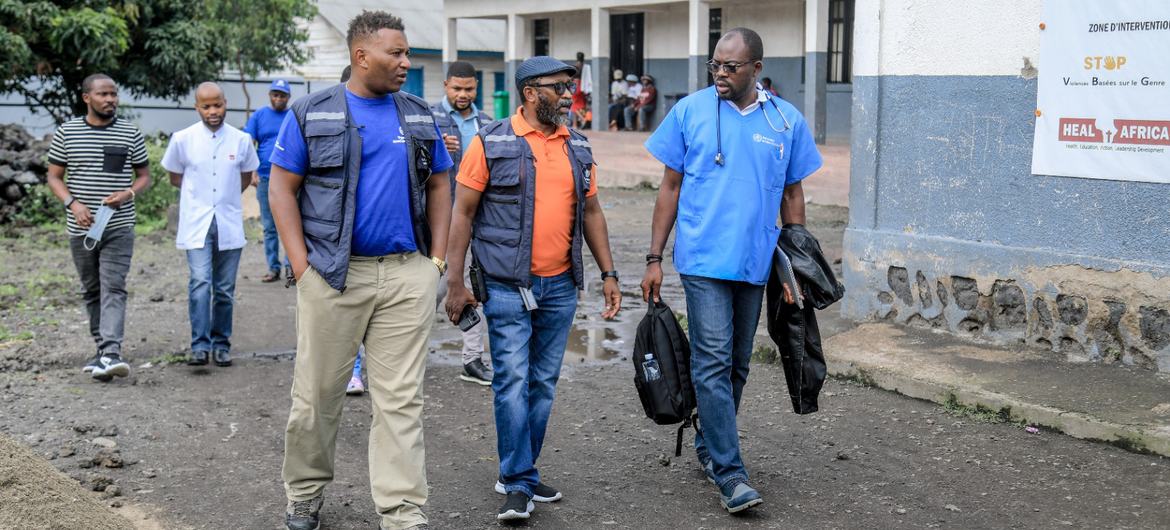
DR Congo: The doctor who couldn’t leave Goma

Gunfire tore through the dark. Night after night, the 44-year-old physician from Guinea clung to the hope that the besieged city would hold somehow. Then, one morning in late January, the call came: he and the remaining international staff had to be evacuated immediately.

“We took the last flight out,” he recalled.

Hours later, Goma was in the hands of M23. The Tutsi-led rebel group, backed by neighbouring Rwanda, had just landed its boldest military victory in the region yet.

For most, that would have been the end of the story: a narrow escape, a mission cut short. But, as the aircraft lifted from the runway, he knew he would return. The only question was: how soon?

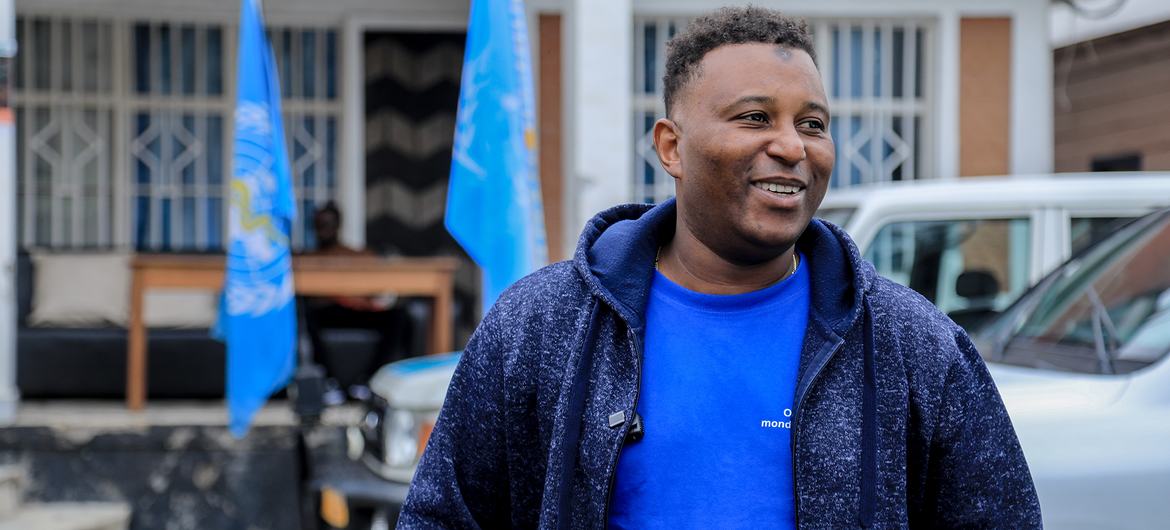
Dr Thierno Baldé, 45, led the WHO response in Goma after the city fell to M23 rebels in early 2025. (file)

A reluctant interlude

Back in Dakar, where he heads the World Health Organization (WHO) emergency hub for West and Central Africa, Dr. Balde grew restless. Reports of civilian massacres kept trickling out of North Kivu, each new detail cutting deeper. The colleagues he had left behind haunted him. With every grim report, his conviction deepened: his place was at their side.

Two weeks later, on the day he turned 45, he was tapped to lead the agency’s response in eastern DRC. He kept the assignment from his parents in Conakry, his hometown, to spare them the dread.

“I only told them once I was already there,” he admitted, almost sheepishly. His wife and two children had long since grown used to watching him vanish into the world’s most dangerous crises.

Return to ruins

It took him five days to reach Goma. By then, the airport had been shut and the roads pocked with checkpoints.

The city he found was hollowed out. Power lines were down, hospitals crammed with the wounded and talk of the streets being littered with bodies. Fear had settled like ash after a blaze on every face. “In 15 days, everything had changed.”

His team was broken. Some 20 Congolese staffers, gaunt from exhaustion, had been trying to hold the city’s fragile health system together. He gave half of them time off to recover, despite knowing every pair of hands was desperately needed. It was the least he could do.

And yet, amid the wreckage, there was one stroke of good fortune. Unlike most other UN agencies, the WHO warehouses had not been looted. They became lifelines, providing fuel to power hospitals, surgical kits for the wounded and cell phones to coordinate emergency evacuations.

Still, the numbers were crushing, with as many as 3,000 dead, according to initial reports. The bodies needed to be dealt with swiftly before disease spread.

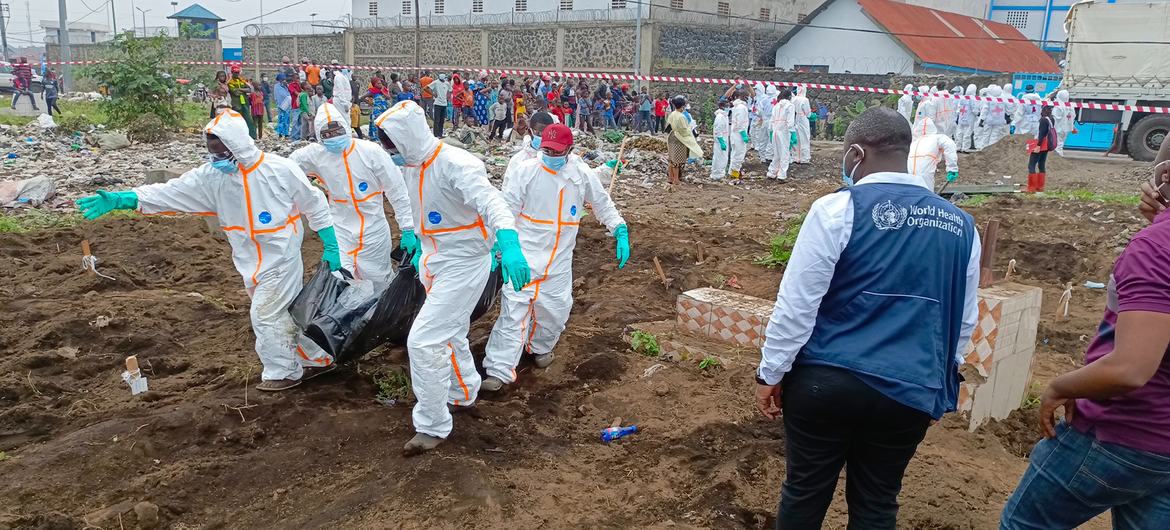
“We had to bury everyone intensely, in a very specific timeframe,” he said, noting that WHO ended up paying local gravediggers to collect the corpses.

Bodies are being buried with the assistance of WHO personnel in the aftermath of the fall of Goma to M23 rebels in early February 2025. (file)

The spectre of cholera

On the day of his return, another illness announced itself: cholera. The first cases had just been confirmed in a MONUSCO camp, where hundreds of disarmed Congolese soldiers and their families had sought shelter after losing the city to the M23 militia. The UN peacekeeping mission’s bases, designed for Blue Helmets, were not built to accommodate a large number of civilians. Sanitation conditions were dire, and the disease spread fast.

That night, Dr. Balde could not sleep.

The next morning, he walked into the camp and saw patients stretched out on the floor. There were 20 or 30 people, with only one doctor, he remembered. Two were already dead.

For days, his team scrambled to hold back the tide, with chlorine for disinfection, protective gear, makeshift triage and staff recruited and trained on the spot. Vaccines were rushed in from Kinshasa.

Rumours rippled through the city

Still, rumours rippled through the city.

“People began saying ‘cholera is exploding in Goma and WHO is overwhelmed.’” He, who had come for humanitarian relief, now found himself with an epidemic on his hands.

“We had to completely re-orient ourselves,” he said. The ghost of another Haiti, where the UN played a role in a cholera outbreak in 2010, hovered over his every decision.

As if on cue, another disease was spreading. Mpox, once confined to the sprawling camps of displaced people on Goma’s outskirts, now spilled into the city itself. Those camps, home to hundreds of thousands uprooted by earlier waves of violence in the region, were emptied in the chaos of Goma’s fall.

“The patients ended up in the community,” he explained.

Dr Thierno Baldé (center left) and colleagues visit a WHO-supported health centre providing care to the population around Goma. (file)

Sitting across from rebels

Then came the men with guns. One afternoon, they barged into the WHO compound without warning. Were they under M23 orders, fighters acting on their own or mere criminals? It hardly mattered. The staff talked them down, persuading them to leave, but the incident made one thing clear. Without some understanding with the de facto authorities, the agency’s work could be compromised overnight.

So, Dr. Balde sought them out.

“We mustered the courage and went to meet them,” he said. At the North Kivu governor’s offices, now run by the rebels, he laid down his WHO “Incident Manager” card.

“I told them Ebola can affect everyone, cholera can affect everyone. We are here to contain them.”

A channel was opened. Fragile, but enough.

The cost of altruism

There’s a stiff price to pay for helping others. In Goma, the days blurred together. Hours were spent in fevered meetings and evenings spent alone in a hotel where heavily armed men dined at nearby tables.

During Ramadan, with the city under curfew, he broke the fast each night with the same simple meal, the city outside trembling with uncertainty.

When he returned to Dakar two month later, his blood tests were a mess.

“It was a real personal sacrifice,” he said, “and I’m not even talking about mental health. As a humanitarian, you have to take care of yourself, too.”

A veteran, still marked

Dr. Balde is no stranger to disaster zones. Trained in Guinea and Quebec, an associate professor at the University of Montreal, he cut his teeth with the Canadian Red Cross in Haiti after the earthquake, then in Guinea during the Ebola outbreak. Since joining WHO in 2017, he has faced emergency after emergency, including COVID-19.

I did everything I could to go back, but I paid a price.

And yet, he admitted, Goma left a mark that few other crises had.

“I did everything I could to go back, but I paid a price.”

In the Senegalese capital, his family bears that price, too. His children know their father disappears into places where the world is breaking apart. His wife has learned to live with the absence.

Still, when he speaks of those feverish weeks in eastern DRC, one sentence returns again and again, insistent and unshaken: “I had to be there.”


Source link

International Day for Remembrance of Slave Trade: ‘Time to abolish exploitation once and for all’

“It is time to abolish human exploitation once and for all and to recognise the equal and unconditional dignity of each and every individual,” Ms. Azoulay said.

The Day is intended to inscribe the tragedy of the slave trade in the memory of all peoples.

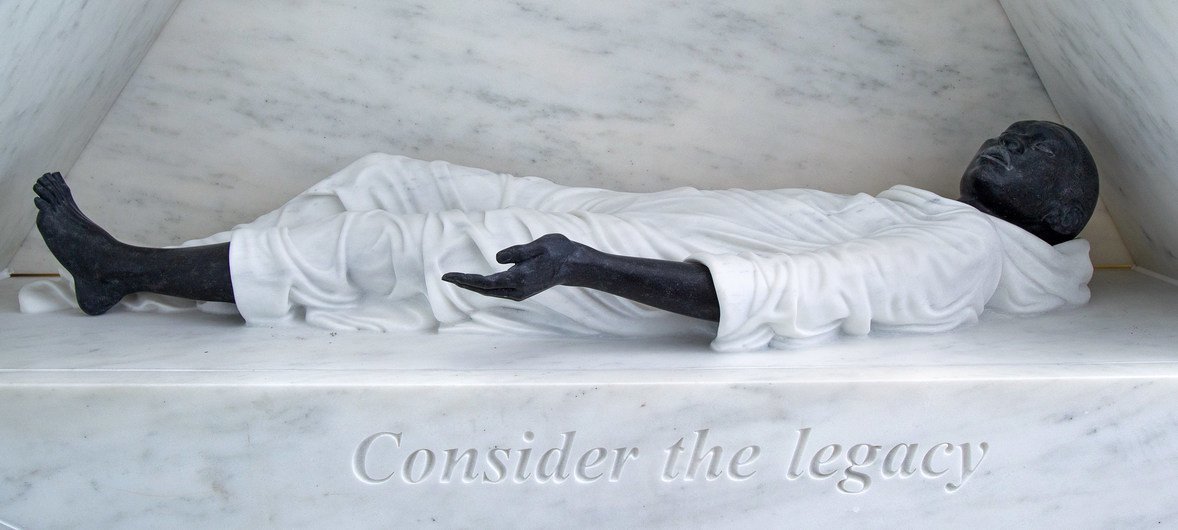
Details from Ark of Return, the permanent memorial at UN Headquarters to acknowledge the tragedy and consider the legacy of slavery and the transatlantic slave trade.

‘The fight is not over’

Echoing the goals of UNESCO’s intercultural project The Routes of Enslaved Peoples, it should offer an opportunity for collective consideration of the historic causes, the methods and the consequences of this tragedy and for an analysis of the interactions to which it has given rise between Africa, Europe, the Americas and the Caribbean, said the UN agency, which leads the annual commemoration.

UN Deputy Secretary-General Amina Mohammed said that while the Day honours the victims of the transatlantic slave trade, “the fight is not over.”

“Modern slavery persists,” she stated. “Let’s confront injustice, past and present and uphold the dignity and rights of every person.”

For its part, the UN works towards these goals, including through its Outreach Programme on the Transatlantic Slave Trade and Slavery, established in 2007.

Uprising led to abolition

On the night of 22 to 23 August 1791, in then Saint Domingue, now Haiti, saw the beginning of the uprising that would play a crucial role in the abolition of the transatlantic slave trade.

Against this background, the International Day is commemorated around the world. It was first celebrated in a number of countries, including in 1998 in Haiti and in 1999 on Gorée Island in Senegal, where millions of enslaved people had been forced onto ships to cross the ocean.

“Today, let us remember the victims and freedom fighters of the past so that they may inspire future generations to build just societies,” UNESCO’s Ms. Azoulay said.

Source link

Yemen: How acts of compassion light the way for healing

Her journey into humanitarian work began after years of serving in hospitals in Aden, where she witnessed firsthand the struggles vulnerable communities face in accessing healthcare services.

“In Aden, I worked at a private hospital,” she recalled. “I found that many people couldn’t afford treatment. That reality pushed me to find a way to help those left behind.”

She decided to relocate to Ma’rib, a city sheltering hundreds of thousands of people displaced by the conflict and a key transit hub for migrants making the perilous journey from the Horn of Africa through Yemen, with a clear goal in mind: to serve those who could not afford medical treatment.

‘Migrants who reach us are traumatised’

Dr. Nouf said she found her calling at the centre, which provides primary healthcare services to vulnerable groups, especially those on the move.

“Migrants who reach us are traumatised,” she explained. “Whether it’s hunger, fear of death or the unknown, it results in physical, psychological or neurological shocks.”

Dr. Nouf conducts an initial examination to assess her patient’s health condition.

Many arrive with serious, sometimes permanent, injuries. Women in particular often carry visible and invisible scars from abuse suffered along irregular migration routes into the country.

“There are times when I emotionally struggle with what I see and hear,” she said. “But, helping these people and watching them recover fuels my passion and determination to continue.”

Listening to their stories filled with pain, fear and resilience, Dr. Nouf does everything she can to help, assessing each case, providing emergency support and when needed, referring patients to specialised services. From treatment for contagious diseases to care for physical and psychological traumas, MRP also offers protection services for survivors and victims who experienced violence, exploitation and abuse.”

From young migrant to aid worker

Dr. Nouf is not alone in this mission of delivering lifesaving assistance to migrants and Yemenis in need. She works together with a dedicated team of colleagues from diverse backgrounds who tirelessly attend to numerous patients each day, among them Khalid, a 22-year-old Ethiopian whose own migration journey to Ma’rib is a testament to resilience and compassion.

Khalid arrived in Yemen in 2021, heartbroken after his school in Ethiopia refused to let him return due to illness-related absence. Frustrated, he left Ethiopia with smugglers, enduring a grueling 10-day trek through the desert and surviving on shared biscuits. Upon reaching Aden, he found no comfort or assistance, so he continued his journey to Ma’rib where some of his relatives live.

Once in Ma’rib, Khalid was welcomed by his community, who brought him clothes and hosted him. A month later, he began working as a cleaner at a local hospital, a job he held for three years.

‘I’ve been through the same experience’

At the hospital, Khalid encountered other migrants seeking treatment and advocated for their care. He spoke with administrators, urging them to treat these vulnerable individuals for free. His reputation grew, and soon, anyone in need turned to Khalid for help.

“I help other migrants because I’ve been through the same experience,” he said. “I know how support can make the suffering less.”

Eventually, Khalid received the opportunity to work in the MRP, where he can help migrants access services and provide translation support.

“People arrive here suffering from poor nutrition, amoebiasis and malaria. Some bear physical injuries caused during torture for ransom at the hands of traffickers,” he said. “I am thankful to the donors who keep this facility running. It saves lives every day through vital healthcare services.”

Health and aid workers targeted in conflicts around the world, UN agency says

Attacks against health facilities doubled between 2023 and 2024, and more than 900 health workers were killed last year, the agency reported.

Humanitarian aid workers were also killed in record numbers in 2024. Yet, 2025 is outpacing even these dark statistics at a time when funding for humanitarian work is shrinking and support services established over decades are struggling to operate.

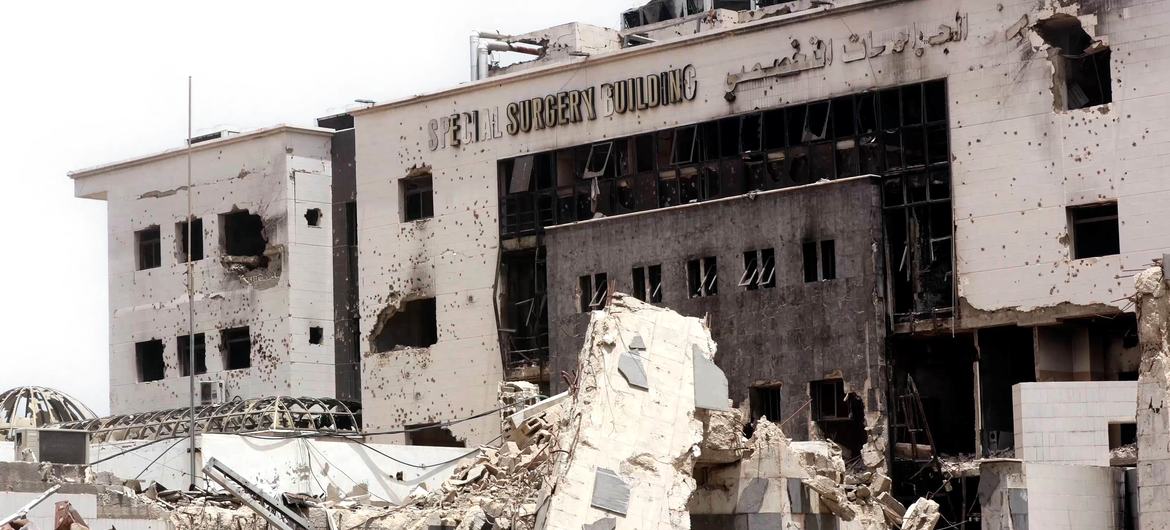
The Special Surgery Building at Al-Shifa Medical Complex in central Gaza City has been reduced to rubble.

Assault on Gaza’s health system

The nearly two-year-long war has devastated Gaza’s health system, leaving thousands without access to essential services. Now, as famine takes hold, miscarriages, premature births and low birth weight cases have surged, while newborn deaths are increasing, the UN agency warned.

PULL QUOTE: Life must continue even when bombs are going off.

“Because the delivery room was under direct fire, I delivered babies in hospital hallways,” said Ayda, a senior midwife in northern Gaza. “For lights, we used mobile phones. Despite the lack of supplies and water, our hands continued to work. Life must continue even when bombs are going off.”

Since October 2023, the World Health Organization (WHO) has documented over 720 attacks on healthcare in Gaza, with at least 1,580 health workers killed and as yet unknown numbers arrested and detained by Israel. Among them was Ayda, who just days after sharing her story, was killed in an airstrike along with 37 members of her family.

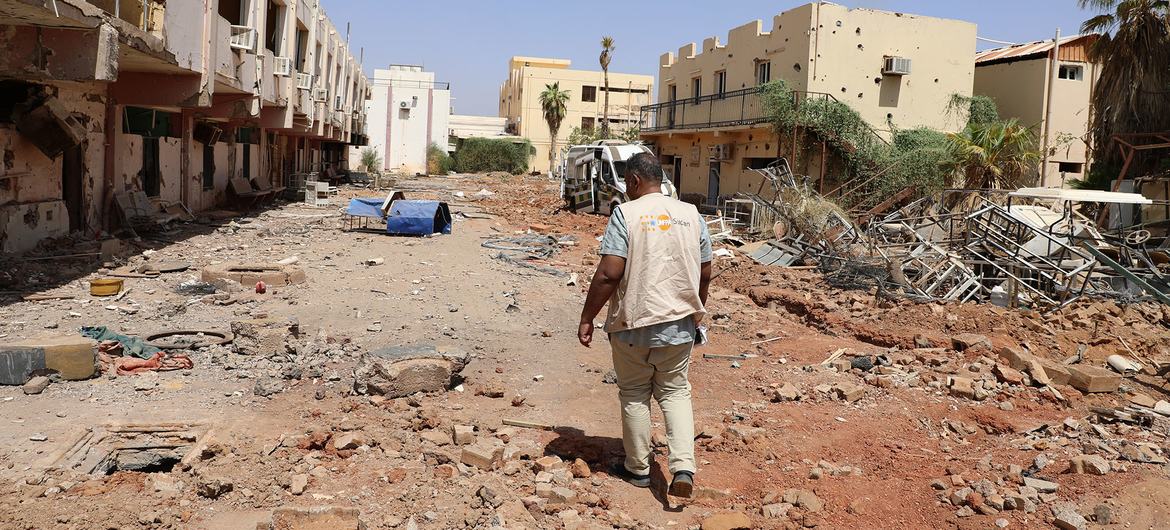
Dr. Khalid Badreldin completed his studies at the Ibrahim Malik Hospital in Khartoum, which now lays in ruins.

Delivering amid devastation in Sudan

In a field of rubble that used to be part of the Ibrahim Malik Hospital in Khartoum, Dr. Khalid Badreldin, a reproductive health analyst with UNFPA in Sudan, recalled performing his first surgery and delivering his first baby there.

“Now, I find it like this,” he said, lamenting the now shuttered hospital that was once a major provider of emergency treatment and maternal and neonatal services. The hospital has joined more than 80 per cent of health facilities in Sudan’s conflict zones that are no longer operational.

Meanwhile, midwives in Khartoum, the capital, are taking “huge risks to reach women in their homes”, explained Hawaa Ismael, who works at the UNFPA-supported Kararai Health Centre.

“It was exhausting, working day and night, but it’s our duty, and I’m proud of what we’ve done.”

On the other side of the country, staff at the El Fasher Maternity Hospital have come under attack, with one midwife killed when her home was shelled on Thursday and another kidnapped.

Haiti’s spiralling crisis

Clinics and hospitals have been deliberately targeted in the crisis that has gripped Haiti over the past 18 months, further weakening a health system already hobbled after years of conflict, looting and financial collapse.

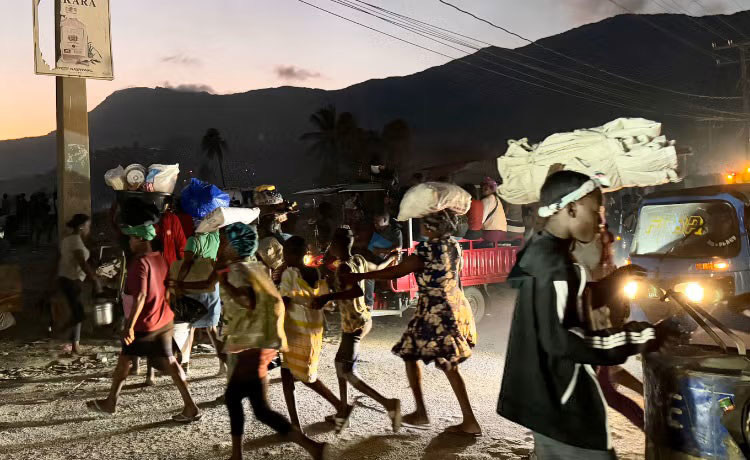
In Haiti, people carrying their belongings flee in near darkness.

The State University Hospital, the country’s largest, was attacked at its reopening ceremony in December 2024, following a 10-month closure, with several people killed, according to reports. In the same month, armed gangs set fire to the Bernard Mevs Hospital in Port-au-Prince, the capital, and in April, attacks forced Mirebalais University Hospital to close.

Organized gangs are waging a brutal campaign to seize control of the capital, with sexual violence rampant. An estimated 1.2 million women and girls are in urgent need of protection against gender-based violence, but due to ongoing insecurity, three out of UNFPA’s four safe spaces in Port-au-Prince were recently forced to close and relocate. As access to emergency services remains extremely limited, just one quarter of rape survivors receive care within the critical 72-hour period.

© UNOCHA/Viktoriia Andriievska

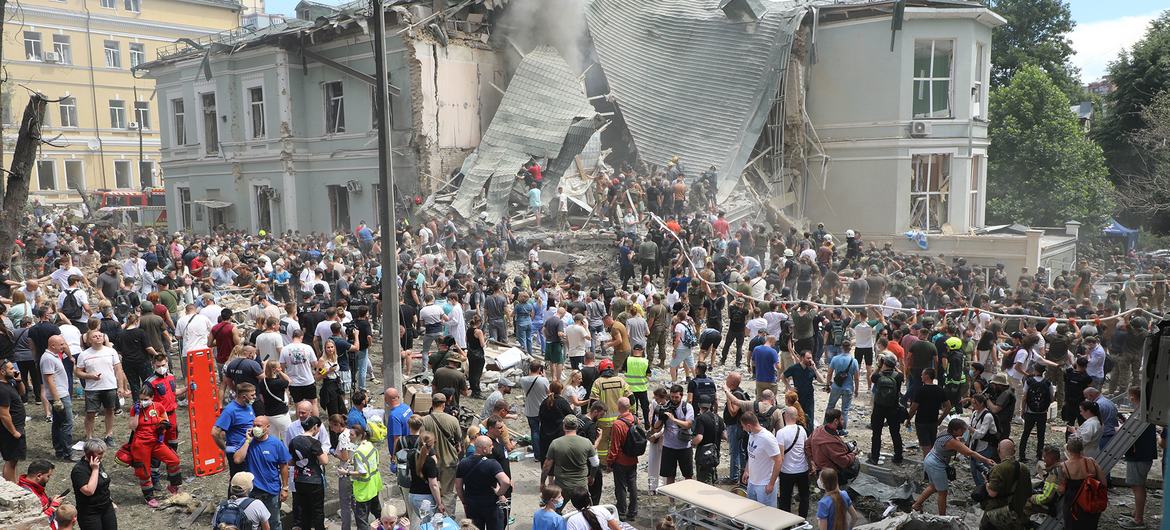
Ukraine’s largest pediatric health centre, Okhmatdyt Children’s Hospital in Kyiv, was hit on 8 July 2024 in one of the worst missile attacks on the country.

Heavy toll in Ukraine

Since January 2025, the World Health Organization (WHO) has recorded over 300 attacks by Russia on healthcare facilities, services and personnel in Ukraine, where women and girls are often compelled to find safer places to shelter and give birth.

I was afraid to give birth, but life goes on. We want to live too.

“Every day brings stress,” said Anastasiia from Sloviansk, on the frontline Donetsk region. “Even if there’s no immediate strike, the fighting nearby is loud and constant. I was afraid to give birth, but life goes on. We want to live too.”

Her region lacks a neonatal intensive care unit and while doctors can perform a Caesarian section, they could not provide full care if complications arose. As her due date approached, Anastasiia travelled some 20km to reach the Kharkiv Regional Perinatal Centre despite the city being regularly subjected to bombings, drone strikes and artillery shelling.

The response workers who help women like Anastasiia often face risks.

“When we arrive at the sites of attacks or in cases of violence, we don’t have time to slow down,” explained Roman, who works with a UNFPA mobile psychosocial support team in Dnipro. “It’s like our own reactions are on hold. Only later, when we look back and discuss it, do we realise how difficult it actually was.”

Under fire in DR Congo

In the restive eastern Democratic Republic of the Congo (DRC), most facilities providing maternal healthcare have been bombed or looted.

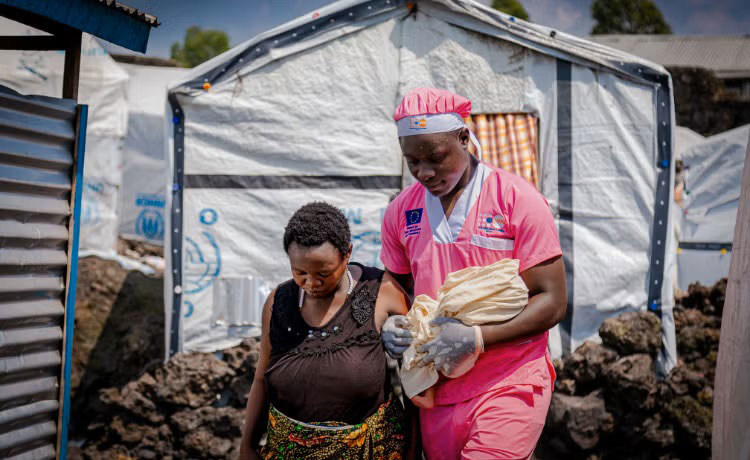
Midwife Loti Kubuya Mielor assists a newly arrived displaced woman who gave birth in a shelter in Goma, DR Congo.

Indeed, just one third of hospitals in the region and one in five health centres are able to function. UNFPA’s mobile health teams are often the only option women have.

Displaced since February 2023, Francine Toyata recalled her recent travel through “darkness and chaos” with her mother to reach a UNFPA-supported mobile health clinic to give birth in the Rutshuru territory of North Kivu province.

“It is for women like Francine that we do this work,” said Nelly, her midwife.

As the conflict escalates, bombs have started hitting camps for internally displaced people, and mobile health clinics and listening centres have also been looted and destroyed.

“We were not safe,” Nelly added. “We need more support to meet these urgent needs.”

Source link

World News in Brief: Gaza humanitarian update, more killings in Sudan, ending impunity in Myanmar

Multiple strikes overnight into Friday were reported in the Jabalya Al Balad and An Nazla neighbourhoods, the UN Office for the Coordination of Humanitarian Affairs (OCHA) said in its latest update.

As a result, around 900 people reportedly fled towards the Sheikh Radwan neighbourhood and western Gaza City.

Safe passage, more aid

The UN and partners again reminded parties to the conflict of their obligation to protect civilians, in line with international law, including humanitarian workers and people who cannot or choose not to move. 

“Those fleeing must be allowed to do so safely. They must also be allowed to return if they wish to do so, as the situation allows,” OCHA said.

The agency underscored the need to ensure that people have access to aid and basic services, whether they leave or stay.

Supplies also must be allowed to enter the Gaza Strip through all available crossings and corridors, and humanitarians must have safe, predictable and sustained access to deliver aid at scale.

Hospitals under strain

Meanwhile, as strikes continue to intensify across the enclave, casualties are flooding hospital emergency departments.  

Humanitarians warned that the expansion of military operations would further cripple the collapsing healthcare system. 

Nearly half of all hospitals and field hospitals are located in Gaza City, accounting for some 40 per cent of bed capacity in the entire enclave.  Additionally, many medical facilities in the south are operating several times over their bedspace capacity.

Humanitarians stressed that access to healthcare must be immediately restored to avert more preventable deaths. 

Sudan: UN rights office horrified by recent killings in El Fasher 

Recent brutal attacks by the paramilitary Rapid Support Forces (RSF) in Sudan have left at least 89 people dead in North Darfur state, the UN human rights office, OHCHR, said on Friday

The RSF have been battling the Sudanese Armed Forces (SAF) for control of the country for more than two years.

OHCHR said RSF attacks on the besieged North Darfur capital El Fasher and the adjoining Abu Shouk camp for displaced people resulted in the killing of at least 89 civilians, though the actual number could be higher.

The attacks took place over a 10-day period ending on 20 August.

Apparent summary executions 

At least 32 civilians were killed in attacks between 16 and 20 August, while at least 57 were killed in previous attacks on 11 August.

OHCHR was particularly horrified that 16 of the most recent killings appear to have been summary executions, Spokesman Jeremy Laurence told journalists in Geneva.

“Most of the victims were killed in Abu Shouk camp and belonged to the African Zaghawa tribe, according to information gathered by our Office,” he said.

“In another case in the El Fasher area, a victim was asked which tribe he belonged to. He was killed after responding that he was from the African Berti tribe.” 

Meanwhile, the humanitarian situation in El Fasher has reached a critical stage after more than a year of siege, and there is growing risk of famine in the city and other areas of North Darfur.

OHCHR was appalled by two separate attacks on UN humanitarian convoys in North Darfur this month and in June, saying such attacks only worsen the human rights situation for civilians.

© UNICEF/Ilvy Njiokiktjien

Ending impunity for violence critical for Rohingya in Myanmar

The UN human rights office has also called for ending impunity in the violence against the Rohingya people in Myanmar and ensuring their rights to security, citizenship and equality.

It said the Rohingya – a mostly Muslim minority community in predominantly Buddhist Myanmar – continue to suffer, eight years after a deadly crackdown by the military.

More than 700,000 fled to Bangladesh in the wake of the assault which began on 25 August 2017, joining others who had escaped earlier waves of attacks. 

Break the cycle

OHCHR said that ending impunity and ensuring the Rohingya’s rights to security, citizenship and equality, are essential for breaking the cycle of violence.

The Rohingya mainly live in Myanmar’s Rakhine state, and the office noted that the human rights and humanitarian situation there have sharply deteriorated since November 2023, further deepening the already life-threatening conditions they face.

OHCHR urged the international community to step up support for the Rohingya by increasing humanitarian funding to secure access to basic needs, essential services, and to ensure accountability. 

Source link

DR Congo: Rising insecurity in the east impedes diplomatic progress, Security Council hears

Despite diplomatic progress in recent months, with the United States brokering a peace agreement between the DRC and Rwanda, and Qatar facilitating a Declaration of Principles between the Congolese Government and M23 rebels, tensions remain high in the eastern DRC – where multiple armed groups operate.  

The Security Council has also sought to promote peace in the restive region, notably through its adoption of resolution 2773 in February 2025 calling upon all parties to refrain from violence against civilians. Still, casualties continue to rise in the east of the country.

“In North Kivu, the situation has escalated significantly since April,” Martha Ama Akyaa Pobee, Assistant Secretary-General for Africa in the Departments of Political and Peacebuilding Affairs and Peace Operations told ambassadors.  

The DRC is currently facing one of the most acute humanitarian emergencies in the world, with food insecurity on the rise and 5.9 million Congolese currently internally displaced.  

Significant escalation

Regrettably, the evolution of the security situation on the ground has not matched the progress achieved on the diplomatic front,” said Ms Pobee.  

Recent attacks carried out by the M23 and Congo River Alliance (AFC) armed groups, as well as assaults by the Allied Democratic Forces – a militia associated with the terrorist group ISIL – have dramatically increased civilian casualties.

Meanwhile, humanitarian workers continue to risk their lives to provide limited assistance to populations in need.  

Amid general indifference, conflict-related sexual violence persists, as does the forced recruitment of children. 

‘Critical juncture’

We cannot and must not accept the extreme suffering and recurrent horrors that are commonplace in eastern DRC,” said Ms Pobee.  

To protect civilians, restore law and order, and address the profound humanitarian needs of the population, the parties must cease hostilities.  

“At this critical juncture for the DRC and the region, it is crucial that this Council place its full weight behind current peace efforts, alongside exerting its influence to ensure respect for and compliance with resolution 2773”, she told the Security Council.  

While the situation on the ground remains dire, genuine engagement by the parties, together with concerted support from the international community, will help lay the groundwork for a durable peace, the top official underlined. 

Source link

Momentum builds towards marine biodiversity treaty, as experts convene in New York

Formally titled the Agreement under the United Nations Convention on the Law of the Sea on the Conservation and Sustainable Use of Marine Biological Diversity of Areas beyond National Jurisdiction, it was adopted in June 2023 after years of negotiation, and is open for signature until 20 September.

With only eight ratifications left before it can enter into force, momentum is accelerating toward the treaty’s implementation phase, which could begin as early as 2026.

Urgent, ‘decisive and concerted action’

By covering marine genetic resources, environmental impact assessments, area-based management tools, and the transfer of marine technology, the treaty is central to protecting the ocean.

The need for decisive and concerted action has never been more urgent,” UN Legal Counsel Elinor Hammarskjöld told delegates at the opening of the session.

From rules of participation and financing to digital access and institutional hosting, negotiators face complex trade-offs.

But the sense of urgency, and the crowded rooms at UN Headquarters, suggested that the international community is edging closer to turning text into reality.

Recalling the 2025 UN Ocean Conference held in Nice in June, co-hosted by France and Costa Rica, Ms. Hammarskjöld said that it reaffirmed the essential role of multilateralism in addressing the pressures putting marine ecosystems at risk.  

Further, the 39 treaty actions by States from all regions undertaken during the Ocean Conference demonstrated the international community’s strong commitment to conserve and sustainably use the ocean and its resources.

Now, “with the real probability of the first Conference of the Parties to the Agreement convening in 2026, we are at a critical juncture”, she stated.

That urgency was echoed by the Commission’s Co-Chair Janine Coye-Felson, who said that “if the momentum bolstered by the third United Nations Oceans Conference, held in Nice in June this year, sustains, it can be reasonably expected that the Agreement may enter into force in the latter part of 2025, or early 2026”.

Indigenous Peoples as rights-holders

During the session’s early debates, small island developing States (SIDS) pressed for flexibility, including virtual participation and guaranteed representation in the COP Bureau.

The representative of the Federated States of Micronesia, speaking for the Pacific small island developing States, also supported the allocation of one seat to small island developing States.  

Further, he called for recognition of “the distinct status of Indigenous Peoples under international law as rights-holders, rather than as mere stakeholders”. 

Financing and equity

Developing States, represented by groups including the G77 and China, the African Group, CARICOM and Pacific SIDS, stressed that participation funding shall not be optional but an obligation under the treaty, and called for a voluntary trust fund to cover the full expenses of delegates from least developed countries, landlocked states – and SIDS – while opposing restrictions on states in arrears.

‘Clearing house’

As entry into force approaches, delegates turned to operational issues. A proposed Clearing-House Mechanism will serve as the treaty’s central hub for information exchange.

“There is perhaps no more urgent piece of work that is in front of us than this one,” underscored Commission Co-Chair Adam McCarthy at one of the meetings.

Given the current rate of ratification, “we might need a form of Clearing-House Mechanism in operation sometime in early 2026”, he pointed out, encouraging delegates to work towards having the informal expert group “up and running” to start its work by September.

With 139 signatures and 52 ratifications already secured, the treaty is within reach of the 60 needed for entry into force.

The gathering will continue at UN Headquarters until 29 August.

Source link

UN agencies warn of rising heat stress risks for workers worldwide

The new joint report, Climate change and workplace heat stress, underscores the mounting risks as climate change fuels longer, more extreme, and more frequent heatwaves.

Stressing that workers in agriculture, construction, and fisheries are already suffering the impacts of dangerous temperatures, the report points out that vulnerable groups in developing countries – including children, older adults, and low-income communities – face increasing dangers.

Heat stress is already harming the health and livelihoods of billions of workers, especially in the most vulnerable communities,” said Dr. Jeremy Farrar, WHO Assistant Director-General for Health Promotion, Disease Prevention and Care.

This new guidance offers practical, evidence-based solutions to protect lives, reduce inequality, and build more resilient workforces in a warming world”, he added.

Drawing on five decades of research, the report highlights how rising temperatures are hitting both health and productivity.

WMO confirmed that 2024 was the hottest year on record, at 1.55 degrees Celsius above pre-industrial temperatures, and with daytime highs above 40 °C becoming commonplace – and in some areas, even exceeding 50 °C. 

Occupational heat stress has become a global societal challenge, which is no longer confined to countries located close to the equator – as highlighted by the recent heatwave in Europe,” said Ko Barrett, WMO Deputy Secretary-General. “Protection of workers from extreme heat is not just a health imperative but an economic necessity.”

Alarming findings

The report details how extreme heat is reshaping the world of work. It finds that worker productivity drops by 2 to 3 per cent for every degree above 20°C.

The health consequences are wide-ranging, including heatstroke, dehydration, kidney dysfunction, and neurological disorders. Overall, nearly half of the world’s population is now experiencing negative effects from high temperatures.

Path forward

Calling for urgent occupational heat action plans tailored to industries and regions, WHO and WMO guidance includes several recommendations:

  • Develop targeted occupational heat-health policies based on local weather and workforce vulnerabilities.
  • Prioritize protections for middle-aged and older workers, those with chronic health conditions, and individuals with lower physical fitness.
  • Train health professionals, employers, and workers to recognize and treat heat stress, which is often misdiagnosed.
  • Involve workers, unions, and local authorities in shaping heat-health strategies.
  • Promote affordable, sustainable, and scalable solutions, alongside innovation and new technologies.
  • Strengthen research and monitoring to ensure measures remain effective.

The guidance builds on International Labour Organization (ILO) findings that more than 2.4 billion workers are exposed to excessive heat globally, resulting in over 22.85 million occupational injuries each year.

‘Critical milestone’

“This report represents a critical milestone in our collective response to the growing threat of extreme heat in the world of work,” said Joaquim Pintado Nunes, ILO Chief of Occupational Safety and Health and the Working Environment.

“Aligned with the ILO’s mandate to promote safe and healthy working environments as a fundamental right, it offers robust, evidence-based guidance to help governments, employers and workers confront the escalating risks of climate change.”

A call to action

Both UN agencies stress that addressing heat stress is central to safeguarding lives, livelihoods, and economies. The guidance supports the UN Sustainable Development Goals (SDGs), urging decisive action to protect vulnerable workers, reduce poverty, and promote sustainable growth.

Urgent and coordinated action is no longer optional – it is essential, the report says.

Guterres in Japan: ‘Humanity is strongest when we stand as one’

It brings together more than 160 countries and organizations – a testament to Japan’s enduring commitment to global dialogue and cooperation, said Secretary-General António Guterres.  

Japan has helped shape some of the most important multilateral achievements of our time,” he added, commending Japan for choosing peace and international cooperation following defeat at the end of the Second World War.  

A tireless advocate for nuclear disarmament, a generous contributor to peace, and a steadfast champion of human security, Japan has help lead ever since it joined the United Nations nearly 70 years ago.

Commitment to cooperation

The moral of the United Nations’ story is simple: humanity is strongest when we stand as one,” Mr. Guterres said.  

“Although many may not realise it, the United Nations touches our lives every single day,” he said, noting that the UN provides food assistance to more than 150 million people, supplies vaccines to 45 per cent of the world’s children, and supports elections in some 50 countries.  

From landmines to biodiversity, women’s rights to refugees, freedom of the press to access to clean water, the UN sustains a vast global system of conventions and treaties – while its Charter is the pillar of international law.  

‘Reform is crucial’

But today, as the multilateral project of nations working together under a common purpose is challenged, it must adapt.

From the composition of the Security Council to unjust and unfair international financial systems, reform is crucial.  

Since leaders adopted the Pact for the Future in 2024, a blueprint to make multilateralism more effective, Mr. Guterres has also launched the UN80 initiative to help ensure that the 80th anniversary of the UN is not only a moment of reflection, but a catalyst for renewal.  

“These are times of peril. But they are also times of profound opportunity -and obligation,” said the Secretary General.

Source link

Libya: Security Council urged to back popular ‘yearning’ for national elections

Hannah Tetteh, who also heads the UN Mission in Libya (UNSMIL), briefed ambassadors in the wake of municipal council elections last week and outlined a proposed roadmap to general elections, which should have been held way back in 2021.

The Libyan people look to this esteemed Council for help, to ensure a solution to the crisis and support a political process that will result in elections and unified institutions not a succession of transitional governments,” she said.

Voting and disruptions

Nearly 15 years after the fall of former President Muammar Gaddafi, Libya remains split between two rival administrations:  the internationally recognised Government of National Unity, located in the western capital of Tripoli, and the rival Government of National Stability based in Benghazi in the east.

This past Saturday, 26 municipalities successfully held elections despite significant challenges.  Ms. Tetteh commended the electoral management body HNEC and urged all candidates to accept the results.

She regretted that not all municipalities that were expected to take part were able to do so, with the government in the east giving instructions to suspend electoral processes in 16 municipalities. Additionally, voting materials were withdrawn from centres across the region and the south.

Efforts to disrupt the vote also occurred in some municipalities in the west, where HNEC offices in three cities were set on fire or attacked, although the vote went ahead in two of them. 

‘A clear signal’

“By the end of polling day, voter turnout was 71 per cent. This is a clear signal that the Libyan people are yearning to elect their representatives. In some areas, this was the first time any elections have happened since 2014,” she said.

However, the suspension of elections in the east and south “is an equally clear sign that not all are committed to supporting Libya’s democratic development and there is an urgent need for a reset in the political process,” she added.

In February, UNSMIL established an Advisory Committee to provide recommendations for resolving outstanding issues that have prevented national elections from taking place.

A report was presented in May, and the Mission has been holding nationwide consultations on the outcomes. It has also conducted an online survey for people to share their opinions on the recommendations, with more than 22,500 responses. 

The message we clearly received was the desire to stop the cycles of repeated transitional periods; preserve and strengthen the unity of the country and its institutions; as well as to renew their legitimacy through presidential and legislative elections; and end what was frequently referenced as foreign interference,” Ms. Tetteh told the Council.

Roadmap to elections

Based on the Advisory Committee’s recommendations, the feedback from the population, and lessons learned from the failure to hold the 2021 elections, “we are convinced that the political process should focus on guaranteeing general elections and the unification of institutions through a sequenced approach,” she said.

Ms. Tetteh proposed a roadmap built around three core pillars: implementation of “a technically sound and politically viable electoral framework” towards holding the elections; unifying institutions through a new unified government, and a structured dialogue to address critical issues in order to create a conducive environment for the polls.

She estimated it would take 12 to 18 months to complete the roadmap, which will end in general elections and several “sequential steps”, including enhancing HNEC capacity as well as amending the legal and constitutional frameworks for holding full elections – legislative and presidential. 

“Following these two prior steps – which could be concluded over the next two months at most if there were the political will to do so – there should be agreement on a new unified government, capable of creating a conducive environment for credible elections while managing key governance functions effectively,” she said.

Security concerns

Ms. Tetteh reported on developments on other fronts, including the volatile security situation, with increasing militarisation of all sides.

She noted that the situation in Tripoli remains of great concern, following clashes in May.  While a fragile truce is holding, violations have occurred, though no escalations.

UNSMIL also documented 20 deaths in custody since March 2024, including political activist Abdel Munim Al-Maremi who died last month in Tripoli shortly after a release order had reportedly been issued. 

“These cases are the latest examples of a widespread and persistent pattern of grave violations perpetrated across the country with impunity, including against migrants and refugees, in some cases fueled by disinformation and hate speech,” she said.

Ms. Tetteh was also alarmed by the forced return of migrants to conflict zones, including Sudan. She noted that Sudanese refugees in Kufra exceeds the number of residents, urging donors to step up support. 

Source link