Famine in Gaza: ‘a failure of humanity itself,’ says UN chief

UN Secretary-General António Guterres said the results of the Integrated Food Security Phase Classification (IPC) analysis were no mystery: “It is a man-made disaster, a moral indictment – and a failure of humanity itself.

“Famine is not about food; it is the deliberate collapse of the systems needed for human survival.”

Famine conditions are projected to spread from Gaza Governorate to Deir Al Balah and Khan Younis Governorates in the coming weeks, the IPC estimates.

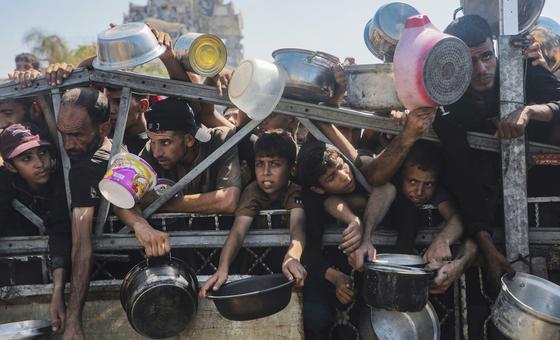
UN agencies have collectively and consistently highlighted the extreme urgency of delivering immediate and full-scale humanitarian aid given the escalating hunger-related deaths, rapidly worsening levels of acute malnutrition and plummeting levels of food consumption in Gaza – with hundreds of thousands going days without anything to eat.

Israel’s obligations

“As the occupying power, Israel has unequivocal obligations under international law – including the duty of ensuring food and medical supplies of the population,” said the UN chief, reacting to the famine declaration from the IPC, which is endorsed by dozens of governments, UN agencies and NGOs as the key evidence-based measure of food insecurity and malnutrition.

See our UN News explainer here.

Mr. Guterres said Israel’s denial of its duties could not be allowed to continue: “No more excuses. The time for action is not tomorrow – it is now.”

Silence the guns, release the hostages

UN agencies operating in Gaza joined the UN chief in calling for an immediate ceasefire to finally allow unimpeded, large-scale humanitarian response and the immediate release of all hostages taken by Hamas and other militants during the 7 October 2023 terror attacks.

Agencies also expressed grave concern over the threat of the intensified military offensive on Gaza City and any further escalation in the conflict, as it would have further devastating consequences for civilians where famine conditions already exist.

“Many people – especially sick and malnourished children, older people and people with disabilities – may be unable to evacuate,” they said in a joint statement.

Famine set to expand

By the end of September, more than 640,000 people will face ‘catastrophic’ levels of food insecurity – classified as IPC Phase 5 – across the Gaza Strip.

An additional 1.14 million people in the enclave will be in phase 4 with a further 396,000 people facing phase 3 ‘crisis’ conditions.

Conditions in North Gaza are estimated to be as severe – or worse – than in Gaza City. However, limited data prevented an IPC classification, highlighting the urgent need for access.

Classifying famine means that the most extreme category is triggered when three critical thresholds – extreme food deprivation, acute malnutrition and starvation-related deaths – have been breached. The latest analysis now affirms on the basis of reasonable evidence that these criteria have been met, UN agencies said.

Briefing journalists on Friday at UN headquarters in Geneva, the UN Emergency Relief Coordinator Tom Fletcher said it was a famine that could have been prevented “if we had been allowed.”

A young severely malnourished girl is helped into her clothes.

Famine in a fertile land

“Yet food stacks up at borders because of systematic obstruction by Israel. It is a famine within a few hundred metres of food, in a fertile land.

It is a famine that we repeatedly warned of – but that the international media has not been allowed in to cover, to bear witness,” he added.

“It is a famine in 2025. A 21st century famine watched over by drones and the most advanced military technology in history. It is a famine openly promoted by some Israeli leaders as a weapon of war.”

On a wider scale, Mr. Fletcher said it was “the world’s famine. It is a famine that asks ‘but what did you do?’ A famine that will and must haunt us all.”

Malnutrition among children in Gaza is accelerating “at a catastrophic pace”, said UN agencies, who note that in July alone, more than 12,000 children were identified as acutely malnourished – the highest monthly figure ever recorded and a six-fold increase since the start of the year.

First Middle East famine

Since the last IPC Analysis in May, the number of children expected to be at severe risk of death from malnutrition by the end of June 2026 has tripled from 14,100 to 43,400.

The new assessment reports the most severe deterioration since the IPC began analysing acute food insecurity and acute malnutrition in Gaza Strip, and it marks the first time a famine has been officially confirmed in the Middle East region.

Since July, food and aid supplies entering Gaza increased slightly but remained vastly insufficient, inconsistent and inaccessible compared to the need.

Meanwhile, approximately 98 percent of cropland in the territory is damaged or inaccessible – decimating the agriculture sector and local food production – and nine of ten people have been serially displaced from homes. 

Survivors’ voices ‘integral’ to preventing terrorism

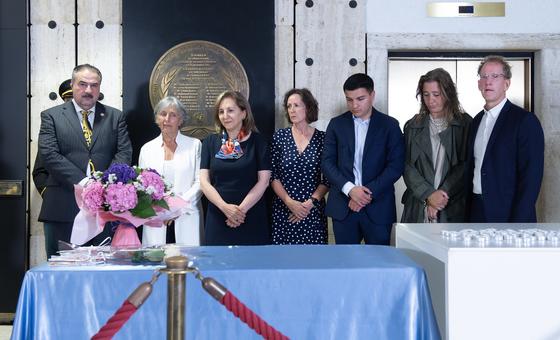
This year marks the eighth commemoration of the International Day of Remembrance of and Tribute to the Victims of Terrorism. It serves to honour victims and survivors, elevate their voices, raise awareness, and highlight global solidarity.

“This International Day is not only one of remembrance; it’s a reaffirmation of our collective commitment to uphold the rights, dignity and voices of victims everywhere,” said Vladimir Voronkov, head of the UN Office of Counter-Terrorism (UNOCT) during remarks to the high level commemoration.

Remember and pay tribute

“We pay tribute to those whose lives were stolen by terrorism, and we stand in solidarity with those who continue to live with the pain, loss, and trauma,” he added.

The event featured testimonies from survivors and relatives of those killed: “Support should not be a privilege; it’s a right. And international solidarity must be matched by action,” he said.

United by hope

“I could no longer keep hiding my pain, I chose to transform it into purpose,” said Khalifah Mwarangi, whose father was killed in a terrorist attack in Kenya in November 2014.

This past April, UNOCT launched the Victims of Terrorism Associations Network (VoTAN), a global initiative that reflects a powerful truth: victims of terrorism should not be seen as passive subjects of compassion and support.

Survivors’ voices “are integral to shaping policy and driving change to prevent similar attacks,” said Mr. Voronkov.

“While terror tries to break us apart, coming together as victims build strength”, said Nanda Daniel, a survivor of the 2004 attack on Australia’s embassy in Jakarta, Indonesia. 

Source link

Syria: Political transition on ‘a knife-edge’ amid military skirmishes

Geir Pedersen told ambassadors that in Sweida governate, where sectarian violence in July also spurred conflict in the capital Damascus, the 19 July ceasefire has come under strain, but the conflict has not resumed so far.

However, “we are still seeing dangerous hostilities and skirmishes on the margins of Sweida, and violence could resume at any moment,” he said.

In northeast Syria, efforts to implement the 10 March agreement between the interim security forces and the mostly-Kurdish Syrian Democratic Forces (SDF) continue. Just this month, there have been spikes in violence between the two militaries in the Aleppo governorate.

While attempts to convene the two sides outside of the country have been unsuccessful, Mr. Pedersen welcomed reports of contacts between officials.

Despite these security incidents, Mr. Pedersen stressed that the situation has been relatively calm this month, applauding the efforts of those who have worked to tamp down hostilities.

However, in terms of the political situation, “the country remains deeply fragile and the transition remains on a knife-edge.

Political transition?

After 13 years of civil war, Mr. Pedersen underscored the need for an inclusive, Syrian-led political transition that enables the Syrian people determine their own future peacefully, independently and democratically.

Syrians need to feel that this transition is not a series of ad hoc arrangements and isolated institutions, but a clear and comprehensive path, based on inclusion and transparency, to implement the principles of resolution 2254,” he said.

To encourage the voluntary, safe return of refugees and internally displaced persons, Mr. Pedersen stressed the need for coordinated support to repair Syria’s depleted infrastructure.

The best way to secure such support is through a genuine political transition that lays the path for long-term stability and sustainable governance. Indeed, without credible reforms, stronger institutions, and a firm commitment to the rule of law, international support risks being squandered or misdirected,” he stressed.

Humanitarian situation still dire

Amid the precarious military and political situation, 16 million Syrians across the country need humanitarian aid, according to Emergency Relief Coordinator Tom Fletcher.

Additionally, over 185,000 people have been displaced across Sweida, Dar’a, Rural Damascus and beyond.

The overall situation is dire. We need to sustain urgent delivery of food, health, shelter, clean water, fuel, restoration of water and electricity infrastructure, education. In some areas, those arriving now outnumber the existing population. Services are overwhelmed,” said Mr. Fletcher.

Teams from the UN humanitarian aid coordination office (OCHA) have visited Sweida and other towns, delivering aid and assessing needs.

OCHA has also provided emergency food packages, flour and essential household items to tens of thousands of people.

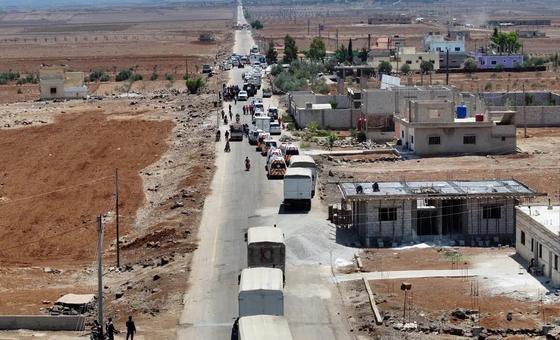
However, insecurity and road closures have disrupted the supply of aid from the UN, NGO partners and the Syrian Arab Red Crescent.

“We need better humanitarian and commercial access. And most of all, we need safety,” Mr. Fletcher stressed, particularly referring to attacks on aid convoys, health facilities, medics and ambulances.

Drastic cuts

Nevertheless, “despite funding and security challenges, the UN and partners are delivering as much lifesaving support as we can with the resources we have,” reaching 3.5 million people on average each month, a noticeable increase from last year.

But with the 2025 humanitarian appeal in the country only 14 per cent funded, ongoing aid cuts in many Western capitals are projected to lead to reduced staffing of at least 40 per cent across the humanitarian community inside Syria.

The UN relief chief emphasised that without more funding, “we won’t be able to sustain these vital efforts, let alone expand them to more people who need them.”

Furthermore, while he urged humanitarian support, he also stressed that long-term development investment is needed in Syria “to reduce and ultimately end reliance on humanitarian aid.”

Source link

Monsoon floods kill more than 700 in Pakistan, with heavy rains set to continue

The National Disaster Management Authority has also reported 978 injuries and the destruction or damage of more than 2,400 houses, while over 1,000 livestock have been lost as of Thursday, 21 August.

Severe weather is forecast to continue into early September, raising the risk of further flooding, landslides and crop losses, according to the UN Office for the Coordination of Humanitarian Affairs (OCHA).

Khyber Pakhtunkhwa hit hardest

The northwestern province of Khyber Pakhtunkhwa has borne the brunt of the disaster. 

Authorities declared a state of emergency in nine districts, including Buner, Shangla and Mansehra, after torrential rains between 15 and 19 August left 368 people dead, 182 injured and damaged more than 1,300 homes. Nearly 100 schools were also destroyed.

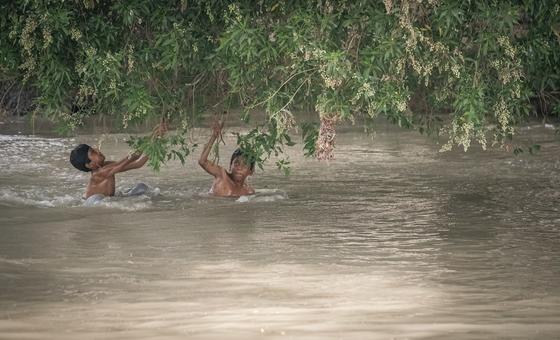
The international charity CARE said its teams found widespread devastation in Buner, where families reported homes and livelihoods swept away within minutes by torrents of floodwater carrying boulders and debris.

Children most affected

The toll on children has been particularly severe, with displacement, loss of schooling and limited access to safe water putting their health and well-being at grave risk. 

According to the UN Children’s Fund (UNJCEF), at least 21 children were among those killed in Khyber Pakhtunkhwa since 15 August.

Many schools have been destroyed or are now being used as temporary shelters, further restricting access to education and safe spaces.

Urban flooding in Karachi

In Sindh province, heavy rains on 19 August triggered urban flooding in Karachi – Pakistan’s largest city – where at least six people were killed in wall collapses and electrocutions. Rainfall reached up to 145 millimetres (about 5.75 inches) in parts of the city, inundating roads and leaving many neighbourhoods without power for hours.

The province of Punjab also suffered extensive flooding along the Indus and Chenab rivers, which has displaced more than 2,300 families and damaged cash crops across thousands of acres.

Scaling up support

Federal and provincial authorities are leading the response, having mobilized over 2,000 personnel for rescue and evacuation. In coordination with the UN and partners, they have dispatched key relief items, including food, tents and medical supplies to affected areas.

OCHA said it has deployed field coordinators to the hardest-hit districts and activated emergency mechanisms, including the release of funds from its regional humanitarian envelope for Pakistan – prioritising life-saving assistance in health, water, food security and shelter.

For its part, UNICEF has dispatched essential medicines and hygiene kits to affected districts. Each kit includes soap, water containers and other hygiene supplies to help prevent disease outbreaks.

Worrying trend

Pakistan has endured devastating monsoon seasons in recent years. In 2022, unprecedented floods killed more than 1,700 people, displaced millions, and caused an estimated $40 billion in economic losses.

Erratic and intensified rainfall patterns, amplified by climate change, are compounding the country’s vulnerability, threatening lives, livelihoods and long-term recovery across southern Asia. 

Source link

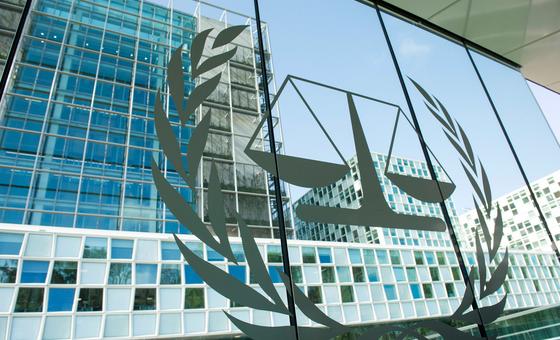
UN rights chief decries ‘relentless intensification’ of US sanctions against International Criminal Court staff

His call comes a day after four more Court personnel – two judges and two deputy prosecutors – were slapped with sanctions in connection with efforts to investigate alleged war crimes committed by the US and Israel.

This follows sanctions imposed earlier on four other judges and the ICC Prosecutor. Measures imposed could include blocking financial access to property or assets in the US, as well as travel bans.

‘Assault on the rule of law’

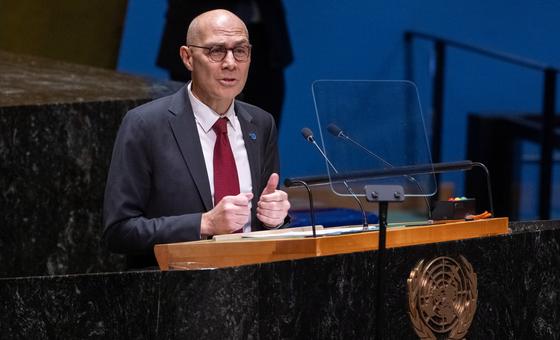
The relentless intensification of US reprisals against international institutions and their personnel must stop,” said Mr. Türk. 

“Sanctioning judges and prosecutors at national, regional or international levels, for fulfilling their mandate in accordance with international law standards, is an assault on the rule of law and corrodes justice.”

The sanctions stem from an executive order signed by US President Donald Trump in February in response to the UN-backed Court issuing arrest warrants for Israeli Prime Minister Benjamin Netanyahu and former defense minister Yoav Gallant for alleged war crimes and crimes against humanity in Gaza.

The ICC is also probing war crimes allegedly committed in Afghanistan by all sides during years of conflict, including the US, following the allied invasion of the country in October 2001.

Neither the US nor Israel are party to the Rome Statute, the treaty that established the ICC.

It’s time countries step up

Mr. Türk called for the withdrawal of the sanctions against the ICC personnel and those targeting the Special Rapporteur on the human rights situation in the Occupied Palestinian Territory.

The independent expert, Francesca Albanese, receives her mandate from the UN Human Rights Council in Geneva. For more details, read our story here.

“In the meantime, I call on States to take immediate steps to protect all of them, including by taking measures to encourage corporations operating within their jurisdiction not to implement the sanctions against these individuals,” Mr. Türk said.

States need to step up to defend the institutions they have created to uphold and defend human rights and the rule of law. Those working to document, investigate and prosecute serious violations of international law should not have to work in fear.”

About the International Criminal Court

The ICC investigates and tries individuals charged with genocide, war crimes, crimes against humanity and the crime of aggression. Read our explainer here.

Some of the cases include situations in Sudan, the Democratic Republic of the Congo and Libya. 

In March 2023, the Court issued an arrest warrant for Russian President Vladimir Putin in connection with alleged war crimes concerning the deportation and “illegal transfer” of children from occupied Ukraine.

The ICC was established in 2002 and is based in The Hague, in the Netherlands.  

Source link

Gazans face a future of pain and prosthetics

At the Al-Shifa Hospital in Gaza City, a small child, Maryam Abu Alba, is crying in pain. “The neighbour’s house was bombed, and their home was hit,” says her grandmother.

“One of her legs had to be amputated, and metal plates had to be inserted into the other one, which was fractured. She is in severe pain.”

Nowhere to run

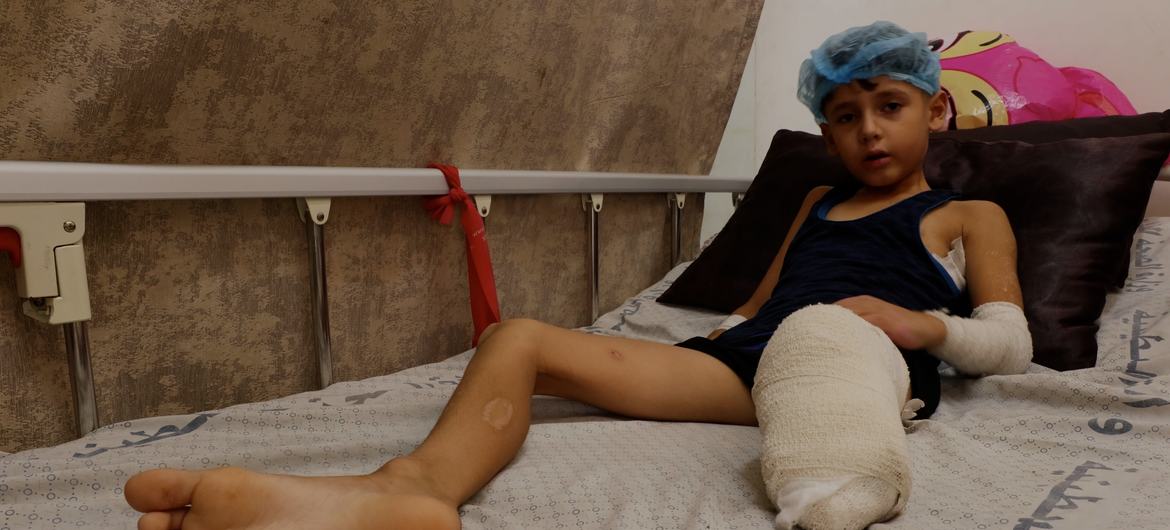
At the same hospital, young Mohammad Hassan looks down at his heavily bandaged left leg, and the stump where his foot used to be. “I was going to buy falafel,” he says. “On the way home, I looked up and saw a rocket heading towards me. I tried to run, but it was too fast. I found myself pinned to the wall, and my foot had been blown off. Then someone picked me up and took me to this hospital.”

Gaza now has the highest number of child amputees per capita of anywhere in the world.

Palestinian child Mohammad Hassan sitting on a hospital bed in Gaza after his left leg was amputated by a strike.

Shot in search of food

In May, GHF took over aid delivery in Gaza, bypassing established routes and dramatically scaling back the number of distribution points to a handful of fortified hubs, a policy that has been criticised by the UN and NGO partners.

We were told the Gaza Humanitarian Foundation had opened its doors to distribute aid. When I arrived…I was hit by an explosive bullet

On Monday, the UN human rights office described attempts to access these sites as “a deadly pursuit”. Thousands of Palestinians have been killed or injured since May while seeking food. 

When GHF began operations, Ibrahim Abdel Nabi was one of the many Palestinians who headed to the hubs in the hope of finding desperately needed provisions for their families.

In his tent at a displacement site in the coastal Al-Mawasi area of Khan Younis, Mr. Nabi, surrounded by his wife and children, explains how the journey ended in disaster and life-changing injuries.

“We were told that the Gaza Humanitarian Foundation had opened its doors to distribute aid. When I arrived at the Al-Alam area, west of Rafah, I was hit by an explosive bullet in my leg. I was bleeding for about an hour and a half, and no one came to help me. They were all trying to find food for their children.”

Eventually, a group of people came to his rescue and took him to the nearby Red Cross hospital.

“I stayed there for about a month and a half, undergoing about 12 operations. I became malnourished and lost a lot of blood. Infection spread, and more of my leg had to be amputated.”

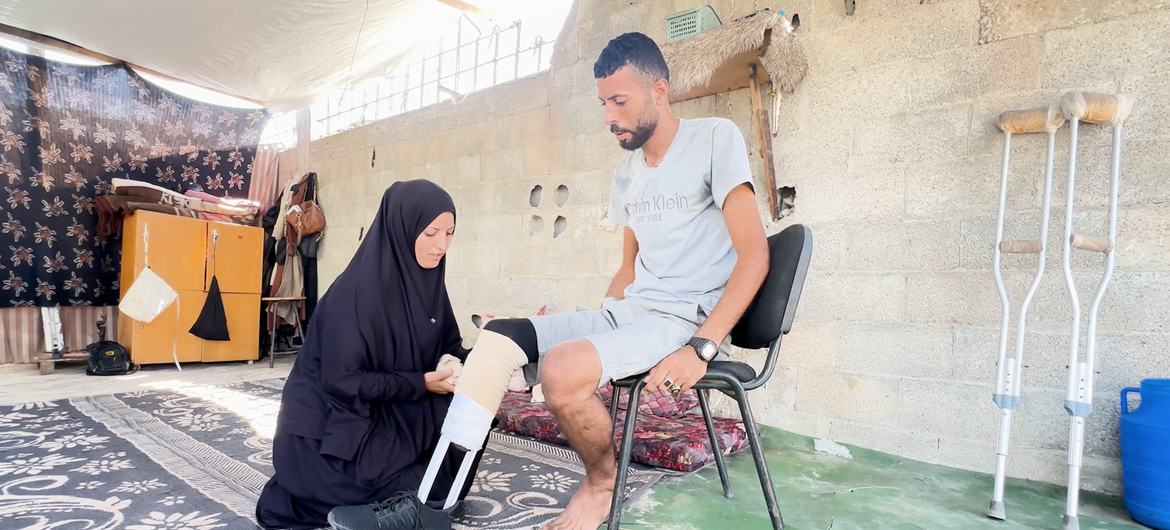
Ibrahim Abdel Nabi, a Palestinian displaced in Gaza, sitting on a chair while his wife helps him wear the handmade prosthetic limb.

‘I made my prosthetic leg’

As Mr. Nabi was trying to recover, he was aware that his family were still in need of food. Despite the pain, he decided to make a simple prosthesis from materials he could find to allow him to get back on his feet and make fresh attempts to find food and water.

“The prosthesis injures my leg,” he said. “It causes inflammation and increases the pain. We don’t have medical care or supplies, but I will use it no matter how much it hurts.”

As he speaks, Mr. Nabi’s wife begins to cry. “God willing, we will live through this experience,” she says.

Mr. Nabi gets up on crutches and heads to a nearby tent, where his wife helps him to put on the crude prosthesis.

“Don’t strain yourself,” she repeats, over and over. “Take your time. Walk slowly.”

Source link

World News in Brief: Sudan hospitals under fire, world remembers victims of terrorism, DR Congo

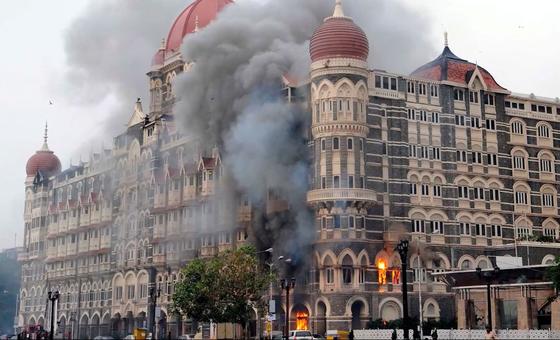
A grenade attack inside Zalingei Hospital in Darfur State, led Médecins Sans Frontières (MSF) to suspend all of its activities there yesterday.  

MSF had previously led a cholera emergency response at the medical facility, providing life-saving treatment for 160 patients in the past two weeks alone.  

“The rules of war are clear that the wounded and sick, medical personnel and hospitals be protected at all times,” said UN Spokesperson Stéphane Dujarric, at the regular briefing on Wednesday.  

Do not give up on Sudan

In concert with the Sudanese Ministry of Health and humanitarian partners, the UN continues working to expand access to cholera vaccines across the country, including more than two million reached during a recent campaign across Khartoum, Al Jazirah and Sennar States.

With famine having been confirmed in parts of Sudan, the UN and its partners are also working to deliver food assistance wherever they can — but ongoing conflict has threatened their ability to access some locations.  

For the first time since the conflict began in April 2023, the World Food Programme (WFP) reached rural areas of North Darfur State on 14 August and provided over 50,000 displaced people with food.  

On 19 August, Luca Renda, the Sudan representative of the UN Development Programme (UNDP) in Sudan, lauded the work of humanitarians who continue to provide lifesaving assistance despite extreme risk to their own safety.  

“Sudanese humanitarians continue to deliver. They cross frontlines. They navigate insecurity and bureaucracy. They risk everything to reach people in need. They have not given up and neither must we.”

International Day honours victims of terrorism

Thursday, 21 August, marks the eighth commemoration of the International Day of Remembrance of and Tribute to the Victims of Terrorism.  

Although the violent scourge is condemned worldwide, victims and survivors of terrorism often feel their voices are not heard and struggle to have their needs supported and rights upheld, especially when few Member States have the resources to help them recover.

This year’s theme is United by Hope: Collective Action for Victims of Terrorism, highlighting the power of solidarity among victims to turn pain into purpose and drive meaningful change.

In observance of the day, the UN Office of Counterterrorism will host a virtual event and a panel discussion featuring five survivors of terrorism from different regions.

“On this solemn day, we honour the victims and survivors of terrorism everywhere – saluting their courage, acknowledging their pain, and reaffirming our enduring commitment to peace, justice, and human rights, Secretary-General António Guterres, said in a video message.

Mr. Guterres welcomed the launch of the UN-supported Victims of Terrorism Associations Network, which works to empower victims and amplify their voices.

“Victims of terrorism are showing the way: supporting one another, speaking out, and championing the rights of all those affected,” he continued, urging governments, civil society and the international community to “match their courage.”

DR Congo: Deadly violence continues in the east 

Violence continues in eastern Democratic Republic of the Congo (DRC) in the form of deadly attacks by the Allied Democratic Forces militia across North Kivu between 9 and 16 August.  

“Yesterday, gunfire was reported near the UN Mission’s base in Bayoo and also close to the base of Uganda People’s Defence Forces (UPDF) in Bule, in Ituri Province,” said UN Spokesperson Stéphane Dujarric during Wednesday’s briefing in New York.  

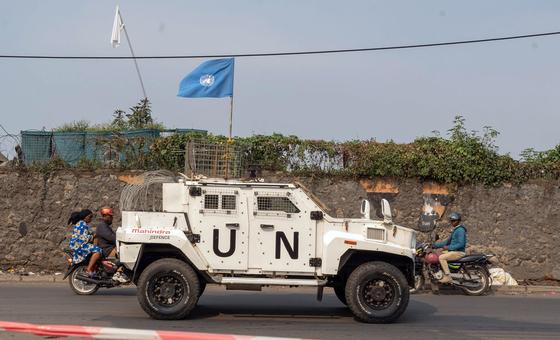
The UN mission, MONUSCO, activated security protocols and deployed patrols to secure the area and nearby sites hosting internally displaced people.

Peacekeeping efforts

Meanwhile, MONUSCO’s Commander led a delegation to Komanda in Ituri Province, to meet community representatives and honour victims of a massacre perpetrated by the ADF in July, which killed hundreds of civilians.  

From 15 to 18 August, at the request of local communities, UN peacekeepers also deployed a Mobile Operating Base in Soleniama, Ituri, to support demobilisation efforts, with the help of religious leaders. 

Source link

Amid massive destruction of Gaza City, UN chief renews ceasefire call

“It is vital to reach immediately a ceasefire in Gaza,” the Secretary-General told reporters on the sidelines of the Ninth Tokyo International Conference on African Development (TICAD9), “and the unconditional release of all hostages and to avoid the massive death and destruction that a military operation against Gaza City would inevitably cause.

Around one million people still live in the city – Gaza’s largest – in the north of the war-torn enclave. The Israeli army has reportedly described it as a stronghold of Hamas, the terror group whose deadly attacks in Israel and hostage-taking sparked the war on 7 October 2023.

The UN chief also condemned the Israeli Government’s decision to approve a long-shelved settlement expansion project in the occupied West Bank.

The decision by the Israeli authorities to expand illegal settlement construction, which would divide the West Bank, must be reversed. All settlement construction is a violation of international law,” he insisted.

The settlement is believed to have permission for well over 3,000 houses, schools and a clinic, cutting off East Jerusalem from the occupied West Bank, which Israel captured during the 1967 Six-Day war after defeating Egypt, Jordan and Syria.

Urban destruction

Meanwhile in Gaza City, whole urban areas are being “totally destroyed”, the UN understands, with further destruction now underway in the south and southeast, as military manoeuvres continue.

Recent attacks have been particularly devastating in the Az Zaytoun neighbourhood of the city, the UN human rights office (OHCHRreported on Wednesday.

Highlighting more than 50 attacks on residential buildings and entire blocks in Gaza City since 8 August, OHCHR warned that its “systematic destruction” had begun.

Acute malnutrition soaring

Meanwhile, UN aid teams highlighted the catastrophic impact of the accelerating Israeli military operation, with acute malnourishment soaring among children in Gaza City to 28.5 per cent, or more than one in four youngsters.

“Children continue to die from man-made starvation,” UNRWA said in a statement, noting that it has screened more than 95,000 children aged six months to five years for malnutrition across the Gaza Strip since March 2025, after the ceasefire collapsed.

While the ceasefire still held in early March and relief supplies were allowed into Gaza in far greater quantities than today, malnutrition rates were six times lower in Gaza City, at 4.5 per cent, according to the UN agency for Palestinians, UNRWA. 

Across Gaza, acute malnutrition rose to nearly 16 per cent in mid-August, more than three times higher than the 5.2 per cent level recorded by the UN agency in March, it said.

Vital services in danger

Today, services provided by UNRWA in Gaza City are at “severe risk”, the agency warned, pointing to the tens of thousands of people who still live in its shelters and the “many more” who remain in surrounding areas.

There is particular concern for UNRWA’s Gaza Field Office compound – its largest logistics hub in northern Gaza – as the UN agency’s operations in the south have been “crippled” by displacement orders and bombardment.

As an indication of UNRWA’s key role in aid and relief provision across Gaza, it noted that last month alone, it provided more than 100,000 medical consultations and screened 3,500 children for malnutrition in Gaza City.

UNRWA also delivered drinking water to 220,000 people, domestic water to 250,000 and cleared hundreds of tons of waste.

Education and protection specialists from the UN agency reached thousands more in temporary learning spaces or by offering counselling, recreational activities and risk awareness training about the dangers of lethal unexploded weapons.

“While our colleagues, like the rest of the UN, are determined to stay and deliver, all of these services are now at risk as the military operations intensify,” UNRWA said.

Source link

International Criminal Court: New US sanctions ‘a flagrant attack’ on judicial independence

The sanctions target judges Kimberly Prost of Canada and Nicolas Guillou of France, as well as two deputy prosecutors: Nazhat Shameem Khan of Fiji and Mame Mandiaye Niang of Senegal.

This follows earlier measures against four other judges and the ICC prosecutor.

Affront to victims

In a press statement announcing the new round of sanctions, US Secretary of State Marco Rubio said the ICC “is a national security threat that has been an instrument for lawfare against the United States and our close ally Israel.”

The UN-backed court denounced the sanctions as “a flagrant attack against the independence of an impartial judicial institution”.  

Furthermore, “they constitute also an affront against the Court’s States Parties, the rules-based international order and, above all, millions of innocent victims across the world.”

Investigating grave crimes

The ICC investigates the gravest crimes of concern to the international community, namely genocide, war crimes, crimes against humanity and the crime of aggression. Read our explainer here.

It is based in The Hague, in the Netherlands, and was established under a 1998 treaty known as the Rome Statute which came into force four years later.  The United States and Israel are not among the 125 States that are party to the treaty.

Last November, the ICC issued arrest warrants for Israeli Prime Minister Benjamin Netanyahu and former defence minister Yoav Gallant, together with a former Hamas commander, in connection with the conflict in Gaza, citing allegations of war crimes and crimes against humanity. 

It is also probing war crimes allegedly committed in Afghanistan by all sides during years of conflict, including the US, following the allied invasion of the country in May 2003.

Strong and undeterred

The Court reiterated that it “stands firmly behind its personnel and victims of unimaginable atrocities” and “will continue fulfilling its mandates, undeterred, in strict accordance with its legal framework as adopted by the States Parties and without regard to any restriction, pressure or threat.”

The ICC called upon “States Parties and all those who share the values of humanity and the rule of law to provide firm and consistent support to the Court and its work carried out in the sole interest of victims of international crimes.”

The UN underlined the key role that the ICC has in international criminal justice and expressed concern over the imposition of further sanctions.

The decision imposes severe impediments on the functioning of the office of the prosecutor and respect for all the situations that are currently before the court,” UN Spokesman Stéphane Dujarric told journalists in New York.

“Judicial independence is a basic principle that must be respected, and these types of measures undermine the foundation of international justice.” 

Source link

Terror threat posed by ISIL ‘remains volatile and complex,’ Security Council hears

While multiple Da’esh leaders have perished in the past few years, “the group has managed to retain its operational capacity”, Vladimir Voronkov, head of the UN Office of Counter-Terrorism (UNOCT) told the Security Council Wednesday.  

Da’esh makes use of regional and domestic affiliates and continues to receive substantial global donations, operating through regional hubs and cross-border financial networks.  

The threat the extremist group poses is notably exacerbated in Africa’s Sahel region, where ISIL affiliates such as Islamic State West Africa Province have emerged as prolific producers of terrorist propaganda, which continues to attract foreign recruits.

 Despite significant national and international efforts to counter Da’esh – which rose to prominence in 2014 after taking over large swathes of Iraq and Syria – the continuing threat posed, underscores the urgency of sustained global cooperation.  

Security gaps

In Afghanistan, ISIL-Khorasan continues to represent one of the most serious threats to Central Asia and beyond, with the group continuing to target civilians, while exploiting discontent with the de facto authorities in the country.  

Meanwhile, Da’esh remains active in Iraq and Iraq – despite the military defeats in Mosul and Raqqa in 2017 – attempting to restore its operational capacity in the Badia region and renewing efforts to destabilise local authorities.

In Syria, where the situation remains fragile since the takeover led by Hay’at Tahrir al-Sham, ISIL continues to exploit security gaps, conduct covert operations and incite sectarian tensions in the country.  

Detention camps

The security, humanitarian and human rights situation in the camps and other facilities in the northeast of Syria remains deeply concerning,” said Mr. Voronkov.  

Camps such as al-Hol are currently hosting tens of thousands of individuals, primarily women and children – many with alleged ties to ISIL – who remain in prolonged detention under unsafe and undignified conditions.

These environments present serious risks of radicalisation to terrorism and are contrary to obligations under international law,” he said.  

Mr. Voronkov called for the “safe, voluntary, and dignified repatriation of all concerned individuals, with a particular focus on children.”  

New technology

“There is a marked increase in the interlinkage of diverse methods and the integration of digital technologies with conventional techniques,” Elisa de Anda Madrazo, President of close UN-partner the Financial Action Task Force, told ambassadors.  

The use of new and emerging technologies and artificial intelligence by Da’esh remains a growing challenge, notably as the group is increasingly employing these tools to raise funds and establish a broader communications network.  

As we stand at the crossroads of technological transformation and geopolitical uncertainty, the threat of terrorism is more diffuse and complex,” said Nathalia Gherman, head of the Counter-Terrorism Committee Executive Directorate (CTED).

Prevention still best cure

Prevention remains our best response to terrorism and violent extremism conducive terrorism,” said Mr. Voronkov.

He emphasised the importance of prioritising long-term, principled responses that tackle the drivers of terrorism and its enabling conditions.

“It is more effective – and cost efficient – to prevent terrorism than to remedy its impact,” he said. 

Source link

Amid ongoing Israeli attacks, ‘the systematic destruction of Gaza City is already underway’: UN rights office

Recent attacks have been particularly devastating in the Az Zaytoun neighbourhood, where airstrikes, artillery shelling and gunfire are continuous and intense, causing a high number of civilian casualties and the large-scale destruction of residential buildings and public facilities, the UN human rights office, OHCHR, in the Occupied Palestinian Territory said in a statement.

Since 8 August, the office has recorded 54 attacks on residential buildings and entire blocks in Gaza City, killing 87 Palestinians, including at least 25 children and entire families.

It also recorded attacks on shelters for internally displaced people, including tents and schools, killing at least 14.

These casualty figures “indicate that the systematic destruction of Gaza City is already underway,” the statement said.

However, OHCHR stressed that these devastating figures are only a portion of the actual toll due to underreporting in such dire circumstances.

Impact of attacks

As a result of recent attacks, hundreds of families have been forced to flee, with nowhere safe to go amid dire humanitarian conditions across the Gaza Strip.

However, those who remain trapped are completely cut off from food, water and medical supplies.

OHCHR emphasised that “Israel’s reported decision to take full control of Gaza City and to forcibly displace its population will lead to mass killings of civilians and destruction of infrastructure vital to the survival of the population.”

The office is seeing the Israeli military repeat means of warfare that caused mass killings, serious injuries, forced displacement, arbitrary detention, starvation and extensive destruction in previous operations in North Gaza and Rafah.

To reportedly prepare for the offensive, the Israeli military has repeatedly called on Palestinians to move to Al Mawasi, west of Khan Younis.

However, Israel has repeatedly struck tents of the displaced in Al Mawasi, where people are struggling to survive with barely any access to food, water and other necessities.

Violations of international law

Under international law, Israel must not destroy civilian property unless it is rendered necessary by military operations. Yet, the widespread destruction of residential buildings in Gaza City is not seen as an imperative military necessity.

Additionally, by forcing the entire population of Gaza City and those remaining in North Gaza into displacement – with no shelter, food or medical provisions and no indication for allowing them to return to their homes in the future – OHCHR is concerned that these are grave breaches of the Fourth Geneva Convention.

Thus, the office is urging States party to the Geneva Conventions to follow their obligation “to exert maximum pressure on Israel to immediately halt this offensive, which risks triggering an unprecedented, life-threatening humanitarian crisis and permanently extinguishing the Palestinian presence in Gaza’s largest urban area.”

Worst-case famine

Meanwhile, the World Food Programme (WFP) welcomed Japan’s life-saving contribution of 500 million yen ($3.3 million) to provide emergency food and nutrition assistance to Palestinians as they face severe food insecurity.

Adding to the assistance, on 4 August, limited commercial truck entries resumed, containing mainly dry food items and a small amount of fresh produce, according to the UN aid coordination office, OCHA.

However, the risk of spoilage and infestation of food supplies has drastically increased due to being stranded for months, heat and impending expiration dates.

Furthermore, cooking gas has not entered Gaza for over five months, and firewood has become increasingly unaffordable, forcing many to use waste and scrap wood as alternative cooking sources, exacerbating health and environmental risks.

Due to such limited aid, WFP underscored that the latest Integrated Food Security Phase Classification report finds that the worst-case scenario of famine is currently occurring in the Gaza Strip.

“I meet families who have lost everything and don’t know where their next meal will come from.” said Antoine Renard, WFP Representative and Country Director in Palestine.

But thanks to this support from Japan, he continued, “WFP can continue procuring life-saving food assistance, but we urgently need a ceasefire and sustained access to reach those most at risk and prevent a full-scale famine.” 

It’s time to end physical punishment of kids once and for all, WHO says

Corporal punishment refers most frequently to hitting children but can refer to any punishments inflicted by parents, caregivers or teachers which are intended to cause some degree of discomfort. It can happen in the home or in more public settings like the school classroom.  

But wherever it happens, this sort of punishment has wide-ranging effects, including increased risk of anxiety and depression in addition to reduced cognitive and socio-emotional development.

[Corporal punishment] offers no benefits to the behaviour, development or well-being of children and no benefit to parents or societies either,” said Etienne Krug, director of WHO’s department of health determinants.

No evidence that it works

Over past decades, many studies have examined the effects of corporal punishment, and not one has found that it has a positive impact on children or their behaviour. In contrast, many have found that it has many long-term negative health impacts on children as individuals – and societies as a whole.  

“There is now overwhelming scientific evidence that corporal punishment carries multiple risks to the health of children,” Ms. Krug said.  

A study conducted across 49 low and middle-income countries found that children who are corporally punished are 24 per cent less likely to be developmentally on track with their peers.  

In addition to causing immediate physical harm, this form of punishment heightens children’s hormonal stress levels which can actually change brain structure and function. In short, the impacts on an individual level can be life-long, according to the report.  

From a societal perspective, children who are themselves physically punished are also more likely to do the same to their own offspring, creating an intergenerational cycle of violence. Similarly, adults who were corporally punished as children are more likely to develop violent, criminal and aggressive behaviours.

The practice [of corporal punishment] also fuels a broader social acceptance of violence, reinforcing harmful cycles across generations,” the report said.  

There is no evidence that corporal punishment is effective at changing children’s behaviours.

Regional differences

While corporal punishment is prevalent across the world and across cultures, regional variations do persist.

For example, in Europe and Central Asia, approximately 41 per cent of children are subjected to corporal punishment in homes compared to 75 per cent in the Middle East and North Africa.  

The disparity is even larger in schools — only 25 per cent of children in the Western Pacific experience corporal punishment during their schooling compared to over 70 per cent in Africa and Central America.  

Girls and boys are almost equally as likely to experience corporal punishment, though they may experience punishment for different behaviours and in different manners.

However, children with disabilities are at a heightened risk for suffering from corporal punishment. Additionally, poorer communities and those which experience economic or racial discrimination are more likely to practice corporal punishment.  

More than policy

The report emphasizes that banning corporal punishment is important but not enough. In fact, studies have found that there is no consistent association between legal bans and decreased rates in physical punishment.  

Currently, 67 countries worldwide have universal bans on corporal punishment, both in the home and in school. In addition to better enforcement of these prohibitions, WHO is calling for new educational campaigns to reinforce the harm it can cause.  

“Continuing use of corporal punishment and persisting belief in the necessity of its use despite legal bans, suggest that efforts to enact and enforce such laws should be accompanied by campaigns to increase awareness,” the report said.

Studies suggest that if parents knew of alternative and more effective methods of punishment for children, they would use them.  

“It’s time to end this harmful practice to ensure that children thrive at home and school,” Ms. Krug said.  

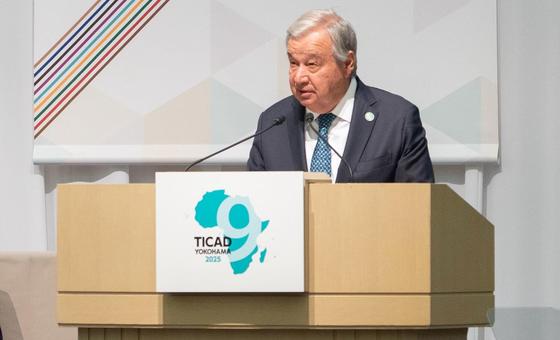
‘Africa is poised for progress’ Guterres tells development conference in Japan

“With the world’s youngest population, abundant natural resources, and a vibrant entrepreneurial spirit, Africa is poised for progress,” he told the 9th Tokyo International Conference on African Development (TICAD) in Yokohama.

He said the meeting’s theme – Co-Create Innovative Solutions with Africa – was a reminder that these same strengths can help shape a more peaceful, prosperous, and sustainable world in Africa and beyond.

Progress and reform

In this regard, he emphasised the need to accelerate progress to achieve the Sustainable Development Goals (SDGs) through investment, reform and partnerships.

Mr. Guterres highlighted five areas for cooperation, starting with his longstanding push to reform institutions of global governance so that they reflect today’s realities.

Africa must have a stronger voice in shaping the decisions that affect its future,” he said.

That includes long-overdue reform of the Security Council, where incredibly, Africa has no permanent member, and other regions remain underrepresented.”

He also called for overhauling the international financial architecture, describing the current system as “unjust and unfair”, as well as bold action on debt relief.

Value chains and renewable energy

The Secretary-General next put the spotlight on investment in sustainable global value chains and regional integration.

“Africa’s path for prosperity must focus on adding value to its raw materials, creating decent jobs, and building resilience, taking profit of the African Continental Free Trade Area,” he said.

He also stressed the need to address “Africa’s energy paradox”, noting that although the continent has enormous potential to produce renewable energy, it receives just two per cent of global investment in the sector.  Meanwhile, some 600 million African lack access to electricity.

“Africa is also home to the critical minerals required to power renewable technologies,” he continued.  “But the countries hosting them must be the ones to benefit first and most, while adding value to local and global value chains.”

Invest in technology, youth and peace 

Turning next to technology, Mr. Guterres called for harnessing digital innovation, including artificial intelligence (AI), for development.

He said Japan’s technological leadership can help close the digital divide, “and ensure that technology helps African countries catch up, with adequate digital public infrastructure, rather than being left behind.”

As “young people are the builders of Africa’s future”, the Secretary-General’s fourth point underscored the need to invest in their skills and education, particularly in STEM (Science, Technology, Engineering and Maths).

Let us invest in women’s full participation across economies, societies and political systems,” he added.

Mr. Guterres concluded by acknowledging the link between peace and prosperity.

“Sustainable development requires sustainable peace,” he said.

“By silencing the guns as the African Union clearly points out. And by ending violence in all its forms and strengthening the social cohesion and stability that can attract investment and business to Africa.”

About TICAD

The Tokyo International Conference on African Development (TICAD) is co-hosted by Japan and the UN, the UN Development Programme (UNDP), the World Bank and the African Union Commission (AUC).

It has been held since 1993 with the aim of promoting Africa’s development, peace and security, through the strengthening of relations in multilateral cooperation and partnership.

“For more than three decades, TICAD has embodied the spirit of multilateralism — grounded in mutual respect, shared responsibility, and a deep belief in Africa’s potential,” the Secretary-General said.

The conference runs from 20-23 August. 

Source link

DR Congo: UN deplores deadly attacks in the east of the country

The attacks, which took place between 9 and 16 August in the localities of Beni and Lubero territories, claimed the lives of at least 52 civilians, including eight women and two children, but peacekeepers on the ground say the death toll may very well rise.  

“These attacks targeting civilians, which add to the atrocities committed during the night of 26 to 27 July in Komanda (Ituri territory, Ituri), are intolerable and constitute serious violations of international humanitarian law and human rights,” said Binto Keita, Head of the UN Mission in the DRC, known as MONUSCO.  

Appeal to armed groups

The violent attacks were accompanied by abductions, looting, and the burning of homes, vehicles, and motorcycles, as well as the destruction of property belonging to the population already facing dire humanitarian conditions.  

MONUSCO issued a statement calling for foreign armed groups, such as the ADF, to lay down their arms unconditionally and return to their countries of origin.  

The Mission also urged “the Congolese authorities to conduct thorough investigations to identify those responsible for the massacre of civilians and bring them to justice.”  

Stronger military presence

In response to this new wave of violence, the peacekeeping mission reinforced its military presence and support to Congolese authorities.

For instance, on 13 and 14 August during incidents in Mayi-Moya in North Kivu, MONUSCO provided physical protection to 206 civilians, including 93 children and 70 women, who had sought refuge at the mission’s military base.  

“MONUSCO remains fully committed to supporting Congolese authorities and local communities in preventing further violence, protecting civilians, reducing tensions and contributing to the stabilisation of areas affected by armed conflict,” it said.   

Source link

UN upholds readiness to support peace efforts in Ukraine

Stéphane Dujarric was responding to a journalist’s question about the meeting held the previous day between Ukrainian President Volodymyr Zelensky, his American counterpart Donald Trump, and several European leaders at the White House.

It followed talks last week between President Trump and Russian President Vladimir Putin at a summit in Alaska.

Engagement and dialogue

“It’s very important that all involved continue to stay actively engaged in what we want to see as an inclusive dialogue to sustain the important momentum that was created to bring an immediate ceasefire and sustainable peace in Ukraine,” he said.

Nearly four years have passed since Russia launched its full-scale invasion of Ukraine and more than 13,000 civilians have been killed, UN human rights monitors in the country have reported.  

Mr. Dujarric was asked if the Secretary-General had any comment on the possibility of a meeting between the Russian and Ukrainian Presidents.

While noting that there is much discussion around “potential dialogues or formats, location”, he said “it is obviously important that those parties who are directly involved in this conflict be able to speak to each other directly.”

Asked what role the UN could play in this process, he said the global body will be “supportive and ready to engage in a role that may or may not be given to us based on the principles that the Secretary-General has often reiterated.”

When pressed about whether UN peacekeepers could be deployed to Ukraine, Mr. Dujarric stressed that “any peacekeeping mission anywhere would have to go through the Security Council.” 

Source link

UN honours fallen aid workers on World Humanitarian Day

The first eight months of 2025 show no sign of a reversal of this disturbing trend, with 265 humanitarian workers killed as of 14 August, according to figures released on World Humanitarian Day.

Attacks on humanitarian workers, assets and operations violate international law and undermine the lifelines that sustain millions of people trapped in war and disaster zones.  

“Even one attack against a humanitarian colleague is an attack on all of us and on the people we serve,” said Tom Fletcher, head of the UN Office for the Coordination of Humanitarian Affairs (OCHA), speaking in Geneva.

At Headquarters in New York City, the UN hosted a commemoration ceremony for the victims of the bombing of the United Nations headquarters its office in Baghdad in 2003, which cost the lives of 22 people. Some of the survivors attended the event.

Protect aid workers

“Humanitarians carry hope where there is despair,” said Mr. Fletcher at the World Humanitarian Day 2025 Commemoration Ceremony in Geneva.  

“They bring humanity where there is inhumanity.”  

Yet, humanitarian workers are under attack.  

In 2024, most of the aid workers killed were national staff serving their communities and were attacked in the line of duty or in their homes.  

Since October 2023, 520 aid workers, mostly staff with UN Palestine refugee agency UNRWA, have been killed in Gaza — the deadliest place for humanitarians for the second year running.  

OCHA demanded that Member States protect civilians and aid workers, and hold perpetrators accountable.

Despite the dangers, “humanitarians will not retreat”, said Mr. Fletcher.

Humanitarians in the Middle East  

Across the Middle East, civilians, including humanitarian workers, “are being killed, injured, and attacked in shocking numbers,” said the UN Resident and Humanitarian Coordinators in the Occupied Palestinian Territory (OPT), Syria, Yemen and Lebanon in a joint statement this Tuesday.  

Since August 2024, at least 446 humanitarian workers have been killed, wounded, kidnapped or detained in these locations. “The world is failing humanitarian workers and the people they serve,” the statement read.  

Renewing their call for the respect of international humanitarian and human right laws, the officials called on the international community to “protect those who protect humanity.”  

Source link

Gaza: Looming offensive and restrictions on humanitarians

In the past 24 hours in Gaza, there have been more reports of casualties in shootings along aid convoy routes, where desperate crowds of civilians often wait to take supplies from the back of trucks.

Meanwhile, hostilities between Israeli forces and Palestinian armed groups are also escalating. In the past 24 hours, air strikes and shelling have occurred across five neighbourhoods in Gaza City, with reports of tanks and ground troops advancing.  

UN and partner officials in Gaza warned on Monday that the Israeli offensive would result in further mass displacement and “have a horrific impact on people already exhausted, malnourished, bereaved, displaced, and deprived of the basics needed for survival.”

Additionally, starvation persists in the enclave as supplies remain insufficient and inaccessible.  

Restrictions on international NGOs

OCHA also reported that the new requirements for international non-governmental organizations (NGOs) are preventing many humanitarian partners from bringing supplies into Gaza.  

To secure registration and bring in materials, international NGOs must share sensitive personal information about Palestinian employees, often contrary to their countries’ domestic legislation, which affects their ability to protect civilians.

Upcoming humanitarian work  

The UN and its NGO partners stressed that their teams will remain in Gaza City to provide life-saving support, reminding parties of their obligation to protect civilians, including humanitarian workers, and safeguard humanitarian infrastructure.

“Every day and every night, aid workers in Gaza courageously put themselves in harm’s way to keep others alive. At the same time, they also struggle to feed themselves and feed their own families,” said Spokesperson for the Secretary-General, Stéphane Dujarric, reporting on the situation in the context of World Humanitarian Day at Tuesday’s daily press briefing in New York.

“The world cannot look away while attacks on aid workers and on the very people they try to help have become routine.”

The humanitarian community welcomes the Israeli announcement that tents and shelter equipment will be allowed into Gaza, aiming to utilise this lifting of the ban to bring in tents, shelter materials and other items into the Gaza Strip. However, the UN and partners said it is deeply troubling that this lifting is in connection with a looming offensive.

They called for a significant scale-up of private sector operations and a full facilitation of deliveries from local and international humanitarian organizations, with supplies allowed to enter through all crossings. 

Gaza: Aid insufficient to avert ‘widespread starvation’ as Israeli military ramp-up forces more people to flee

“The risk of starvation is everywhere in Gaza,” UN Human Rights Office spokesperson Thameen Al-Kheetan told reporters in Geneva.

“This is a direct result of the Israeli government’s policy of blocking humanitarian aid,” he said.

Mr. Al-Kheetan insisted that in the past few weeks, Israeli authorities have only allowed aid to enter in quantities that remain “far below what would be required to avert widespread starvation”.

The UN said on Monday that hunger-related deaths continue to be reported in the Strip, including among children.

More people displaced

As the Israeli army intensified its attacks in the north of the enclave, it has continued to issue displacement orders for Palestinians, Mr. Al-Kheetan said.

He noted that Gazans have been told to move to the Al-Mawasi area, despite continuing airstrikes and disastrous conditions there.

“Hundreds of thousands of Palestinians displaced to Al-Mawasi have little or no access to essential services and supplies, including food, water, electricity and tents,” he warned.

Deadly pursuit of aid

The OHCHR spokesperson stressed that reaching humanitarian aid “can be a deadly pursuit” with latest data indicating that 1,857 Palestinians were killed while seeking food from 27 May, when the US and Israel-backed militarized aid distribution scheme known as the Gaza Humanitarian Foundation started its operations.

Out of that number, he said that 1,021 were killed in the vicinity of the Gaza Humanitarian Foundation sites and 836 on the routes of supply trucks.

“Most of these killings appear to have been committed by the Israeli military,” Mr. Al-Kheetan said.

Asked how the situation could get even worse, Jens Laerke, the spokesperson for the UN humanitarian affairs coordination office (OCHA), said that “it has already gotten worse”, insisting on the devastating effects of the Israeli ban on the entry of shelter materials into the enclave.

While the Israeli authorities recently announced that they would lift the ban on shelter supplies, Mr. Laerke said that “the United Nations and our partners have as of last night not been able to bring in shelter materials following the Israeli announcement.”

“There’s a set of impediments that still needs to be addressed, including Israeli customs clearance,” he added.

Need for shelter

The UN said on Monday that according to partners’ estimations at least 1.35 million people in Gaza need emergency shelter.

Aid agencies have warned that tents being used in Gaza are worn out from prolonged sun exposure and frequent displacement.

Asked about the reasons given for the ban on shelter items, Mr. Laerke explained that in a conflict, some shelter items such as tentpoles can fall under the “dual-use regime” as they could be used for both civilian and military purposes.

“Shelter has been banned entry for about five months and in that period over 700,000 people have been displaced or re-displaced,” he said.

People forced to flee time and again often have to leave behind the tents that they have been provided, Mr. Laerke explained, which creates a challenge for aid workers “trying to respond to people where they are”.

The looming expansion of Israel’s military activities in Gaza City is another major concern for UN humanitarians, as it would again push thousands of people into a severely overcrowded area in the south of the Strip.

Asked about the impact of Israel’s plans to occupy Gaza City, Mr. Al-Kheetan underscored a “huge risk” for civilians.

“There are risks of mass displacement… more killings and more misery that we have already seen in the Gaza Strip,” he warned. “Among those who will be affected are the most vulnerable, people with disabilities, the injured, the children, women”, he concluded.

Response to prison video

In other developments, the human rights spokesman said that video footage showing Israeli National Security Minister Itamar Ben-Gvir berating and taunting Palestinian leader Marwan Barghouthi inside an Israeli jail was “unacceptable.”

He said the minister’s behaviour and the publication of the images constitute an attack on Mr. Barghouthi’s dignity.

He added that international law requires that all detainees be treated humanely, with dignity, and that their human rights be respected and protected.

“Such conduct by the minister responsible for the Israeli Prison Service may encourage violence against Palestinian detainees, enabling human rights violations in Israeli detention facilities,” he said

Source link

‘Our work is largely invisible’: Journey from outer space to frontline aid worker

Ahead of donning a beige WFP vest and boots to face hurricanes, wars and refugee camps, the Portuguese scientist worked with satellite imagery and cartography, creating maps to support humanitarian missions, until he realised he didn’t want to stay behind a computer screen.

On the occasion of World Humanitarian Day, marked annually on 19 August, Mr. Matos shared his story with UN News.

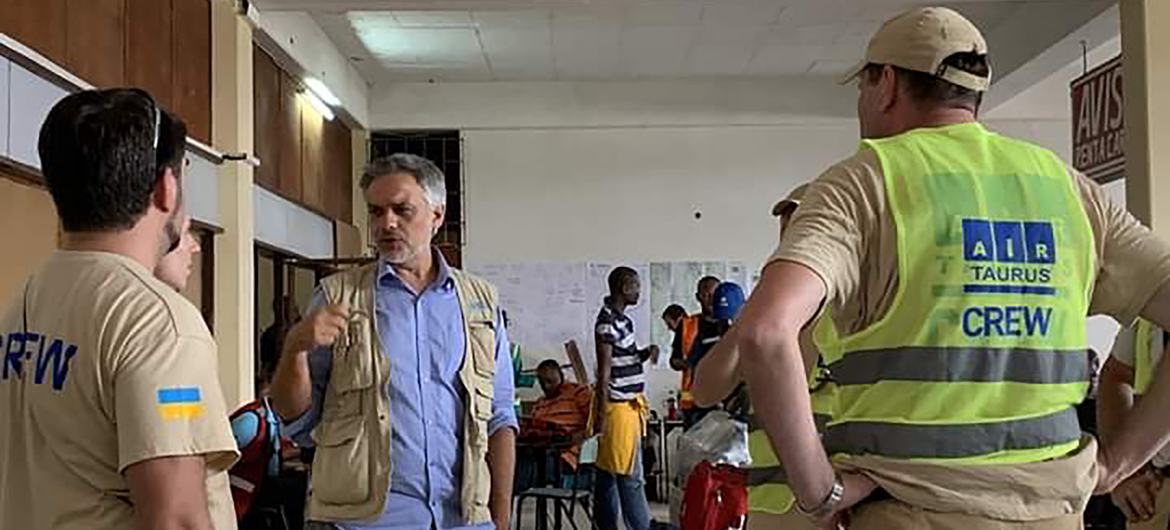
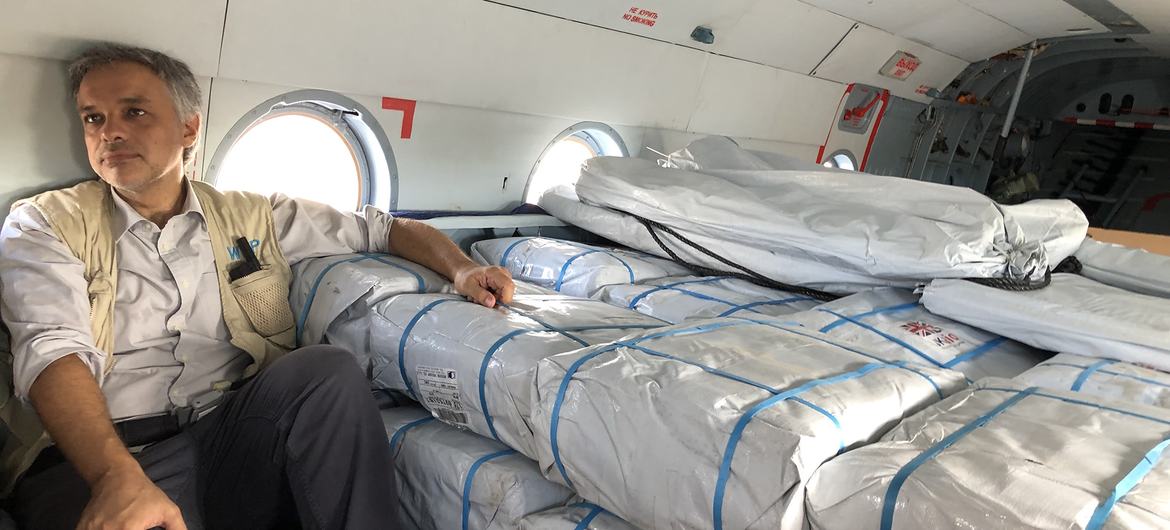
Pedro Matos joined the WFP response team following the deadly Cyclone Idai in Mozambique in 2019. (file)

From hurricanes to war

“At a certain point, it just wasn’t enough,” he recalled about his space engineering job. “I didn’t want to be making maps for other people to go and do humanitarian responses. I want to take those maps and be the one to do the responding.”

That’s exactly what he did. At WFP, he first developed maps on the ground and then went on to coordinate the agency’s emergency operations.

Since then, he has visited dozens of countries often at the epicentre of crises, from Hurricane Idai in Mozambique to the outbreak of war in Ukraine.

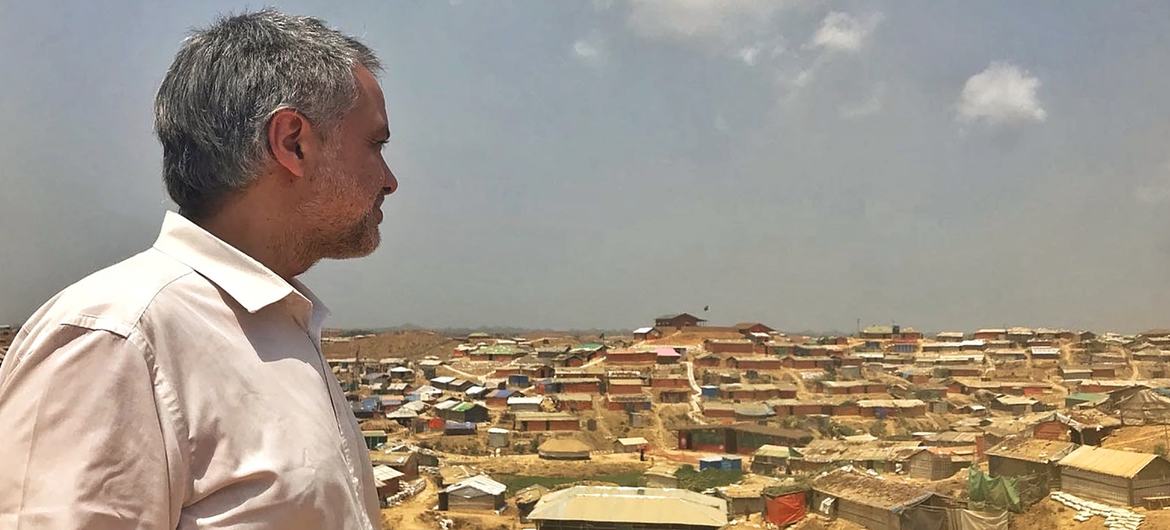
In 2018, Pedro Matos looks at the Kutupalong refugee camp where Rohingya refugees live. (file)

‘Like moving an entire government’

Coordinating in an emergency response is like “moving an entire government”, where each UN agency represents a “ministry” and the response only works when everyone comes together over the four essential areas in a crisis response: food, shelter, water and health.

Having just returned from a mission in Bangladesh, he described efforts to respond at Cox’s Bazar, the world’s largest refugee camp and home to 700,000 people who fled violence in Myanmar.

“We’ve been able to provide better conditions for people to live in this limbo with a little more comfort,” he said, also remembering his visit there in 2018 at the height of the crisis.

At the time, “a million people crossed the border in a month.” Today, although they remain in “limbo”, he pointed to improvements such as more monsoon-resistant homes and roads, gas stoves and reforestation.

Pedro Matos on board a humanitarian aid flight after Cyclone Idai in Mozambique. (file)

Heart-shredding challenges and profound rewards

The job has meant both challenges and rewards.

“We’ve also had a few instances where we’ve been kidnapped, or come under fire, but it’s not the things that happen to us that impact us the most,” he said. “It’s the things that happen to others that have the most impact.”

Hurricane Idai in Mozambique was a Category 5 hurricane that hit Beira in 2019 was one of the biggest and most intense crisis, but also most rewarding, he said.

“There’s this mix of something that was very intense and hard because we couldn’t reach everyone, but at the same time, the fact was that there were many people – tens or hundreds of thousands of people – who would have died if we hadn’t been there,” he said. “That was the most impactful response in my 17 years at the United Nations.”

When he was in Yemen, “we were bombed 20 times a day” in the capital, Sana’a, he said, adding that “there’s a strange normalcy” that develops.

“We find ourselves saying things like, ‘no, that wasn’t very far; it was only 500 metres from here,’” he said. “It’s something I never thought I’d think or say before doing this work.”

When reaching central Ukraine several weeks after Russia’s full-scale invasion in early 2022, he called the situation “very intense”. Within a week, he and his colleagues began distributing money to people coming from the frontlines.

We couldn’t reach everyone, but there were tens or hundreds of thousands of people who would have died if we hadn’t been there.

“When we interviewed people and asked them what they were doing with the money we gave them, it was very gratifying,” he said. “It was beautiful.”

Those who had been wounded in the war were using the money to buy painkillers. Others used it to pay for gas to escape the frontlines. One mother had been able to buy her daughter a scoop of ice cream for the first time since the war began.

“Her daughter was delighted,” he said. “There are very rewarding moments.”

Feeding millions every day

“We all think we know what the humanitarian or aid sector is,” Mr. Matos explained, adding that the scale during a crisis is much, much larger.

“I thought we’d be rehabilitating schools, feeding 100 people,” he continued. “I never imagined I’d be feeding 13 million people a day in Yemen. The scale is absolutely incredible.”

However, humanitarian work is often seen as a separate job, he said. Almost every profession that exists in private and government sectors also exists in an aid landscape, from lawyers, those who work in procurement, like in supermarkets, and human resources.

“I basically do the same work as social workers or firefighters,” he said. “They do it here every day, and I do it elsewhere. But, our work is in the same field and very similar.”

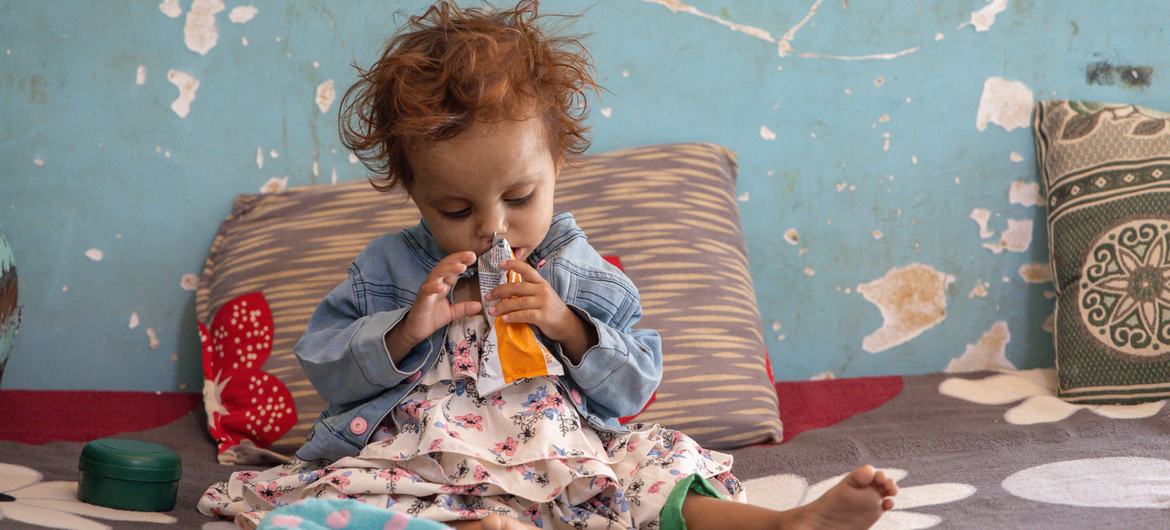
A toddler eats a food supplement, as part of WFP’s nutrition programme, in Mokha, Taiz, in Yemen.

The value of a Nobel Prize

WFP was awarded the Nobel Peace Prize in 2020, a recognition that Mr. Matos received with humility.

“Our work is largely invisible, despite feeding 120 million people every day,” he said. “It gave us a platform to raise awareness about crises like Congo, Myanmar, Sudan and Gaza, which often go unnoticed.”

Our work is largely invisible, despite feeding 120 million people every day.

He said his job is to give voice to the voiceless when crises fade from news headlines. Despite the difficulties and risks across his career, Mr. Matos has no doubt about the most important lesson he learned.

“People are essentially good,” he said. “When faced with the imminence of tragedy, people are fundamentally good and want to help others, even if that other person is very different. It was good to realise this because it’s not always obvious when we’re far from these crises.”

Source link

World Humanitarian Day 2025: Aid workers mull record toll of their own

Speaking to UN News from the wartorn enclave to mark World Humanitarian Day, Olga Cherevko from the UN aid coordination office, OCHA, said that exhausted aid workers continue to show up for work “day in and day out”.

Approaching two years since the start of the war in Gaza, Ms. Cherevko emphasized the commitment of her Palestinian colleagues, “the doctors, the nurses, aid workers who many of them have, lost everything and several times over”.

Red lines crossed

In comments in support of aid workers everywhere, UN Secretary-General António Guterres pointed out that humanitarian teams “are the last lifeline for over 300 million people” impacted by conflict or disaster.

Despite their lifesaving role, funding cuts are having a serious and negative impact on the world’s most vulnerable people, Mr. Guterres warned, while those who provide aid are increasingly under attack as “red lines are crossed with impunity”.

This is despite the fact that such attacks are prohibited under international law, the UN chief continued, noting that although governments have pledged action to protect them, “what is missing is political will – and moral courage…Humanitarians must be respected and protected. They can never be targeted.”

Powerless to help

From her base in Deir Al-Balah in central Gaza, Ms. Cherevko reflected on the nature of humanitarian work today and the frustration that aid teams often face when their lifesaving missions are delayed, preventing them from delivering assistance at scale.

“I think as a humanitarian, I feel powerless sometimes in Gaza because I know what it is that we can do as humanitarians when we’re unable to do so, both here in Gaza and in any other humanitarian crisis,” she explained.

“The fact that we continue to face massive impediments for delivering aid at scale, when our missions are delayed, when our missions lasted 12, 14, 18 hours; the routes that we’re given are dangerous, impassible or inaccessible.”

Surge in killings

Latest data indicates a 31 per cent surge in aid worker deaths compared to 2023, driven by the relentless conflict in Gaza.

The Strip saw 181 humanitarian workers killed in 2024, with 60 more fatalities in Sudan. More widely, violence against aid workers increased in 21 countries in 2024 compared to the previous year, with State actors the most common perpetrators.

Worryingly, there is no sign that the trend is slowing this year, with 265 aid workers killed as of 14 August this year, according to provisional data from the Aid Worker Security Database.

Amid early reports that Hamas has agreed to a 60-day ceasefire in Gaza and ongoing uncertainty about the Israeli plan to pursue a complete military takeover of the enclave, OCHA’s Ms. Cherevko highlighted the need for a permanent end to the conflict.

Aid teams are exhausted and “everyone’s still showing up (to work), but courage alone and commitment alone isn’t going to feed people, isn’t going to save people”, she insisted. “What we need is, again, a permanent ceasefire. We need political solutions to this conflict and a resolution to this crisis.”