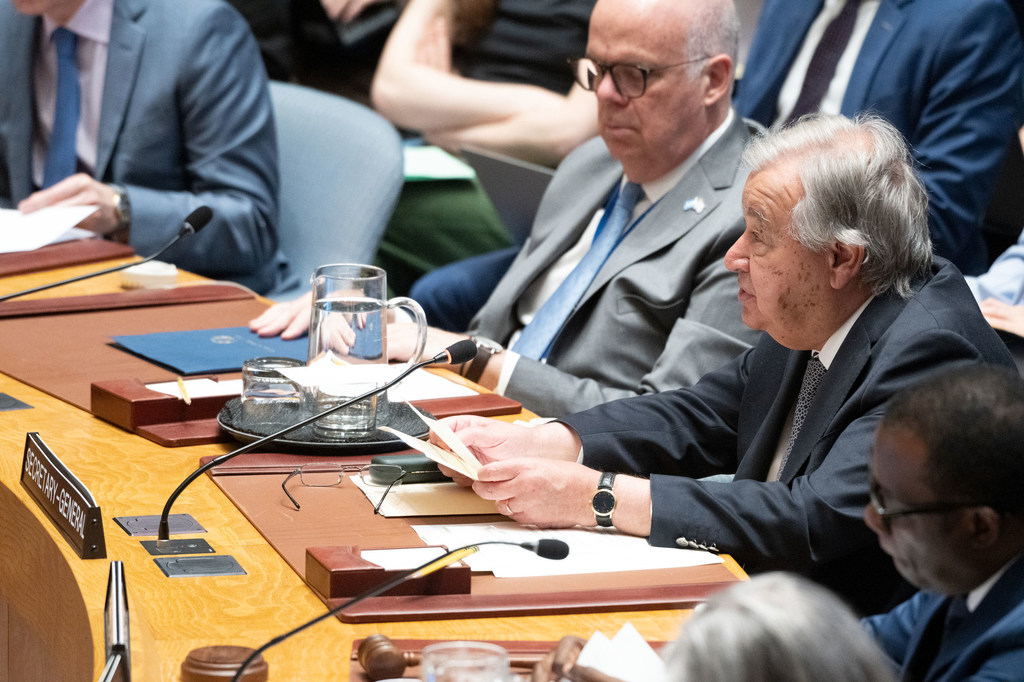
Guterres condemns detention of more UN staff in Yemen

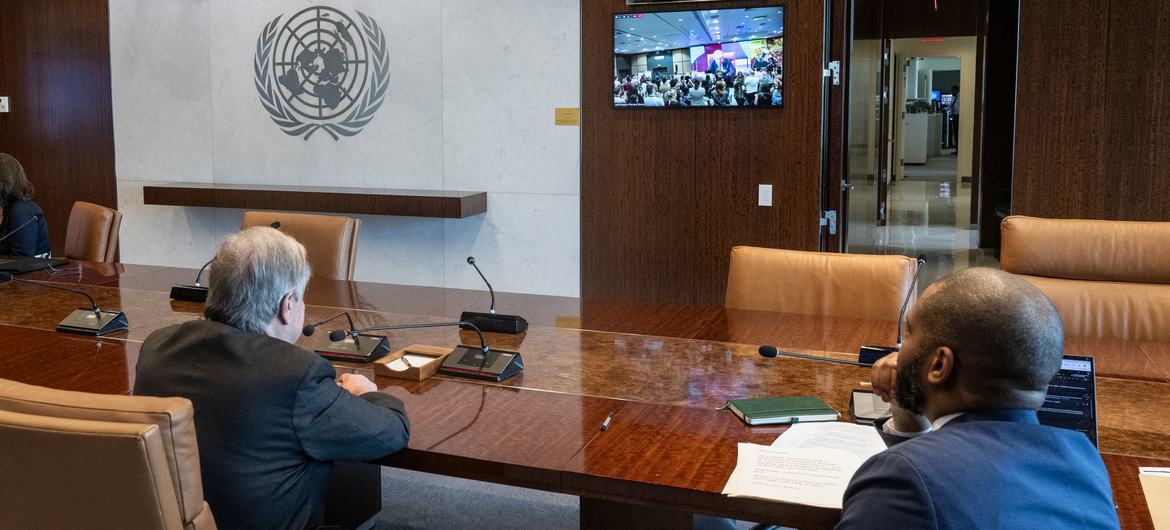
He said the Houthis entered the premises of the World Food Programme (WFP) in the capital, Sana’a, and seized UN property, in addition to attempting to enter other UN premises in the city.

The Houthis, also known as Ansar Allah, have been battling Yemeni Government forces, backed by a Saudi-led coalition, for control of the country for over a decade.

Since October 2023, they also have been targeting Israel as well as commercial ships in the Red Sea, in solidarity with the Palestinian cause in Gaza.

Release all detained personnel

Mr. Guterres strongly reiterated his demand for the immediate and unconditional release of the staff members and all other personnel from the UN, international and national non-governmental organizations, civil society and diplomatic missions, who have been arbitrarily detained for over a year and those held since 2021 and 2023.

“The personnel of the UN and its partners must never be targeted, arrested or detained while carrying out their duties for the UN,” he said.

“The safety and security of UN personnel and property as well as the inviolability of UN premises must be guaranteed at all times.”

The Secretary-General added that the UN will continue to work tirelessly to secure the release of the detained staff members and, together with its partners, will continue to support the people of Yemen and their aspirations for a just and lasting peace.

UN envoy concerned

Meanwhile, the UN Special Envoy for Yemen said on Sunday that he was “following with great concern” recent developments in the country, where Houthi-controlled areas have continued to be subject to Israeli strikes following Ansar Houthi attacks against Israel.

Hans Grundberg reiterated that Yemen cannot afford to become a battleground for a broader geopolitical conflict, stressing that these attacks need to stop.

The Special Envoy continues to urge all sides to use available diplomatic channels to de-escalate the situation.

Mr. Grundberg was also deeply concerned by the civilian deaths and injuries in the recent Israeli attacks. Additionally, according to Houthi statements, several senior Houthi officials and political interlocutors were killed and injured.

He called on all sides to protect civilians and civilian infrastructure, in line with international law.

Source link

Sudan: Guterres calls for ceasefire in El Fasher, deplores ‘relentless’ militia attacks

António Guterres said he was “appalled by the relentless attacks” by the Rapid Support Forces (RSF) militia on the North Darfur state capital, UN Spokesperson Stéphane Dujarric said in a statement.

The paramilitary group and the Sudanese Armed Forces (SAF) have been battling for control of devastated country since April 2023 and El Fasher has been the epicentre of fighting for more than 500 days.

Shelling, incursions and summary executions

Recent weeks have seen near-continuous shelling in the city and repeated deadly incursions into the adjoining Abu Shouk displacement camp, where famine conditions were identified last December.

Since 11 August, the UN has documented the killing of at least 125 civilians in the El Fasher area, including summary executions – although the actual number is likely to be higher.

“The Secretary-General is alarmed at the grave risks of serious violations of international humanitarian law as well as violations and abuses of international human rights law, including ethnically motivated ones,” said Mr. Dujarric.

Aid awaiting entry

Meanwhile, supplies are pre-positioned near El Fasher, but the UN and partners continue to face obstacles in moving them into the city.  

Some 70 trucks of humanitarian assistance are currently waiting in Nyala, South Darfur, a top official with the UN aid coordination office OCHA said on Thursday in New York.

Mr. Dujarric also noted that repeated attacks on humanitarian personnel and assets in North Darfur have occurred over recent months.

Ceasefire and a lasting peace

“The Secretary-General calls for an immediate ceasefire in and around the El Fasher area,” he said.

Furthermore, the UN chief “insists that immediate steps must be taken to protect civilians and enable the safe, unhindered and sustained delivery of humanitarian assistance into the area, and to allow any civilians seeking to leave the area voluntarily to do so safely.” 

 In the interim, the Secretary-General’s Personal Envoy for Sudan, Ramtane Lamamra, continues to engage the warring parties and “stands ready to support genuine efforts to halt the violence and establish an inclusive political process that the people of Sudan demand.” 

Source link

SECURITY COUNCIL LIVE: Haiti ‘shamefully overlooked’, warns Guterres

Haitians are enduring a “perfect storm of suffering” the UN Secretary-General António Guterres told the Security Council on Thursday as gang violence continues to paralyse daily life across the island. Around 1.3 million people – half of them children – have fled their homes and six million are relying on humanitarian assistance. Follow our live Meetings Coverage as the latest crisis debate unfolds.

Source link

Israel’s plan to take over Gaza City marks ‘new and dangerous phase’: Guterres

“Israel’s initial steps to militarily take over Gaza City signals a new and dangerous phase,” he told journalists in New York.

“Expanded military operations in Gaza City will have devastating consequences. Hundreds of thousands of civilians – already exhausted and traumatized – would be forced to flee yet again, plunging families into even deeper peril. This must stop.”

‘Endless catalogue of horrors’

Mr. Guterres was speaking ahead of a Security Council meeting on the situation in Haiti but stopped to brief reporters on the “unfolding tragedy that is Gaza”, where “yet more unconscionable Israeli strikes” have occurred.

Incidents include the two airstrikes on Nasser Hospital in Khan Younis earlier this week which killed civilians, including medical personnel and journalists, “all with the world watching”.

The Secretary-General said “these attacks are part of an endless catalogue of horrors” and called for accountability.  

“Gaza is piled with rubble, piled with bodies, and piled with examples of what may be serious violations of international law,” he said.

“Hostages taken by Hamas and other groups must be released and the atrocious treatment they have been forced to endure must stop. Civilians must be protected.”

© UNICEF/Mohammed Nateel

A displaced family sit outside their tent in Gaza.

Unparalleled destruction and famine

Mr. Guterres stressed that “the levels of death and destruction in Gaza are without parallel in recent times”.

He said that “famine is no longer a looming possibility – it is a present-day catastrophe.”

People are dying from hunger, yet Gaza’s food, water and healthcare systems have been systematically dismantled.

Israel’s obligations

“These are the facts on the ground. And they are the result of deliberate decisions that defy basic humanity,” he said. “Israel, as the occupying Power, has clear obligations.”

He said Israel must ensure the provision of food, water, medicine, and other essentials.  This is in addition to agreeing to and facilitating far greater humanitarian access to Gaza, and protecting civilians and civilian infrastructure.

Mr. Guterres said the International Court of Justice (ICJ) has given binding provisional measures which must be implemented in full and immediately.

They include the obligation to take all steps to ensure unfettered humanitarian and medical assistance to Palestinians throughout the Gaza Strip “without delay and in full cooperation with the United Nations.” 

UN staff killed, aid efforts blocked

Meanwhile, the UN and partners are doing all they can, he said.  This is often at great personal risk, as tragically 366 UN personnel have been killed. 

“Day after day, our efforts are being blocked, delayed, and denied,” he said. “This is unacceptable.”

Settlement expansion in the West Bank

Mr. Guterres also addressed the situation in the West Bank, describing it as “profoundly alarming”.

He said Israeli military operations, settler violence, demolitions, and discriminatory policies are driving displacement and deepening vulnerability. 

Furthermore, the relentless expansion of settlements is fracturing communities and cutting off access to vital resources.

The Israeli authorities recently approved of a plan for the construction of thousands of settlements in the E1 area. He said this would effectively separate the northern and southern West Bank, representing “an existential threat to the two-state solution” between Israelis and Palestinians. 

“I repeat: the Israeli settlements in the occupied West Bank including East Jerusalem have been established – and are being maintained — in violation of international law,” he stressed.   

“Israel must cease such actions and comply with its obligations.”

‘No more excuses’

The Secretary-General concluded his remarks by emphasizing that there is no military solution to the conflict.

“I appeal once again for an immediate and permanent ceasefire, unfettered humanitarian access across Gaza, and the immediate and unconditional release of all hostages,” he said.

“Starvation of the civilian population must never be used as a method of warfare. Civilians must be protected. Humanitarian access must be unimpeded,” he added, ending with a plea for “No more excuses.  No more obstacles.  No more lies.” 

Guterres in Japan: ‘Humanity is strongest when we stand as one’

It brings together more than 160 countries and organizations – a testament to Japan’s enduring commitment to global dialogue and cooperation, said Secretary-General António Guterres.  

Japan has helped shape some of the most important multilateral achievements of our time,” he added, commending Japan for choosing peace and international cooperation following defeat at the end of the Second World War.  

A tireless advocate for nuclear disarmament, a generous contributor to peace, and a steadfast champion of human security, Japan has help lead ever since it joined the United Nations nearly 70 years ago.

Commitment to cooperation

The moral of the United Nations’ story is simple: humanity is strongest when we stand as one,” Mr. Guterres said.  

“Although many may not realise it, the United Nations touches our lives every single day,” he said, noting that the UN provides food assistance to more than 150 million people, supplies vaccines to 45 per cent of the world’s children, and supports elections in some 50 countries.  

From landmines to biodiversity, women’s rights to refugees, freedom of the press to access to clean water, the UN sustains a vast global system of conventions and treaties – while its Charter is the pillar of international law.  

‘Reform is crucial’

But today, as the multilateral project of nations working together under a common purpose is challenged, it must adapt.

From the composition of the Security Council to unjust and unfair international financial systems, reform is crucial.  

Since leaders adopted the Pact for the Future in 2024, a blueprint to make multilateralism more effective, Mr. Guterres has also launched the UN80 initiative to help ensure that the 80th anniversary of the UN is not only a moment of reflection, but a catalyst for renewal.  

“These are times of peril. But they are also times of profound opportunity -and obligation,” said the Secretary General.

Source link

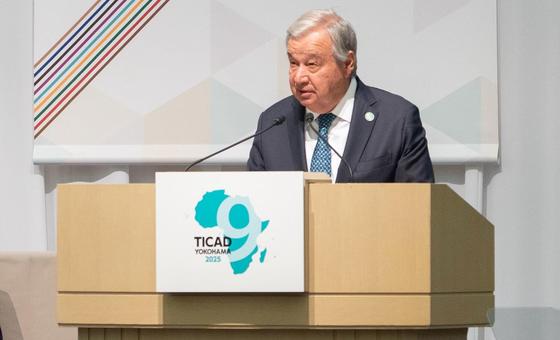
‘Africa is poised for progress’ Guterres tells development conference in Japan

“With the world’s youngest population, abundant natural resources, and a vibrant entrepreneurial spirit, Africa is poised for progress,” he told the 9th Tokyo International Conference on African Development (TICAD) in Yokohama.

He said the meeting’s theme – Co-Create Innovative Solutions with Africa – was a reminder that these same strengths can help shape a more peaceful, prosperous, and sustainable world in Africa and beyond.

Progress and reform

In this regard, he emphasised the need to accelerate progress to achieve the Sustainable Development Goals (SDGs) through investment, reform and partnerships.

Mr. Guterres highlighted five areas for cooperation, starting with his longstanding push to reform institutions of global governance so that they reflect today’s realities.

Africa must have a stronger voice in shaping the decisions that affect its future,” he said.

That includes long-overdue reform of the Security Council, where incredibly, Africa has no permanent member, and other regions remain underrepresented.”

He also called for overhauling the international financial architecture, describing the current system as “unjust and unfair”, as well as bold action on debt relief.

Value chains and renewable energy

The Secretary-General next put the spotlight on investment in sustainable global value chains and regional integration.

“Africa’s path for prosperity must focus on adding value to its raw materials, creating decent jobs, and building resilience, taking profit of the African Continental Free Trade Area,” he said.

He also stressed the need to address “Africa’s energy paradox”, noting that although the continent has enormous potential to produce renewable energy, it receives just two per cent of global investment in the sector.  Meanwhile, some 600 million African lack access to electricity.

“Africa is also home to the critical minerals required to power renewable technologies,” he continued.  “But the countries hosting them must be the ones to benefit first and most, while adding value to local and global value chains.”

Invest in technology, youth and peace 

Turning next to technology, Mr. Guterres called for harnessing digital innovation, including artificial intelligence (AI), for development.

He said Japan’s technological leadership can help close the digital divide, “and ensure that technology helps African countries catch up, with adequate digital public infrastructure, rather than being left behind.”

As “young people are the builders of Africa’s future”, the Secretary-General’s fourth point underscored the need to invest in their skills and education, particularly in STEM (Science, Technology, Engineering and Maths).

Let us invest in women’s full participation across economies, societies and political systems,” he added.

Mr. Guterres concluded by acknowledging the link between peace and prosperity.

“Sustainable development requires sustainable peace,” he said.

“By silencing the guns as the African Union clearly points out. And by ending violence in all its forms and strengthening the social cohesion and stability that can attract investment and business to Africa.”

About TICAD

The Tokyo International Conference on African Development (TICAD) is co-hosted by Japan and the UN, the UN Development Programme (UNDP), the World Bank and the African Union Commission (AUC).

It has been held since 1993 with the aim of promoting Africa’s development, peace and security, through the strengthening of relations in multilateral cooperation and partnership.

“For more than three decades, TICAD has embodied the spirit of multilateralism — grounded in mutual respect, shared responsibility, and a deep belief in Africa’s potential,” the Secretary-General said.

The conference runs from 20-23 August. 

Source link

Gaza: Guterres urges probe into killing of journalists, as child malnutrition deaths rise

The reporters – five of whom worked for the Al Jazeera media network – were killed in a targeted Israeli strike in Gaza City the previous day. 

These latest killings highlight the extreme risks journalists continue to face when covering the ongoing war,” UN Spokesperson Stéphane Dujarric said during his regular media briefing from New York.

“The Secretary-General calls for an independent and impartial investigation into these latest killings.” 

Respect the press

Mr. Dujarric pointed out that at least 242 journalists have been killed in Gaza since the war began nearly three years ago.

“The Secretary-General underscores that journalists and media workers must be respected, they must be protected and they must be allowed to carry out their work freely, free from fear and free from harassment,” he said.

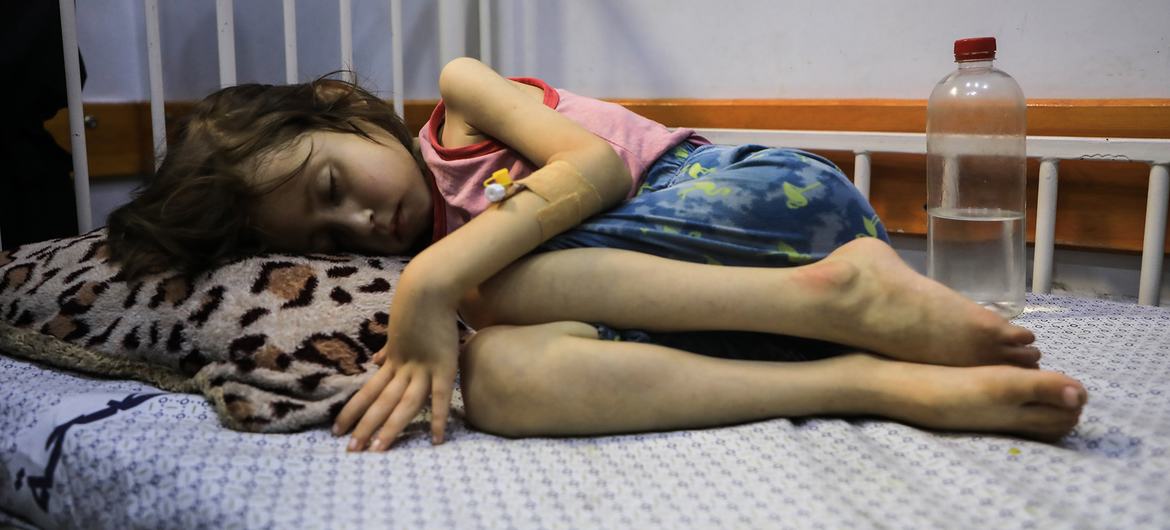
© UNICEF/Mohammed Nateel

A child suffering from malnutrition lies on a bed in the Patient Society Hospital in Gaza City.

Hungry children dying

Meanwhile, the number of children in Gaza who have died from malnutrition since October 2023 has surpassed 100, according to the Gazan health authorities, the UN aid coordination office, OCHA, said in an update.

More than a third of the population is not eating for days at a time, according to the UN World Food Population (WFP).  Furthermore, acute malnutrition is spiking, with over 300,000 children at severe risk.

This comes amidst a recent warning by the UN Food and Agriculture Organization (FAO) that a mere 1.5 per cent of cropland in the enclave remains both accessible and undamaged, “signaling a near-total collapse of the local production of food.”

Aid taken from trucks

On the aid front, the UN and its partners collected food and hygiene kits from the Kerem Shalom/Karem Abu Salem border crossing on Wednesday.

“However, supplies were offloaded directly from these trucks before reaching their destination, given the extreme desperation pervasive in Gaza today,” OCHA said.

The agency stressed that people there “need a predictable lifeline – not a trickle of aid – so they do not feel they need to take desperate measures to survive.”

WFP said that just to cover basic humanitarian food assistance needs, more than 62,000 metric tonnes are required to enter Gaza every month, and so far, humanitarians have not been permitted to bring in enough supplies to support the population. 

Fuel shortages continue

Humanitarians also collected fuel from the Kerem Shalom crossing on Wednesday. Israel is allowing, on average, the entry of about 150,000 litres of fuel daily, which is still far below the minimum required. As a result, life-saving operations continue to be at risk.

The Palestine Civil Defence organization has warned that more than half of their ambulances have stopped operating across Gaza due to the shortage of both fuel and spare parts. 

“Israeli authorities must allow aid to enter through all crossings and via all available corridors so that humanitarians can deliver – at scale, in a safe and dignified manner – to reach the most vulnerable, including women, children and older people,” OCHA said. 

Source link

Israel’s military takeover of Gaza City would mark ‘a dangerous escalation’: Guterres

The announcement following an Israeli cabinet meeting “marks a dangerous escalation and risks deepening the already catastrophic consequences for millions of Palestinians, and could further endanger more lives, including of the remaining hostages,” it said.

The statement noted that Palestinians in Gaza continue to endure a humanitarian catastrophe of horrific proportions. 

More displacement, death and destruction

The UN chief warned that this further escalation will result in additional forced displacement, killings and massive destruction, compounding the unimaginable suffering of the population.

He reiterated his urgentappeal for a permanent ceasefire, unimpeded humanitarian access across Gaza, and the immediate and unconditional release of all hostages.

 “The Secretary-General once again strongly urges the Government of Israel to abide by its obligations under international law,” the statement continued.

End the occupation

Mr. Guterres recalled that in an Advisory Opinion last July, the International Court of Justice (ICJ) declared that Israel is under an obligation to cease immediately all new settlement activities, to evacuate all settlers from the Occupied Palestinian Territory, and to bring to an end its unlawful presence there as rapidly as possible.

 “There will be no sustainable solution to this conflict without an end to this unlawful occupation and the achievement of a viable two-State solution,” the statement concluded, stressing that “Gaza is and must remain an integral part of a Palestinian State.”

Security Council meeting

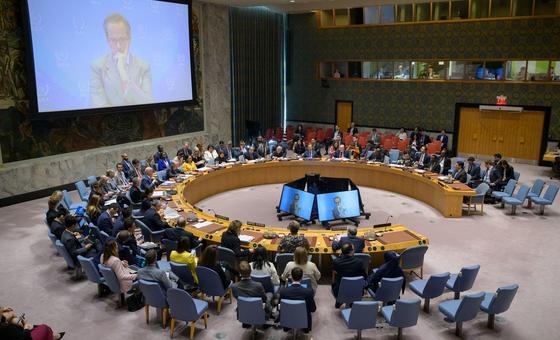
In the wake of the development, the Permanent Observer of the Observer State of Palestine, Riyad Mansour, held consultations with the president of the UN Security Council in New York.

“This escalation by the Israeli Government is going in total contradiction to the will of the international community, international law and common sense – and, I even dare to say, against the wish of the majority of people inside Israel as we read opinion polls,” he told journalists at UN Headquarters.

The Security Council is due to meet on Saturday at 3 PM in emergency session to discuss the crisis. 

Insufficient aid still a problem

Meanwhile, civilians continue to be killed and wounded in Gaza, where even basic tasks such as finding food and water have become impossible, the UN Office for the Coordination of Humanitarian Affairs (OCHA) said in an update.

Furthermore, aid entering the Strip continues to be far below the minimum required to meet the immense needs, OCHA added.

Scarcity and ‘exorbitant prices’ 

“Since the entry of some commercial trucks into Gaza in the past few days, partners reported a minor reduction in commodities prices as of yesterday. Most food items remain scarce in the market and sold at exorbitant prices,” OCHA said.

At the same time, airdrops in different parts of Gaza continue to reportedly kill and injure people, with one child reportedly losing their life in Khan Younis on Thursday.

While welcoming all efforts to provide desperately needed aid, OCHA reiterated that the most efficient way to bring supplies into Gaza is by road. 

It is imperative that aid is allowed to enter through all crossings and via all available corridors so that the UN and its partners can deliver it at scale in a safe and dignified manner through their community-based mechanisms, reaching the most vulnerable,” the agency said.

Severe heatwave

OCHA added that the region has been hit by a severe heatwave as people continue to struggle with access to water.

On Thursday, aid partners reported that the South Gaza Desalination Plant’s electricity line was damaged for the third time in the past seven days and the plant is operating at less than 14 per cent of its capacity. 


Source link

Guterres: ‘Breaking point’ reached in Israel-Palestine conflict, urgent action needed on two-State solution

Speaking Monday morning at the high-level conference on the peaceful settlement of the question of Palestine and the implementation of the two-State solution, the UN chief painted a stark picture of a conflict that continues to “take lives, destroy futures, and destabilise the region and our world.”

“We know that the Israeli-Palestinian conflict has endured for generations – defying hopes, defying diplomacy, defying countless resolutions, defying international law,” Mr. Guterres said. “But we also know its persistence is not inevitable. It can be resolved. That demands political will and courageous leadership. And it demands truth.”

The truth is: we are at a breaking point. The two-State solution is farther than ever before.

The Secretary-General denounced the 7 October Hamas attacks on Israel and hostage-taking as acts of terror he has “repeatedly condemned.” At the same time, he said “nothing can justify the obliteration of Gaza that has unfolded before the eyes of the world.”

He also spoke out against the starvation of civilians, the killing of tens of thousands, mass displacement, settler violence and the “creeping annexation” of the occupied West Bank – a move he called “illegal”.

Stop undermining two-State solution

Unilateral actions that would forever undermine the two-State solution are unacceptable and they must stop,” he said. “These are not isolated events. They are part of a systemic reality that is dismantling the building blocks of peace in the Middle East.”

The three-day conference is mandated by the General Assembly through resolutions ES-10/24 and 79/81, is co-organized by France and Saudi Arabia. It includes plenary sessions and thematic roundtables on issues such as security arrangements, humanitarian needs, reconstruction, and the economic viability of a future Palestinian state.

A group photograph of senior UN officials and ministers attending the high-level international conference.

Move beyond ‘well-meaning rhetoric’

In his speech, Mr. Guterres urged Member States not to let the event become “another exercise in well-meaning rhetoric.”

“It can and must serve as a decisive turning point – one that catalyses irreversible progress towards ending the occupation and realising our shared aspiration for a viable two-State solution,” he said.

Reiterating the long-standing UN position, the Secretary-General said the two-State solution remains the only viable path to peace – with Israel and Palestine living side-by-side within secure, recognised borders, based on the pre-1967 lines, with Jerusalem as the capital of both States.

It is the sine qua non [Latin for indispensable or absolutely essential] for peace across the wider Middle East,” he concluded.

More to follow…

Jean-Noël Barrot, Minister for Europe and Foreign Affairs of France; Faisal bin Farhan Al Saud, Minister of Foreign Affairs of Saudi Arabia; and Mohammad Mustafa, Prime Minister of the State of Palestine also spoke at the meeting.

The meeting continues with wrap-up sessions of the thematic roundtables. 

A plenary meeting in the General Assembly Hall will take place at 3 PM New York time.

You can follow the live coverage of the conference here.

Amid starvation in Gaza, Sudan, Guterres slams hunger ‘as a weapon of war’

The development comes as UN Secretary-General António Guterres cautioned that conflict-driven hunger is spreading “from Gaza to Sudan and beyond”.

“Hunger fuels instability and undermines peace. We must never accept hunger as a weapon of war,” he said in a video message to the UN Food Systems Summit Stocktake in Addis Ababa. 

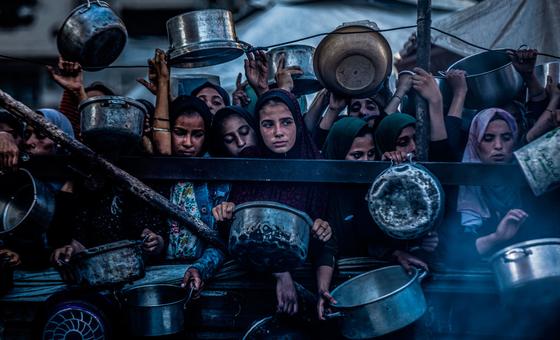
Meanwhile, citing reports Monday that “more children died today of hunger”, the UN agency for Palestinian refugees, UNRWA, said that it hoped to receive permission to bring in thousands of trucks loaded with food, medicine and hygiene supplies that Israel has blocked from entering Gaza for months.

“They are currently in Jordan and Egypt waiting for the green light,” the UN agency explained, adding that “at least 500/600 trucks” are needed every day to prevent more people from starving. More than 100 people have now starved to death in Gaza, UNRWA said, while local health authority reports indicate more than 40 deaths from malnutrition this month alone.

“Opening all the crossings and flooding Gaza with assistance is the only way to avert further deepening of starvation among the people of Gaza,” the UN agency maintained.

Humanitarian pauses

Its comments follow a major policy shift over the weekend when the Israeli army announced the establishment of a daily humanitarian pause from 10am to 8pm local time, in areas where its troops are not active. Child malnutrition has been on the rise in Gaza, particularly since 2 March when Israel imposed a near-total blockade, UNWRA has said.

According to a map supplied by the Israeli authorities, the humanitarian pause applies to a thin strip of Gaza encompassing Al-Mawasi in the southwest, Deir Al-Balah in the centre and Gaza City in the north. 

On Sunday, a convoy of more than 100 trucks carrying aid supplies reportedly entered the Strip via the Kerem Shalom border crossing in the south.

Aid desperatedly needed

While welcoming that development, the UN aid coordination office, OCHA, highlighted the staggering scale of needs on the ground in Gaza. 

One in three people “hasn’t eaten for days”, insisted Tom Fletcher, UN Emergency Relief Chief and head of OCHA. “People are being shot just trying to get food to feed their families. Children are wasting away. This is what we face on the ground right now.”

In his statement, Mr. Fletcher acknowledged “progress” on the aid front, but stressed that “vast amounts of aid are needed to stave off famine and a catastrophic health crisis”. He said that UN agencies and the humanitarian community remain mobilized “to save as many lives as we can”. 

In addition to Israel’s temporary boost for increased aid in Gaza, customs restrictions on food, medicine and fuel from Egypt have reportedly been lifted. Secure routes for UN humanitarian convoys have also been designated.

“We need sustained action, and fast, including quicker clearances for convoys going to the crossing and dispatching into Gaza,” Mr. Fletcher said, underscoring the need for “multiple trips per day to the crossings so we and our partners can pick up the cargo; safe routes that avoid crowded areas; and no more attacks on people gathering for food”. 

Meeting on two-State solution

Meanwhile in New York, France and Saudi Arabia on Monday launched a new diplomatic initiative to push for a two-State solution between Israel and the Palestinian people. 

The three-day conference begins as President Emmanuel Macron announced that France will formally recognize Palestine in September, the first of the G7 nations to do so.

A UN General Assembly resolution from 1947 established the partition of Palestine – then under British mandate – into two independent states, one Jewish and the other Arab. The State of Israel was declared in 1948. 

In hard-hitting human rights address, Guterres calls for urgent action on Gaza, authoritarianism and climate justice

Recalling his own experience living under dictatorship in Portugal, Mr. Guterres told participants at the Global Assembly of the international rights charity Amnesty International on Friday that the fight for human rights is “more important than ever”.

He called on States to uphold international law and defend human rights “consistently and universally, even or especially when inconvenient”, urging collective action to restore global trust, dignity and justice.

‘A moral crisis’

Mr. Guterres painted a stark picture of a world in turmoil, citing multiple ongoing crises, foremost among them, the war in Gaza.

While reiterating his condemnation of the 7 October 2023 terror attacks by Hamas and other Palestinian armed groups in Israel, the Secretary-General said that “nothing can justify the explosion of death and destruction since”.

The scale and scope is beyond anything we have seen in recent times,” he said.

I cannot explain the level of indifference and inaction we see by too many in the international community. The lack of compassion. The lack of truth. The lack of humanity.

Key takeaways from the address

  • Gaza – “A moral crisis that challenges the global conscience”
  • Ukraine – Call for a “just and lasting peace” based on the UN Charter, international law and resolutions
  • Authoritarianism – A “global contagion”, with political repression, attacks on minorities and shrinking civic space
  • Climate justice – Bold action needed to cut emissions; clean energy transition must uphold human rights
  • Digital threats – Concern over algorithmic spread of hate and falsehoods; manipulation via social media
  • Call to action – “Human rights are the solution, foundation of peace and engine of progress”

UN staff ‘neither dead nor alive’

He described UN staff in Gaza as working in “unimaginable conditions”, many of them so depleted they “say they feel neither dead nor alive”.

Since late May, he noted, more than 1,000 Palestinians have been killed trying to access food – not in combat, but “in desperation – while the entire population starves”.

This is not just a humanitarian crisis. It is a moral crisis that challenges the global conscience.

Ready to scale up aid

Mr. Guterres said the UN stands ready to dramatically scale up humanitarian operations “as we successfully did during the previous pause in fighting”, but called for an “immediate and permanent ceasefire”, the unconditional release of all hostages and full humanitarian access.

“At the same time, we need urgent, concrete and irreversible steps towards a two-State solution,” he stressed.

He also spoke about other conflicts, including Sudan as well as Russia’s invasion of Ukraine, where he called for a “just and lasting peace” based on the UN Charter, international law and relevant UN resolutions.

Secretary-General Guterres (left) addresses Amnesty International’s Global Assembly via video link.

Rising authoritarianism

The Secretary-General warned that authoritarian tactics are on the rise globally.

We are witnessing a surge in repressive tactics aiming at corroding respect for human rights,” he said. “And these are contaminating some democracies.

Political opposition movements are being crushed, accountability mechanisms dismantled, journalists and activists silenced, civic space strangled and minorities scapegoated.

Rights of women and girls in particular are being rolled back, most starkly, he said, in Afghanistan.

“This is not a series of isolated events. It is a global contagion.”

Weaponization of technology

He decried the growing weaponization of digital platforms, saying algorithms are “boosting the worst of humanity, rewarding falsehoods, fuelling racism and misogyny and deepening division”.

He called on governments to uphold the Global Digital Compact adopted by countries at the UN General Assembly last September and to take stronger action to combat online hate and disinformation.

© ICJ-CIJ/Frank van Beek

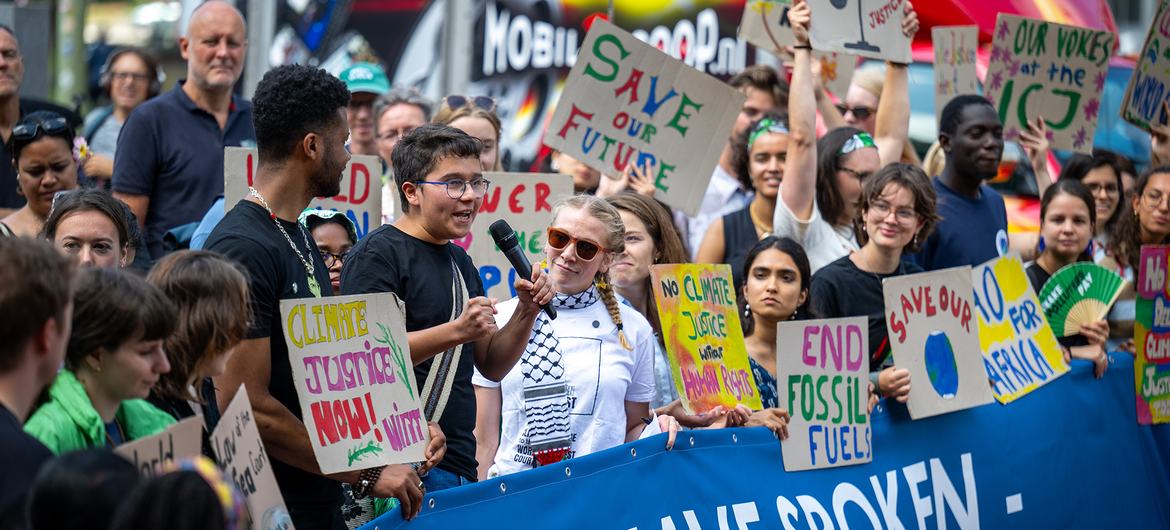
Activists outside the International Court of Justice (ICJ) in The Hague as the Court delivers its advisory opinion on the obligations of States in respect of climate change.

Climate justice is human rights

Turning to climate, Mr. Guterres described the environmental emergency as a “human rights catastrophe”, with the poorest and most vulnerable communities suffering most.

He welcomed the International Court of Justice (ICJ)’s advisory opinion this week, affirming that climate change is a human rights issue and that States have obligations under international law to protect the global climate system.

But, he cautioned against a transition to clean energy that sacrifices human rights.

“We cannot accept a clean energy future built on dirty practices…We cannot accept enormous violations of human rights, many of them against children, in the name of climate progress.”

He called for urgent emissions cuts, a just transition away from fossil fuels and real financing for developing countries to adapt, build resilience and recover from loss and damage.

A legacy of activism

The Secretary-General concluded by praising Amnesty International’s decades of activism, calling its work “indispensable” to the global human rights movement.

When you stand for human rights, you stand with what is right,” he told delegates.

“Your courage continues to change lives. Your persistence is shifting the course of history. Let’s keep going. Let’s meet this moment with the urgency it demands. And let’s never, ever give up.

Founded in 1961, Amnesty International is a global human rights movement that campaigns to end abuses and promote justice. The organization has long worked in collaboration with the United Nations, participating actively in the development of international human rights law and mechanisms.

Today’s speech by Mr. Guterres is first-ever address by a UN Secretary-General to Amnesty International’s Global Assembly, the charity’s highest decision-making body. The UN chief spoke via a video link to the event in Prague.

Source link

UN’s Guterres declares fossil fuel era fading; presses nations for new climate plans before COP30 summit

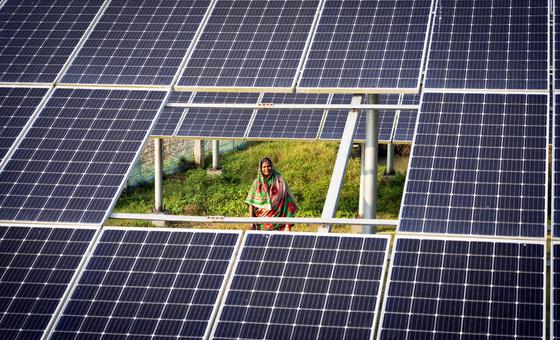
In a special address at UN Headquarters in New York, Mr. Guterres cited surging clean energy investment and plunging solar and wind costs that now outcompete fossil fuels.

The energy transition is unstoppable, but the transition is not yet fast enough or fair enough,” he said.

The speech, A Moment of Opportunity: Supercharging the Clean Energy Age – a follow‑up to last year’s Moment of Truth – was delivered alongside a new UN technical report drawing on global energy and finance bodies.

“Just follow the money,” Mr. Guterres said, noting that $2 trillion flowed into clean energy last year, $800 billion more than fossil fuels and up almost 70 per cent in a decade.

Key points from the address

  • Point of no return – The world has irreversibly shifted towards renewables, with fossil fuels entering their decline
  • Clean energy surge – $2 trillion invested in clean energy last year, $800 billion more than fossil fuels
  • Cost revolution – Solar now 41 per cent cheaper and offshore wind 53 per cent cheaper than fossil fuel alternatives.
  • Global challenge – Calls on G20 nations to align new national climate plans with the 1.5°C target of the Paris Agreement
  • Energy security – Renewables ensure “real energy sovereignty”
  • Six opportunity areas – Climate plan ambition, modern grids, sustainable demand, just transition, trade reform, and finance for emerging markets.

A shift in possibility

He noted new data from the International Renewable Energy Agency (IRENA) showing solar, once four times costlier, is now 41 per cent cheaper than fossil fuels.

Similarly, offshore wind is 53 per cent cheaper, with more than 90 per cent of new renewables worldwide beating the cheapest new fossil alternative.

This is not just a shift in power. It is a shift in possibility,” he said.

Renewables nearly match fossil fuels in global installed power capacity, and “almost all the new power capacity built” last year came from renewables, he said, noting that every continent added more clean power than fossil fuels.

Clean energy is unstoppable

Mr. Guterres underscored that a clean energy future “is no longer a promise, it is a fact”. No government, no industry and no special interest can stop it.

Of course, the fossil fuel lobby will try, and we know the lengths to which they will go. But, I have never been more confident that they will fail because we have passed the point of no return.

He urged countries to lock ambition into the next round of national climate plans, or NDCs, due within months. Mr. Guterres called on the G20 countries, which are responsible for 80 per cent of emissions, to submit new plans aligned with the 1.5°C limit and present them at a high‑level event in September.

Targets, he added, must “double energy efficiency and triple renewables capacity by 2030” while accelerating “the transition away from fossil fuels”.

Real energy sovereignty

The Secretary-General also highlighted the geopolitical risks of fossil fuel dependence.

“The greatest threat to energy security today is fossil fuels,” he said, citing price shocks after Russia’s invasion of Ukraine.

There are no price spikes for sunlight, no embargoes on wind. Renewables mean real energy security, real energy sovereignty and real freedom from fossil-fuel volatility.

Six opportunity areas

Mr. Guterres mapped six “opportunity areas” to speed the transition: ambitious NDCs, modern grids and storage, meeting soaring demand sustainably, a just transition for workers and communities, trade reforms to broaden clean‑tech supply chains, and mobilising finance to emerging markets.

Financing, however, is the choke point. Africa, home to 60 per cent of the world’s best solar resources, received just 2 per cent of global clean energy investment last year, he said.

Only one in five clean energy dollars over the past decade went to emerging and developing economies outside China. Flows must rise more than five-fold by 2030 to keep the 1.5-degree limit alive and deliver universal access.

Mr. Guterres urged reform of global finance, stronger multilateral development banks and debt relief, including debt‑for‑climate swaps.

The fossil fuel age is flailing and failing. We are in the dawn of a new energy era,” he said in closing.

That world is within reach, but it won’t happen on its own. Not fast enough. Not fair enough. It is up to us. This is our moment of opportunity.

Source link

Gaza: Guterres condemns killing of people seeking food as humanitarian conditions deteriorate

Stéphane Dujarric was speaking to reporters at UN Headquarters in New York a day after dozens of Palestinians were killed seeking food aid.

He said the Secretary-General deplored the growing reports of both children and adults suffering from malnutrition and strongly condemned the ongoing violence, including the shooting, killing and injuring of people attempting to get food.

Not a target

Civilians must be protected and respected, and they must never be targeted,” said Mr. Dujarric, noting that the population in Gaza remains gravely undersupplied with the basic necessities of life.

He stressed that “Israel has the obligation to allow and facilitate by all the means at its disposal the humanitarian relief provided by the United Nations and other humanitarian organizations.” 

Mr. Dujarric said the Secretary-General noted that the recent intensification of hostilities comes as the humanitarian system in Gaza is being impeded, undermined and endangered.

New evacuation orders

He pointed to a new evacuation order issued for parts of Deir Al-Balah, which is pushing people into more desperate conditions and sparking further displacement, while restricting the UN’s ability to deliver aid.

He reported that two UN guesthouses in Deir Al-Balah were struck, despite the parties being informed about their locations. 

“They suffered damage,” he said, responding a reporter’s question. “The UN staff inside was, to say the least, rattled.”

Mr. Dujarric underscored that the UN intends to remain in Deir Al-Balah.

Ceasefire now

The Secretary-General reiterated his urgent call for the protection of civilians, including humanitarian personnel, and for the provision of essential resources to ensure their survival.

He once again called for the immediate and unconditional release of all hostages.

Mr. Dujarric said the UN stands ready to significantly scale up its humanitarian operations in Gaza, adding “the time for a ceasefire is now.” 

People dying from malnutrition 

Amid the ongoing shelling, displacement and destruction in Gaza, humanitarians continue to receive reports of severely malnourished people arriving at medical points and hospitals in extremely poor health. 

More than a dozen people, including children, have reportedly died from hunger in the last 24 hours, according to the Gaza health agencies. 

The UN Office for the Coordination of Humanitarian Affairs (OCHA) recalled that roughly 88 per cent of Gaza is now under displacement orders or within displacement zones. 

Shelter and fuel 

Gaza’s population is some 2.1 million and about 1.35 million need shelter and household items.  However, no shelter supplies have been allowed to enter for more than four months.   

The dire fuel crisis also continues, with humanitarians continuing to warn that the limited quantities that have been allowed to enter in recent days are hardly sufficient. 

Traditional aid systems critical: UN official 

Meanwhile the new UN Humanitarian Coordinator for the Occupied Palestinian Territory, Ramiz Alakbarov, has met with the Prime Minister of the State of Palestine, Mohammad Mustafa, in Ramallah.  

At a press conference, Dr. Alakbarov called for an immediate and permanent ceasefire, the unconditional release of the hostages, and the lifting of all restrictions on access to people in Gaza.         

He said to address immediate needs, humanitarian organizations must be able to use the traditional systems of aid delivery. 

He noted that these systems are currently undermined by violence, including armed looting and recurrent shootings at civilians seeking aid. which he said must be independently investigated.   

Salvaging SDGs still possible, but countries must act now: Guterres

Addressing ministers at UN Headquarters in New York, he called for urgent action to rescue lagging Sustainable Development Goals (SDGs) amid war, inequality and fiscal strain.

Transformation is not only necessary – it is possible,” he declared, highlighting landmark commitments adopted in recent months: the Pandemic Agreement at the World Health Assembly in Geneva, pledges to expand marine protected areas at the third UN Ocean Conference in Nice, and the new vision for global finance agreed in Sevilla at the fourth International Financing for Development Conference.

These are not isolated wins, they are signs of momentum and signs that multilateralism can deliver.

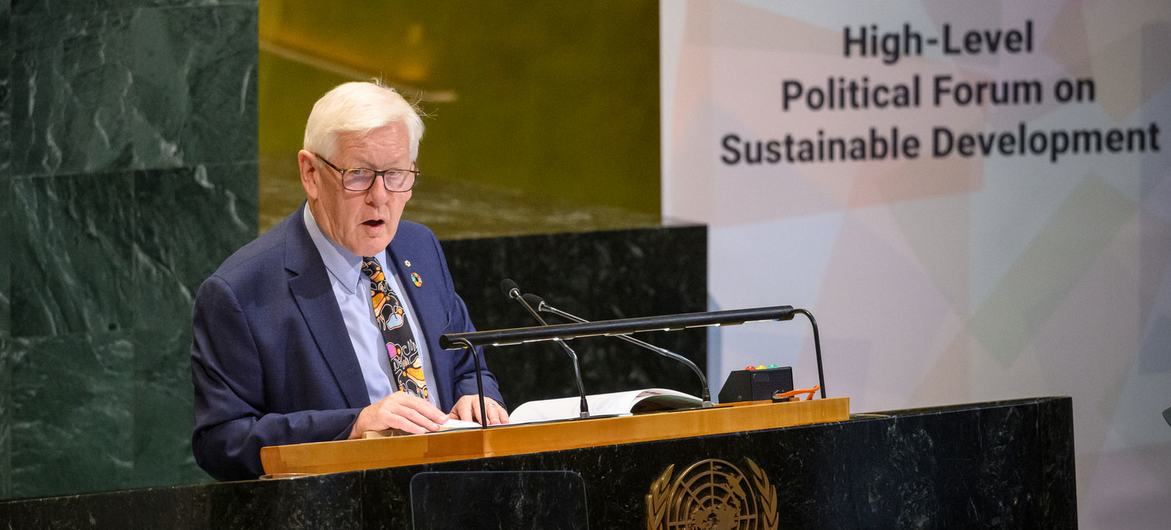
The remarks opened the ministerial segment of the High-level Political Forum on Sustainable Development (HLPF), the UN’s central platform for reviewing the 2030 Agenda and its 17 SDGs.

Get back on track

Mr. Guterres warned that the world remains far off track to meet the 2030 targets.

“Only 35 per cent of SDG targets are on track or making moderate progress. Nearly half are moving too slowly. And 18 per cent are going backwards,” he said.

He urged governments to act with urgency and ambition.

The Sustainable Development Goals are not a dream. They are a plan – a plan to keep our promises to the most vulnerable people, to each other, and to future generations.

Citing gains since 2015, including expanded social protection, declining child marriage and growing women’s representation, he said the SDGs remain “within reach” if world leaders channel resources and political will.

The Secretary-General also linked development and peace, noting ongoing violence in Gaza, Sudan, Myanmar, Ukraine and elsewhere.

At every step, we know sustainable peace requires sustainable development,” he said, calling for immediate ceasefires and renewed commitment to diplomacy.

ECOSOC President Bob Rae addresses the ministerial segment of the HLPF.

Double down on multilateralism

Bob Rae, President of the Economic and Social Council, echoed the Secretary‑General’s call, warning that global disruption – from climate change to economic disarray – requires deeper solidarity.

The SDGs are not optional ideals, but rather essential commitments,” he said.

Now is not the time for us to abandon our ideals…it is now actually the time to double down on our multilateral obligations to one another.”

Mr. Rae cautioned that shrinking national budgets and rising nationalist politics are undermining progress but insisted that “multilateralism delivers real, tangible benefits for people at every level of society.”

He called for closer partnerships with civil society, local governments, and the private sector, stressing that SDGs must be “integrated into budgets and policies around the world, not as at odds, but as the core of how governments should serve their people.”

Match ambition and delivery

Philémon Yang, President of the General Assembly, emphasized aligning political commitments with concrete action.

He praised the Compromiso de Sevilla and last year’s Pact for the Future, which aim to reform global financial systems, scale up climate finance, and strengthen international tax cooperation.

The gap between ambition and delivery can only be closed through solidarity, resources and political will,” he said.

“The deadlines for the 2030 Agenda are fast approaching,” he warned. “Whether we like it or not. And while progress is lagging, we have the tools and ambition to deliver.”

Accountability and partnership

The HLPF, established at the landmark Rio+20 UN Conference on Sustainable Development in 2012, serves as the primary UN platform for monitoring SDG progress, including through Voluntary National Reviews (VNRs).

This year’s forum, convened under the auspices of the ECOSOC, runs until 23 July with a focus on five goals: health, gender equality, decent work, life below water, and global partnerships.

More than 150 countries have presented VNRs – with 36 reporting this year – showcasing national efforts and challenges in implementing the 2030 Agenda.

Mr. Guterres praised the reviews as “acts of accountability” and “templates for other countries to follow and learn from.”

With just five years left to meet the global goals, he urged ministers to “transform these sparks of transformation into a blaze of progress – for all countries.

Source link

Mandela’s legacy ‘is now our responsibility’, Guterres says on International Day

In his remarks, the Secretary-General celebrated the extraordinary life of the South African civil rights icon, affectionately known by his Khosa clan name, Madiba.

“He endured the brutal weight of oppression, and emerged not with a vision of vengeance and division – but of reconciliation, peace and unity,” Mr. Guterres said.

“Today, Madiba’s legacy is now our responsibility. We must carry forward his commitment to peace, justice and human dignity.”

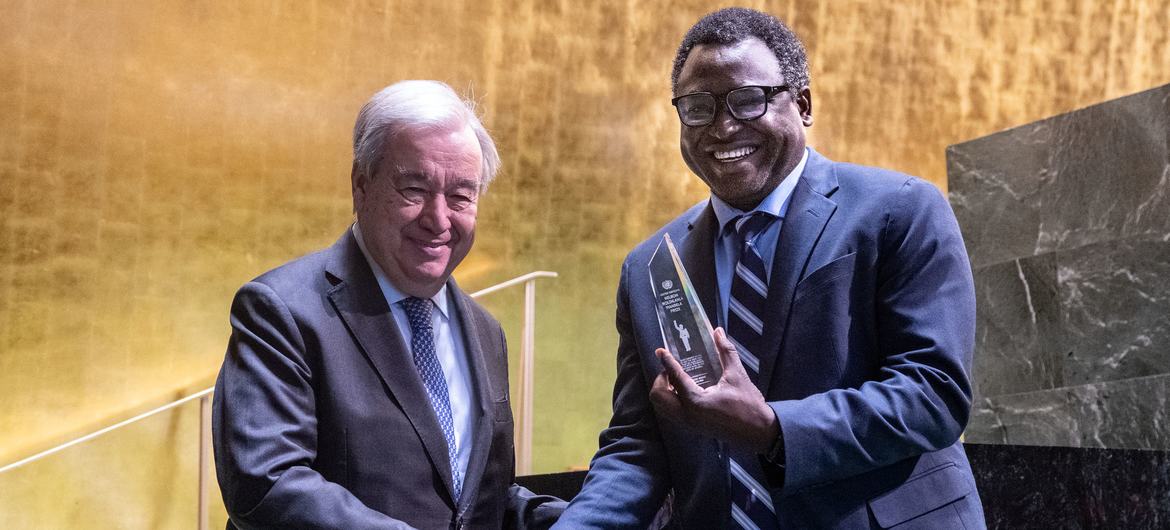
To honour this legacy, the UN chief awarded the annual Nelson Mandela Prize to two individuals who reflect the late leader’s commitment to peace and collective action, and this year’s theme of combating poverty and inequity: Brenda Reynolds of Canada and Kennedy Odede of Kenya. 

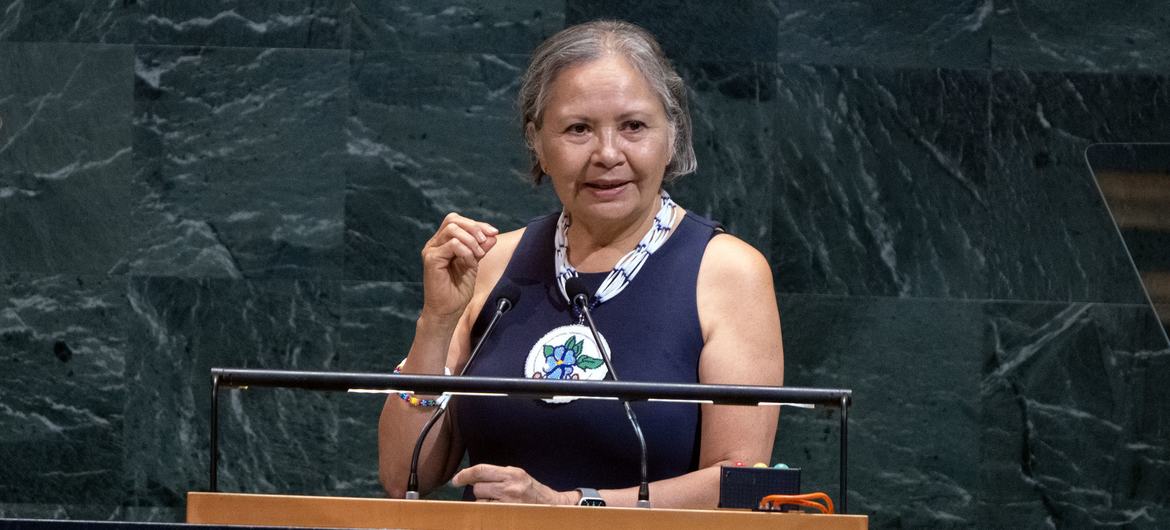
Brenda Reynolds, Nelson Mandela Prize awardee, speaks in the UN General Assembly hall on the observance of the annual Nelson Mandela International Day.

Brenda Reynolds: turning pain into action

Brenda Reynolds is a Saulteaux member from Fishing Lake First Nation in Canada, and as a social worker she has spent decades advancing Indigenous rights, mental health and trauma-informed care.

“There are many parallels to what we had experienced in both our countries, where the governments made impacted policies to change who we are, to face oppression, to face violations of human rights in our countries,” Ms. Reynolds said in her acceptance speech.

In 1988, she supported 17 teenage girls in the first residential school sexual abuse case in Saskatchewan. 

“These charges were the beginning of other disclosures that came from across Canada from survivors speaking about their sexual abuse experiences. Those charges and the disclosures became the largest class action lawsuit to date in Canada,” known as Canada’s Indian Residential Schools Settlement Agreement, she explained.

Afterwards, she became a special adviser to the Truth and Reconciliation Commission and developed the Indian Residential School Resolution Health Support Program – both created by the agreement – helping shape survivor support and trauma responses nationwide.

Secretary-General António Guterres (left) with Nelson Mandela Prize awardee Kennedy Odede of Kenya at the informal meeting on the observance of the annual Nelson Mandela International Day.

Kennedy Odede: from slums to CEO

After growing up in Kenya’s Kibera Slum, Kennedy Odede went from living on the street to global recognition when he was named one of TIME magazine’s 2024 100 Most Influential People and became a New York Times bestselling author.

“At ten years old, fleeing domestic violence, I joined the ranks of Nairobi’s street children. One day I stole a mango because I was starving. A mob gathered to beat me dead, until a stranger stepped forward, paid for that mango, and in that single act of grace, showed me that kindness could interrupt cycles of violence,” Mr. Odede recounted in his acceptance speech.

He began his journey as an activist by saving his meagre factory earnings to buy a soccer ball and bring his community together. 

“That ball was not just for play; it was a tool for organising. A centre around which a community could form,” he said. 

This soon grew into Shining Hope for Communities (SHOFCO), the largest grassroots movement in Kenya he now leads as CEO. SHOFCO operates across the country, empowering local groups and delivering vital services to over 4 million people annually.

“Mandela showed all of us at SHOFCO, that leadership is not a privilege reserved for those born to power. It belongs to anyone willing to serve and look within.” 

Source link

Guterres deplores Israeli strike on Gaza church

Three people were killed and at least 10 others were injured in the bombing of the Holy Family Church in Gaza City, according to media reports.

Stephanie Tremblay, a spokesperson for the Secretary-General, noted that the church was both a place of worship and a sanctuary for civilians.

“Attacks on places of worship are unacceptable. People seeking shelter must be respected and protected, not hit by strikes,” she said during the daily media briefing from New York.

“Too many lives have already been lost,” she added, before stressing the urgent need for an immediate ceasefire and the immediate and unconditional release of all hostages.

Strikes continue amid widespread displacement 

Meanwhile, Israeli strikes over the past 24 hours have hit sites hosting displaced Palestinians, some of whom were injured and killed.

The UN Office for the Coordination of Humanitarian Affairs (OCHA) reported that more than 11,500 people in Gaza were newly displaced between 8-15 July.

Overall, more than 737,000 people have been uprooted since the latest escalation of hostilities on 18 March, or roughly 35 per cent of the population

Furthermore, nearly everyone in Gaza has been displaced, in many cases multiple times, since the war began in October 2023.

Ms. Tremblay reminded journalists that most housing in Gaza is flattened or otherwise unhabitable and families are staying in the open because the UN has not been allowed to bring in tents and other shelter materials since early March.

Mediterranean swimming ban

She also highlighted a “worrying development” as humanitarians report that many displaced people are wary of bathing in the Mediterranean Sea after Israeli reinstated a ban prohibiting swimming and fishing.

“OCHA says that for many, the sea has been their only option to wash, as there is barely any functioning water infrastructure and almost no fuel to pump water, a much-needed outlet in the hot weather in Gaza,” she explained. 

More fuel needed

Humanitarians also continue to report that the amount of fuel Israel is allowing into Gaza is still nowhere enough to keep life-saving services operating and shutdowns are a real risk. 

Ms. Tremblay mentioned “a small but important step” that occurred on Thursday, as the UN was finally allowed to bring in some benzene – used to power ambulances and other critical services – for the first time in more than 135 days.

“That’s in addition to the limited amounts of diesel allowed over the past week. But it’s not enough,” she said.

“We are calling for more fuel – both benzene and diesel – to come in regularly. And the ban on shelter materials needs to be lifted immediately. Lives depend on both.” 

Source link

It’s time to finance our future and ‘change course’, Guterres tells world leaders in Sevilla

António Guterres issued his clarion call noting that sustainable development powered by international cooperation, is now facing “massive headwinds.”

Addressing the opening session of the 4th Financing for Development Conference (FFD4) in baking hot Sevilla, Spain – basking in record high June temperatures – the Secretary-General noted multilateralism itself is also feeling the heat, while trust between nations and institutions fray.

The world is on fire, shaken by inequalities, climate chaos and raging conflicts: “Financing is the engine of development and right now, this engine is sputtering,” he told the conference, attended by more than 50 world leaders, over 150 nations and around 15,000 delegates.

“As we meet, the 2030 Agenda for Sustainable Development – our global promise to transform our world for a better, fairer future – is in danger.”

Some two-thirds of the ambitious Sustainable Development Goals (SDGs) targets agreed in 2015 are significantly off track – hence the staggering $4 trillion investment needed to turn it around.

“We are here in Sevilla to change course. To repair and rev up the engine of development to accelerate investment at the scale and speed required,” said Mr. Guterres.

He described the outcome known as the Sevilla Commitment adopted on Monday – without the United States which pulled out of the process earlier this month – as a “global promise” to low-income nations to lift them up the development ladder.

The UN chief outlined three key action areas:

  • First, get resources flowing fast at home to spur sustainable growth, and for richer countries to honour their pledge under the accord to double aid to poorer countries to boost development. This includes tripling the lending capacity of Multilateral Development Banks and innovative solutions to unlock private cash.
  • Second, fix the “unsustainable, unfair and unaffordable” global debt system. Right now, poorer countries are spending around $1.4 trillion just servicing their vast debts in the form of interest payments. Among the innovations, a new borrowers’ forum will ensure fairer debt resolution and action.
  • Third, reform the global financial architecture, with major shareholders playing their part, so that it empowers every country. “We need a fairer global tax system shaped by all, not just a few.”

The current crisis of affordability and stalled development is “a crisis of people,” he continued, which leaves families hungry, children unvaccinated, and girls left out of education.

“This conference is not about charity. It’s about restoring justice and to facilitate the ability of all people to live in dignity,” said Mr. Guterres.

This conference is not about money – it’s about investments in the future we wish to build together.”

A tangible and actionable’ roadmap

King Felipe of Spain spoke just ahead of the official opening, telling delegates the multicultural city of Sevilla welcomes the world “with open arms”.

He said a new roadmap would emerge that is based on what is “concrete and tangible and actionable”.

The conference must be a success, because cooperation is one of our fundamental pillars of the multilateral world and “the ultimate embodiment of the values that sustain it – especially at this particular point in history where many certainties are melting away and many fears and uncertainties are taking shape.”

‘Our time is now’

Spain’s President Pedro Sánchez told delegates “our time is now and our place is here.” Millions of lives will depend on the choices made in Sevilla and going forward.

We must choose “ambition over paralysis, solidarity over indifference and courage over convenience,” he continued, adding that the eyes of world are on this hall, to see what we are ready to do together and in the face of this historic challenge we must prove our worth.”

Sevilla was “the New York of the 16th century” in diplomatic terms he told delegates – and a cradle of globalism – we must all do that legacy justice today.

‘Sevilla is not an end point’

Secretary-General of the conference, Li Junhua – who’s in charge of the Department of Economic and Social Affairs (DESA) – said the week in Sevilla is key moment to mobilise the resources necessary to build a just, inclusive and sustainable future.

The UN effort to finance development has been anchored in multilateralism and solidarity – but today, the whole framework is under “profound stress.”

He said never has sustainable development been so tested but the pact made in Sevilla puts people back at the centre.

Sevilla is not an end point, it is a launch pad for a new era of implementation, accountability and solidarity.” UNDESA is ready to support all nations to translate the commitment into international action, he underscored.

President of the UN General Assembly Philémon Yang told delegates above all, “we need leadership to guide the world forward into a brighter more prosperous future for everyone, everywhere.”

He said the Sevilla framework will renew global partnership for the decade ahead and provide a focus on a debt burden which is crippling the developing world.

President of the UN Economic and Social Council Bob Rae said trust between countries had to be strengthened, because its absence “creates chaos.”

“Most of all I want to congratulate states for bringing forward the ambition, deepening engagement between financial institutions.”

The week represents a real commitment to action, he said.

Ajay Banga, President of the World Bank Group, told delegates ending poverty remains his key mission and the surge in population underway in developing countries requires resources “at an unprecedented scale and pace.”

He said everyone knew that governments, philanthropies and institutions are unable to meet every projection or promise – which is why the private sector is essential to the Sevilla Agreement so that capital can flow.

Mr. Banga added that the bank’s reforms of recent years are about being a better partner to the private sector and government clients.

Improving response time, boosting capital and systems of growth are key – but much more is needed to deliver for the next generation.

Exempt least-developed from punishing tariffs: WTO

Ngozi Okonjo-Iweala, Director-General of World Trade Organization said the conference was gathering at a time of unprecedented difficulty.

After decades of positive contributions, the global trading system has now been “severely disrupted” leaving exports so hampered by unilateral tariff measures and policy uncertainty that the WTO has sharply downgraded growth forecasts.

Further tariff barriers on 9 July – the deadline set by the US administration – will only make the contraction in global trade worse.

She reminded that the WTO has argued for the least developed nations and Africa overall to be exempted from the tariffs, “so we can better integrate them into the world trading system, not further exclude them.”

She said the Sevilla Agreement rightly recognises international trade as an engine of development.

“We therefore need to bolster stability and predictability in global trade,” through action at many levels that can grow national resources through exports, she told delegates.

IMF calls for broader tax base

Nigel Clarke, Deputy Managing Director of the International Monetary Fund (IMF), called for broadening the tax base, building strong financial management systems, coordinating support and addressing debt more sustainably.

“Many countries continue to struggle with high interest costs,” he said, calling on the international community to improve debt restructuring processes.  

Through its capacity development, the Fund is equipping members to chart their own paths and is also providing financial support when they need it most, he added.


Source link

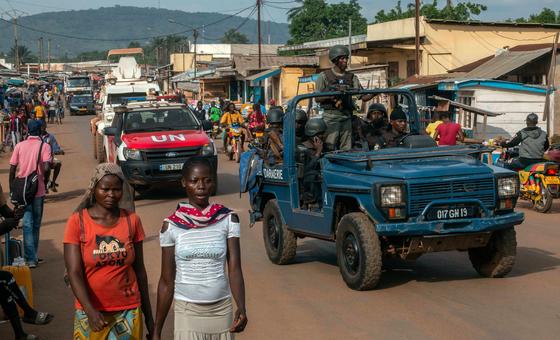
Guterres welcomes peace deal between DR Congo and Rwanda

The accord is “a significant step towards de-escalation, peace and stability in the eastern Democratic Republic of the Congo and the Great Lakes region,” he said in a statement that evening.

A breakthrough amid crisis

Since the 1990s, eastern DRC has been plagued by dozens of armed groups who have terrorized the population.

The Government has long accused Rwanda of supporting the M23 rebel group which Rwanda has denied.

Earlier this year, the M23 launched an offensive in North and South Kivu provinces, capturing cities and villages, including provincial capitals Goma and Bukavu.

Thousands of civilians were killed, hundreds of thousands more were displaced, and serious human rights violations were committed.

UN commitment remains

The Secretary-General commended the US for its leadership in facilitating the mediation process, in coordination with Qatar and the African Union Mediator, President Faure Gnassingbé of Togo.

He also acknowledged the contributions of the five co-facilitators designated by the East African Community (EAC) and the Southern African Development Community (SADC).

He urged the parties to fully honour their commitments under the peace agreement and in line with UN Security Council resolution 2773 (2025), including the cessation of hostilities and all other agreed measures.

The resolution, unanimously adopted in February, condemned the M23 offensive and called for the DRC and Rwanda to return to diplomatic talks.

The Secretary-General concluded his statement by saying the UN, including through its peacekeeping mission in the DRC, MONUSCO, “remains fully committed to supporting the implementation of the agreement, in close coordination with the African Union, regional and international partners.”

Coincidentally, the Security Council met on Friday to discuss developments in the DRC.

The Secretary-General’s Special Representative for the country and Head of MONUSCO, Bintou Keita, welcomed the peace agreement as a significant step towards ending the conflict.

‘A chance to turn the page’

The UN refugee agency, UNHCR, echoed this message in a statement on Saturday, saying the agreement “offers a chance to stop the cycle of violence and displacement and focus on solutions that restore dignity, stability, and opportunity.”

Furthermore, it “can bring renewed hope to those who have endured far too much for far too long,” added the agency’s chief, UN High Commissioner for Refugees Filippo Grandi.

“This is a chance to turn the page – ensuring the protection of civilians, including refugees and internally displaced people, and advancing durable solutions that allow them to rebuild their lives in safety and dignity,” he said.


Source link

Guterres calls for immediate Gaza ceasefire as humanitarian crisis reaches ‘horrific proportions’

Speaking to reporters at UN Headquarters ahead of his departure to Spain for the International Conference on Financing for Development, the Secretary-General said that while the Israel-Iran conflict had dominated recent headlines, the plight of civilians in Gaza remained urgent and dire.

Families have been displaced again and again – and are now confined to less than one-fifth of Gaza’s land,” he said.

Even these shrinking spaces are under threat. Bombs are falling – on tents, on families, on those with nowhere left to run.

Search for food must never be a death sentence

Mr. Guterres described the situation as the most severe since the onset of the war, citing acute shortages of food, fuel, medicine and shelter.

The search for food must never be a death sentence,” he said, highlighting the danger faced by Palestinians simply trying to survive.

He has repeatedly called for three urgent steps: an immediate ceasefire, the unconditional release of all hostages, and full, unimpeded humanitarian access.

On Friday, he again pressed for these demands, emphasising that aid workers are starving, hospitals are rationing life-saving supplies and civilians are trapped in unsafe zones.

Surge in aid urgently needed

“What’s needed now is a surge – the trickle must become an ocean,” he said.

The UN chief stressed that Israel, as the occupying power, is legally obliged to facilitate humanitarian relief.

“To those in power, I say: enable our operations as international humanitarian law demands. To those with influence, I say: use it,” he added.

Earlier this week, a small convoy of UN medical supplies entered Gaza for the first time in months, Mr. Guterres noted, adding that it only underscored the overwhelming scale of the need.

He also also cautioned that any aid delivery method must ensure civilian safety, stressing that “operations which place desperate people in or near militarized areas are inherently unsafe.”

We have the solution – a detailed plan grounded in the humanitarian principles of humanity, impartiality, neutrality, and independence,” he said.

It worked during the last ceasefire. So it must be allowed to work again.

Two-State solution critical

Mr. Guterres concluded with a broader political appeal:

The only sustainable path to re-establishing hope is by paving the way to the two-State solution. Diplomacy and human dignity for all must prevail.

Source link

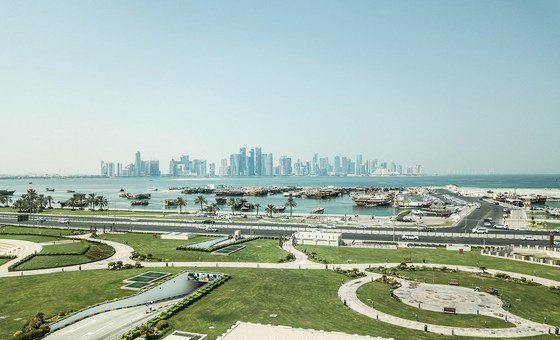
Guterres condemns Iran attack on Qatar

It comes in the wake of reports that Iran launched missiles at an American military base in Qatar in retaliation for the US bombing three of its nuclear facilities this past weekend.

Iran reportedly fired seven missiles at Al Udeid Air Base, where some 10,000 troops reportedly are stationed.  All but one were intercepted by Qatar and no casualties were reported, according to international media.

End the fighting

The development marks the latest step in more than a week of missile strikes between Iran and Israel, and the situation has escalated with US involvement.

From the outset of the crisis, the Secretary-General has repeatedly condemned any military escalation in this conflict, including today’s attack by Iran on the territory of Qatar. He further reiterates his call on all parties to stop fighting,” the statement said.  

The Secretary-General urged all Member States to uphold their obligations under the UN Charter and other rules of international law. 

Source link