International Criminal Court: New US sanctions ‘a flagrant attack’ on judicial independence

The sanctions target judges Kimberly Prost of Canada and Nicolas Guillou of France, as well as two deputy prosecutors: Nazhat Shameem Khan of Fiji and Mame Mandiaye Niang of Senegal.

This follows earlier measures against four other judges and the ICC prosecutor.

Affront to victims

In a press statement announcing the new round of sanctions, US Secretary of State Marco Rubio said the ICC “is a national security threat that has been an instrument for lawfare against the United States and our close ally Israel.”

The UN-backed court denounced the sanctions as “a flagrant attack against the independence of an impartial judicial institution”.  

Furthermore, “they constitute also an affront against the Court’s States Parties, the rules-based international order and, above all, millions of innocent victims across the world.”

Investigating grave crimes

The ICC investigates the gravest crimes of concern to the international community, namely genocide, war crimes, crimes against humanity and the crime of aggression. Read our explainer here.

It is based in The Hague, in the Netherlands, and was established under a 1998 treaty known as the Rome Statute which came into force four years later.  The United States and Israel are not among the 125 States that are party to the treaty.

Last November, the ICC issued arrest warrants for Israeli Prime Minister Benjamin Netanyahu and former defence minister Yoav Gallant, together with a former Hamas commander, in connection with the conflict in Gaza, citing allegations of war crimes and crimes against humanity. 

It is also probing war crimes allegedly committed in Afghanistan by all sides during years of conflict, including the US, following the allied invasion of the country in May 2003.

Strong and undeterred

The Court reiterated that it “stands firmly behind its personnel and victims of unimaginable atrocities” and “will continue fulfilling its mandates, undeterred, in strict accordance with its legal framework as adopted by the States Parties and without regard to any restriction, pressure or threat.”

The ICC called upon “States Parties and all those who share the values of humanity and the rule of law to provide firm and consistent support to the Court and its work carried out in the sole interest of victims of international crimes.”

The UN underlined the key role that the ICC has in international criminal justice and expressed concern over the imposition of further sanctions.

The decision imposes severe impediments on the functioning of the office of the prosecutor and respect for all the situations that are currently before the court,” UN Spokesman Stéphane Dujarric told journalists in New York.

“Judicial independence is a basic principle that must be respected, and these types of measures undermine the foundation of international justice.” 

Source link

Terror threat posed by ISIL ‘remains volatile and complex,’ Security Council hears

While multiple Da’esh leaders have perished in the past few years, “the group has managed to retain its operational capacity”, Vladimir Voronkov, head of the UN Office of Counter-Terrorism (UNOCT) told the Security Council Wednesday.  

Da’esh makes use of regional and domestic affiliates and continues to receive substantial global donations, operating through regional hubs and cross-border financial networks.  

The threat the extremist group poses is notably exacerbated in Africa’s Sahel region, where ISIL affiliates such as Islamic State West Africa Province have emerged as prolific producers of terrorist propaganda, which continues to attract foreign recruits.

 Despite significant national and international efforts to counter Da’esh – which rose to prominence in 2014 after taking over large swathes of Iraq and Syria – the continuing threat posed, underscores the urgency of sustained global cooperation.  

Security gaps

In Afghanistan, ISIL-Khorasan continues to represent one of the most serious threats to Central Asia and beyond, with the group continuing to target civilians, while exploiting discontent with the de facto authorities in the country.  

Meanwhile, Da’esh remains active in Iraq and Iraq – despite the military defeats in Mosul and Raqqa in 2017 – attempting to restore its operational capacity in the Badia region and renewing efforts to destabilise local authorities.

In Syria, where the situation remains fragile since the takeover led by Hay’at Tahrir al-Sham, ISIL continues to exploit security gaps, conduct covert operations and incite sectarian tensions in the country.  

Detention camps

The security, humanitarian and human rights situation in the camps and other facilities in the northeast of Syria remains deeply concerning,” said Mr. Voronkov.  

Camps such as al-Hol are currently hosting tens of thousands of individuals, primarily women and children – many with alleged ties to ISIL – who remain in prolonged detention under unsafe and undignified conditions.

These environments present serious risks of radicalisation to terrorism and are contrary to obligations under international law,” he said.  

Mr. Voronkov called for the “safe, voluntary, and dignified repatriation of all concerned individuals, with a particular focus on children.”  

New technology

“There is a marked increase in the interlinkage of diverse methods and the integration of digital technologies with conventional techniques,” Elisa de Anda Madrazo, President of close UN-partner the Financial Action Task Force, told ambassadors.  

The use of new and emerging technologies and artificial intelligence by Da’esh remains a growing challenge, notably as the group is increasingly employing these tools to raise funds and establish a broader communications network.  

As we stand at the crossroads of technological transformation and geopolitical uncertainty, the threat of terrorism is more diffuse and complex,” said Nathalia Gherman, head of the Counter-Terrorism Committee Executive Directorate (CTED).

Prevention still best cure

Prevention remains our best response to terrorism and violent extremism conducive terrorism,” said Mr. Voronkov.

He emphasised the importance of prioritising long-term, principled responses that tackle the drivers of terrorism and its enabling conditions.

“It is more effective – and cost efficient – to prevent terrorism than to remedy its impact,” he said. 

Source link

Amid ongoing Israeli attacks, ‘the systematic destruction of Gaza City is already underway’: UN rights office

Recent attacks have been particularly devastating in the Az Zaytoun neighbourhood, where airstrikes, artillery shelling and gunfire are continuous and intense, causing a high number of civilian casualties and the large-scale destruction of residential buildings and public facilities, the UN human rights office, OHCHR, in the Occupied Palestinian Territory said in a statement.

Since 8 August, the office has recorded 54 attacks on residential buildings and entire blocks in Gaza City, killing 87 Palestinians, including at least 25 children and entire families.

It also recorded attacks on shelters for internally displaced people, including tents and schools, killing at least 14.

These casualty figures “indicate that the systematic destruction of Gaza City is already underway,” the statement said.

However, OHCHR stressed that these devastating figures are only a portion of the actual toll due to underreporting in such dire circumstances.

Impact of attacks

As a result of recent attacks, hundreds of families have been forced to flee, with nowhere safe to go amid dire humanitarian conditions across the Gaza Strip.

However, those who remain trapped are completely cut off from food, water and medical supplies.

OHCHR emphasised that “Israel’s reported decision to take full control of Gaza City and to forcibly displace its population will lead to mass killings of civilians and destruction of infrastructure vital to the survival of the population.”

The office is seeing the Israeli military repeat means of warfare that caused mass killings, serious injuries, forced displacement, arbitrary detention, starvation and extensive destruction in previous operations in North Gaza and Rafah.

To reportedly prepare for the offensive, the Israeli military has repeatedly called on Palestinians to move to Al Mawasi, west of Khan Younis.

However, Israel has repeatedly struck tents of the displaced in Al Mawasi, where people are struggling to survive with barely any access to food, water and other necessities.

Violations of international law

Under international law, Israel must not destroy civilian property unless it is rendered necessary by military operations. Yet, the widespread destruction of residential buildings in Gaza City is not seen as an imperative military necessity.

Additionally, by forcing the entire population of Gaza City and those remaining in North Gaza into displacement – with no shelter, food or medical provisions and no indication for allowing them to return to their homes in the future – OHCHR is concerned that these are grave breaches of the Fourth Geneva Convention.

Thus, the office is urging States party to the Geneva Conventions to follow their obligation “to exert maximum pressure on Israel to immediately halt this offensive, which risks triggering an unprecedented, life-threatening humanitarian crisis and permanently extinguishing the Palestinian presence in Gaza’s largest urban area.”

Worst-case famine

Meanwhile, the World Food Programme (WFP) welcomed Japan’s life-saving contribution of 500 million yen ($3.3 million) to provide emergency food and nutrition assistance to Palestinians as they face severe food insecurity.

Adding to the assistance, on 4 August, limited commercial truck entries resumed, containing mainly dry food items and a small amount of fresh produce, according to the UN aid coordination office, OCHA.

However, the risk of spoilage and infestation of food supplies has drastically increased due to being stranded for months, heat and impending expiration dates.

Furthermore, cooking gas has not entered Gaza for over five months, and firewood has become increasingly unaffordable, forcing many to use waste and scrap wood as alternative cooking sources, exacerbating health and environmental risks.

Due to such limited aid, WFP underscored that the latest Integrated Food Security Phase Classification report finds that the worst-case scenario of famine is currently occurring in the Gaza Strip.

“I meet families who have lost everything and don’t know where their next meal will come from.” said Antoine Renard, WFP Representative and Country Director in Palestine.

But thanks to this support from Japan, he continued, “WFP can continue procuring life-saving food assistance, but we urgently need a ceasefire and sustained access to reach those most at risk and prevent a full-scale famine.” 

‘Africa is poised for progress’ Guterres tells development conference in Japan

“With the world’s youngest population, abundant natural resources, and a vibrant entrepreneurial spirit, Africa is poised for progress,” he told the 9th Tokyo International Conference on African Development (TICAD) in Yokohama.

He said the meeting’s theme – Co-Create Innovative Solutions with Africa – was a reminder that these same strengths can help shape a more peaceful, prosperous, and sustainable world in Africa and beyond.

Progress and reform

In this regard, he emphasised the need to accelerate progress to achieve the Sustainable Development Goals (SDGs) through investment, reform and partnerships.

Mr. Guterres highlighted five areas for cooperation, starting with his longstanding push to reform institutions of global governance so that they reflect today’s realities.

Africa must have a stronger voice in shaping the decisions that affect its future,” he said.

That includes long-overdue reform of the Security Council, where incredibly, Africa has no permanent member, and other regions remain underrepresented.”

He also called for overhauling the international financial architecture, describing the current system as “unjust and unfair”, as well as bold action on debt relief.

Value chains and renewable energy

The Secretary-General next put the spotlight on investment in sustainable global value chains and regional integration.

“Africa’s path for prosperity must focus on adding value to its raw materials, creating decent jobs, and building resilience, taking profit of the African Continental Free Trade Area,” he said.

He also stressed the need to address “Africa’s energy paradox”, noting that although the continent has enormous potential to produce renewable energy, it receives just two per cent of global investment in the sector.  Meanwhile, some 600 million African lack access to electricity.

“Africa is also home to the critical minerals required to power renewable technologies,” he continued.  “But the countries hosting them must be the ones to benefit first and most, while adding value to local and global value chains.”

Invest in technology, youth and peace 

Turning next to technology, Mr. Guterres called for harnessing digital innovation, including artificial intelligence (AI), for development.

He said Japan’s technological leadership can help close the digital divide, “and ensure that technology helps African countries catch up, with adequate digital public infrastructure, rather than being left behind.”

As “young people are the builders of Africa’s future”, the Secretary-General’s fourth point underscored the need to invest in their skills and education, particularly in STEM (Science, Technology, Engineering and Maths).

Let us invest in women’s full participation across economies, societies and political systems,” he added.

Mr. Guterres concluded by acknowledging the link between peace and prosperity.

“Sustainable development requires sustainable peace,” he said.

“By silencing the guns as the African Union clearly points out. And by ending violence in all its forms and strengthening the social cohesion and stability that can attract investment and business to Africa.”

About TICAD

The Tokyo International Conference on African Development (TICAD) is co-hosted by Japan and the UN, the UN Development Programme (UNDP), the World Bank and the African Union Commission (AUC).

It has been held since 1993 with the aim of promoting Africa’s development, peace and security, through the strengthening of relations in multilateral cooperation and partnership.

“For more than three decades, TICAD has embodied the spirit of multilateralism — grounded in mutual respect, shared responsibility, and a deep belief in Africa’s potential,” the Secretary-General said.

The conference runs from 20-23 August. 

Source link

DR Congo: UN deplores deadly attacks in the east of the country

The attacks, which took place between 9 and 16 August in the localities of Beni and Lubero territories, claimed the lives of at least 52 civilians, including eight women and two children, but peacekeepers on the ground say the death toll may very well rise.  

“These attacks targeting civilians, which add to the atrocities committed during the night of 26 to 27 July in Komanda (Ituri territory, Ituri), are intolerable and constitute serious violations of international humanitarian law and human rights,” said Binto Keita, Head of the UN Mission in the DRC, known as MONUSCO.  

Appeal to armed groups

The violent attacks were accompanied by abductions, looting, and the burning of homes, vehicles, and motorcycles, as well as the destruction of property belonging to the population already facing dire humanitarian conditions.  

MONUSCO issued a statement calling for foreign armed groups, such as the ADF, to lay down their arms unconditionally and return to their countries of origin.  

The Mission also urged “the Congolese authorities to conduct thorough investigations to identify those responsible for the massacre of civilians and bring them to justice.”  

Stronger military presence

In response to this new wave of violence, the peacekeeping mission reinforced its military presence and support to Congolese authorities.

For instance, on 13 and 14 August during incidents in Mayi-Moya in North Kivu, MONUSCO provided physical protection to 206 civilians, including 93 children and 70 women, who had sought refuge at the mission’s military base.  

“MONUSCO remains fully committed to supporting Congolese authorities and local communities in preventing further violence, protecting civilians, reducing tensions and contributing to the stabilisation of areas affected by armed conflict,” it said.   

Source link

UN upholds readiness to support peace efforts in Ukraine

Stéphane Dujarric was responding to a journalist’s question about the meeting held the previous day between Ukrainian President Volodymyr Zelensky, his American counterpart Donald Trump, and several European leaders at the White House.

It followed talks last week between President Trump and Russian President Vladimir Putin at a summit in Alaska.

Engagement and dialogue

“It’s very important that all involved continue to stay actively engaged in what we want to see as an inclusive dialogue to sustain the important momentum that was created to bring an immediate ceasefire and sustainable peace in Ukraine,” he said.

Nearly four years have passed since Russia launched its full-scale invasion of Ukraine and more than 13,000 civilians have been killed, UN human rights monitors in the country have reported.  

Mr. Dujarric was asked if the Secretary-General had any comment on the possibility of a meeting between the Russian and Ukrainian Presidents.

While noting that there is much discussion around “potential dialogues or formats, location”, he said “it is obviously important that those parties who are directly involved in this conflict be able to speak to each other directly.”

Asked what role the UN could play in this process, he said the global body will be “supportive and ready to engage in a role that may or may not be given to us based on the principles that the Secretary-General has often reiterated.”

When pressed about whether UN peacekeepers could be deployed to Ukraine, Mr. Dujarric stressed that “any peacekeeping mission anywhere would have to go through the Security Council.” 

Source link

UN honours fallen aid workers on World Humanitarian Day

The first eight months of 2025 show no sign of a reversal of this disturbing trend, with 265 humanitarian workers killed as of 14 August, according to figures released on World Humanitarian Day.

Attacks on humanitarian workers, assets and operations violate international law and undermine the lifelines that sustain millions of people trapped in war and disaster zones.  

“Even one attack against a humanitarian colleague is an attack on all of us and on the people we serve,” said Tom Fletcher, head of the UN Office for the Coordination of Humanitarian Affairs (OCHA), speaking in Geneva.

At Headquarters in New York City, the UN hosted a commemoration ceremony for the victims of the bombing of the United Nations headquarters its office in Baghdad in 2003, which cost the lives of 22 people. Some of the survivors attended the event.

Protect aid workers

“Humanitarians carry hope where there is despair,” said Mr. Fletcher at the World Humanitarian Day 2025 Commemoration Ceremony in Geneva.  

“They bring humanity where there is inhumanity.”  

Yet, humanitarian workers are under attack.  

In 2024, most of the aid workers killed were national staff serving their communities and were attacked in the line of duty or in their homes.  

Since October 2023, 520 aid workers, mostly staff with UN Palestine refugee agency UNRWA, have been killed in Gaza — the deadliest place for humanitarians for the second year running.  

OCHA demanded that Member States protect civilians and aid workers, and hold perpetrators accountable.

Despite the dangers, “humanitarians will not retreat”, said Mr. Fletcher.

Humanitarians in the Middle East  

Across the Middle East, civilians, including humanitarian workers, “are being killed, injured, and attacked in shocking numbers,” said the UN Resident and Humanitarian Coordinators in the Occupied Palestinian Territory (OPT), Syria, Yemen and Lebanon in a joint statement this Tuesday.  

Since August 2024, at least 446 humanitarian workers have been killed, wounded, kidnapped or detained in these locations. “The world is failing humanitarian workers and the people they serve,” the statement read.  

Renewing their call for the respect of international humanitarian and human right laws, the officials called on the international community to “protect those who protect humanity.”  

Source link

Gaza: Looming offensive and restrictions on humanitarians

In the past 24 hours in Gaza, there have been more reports of casualties in shootings along aid convoy routes, where desperate crowds of civilians often wait to take supplies from the back of trucks.

Meanwhile, hostilities between Israeli forces and Palestinian armed groups are also escalating. In the past 24 hours, air strikes and shelling have occurred across five neighbourhoods in Gaza City, with reports of tanks and ground troops advancing.  

UN and partner officials in Gaza warned on Monday that the Israeli offensive would result in further mass displacement and “have a horrific impact on people already exhausted, malnourished, bereaved, displaced, and deprived of the basics needed for survival.”

Additionally, starvation persists in the enclave as supplies remain insufficient and inaccessible.  

Restrictions on international NGOs

OCHA also reported that the new requirements for international non-governmental organizations (NGOs) are preventing many humanitarian partners from bringing supplies into Gaza.  

To secure registration and bring in materials, international NGOs must share sensitive personal information about Palestinian employees, often contrary to their countries’ domestic legislation, which affects their ability to protect civilians.

Upcoming humanitarian work  

The UN and its NGO partners stressed that their teams will remain in Gaza City to provide life-saving support, reminding parties of their obligation to protect civilians, including humanitarian workers, and safeguard humanitarian infrastructure.

“Every day and every night, aid workers in Gaza courageously put themselves in harm’s way to keep others alive. At the same time, they also struggle to feed themselves and feed their own families,” said Spokesperson for the Secretary-General, Stéphane Dujarric, reporting on the situation in the context of World Humanitarian Day at Tuesday’s daily press briefing in New York.

“The world cannot look away while attacks on aid workers and on the very people they try to help have become routine.”

The humanitarian community welcomes the Israeli announcement that tents and shelter equipment will be allowed into Gaza, aiming to utilise this lifting of the ban to bring in tents, shelter materials and other items into the Gaza Strip. However, the UN and partners said it is deeply troubling that this lifting is in connection with a looming offensive.

They called for a significant scale-up of private sector operations and a full facilitation of deliveries from local and international humanitarian organizations, with supplies allowed to enter through all crossings. 

Gaza: Aid insufficient to avert ‘widespread starvation’ as Israeli military ramp-up forces more people to flee

“The risk of starvation is everywhere in Gaza,” UN Human Rights Office spokesperson Thameen Al-Kheetan told reporters in Geneva.

“This is a direct result of the Israeli government’s policy of blocking humanitarian aid,” he said.

Mr. Al-Kheetan insisted that in the past few weeks, Israeli authorities have only allowed aid to enter in quantities that remain “far below what would be required to avert widespread starvation”.

The UN said on Monday that hunger-related deaths continue to be reported in the Strip, including among children.

More people displaced

As the Israeli army intensified its attacks in the north of the enclave, it has continued to issue displacement orders for Palestinians, Mr. Al-Kheetan said.

He noted that Gazans have been told to move to the Al-Mawasi area, despite continuing airstrikes and disastrous conditions there.

“Hundreds of thousands of Palestinians displaced to Al-Mawasi have little or no access to essential services and supplies, including food, water, electricity and tents,” he warned.

Deadly pursuit of aid

The OHCHR spokesperson stressed that reaching humanitarian aid “can be a deadly pursuit” with latest data indicating that 1,857 Palestinians were killed while seeking food from 27 May, when the US and Israel-backed militarized aid distribution scheme known as the Gaza Humanitarian Foundation started its operations.

Out of that number, he said that 1,021 were killed in the vicinity of the Gaza Humanitarian Foundation sites and 836 on the routes of supply trucks.

“Most of these killings appear to have been committed by the Israeli military,” Mr. Al-Kheetan said.

Asked how the situation could get even worse, Jens Laerke, the spokesperson for the UN humanitarian affairs coordination office (OCHA), said that “it has already gotten worse”, insisting on the devastating effects of the Israeli ban on the entry of shelter materials into the enclave.

While the Israeli authorities recently announced that they would lift the ban on shelter supplies, Mr. Laerke said that “the United Nations and our partners have as of last night not been able to bring in shelter materials following the Israeli announcement.”

“There’s a set of impediments that still needs to be addressed, including Israeli customs clearance,” he added.

Need for shelter

The UN said on Monday that according to partners’ estimations at least 1.35 million people in Gaza need emergency shelter.

Aid agencies have warned that tents being used in Gaza are worn out from prolonged sun exposure and frequent displacement.

Asked about the reasons given for the ban on shelter items, Mr. Laerke explained that in a conflict, some shelter items such as tentpoles can fall under the “dual-use regime” as they could be used for both civilian and military purposes.

“Shelter has been banned entry for about five months and in that period over 700,000 people have been displaced or re-displaced,” he said.

People forced to flee time and again often have to leave behind the tents that they have been provided, Mr. Laerke explained, which creates a challenge for aid workers “trying to respond to people where they are”.

The looming expansion of Israel’s military activities in Gaza City is another major concern for UN humanitarians, as it would again push thousands of people into a severely overcrowded area in the south of the Strip.

Asked about the impact of Israel’s plans to occupy Gaza City, Mr. Al-Kheetan underscored a “huge risk” for civilians.

“There are risks of mass displacement… more killings and more misery that we have already seen in the Gaza Strip,” he warned. “Among those who will be affected are the most vulnerable, people with disabilities, the injured, the children, women”, he concluded.

Response to prison video

In other developments, the human rights spokesman said that video footage showing Israeli National Security Minister Itamar Ben-Gvir berating and taunting Palestinian leader Marwan Barghouthi inside an Israeli jail was “unacceptable.”

He said the minister’s behaviour and the publication of the images constitute an attack on Mr. Barghouthi’s dignity.

He added that international law requires that all detainees be treated humanely, with dignity, and that their human rights be respected and protected.

“Such conduct by the minister responsible for the Israeli Prison Service may encourage violence against Palestinian detainees, enabling human rights violations in Israeli detention facilities,” he said

Source link

‘Our work is largely invisible’: Journey from outer space to frontline aid worker

Ahead of donning a beige WFP vest and boots to face hurricanes, wars and refugee camps, the Portuguese scientist worked with satellite imagery and cartography, creating maps to support humanitarian missions, until he realised he didn’t want to stay behind a computer screen.

On the occasion of World Humanitarian Day, marked annually on 19 August, Mr. Matos shared his story with UN News.

Pedro Matos joined the WFP response team following the deadly Cyclone Idai in Mozambique in 2019. (file)

From hurricanes to war

“At a certain point, it just wasn’t enough,” he recalled about his space engineering job. “I didn’t want to be making maps for other people to go and do humanitarian responses. I want to take those maps and be the one to do the responding.”

That’s exactly what he did. At WFP, he first developed maps on the ground and then went on to coordinate the agency’s emergency operations.

Since then, he has visited dozens of countries often at the epicentre of crises, from Hurricane Idai in Mozambique to the outbreak of war in Ukraine.

In 2018, Pedro Matos looks at the Kutupalong refugee camp where Rohingya refugees live. (file)

‘Like moving an entire government’

Coordinating in an emergency response is like “moving an entire government”, where each UN agency represents a “ministry” and the response only works when everyone comes together over the four essential areas in a crisis response: food, shelter, water and health.

Having just returned from a mission in Bangladesh, he described efforts to respond at Cox’s Bazar, the world’s largest refugee camp and home to 700,000 people who fled violence in Myanmar.

“We’ve been able to provide better conditions for people to live in this limbo with a little more comfort,” he said, also remembering his visit there in 2018 at the height of the crisis.

At the time, “a million people crossed the border in a month.” Today, although they remain in “limbo”, he pointed to improvements such as more monsoon-resistant homes and roads, gas stoves and reforestation.

Pedro Matos on board a humanitarian aid flight after Cyclone Idai in Mozambique. (file)

Heart-shredding challenges and profound rewards

The job has meant both challenges and rewards.

“We’ve also had a few instances where we’ve been kidnapped, or come under fire, but it’s not the things that happen to us that impact us the most,” he said. “It’s the things that happen to others that have the most impact.”

Hurricane Idai in Mozambique was a Category 5 hurricane that hit Beira in 2019 was one of the biggest and most intense crisis, but also most rewarding, he said.

“There’s this mix of something that was very intense and hard because we couldn’t reach everyone, but at the same time, the fact was that there were many people – tens or hundreds of thousands of people – who would have died if we hadn’t been there,” he said. “That was the most impactful response in my 17 years at the United Nations.”

When he was in Yemen, “we were bombed 20 times a day” in the capital, Sana’a, he said, adding that “there’s a strange normalcy” that develops.

“We find ourselves saying things like, ‘no, that wasn’t very far; it was only 500 metres from here,’” he said. “It’s something I never thought I’d think or say before doing this work.”

When reaching central Ukraine several weeks after Russia’s full-scale invasion in early 2022, he called the situation “very intense”. Within a week, he and his colleagues began distributing money to people coming from the frontlines.

We couldn’t reach everyone, but there were tens or hundreds of thousands of people who would have died if we hadn’t been there.

“When we interviewed people and asked them what they were doing with the money we gave them, it was very gratifying,” he said. “It was beautiful.”

Those who had been wounded in the war were using the money to buy painkillers. Others used it to pay for gas to escape the frontlines. One mother had been able to buy her daughter a scoop of ice cream for the first time since the war began.

“Her daughter was delighted,” he said. “There are very rewarding moments.”

Feeding millions every day

“We all think we know what the humanitarian or aid sector is,” Mr. Matos explained, adding that the scale during a crisis is much, much larger.

“I thought we’d be rehabilitating schools, feeding 100 people,” he continued. “I never imagined I’d be feeding 13 million people a day in Yemen. The scale is absolutely incredible.”

However, humanitarian work is often seen as a separate job, he said. Almost every profession that exists in private and government sectors also exists in an aid landscape, from lawyers, those who work in procurement, like in supermarkets, and human resources.

“I basically do the same work as social workers or firefighters,” he said. “They do it here every day, and I do it elsewhere. But, our work is in the same field and very similar.”

A toddler eats a food supplement, as part of WFP’s nutrition programme, in Mokha, Taiz, in Yemen.

The value of a Nobel Prize

WFP was awarded the Nobel Peace Prize in 2020, a recognition that Mr. Matos received with humility.

“Our work is largely invisible, despite feeding 120 million people every day,” he said. “It gave us a platform to raise awareness about crises like Congo, Myanmar, Sudan and Gaza, which often go unnoticed.”

Our work is largely invisible, despite feeding 120 million people every day.

He said his job is to give voice to the voiceless when crises fade from news headlines. Despite the difficulties and risks across his career, Mr. Matos has no doubt about the most important lesson he learned.

“People are essentially good,” he said. “When faced with the imminence of tragedy, people are fundamentally good and want to help others, even if that other person is very different. It was good to realise this because it’s not always obvious when we’re far from these crises.”

Source link

World Humanitarian Day 2025: Aid workers mull record toll of their own

Speaking to UN News from the wartorn enclave to mark World Humanitarian Day, Olga Cherevko from the UN aid coordination office, OCHA, said that exhausted aid workers continue to show up for work “day in and day out”.

Approaching two years since the start of the war in Gaza, Ms. Cherevko emphasized the commitment of her Palestinian colleagues, “the doctors, the nurses, aid workers who many of them have, lost everything and several times over”.

Red lines crossed

In comments in support of aid workers everywhere, UN Secretary-General António Guterres pointed out that humanitarian teams “are the last lifeline for over 300 million people” impacted by conflict or disaster.

Despite their lifesaving role, funding cuts are having a serious and negative impact on the world’s most vulnerable people, Mr. Guterres warned, while those who provide aid are increasingly under attack as “red lines are crossed with impunity”.

This is despite the fact that such attacks are prohibited under international law, the UN chief continued, noting that although governments have pledged action to protect them, “what is missing is political will – and moral courage…Humanitarians must be respected and protected. They can never be targeted.”

Powerless to help

From her base in Deir Al-Balah in central Gaza, Ms. Cherevko reflected on the nature of humanitarian work today and the frustration that aid teams often face when their lifesaving missions are delayed, preventing them from delivering assistance at scale.

“I think as a humanitarian, I feel powerless sometimes in Gaza because I know what it is that we can do as humanitarians when we’re unable to do so, both here in Gaza and in any other humanitarian crisis,” she explained.

“The fact that we continue to face massive impediments for delivering aid at scale, when our missions are delayed, when our missions lasted 12, 14, 18 hours; the routes that we’re given are dangerous, impassible or inaccessible.”

Surge in killings

Latest data indicates a 31 per cent surge in aid worker deaths compared to 2023, driven by the relentless conflict in Gaza.

The Strip saw 181 humanitarian workers killed in 2024, with 60 more fatalities in Sudan. More widely, violence against aid workers increased in 21 countries in 2024 compared to the previous year, with State actors the most common perpetrators.

Worryingly, there is no sign that the trend is slowing this year, with 265 aid workers killed as of 14 August this year, according to provisional data from the Aid Worker Security Database.

Amid early reports that Hamas has agreed to a 60-day ceasefire in Gaza and ongoing uncertainty about the Israeli plan to pursue a complete military takeover of the enclave, OCHA’s Ms. Cherevko highlighted the need for a permanent end to the conflict.

Aid teams are exhausted and “everyone’s still showing up (to work), but courage alone and commitment alone isn’t going to feed people, isn’t going to save people”, she insisted. “What we need is, again, a permanent ceasefire. We need political solutions to this conflict and a resolution to this crisis.”

First Person: ‘Tomorrow is too late’ to scale up humanitarian aid in Haiti

Women and girls face the brunt of this crisis. Gender-based violence (GBV) such as gang rape is rampant, particularly in the capital Port-au-Prince, and is exacerbated by precarious conditions in displacement camps.

Yet, recent funding cuts have shut down centres for sexual and reproductive health and GBV services. Displacement and insecurity make the services that do exist often too difficult to access.

Christian Vovi, the UN reproductive health agency’s (UNFPA) Humanitarian Coordinator in Haiti, has been working in the Caribbean island nation since 2022.

He sat down with UN News ahead of World Humanitarian Day to discuss this crisis and his perspective as a humanitarian on the ground.

© Christian Vovi Lubanzadio

Christian Vovi, UNFPA Humanitarian Coordinator in Haiti.

Remote work

“Sometimes there is the possibility of an attack, so we are obliged to work from home.

This situation has limited our capacity to go to the field to see the affected people, to meet with women, to observe the situation in the camps and communities, so security is a barrier for us sometimes.

We can organize meetings virtually, meet with women online and with the partners to follow up and monitor activities.

Increase in GBV cases

Continued displacement creates new GBV needs that humanitarian actors must respond to, despite the limited financial capacities. There is a continuous increase in the number of reported cases of GBV.

In some of the cases we manage, we hear about how gang members arrive in the community, burn houses and then rape a mother or father in front of the family.

When you talk with women, they are desperate as they struggle to secure even the most basic necessities.

Because women don’t have access to financial resources, there has been an increase in the cases of prostitution.

© PAHO/WHO/David Lorens Mentor

People gather at a site for displaced people in Port-au-Prince, Haiti.

Desperate for services

Protection services are urgently needed. We have more than 100 sites for displaced people, but only 11 or 12 sites are covered with the GBV protection services.

There is also the issue in terms of shelter, because when we have many families living together in a small room, there is a larger risk of GBV.

Urgent funding needs

UNFPA distributes dignity kits, which contain items that women need, and provides other goods and services, but it’s not enough, we need more.

In Haiti, there are now over one million displaced people. Since 26 per cent are women of reproductive age, we need to mobilise millions of dollars so we can meet their urgent needs.

In 2020, the US provided around 65 per cent of the humanitarian funding for the response plan in Haiti. But with the US funding cuts, we are no longer able to provide services to 25,000 women and girls in certain displacement sites.

The US also funded 100 per cent of the post-rape kit procured since 2023, so now, our stocks of these kits are very low.

A woman says she was raped while fleeing from gang violence with her six children and while she was four months pregnant.

Work of UNFPA despite limitations

Despite these funding and access limitations, UNFPA and its partners continue to stay in Haiti.

UNFPA leads the GBV coordination mechanism. We continue to provide remote support for the GBV cases through the hotline to ensure that the cases can access services despite the security limitations.

We continue to ensure that if movement is limited, the affected people can access the services, psychosocial support and information on available services through the telephone hotline.

Call to action

The international community and donors must fill the large funding gap in the Haitian humanitarian response plan.

The Haitians think that their situation is neglected because they believe that the humanitarian international community has all the assets and funding to stop the violence and assist the affected people.

The government, diplomats and the international community should advocate now for a clear end to the current violence and to stop the retaliation against women and girls in Haiti.

It is important to act now because for me, tomorrow is too late regarding the humanitarian need and the living conditions of the women in the displacement sites.”

Source link

South Sudanese ‘are counting on us’, top UN official tells Security Council

Referencing the recent quarterly report from the Secretary-General on challenges facing the world’s youngest nation, Ms. Pobee underscored that since March, previous gains in the peace process have been largely eroded.

Military offensives, primarily involving South Sudan’s rival militia which answers to the First Vice President and Government troops loyal to the President, have continued, and trust in the 2018 Revitalized Peace Agreement between the two has been undermined.

Murithi Mutiga, another briefer from the International Crisis Group, explained that the 2018 agreement required President Salva Kiir to work in concord with his rival, First Vice President Riek Machar; thus, the agreement was effectively terminated when President Kiir placed the former Vice President under house arrest on 26 March.

Humanitarian crisis

Ms. Pobee highlighted that recent military offensives have resulted in deaths, displacement and the destruction of civilian infrastructure.

Furthermore, the displacement crisis is a two-way street, Mr. Murtiga explained: the devastating civil war in neighbouring Sudan has driven 1.2 million refugees into South Sudan, straining already-limited resources.

The conflict in Sudan has also disrupted oil flows to the military Government-controlled Port Sudan and the broader market, causing South Sudan to lose most of its valuable oil revenues.

Mr. Murtiga also underscored that this is one of South Sudan’s worst humanitarian crises since independence in 2011, with 9.3 million in need of dire assistance and 7.7 million suffering food insecurity, including 83,000 at risk of catastrophic conditions, all while brutal sexual violence is on the rise.

And funding cuts are leaving millions without lifesaving assistance, Ms. Pobee emphasised. Halfway through 2025, the Humanitarian Needs and Response Plan is only 28.5 per cent funded.

Additionally, challenges to humanitarian access are growing with increased instances of aid workers being attacked, as poor infrastructure and administrative obstacles impede relief efforts.

Call to act

The UN, African Union, regional intergovernmental development body, IGAD, and many others in the international community, have repeatedly called for a cessation of hostilities and a return to dialogue without any concrete response from the warring parties.

Martha Ama Akyaa Pobee, Assistant Secretary-General for Africa in the Departments of Political and Peacebuilding Affairs and Peace Operations, addresses the Security Council meeting on Sudan and South Sudan.

While government officials have publicly expressed their commitment to elections by December 2026, the Parties must take steps to return to dialogue and make the necessary decisions to move the country forward. Declarations of commitment are not enough,” Ms. Pobee stressed.

She urged the Security Council to call on all actors and stakeholders to uphold the peace agreement. If they fail to lay the groundwork for peaceful, credible elections in December 2026, the risk of a relapse into violence will rise significantly amid growing regional instability.

It is the shared responsibility of the international community to work with the South Sudanese parties to avoid such a failure, she stressed. “The people of South Sudan are counting on us.”

Source link

Rubella eliminated as a public health problem in Nepal: WHO

Rubella – which is commonly known as German measles – is a highly contagious viral infection, and particularly serious for pregnant women as it can lead to miscarriage, stillbirth or a range of debilitating birth defects. Safe and cost-effective vaccines have made it highly preventable.

Nepal’s success reflects the unwavering commitment of its leadership, persistent efforts of the healthcare workers and volunteers, and unstinting support of engaged and informed communities, for a healthy start for babies and a future free of rubella disease,” said Catharina Boehme, Officer-In-Charge of WHO in Southeast Asia.

National immunisation push

Nepal introduced rubella vaccines via a 2012 immunisation programme, beginning with a nationwide campaign targeting children aged nine months to 15 years, with a second dose added to the routine schedule in 2016.

Despite major public health emergencies such as the COVID-19 pandemic and devastating earthquakes in 2015 and 2023, Nepal achieved over 95 per cent coverage of at least one dose of rubella vaccine by the start of 2024.

This Monday, WHO’s Regional Verification Commission for Measles and Rubella elimination made the official announcement: “This public health achievement is the result of close collaboration between the Government, dedicated health workers, partners and communities,” said Dr Rajesh Sambhajirao Pandav, WHO Representative to Nepal.  

Innovative approach

Strategies such as promoting “immunisation month”, outreach to unvaccinated c

hildren, and efforts to have districts declared fully immunised gave fresh momentum to elimination efforts.

In addition, to further rubella surveillance, Nepal recently introduced a robust laboratory testing algorithm, the first country in WHO’s Southeast Asia Region to do so. 

Source link

First Person: On Ukraine’s frontlines, humanitarians risk all to bring hope

“Sometimes it feels like we’re swimming against a current that never slows down,” says Ms. Tiutiunnyk, a protection specialist working in Ukraine for the UN Refugee Agency (UNHCR). Viktoria herself is a displaced person from Luhansk, forced to flee following the onset of hostilities.

“I was not a part of the humanitarian community”, she recalls, speaking about the early days of the invasion, ahead of World Humanitarian Day.

“I was not with the UNHCR at that time. I was a civil servant, but I think those events that occurred in my life and the life of the whole country were the trigger for me: I switched to the humanitarian sector, and I joined UNHCR.”

With evacuations ongoing in eastern Ukraine, Ms. Tiutiunnyk is now helping support evacuees and newly displaced people in the Dnipro region, as well as those who remain in frontline areas.

Since 1 August last year, more than 192,000 people have left the region, either on their own or with support from authorities and volunteers – and UNHCR is providing them with much-needed assistance. 

Viktoria Tiutiunnyk, a protection associate working in Ukraine for the UN Refugee Agency, UNHCR.

‘I’m where I’m meant to be’

“When I meet those people after an attack or at a site where they are currently staying, it reminds me why I do this work,” says Ms. Tiutiunnyk, who recently returned from a field mission. “When they open up, when they share their stories, what they’ve gone through, it moves me so deeply. And at that moment, I truly feel like I’m where I’m meant to be.”

Many displaced people are under extreme stress; their lives are filled with fear and anxiety. Some fled in a hurry without passports and other essential documents, while others urgently need money to buy food and medicine.

UNHCR’s emergency response includes psychological support, legal aid, and cash assistance. “We also provide support to some of the collective sites where people can stay for a while until they find other places,” explains Ms. Tiutiunnyk.

With the war now in its fourth year and 3.7 million people internally displaced, humanitarian needs continue to escalate. “The war goes on, the attacks continue, the needs keep growing,” she says.

‘This should not be the new normal’

Providing assistance on the frontlines often means working under dangerous conditions, including drone attacks and aerial strikes: as she spoke to UN News, an air-raid siren blared in the background.

“It is stressful for sure. For a lot of people, now it’s their daily life. They are remaining in the frontline areas despite daily shelling and attacks. Why? Because this is their home.”

If I can bring them hope, it fills my life with some meaning

In their work, Ms. Tiutiunnyk and her colleagues speak daily with people who are deeply traumatized and anxious – many of them plead with humanitarian workers not to abandon them.

“I’m the same. I’m also displaced, and if I can bring them that hope, that small assistance, contribute at least to stabilizing their situation, it fills my life with some meaning.

“Some people say they get used to the air-raid alerts and the situation in general. But you cannot get used to this, right? This is not normal. It shouldn’t be the new normal,” she adds.

When asked what keeps her going, Ms. Tiutiunnyk says she draws inspiration from her colleagues – people she often spends more time with than her own family – and from her managers, who, as she puts it, “work around the clock.”

“When I see that they can continue, why can’t I continue? You need to think, are we pursuing a common goal? Yes, we are. So, we’re in the right place.”

Source link

World News in Brief: Gaza aid crisis latest, deadly floods in India and Pakistan, funding cuts exacerbate Somalia drought

In an alert from the World Food Programme (WFP), the agency said that half a million people “are on the brink of famine”, a claim backed up by multiple humanitarian agencies. The latest worrying data is showing widespread acute malnutrition.

A ceasefire is the only way to scale up aid deliveries, the UN agency insisted. It explained that although teams are doing everything they can to deliver food assistance, only 47 per cent of the daily target amount is getting in.

No meals, no bread

Unless the fighting stops, organized aid distributions and WFP-supported hot meals and bakeries can’t restart, the agency stated.

The UN relief agency for Palestine refugees, UNRWA, reported on Monday that instead of being able to prepare for the start of a new school year, children in Gaza are instead searching for water and queuing for food while their classrooms have “turned into crowded refuges”.

Three years of schooling has now been lost, the agency stressed in a tweet.

UN chief expresses ‘deep sorrow’ over deadly flash floods in India and Pakistan

UN Secretary-General António Guterres on Monday expressed his deep sorrow at the tragic loss of life due to flash floods in India and Pakistan in recent days, with many still missing and forecasts showing the possibility of further flooding and landslides ahead.

Indian rescue services responded to a deadly flood on Friday which reportedly killed at least 60 after it crashed through a village in the Himalayas while in remote villages of northwestern Pakistan, torrents of water killed more than 300, according to news reports.

Hundreds were also injured, Pakistani authorities reported. Buner district was the worst hit, with more than 200 deaths reported there, said the provincial disaster management authorities.

Standing in solidarity

“The Secretary-General offers his sincere condolences to the victims’ families and stands in solidarity with those affected by this disaster,” said the statement issued by his Spokesperson.

UN country teams in India and Pakistan have also been placed are at the disposal of authorities although no request for assistance has been made so far.

Impacts of Somalia drought made worse by funding cuts: OCHA

In Somalia, severe drought and funding cuts are undermining lifesaving assistance there, the UN aid coordination office, OCHAsaid on Monday.

Because of the reduction in the amount of support for aid work, food assistance has declined, health centres are closing and malnutrition is high, the UN agency warned.

OCHA said that 4.6 million people now face high levels of food insecurity while two million more are at risk from funding cuts.

Funding cuts mean ‘lives lost’

Without scaled-up support, “lives will be lost and progress reversed” across the east African nation, where cash shortfalls have left one million people without food assistance every month.

The global trend seeing less humanitarian assistance has curtailed vital support for healthcare across Somalia. So far this year, it has impacted at least 150 medical facilities and left hundreds of thousands of Somalis without the medical care they need.

OCHA noted that because of the cuts, the number of people being targeted for assistance in Somalia has had to be reduced by a staggering 72 per cent.

Source link

More young lives lost and devastated in Russia attacks on Ukraine: UNICEF

The development came as Ukrainian President Volodymyr Zelensky and a group of European leaders arrived in Washington to meet President Donald Trump, who held talks on a possible peace deal to end the war with President Vladimir Putin of Russia last Friday.

“More young lives lost and devastated in brutal attacks in Ukraine,” UNICEF said in an online post condemning the attacks. “End attacks on populated areas. Protect children.”

Destruction in Kharkiv

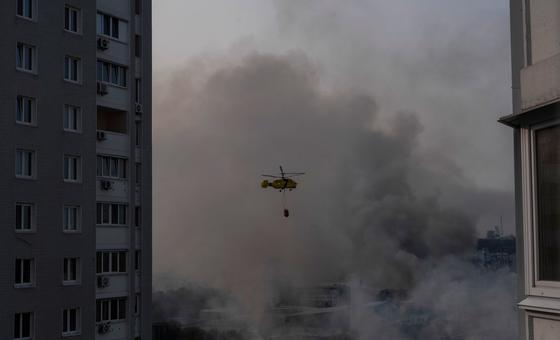
Footage released by the Ukrainian authorities showed an apartment complex in Kharkiv with a massive hole in the shattered roof and upper floors, where fires had been extinguished.

Kharkiv is located in the northeast of the country and just 30 kilometres (18.6 miles) from the Russian border. Ukraine’s second city has suffered heavy destruction and repeated shelling since Russia’s full-scale invasion began on 24 February 2022.

Meanwhile, a separate Russian attack on the southern city of Zaporizhzhia left three dead and approximately 20 injured, according to the Ukrainian authorities, who said they had shot down 88 drones and missiles launched overnight.

A recent update from UN human rights monitors in Ukraine noted that July saw the highest number of civilian casualties in the country since May 2022, with 286 killed and 1,388 injured.

“Aerial bombs caused the biggest rise [and] short-range drones made up 24 per cent of casualties,” said the Human Rights Monitoring Mission in Ukraine (HRMMU).

Russian troops’ push

The increase in the number of civilian casualties between June and July 2025 mainly took place in areas controlled by the Ukrainian Government along frontlines. This indicated the “intensive military efforts by Russian armed forces to capture territory”, the UN monitors explained.

And although long-range missile strikes and other munitions caused about 20 per cent fewer casualties in July compared with June, they were responsible for almost 40 per cent of all non-combatant deaths and injuries, including in the cities of Dnipro, Kharkiv and Kyiv.

Short-range drones were the second leading cause of civilian casualties, accounting for nearly one in four death and injuries (64 killed and 337 injured)said HRMMU.

As in June, nearly all civilian casualties (98 per cent) occurred in areas controlled by the Ukrainian authorities. Civilian casualties were recorded across 18 regions of Ukraine and the city of Kyiv.

Source link

First Person: From aid worker to refugee and back in war-torn Sudan

Sudan is one of the world’s largest and most complex humanitarian crises, with more than 30.4 million people – over half the population – urgently needing humanitarian assistance, yet the 2025 Sudan humanitarian needs and response plan is severely underfunded, with only 13.3 per cent of the required resources received so far.

Forced to flee the country with his family after the war intensified, Mr. Ibrahim returned to help people affected by the war in Darfur. Ahead of World Humanitarian Day, marked annually on 19 August, he described his journey, from aid worker to refugee and back again to Sudan.

“I was at home helping my daughter revise for her grade six exams, scheduled for the next day. Then, out of nowhere, the sound of heavy gunfire shattered the silence in my hometown, Zalingei, the capital of Central Darfur state, which remains gripped by insecurity and critical shortages of basic services.

The former Humanitarian Aid Commission Building in Khartoum, Sudan.

At first, I thought the gunfire would pass quickly. I rushed to stock up on food supplies and water, enough for six days. But, the streets became battlegrounds. All I could do was try to keep my family safe.

Despite the chaos, I continued to work. Electricity and Internet access were sporadic, but I kept my phone charged to send daily updates to the OCHA Head of Office. It gave me purpose amid the uncertainty.

Eventually, it became too dangerous to stay.

The journey of displacement

On the 39th day, we fled. Our family of 10 began a harrowing journey with no clear destination, only the desperate need to escape. We left behind more than just walls and belongings; we left behind a life built with love and hope.

Adam with two of his daughters in Uganda.

Our journey took us first to Nyala in South Darfur, then to Kosti in White Nile State. From there, we crossed the border into neighbouring South Sudan and eventually reached Uganda, a country I had heard offered stability and a good education system for children. The journey by car took 23 days. My children had no passports, and there were no refugee camps for Sudanese nationals at the time.

To my relief, migration authorities in both countries were kind and supportive. In Kampala, we rented a house and received asylum status within three days. The moment I held our refugee cards, I exhaled deeply and thought ‘we’ve made it.’

I enrolled my children in school and began working online, finally finding a sense of stability.

Here I was, an aid worker now a refugee, needing the same support I once provided to others.

Returning to Zalingei

Months later, I faced a difficult decision. Do I stay with my family or return to Darfur and continue the work I had done for years? I chose to return.

Leaving my family behind was incredibly hard, but their safety was paramount.

I returned to Zalingei with a renewed sense of duty to serve those still trapped in the hardship I had endured. I was also the sole breadwinner for my family and needed to ensure they could survive in Uganda.

My hometown changed

When I arrived in Zalingei, I barely recognised it. Buildings were scarred with bullet holes.

I found another family sheltering inside our house, a doctor and his family whose own home had been destroyed. I let them stay, setting aside a small section for myself and a colleague. The house had been looted. Windows were gone and our belongings had vanished. I had hoped to find my children’s school certificates, photos, any documents left behind. But, they were gone.

Everyone was armed, even children as young as 15. People were tense, traumatised and always bracing for the next wave of violence.

Google Earth image of Zalingei as of 21 March 2025 with visible signs of house destruction on the southern part of the city.

Machine guns and wreckage in West Darfur

I didn’t stay long in Zalingei. Soon I was called to El Geneina in West Darfur, a town devastated by violence, and whose people desperately needed humanitarian support.

El Geneina’s streets were strewn with the wreckage of burned-out military vehicles. Armed men patrolled in pickup trucks mounted with machine guns.

The humanitarian needs were immense. People lacked food, shelter, household essentials, healthcare, clean water and protection, but we never had enough resources for them.

Family, sacrifice and hope for Sudan

It’s heartbreaking to witness the suffering caused by the recent donor funding cuts. Many organizations have been forced to scale back their operations, leaving countless people without help.

It’s heartbreaking to witness the suffering caused by the recent donor funding cuts.

Still, we did all we could.

Between 2023 and 2025, we reached more than 800,000 displaced people with critical assistance, in West and Central Darfur.

I also went on to work with OCHA colleagues in Chad to coordinate cross-border humanitarian convoys into Darfur.

These convoys were lifelines, delivering food, medicine and supplies to communities cut off by conflict.

Today, I remain in Sudan. 

My family is still in Uganda. I visit them once a year, but the separation is painful.”

Source link

From dough to dough: Bahraini chefs rise with sweet, spicy success

What started as a simple joy of making cookies for family and friends soon blossomed into Brown Sugar, a brand that embodies both her love for desserts and her journey towards independence.

“I used to love eating sweets,” Eman Fareed, a mother and retired civil servant, told UN News while baking in her kitchen.

“At first, I baked biscuits just for my family. They loved the taste, and soon, my friends started encouraging me to sell them. That’s when I realised I could turn this into something bigger.”

Part of a grassroots model

She is among the beneficiaries of Kaaf Humanitarian, a non-profit organization (NGO) launched in Bahrain in 2021 that has become a grassroots model for achieving the Sustainable Development Goals (SDGs) by empowering individuals and communities for self-reliance.

Kaaf displayed the fruit of its efforts, including spices and cookies made by Ms. Fareed and others at an exhibit during the fifth World Entrepreneurship Investment Forum (WEIF), held in Manama, Bahrain, in 2024 and facilitated by the UN Industrial Development Organization (UNIDO), in Bahrain.

As for the forum, members endorsed the Manama Declaration, calling on the international community to harness the power of entrepreneurship and innovation to achieve the SDGs, with a strong emphasis on including productive families.

What’s a ‘productive family’?

Saud Al Mahmood, a public relations specialist with Kaaf Humanitarian, said productive families are those “that rely on the skills of their members to provide for the family and improve their standards of living”.

“Helping productive families is very important because it’s not just about helping individuals; it’s about helping the whole family,” he said, noting that Kaaf provides families with the training and tools they need to improve their products and compete in the market.

“Our work addresses many SDGs, including those related to water, food and shelter, as well as improving the economy. We are always encouraged to collaborate with the United Nations and other organizations.”

After baking her cookies, Eman Fareed packages them in an attractive box branded with her business name.

A passion for spices

Noora Khalid Musaifer, another Kaaf beneficiary, said she was inspired by her mother’s love for cooking and roasting coffee.

After getting married, she began blending Bahraini spices and, over time, expanded to include different spice grades, daqoos pepper and coffee roasting, all made with high-quality ingredients and under the brand name Mallawal.

She processes the spices – washing, drying, roasting and packaging – at home. While she initially sold them under her brand from home, participation in exhibitions and opportunities emerging through the COVID-19 pandemic quarantine helped her business flourish.

From investment to branding

A key factor in Ms. Fareed and Ms. Musaifer’s successful journey was the support of Kaaf Humanitarian, which provided them with financial backing, packaging materials and branding assistance.

Ms. Musaifer is the breadwinner for her family, having been making spices for 20 years and joining Kaaf a decade ago.

“Their financial support has enabled me to procure high-quality spices,” she said, adding that some of the spices she gets from the market or Bahraini companies that import them come from India and are very expensive.

Noora Khalid Musaifer received trainings to become a successful entrepreneur.

Social media as a marketing tool

Ms. Fareed said Kaaf Humanitarian has been a pillar of her success in the baking field.

“Technology is crucial in today’s world, and they helped me adapt.”

She started her business after retiring in 2014, but initially lacked guidance on how to expand it.

“When I joined Kaaf Humanitarian, they trained me in business management, social skills and digital marketing,” she said, underscoring that the NGO gave her both financial and moral support. “They taught me how to take professional photos of my products and maximise online sales.”

Women’s capacity building

One afternoon, 15 women entrepreneurs gathered for a training session at Kaaf Humanitarian House in the suburbs of Manama, each bringing their products to share with others, showcasing their mastery of skills.

“They are housewives. Some used to work, but now they work from home,” said Budoor Buhijji, a university lecturer who led the session.

“They run small entrepreneurial projects: food, sweets, spices, chocolates, pens and handicraft products they can sell in their communities. And they hope to expand beyond their community and go international.”

Challenges and dreams for the future

As a female entrepreneur in a traditionally male-dominated business environment, Ms. Musaifer sees her success as a testament to the strength of Bahraini women, being able to balance work and family responsibilities.

Kaaf Humanitarian empowers women through entrepreneurship training and provides them with opportunities to market and sell their products.

“I dream of opening a shop under my name, where I can continue making handmade spices and traditional foods,” she said,

For Ms. Fareed, being a businesswoman in Bahrain is already an achievement as business has traditionally been male dominated.

“In my family, women were not encouraged to work alongside men or manage businesses, but over time, my father saw my strength and supported me,” she said. “Now, I feel confident and empowered.”

Looking ahead, she dreams of expanding her business into a factory.

“I want to build something big, have my own team, and leave behind a legacy for my children. One day, I will tell them the story of how I became a strong, independent woman.”

Source link

A two-way street: Reversing brain drain in Somalia

So the crisis continues. And the brain drain intensifies.  

But what if there was a way to reverse brain drain? This is the question that the International Organization of Migration (IOM) has been asking about Somalia.

“There has been a lot of brain drain in Somalia. How do we bring back those skills that they have been able to achieve in their country of residence to their country of origin?” said Yvonne Jepkoech Chelmio, an IOM official focused on labour and migration in Africa.  

The IOM’s Migration in Africa for Development Programme (MIDA) selects members of the Somali diaspora who are experts in their chosen fields and places them in local hospitals, schools and national ministries in order to build Somalia’s self-sufficiency.

In the past 20 years, MIDA has sponsored the return of over 400 Somalis from 17 different countries. These returnees have worked in many fields — including education and health, as well as climate action, urban planning and the rule of law — all with the hope of advancing sustainable development in Somalia.

Through the MIDA program, Somali diaspora were placed in hospitals to mentor local doctors.

‘Drivers of change’

The Somali Civil War which began in 1991 provoked mass displacement, both internally and externally. More than 30 years later, the situation has improved but security continues to be an issue, which in turn is imperilling sustainable development.

“What happens in countries like Somalia is someone becomes skilled in a field, educated, they don’t want to stay here. So you lose talent, you lose skill,” said pedagogy expert, Shire Salad, a diaspora participant in the MIDA program who was placed in the Ministry of Education to work alongside their evaluation development team.  

With two million Somalis living abroad, the Somali diaspora has long played an integral role in the country’s economy. The money they send back as remittances sometimes outpaces direct foreign aid, totalling over $2 billion annually and contributing at least one-third of the national GDP.

© IOM/Spotlight Communications

Solar panels provide consistent power to the university in Abudwaq, Galmadug.

But MIDA deviates from a solely economic understanding of the diaspora’s contributions, instead creating avenues for their return which emphasise their technical skills, expertise and international networks. 

“[The diaspora] serve as bridges, as ambassadors, as drivers of change and development actors,” said Nasra Sheikh Ahmed, one of the IOM officials in charge of the programme.

And according to Ms. Ahmed, who is a member of the Somali diaspora herself, one of the most remarkable things about the MIDA programme is that it seizes upon something which already exists — the Somali diaspora wants to return.  

“[The diaspora] still see it as their home. They’re not immigrants in another country. They still see themselves as Somalis. They see themselves as an extension, basically just living somewhere else.”  

Education at the core

While the MIDA programme has operated across many sectors  one of the main sectors on which the MIDA programme has focused is education.  

Mohamed Gure, a professor at Somali National University, participated in the MIDA programme as a local professional who worked alongside members of the diaspora to improve the curriculum for aspiring teachers.  

When Dr. Gure began his studies years ago, he said that there were no programmes in Somalia which offered a doctoral degree in education. So he, like many others, went abroad.

Today, he sees a new sort of problem — not enough Somalis want to become teachers, and those that do believe that they do not need a formal training.  

“Teachers in the classroom do not have training in being a teacher. This will affect the quality of education in Somalia in the long-term,” Dr. Gure said.  

Over the course of a few years, Dr. Gure worked alongside diaspora professionals to develop a new curriculum and create a lasting partnership with the University of Helsinki in Finland.  

For him, the benefits of this new curriculum are already clear — students are learning more, and the online collaborations with students in Helsinki are creating an international network of expertise.

“All this [training] is a resource for the country. All the curricula that were developed for the country will remain. It will be used by lecturers who can train other lecturers,” Dr. Gure said.  

The MIDA program has focused on empowering the education sector in Somalia.

A two-way street

Partnerships, like that which Dr. Gure experienced, are an essential part of the MIDA programme’s long-term impact, ensuring that even after the diaspora professional leave, their contributions remain.  

“We have not just provided skills transfer to two people, but these two people can now transfer to four people. So there’s more sustainability in terms of process,” Ms. Chelmio said.

But this skills transfer is not without challenges. Many of the diaspora who are returning to Somalia have been gone for years, sometimes decades. The Somalia to which they return is quite different from the one they left.  

“Although you may speak the language and you may understand that culture, they still see you as a foreigner,” said Dr. Salad, who left Somalia when he was quite young and “returned with grey hairs.” 

Adapting expertise to the Somali context is essential for sustainable development, and this is something that the local professionals are uniquely equipped to do, creating a two-way street with both parties acting as experts in their own right.

“[The diaspora] don’t understand the context, the dynamic of the country itself. The local expert is able to give the diaspora expert the perspective,” Ms. Chelmio said.  

A future in which Somalis stay

MIDA has, in small ways, reversed the brain drain of the past decades. It has brought back hundreds of diaspora members. And even if they have not stayed, their skills and expertise have.  

But, Somalis are still leaving the country, risking their lives on boats to the Gulf and to Europe out of pure hopelessness And many of them die.  

Dr. Salad hopes that one day for Somalia, there will be no brain drain to reverse.  

“If they had hope in this country, they would have stayed. If they believed this country was going to be a better country, they would have stayed. My hope is that younger generations will have that hope, that they will stay.” 

Source link