Human trafficking depends on corruption at every step

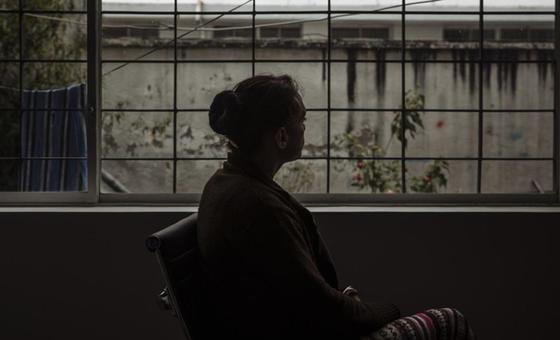
A Chilean police officer stationed at the border collaborated on the scheme, enabling the crime.

Were it not for border guards, public officials and other entities who look the other way in exchange for money or sexual favours – or are themselves being extorted – human trafficking could not occur on a large scale, according to a new report from the UN Office on Drugs and Crime (UNODC) published on Monday. 

It analyses more than 120 cases involving almost 80 countries – based on consultations with policymakers, prosecutors, investigators and independent experts from more than 30 countries – to expose the ‘hidden links’ between human trafficking and corruption. 

Cloak of corruption

Human trafficking can include sexual exploitation, forced labour, forced begging, organ removal and even illegal adoption, among other forms of exploitation.

The report demonstrates how corruption permeates and facilitates every stage of human trafficking.

During recruitment and transport, corrupt officials provide documentation, overlook irregularities and collude with fraudulent recruitment agencies and organised criminal groups. 

At border crossings, bribes and papers obtained through corruption allow persons to be moved across jurisdictions.

Asking for help can appear difficult or impossible once a person is exploited. Corruption shields operations in industries such as agriculture, construction, fisheries and domestic work, and helps keep victims of trafficking in situations of forced labour, sexual exploitation and forced criminality. 

Finally, corruption obstructs anti-trafficking efforts, from police investigations and prosecutions to judicial decisions and assistance to victims.

Breaking the cycle

UNODC supports countries in breaking the cycle of corruption and human trafficking, including by ensuring national legislation applies stronger penalties when public officials are involved in trafficking and establishing safe reporting mechanisms for victims.

Other UN agencies are also supporting the effort. Backed by the International Organization for Migration (IOM), Moldova announced last week that it is strengthening its ability to identify and stop cross-border crimes, including human trafficking, through the new headquarters of its Passenger Information Unit (PIU).

The PIU is equipped with advanced UN software that improves passenger data collection, analysis and rapid response. Moldova is the seventh country to adopt this system, following in the footsteps of Norway, Luxembourg, Botswana, Georgia, the Philippines and Mongolia.
Source link

Safety on and off the pitch: Closing down child trafficking in sport

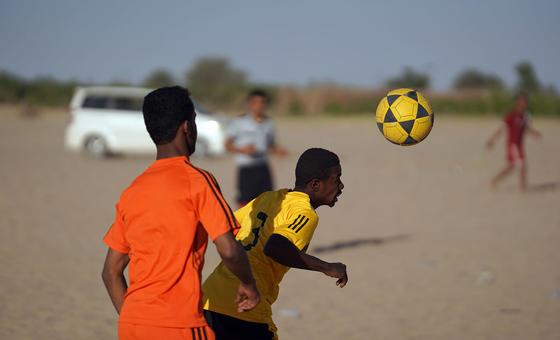
“Sports give me a sense of belonging as a girl. When I play, it affirms my right to play sports and exposes me to wider opportunities,” she said.  

This is what sport should represent for young people worldwide. However, a new campaign supported by the International Organization for Migration (IOM) works to counter a darker side of the multi-billion dollar industry – by ending child trafficking through sports.

‘Gateway to exploitation’

Sport should be a source of joy and achievement, not a gateway to exploitation. Yet traffickers prey on the ambitions of young athletes, using false promises to lure them into abuse and deception,” said Ugochi Daniels, the IOM deputy director general for operations. 

Of the approximately 50 million people worldwide who are subjected to trafficking-related abuses, 38 per cent of them are children. And of these children victims, 11 per cent are trafficked through false promises.  

In the sports industry, this takes many forms, including joining fake sports academies or signing what appear to be professional contracts.

For many young people like Saido, sport can be a pathway out of disadvantaged backgrounds. Saido, for example, dreams of seeing more Somali and refugee women playing in international professional leagues.  

“I want to see a basketball academy full of Somali girls and other girls from different communities here in Kakuma. I want to see Somali girls playing basketball at the WNBA level,” Saido said, referencing the top women’s league in the United States.  

But these dreams and their disadvantaged backgrounds, according to the campaign, can also make them uniquely vulnerable to the false promises of traffickers.  

Do not ignore the risks

Working alongside Mission 89 – an organisation which fights young athlete exploitation – IOM is calling upon stakeholders within the $1.2 trillion sports industry to strengthen protection mechanisms.  

This includes reforming unethical recruitment strategies which can be exploited by traffickers and providing education to the entire industry about the harms and risks of trafficking.  

In addition to these tangible changes, the campaign is also calling on industry leaders to sign commitments which declare zero tolerance of the scourge.  

While we continue to celebrate the power of sport, we cannot ignore the risks faced by young athletes,” said Lerina Bright, the founder and executive director of Mission 89.  

“This campaign is about ensuring that every child who dreams through sport is safe, supported and never exploited.” 

Source link

Human Rights Council hears concerns over displacement, genocide risks and migrant trafficking

Of the record 83 million people internally displaced worldwide, at least 1.2 million were displaced by crime-related violence in 2024 – more than double the 2023 figure – amid a global decline in support for international norms, human rights and the rule of law.

The growing reach of organised crime in driving displacement and rights violations was the focus of a report delivered Monday morning by the Special Rapporteur on the human rights of internally displaced persons, Paula Gaviria Betancur.

Driving displacement

As violent conflicts worsen globally, displacement is increasingly driven by the threat of violence or the desire of criminal groups to control territory, resources and illicit economies.

Additionally, in places like Sudan, Palestine and the Democratic Republic of the Congo (DRC), occupying powers and criminal groups are systematically uprooting communities to alter demographics, treating IDPs as military targets.

“Displacement is no longer just a consequence of conflict – it is increasingly its deliberate objective,” Ms. Betancur warned.

In these regions, either the State enables impunity for violent groups or national security operations worsen the crisis by punishing victims and fuelling further displacement, eroding state legitimacy.

IDPs in these contexts “face grave violations of their human rights,” including “murder, violent assault, kidnapping, forced labour, child recruitment and sexual exploitation,” she said.

The rise in global displacement is the result of systemic failure – the failure of States and the international community to tackle its root causes,” Ms. Betancur concluded, calling for stronger support for the UN and accountability for criminal groups.

Genocide risks in conflict areas

Virginia Gamba, Special Adviser on the Prevention of Genocide, briefed the council on escalating risks in Sudan, Gaza, the DRC and beyond during Monday’s session.

In Sudan, where over 10.5 million have been displaced since fighting erupted in April 2023, both the Sudanese Armed Forces and the Rapid Support Forces (RSF) are committing grave rights violations.

Ethnically motivated attacks by the RSF in certain regions mean “the risk of genocide, war crimes and crimes against humanity in Sudan remains very high,” Ms. Gamba underscored.

Turning to Gaza, she called the scale of civilian suffering and destruction “staggering and unacceptable,” noting the conflict has also fuelled rising antisemitism and Islamophobia worldwide.

Hate speech fuelling violence

As attacks on civilians and ethnic violence continue in the DRC, hate speech and discrimination have surged.

But this surge is also occurring worldwide, further exacerbating the risk of genocide.

“Hate speech – which has been a precursor for genocide in the past – is present in far too many situations, often targeting the most vulnerable,” said Ms. Gamba, highlighting refugees, Indigenous peoples and religious minorities.

For genocide prevention, she urged greater efforts to monitor hate speech, expand education efforts, and strengthen partnerships with regional organizations.

The task of preventing genocide remains critical and urgent—the moment to act is now,” she stressed.

Trafficking of migrant domestic workers

Special Rapporteur on trafficking in persons, Siobhán Mullally, presented her report on the trafficking risks faced by migrant domestic workers.

“The specific nature of domestic work, and weak regulatory responses by States, produce a structural vulnerability to exploitation,” Ms. Mullally said.

The crisis disproportionately affects women, as they make up the majority of domestic workers and 61 per cent of trafficking victims detected globally in 2022.

Conditions of domestic work

Many women from disadvantaged communities are promised jobs abroad, but upon arrival, realise they have been conned. They endure violence, labour abuses and sexual exploitation but are unable to pay the exorbitant penalty for terminating their work contracts.

Ms. Mullally cited the legacy of slavery, gendered and racialised views of domestic work and intersecting discrimination as key factors behind poor conditions and trafficking risks.

Most States lack the political will to enforce labour laws in the domestic work sector, reinforcing this crisis, she said, calling for stronger labour laws, safe migration pathways, bilateral agreements grounded in human rights and an end to the criminalisation of trafficking victims.

Source link

Exponential rise in synthetic drug production and trafficking in the Golden Triangle

According to the UN Office on Drugs and Crime (UNODC), the production and trafficking of methamphetamine – an illegal synthetic stimulant – have risen sharply since 2021, particularly in Myanmar’s Shan State.

UNODC emphasised that both the scale of production and the flow of trafficking in Shan State have “significantly” increased over the past few years.

Record seizures

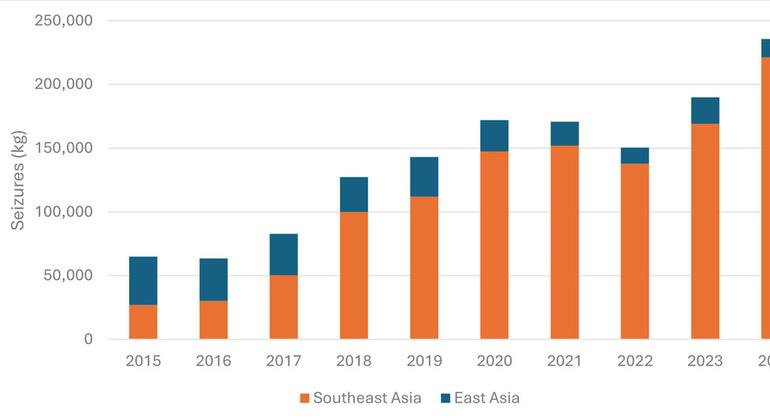
A record 236 tons of methamphetamine (commonly known as meth) was seized in East and Southeast Asia in 2024, a 24 per cent increase from 2023.

However, “the 236 tons represent only the amount seized” and it’s likely that much more is reaching the streets and illicit market, said Benedikt Hofmann from UNODC, describing the amount as “unprecedented.”

Seizures in Southeast Asia represent 85 per cent of the total, with Thailand alone seizing one billion meth tablets.

Conducive conditions

While Thailand remains the main transit and destination point, the drug is mostly produced in Myanmar’s Shan State.

Amid the ongoing civil war involving multiple armed groups, Myanmar’s military regime is experiencing instability and governance challenges that are fuelling the illicit production of synthetic and other drugs.

Although certain areas of Myanmar have been spared from the ongoing conflict and remain stable, “the ongoing crisis in Myanmar is further increasing the need for proceeds from the drug trade,” said Mr. Hofmann.

“This combination of conflict and stability has created favourable conditions for the expansion of drug production impacting countries across the region and beyond,” he said.

Expanding trafficking routes

One of the fastest-growing meth trafficking routes in East and Southeast Asia stretches from Myanmar’s Shan State to Cambodia.

Cambodian authorities notably reported seizing nearly 10 tons of methamphetamine in 2024, representing “by far the largest methamphetamine seizure in history,” said UNODC.

“The trafficking route connecting Cambodia with Myanmar, primarily through Lao People’s Democratic Republic, has been rapidly expanding,” said Inshik Sim, an analyst with UNODC.

As transnational drug trafficking groups continue to exploit new routes to avoid law enforcement, the trafficking corridors connecting Malaysia, Indonesia, and the Philippines are becoming another “increasingly significant corridor,” Mr. Sim added.

Source link