
Human Rights Council hears concerns over displacement, genocide risks and migrant trafficking

Of the record 83 million people internally displaced worldwide, at least 1.2 million were displaced by crime-related violence in 2024 – more than double the 2023 figure – amid a global decline in support for international norms, human rights and the rule of law.

The growing reach of organised crime in driving displacement and rights violations was the focus of a report delivered Monday morning by the Special Rapporteur on the human rights of internally displaced persons, Paula Gaviria Betancur.

Driving displacement

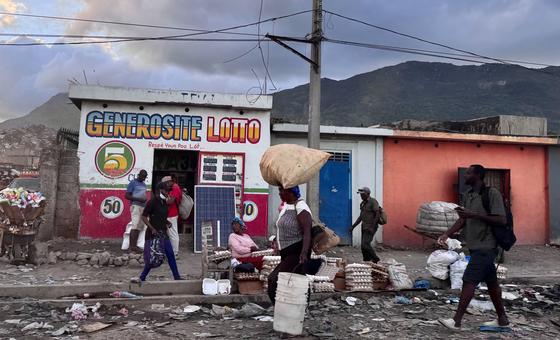
As violent conflicts worsen globally, displacement is increasingly driven by the threat of violence or the desire of criminal groups to control territory, resources and illicit economies.

Additionally, in places like Sudan, Palestine and the Democratic Republic of the Congo (DRC), occupying powers and criminal groups are systematically uprooting communities to alter demographics, treating IDPs as military targets.

“Displacement is no longer just a consequence of conflict – it is increasingly its deliberate objective,” Ms. Betancur warned.

In these regions, either the State enables impunity for violent groups or national security operations worsen the crisis by punishing victims and fuelling further displacement, eroding state legitimacy.

IDPs in these contexts “face grave violations of their human rights,” including “murder, violent assault, kidnapping, forced labour, child recruitment and sexual exploitation,” she said.

The rise in global displacement is the result of systemic failure – the failure of States and the international community to tackle its root causes,” Ms. Betancur concluded, calling for stronger support for the UN and accountability for criminal groups.

Genocide risks in conflict areas

Virginia Gamba, Special Adviser on the Prevention of Genocide, briefed the council on escalating risks in Sudan, Gaza, the DRC and beyond during Monday’s session.

In Sudan, where over 10.5 million have been displaced since fighting erupted in April 2023, both the Sudanese Armed Forces and the Rapid Support Forces (RSF) are committing grave rights violations.

Ethnically motivated attacks by the RSF in certain regions mean “the risk of genocide, war crimes and crimes against humanity in Sudan remains very high,” Ms. Gamba underscored.

Turning to Gaza, she called the scale of civilian suffering and destruction “staggering and unacceptable,” noting the conflict has also fuelled rising antisemitism and Islamophobia worldwide.

Hate speech fuelling violence

As attacks on civilians and ethnic violence continue in the DRC, hate speech and discrimination have surged.

But this surge is also occurring worldwide, further exacerbating the risk of genocide.

“Hate speech – which has been a precursor for genocide in the past – is present in far too many situations, often targeting the most vulnerable,” said Ms. Gamba, highlighting refugees, Indigenous peoples and religious minorities.

For genocide prevention, she urged greater efforts to monitor hate speech, expand education efforts, and strengthen partnerships with regional organizations.

The task of preventing genocide remains critical and urgent—the moment to act is now,” she stressed.

Trafficking of migrant domestic workers

Special Rapporteur on trafficking in persons, Siobhán Mullally, presented her report on the trafficking risks faced by migrant domestic workers.

“The specific nature of domestic work, and weak regulatory responses by States, produce a structural vulnerability to exploitation,” Ms. Mullally said.

The crisis disproportionately affects women, as they make up the majority of domestic workers and 61 per cent of trafficking victims detected globally in 2022.

Conditions of domestic work

Many women from disadvantaged communities are promised jobs abroad, but upon arrival, realise they have been conned. They endure violence, labour abuses and sexual exploitation but are unable to pay the exorbitant penalty for terminating their work contracts.

Ms. Mullally cited the legacy of slavery, gendered and racialised views of domestic work and intersecting discrimination as key factors behind poor conditions and trafficking risks.

Most States lack the political will to enforce labour laws in the domestic work sector, reinforcing this crisis, she said, calling for stronger labour laws, safe migration pathways, bilateral agreements grounded in human rights and an end to the criminalisation of trafficking victims.

Source link

World News in Brief: Sudan aid update, child migrant deaths at sea, nursing shortages, invasive pest scourge

Port Sudan – the main entry point for humanitarian supplies and personnel into the country – came under attack for the ninth consecutive day. As the UN’s main humanitarian hub in Sudan, drone strikes on the coastal city have gravely impacted aid delivery.

Nonetheless, UN Humanitarian Air Service (UNHAS) flights were able to resume on 8 May, providing a continuation of a key humanitarian lifeline as the war between rival militaries for control of Sudan continues, UN Spokesperson Stéphane Dujarric confirmed.

Targeting of civilian infrastructure has sparked panic and displacement. The International Organization for Migration (IOM) reported last week that 600 people were displaced within Port Sudan alone because of the attacks.

Catastrophic situation in North Darfur

The UN Humanitarian Coordinator for Sudan, Clementine Nkweta-Salami, warned on Sunday that the situation in the North Darfur camps of Abou Shouk “is catastrophic.”

Although the UN and its partners continue to scale up their humanitarian response, both camps remain, in effect, cut off from aid.

Ms Nkweta-Salami issued an urgent call for a ceasefire and humanitarian pauses to allow life-saving deliveries to resume.

Call for action after deaths of migrant children at sea

Two young children, aged 3 and 4, have died from dehydration aboard a rubber dinghy found adrift in the central Mediterranean, the UN Children’s Fund (UNICEF) said on Monday.

The vessel, which departed Libya carrying 62 migrants including several children, had reportedly been stranded for days after its engine failed.

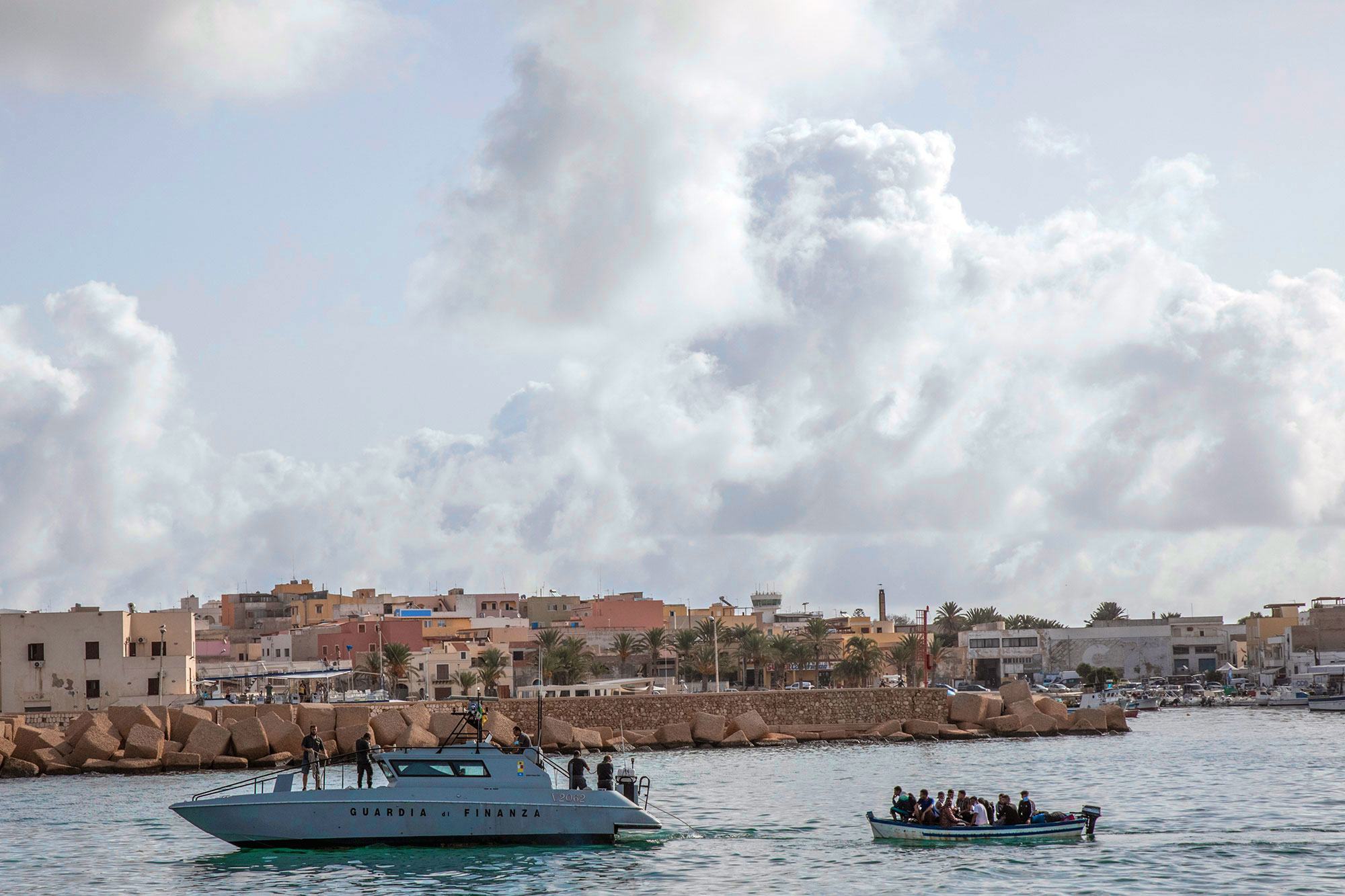
Refugees and migrants in a wooden boat are rescued near the Italian island of Lampedusa in the Mediterranean Sea.

According to survivors, the children had died nearly a day before rescuers arrived.

One additional passenger is believed to have drowned earlier in the journey. Many others onboard suffered severe chemical burns caused by contact with a mixture of seawater and spilled fuel – injuries which require urgent medical attention.

All surviving passengers were eventually rescued and transferred to Lampedusa by the Italian coast guard.

‘Devastating reminder’

Regina De Dominicis, UNICEF Regional Director for Europe and Central Asia, called the incident “another devastating reminder” of the deadly risks migrants face.

She stressed the need for coordinated search and rescue missions, and greater investment in support services for migrant families.

“The central Mediterranean remains one of the most dangerous migration routes in the world,” Ms. De Dominicis said. “Without immediate action, more lives will continue to be lost.”

UNICEF continues to call on governments to meet their obligations under international law and protect vulnerable children seeking safety.

Nursing workforce grows, but deep inequalities persist worldwide

The number of nurses around the world has increased in recent years, but a new UN report published on Monday shows that many countries and regions still face serious shortages, highlighting ongoing inequalities in access to nursing care.

Low-income countries are particularly affected, struggling with too few nurses to meet the needs of their growing populations, said the UN World Health Organization (WHO) which crunched the data.

Poor prospects at home

While these countries are training new nurses at a faster rate than wealthier nations, challenges such as rapid population growth and limited job opportunities are making it hard to close the gap, WHO added.

These imbalances in where nurses are working mean that millions still don’t have access to basic health services.

This is holding back efforts to achieve universal health coverage, protect global health, and meet international development goals linked to health.

“We cannot ignore the inequalities that mark the global nursing landscape,” said WHO Director-General Tedros Adhanom Ghebreyesus.

WHO is urging governments to create more nursing jobs and ensure they are fairly distributed, especially in communities where healthcare services are lacking.

Plant pests continue to threaten global food supplies

Protecting crops from pests is key to ensuring everyone has enough to eat, said the head of the UN Food and Agriculture Organization (FAO) on Monday, who stressed that access to food is a basic human right.

Each year, around 40 per cent of the world’s crops are lost to plant pests and diseases, causing over $220 billion in economic damage.

Invasive pests turn up the heat

Migratory pests like locusts and armyworms are among the biggest threats, especially in regions already hit hard by conflict and climate change.

Countries in the Near East and North Africa – including Algeria, Libya and Tunisia – are currently dealing with a serious outbreak of desert locusts that began in the Sahel.

These insects destroy crops and pastureland, putting food supplies for both people and animals at risk, and threatening the survival of farming communities.

“No country can face these challenges alone,” said FAO Director-General QU Dongyu, at a high-level conference in Italy marking the International Day of Plant Health.

He called for greater international cooperation and more funding to tackle cross-border pests and diseases.

Source link