From Syria, UN refugee chief calls for greater solidarity with displaced people

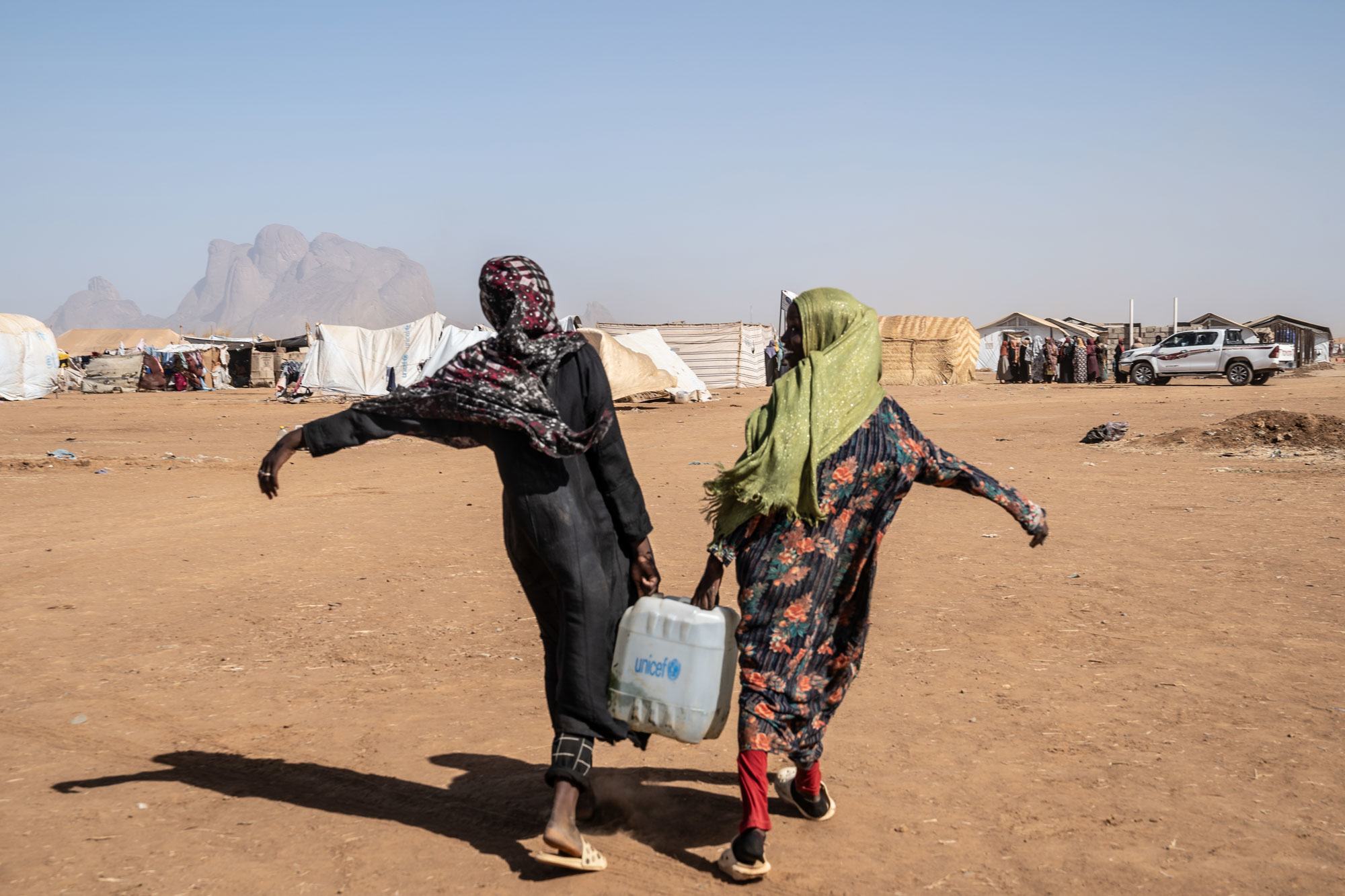
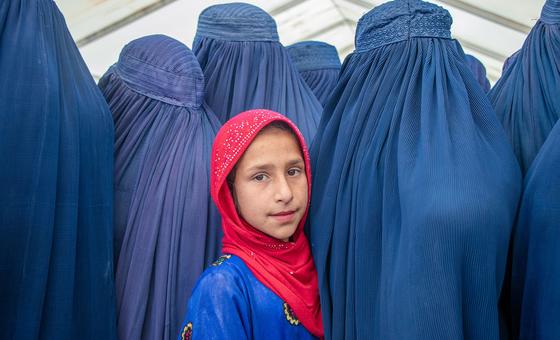
The UN High Commissioner for Refugees, Filippo Grandi, sounded the alarm on Friday, World Refugee Day, in a message from Syria.

He said the abject failure to end conflicts – including in Sudan, Ukraine, the Democratic Republic of the Congo and Gaza – continues to create immense suffering. 

Difficulty seeking shelter

“Yet the innocent people who run for their lives as the bullets fly and the missiles rain down are unjustly stigmatised, making it harder to escape danger and to find somewhere to recover and rebuild,” he said.

Their situation is further compounded by brutal cuts to humanitarian aid, affecting millions who desperately need assistance. 

At this critical juncture, it is vital that we reaffirm our solidarity with refugees – not just with words but with urgent action,” he said.

He added that inspiring examples already exists, from countries that continue to welcome and host refugees, to local communities that “open their homes, workplaces and hearts” to them, as well as “the countless individual acts of kindness and compassion that reveal our common humanity.”

Share the responsibility

Mr. Grandi said the international community can and must support these countries and communities by sharing the responsibility for protecting refugees, calling in particular for action by wealthier States, development banks, businesses and others.

The High Commissioner spent the Day in Syria, where some 600,000 people have returned from neighbouring countries after 14 years of war. Overall, more than two million Syrians have gone back to their homes and communities since the fall of the Assad regime last December.

“In a region that has suffered so much violence – and suffers even now – we are nonetheless presented with an opportunity to help Syrians achieve stability and prosperity. We must not let it pass by,” he said.

Mr. Grandi met Syrian families who spent more than a decade as refugees, whose deep joy at being among familiar faces and surroundings serve as reminder of refugees’ yearning for home. 

“Now more than ever, we must stand with refugees to keep alive their hopes of a better future,” he said. 

Source link

Gaza horrors continue as the weakest succumb to injuries and disease

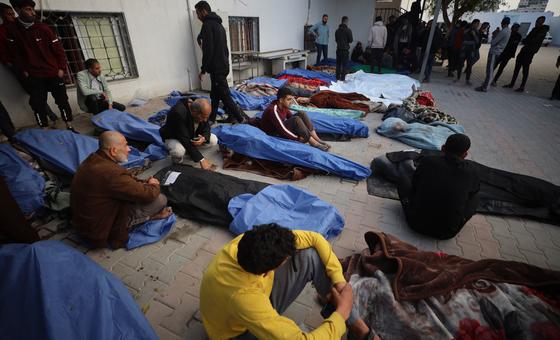
“I met a little boy who was wounded by a tank shell at one of these sites on the final day of me leaving Gaza – I learnt that this little boy had since died of those injuries,” said UN Children’s Fund (UNICEF) spokesperson James Elder. “That speaks to both what is happening at these sites and what is not happening when it comes to medical evacuations.”

A recent online video featuring a dying 13-year-old Abed al-Rahman who Mr. Elder met while on mission in Gaza has been seen thousands of times since it was published on 6 June. In the clip, Abed explains that he has been asking for pain relief for his shrapnel wounds, but none is available.

Speaking to journalists from Amman, Mr. Elder explained that partly destroyed hospitals including Nasser Medical Complex in Khan Younis continue to treat wounded children, despite a shortage of medicine and medical supplies.

“Humanitarian aid is so much more than food in a box; it’s oxygen kits, it’s ventilators, it’s hygiene packs; it’s medicines, it’s incubators,” he explained. “It’s all those things the United Nations was doing just a couple of months ago.”

Mr. Elder added that parents whose children need oxygen have been leaving hospital “because of the fear that Nasser may come under attack again. As the doctors told me, if you have a child who needs oxygen and they leave without the oxygen, they will, over a matter of time, die in a tent.”

Desperation, starvation

The dire shortage of the most basic life-sustaining aid linked to Israeli restrictions continues to create desperation and starvation across Gaza.

“I spoke to a grandmother in tears saying, how am I possibly to get to these sites?” Mr. Elder explained. “I’ve met young men who’ve been seven times and never returned with anything. So, there’s a complete lack of equity. There’s a complete lack of sites. You cannot distribute aid in a militarised zone, in a combat zone, by one party to the conflict.”

Those most susceptible to the lack of fresh drinking water, food and fuel are the weakest Gazans: the young, pregnant women, the elderly and amputees, Mr. Elder said. 

It would be impossible for them to walk the long distances required to fetch scant supplies from controversial non-UN aid hubs.

Lethal choice

“You have half a million people facing starvation with a lethal choice of being forced into very small pockets where most people can’t access into what are officially known as combat sites,” the UNICEF spokesperson explained. “We know children [who have been] killed at these sites.”

Meanwhile, malnutrition and the impact of it on people’s weakened immune systems continues to take its toll, the UN World Health Organization (WHO) warned.

“The latest reports say 610 patients have been admitted due to severe malnutrition complications,” said WHO spokesperson Christian Lindmeier. “But what does that mean? That means these are the lucky ones who made it so far to get to a place. 

“This does not count the many who were too weak to reach any point, who are too weak, who cannot be transported because the roads are blocked, because there are no ambulances, or because the hospitals, some of the health emergency centres have been shelled and bombed and are being constantly shelled and bombed.”

Source link

WHO warns of a health financing emergency

Speaking at the regular Friday press briefing in Geneva for humanitarian agencies, she warned that as wealthier nations make deep spending cuts, both international aid and national health systems are facing serious disruption.

Dr. Chalkidou highlighted recent decisions by the United States, several European governments, and EU bodies to freeze or scale down health aid.

WHO forecasts indicate that global health investment is likely to drop by up to 40 per cent this year, down $10 billion from just over $25 billion in 2023. The estimated $15 billion spent on health aid would bring the figure down to the lowest level in a decade.

Impacts in developing countries

This funding shortage is creating a health finance emergency in many developing countries – particularly in sub-Saharan Africa – which depend on external aid to finance their health systems.

In numerous countries, US-financed healthcare programmes were the primary source of external aid, accounting for as much as 30 per cent of current health spending in countries like Malawi, and around 25 per cent in Mozambique and Zimbabwe.

Since 2006, external aid per capita in low-income countries has consistently exceeded domestic health spending.

Many sub-Saharan nations face soaring debt burdens – some spending twice as much on debt servicing as on health – making reallocation of resources difficult.

The consequences are severe: Dr. Chalkidou referred to a survey by WHO showing that countries today are reporting health service disruptions “not seen since the peak of COVID-19”.

Solutions

To address this crisis, WHO is urging countries to reduce aid dependency, boost revenue through improved taxation—including health taxes on products like tobacco and alcohol—and work with multilateral banks to secure low-interest loans for cost-effective health investments.

WHO also plans to attend the upcoming International Conference on Financing for Development in Seville, where global leaders are expected to address the health financing crisis and hopefully make new commitments.

MIDDLE EAST CRISIS: Live updates for 20 June


One week since the Israel-Iran conflict erupted, diplomatic efforts to end the war are ramping up in Geneva today as foreign ministers from France, Germany, the UK and the European Union prepare to meet their Iranian counterpart. In New York, meanwhile, the UN Security Council is also set to discuss this latest worrying escalation, against the backdrop of the ongoing emergency in Gaza. We’ll be covering these developments and more across the UN system today. UN News app users can follow here.

Source link

‘We are at a point of no return’: grave violations against children surge for third year

This number represents a 25 per cent increase from 2023, marking the third consecutive year that violations have increased. 22,495 violations were committed against children themselves while the remaining targeted infrastructure such as schools and humanitarian aid intended for and used by children.

“The cries of 22,495 innocent children who should be learning to read or play ball — but instead have been forced to learn how to survive gunfire and bombings — should keep all of us awake at night,” said the Special Representative of the UN Secretary-General for Children and Armed Conflict, Virginia Gamba.

The report only details violations which could be independently verified by the United Nations, meaning the actual number of grave violations and children affected are likely much higher.

‘Children should not be a casualty of war’

The report attributed the increase to indiscriminate attacks — especially urban warfare — in addition to disregard for peace agreements and deepening humanitarian crises worldwide.

“Children living amidst hostilities are being stripped of their childhood … When we allow this to happen, we are not just failing to protect children – we are taking away their chance to grow up safe, to go to school, and to live a life with dignity and hope,” Ms. Gamba said.

In addition to the broader increase, the number of children subjected to multiple grave violations increased by 17 per cent.

The highest number of violations, 8,554, occurred in Israel and the Occupied Palestinian Territories – more than double the number in the Democratic Republic of the Congo (DRC) which followed.

Governments ‘blatantly’ ignore international law

The report noted that while non-State actors played an out-sized role in violations against individual children, government actors were the main forces responsible for killing and maiming children, attacking schools and hospitals, and denying humanitarian access.

“Instead of recognizing the special protection afforded to children, governments and armed groups around the world blatantly ignore international law that defines a child as anyone under 18,” Ms. Gamba said.

The report listed eight countries whose government forces violated international law and committed grave violations against children — the DRC, Israel, Myanmar, Somalia, South Sudan, Sudan, Syria and Russia.

‘A wake-up call’

In 2024, 16,482 children formerly associated with armed forces or groups received protection or reintegration support, but numbers of violations against children still remain staggeringly high.

The Secretary-General called on all Member States to adhere to their obligations under international law by upholding the rights and special protections of children while also expanding services to treat children who are victims of conflict.

Ms. Gamba reiterated this call, saying that the increase in grave violations should be a “wake-up call” and reminding the international community that indifference to such violations will not bring peace.

“We face a choice that defines who we are: to care, or to turn away …  We all share the duty to act—with urgency, with determination—to bring this suffering to an end. Not tomorrow. Not someday. Today,” she concluded. 

Source link

World News in Brief: Global investment plunges, hurricane season in Haiti, rising cholera and hunger in South Sudan

Their latest data shows that the outlook for international investment this year “is negative”, a sharp course correction from January, when “modest” growth seemed possible.

The reasons for this range from trade tensions and tariffs whose main effect has been a “dramatic increase in investor uncertainty”, said UNCTAD Secretary-General Rebeca Grynspan.

She said that investment in renewable energy, water and sanitation fell by some 30 per cent and that agriculture saw a 19 per cent drop in investor confidence.

Only the health sector saw an increase of nearly 20 per cent, Ms. Grynspan said, although that only accounts for “less than $15 billion globally”.

‘Very real consequences’

“Behind those numbers are very real consequences. Jobs not created,” she said. “Infrastructure not built, sustainable development delayed. What we see here is not just a downturn. It is a pattern.”

Ms. Grynspan also cited “growing geopolitical tensions” in addition to rising trade barriers around the world as reasons for the fall in global investment for development.

In critical sectors as hi-tech industries and rare earth minerals, governments are also tightening screening measures on proposed foreign investment, the UN agency noted.

Supplies to limit hurricane impact in Haiti critically low

The Humanitarian Country Team in Haiti warned Wednesday that funding and pre-positioned contingency supplies are critically low ahead of what is forecast to be an above-average hurricane season.

Haiti is highly vulnerable to extreme weather, with 96 per cent of the population at risk. Forecasts project 12 to 19 tropical storms and up to five major hurricanes this year.

The alert comes as the fragile island nation grapples with a worsening humanitarian crisis. Armed gangs control much of the country, the collapse of essential services and growing displacement have left 5.7 million people food insecure, 1.3 million displaced and 230,000 living in makeshift shelters ill-equipped to withstand severe weather.

Limited preparations  

Humanitarian actors have pre-positioned limited stocks of essential items, but they are at a record low for a hurricane season posing such high risk.  

For the first time, Haiti will begin the hurricane season without pre-positioned food supplies or the financial resources necessary to initiate a rapid response.  

Meanwhile, UN Humanitarian Office (OCHA) is coordinating missions with UN agencies and partners to assess how to safely resume aid operations in high-need areas, following their suspension on 26 May due to insecurity.

“I am deeply concerned for communities, families, and vulnerable groups who have already been affected by violence and are living in precarious conditions,” said Ulrika Richardson, Humanitarian Coordinator in Haiti, calling for immediate support.

As of mid-June, the $908 million Humanitarian Response Plan for Haiti is just 8 per cent funded.

Worsening cholera and hunger in South Sudan

OCHA raised the alarm on Thursday over rising malnutrition and cholera cases in war-torn South Sudan.

An estimated 2.3 million children under five urgently need treatment for acute malnutrition, a 10 per cent increase since last July.

This crisis is unfolding amid the world’s most severe cholera outbreak this year, with almost 74,000 cases and at least 1,362 deaths reported as of 16 June.  

The start of the rainy season and waning immunity risk a significant surge in infections.

UN response

The 2025 Humanitarian Needs and Response Plan for South Sudan is only 20 per cent funded.

Despite limited resources and many challenges, the UN and partners have scaled up efforts, delivering vaccines and life-saving aid to contain the disease and protect the most vulnerable.

“This dire situation is a stark reminder that we need funding urgently to expand food assistance, to expand nutrition and expand health services to those who need it the most,” said UN Spokesperson Stéphane Dujarric at the daily briefing in New York. 

Source link

UN warns of mounting humanitarian toll as Israel-Iran hostilities continue

UN High Commissioner for Human Rights Volker Türk on Thursday called for “maximum restraint” and reiterated that both Israel and Iran are bound by international humanitarian law.

“The widescale, continuing attacks by Israel across Iran, and the missile and drone strikes launched in response by Iran, are inflicting severe human rights and humanitarian impacts on civilians, and risk setting the whole region ablaze,” he said in a statement.

The only way out of this spiralling illogic of escalation is maximum restraint, full respect for international law, and return in good faith to the negotiating table,” he stressed.

Appalling collateral damage

The UN rights chief also expressed deep concern over the impact on civilians.

It is appalling to see how civilians are treated as collateral damage in the conduct of hostilities,” he said, adding that threats and inflammatory rhetoric by senior officials on both sides suggest a “worrying intention” to inflict harm on civilians.

The airstrikes, missile and drone attacks – launched by both Israel and Iran since 13 June – have caused heavy damage to civilian infrastructure and claimed hundreds of lives.  

According to Iranian authorities, at least 224 people have been killed, while human rights groups report significantly higher figures. In Israel, officials report 24 deaths and more than 840 injuries so far.

Widespread panic

Warnings from both governments have also prompted widespread panic among civilians.

Israel’s call for civilians to evacuate on Tuesday triggered panic across Tehran, resulting in heavy traffic jams on highways. Movement has reportedly been hampered across the country by fuel shortages, leading to hours-long queues at petrol stations.

Concern for refugees

The Office of the UN High Commissioner for Refugees (UNHCR) expressed grave concern over the deteriorating humanitarian situation, adding that it is monitoring reports that people are on the move within Iran and that some are leaving for neighbouring countries.

UNHCR Spokesperson Babar Baloch cautioned that the situation remained fluid and hard to verify.

Iran has long hosted the largest Afghan refugee population in the world. Now, its own people are experiencing devastation and fear,” Mr. Baloch added.

He also emphasised the principle of non-refoulement, calling on neighbouring countries to grant protection to anyone fleeing violence, and not turn them back.

UNHCR Spokesperson Baloch on the crisis.

Iran hosts an estimated 3.5 million refugees and those in refugee-like situations, including some 750,000 registered Afghans and over 2.6 million undocumented individuals.

Regional worries

There is already regional fallout, with missile launches from Yemen towards Israel and the Occupied Palestinian Territory and heightened tensions reportedly involving armed groups in Iraq, according to OCHA.

This escalation takes place as the region already grapples with mounting humanitarian needs, sharply reduced funding, and constrained operational space for humanitarian action,” the Office said in a flash update issued on Wednesday.

“De-escalation is vital to preventing further suffering of civilians and population displacements,” OCHA underscored.

Source link

Monitoring Iran and promoting peaceful nuclear use – IAEA role explained

The International Atomic Energy Agency (IAEA) dates back to 1957 and was set up in response to global fears following the first use of nuclear and atomic weapons and alarm over the advent and spread of nuclear technology. An autonomous part of the United Nations system, it works on issues as varied as food safety, cancer control and sustainable development – and also on promoting peaceful uses of nuclear energy.

Another principal responsibility, perhaps less well understood, is the  agency’s framework of nuclear ‘safeguards’ agreements. These agreements are voluntarily entered into by countries and are key to preventing the spread of nuclear weapons by independently verifying whether countries are meeting their non-proliferation commitments. As of 2024, some 182 countries have safeguards  agreements with the IAEA.

IAEA Director General Rafael Mariano Grossi delivers remarks on the military action launched by Israel which includes attacks on nuclear facilities in Iran.

In a June 9 address to the agency’s board, IAEA Director General Rafael Grossi laid out troubling findings, raising fresh concerns about Iran’s compliance with global nuclear agreements.

“Iran has repeatedly either not answered” IAEA requests “or not provided technically credible answers,” Mr. Grossi told the 35-nation board on Monday. Additionally, he said, Iran has sought to “sanitise the locations,” which the agency has now concluded were part of a “structured” nuclear programme in the early 2000s.

“Unless and until Iran assists the agency in resolving the outstanding safeguards issues, the Agency will not be in a position to provide assurance that Iran’s nuclear programme is exclusively peaceful,” he said.

Mr. Grossi expressed alarm at the rapid accumulation of over 400 kilogrammes of highly enriched uranium, which has serious implications (highly enriched uranium is one of the necessary components for the creation of a nuclear bomb).

The statement to the board underlined the significant role the IAEA plays in Iran, which can be broken down into four main areas.

1. Monitoring

The agency uses safeguard agreements under the Nuclear Non-Proliferation Treaty (NPT), a key international accord designed to prevent the spread of nuclear weapons. The vast majority of safeguards agreements are those that have been concluded by the IAEA with non-nuclear-weapon States. However, safeguards are implemented in three States that are not party to the NPT – India, Pakistan and Israel – on the basis of item-specific agreements they have concluded with the IAEA.

As a non-nuclear armed signatory to the treaty, Iran is banned from acquiring nuclear weapons and is required to allow the IAEA to inspect and verify all nuclear materials and activities, including at short notice, if asked.

The agency regularly inspects Iran’s nuclear facilities, including sites like Natanz, Fordow, and Isfahan. The aim is to ensure that nuclear materials are only used for peaceful means and are not diverted for weapons use.

On 9 June, Mr. Grossi noted that man-made uranium particles had been found at three more, undeclared sites (Varamin, Marivan and Turquzabad). Iran, he said, had failed to provide “technically credible explanations” for the presence of the particles, despite years of consultations.

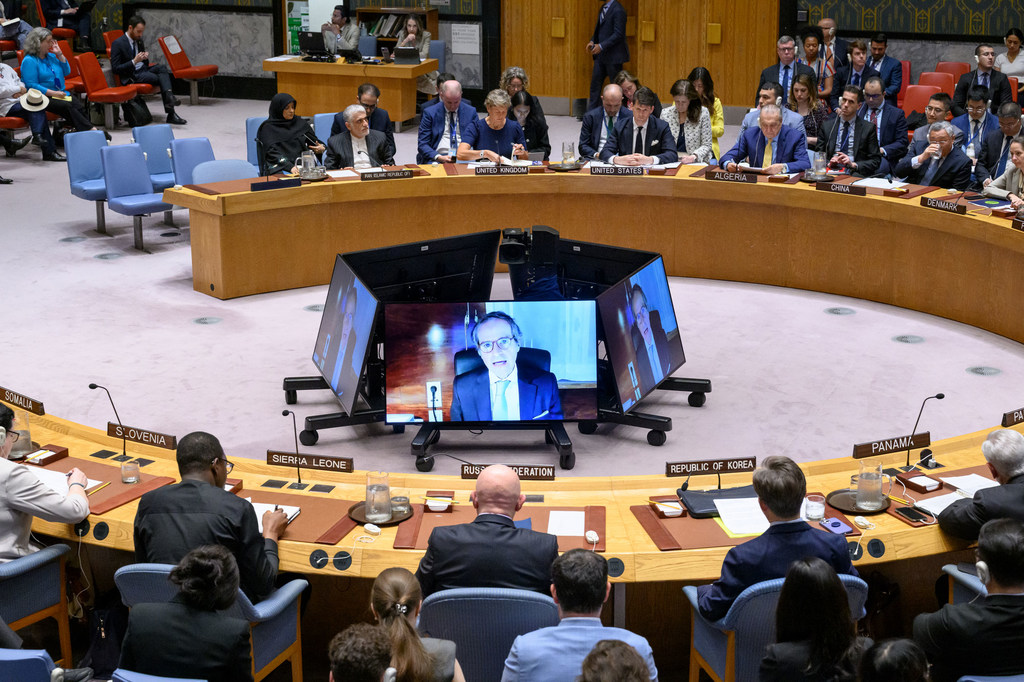
Rafael Grossi (on screen), Director General of the International Atomic Energy Agency (IAEA), briefs the UN Security Council meeting on Iran.

2. Reporting

The agency regularly reports to its Board of Governors on the nuclear activities of Iran (and other countries), using methods such as inspections, monitoring equipment, environmental sampling, and satellite imagery to gather data and prepare technical reports. In the case of countries under special scrutiny – such as Iran – these reports are typically issued every quarter.

If Iran – or any non-nuclear weapon country party to the NPT – fails to comply with the IAEA’s requirements (for example, by limiting access or not explaining the presence of uranium particles), the agency can report Iran to the UN Security Council, which may lead to diplomatic pressure, sanctions or calls for further negotiations.
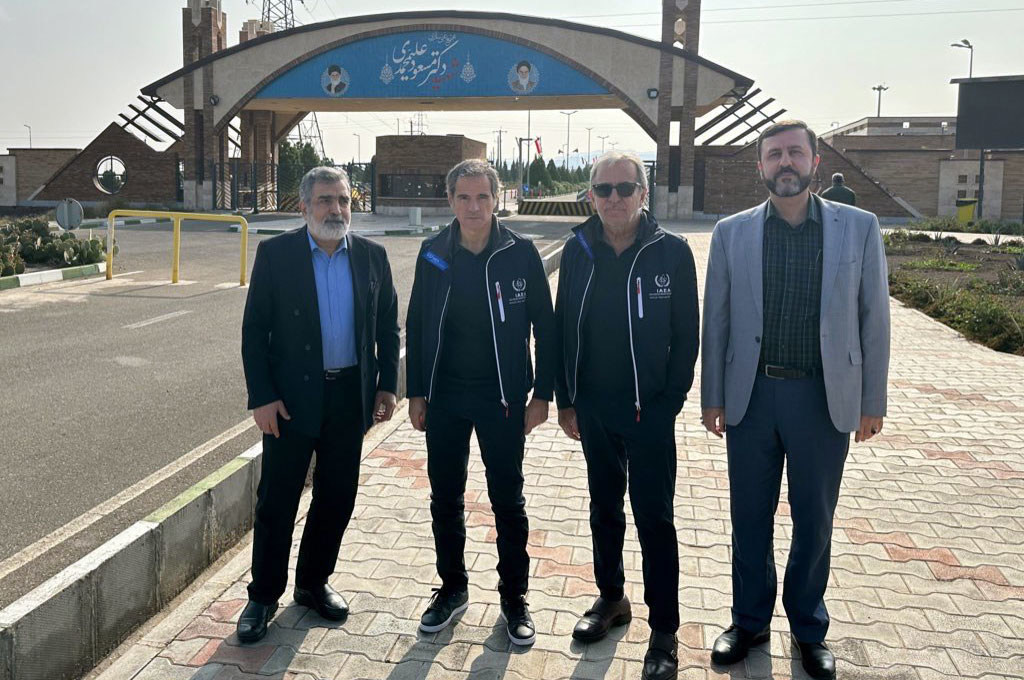
IAEA Director General Rafael Grossi (2nd left) visiting the Natanz and Fordow nuclear facilities.

3. Diplomatic engagement

The IAEA frequently calls for diplomatic solutions and emphasises the importance of dialogue to resolve concerns about Iran’s nuclear intentions. Director General Grossi has engaged directly with Iranian authorities and international stakeholders to maintain communication and transparency.

Addressing the Security Council on June 13, Mr. Grossi said that his agency was in constant contact with the Iranian Nuclear Regulatory Authority to assess the status of affected facilities and determine broader impacts on nuclear safety and security.

4. Safety and security oversight

This is a critical part of the IAEA’s broader mission to prevent nuclear accidents, ensure that nuclear energy is used for peaceful purposes, and protect people and the environment.

The IAEA works with the Iranian authorities to ensure that nuclear facilities like Natanz, Fordow, and Esfahan operate safely, by assessing the design and operation of the facilities, monitoring radiation protection measures, and evaluating emergency preparedness.

After the June 2025 Israeli strikes, the IAEA confirmed that Natanz had been impacted but reported no elevated radiation levels. However, it emphasised that any military attack on nuclear facilities is a violation of international law and poses serious risks to safety and the environment.

World Refugee Day: telling their stories

While hotspots include Sudan, Syria, Afghanistan, Ukraine and Palestine, displacement affects every region of the world.

In the lead-up to World Refugee Day, Friday, the UN is spotlighting the importance of solidarity with refugees through support, solutions, and the power of storytelling.

Zahra Nader: Reporting from exile

Ahead of World Refugee Day, UN News spoke with Zahra Nader, a refugee, journalist and women’s rights activist from Afghanistan.

At age six, Nader and her family fled to Iran after the Taliban first took power, where she was denied access to education and faced racism.

Returning to Afghanistan years later, the stark contrast between life in exile and the opportunity to attend school ignited her passion for journalism and advocacy.

In August 2021, while she was pursuing a PhD in Canada, the Taliban regained control, shattering her dreams of returning home to teach and conduct fieldwork.

I felt as a journalist who grew up in Kabul, who became a journalist there, I have a right and responsibility to tell these stories of women in Afghanistan,” she said. “This is really inhuman, for half of the population of a country to be stripped of their basic human rights because they were born female.”

Channeling that pain into action, she founded Zan Times, an Afghan women-led newsroom in exile documenting human rights abuses in Afghanistan, particularly those affecting women.  

Despite limited funding and growing risks to her reporters, Nader continues her work to ensure that Afghan women are seen and heard.

She described the situation in Afghanistan as “the most severe women’s rights crisis of our time”, calling international action insufficient and warning that inaction emboldens the Taliban and its misogynistic ideologies.  

Despite her trauma and current inability to return, Nader remains optimistic and urges young Afghan women to resist through learning and preparing for a better future.

“I am hopeful, and I want to be also part of that change, to envision a better future for Afghanistan, and do my part to make that future happen.”  

Barthelemy Mwanza: From survival to leadership

On Thursday, UN Video featured the story of Barthelemy Mwanza, a refugee from the Democratic Republic of the Congo (DRC) who is now a youth leader and advocate.

At 18, Mwanza was caught between pressure to join an armed tribal group involved in nationwide conflict and his father’s plea to stay out of the fight, a decision that could have cost him his life.

To survive, he fled to the Tongogara refugee camp in Zimbabwe.

Emotionally overwhelmed from being displaced from his home country, “It really made me cry to say ‘Where am I?’” Mwanza said. “Later on, I was like, ‘Till when will I continue to cry? Shouldn’t I look at the future?’”

He began volunteering with UNHCR, leading more than 5,000 young refugees through initiatives tackling gender-based violence, youth protection, and climate action.

Now resettled in Ohio, United States, Mwanza continues to collaborate with UNHCR to elevate refugee voices, inspire climate action and share his story.

Empowering and advocating for refugees on a global stage “was one of my dreams, and now I can really see that it’s coming to life,” he concluded.  

© UNHCR/Nicolo Filippo Rosso

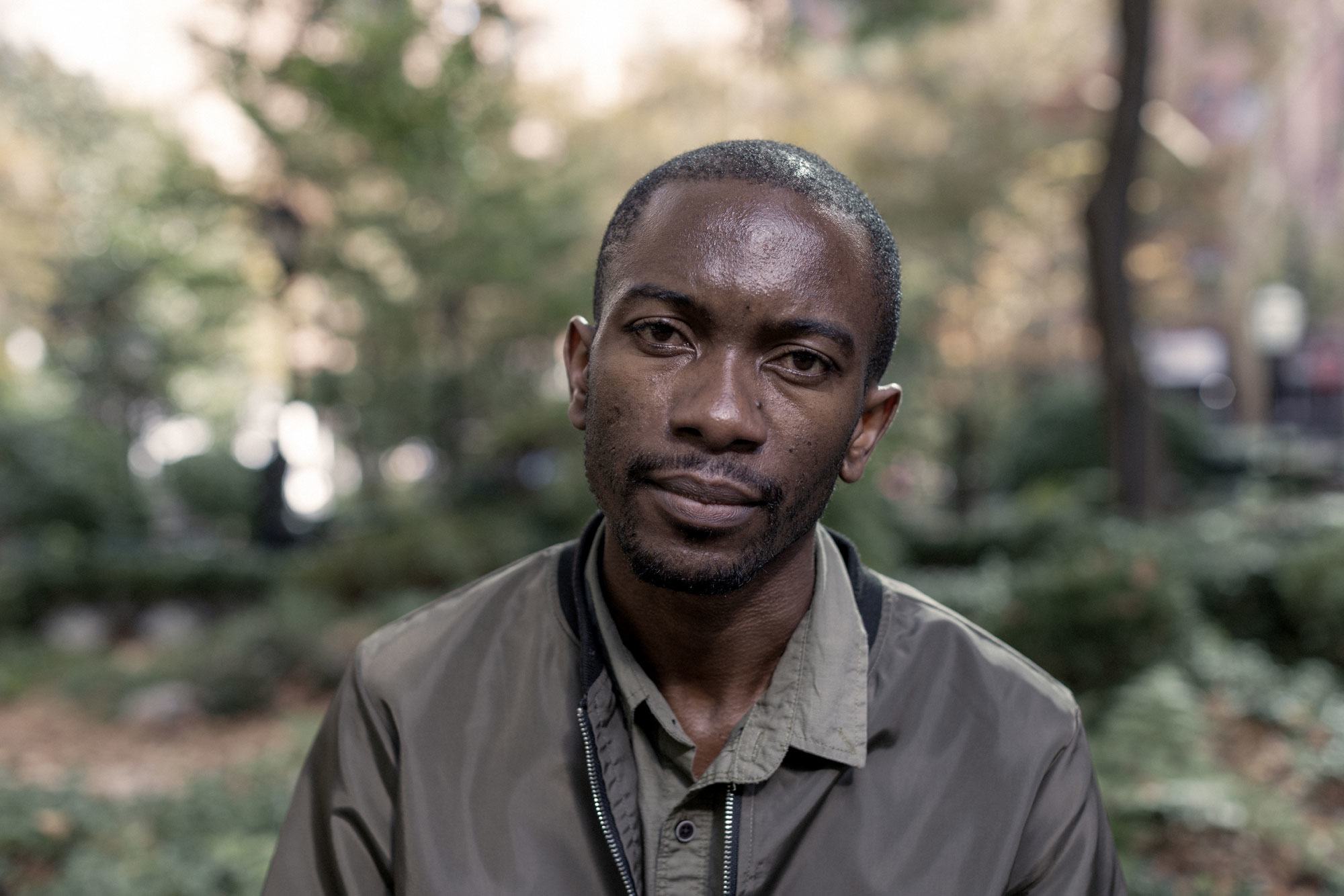
Barthelemy Mwanza Ngane is a refugee from the Democratic Republic of the Congo and is currently living in Akron, Ohio, US.

Source link

Development is ‘the first line of defense against conflict,’ Guterres tells Security Council

Ambassadors met to debate how poverty, inequality, and underdevelopment are fuelling conflict and instability, at a time when hostilities are increasing and demand for humanitarian aid is rising as resources dwindle.  

Every dollar spent on prevention could save up to $103 in conflict-related costs, according to the International Monetary Fund (IMF). 

Sustainable development critical

Conflicts are proliferating and lasting longer, said Mr. Guterres. At the same time the global economy is slowing and trade tensions are rising, as aid budgets are being slashed while military spending soars. 

He warned that if current trends continue, two thirds of the world’s poor will live in conflict-affected or fragile countries by the end of this decade. 

“The message is clear,” he said.  “The farther a country is from sustainable and inclusive development, the closer it is to instability, and even conflict.”

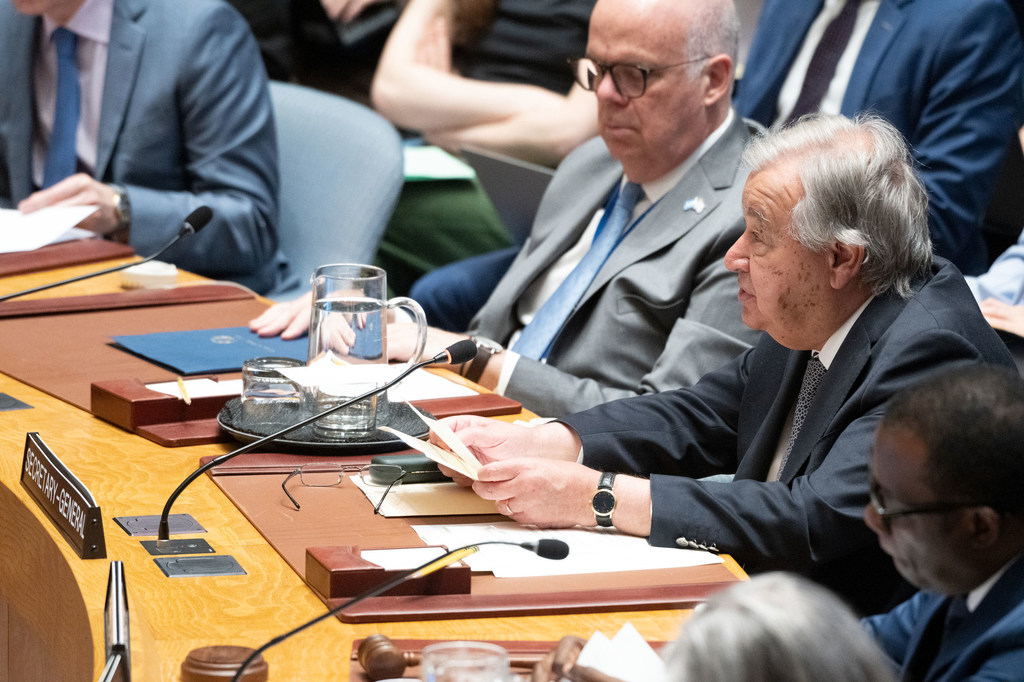
Secretary-General António Guterres briefs the Security Council meeting on Poverty, Underdevelopment, and Conflict.

Give peace a (fighting) chance

The Secretary-General highlighted how the UN has worked to advance the three pillars of peace, development and human rights.  

These efforts began with its establishment 80 years ago and continue today, “guided by the simple principle that prevention is the best cure for instability and conflict, and there is no better preventive measure than investing in development,” he said.

“Development gives peace a fighting chance. It’s the first line of defence against conflict. But right now, we’re losing ground,” he said, noting that “the engine of development is sputtering.”

World falling short

Currently, two-thirds of the targets under the Sustainable Development Goals (SDGs) are lagging 10 years after adoption. 

“The world is falling short by over $4 trillion annually in the resources developing countries need to deliver on these promises by 2030,” he added.

Furthermore, “developing countries are being battered and bruised by limited fiscal space, crushing debt burdens and skyrocketing prices.”

Fix the ‘engine’

The Secretary-General pointed to the fourth Conference on Financing for Development, which begins next week in Spain, as an important moment “to fix and strengthen this essential engine.”

He called for renewed commitments towards securing public and private finance for the areas of greatest need, providing urgent relief for debt-laden countries, and reforming the outdated global financial architecture.

The Council debate “could not be more prescient,” said Kanni Wignaraja, the UN Development Programme’s (UNDP) Assistant Secretary-General and Regional Director for Asia and the Pacific.

Break the cycle

Global human development has stalled just as violent conflicts have surged to levels not seen in eight decades, she said, before presenting three priorities for investment to help break the cycle, including protecting household economies.

“In fragile settings, where peace and security have been shattered, development that goes directly to the local level becomes the first line of peoples’ defence and survival. And their hope for recovery,” she said.

“From these local economies – where livelihoods are restored, water and electricity can flow again, women’s businesses in particular reopen, farmers can trade food, and there is basic finance to allow markets to stay afloat – from this, comes the resources to build back broken capabilities and resilience.”

Address systemic imbalances

The Chairperson of the African Union (AU) Commission, Mahmoud Youssouf Ali, recalled how the continent loses billions of dollars annually to conflict, which could be channelled into schools, hospitals, infrastructure and innovation.

He said the international community must also acknowledge that poverty and underdevelopment “are not confined within national borders” but are global challenges that require global response.

“If we are to uphold international peace and security, we must address the systemic imbalances – economic, political, and institutional – that continue to fuel deprivation, exclusion, and instability across regions,” he said.

In this regard, the AU called for enhanced support to African-led peace operations, particularly those deployed in regions where poverty and underdevelopment are deeply entrenched. 

Critical juncture requires collective action

The debate was convened by Guyana, which holds the rotating Council presidency this month.

The country’s Foreign Minister, Hugh Todd, remarked that with the world “at a critical juncture where the interlinkages between peace, security and development have never been more pronounced,” collective and decisive action is required.

He cautioned against “prioritizing only political solutions in conflicts where poverty and underdevelopment feature prominently,” as creating conditions for socio-economic stability and well-being are also critical for peace.

Mr. Todd urged countries to address issues such as lack of access to education, unemployment, exclusion, and greater participation of women and youth.

“Currently, the global youth population is the highest in history, with most young people concentrated in developing countries,” he said.

“For us to harness their full potential, they must be given adequate economic opportunities and be involved in decision making on peace and security.” 

Source link

Gaza: As last fuel supplies run out, aid teams warn of catastrophe

Speaking from Gaza City in the north of occupied territory, Olga Cherevko from the UN aid coordination office, OCHA, said that water pumps had stopped at one site for displaced people there on Wednesday “because there’s no fuel”.

“We are really – unless the situation changes – hours away from a catastrophic decline and a shutdown of more facilities if no fuel enters or more fuel isn’t retrieved immediately,” she told UN News.

In its latest update on the emergency, OCHA said that without the immediate entry of fuel or access to reserves, 80 per cent of Gaza’s critical care units essential for births and medical emergencies will shut down.

More killed seeking aid

The development comes as Gaza’s authorities reported that 15 people had been killed near an aid distribution hub in the centre of the Strip on Thursday.

On Tuesday, unverified videos of another incident circulating on social media showed dead bodies lying in the street near a relief facility in the southern city of Khan Younis, reportedly following artillery fire.

Finding food is a daily challenge for increasingly desperate Gazans who are “simply waiting for food and hoping to find something in order not to watch their children starve in front of their eyes”, Ms. Cherevko explained.

She added: “I spoke with a woman a couple of days ago where she told me that she went with a friend of hers who is nine months pregnant in hopes of finding some food.

Of course, they didn’t manage because they were too afraid to enter areas where there could be incidents like the ones that have been reported over the past few days.”

Search for shelter

Back in Gaza City, OCHA’s Ms. Cherenko said that conditions in shelters in Gaza are now “absolutely horrific” and increasingly crowded – “there are people coming from the north constantly,” the veteran aid worker added, while others are also moving back northwards, likely to be closer to the entry points for aid convoys.

The amount of aid entering Gaza today remains extremely limited and far below the 600 trucks a day that used to reach the enclave before the war began in October 2023. In its latest update, OCHA reported that “starvation and a growing likelihood of famine” are ever-present in the enclave. An estimated 55,000 pregnant women now face miscarriage, stillbirth and undernourished newborns as a result of the food shortages.

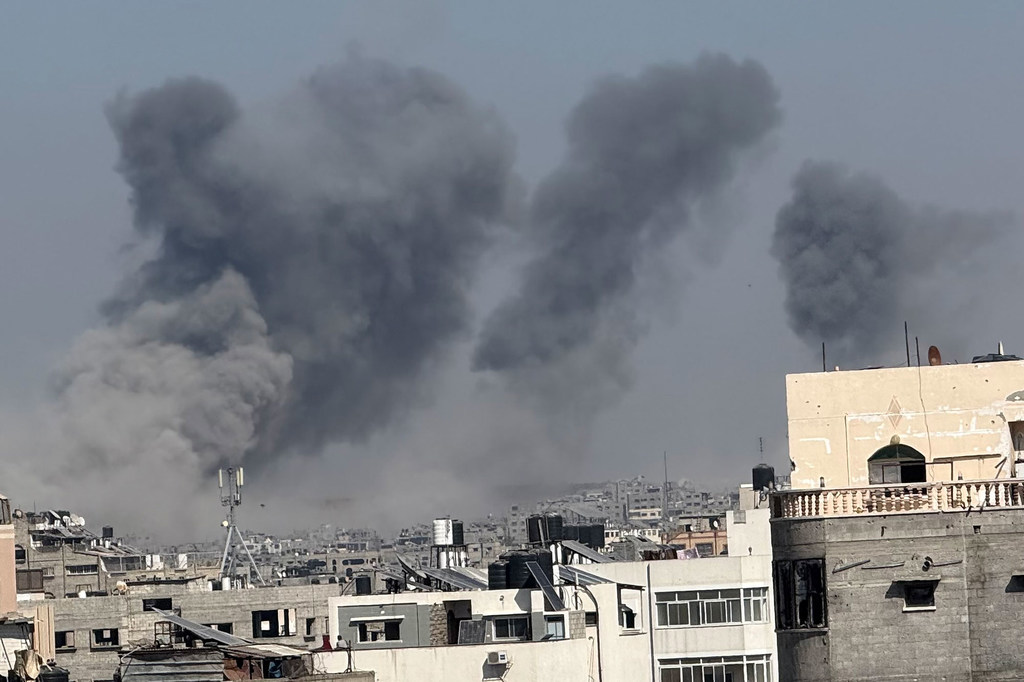
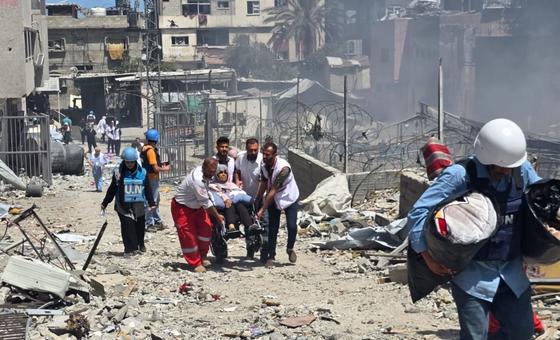
Smoke from explosions rises from the Shujaia neighborhood of Gaza City.

Starvation diet

“With the very limited volume of aid that is entering, everyone continues to face starvation and people are constantly risking their lives to try to find something,” Ms. Cherevko continued.

You eat or [you’re] left with the choice of starving to death.”

After more than 20 months of war, sparked by Hamas-led terror attacks in Israel, 82 per cent of Gaza’s territory is either an Israeli militarized zone or affected by evacuation orders.

Three months since hostilities re-escalated on 18 March, more than 680,000 people have been newly displaced. “With no safe place to go, many people have sought refuge in every available space, including overcrowded displacement sites, makeshift shelters, damaged buildings, streets and open areas,” OCHA said.

Source link

‘Smart grid’ helps accelerate energy transition in Indonesia

With support from the United Nations, the electricity grid on the central islands of Java, Madura, and Bali – home to over 160 million people – is now being upgraded and modernized to accommodate fluctuating energy loads from solar and wind power.

“As a result of our cooperation with the UN, we now have a blueprint for a smart grid and are working to enable it to seamlessly integrate electricity from renewables in line with national priorities,” said Evy Haryadi, Director of Transmission and System Planning at state-owned electricity company PT Perusahaan Listrik Negara (PLN). “This will represent a huge step forward in decarbonizing Indonesia’s energy system.”

As emphasized during a recent visit to Jakarta by the UN Secretary-General’s Special Advisor on Climate Action and Just Transition, Selwin Hart, the smart grid initiative—supported by the United Nations Office for Project Services (UNOPS)—is an integral part of the broader UN assistance in Indonesia to ensure a just energy transition.

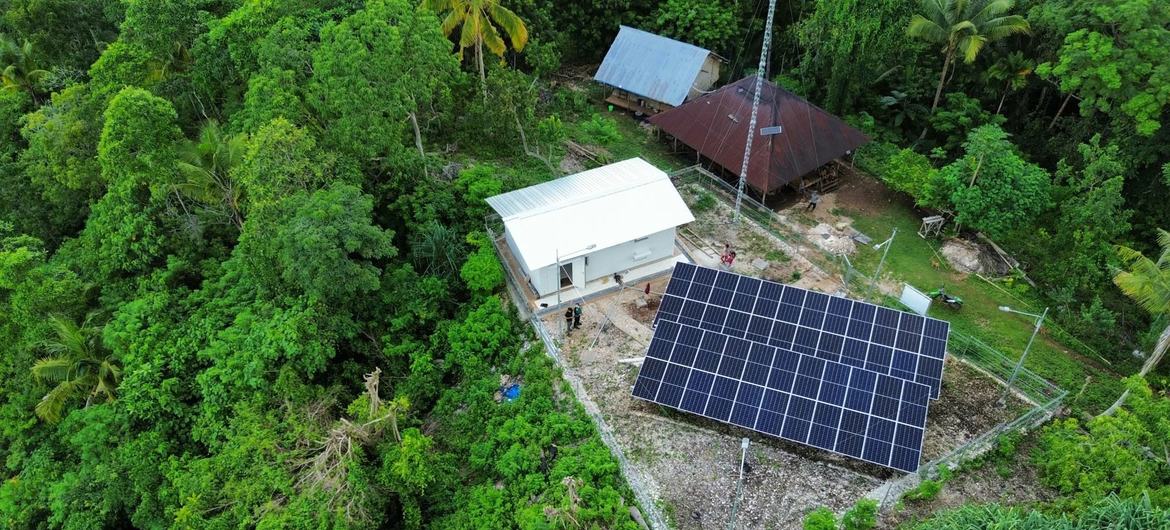
Solar power is widely used on the islands of Java, Madura, and Bali.

This includes work by the United Nations Development Programme (UNDP) to bring renewable energy to remote islands not connected to the national grid, and by the International Labour Organization (ILO) to support the government in developing green skills.

“The UN in Indonesia works in close partnership with the government to support its energy transition targets in line with the Sustainable Development Goals (SDGs),” said Gita Sabharwal, United Nations Resident Coordinator for Indonesia. “We provide fast response solutions and technical expertise to help accelerate progress toward government objectives in green energy.”

The country’s 2025–2034 Electricity Supply Business Plan, launched in May, outlines a strategic shift toward a cleaner and investment-driven energy future. It targets 42.6 GW of new renewable power capacity and 10.3 GW of storage, while limiting new fossil fuel capacity to 16.6 GW. The plan is designed to align Indonesia’s climate commitments with the SDGs and enhance national energy resilience.

The smart grid and, at its core, the control centre that manages electricity supply and demand, are crucial to this effort. The country expects a surge in renewable generation construction once the modernization of the JAMALI Control Center is completed.

Historically, power grids were designed to receive electricity from sources with relatively constant output—such as coal, natural gas, or hydropower. However, some renewable sources function differently: solar plants generate electricity only when the sun is shining, and wind power only when the wind is blowing. In a so-called “smart grid,” the control centre must be able to adjust electricity intake from renewables and balance it with stable sources like coal, based on real-time weather conditions and consumption patterns. It will also utilize large-scale batteries to store excess electricity—for example, solar energy generated during particularly sunny periods.

Established in the early 1980s, the JAMALI grid control center covers 79% of Indonesia’s generation capacity. The smart grid system design, delivered by UNOPS, enables the control centre to incorporate renewable energy forecasting capabilities and grid analysis tools to support stability and security, among other advanced features.

The detailed engineering design for the JAMALI Main Control Center includes plans to consolidate five regional control centres into two to improve efficiency while maintaining redundancy. UNOPS also completed the tendering process and vendor selection for the design’s implementation and is building the capacity of PLN staff involved in control centre operations to manage the new technology effectively.

From design to implementation

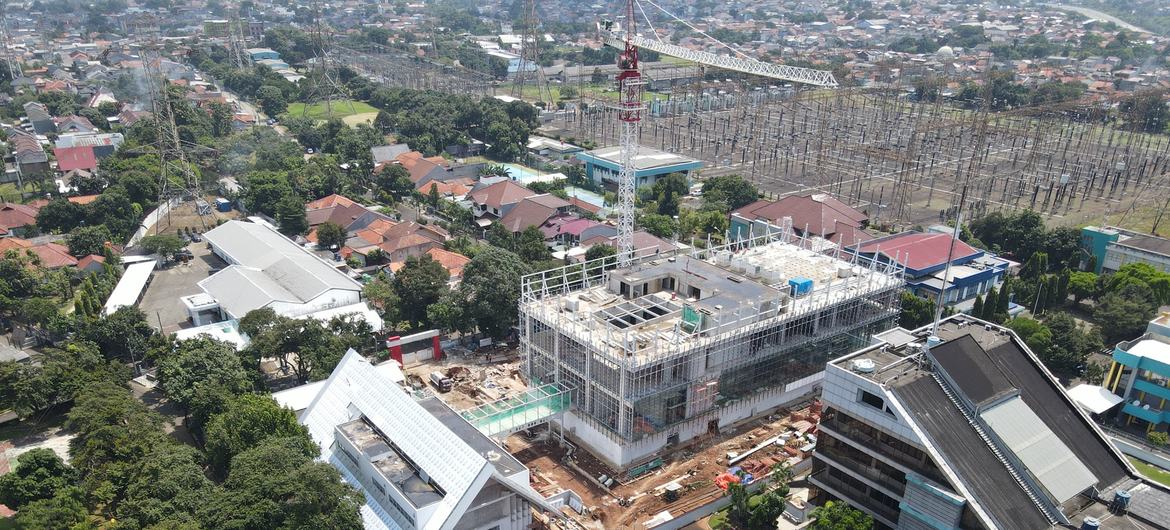
Construction workers and engineers are now hard at work at PLN’s campus in Depok, just outside Jakarta, implementing the design provided by UNOPS. Completion of the control centre is expected by the end of 2025. During this phase, UNOPS is responsible for monitoring the selected vendors who are constructing, installing, configuring, and ultimately commissioning the new centre.

Indonesia is modernizing its electricity grid.

“UNOPS has the project management expertise and know-how to continue supporting us and ensure the seamless and timely delivery of the project, in line with the original specifications,” said PLN’s Mr. Haryadi. “At the same time, we are building our internal capacity to eventually take over the task.”

The work is progressing on schedule. The new buildings are largely completed, and installation of the industrial monitoring system—central to the control centre’s operation—is about 40 per cent complete. Based on the success of the initiative, discussions are underway to replicate the design for the four control centres that manage electricity supply on other islands across the country.

UNOPS supports this modernization under the Southeast Asia Energy Transition Partnership (ETP), which provides technical expertise to partner countries in the region to help their national energy commitments in line with Paris Agreement and the SDGs. ETP is a multi-donor partnership, supported by the governments of Australia, Canada, France, Germany, the United Kingdom and philanthropic donors.  ETP operates in Indonesia, the Philippines and Viet Nam, as well as at the ASEAN regional level, and works collaboratively to mobilize and coordinate resources to facilitate a just energy transition in the region.

“The control centre upgrade promises to be a game-changer for Indonesia’s energy mix,” Ms Sabharwal said. “Our support is an impactful example of the UN’s assistance in middle-income countries: working behind the scenes and providing core technical expertise, we support the government’s priority of energy security by fast-tracking the green transformation.” 

Source link

Ahead of UN summit, countries finalise landmark ‘Compromiso de Sevilla’

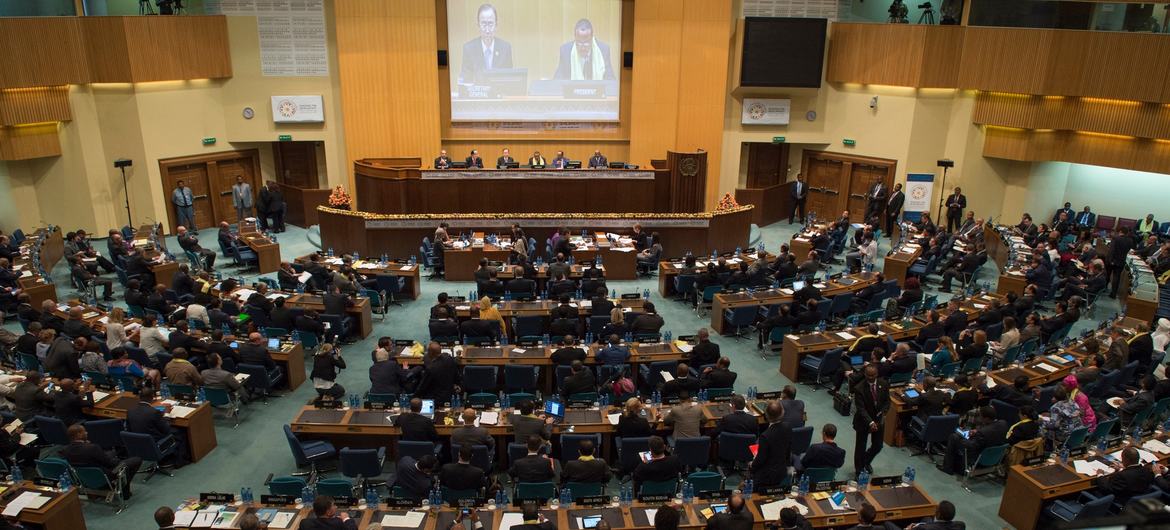
On Tuesday, Member States at UN Headquarters endorsed the finalized outcome document, known as the Compromiso de Sevilla (the Seville Commitment), following months of intensive intergovernmental negotiations.

It is intended as the cornerstone of a renewed global framework for financing sustainable development, particularly amid a widening $4 trillion annual financing gap faced by developing countries.

A reinvigorated framework

Co-facilitators of the outcome document – Mexico, Nepal, Zambia and Norway – hailed the agreement as an ambitious and balanced compromise that reflects a broad base of support across the UN membership.

“This draft reflects the dedication, perseverance, and constructive engagement of the entire membership,” said Ambassador Alicia Buenrostro Massieu, Deputy Permanent Representative of Mexico.

“Sevilla is not a new agenda. It is a strengthening of what already exists. It renews our commitment to the Addis Ababa Action Agenda and aligns fragmented efforts under a single, reinvigorated framework,” she added.

Nepal’s Ambassador Lok Bahadur Thapa called the outcome a “historic opportunity” to confront urgent financing challenges.

“It recognizes the $4 trillion financing gap and launches an ambitious package of reforms and actions to close this gap with urgency,” he said, highlighting commitments to boost tax-to-GDP ratios and improve debt sustainability.

Opening of third International Conference on Financing for Development, in 2015, which adopted the historic Addis Ababa Action Agenda.

United States withdrawal

The agreement came despite sharp divisions on several contentious issues, culminating in the United States decision to exit the process entirely.

“Our commitment to international cooperation and long-term economic development remains steadfast,” said Jonathan Shrier, Acting US Representative to the Economic and Social Council.

“However, the United States regrets that the text before us today does not offer a path to consensus.”

Mr. Shrier voiced his country’s objection to proposals in the draft, which he said interfered with the governance of international financial institutions, introduced duplicative mechanisms, and failed to align with US priorities on trade, tax and innovation.

He also opposed proposals calling for a tripling of multilateral development bank lending capacity and language on a UN framework convention on international tax cooperation.

Renewal of trust

Under-Secretary-General for Economic and Social Affairs Li Junhua welcomed the adoption of the document, calling it a clear demonstration that “multilateralism works and delivers for all.”

He praised Member States for their flexibility and political will in finalizing the agreement, despite challenges.

“The FFD4 conference presents a rare opportunity to prove that multilateralism can deliver tangible results. A successful and strong outcome would help to rebuild trust and confidence in the multilateral system by forging a renewed financing framework,” Mr. Li said.

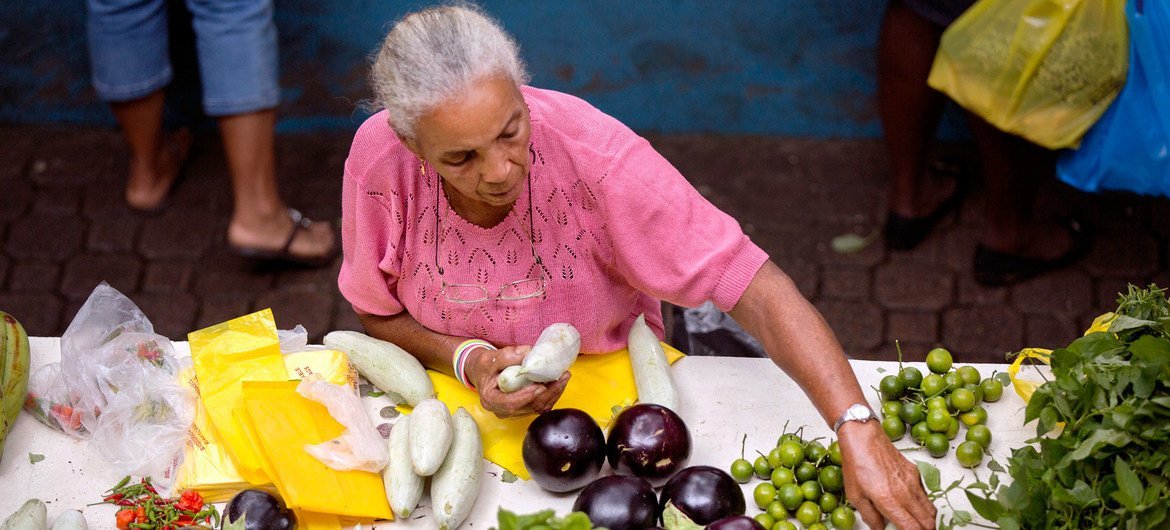
A woman sells vegetables in a market in Seychelles. Despite ongoing efforts, progress toward achieving several SDGs — including those on women’s empowerment – remains off track for 2030.

For the common good

The Sevilla conference, to be held from 30 June to 3 July will mark the fourth major UN conference on financing for development, following Monterrey (2002), Doha (2008) and Addis Ababa (2015).

It is expected to produce concrete commitments and guide international financial cooperation in the lead-up to and beyond the 2030 deadline of the Sustainable Development Goals (SDGs).

“We firmly believe that this outcome will respond to the major challenges we face today and deliver a real boost to sustainable development,” said Ambassador Thapa of Nepal.

Source link

Human Rights Council hears alarming updates on executions in Iran and global civic space crackdown

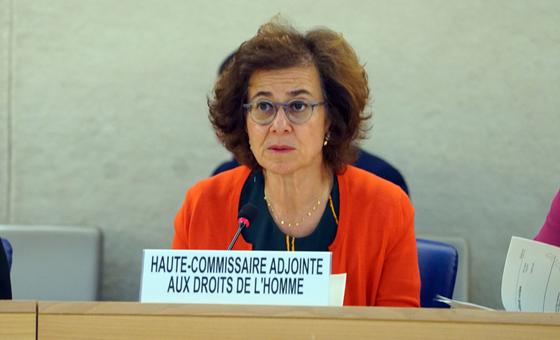
At least 975 people were executed in Iran in 2024, the highest number reported since 2015, according to a report Deputy High Commissioner for Human Rights, Nada Al-Nashif, presented to the Geneva-based Council on Wednesday. 

Of the total executions, just over half were for drug-related offenses, 43 per cent for murder, two per cent for sexual offenses, and three per cent for security-related charges. At least four executions were carried out publicly. 

“These cases are marked by serious allegations of torture and due process violations, including lack of access to a lawyer,” said Ms. Al-Nashif. 

Violence and discrimination against women

At least 31 women were reportedly executed in Iran last year, up from 22 in 2023. Of the 19 women executed for murder, nine had been convicted of killing their husbands in cases involving domestic violence or forced or child marriage, areas in which Iranian women have no legal protections.

Some executions were reportedly linked to protests that began in September 2022 under the banner “Women, Life, and Freedom.”

Beyond executions, femicide cases surged, with 179 reported in 2024 compared to 55 the year before. Many stemmed from so-called “honour” crimes or family disputes, often involving women and girls seeking divorce or rejecting marriage proposals.

Ms. Al-Nashif also warned that the suspended Chastity and Hijab Law, if enacted, would pose a serious threat to women’s rights. Penalties for violations such as improper dress could include heavy fines, travel bans, long-term imprisonment, or even the death penalty.

In addition, of the 125 journalists prosecuted in 2024, 40 were women, many reporting on human rights and women’s rights issues.

Religious and ethnic minorities

“In 2024, the death penalty continued to have a disproportionate impact on minority groups,” Ms. Al-Nashif told the Council.

At least 108 Baluchi and 84 Kurdish prisoners were executed in 2024, representing 11 and 9 per cent of the total, respectively.

The report also raised concerns over the lack of official data on the socioeconomic conditions of ethnic and ethno-religious minorities and non-citizens, which hampers efforts to assess their situation and measure the impact of targeted policies and programmes.

Looking ahead

While Iran continued engagement with the Office of the UN High Commissioner and other human rights mechanisms, it denied access to the Independent International Fact-Finding Mission on the Islamic Republic of Iran.

“Our Office remains ready to continue and build on its engagement with the Iranian authorities on the range of issues highlighted in the report of the Secretary-General for the promotion and protection of all human rights,” Ms. Al-Nashif concluded. 

Global ‘Super Election’ cycle undermined democratic participation

In the Council’s afternoon session, Gina Romero, UN Special Rapporteur on the rights to freedom of peaceful assembly and association, presented her report on how the 2023–2025 “super election” cycle has affected civic space around the world.  

In 2024, half of the world’s population elected their local, national and international representatives. While Ms. Romero’s report on this cycle does not assess the integrity of the elections, it identifies troubling global patterns of systematic repression of the exercise of peaceful assembly and association.

“The misuse of restrictive laws, smear campaigns, disinformation targeting civil society intensified globally in the super electoral cycle, undermining electoral participation and freedom of association,” she said.  

Political repression and violence

As criminal justice systems are used to repress the opposition, leaders and members of political parties faced undue restrictions and political persecution. Civil society activists and election observers have also faced harassment, arbitrary detention, torture and murder.  

“When political parties, civil society, and peaceful assemblies are suppressed, genuine political pluralism and competition cannot exist,” argued Ms. Romero. “I stress that these conditions are incompatible with free and genuine elections and risk legitimising undemocratic rule.”

Minority representation

Ms. Romero also underscored that women’s political leadership remains severely underrepresented, while LGBTIQ individuals and their organizations faced attacks during the super electoral cycle.  

Both groups experienced physical and online political violence, restricting their electoral participation and accelerating the decline of their rights after the elections.

Calls to protect freedoms  

Amid global crises and a rapid democratic decline, Ms. Romero emphasized the urgent need to protect the rights to peaceful assembly and association throughout the entire electoral cycle.  

She outlined key recommendations, including strengthening legal protections before elections, ensuring accountability afterward, regulating digital technologies and promoting non-discriminatory participation throughout.  

“Dissent is a fundamental element of democratic societies,” she concluded in Spanish. “Rather than being suppressed, it should be welcomed and permanently protected.” 

Source link

Guterres renews call for Israel-Iran ceasefire

I reiterate my call for immediate de-escalation leading to a ceasefire,” Mr. Guterres said in a statement in which he strongly appealled against any further internationalization of the conflict. 

“Any additional military interventions could have enormous consequences, not only for those involved but for the whole region and for international peace and security at large,” he warned.

He condemned “the tragic and unnecessary loss of lives and injuries to civilians and damage to homes and critical civilian infrastructure.” 

Deadly escalation

The crisis erupted on Friday when Israel began targeting nuclear and military sites across Iran, prompting Tehran to launch retaliatory strikes on Israeli cities.

Since then, more than 250 people have been killed across both countries, according to media reports.

The International Atomic Energy Agency (IAEA), which has been monitoring Iran’s nuclear programme for decades, said that it had received information that two centrifuge production facilities were struck on Wednesday.

The TESA Karaj workshop and the Tehran Research Center were previously under its monitoring and verification as part of a 2015 international agreement known as the Joint Comprehensive Plan of Action (JCPOA).

“At the Tehran site, one building was hit where advanced centrifuge rotors were manufactured and tested,” the agency said in a tweet. “At Karaj, two buildings were destroyed where different centrifuge components were manufactured.”

Last week, the IAEA passed a resolution declaring that Iran was not complying  with its non-proliferation obligations.

The text noted Iran’s “many failures” to provide the agency with full and timely cooperation regarding undeclared nuclear material and activities at multiple undeclared locations in the country.

 Diplomacy reigns supreme

As the crisis in the Middle East deepens, the Secretary-General stressed that “diplomacy remains the best and only way to address concerns regarding Iran’s nuclear programme and regional security issues.”

 He underlined that “the UN Charter remains our shared framework to save people from the scourge of war,” urging all Member States to fully comply with the document and international law, including international humanitarian law. 

UN relief chief calls for solidarity, with humanitarians ‘literally under attack’

Tom Fletcher was speaking at the annual stock-take of his sector known as the ECOSOC Humanitarian Affairs Segment, which brings together UN Member States and organizations, humanitarian and development partners, as well as the private sector and affected communities.

He said this year’s theme – renew global solidarity for humanity – “could not be more urgent.”

“We need you right now,” he said. “We’re in a moment of conflict, of transactional politics, of selfishness, of division, of polarization. And global solidarity – the lifeblood of what we do – is in retreat.”

Moreover, “at this moment, when the needs are at their highest, the funding is also in retreat.”

Crises, climate and cutbacks

Mr. Fletcher reminded participants of “some uncomfortable truths,” noting that the Middle East currently “teeters on the edge of a wider war.”  

At the same time, people in Gaza are starving as food aid rots at border crossings, girls in Afghanistan are banned from school, women in war-torn Sudan are experiencing horrific violence, and gangs are terrifying families in Haiti.

This is happening amid the climate crisis “which will drive more humanitarian needs in the coming years than any other factor that we discuss today,” he said.

“Meanwhile, our teams, our humanitarian staff, the bravest of us, are not hesitating to go towards the sound of gunfire, the sound of danger to drive those convoys through those checkpoints and they are being killed in record numbers, while those responsible for killing them roam free.”

‘Life and death decisions’

Just six months ago, Mr. Fletcher launched a $44 billion appeal to reach 190 million people worldwide this year.  

In the wake of the deepest cuts ever to humanitarian operations globally, the plan was this week “hyper-prioritized” to focus on the most critical areas, with $29 billion in funding to support 114 million.

He acknowledged that “we’re left with the cruelest of equations when we make those life and death decisions, literally, about who to save.” 

Humanitarians “will save as many lives as we can with the resources that you give us,” and they are asking world leaders to give only one per cent of what they spent on defense last year.

“This isn’t just a call for money, of course. It is a call for global responsibility, for a shared commitment to end the suffering,” he said.

New humanitarian pact

“We also make this call that all of us find a moment to come off our talking points and to find the individual moment of courage and creativity to support this effort.”

Mr. Fletcher said the humanitarian movement will continue and is being re-designed from the ground up

“We’ll find new allies, we’ll find new sources of funding, we’ll find new ideas, we won’t just patch up the old model. We will also forge a new one. A bold humanitarian pact with the people we serve,” he said.

Women at the forefront

The pact will be “more local, more lean, more green,” and will include people on the frontlines of crisis who “know better than anyone what they need.”

Furthermore, the UN’s highest-level humanitarian coordination forum – the Inter-Agency Standing Committee (IASC) – has voiced unequivocal commitment that women and girls will lead this humanitarian reset and will back women humanitarian leaders in this work.

 “These leaders, the real leaders of our movement, don’t work for the UN or international NGOs. They are not part of the logos, and egos, and silos of our systems,” he said.

“They have something much more powerful – they are rooted in their communities with the trust of their communities and an unshakeable belief that even in these darkest moments we can choose to help each other. They are there for us and we must be there for them.”

Boosting effectiveness

The Economic and Social Council (ECOSOC) is one of the six main UN organs.

Since 1998, it has held the Humanitarian Affairs Segment to strengthen the coordination and effectiveness of UN humanitarian efforts.

Previous meetings have focused on issues such as addressing food security and recovery from the COVID-19 pandemic. 

Source link

Power of football inspires team effort towards development goals

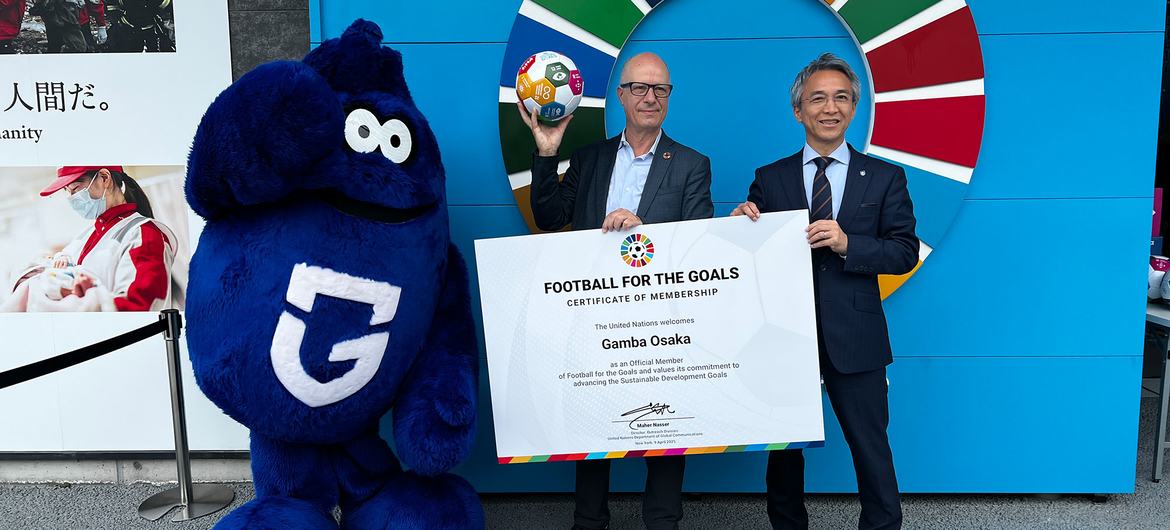
As the football Club World Cup gets underway in the United States, on the other side of the globe, Japanese club Gamba Osaka has reaffirmed its commitment to sustainable development by becoming the first team in the country’s professional league to join the United Nations’ Football for the Goals initiative.

The initiative provides a platform for the global football community to engage with and promote the internationally agreed Sustainable Development Goals (SDGs).

The UN’s Maher Nasser (left) and Shinji Ito of Gamba Osaka mark the Japanese club’s membership of the Football for the goals initiative.

Shinji Ito, an external affairs executive for the football team, Gamba Osaka, told UN News at the United Nations Pavilion at Expo 2025 in Osaka that supporting the Sustainable Development Goals (SDGs) is important to his club.

“As a football club we can work with supporters towards changing attitudes and behaviour on issues like the environment, climate, sustainability, health and disability, which are part of the SDGs.”

The multicoloured SDG logo is prominently displayed at the club’s stadium in Osaka, Japan’s second largest city, it has featured on the team kit and players have visited local schools to explain why the SDGs are important.

At the stadium, efforts are made to encourage fans to separate recycling trash, a behaviour which many in Japan believe needs to be highlighted and stepped up.  Paper cups have replaced plastic cups and the player’s team shirts are made from more sustainable and environmentally-friendly materials.

“We are seeing increased awareness about the importance of the SDGs,” said Mr Ito. “We recognize that this is a long-term commitment and that significant change takes place over 10 years or longer.”

Team effort

Gamba Osaka is now signed up to the UN’s Football for the Goals initiative, making it a first for Japan’s professional game. 

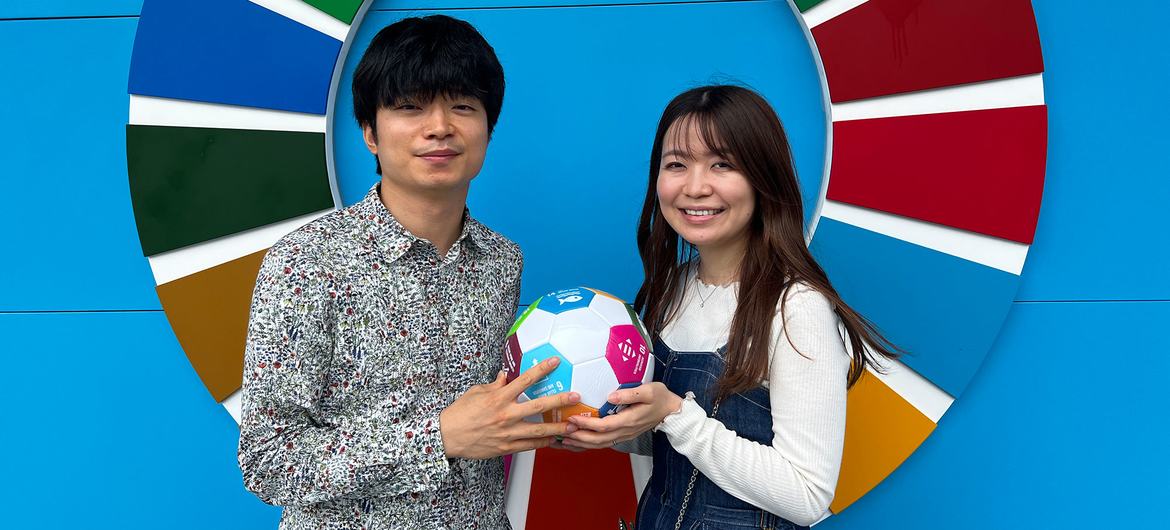
Taro Shinzato (left) visited the UN Pavilion with Satoka Shinzato.

The initiative aims to inspire and guide all those involved in the sport who see the value of sustainability, from confederations, national associations, leagues and clubs to players’ associations, organized fan groups, as well as media and commercial partners.

It’s encouraging them to build on existing sustainability approaches and to implement strategies that lead to behavioural change.

Launched in 2022, at a time when progress towards the SDGs was and continues to falter, there are now some 370 entities signed up.

“The global football industry is extremely influential and has the power to communicate with billions of people across the world,” said Maher Nasser, Commissioner-General of the United Nations at Expo 2025.

“Our members will inspire action by demonstrating how sustainable practices can be mainstreamed through any business model, including sport,” he added.

Keeping an eye on the ball

The SDGs are part of the Japanese school curriculum,  so many young people are aware of their importance.

Taro Shinzato, who supports rival team Nagoya Grampus 8, visited the UN Pavilion at Expo 2025, telling us: “When we think of the SDGs, we focus on the environment and sustainable living in Japan. We perhaps don’t think enough about the SDGs in other countries, which is very important as we all share the same Earth.” 

Football for the Goals

  • Football for the Goals was launched in July 2022.
  • The initiative has 370 members from over 120 countries.
  • All six of FIFA’s regional confederations are members.
  • Each member has committed to integrating sustainable practices into their operations and to promoting the SDGs.

Civilian deaths in conflict are surging, warns UN human rights office

At least 48,384 individuals – mostly civilians – were killed in 2024, based on casualties recorded by OHCHR.

“Behind every statistic is a story. Behind every data point, a person,” said UN rights chief Volker Türk.

This alarming rise in civilian deaths exposes major failures to protect some of the most vulnerable in both peacetime and conflict situations, “painting a picture of a global human rights landscape in need of urgent action,” he said.

Human rights defenders

Just over 500 of those killed in 2024 were human rights defenders, with the number of journalists killed also rising by 10 per cent, comparing 2023 to 2024.

The level of targeting of human rights defenders and journalists remained alarmingly high: at least one human rights defender, journalist, or trade unionist was killed or forcibly disappeared every 14 days.

Detentions of rights defenders was most widespread in northern Africa, central, southern and western Asia. Killings were most prevalent in Latin America and the Caribbean.

Alarming rise in deaths of women and children

Violence against children and women in armed conflicts has been devastating over the past two years.

Between 2023 and 2024, approximately four times more children and women were killed in armed conflicts than during 2021–2022.

Women reported experiencing gender-based discrimination at more than twice the rate of men, and the poorest households were hardest hit, perpetuating cycles of poverty and inequality.

Discrimination does not exist in isolation,” said Mr Türk, as OHCHR’s findings revealed widespread and compounding discrimination, with nearly one in three persons with disabilities reporting having experienced discrimination, compared to fewer than one in five without disabilities.

Source link

Make midwives universally accessible and save millions of lives, WHO urges

According to the World Health Organization (WHO), this sort of large-scale life-saving is possible, if midwifery care is universally accessible and consistent with international standards.

Expanding and investing in midwifery models of care is one of the most effective strategies to improve maternal and newborn health globally,” said Dr. Anshu Banerjee, director for maternal, child and adolescent health and ageing at WHO.

In a recently released report, WHO outlined how individual countries, with the support of the international community, can mobilise relevant stakeholders and institute policies which support midwives.

Midwifery models of care

Midwives worldwide work diligently to provide a continuum of care to women, including care surrounding sexual and reproductive health, pregnancy, childbirth and postnatal care.

Emphasizing personalized and culturally conscious approaches, midwifery is especially helpful in reducing access barriers for women in rural or conflict-affected regions where hospitals may not be accessible.

“Skilled midwives help women trust in their bodies, their abilities and their care…ensuring women are consistently part of decision making and have access to the information they need,” said Ulrika Rehnstrom Loi, a midwifery expert at WHO.

The WHO report emphasised that midwifery models of care are especially important as concerns of over-medicalisation in childbirth become more pronounced.

“In a world where childbirth is increasingly medicalised, [midwives] offer a person-centered evidence-based approach that respects the physiological process of birth, restores dignity and autonomy to maternity care,” said Anna Ugglas, Chief Executive of the International Confederation of Midwives.

Implementing a global imperative 

Currently, the world faces a global shortage of around one million midwives. Concentrated and cross-sectoral action is needed to reverse this shortage.

“Midwifery models of care are not just smart solutions — they are a necessity,” Ms. Ugglas said.

The WHO report outlined that increasing the number of midwives worldwide requires policy action across many sectors, including health and education, in addition to advocacy campaigns.

In Morocco, the Association of Midwives conducted an awareness campaign which distributed flyers and cultivated partnerships with women and civil society organizations.

This campaign ultimately led to legislation in 2016 which defined what midwifery was, the first of its kind in Morocco.

Like the Moroccan example indicates, the report said that policymaking, advocacy and implementation must all happen simultaneously and that each country must adopt an approach which is specific to their context.

“[Midwifery] approaches improve outcomes, maximize resources and can be adapted to all countries,” said Dr. Banerjee.

Case study in rural midwifery

A campaign in the West Bank led by the Palestinian Red Crescent Society, the Palestine Committee of Norway and the Palestinian Ministry of Health worked to address the challenges that women in rural areas face when accessing care.

Through coordinating with hospitals and community members, the campaign expanded midwifery services to six regional hospitals and 37 villages between 2013 and 2016. This led to a 20 per cent decrease in unplanned caesarean sections and a 21 per cent decline in preterm birth rates.

And these were just the short-term effects, but Mr. Banerjee said that expanded midwifery access can have longer-term effects too.

“[Midwifery models of care] also enhance women’s and families’ experiences of care – building trusted partnerships for health at this critical stage of life.” 

UN rights office ‘horrified’ by deadly violence at Gaza food distribution sites

The UN human rights office (OHCHR) in the Occupied Palestinian Territory on Wednesday called on the Israeli military to cease the use of lethal force near aid convoys and food distribution sites.

It cited “repeated incidents” of Palestinians being shot or shelled while seeking food, warning that such attacks could constitute war crimes under international law.

“We are horrified at the repeated incidents, continuously reported in recent days across Gaza, and we call for an immediate end to these senseless killings,” the office said in a statement.

Hundreds killed

Since 27 May, when the Gaza Humanitarian Foundation (GHF), an initiative backed by Israel and the United States began food distribution in southern Gaza – bypassing the established UN-led system – hundreds have been killed and many more wounded near four distribution points or while waiting to pick up aid.

In one of the deadliest recent incidents, Israeli military reportedly shelled a crowd waiting for UN food trucks in southern Gaza on 17 June, killing at least 51 people and injuring some 200 others, according to Gazan health authorities.

A day earlier, three Palestinians were reportedly killed and several injured in a similar incident in western Beit Lahiya.

There is no information to suggest that the people killed or injured were involved in hostilities or posed any threat to the Israeli military or to staff of GHF distribution points,” OHCHR said.

Protect civilians, aid workers

The UN World Food Programme (WFP), which has managed to dispatch only 9,000 metric tons of food within Gaza over the past month – a fraction of what is required for the 2.1 million people in need – echoed calls for immediate protection of civilians and aid workers.

“Far too many people have died while trying to access the trickle of food aid coming in,” the agency said in a separate statement.

“Any violence resulting in starving people being killed or injured while seeking life-saving assistance is completely unacceptable.”

Massive scale-up needed

The UN emergency food relief agency said the fear of starvation and desperate need for food is causing large crowds to gather along well-known transport routes, hoping to intercept and access humanitarian supplies while in transit.

Only a massive scale-up in food distributions can stabilize the situation, calm anxieties and rebuild the trust within communities that more food is coming,” it said, calling urgently for safer convoy routes, faster permissions, restored communication channels and additional border openings.

“The time to act is now. Delays cost lives. We must be allowed to safely do our jobs,” the agency said.

Source link