Arun has been associated with India International Times since 2018 and he has been a key reporter in covering science and space related stories. He can be reached at arunKnn@indiainternationaltimes.com.
In a notable push to expand India’s digital verification infrastructure, the Unique Identification Authority of India has onboarded 100 organisations as Offline Verification Seeking Entities (OVSEs) within just three months of launching the Aadhaar-based offline verification framework.
The newly integrated entities span a wide range of sectors, including central and state government departments, fintech firms, hospitality and event management companies, as well as education, examination, and background verification agencies. The rapid onboarding reflects growing institutional acceptance of Aadhaar-enabled, consent-driven identity verification systems.
The initiative allows organisations to verify identities using Aadhaar without needing real-time access to the central database. Instead, the system relies on offline mechanisms such as QR code-based authentication and digitally signed documents, enabling a “show, share, and verify” process that is both paperless and secure.
Officials say the move is expected to streamline service delivery by cutting down processing time, reducing paperwork, and lowering operational costs tied to manual verification. By removing dependence on physical documents, the system also aims to minimise friction in onboarding processes across sectors.
At the core of the framework is a privacy-first approach. Aadhaar holders retain control over their personal data, sharing only limited and necessary information with service providers. This consent-based model is designed to enhance trust while ensuring compliance with evolving data protection norms.
The distributed nature of offline verification is also being positioned as a strength. By eliminating the need for constant connectivity to central servers, the system improves scalability and resilience, particularly in regions with limited digital infrastructure.
The development aligns with India’s broader push to build robust Digital Public Infrastructure, where identity, payments, and data-sharing systems work seamlessly while prioritising user control. For citizens, the immediate impact is expected to be quicker access to services, reduced documentation burdens, and greater transparency in how personal data is used.
The UIDAI has framed the rollout as part of its ongoing effort to improve “ease of living,” signalling a shift towards simpler, faster, and more user-centric digital interactions across both public and private services.
Election Commission of India (ECI) announced the schedule for the General Election to Legislative Assemblies of Assam, Kerala, Puducherry, Tamil Nadu and West Bengal and bye-elections in 6 states on March 15, 2026.
Polling in the State of Tamil Nadu and West Bengal (Phase-I) is scheduled for April 23, 2026 (Thursday), and for West Bengal (Phase-II) it will be conducted on April 29, 2026 (Wednesday), with the counting of votes for all polling States and Union Territories to take place on May 4, 2026 (Monday).
Section 135C of the Representation of the People Act, 1951 provides that no spirituous, fermented or intoxicating liquor or other substances of like nature shall be sold, given or distributed at a hotel, eating house, tavern, shop or any other place, public or private, within a polling area during the period of forty-eight hours ending with the hour fixed for the conclusion of poll for any election in the polling area.
In view of the statutory provision as above, ‘Dry day’ shall be declared and notified under the relevant State/Union Territory laws as is appropriate during 48 hours, ending with the hours fixed for conclusion of poll with respect to polling day for an election in that polling area where General Election to Legislative Assembly is being held. This will include the date of re-poll, if any.
The Commission also directs that the date on which Counting of votes is to be taken up i.e. May 4, 2026 (Monday) shall also be declared ‘Dry Day’ under the relevant laws in poll going State/UT.
No liquor shops, hotels, restaurants, clubs and other establishments selling or serving liquor shall be permitted to sell/ serve liquor to anyone whosoever, on the aforesaid days.
Non-proprietary clubs, star hotels, restaurants etc. and hotels functioning under different categories of licenses for possession and supply of liquor, shall not be permitted to serve liquor on these days.
The storage of liquor by individuals shall be curtailed during the above period and the restrictions provided in the excise law on the storage of liquor in unlicensed premises shall be vigorously enforced.
Understanding which cells within a tumor will go on to form metastases remains one of the major challenges in cancer research. A study led by the Cell Plasticity in Development and Disease laboratory, headed by Ángela Nieto at the Institute for Neurosciences (IN), a joint center of the Spanish National Research Council (CSIC) and Miguel Hernández University (UMH) of Elche, offers an unexpected answer: the cells that will give rise to metastases can already be identified within the primary tumor.
The study, published in Nature Communications, combines the analysis of a mouse model of breast cancer with patient data. The results show that, at the invasive front of the tumor, there is a specific population of cells capable of both invading and either proliferating or entering a dormant state. This balance determines whether cells that escape the tumor can initiate new tumor growths in distant organs, the feared metastases.
Nieto’s team has been studying the epithelial-to-mesenchymal transition (EMT) for decades, a program that controls cell migration during embryonic development and is reactivated in tumors to enable cancer cells to spread and form metastases. In this new study, the researchers go a step further by showing that metastatic ability does not arise randomly and is not exclusively driven by the microenvironment of the target organ. Instead, metastatic potential is already determined within a subset of cells present in the primary tumor, which adopt a highly metastatic state orchestrated by a key factor: the Prrx1 gene.
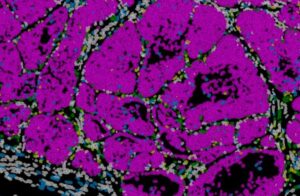
Image of a mouse breast tumor showing distinct cellular populations (cancer cells in pink). Advanced spatial biology technologies enable the simultaneous identification of all cell types present in the tissue. Credit: Instituto de Neurociencias UMH CSIC
A key regulator of metastasis
According to Raúl Jiménez Castaño, first author of the study, the Prrx1 gene acts as a true master regulator of tumor behavior. “We recently discovered that Prrx1 is crucial for cancer dissemination, and thanks to this work, we now know that it not only activates the programs that allow cells to detach from the primary tumor, but also controls their ability to proliferate and form metastases or enter a dormant state that can last for years”, he explains.
“What is most striking is that the levels of Prrx1 determine its effect on cancer cells”, adds Nieto. This finding helps explain a paradox observed in many tumors: highly invasive cells do not always give rise to metastases, and highly proliferative cells also tend not to spread.
“Without Prrx1, cells do not disseminate; at very high levels, they spread massively but lose the ability to seed and grow in other organs. Only at intermediate levels do they achieve an optimal balance between mobility and growth”, explains the researcher. In these conditions, cells combine invasiveness and proliferation, making them the most dangerous from a clinical perspective.
To reach these conclusions, the team combined mouse genetic models, single-cell analyses, chromatin studies, and spatial transcriptomics techniques that allow researchers to observe the organization and behavior of cells directly within the tumor tissue. The processing and analysis of the large datasets generated from thousands of cells was led by bioinformatics expert from Nieto’s team, researcher Nitin Narwade. In addition, in collaboration with Professor Gema Moreno Bueno from the Universidad Autónoma de Madrid and the MD Anderson Cancer Center Spain Foundation, the researchers analyzed breast cancer patient samples and detected similar patterns of Prrx1 expression, suggesting that the mechanism described could have direct relevance for tumor classification and clinical prognosis.
Taken together, the findings provide new insights into the origin of metastatic potential and open the door to developing strategies to prevent tumor cells from reaching this particularly dangerous state. They also provide a framework for improving patient stratification by identifying markers that predict the risk of metastasis.
Among the various plastic recycling methods being explored, one promising approach is biological plastic recycling, also known as biorecycling, which utilizes enzymes or microorganisms to break down polymer molecules. One group of enzymes attracting attention is microbial cutinases. These enzymes are naturally produced by bacteria and fungi to degrade the waxy outer layer of plants, known as the cuticle. Because they can act on similar chemical bonds, they are considered promising for recycling poly(ethylene terephthalate) (PET), a plastic used in bottles and synthetic fibers.
However, applying these enzymes in industrial settings is not straightforward. PET is most efficiently degraded at temperatures around 70 °C, where it becomes more flexible and easier to process. At such high temperatures, enzymes must maintain a stable overall structure to avoid unfolding, while also retaining flexibility at their active site for molecular recognition and catalysis. This creates a design challenge, as structural rigidity and flexibility are often opposing properties.
To better understand this balance, a team of researchers led by Professor Tatsuya Nishino from the Department of Biological Science and Technology, Tokyo University of Science (TUS), Japan, along with Assistant Professor Sho Ito from the same department, and graduate researchers Mr. Ryohei Nojima (M.Sc., 2022) and Ms. Lirong Chen (M.Sc., 2024) from TUS, examined a heat-tolerant cutinase enzyme from the fungusChaetomium thermophilum. The enzyme, known as CtCut, was analyzed under conditions relevant to high-temperature PET recycling to better understand how it maintains structural stability and catalytic potential. The study was published in Volume 16, Special Issue 4 of the journal Crystalson March 24, 2026.
“Plastic waste has become a severe problem in recent years, necessitating environmentally friendly recycling technologies. Thus, our aim was to contribute to the development of practical recycling technologies by clarifying the molecular basis of enzymes that function even under high-temperature conditions,” says Prof. Nishino.
For the study, the team created several versions of the enzyme. This included the wild-type (CtCutWT), which is the unmodified form, and a mutant version, CtCutS136A, in which the amino acid serine at position 136 is replaced with alanine.
They then determined the enzyme’s structure and assessed its thermal stability using differential scanning calorimetry, heating the protein from 30 °C to 100 °C to analyze how it absorbed heat.
Structurally, the enzyme adopts a highly stable α/β-hydrolase fold, a common architecture among cutinases. Covering the active site is a flexible lid loop that can open and close. In its closed state, the active site is less accessible, but upon binding a molecule, the lid changes shape to allow binding and catalysis.
Notably, a chloride ion was found near the active site even when no substrate was present, suggesting that the active site forms a positively charged electrostatic microenvironment that may facilitate ligand binding.
As the enzyme was heated, it showed a two-step unfolding process, with a gradual transition beginning at around 60 °C, followed by a second transition near 65–70 °C. This indicates that different parts of the enzyme lose stability at different temperatures, suggesting the presence of structurally distinct regions within the protein.
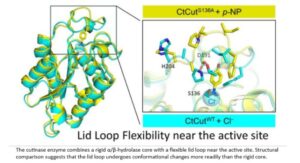
The cutinase enzyme combines a rigid α/β-hydrolase core with a flexible lid loop near the active site. Structural comparison suggests that the lid loop undergoes conformational changes more readily than the rigid core. Credit:Professor Tatsuya Nishino from Tokyo University of Science, Japan
“Our findings suggest the possibility of functional division within the enzyme. We observed that the mobile region near the active site undergoes structural changes in response to ligand binding, and that thermal denaturation proceeds in multiple stages,” says Prof. Nishino.
These findings support the idea that enzymes designed for plastic degradation may require both a stable overall structure and a flexible active site. The rigid core provides the thermal stability needed to withstand industrial conditions, while the flexible lid loop may help the enzyme adapt to bound molecules.
By better understanding this balance between stability and flexibility, the study provides new insights into the function of heat-tolerant enzymes and how they can be improved.
“Our study may lead to the development of technologies for efficiently decomposing and recycling PET in the future by providing design guidelines for enzymes that possess both heat resistance and potential catalytic capabilities for polymer degradation. This may address the growing challenge of plastic waste and help realize a sustainable resource-recycling society,” concludes Prof. Nishino.
Scientists from the XPANCEO Emerging Technologies Research Center, in collaboration with Nobel Laureate Prof. Konstantin Novoselov (University of Manchester and the National University of Singapore), have discovered novel optical properties in arsenic trisulfide (As2S3), a crystalline van der Waals semiconductor. The results of the research reveal that this material can be permanently modified by light and physically sculpted at the nanoscale level using simple continuous-wave (CW) light, entirely bypassing the need for complex, multi-million dollar cleanroom lithography or expensive femtosecond pulsed lasers.
To connect this capability to a familiar concept, consider the refractive index, a key property that measures how much a material causes light to bend or slow down. The higher the index, the better a material is at trapping and guiding light through a device. Photorefractivity refers to a change in refractive index when light interacts with a material, and this response can be triggered in crystalline As2S3 even under low-intensity UV illumination. In the reported study, crystalline As2S3 shows an unusually large light-induced refractive-index change (up to Δn ≈ 0.3), which is higher than values typically cited for classic photorefractive crystals such as BaTiO3 or LiNbO3.
Materials with a strong photorefractive effect are valuable in applications where light can directly “set” an optical function inside a material, rather than manufacturing it through many mechanical steps. In real-world terms, this mechanism enables components that shape and steer light in everyday technology: the tiny optical structures that help route light through telecom hardware, the diffractive elements used in compact sensors and imaging systems, and the hologram-like optics used for security features on products and documents where the optical pattern itself becomes the identifier.
A 532-nm continuous-wave laser “sculpted” microscopic patterns onto a flake of As₂S₃, including a monochromatic portrait of Albert Einstein (700-nm point spacing) and a QR-code-like design (600-nm point spacing). Credit: XPANCEO
In As2S3, this approach extends to a much finer scale. The unusually strong refractive-index modulation helps explain why the material can support extremely fine “optical fingerprints” in a transparent format. Such patterns are difficult to reproduce and can act as identifiers for anti-counterfeiting and traceability, from high-value goods to critical components. To demonstrate this precision, the scientific team used a standard laser to “sculpt” a microscopic monochromatic portrait of Albert Einstein onto a flake of the material using a 700-nanometer spacing between points. In separate tests, the researchers showed that the technique can go even finer (to ~50,000 dots per inch, which corresponds to 500 nanometers between points), with strong optical contrast coming from the light-driven change in refractive index, making the written pattern stand out clearly under optical readout.
“The discovery of new functional materials, particularly within the unique family of van der Waals crystals, is the fundamental engine for moving the entire field of photonics forward. Developing sophisticated optical devices, such as advanced smart contact lenses, is a deeply complex challenge that requires a solid foundation in fundamental materials science. In these systems, the material itself is the key component that determines what is physically possible. By identifying natural crystals with this level of sensitivity, we are effectively providing the essential building blocks for a new generation of technology that is driven entirely by light rather than electricity.” – Valentyn Volkov, Founder and Chief Technology Officer at the XPANCEO Emerging Technologies Research Center
The true potential of As2S3 lies in its multifunctionality for broader optical hardware. Its ability to physically expand by up to 5% under exposure to light allows researchers to “sculpt” optical elements, such as microlenses and gratings, directly into the surface of the material. These properties are fundamental to the creation of the ultra-wide field-of-view waveguides required for immersive augmented reality glasses and smart contact lenses. Beyond wearables, the sensitivity of the material positions it as a candidate for photonic circuits and nanoscale sensors, marking a significant leap in our ability to guide and manipulate light.
The NG-3 mission marked the third flight of Blue Origin’s heavy-lift New Glenn rocket, and one of its most closely watched launches yet—both for commercial ambitions and reusable rocket technology.
Launch Overview:
Date: April 19, 2026
Launch site: Cape Canaveral, Florida
Rocket: New Glenn (two-stage heavy-lift vehicle)
Payload:BlueBird-7 satellite for AST SpaceMobile
Mission type: First commercial New Glenn launch
This was also the first time Blue Origin reused a New Glenn booster, a major milestone as it tries to compete with SpaceX in lowering launch costs through reusability.
The NG-3 flight aimed to deploy BlueBird-7, part of AST SpaceMobile’s next-generation satellite constellation designed to deliver direct-to-mobile broadband from space.
The satellite features a massive communications array and is part of a plan to build a global space-based cellular network.
Successful lifted off from Cape Canaveral
Booster recovery achieved
The first stage (named “Never Tell Me the Odds”) landed safely on a drone ship
This marked successful reuse on only the third flight, a significant technical step
This puts Blue Origin among group of companies capable of reusing large orbital-class boosters.
Watch Booster landing burn to Booster Touchdown in below Blue Origin video at 1:18: 04
Scientists studying a shared genetic mechanism across three vastly different species—axolotls, mice and zebrafish—have uncovered fresh clues that could one day support limb regeneration in humans. The findings, detailed this week in the Proceedings of the National Academy of Sciences, point toward the possibility of developing gene-based therapies aimed at restoring lost limbs.
“This work brought together multiple labs and model organisms to understand regeneration in a comparative way,” said Josh Currie, Assistant Professor of Biology at Wake Forest University. He noted that the study reveals common genetic programs that drive regeneration across species as different as salamanders, fish and mammals.
The research also involved David A. Brown of Duke University and Kenneth D. Poss of University of Wisconsin-Madison, who specialise in regeneration studies in mice and zebrafish respectively.
Globally, more than one million amputations are carried out each year due to conditions such as diabetes, trauma, infections and cancer, according to Global Burden of Disease estimates. With ageing populations and rising diabetes cases, this number is expected to increase further, intensifying the search for solutions that go beyond prosthetics.
Researchers involved in the study are aiming to develop therapies that could restore not just the structure but also the function of lost limbs—something prosthetic technology still cannot fully replicate.
Their focus turned to a group of genes known as SP genes, which appear to play a crucial role in regeneration and are shared across the three species examined.
Therapy makes up for missing gene
The choice of species was deliberate, reflecting different regenerative abilities in nature.
The axolotl, a type of salamander, is known for its extraordinary capacity to regrow entire limbs, as well as parts of vital organs including the heart and brain.
Zebrafish, meanwhile, are widely used in research because their tail fins regenerate rapidly and repeatedly. They can also repair tissues in organs such as the heart and spinal cord.
Mice, representing mammals, offer a closer comparison to humans. While their regenerative ability is limited, they can regrow the tips of their digits. Humans share a similar, though restricted, ability when fingertip injuries preserve the nail bed.
The researchers found that regenerating skin tissue in all three species expressed two key genes—SP6 and SP8. This prompted further investigation into how these genes function.
The study also involved contributions from doctoral student Tim Curtis Jr. and undergraduate researcher Elena Singer-Freeman at Wake Forest.
Emulating the abilities of salamander genes
In salamanders, the SP8 gene plays a central role in enabling limb regrowth. Using CRISPR gene editing, researchers removed SP8 from the axolotl genome. The result was a clear disruption in limb regeneration, particularly in bone formation.
A similar outcome was observed in mice when both SP6 and SP8 were absent, confirming the genes’ importance across species.
Building on these findings, Brown’s lab developed a viral gene therapy using a regeneration enhancer identified in zebrafish. This therapy introduced a molecule called FGF8—normally activated by SP8—into mice.
The treatment partially restored bone regrowth in mouse digits, effectively compensating for the missing genes and demonstrating what researchers describe as a “proof of principle”.
While humans lack this level of regenerative ability, the findings suggest it may be possible to mimic such processes through targeted therapies.
“We may be able to design treatments that replicate this regenerative skin environment in humans,” Currie said, highlighting the long-term potential of the approach.
Building the foundation for human therapies
Despite the breakthrough, researchers caution that translating these findings into human treatments will require extensive further study. Moving from digit regeneration in mice to full limb regrowth in humans remains a complex scientific challenge.
Currie described the work as a foundational step toward future therapies that could address limb loss caused by injury or disease.
He added that gene therapy represents just one pathway among several being explored, including stem cell research and bioengineered scaffolds. A combination of approaches is likely to be needed to achieve full limb regeneration.
The collaborative nature of the study, involving different organisms and research disciplines, was key to its success.
“Scientists often work within narrow models, focusing on a single species,” Currie said. “What sets this research apart is the integration across multiple systems, which offers a much broader understanding of regeneration.”
The findings underscore a growing shift in regenerative medicine—from isolated breakthroughs to cross-species insights that could eventually reshape how the human body heals.
Archaeological Survey of India safeguards 3,686 centrally protected monuments, supported by strengthened conservation systems and scientific restoration methods.
Heritage and monument preservation has advanced through large-scale digitisation, creation of national heritage databases, and wider adoption of scientific and digital tools for documentation and conservation.
India’s global heritage profile has expanded, with 44 UNESCO World Heritage Sites, including the recent addition of the Maratha Military Landscapes.
India’s Approach to Monument Conservation
India’s cultural landscape is shaped by monuments, antiquities, manuscripts and historic sites that together reflect thousands of years of civilisational evolution. These structures and objects are not merely remnants of the past; they represent collective memory, inherited knowledge and a sense of continuity that binds generations.
Recognising this, the past decade has seen a renewed emphasis on strengthening the systems that safeguard India’s cultural assets. Heritage conservation has been increasingly integrated with tourism development, local livelihoods, and cultural diplomacy. This shift reflects a broader recognition of heritage as both a developmental asset and a source of India’s soft power on the global stage.
Tangible and Intangible Cultural Heritage
Cultural heritage in India encompasses both tangible and intangible forms, reflecting the country’s rich and diverse traditions.
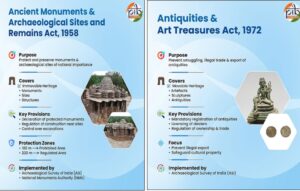
According to UNESCO, Tangible Cultural Heritage includes heritage of “outstanding universal value,” such as historic structures and cultural landscapes. Examples include the Taj Mahal, Sanchi Stupa, and ancient temple architecture. In India, such heritage is protected under the Ancient Monuments and Archaeological Sites and Remains Act, 1958, which empowers the government, through the Archaeological Survey of India (ASI), to declare monuments as protected, regulate construction in surrounding areas, and ensure their conservation.
Intangible Cultural Heritage (ICH) refers to living traditions and practices passed down through generations, including performing arts, rituals, festivals, oral traditions, and traditional knowledge. UNESCO defines it as practices recognised by communities as part of their cultural identity and continuously recreated. Examples include Yoga, Vedic chanting, and Buddhist chanting of Ladakh. In India, Intangible Heritage is safeguarded through the UNESCO Convention for the Safeguarding of Intangible Cultural Heritage, 2003, supported by national schemes and constitutional provisions such as Article 29.
Legislative and Institutional Framework for Ancient Monuments
India’s heritage conservation is guided by a legislative and institutional framework that brings together dedicated organisations, legal safeguards, and policy mechanisms to ensure systematic protection and management of cultural assets.
Legislative Framework
India’s approach to monument conservation has evolved into a structured and continuous process, combining institutional mechanisms, legal safeguards, and participatory models. The key legislations on Protection and Conservation of Ancient monuments are:
Article 49 – Protection of Monuments of National Importance
Article 49 of the Constitution places a duty on the State to protect monuments, places, and objects of artistic or historic interest declared to be of national importance. This provision forms the constitutional basis for legislative measures such as the Ancient Monuments and Archaeological Sites and Remains Act, 1958, and guides the State in ensuring preservation of cultural heritage.
Seventh Schedule – Division of Responsibilities
The Seventh Schedule of the Constitution provides a clear division of responsibilities between the Centre and the States in matters of heritage protection.
Union List (Entry 67): Monuments and archaeological sites of national importance fall under the jurisdiction of the Central Government.
State List (Entry 12): Monuments not declared of national importance are the responsibility of State Governments.
This division ensures coordinated governance and management of heritage across different levels of government.
Article 51A(f) – Fundamental Duty of Citizens
Article 51A(f) of the Constitution enshrines the fundamental duty of every citizen to value and preserve the rich heritage of India’s composite culture. This provision reinforces that heritage conservation is not only a State responsibility but also a collective societal obligation, encouraging public participation in preservation efforts.
National Policy for Conservation of Ancient Monuments, Archaeological Sites and Remains (2014)
It is a Government of India framework that guides the scientific preservation and management of monuments of national importance. Implemented primarily by the Archaeological Survey of India under the provisions of the Ancient Monuments and Archaeological Sites and Remains (AMASR) Act, 1958, the policy establishes principles for maintaining the authenticity, integrity, and longevity of heritage structures. It emphasises the use of scientific conservation methods, minimal intervention, and the integration of traditional materials and skills with modern techniques. The policy also recognises conservation as a continuous process, supported by documentation, research, capacity building, and community participation, while balancing the need for protection with public access and sustainable use of heritage sites.
Institutional Framework
India’s institutional framework for heritage conservation is anchored in specialised government bodies responsible for the protection, preservation, and management of cultural assets. These institutions ensure effective implementation of laws and policies through coordinated, decentralised, and technically driven mechanisms.
The Archaeological Survey of India (ASI)
Established in 1861 and functioning under the Ministry of Culture, the Archaeological Survey of India (ASI) is the country’s principal organisation for archaeological research and the protection of ancient monuments and sites of national importance. Operating under the Ancient Monuments and Archaeological Sites and Remains Act, 1958, it safeguards 3,686 centrally protected monuments across India. Its mandate includes structural and chemical conservation, archaeological exploration and excavation, epigraphy, and maintenance of site museums.
ASI carries out its functions through a network of around 38 Circles, which serve as regional administrative units. Each Circle, headed by a Superintending Archaeologist, is responsible for conservation, site management, inspections, and coordination with local authorities within its jurisdiction, ensuring decentralised implementation.
The ASI undertakes annual conservation programmes focusing on structural repairs, use of traditional materials, chemical treatment of monuments, and preventive conservation to address environmental and ageing-related deterioration.
The conservation of centrally protected monuments is undertaken through annual programmes and site-specific projects, and the conservation works are carried out regularly based on priority and the existing condition of the monument. For 2024–25 expenditure on conservation of monuments was 374 crores .
National Mission on Monuments and Antiquities (NMMA)
Established in 2007, the National Mission on Monuments and Antiquities (NMMA) is implemented under ASI. It plays a crucial role in supporting conservation by building a reliable national database of India’s built heritage and antiquities. The Mission aims to document and create an inventory of all monuments and antiquities in the country—information that directly informs planning, prioritisation and monitoring of conservation work. It has so far documented 11,406 Built Heritage and Sites and 12.48 Lakhs antiquities of this country.
Emerging Frameworks for Monument Conservation
India’s approach to monument conservation is evolving through the integration of technology, collaborative models, and digital knowledge systems.
Comprehensive Conservation
Government of India has reimagined tangible heritage as a living engine of economic opportunity. By linking the conservation of physical heritage with livelihood generation and local development, India is charting a course where preservation and prosperity go hand in hand.
A standout example of this philosophy in action is the Adopt a Heritage 2.0 programme, which brings together government and private partners to upgrade visitor amenities at iconic monuments. Sites such as Agra Fort, Qutub Minar, Ajanta Caves, Red Fort, and Mehrauli Archaeological Park have benefited from improved infrastructure, better facilities, and enhanced site management. The results have been tangible: increased tourist footfall, a boost to local businesses, and new employment avenues in guiding, hospitality, transport, site maintenance, and the sale of handicrafts and souvenirs. These are not incidental benefits but deliberate outcomes of a policy that treats monuments as community assets.
The Government promotes the organisation of dance, music, and cultural festivals at heritage sites as a means of integrating monumental conservation with tourism and local economic development. Notable examples include the Konark Dance Festival, held annually against the backdrop of the Sun Temple in Odisha, and the Khajuraho Dance Festival, organised at the Khajuraho Group of Monuments in Madhya Pradesh. These festivals attract large numbers of tourists, artists, and cultural practitioners, thereby generating livelihood opportunities for local communities through hospitality services, handicrafts, transport, and cultural industries. For instance, the Konark Festival, held in an open-air setting near the monument, draws national and international visitors and is often accompanied by craft fairs and related cultural activities, further boosting local economies. Other heritage-linked festivals include the Modhera Dance Festival (Gujarat) and temple-based cultural events like Natyanjali festivals at Chidambaram.
The Government is also strengthening museums as key institutional tools for the scientific conservation, preservation, and dissemination of tangible cultural heritage.The Museum Grant Scheme supports the establishment, modernisation, and digitisation of museums, strengthening infrastructure and preservation of artefacts. It emphasises capacity building of museum professionals through training and skill development, while promoting technology-driven upgrades such as improved displays, lighting, and digital tools. The scheme also enables digitisation of collections, creation of online catalogues, and development of conservation facilities, enhancing both preservation and public access.
Technology-Supported Conservation
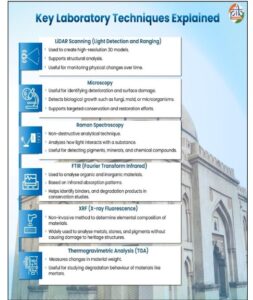
Technology has become an increasingly important pillar in India’s conservation ecosystem, complementing ASI’s traditional practices with tools that improve documentation, diagnostics and long-term preservation. Modern technologies/tools such as LiDAR scanning, GIS based mapping and drone-based surveys etc. are used as per requirement for proper documentation. There has been a growing use of scientific laboratory techniques to study heritage materials, understand patterns of deterioration and determine the most suitable conservation treatments.
In parallel, India has expanded the application of digital and spatial technologies that support accurate recording and proactive conservation planning. Key tools now used across heritage documentation and assessment include:
3D laser scanning – for high-precision mapping and digital documentation of complex structures
Photogrammetry – to capture detailed architectural features and condition changes
Drone-based surveys – for aerial mapping, structural monitoring and studying inaccessible or large sites
Geographic Information Systems or GIS-based mapping – to analyse environmental pressures, track development around protected zones and inform long-term planning
In addition to these technologies, the Government of India has begun integrating Artificial Intelligence (AI) within the broader cultural and heritage ecosystem, particularly in areas such as digitisation, documentation, and accessibility of cultural assets. AI-enabled platforms are being used to process and organise large volumes of heritage data, including manuscripts and cultural knowledge systems, and to enhance public access through digital interfaces and language technologies.
Additionally, drone-based surveys have been undertaken in collaboration with institutions such as the National Institute of Science Education and Research (NISER), demonstrating the integration of scientific institutions in heritage conservation efforts.
The Conservation and Restoration of the Kedarnath Temple
The Kedarnath Temple represents a significant example of the use of advanced scientific techniques and institutional collaboration in heritage preservation. Following the 2013 disaster in Uttarakhand, the Government of India, through the Archaeological Survey of India (ASI), undertook structural and chemical conservation of the temple, including debris removal, stone resetting using original architectural profiles, and preservation of stone surfaces. Importantly, a geotechnical team from the Indian Institute of Technology (IIT) Chennai collaborated with ASI to carry out scientific structural assessment and foundation analysis of the monument. This included the use of geophysical testing methods such as Multi-Channel Analysis of Spectral Waves (MASW) to evaluate the stability of the temple structure and underlying foundation.
The IIT team’s assessment enabled evidence-based decisions regarding foundation strengthening and conservation strategy, ensuring that interventions remained non-invasive and structurally appropriate. This collaboration highlights how the Government has integrated engineering expertise with traditional conservation practices, combining modern scientific diagnostics with the use of locally sourced materials and traditional craftsmanship in restoration.
Public–Private Partnership
In recent years, heritage conservation has increasingly incorporated public–private partnership (PPP) models to complement government-led efforts. The “Adopt a Heritage: Apni Dharohar, Apni Pehchaan” initiative, launched in 2017 by the Government of India under the Ministry of Tourism in collaboration with the Ministry of Culture and the Archaeological Survey of India (ASI), is one such initiative. The scheme was further revamped as “Adopt a Heritage 2.0” in 2023, to strengthen corporate participation through a structured CSR-based framework. Under this initiative, entities designated as “Monument Mitras” develop and maintain facilities such as cleanliness, accessibility, illumination, signage, and visitor services, while conservation and preservation remain the exclusive mandate of the ASI. By combining government oversight with private sector efficiency, the programme improves visitor experience, promotes sustainable tourism, and fosters a shared sense of responsibility towards safeguarding India’s cultural heritage.
The initiative also reflects a broader shift towards participatory heritage management, where private sector involvement and citizen engagement complement government-led conservation efforts.
Flagship National Platforms for Cultural Heritage
A key initiative in this direction is the Indian Culture Portal, a comprehensive digital platform that aggregates content from museums, libraries, archives and cultural institutions onto a single interface – https://www.indianculture.gov.in/3d-explorations.
This platform allows users to experience monuments remotely through two formats—Virtual Walkthroughs and 360-degree Virtual Tours—thereby enhancing accessibility and public engagement with cultural heritage.
Virtual Walkthroughs enable users to move through heritage sites in a guided, step-by-step manner, simulating a real visit. Examples include monuments such as:
360-degree Virtual Tours provide panoramic, interactive views where users can explore monuments in all directions. The Qutubh Minar Complex being one.
It also supports interactive learning through curated thematic sections, games and educational content, making cultural knowledge more engaging for a wider audience.
Global Heritage Recognition (UNESCO)
India’s presence on the global heritage map has strengthened considerably, with UNESCO inscriptions reflecting both the diversity and depth of the country’s civilisational legacy. The most recent addition—the Maratha Military Landscapes, inscribed in July 2024 marks India’s 44th UNESCO World Heritage Site, reaffirming the nation’s position among countries with the highest number of globally recognised heritage sites.
India’s expanding UNESCO footprint comprising 36 Cultural, 7 Natural, and 1 Mixed sites demonstrates how its historic monuments, archaeological landscapes and living traditions collectively contribute to global heritage.
The Anti-Evasion Branch of the Central Goods and Services Tax (CGST), Delhi South Commissionerate, has arrested a company director for allegedly fraudulently availing and utilising Input Tax Credit (ITC) exceeding ₹8 crore, in violation of provisions under the CGST Act, 2017.
The action forms part of an ongoing enforcement drive targeting ITC fraud. Officials said the company, engaged in trading assorted goods, claimed ineligible tax credit without any corresponding supply of goods or services, breaching Section 16 of the Act.
Investigations, supported by data analytics, revealed that the firm had availed ITC from suppliers whose registrations were either suspended, cancelled suo motu, or terminated upon application. A detailed backward supply chain analysis found no evidence of actual inward supplies across multiple levels—L1, L2 and L3—effectively breaking the credit chain and rendering the claims inadmissible.
Authorities further alleged that the company passed on this ineligible ITC to its buyers despite the absence of genuine transactions.
The director’s statement was recorded under Section 70 of the CGST Act on April 16, 2026, during which he admitted to overseeing and executing the firm’s transactions. However, he failed to provide documentary proof to support the legitimacy of the claimed supplies.
Officials stated that the offences fall under cognisable and non-bailable provisions of Section 132 of the CGST Act. The accused was subsequently arrested under Section 69(1) and produced before the Patiala House Court, which remanded him to judicial custody until April 30, 2026.
Further investigation into the case is ongoing, officials said.
Babies who are exclusively breastfed for at least three months show distinct biological markers in their blood compared to those who are not breastfed, according to a major international study.
The research, one of the largest of its kind, analysed blood samples from children to examine epigenetic patterns across the genome. Epigenetics involves chemical modifications to DNA that influence how genes are switched on or off. In particular, scientists focused on DNA methylation—a process detectable in blood that can affect gene activity.
Led by the Barcelona Institute for Global Health, University of Exeter, and University of Bristol, the study—published in Clinical Epigenetics—found higher levels of DNA methylation in genes linked to immunity and development among children who had been exclusively breastfed for at least three months.
However, researchers cautioned that the study did not assess whether these molecular differences translate into measurable changes in health, immunity, or development.
Co-lead researcher Doretta Caramaschi of the University of Exeter said the findings indicate that exclusive breastfeeding leaves a detectable biological imprint. She noted that while the affected genes are tied to key developmental and immune processes, the study cannot establish whether these changes directly influence those outcomes.
The findings build on existing evidence suggesting breastfeeding is associated with both short- and long-term health benefits in children, though the exact biological mechanisms remain under investigation.
Mariona Bustamante of ISGlobal added that while the results are promising, they should be interpreted cautiously. She emphasised the need for more diverse study populations to better understand how these biological changes operate across different groups.
The study was conducted through the Pregnancy and Childhood Epigenetics Consortium, which brings together data from 11 studies across countries including Spain, the Netherlands, Finland, France, Greece, Lithuania, Germany, South Africa and the United States. UK contributions included the Children of the 90s study, Born in Bradford, and the Isle of Wight Birth Cohort.
In total, researchers analysed epigenetic data from 3,421 children. Breastfeeding information—such as duration and exclusivity—was collected from birth through questionnaires. DNA methylation patterns were measured in blood samples taken between ages five and 12 and compared with umbilical cord samples to assess changes following birth.
The analysis aimed to determine whether early-life feeding practices leave lasting biological signatures—an area that continues to offer new insights into how early nutrition may shape long-term health.
A subtle tweak to cafeteria menus can significantly influence food choices while improving health and environmental outcomes, according to a new study published in the International Journal of Behavioural Nutrition and Physical Activity.
Researchers tested the intervention across six workplace cafeterias in England, where managers replaced one meat-based lunch option with a vegetarian alternative. Prices, overall choice, and other menu features remained unchanged, and customers were not informed of the adjustment. Meat options continued to be available alongside the new offering.
Over a seven-week period covering more than 26,000 meals, the shift led to a 41% increase in the likelihood of customers choosing a vegetarian main course.
The study also found that meals sold during the intervention were healthier and more environmentally sustainable. On average, they contained about 26 fewer calories—roughly equivalent to a cup of tea with milk and a teaspoon of sugar—along with reduced levels of saturated fat and salt. The environmental impact also improved, with greenhouse gas emissions per meal falling by 8.5%.
Importantly, the change did not hurt business performance. Researchers found no evidence of declining revenue, fewer meals sold, or increased food waste during the trial period.
The experiment, spanning both office and manual labour workplace settings, is among the first of its kind to test such interventions in real-world cafeteria environments. The findings suggest that even small adjustments in food availability can shape behaviour across a broad demographic.
food
Lead author Elisa Becker, a postdoctoral researcher at the Nuffield Department of Primary Care Health Sciences, said the results highlight the power of subtle environmental changes. She noted that improving food choices does not necessarily require consumers to actively seek information or exercise restraint, but can instead be driven by what is made available to them.
Feedback from both staff and customers indicated the change was easy to implement and largely went unnoticed, with no significant concerns about dissatisfaction or waste reflected in the data.
Researchers say the findings offer a practical and scalable approach to promoting healthier, lower-carbon diets, and could help shape future workplace food policies across the UK. The team now plans to extend similar interventions to other sectors, seeking partners interested in advancing health and sustainability goals.
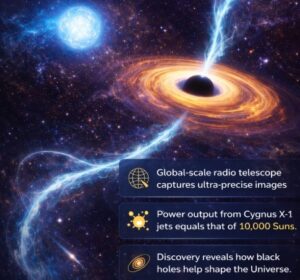
A new study led by Curtin University has harnessed a global-scale radio telescope network to capture detailed images revealing the extraordinary power of jets emitted by black holes, offering strong confirmation of long-standing theories about their role in shaping the Universe’s structure.
Published in Nature Astronomy, the research found that the jets from Cygnus X-1—a system containing the first confirmed black hole and a supergiant companion star—generate energy comparable to the output of around 10,000 Suns.
To record the measurement, researchers used an array of linked up telescopes separated by large distances to observe the black hole jets being buffeted by the winds of the star as the black hole moved around its orbit – much like how strong winds on Earth can push around water in a fountain.
By knowing the power of the wind and measuring how much the jets were bent, the researchers could determine the instantaneous power of the jets for the first time.
In addition, they were able to determine the speed of the black hole’s jets – about half the speed of light, or 150,000 km per second – another measurement that has challenged scientists for decades.
The strong stellar wind from the supergiant star pushes the jets launched by the black hole away from the star. This causes the jet direction to vary as the black hole and the supergiant star move around their orbit./ International Centre for Radio Astronomy Research (ICRAR)
The research was led from the Curtin Institute of Radio Astronomy (CIRA) and the Curtin node of the International Centre for Radio Astronomy Research (ICRAR), in collaboration with the University of Oxford.
Lead author Dr Steve Prabu, who worked at CIRA at the time of the research and who is now based at the University of Oxford, said researchers were able to make the measurement using a sequence of images of the “dancing jets” – a term he used to describe the jets’ movement pattern as they were repeatedly deflected in different directions by the supergiant star’s powerful winds as the star and black hole moved around their orbits.
Dr Prabu said the measurement allowed scientists to understand what fraction of the energy released around black holes could be deposited into the surrounding environment, thereby changing the environment.
“A key finding from this research is that about 10 per cent of the energy released as matter falls in towards the black hole is carried away by the jets,” Dr Prabu said.
“This is what scientists usually assume in large-scale simulated models of the Universe, but it has been hard to confirm by observation until now.”
Co-author Professor James Miller-Jones, from CIRA and the Curtin node of ICRAR, said previous methods could only measure the average jet power over thousands or even millions of years, preventing accurate comparisons with the X-ray energy released instantaneously from the infalling matter.
“And because our theories suggest that the physics around black holes is very similar, we can now use this measurement to anchor our understanding of jets, whether they are from black holes 10 or 10 million times the mass of the Sun,” Professor Miller-Jones said.
“With radio telescope projects such as the Square Kilometre Array Observatory currently under construction in Western Australia and South Africa, we expect to detect jets from black holes in millions of distant galaxies, and the anchor point provided by this new measurement will help calibrate their overall power output.
“Black hole jets provide an important source of feedback to the surrounding environment and are critical to understanding the evolution of galaxies.”
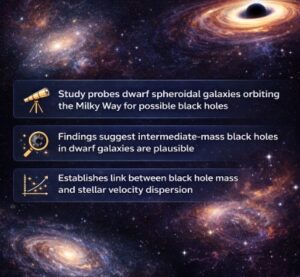
A recent study has examined whether some of the universe’s smallest galaxies—particularly dwarf spheroidal galaxies orbiting the Milky Way—could host black holes, offering fresh insight into how these cosmic objects form and evolve over time.
While supermassive black holes are commonly found at the centres of large galaxies, detecting them in dwarf spheroidal galaxies remains far more difficult. These smaller systems are faint, contain little gas, and are heavily dominated by dark matter, making direct observation of any central black hole a significant challenge.
The question is closely tied to broader mysteries about the origins of the first black holes, their growth in low-mass environments, and whether established relationships—such as the link between black hole mass and stellar velocity dispersion—hold true even in the smallest galaxies. Understanding this connection is key to building a consistent picture of galaxy evolution across cosmic history.
Researchers K. Aditya and Arun Mangalam of the Indian Institute of Astrophysics developed detailed dynamical models of dwarf spheroidal galaxies, incorporating stars, dark matter, and a possible central black hole. By analysing stellar motion using high-quality kinematic data, they were able to place constraints on the mass of any black holes that might exist in these systems.
Their approach accounted for stellar anisotropy—variations in stellar velocities along different directions—allowing for more realistic modelling of galaxy structures. Applying this framework to a representative sample, the researchers derived strong upper limits on black hole masses, generally below one million solar masses, with some galaxies permitting only significantly smaller values.
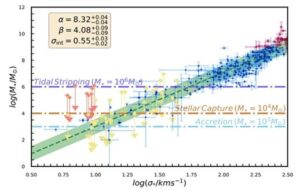
The findings suggest that while large black holes are not required to explain the data, the presence of intermediate-mass black holes remains plausible. By combining their results with existing observations, the team established a unified relationship between black hole mass and stellar velocity dispersion, spanning a wide range of galaxy sizes and black hole masses.
Fig: A unified M•–σ∗ relation spanning stellar velocity dispersions from ∼ 10 km s⁻¹ to ∼ 300 km s⁻¹. Blue points represent black hole mass estimates, while yellow arrows denote upper limits. The red arrows indicate the upper limits obtained in the present work. The green line shows the best-fit regression, and the shaded region indicates 1σ scatter. Magenta points depict ultramassive black holes (M• > 109. Theoretical limits on black hole masses (for our sample range σ∗ ∼ 6−12 km s⁻¹) due to accretion, stellar capture, and tidal stripping are also overlaid on the plot for comparison.
The study also compared observational constraints with theoretical growth models. Mechanisms such as momentum-driven gas accretion and stellar capture were found to produce black holes with masses consistent with the observed limits. Additionally, the researchers considered scenarios in which dwarf galaxies may have once been larger systems that lost mass through interactions with the Milky Way.
The work carries significant implications for both theoretical models and future observations. It provides a crucial benchmark for simulations of galaxy and black hole evolution, particularly as next-generation facilities like the proposed National Large Optical Telescope and the Extremely Large Telescope come into focus.
With improved observational capabilities on the horizon, astronomers are expected to gain sharper insights into faint, low-mass galaxies. The framework established by this study offers a foundation for interpreting such data and could play a key role in determining whether dwarf galaxies harbour primordial black hole seeds.
The Union Public Service Commission has finalised a set of recruitment results during March 2026. Candidates who have been recommended for appointment have been individually notified by post. Applications of other candidates were duly considered but regretted that it has not been possible to call them for interview/recommend them for the post.
A new study has found that the virus responsible for the common cold can quietly persist in the human body, even in individuals who show no symptoms.
Researchers from the University of São Paulo in Brazil discovered that the rhinovirus can reside deep within the tonsils and adenoids—tissues located at the back of the throat—effectively using them as reservoirs. The study, based on samples from 293 children undergoing surgical removal of these tissues, revealed that the virus can infect key immune cells and remain there undetected for extended periods.
Unlike its typical behaviour—where it infects the surface lining of the nose and throat, multiplies rapidly, and is cleared by the immune system within a week—the virus was found to penetrate deeper layers of tissue. There, it infects long-lived immune cells such as B lymphocytes and CD4 T cells, allowing it to persist without destroying them.
This hidden presence may help explain why cold outbreaks often occur shortly after schools reopen. Children carrying the virus without symptoms can unknowingly transmit it to others in close, indoor environments, triggering wider infections.
The study further found that nearly half of the children tested carried the virus in at least one site—tonsils, adenoids, or nasal secretions—even though they were symptom-free at the time of surgery. Evidence also suggested that the virus remained active and capable of spreading.
Researchers say these lymphoid tissues may act as a “virus reservoir,” potentially supporting long-term immune memory. However, this persistence could also have downsides. In children with asthma, for instance, lingering viruses may trigger inflammation and worsen symptoms.
The findings also raise concerns about diagnostic accuracy. Detecting rhinovirus in throat swabs may not always indicate an active infection, as the virus could be lingering from a previous illness. This could complicate treatment decisions, particularly in respiratory cases.
Scientists are now exploring whether such dormant viruses could reactivate in patients with weakened immune systems, potentially leading to complications without any new external exposure.
One in four U.S. adults — the equivalent of over 66 million Americans — report having used artificial intelligence tools or chatbots for physical or mental healthcare information or advice, according to new research released today from the West Health-Gallup Center on Healthcare in America. Rather than replacing traditional care, more than half say they turn to AI to supplement their healthcare experiences, using the technology before or after seeing a doctor.
The findings are based on a nationally representative survey of more than 5,500 U.S. adults conducted from October through December 2025.
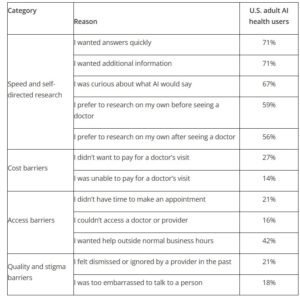
In the past 30 days, did you use an AI tool or chatbot for health-related information or advice for any of the following reasons?
% Yes, among adults who have used AI tools or chatbots for health-related information or advice in the past 30 days.
Note. Categories are for descriptive purposes only and were not shown on the survey.
Among Americans who have used AI for health-related information or advice in the past 30 days, the most frequently cited motivations are wanting answers quickly (71%) and wanting additional information (71%). Nearly seven in 10 (67%) say they were curious about what AI would say, and roughly six in 10 report using AI to do research on their own before (59%) or after (56%) seeing a doctor.
Regardless of the reason, almost half (46%) of Americans who used AI for healthcare information say the AI tool or chatbot made them feel more confident talking with or asking questions of a provider. Others say it helped them identify issues earlier (22%) or avoid unnecessary medical tests or procedures (19%).
“Artificial intelligence is already reshaping how Americans seek health information, make decisions and engage with providers, and health systems must keep pace,” said Tim Lash, President, West Health Policy Center, a nonprofit and nonpartisan organization focused on aging and healthcare affordability. “The risk isn’t that AI is moving too fast — it’s that health systems may move too slowly to guide its use in healthcare responsibly.”
A Smaller Share Turn to AI in Place of a Provider
While self-directed research is the primary driver of AI health use, a smaller but notable share of recent users report turning to AI instead of seeing a healthcare provider, particularly when faced with cost, access or quality barriers. Among recent AI health users, 27% say they didn’t want to pay for a doctor’s visit and 14% say they were unable to pay. One in five (21%) say they didn’t have time to make an appointment, and 16% say they couldn’t access a doctor or provider. Another 21% say they felt dismissed or ignored by a provider in the past, and 18% say they were too embarrassed to talk to a person.
In the past 30 days, did you use an AI tool or chatbot for health-related information or advice for any of the following reasons?
% Yes, among adults who have used AI for health-related information and advice in the past 30 days
I was unable to pay for a doctor’s visit
Household Income
% Yes, Among adults who have used AI for health-related
information and advice in the past 30 days
<$24k
32%
$24k – <$48k
21%
$48k – <$90k
14%
$90k – <$120k
9%
$120k – <$180k
8%
$180k+
2%
Among recent AI health users, 84% still saw a healthcare provider, but 14% report not seeing a provider they otherwise would have seen because of information or advice they received from AI. When projected to the full U.S. adult population, this represents roughly 14 million Americans who did not see a provider after receiving AI-generated health information.
Trust in that AI-generated health information, however, remains divided. Among those who consulted it in the past 30 days, roughly one-third say they trust it (33%), one-third neither trust nor distrust it (33%), and about one-third distrust it (34%). However, only 4% say they strongly trust the accuracy, indicating that many Americans are making healthcare decisions based on AI-generated information without full confidence in its accuracy.
About one in 10 (11%) who report using AI for health information or advice in the past 30 days say that AI recommended healthcare information or advice they believed was unsafe.
“This data indicates that while some Americans may be using artificial intelligence as a substitute for going to the doctor’s office, many see it as a tool to complement their healthcare, helping them understand symptoms they might be feeling and clarify any diagnosis they receive from their doctors,” said Joe Daly, Global Managing Partner at Gallup.
Motivations Vary by Age and Income
While information-seeking is the dominant reason Americans turn to AI for health purposes, use patterns differ by demographics. Younger adults are more likely than older adults to use AI for self-directed research — 69% of adults aged 18 to 29 say they do research before seeing a doctor, compared with 43% of those 65 and older.
Income differences are most visible in barrier-driven motivations. Among adults earning less than $24,000 annually, 32% say they used AI because they could not pay for a doctor’s visit, compared with just 2% among those earning $180,000 or more.
Everyday Health Questions Top the List of AI Use Cases
Americans who used AI for health information or advice in the past 30 days most often report using it to gather information about everyday health concerns, including physical symptoms (58%) and nutrition or exercise (59%). But AI use extends beyond symptom-checking — Americans who used AI in the past 30 days also report using AI to understand medication side effects (46%), interpret medical information (44%), or research a diagnosis or medical condition (38%). Nearly one in four (24%) report using AI to explore mental health or emotional concerns.
Mukta Arts Film Studios has issued an open call inviting writers to submit original story plots and character ideas for potential production. The studio is seeking concise two-page concepts across formats, including small-budget high-concept films, Hindi OTT series in music, drama, or suspense genres, animated features of about an hour, and mid-budget commercial films.
Submissions must be registered with the Screenwriters Association (SWA), and interested creators can pitch their ideas via email to pitch@muktaarts.com. The initiative signals Mukta Arts’ continued push to discover fresh storytelling talent across diverse formats.
Christian Stocker, Federal Chancellor of Austria, is on a four-day official visit to India from April 14–17, 2026—his first trip to the country and also his first visit outside Europe since taking office.
During the visit, Stocker held bilateral talks with Prime Minister Narendra Modi in New Delhi, focusing on expanding cooperation in trade, investment, green technology, and strategic sectors.
The two sides signed multiple agreements, including cooperation in food safety, counter-terrorism, and broader economic engagement, signalling a renewed push in India–Austria ties.
The visit is being seen as a milestone, marking the first visit by an Austrian Chancellor to India in over four decades and reflecting growing momentum in bilateral relations.
Sl. No
MoU / Agreement/LoI
Description
1
Agreement on Audiovisual Co production between India and Austria
The agreement will provide a framework for enhanced cooperation between the film industries of the two countries and facilitate joint film production, creative exchanges and greater cultural engagement.
2
Joint Announcement on setting up a Fast Track Mechanism for Indian and Austrian companies
The Fast Track mechanism will identify and solve problems faced by Indian and Austrian companies and investors in each other’s economies. The FAST- TRACK mechanism will also serve as a platform for discussing general suggestions from the point of view of investors regarding ease of doing business.
3
Letter of Intent on Cooperation in Military Matters
The LOI will provide an institutional framework for promoting cooperation in military matters, defence industrial and technology partnership, building on the momentum of the India-EU Defence and Security Partnership signed on 27 January 2026, as well as facilitate defence policy dialogue, training and capacity building.
4
Letter of Intent on Joint Working Group on Counter Terrorism
The LoI will advance counter terrorism cooperation between India and Austria including the goal of both sides to work together to establish a Joint Working Group on Counter Terrorism for exploring areas of strategic cooperation on issues relating to the fight against terrorism.
5
MoU on Food Safety between AGES, Austria and FSSAI, India
The MoU will promote cooperation in food safety standards, scientific exchange, capacity building and sharing of best practices in food regulation and risk assessment thereby promoting trade in agricultural and food products, while ensuring highest priority for safety standards.
6
Joint Letter of Intent regarding dual vocational training, skills development and the recognition of vocational qualifications
Joint Letter of Intent will help to expand exchanges and knowledge sharing in the fields of dual vocational training (apprenticeship) and skills development as well as the promotion of recognition of Indian vocational qualifications according to Austrian Standards.
Announcements
Sl. No
Title
1
Renewal of the MoU on technical cooperation in the road infrastructure sector.
(The MoU will help to strengthen technical cooperation in Intelligent Transport Systems (ITS), road safety, electronic toll collection and traffic management.)
2
Increased cooperation of startup ecosystems under India-Austria Startup Bridge.
(continued collaboration between the startups, unicorns, innovation ecosystems and venture capital networks of the two countries)
3
Launch of Institutional Cybersecurity Dialogue.
4
Partnership between India’s Centre for UN Peacekeeping and Austrian Armed Forces International Centre (AUTINT).
5
Agreement to jointly organise a bilateral space industry seminar in Vienna in Autumn 2026; included in the Joint Statement.
6
Operationalization of Working Holiday Programme.
7
High-technology cooperation as a central pillar of the Enhanced India–Austria partnership.
(Identification of several collaborative R&D projects including in the areas of material science and technology, quantum technology, wastewater treatment, machine learning, lasers, etc under the joint Committee of Science and Technology)
8
Launch a structured bilateral Dialogue on Cooperation in Education.
(Aimed at enhancing skills development, promote curricula development, facilitate the mutual recognition of qualifications, and support institutional collaboration in higher education and the development of vocational education and training systems.)
9
Focus India initiative of Austria’s leading technical Universities to systematically deepen educational cooperation and research cooperation with India.
(Launch by the three public technical universities in Austria (Technische Universität Wien, Technische Universität Graz und Montanuniversität Leoben) of a dedicated portal to facilitate admissions for Indian students to pursue engineering and technical masters programmes in Austria)
The Ministry of Youth Affairs and Sports will organise a nationwide Nari Shakti Vandan Run on April 17 and 18, 2026, spanning seven major cities as part of its push to promote women-led development and citizen engagement under the Viksit Bharat vision.
The event, themed #NariShaktiVandan, will be held in Delhi, Cuttack, Patna, Mumbai, Indore, Bengaluru and Jaipur. While Patna and Jaipur will host the run on April 17, the remaining cities—Delhi, Cuttack, Mumbai, Indore and Bengaluru—are scheduled for April 18.
The programme will begin early in the morning with participant registrations, followed by an inaugural session featuring the felicitation of dignitaries, an address by the chief guest, and the administration of the Nari Shakti pledge. The run itself, covering a distance of around 2 to 3 kilometres, will take place at prominent public venues in each city and conclude with certificate distribution.
The initiative seeks to draw wide participation from women across sectors, including students, professionals, entrepreneurs, athletes and civil society members. Participation is being facilitated through platforms and institutions such as MY Bharat, the National Service Scheme (NSS), and the Sports Authority of India (SAI), along with other partner organisations.
The event coincides with the ongoing Parliament session from April 16 to 18, during which discussions around women’s representation and delimitation are underway. It is aimed at deepening public awareness and encouraging greater engagement in democratic processes, particularly in the context of inclusive representation.
The ‘Nari Shakti Vandan Run’ underscores the government’s continued emphasis on women’s empowerment, positioning women as central stakeholders in India’s journey towards becoming a developed nation.
Election Commission of India (ECI) has commenced the distribution of Voter Information Slips (VIS) for the general elections to the legislative assemblies of Tamil Nadu and West Bengal (Phase-I) which go to polls on 23rd April, 2026 (Thursday).
VIS contains voter’s details, Polling Station location, date and time of poll and a snapshot of the polling station map along with a list of Do’s and Don’ts to guide the voters on poll day. A QR code also helps the voters in faster searching/matching of elector details. VIS also helps in reducing crowding at polling stations and helps in faster polling.
It may be recalled that the Commission had, in one of its initiatives, issued instructions to make VIS more readable and accessible for the convenience of voters. Accordingly, the part number and the serial number of the voter has been made clearly legible on the VIS for ease of identification and use.
VIS are being distributed by the BLOs concerned personally to the voters by visiting door to door. The process is to be completed at least 5 days before the day of poll to all enrolled electors.
To make the VIS accessible and voter-friendly, the Commission has also issued instructions that they should only be in the languages in which Electoral Roll is published for the assembly constituency.
To ensure wholesome constructive participation and active engagement of Persons with Disabilities (PwDs) in the election process, it has been directed to issue Accessible Voter Information Slips (AVIS) with Braille Features to Persons with Visual Impairment or Blind, over and above the regular VIS.
BLA/Candidate or their agents may accompany the BLOs during distribution of VIS.
Any unauthorized distribution/ possession of VIS (election material) shall be considered as violation of the relevant provisions of the RP Act, 1951 and the BNS and is punishable with imprisonment or fine or both.
Voter Information Slip shall not be accepted as a stand-alone identification document by a voter for the purpose of casting one’s vote in the poll. Electors can use any one of the 12 authorised ID proofs apart from the EPIC to cast their votes.