Arun has been associated with India International Times since 2018 and he has been a key reporter in covering science and space related stories. He can be reached at arunKnn@indiainternationaltimes.com.
Scientists have developed a new smart oxide that not only stores energy but also visibly indicates how much charge it holds. The material changes colour depending on its charge level—turning blue when charged and becoming transparent as it discharges—offering a simple, real-time visual cue that the device needs recharging.
From smartphones to solar grids, modern systems depend heavily on efficient energy storage. Yet, most devices are typically designed either to store energy or display information, rarely combining both functions in a single material.
Researchers at the Centre for Nano and Soft Matter Sciences, an autonomous institute under the Department of Science and Technology, have addressed this gap by creating an oxygen-deficient bimetallic oxide made of molybdenum and tungsten (Mo₀.₁₁W₀.₈₉O₃₋ₓ). This compound enables both energy storage and visual indication of charge through its colour-changing property.
Led by Principal Researcher Ashutosh Kumar Singh, the team synthesised the material using a solvothermal process. Its unique behaviour stems from its oxygen-deficient structure. Missing oxygen atoms create extra space within the material, allowing ions to move more freely. As these ions shift during charging and discharging, they alter the material’s electronic structure—resulting in a visible colour transition that acts as a built-in charge indicator.
Morphology of Bimetalllic oxide and its application demonstration in energy storage and electrochromic devices
The researchers also tested the material in electrochromic applications, developing a 5×5 cm² device that demonstrated strong optical modulation of 43% at 700 nm and high colouration efficiency, indicating low power consumption. When used as a supercapacitor electrode, the material delivered a specific capacitance of 234 F g⁻¹ and an areal capacitance of 975 mF cm⁻², highlighting its strong energy storage capability.
The findings, published in Materials Chemistry A, show that the material maintains stability over 10,000 charge-discharge cycles and performs reliably under mechanical bending and varying environmental conditions. It also exhibited fast switching speeds and strong optical contrast. In practical demonstrations, devices built with the material were able to power an LCD timer and illuminate an LED, underscoring its potential for next-generation smart energy systems.
In a significant development to enhance India’s logistics and e-commerce ecosystem, the Department of Posts (DoP) under the Ministry of Communications and DTDC Express Limited have signed a Memorandum of Understanding (MoU). The MoU was formalized today in New Delhi by Sh. Neeraj Kumar Jha, General Manager of Parcel Directorate, Department of Posts, and Sh. Abhishek Chakraborty, Chief Executive Officer of DTDC Express Limited, in the presence of senior officials from both organizations.
(Officials of the Department of Posts and DTDC Express Limited exchange the Memorandum of Understanding (MoU)
at Dak Bhawan, New Delhi)
This partnership aims to leverage DoP’s vast infrastructure and network, coupled with DTDC’s logistics experience, to significantly improve parcel delivery operations across India. The MoU denotes a continued collaboration between the two parties, which began in 2025.
Key Highlights of the MoU:
Objective: To explore and expand opportunities in logistics and business operations, enabling DTDC to utilize DoP’s extensive postal network for nationwide parcel delivery, including Cash on Delivery (COD) services.
Increased Collaboration: The MoU focuses on joint logistics operations, capacity-sharing, best practices in parcel industry and synchronization of marketing strategies to optimize operational efficiency and service quality.
Regular Review Mechanisms: Both parties will conduct quarterly meetings to assess the progress of the partnership, ensure the integration of their systems and explore new opportunities to enhance the logistics network.
Benefits to DTDC:
DTDC will gain access to DoP’s unparalleled network of 1.64 lakh Post Offices spread across the country. This partnership will allow DTDC to expand its logistics operations, improve delivery speed and meet the growing demands of India’s e-commerce sector, especially in remote areas.
Benefits to the Department of Posts:
For DoP, the collaboration will enhance its parcel business, facilitating faster transmission and delivery services while expanding its network. By joining hands with DTDC, DoP aims to further strengthen its role in India’s logistics sector, contributing to the country’s vision of becoming a global logistics hub.
About the Department of Posts:
The Department of Posts, under the Ministry of Communications, operates the world’s largest postal network with over 1.64 lakh Post Offices across India. It plays a critical role in providing communication, logistics and financial services with a focus on driving e-commerce growth in India.
About DTDC Express Limited:
DTDC is one of the express parcel delivery companies in India, offering innovative logistics solutions for domestic and international e-commerce. The company is committed to delivering reliable, cost-effective and scalable logistics services, supporting businesses across various sectors.
The Government of India has opened nominations for the Pradhan Mantri Rashtriya Bal Puraskar (PMRBP), an annual national award that honours children for exceptional achievements across the country.
The awards recognise outstanding contributions in fields such as bravery, sports, social service, science and technology, environment, and arts and culture. Children aged between 5 and 18 years, as on July 31, 2026, who are Indian citizens residing in the country, are eligible to apply.
Nominations, including self-nominations and recommendations by others, must be submitted online through the National Awards Portal.
The last date for submitting applications is July 31, 2026. Further details and the application format are available on the portal.
For more details, please visit the National Awards Portal (https://awards.gov.in).
Pradhan Mantri Rashtriya Bal Puraskar nominations are now open.
📅Last date to apply: July 31, 2026
Celebrating exceptional children (5–18 years) across Bravery, Sports, Social Service, Science & Technology, Environment, and Arts & Culture
Union Minister of Road Transport and Highways Shri Nitin Gadkari reviewed the quality and maintenance progress of National Highway projects in Karnataka and Kerala, acting on feedback received through media and social media.
The review meeting was held in New Delhi with Union Ministers of State Shri Harsh Malhotra and Shri Ajay Tamta, along with officials from National Highways Authority of India, Ministry of Road Transport and Highways, and project contractors.
During the meeting, Shri Nitin Gadkari reviewed the quality and maintenance progress of 7,926 km of National Highways in Karnataka and 1,513 km across 61 National Highway projects in Kerala.
Shri Nitin Gadkari emphasised the importance of timely execution of works, adherence to strict quality standards, and adoption of advanced technologies to ensure sustainable and efficient highway infrastructure. He also stressed the need to accelerate on-ground works, strengthen quality monitoring systems, and adopt modern construction practices to enhance asset longevity, improve riding quality, and ensure seamless connectivity across key highway corridors.
The Union Minister issued strict directions to officials to ensure full preparedness ahead of the monsoon season. He highlighted the importance of preventive measures and robust response systems to maintain road safety, structural durability, and uninterrupted traffic movement across the highway network.
Shri Nitin Gadkari also instructed officials to undertake advance planning for the monsoon season, including comprehensive drainage management, slope protection measures, and establishment of quick-response mechanisms to minimise disruptions and ensure commuter safety.
Indian Railways has made the expansion of Train No. 22961/22962 Mumbai Central–Ahmedabad Vande Bharat Express from 16 to 20 coaches a permanent feature, effective from journeys starting April 28, 2026. The additional four coaches include three AC Chair Car coaches and one Executive Class coach, significantly enhancing seating capacity on one of the country’s busiest inter-city routes.
The move follows sustained high demand for the service since its launch. What was initially introduced as a temporary measure to manage peak travel has now been formalised, reflecting Indian Railways’ effort to align capacity with consistently rising passenger volumes.
So far, 162 Vande Bharat services have been operationalised across the network, cutting travel times by up to 45% on several routes. Of these, 90 services run with 8 coaches, 38 with 20 coaches, and 34 with 16 coaches. This means roughly 23.45% of the services now operate with 20-coach formations, while about 21% continue with 16 coaches, and the rest remain in the 8-coach configuration.
Covering a distance of 491 kilometres in approximately five hours and 30 minutes, the Mumbai–Ahmedabad route includes stops at Borivali, Vapi, Surat, and Vadodara. It connects two of western India’s most economically dynamic cities and caters to a wide range of passengers, including business travellers, students, daily commuters, and tourists.
Passenger uptake has been strong. Nearly 4 crore passengers travelled on Vande Bharat services in FY 2025–26, marking a year-on-year growth of around 34%. Since its introduction in 2019, the service has carried over 9.1 crore passengers across more than one lakh trips. Network occupancy has consistently exceeded 100%, underscoring sustained demand.
The growing preference for Vande Bharat trains reflects changing travel expectations, with passengers prioritising speed, comfort, and punctuality. Features such as faster acceleration, cleaner coaches, improved onboard experience, and better timekeeping have contributed to their popularity.
Wikimedia
Indian Railways has been scaling up capacity across high-demand corridors as part of a broader, data-driven strategy. The permanent upgrade of the Mumbai–Ahmedabad service fits into this wider push to meet evolving passenger needs.
In addition to this route, the 20901/20902 Gandhinagar Capital–Mumbai Central Vande Bharat Express provides another key high-speed link between Gujarat and Maharashtra, connecting Gandhinagar and the Ahmedabad region with Mumbai.
Vande Bharat trains, designed as semi-high-speed services, come equipped with modern safety and passenger-friendly features. These include the KAVACH safety system, automatic plug doors, ergonomic reclining seats, and revolving seats in Executive Class. Onboard facilities include a mini pantry, charging points at every seat, CCTV surveillance, and dedicated accessible lavatories for Divyangjan passengers.
The permanent shift to a 20-coach configuration on the Mumbai–Ahmedabad route reflects a broader transformation underway in Indian Railways, as it expands capacity to match the growing demand for faster and more comfortable travel.
Nominations and recommendations for the Padma Awards 2027, to be announced on the occasion of Republic Day, have opened from March 15, 2026, with the last date set as July 31, 2026. Submissions will be accepted only through the Rashtriya Puraskar Portal.
The Padma Awards — Padma Vibhushan, Padma Bhushan and Padma Shri — rank among the country’s highest civilian honours. Instituted in 1954, the awards are presented annually to recognise “work of distinction” across a wide spectrum of fields, including art, literature and education, sports, medicine, social work, science and engineering, public affairs, civil services, trade and industry.
The awards are open to all individuals regardless of race, profession, position or gender. However, government employees, including those working in public sector undertakings, are not eligible, with the exception of doctors and scientists.
Reinforcing its push to make the honours more inclusive, the government has reiterated its vision of transforming the awards into a “People’s Padma”. Citizens are encouraged to submit nominations, including self-nominations, with a focus on recognising unsung achievers — particularly women, individuals from weaker sections, Scheduled Castes and Scheduled Tribes, and divyang persons — who have made selfless contributions to society.
Each nomination must be submitted in the prescribed format available on the portal, accompanied by detailed supporting information, including a citation of up to 800 words outlining the nominee’s exceptional achievements and service in their respective field.
The Prime Minister, Shri Narendra Modi, has shared an article written by Union Minister, Shri Piyush Goyal.
The article elaborates that the India–New Zealand Free Trade Agreement removes tariffs on Indian exports, boosting labour-intensive sectors and strengthening MSMEs, while ensuring that sectors such as agriculture and dairy remain fully protected. It further highlights that the agreement expands opportunities for students and skilled professionals, along with support for agricultural productivity and investment commitments.
The Prime Minister’s Office posted on X;
“Union Minister Shri @PiyushGoyal elaborates how the India-New Zealand FTA removes tariffs on Indian exports, boosting labour-intensive sectors and strengthening MSMEs, while ensuring that sectors like agriculture and dairy remain fully protected.
The FTA also expands opportunities for students and skilled professionals, alongside support for agricultural productivity and investment commitments.”
Union Minister Shri @PiyushGoyal elaborates how the India-New Zealand FTA removes tariffs on Indian exports, boosting labour-intensive sectors and strengthening MSMEs, while ensuring that sectors like agriculture and dairy remain fully protected.
India ranks as the 10th largest insurance market globally by premium volume (Swiss Re Report).
Share of insurance and pension funds in household financial assets rose to 29.6% in FY25 from 28.6% in FY19, as per Economic Survey 2025-26.
FDI limit in insurance raised to 100% under the Sabka Bima, Sabki Raksha (Amendment of Insurance Laws) Act, 2025.
Pradhan Mantri Jeevan Jyoti Bima Yojana recorded 26.88 crore enrolments and 10.45 lakh claims disbursed (as of Feb 2026).
Introduction
A robust economy requires strong risk-protection systems, and insurance serves as a key pillar of financial security and social protection. It is not just a financial contract; it is a system where individuals and businesses transfer risk to insurers in exchange for premiums. By pooling risks, insurance enables households and enterprises to recover from unforeseen events without exhausting savings or selling productive assets. In this way, insurance ensures financial continuity and supports sound financial planning by protecting income, assets, and long-term economic security.
In India, insurance plays an important role in strengthening social security and promoting financial resilience. Rising healthcare costs, livelihood risks, and economic uncertainties underline the importance of accessible insurance coverage for citizens, families, and businesses. Recognising this, the Insurance Regulatory and Development Authority of India (IRDAI) committed to the vision of “Insurance for All by 2047”. It aims to ensure that every citizen has adequate life, health, and property insurance, and that every enterprise has access to suitable risk protection.
The Indian insurance sector is undergoing a significant transformation in line with this vision. Regulatory reforms and policy initiatives are expanding coverage, improving affordability, and strengthening consumer protection. The transition towards a principle-based regulatory framework has streamlined compliance requirements and provided insurers with greater flexibility to innovate, thereby supporting inclusive insurance growth. Together, these developments are positioning insurance as a vital component of India’s social security framework and economic strength.
Insurance Sector Performance
Insurance, as a vital component of the financial sector, plays a crucial role in India’s economy. Beyond offering protection against life, property, and casualty risks and serving as a safety net across both urban and rural areas, the sector also promotes savings. Its sustained development is essential to support India’s ongoing economic transformation.
India’s insurance sector continued its growth momentum in 2024–25, consolidating its position as the 10th largest insurance market globally by nominal premium volumes, with a market share of 1.8%, as per the Swiss Re report. Insurance penetration stood at 3.7% with life insurance at 2.7% and non-life at 1% while insurance density increased marginally to USD 97.0. Reflecting the scale and growing activity in the sector, during FY 2024-25, the sector issued 41.84 crore policies, collected premiums of ₹11.93 lakh crore, paid claims of ₹8.36 lakh crore, and reported assets under management of ₹74.44 lakh crore as on 31 March 2025. The increasing role of insurance is also reflected in household financial assets- total value of financial assets held by households, including savings, investments and entitlements. The share of insurance and pension funds in household financial assets also rose from 28.6% in FY 2018-19 to 29.6% in FY 2024-25, reflecting growing financial awareness among households.
Insurance penetration is defined as gross premiums written for direct life and non-life insurance business as a percentage of GDP.
Insurance density is the ratio of premiums to population (per capita premium).
The two main types of Insurance:
Life insurance provides financial protection against contingencies related to human life, such as death, disability, accidents, and retirement.
Non-life insurance covers property, businesses, and individuals, offering compensation on an indemnity basis for losses or damages. It provides monetary support in case of unforeseen events and includes health, motor, home, fire, marine, travel, portable equipment, crop, liability insurance, among others.
Growth of Insurance Premium
(In ₹lakh crore)
FY 2020-21
FY 2024-25
Growth
Total Premium Income
8.30
11.90
43.37 %
Life insurance premiums
6.30
8.86
40.63%
Non-Life insurance premiums
2.02
3.10
53.46%
Notably, the life insurance segment continues to anchor the sector. It accounts for 91% of the total assets under management (AUM)- the overall market value of assets that a financial institution oversees on behalf of its clients at a given point in time. In addition to this, it represents approximately 74% of the total premium income. Within the non-life segment, health insurance has emerged as the leading business line, contributing 41% of gross domestic premium and surpassing motor insurance.
An insurance premium is the amount paid by an individual or business to obtain an insurance policy. The premium varies across policyholders, as it is determined by several influencing factors, such as age, area of residence, nature of employment, medical ailment, income and others.
Insurance accessibility has also improved through a combination of physical presence and intermediary expansion. The total number of insurers’ offices stood at 21,338 as of March 2024 which increased to 22,076 in March,2025. Correspondingly, the distribution network grew significantly from approximately 48 lakh in FY2020-21 to nearly 83 lakh in FY2024-25, improving reach across rural areas and socio-economically weaker sections. Presently, 74 insurers are operational, supported by a distribution network of over 83 lakh agents, point-of-sales persons, and institutional partners. This expansion is vital for facilitating delivery of insurance services across various segments, especially in reaching the rural and socio-economically weaker sections of society.
Recent Policy and Regulatory Measures
To strengthen the insurance ecosystem and enhance protection for policyholders, the Government has undertaken a series of legislative and regulatory reforms. These measures aim to improve insurance affordability, expand coverage, promote ease of doing business, and strengthen consumer safeguards across the sector.
Sabka Bima, Sabki Raksha (Amendment of Insurance Laws) Act, 2025
The Sabka Bima Sabki Raksha (Amendment of Insurance Laws) Act, 2025has amended various provisions of the Insurance Act, 1938, the Life Insurance Corporation Act, 1956, and Insurance Regulatory and Development Authority Act, 1999. This enhances citizens’ protection, deepen insurance penetration, accelerate growth, further strengthens the insurance sector and improves the ease of doing business. The key provisions of the policy are outlined below:
Increased FDI Limit: The amendment raises the FDI limit in Indian insurance companies from 74% to 100%. The measure is expected to attract stable long-term investment, facilitate technology transfer, support greater insurance penetration and social protection.
Promote Ease of Doing Business: To ensure uninterrupted service, support policyholders and promote ease of doing business, following amendments were made:
One-time registration for insurance intermediaries has been introduced to ensure seamless operations and better service continuity.
IRDAI approval threshold for share transfers was increased from 1% to 5%, further simplifying compliance.
Net Owned Fund requirement for foreign reinsurers has been reduced from ₹5,000 crore to ₹1,000 crore, encouraging greater reinsurance participation and capacity in India.
Insurance laws have been aligned with Digital Personal Data Protection Act, 2023 to create a legal anchor for effective use of digital public infrastructure in the insurance sector, ensuring that policyholders’ information is duly secured and protected.
The Indian Insurance Companies (Foreign Investment) Amendment Rules, 2025, notified on 30 December 2025 have rationalised conditions for insurance companies and intermediaries to promote ease of doing business.
Creation of Insurance Awareness: The amendment provides for the creation of a Policyholders’ Education and Protection Fund, to increase citizens’ awareness towards risk protection and promote education for policyholders.
Improved Policyholders’ Protection: To safeguard policyholder, IRDAI has been empowered to order disgorgement of wrongful gains made by insurers or intermediaries. The maximum penalty for non-compliance with the Insurance Act or the IRDA Act has been enhanced from ₹1 crore to ₹10 crore. It encourages insurers and intermediaries to adhere more strictly to rules and standards, thereby improving governance, protecting policyholders’ interests, and enhancing overall discipline and transparency in the insurance sector. Insurance intermediaries have also been included under this provision, thereby strengthening regulatory compliance.
GST Exemption
GST exemption is granted on all individual life insurance policies and health insurance policies (including family floater) along with reinsurance w.e.f. 22 September, 2025. This measure enhances affordability for citizens, particularly underserved populations across rural and urban areas. The removal of the 18% GST lowers premium costs and encourages wider adoption.
Key Regulatory Reforms in Health Insurance
To streamline compliance, enhance transparency, and strengthen policyholder rights, IRDAI has introduced several regulatory reforms in the health insurance sector. These reforms seek to simplify the health insurance experience for customers by enforcing clear rules around product design, servicing, and claims.
Shortening of Moratorium Period: Moratorium period in health insurance is a fixed timeframe after which insurance companies cannot deny claims on the grounds of non-disclosure and misrepresentation, except on grounds of established fraud. IRDAI reduced the moratorium period from 8 years to 60 months (5 years) in 2024. This strengthens the policyholder protection and enhances trust in the health insurance system.
Standardized 30-day free-look period: IRDAI introduced a standard 30-day free-look-period for policies with a term of one year or more. The free-look-period is the period given to a policyholder to assess and review the policy document. This consumer-friendly provision gives policyholders ample time to understand and assess their policies suitability.
Wider choices to policyholders: Recognizing the need for inclusive insurance, IRDAI has mandated the insurers to provide a wider choice to policyholders, considering their affordability. They must offer products, add-ons for all ages, regions, and occupational categories. Additionally, coverage should include medical conditions, disabilities, treatments, and systems of medicine (i.e. Allopathy/AYUSH), including all types of hospitals and healthcare providers.The goal is to increase insurance coverage and make policies flexible and affordable, such that more citizens—especially underserved groups—can access insurance protection.
No claim Bonus to policyholders: In order to reward policyholders who do not make any claim during the policy period, the insurer may offer a No Claim Bonus (NCB). Such NCB shall be provided, based on the policyholder’s choice or consent, either in the form of an enhancement in the sum insured and/or a discount on the renewal premium. The aim is to incentivise claim-free behaviour among policyholders by rewarding them with enhanced coverage or reduced renewal premiums.
Guaranteed policy renewal: To protect the interest of policyholders, policies must be renewed and cannot be denied on the basis of previous claims, except in cases of fraud or misrepresentation. This ensures continuity of insurance coverage and safeguards policyholders from denial of renewal based on past claims, except in cases of fraud or misrepresentation.
Grace Period for delay in premium payment: A grace period of 15 days (where premium is paid on a monthly instalments) and 30 days (where premium is paid in quarterly/half yearly/annual instalments) is available on the premium due date, to pay the premium. During this time, all policy benefits, such as sum insured, no claim bonus, and waiting periods, remain protected.
Migration and portability provisions: The policyholders can move between products or insurers while retaining accrued benefits such as waiting period credits and no-claim bonuses. This provides flexibility to the policyholders.
Third-Party Administrators (TPA) Performance Monitoring: To increase the accountability of TPAs, performance monitoring is done by insurers to ensure efficient and effective service delivery by them. It includes claw back of remuneration/charges paid to TPA basis customer feedback, which shall be passed on to the policyholders.
Premium Refund on Mid-Term Cancellation: In case of mid-term cancellation of the policy, insurers shall refund the premium or proportionate premium for the unexpired policy period. This ensures fairness and prevents misuse of the insurance system. For policies with a term of up to one year, such refund will be applicable only if no claim has been made during the policy period.
Major Insurance Protection Schemes
Reflecting its commitment to public welfare, the Government has introduced a comprehensive set of insurance measures to enhance financial security and social protection. These initiatives aim to improve insurance coverage, enhance affordability, and ensure wider access to risk protection across the country.
Life Insurance – Pradhan Mantri Jeevan Jyoti Bima Yojana (PMJJBY)
Launched in May 2015, the PMJJBY is a one-year term life insurance scheme renewable yearly. It provides life cover of ₹2 lakh to citizens aged 18–50 years, at an annual premium of ₹436, which is auto-debited from the subscriber’s bank account. It aims to provide financial security and stability to families of the insured in case of untimely death, ensuring that no household faces sudden economic distress due to the loss of a breadwinner. The scheme has recorded 26.88 crore gross enrolments, with 10,45,450 claims disbursed as of February, 2026.
The policy is administered through the Life Insurance Corporation of India (LIC) and other life insurance companies. Death due to non-accidental causes during the first 30 days of enrolment is not covered, while accidental death is covered from day one.
PMSBY, launched in May 2015, is a accidental insurance scheme that provides accident and disability cover at an affordable premium, particularly for low-income and informal sector workers.
The scheme is available to all savings bank account holders aged 18 to 70 years. It provides accidental insurance coverage at an annual premium of ₹20, which is auto-debited from the linked bank account. Valid for one year (renewable annually), it offers risk coverage of ₹2 lakh in case of accidental death or full disability and ₹1 lakh for partial disability (as provided in the PMSBY rules).
The scheme has recorded 57.11 crore enrolments, with 1.76 lakh claims disbursed as of February 2026.It provides timely support to families affected by accidental deaths or disabilities, ensuring protection for economically vulnerable citizens.
Health Insurance – Ayushman Bharat Pradhan Mantri Jan Arogya Yojana (AB-PMJAY)
Launched in September 2018, the scheme offers free health insurance coverage of up to ₹5 lakh per family per year for secondary and tertiary healthcare services. The scheme seeks to strengthen the healthcare system through interventions across prevention, promotion, and treatment at primary, secondary, and tertiary levels. It covers all pre-existing diseases from day one, places no restriction on age, gender, or family size, and provides nationwide portability across empanelled hospitals.
In September 2024, the government expanded the health coverage to all senior citizens aged 70 years and above, irrespective of income. As of 28 February 2026, a total of 43.52 crore Ayushman cards have been created under the programme, highlighting the recognition of the scheme among people.
Social Security – Employees’ State Insurance Scheme (ESI)
The Employees’ State Insurance (ESI) Scheme is a social security programme that provides protection to employees against contingencies such as sickness, maternity, disablement, and death due to employment injury, while also offering medical care to insured persons and their families. The scheme applies to factories and various establishments such as hotels, restaurants, cinemas, newspapers, shops, and educational and medical institutions registered under ESIC. As on 31 March 2025, the scheme covered 3.24 crore employees and 3.84 crore insured persons, including 83.1 lakh insured women, with a total of 14.91 crore beneficiaries receiving benefits under the programme.
Launched in February 2016, the scheme provides farmers with a simple, affordable, and comprehensive crop insurance. It covers against non-preventable natural risks such as droughts, floods, cyclones, hailstorms, pest attacks, and plant diseases. It also covers the entire crop cycle from pre-sowing to post-harvest, including losses during storage due to notified calamities. The scheme aims to provide timely financial support to farmers helping them manage risks and avoid falling into debt.
The scheme follows the principle of “One Nation, One Crop, One Premium,” ensuring uniform premium rates across the country. Farmers pay a maximum premium of 2% for Kharif food and oilseed crops, 1.5% for Rabi food and oilseed crops, and 5% for annual commercial or horticultural crops, with the remaining actuarial premium shared between the Central and State Governments. As of 13 March 2026, 93.98 crore applications have been received under the scheme, with claims amounting to ₹1,94,505.9 crore paid to farmers.
Together, these initiatives demonstrate the Government’s strong focus on creating an extensive and inclusive social security framework that protects citizens from life, health, and livelihood risks. By expanding coverage, enhancing affordability, and strengthening delivery mechanisms, these schemes are contributing to a more resilient society with improved financial protection across all sections of the population.
The President of India, Smt Droupadi Murmu accepted credentials from the Envoys of Lao PDR, Congo, Namibia and Guinea Bissau at a ceremony held at Rashtrapati Bhavan today (April 23, 2026).
Those who presented their credentials were:
1. H.E. Mrs Vithaya Xayavong, Ambassador of the Lao People’s Democratic Republic
2. H.E. Mrs Emilie Ayaza Mushobekwa, Ambassador of the Democratic Republic of the Congo
3. H.E. Wing Commander Alex Lunyazo Tukuhupwele (Retd.), High Commissioner of the Republic of Namibia4. H.E. Mr Antonio Serifo Embalo, Ambassador of the Republic of Guinea-Bissau
A new set of studies by scientists at the Vlaams Instituut voor Biotechnologie (VIB), Vrije Universiteit Brussel (VUB) and KU Leuven has uncovered how minute molecular changes can dramatically alter the way the body processes pain and responds to certain epilepsy drugs.
Published in the journal Nature Communications, the research focuses on the TRPM3 ion channel — a protein known to play a key role in sensing pain and linked to rare neurological disorders and epilepsy.
A ‘lock-and-key’ mechanism at molecular level
Researchers identified what they describe as a tiny binding site — a “molecular keyhole” — within the TRPM3 channel. Even slight alterations in this pocket can completely change how the channel behaves.
“If you have the mirror image of your key or you make a very small change to the key or to the keyhole, suddenly the door might open or close,” said Thomas Voets, co-lead of the study.
The team examined isosakuranetin, a plant-derived compound often explored for blocking TRPM3 activity. The molecule exists in two mirror-image forms, known as S and R.
“We discovered that the active form of isosakuranetin is R, not S,” said researcher Bahar Bazeli. “R is a potent inhibitor of the channel, while S is ineffective.”
Why some treatments fail
The study goes further, showing that mutations found in some patients can alter this keyhole — effectively changing how drugs interact with the channel.
“Any small change in this pocket can affect the direction of the effect and also the efficacy,” Bazeli explained. “You can turn an antagonist into an agonist and vice versa.”
This means that in certain patients, drugs designed to block pain signals could become ineffective — or even produce the opposite effect. According to the researchers, patients with specific TRPM3 mutations “shouldn’t use the drug everyone else uses” as it may cause side effects without benefits.
Link to severe facial pain
A parallel study published in Cell Reports Medicine examined the role of TRPM3 in trigeminal neuralgia — a condition widely regarded as one of the most painful disorders.
The research found that nerve injury and inflammation significantly increase TRPM3 activity, making pain-sensing neurons hyperactive.
“Trigeminal neuralgia is one of the worst pain syndromes. People call it the suicide disease because it’s so painful,” Voets said, adding: “We show that inhibiting TRPM3 works surprisingly well in animal models.”
Genetic analysis also revealed that certain TRPM3 variants are more common in patients with the condition, suggesting a biological reason why standard treatments fail in some cases.
Toward personalised medicine
Taken together, the findings point to a shift toward more targeted therapies. By understanding how individual variations in the TRPM3 “keyhole” affect drug response, scientists say treatments could be tailored to each patient.
“Knowing exactly how a molecule fits in this lock helps a lot with developing better and more specific drugs,” Voets said. “We are now working on keys that fit even better.”
The researchers are now focusing on designing mutation-specific inhibitors — a step that could pave the way for personalised therapies for chronic pain, epilepsy and related neurological disorders.
The bigger picture
The discovery underscores how even the smallest molecular differences can have wide-ranging clinical consequences. It also highlights why a one-size-fits-all approach to treatment often fails in complex neurological conditions.
If translated into clinical practice, the “molecular keyhole” concept could mark a significant step toward precision medicine — where treatments are not just disease-specific, but tailored to the genetic profile of each patient.
The Promotion and Regulation of Online Gaming (PROG) Act, 2025 was enacted by Parliament in August 2025 as a landmark legislation to safeguard citizens from the growing menace of online money games while creating an enabling framework for e-sports and online social games. The Act reflects the Government’s resolve, articulated by Prime Minister Narendra Modi, to position India as a global hub for gaming, innovation and creativity, and at the same time protect society from the financial, psychological and social distress caused by predatory online money gaming platforms.
Section 19 of the Act empowers the Central Government to make rules to carry out its provisions. The Ministry of Electronics and Information Technology (MeitY), as the nodal Ministry, has accordingly prepared the Promotion and Regulation of Online Gaming Rules, 2026 (“the Rules”), which will come into force on 1st May, 2026. The Rules have been finalised after extensive inter-Ministerial consultations and vetting by the Department of Legal Affairs.
Purpose of the Rules
The Rules are the operational architecture of the parent Act. Their purpose is to:
provide a clear, transparent and time-bound mechanism to determine whether an online game is an online money game (and therefore prohibited) or a permissible online social game or e-sport;
establish the Online Gaming Authority of India as a unified, digital-first regulator for the sector;
create a statutory registration regime for e-sports and such categories of online social games as may be notified;
prescribe mandatory user safety features, grievance redressal and transparency obligations for online game service providers;
lay down the procedure for inquiry and imposition of civil penalties under section 12 of the Act; and
provide an appellate mechanism to ensure accountability, fairness and observance of the principles of natural justice.
Guiding Policy Objectives
Protecting citizens, especially children and vulnerable users, from the harms of online money gaming, addictive design and misleading promises of quick wealth;
Ensuring regulatory certainty for the industry through clear criteria for determination, predictable timelines and a digital-first process;
Safeguarding the financial system by preventing banks, payment systems and financial institutions from facilitating transactions linked to prohibited online money games;
Enabling coordinated enforcement between the Authority, financial regulators, law enforcement agencies and State Governments; and
Upholding user rights through a functional, two-tier grievance redressal mechanism and a statutory right of appeal.
The Regulatory Framework at a Glance
The Rules are organised into 6 Parts and 26 Rules covering the following pillars of the regulatory framework:
1. Online Gaming Authority of India (Part II, Rules 3–7)
The Online Gaming Authority of India is constituted as an attached office of MeitYwith its head office at the NCT of Delhi.
It is structured as a compact, multi-sectoral body chaired by the Additional Secretary, MeitY (ex officio), with JS-level representatives from the MHA, Finance (Department of Financial Services), MIB, Youth Affairs and Sports, and Law and Justice (Department of Legal Affairs).
The Authority is designed to function, as far as practicable, as a digital office.
Functions include: maintaining and publishing the list of online money games, inquiring into complaints, issuing directions, orders and codes of practice, entertaining appeals against decisions of service providers on grievances, and coordinating with financial institutions and law-enforcement agencies for effective enforcement.
2. Determination of an Online Game (Part III, Rules 8–11)
The Rules prescribe a determination test to classify whether an online game constitutes an online money game. Determination is triggered in three situations:
suo motu action by the Authority;
an application by a service provider offering the game as an e-sport;
or a notification by the Central Government requiring a category of social games to be determined.
Rule 9 lists objective factors for determination — payment of fees or stakes, expectation of monetary winnings, the structure of the revenue model, and the manner in which rewards or in-game assets are redeemed or monetised outside the game.
Determination shall, as far as practicable, be completed within 90 days of a complete application or of notice issued in a suo motu proceeding (Rule 10).
The outcome is recorded in a determination order, which is specific to the particular game and provider.
3. Registration of Online Games (Part IV, Rules 12–19)
Registration is requiredONLY where the Central Government so notifies — having regard to risk to users (including children), scale of participation, financial transactions and country of origin — and for every online game intended to be offered as an e-sport.
On successful determination and registration, the Authority issues a digital Certificate of Registration with a unique registration number, valid for a period of up to 10 years.
An online money game shall not be eligible for recognition or registration as an e-sport under the National Sports Governance Act, 2025.
Registered service providers are required to prominently display the details of determination or registration on the interface through which the game is offered, designate a point of contact, comply with data retention directions, and observe directions issued in relation to facilitation of payments.
4. User Safety Features
Rule 2(1)(i) introduces the concept of user safety features — technical, procedural, operational, behavioural or system-related safeguards appropriate to the risk profile of the game.
These include age verification and age-gating, time restrictions, parental controls, user reporting tools, counselling support, and fair-play and integrity monitoring. Service providers are required to disclose their user safety features and internal grievance mechanisms at the time of application for determination or registration (Rule 23).
5. Two-Tier Grievance Redressal and Appellate Mechanism (Rules 7 and 20)
Every online game service provider offering an online social game or e-sport must establish and maintain a functional grievance redressal mechanism.
A user dissatisfied with the provider’s resolution (or in case of non-redressal) may approach the Authority within 30 days, which shall endeavour to dispose of the appeal within a further 30 days.
A second appeal lies before the Appellate Authority i.e.,the Secretary, MeitY who shall dispose of appeals, as far as possible, within 30 days of receipt.
6. Penalties and Enforcement (Part V, Rules 21–22)
Proceedings are to be conducted in digital mode unless physical presence is deemed necessary, and concluded within 90 days of receipt of a complaint.
Penalties are to be proportionate, with the Authority required to consider factors such as gain from non-compliance, loss caused to users, recurrence, gravity and mitigation efforts.
For details, please refer to the Gazette of India CG-DL-E-22042026-271974 dated 22 April 2026.
Election Commission of India (ECI) announced the schedule for the General Election to Legislative Assemblies of Assam, Kerala, Puducherry, Tamil Nadu and West Bengal and bye-elections on March 15,2026. The Commission has directed the State/UT governments to ensure strict compliance with the Model Code of Conduct (MCC).
It may be recalled that the Commission has held multiple review meetings with the Chief Secretaries, CEOs, DGPs, and senior officers from the poll-going states/UTs and their bordering states/UTs along with the Heads of Enforcement Agencies and directed them to ensure violence-free, intimidation-free and inducement free elections.
To ensure this, over 5,011 (2,728 in WB and 2,283 in TN) Flying Squad Teams (FSTs) have been deployed across the two States to ensure that the complaints are attended to within 100 minutes. Besides this, over 5,363 (3,142 in WB and 2,221 in TN) Static Surveillance Teams (SSTs) have also been deployed for setting up surprise Nakas at different locations.
Since the activation of the Election Seizure Management System (ESMS) on February 26, 2026, the data up to April 22, 2026 is presented below.
S. No
State
Cash (Rs.
Crore)
Liquor Qty (Litres)
Liquor Value (Rs.
Crore)
Drugs Value (Rs.
Crore)
Preciou s Metal (Rs.
Crore)
Freebies
/Other (Rs.
Crore)
Total (Rs.
Crore)
1.
West Bengal
27.48
39,31,463
102.45
108.11
55.88
178.83
472.89
2.
Tamil Nadu
100.19
1,17,713
3.85
76.72
159.31
259.14
599.24
TOTAL
127.67
40,49,176
106.3
184.83
215.19
437.97
1072.13
The Commission has also stressed that the enforcement authorities should ensure that ordinary citizens are not inconvenienced or harassed during the checking and inspection for the enforcement of these directives. District Grievance Committees have also been setup to address any grievances in this regard.
Citizens/political parties can report MCC violations using the C-Vigil Module on ECINET.
NASA’s Curiosity Mars rover uncovered a diverse mix of organic molecules on Mars, including chemicals widely considered building blocks for the origin of life on Earth.
The findings, which come from a chemical experiment performed for the first time on another world, reveal that the Martian surface can preserve the kinds of molecules that could serve as signs of ancient life. However, this experiment cannot distinguish between organic compounds from potential past life on Mars and those formed through geologic processes or delivered by meteorites.
Definitively identifying signs of past life would require returning rock samples to Earth.
The study was led by Amy Williams, Ph.D., a professor of geological sciences at the University of Florida and a scientist on the Curiosity and Perseverance Mars rover missions. Curiosity landed on Mars in 2012 to find evidence that ancient Mars had conditions that could support microbial life billions of years ago; the Perseverance rover, which landed in 2021, was sent to look for signs of any ancient life that might have formed.
“We think we’re looking at organic matter that’s been preserved on Mars for 3.5 billion years,” said Williams, who helped develop this chemical experiment. “It’s really useful to have evidence that ancient organic matter is preserved, because that is a way to assess the habitability of an environment. And if we want to search for evidence of life in the form of preserved organic carbon, this demonstrates it’s possible.”
Williams and an international collaboration of researchers published their findings April 21 in the journal Nature Communications.
Among the 20-plus chemicals identified by the experiment, Curiosity spotted a nitrogen-bearing molecule with a structure similar to DNA precursors — a chemical never before spotted on Mars. The rover also identified benzothiophene, a large, double-ringed, sulfurous chemical often delivered to planets by meteorites.
“The same stuff that rained down on Mars from meteorites is what rained down on Earth, and it probably provided the building blocks for life as we know it on our planet,” Williams said.
NASA’s Curiosity Mars rover took this selfie at a location nicknamed “Mary Anning” after a 19th century English paleontologist. This was the site of the chemical experiment uncovering diverse organic molecules on Mars, in the Glen Torridon region, which scientists believe was a site where ancient conditions would have been favorable to supporting life, if it ever was present.Credit:NASA/JPL-Caltech/MSSS
Led by NASA’s Jet Propulsion Laboratory, Curiosity Mars landed in Gale crater, in a former lake bed, in August 2012. The rover conducted the experiment in 2020 in the Glen Torridon region of the crater, an area rich in the clay minerals that indicate the area once contained water. Those clays can hold on to and preserve organic chemicals better than other minerals, making them a prime target for uncovering these compounds.
The experiment was conducted by the instrument suite known as the Sample Analysis at Mars, or SAM. Led in part by Jennifer Eigenbrode, Ph.D., an astrobiologist at NASA’s Goddard Space Flight Center and co-author of the new study, SAM has been responsible for many of the mission’s most important discoveries about organic chemistry, atmosphere and habitability on Mars.
Using a chemical known as TMAH, the experiment broke apart larger organic molecules so they could be analyzed by onboard instruments within SAM. With only two cups of the TMAH chemical onboard Curiosity, success required careful planning and choosing the most favorable location to sample.
The promising results come as future missions — including the Rosalind Franklin mission to Mars and the Dragonfly expedition to Saturn’s moon Titan — plan to bring the TMAH test onboard to search for organic compounds.
“We now know that there are big complex organics preserved in the shallow subsurface of Mars, and that holds a lot of promise for preserving large complex organics that might be diagnostic of life,” Williams said.
Milk procurement, processing, and supply across the country have remained uninterrupted amid the ongoing West Asia crisis
Dedicated portal with all State Federations and Milk Unions was launched to enable daily monitoring of dairy supply chains and availability of milk, fuel and packaging material.
Supply of LPG to domestic households prioritized; No reports of dry outs at LPG distributorships.
More than 5.01 Lakh PNG connections gasified with over 5.68 Lakh customers registered for new connections since March 2026.
PSU OMCs continues surprise inspections; 274 LPG distributorships, and 67 LPG distributorships suspended till yesterday.
9 LPG vessels and 1 crude oil vessel safely transited the Strait of Hormuz Since 28 February 2026.
12 Indian seafarers stuck in Iraq arrived in Mumbai yesterday, with the assistance of Indian Mission in Baghdad
As part of its ongoing outreach to keep the media informed on the evolving situation in West Asia, the Government of India convened a briefing at the National Media Centre today. Officials from the Ministries of Petroleum and Natural Gas, Ports, Shipping and Waterways, and External Affairs provided updates on fuel availability, maritime operations, assistance to Indian nationals in the region, and measures being undertaken to maintain stability across key sectors. The Department of Animal Husbandry and Dairying, Ministry of Fisheries, Animal Husbandry and Dairying also shared updates during the briefing.
Updates On Animal Husbandry & Dairying
The Department of Animal Husbandry & Dairying (DAHD) has been closely monitoring the situation and has taken a series of proactive measures in coordination with the Ministry of Petroleum & Natural Gas (MoPNG) and other concerned ministries to ensure smooth operations of Dairy value chain.
Milk procurement, processing, and supply across the country have remained uninterrupted amid the ongoing West Asia crisis. Price of milk and milk products are stable, no supply disruption has occurred in the market, and payments to dairy farmers have continued throughout the crisis period.
The measures taken by the Department are as under:
Regular meetings are being convened under the chairmanship of the Secretary (AHD) with stakeholders to assess the evolving situation.
Fuel Availability
As regards fuel (gas) supplies, MoPNG order dated 8.4.2026 ensured critical industries, including dairy processing plants, will receive 70% of their pre-March 2026 bulk non-domestic LPG supply, averting any disruption to dairy operations. Subsequently, all dairy plants are advised to transition from LPG to Piped Natural Gas (PNG) wherever operationally feasible to reduce dependence on LPG.
Packaging Material
As a member of Joint Working Group on Petrochemicals convened by MoPNG, concerns related to packaging material requirements of Dairy sector has been resolved by the JWG. MoPNG has allocated 0.23 TMT of LDPE, a key input for plastic packaging used by the dairy industry and has assured continued supplies of polypropylene and polystyrene, which are essential for plastic cups used in dairy packaging.
Department is closely coordinating with the suppliers of plastic packing material for smooth supply of packaging material across the country.
A meeting held on 20.4.2026 with State Milk Federations/ Milk Unions across India to review the milk situation and monitor the impact of West Asia crisis on Dairy Sector. There are no issues related to supply of fuel(gas) and plastic packaging material to Dairy Sector.
A dedicated portal was launched on 30.3.2026 with all State Federations and Milk Unions as members to enable daily monitoring of dairy supply chains and availability of milk, fuel and packaging material.
Exports
A simplified animal quarantine clearance procedure was notified w.e.f. 25.03.2026 to facilitate easy return of exported cargo to Indian ports.
Energy Supply and Fuel Availability
The Ministry of Petroleum and Natural Gas is taking steps to ensure uninterrupted availability of petroleum products and LPG across the country, in the context of the ongoing situation involving the Strait of Hormuz. As per Ministry:
Public Advisory and Citizen Awareness
Citizens are advised to avoid panic purchase of petrol, diesel and LPG as the Govt is making all efforts to ensure availability of petrol, diesel and LPG.
Beware of rumours and rely on official sources for correct information.
LPG consumers are requested to use digital booking platforms and avoid visiting distributors.
Citizens are encouraged to use alternate fuels such as PNG and electric or induction cooktops.
All citizens are requested to make necessary efforts to conserve energy in their daily use during the current situation.
Government Preparedness and Supply Management Measures
Despite the ongoing geopolitical situation, the Government has ensured that 100% supply is being made to Domestic LPG, Domestic PNG and CNG (Transport).
For commercial LPG, priority has been given to hospitals, educational institutions. Besides this, priority has also been given to pharma, steel, automobile, seed, agriculture, etc. In addition to this, supply of 5 Kg FTL to migrant labour is also doubled based on avg. daily supply on 2nd and 3rd March 2026.
The Government has already implemented several rationalisation measures on both the supply and demand side, including enhancing refinery production, increasing the booking interval from 21 to 25 days in urban areas and up to 45 days in rural areas and prioritising sectors for supply.
Alternate fuels such as kerosene and coal have been made available to ease pressure on LPG demand.
The Ministry of Coal has directed Coal India and Singareni Collieries to supply additional coal to States for distribution to small and medium consumers.
States have been advised to facilitate new PNG connections for domestic and commercial consumers.
Coordinated Efforts with States/UTs and Institutional Mechanisms
State Governments are empowered under the Essential Commodities Act, 1955 and LPG Control Order, 2000 to monitor supply and act against hoarding and black marketing.
Govt. of States/UTs have to play a primary role in monitoring and regulating supply situation of essential commodities including Petrol, Diesel and LPG. Govt. of India has reiterated the same via multiple letters and VCs to all States/UTs.
The Government of India vide letters dated 27.03.2026 and 02.04.2026 have stressed the need for proactive public communication to reassure citizens regarding adequate fuel availability. Regular review meetings are being held with States/UTs. In this context, meetings were convened on 02.04.2026 (Chaired by Secretary, MoPNG) and on 06.04.2026 (Chaired bySecretary, MoPNG along with Secretaries of I&B and Consumer Affairs), wherein the following was emphasized:
To issue daily press briefings and issue regular public advisories.
To actively monitor and counter fake news / misinformation on social media.
To intensify daily enforcement drives by District admin and to continue raids and inspections in coordination with OMCs
To issue Commercial LPG allocation orders within their States/UTs
To issue SKO allocation orders for additional SKO allotted to the States/UTs.
To promote PNG adoptions and alternate fuels.
To prioritize LPG supply, especially for domestic needs, and adopt targeted distribution of 5 kg FTL cylinders to ensure supply stability.
All States/UTs have established control rooms and district monitoring committees to curb hoarding and black marketing.
Many states/UTs are issuing/carrying out press briefs.
Enforcement and Monitoring Actions
Enforcement actions continue across the country to curb hoarding and black marketing of LPG. Yesterday, more than 2200 raids were conducted across the country.
PSU OMCs have strengthened and continued surprise inspections and imposed penalties on 274 LPG distributorships, and 67 LPG distributorships have been suspended till yesterday.
LPG Supply
Domestic LPG Supply Status:
LPG supply continues to be affected by the prevailing geopolitical situation.
Supply of LPG to domestic households has been prioritized.
No dry-outs have been reported at LPG distributorships.
Online LPG cylinder bookings have increased to 98% on industry basis yesterday.
Delivery Authentication Code (DAC) based deliveries have increased to around 92% to prevent diversion. DAC is received on the registered mobile number of the consumer.
Commercial LPG Supply and Allocation Measures:
Total commercial LPG allocation has been increased to about 70% of pre-crisis levels, including 10% reform-linked allocation.
The Government of India vide letter dated 06.04.2026 has conveyed that daily quantity of 5 Kg FTL cylinders in each State available for disbursal to migrant labourers is being doubled based on the average daily supply (Number of cylinders) to migrant labourers during 2nd-3rd March 2026 beyond the limit of 20% mentioned in letter dated 21.03.2026. These 5 Kg FTL cylinders are at disposal of the State Government for supplying only to migrant labourers in their State with assistance of Oil Marketing Companies (OMCs).
Since 3rd April 2026, PSU OMCs have organised more than 7400 awareness camps for 5 Kg FTL Cylinders, wherein more than 1,07,000 – 5Kg FTL cylinders were also sold. Yesterday, 5891 – 5 Kg FTLs were sold through more than 410 camps.
Recently, at one of the 5 kg FTL awareness camps organised by IOCL at Tarapur (Maharashtra) on 20th April 2026, a good response was observed and about 550 – 5 Kg FTL cylinders were sold during the day.
Since 23rd March 2026, more than 19.28 Lakh – 5 Kg FTL cylinders have been sold.
A three-member committee of Executive Directors from IOCL, HPCL and BPCL is coordinating with State authorities and industry bodies to plan commercial LPG distribution in the States/UTs.
During the month of April-26 (till 20.04.26), a total of 1,23,680 MT (Equivalent to more than 65 Lakh of 19 Kg LPG Cylinders) of Commercial LPG has been sold.
On 20.04.2026, 8822 MT of Commercial LPG (Equivalent to more than 4.64 Lakh – 19 Kg cylinders) was sold.
Natural Gas Supply and PNG Expansion Initiatives
Consumers have been prioritised with 100% supplies to D-PNG and CNG-Transport.
The overall gas allocation to fertilizer plants has been enhanced to approximately 95% of their six-month average consumption.
Additionally, gas supply to other industrial and commercial sectors, including supplies through CGD networks, is enhanced up to 80%.
CGD entities have been advised to prioritize PNG connections for commercial establishments such as hotels, restaurants and canteens across all their GAs, to address concerns regarding the availability of commercial LPG.
CGD companies including IGL, MGL, GAIL Gas and BPCL are offering incentives for domestic and commercial PNG connections.
States/UTs and Central Ministries have been requested to expedite approvals required for expansion of CGD networks.
The Government of India vide letter dated 18.03.2026 has offered all States/UTs additional 10% allocation of commercial LPG to States provided they can help in long term transition from LPG to PNG.
22 States/UTs are receiving additional commercial LPG allocation linked to PNG expansion reforms.
The Ministry of Road Transport & Highways vide letter dated 24.03.26 has adopted an ‘Accelerated Approval Framework for CGD infrastructure with reduced timelines’ as a special for 3 months to process applications pertaining to CGD infrastructure on priority.
The Government of India vide Gazette dated 24.03.2026 has notified the Natural Gas and Petroleum Products Distribution (Through Laying, Building, Operation and Expansion of Pipelines and Other Facilities) Order, 2026 under the Essential Commodities Act, 1955. The Order provides a streamlined and time-bound framework for laying and expanding pipelines across the country, addressing delays in approvals and access to land, and enabling faster development of natural gas infrastructure, including in residential areas. It is expected to accelerate PNG network growth, enhance last-mile connectivity, and support the transition to cleaner fuels, thereby strengthening energy security and advancing India’s gas-based economy.
PNGRB has directed CGD entities to expedite D-PNG connections. Also, the National PNG Drive 2.0 has been extended till 30.06.2026 to sustain momentum in PNG expansion.
To encourage a cleaner, more secure and self-reliant energy future, the Government of India has developed a model draft State CBG Policy. The model policy is intended to serve as a comprehensive flexible guiding framework to enable States to create their own investor-friendly and implementation-oriented ecosystem for CBG development. Those States which opt for this, will be prioritized for the next tranche of additional allocation of commercial LPG.
MoEFCC vide order dated 07.04.2026 has directed CPCB to issue necessary directions to SPCB/PCCs for granting consent to establish or consent to operate within 15 days for CGD network/infrastructure.
Since March 2026, more than 5.01 Lakh PNG connections have been gasified. Further, more than 5.68 Lakh customers have been registered for new connections.
Till 19.04.2026, about 39,400 PNG consumers have surrendered their LPG connections via MYPNGD.in website
Crude Position and Refinery Operations
All refineries are operating at high capacity with adequate crude inventories, while sufficient stocks of petrol and diesel are being maintained.
Domestic LPG production from refineries has been increased to support domestic consumption.
An inter-ministerial Joint Working Group (JWG) has been set up to ensure availability of petrochemical feedstock supply for the domestic market. Subsequently, Govt. of India vide order dated 01.04.2026 has permitted Oil Refinery companies including Petrochemical Complexes to make certain minimum quantities of C3 & C4 streams available for critical sectors as determined by Centre for High Technology (CHT).
Based on the requests received from the Department of Pharmaceuticals, Department of Chemicals & Petro Chemicals (DCPC), Dept. for Promotion of Industry and internal trade (DPIIT), the provision for 1000 MT/day, from LPG pool, has been made for Pharma and Chemical sector companies.
Since 9th April 2026, more than 4400 MT of propylene has been sold.
Retail Fuel Availability and pricing Measures
Retail outlets across the country are operating normally.
The Middle East crisis has led to an abnormal increase in crude prices; however, to protect consumers, the Government of India has reduced excise duty on petrol and diesel by ₹10 per litre.
Govt. of India vide Gazette notification dated 11.04.2026 has increased the export levy on diesel to Rs. 55.50 per litre and on ATF to Rs. 42 per litre, to ensure availability of these products in the domestic market.
Regular Retail Prices for Petrol and Diesel are unchanged and there is no price increase at PSU OMCs Retail Outlets.
Kerosene Availability and Distribution Measures
An additional allocation of 48,000 KL of kerosene has been provided to States/UTs over and above regular allocation.
18 States/UTs have issued SKO allocation orders, while Himachal Pradesh and Ladakh have indicated no requirement.
Maritime Safety and Shipping Operations
The current maritime situation in the Persian Gulf, along with measures being undertaken to safeguard Indian vessels and crew, was also briefed by the Ministry of Ports, Shipping and Waterways. It was stated that:
Port operations across India remain normal, with no congestion reported. In this context, cargo movement has improved significantly, and as informed earlier, nearly 97% of back-to-town containers have been cleared from key western ports.
Average yard occupancy has moderated to around 60%, down from nearly 80% during the peak of the conflict, indicating easing pressure on port infrastructure.
Since 28 February 2026, a total of 9 LPG vessels and 1 crude oil vessel have safely transited the Strait of Hormuz, reflecting the gradual stabilization of maritime movement in the region.
The Ministry of Ports, Shipping and Waterways continues to closely monitor the evolving situation in West Asia in coordination with the Ministry of External Affairs, Indian Missions, and maritime stakeholders to ensure seafarer welfare and the continuity of maritime operations.
All Indian seafarers in the region are safe, and no incident involving Indian-flagged vessels has been reported in the past 24 hours.
DG Shipping Control Room Update: The Control Room has handled 7,086 calls and more than 14,975 emails since activation. In the past 24 hours, 168 calls and 370 emails have been received.
Repatriation Update: The Ministry, through the Directorate General of Shipping (DG Shipping), has facilitated the safe repatriation of more than 2,590 Indian seafarers so far, including 27 in the last 24 hours from various locations across the Gulf region.
Safety of Indian Nationals in the Region
The Ministry of External Affairs continues to monitor developments in the Gulf and West Asia region, with focussed efforts on ensuring safety, security and welfare of the Indian community in the region. It was informed that:
On the directions of the Prime Minister, a focused outreach to countries in the Gulf is being made.
National Security Advisor visited Saudi Arabia on 19th April 2026.
Earlier External Affairs Minister visited UAE and Minister of Petroleum and Natural Gas visited Qatar.
The Minister for Commerce and Industry also had interactions with several of his counterparts in the Gulf region.
Dedicated special control rooms in the Ministry of External Affairs are operational and are working in coordination with Indian missions.
The Ministry of External Affairs is in regular contact with State Governments and Union Territories for sharing of information and better alignment of efforts.
Indian Missions and Posts continue to operate round-the-clock helplines and are proactively assisting Indian nationals. They remain in close contact with the local Governments.
Updated advisories are being issued regularly, including information on local government guidelines, flight and travel situations and consular services and various welfare measures being undertaken to support our community.
Indian Missions are actively engaged with the resident Indian community. Ambassadors are regularly interacting with the Indian community associations, organizations, professional groups, an Indian companies to address their concerns.
Government is according high priority to the welfare of Indian seafarers in the region. Indian Missions are extending all assistance to them including coordination with the local authorities and agencies, extending consular assistance, and assisting for requests to return to India.
Flights continue to operate from the region to India from countries where airspace is open. Since 28 February, around 11,61,000 passengers have travelled from the region to India.
In the UAE, airlines continue to operate limited commercial flights between the UAE and India based on operational and safety considerations, with around 110 flights expected today between UAE and India.
Flights continue to operate from various airports in Saudi Arabia and Oman to various destinations in India.
With Qatar airspace partially open, Qatar Airways is operating flights to various destinations in India.
Kuwait airspace remains closed. Jazeera Airways and Kuwait Airways are operating non-scheduled commercial flights from Dammam Airport in Saudi Arabia to India.
Bahrain airspace is open. Gulf Air of Bahrain has announced that beginning from today, they are starting flights from Bahrain International airport to various destinations in India.
Iraq airspace is open with limited flight operations to destinations in the region, which can be used for onward travel to India.
Iranian airspace remains partially open for cargo and chartered flights. Indian embassy in Tehran continues to facilitate movement of Indian nationals through Armenia and Azerbaijan for onward travel to India.
Israel: Israel airspace is open and limited flight operations have resumed to destinations in the region, which can be used for onward travel to India. We also continue to facilitate travel of Indian nationals from Israel, through Jordan and Egypt to India.
Update on return of Indian Seafarers from Iraq
12 Indian seafarers who were stuck in Iraq arrived in Mumbai yesterday, following opening of Iraq airspace. Indian Mission in Baghdad rendered all assistance to them and facilitated their return to India.
A massive explosion at a fireworks manufacturing unit in Mundathikode, in Kerala’s Thrissur district, on Tuesday has left multiple people dead and several injured, with the toll still being updated.
The unit was preparing fireworks for the upcoming Thrissur Pooram festival when the blast occurred, with around 30–40 workers believed to be present at the site.
A massive explosion at a fireworks depot in Mundathikode, India, with at least 13 dead. The blast happened during preparations for the Thrissur Pooram festival, when large quantities of fireworks were being stored.pic.twitter.com/dzEVEy8DPSpic.twitter.com/ufMUdCviXV
The Prime Minister, Shri Narendra Modi has condoled the loss of lives due to a mishap at a cracker factory in Thrissur, Keralam. Shri Modi also wished speedy recovery for those injured in the mishap.
The Prime Minister announced an ex-gratia from PMNRF of Rs. 2 lakh to the next of kin of each deceased and Rs. 50,000 for those injured.
The Prime Minister posted on X:
“Saddened to hear about the loss of lives due to the mishap at a cracker factory in Thrissur, Keralam. My deepest condolences to those who have lost their loved ones. May the injured recover at the earliest: PM @narendramodi”
“The Prime Minister has announced that an ex-gratia of Rs. 2 lakh from PMNRF would be given to the next of kin of each deceased. The injured would be given Rs. 50,000.”
“തൃശൂരിലെ പടക്ക നിർമാണശാലയിലുണ്ടായ അപകടത്തിൽ നിരവധി ജീവനുകൾ പൊലിഞ്ഞ വാർത്തയറിഞ്ഞതിൽ ദുഃഖമുണ്ട്. പ്രിയപ്പെട്ടവരെ നഷ്ടപ്പെട്ടവരുടെ വേദനയിൽ പങ്കുചേരുന്നു. പരിക്കേറ്റവർ എത്രയും വേഗം സുഖം പ്രാപിക്കട്ടെ: പ്രധാനമന്ത്രി
@narendramodi.”
“മരിച്ച ഓരോ വ്യക്തിയുടെയും കുടുംബത്തിന് പ്രധാനമന്ത്രിയുടെ ദേശീയ ദുരിതാശ്വാസ നിധിയിൽ (PMNRF) നിന്ന് 2 ലക്ഷം രൂപ ധനസഹായം നൽകുമെന്ന് പ്രധാനമന്ത്രി അറിയിച്ചു. പരിക്കേറ്റവർക്ക് 50,000 രൂപ വീതം നൽകും.”
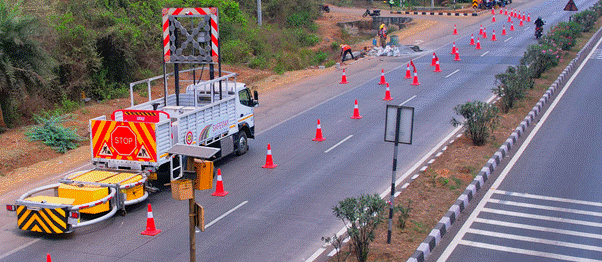
As the Ministry of Road Transport and Highways (MoRTH) actively expands National Highways, its focus is not just on faster connectivity but equally on bringing safety standards to a global level. Infrastructure development today is not only about building wider roads; it is about protecting every life that travels on them. With this vision, advanced safety systems like Truck Mounted Attenuators (TMAs) have been deployed on many sections of the highways, and these global practices are saving many lives, including those of on-ground workers and highway users.
Protecting Those Who Work on the Roads
Behind every highway upgrade and maintenance activity are hundreds of workers who operate in challenging and high-risk environments. Maintenance and construction zones on busy highways are among the most vulnerable areas, where speeding vehicles and limited visibility can lead to severe accidents.
To reduce these risks, MoRTH has consistently encouraged concessionaires to adopt advanced safety interventions across highway projects. Responding to this vision, one of the concessionaires has started taking a proactive step by deploying Truck Mounted Attenuators with integrated wig-wag warning systems.
This concessionaire operates and manages 9 National Highway projects spanning a cumulative length of 681 kilometres across Andhra Pradesh and Gujarat, making this deployment a significant milestone in highway safety management.
What is Truck Mounted Attenuators?
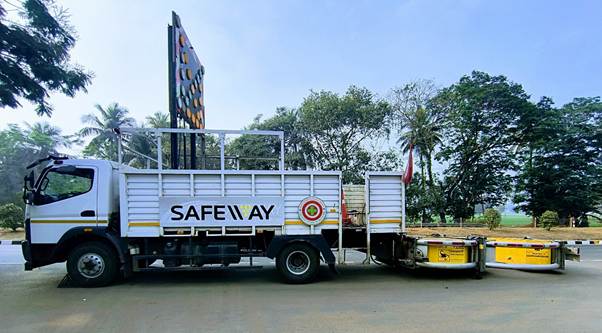
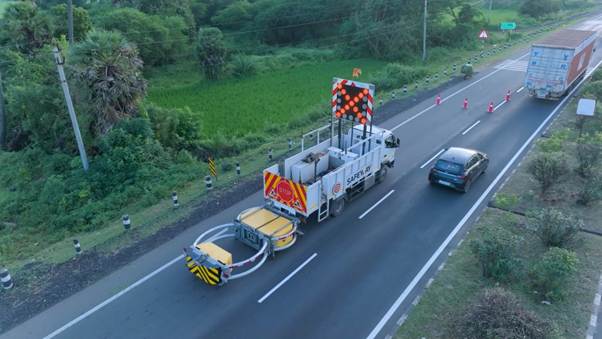
Truck Mounted Attenuators are specially designed impact-absorbing safety devices that play a critical role in protecting both workers and road users.
In the event of a collision, these systems absorb and dissipate kinetic energy, reducing the force of impact. This helps:
Protect maintenance crews working ahead of the vehicle
Reduce injury risks for occupants of the impacting vehicle
Minimize the severity of accidents in highway work zones
In many ways, TMAs act like an invisible shield — standing between danger and human life.
Early Warnings That Prevent Accidents
The deployed TMAs are equipped with high-intensity wig-wag warning lights, designed to flash in alternating patterns that form directional arrows. These signals provide clear and timely warnings to approaching drivers.
This feature is especially valuable:
On high-speed highway corridors
During night-time operations
In foggy or low-visibility conditions
By alerting drivers well in advance, these systems help prevent collisions before they occur.
Figures With a Purpose: Building Safer Highways
Across the 9 highway projects:
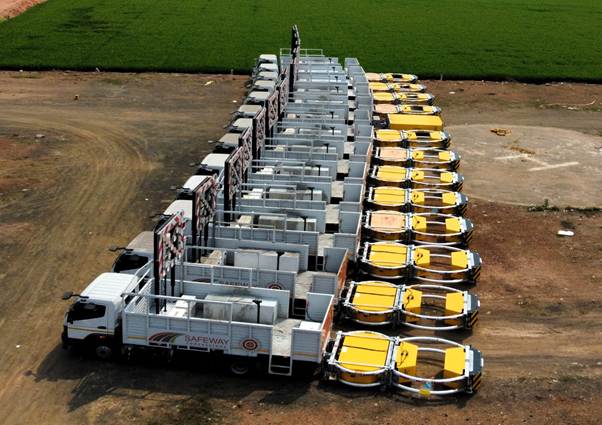
33 Truck Mounted Attenuators (TMAs) have been deployed
15 Towable Truck Mounted Attenuators (TTMAs) have been installed
All units comply with globally recognized safety standards, including MASH Test Level-3 (TL-3) and NCHRP 350 Test Level-3
These systems are designed to withstand impacts at speeds of up to 100 km/h
Turning Vision into Action on the Ground
This initiative reflects how MoRTH’s forward-looking safety vision is being transformed into real, measurable action on the ground. The commitment shown by the ministry and its concessionaire highlights the critical role they play in implementing global best practices and ensuring safer highways.
As India’s highways continue to grow wider and faster, it is equally important that safety grows stronger with every kilometre added. Solutions like Truck Mounted Attenuators represent the evolving identity of modern infrastructure — where development is not defined by speed alone, but by safe journeys, protected workers, and lives saved.
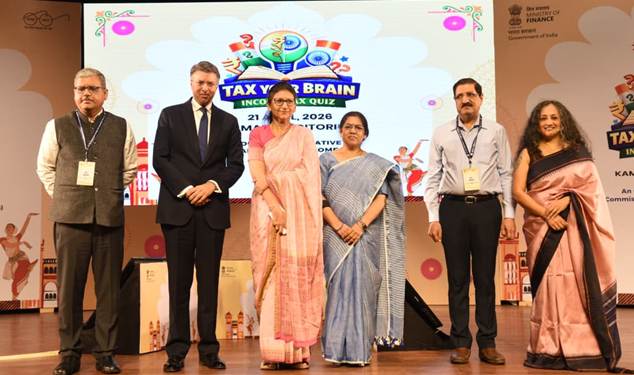
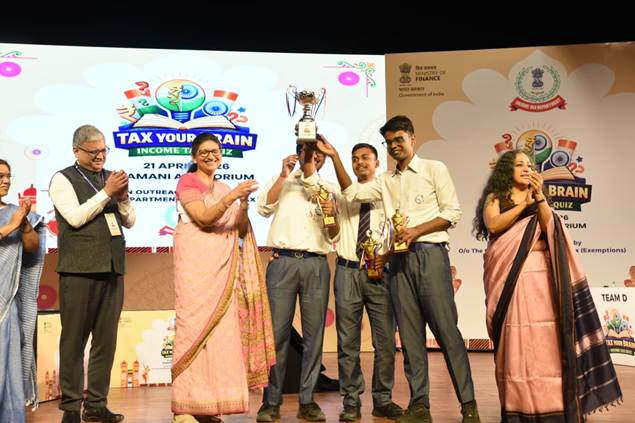
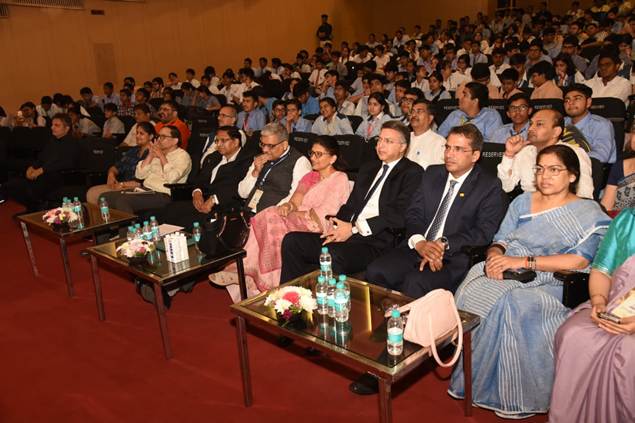
The Commissioner of Income Tax (Exemptions), Delhi, organised an outreach programme in New Delhi today to promote financial literacy and create awareness about the newly-introduced Income Tax Act, 2025, with particular focus on provisions relating to educational institutions and charitable trusts.
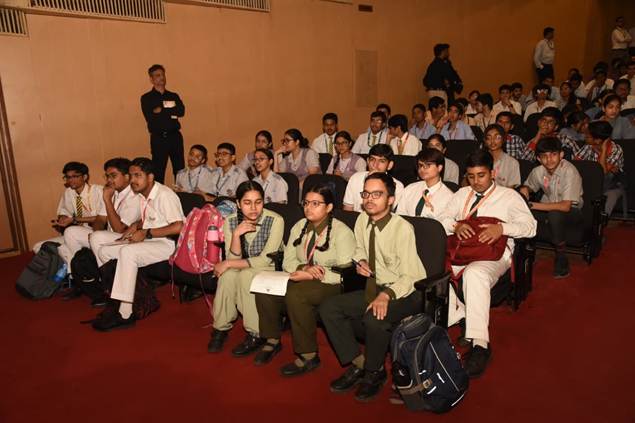
The programme witnessed participation from representatives of more than 80 schools from across the Delhi–NCR region, along with trustees and functionaries associated with educational institutions.
The event was graced by Ms. Pallavi Agarwal, Principal Chief Commissioner of Income Tax (Exemptions). Addressing the gathering, she highlighted the key features of the Income Tax Act, 2025 and emphasised that the new legislation seeks to simplify procedures, reduce ambiguities and promote transparency through streamlined and technology-driven processes aligned with the Government’s vision of “Viksit Bharat 2047”.
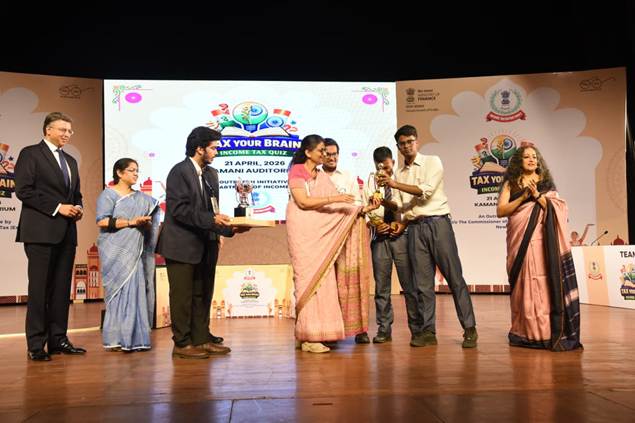
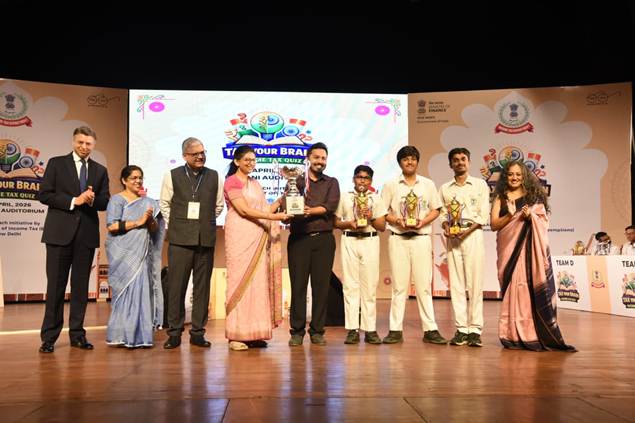
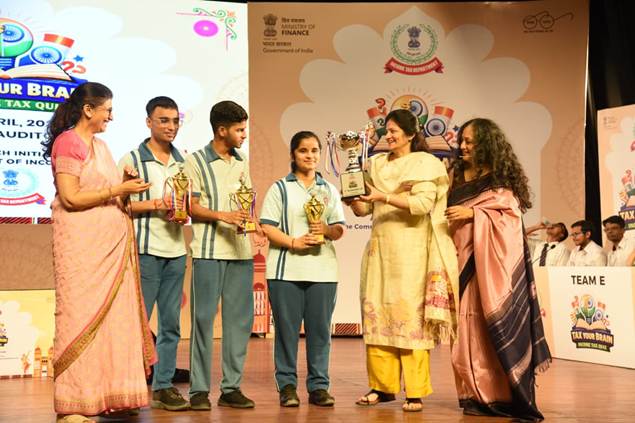
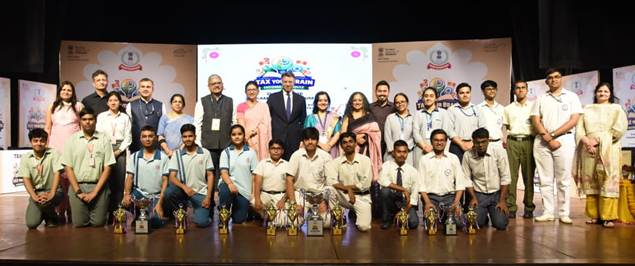
As part of the outreach programme, to encourage engagement among students, an inter-school quiz competition titled “Tax Your Brain – Income Tax Quiz” was organised for students of Classes IX to XII.
Students from participating schools took part in the quiz with enthusiasm across multiple rounds. The winning teams were felicitated and presented with awards and Certificates of Merit. All participants were appreciated for their enthusiasm and knowledge.
The initiative reflects the Income Tax Department’s continued commitment to proactive stakeholder engagement, dissemination of tax reforms and the promotion of an efficient, transparent and taxpayer-friendly tax administration epitomizing the principle of Saral Kanun Shashakt Bharat.
The Election Commission of India commenced the second phase of International Election Visitors’ Programme (IEVP), 2026 for the ongoing General Elections to the Legislative Assemblies of Tamil Nadu and West Bengal in New Delhi today.
Chief Election Commissioner Shri Gyanesh Kumar inaugurated the programme today at India International Institute of Democracy and Election Management (IIIDEM).
34 delegates from 17 countries including representatives from their Foreign Missions in Delhi and a representative of International IDEA will be participating in the second phase of the programme.
The participants will visit Tamil Nadu and West Bengal from April 22 to April 23, 2026. In the first phase, the delegates of the Programme visited Assam, Kerala and Puducherry from April 8 to April 9, 2026.
The delegates were given demonstration of the EVM at IIIDEM today and they took part in the mock poll using the Electronic Voting Machines (EVMs) to get a hands-on experience of the voting process.
The delegates evinced keen interest in the technological interventions and administrative safeguards in the election process in India. The delegates had an interactive session with the experts clarifying their doubts/queries.
The delegates will be travelling to West Bengal and Tamil Nadu on April 22, 2026. They will visit the dispatch and distribution centres and other facilities including the District Control Rooms and the Media Monitoring Centres. They will also witness the actual polling in the morning of April 23, 2026.
The IEVP is a flagship program of the ECI for international cooperation and engagement with the Election Management Bodies (EMBs) of other countries and International Organizations.
The IEVP provides a comprehensive overview of India’s electoral framework, institutional mechanisms, and operational architecture, while familiarising foreign EMB delegates with best practices and innovations in election management.
The IEVP showcases the strengths of India’s electoral system to the international community and sharing the best practices adopted in the world’s largest democracy for conduct of elections.
In a bid to manage the annual spike in passenger movement, Indian Railways has rolled out an extensive summer operations plan, scheduling over 18,000 special train trips across the country over a three-month period.
The national transporter will run these services between April 15 and July 15, 2026, aligning with peak travel demand driven by school vacations, seasonal migration, and festival-related journeys. In total, 908 summer special trains have been sanctioned, together accounting for 18,262 trips aimed at easing congestion on key routes.
A significant portion of this capacity has already been activated. As per official data, 660 trains—covering 11,294 trips—have been notified, allowing passengers to begin advance bookings and plan travel ahead of the rush.
The move reflects a calibrated strategy by Indian Railways to distribute passenger load more evenly during high-demand months. By augmenting services well in advance, the railways aim to reduce waiting lists, improve seat availability, and ensure a more comfortable travel experience.
Officials indicate that the special trains will be deployed across major intercity and long-distance corridors, particularly those witnessing heavy seasonal traffic. The initiative is part of a broader effort to strengthen operational preparedness and maintain service reliability during one of the busiest travel periods of the year.
The scale of the rollout underscores Indian Railways’ continued reliance on advance planning and capacity augmentation to navigate cyclical demand spikes, a recurring challenge in one of the world’s largest rail networks.
Zone-Wise Details
The operation of summer special trains spans across all major zones of Indian Railways, ensuring balanced regional connectivity and efficient passenger handling:
South Central Railway leads with 124 trains (1,184 trips) approved and 76 trains (324 trips) notified.
🌞🚆 Summer Special Trains Alert
South Central Railway introduces special trains from Charlapalli to clear summer rush:
🔹 Services to Jasidih, Muzaffarpur & Barauni
🗓️ Running between 23 Apr – 03 May 2026
🔁 All trains will run 1 service each
🎟️ Booking opens: 20.04.2026 at… pic.twitter.com/uIBdtoXiMF
— South Central Railway (@SCRailwayIndia) April 20, 2026
Western Railway has approved 106 trains (2,078 trips) with 92 trains (1,667 trips) notified.
Western Railway Summer Special Trains Update 🚆
To clear extra passenger rush, WR will run the following special trains:
North Western Railway has approved 76 trains (2,245 trips) and with 62 trains (1,878 trips) notified.
Northern Railway has approved 76 trains (2,090 trips) with 56 trains (1,535 trips) notified.
Central Railway has approved 74 trains (3,082 trips) with 70 trains (2,238 trips) notified.
Southern Railway has approved 72 trains (558 trips) with 38 trains (133 trips) notified.
Summer Special Trains between Chennai and Shalimar!
Express Special trains, Train No. 06097/06098 Dr MGR Chennai Central – Shalimar – Chennai Beach Express Specials, (Trains on Demand) will be operated to clear extra rush of passenger during Summer Season. pic.twitter.com/ywZVd01sef
North Central Railway has approved 54 trains (1,163 trips) with 46 trains (688 trips) notified.
North Eastern Railway has approved 52 trains (814 trips) with 34 trains (477 trips) notified.
East Coast Railway has approved 28 trains (410 trips) with 18 trains (88 trips) notified.
West Central Railway has approved 28 trains (408 trips) with 18 trains (192 trips) notified.
Eastern Railway has approved 24 trains (392 trips) with 10 trains (276 trips) notified.
North Frontier Railway has approved 24 trains (220 trips) with 20 trains (141 trips) notified.
South Eastern Railway has approved 20 trains (276 trips) with 18 trains (250 trips) notified.
South East Central Railway has approved 10 trains (122 trips) with 8 trains (70 trips) notified.
South Western Railway has approved 76 trains (509 trips) with 56 trains (277 trips) notified.
Passenger Benefits:
The large-scale introduction of summer special trains is expected to significantly benefit passengers by:
Reducing waiting lists during peak travel season.
Providing additional berths and confirmed travel options.
Enhancing connectivity between major cities and regions.
Ensuring smoother and more comfortable journeys.
By deploying special trains across high-demand routes, Indian Railways is ensuring that passengers experience minimal inconvenience during the summer rush.
With timely planning and large-scale deployment of special train services, Indian Railways continues to prioritise passenger convenience and travel comfort. The extensive coverage across zones and the high number of notified trains reflect a strong commitment to meeting passenger demand efficiently and ensuring a hassle-free travel experience during the summer season.




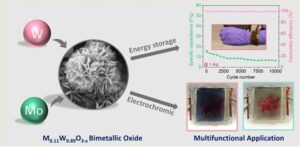

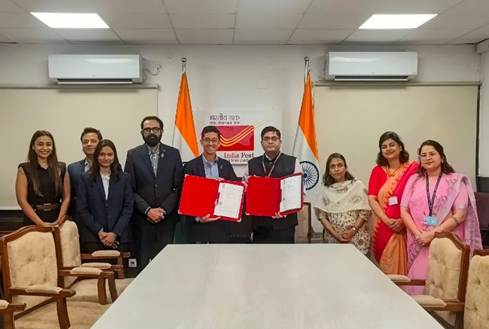

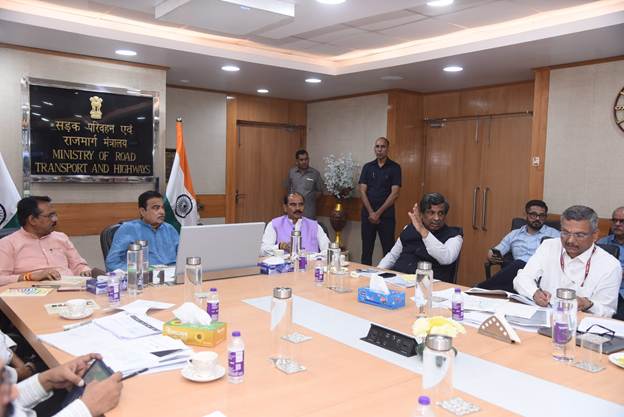

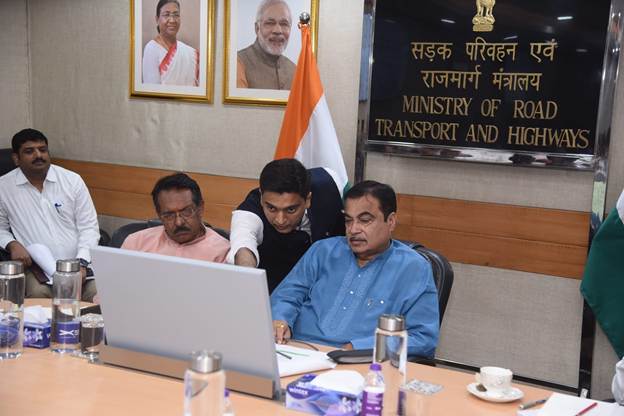
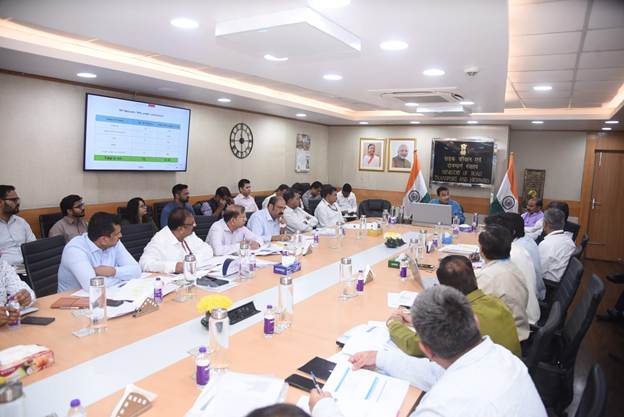



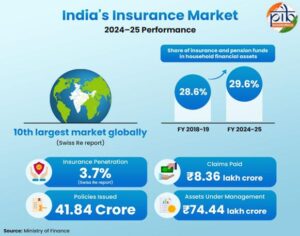

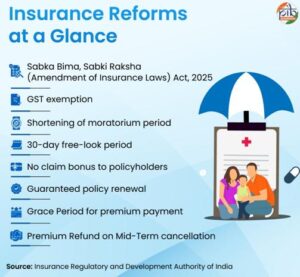

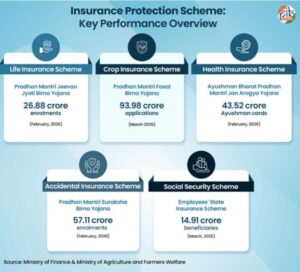

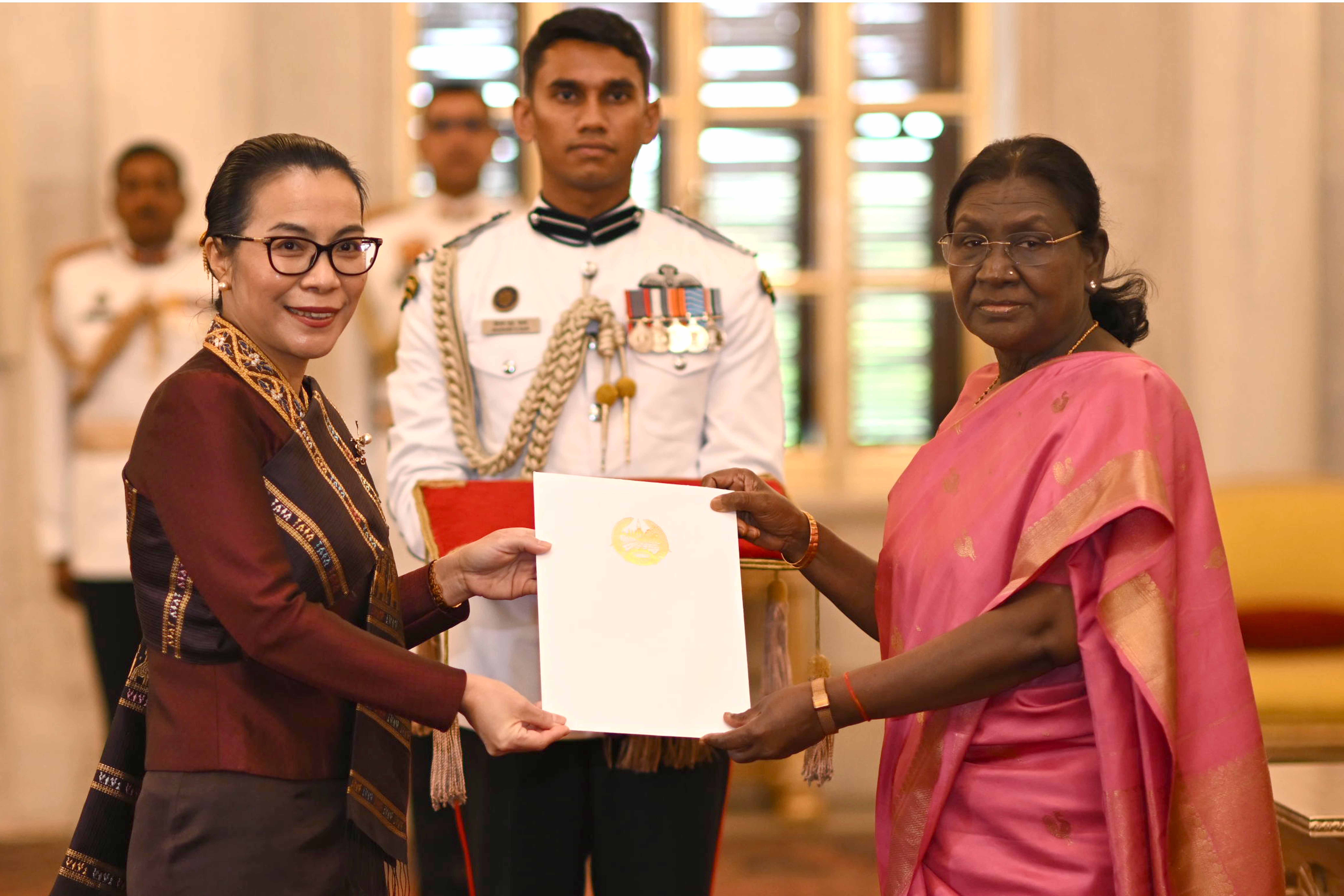

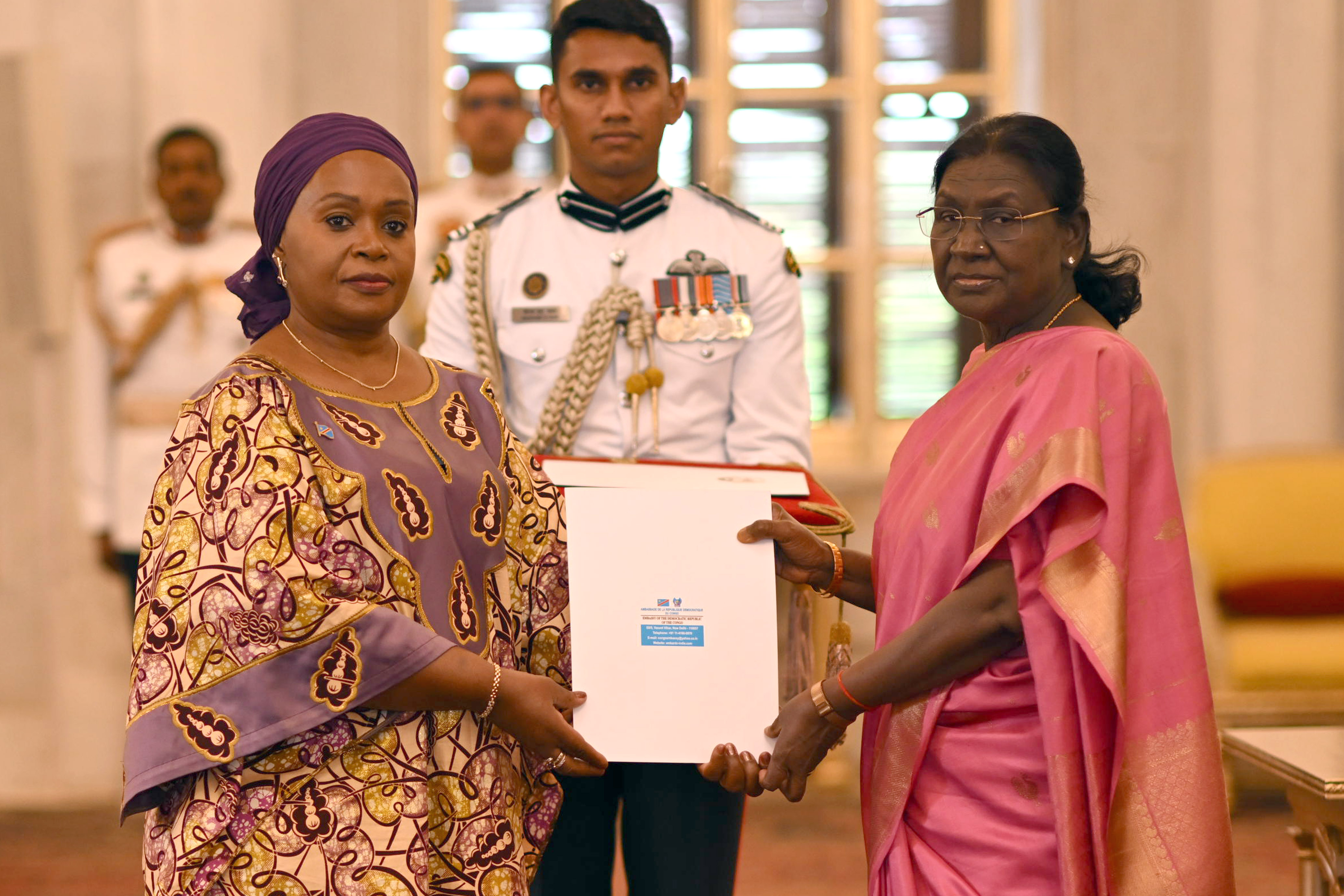
,HighCommissioneroftheRepublicofNamibiaKCFA.JPG)