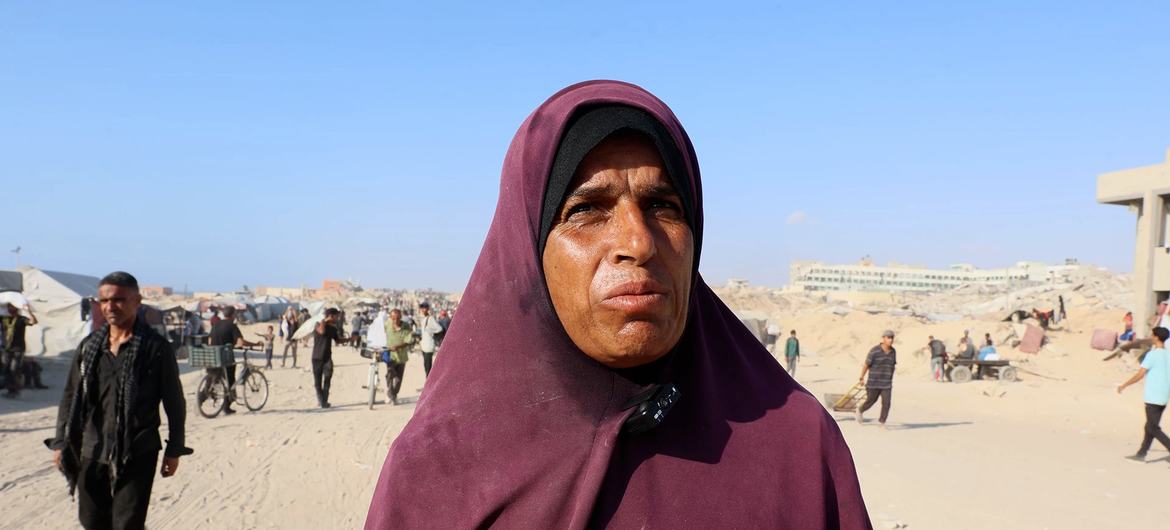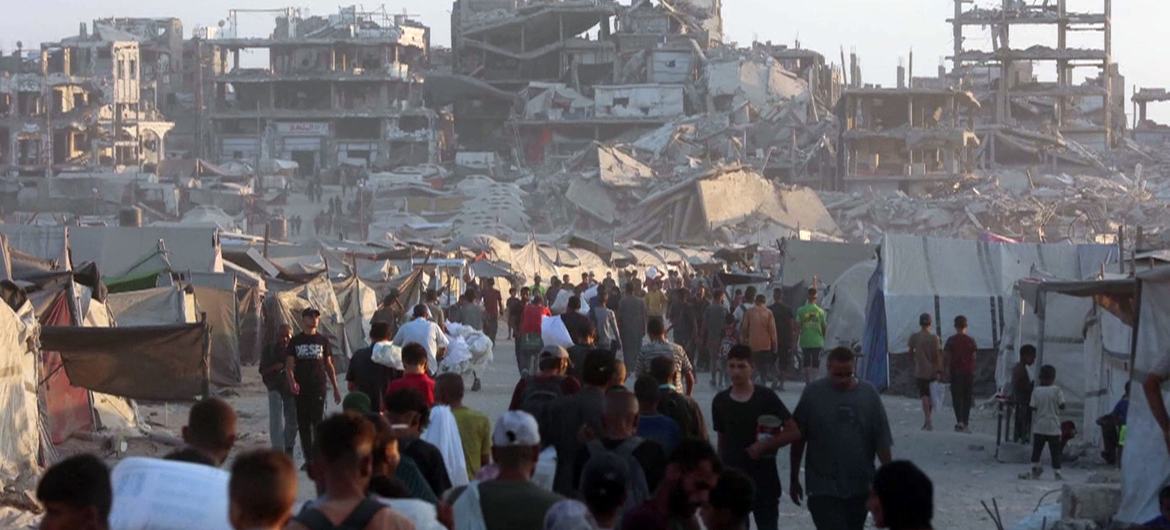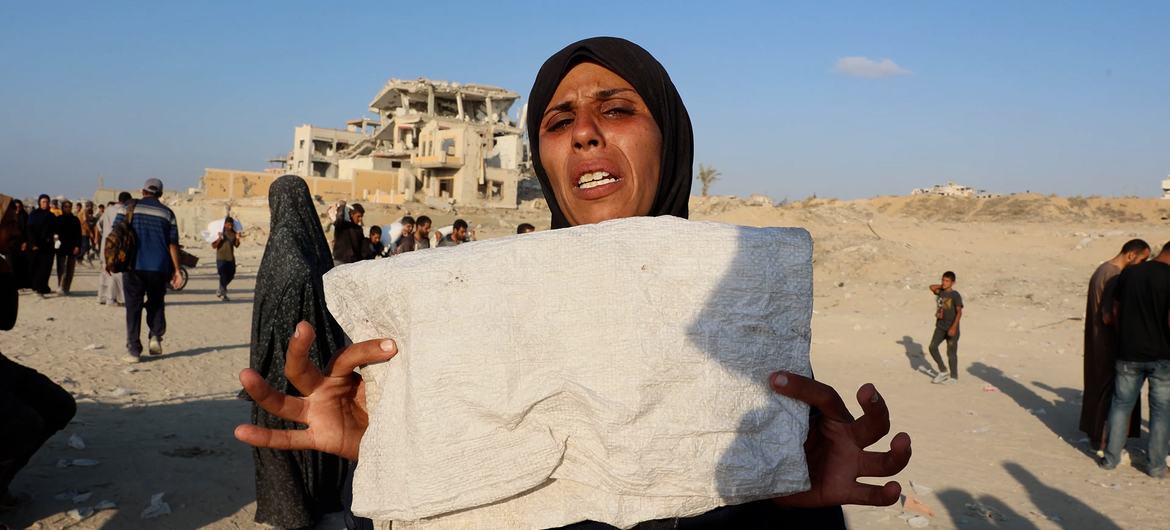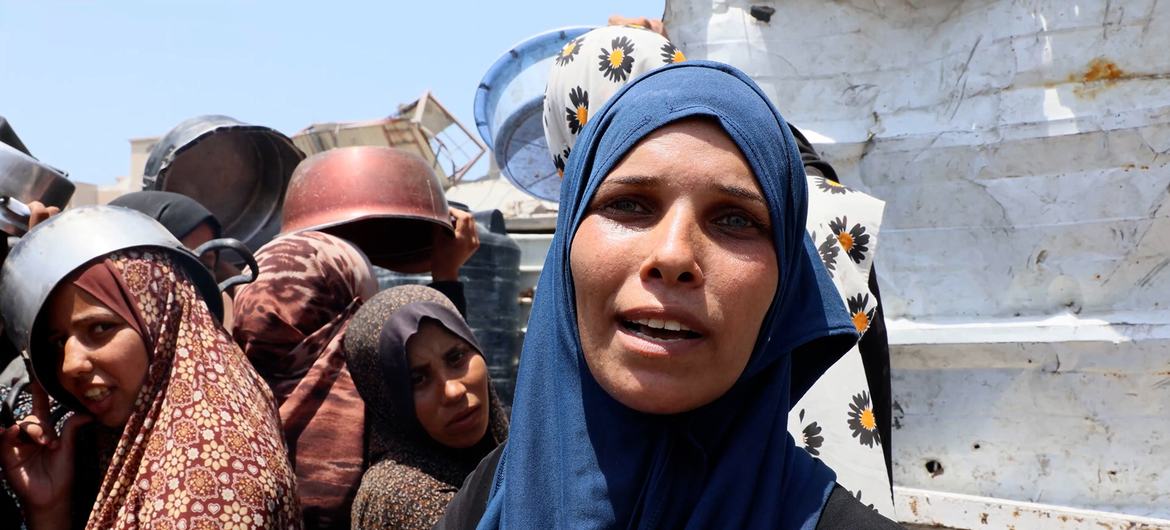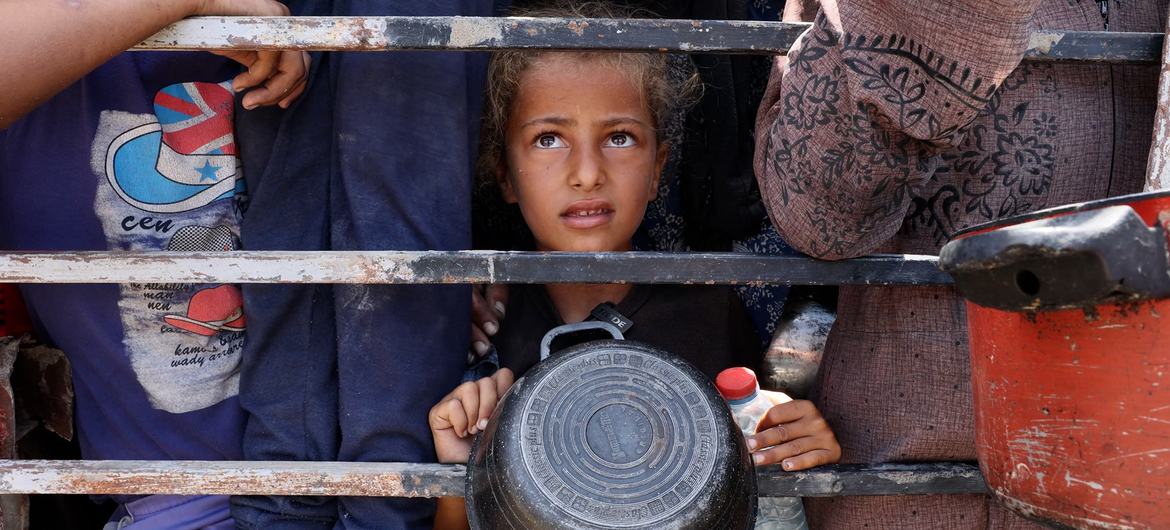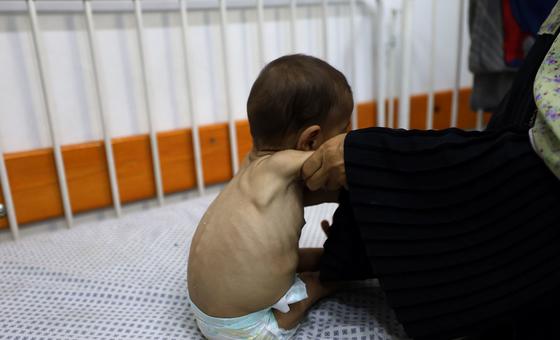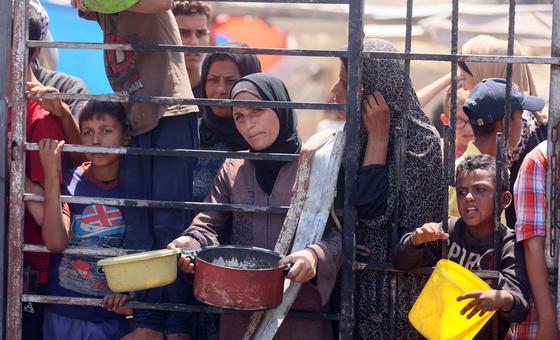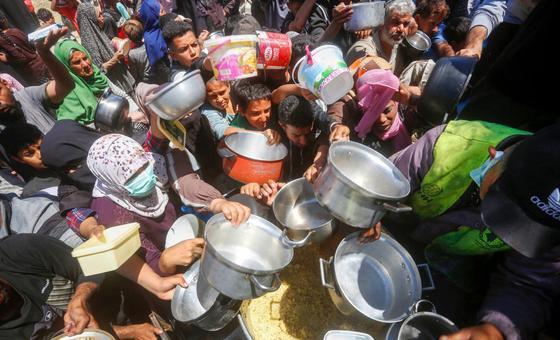
Record starvation and malnutrition in Gaza; more West Bank displacement

That warning comes from the UN World Food Programme (WFP) in a tweet posted on Tuesday, calling for more aid to be allowed into the enclave by Israeli authorities. 

Gaza’s Ministry of Health reported that five people died over the past 24 hours due to malnutrition and starvation, the UN Office for the Coordination of Humanitarian Affairs (OCHA) said in its latest update.

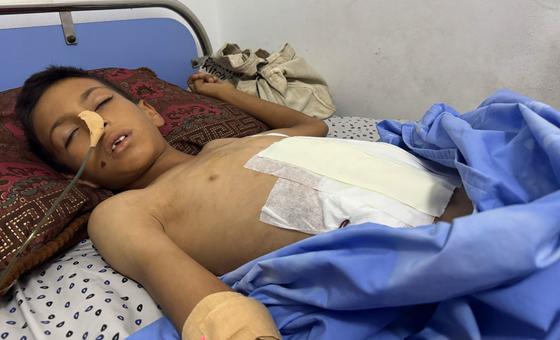
This brings the total number of malnutrition-related deaths to 227, including 103 children, since October 2023.  

Still not enough aid

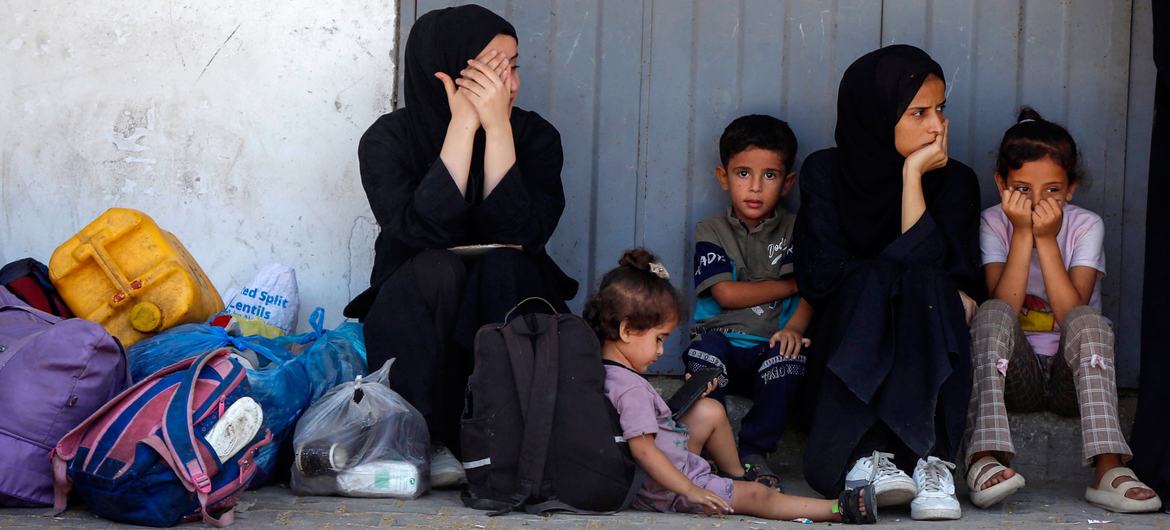
Humanitarians continue to decry the low level of supplies entering Gaza, which remains a fraction of what is needed to meet the immense needs of the roughly 2.1 million people living there.

One third of the population is not eating for days on end, and half a million are on the brink of starvation, WFP emphasised.

The agency is calling for at least 100 trucks a day to be allowed into Gaza, much faster approvals and clearances, and for no armed presence or shooting near humanitarian convoys and food distribution sites, among other measures.

Humanitarian missions face obstructions

Although the UN and partners continue to do everything possible to bring assistance in, humanitarian movements still face significant delays and other challenges. 

UN Spokesperson Stéphane Dujarric outlined the situation for journalists attending the regular media briefing at Headquarters in New York. 

He said on Monday humanitarians had formally asked Israel to coordinate 16 missions – including the collection of food, medical supplies and fuel – from the Kerem Shalom and Zikim border crossings, the only two aid corridors in operation.

Other missions involved moving goods and personnel within Gaza, from south to north and within the southern part of the Strip. 

‘Precious time’ wasted

Out of the 16 missions, four were facilitated and three were denied; another four were impeded but eventually were fully accomplished,” he said.

Of the remaining missions, two were cancelled by the respective organizations and two more that involved collection of food and health supplies from the Kerem Shalom crossing were impeded and unable to be completed.  Another mission was impeded but was still ongoing.

“Efforts to coordinate humanitarian movements often drag on for hours due to unpredictable clearances by the Israeli authorities, wasting precious time,” he added. 

West Bank unrest

OCHA also updated on the situation in the occupied West Bank, where another Palestinian Bedouin community was displaced on Monday due to violence by Israeli forces and settlers. 

Israeli forces raided the community of Ein Ayoub in Ramallah governorate and ordered the immediate eviction of its roughly 100 Palestinian residents.

Many of these people have no alternative means of shelter, OCHA said. 

Source link

Gaza: UNESCO condemns ‘unacceptable’ killing of journalists

“I condemn the killing of journalists Anas Al-Sharif, Mohammed Qreiqeh, Ibrahim Zaher, Mohammed Noufal, Moamen Aliwa, and Mohammed Al-Khaldi and call for a thorough and transparent investigation,” UNESCO’s Director-General, Audrey Azoulay, said in a statement on Tuesday.

Five of the six worked for the influential Qatari-based media organization, Al Jazeera: Anas Al-Sharif and Mohammed Qreiqeh were on air correspondents, while Ibrahim Zaher, Mohammed Noufal and Moamen Aliwa worked as camera operators. Mohammed Al-Khaldi was a freelance photojournalist.  

They were reportedly killed by an Israeli attack on a tent used by media personnel at the entrance of Al-Shifa Hospital in Gaza City.

Blatant, premeditated attack

The Israeli Defense Forces (IDF) alleged that 28-year-old correspondent Anas al-Sharif was a serving Hamas operative. Al Jazeera strongly denies this, describing the attack as an “assassination” and “yet another blatant and premeditated attack on press freedom.”

The UN Human Rights Council-appointed independent expert on freedom of expression issued a statement on 31 July denouncing an Israeli military spokesperson’s “repeated threats” and “unfounded accusations” against Mr. Anas Al-Sharif, flagging it as “a blatant attempt to endanger his life and silence his reporting” in Gaza.  

Condemning the attack in the strongest possible terms on Tuesday, two special rapporteurs described the killings as “an attempt to silence reporting on the ongoing genocide and starvation campaign” in Gaza.

“It is outrageous that the Israeli army dares to first launch a campaign to smear Anas Al-Sharif as Hamas in order to discredit his reporting and then kill him and his colleagues for speaking the truth to the world,” the experts said, demanding an immediate investigation into the killings and full access to international media, which Israel currently bars from entering Gaza.

Special Rapporteurs and other independent experts are appointed by and report regularly to the Human Rights Council. They work in their individual capacity, are not UN staff and receive no payment for their work.

Violation of international law

UNESCO chief Ms. Azoulay stressed that targeting journalists reporting on conflicts is unacceptable and violates international law.  

She also reiterated her call to respect UN Security Council Resolution 2222, which was unanimously adopted in 2015 to protect journalists, media professionals and associated personnel in conflict situations.

Since October 2023, UNESCO has reported at least 62 journalists and media workers killed in the line of duty in Palestine, excluding deaths in circumstances unrelated to their work, while OHCHR reports that at least 242 Palestinian journalists have been killed in the same time frame. 

Gaza health system ‘catastrophic’ as hospitals overwhelmed and medicines running out, WHO warns

Fewer than half of Gaza’s hospitals and under 38 per cent of primary healthcare centres are partially functioning – or are doing so at minimal levels – said Dr. Rik Peeperkorn, World Health Organization (WHO) Representative for the West Bank and Gaza.

Bed occupancy in major facilities is exceeding limits by large margins – Shifa Hospital is at 250 per cent capacity, Nasser at 180 per cent, Al-Rantisi at 210 per cent and Al-Ahli at over 300 per cent.

Critical supplies running out

“The critical shortage in medications and consumables continue and have only exacerbated, with 52 per cent of the medicines and 68 per cent of consumables at zero stock,” Dr. Peeperkorn told journalists in Geneva, speaking from Jerusalem.

Hospitals are particularly overwhelmed by injuries from food distribution areas, which are also driving persistent shortages of blood and plasma,” he added, noting that since 27 May, at least 1,655 people have been killed in those areas and more than 11,800 injured.

The crisis has been exacerbated by displacement orders in Gaza City that now place WHO’s own warehouse in an evacuation zone. Hospitals, primary care centres and ambulance facilities are also located inside or near these areas, threatening further disruption to services.

Malnutrition worsening

Hunger and malnutrition are worsening rapidly.

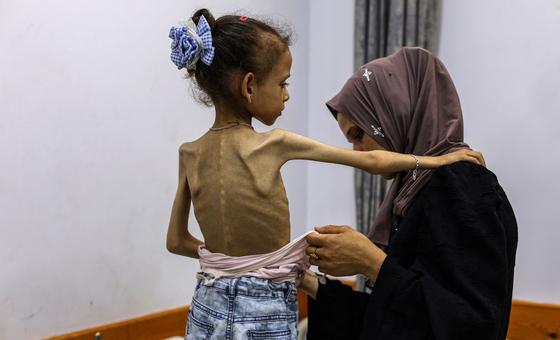
Since the start of 2025, 148 people have died from malnutrition, including 49 children – 39 of them under five years old. Nearly 12,000 children under five were diagnosed with acute malnutrition in July, the highest monthly figure to date, with more than 2,500 suffering from the most severe form.

New threat from meningitis

Disease outbreaks are adding to the pressure.

Suspected meningitis cases reached 452 between July and early August – the highest number since the escalation began. Guillain-Barré syndrome, a rare post-infection disorder, has also surged, with 76 suspected cases since June.

Both conditions are harder to treat due to “zero stocks” of vital medicines, including intravenous immuneoglobulin and anti-inflammatories, Dr. Peeperkorn said.

Access challenges

Access for international medical teams and supplies remains a major obstacle.

Dr. Peeperkorn said that international medics face entry denials, while key items such as ICU equipment, anaesthesia machines and cold chain supplies continue to be held back.

Though WHO managed to bring in 80 trucks of medical supplies since June, he stressed that procedures are slow and unpredictable, with many shipments delayed or denied.

We need multiple crossings into Gaza opened, procedures simplified, and access impediments lifted,” he said. “We hear about more humanitarian supplies being allowed in – but it’s not happening, or it’s happening far too slowly.”

Gaza: Guterres urges probe into killing of journalists, as child malnutrition deaths rise

The reporters – five of whom worked for the Al Jazeera media network – were killed in a targeted Israeli strike in Gaza City the previous day. 

These latest killings highlight the extreme risks journalists continue to face when covering the ongoing war,” UN Spokesperson Stéphane Dujarric said during his regular media briefing from New York.

“The Secretary-General calls for an independent and impartial investigation into these latest killings.” 

Respect the press

Mr. Dujarric pointed out that at least 242 journalists have been killed in Gaza since the war began nearly three years ago.

“The Secretary-General underscores that journalists and media workers must be respected, they must be protected and they must be allowed to carry out their work freely, free from fear and free from harassment,” he said.

© UNICEF/Mohammed Nateel

A child suffering from malnutrition lies on a bed in the Patient Society Hospital in Gaza City.

Hungry children dying

Meanwhile, the number of children in Gaza who have died from malnutrition since October 2023 has surpassed 100, according to the Gazan health authorities, the UN aid coordination office, OCHA, said in an update.

More than a third of the population is not eating for days at a time, according to the UN World Food Population (WFP).  Furthermore, acute malnutrition is spiking, with over 300,000 children at severe risk.

This comes amidst a recent warning by the UN Food and Agriculture Organization (FAO) that a mere 1.5 per cent of cropland in the enclave remains both accessible and undamaged, “signaling a near-total collapse of the local production of food.”

Aid taken from trucks

On the aid front, the UN and its partners collected food and hygiene kits from the Kerem Shalom/Karem Abu Salem border crossing on Wednesday.

“However, supplies were offloaded directly from these trucks before reaching their destination, given the extreme desperation pervasive in Gaza today,” OCHA said.

The agency stressed that people there “need a predictable lifeline – not a trickle of aid – so they do not feel they need to take desperate measures to survive.”

WFP said that just to cover basic humanitarian food assistance needs, more than 62,000 metric tonnes are required to enter Gaza every month, and so far, humanitarians have not been permitted to bring in enough supplies to support the population. 

Fuel shortages continue

Humanitarians also collected fuel from the Kerem Shalom crossing on Wednesday. Israel is allowing, on average, the entry of about 150,000 litres of fuel daily, which is still far below the minimum required. As a result, life-saving operations continue to be at risk.

The Palestine Civil Defence organization has warned that more than half of their ambulances have stopped operating across Gaza due to the shortage of both fuel and spare parts. 

“Israeli authorities must allow aid to enter through all crossings and via all available corridors so that humanitarians can deliver – at scale, in a safe and dignified manner – to reach the most vulnerable, including women, children and older people,” OCHA said. 

Source link

Aid blockade deepens Gaza crisis as malnutrition deaths rise, warns UNRWA

“For over 150 days, not a single truck from UNRWA has been permitted to deliver food, medicine or other essentials into Gaza,” the agency said on Friday. “This denial of access is costing lives every single day.”

Nearly 100 children dead from malnutrition

According to Gaza’s Ministry of Health, cited by the UN, at least 61,158 Palestinians have been killed and more than 151,000 injured since October, amid relentless Israeli bombardment and ground operations.

UNRWA said nearly 350 of its own staff are among the dead since Israel’s military operation in Gaza began following the 7 October 2023 Hamas-led terror attacks.

Many civilians have been killed while sheltering in schools or tents, or while queuing for food.

Food insecurity is now acute. UN data show 193 people — including 96 children — have died from malnutrition since the start of August, with July seeing the highest monthly rate of acute malnutrition recorded in children under five.

Soaring prices

Wheat flour prices have soared by up to 15,000 per cent compared to pre-war levels. “Sustained, large-scale deliveries are the only way to stabilise food supplies and prices,” UNRWA stressed.

Health services are close to collapse. More than half of essential medical supplies are already out of stock, and hospitals have been forced to ration fuel for generators. UNRWA teams have nevertheless managed over 1.5 million health consultations since March, but “without resupply, our ability to save lives is dwindling,” the agency warned.

Vast scale of displacement

Displacement is on a vast scale: 1.9 million people — around 90 per cent of Gaza’s population — have been forced from their homes, many repeatedly. Nearly 100,000 are crammed into over 60 UNRWA-run shelters.

In the northern Israeli-occupied West Bank, around 30,000 people from Nur Shams, Tulkarm and Jenin refugee camps remain unable to return home due to Israel’s “Iron Wall” military operation, ongoing since January.

The agency urged immediate, unhindered humanitarian access. “We need the world to act — to open the crossings, to stop the suffering, and to uphold the most basic principles of humanity,” it said.

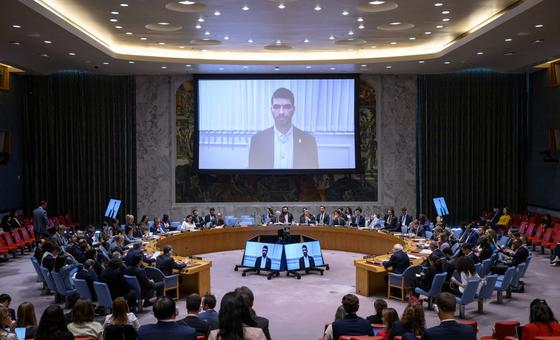
The UN Security Council is due to meet in New York in emergency session on Sunday morning local time to discuss the Israeli cabinet’s endorsement of a military takeover of Gaza City which is home to around one million Palestinians.

‘There is no military solution’ to end Israel-Palestine conflict, Security Council hears, as starvation stalks the Gaza Strip

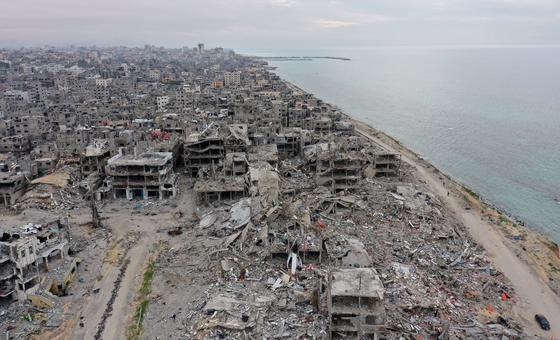
Two top UN officials warned that the Israeli cabinet’s green light this week for a fresh offensive aimed at gaining total military control of Gaza City – home to around one million Palestinians – would only risk igniting “another horrific chapter” of displacement, death and destruction.

Miroslav Jenča, Assistant Secretary-General for Europe, Central Asia and the Americas, told ambassadors that Israeli Prime Minister Benjamin Netanyahu’s proposed plan for “defeating Hamas” and the establishment of an alternative civilian administration that is neither Hamas nor the Palestinian Authority, risked “yet another dangerous escalation” that would destabilise the entire region.

However, according to Israeli media reports, the senior political affairs official continued, the Israeli plan foresees the displacement of all civilians from Gaza City by 7 October, affecting some 800,000 people – many previously displaced.

Reports indicate that forces would then surround the city for three months.  This would reportedly then be followed by an additional two months to seize control of central Gaza’s camps and clear the entire area of Palestinian armed groups.

Calamitous plan

If these plans are implemented, they will likely trigger another calamity in Gaza, reverberating across the region and causing further forced displacement, killings, and destruction – compounding the unbearable suffering of the population,” said Mr. Jenča, calling for a full, immediate, and permanent ceasefire, the unconditional, immediate release of all hostages and compliance with international humanitarian law by Israel.

He said there was no military solution to end the conflict adding that planning for Gaza’s future “as we address the urgency of developments on the ground today,” is critical.

Mr. Jenča called for establishing political and security frameworks to ease the humanitarian crisis, while beginning recovery and reconstruction efforts that address the legitimate concerns of both Israelis and Palestinians – in line with realising a two-State solution.

United Palestine

“Critically these frameworks must facilitate a legitimate Palestinian Government that can reunify Gaza and the West Bank, including East Jerusalem, politically, economically and administratively.”

Furthermore, it must be made up of a united leadership representing all of Palestine. He called on the Palestinian Authority to “advance its stated goal of holding elections” to this end.

‘This is starvation’: Rajasingham

Senior humanitarian affairs official Ramesh Rajasingham told ambassadors that hunger-related deaths were already rising, ahead of any new mass-displacement policy for Gaza City.

“Whatever lifelines remain, are collapsing under the weight of sustained hostilities, forced displacement and insufficient levels of life-saving aid.”

He said with local authorities documenting the deaths of 98 children from severe acute malnutrition – 37 since 1 July – “this is no longer a looming hunger crisis – this is starvation.”

The head of the humanitarian affairs coordination office (OCHA) in Geneva said he was extremely concerned over the “prolonged conflict and further human toll that is likely to unfold following the Government of Israel’s decision to expand military operations in Gaza.”

“This marks a grave escalation in a conflict that has already inflicted unimaginable suffering.”

‘Grim milestone’

“A grim milestone has also been crossed in the humanitarian community,” he lamented, noting that over 500 humanitarian workers have been killed in Gaza since hostilities escalated, including at least 167 women. Smear campaigns against aid operations continue unabated.  “As we approach World Humanitarian Day, we must insist on the protection of all aid workers,” he added.  

States – all those with any influence – must look within our bruised collective conscience and summon the courage to do what is necessary to end this inhumanity and pain, he said.

Civilians must be protected, and hostages must be released unconditionally.  Arbitrarily detained Palestinians must be freed. Israel must agree to and facilitate humanitarian relief operations, both into and within the Gaza Strip, to reach the population in need.

The International Court of Justice’s (ICJ) provisional measures in the case on the application of the Genocide Convention in Gaza remain in place, the top OCHA official added, including the demand that Israel take immediate and effective measures to enable the provision of urgently needed basic services and humanitarian assistance.

SECURITY COUNCIL LIVE: Ambassadors meet in emergency session, amid starvation in the Gaza Strip

The UN Security Council is meeting in New York following the Israeli cabinet’s decision to again expand its military operation inside the Gaza Strip and take full control of the key population centre of Gaza City. UN chief António Guterres described it as a “dangerous escalation” for the two million civilians trapped in the enclave as well as the remaining Israeli hostages still held captive. Follow our Meetings Coverage Section’s live reporting of the crisis meeting and UN News app users can follow here.

Source link

Israel’s military takeover of Gaza City would mark ‘a dangerous escalation’: Guterres

The announcement following an Israeli cabinet meeting “marks a dangerous escalation and risks deepening the already catastrophic consequences for millions of Palestinians, and could further endanger more lives, including of the remaining hostages,” it said.

The statement noted that Palestinians in Gaza continue to endure a humanitarian catastrophe of horrific proportions. 

More displacement, death and destruction

The UN chief warned that this further escalation will result in additional forced displacement, killings and massive destruction, compounding the unimaginable suffering of the population.

He reiterated his urgentappeal for a permanent ceasefire, unimpeded humanitarian access across Gaza, and the immediate and unconditional release of all hostages.

 “The Secretary-General once again strongly urges the Government of Israel to abide by its obligations under international law,” the statement continued.

End the occupation

Mr. Guterres recalled that in an Advisory Opinion last July, the International Court of Justice (ICJ) declared that Israel is under an obligation to cease immediately all new settlement activities, to evacuate all settlers from the Occupied Palestinian Territory, and to bring to an end its unlawful presence there as rapidly as possible.

 “There will be no sustainable solution to this conflict without an end to this unlawful occupation and the achievement of a viable two-State solution,” the statement concluded, stressing that “Gaza is and must remain an integral part of a Palestinian State.”

Security Council meeting

In the wake of the development, the Permanent Observer of the Observer State of Palestine, Riyad Mansour, held consultations with the president of the UN Security Council in New York.

“This escalation by the Israeli Government is going in total contradiction to the will of the international community, international law and common sense – and, I even dare to say, against the wish of the majority of people inside Israel as we read opinion polls,” he told journalists at UN Headquarters.

The Security Council is due to meet on Saturday at 3 PM in emergency session to discuss the crisis. 

Insufficient aid still a problem

Meanwhile, civilians continue to be killed and wounded in Gaza, where even basic tasks such as finding food and water have become impossible, the UN Office for the Coordination of Humanitarian Affairs (OCHA) said in an update.

Furthermore, aid entering the Strip continues to be far below the minimum required to meet the immense needs, OCHA added.

Scarcity and ‘exorbitant prices’ 

“Since the entry of some commercial trucks into Gaza in the past few days, partners reported a minor reduction in commodities prices as of yesterday. Most food items remain scarce in the market and sold at exorbitant prices,” OCHA said.

At the same time, airdrops in different parts of Gaza continue to reportedly kill and injure people, with one child reportedly losing their life in Khan Younis on Thursday.

While welcoming all efforts to provide desperately needed aid, OCHA reiterated that the most efficient way to bring supplies into Gaza is by road. 

It is imperative that aid is allowed to enter through all crossings and via all available corridors so that the UN and its partners can deliver it at scale in a safe and dignified manner through their community-based mechanisms, reaching the most vulnerable,” the agency said.

Severe heatwave

OCHA added that the region has been hit by a severe heatwave as people continue to struggle with access to water.

On Thursday, aid partners reported that the South Gaza Desalination Plant’s electricity line was damaged for the third time in the past seven days and the plant is operating at less than 14 per cent of its capacity. 
 

Source link

Israeli plan to take complete control of Gaza must stop now, says UN rights chief

“A complete military takeover of the occupied Gaza Strip must be immediately halted,” insisted Volker Türk, UN High Commissioner for Human Rights, after the Israeli security cabinet approved a plan for a full-scale Israeli military takeover in the battered enclave.

The development runs contrary to international law, Mr. Türk continued, referring to a ruling of the International Court of Justice that Israel must end its occupation and achieve a two-State solution giving Palestinians the right to self-determination.

Any further escalation of the conflict between Hamas and Israel that has devastated Gaza and killed tens of thousands “will result in more massive forced displacement, more killing, more unbearable suffering, senseless destruction and atrocity crimes”, the UN rights chief said.

Aid access call

In a short statement, Mr. Türk insisted that rather than intensifying the conflict, “the Israeli Government should put all its efforts into saving the lives of Gaza’s civilians by allowing the full, unfettered flow of humanitarian aid”.

At the same time, all hostages must be immediately and unconditionally released by Palestinian armed groups, he continued, adding that Palestinians arbitrarily detained by Israel must also also be released.

“The war in Gaza must end now. And Israelis and Palestinians must be allowed to live side by side in peace,” the High Commissioner said.

Little change in dire aid situation 

Since war erupted in Gaza after Hamas-led deadly terror attacks in Israel in October 2023, aid agencies have warned repeatedly that Israeli bombardment, mass evacuation orders and relief restrictions have created a humanitarian catastrophe.

Even UN staff who are still working in the enclave report being unable to find enough to eat, according to the UN agency for Palestinian refugees, UNRWA. Despite Israel’s 27 July announcement of daily military pauses in western Gaza “to improve humanitarian responses”, far too little aid is getting through, humanitarians insist. 

According to the UN human rights office, OHCHR, since 27 May, at least 1,373 Palestinians have been killed while seeking food; 859 in the vicinity of the non-UN aid distribution organization the Gaza Humanitarian Foundation (GHF); another 514 victims died along the routes of food convoys.

Echoing widespread concerns for the people of Gaza, the head of the UN World Health Organization (WHO), warned that other Gazans have only limited access to basic services and food, while malnutrition is widespread and hunger-related deaths are rising.

“In July, nearly 12,000 children under five years were identified as suffering from acute malnutrition, the highest monthly figure ever recorded,” said Tedros Adhanom Ghebreyesus.

In comments to journalists on Thursday, the WHO chief said that so far this year, 99 people have died from malnutrition, including 29 children under five, adding that these reported numbers are likely underestimates. 

Source link

Gaza: Acute malnutrition among children hits record high

In July alone, nearly 12,000 children under five were identified as acutely malnourished out of 136,000 screened, according to aid partners. 

Of these, more than 2,500 were found to suffer from severe acute malnutrition, the most life-threatening form, and 40 had to be hospitalized in stabilisation centres.

More children affected

The proportion of children with severe acute malnutrition is rising, OCHA said.  

In June and July, 18 per cent of all acutely malnourished children had severe acute malnutrition, compared with 12 per cent between March and May.

Moreover, humanitarian access constraints are adding to the crisis.

Last month, aid partners were only able to reach 8,700 of the 290,000 children under five who require feeding and nutrition supplements due to the severe shortage of lipid-based nutrient supplements entering Gaza.

OCHA said the development “marks a dramatic collapse in the malnutrition prevention programme”, noting that an average of 76,000 children – or a quarter of those in need – were reached each month between April and June.

Distribution of other key nutrition supplies has also declined sharply, which is affecting children, pregnant women and breastfeeding mothers.

Shelter crisis worsens

Meanwhile, no shelter materials have entered Gaza since 2 March. 

At the same time, more than one million shelter items, and 2.3 million items such as tents, tarps, and sealing-off materials, have been procured and are currently stuck in Jordan and Egypt as the Israeli authorities have not approved their entry. 

The shelter crisis continues to worsen, with most families living in severely overcrowded and unsafe conditions. Some have no shelter at all. 

In July, humanitarians assessed 44 displacement sites, discovering that 43 had families with no shelter.

A family rests after evacuating from Deir Al-Balah in the Gaza Strip. (file)

Bombardment and displacement continue

The situation is further deteriorating due to ongoing bombardment, displacement orders and insecurity, which continue to displace families and disrupt humanitarian operations.

OCHA reported that overall, realities on the ground remain largely the same since Israel announced a “tactical pause” in military operations to allow the safe passage of aid.

The UN agency reiterated that supplies that have entered remain insufficient given the immense needs, while UN convoys continue to face challenges in delivering aid.

Aid missions taking hours

While fewer humanitarian movements have been denied outright, missions that are approved still take hours to complete, with some taking more than 18 hours.

On Wednesday, five out of 11 missions requiring coordination with the Israel authorities were facilitated. These included collecting food from the Kerem Shalom and Zikim crossings.

Another four missions were impeded but eventually fully completed, which included the collection of fuel from Kerem Shalom crossing and transfer of fuel from southern Gaza to the north. 

Medical evacuation update

One of the missions saw the medical evacuation of 15 children to Jordan, and 42 companions, with support from the World Health Organization (WHO).  However, more than 14,800 patients in Gaza still urgently need specialized medical care.

OCHA also reported on the flow of commercial goods into the Strip, noting that several trucks carrying food items have been entering over the past days. 

While the UN will continue to monitor the situation, humanitarians again stressed the need for unimpeded and predictable humanitarian access into and within Gaza, warning that “without it, time and resources are wasted, lives are lost, and the response cannot match the scale of the needs.” 

Source link

Gaza: Hospitals ‘at near-total collapse’, staff overwhelmed by the injured

Meanwhile, UN agencies confirmed the deaths of three Palestinians from Guillain-Barré Syndrome (GBS), a rare auto-immune disease that can cause sudden muscle weakness and even paralysis.

Before war erupted in Gaza in October 2023, only a handful of cases surfaced every year.

Mass casualties now the norm

“Hospitals are overwhelmed by mass casualty incidents, with an average of eight incidents per day,” said the UN aid coordination agency, OCHA, citing health partners.

In an update on the dire health crisis in Gaza, OCHA noted that specialised rehabilitation facilities were also overstretched handling complex trauma injuries and cases of Guillain-Barré.

To date, three deaths out of around 64 cases of GBS have been confirmed by the health authorities in Gaza. Two of the deceased were children.

According to the UN World Health Organization (WHO), 30 per cent of GBS patients require intensive care but there is no available stock of the primary medication needed to treat it, intravenous immunoglobulin.

Aid-drops are inadequate: WFP

In a related development, the UN World Food Programme (WFP) echoed repeated calls for aid to flood into Gaza, as opposed to the very limited amounts being allowed by the Israeli authorities.

We can’t airdrop our way out of an unfolding famine. Not in Gaza,” insisted Cindy McCain, WFP Executive Director in a social media post late Wednesday.

The UN agency chief underscored that “500,000 people are starving today” and the only way to help them is to get food to them at scale and by land.

“We can’t afford to wait; Gaza is out of food and out of time,” Ms. McCain said.

WHO stocks destroyed

The destruction of WHO’s main medical warehouse in an attack on Deir Al-Balah late last month continues to impact lifesaving care.

In particular, the critical shortage of antibiotics has hampered treatment of meningitis, whose numbers are now in the hundreds – “the highest number recorded since the beginning of the escalation”, the OCHA update noted.

Isolation measures have been implemented, including the separation of the external department at Al Khair Hospital from the Nasser Medical Complex and the establishment of isolation tents at Al Aqsa Hospital to safely manage suspected cases.

Explosive weapons such as bombs and grenades have accounted for 83 per cent of medical consultations, said OCHA.

It cited partner NGO Médecins Sans Frontières (MSF) whose data covered more than 200,000 medical consultations in six MSF-supported health facilities in Gaza in 2024.

It cited partner NGO Médecins Sans Frontières (MSF) whose data covered more than 200,000 medical consultations in six MSF-supported health facilities in Gaza in 2024.

What is Guillain-Barré Syndrome?

Guillain-Barré Syndrome (GBS) is a neurological and autoimmune disease that affects the nervous system and causes progressive muscle paralysis. It is not contagious and is often triggered by a prior infection – viral or bacterial – that  disrupts the immune system.

In most cases, patients can recover fully within a few weeks. But WHO stressed that even in the best healthcare settings, three to five per cent of patients die from complications of the disease, such as respiratory muscle paralysis, sepsis, pulmonary embolism, or cardiac arrest.

There have been several outbreaks of infectious diseases in Gaza since war erupted following Hamas-led terror attacks in Israel, including polio, cholera, hepatitis A and scabies.

Source link

Gaza: Alarm over Israeli move to deregister NGOs

The development – which also applies to the occupied West Bank – is a result of the Israeli requirement introduced on 9 March impacting international non-governmental organizations (NGOs).

“Unless urgent action is taken…most international NGO partners could be de-registered by 9 September or sooner – forcing them to withdraw all international staff and preventing them from providing critical, lifesaving humanitarian assistance to Palestinians,” said UN and partner aid organizations that are known collectively as the Humanitarian Country Team in the Occupied Palestinian Territory (OPT).

Many UN agencies still operate in Gaza, working closely with NGO partners to reach the war-torn enclave’s most vulnerable people. International NGOs are key as they provide critical support to Palestinian NGOs in the form of supplies, funding and technical support.

Collective call

“Without this cooperation, their operations will be severed, cutting off even more communities from food, medical care, shelter and critical protection services,” said the Humanitarian Country Team, which is overseen by the UN’s top aid official in OPT and includes heads of UN agencies and more than 200 local and international NGOs.

Already, NGOs which have not registered under the new system are prohibited from sending any supplies to Gaza.

Just last month, Israeli authorities rejected repeated requests by 29 of them to ship humanitarian aid to Gaza, citing the organizations as “not authorised”.

“This policy has already prevented the delivery of lifesaving aid including medicine, food, and hygiene items,” the humanitarian collective said. “This most profoundly affects women, children, older people, and persons with disabilities, further aggravating the risk of being subjected to abuse and exploitation.”

In a statement urging Israel to reconsider its demand for sensitive employee information from NGOs, the humanitarian country team insisted that impeding its work violates international law “when we are receiving daily reports of death by starvation as Gaza faces famine conditions”.

Convoy tragedy

Meanwhile inside Gaza, reports on Wednesday indicated that at least 20 people were killed and dozens more injured in central Gaza after a convoy of aid trucks overturned into a crowd.

The incident happened in southern Deir Al-Balah, central Gaza, on Tuesday, according to the local authorities. Further reports indicated that desperate people seeking aid had climbed onto the lorries before the drivers lost control.

In its latest aid update, the UN aid coordination office, OCHA, noted that a full 90 per cent of aid brought into Gaza since 20 July has been “offloaded by hungry crowds or looted by armed gangs”.

People who approach aid convoys near Israeli military checkpoints continue to be killed and wounded, OCHA said.

It cited the health authorities which reported that between 27 May and 4 August, there have been 1,516 fatalities and more than 10,000 injuries at militarised distribution sites or along humanitarian aid convoy routes.

Gaza: Security Council meets on hostage crisis amid ‘unbearable’ conditions facing Palestinian civilians

Assistant Secretary-General Miroslav Jenča briefed a Security Council meeting on Tuesday called by Israel to discuss the plight of hostages still being held in the war-ravaged enclave.

It comes after Hamas and Palestinian Islamic Jihad released images and videos of two emaciated hostages, Evaytar David and Rom Braslavsky, sparking outrage and condemnation. 

‘An affront to humanity itself’

The scenes of Evaytar apparently being forced to dig his own grave are appalling,” he said.

“These images, and their own accounts of their treatment, have horrified us all. They are an affront to humanity itself.”

Mr. Jenča acknowledged the presence of Mr. David’s brother, Ilay, who participated in the meeting via videoconference, saying the UN recognises “the profound pain and hardship endured by the families and loved ones of those who remain in captivity.”

He recalled that this week the Jewish community commemorated Tisha B’Av, a day of mourning and remembrance of tragedies endured throughout its history.

“I pay tribute to your courage and determination, and I share your dearest wish: for your brother, and all hostages held in Gaza, to be immediately and unconditionally released,” he said.

A war crime

Currently, 50 hostages continue to be held by Hamas and other Palestinian armed groups in horrific conditions and 28 are thought to be deceased, while freed hostages “have relayed distressing accounts of deprivation, ill-treatment, and abuse.”

Since the conflict began, Hamas and other armed groups have circulated dozens of videos of hostages, including statements made under duress and while clearly suffering, including the most recent footage of the two men.

“International law is clear,” said Mr. Jenča.  “Hostage-taking is prohibited – it is a war crime.”

He stressed that people deprived of their liberty must be treated humanely and with dignity and allowed to be visited by the International Committee of the Red Cross (ICRC). 

“They must never be subject to ill-treatment, abuse, or humiliation, as these would also constitute violations of relevant rules of international law,” he added, before reiterating UN Secretary-General António Guterres’s call on Hamas and other Palestinian armed groups for the immediate and unconditional release of all hostages. 

Gaza situation ‘unbearable’

Meanwhile, “the situation in Gaza is horrifying – it is unbearable,” he continued, noting that “Palestinians are subjected to squalid, inhumane conditions on a daily basis.”

More than 60,000 Palestinians have been killed since the conflict began, according to local health authorities.

Since the end of May, over 1,200 Palestinians have been killed and over 8,100 injured while trying to access food supplies, including in the vicinity of militarized aid distribution sites,” said Mr. Jenča.

“The deaths and injuries continue to mount, day by day, with no end in sight to the suffering.”

This is happening as Israel continues to severely restrict humanitarian assistance entering Gaza, while the aid that is allowed to enter “is grossly inadequate.”

‘Hunger is everywhere’

He told the Council that “hunger is everywhere in Gaza, visible in the faces of children and in the desperation of parents risking their lives to access the most basic supplies.”

Here, he echoed the Secretary-General’s condemnation of the ongoing violence in Gaza, including the shooting, killing, and injuring of people trying to get food. 

“International law is clear. Civilians must be respected, protected and never targeted or deliberately deprived of food or access to other lifesaving aid – doing so is a war crime,” he said.

“Israel must immediately allow and facilitate rapid and unimpeded passage of sufficient amounts of humanitarian relief for civilians in need, to avert further suffering and loss of life.”

Potential military expansion ‘deeply alarming’

Mr. Jenča also addressed latest reports regarding Israeli Prime Minister Benjamin Netanyahu’s possible decision to expand military operations through the entire Gaza Strip.

If true, they are “deeply alarming,” he said, as “this would risk catastrophic consequences for millions of Palestinians and could further endanger the lives of the remaining hostages in Gaza.”

He again turned to international law, which is clear that Gaza is and must remain an integral part of a future Palestinian State.

He cited the July 2024 Advisory Opinion by the International Court of Justice (ICJ) which declared that Israel is under an obligation to immediately cease all new settlement activities, evacuate all settlers from the Occupied Palestinian Territory, and to bring an end to its unlawful presence there as rapidly as possible.

No military solution

Mr. Jenča concluded his briefing by underlining the UN’s position that the only way to end the violence and humanitarian catastrophe in Gaza is through a full and permanent ceasefire, the immediate and unconditional release of all hostages and allowing aid to enter at scale and without obstruction.  

Civilians also must be guaranteed safe, unhindered access to assistance.

He stressed that there is no military solution to the conflict in Gaza or the broader Israel-Palestine conflict. 

“We must establish political and security frameworks that can relieve the humanitarian catastrophe in Gaza, start early recovery and reconstruction, address the legitimate security concerns of Israelis and Palestinians, and secure an end to Israel’s unlawful occupation and achieve a sustainable two-State solution,” he said.

This would mean “Israel and a fully independent, democratic, contiguous, viable and sovereign Palestinian State, of which Gaza is an integral part – living side by side in peace and security within secure and recognized borders, on the basis of the pre-1967 lines, with Jerusalem as the capital of both States.” 

Source link

SECURITY COUNCIL LIVE: Israel calls for focus on Gaza hostages’ plight

The Security Council is meeting to discuss rising concern in Israel and elsewhere over the dire conditions facing the hostages who remain in Gaza. It follows the release of recent videos by Hamas and other Palestinian militants showing emaciated captives, which the UN Secretary-General called “an unacceptable violation of human dignity.” A senior UN political affairs official reiterated the “unbearable” conditions faced by Palestinians across the war-ravaged enclave. Stay with UN News for live updates in coordination with UN Meetings Coverage. App users can follow the coverage here.

Source link

Gaza crisis deepens as UN warns children are ‘dying before reaching hospital’

With 96 per cent of households lacking clean water, many malnourished children are not surviving long enough to receive hospital care.

James Elder, Spokesperson for the UN Children’s Fund (UNICEF), told at a news briefing in Geneva that it would be a mistake to assume the situation is improving.

There’s a sense through the world’s press that things are improving,” he said. “But unless there is sustained humanitarian aid…there will be horrific results.

He emphasised the scale of need: “When food comes in which supports 30,000 children, there are still 970,000 children not getting enough. It is a drop in the ocean.”

Aid still a trickle

The UN relief coordination office, OCHA, said that although unilateral pauses have allowed some aid into Gaza, the current trickle is vastly insufficient.

“There should be hundreds and hundreds of trucks entering Gaza every day, for months or years to come,” said Jens Laerke, OCHA spokesperson. “People are dying every day. This is a crisis, on the brink of famine.

Thousands of tons of pre-funded aid remain stuck just outside the enclave, he added, as bureaucratic delays and lack of safe access continue to block distribution.

Urgent scale-up needed

In New York, UN Deputy Spokesperson Farhan Haq also noted the impediments to bringing in and distributing sufficient aid.

“Massive food shortages continue to impact people’s chances for survival,” he said. “As malnutrition levels rise, children’s immune systems are weakened, hindering their development and growth far into the future.”

Last Thursday alone, 71 kitchens delivered over 270,000 hot meals across Gaza, including 10,000 to health facilities. But that figure falls far short of what’s needed to feed more than two million people.

We need an urgent scale-up of supplies, as well as an environment that allows humanitarians to reach people in need safely, rapidly and efficiently,” Mr. Haq added.

Health challenges continue

Some medicine has entered Gaza in recent days, but supplies remain limited. Health workers continue to operate under extreme pressure and shortages.

The World Health Organization (WHO) reported 46 cases of Guillain-Barré syndrome in July, including two deaths. The condition, which affects the nervous system, has been linked to compromised immunity, poor nutrition and hygiene-related infections.

The situation of pregnant women and nursing mothers is equally alarming. The UN reproductive health agency, UNFPA, said that 40 per cent of pregnant or breastfeeding women are suffering from severe malnutrition, with newborn deaths and stillbirths on the rise.

Meanwhile, three UN fuel tankers reached Gaza City on Monday. The fuel will power critical health, water and sanitation services, but OCHA stressed this only allows operations to run at “bare minimum” capacity.

Source link

First Person: Documenting despair and finding hope amidst the rubble of Gaza

Some 21 months have passed since the 7 October armed attacks on Israel which sparked the current brutal conflict.

Thousands have died and much of Gaza has been laid to waste, but life must continue, according to the correspondent, who is remaining anonymous for security reasons.

“Those who live here in Gaza don’t need long explanations to understand the meaning of this war.

It is enough to listen for a few minutes: Planes buzz incessantly overhead, and airstrikes silence everything except fear which, although invisible, fills every space between our tents and seeps into our bodies.

© UNICEF/Mohammed Nateel

A young boy is rescued after he was caught in an attack on a school shelter.

At night, there’s absolute darkness except for the flashes of bombing.

We sleep knowing that waking up is not guaranteed.

Every morning in Gaza is a new attempt to live, and every evening a challenge to survive. This is the harsh reality we live in.

I am one of more than two million Palestinians living under the burden of displacement. I document stories of war and despair while experiencing their full bitterness.

Since our home was destroyed in November 2023, the tent has become our safety. My family, once part of my private world, is now part of the stories I share with the world.

Here, life is simple and tragic.

Sleeping on the hard ground, cooking over firewood and the exhausting pursuit of a morsel of bread are no longer options, but a way of life imposed by the cruelty of war.

In the face of my eldest son, who is not yet 14, I see a reflection of a war that has stolen his childhood and imposed burdens on him greater than his years.

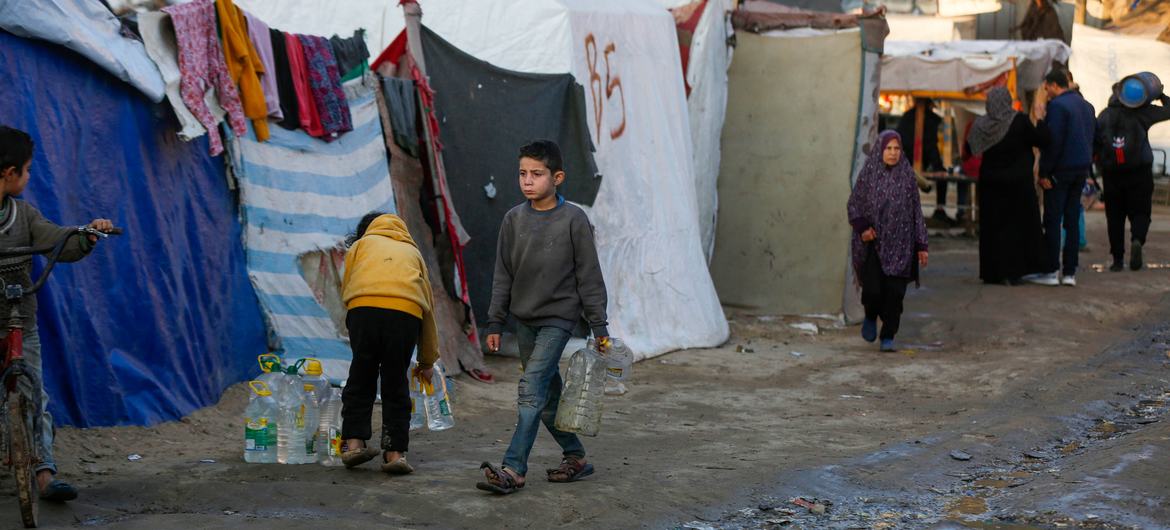
He has become an expert at water distribution routes, haggling for bread and carrying heavy gallons of water. I feel boundless pride in his courage, yet simultaneously a painful sense of powerlessness because I can’t protect him from what’s happening around us.

Oasis of hope

My wife is trying to create an oasis of hope for our other children. My two eldest daughters continue to learn online when the internet is intermittently working and to read whatever books are available.

My youngest daughter draws on worn pieces of cardboard while my youngest son, who is four, has no memory of anything other than the sound of explosions.

We stand helpless in the face of his innocent questions. There are no schools, no education, only desperate attempts to keep the brightness of childhood alive in them, in the face of a brutal reality.

More than 625,000 children in Gaza have been deprived of an education.

This is due to the destruction of schools and the lack of a safe environment in which to learn.

The future of an entire generation is threatened.

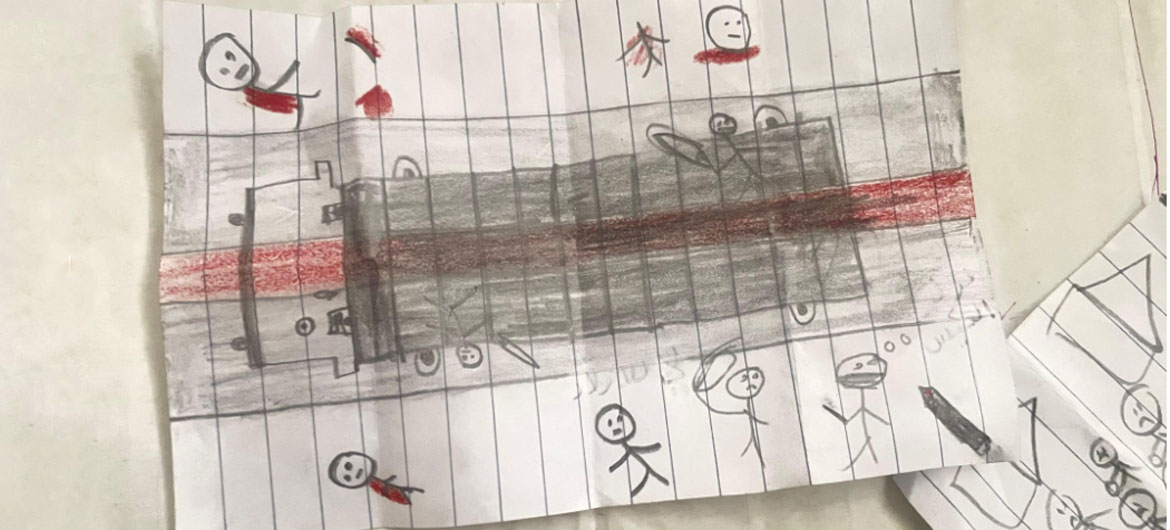
A drawing depicts people dying as they try to access food from a truck in Gaza.

Bearing witness

I work alongside other journalists. We wander between hospitals, streets and shelters.

We carry our journalistic equipment not only to document events, but also to be a voice for those whose voices have been silenced.

We film a child suffering from severe malnutrition, listen to the story of a man who has lost everything and witness the tears of a woman unable to provide food for her children.

We document a scene which is repeated daily: Thousands of people rush to reach a flour truck. They run after the trucks, collecting the last grains of flour from the ground.

They don’t care about danger as the hope of getting their hands on a loaf of bread is more precious than life.

Each time, casualties fall along the convoys’ routes and militarised distribution points.

We walk the streets, alert to every sound, as if we’re waiting for the end with every turn we make.

There’s no longer time for surprises or sadness, only constant tension and anxiety that has become part of the survivors’ DNA here.

This is the reality that cameras don’t capture, but it is the daily truth we try to explain to the world.

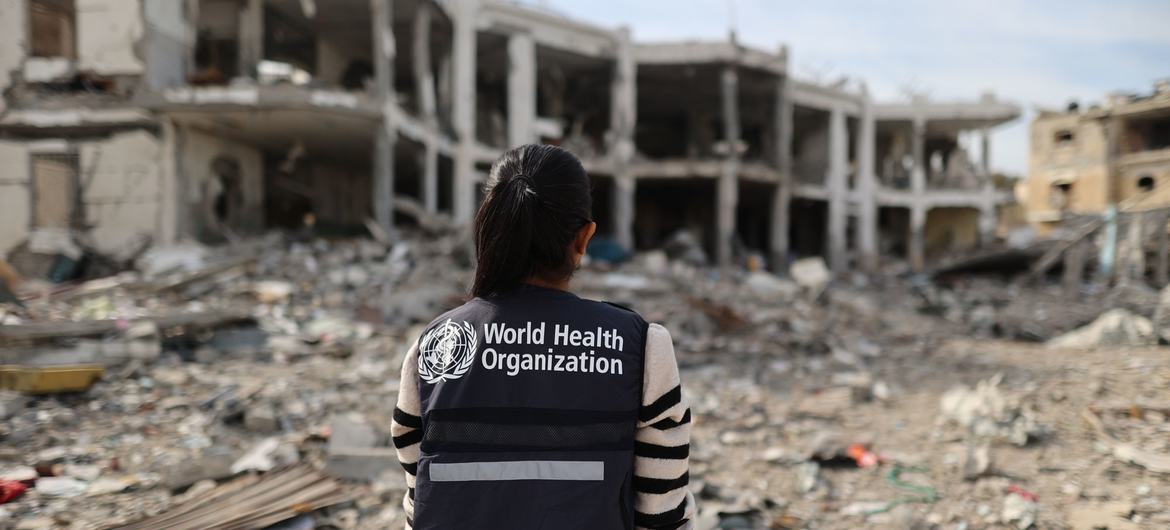
A WHO worker assesses a destroyed hospital in northern Gaza.

Tears of UN colleagues

We document the efforts of the United Nations and its various organizations.

I see staff sleeping in their cars to be closer to the crossings, and I see our UN colleagues crying as they listen to the stories of my fellow Gazans.

There is not enough aid. The crossings open and close abruptly, and some areas are deprived of supplies for days.

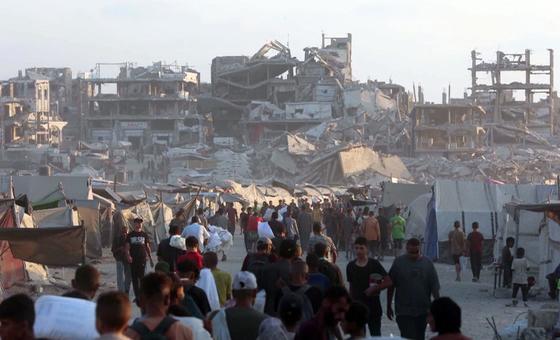
The western areas of Gaza City are overcrowded. Tents are spread out on every corner, on the sidewalks and among the rubble of destroyed homes, in dire conditions.

Empty markets

The value of the local currency has evaporated. Those with money in their bank accounts pay fees of up to 50 per cent to withdraw it, only to find themselves facing nearly empty markets. Whatever is available is being sold at exorbitant prices.

Vegetables are scarce, and when available, a kilogramme can cost more than $30. Fruit and meat are a distant memory.

The health system is in a state of complete collapse as 85 per cent of Gaza’s hospitals are no longer functioning and most dialysis and chemotherapy services have stopped.

Medications for chronic diseases are unavailable. I am unable to secure medicine for my parents, who suffer from diabetes and high blood pressure, and there is no hope of surgery which could save my brother’s arm, which was injured in an airstrike.

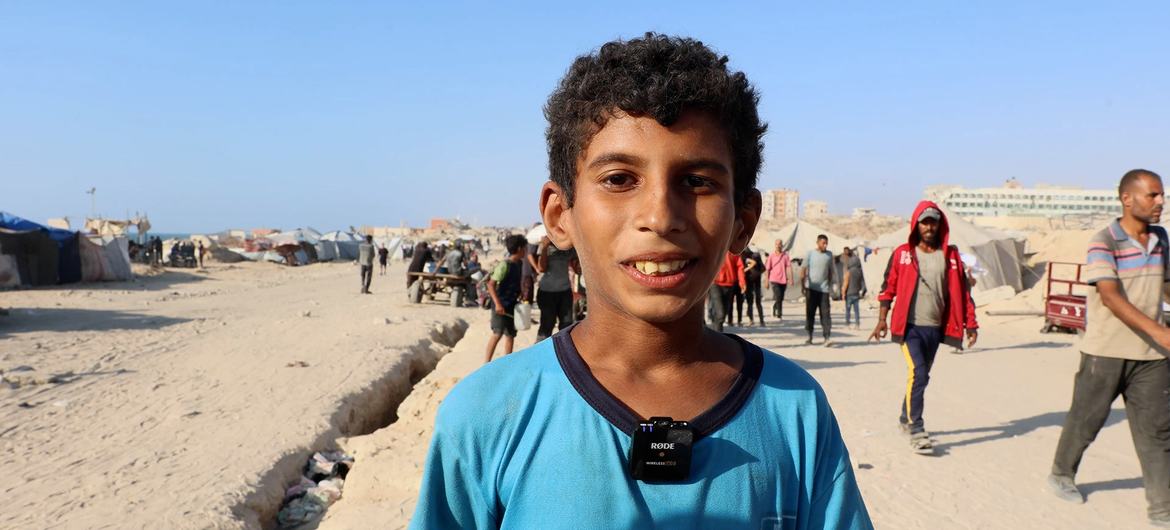
A young boy carries a water bottle through an area where people are living in tents.

Witness to everything

Sometimes, I feel caught between two identities, the journalist documenting the suffering and the human experiencing it.

But, perhaps this is where the strength of our journalistic mission from the Gaza Strip lies: to be a voice from the heart of the tragedy, to convey to the world the reality of what is happening on a daily basis.

Every day in Gaza poses a new question:

Will we survive?

Will our children return from their search for water?

Will the war end?

Will the crossings be opened so aid can be delivered?

From here, we will continue, because untold stories die and because every child, woman and man in Gaza deserves to have their voice heard.

I am a journalist.

I am a father.

I am displaced.

And I am a witness to everything.

Hunger in Gaza: Women and children face death in search of food

“I used to easily receive aid distributed by the UN,” Abir Safi, a displaced person from the Zeitoun neighborhood of Gaza City, told UN News. “Now, we get nothing. I risk my life by going to the Zikim crossing and returning with an empty bag. All I want is to return to my children with some food.”

Ms. Safi said she never imagined that providing for her children would become a deadly adventure. After losing her husband in the war, she found herself alone, facing the responsibility of supporting her family amid deteriorating humanitarian conditions.

She was among thousands of citizens who gathered along Rashid Street in northern Gaza, which connects the Zikim crossing to northern Gaza, hoping to receive humanitarian aid.

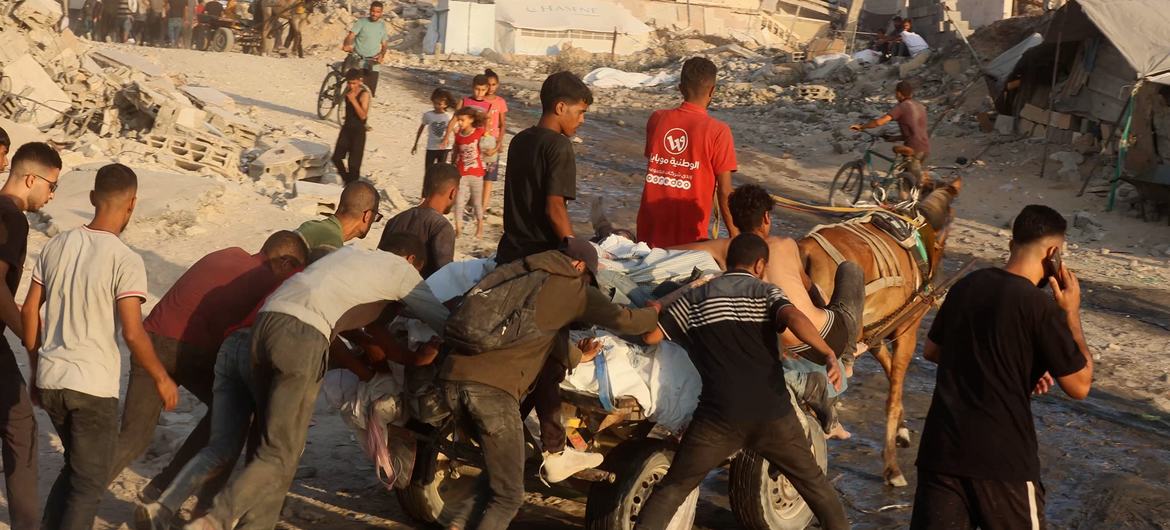
A horse-drawn cart carries the bodies of more than seven Palestinians killed while trying to reach aid.

‘Bullets over my head’

Our correspondent witnessed the arrival of thousands of Palestinians returning from a journey in search of food supplies. Thousands of emaciated bodies – men, women, and children – were caught in a scene that has become a daily occurrence. Everyone is running in search of the few aid trucks that reach northern Gaza.

The United Nations has the capacity and resources necessary to distribute aid in a safe, dignified manner to all those in need in the Gaza Strip. The organization continues to call for the lifting of restrictions imposed by the Israeli authorities on the entry and distribution of aid into Gaza.

The danger lies not only in the crowding and chaos, but also in the death that lurks around everyone. Fayza al-Turmisi, a displaced person from Shuja’iyya, described the horrific scene along Rashid Street in northern Gaza.

“They fire shells and bullets at us here. We are forced to lie on the ground. I hide among more than 200 men, and bullets fly over my head. If you raise your head, you get hit. If you stay on the ground, bullets fall around you.”

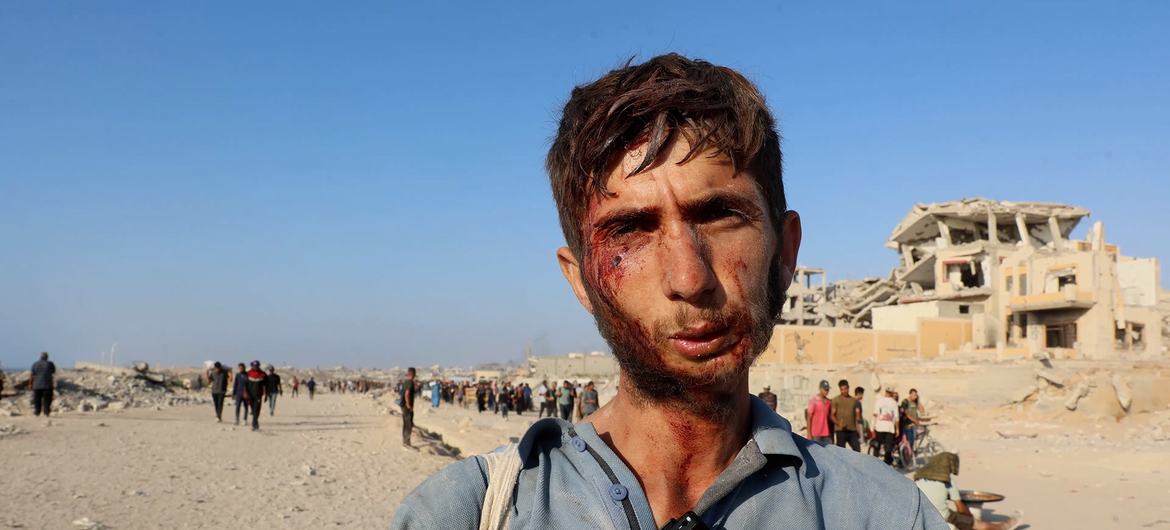
A young Gazan was injured while trying to obtain aid.

Between mourning and hunger

Mohammed Mudeiris, aged seven, said he lost his father in an airstrike just the day before. He doesn’t have the luxury of grieving for his father as he is now the sole breadwinner for his siblings.

Walking through the dense crowds, he extends his small hand, begging for a handful of flour to take back to his siblings.

“I am the eldest of my siblings,” he said. “My father was killed in an airstrike yesterday. I am trying to ask someone to give me a plate of flour or a meal from the aid that arrived today.”

Mohammed Mudeiris, a child who lost his father in an Israeli airstrike, coming to secure food for his siblings from aid trucks arriving via the Zikim crossing.

‘I risk my life to bring food to my children’

The race for food is not limited to men. Women are forced to take this risk, driven by the responsibilities of motherhood and the needs of their children.

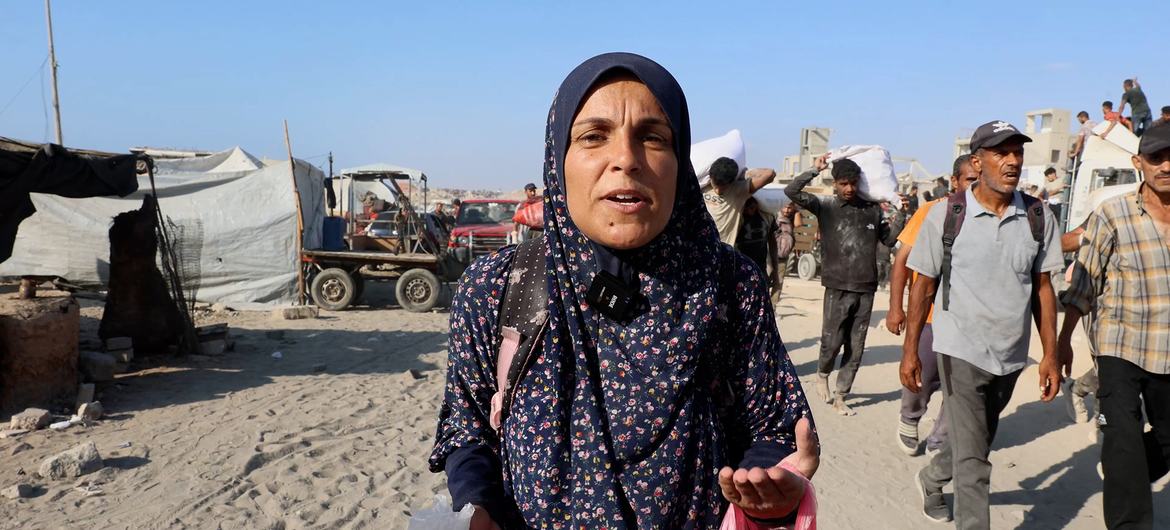
“I throw myself into danger to bring food for my children,” said Asma Masoud, who was displaced from northern Gaza.

“We never get our fair share of aid,” she said. “My husband is paralysed, and there are widows and women like me who cannot provide food for their children.”

Highlighting that some young people take the aid and sell it at exorbitant prices that she cannot afford to buy, Ms. Masoud called on the world to ensure “a fair distribution mechanism and to allow UNRWA [the UN agency for Palestine refugees] and international organizations to do so”.

Aid should be distributed via text messages so that every person in need receives their share, as was the case before, she said.

“But now, only a few people are profiting and selling the aid,” she stated. “We cannot tolerate that. It is an injustice.”

Asma Masoud, a displaced woman from northern Gaza, returning from a search for food.

‘I don’t know how I’m going to feed my children’

Ms. Safi agreed with Ms. Masoud, complaining that “the beneficiaries now are largely thieves.”

“I’ve lost a lot of weight, and all my health is gone,” Ms. Safi said. “I don’t know how I’m going to feed my children. I want to receive aid with dignity. Aid used to come through the United Nations, and I could easily go and receive it, but now I don’t receive anything.”

I want to receive aid with dignity.

This chaotic system leaves behind widows, women, the elderly and many other complex humanitarian cases, such as Maqboula Adas, who supports her injured husband and her son who has a broken leg.

“My husband is injured and cannot move,” she explained. “My eldest son has a broken leg, and I also have three daughters. No one supports us except God. Every day I go to try to get some flour. If it weren’t for that, they would have died of hunger.”

Maqboula Adas, a displaced woman from Shuja’iyya.

Carts carry corpses

At the height of this tragedy, macabre scenes emerge. Instead of carrying bags of flour, a horse-drawn cart transports the bodies of at least seven Palestinians who were killed while trying to get aid.

While some young men carried sacks of flour on their backs, ambulances bring the wounded and dead from the northern regions. The achievement of getting food aid comes at a heavy price.

One young man was injured in the head and face while trying to collect aid.

“I came to collect aid, but today wasn’t my day,” he said. “I will come again despite my injury, and I hope God will provide for me next time.”

Thousands of Palestinians seeking aid arriving from the Israeli Zikim crossing in northern Gaza.

Risk of famine

Gaza is facing a severe risk of famine, with food consumption and nutrition indicators at their worst levels since the beginning of the current conflict, according to a warning issued by the Integrated Food Security Phase Classification (IPC). 

At least 147 deaths due to hunger and malnutrition have been reported, including 88 children. More than 28,000 cases of severe acute malnutrition have been recorded among children, according to reports from the World Health Organization and the World Food Programme.

Despite promises to facilitate the flow of aid, restrictions on the entry of food and fuel, along with ongoing attacks near the crossings, have prevented supplies from reaching those in need. In addition, the chaotic distribution of aid within Gaza has further complicated the situation and placed civilians at greater risk.

The UN human rights office (OHCHR) has documented the deaths of hundreds of people attempting to access aid amid ongoing gunfire and shelling near relief truck routes and military distribution points.

Abir Safi, a displaced woman from Al-Zaytoun neighbourhood.

‘If I get killed, who will take care of my children?’

Amidst this chaos, widow Enaam Siam, a mother of six, recounts her struggle for food.

“I am a widow and a mother of six orphaned children, one of whom is injured,” she said. “Every day, I go out amidst death to bring them food. I see the dead and wounded.”

She asked why aid is no longer delivered to warehouses and distributed via text message.

“If I am killed, who will take care of my children? There are thousands of women in a similar situation. We want safety, peace and a fair system that ensures aid reaches those in need.”

Source link

Gaza: As aid trucks enter, videos of Israeli hostages and attack on Red Crescent staffers spark outrage

Meanwhile, on Thursday and again on Saturday, Palestinian Islamic Jihad and Hamas militants published disturbing videos of two emaciated Israeli hostages, sparking worldwide outrage and condemnation from UN leaders, including Secretary-General António Guterres on Monday.

The hostages pictured, Rom Braslavsk and Evyatar David, are two of the 49 are still being held in Gaza, including 27 the Israeli military says are dead.

At Monday’s daily briefing in New York, UN Deputy Spokesman Farhan Haq said the Secretary-General “was very shocked by this unacceptable violation of human dignity.”

UN rights chief Volker Türk added in a statement that he was appalled by the humiliating treatment of the hostages. Both he and the Under-Secretary-General for Humanitarian Affairs, Tom Fletcher, reiterated their call for an unconditional, immediate release of all hostages still being held since the 7 October terror attacks.

The High Commissioner said the “intolerable” sight of starvation in Gaza served as another reminder that the violence had to end. “Saving lives must be everyone’s priority.”

He called for Israel to immediately allow and facilitate rapid and unimpeded aid: “Denying civilians access to food may amount to a war crime, as well as potentially a crime against humanity.”

Attack on aid workers

On Sunday, the Israeli military reportedly struck the headquarters of the Palestinian Red Crescent Society in Khan Younis, killing one and injuring three other staff members.  

The facility is marked with the Red Crescent emblem and is thus protected under international humanitarian law.

The UN rights office (OHCHR) in Palestine expressed deep shock and outrage over these killings.

“These workers continue to engage in life-saving efforts putting their own lives at risk,” OHCHR said.

Aid entry  

Amid these controversies, the Director-General of the World Health Organization (WHO), Tedros Adhanom Ghebreyesus, posted on social media on Saturday, saying that since Friday, the agency had brought 24 trucks with medical supplies into Gaza.  

Items included essential medicines, trauma and surgery supplies, treatments for non-communicable disease and laboratory and water testing supplies.  

Mr. Haq also highlighted on Monday that in recent days, the UN and its partners have collected wheat flour, ready-to-eat rations and hot meals from crossing points into Gaza, but most of the cargo was taken by the hungry and desperate before reaching intended destinations.

Additionally, hygiene kits and nutrition supplies, including high-energy biscuits for pregnant and breastfeeding women and infant formula, have entered in the past week.

However, in the second week since the Israeli announcement of tactical pauses to allow safe passages for UN aid convoys, Mr. Haq said realities on the ground remain largely the same.  

This includes many challenges to delivering aid, resulting in the impediment of two of the 11 missions on Sunday and the full passage of only seven.

Famine-like conditions

This aid is still a fraction of what is needed, as a catastrophic food crisis worsens across the Strip.  

The World Food Programme (WFP) said it “is doing everything possible to distribute vital food assistance to families,” but reported on Sunday that over half a million people in Gaza are enduring famine-like conditions.  

The UN aid agency for Palestinians (UNRWA) released an audio of Manar, an employee who works within Gaza, on Monday. She said that “food is never enough,” and that many walk in the heat for hours to search for food and medical supplies.

The Commissioner-General for UNRWA, Philippe Lazzarini, underscored that this near-famine is largely due to deliberate efforts to dismantle the UN-coordinated humanitarian system through the Israeli and US-backed Gaza Humanitarian Foundation (GHF), which is responsible for the killing of nearly 1,400 starving Palestinians near its sites and convoy routes, according to Gaza’s health ministry.

Prioritising the GHF, Israel has prevented UNRWA – “the backbone of humanitarian response” – from bringing in assistance since 2 March, he said. 

Hunger lines in Gaza: ‘Food is not enough’

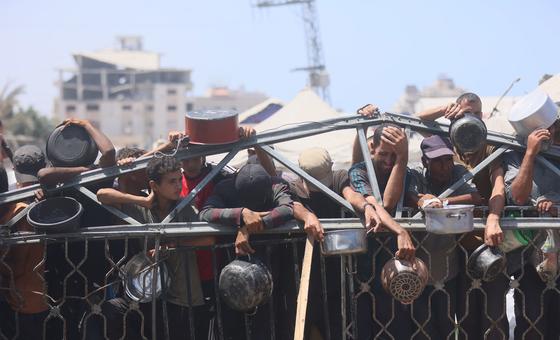
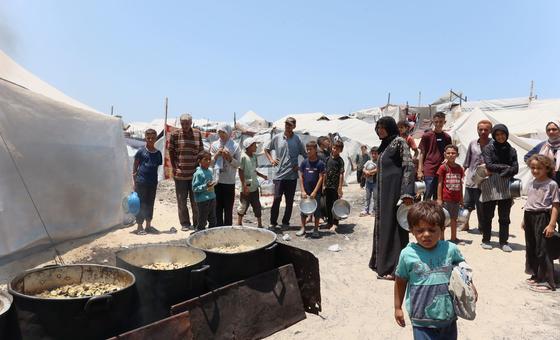
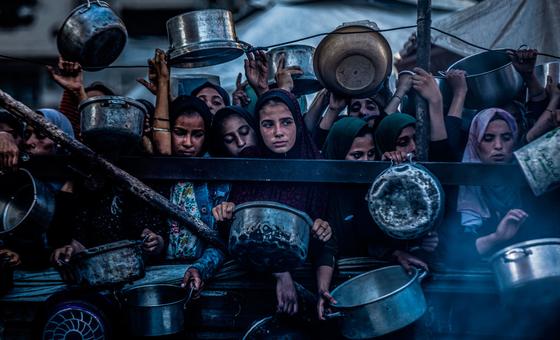
Earning a living has become a daily struggle, and hundreds of men, women and children stand in endless queues, under the scorching sun, outside the few community kitchens that serve nothing but lentil soup.

A community kitchen in western Gaza reveals a panorama of painful scenes amid displaced people suffering, their cries for help and their urgent appeals to the world, demanding an end to their tragedy and relief.

Community kitchen workers are busy preparing lentil soup while plastic bowls and empty plates are piled up behind an iron fence, waiting for a small amount that many may not be able to get a sip of.

After a bitter struggle, Ziad Al-Ghariz, an elderly displaced person from Gaza, managed to obtain a cup of lentil soup. He sat on the floor and began to take slow sips. He told UN News that he had not tasted bread for 10 consecutive days.

‘We are dying of hunger here’

“I eat the lentil soup distributed by the community kitchen,” he said. “I cannot afford flour at all. I do not have the money for it, so I try to get whatever the kitchen distributes. The people of Gaza are hungry.”

Young Mohammed Nayfeh says he spent four hours waiting for a meal for his family.

“I’ve been standing here for four hours, and I can’t get any food in the crowds and the sun,” he said. “We’re dying. We need support. We need food and drink. Where is the world? We’re dying here of hunger. Every day we eat only lentils. There’s no flour, no food, no drink. We’re dying of hunger.”

A group of displaced Palestinians gathering in front of a local community kitchen in western Gaza City.

Burn in the sun or get trampled

“Either we burn in the sun or we are trampled underfoot”

Umm Muhammad, a displaced person from the Shujaiya neighborhood, described the macabre scene around her.

“There is no water, no food, no bread,” she said. “The bitterness of the situation forces us to come here. In the end, we return with nothing. We either return burned under the sun or trampled underfoot due to overcrowding, and we return empty-handed. And no one listens.”

Hussam al-Qamari, who was also displaced from Shujaiya, said the situation is no longer acceptable.

“We are dying, and our children are starving to death,” she said. “So much is happening to the people of Gaza. Much of what is happening is unacceptable. An old man like me has been standing here since morning, carrying a bowl for his children to eat breakfast, and they still haven’t eaten.”

Um Muhammad, who fled from the Shujaiya neighbourhood in eastern Gaza City to its western areas, waits to get food.

From classrooms to queues for lentils

According to the latest findings from the United Nations Relief and Works Agency for Palestine Refugees (UNRWA), one in five children in Gaza City suffers from malnutrition, with cases increasing daily.

The image of this little girl standing behind an iron fence, holding her empty bowl waiting for a little lentil soup, encapsulates this horrific tragedy, for which children pay the heaviest price.

Bassam Abu Odeh, a displaced person from Beit Hanoun, made an appeal.

“We call on all the free people of the world and peace lovers to help us provide food and water until this famine imposed on us by the occupation ends. The trucks allowed into the area by the occupation are not even a drop in the ocean of needs. We have no one, but God.”

A young girl from Gaza waiting to fill her container with lentils.

‘Food is not enough’

Umm Rami, a displaced person from the Zeitoun neighborhood, said the necessities of life are lacking in Gaza, calling on the world to look at the people of the Strip with compassion.

“I came here to get a small amount of food to feed my children. “This is our reality now: we come to community kitchens for food, having once lived with dignity and respect in our own homes.”

She said food is not enough.

“We have reached a point where we stand in lines for food and water. As you can see, the lives of children now revolve around the lines for water and food. Food is not enough. We have only God. The world must look at us, and everyone must awaken their consciences.”

Undeniable risk of famine

According to a warning issued by the Integrated Food Security Phase Classification (IPC), Gaza is facing a severe risk of famine, as food consumption and nutrition indicators have reached their worst levels since the beginning of the current conflict.

The alert highlights that two of the three famine thresholds have been observed in parts of the Gaza Strip, with the World Food Programme (WFP) and the UN Children’s Fund (UNICEF) warning that time is running out to launch a comprehensive humanitarian response.

The UN Secretary-General said the alert confirms that Gaza is on the brink of famine. He said the facts are undeniable, and that Palestinians in Gaza are suffering a humanitarian catastrophe of epic proportions.

“This is not a warning, but a reality unfolding before our eyes,” he said.

He stressed the need for the aid trickle to become an “ocean”, with food, water, medicine and fuel flowing without hindrance.

“This nightmare must end,” he declared.

Death in search of food

The United Nations Office for the Coordination of Humanitarian Affairs (OCHA) said that days after the start of the tactical pauses announced by the Israeli authorities in Gaza, “we continue to witness casualties among those seeking assistance and more deaths from hunger and malnutrition.”

The UN office said that parents continue to struggle to save their starving children. Desperate and hungry people continue to unload small amounts of aid from trucks that manage to exit the crossings.

Although the UN and its partners are taking advantage of every opportunity to support those in need during unilateral tactical pauses, conditions for delivering aid and supplies are far from adequate, according to OCHA.