First Person: ‘Tomorrow is too late’ to scale up humanitarian aid in Haiti

Women and girls face the brunt of this crisis. Gender-based violence (GBV) such as gang rape is rampant, particularly in the capital Port-au-Prince, and is exacerbated by precarious conditions in displacement camps.

Yet, recent funding cuts have shut down centres for sexual and reproductive health and GBV services. Displacement and insecurity make the services that do exist often too difficult to access.

Christian Vovi, the UN reproductive health agency’s (UNFPA) Humanitarian Coordinator in Haiti, has been working in the Caribbean island nation since 2022.

He sat down with UN News ahead of World Humanitarian Day to discuss this crisis and his perspective as a humanitarian on the ground.

© Christian Vovi Lubanzadio

Christian Vovi, UNFPA Humanitarian Coordinator in Haiti.

Remote work

“Sometimes there is the possibility of an attack, so we are obliged to work from home.

This situation has limited our capacity to go to the field to see the affected people, to meet with women, to observe the situation in the camps and communities, so security is a barrier for us sometimes.

We can organize meetings virtually, meet with women online and with the partners to follow up and monitor activities.

Increase in GBV cases

Continued displacement creates new GBV needs that humanitarian actors must respond to, despite the limited financial capacities. There is a continuous increase in the number of reported cases of GBV.

In some of the cases we manage, we hear about how gang members arrive in the community, burn houses and then rape a mother or father in front of the family.

When you talk with women, they are desperate as they struggle to secure even the most basic necessities.

Because women don’t have access to financial resources, there has been an increase in the cases of prostitution.

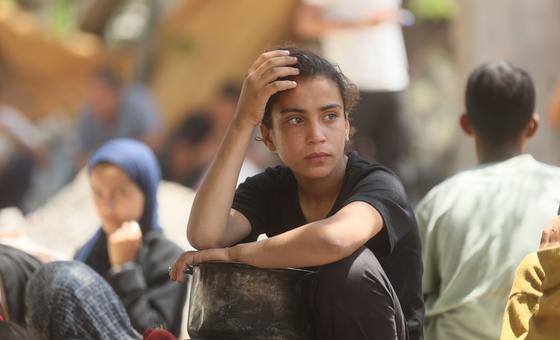
© PAHO/WHO/David Lorens Mentor

People gather at a site for displaced people in Port-au-Prince, Haiti.

Desperate for services

Protection services are urgently needed. We have more than 100 sites for displaced people, but only 11 or 12 sites are covered with the GBV protection services.

There is also the issue in terms of shelter, because when we have many families living together in a small room, there is a larger risk of GBV.

Urgent funding needs

UNFPA distributes dignity kits, which contain items that women need, and provides other goods and services, but it’s not enough, we need more.

In Haiti, there are now over one million displaced people. Since 26 per cent are women of reproductive age, we need to mobilise millions of dollars so we can meet their urgent needs.

In 2020, the US provided around 65 per cent of the humanitarian funding for the response plan in Haiti. But with the US funding cuts, we are no longer able to provide services to 25,000 women and girls in certain displacement sites.

The US also funded 100 per cent of the post-rape kit procured since 2023, so now, our stocks of these kits are very low.

A woman says she was raped while fleeing from gang violence with her six children and while she was four months pregnant.

Work of UNFPA despite limitations

Despite these funding and access limitations, UNFPA and its partners continue to stay in Haiti.

UNFPA leads the GBV coordination mechanism. We continue to provide remote support for the GBV cases through the hotline to ensure that the cases can access services despite the security limitations.

We continue to ensure that if movement is limited, the affected people can access the services, psychosocial support and information on available services through the telephone hotline.

Call to action

The international community and donors must fill the large funding gap in the Haitian humanitarian response plan.

The Haitians think that their situation is neglected because they believe that the humanitarian international community has all the assets and funding to stop the violence and assist the affected people.

The government, diplomats and the international community should advocate now for a clear end to the current violence and to stop the retaliation against women and girls in Haiti.

It is important to act now because for me, tomorrow is too late regarding the humanitarian need and the living conditions of the women in the displacement sites.”

Source link

World News in Brief: Gaza aid crisis latest, deadly floods in India and Pakistan, funding cuts exacerbate Somalia drought

In an alert from the World Food Programme (WFP), the agency said that half a million people “are on the brink of famine”, a claim backed up by multiple humanitarian agencies. The latest worrying data is showing widespread acute malnutrition.

A ceasefire is the only way to scale up aid deliveries, the UN agency insisted. It explained that although teams are doing everything they can to deliver food assistance, only 47 per cent of the daily target amount is getting in.

No meals, no bread

Unless the fighting stops, organized aid distributions and WFP-supported hot meals and bakeries can’t restart, the agency stated.

The UN relief agency for Palestine refugees, UNRWA, reported on Monday that instead of being able to prepare for the start of a new school year, children in Gaza are instead searching for water and queuing for food while their classrooms have “turned into crowded refuges”.

Three years of schooling has now been lost, the agency stressed in a tweet.

UN chief expresses ‘deep sorrow’ over deadly flash floods in India and Pakistan

UN Secretary-General António Guterres on Monday expressed his deep sorrow at the tragic loss of life due to flash floods in India and Pakistan in recent days, with many still missing and forecasts showing the possibility of further flooding and landslides ahead.

Indian rescue services responded to a deadly flood on Friday which reportedly killed at least 60 after it crashed through a village in the Himalayas while in remote villages of northwestern Pakistan, torrents of water killed more than 300, according to news reports.

Hundreds were also injured, Pakistani authorities reported. Buner district was the worst hit, with more than 200 deaths reported there, said the provincial disaster management authorities.

Standing in solidarity

“The Secretary-General offers his sincere condolences to the victims’ families and stands in solidarity with those affected by this disaster,” said the statement issued by his Spokesperson.

UN country teams in India and Pakistan have also been placed are at the disposal of authorities although no request for assistance has been made so far.

Impacts of Somalia drought made worse by funding cuts: OCHA

In Somalia, severe drought and funding cuts are undermining lifesaving assistance there, the UN aid coordination office, OCHAsaid on Monday.

Because of the reduction in the amount of support for aid work, food assistance has declined, health centres are closing and malnutrition is high, the UN agency warned.

OCHA said that 4.6 million people now face high levels of food insecurity while two million more are at risk from funding cuts.

Funding cuts mean ‘lives lost’

Without scaled-up support, “lives will be lost and progress reversed” across the east African nation, where cash shortfalls have left one million people without food assistance every month.

The global trend seeing less humanitarian assistance has curtailed vital support for healthcare across Somalia. So far this year, it has impacted at least 150 medical facilities and left hundreds of thousands of Somalis without the medical care they need.

OCHA noted that because of the cuts, the number of people being targeted for assistance in Somalia has had to be reduced by a staggering 72 per cent.

Source link

First Person: From aid worker to refugee and back in war-torn Sudan

Sudan is one of the world’s largest and most complex humanitarian crises, with more than 30.4 million people – over half the population – urgently needing humanitarian assistance, yet the 2025 Sudan humanitarian needs and response plan is severely underfunded, with only 13.3 per cent of the required resources received so far.

Forced to flee the country with his family after the war intensified, Mr. Ibrahim returned to help people affected by the war in Darfur. Ahead of World Humanitarian Day, marked annually on 19 August, he described his journey, from aid worker to refugee and back again to Sudan.

“I was at home helping my daughter revise for her grade six exams, scheduled for the next day. Then, out of nowhere, the sound of heavy gunfire shattered the silence in my hometown, Zalingei, the capital of Central Darfur state, which remains gripped by insecurity and critical shortages of basic services.

The former Humanitarian Aid Commission Building in Khartoum, Sudan.

At first, I thought the gunfire would pass quickly. I rushed to stock up on food supplies and water, enough for six days. But, the streets became battlegrounds. All I could do was try to keep my family safe.

Despite the chaos, I continued to work. Electricity and Internet access were sporadic, but I kept my phone charged to send daily updates to the OCHA Head of Office. It gave me purpose amid the uncertainty.

Eventually, it became too dangerous to stay.

The journey of displacement

On the 39th day, we fled. Our family of 10 began a harrowing journey with no clear destination, only the desperate need to escape. We left behind more than just walls and belongings; we left behind a life built with love and hope.

Adam with two of his daughters in Uganda.

Our journey took us first to Nyala in South Darfur, then to Kosti in White Nile State. From there, we crossed the border into neighbouring South Sudan and eventually reached Uganda, a country I had heard offered stability and a good education system for children. The journey by car took 23 days. My children had no passports, and there were no refugee camps for Sudanese nationals at the time.

To my relief, migration authorities in both countries were kind and supportive. In Kampala, we rented a house and received asylum status within three days. The moment I held our refugee cards, I exhaled deeply and thought ‘we’ve made it.’

I enrolled my children in school and began working online, finally finding a sense of stability.

Here I was, an aid worker now a refugee, needing the same support I once provided to others.

Returning to Zalingei

Months later, I faced a difficult decision. Do I stay with my family or return to Darfur and continue the work I had done for years? I chose to return.

Leaving my family behind was incredibly hard, but their safety was paramount.

I returned to Zalingei with a renewed sense of duty to serve those still trapped in the hardship I had endured. I was also the sole breadwinner for my family and needed to ensure they could survive in Uganda.

My hometown changed

When I arrived in Zalingei, I barely recognised it. Buildings were scarred with bullet holes.

I found another family sheltering inside our house, a doctor and his family whose own home had been destroyed. I let them stay, setting aside a small section for myself and a colleague. The house had been looted. Windows were gone and our belongings had vanished. I had hoped to find my children’s school certificates, photos, any documents left behind. But, they were gone.

Everyone was armed, even children as young as 15. People were tense, traumatised and always bracing for the next wave of violence.

Google Earth image of Zalingei as of 21 March 2025 with visible signs of house destruction on the southern part of the city.

Machine guns and wreckage in West Darfur

I didn’t stay long in Zalingei. Soon I was called to El Geneina in West Darfur, a town devastated by violence, and whose people desperately needed humanitarian support.

El Geneina’s streets were strewn with the wreckage of burned-out military vehicles. Armed men patrolled in pickup trucks mounted with machine guns.

The humanitarian needs were immense. People lacked food, shelter, household essentials, healthcare, clean water and protection, but we never had enough resources for them.

Family, sacrifice and hope for Sudan

It’s heartbreaking to witness the suffering caused by the recent donor funding cuts. Many organizations have been forced to scale back their operations, leaving countless people without help.

It’s heartbreaking to witness the suffering caused by the recent donor funding cuts.

Still, we did all we could.

Between 2023 and 2025, we reached more than 800,000 displaced people with critical assistance, in West and Central Darfur.

I also went on to work with OCHA colleagues in Chad to coordinate cross-border humanitarian convoys into Darfur.

These convoys were lifelines, delivering food, medicine and supplies to communities cut off by conflict.

Today, I remain in Sudan. 

My family is still in Uganda. I visit them once a year, but the separation is painful.”

Source link

UN warns Gaza crisis could worsen without safe, unrestricted aid flow

In his regular daily briefing, UN Spokesperson Stéphane Dujarric highlighted that ongoing delays, bottlenecks at holding points and interference in the loading process at crossing platforms are undermining efforts to collect and distribute supplies to those in need.

It is imperative that the UN and its humanitarian partners are enabled to deliver aid at scale, using community-based mechanisms to reach the most vulnerable,” he said.

Injured trying to reach food

Recent figures illustrate the scale of the challenge. Between May 27 and August 8, the Red Cross Field Hospital in Rafah treated more than 4,500 wounded patients – most reporting injuries sustained while attempting to reach food distribution sites.  

Many were hurt in crowd crushes or subjected to theft or violence immediately after receiving critical food aid.

Of 12 aid missions requiring coordination with Israeli authorities on Thursday, five were facilitated without impediments. Four missions were cancelled by the organisers, and three others were impeded and only eventually fully accomplished – these included the collection of food aid from Zikim and Kerem Shalom/Karem Abu Salem crossings.

The UN Spokesperson also highlighted an ongoing starvation crisis, with increasing numbers of deaths, particularly among children.

Hospitals are struggling to cope with rising cases of malnutrition and many facilities have reportedly run out of bedspace to treat patients, he said.

No cooking fuel

Energy shortages are compounding the crisis, Mr. Dujarric said, noting that cooking gas has been unavailable in Gaza’s markets for five months, while firewood has become increasingly unaffordable.

More people are resorting to using waste and scrap wood as alternative fuel sources for cooking, which only makes worse health and protection risks, and causes environmental hazards,” he added.

Protect fleeing civilians

He also stressed that civilians must be protected in the event of expanded military operations in Gaza City.

Fleeing civilians must be protected and they must have their essential needs met, and they must be able to voluntarily return when the situation allows. And if they choose to stay, they should not be threatened or put at risk,” he said.

Mr. Dujarric also reiterated the UN’s long-standing call for the immediate and unconditional release of hostages held in the Strip.

Trapped in Gaza: Palestinians with disabilities cannot reach aid

But for an increasing number of Palestinians, including those who cannot hear the orders or whose mobility is impaired, following these orders may be impossible. Yet, failure to do so, could cost them their lives.  

“In a normal situation, people with disabilities suffer the most. And in wartime, of course, the situation is heightened further,” said Muhannad Salah Al-Azzeh, member of the UN Committee on the Rights of Persons with Disabilities at a public dialogue this week in Geneva.  

With the number of disabled people in Gaza increasing every day, Mr. Al-Azzeh said that the minimum level of safety for people with disabilities is not being upheld.  

No replacements for a broken hearing aid

Over 83 per cent of people with disabilities in Gaza do not have the assistive devices they need, including wheelchairs, hearing aids and other tools. And for those that do, the batteries which enable these devices to work are in very short supply.   

This makes it exponentially more difficult – if not impossible – for them to access healthcare and food.  

This shortage comes amidst an increasing number of people with disabilities. The UN Relief and Works Agency in Palestine (UNRWA) estimates that one in four Gazans has a new disability as a result of the war between Israeli forces and Hamas, which requires treatment and rehabilitation.

At least 35,000 people have “significant hearing damage” as a result of repeated explosions. And Ammar Dwaik, director-general of the Palestinian Independent Commission for Human rights, said that an average of 15 children are newly disabled each day. According to some rights groups, Gaza has the largest number of child amputees in modern history.  

But with over 134,000 people having sustained conflict-related injuries – 40,500 of whom are children – the besieged and under-resourced healthcare system cannot keep up.  

“Hospitals, ambulances, and medical and humanitarian personnel have been systematically targeted, with over 1,580 health workers and 467 humanitarian staff killed,” UNRWA noted.

Aid out of reach

Seeking life-saving aid has become a life-threatening prospect for even the healthiest in Gaza. But for people with disabilities, is almost impossible, according to Hector Sharp, a representative from UNRWA at the meeting in Geneva.  

“Reaching [the distribution points] and needing to physically compete for this aid is difficult for all Palestinians, but all the more so for people with disabilities to whom aid is being effectively placed out of reach,” Mr. Sharp said.  

The US and Israel-backed Gaza Humanitarian Fund, for example, has only a handful of distribution points throughout the Gaza Strip since it bypasses all established UN and NGO operations, forcing people to walk long distances in the hopes of receiving meagre amounts of food.  

If people with mobility impairments do not have families or friends willing to retrieve aid for them, they may simply be unable to reach it, according to Mr. Al-Azzeh.

Key infrastructure destroyed

Since 1962, UNRWA has operated a rehabilitation centre for the visually impaired in the Gaza Strip. It was the only one of its kind and served, at any given time, over 500 children.  

Today [the centre] lies in rubble,” Mr. Sharp said.  

The destruction of other civilian infrastructure throughout the Strip – including schools and hospitals – is impeding rehabilitation efforts for people with disabilities and further entrenching societal exclusion.  

The UNRWA representative in Geneva noted the impact that shuttered schools will have on children with disabilities.  

“For children with disabilities the loss of inclusive education deepens the systematic inequalities and places them at a heightened risk of lifelong social and economic exclusion,” he said.  

Peace, the only answer 

Despite the challenges, UNRWA has continued to provide services to people with disabilities, including over 53,000 sessions of physiotherapy and assistive devices or rehabilitation services to 8,500 people since the beginning of the year.  

Tedros Adhanom Ghebreyesus, Director-General of the World Health Organization (WHO), has called on the Israeli authorities to allow in more assistive devices and technology both for people with existing disabilities and those who are sustaining new ones amidst the ongoing conflict.  

He also called for medical evacuations to be expanded in order to allow people with disabilities to obtain vital, specialised care. But ultimately, he said, the only lasting solution is to end the conflict.  

“Peace is the only way to stop the suffering of Palestinians, including those with disabilities.” 

Source link

World News in Brief: Casualties in Ukraine, Burkina Faso aid helicopter blast, Uganda urged to release opposition leaders

The monthly total also marked a three-year high, topping June’s figure, with HRMMU verifying civilian deaths and injuries in 18 of Ukraine’s 24 regions.  

“For the second month in a row, the number of civilian casualties in Ukraine hits a new three-year high,” said Danielle Bell, Head of HRMMU.

“Only the first three months after the Russian Federation launched its full-scale invasion of Ukraine saw more killed and injured than in this past month,” she added.  

Rising toll 

Numbers for the first seven months of 2025 were 48 per cent higher than in the same period last year.

Long-range weapons, including missiles and suicide drones, accounted for nearly 40 per cent of casualties. On 31 July, Kyiv saw its deadliest attack since the start of the full-scale invasion, with 31 people killed, including five children, when a missile struck a residential building.

Short-range drones alone caused 24 per cent of casualties, reflecting a sharp rise since mid-2024, as documented in a bulletin published by HRMMU in June 2025.  

The steepest monthly increase came from aerial bombs, which killed 67 and injured 209 in July, compared with 114 casualties in June. Strikes hit a penal colony in Zaporizhzhia and an apartment building in Donetsk, killing at least 21 people in total.

“Whether you are in a hospital or a prison, at home or at work, close to or far away from the frontline, if you are in Ukraine today, you are at risk of getting killed or injured by the war,” Ms. Bell said. 

Burkina Faso: Blast hits near UN aid helicopter in Solle

A UN chartered helicopter delivering food aid to the town of Solle in northwest Burkina Faso was caught in an explosion shortly after landing on Tuesday, injuring two people.

The aircraft, chartered by the World Food Programme (WFP), had just unloaded humanitarian supplies when the blast occurred nearby. One crew member and a Government partner were hurt and are now receiving medical treatment.

The helicopter sustained only minor damage and was moved to safety, WFP said. Flights to Solle have been temporarily halted while authorities investigate the incident.

Critical operation

In conflict-affected areas of Burkina Faso, WFP’s humanitarian air operations are critical for delivering life-saving assistance to hard-to-reach communities most in need.  

WFP aims to assist 315,000 of the most vulnerable people during the lean season from June to August, when families have exhausted their food stocks.

In a statement, WFP reaffirmed the agency’s “unwavering commitment to support populations in need and to reach the most remote communities with humanitarian assistance.”

Rights office urges Uganda to release opposition leaders on bail

The UN human rights office (OHCHR) on Wednesday expressed serious concern at repeated denials of bail in Uganda for opposition leader Kizza Besigye and his associate Obeid Lutale.

Both individuals have been denied bail three times since they were abducted in neighbouring Kenya and returned to Uganda last November. 

In dismissing their latest request, the High Court found them ineligible for mandatory bail merely because they had been detained in civil prison for less than the 180 days required to qualify for release, a duration that did not account for their prior deprivation of liberty following their abduction and forced return.

“We urge the authorities to reconsider the decision and grant them bail, and to ensure that any legal proceedings against them are fully in line with international human rights law,” said OHCHR spokesperson Liz Throssell.

Human rights concerns  

The UN human rights office in Uganda closed its operations there in 2023 after the Government decided to end cooperation with OHCHR.  

At the time, High Commission Volker Türk expressed concern about the run-up to the 2026 elections, amid an increasingly hostile environment impacting human rights defenders, civil society actors and journalists.

Other UN human rights mechanisms also condemned laws criminalizing same sex relations and the call for the use of the death penalty for convicted offenders. 

Source link

First Person: Echoes of war as aid arrives in Syria’s historical city

Eleonora Servino was on the first UN aid convoy to Suweida, which saw a recent escalation of violence that left many dead and thousands displaced.

As the International Organization for Migration (IOM) chief of mission to Syria, Ms. Servino said the difference on the road to Bosra is stark.

“You know that feeling when you visit somewhere as a tourist, how the memories embed themselves in your mind? Happy, peaceful places filled with stunning sights, delicious food, warm smiles and a relaxed mood. That’s how I remember Bosra, Syria, 20 years ago.

©UNESCO/Véronique Dauge

The ancient city of Bosra, Syria, a UNESCO World Heritage site, in 2015. (file)

Rivals ancient Italian relics

I went to see its ancient Roman theatre, a [UN Educational, Scientific and Cultural Organization] UNESCO World Heritage site. I recall the perfectly preserved brickwork in the tunnels leading to the stage, the intricate carvings.

Everything rivalled, even surpassed, the monuments in my native Italy. I felt at home, with a shared history. 

Recently, I returned for very different reasons.

IOM chief of mission to Syria Eleonora Servino (right) on the first UN aid convoy to the city of Sweida.

Tourists long gone

Syria has endured 14 years of brutal civil war, displacing millions. The tourists are long gone. But now, with the war over and stability slowly returning, people are coming back. My organisation, IOM, has just been officially allowed to resume operations. One of my first acts as chief of mission ad interim was to take the road back to Bosra.

It’s the only route to As-Sweida governorate, which recently experienced weeks of violence, leaving many dead and over 168,000 displaced.

I was part of the first UN assessment mission. With support from OCHA [UN humanitarian agency] and the Syrian Arab Red Crescent, the convoy delivered 40 truckloads of aid from various agencies and organizations.

© UNOCHA/Ali Haj Suleiman

Hostilities erupt in Sweida in July 2025. (file)

‘Signs of violence everywhere’

Signs of violence were everywhere. The streets were eerily quiet in Sweida. No traffic. None of the hustle and bustle you’d expect in a city that once had a population of over 70,000.

Burnt out buildings, wrecked cars and a pervading sense of tension dominated the landscape. 

We visited three areas where internally displaced people have found shelter, either within host communities or in communal centres. People have opened their homes to those forced to flee. But, the lack of electricity, water, and the blocked main road are straining resources, making everything more difficult despite the goodwill and humanitarian spirit of ordinary citizens.

‘People are still in shock’

The need for humanitarian assistance is clear, from what we saw and what we heard. People are still in shock. We spoke to individuals who have lost so much: homes, families, possessions, livelihoods.

Our DTM (displacement tracking matrix) teams are on the ground conducting regular surveys. The needs are basic yet essential: food, cash, hygiene items, clothing, cooking sets, fuel and shelter materials.

We are a vital part of humanitarian community, advocating for and supporting those displaced by the conflict. We will continue working to keep access open and improve it, ensuring people get what they need.”

Source link

Aid blockade deepens Gaza crisis as malnutrition deaths rise, warns UNRWA

“For over 150 days, not a single truck from UNRWA has been permitted to deliver food, medicine or other essentials into Gaza,” the agency said on Friday. “This denial of access is costing lives every single day.”

Nearly 100 children dead from malnutrition

According to Gaza’s Ministry of Health, cited by the UN, at least 61,158 Palestinians have been killed and more than 151,000 injured since October, amid relentless Israeli bombardment and ground operations.

UNRWA said nearly 350 of its own staff are among the dead since Israel’s military operation in Gaza began following the 7 October 2023 Hamas-led terror attacks.

Many civilians have been killed while sheltering in schools or tents, or while queuing for food.

Food insecurity is now acute. UN data show 193 people — including 96 children — have died from malnutrition since the start of August, with July seeing the highest monthly rate of acute malnutrition recorded in children under five.

Soaring prices

Wheat flour prices have soared by up to 15,000 per cent compared to pre-war levels. “Sustained, large-scale deliveries are the only way to stabilise food supplies and prices,” UNRWA stressed.

Health services are close to collapse. More than half of essential medical supplies are already out of stock, and hospitals have been forced to ration fuel for generators. UNRWA teams have nevertheless managed over 1.5 million health consultations since March, but “without resupply, our ability to save lives is dwindling,” the agency warned.

Vast scale of displacement

Displacement is on a vast scale: 1.9 million people — around 90 per cent of Gaza’s population — have been forced from their homes, many repeatedly. Nearly 100,000 are crammed into over 60 UNRWA-run shelters.

In the northern Israeli-occupied West Bank, around 30,000 people from Nur Shams, Tulkarm and Jenin refugee camps remain unable to return home due to Israel’s “Iron Wall” military operation, ongoing since January.

The agency urged immediate, unhindered humanitarian access. “We need the world to act — to open the crossings, to stop the suffering, and to uphold the most basic principles of humanity,” it said.

The UN Security Council is due to meet in New York in emergency session on Sunday morning local time to discuss the Israeli cabinet’s endorsement of a military takeover of Gaza City which is home to around one million Palestinians.

Syria: Ceasefire under strain as violence and aid access issues persist in Sweida

The 19 July truce followed weeks of sectarian clashes, Israeli airstrikes and grave human rights violations in the southern governorate, also known as As-Sweida.

As a result, more than 190,000 people have been displaced there and in neighbouring Dar’a and Rural Damascus governorates.

The fighting also caused severe damage to infrastructure and to livelihoods.  Electricity networks, water production assets including wells, and key public facilities were impacted.

Volatility, surveillance and demonstrations

Between 1 and 5 August, the security situation in Sweida and surrounding areas remained volatile, with clashes reported in three places, according to the OCHA flash update.

“Additionally, aerial surveillance activity attributed to the Israeli Defence Forces (IDF) has been observed over multiple locations in Dar’a and As-Sweida, contributing to regional tension,” the agency said.

During the same period, public demonstrations occurred across multiple locations in Sweida, reiterating calls for improved humanitarian access and protection.

Parallel demonstrations also took place in Dar’a and Damascus governorates which emphasised the importance of national unity. 

Aid efforts continue

Humanitarian access remains constrained, OCHA said, as the UN and partners continue to support response efforts.  

The main highway between Sweida and the capital, Damascus, has been inaccessible since 12 July due to security concerns. 

Furthermore, the southern corridor via Busra Esh-Sham in eastern Dar’a was temporarily closed for 24 hours but reopened on Monday, affecting aid delivery.

“Humanitarian actors scaled up response efforts, including fuel and food deliveries to As-Sweida and Dar’a, commercial convoy facilitation, and shelter support for displaced populations,” OCHA said.

Inter-agency mission

Since the escalation of hostilities, humanitarians have provided bread assistance to nearly 1.5 million people.

OCHA also led an inter-agency mission to Dar’a to assess shelter conditions and to discuss medium-term housing options for displaced people.

Meanwhile, restoration of essential services is ongoing in Sweida, with partial electricity restored through emergency repairs.  

However widespread telecommunication and internet outages persist across the governorate, and maintenance of water and power networks continues in rural areas. 

Source link

Gaza: As aid trucks enter, videos of Israeli hostages and attack on Red Crescent staffers spark outrage

Meanwhile, on Thursday and again on Saturday, Palestinian Islamic Jihad and Hamas militants published disturbing videos of two emaciated Israeli hostages, sparking worldwide outrage and condemnation from UN leaders, including Secretary-General António Guterres on Monday.

The hostages pictured, Rom Braslavsk and Evyatar David, are two of the 49 are still being held in Gaza, including 27 the Israeli military says are dead.

At Monday’s daily briefing in New York, UN Deputy Spokesman Farhan Haq said the Secretary-General “was very shocked by this unacceptable violation of human dignity.”

UN rights chief Volker Türk added in a statement that he was appalled by the humiliating treatment of the hostages. Both he and the Under-Secretary-General for Humanitarian Affairs, Tom Fletcher, reiterated their call for an unconditional, immediate release of all hostages still being held since the 7 October terror attacks.

The High Commissioner said the “intolerable” sight of starvation in Gaza served as another reminder that the violence had to end. “Saving lives must be everyone’s priority.”

He called for Israel to immediately allow and facilitate rapid and unimpeded aid: “Denying civilians access to food may amount to a war crime, as well as potentially a crime against humanity.”

Attack on aid workers

On Sunday, the Israeli military reportedly struck the headquarters of the Palestinian Red Crescent Society in Khan Younis, killing one and injuring three other staff members.  

The facility is marked with the Red Crescent emblem and is thus protected under international humanitarian law.

The UN rights office (OHCHR) in Palestine expressed deep shock and outrage over these killings.

“These workers continue to engage in life-saving efforts putting their own lives at risk,” OHCHR said.

Aid entry  

Amid these controversies, the Director-General of the World Health Organization (WHO), Tedros Adhanom Ghebreyesus, posted on social media on Saturday, saying that since Friday, the agency had brought 24 trucks with medical supplies into Gaza.  

Items included essential medicines, trauma and surgery supplies, treatments for non-communicable disease and laboratory and water testing supplies.  

Mr. Haq also highlighted on Monday that in recent days, the UN and its partners have collected wheat flour, ready-to-eat rations and hot meals from crossing points into Gaza, but most of the cargo was taken by the hungry and desperate before reaching intended destinations.

Additionally, hygiene kits and nutrition supplies, including high-energy biscuits for pregnant and breastfeeding women and infant formula, have entered in the past week.

However, in the second week since the Israeli announcement of tactical pauses to allow safe passages for UN aid convoys, Mr. Haq said realities on the ground remain largely the same.  

This includes many challenges to delivering aid, resulting in the impediment of two of the 11 missions on Sunday and the full passage of only seven.

Famine-like conditions

This aid is still a fraction of what is needed, as a catastrophic food crisis worsens across the Strip.  

The World Food Programme (WFP) said it “is doing everything possible to distribute vital food assistance to families,” but reported on Sunday that over half a million people in Gaza are enduring famine-like conditions.  

The UN aid agency for Palestinians (UNRWA) released an audio of Manar, an employee who works within Gaza, on Monday. She said that “food is never enough,” and that many walk in the heat for hours to search for food and medical supplies.

The Commissioner-General for UNRWA, Philippe Lazzarini, underscored that this near-famine is largely due to deliberate efforts to dismantle the UN-coordinated humanitarian system through the Israeli and US-backed Gaza Humanitarian Foundation (GHF), which is responsible for the killing of nearly 1,400 starving Palestinians near its sites and convoy routes, according to Gaza’s health ministry.

Prioritising the GHF, Israel has prevented UNRWA – “the backbone of humanitarian response” – from bringing in assistance since 2 March, he said. 

Violence in northern Mozambique forces thousands to flee, straining aid efforts

The displacement is the latest consequence of a cascade of overlapping emergencies in the country – including armed violence, climate shocks, disease outbreaks and a severe funding shortfall. Since January, over 95,000 people have fled insecurity in Cabo Delgado and humanitarian access is becoming increasingly fragile.

According to the UN Office for the Coordination of Humanitarian Affairs (OCHA), attacks by armed groups between 20 and 28 July triggered the displacement of at least 46,667 people across the districts of Chiúre, Ancuabe and Muidumbe.

Chiúre was the hardest hit, with more than 42,000 people uprooted – over half of them children.

Insecurity persists, and people on the move often lack civil documentation,” OCHA said in a humanitarian bulletin on Saturday. “These challenges may impact the ability of displaced people to move freely, safely access basic services and maintain their livelihoods.

Children separated from families

Attacks in Chiúre Velho, Ocua and Mazeze have driven families to Chiúre Sede, where they are sheltering in overcrowded conditions in the neighbourhoods of Bairro Micone and Bairro Namicir. Reports indicate a high number of unaccompanied or separated children.

Food, shelter and essential non-food items are reported as the most urgent needs, according to humanitarian partners.

The security situation in Ancuabe district also deteriorated rapidly. According to the UN International Organization for Migration (IOM), the number of displaced families nearly tripled in one week, reaching 444 households (1,946 people), including over 1,200 children. The violence forced residents of Nanduli village to seek refuge in Chiote and Ancuabe Sede.

In Muidumbe, fighters reportedly torched homes in Magaia village and opened fire near Mungue. Nearly 500 families fled to nearby displacement sites, where humanitarian access remains limited.

Protection concerns, limited funding

OCHA stressed that under international law, civilians must be allowed to seek safety and freely choose their destination. But insecurity, lack of documentation and involuntary relocations are compounding protection risks.

At the same time, the aid response remains severely underfunded.

As of July, only 19 per cent of Mozambique’s 2025 Humanitarian Response Plan has been funded. Of the $352 million requested, just $66 million has been received – forcing agencies to reduce their response targets by over 70 per cent. They now aim to assist only 317,000 people, down from the target of 1.1 million at the start of the year.

Urgent and sustained funding is essential to prevent further deterioration and address the escalating humanitarian needs that remain as acute and widespread as ever,” the OCHA report warned.

Source link

UN warns of escalating human toll in Ukraine amid relentless aerial attacks, mounting aid shortfall

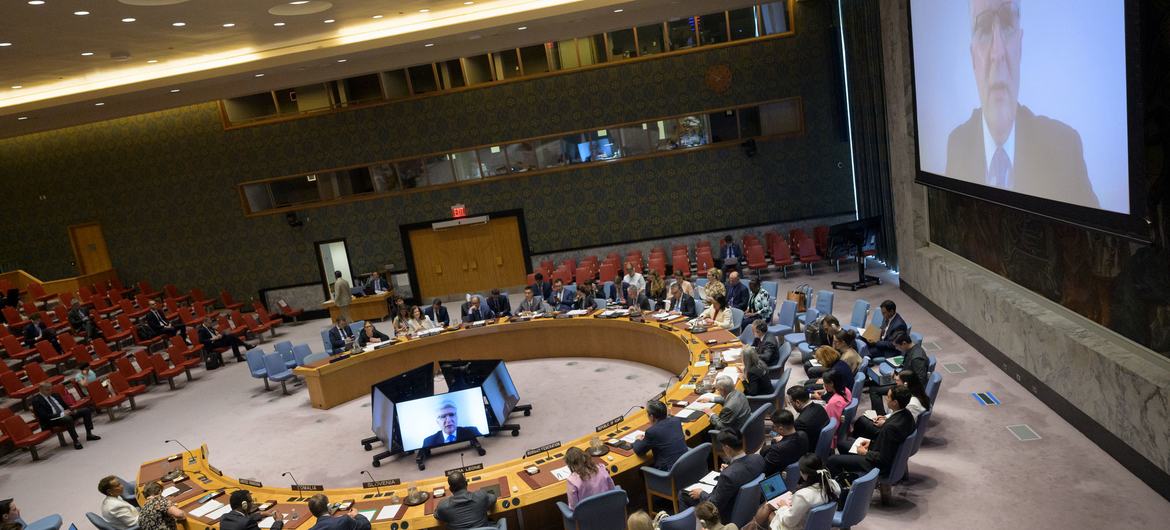
“Nowhere is safe in Ukraine,” said Miroslav Jenča, Assistant Secretary-General for Europe at the UN Department of Political Affairs (UNDPPA).

Citing figures from the UN human rights office, OHCHR, he said civilian casualties reached a three-year high in June, with 6,754 civilians killed or injured in the first half of 2025 alone.

Russian forces launched over 5,000 long-range munitions against Ukraine so far in July, including a record-breaking 728 drones in a single day. Major cities such as Kyiv and Odesa have been hit by swarms of missiles and drones.

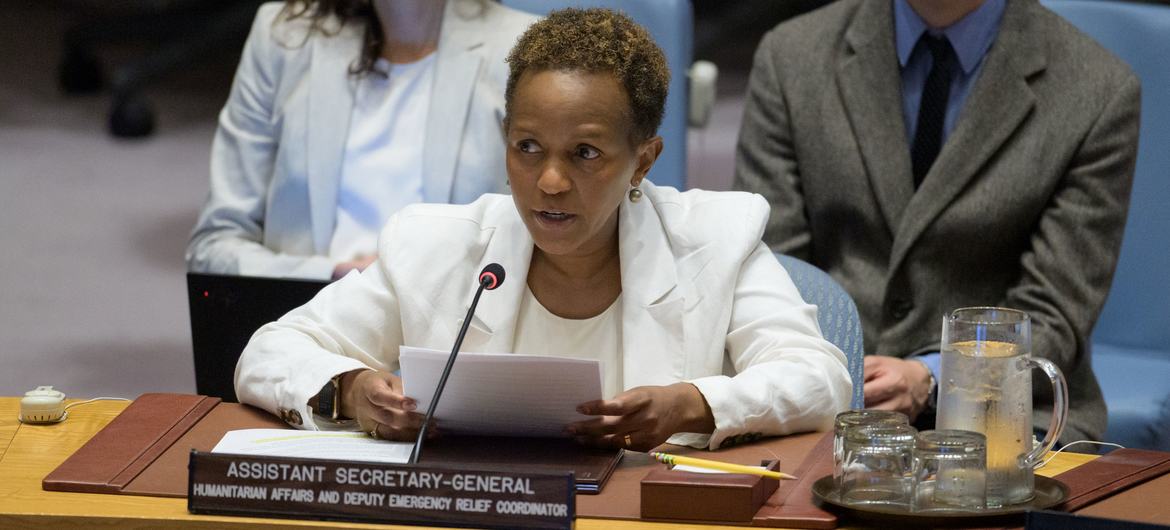
Assistant Secretary-General for Humanitarian Affairs Joyce Msuya echoed those words, saying “there is no safe place left in Ukraine” as the use of explosive weapons in populated areas has left cities reeling.

A rehabilitation centre for persons with disabilities in Kharkiv, maternity wards, schools, and energy infrastructure have all come under fire in recent weeks.

Joyce Msuya, UN Deputy Emergency Relief Coordinator, briefs the Security Council meeting on maintenance of peace and security of Ukraine.

Spiralling humanitarian situation

The humanitarian impact is worsening sharply, she continued.

“Nearly 13 million people need assistance, but limited funding means we can reach only a fraction of them,” Ms. Msuya warned. As of now, only 34 per cent of the $2.6 billion required for this year’s humanitarian response has been received.

Ukraine’s displacement crisis also continues to grow. Over 3.7 million people remain displaced within the country, while nearly six million are refugees abroad. More than 26,000 people have newly registered at transit centres since April alone.

Strikes in Russia

The senior UN officials also expressed concern over reported civilian casualties from Ukrainian drone strikes inside Russia, including in Belgorod, Kursk and Moscow.

While the UN could not independently verify these incidents, Mr. Jenča reiterated: “International law clearly prohibits attacks against civilians and civilian infrastructure. We strongly condemn all such attacks – wherever they occur.”

Concerns over nuclear safety

Attacks near Ukraine’s nuclear facilities have further alarmed the UN.

Earlier this month, drone strikes hit Enerhodar, where Zaporizhzhia Nuclear Power Plant staff live, and drones have been detected near other operating plants.

“Any nuclear incident must be avoided at all costs,” Mr. Jenča said.

ASG Miroslav Jenča (on screen) briefs the Security Council meeting on the maintenance of peace and security of Ukraine.

Political momentum needed

While some diplomatic movement continues – including recent prisoner exchanges and talks in Istanbul – UN officials called for intensified political will toward a ceasefire.

“The heartbreaking and rising human toll of the past nearly three-and-a-half years of war underscores the urgency of a complete, immediate and unconditional ceasefire,” Mr. Jenča said, “as the first step towards a just and lasting peace.”

Source link

Syria: Second convoy brings critical aid to Sweida

Deadly sectarian violence has displaced more than 145,000 people in the southern city, some of whom have fled to neighbouring Dar’a and Rural Damascus governorates. 

The convoy carried a range of critical support, including food, wheat flour, fuel, medicines and health supplies. 

OCHA coordinated with the SARC to prepare the convoy, which included supplies from UN agencies.  

Engagement and support

The Office continues to engage with authorities and partners to facilitate an inter-agency UN mission to Sweida as conditions allow.

The UN is also working with partners to deliver a range of assistance to people displaced to Dar’a and Rural Damascus, including food, water, and health and protection services.   

Mobile medical teams have so far provided more than 3,500 consultations, including trauma care, maternal health and psychosocial support while nearly 38,000 people have received food aid. 

Additionally, over 1,000 kits containing non-food items were distributed in Dar’a and Rural Damascus, helping more than 5,000 people. 

OCHA said UN inter-agency missions to assess needs and provide assistance to both governorates are planned for the coming days. 

The first convoy to Sweida arrived on Sunday. The 32 trucks brought food, water, medical supplies and fuel provided by the UN World Food Programme (WFP), the UN Children’s Fund (UNICEF) and other partners. 

People dying from lack of aid every day in Gaza: WFP official

Ross Smith, director of emergency preparedness and response, briefed journalists in New York in the wake of a deadly incident on Sunday in which dozens of civilians were killed and injured while waiting to access food as a WFP convoy was entering northern Gaza.

“Yesterday’s incident is one of the greatest tragedies we’ve seen for our operations in Gaza and elsewhere while we’re trying to work,” he said, speaking from Rome.

“And it’s completely avoidable, and it’s an absolute tragedy,” he added.

Famine conditions and malnutrition

Gaza’s population stands at roughly 2.1 million and earlier this year, food security experts warned that one in five people faces starvation.

Mr. Smith said WFP assessments show that a quarter of the population is facing famine-like conditions. Almost 100,000 women and children are suffering from severe acute malnutrition and need treatment as soon as possible.

Pointing to reports, he said “people are dying from lack of humanitarian assistance every day, and we are seeing this escalate day by day.” 

He stressed that food assistance, and humanitarian assistance more broadly, are “the only solution at the moment” for Gaza.

Minimum operating conditions

Mr. Smith said humanitarians have a set of minimum operating conditions that need to be in place for them to work effectively.

These include crossing points into Gaza, “proper routing” inside the enclave so that teams can move independently, and the entry of more than 100 trucks of aid a day.

“We also need to have no armed actors near food distribution points, near our convoys, and near the movement of those convoys from one place to another,” he continued, while underscoring the need to reach people where they are and not in otherwise predetermined locations.

“And I would say above all that we have had agreements in principle on these things, but we have not had adherence to these in practice in Gaza itself. And this is really where the breakdown is, and it’s where we see incidents like (yesterday) take place,” he said.

Ceasefire now

Mr. Smith also highlighted the critical need for a ceasefire “so that we can move effectively.”

In response to a journalist’s question, he said WFP moved more than 200 trucks of assistance per day into Gaza during the ceasefire earlier this year. Since mid-May, it has been able to move less than 10 per cent of what is needed.

He said the UN agency has enough stocks pre-positioned outside Gaza to supply the entire population for two months “if we can get a ceasefire and if we can move.” 

Source link

Aid cuts leave refugee agency unable to shelter six in 10 fleeing war in Sudan

Globally, $1.4 billion of the agency’s programmes are being shuttered or put on hold, UNHCR said in a new report.

“We can’t stop water, you can’t stop sanitation, but we’re having to take decisions when it comes, for example, to shelter,” said UNHCR Director of External Relations, Dominique Hyde.

“We’re have people arriving on a daily basis from Sudan, from the Darfur regions…arriving in Chad, not able to be given any shelter.”

In an urgent appeal for flexible funding from donors, Ms. Hyde noted that up to 11.6 million refugees and others risk losing access this year to direct humanitarian assistance from UNHCR. The figure represents about one-third of those reached by the organization last year.

On the Sudan-Chad border, the UN agency is now unable to provide “even basic shelter” to more than six in 10 refugees fleeing the conflict. Thousands more vulnerable people have been left stranded in remote border locations in South Sudan, too. “If we just had a bit more support, we could get them to settlements,” she insisted.

Because of the funding cuts, basic activities have already been hit hard. These include refugee registration, child protection, legal counselling and prevention of and responses to gender-based violence.

Every aid sector hit

In South Sudan, 75 per cent of safe spaces for women and girls supported by UNHCR have closed, leaving up to 80,000 refugee women and girls without access to medical care, psychosocial support, legal aid, material support or income-generating activities. This includes survivors of sexual violence, UNHCR noted.

“Behind these numbers are real lives hanging in the balance,” Ms. Hyde said.

“Families are seeing the support they relied on vanish, forced to choose between feeding their children, buying medicines or paying rent, while hope for a better future slips out of sight. Every sector and operation has been hit and critical support is being suspended to keep life-saving aid going.”

Libya influx

Many of those impacted by the war in Sudan have taken the decision to move from Chad and Egypt to Libya, into the hands of people smugglers who dangerously overload boats with desperate people seeking to cross the Mediterranean Sea to Europe.

“What we’re observing now is that in terms of arrivals in Europe of…Sudanese refugees, [it] has increased since the beginning of the year by about 170 per cent compared to the first six months of 2024,” said UNHCR spokesperson Olga Sarrado.

Support slashed from Niger to Ukraine

In camps hosting Myanmar’s Rohingya refugees in Bangladesh, education for some 230,000 children could now be suspended. Meanwhile in Lebanon “UNHCR’s entire health programme is at risk of being shuttered by the end of the year”, Ms. Hyde continued.

In Niger and other emergency settings, cuts in financial aid for shelter have left families in overcrowded structures or at risk of homelessness. In Ukraine, financial aid has also been slashed, “leaving uprooted families unable to afford rent, food or medical treatment”, Ms. Hyde noted.

Assistance to returning Afghans has also become another victim of the global aid cuts. Around 1.9 million Afghan nationals have returned home or been forced back since the start of the year, “but financial aid for returnees is barely enough to afford food, let alone rent, undermining efforts to ensure stable reintegration”, UNHCR said.

Legal aid halted

Overall, several UNHCR operations hit by severe funding gaps have now had to curtail investments in strengthening asylum systems and promoting regularization efforts.

In Colombia, Ecuador, Costa Rica and Mexico, any prolonged lack of legal status means prolonged insecurity for people on the move, the UN agency said. This results in deepening poverty “as refugees are excluded from formal employment and greater exposure to exploitation and abuse,” Ms. Hyde explained.

Approximately one in three of the agency’s 550 offices around the world has been impacted by the cuts, Ms. Hyde told journalists in Geneva:

“We’re not in a position to do so much contingency planning; what we’re able to do is make decisions on priorities – and at this point the priorities as I mentioned are dramatic.”

For 2025 UNHCR needs $10.6 billion. Only 23 per cent of this amount has been provided.

“Against this backdrop, our teams are focusing efforts on saving lives and protecting those forced to flee,” Ms. Hyde said. “Should additional funding become available, UNHCR has the systems, partnerships and expertise to rapidly resume and scale up assistance.”

Source link

SECURITY COUNCIL LIVE: ‘Aid must go where needs are greatest’ in Gaza, urges UN relief chief

The UN Security Council is meeting on the escalating humanitarian crisis in Gaza, where fresh Israeli evacuation orders have uprooted tens of thousands amid relentless bombardment claiming hundreds of civilian lives in recent weeks – many of them children. “Food is running out. Those seeking it risk being shot. People are dying trying to feed their families,” UN relief chief Tom Fletcher has just told ambassadors. Follow our real-time updates and key moments through our live UN Meetings Coverage page. UN News App users can join here.

Source link

No fuel, no aid, no escape: UN agencies warn of looming collapse in Gaza

Fuel is the backbone of survival in Gaza,” said the statement. “Without fuel, these lifelines will vanish for 2.1 million people.”

UN humanitarian workers stressed that fuel powers everything from hospitals and water systems to bakeries and ambulances.

Without a steady supply, “maternity, neonatal and intensive care units are failing, and ambulances can no longer move.” The fuel shortage, they said, has left Gaza’s population – already facing severe food insecurity and the constant threat of violence – on the edge of catastrophe.

They warned that “without adequate fuel, UN agencies responding to this crisis will likely be forced to stop their operations entirely,” meaning “no health services, no clean water, and no capacity to deliver aid.”

Inadequate fuel injection

The agencies noted that for the first time in 130 days, a small quantity of fuel was allowed into Gaza this week. While welcome, the amount – just 75,000 litres over two days – is far from enough to meet the daily needs of the population and vital civilian aid operations.

Speaking at UN Headquarters in New York late Friday, UN Spokesperson Stéphane Dujarric described the overall situation as “dire and worsening by the day.”

Every day without a ceasefire brings more preventable deaths – children dying in pain, and hungry people shot while trying to reach the trickle of aid that is allowed in,” he said.

Life-threatening

Mr. Dujarric also expressed deep concern over continued Israeli restrictions on aid access. “Yesterday, our teams could provide hospitals with some of the fuel that came in – but only in the south. That’s because Israeli authorities denied our attempt to bring fuel to the north,” he said. “Such denials are life-threatening.”

He added that the fuel shortage also affects water treatment, ambulances and waste management. “All of these services are at risk of collapsing,” he said.

Out of 15 humanitarian missions that required coordination with Israeli authorities on Thursday, only six were fully facilitated. Five were denied outright, while four faced obstacles that delayed or prevented delivery.

One mission, to rescue injured people trapped under rubble in Gaza City, was only approved two days after the initial request – too late to save lives. “By the time the mission was finally allowed through yesterday, no one was found alive,” Dujarric said.

On top of this, essential items like tents and shelter materials have been blocked from entering Gaza for over four months, leaving thousands exposed to the elements.

Close call

Aid workers are also at risk. “Five strikes landed just a few hundred metres from where aid workers were operating this week, including UN staff,” Mr. Dujarric said. No injuries were reported, but several Red Crescent workers were shot while attempting to assist an injured colleague.

UN agencies are calling for the immediate and consistent delivery of fuel at scale, and for full, safe access to all parts of Gaza. “The urgency of this moment cannot be overstated,” they said. “Without fuel, Gaza faces a complete collapse of humanitarian efforts.”

UNICEF deplores ‘unconscionable’ killing of families lining up for aid in Gaza

Catherine Russell said she was appalled by the reported killing of 15 Palestinians, including nine children and four women, who were waiting in line for nutritional supplements provided by Project Hope, a UNICEF partner organization.

The incident occurred in Deir Al-Balah. An additional 30 people were injured, including 19 children. News reports indicate that it resulted from an Israel strike. 

‘Mothers seeking a lifeline’

“The killing of families trying to access life-saving aid is unconscionable,” she said in a statement.

These were mothers seeking a lifeline for their children after months of hunger and desperation.”

They included Donia, whose one-year-old son, Mohammed, was killed. She reported that the boy had spoken his first words to her just hours earlier.

“Donia now lies in a hospital bed, critically injured by the blast, clutching Mohammed’s tiny shoe,” said Ms. Russell.  “No parent should have to face such tragedy.”

A ‘cruel reality’

For the UNICEF chief, “this is the cruel reality confronting many in Gaza today after months of insufficient aid being allowed into the territory, and parties to the conflict failing to uphold basic responsibilities to protect civilians.”

She explained that “the lack of aid means children are facing starvation while the risk of famine grows,” warning that “the number of malnourished children will continue to rise until life-saving aid and services are resumed at full scale.”

“International law is clear: all parties to the conflict have an obligation to protect civilians and ensure the safe and unimpeded delivery of humanitarian assistance,” she said.

“We call on Israel to urgently review its rules of engagement to ensure full compliance with international humanitarian law, notably the protection of civilians including children, and to conduct a thorough and independent investigation of this incident and all allegations of violations.”

UN condemns killings

The UN yet again condemned the killing of civilians in Gaza, Spokesperson Stéphane Dujarric told journalists in New York.

Furthermore, the UN humanitarian affairs office OCHA “stresses that parties are bound by international humanitarian law to prevent such excessive death and injury of civilians in the midst of war,” he added.

OCHA reported that another strike on Thursday reportedly hit the office of a humanitarian partner in Gaza City. Three staff there were killed. 

Fuel running out

Mr. Dujarric also updated journalists on the dire fuel situation in Gaza, which impacts both the population and humanitarians.

A UN team managed to bring roughly 75,000 litres of fuel from Israel into the beleaguered enclave on Wednesday, marking the first such provision in 130 days.

He warned, however, that fuel is still running out and services will shut down if greater volumes do not enter immediately.

Water services at risk

We and our humanitarian partners need hundreds of thousands of litres of fuel each day to keep essential lifesaving and life-sustaining operations going, meaning the amount entered yesterday isn’t sufficient to cover even one day of energy requirements,” he said.

One aid partner reported that fuel shortages could soon cut off supplies of clean drinking water to about 44,000 children, he added, which would further increase the risk of cholera, diarrhoea, dysentery and other waterborne illnesses. 

Meanwhile, UN partners providing education services said that between October 2023 and this June, 626 temporary learning spaces have been established in Gaza, with 240,000 students enrolled, roughly half of them girls. 

However, only 299 spaces are currently operational due to the ongoing displacement orders, funding shortfalls and other challenges.

Aid workers also going hungry

Humanitarian partners in Gaza – who include first responders, health workers, and aid workers – “continue to deliver food and other assistance under intolerable conditions, and they themselves are facing hunger,” said Mr. Dujarric.

“A number of our own colleagues are also facing hunger. They also face water scarcity and threats to their personal safety, just like everyone else in Gaza,” he added.

The Spokesperson reiterated the UN’s long-standing message that “this catastrophic situation must end.”  He stressed that “a ceasefire is not only urgent, it is long overdue,” while also calling for the unconditional and immediate release of all hostages. 

Some Palestinians have been forced to flee their homes in the West Bank.

West Bank operations

Mr. Dujarric also addressed the situation in the West Bank, where humanitarians report and continue to warn of the intensification of Israeli operations in the northern areas.

These operations are causing massive destruction, driving further humanitarian needs and dampening hopes of thousands of displaced families that they will eventually be able to go back home,” he said.

“Meanwhile, attacks, harassment and intimidation by Israeli settlers against Palestinians have become a daily reality.”

He cited a settler attack on 3 July that led to the displacement of the Mu’arrajat East Bedouin community in the central West Bank. 

“This is the ninth community to be fully displaced in the Ramallah and Jericho areas since January 2023 following the recurrent attacks by Israeli settlers.” 

Source link

UN chief ‘appalled’ by worsening Gaza crisis as civilians face displacement, aid blockades

Multiple attacks in recent days have killed and injured scores of Palestinians at sites hosting displaced people and others attempting to access essential supplies, according to a statement from UN Spokesperson Stéphane Dujarric on Thursday.

“The Secretary-General strongly condemns the loss of civilian life,” Mr. Dujarric said.

On just one day this week, nearly 30,000 people were forced to flee under new Israeli relocation orders, with no safe place to go and clearly inadequate supplies of shelter, food, medicine or water, he added.

Critical systems shutting down

With no fuel having entered Gaza in over 17 weeks, the UN chief is also “gravely concerned that the last lifelines for survival are being cut off.”

“Without an urgent influx of fuel, incubators will shut down, ambulances will be unable to reach the injured and sick, and water cannot be purified,” Mr. Dujarric said.

“The delivery by the United Nations and partners of what little of our lifesaving humanitarian aid is left in Gaza will also grind to a halt.”

The Secretary-General reiterated his call for safe and sustained humanitarian access so aid can reach people in desperate need.

“The UN has a clear and proven plan, rooted in the humanitarian principles, to get vital assistance to civilians – safely and at scale, wherever they are,” Mr. Dujarric said.

The Secretary-General reiterated his call for an immediate and permanent ceasefire and the unconditional release of all hostages held by Hamas and other groups. He reminded all parties that international humanitarian law must be upheld.

Displacement continues

Displacement remains relentless. On Wednesday, Israeli authorities issued a new evacuation order in parts of Gaza City, affecting some 40,000 people and including a displacement site, a medical point and one of the few neighbourhoods that had remained untouched by such orders since before the March ceasefire.

Since that ceasefire collapsed, over 50 such orders have been issued, now covering 78 per cent of Gaza’s territory.

“Add the Israeli-militarized zones and that percentage jumps to 85 – leaving just 15 per cent where civilians can actually stay,” Mr. Dujarric said, briefing reporters at the UN Headquarters, in New York.

Those areas are overcrowded and severely lacking in services or proper infrastructure.

“Imagine having just over two million people in Manhattan – which is actually slightly bigger – but instead of buildings, the area is strewn with the rubble of demolished and bombed-out structures, without infrastructure or basic support,” the UN Spokesperson said.

“And in Gaza, these remaining areas are also fragmented and unsafe.”

Myanmar human rights crisis deepens as aid collapses, attacks intensify

In a stark briefing to the Human Rights Council in Geneva, UN High Commissioner for Human Rights Volker Türk described a country gripped by war, repression and deepening suffering.

Since the military coup in February 2021, nearly 6,800 civilians have been killed and over 22,000 remain arbitrarily detained, he said. Humanitarian needs have soared, with nearly 22 million people in need of assistance and more than 3.5 million displaced by conflict.

“The report I am presenting today is about the people of Myanmar and their aspirations for a better future,” Mr. Türk said.

Despite massive challenges, people from across society are striving to build a peaceful, sustainable, democratic and diverse Myanmar, grounded in human rights.

A crisis worsened

However, conditions on the ground have only worsened.

Following a 28 March earthquake that killed nearly 4,000 people and left six million in urgent need, the military intensified attacks instead of facilitating relief, Mr. Türk said.

The UN human rights office, OHCHR, documented more than 600 military strikes since the quake – 94 per cent of them occurring during supposed ceasefires – with schools, religious sites and other protected locations frequently targeted.

Situation in Rakhine

The situation in Rakhine state remains particularly dire, with civilians – the minority Muslim Rohingya in particular – caught between the Myanmar military and the Arakan Army, an ethnic armed group. In addition, the military’s ongoing obstruction of humanitarian access has worsened an already acute crisis.

Throughout the country, economic collapse and the breakdown of public institutions have compounded the suffering.

Nearly four in five people now live below or just above the poverty line and an estimated 1.3 million have fled the country – many undertaking perilous journeys by land and sea. So far in 2025, nearly one in five people attempting sea crossings in the region have been reported dead or missing.

End violence, ensure accountability

The High Commissioner’s report outlined four key pathways to lay the groundwork for a transition toward a peaceful and democratic Myanmar: justice and accountability, democratic governance; economic reform to serve the people, and sustained international engagement.

Mr. Türk stressed that accountability must begin with the release of all political prisoners and prosecution of those responsible for grave human rights violations.

“It is imperative for the military to immediately end the violence, allow unhindered humanitarian access and release all arbitrarily detained people,” he said.

Amid the turmoil, planning for a future with human rights front and centre offers people a sense of hope. We owe it to the people of Myanmar to make that hope a reality.

Millions have lost their homes and livelihoods due to the earthquakes that struck Myanmar in late March.

Independent expert’s alarm

Tom Andrews, the UN Special Rapporteur on the situation in Myanmar, echoed the High Commissioner’s warnings, raising alarm over a collapse in international humanitarian support and the military’s repression.

“The junta has chosen to use aid as a weapon,” he told the Council.

“I have spoken with humanitarian workers physically blocked at checkpoints and received reports of earthquake survivors evicted from shelters with no place to go.”

Mr. Andrews, who has been appointed and mandated by the Human Rights Council and is not a UN staff member – also warned that drastic cuts in international funding have already had severe consequences.

As of 27 June, the $1.14 billion comprehensive humanitarian response plan for the country is only 12 percent funded and the $275 million addendum for the earthquake response is about 37 per cent.

At a time when the people of Myanmar need an enhanced level of support from the international community, they are getting the opposite, Mr. Andrews said, warning that the cost in human lives and human suffering will soon very likely get “significantly worse.”

This dangerous trend begs the question – do human rights matter?” he asked.

Because if human rights matter, if saving the lives of children in Myanmar matters, why are so many governments reluctant to invest even a modest amount of resources to save lives?

Source link