Myanmar crisis deepens as military attacks persist and needs grow

The 28 March quakes killed over 3,800 people and damaged or destroyed more than 55,000 homes across multiple regions, including Bago, Kayin, Magway, Mandalay, Southern Shan, Naypyitaw and Sagaing.

Families already displaced by years of conflict now face early torrential rains, extreme heat and rising risk of disease. Nearly 20 million people – more than a third of the population – needed assistance even before the earthquakes.

Unremitting violence

Despite the scale of the disaster, High Commissioner for Human Rights Volker Türk warned on Friday that the Myanmar military has launched at least 243 attacks – including 171 airstrikes – since the massive tremors.

Most of the attacks occurred after 2 April, despite both the military and the opposition National Unity Government (NUG) announcing unilateral ceasefires which were largely unobserved.

It is imperative that the military immediately stop all attacks on civilians and civilian objects,” he said in his statement, calling for a genuine and permanent nationwide halt to hostilities and a return to civilian rule.

He underscored the need to put the people of Myanmar first, prioritise their rights, and achieve a peaceful resolution.

Instead of further futile investment in military force, the focus must be on the restoration of democracy and the rule of law in Myanmar,” Mr. Türk said.

Delays putting lives at risk

UN humanitarians in the country also warn that the situation remains dire.

Speaking to journalists in New York via video link from Yangon, Humanitarian Coordinator ad interim Marcoluigi Corsi said that one month on, people are still living in the open and facing increasingly difficult conditions.

The suffering is immense and the stakes are very high,” he said on Thursday, urging the international community to translate funding pledges into rapid, large-scale support.

“Every delay means more lives at risk and more communities in Myanmar struggling to rebuild.”

Lack of funding imperils response

Agencies have reached 600,000 people with water, sanitation and hygiene services. They have also provided nearly 500,000 people with food assistance and over 100,000 with emergency shelter.

But the response remains constrained by severe underfunding.

Mr. Corsi called on donors to urgently disburse their pledged amounts. Without timely action, the crisis would get worse, he warned.

Lives depend on our collective commitment to delivering the support that is desperately needed…the time to act is now,” he said.

The $275 million addendum to the 2025 humanitarian response plan has received just $34 million – or about 12 per cent – leaving affected communities without assistance.

Disease outbreak risk

According to the UN World Health Organization (WHO) over 450,000 people require critical health services, but only about 33,600 have been reached so far.  

Disease outbreaks are also a growing concern as nine of the 20 townships most at risk for cholera fall within earthquake-affected areas. Stagnant water from delayed rubble removal is creating mosquito breeding grounds, driving up the risk of malaria and dengue.  

Limited access to medicines and medical supplies are further straining already overstretched health facilities.

Source link

Funding crisis increases danger and risks for refugees

With humanitarian resources running dry, critical support for millions of forcibly displaced people is under threat.

UNHCR said that two-thirds of countries hosting refugees are already severely overstretched and urgently need support to continue providing education, healthcare and shelter.

Global solidarity with those fleeing conflict and violence is weakening, the agency added.

‘No one wants to be a refugee for life’

“The safety that refugees seek in neighbouring countries is at risk,” said Elizabeth Tan, Director of International Protection at UNHCR.

Without international solidarity and burden-sharing, the institution of asylum is under threat.”

Ms Tan noted that some 12,000 Central African refugees in Chad and Cameroon have expressed a desire to return home but cannot do so safely without transport and reintegration assistance.

“No one wants to be a refugee for life,” she said.

Lifesaving services

Marking the agency’s 75th anniversary, Ms Tan reminded journalists that refugees – unlike migrants – have lost the protection of their home countries.

They arrive across borders traumatised, often after experiencing torture or persecution, and they need specialised support – including mental health care,” she said.

Children separated from their families face especially grave risks, including recruitment by armed groups, exploitation and trafficking.

Protecting them, Ms Tan stressed, “is not a luxury – it is lifesaving.”

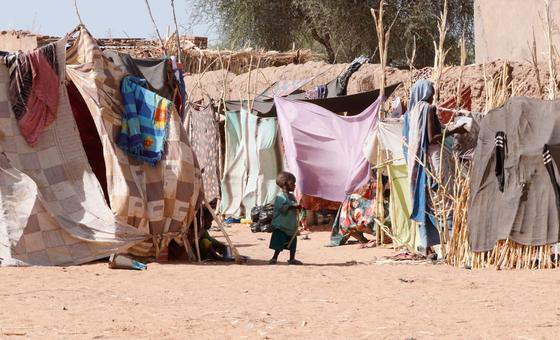
© UNHCR/Andrew McConnell

Refugees from Sudan arrive in Adre on the border with Chad.

Source link

Reporters in Gaza bear witness and suffer tragic consequences

Mr. Shahada lost his leg due to a severe injury he suffered in Nuseirat in central Gaza in April 2024, but he picked up his camera and returned to document the tragic events that have been unfolding in Gaza.

He will not let his disability stop him from working. “It is impossible for me to leave photojournalism, even if I face all these obstacles,” he said.

Ahead of World Press Freedom Day marked annually on 3 May which focuses on the role of media to highlight accountability, justice, equality, and human rights, our UN News correspondent in Gaza spoke with Palestinian journalists, documenting the risks and personal traumas they face reporting from the war-torn enclave.

© UNICEF/Mohammed Nateel

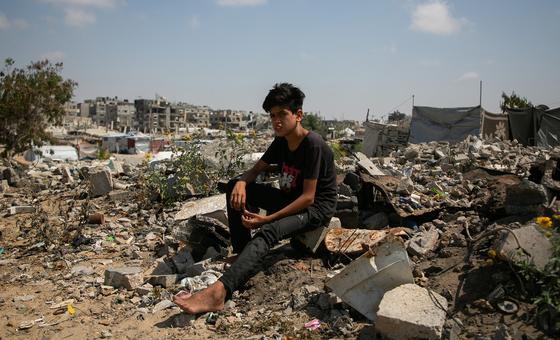
War has devastated Gaza.

Since the war began following the 7 October 2023 attack by Hamas on Israel an increasing number of journalists have been killed or injured in Gaza as a humanitarian crisis has engulfed the enclave.

Bearing witness

On one leg, leaning on crutches, Sami Shahada stands behind his camera, wearing his blue press jacket, working amongst the rubble of destruction with colleagues.

“I witnessed all the crimes that happened, and then the moment came when I was a witness to a crime that was perpetrated against me,” he told UN News.

Sami Shehadeh looks at a video of the moment he was injured in Gaza in April 2024.

“I was a field journalist, carrying a camera in an open area and wearing a helmet and a jacket which identified me as a journalist, yet I was directly targeted.”

That incident marked a turning point in his life. “I did not need help from anyone before, now I need help,” adding that “I have the determination and persistence to overcome this new reality. This is how we journalists must work in Gaza.”

Working the streets

Journalist Mohammed Abu Namous is another of these journalists.

Filming with one of his colleagues in the rubble of a destroyed building in Gaza City he said: “While the world celebrates World Press Freedom Day, Palestinian journalists remember their workplaces which were destroyed in the war.”

“The minimum we need to carry out our journalistic work is electricity and the internet, but many do not have this, so we resort to commercial shops that provide the internet. The streets are now our offices.”

Palestinian journalist Mohammed Abu Namous and his colleague cover the impact of the war in Gaza.

He believes that Palestinian journalists have been targeted during the Israeli occupation of Gaza and said that media workers must be protected “whether they work in Palestine or elsewhere in the world.”

Voices not silenced by death of loved ones

Journalist Moamen Sharafi said he lost members of his family in an Israeli bombing in northern Gaza, but despite “the many negative impacts on a personal, social, and humanitarian level, professionally nothing has changed.”

He was determined to carry on working, he explained, as he was due to live broadcast from the streets of Gaza City.

Palestinian journalist, Moamen Sharafi (right,) lost several family members during the current war that started in October 2023.

“We have become more determined to continue our work and uphold our professional values and perform our mission with humanity to the world,” he continued, “in order to convey the reality of what is happening on the ground inside Gaza, specifically the humanitarian situation, and the impact on children, women and the elderly who suffer greatly.”

Source link

Journalism facing new threats from AI and censorship

Amidst spiraling conflict, climate chaos, growing divisions, and a rapidly changing digital landscape, a free press is more vital than ever,” said Volker Türk.

Furthermore, “the media help us understand the world around us and encourage critical thinking and dialogue.”

Threats and deaths

Free and independent media are the best antidote to disinformation but press freedom is under threat in every region of the world, he warned.

States harass, detain, torture and even kill media workers, simply for doing their jobs” while “in some conflict zones, warring parties restrict or deny access to journalists.”

He noted that since January, at least 20 people who work in media have been killed and impunity for crimes against journalists remains widespread, with more than 80 per cent of killings going unpunished.

AI rewards…and risks

Mr. Türk said this year’s observance of press freedom is a reminder that media repression is increasing while artificial intelligence (AI) is entirely overhauling how information is produced, distributed, and consumed.

Although AI can be a useful tool for journalists, it also carries significant risks for press freedom, he warned.

AI-based algorithms often dictate what we see, shaping our opinions and perceptions of reality. Politicians use AI to weaponize disinformation and advance their own agendas,” he said.

“States are also using AI tools to monitor journalists and their sources online, violating their right to privacy. This has a chilling effect on media workers everywhere. And women journalists are disproportionately targeted.”

Concentration of power

Furthermore, “a small group of corporations and individuals have almost total control over AI technology and influence on the global media landscape.”

UN Secretary-General António Guterres also highlighted the opportunities and risks posed by AI in his message on press freedom.

Biased algorithms, outright lies, and hate speech are landmines on the information superhighway.  Accurate, verifiable, fact-based information is the best tool to defuse them,” he said.

He pointed to the Global Digital Compact adopted last year by UN Member States, which includes “concrete steps to strengthen international cooperation to promote information integrity, tolerance and respect in the digital space.”

Change course now

Mr. Türk said World Press Freedom Day is an opportunity for everyone to urgently commit to changing course now, starting with States.

They must ensure that journalists are safe from attacks, hate campaigns and surveillance, as well as physical and legal harassment.

It is crucial to have more transparency in how data is used, how content is curated, and how algorithms are designed.”

Media concentration laws – that is, legislation around ownership of mass media outlets – also must be updated to reflect the power of AI and tech platforms and promote a diverse media landscape that secures space for independent journalism.

Meanwhile, tech companies have a crucial role. In this regard, Mr. Turk announced that his Office and UN educational and cultural agency UNESCO are offering guidance to help tech companies assess the risks their tools pose to journalists and civil society.

 “A free, independent, and diverse media can help to heal the divisions in our societies. We must do everything in our power to protect it and allow it to flourish,” he said. 

Source link

Gaza: ‘Worst-case scenario’ unfolds as brutal aid blockade threatens mass starvation

Speaking from Gaza City OCHA spokesperson Olga Cherevko told journalists in Geneva that a friend of hers “saw people burning a few days ago from the explosions – and there was no water to save them.”

Since all entry points into the war-torn enclave were “sealed by the Israeli authorities for the entry of cargo” in March, the “worst-case scenario” was triggered, Ms. Cherevko said: supplies are depleting while the conflict rages on.

Food stocks have now mainly run out, water access has become impossible,” she told journalists in Geneva.

As the veteran aid worker spoke, she noted that a “very violent fight” for access to water was taking place downstairs from her, with people throwing rocks and firing shots at a water truck which was pulling away.

No childhood

The OCHA spokesperson said that every day she was seeing children “who have been deprived of their childhood for many months,” and elderly people “rummaging through piles of trash” in search of food and combustible material for cooking, in the absence of fuel.

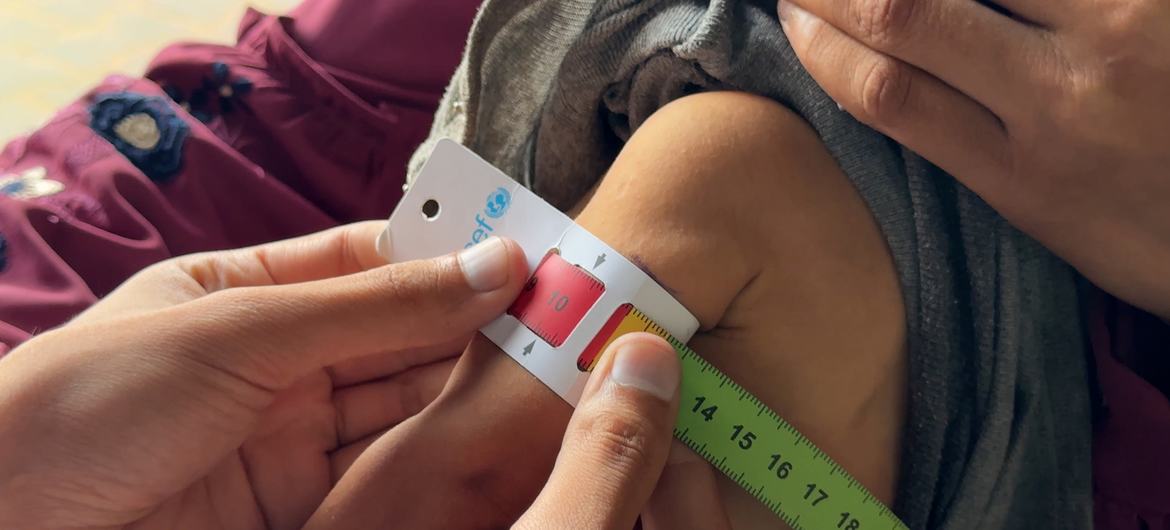
During a visit on Thursday to Patient Friends Hospital, a paediatric hospital in Gaza City which had been attacked several times during the war, she heard reports of rising malnutrition rates.

Hospitals report running out of blood units, as mass casualties continue to arrive,” Ms. Cherevko stressed, while precious fuel is being rationed.

Malnutrition cases among children in Gaza are increasing due to a lack of food.

Running on empty

“Gaza is inching closer to running on empty,” she added.

Ms. Cherevko said that UN humanitarians are “in constant contact” with the Israeli authorities and are advocating for border crossings to reopen. “We have mechanisms that mitigate diversion [and] ensure that aid reaches the people it’s intended to reach,” she said.

“We are ready to resume delivery at scale as soon as the crossings reopen, Ms. Cherevko insisted. “We stand by our pledge to remain principled and continue relieving people’s suffering, wherever they may be.”

In an appeal to the Israeli authorities on Thursday, the UN’s top humanitarian official and OCHA chief Tom Fletcher said, “Lift this brutal blockade. Let humanitarians save lives”.

Mr. Fletcher reaffirmed the urgent need for the release of hostages taken by Hamas on 7 October 2023, who “should never have been taken from their families” and stressed that “aid, and the civilian lives it saves, should never be a bargaining chip”.

Gazans queue for food in January 2025 when it was more widely available in the enclave.

Generational horror

Ms. Cherevko said that over the past one and a half months, 420,000 people have been “once again forced to flee, many of them with only the clothes on their backs, shot at along the way, arriving in overcrowded shelters, as tents and other facilities where people seek safety, are being bombed”.

“I worry that five, 10, 20 years from now, we will look at our children and grandchildren in shame and we will not be able to explain to them why we could not stop this horror,” she concluded.
How much more blood must be spilled before enough becomes enough?”

Source link

Afghanistan’s socioeconomic crisis deepens amid crackdown on women’s rights

As the Afghan economy faces stalled local production and weak job creation, Afghanistan continues to heavily rely on imports and international assistance.

UNDP’s current analysis and new data indicate the continuation of a deeply troubling trajectory for the Afghan people, who have been grappling with extreme vulnerability over the past decade,” said Kanni Wignaraja, UN Assistant Secretary-General and head of UNDP for the Asia-Pacific region.

Systemic challenges

In the past year, political uncertainty, an ongoing economic crisis, shrinking international aid and climate disruptions have compounded existing vulnerabilities, limiting the economy’s ability to regain momentum.

As Afghanistan heavily relies on foreign assistance, the current reduction in international aid is likely to have a significant impact on humanitarian operations and the delivery of basic services.

“UNDP stresses the need for targeted interventions to address these challenges, recognising that humanitarian assistance alone is not enough, and sustainable longer-term economic and social solutions are needed,” said Stephane Rodriques, UNDP Resident Representative in Afghanistan.

Restriction on women’s rights

As repressive laws continue to erode women’s rights, safety and access to basic services such as education and employment, Afghanistan’s socioeconomic crisis has seen the gender gap widen further, pushing women deeper into social exclusion and poverty.

With only seven per cent of Afghan women working outside of the household in 2024, restrictions on women and girls are projected to cost the Afghan economy nearly $920 million between 2024 and 2026, according to UNDP.

UNDP called for Afghanistan to lift restrictions on women and girls and for comprehensive support to women-led businesses to be provided.

Returnees

In 2024, Afghanistan also faced a major influx of returnees from Pakistan and Iran, as these neighbouring countries hardened their stance on Afghan refugees and migrants.

The UN expects the rate of returnees to increase in 2025, with an estimated 600,000 to 1.5 million people expected to return to Afghanistan.

“With the anticipated arrival of hundreds of thousands of returnees this year and a marked reduction in international support, Afghan communities will have to navigate substantial challenges that will increase pressure on an already highly tenuous daily subsistence,” said Ms. Wignaraja.

Source link

WHO chief laments most disruptive cuts to global health funding ‘in living memory’

We are living through the greatest disruption to global health financing in memory,” said WHO Director-General Dr Tedros Adhanom Ghebreyesus.

He cautioned that abrupt withdrawals of funding are jeopardising hard-won medical progress, including efforts to combat tropical diseases, which are now re-emerging in some regions.

This is just the tip of the iceberg,” he told journalists at WHO headquarters in Geneva.

Outbreaks intensify

Since January, Angola has been facing its worst cholera outbreaks in 20 years, with over 17,000 cases and more than 550 deaths recorded so far. 

Inadequate access to safe water, hygiene and sanitation is fuelling the outbreak. 

As WHO and partners carry out a large-scale vaccination campaign on the ground, one of their priorities is to bring the death rate down, said Tedros. 

Amid funding cuts, advances in tackling neglected tropical diseases affecting over one billion people, are disproportionately impacting the poorest and most marginalized communities.

Reduced access

In many countries where insecurity is rife and hospitals are being targeted, access to healthcare has been severely reduced, Tedros continued. 

On April 22, one of Haiti’s largest public hospitals, Hôpital Universitaire de Mirebalais, was forced to shut down due to violence. In the capital Port-au-Prince, more than 40 per cent of health facilities remain closed, he said.  

Needless deaths

Turning to the Gaza blockade, he said the situation there was “catastrophically bad,” with the violence “driving an influx of casualties to a health system that is already on its knees.” 

While essential medicines, and trauma and medical supplies, are running out, “people are dying from preventable diseases while medicines wait at the border,” said Tedros. 

Reiterating the UN’s call for a ceasefire, Tedros added that “peace is the best medicine.” 

Source link

Sudan: UN rights chief appeals for greater protection of civilians in besieged El Fasher

The horror unfolding in Sudan knows no bounds,” Volker Türk said in a statement calling for an end to the war between the Sudanese Armed Forces (SAF) and former ally the Rapid Support Forces (RSF), now in its third year.

He noted that three days ago, the RSF launched coordinated attacks from multiple directions on the North Darfur capital El Fasher and nearby Abu Shouk camp, killing at least 40 civilians.

Fear of more bloodshed

This brings the confirmed number of civilians killed in the region to at least 542 in just the last three weeks, he said, although the actual death toll is likely much higher.

“My fears are all the greater given the ominous warning by the RSF of ‘bloodshed’ ahead of imminent battles with the Sudanese Armed Forces (SAF) and their associated armed movements,” Mr. Türk said.

“Everything must be done to protect civilians trapped amid dire conditions in and around El Fasher.”

Stop the fighting

Furthermore, reports of extrajudicial executions in Khartoum state are also extremely disturbing, he added.

The High Commissioner said he has personally alerted both leaders of the RSF and SAF to the catastrophic human rights consequences of the war. 

These harrowing consequences are a daily, lived reality for millions of Sudanese. It is well past time for this conflict to stop,” he said.

Diplomatic efforts continue

Meanwhile, the UN Secretary-General’s Personal Envoy for Sudan, Ramtane Lamamra, was in Cairo this week where he met with senior Egyptian officials, including Foreign Minister Badr Abdelatty, to discuss the Sudan crisis. 

They shared the view that an inclusive Sudanese-led political path is needed to restore peace in the country, preserving the unity of Sudan, its sovereignty and territorial integrity,” said UN Spokesperson Stéphane Dujarric, speaking on Thursday in New York.

Mr. Lamamra also exchanged views with Ahmed Aboul Gheit, the Secretary General of the League of Arab States, on coordinating efforts between the UN, the Arab League and concerned multilateral organizations to advance a lasting peace in Sudan.  


Source link

Afghanistan: Taliban restrictions on women’s rights intensify

The mission continued to receive reports that Afghan women are being denied the opportunity to join the workforce, are unable to access services without a male relative while girls are still deprived of their right to education.

Since the Taliban took over the country from the democratically-elected Government in August 2021, women and girls have been systemically excluded from equal participation in society, the report confirms.

UNAMA, whose mandate includes monitoring human rights, also reported public floggings, shrinking civic space, and brutal attacks on former government officials.

Beauty salons shuttered

Officials have reportedly shut down beauty salons run by women in their homes and women’s radio stations in various provinces, UNAMA said.

In the province of Kandahar, de facto inspectors asked shopkeepers in a market to report women unaccompanied by a guardian (mahram) and deny them entry into their shops.

At one hospital, authorities ordered staff not to provide care to unaccompanied female patients.

Forced conversions

Taliban authorities have also increased enforcement of repressive restrictions on media outlets, ramped up corporal punishment, and the clampdown on religious freedom and re-education.

Between 17 January and 3 February, in Badakhshan province in northeastern Afghanistan, at least 50 Ismaili men were taken from their homes at night and forced to convert to Sunni Islam under the threat of violence, the report details.

More than 180 people, including women and girls, have been flogged for the offences of adultery and practicing homosexuality during the reporting period, in public venues attended by Taliban officials.

Taliban claim support for women’s rights

Despite documented evidence from the report that de facto authorities are continuing to violate international norms and rights protections, Taliban officials disagree.

“Ensuring the dignity, honor, and Sharia-based entitlements of women remains a paramount priority for the Islamic Emirate,” Taliban spokesperson Zabihullah Mujahid said in a social media post on March 8, International Women’s Day.

“All fundamental rights afforded to Afghan women have been safeguarded in strict accordance with Islamic Sharia law, as well as the cultural and traditional frameworks of Afghan society,” he added.

International legal action

UNAMA has called for action to restore women’s and girls’ rights at the international level.

In January, the International Criminal Court (ICC) issued arrest warrants for Taliban Leader Haibatullah Akhundzada and Chief Justice Abdul Hakim Haqqan over persecution on gender grounds, a crime against humanity under the Rome Statute.

The Taliban rejected the ruling, citing national sovereignty and religious traditions.

Source link

International aid: ‘The money isn’t coming back anytime soon’, Fletcher warns

UN News: You have said that that policymakers who signed off on aid cuts should come to Afghanistan to see the effect they’re having on the population. You said the effect of aid cuts is that millions die. Do you use this kind of blunt language when you’re talking to these policymakers in private?

Tom Fletcher: Yes, I do. Of course, there is a bit of a time lag before you really see the impact of the cuts, but here, 400 clinics closed in the last few weeks. That has a real-world impact and it’s become much more real for me on this trip.

I’ve just come from a meeting with NGOs, and they’re laying off half their staff. The local NGO’s that we’re keen to protect in the midst of all this, have been the hardest hit.

We try and find different ways to communicate this in slightly gentler terms, but ultimately, of course, people will die as a result of these cuts.

That’s the great tragedy at the heart of it now.

UN News: How do the politicians respond?

I think there are broadly two camps here. You’ve got politicians who are doing this really reluctantly, forced to make really tough decisions because their economies are struggling and because of pressures from taxpayers to do things differently. They know the importance of humanitarian efforts and they’re very sad about the choices they’re having to make.

Then there is another group of politicians who, I fear, celebrate, certainly in their public messages. They seem to boast about – and take credit for – aid cuts. That’s the group that I would love to bring to sit with a mother who has lost her child because she was forced to cycle pregnant to a hospital three hours away.

You show leadership on the world stage by being out there helping countries to deal with these challenges at source. I don’t know which of those arguments work with which constituencies, so we have to adapt and be creative in how we make the case.

We also have to be firm in defending what we do and take pride in the fact that the humanitarian community has taken millions out of poverty and saved hundreds of millions of lives.

UN News: You’ve become the UN emergency relief chief at a particularly tough time, in terms of ensuring the UN’s ability to help the most vulnerable. In February you announced 20 per cent cuts to your department. How will you make those cuts in a way that doesn’t make the job even harder?

Tom Fletcher: It’s rough. Really brutal choices are being made and the sector will probably shrink by one third. The money that’s been cut isn’t going to come back anytime soon, and there may be more funding cuts ahead.

We will be looking for new partners, and trying to convince the sceptics to bring the private sector in and change the public conversation around solidarity. We have to work with the money that we have, not the money that we need or the money that we wish we had.

I’m really positive about the way that Marco Rubio, the US Secretary of State, has talked about the need to protect life-saving aid. 

Dialogue is going on, I’m not giving up and I’m really positive about the way that Marco Rubio, the US Secretary of State, has talked about the need to protect life-saving aid. I really want to get into that conversation with him and see what his vision is for America’s role in saving lives around the world.

UN News: Given the current situation, are we going to have to completely rethink what aid entails and how it’s funded?

Tom Fletcher: We’re going to have to change. We have to preserve the best of what we’ve learnt and have confidence in what we’ve delivered so far, but we’re going through a process now that we call the “humanitarian reset”.

First of all, we’re becoming smaller and we’re trying to do that in a way that does as little damage as possible and minimises the hit to the essential life-saving work we do.

Alongside that, we’re becoming more efficient and smarter. I launched on my first day in office, a big efficiency drive across the sector.

The IASC, the body that coordinates our sector, has backed that up and actually taken it to the next level in terms of taking the layers out of the system and making sure we end the turf wars and focus on what we each do well, the extra value we bring, and ensure that we do much more at a local level, close to the communities we serve.

The UN relief chief Tom Fletcher, visits a hospital in Kandahar, Afghanistan.

UN News: Do many Member States still believe in the importance of international aid?

Tom Fletcher: Absolutely. A number of donors are staying solid despite the funding crises that they’re all facing. We’ve got new donors emerging and growing. I’ve been in The Gulf, and I was in China last week, and engagement there is deepening.

We’ve got new donors emerging, and engagement is deepening

We’ve got more innovative ideas about how to bring in the private sector and also I believe really strongly in the role of individuals in finding ways to ensure that we’re reaching wider movement beyond governments and Member States.

UN News: Returning to Afghanistan, the de facto authorities [The Taliban] have severely reduced access to education and employment prospects for women and girls. Are you able to have a constructive discussion about this with the regime?

Tom Fletcher: Yes, we are. There are two really core issues here for us. One is the role of women in humanitarian work: we simply cannot deliver without them. They are brilliant, brilliant colleagues, we rely on them completely and we couldn’t be here without them.

And the second is the wider issue around rights for women and girls, including education and the fact that millions of girls have had that right stolen from them over the last three years.

These are difficult conversations, but I come at this as a former diplomat, as someone who believes in dialogue, who believes in respect and trust and listening, and in recognizing that we have different cultures, different traditions, different heritages and different beliefs that I don’t hold.

Tom Fletcher, the UN humanitarian meets women at an economic development programme in Afghanistan.

UN News: Before you began this job, did you have a goal in mind, that you want to achieve before the end of your mandate as the head of humanitarian affairs?

Tom Fletcher: The average head of OCHA lasts about three years, they burn through us pretty quickly. The travel schedule is very hectic and you’re dealing with the world’s worst crises so there’s a bit of wear and tear along the way.

It’s our job to save hundreds of millions of lives and to define everything we do against that yardstick.

So, my number one objective was to survive as long as possible, because I think it’s traumatic for an organization to get new people in, train them and have them up and running. Being around for a period of time, learning from the organization and from those we serve, and then putting that into action is a serious objective in itself.

I did come into it with an objective around the reform of the humanitarian sector, well before Donald Trump, Elon Musk and others started talking about efficiency and prioritization and cuts. I do believe that we can do this much more effectively and much closer to those we serve and so I was already determined to deliver that.

And then thirdly, the big one is ultimately about saving lives. I believe it’s our job to save hundreds of millions of lives and to define everything we do against that yardstick. 

Source link

Anthrax outbreak compounds security crisis in eastern DR Congo

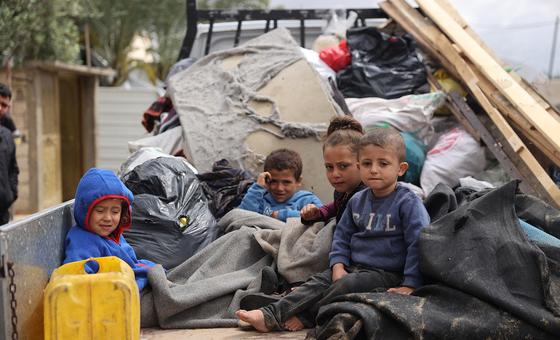
And with nearly seven million people forcibly displaced by violence since advances by M23 rebels earlier this year, the DRC is facing one of the world’s most complex displacement crises, according to the UN migration agency (IOM).

Living in overcrowded and under-resourced camps, displaced populations are increasingly vulnerable to both disease and attack.

Since January 2025 alone, over 660,000 people have been forced to flee the Goma region after Government forces lost control of the key city along with Bukavu to the south.

Tipping point

The scale of the humanitarian needs in the country has reached a tipping point, according to IOM, with outbreaks of mpox and anthrax underway in the east.

While both mpox and anthrax typically affect livestock and other animals, food insecurity resulting from the ongoing conflict, paired with unsanitary living conditions in displacement camps, puts humans at greater risk of transmission.

Dangerous infections

Both the potentially deadly infections can be contracted through contact with infected or contaminated animals. Although anthrax is not generally contagious, mpox is, the World Health Organization (WHO) underlines.

Mpox is typically accompanied by fever and rash and rarely requires hospitalisation, while all human cases of anthrax do, the UN health agency added.

Since 22 March, following the deaths of dozens of buffalo and hippopotamuses in Virunga National Park from anthrax poisoning, 16 suspected human cases of anthrax have been reported, including one confirmed case. One person has died so far.

Outbreak response

WHO is conducting assessments in the eastern part of the DRC to determine the risk of the anthrax infection spreading further across the region.

As both mpox and anthrax are treatable with antibiotics, and preventable through vaccination, WHO and its partners are working to prevent future outbreaks by adopting a unified approach, prioritising human, animal and environmental safety.

Awareness campaigns and efforts to vaccinate livestock against anthrax are now underway.

Israel must end ‘cruel collective punishment’ in Gaza, urges UN relief chief

In a powerful statement on Thursday, Tom Fletcher, the UN Emergency Relief Coordinator, condemned Israel’s decision to halt humanitarian assistance as a “cruel collective punishment” of the Palestinian population.

“Two months ago, the Israeli authorities took a deliberate decision to block all aid to Gaza and halt our efforts to save survivors of their military offensive,” said Mr Fletcher. “They have been bracingly honest that this policy is to pressurise Hamas.”

‘Blocking aid kills’

While reaffirming the urgent need for the release of hostages taken by Hamas on 7 October 2023 – who “should never have been taken from their families,” – the UN relief chief stressed that “international law is unequivocal: As the occupying power, Israel must allow humanitarian support in.”

Aid, and the civilian lives it saves, should never be a bargaining chip,” he added. “Blocking aid kills.”

Mr Fletcher warned that the aid blockade “starves civilians”, denies them basic medical services, and “strips them of dignity and hope.”

He underscored the neutrality and impartiality of humanitarian efforts, adding: “We believe that all civilians are equally worthy of protection. We remain ready to save as many lives as we can, despite the risks.”

Let us save lives

However, the latest delivery mechanism proposed by Israel, he said, “does not meet the minimum bar for principled humanitarian support.”

“To the Israeli authorities, and those who can still reason with them, we say again: lift this brutal blockade. Let humanitarians save lives,” he pleaded.

Addressing civilians in Gaza, Mr Fletcher said: “No apology can suffice… But I am truly sorry that we are unable to move the international community to prevent this injustice. We won’t give up.”

More to follow…

Jazz takes centre stage in Chicago for 2026

The announcement came from UN culture agency (UNESCO) on Wednesday, as this year’s day was being celebrated in the capital of the United Arab Emirates (UAE), Abu Dhabi.

The focus there was on ‘Arabic Jazz’, a tapestry of musical traditions, which included the use of classical instruments from the region such as the oud, qanun and ney.

Following the jazz synthesis which ended on a high note in the UAE, the spotlight now turns to Chicago – where many would argue the golden era of jazz began as pioneers from New Orleans headed north during the 1920s.

The midwestern city will host the renowned All-Star Global Concert, directed by UNESCO Goodwill Ambassador Herbie Hancock, featuring some of the world’s most celebrated jazz artists.

What better way for UNESCO to celebrate the 250th anniversary of the United States than by sharing its rich musical heritage with the world?” said Audrey Azoulay, UNESCO’s Director-General.

Rich jazz pedigree

Chicago has played a pivotal role in the evolution of the genre for over a century. In the 1920s, musicians journeyed up the Mississippi and found in Chicago a vibrant creative hub. Legends like Louis Armstrong, King Oliver, and Jelly Roll Morton helped define the “Chicago style” of jazz – marked by bold solos, improvisation, big band arrangements, and the rising prominence of the saxophone.

Today, the city remains a stronghold of jazz culture, home to renowned events such as the Chicago Jazz Festival and iconic venues including the Green Mill and the Jazz Showcase, which has been a cornerstone of the scene for 75 years.

Multiple Grammy Award-winning jazz pianist and Goodwill Ambassador for the UN Educational, Scientific and Cultural Organization (UNESCO), Herbie Hancock, performs at the inaugural International Jazz Day Concert at UN Headquarters. (2012)

UNESCO’s Goodwill Ambassador Herbie Hancock, a native of Chicago, reflected on what jazz has meant to him.

It was in my high school auditorium in Chicago that I discovered jazz – an experience that ignited a lifelong passion,” he said. “Jazz opened doors to creativity, self-expression, and freedom.”

Events throughout the year

In addition to the Global Concert, Chicago will host a range of events throughout 2026 to celebrate International Jazz Day, including concerts, educational programmes, discussions, and community activities.

These will be organized in collaboration with the Chicago Jazz Alliance, the Ravinia Festival, the City of Chicago, the Illinois Arts Council, the State of Illinois, and other partners.

Launched by UNESCO in 2011, International Jazz Day is observed annually on April 30 in over 190 countries. It celebrates the power of jazz as a force for peace, intercultural dialogue, and human dignity.

Source link

Haiti: Mass displacement and deportation surge amid violence

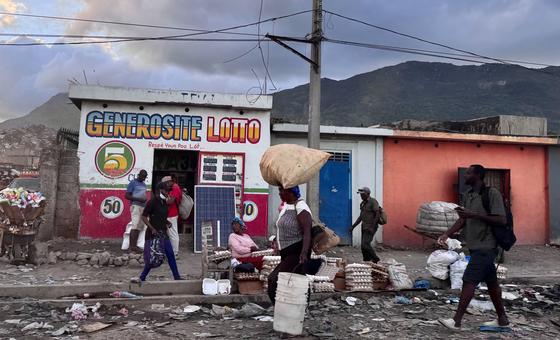
Between January 1 and March 31, at least 1,617 people were killed and 580 others injured in violence involving gangs, self-defence groups, or other members of the population, as well as during security force operations, according to the United Nations Integrated Office in Haiti (BINUH).

At least 161 kidnappings for ransom were recorded, 63% of which occurred in the Artibonite department.

Large-scale attacks

This period saw a surge in criminal group activity aimed at expanding territorial control in Port-au-Prince and surrounding areas. Aiming at destabilising Pétion-Ville, the communes of Delmas and Kenscoff were particularly targeted.  In the Centre department, gangs attacked Mirebalais and Saut d’Eau to control roads to the Dominican Republic and facilitate the escape of over 515 inmates from Mirebalais prison.

The UN noted that actions by self-defence groups and unorganised members of the ‘Bwa Kalé’ movement remained a major source of human rights abuse, resulting in at least 189 deaths of individuals accused of gang ties or petty crimes.

The UN also raised alarm over at least 802 deaths during security operations, with 20% being civilians hit by stray bullets. Additionally, 65 summary executions were reportedly carried out by police officers and the Government Commissioner of Miragoâne.

Sexual violence

More than 333 women and girls survived sexual violence, 96% of whom were raped, often gang raped by gangs. At least 35 children were killed, and ten others injured, during gang attacks, police operations, or vigilante acts. Many were also trafficked and forcibly recruited by gangs.

Although the judicial system remains dysfunctional, authorities—supported by the UN—have begun efforts to address impunity. The Transitional Presidential Council adopted a decree to create specialised judicial units for mass crimes, sexual violence, and financial crimes.

Increase in deportations

Responding to a rise in deportations from the Dominican Republic, the International Organization for Migration (IOM) has increased operations in Belladère and Ouanaminthe. Around 20,000 Haitians were returned in April — the highest monthly total this year.

“The situation in Haiti is becoming increasingly critical. Every day, deportations and gang violence worsen an already fragile situation,” said Amy Pope, IOM Director General.

The sharp increase in extremely vulnerable deportees — especially women, children, and newborns — is alarming. Since 22 April, IOM and partners have assisted an average of 15 pregnant women and 15 lactating mothers daily at the Belladère and Ouanaminthe border crossings.

Population displacement

This deportation surge coincides with another emergency in the Centre department. Gang violence in Mirebalais and Saut d’Eau displaced over 51,000 people, according to IOM. While many found shelter with host families, about 12,500 are residing in 95 informal sites with limited access to services. Over 4,000 have sought refuge in Belladère alone.

Gang control of Mirebalais has isolated Belladère, blocking humanitarian access, medical supplies, and aid. Essential resources such as food, water, and medicine are running out.

“This is a deepening crisis that extends beyond the capital, with cross-border deportations and internal displacement converging on Belladère,” said Grégoire Goodstein, IOM Chief of Mission in Haiti. “Delivering aid is becoming increasingly difficult, as humanitarian actors are trapped alongside those they are trying to help.”

In coordination with the Directorate of Civil Protection, IOM is providing drinking water and hygiene kits tailored to the needs of women and children. First aid, medical referrals, and psychosocial support are being offered.

Temporary shelters have been set up, including hotel accommodations for lactating mothers. IOM is also working with Haiti’s National Migration Office and Ministry of Public Health to ensure newborns and mothers receive immediate health care and vaccinations.

Source link

UNRWA warns against closure of six schools in East Jerusalem

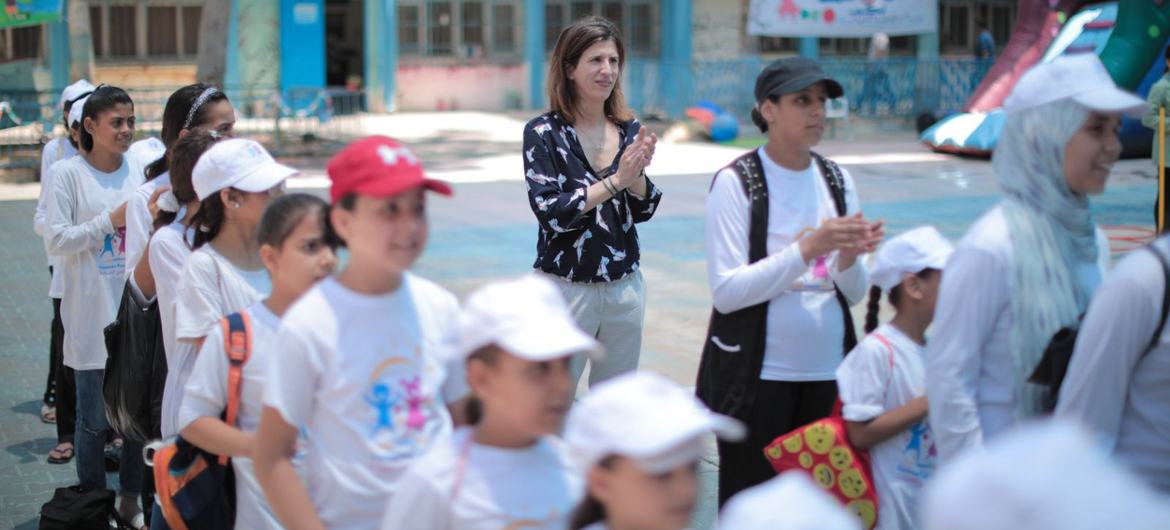
It’s a grave threat to the right of those children to education,” Roland Friedrich, Director of UNRWA Affairs for the West Bank, told UN News.

The development follows two Israeli laws that went into effect in late January which ban UNRWA from operating in its territory and prohibit Israeli authorities from having any contact with the agency.

UNRWA is the largest provider of healthcare, education and other services for nearly six million Palestine refugees across the Middle East, including in war-torn Gaza.

This week the International Court of Justice – the UN’s highest court – began hearings to examine Israel’s restrictions on the work of the UN and other international organizations in Gaza and the Occupied Palestinian Territories.

Mr. Friedrich spoke about how the affected students are anxious over the prospect of being shut out of the classroom.  He also underlined UNRWA’s commitment to continue to deliver in East Jerusalem “as long as we can.”

This interview has been edited for clarity and length.

Roland Friedrich: Roughly four weeks ago we received notifications from the Israeli Ministry of Education that the three schools we operate in Shu’fat refugee camp and another three schools we operate inside East Jerusalem shall be closed. 

We have 800 students in these schools and these children have no adequate access to education beyond these schools. This is very concerning for the children, for their families, and it comes while the school year is still ongoing. So, this is unprecedented. It’s a grave threat to the rights of those children to education and it’s very concerning particularly because these closure orders are supposed to come into effect on 8 May, which is less than a week from now.

UN News: What other UNRWA programmes are at risk in the West Bank?

Roland Friedrich: I think we have to make a distinction between our work in occupied East Jerusalem, which according to the Israeli legislation is banned, and our work in the rest of the West Bank where, according to Israel, all our work is not banned. 

In East Jerusalem we operate, in addition to the six schools with 800 children, two health centres – one in the Old City and another in Shu’fat refugee camp – with  roughly 60,000 patients: vulnerable patients who have no adequate access to other health facilities, patients with non-communicable diseases, patients who have West Bank ID who have no access to alternative health facilities, and low-income patients. 

We are also responsible for garbage collection in Shu’fat refugee camp, which is on the Palestinian side of the so-called separation barrier. 

In addition to that, we also operate a vocational training centre in the north of Jerusalem, also on the Palestinian side of the barrier, with 350 trainees, all from the West Bank. 

Our main headquarters in occupied East Jerusalem is in the Sheikh Jarah neighbourhood. We currently cannot operate from it because of continuing security threats: threats to the safety and security of our staff, ongoing attacks against the compound. 

We again had an arson attack against these facilities three weeks ago, and continuous destruction of the fence, of cameras, of security infrastructure with high material damage. 

So that’s a place that’s not safe for our staff to work despite the fact that it is a facility protected by the privileges and immunities of the United Nations. 

When it comes to the West Bank overall, our operations there largely continue. That means our 90 schools, our 41 health centres, our microfinance installations, continue to operate. 

But we do have a severe humanitarian crisis in the northern West Bank due to an ongoing Israeli security forces operation that started in late January and that has led to the displacement of more than 40,000 Palestinian refugees from three refugee camps.  

UN News: What messages did you hear from students, parents and teachers during your latest visit to Shu’fat camp? How is the community coping with this uncertainty?

Roland Friedrich: There is anxiety among children. They are worried that they can’t continue the school year, which runs until the end of June. They’re worried that they will be separated from their friends. 

They’re worried that they will lose access to education. They are worried that they will have to be placed in education facilities that are maybe very far away or not available at all.

These are free schools, and we teach from grades one to nine. A lot of them are young girls who feel safe there in an appropriate learning environment that they will possibly lose.

Parents are also concerned. UNRWA has been delivering services in that refugee camp since the 1960s, predating Israeli occupation of East Jerusalem, so there’s a history of UNRWA teaching in that place and an appreciation for the quality of the services we deliver. 

Given the fact that all international UN staff have not received visas from the Israeli authorities since late January, it’s our local staff on the ground who are taking high risks in continuing to serve their communities.

UN News: In this challenging environment, what steps is UNRWA considering to support the continuity of its services in East Jerusalem?

Roland Friedrich: We’ve been very clear since these laws against UNRWA entered into effect on 29 January. We’ve been seeking to live up to our humanitarian commitment, to our mandate to continue to deliver these services to communities in East Jerusalem.

There have been legal efforts by Israeli civil society organizations before the courts against these laws and against these disclosure orders. Some of these proceedings are still pending.

We clearly call upon all actors to respect the obligations under international law, particularly to respect the inviolability of the premises of the United Nations in East Jerusalem. 

We are providing these services based on a mandate by the General Assembly.

UNRWA clearly enjoys full privileges and immunities like any other UN agency, and our staff there are taking grave personal risks.

We are assessing the situation on a daily basis. Is it still safe for our staff to operate or not? As a matter of principle, we will be there as long as we can. 


Source link

Syria: UN envoy warns of escalating violence in Syria

He described the latest clashes as “unacceptable” and warned of the risk of further escalation in what he called an “extremely fragile situation”.

Fighting erupted earlier this week in Ashrafiah Sahnaya, a town southwest of the capital, when unknown gunmen attacked a security checkpoint.

The following day, another deadly clash took place in the nearby suburb of Jaramana. In total, at least 16 civilians and security personnel were reported killed.

‘Immediate steps’ needed to protect civilians

“The reports of civilian casualties, and casualties among security personnel, are deeply alarming,” said Mr Pedersen in a statement. “Immediate steps must be taken to protect civilians, de-escalate tensions, and prevent any further incitement of communal conflict.”

The violence comes as tensions reportedly remain high between Syria’s interim Government and Druze communities near the capital.

The Druze, a religious minority in Syria, have been engaged in talks about their inclusion in the new Syrian State, following the overthrow of the Assad regime last December.

Many in the community are reportedly calling for some level of autonomy, concerned over the Islamist background of some of Syria’s current leadership.

Amid the domestic unrest, Israel has also carried out military strikes in Syria, reportedly targeting what the Prime Minister described as an “extremist group” allegedly preparing to attack the Druze population south of Damascus.

A second strike reportedly killed a Syrian security officer outside the capital.

Syrian sovereignty ‘must be fully respected’

Mr. Pedersen condemned the Israeli attacks, saying they must stop. “Syria’s sovereignty must be fully respected.”

He stressed the importance of accountability for those responsible for killing civilians and fuelling tensions.

“There can be no progress without genuine inclusion, trust-building, and meaningful dialogue,” he said.

The Special Envoy welcomed efforts already underway to calm the situation and urged all sides to work together to prevent further bloodshed.

Dialogue, not destruction

With tensions still simmering following last month’s sectarian violence in Latakia, which claimed over 1,000 lives, the UN is calling for restraint and unity at a critical juncture for Syria’s future.

“The people of Syria have suffered too much for too long,” Mr Pedersen said.

They deserve peace, dignity, and a future built on dialogue, not destruction.”

Source link

UN alert over deepening crisis in Sudan as famine spreads and violence escalates

In a statement issued by his Spokesperson on Wednesday, UN Secretary-General António Guterres said he was “appalled” by the deteriorating situation in North Darfur, where the regional capital, El Fasher, is under intense and sustained attack.

The onslaught comes just two weeks after deadly assaults on the nearby Zamzam and Abu Shouk displacement camps, where hundreds of civilians, including humanitarian workers, were reportedly killed.

Mass displacement

More than 400,000 people have fled Zamzam camp alone, with the majority now seeking safety in Tawila, west of El Fasher.

There are also increasing reports of harassment, intimidation and arbitrary detention of displaced people at checkpoints, adding to the already dire humanitarian emergency.

“With the conflict now in its third year and increasingly destabilizing the broader region, the Secretary-General reiterates his call for the facilitation of safe and unhindered humanitarian access to all areas of need by all necessary routes,” UN Spokesperson Stéphane Dujarric said.

He also called for the protection of civilians, in line with the warring parties’ clear obligations under international humanitarian law.

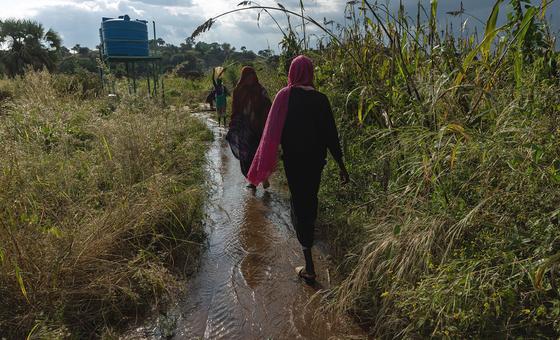
Refugee movements from Sudan.

Accountability is paramount

Perpetrators of serious violations must be held accountable,” Mr. Dujarric stressed.

The civil war between rival militaries – the national Sudanese Armed Forces (SAF) and the paramilitary Rapid Support Forces (RSF) and allied militias – has claimed tens of thousands of lives and driven more than 12.7 million people from their homes, including nearly four million as refugees in neighbouring countries.

Violence and insecurity has also sparked a catastrophic hunger crisis, with over half the population suffering acute food insecurity and famine conditions confirmed in various regions, leaving millions at risk of starvation.

Emergency response underway in Tawila

Despite the escalating violence and dwindling funds, humanitarian agencies continue their efforts to deliver lifesaving aid.

The UN relief coordination office, OCHA, reported on Wednesday that an inter-agency convoy led by UN Deputy Humanitarian Coordinator Antoine Gérard crossed into Darfur from Chad earlier this week via the Adré border, en route to Tawila.

The convoy is transporting critical supplies including nutrition and medical items, dignity kits, and other essential goods.

Food and nutrition assistance for approximately 220,000 people has already reached Tawila, with the UN World Food Programme (WFP) confirming that distributions began this week and are already 20 per cent complete.

Additional convoys are in motion, including one expected to depart Chad on Wednesday with 19 trucks of nutrition supplies.

Aid reaches capital Khartoum

WFP has begun the first food distributions in the centre of the capital Khartoum since the conflict erupted two years ago.

Deliveries of 70 metric tonnes of food to the Burri neighbourhood are set to begin on Thursday, attempting to reach nearly 8,000 people.

Aid distributions have also started in Alazhari, one of the areas at high risk of famine, where 20,000 people are receiving assistance.

Despite these efforts, WFP warned that the impending rainy season and severe funding shortfalls could undermine recent progress.

The agency, which assists about four million people monthly, aims to expand coverage to seven million – but that still represents only a fraction of those in need.

Source link

First Person: Myanmar aid workers brave conflict and harsh conditions to bring aid to earthquake victims

Thein Zaw Win, Communications and Advocacy Analyst in the Yangon Office of the UN sexual and reproductive health agency (UNFPA) saw the devastating consequences of the quake during a week-long visit to the Mandalay region, one of the regions most severely affected by the disaster.

Thein Zaw Win, Communications and Advocacy Analy​st at UNFPA’s Yangon Office, speaks with​ a woman impacted by the recent earthquake in Mandalay, Myanmar.

“I was in Yangon when the earthquake struck. In the aftermath, news reports gradually began indicating that many cities had suffered significant casualties. Buildings, roads, homes, schools, and hospitals were reduced to rubble and people were trapped beneath the debris.

Communication systems were down, so I decided to travel to the affected areas and support the relief efforts.

Women and girls needed lifesaving support, including sexual and reproductive health services and maternal care, dignity kits, hygiene items, and other essential supplies as soon as possible.

Within 72 hours, the UNFPA country office had deployed a Rapid Response Team to deliver essential services to the affected population, working with partners on the ground.

The journey from Yangon to Mandalay usually takes about eight hours, but we struggled to get through, due to damaged roads and collapsed bridges. We had to find alternate routes and, at times, even navigate through the rugged fields beside the main road.

Now that the rainy season has started, the roads are even worse, and travelling has become increasingly difficult. It took us more than 10 hours to reach Mandalay.

A woman affected by earthquake receives relief items including UNFPA’s dignity kits during UN joint distribution in Sagaing, Myanmar.

In some areas of the city, debris blocked the roads. Tower blocks had collapsed and many areas had been reduced to complete rubble. Desperate families sought refuge in temporary shelters, on the streets, or in front of their damaged homes.

Tremors continued for several days. Frequent power outages during the night mean that some affected areas were plunged into darkness, making it unsafe to go anywhere. Reaching those affected and delivering aid under these conditions remains a considerable challenge.

My responsibility is to engage with communities affected by the disaster, and share their stories to a broader audience. It is also vital to raise awareness of the realities and needs on the ground so that we can secure support for emergency assistance. This is my mission.

I met a woman in Mandalay who visited our mobile clinic. She had lived in the city all her life but had never seen such devastation. Everything collapsed in a matter of seconds. She was deeply worried about the damage to healthcare facilities, as well as her ability to access medical care.

© UNOCHA/Myaa Aung Thein Kyaw

A woman in Mandalay, Myanmar, looks on at the devastation caused by the earthquake.

Amidst this crisis, the UNFPA team has provided services ranging from hygiene supplies, protection from gender-based violence, and mental health support for women and girls. They also support maternal and newborn care services. I saw for myself the unwavering resilience of humanitarian workers, and the way that UN agencies, civil society organizations, and NGOs work together.

Myanmar was already suffering from political instability and now it has been further devastated by this destructive earthquake. It is extremely difficult to deliver aid to communities in Sagaing and Mandalay, where armed conflict is ongoing.

In the present context, with monsoon conditions imminent, people are terrified of what this season may bring.

The country is also experiencing the impact of the decline in global aid funding.

UNFPA, like other UN agencies and humanitarian organizations, is dealing with constraints on resources, and we have issued an appeal for emergency assistance to support populations in critical need.

The suffering of women and children affected by the earthquake is profoundly distressing, and we need all of our strength and resilience to help them.

It is a heartbreaking experience to witness the despair in people’s eyes and to listen to their stories of loss, but we are trying to give them the dignity and hope they rightfully deserve in these difficult times.”

‘Recovery must move ahead’ in southern Lebanon, top aid official says

Imran Riza made the appeal following a visit to Bint Jbeil and Tyre districts on Tuesday.

What I saw in South Lebanon was both depressing and inspiring. The scale of destruction – to villages, health facilities, and water systems – is disturbing,” he said in a statement.

Fighting, ceasefire and escalation

The crisis stems from fighting that erupted between Hezbollah militants in Lebanon and Israeli forces following the 7 October 2023 Hamas-led attacks on Israel, which killed some 1,200 people.

Israel launched an incursion into southern Lebanon in late September 2024 and carried out airstrikes across the country that killed thousands and displaced nearly a million people. 

Last November, Lebanon and Israel signed a ceasefire agreement to end the fighting. 

It called for Israeli forces and Hezbollah militants to withdraw from the south, while the Lebanese military would redeploy to the region to guarantee the peace alongside troops from UN peacekeeping mission UNIFIL, who monitor the Blue Line of separation between the two countries. 

Since then, ceasefire violations have occurred and violence has escalated, including recent Israeli strikes on areas of Lebanon’s capital, Beirut, reportedly targeting Hezbollah.

‘No time to lose’

Mr. Riza described the people he met in the south as truly inspiring. 

It’s clear they want to return home, rebuild, and restart their productive lives,” he said.

“Everyone continues to feel a palpable sense of insecurity. Many still lack basics like water and electricity. Too many are still displaced, their homes flattened.”

He said people spoke of their need for peace, safe movement, basic services, and support to rebuild.

“They also shared the trauma they and their children have endured, and the importance of addressing mental health in the wake of what they have lived through,” he added.

The Humanitarian Coordinator stressed the critical need for sustained funding to restore water, electricity, healthcare, and education, and to assist people eager to get on with their lives.

“There is no time to lose – recovery must move ahead,” he said.

Diplomats reinforce support for UN mission

Meanwhile, diplomats from dozens of countries showed their solidarity with UNIFIL’s work in south Lebanon in a visit to the mission’s headquarters in Naqoura on Tuesday.

The diplomatic visit included representatives of 38 countries, including all five permanent members of the UN Security Council

Peacekeepers from 47 countries currently serve with UNIFIL, which was established in March 1978 to confirm Israel’s withdrawal from Lebanon. 

Its mandate was most recently defined in Security Council resolution 1701 (2006), which called for a full cessation of hostilities between Hezbollah and Israel following their 34-day war on Lebanese territory that year. 

An encouraging sign

UNIFIL Head and Force Commander, Lt. Gen. Aroldo Lázaro, welcomed the delegation and noted it would have been impossible to host the diplomats just a few months ago. 

Your presence here is an encouraging indication of the increased stability in the south and the progress made since the understanding on a cessation of hostilities came into effect on 27 November 2024,” he said. 

“The support of UNIFIL’s troop-contributing countries – and the countries who contribute in other ways – is essential to restoring stability to south Lebanon and along the Blue Line. I thank them and their peacekeepers serving on the ground for their continued contributions.”

The delegation also visited two UNIFIL positions along the Blue Line, near Marwahin and in Labbouneh. 

Ambassadors expressed their appreciation for the mission’s important work. 

Source link

Millions will die from funding cuts, says UN aid chief

“Cutting funding for those in greatest need is not something to boast about…the impact of aid cuts is that millions die,” warned Emergency Relief Coordinator Tom Fletcher.

Speaking from an overcrowded hospital in Kandahar in southern Afghanistan where three or four patients have to share a bed, Mr. Fletcher warned that the financial crisis has already forced UN aid teams to close 400 primary health centres across the country so far.

His warning echoes dire announcements of drastic cost-cutting measures in response to chronic – and now acute – funding shortfalls, including an end to selected aid programmes by numerous UN relief agencies. These include the World Food Programme (WFP), the World Health Organization (WHO), the UN Children’s Fund (UNICEF), the UN aid coordination office (OCHA), the UN refugee agency (UNHCR) and UNAIDS.

Life-or-death call

Back in Afghanistan, the reality of funding cuts continues to play out in its hospitals “where you can see doctors making the most horrific decisions about which lives to save and which lives not to save”, Mr. Fletcher said at Mirwais Regional Hospital.

The lack of investment in aid relief has also affected female Afghan health workers whose salaries are being cut by up to two-thirds, Mr. Fletcher continued. The plight of women in the country is well documented and has been condemned by the international community, having deteriorated following numerous prohibitive edicts issued by the de facto authorities who overran Kabul in 2021.

As part of his official visit to Afghanistan, Mr. Fletcher met de facto provincial governor Mullah Shirin Akhund to discuss the need to address Afghanistan’s humanitarian crisis. It comes after more than four decades of conflict that have left almost half the population – some 22.9 million people – needing humanitarian assistance to survive.

Women’s key role

In earlier talks during his official visit, Mr. Fletcher stressed that development was not possible without girls’ education and their full participation in the country’s economy.

Amid soaring malnutrition, a lack of basic services and dire economic forecasts, Afghanistan has few resources to cope with the arrival of a growing number of Afghan refugees sent back by neighbouring countries including Pakistan and Iran.

The scale of the pushbacks is enormous, with more than 250,000 Afghans returned in April alone, including 96,000 who were forcibly deported. On Tuesday, the UN refugee agency, UNHCR, voiced particular alarm over the fate of women and girls, who face increasing repression under Taliban rule.

While in Kandahar, Mr. Fletcher also visited a reception centre where the UN and humanitarian partners provide support, including health check-ups and cash. He said that the closure of hundreds of health facilities in the region had denied more than three million people access to primary care.