Stigmatised for being deaf: Zénabou’s Story

“I always had the painful experience of seeing the other children go to school with their rucksacks,” says 14-year-old Zénabou. “It was tormenting because even though I was burning with a desire to find out what happened in the schools where these children went every morning, I realised very early on that it was a system that wasn’t made for me because I was different.”

For many children with disabilities, the doors to education have remained firmly shut, leaving them with few opportunities and little hope for the future. Yet, in the Central African Republic (CAR) today, children like Zénabou are finally receiving the adapted support and educational opportunities that they deserve thanks to a new inclusive education pilot initiative.

The programme is providing essential resources like learning materials, mobility aids, and specialized classes to learn Braille and sign language; creating a network of community support for families; and integrating children with disabilities into local schools.

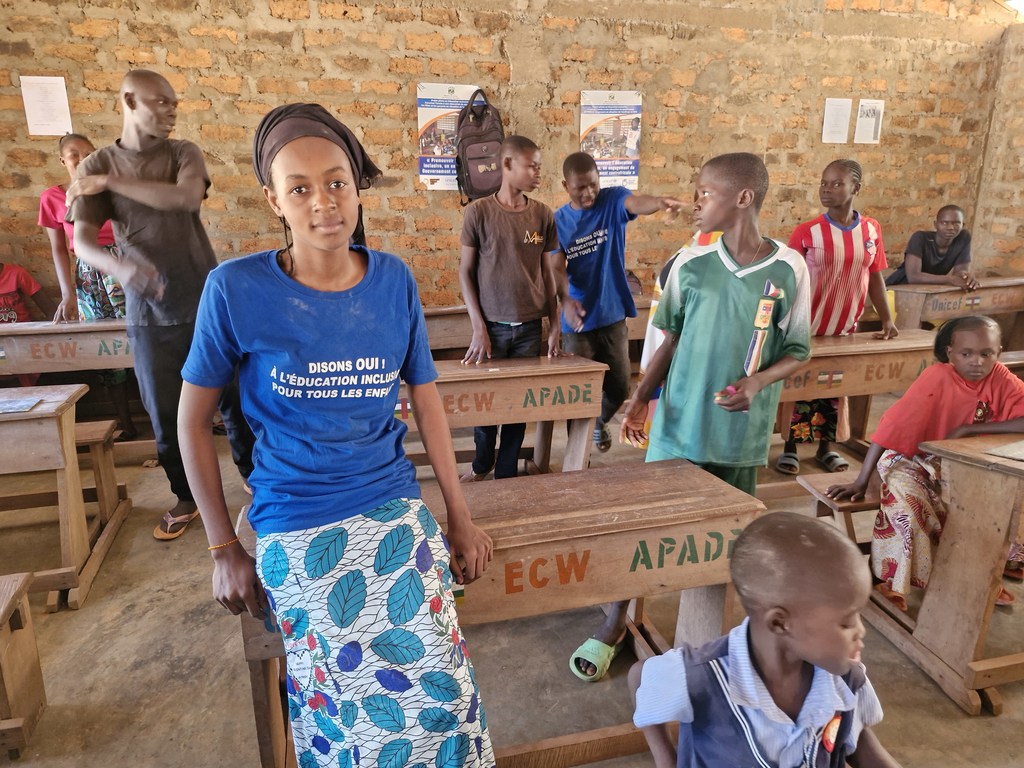
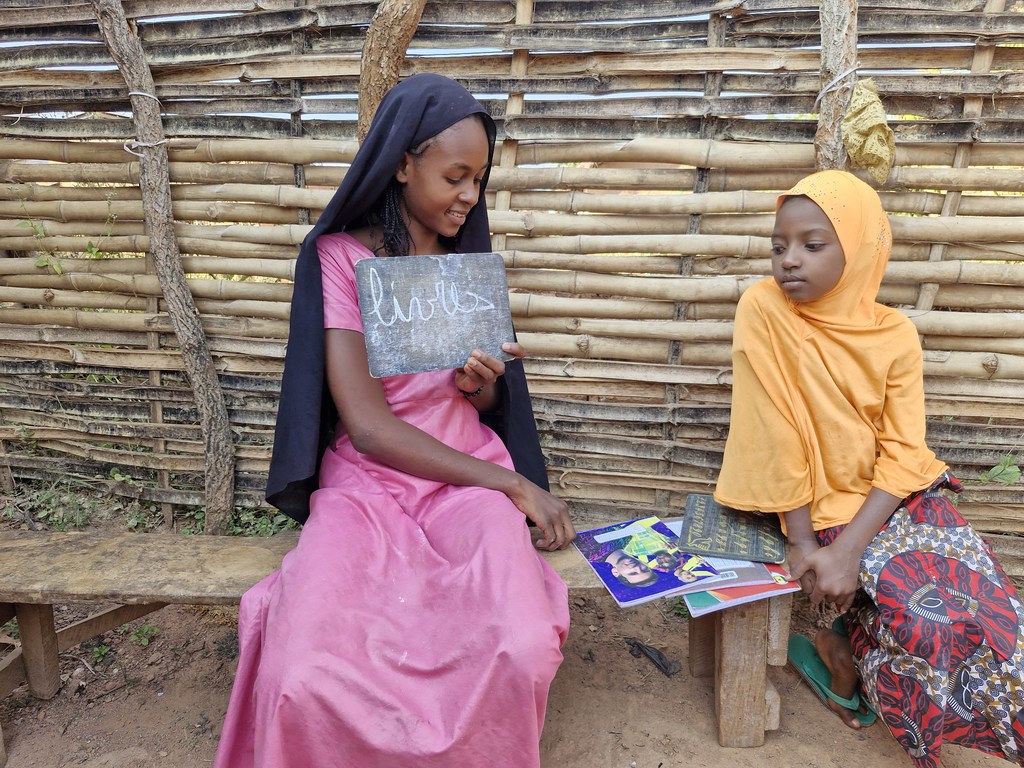
Zénabou, a deaf teenager in the Central African Republic, in her classroom.

A Door Opens

Zénabou sits at the desk in her classroom, workbook in front of her, and surrounded by classmates. She smiles as she watches her teacher write something on the blackboard. It might look like an ordinary scene to someone passing by but to the fourteen-year-old and other children with disabilities like her, this is an extraordinary moment.

Before she enrolled in classes, Zénabou would stay at home most of the day, helping her mom with household chores. Her hours were filled with washing dishes, cleaning clothes and fetching water for her family.

“Going to school was something I’d never hoped for,” she signs. “The day I went to school for the first time, I suddenly realised that I wasn’t the only one in this situation. Seeing more than 30 deaf people in the same place was astonishing!”

Through a multi-year investment, specialised classes for deaf and visually impaired children are held in Bambari, CAR, within ordinary primary schools. There, children like Zénabou who have often never even stepped foot in school are taught to read, write and count, and learn Braille or sign language. These crucial skills unlock a world of learning for them.

Before attending school, Zénabou could barely communicate with those around her. Her parents saw few opportunities for her future. Illiterate themselves, they wanted more for their daughter, but considering her disability, they had no hope. But everything changed when she was given the access, resources and support to learn.
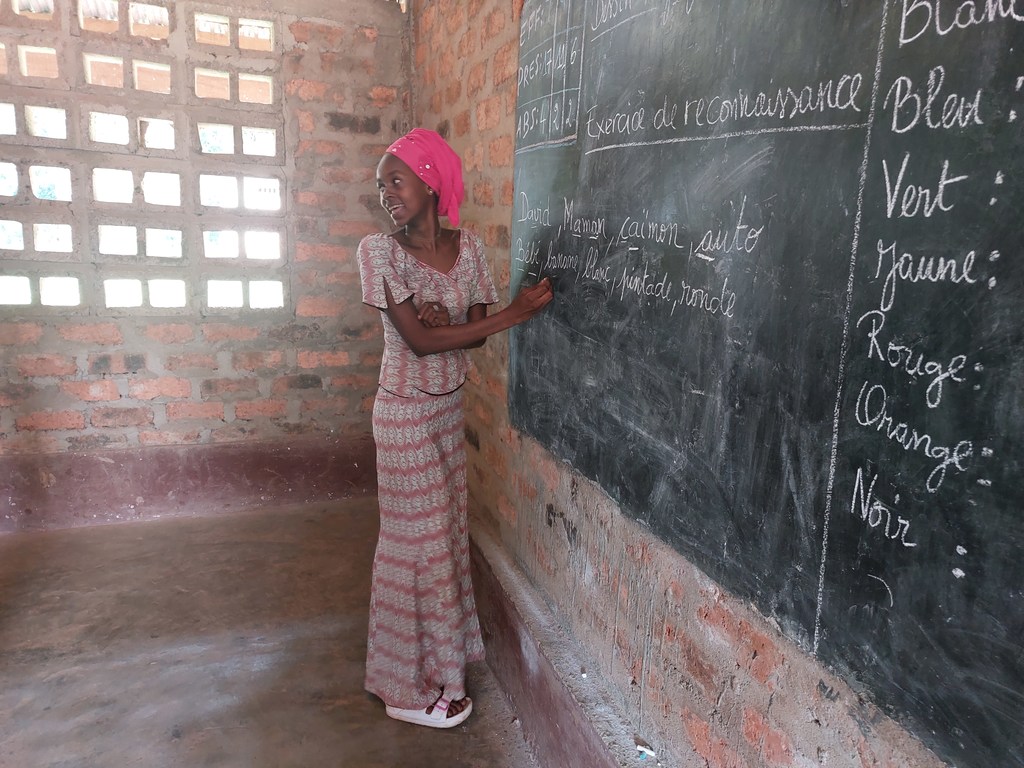
Zénabou in her classroom

“My daughter Zénabou is now able to assert herself as a person, despite the communication barriers caused by the fact that she is deaf,” says Zénabou’s Father. “I’m now optimistic about Zénabou’s future and I know she’s going to succeed!”

Education Crisis in CAR

The Central African Republic is one of the toughest places in the world to be a child. Conflict, displacement and instability are undermining efforts for peaceful development, putting children and adolescents at serious risk. Years of violence have contributed to the breakdown of what were already limited services. Access to healthcare, livelihood opportunities and education is very limited or non-existent in large parts of the country.

The country’s education system is grappling with significant challenges, particularly for children with disabilities. Prolonged conflicts have devastated the educational infrastructure, leaving a million children and adolescents out of school. This crisis disproportionately affects children with disabilities, who face compounded barriers to education due to stigma surrounding disabilities and limited access to specialized support.

Addressing these challenges requires concerted efforts to rebuild educational infrastructure, promote inclusive teaching practices, and combat societal stigma to ensure that all children have access to an inclusive, quality education.​

Zénabou with her sister, Aziza

Inclusive education in the Central African Republic

  • Working with organizations that represent persons with disabilities is key to ensuring their participation in decision-making, as outlined in the Convention on the Rights of Persons with Disabilities. It has also been recognized to be necessary for social change, to promote autonomy and to ensure the empowerment of persons with disabilities.
  • This groundbreaking initiative is funded by Education Cannot Wait (ECW), the global fund for education in emergencies and protracted crises in the United Nations
  • It is supported by the UN children’s agency UNICEF, partners like Humanity and Inclusion and national organizations, including the Centre d’Alphabétisation et de Formation en Braille pour les Aveugles en Centrafrique’ and the  Association Nationale des Déficients Auditifs de Centrafrique.

Source link

Sign Language Day celebration at 3200 places across India

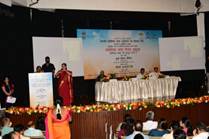
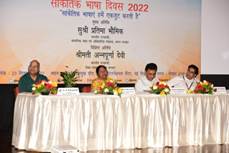
‘Sign Language Day’ with the theme ‘Sign Languages Unite Us’ was celebrated under Azadi ka Amrit Mahotsav by the Indian Sign Language Research and Training Centre (ISLRTC), an autonomous body under the Department of Empowerment of Persons with Disabilities, M/o Social Justice and Empowerment on 23rd September 2022 at C.D. Deshmukh Auditorium, India International Centre (IIC), New Delhi.

Ever since the United Nations declared 23rd September as the International Day of Sign Languages, the ISLRTC celebrates it every year on 23rd September. This year National Implementation Committee (NIC) chaired by  Home Minister inter-alia approved the event – “Sign Language Day” on 23rd Sep, 2022 to be conducted and celebrated by Ministry of Social Justice and Empowerment” (Department of Empowerment of Persons with Disabilities), under “Azadi Ka Amrit Mahotsav” celebration.

As per the plan of action, approximately 3,200 organizations/ institutions were roped in for celebrating Sign Language Day-2022 under Azadi ka Amrit Mahotsav. The objective of the Sign Language Day celebration was to sensitize the general public about the importance of Indian Sign Language in the lives of persons with hearing disabilities.

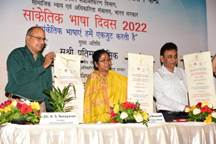
Minister of Social Justice & Empowerment, Km. Pratima Bhoumik was the Chief Guest. Sh. Rajesh Aggrawal, Secretary, DEPwD, and Sh. Rajesh Yadav, Joint Secretary, DEPwD & Director, ISLRTC, and Sh. A.S. Narayanan, President, National Association of Deaf also graced the occasion.

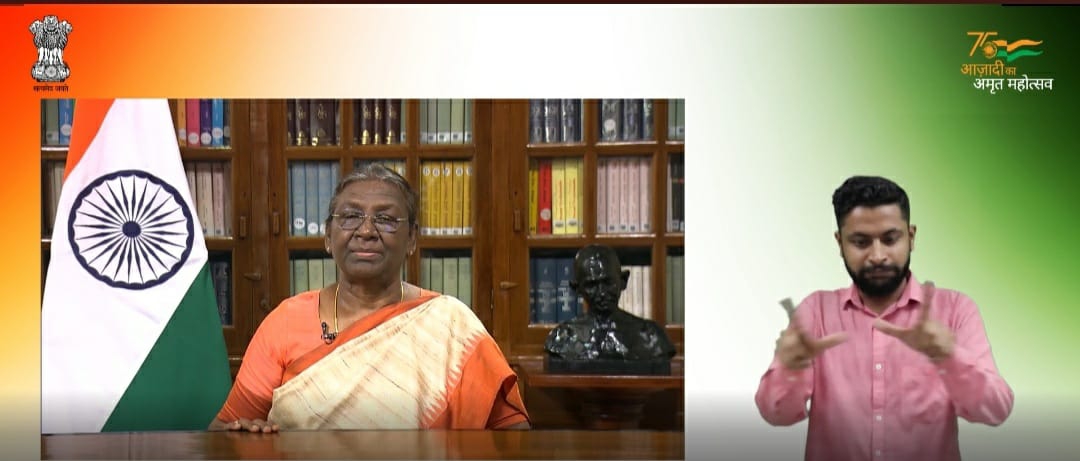
Via a video message, The President of India said that she feels proud and happy that entire world is adopting the principle of Indian culture i.e. Vasudhaiva Kutumbakam (All world is a family) and it be seen through the celebration of Sign language day throughout the world.

Minister of Social Justice & Empowerment, Km. Pratima Bhoumik mentioned that Persons with Disabilities (PwDs) are an integral part of our society and to provide them full accessibility is the utmost priority of the Government. Continuous efforts are being made to ensure the empowerment and mainstreaming of PwDs to make an inclusive society. She said that Sign language also plays an important role in the education of deaf people because it is easier for deaf people to get education and higher education through sign language. This day brings all the deaf people together socially across the country. Through sign language, our deaf brothers and sisters are getting inspiration and direction to move ahead in their lives. This year Sign Language Day celebration is being celebrated under the Amrit Mahotsav of Azadi, which will certainly lead to a positive success in increasing public awareness about the importance of sign language.

Addressing on the occasion, Sh. Rajesh Aggrawal, Secretary DEPwD highlighted the social significance of sign language as it integrates the deaf community socially as well as culturally. He praised the efforts of ISLRTC for doing commendable service to the people with hearing disability. Secretary, DEPwD, Shri.Rajesh Aggrawal mentioned that all the possible efforts will be made that every district to have an Indian Sign Language interpreter to facilitate accessible communication for Deaf persons.

Sh. Rajesh Yadav, Joint Secretary, DEPwD and Director, ISLRTC welcomed all the dignitaries and participants. He also presented a brief account of the remarkable works and achievements of ISLRTC in a short span of time from its establishment in 2015.

In his address, Shri A.S. Narayanan, President of the National Association of the Deaf thanked  Prime Minister, Minister of State, SJ&E, DEPwD and ISLRTC for constantly promoting Indian Sign Language and Education of the Deaf to include them in the mainstream of the society. He informed that he has requested the Government for including Indian Sign Language (ISL) in the forthcoming Census.

During the programme, several important resource materials were launched:-

An ISL Dictionary app called Sign Learn was launched which is available in both Android and iOS versions.

ISLRTC had signed an MoU with National Council of Educational Research and Training (NCERT) on 06th October, 2020 for converting NCERT textbooks from Class I to XII into Indian Sign Language (digital format) to make the textbooks accessible to children with hearing disabilities. This year ISL e-content of NCERT textbooks of class VI was launched.

Under Azadi ka Amrit Mahotsav, the Centre launched ISL version of selected books of National Book Trust’s Veergatha series.

With the joint effort of ISLRTC and NCERT, a total of 500 academic words in Indian Sign Language were launched. These 500 academic words are words used at the secondary level, which are often used in history, science, political science, mathematics.

The Centre conducted 5th Indian Sign Language Competition, 2022, a national-level competition held for Deaf students and interpreters to showcase their ISL skills, creativity and knowledge. For the Competition, entries were invited on jokes, stories and essays in Indian Sign Language. During the Sign Language Day programme, all the winners of the 5th ISL competition were distributed trophy and certificate by  Minister of Social Justice & Empowerment, Km. Pratima Bhoumik.

In the above event, vice chancellor MDU, Rohtak, Joint Director (NCERT) and other dignitaries from the field were also present.

The programme also included cultural performances like songs and mime in ISL by the interpreter trainees and Deaf teacher trainees.

Employment to Differently Abled

Section 34 of the “ The Rights of Persons with Disabilities Act, 2016” mandates every appropriate Government to appoint in every Government establishment, not less than four per cent of the total number of vacancies in the cadre strength in each group of posts meant to be filled with persons with benchmark disabilities of which, one per cent each shall be reserved for persons with benchmark disabilities under clauses (a), (b) and (c) and one per cent for persons with benchmark disabilities under clauses (d) and (e), namely:-

(a) blindness and low vision;

(b) deaf and hard of hearing;

(c) locomotor disability including cerebral palsy, leprosy cured, dwarfism, acid attack victims and muscular dystrophy;

(d) autism, intellectual disability, specific learning disability and mental illness;

(e) multiple disabilities from amongst persons under clauses (a) to (d) including deaf-blindness in the posts identified for each disabilities.

Section 34 of the Act also provides that the reservation in promotion shall be in accordance with such instructions as are issued by the appropriate Government from time to time.

Promotions to the higher grades are made as per provisions of the relevant Recruitment Rules. In some of the Recruitment Rules, provisions exist for promotion either on the basis of seniority in service or through Limited Departmental Competitive Examinations. The candidates, who do not qualify the Limited Departmental Competitive Examination are promoted on the basis of their inter-se-seniority in the feeder grade.

However, in cases where the departmental promotion test is the only mode of promotion, proposal to give promotion on the basis of the seniority or merit in service alone is not under consideration.

This was stated by the Minister of State for Personnel, Public Grievances and Pensions and Minister of State for Prime Minister’s Office, Dr Jitendra Singh in a written reply to question by Shri Chandu Lal Sahu in the Lok Sabha today.