‘An unending horror story’: Gangs and human rights abuses expand in Haiti

Left vulnerable, communities then formed self-defence groups and Haitian security forces reinforced their operations and made small gains only to be rebuffed again by gangs.

And at all stages of this cycle, human rights violations are being committed against civilians, according to a report released on Friday by the UN office in Haiti (BINUH) and the UN human rights office (OHCHR).

“Caught in the middle of this unending horror story are the Haitian people, who are at the mercy of horrific violence by gangs and exposed to human rights violations from the security forces and abuses by the so-called ‘self-defence’ groups,” said Volker Türk, High Commissioner for Human Rights.

The report also warned about “early signs of criminal governance” in the Centre Department where gangs are beginning to consolidate their gains and act as a de facto governing authority.

Four years of horror

Since 2021 and the assassination of President Jovenel Moïse, gang violence has dominated the capital Port-au-Prince which is now 85 per cent controlled by gangs, says the UN.

Over 1.3 million Haitians have been displaced because of this violence, representing the largest displacement due to political upheaval in Haitian history.

Food insecurity among displaced Haitians is rampant, with Haiti one of five countries worldwide which is experiencing famine-like conditions.

As of March 2025, the violence has also expanded into previously untouched areas of the country, specifically the Artibonite and Centre Departments where 92,000 and 147,000 people have been displaced respectively.

The report also noted that recently, gangs have begun to expand beyond central Haiti towards the border of the Dominican Republic, with the apparent goal of controlling key roads through which much of the illegal weapons trafficking is happening.

“The expansion of gang territorial control poses a major risk of spreading violence and increasing transnational trafficking in arms and people,” said Ravina Shamdasani, a UNHCR spokesperson at a briefing in Geneva.

Human rights endangered

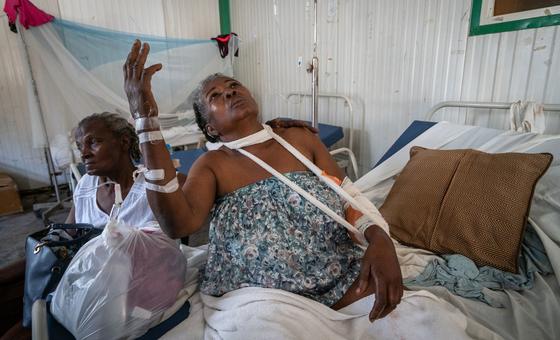
Between October 2024 and June 2025, 4,864 people in Haiti have been killed by gang violence. At least hundreds more have been injured, kidnapped, raped and trafficked.

“Human rights abuses outside Port-au-Prince are intensifying in areas of the country where the presence of the State is extremely limited,” said Ulrika Richardson, interim Head of BINUH and UN Resident Coordinator.

While many of these human rights violations – including the denial of the right to life and physical integrity, sexual violence and forced displacement — are being perpetrated by organized gangs, there are also documented human rights abuses at the hands of Haitian authorities.

Specifically, between October 2024 and June 2025, there were 19 extrajudicial executions by security forces in the Artibonite and Centre Departments – 17 of them in Artibonite.

Self-defence groups, which are increasingly prevalent as a result of inadequate State security, have also committed human rights violations, often in the form of lynchings of suspected gang members.

“The human rights violations and abuses that we have documented are further evidence of why Haiti and the international community urgently need to step up to end the violence,” Mr. Türk said.

At this point, there have been no documented human rights abuses committed by the Multinational Security Support (MSS) mission authorized by the United Nations and funded and staffed largely by Kenya.

No accountability

The Haitian National Police and MSS have launched multiple operations to regain territory lost to the gangs. While some have been briefly successful, the operations have been unable to maintain a lasting presence or protect local communities, according to the report.

In fact, the report suggests that in the Centre, the situation is trending in the opposite direction with gangs consolidating territorial gains outside the capital and beginning to institute forms of criminal governance.

As a result of this persistent insecurity, judicial operations are virtually at a standstill in the Centre and Artibonite Departments.

“The international community must strengthen its support to the authorities, who bear the primary responsibility for protecting the Haitian population,” said Ms. Richardson.

Source link

Stigmatised for being deaf: Zénabou’s Story

“I always had the painful experience of seeing the other children go to school with their rucksacks,” says 14-year-old Zénabou. “It was tormenting because even though I was burning with a desire to find out what happened in the schools where these children went every morning, I realised very early on that it was a system that wasn’t made for me because I was different.”

For many children with disabilities, the doors to education have remained firmly shut, leaving them with few opportunities and little hope for the future. Yet, in the Central African Republic (CAR) today, children like Zénabou are finally receiving the adapted support and educational opportunities that they deserve thanks to a new inclusive education pilot initiative.

The programme is providing essential resources like learning materials, mobility aids, and specialized classes to learn Braille and sign language; creating a network of community support for families; and integrating children with disabilities into local schools.

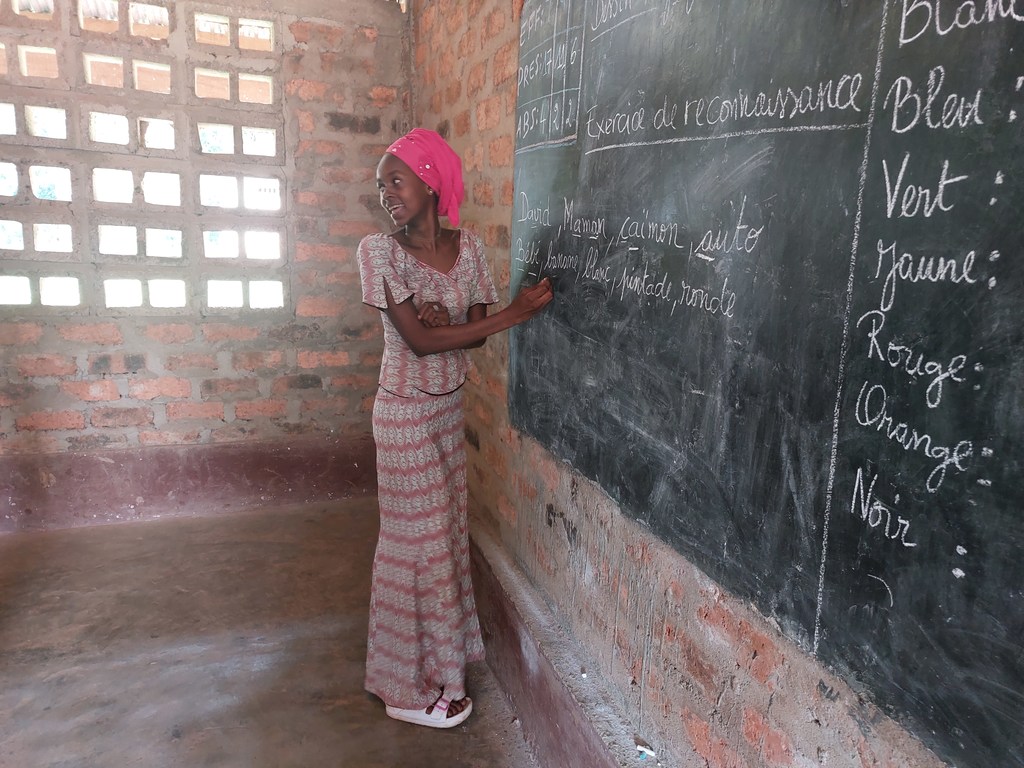
Zénabou, a deaf teenager in the Central African Republic, in her classroom.

A Door Opens

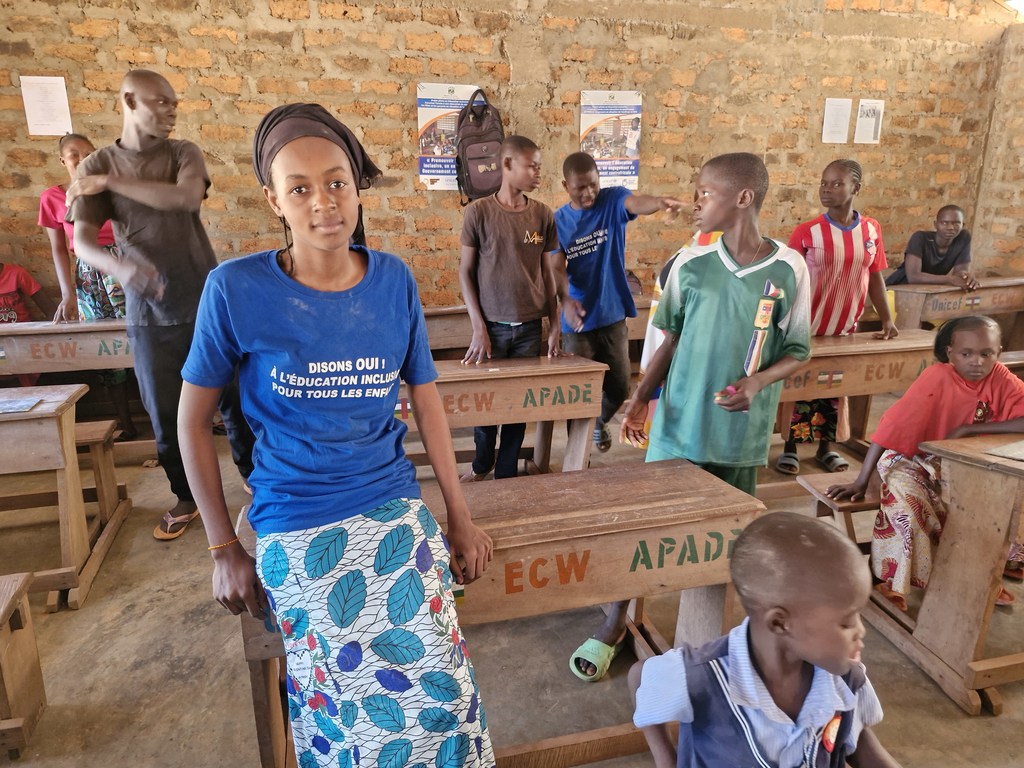
Zénabou sits at the desk in her classroom, workbook in front of her, and surrounded by classmates. She smiles as she watches her teacher write something on the blackboard. It might look like an ordinary scene to someone passing by but to the fourteen-year-old and other children with disabilities like her, this is an extraordinary moment.

Before she enrolled in classes, Zénabou would stay at home most of the day, helping her mom with household chores. Her hours were filled with washing dishes, cleaning clothes and fetching water for her family.

“Going to school was something I’d never hoped for,” she signs. “The day I went to school for the first time, I suddenly realised that I wasn’t the only one in this situation. Seeing more than 30 deaf people in the same place was astonishing!”

Through a multi-year investment, specialised classes for deaf and visually impaired children are held in Bambari, CAR, within ordinary primary schools. There, children like Zénabou who have often never even stepped foot in school are taught to read, write and count, and learn Braille or sign language. These crucial skills unlock a world of learning for them.

Before attending school, Zénabou could barely communicate with those around her. Her parents saw few opportunities for her future. Illiterate themselves, they wanted more for their daughter, but considering her disability, they had no hope. But everything changed when she was given the access, resources and support to learn.

Zénabou in her classroom

“My daughter Zénabou is now able to assert herself as a person, despite the communication barriers caused by the fact that she is deaf,” says Zénabou’s Father. “I’m now optimistic about Zénabou’s future and I know she’s going to succeed!”

Education Crisis in CAR

The Central African Republic is one of the toughest places in the world to be a child. Conflict, displacement and instability are undermining efforts for peaceful development, putting children and adolescents at serious risk. Years of violence have contributed to the breakdown of what were already limited services. Access to healthcare, livelihood opportunities and education is very limited or non-existent in large parts of the country.

The country’s education system is grappling with significant challenges, particularly for children with disabilities. Prolonged conflicts have devastated the educational infrastructure, leaving a million children and adolescents out of school. This crisis disproportionately affects children with disabilities, who face compounded barriers to education due to stigma surrounding disabilities and limited access to specialized support.

Addressing these challenges requires concerted efforts to rebuild educational infrastructure, promote inclusive teaching practices, and combat societal stigma to ensure that all children have access to an inclusive, quality education.​

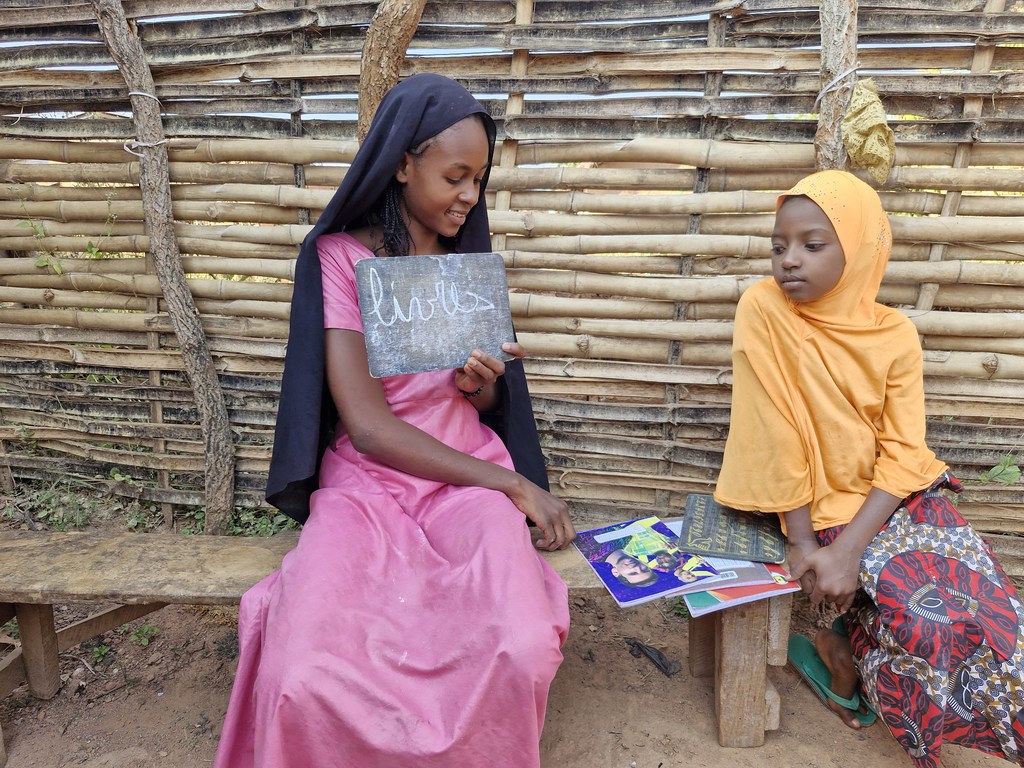
Zénabou with her sister, Aziza

Inclusive education in the Central African Republic

  • Working with organizations that represent persons with disabilities is key to ensuring their participation in decision-making, as outlined in the Convention on the Rights of Persons with Disabilities. It has also been recognized to be necessary for social change, to promote autonomy and to ensure the empowerment of persons with disabilities.
  • This groundbreaking initiative is funded by Education Cannot Wait (ECW), the global fund for education in emergencies and protracted crises in the United Nations
  • It is supported by the UN children’s agency UNICEF, partners like Humanity and Inclusion and national organizations, including the Centre d’Alphabétisation et de Formation en Braille pour les Aveugles en Centrafrique’ and the  Association Nationale des Déficients Auditifs de Centrafrique.

Source link