DPR Korea ploughing ahead with nuclear and ballistic missile programme

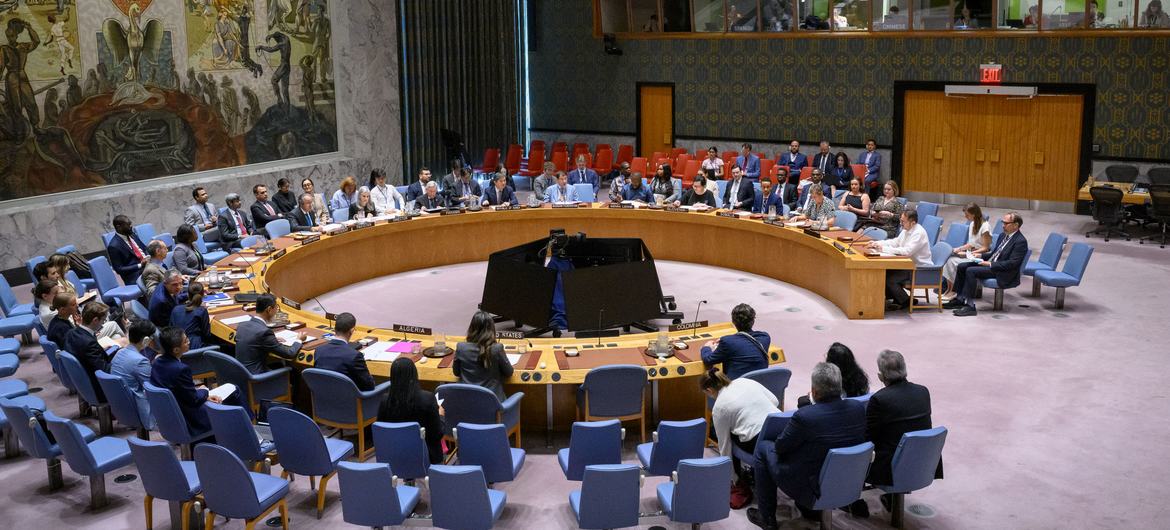
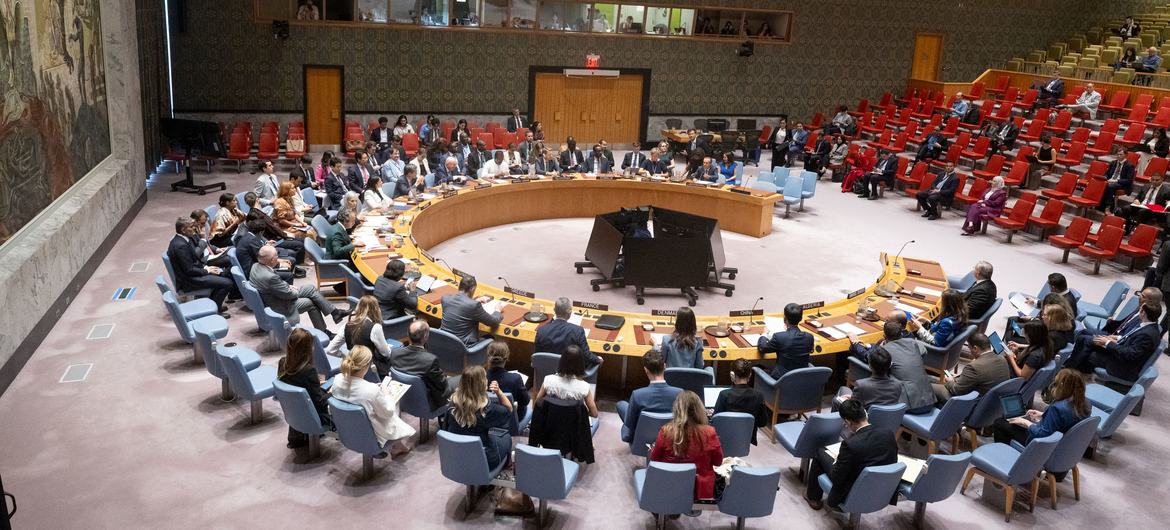
Briefing ambassadors in the Security Council on Wednesday, Assistant Secretary-General Khaled Khiari described a troubling pattern of weapons testing and growing nuclear ambition from DPRK – more commonly known as North Korea.

This includes the launch of an intercontinental ballistic missile (ICBM) in October 2024 and an intermediate-range hypersonic missile last January.

Meanwhile, the International Atomic Energy Agency (IAEA) has reported “open displays” of undeclared uranium enrichment at Yongbyon and Kangson.

“These events have been accompanied by statements reiterating the DPRK’s intention to further develop nuclear and ballistic missile capabilities, including tactical nuclear warheads, military reconnaissance satellites, and the construction of a ‘nuclear-powered strategic missile submarine’,” Mr. Khairi said.

North Korea’s persistent pursuit of nuclear weapons and ballistic missile programmes – in violation of multiple Security Council resolutions – “continues to undermine the global nuclear disarmament and non-proliferation regime,” he warned.

Ensuring compliance

Mr. Khiari reiterated the UN’s call for compliance with the Treaty on the Non-Proliferation of Nuclear Weapons (NPT) and IAEA safeguards, calling on DPRK to sign and ratify the Comprehensive Nuclear-Test-Ban Treaty.

He also echoed Secretary-General António Guterres’ call for all countries to ensure that their relations with the DPRK “entirely abide” by the relevant Council sections.

We recall the obligations for all Member States to implement the relevant sanctions measures,” he said.

Broader security risks

He also noted broader regional tensions, warning that the Korean Peninsula “remains tense,” amid heightened military activity, limited dialogue between north and south – and the growing nuclear risk.

He cautioned that the potential for miscalculation is increasing and urged renewed diplomatic efforts toward sustainable peace and the complete, verifiable denuclearization of the Korean Peninsula.

These must be anchored in dialogue and diplomacy, Mr. Khiari said.

Addressing humanitarian needs

Beyond the security situation, Mr. Khiari urged ambassadors not to forget the reportedly dire humanitarian situation in the country.

We reiterate the call on the DPRK to facilitate the return of the UN Country Team to strengthen support for its people and advance the 2030 Agenda for Sustainable Development,” he said.

Source link

Port Sudan: Aid officials call for greater protection as drone attacks continue

The escalation is occurring as war grinds on between the Sudanese Armed Forces (SAF) and the paramilitary Rapid Support Forces (RSF), who appear to be targeting airports in each other’s areas of control.

“Very concerned by ongoing drone strikes on Port Sudan,” UN Emergency Relief Coordinator Tom Fletcher tweeted on Wednesday. 

“International humanitarian law must be respected. Constant care must be taken to spare civilians and civilian infrastructure.”

Suffering will worsen

The latest strikes in Port Sudan took place early on Tuesday morning, reportedly targeting the international airport and other infrastructure, including a fuel storage facility and a power transformer. 

The UN Resident and Humanitarian Coordinator in Sudan, Clementine Nkweta-Salami, issued a statement that day, saying the attacks “will deepen humanitarian suffering and needs, as well as exacerbate the already severe access and logistical challenges that humanitarian actors face in the delivery of urgently needed aid to the rest of the country.” 

She underlined that the airport is a “lifeline for humanitarian operations” as it is the primary entry point for aid personnel, medical supplies and other life-saving relief. 

“Moreover, the availability of fuel in Port Sudan is critical to the dispatch of humanitarian supplies to areas across Sudan in dire need of assistance,” she added.

She stressed that damage to critical infrastructure could also disrupt supply chains and increase the price of basic goods, thus worsening what is already the world’s largest humanitarian crisis.

Displacement and aid suspension

Drone attacks have also affected Kassala and River Nile states, according to the UN humanitarian affairs office OCHA.

Earlier this week, strikes near the airport in Kassala displaced about 2,900 people and led to the temporary suspension or relocation of some aid activities.

Meanwhile, River Nile state is still facing a power blackout following a drone strike on the transformer station in Atbara on 25 April. The outage is contributing to growing fuel and bread shortages and long lines at gas stations and bakeries.

Cease hostilities now

Ms. Nkweta-Salami noted that since January, attacks on infrastructure across Sudan, such as power stations, water sub-stations, and oil refineries, have caused widespread electricity outages and disrupted access to essential services, including safe drinking water, healthcare and food supplies. 

These are serious violations of international humanitarian law and “reflect a consistent failure to comply with the principles of distinction, proportionality and precaution,” she said. 

“Every measure must be taken to spare civilians and civilian objects,” she said. “Once again, I call on all those involved in this conflict to cease hostilities.”

Source link

Absent faces, destroyed homes – young students paint the pain of Gaza

Their paintings and drawings range from a portrait of an esteemed Palestinian poet and family members killed in conflict, to a sky blackened by thick smoke – and a child crying in front of his mother’s corpse.

The poignant images are currently on display at UNRWA’s Remal School in Gaza City, which has been transformed into a shelter.

Remembrance and loss

The exhibition provides an opportunity for the children and young people to express and discuss their feelings after nearly 18 months of war.

Fatima al-Za’anin, who was displaced from Beit Hanoun in northern Gaza, cried as she spoke about her artwork. “I painted the Palestinian poet Mahmoud Darwish, I drew mama, baba, my sister and my grandfather,” she said.

Fatima stopped talking to cry once more and turned to a small pencil drawing peppered with red spots. “I drew martyrs’ bodies that were torn to pieces,” she explained.

She pointed to another drawing of a boy called Mohammed “who wished he had one person left in his family, but there was no one left,” she said. “I painted a child who lamented his mother, whom he had lost.”

A specialist from the UNRWA Psychological Support Centre stood beside Fatima and praised her courage in expressing her feelings.

17 year-old Na’emat Haboob, the sole survivor of her family and displaced from Jabalia Camp, stands beside her artwork—a moving tribute to her mother, who was killed in the war.

Praying for comfort

Na’emat Haboob, a 17-year-old student, touched one of her paintings as she spoke about it. The image is of the face of her mother, who was killed in the war. 

“This is mama’s painting.  Thank God I could draw it while I’m trying to get over losing her.  I hope everyone will pray for her.” 

Na’emat continued to run her fingers over the painting as if she wanted to touch her mother’s face and said: “May God grant me comfort for losing her and my siblings.”

May God grant me comfort for losing her and my siblings

She credited the mental health team at the Remal shelter for their support, saying it gave her the strength to turn her pain into art. 

Her grief welled up again and she was unable to go on. Comforted by a hug from the counsellor, she was able to continue, saying the psychological support she receives at the shelter enables her to keep studying. 

“I seek to develop my talents after what I’ve been through during the war,” she said. “I want to try hard to be what my mother wished for me.”

Malak Fayad, a displaced from Beit Hanoun (Gaza) shares the meaning behind her artwork with fellow displaced visitors, using art as a way to express her experiences, resilience, and hope amid the devastation of war.

Lives transformed, hopes destroyed

Another student, Malak Fayyad, stood in front of her colourful paintings. One depicts the clear blue sky and sea of Gaza, showing birds, trees and landscapes. It is a copy of a work she had previously painted which hung proudly on a wall in her family’s home. 

But the house was destroyed along with all their belongings, including the painting.

“I painted it again to remember Gaza as it was, and next to it another painting clouded by black smoke from weapons,” Malak said, before highlighting other works she created, including one which “shows how our lives have been transformed after the destruction and bombing.”

Another of her paintings depicts a Palestinian man who appears to be carrying a bag in the form of a house. She said it “shows that the Palestinian always carries with him the Palestinian cause, even when he is displaced and forced to leave his home.”

The war in Gaza has destroyed hopes of a better future, according to another young artist, Malak Abu Odeh.  

“Not only displacement and destruction, but the war has taken away from us our dearest people, our relatives and loved ones,” she said.

“We’re not well, but I would like to thank the mental health team who are trying to entertain us, help us and support us.”

Commitment to deliver

UNRWA continues to provide psychosocial support services across the Gaza Strip. The agency said its teams responded to around 3,000 cases between 21 and 27 April. 

This support included individual counselling, awareness-raising sessions and response to gender-based violence cases in its health centres, medical points and shelters. 

Source link

New horror in Gaza as double strike on school shelter kills 30

The UN agency for Palestine refugees, UNRWA, maintained that Israeli forces hit the school in Al Bureij, Middle Gaza, at around 6pm on Tuesday and again at 10.20pm.

The school sustained severe damage and a fire broke out in the shelter, making it difficult to evacuate the casualties. Residents had to open a hole in the wall to evacuate the dead and wounded,” UNRWA told UN News.

Since the start of the war between Hamas and Israel on 7 October 2023, more than 400 schools have received a direct hit, according to satellite imagery analyzed by the UN.

Deadly aftermath

Footage from the scene provided by the UN agency showed walls and floors blown out in the main school building.

In the courtyard, hundreds of people can be seen standing amid crumpled metal sheeting on the morning after the attack, with rubble and wooden planks strewn around where their shelters had been standing just hours earlier.

“Our colleagues are reporting that surviving parents and children are trying to salvage their belongings among the blood and body parts of their relatives and neighbours,” UNRWA said.

The agency noted that fatalities included women and children, while search and rescue operations are ongoing for several people still missing.

Many of those living at the school when it was hit have been displaced “countless times” by the war, which began on 7 October 2023, following Hamas-led terror attacks on Israel, UNRWA stressed.

The attack also sparked a fire in an adjacent school where more tents and temporary shelters were burned and damaged.

Education destroyed

According to the UN Satellite Service, UNOSAT, 95.4 per cent of schools in Gaza have sustained damage since the start of the war.

Of the enclave’s 564 schools, 501 will either need full reconstruction or major rehabilitation work to be functional again.

“There is no humanity left in Gaza, and no humanity left as the world continues to watch day after day as families are bombed, burned alive and starved,” UNRWA said after the latest attack.

Failed strategy won’t work: Türk

In a related development, the UN human rights chief Volker Türk on Wednesday condemned Israel’s reported plans to forcibly transfer Gaza’s population to a small area in the south of the Strip.

The move fuels concern that Israel’s intention is to make life for Palestinians “increasingly incompatible with their continued existence in Gaza”, he said in a statement.

Surviving parents and children are trying to salvage their belongings among the blood and body parts of their relatives and neighbours – UNRWA

“There is no reason to believe that doubling down on military strategies, which, for a year and eight months, have not led to a durable resolution, including the release of all hostages, will now succeed,” insisted the UN High Commissioner for Human Rights.

Expanding the offensive on Gaza “will almost certainly cause further mass displacement, more deaths and injuries of innocent civilians, and the destruction of Gaza’s little remaining infrastructure”, he continued.

Rights experts warn of irreversible consequences

Escalating atrocities in Gaza mark a critical moral turning point and demand urgent international action, UN-appointed independent human rights experts said in a statement.

While States debate terminology – is it or is it not genocide? – Israel continues its relentless destruction of life in Gaza,” they warned, citing attacks by land, air and sea, and a soaring civilian death toll.

“No one is spared – not children, persons with disabilities, nursing mothers, journalists, health professionals, aid workers, or hostages,” they said, noting that on 18 March alone, 600 Palestinians were reportedly killed, 400 of them children. The independent experts are appointed by the Human Rights Council, are not UN staff members and receive no salary for their work.

Occupied West Bank update

In the occupied West Bank, meanwhile, UN aid teams warned of worsening conditions for Palestinian communities because of “violence by Israeli forces and settlers”.

The alert comes after Israeli forces on Monday demolished more than 30 structures in Khallet Athaba, a hamlet in Hebron governorate, displacing nearly a dozen families – or around 50 people.

“This constitutes most of the structures in the community and marks the third and largest demolition there since February,” said UN aid coordination office, OCHA. It noted that the area is designated by Israel as a military training zone.

In addition, Israeli forces also began demolishing six homes in Nur Shams refugee camp in Tulkarm on Monday, impacting 17 families. They are among more than 100 buildings slated for demolition, following an Israeli notice issued at the start of the month.

Forcible transfer fears

OCHA described how dozens of families in the camp were given little time on Monday to collect their belongings before their homes were demolished.

The agency highlighted the “strong push” to uproot Palestinians living in the area “once again raising concerns about the risks of forcible transfer of the population”.

Under international law, Israel as the occupying power, has the responsibility to protect Palestinians in the West Bank and ensure their safety and dignity, OCHA insisted.

Humanitarian partners are mobilizing assistance, but urgent international engagement is needed to stop these coercive measures and protect vulnerable communities, the UN aid office said.

Source link

DR Congo aid operation reaches Beni with food supplies for thousands

The UN World Food Programme (WFP) said that trucks packed with cereals, beans and cooking oil reached the city of Beni in North Kivu province from neighbouring Uganda, amid clashes between Rwanda-backed M23 rebel fighters and Congolese forces.

Aid for 140,000

WFP said that it intends to use the thousands of tonnes of relief supplies transported to warehouses in Beni to help around 140,000 people living in Lubero territory, south of the city of Butembo.

Violence escalated on 2 May across Lubero territory, uprooting some 30,000 people, according to the UN aid coordination office, OCHA.

The development comes amid ongoing peace talks in Qatar between the DRC Government and the M23 rebels. At previous talks in April, both sides pledged to work towards peace.

Amid rampant insecurity caused by proliferating armed groups, the Rwandan-backed M23 rebels have been at war for years with the Congolese army and allied forces in the mineral-rich region. In 2021, negotiations between the group and Kinshasa collapsed.

January offensive

Hostilities ramped up in January this year when M23 fighters captured Goma, the capital of North Kivu Province. A month later they seized Bukavu, the capital of South Kivu and threatened to take Kinshasa, on the other side of the huge country.

Since then, ongoing fighting has caused mass displacement, killed more than 7,000 people and fuelled fears of regional conflict.

A total of 21 million people need humanitarian assistance in DRC today. UN aid teams and partners remain on the ground to help and have condemned the looting of aid warehouses by armed groups which have destroyed food and medicine.

Source link

UN Secretary-General urges military restraint from India, Pakistan

In a note to correspondents issued by his spokesperson on Tuesday, Secretary-General António Guterres called for military restraint from both countries.

The world cannot afford a military confrontation between India and Pakistan,” the note said.

On Monday, the Secretary-General had warned that the tensions between the two South Asian neighbours had reached “their highest in years.”

He offered his good offices to both governments to help defuse tensions and promote diplomacy, stressing that “a military solution is no solution.”

Source link

Lives of pregnant women and newborns at risk as funding cuts impact midwifery support

But despite their critical role, UN support for midwifery is under serious threat due to severe funding cuts.

Each year, three-quarters of all maternal deaths occur in just 25 countries, the majority of them located in sub-Saharan Africa and South Asia, according to the UN reproductive health agency, UNFPA

Midwives are often the first and only responders delivering life-saving care to pregnant women and their newborns in crisis settings, where the risk of dying during pregnancy or childbirth doubles.

Funding cuts are now forcing UNFPA to scale back its support for midwifery. In eight of the affected countries the agency will only be able to fund 47 per cent of the 3,521 midwives it had intended to support in 2025.

On the frontline

In times of crisis, women often lose critical access to vital maternity services. Coming to the rescue in the direst of circumstances and serving as a lifeline to pregnant women, “midwives save lives,” said Natalia Kanem, Executive Director of UNFPA.

UN support for midwives in humanitarian settings includes training, providing supplies and equipment and in some cases transportation for mobile health clinics. All this is having to be cut back amid the funding cuts. 

When crises strike and systems break down, midwives step up,” said UNFPA, marking International Day of the Midwife.

Funding cuts

Amid a global shortage of nearly one million midwives, rising death rates among women and newborns in conflict zones and fragile contexts are now being reported following budget cuts.

“We’re lacking everything, from blood bags to medicines. With the support of UNFPA and other partners, we can still provide services – but for how long?said Fabrice Bishenge, Director of Kyeshero General Hospital in eastern DR Congo.

Deaths during childbirth in fragile and conflict-affected settings now account for 60 per cent of all maternal deaths globally. Worldwide, deep funding cuts only exacerbate this trend. In Yemen, for instance, over 590,000 women of childbearing age are expected to lose access to a midwife.

© UNICEF/Mukhtar Neikrawa

The waiting room of a maternity hospital in Herat Province, Afghanistan.

New initiative

In light of the current funding crisis, UNFPA and partners recently launched the Global Midwifery Accelerator — a coordinated initiative to scale up midwife-led care in countries with the highest maternal mortality rates.

The initiative sets out a cost-effective roadmap focused on saving lives and strengthening national health systems, even in the most fragile contexts.

Making an urgent call for greater funding, training, and advocacy for midwifery, UNFPA stressed that universal midwife-led health coverage could avert two-thirds of maternal and newborn deaths, reduce healthcare costs, and lead to more productive workforces. 

Security Council urged to stand firm as Bosnia and Herzegovina faces deepening crisis

High Representative Christian Schmidt briefed on latest developments surrounding implementation of the 1995 General Framework Agreement for Peace in Bosnia and Herzegovina, which ended more than three years of bloodshed and genocide following the breakup of the former Yugoslavia.

The accord, also known as the Dayton Peace Agreement, established a new constitution and created two entities within the country: the mainly Bosniak and Croat Federation of Bosnia and Herzegovina and the ethnically Serb Republika Srpska.

Constitutional order under attack

Mr. Schmidt – who’s key role is overseeing implementation of the 1995 agreement – said conditions for the full implementation of the civilian aspects of the deal have vastly deteriorated.

“The first quarter of this year was marked by a significant rise of tensions, which without question amounts to an extraordinary crisis in the country since the signing of the Dayton Agreement,” he said.

I may underline that I see a political crisis. I do not yet have indications for a security crisis.”

The sudden deterioration stems from reactions following the 26 February conviction of Republika Srpska President Milorad Dodik for failing to enforce the decisions of the High Representative. 

He was sentenced to one year in prison and banned from political office for six years but has appealed the decision.

After the verdict, Mr. Dodik intensified his attacks on the constitutional order of the country by directing the authorities of the Republika Srpska to adopt legislation that effectively bans State-level judiciary and State-level law enforcement in the Republika Srpska and by even putting on the table a draft Entity constitution, hinting at de facto secession,” said Mr. Schmidt.

He told the Council that given the speed with which the draft laws and constitution were made public strongly suggests that they had been prepared well in advance.

Christian Schmidt, High Representative for Bosnia and Herzegovina, briefs members of UN the Security Council on the situation in the country.

Fears of disintegration

He said these acts and legislation fundamentally contradict the implementation of the Dayton Accords and “endanger the territorial and societal integrity of the country and of its peoples by performing secessionist acts.”

Furthermore, “they also create legal and executive insecurity by establishing Entity laws and institutions that contradict and compete with State law and competence.” 

He stressed that “it will require institutions created in Dayton, such as the Constitutional Court, to prevent this country from falling apart, and when it comes to safeguarding the functionality of the State, my legal competencies as High Representative as well.”

As a result, the State-level coalition has been seriously affected, momentum towards European Union (EU) accession has stalled and the functionality of the State is being undermined, while reforms have been sidelined. 

This development is not irreversible, but it is severe,” he warned.  “It needs to be addressed without delay, it requires active engagement by the international community.”

Communities shun extremism

The High Representative noted that the Serb community “did not pay heed to Mr. Dodik’s unlawful directives.” For example, although ethnic Serbs working in State-level institutions have been pressured to abandon their posts, “these calls and threats have been left overwhelmingly unanswered.”

Meanwhile, the Bosniak community “has been able to remain calm despite the tensions and to continue on the path of patient dialogue also in order to keep the country’s European integration on the table.”

He also noticed “a continuing pro-European commitment” on the part of the Croat community, “as well as an increased willingness to engage in inter-ethnic dialogue, including in local disputes.” 

Mr. Schmidt was adamant that the people of Bosnia and Herzegovina can and do live together.

For the most part, the communities in the country do not support extremism or secessionism,” he said. “There is ample evidence for that in daily life, but ethnocentric politics spends too much time on dividing the communities rather than uniting them.”

Peace accord remains crucial

While the country is facing complex and varied challenges, he said the current extraordinary crisis is the result of severe attacks against the Dayton Agreement “encompassing the constitutional and legal order” and has nothing to do with the peace deal itself.

“Bosnia and Herzegovina is facing difficult times. Nobody would have expected 30 years ago that the international community is needed as much today as it is,” he said.

“But the Peace Agreement that this UN Security Council endorsed 30 years ago remains the very foundation on which the future of Bosnia and Herzegovina with its sovereignty, territorial integrity, and political independence can be built.”

Although reopening or redefining Dayton challenges the basis for peace and prosperity in the country, “this does not mean we should not talk about necessary amendments and adoptions of this constitution,” he said.

Attacks threaten ‘very foundation’

“The way forward includes countering threats and attacks to its very foundation, but also implementing meaningful reforms, including in the context of the country’s European integration,” he continued.

“It is about strengthening institutional stability and functionality of the State and continuing to reinforce election integrity in view of the country’s general elections in 2026.”  

Mr. Schmidt concluded his remarks by urging the international community to continue to support and assist the country and the people of Bosnia and Herzegovina to shape their future and to reassure the population that they have not been forgotten.   

Source link

Gaza: UN aid teams reject Israel’s ‘deliberate attempt to weaponize aid’

It appears to be a deliberate attempt to weaponize the aid and we have warned against that for a very long time. Aid should be provided based on humanitarian need to whomever needs it,” said Jens Laerke, spokesperson for UN aid coordination office, OCHA.

Speaking in Geneva, Mr. Laerke referred to a verbal brief delivered by Israeli authorities on Monday, in which they offered to deliver supplies through Israeli hubs under conditions set by the military, once the Government reopens crossings into Gaza.

The proposal came as part of Israel’s plans to expand its military offensive against Hamas, including the “capture” of the Gaza Strip and a reported comment by Israeli Finance Minister Bezalel Smotrich that Palestinian territory will be “entirely destroyed”.

Attempted ‘shut down’ of UN aid system

Israeli officials have sought to shut down the existing aid system run by 15 UN agencies and 200 NGOs and partners,” Mr. Laerke maintained.

The Israeli cabinet’s vow to escalate the war will force Gaza’s more than two million people to move to the south of the Strip once again.

After 19 months of conflict, the entire enclave has suffered the impact of the months-long border blockade.

The Israeli decision to cut off the entry of humanitarian supplies to the enclave is reportedly to pressure Hamas to release the remaining hostages taken in Hamas-led terror attacks on 7 October 2023 that sparked the war.

Humanitarians have condemned the border closures stating the policy violates international law and risks fuelling famine.

Today in Gaza, UN partners working in the food sectors have distributed all they had and have no more to give. Mr. Laerke reported testimonies of colleagues on the ground who observed “people rummaging through garbage, trying to find something edible. That is the harsh, brutal, inhuman reality of the situation.”

Grave health impact

Since the beginning of 2025, nearly 10,000 children with global acute malnutrition have been admitted for outpatient and inpatient treatment, according to the UN World Health Organization (WHO). That number includes 1,397 with severe acute malnutrition.

Once you get to that stage, without treatment, you will die,” warned Dr. Margaret Harris, spokesperson for the UN health agency.

The WHO official noted that fewer children are being treated in partially functioning hospitals than expected, most probably because they cannot access care.

According to WHO data, one in five children does not complete their treatment because of the displacement and chaotic situation they face.

The lack of water and sewage infrastructure is also causing a worrying spike in acute watery diarrhoea. Skin diseases are also on the rise because people simply do not have enough water to wash themselves.

Meanwhile, Mr. Laerke continued to call on all combatants and those involved in mediation to continue pushing for a permanent ceasefire and the immediate and unconditional release of hostages.

“It is a horrible crime of war to take hostages and use them as some kind of bargaining chip,” he said. “On the other hand, you [cannot also] withhold aid to civilians as a bargaining chip on the other side of the board game.”

Hospital bombing deepens bleak situation for war-weary South Sudanese

“Every time this happens, people lose access to health services – and sometimes, to hope,” said Dr Humphrey Karamagi, the UN World Health Organization (WHO)’s Representative in South Sudan. “Health is the last safety net. If it fails, everything else will also fall.”

The apparent airstrike on the hospital run by Médecins Sans Frontières (MSF) in Old Fangak in eastern Jonglei state, killed seven civilians and injured another 20, according to the UN humanitarian affairs coordination office (OCHA).

Healthcare not a target

The attack is the eighth time healthcare has been targeted since January “with health workers killed, facilities and essential supplies looted or destroyed”, the WHO official told journalists in Geneva.

“More attacks may lead to closing half the health facilities along the Nile,” he added.

Dr. Karamagi explained that humanitarian convoys and essential cold chain infrastructure had come under fire, at a time of escalating violence that has impacted civilians since South Sudan gained independence in 2011, descending shortly afterwards into civil war.  

Since March, tensions have escalated in Upper Nile state, with deadly clashes between Government forces and armed groups. This has uprooted an estimated 80,000 people in three of the most affected counties, the WHO official said.

He added that clashes have also been reported in parts of Western Equatoria, Central Equatoria and Unity states, forcing communities – “mostly women and children” – to flee into neighbouring countries, including 23,000 arrivals in Ethiopia.

Diseases spreading

Back in South Sudan, outbreaks of cholera, malaria, measles and mpox are spreading rapidly, prompting the UN health agency to deploy rapid response teams and coordinate with local partners where possible, amid access restrictions linked to the escalating violence.

“The alternative, if we do nothing, would be bleak,” the WHO official warned, pointing to cholera cases that may double in just six weeks and measles deaths that could increase by up by 40 per cent.

Cholera alone has infected more than 55,000 people since September, killing over 1,000, the UN health agency said.

‘War crime’ condemnation

In a related development, the UN Commission on Human Rights (OHCHR) in South Sudan condemned the bombing as a potential war crime.

“This was not a tragic accident,” said Yasmin Sooka, Chair of the Commission. “It was a calculated, unlawful attack on a protected medical facility.”

MSF confirmed the hospital’s complete destruction, including its pharmacy and emergency care units. Further aerial bombardments were also reported in New Fangak, raising fears that such attacks are part of a broader military campaign.

The airstrike followed public threats by South Sudanese military forces who demanded the return of seized boats and labelled multiple Nuer-majority counties, including Fangak, as “hostile”.

“Designating entire communities as hostile is deeply irresponsible and may amount to collective punishment,” said Commissioner Barney Afako.

Plea for action

The UN Commission has urged immediate investigations into the bombing and warned that repeated violations threaten to derail South Sudan’s fragile peace.

With high-level delegations from the African Union and IGAD now in the capital Juba, calls for renewed dialogue are growing louder. “The path South Sudan is currently on is perilous,” Ms. Sooka warned. “If attacks like these continue with impunity, the Peace Agreement risks becoming meaningless.”

In his final appeal, Dr Karamagi emphasised the cost of inaction: “Help us make sure this doesn’t become the moment health – and hope – finally give way.”

Source link

Exhausted Sudanese flee into Chad as fighting escalates

Nearly 20,000 people – mainly traumatized women and children – have reached Chad in the past two weeks, according to the UN refugee agency, UNCHR.

Most arrived in Chad with nothing – no food, money or identification,” said Magatte Guisse, UNHCR Representative in Chad. “Several wounded individuals, including children and elderly women, reportedly fell from vehicles during the chaotic escape.”

Chad is one of the poorest countries in the world and already hosts 1.3 million refugees.

This includes nearly 800,000 people from Sudan since war broke out between the Sudanese Armed Forces and paramilitary Rapid Support Forces in April 2023, after a breakdown in transition to civilian rule.  

Heavy fighting in Sudan has devastated much of the country, likely killed tens of thousands and displaced almost nine million people, UN agencies say.

No food, no money

In Chad, the Tine border crossing in Wadi Fira Province has seen the sharpest spike in new arrivals, with more than 6,000 people in just two days,

Sudanese refugees are exposed to robbery and extortion at checkpoints – and many have also witnessed men being killed, women and girls sexually abused, and homes burned to the ground.

The refugee agency reported that armed groups have extorted, robbed or sexually assaulted around 76 per cent of the newly arrived refugees.

A nation of 19 million people where resources are already strained, Chad is overstretched and needs “increased solidarity and immediate funding, to ensure these vulnerable populations receive the protection and assistance they need, now”.

Renewed attacks on Port Sudan 

In a related development, a third day of drone strikes hit the international airport and a power station in Port Sudan, the UN’s humanitarian hub for coordinating aid operations across Sudan.

The city is the current seat of government and until this weekend had been largely spared from the violence that is ongoing in Khartoum, Darfur and elsewhere. Thousands of people fleeing the war have also sought shelter in Port Sudan.

Port Sudan airport is a lifeline for humanitarian operations, serving as the primary entry point for aid personnel, medical supplies and other lifesaving relief that is coming into Sudan,” said Jens Laerke, spokesperson for the UN aid coordination office, OCHA. The airport is “immensely important”, he told journalists in Geneva.

According to reports, the Red Sea city suffered a complete power outage after drone strikes hit a large power station on Tuesday. Other strikes reportedly hit an army base in the city centre, a fuel depot and a hotel close to the airport, which is located near to the presidential palace.

These attacks have increased the “already severe” lack of aid access and delivery challenges facing humanitarian teams across the country, explained Mr. Laerke, adding that such violence is prohibited under international humanitarian law. 

It is widely believed that the paramilitary Rapid Support Forces are responsible for the attacks. No UN facilities or operations have been impacted but UN Humanitarian Air Service flights in and out of the city have been paused.

Source link

‘Alarming’ slowdown in human development – could AI provide answers?

For several decades, human development indicators showed a steady, upward curve and UN researchers predicted that by 2030, a high level of development would be enjoyed by the global population.

Those hopes have been dashed in recent years following a period of exceptional crises such as the COVID-19 pandemic – and progress has stalled across all regions of the world.

‘Very real threat’ to progress

The Human Development Report, an annual publication from the UN Development Programme (UNDP), shows that inequalities between rich and poor countries have widened for the fourth year in a row.  

Global pressures, such as increasing trade tensions and a worsening debt crisis which limits the ability of governments to invest in public services, are narrowing traditional paths to development.

“This deceleration signals a very real threat to global progress,” said Achim Steiner, UNDP Administrator. “If 2024’s sluggish progress becomes ‘the new normal’, that 2030 milestone could slip by decades – making our world less secure, more divided, and more vulnerable to economic and ecological shocks.”

A robot which could carry out tasks assigned to humans stands in a shopping mall in Kyoto, Japan.

Maybe the robots aren’t coming for our jobs after all

Despite the gloomy indicators, the report is strikingly upbeat about the potential of artificial intelligence, noting the breakneck pace at which free or low-cost tools have been embraced by businesses and individuals alike.

UNDP researchers carried out a survey to gauge opinions on AI and discovered that around 60 per cent of respondents expect the technology to positively impact their work and create new opportunities.  

Those living in low and medium levels of development were particularly keen: 70 per cent expect AI to increase their productivity, and two thirds anticipate using AI in education, health, or work within the next year. 

Action stations

The report’s authors include recommendations for action to make sure that AI is as beneficial as possible, including the modernisation of education and health systems to adequately meet today’s needs – building an economy focused on human collaboration with AI (rather than competition) – putting humans at the heart of AI development, from design to deployment.

“The choices we make in the coming years will define the legacy of this technological transition for human development,” said Pedro Conceição, Director of UNDP’s Human Development Report Office.  

“With the right policies and focus on people, AI can be a crucial bridge to new knowledge, skills, and ideas that can empower everyone from farmers to small business owners.”

Ultimately, the report’s message is that the impact of AI is hard to predict. Rather than being an autonomous force, it is a reflection and amplifier of the values and inequalities of the societies that shape it.  

To avoid what it calls “development disappointment”, UNDP urges stronger global cooperation on AI governance, alignment between private innovation and public goals, and a renewed commitment to human dignity, equity, and sustainability.

“The 2025 HDR is not a report about technology,” writes Mr.  Steiner in the foreword. “It is a report about people – and our ability to reinvent ourselves in the face of profound change.”

© IMF/Andrew Caballero-Reynolds

Workers sew fabric at an apparel factory in Ghana.

Source link

More than 30-year difference in life expectancy highlights health inequities

The study by the World Health Organization (WHO) reveals that they can be responsible for a dramatic reduction in life expectancy in both rich and poor countries alike.

For example, people living in the country with the highest life expectancy will on average live 33 years longer than those born in the country with the lowest life expectancy.

An unequal world

“Our world is an unequal one. Where we are born, grow, live, work and age significantly influences our health and well-being,” said WHO Director-General Tedros Adhanom Ghebreyesus.

Inequities in health are closely linked to degrees of social disadvantage and levels of discrimination.

Health follows a social gradient whereby the more deprived the area in which people live, the lower their incomes are,” WHO said.

Inequities are especially exacerbated in populations that face discrimination and marginalization, such as Indigenous Peoples, who have lower life expectancies than their non-Indigenous counterparts.  

This is the case in both high and low-income countries.

Key targets at risk

The study is the first to be published since 2008 when the WHO Commission on Social Determinants of Health released its final report laying out targets for 2040 for reducing gaps between and within countries in life expectancy, childhood and maternal mortality. 

It shows that these targets are likely to be missed, and despite a scarcity of data there is sufficient evidence to show that health inequities are often widening.

For example, children born in poorer countries are 13 times more likely to die before their fifth birthday than in wealthier countries. 

Moreover, modelling shows that the lives of nearly two million children annually could be saved by closing the gap and enhancing equity between the poorest and wealthiest sectors of the population within low- and-middle-income countries.

Additionally, although maternal mortality declined by 40 per cent between the years 2000 and 2023, the majority of deaths, 94 per cent, still occur in low and lower-middle-income countries.

Appeal for action

WHO is calling for collective action to address economic inequality and invest in social infrastructure and universal public services.

The agency also recommends other steps, including overcoming structural discrimination and the determinants and impacts of conflicts, emergencies and forced migration. 

World News in Brief: Deadly attacks in South Sudan and Ukraine, World Court rejects Sudan case, lifesaving aid in Yemen

According to the UN relief coordination office (OCHA), the hospital in Old Fangak was struck early Saturday, killing seven civilians and injuring at least 20 more. The attack also destroyed vital supplies and forced the withdrawal of aid workers, leaving the town’s population without access to critical care.

“People in these areas are already battling flooding, food shortages and disease,” said Marie-Helene Verney, the UN’s acting Humanitarian Coordinator in South Sudan.

Too many lives at risk

“The destruction of critical health infrastructure and continued fighting puts innocent South Sudanese lives at risk.”

The bombing follows a wave of similar attacks in Upper Nile state, where health facilities in Ulang and Nasir have been targeted in recent months. The latest strike has heightened fears of renewed conflict as political and ethnic tensions rise nationwide.

The UN is now airlifting essential supplies to the area, but access remains limited. The violence has displaced over 130,000 people in the past two months, and aid agencies warn that South Sudan’s broader $1.7 billion humanitarian plan remains only 16 per cent funded.

Large scale attacks on densely populated cities across Ukraine

The UN’s top humanitarian official in Ukraine on Monday condemned a series of Russian strikes this weekend on densely populated towns and cities.

Between Friday and Monday, at least 12 people were killed and more than 100 others injured in attacks thar targeted Kharkiv, Kyiv and Cherkasy, and other regions in Ukraine.

These attacks also damaged homes, schools, a hospital and other civilian infrastructure, according to local authorities and partners, UN Deputy Spokesperson Farhan Haq told journalists in New York.

In the aftermath of the strikes, “humanitarian organizations provided first aid, psychosocial support, emergency shelter kits, repair materials, meals and drinks,” Mr. Haq said.

In the Kharkiv region, a fire triggered by a strike near the city of Izium on Sunday, burned 85 hectares of land and damaged over a dozen buildings. There were no casualties reported, Mr. Haq added.

Meanwhile, UN agencies alongside partners reached 600,000 people so far this year with first aid, medical transport, primary care and mental health support, including at transit centres for displaced people.

An IOM-supported health worker in Yemen accesses medical supplies.

Yemen: UN delivers lifesaving medical supplies

The UN International Organization for Migration (IOM) on Monday delivered critical medical supplies to seven health facilities in Yemen, where a collapsing health system and chronic shortages continue to endanger millions.

With support from the Government of the United Kingdom, IOM shipments are reaching hospitals and clinics in Aden, Lahj, Shabwah, Al Bayda and Sana’a – facilities serving both migrants and local communities.

“Every day, our teams see the impact of empty medicine shelves and overwhelmed clinics, on families and entire communities,” said Abdusattor Esoev, head of IOM in Yemen.

“By delivering essential supplies and supporting frontline staff, we are not just responding to urgent needs – we are keeping health services running for those who have nowhere else to turn.”

Crisis on crisis

The intervention comes amid an alarming health crisis.

Nearly 20 million people in Yemen require medical assistance in 2025, but over half of the country’s health facilities are only partially functioning or have shut down altogether. Funding gaps have left 382 facilities unsupported, forcing many to close or drastically cut services.

IOM’s assistance includes essential medicines, surgical equipment and infection prevention tools, as well as infrastructure repairs and support for health workers.

For many in the strife-torn country, IOM-supported clinics remain the only source of free medical care.

ICJ rejects Sudan’s genocide case against UAE

The International Court of Justice (ICJ) has rejected Sudan’s case accusing the United Arab Emirates (UAE) of complicity in genocide in Darfur, citing a lack of jurisdiction.

In the decision, the UN’s top judicial body ruled on Monday by a vote of 14 to two that it could not proceed with the case brought by Sudan under the Convention on the Prevention and Punishment of the Crime of Genocide (Genocide Convention) and declined to impose any provisional measures, as Sudan had requested.

The Court also removed the case from its general list by a vote of nine to seven.

“Having come to the conclusion that it manifestly lacks jurisdiction, the Court is precluded from taking any position on the merits of the claims made by Sudan,” the ruling stated.

Complicity charge

Sudan had accused the UAE of backing the paramilitary Rapid Support Forces (RSF), alleging its support amounted to complicity in genocidal acts against the non-Arab Masalit population in West Darfur.

The conflict between the RSF and the Sudanese army has claimed thousands of lives and displaced over 12.7 million people since April 2023.

The Court noted that while it could not hear the case, all States remain bound by their obligations under the Genocide Convention.

Source link

Sudan drone attacks raise fears for civilian safety and aid efforts

These attacks appear to be the latest in a series of retaliatory military operations, conducted by the Rapid Support Forces and the Sudanese Armed Forces, targeting airports in each other’s areas of control,” UN Deputy Spokesperson Farhan Haq told reporters in New York on Monday.

The fighting between troops of the military Government and former allies-turned-rivals for power, the RSF, began in April 2023. The war has devastated much of the country, killing thousands and displacing over 8.6 million people, according to UN agencies.

As conflict rages in Khartoum, Darfur, and other areas, Port Sudan on the Red Sea coast has remained a relative safe haven and a key hub for UN and international relief efforts.

Multiple drone strikes

The RSF carried out drone attacks on a military base and other targets on Sunday near the airport – and on Monday, there was a second series of attacks targeting fuel depots in the eastern part of Port Sudan, according to latest news reports.

© UNICEF/Ahmed Mohamdeen Elfatih

Mothers tend to their children suffering from severe acute malnutrition at a hospital in Port Sudan.

The RSF has not so far claimed responsibility for Monday’s strikes which left fuel storage facilities ablaze in what the army characterised as an attack on civilian infrastructure.

The Secretary-General is “concerned with the recent reports of drone attacks on military and civilian infrastructure” in the area, which until now had largely been spared from the devastation of the year-long war.

Call for urgent dialogue

Mr. Haq stressed that the attack on Port Sudan was a “worrying development threatening the protection of civilians and humanitarian operations” in the city, which has become a lifeline for humanitarian aid across the country.

The Secretary-General “renews his call for urgent dialogue between the warring parties towards an immediate cessation of hostilities and an inclusive political process,” Mr. Haq said. “This is essential to prevent further escalation, protect civilians, and put Sudan back on a path towards peace and stability.”

On the humanitarian front, the UN’s aid coordination office OCHA said the drone strikes have not directly affected its operations in Port Sudan.

UN aid operations continuing

“None of our offices, premises or warehouses have been impacted, and we continue to carry out our regular operations,” Mr. Haq confirmed.

However, he added that the situation is being closely monitored, and that UN Humanitarian Air Service flights in and out of the city have been temporarily paused.

Beyond Port Sudan, recent strikes on power stations across Sudan have disrupted electricity and clean water supplies – worsening conditions for displaced families and returnees.

We call on all parties to this conflict to ensure that civilians and civilian infrastructure are not targeted,” the Deputy Spokesperson said. “Wars have rules, and international humanitarian law must be respected.”

© UNICEF/Ahmed Mohamdeen Elfatih

Children participate in an e-learning session at the Al Seniyaa internally displaced people’s gathering site in Port Sudan.

Guterres alarmed by Israeli plans to expand Gaza ground offensive

 “This will inevitably lead to countless more civilians killed and the further destruction of Gaza,” said UN Deputy Spokesperson Farhan Haq, responding to a journalist’s question during the regular media briefing in New York.

“What’s imperative now is an end to the violence, not more civilian deaths and destruction. Gaza is, and must remain, an integral part of a future Palestinian State.” 

The alert comes as the UN humanitarian team and other NGOs in the Occupied Palestinian Territory on Sunday condemned Israeli efforts to replace the aid delivery system with one where supplies would reportedly be funnelled through military hubs in the south.

This proposal would leave “large parts of Gaza…less mobile and (the) most vulnerable” without lifesaving supplies, aid chiefs insisted.

The Secretary-General continues to call for an immediate permanent ceasefire and the immediate and unconditional release of hostages in Gaza, said Mr. Haq.

Deadly attacks and looting

Meanwhile, airstrikes and other attacks continue across the Strip, where Israel has blocked the entry of aid and commercial supplies for more than two months.

Reports indicate that scores of people were killed and hundreds injured over the weekend, including children, the UN aid coordination office OCHA said on Monday.

OCHA noted that robbery and looting have become a daily reality in the Strip, especially in and around Gaza City, which is occurring in parallel with the depletion of supplies.

Businesses are being targeted, and there have also been attempts against UN warehouses.  In most cases the looters were stopped by guards, or the warehouses were already empty.

Water woes

Last week, OCHA reported that water pumping and sanitation systems in Beit Lahiya had gone down because fuel had run out. Services are still not back due to continuing shortages.

Furthermore, a major water line from Israel was damaged on Friday, cutting water supply to northern Gaza – including Gaza City – by half. Teams were only able to fix the problem on Sunday as the repair work required coordination with the Israeli authorities.

Also on Sunday, a UN team managed to retrieve some fuel from a station in Gaza City after the Israeli authorities facilitated their efforts to reach it. However, many reserves remain out of reach due to denial of access.

OCHA noted that in Rafah in southern Gaza, not a single attempt to retrieve fuel has been facilitated since 18 April.

The agency also reported that since Saturday, 19 out of 27 planned humanitarian movements within Gaza were denied outright.  Other attempts were initially given the go-ahead – but then impeded by forces on the ground. 

Source link

‘Step back from the brink’, Guterres urges India and Pakistan

Addressing journalists outside the Security Council at UN Headquarters in New York, Mr. Guterres expressed deep concern over deteriorating relations between the two South Asian neighbours, saying they had reached “their highest in years.”

He reiterated his condemnation of the 22 April terror attack in the Pahalgam area of Jammu and Kashmir, which killed at least 26 civilians and injured many more.

Targeting civilians is unacceptable – and those responsible must be brought to justice through credible and lawful means,” Mr. Guterres said.

It is also essential – especially at this critical hour – to avoid a military confrontation that could easily spin out of control.

The Security Council is due to meet behind closed doors later on Monday to discuss the rising tensions between the two nations.

UN ready to help de-escalate

He offered his good offices to both governments to help defuse tensions and promote diplomacy, stressing that “a military solution is no solution.

“Now is the time for maximum restraint and stepping back from the brink,” he said.

Mr. Guterres also praised both countries for their long-standing contributions to UN peacekeeping operations and expressed hope that their shared history of cooperation could form the basis for renewed dialogue.

“The United Nations stands ready to support any initiative that promotes de-escalation, diplomacy, and a renewed commitment to peace,” he said.

Source link

FAO calls for action amid foot-and-mouth disease outbreaks

FMD is a highly contagious viral disease affecting cloven-hoofed animals, including cattle, pigs, sheep, goats, and various wild species. 

Europe is currently facing its worst outbreak so far this century at the same time as an exotic viral strain has been introduced in Iraq and other countries in the Near East.

Concern for potential spread

FAO is recommending urgent biosecurity measures and enhanced surveillance following the recent detection of foot-and-mouth disease (FMD) serotype SAT1 in Iraq and Bahrain,” the agency said in an alert.

“This serotype is exotic to the Near East and West Eurasia regions,” the agency continued – meaning the strain is not normally found there – which raises “serious concerns” about its potential spread.

FMD is typically characterized by fever and blisters in the mouth and on the feet of affected livestock, accompanied by lameness. Although few adult animals succumb to disease, young ones may die from sudden heart failure. 

The virus spreads rapidly and can affect large numbers of animals, especially in countries or regions that are usually free of the disease or do not regularly use vaccination.

Although FMD is not a public health threat, it severely impacts animal health and welfare, food security and incomes by reducing agricultural productivity, including through decreased milk and meat yields.

The economic impact is also substantial, with global direct production losses and vaccination costs in endemic regions estimated to be $21 billion annually. FAO noted that the true economic burden is likely much higher when disruptions to both international and local trade are taken into consideration. 

A major outbreak in the United Kingdom in 2001 led to the culling of more than six million animals and cost the economy billions, devastating the livestock industry and tourism. A series of new measures in response have reportedly reduced the risk and improved resilience, including local and national contingency plans for outbreaks.

Outbreaks and response

The FMD virus was recently detected in parts of Europe normally free of the disease and the continent is now experiencing its worst outbreak since 2001.  

Germany detected an outbreak this past January but has since been declared FMD-free, however subsequent outbreaks in Hungary and Slovakia have persisted.

In response, the UK recently announced that it has banned imports of meat or dairy products from European countries where the virus has been detected, as well as Austria due to the outbreak in neighbouring Hungary. 

FMD is endemic in the Near East, but the recent upsurge is due to an exotic serotype likely introduced from East Africa.  Cases have been reported in Bahrain, Iraq and Kuwait, although other countries are at high risk.

Many strains of the FMD virus continue to circulate in different parts of the world, and the recent outbreaks in both Europe and the Near East highlight the ongoing risk the disease poses to livelihoods, food security and safe trade, said FAO.

Raising awareness

While all governments are urged to be vigilant, the agency said affected and high-risk countries should consider awareness-raising measures among farmers and communities to protect livestock. 

Other recommendations include biosecurity measures such as separating sick animals from other livestock and having them examined by professionals, alongside checking vaccination records and verifying FMD contingency plans.

FAO said that by implementing these measures, countries can significantly reduce risks. 


UN warns of growing humanitarian catastrophe in Gaza

In a statement released by the UN Humanitarian Country Team – which leads coordinated relief efforts across the Occupied Palestinian Territory – officials condemned Israeli efforts to dismantle the current aid system.

The team led by the UN’s top aid official in the region representing UN and non-governmental organizations (NGOs) both international and Palestinian, said Israeli plans would “contravene fundamental humanitarian principles” and deepen the suffering of civilians already enduring severe shortages of food, water, and medical care.

“Bakeries have shut. Community kitchens have closed. Warehouses stand empty. Children have gone hungry,” the statement said, describing the dire conditions facing the population.

The UN said Israeli authorities were attempting to impose a new aid distribution system that would funnel humanitarian supplies through military-controlled hubs, rather than allowing UN agencies and NGOs to operate independently.

‘Dangerous’ Israeli proposal

The proposal, the UN said, would leave “large parts of Gaza, including the less mobile and most vulnerable people,” without aid and would force civilians to enter militarised areas to access basic necessities.

This is dangerous, driving civilians into militarised zones to collect rations, threatening lives, including those of humanitarian workers,” the UN said, warning it would also exacerbate forced displacement across the strip.

According to news reports, the Israeli government has defended the policy as a security measure. At the same time, Israeli forces are planning to ramp up operations in central and southern Gaza.

On Saturday, call up notices were reportedly issued to thousands of Israeli military reservists, indicating a likely escalation of the offensive inside the Strip.

Guiding principles

The UN statement reaffirmed that aid operations must remain guided by the principles of “humanity, impartiality, independence and neutrality” and said all 16 UN entities and major humanitarian partners working in Gaza had endorsed this unified position.

“Humanitarian action responds to people’s needs, wherever they are,” the team said.

UN teams remain on the ground, “ready to again scale up the delivery of critical supplies and services” once the blockade is lifted. They urged global leaders to intervene and pressure Israel to reopen border crossings immediately.

“The time is now,” the UN said.

In a social media post on Sunday, the UN aid agency for Palestine refugees, UNRWA, pointed out that nearly a third of essential supplies for civilians in the Gaza Strip are out of stock while another third are projected to run out in under two months.

Source link

Guterres condemns violence against civilians in Syria, urges Israel to stop attacks

UN Spokesperson Stéphane Dujarric said on Friday that the Secretary-General “has been monitoring with alarm the reports of violence in the suburbs of Damascus and in the south of Syria, including reports of civilian casualties and assassination of local administration figures.”

More than 100 people have reportedly been killed in recent days during clashes with sectarian overtones, including in Suweyda governorate.

Call for restraint

Mr. Dujarric said the Secretary-General condemns all violence against civilians, including acts which could risk inflaming sectarian tensions.

In this context, the UN chief also condemned Israel’s violation of Syria’s sovereignty, including the latest airstrike near the presidential palace in Damascus.

“It is essential that these attacks stop and that Israel respect Syria’s sovereignty, unity, territorial integrity, and independence,” the Spokesperson added.

The Secretary-General unequivocally called on all concerned to cease all hostilities, exercise utmost restraint and avoid further escalation. 

He was encouraged by intra-Syrian efforts to de-escalate the violence and maintain security and stability. 

Mr. Guterres took note of the statement by Syria’s interim President Ahmed al-Sharaa, which prioritizes “dialogue and cooperation within the framework of national unity.” He also appealed to the interim authorities to transparently and openly investigate all violations. 

Rights experts’ warning

Experts appointed by the UN Human Rights Council also warned that the recent surge in violence “is deeply troubling” for peace efforts in Syria

The Commission of Inquiry on Syria said the fighting, combined with ongoing Israeli airstrikes, raises the risk of further fragmentation and harm to civilians.

Members noted that hate speech and incitement on social media are fuelling tensions, urging all sides to stop hostilities and commit to dialogue.

While a local agreement has reportedly been reached between Damascus authorities and community leaders, the interim government remains responsible for protecting civilians.

The Commission also called for credible investigations into alleged abuses.

“Impunity for grave violations has in the past been a consistent driver of Syria’s conflict and must not be allowed to persist,” it said. 

“Only by upholding the rule of law and ensuring justice, accountability and reparations for victims and their families can Syria begin to rebuild trust across its fractured communities.”

Independent voices

The Commission of Inquiry was initially established in August 2011 and its mandate has been consistently renewed, most recently in April.

The three Commissioners serve in their individual capacity and are independent from any government or organization, including the UN.

They are not UN staff and do not receive payment for their work.  

Source link