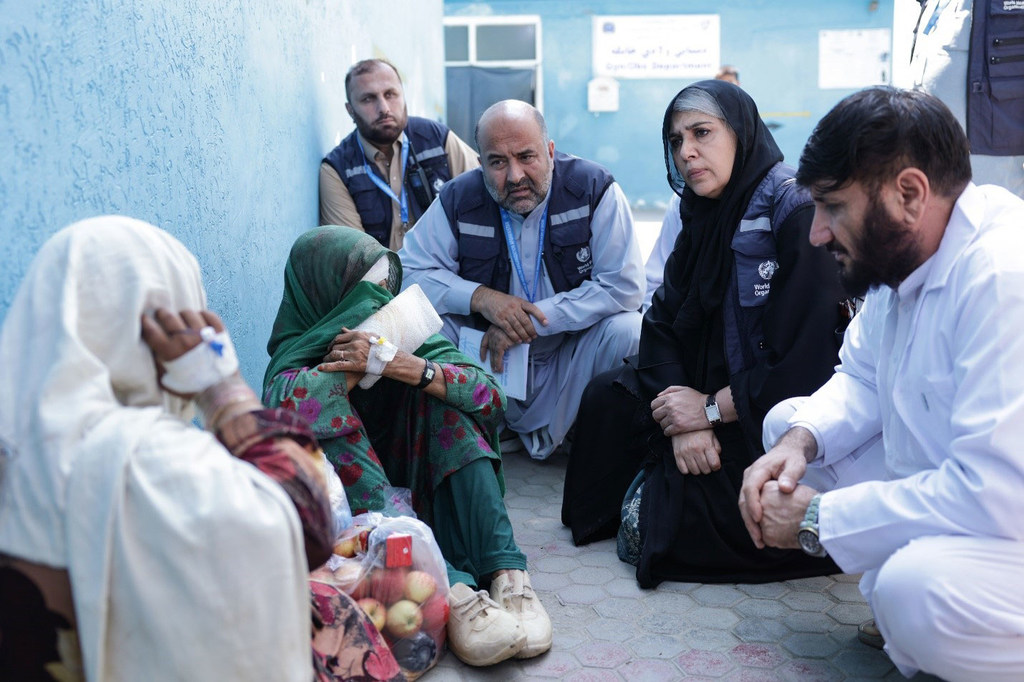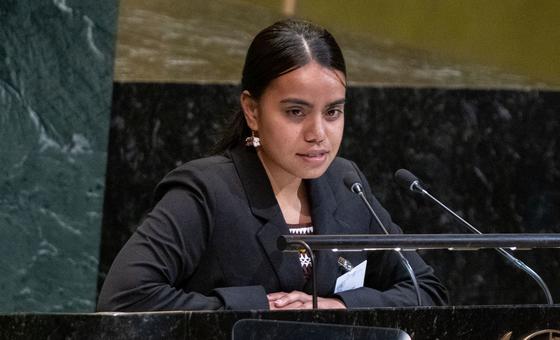
‘Shift the narrative’ on suicide to prevent loss of 720,000 lives annually

Speaking on World Suicide Prevention Day, which is marked annually on 10 September, WHO’s Tedros Adhanom Ghebreyesus said that “each life lost leaves a profound impact on families, friends, colleagues and entire communities.”

All age groups are affected by suicide and was the third leading cause of death among 15–29-year-olds globally in 2021, the last year for which data has been gathered by WHO.

Suicide does not just occur in high-income countries and impacts all regions of the world.

Close to three quarters of global suicides occurred in low and middle-income countries in 2021.

The average number of suicides across the world in 2021 was 8.9 per 100,000 people.

In Africa the figure stood at 11.5, while in both Europe and Southeast Asia the number of suicides was recorded at 10.1 per 100,000 people.

Globally, the lowest suicide rate was in the Eastern Mediterranean region at 4.0 per 100,000, while in the Western Pacific it was 7.5 per 100,000.

Who’s at risk?

The link between suicide and mental disorders, in particular, depression and alcohol use disorders, and a previous suicide attempt is well established in high-income countries.

However, many suicides happen impulsively in moments of crisis with a breakdown in the ability to deal with life stresses, such as financial problems, relationship disputes, or chronic pain and illness.

In addition, experiencing conflict, disaster, violence, abuse or loss and a sense of isolation are strongly associated with suicidal behaviour.

Suicide rates are also high among vulnerable groups who experience discrimination, such as refugees and migrants, indigenous peoples, lesbian, gay, bisexual, transgender, intersex (LGBTI) persons and incarcerated prisoners.

Moving from silence to openness

We must move from silence to openness, from stigma to empathy, and from neglect to support,” said Dr. Tedros.

“We must create environments where people feel safe to speak up and seek help,” he said.

“Shifting the narrative on suicide also means driving systemic change, where governments prioritise and invest in quality mental health care and policies to ensure everyone gets the support they need.”

According to the 2024 Mental Health Atlas report by WHO, median government spending on mental health has remained at a modest 2 percent of total health budgets since 2017.

Moreover, there is a significant disparity between high-income and low-income nations. Whilst high-income nations allocate up to $65 per person to mental health, low-income nations spend as little as $0.04.

WHO recognizes mental health as a universal human right.

Effective prevention measures

WHO says that there are effective measures that can be taken to prevent suicide and self-harm.

LIVE LIFE, the agency’s initiative for suicide prevention, recommends the following key effective evidence-based interventions:

  • limit access to the means of suicide (eg, pesticides, firearms, certain medications);
  • interact with the media for responsible reporting of suicide;
  • foster socio-emotional life skills in adolescents;
  • early identify, assess, manage and follow up anyone who is affected by suicidal behaviours.

Nuclear watchdog chief announces breakthrough on Iran monitoring

“Indispensable” monitoring by the International Atomic Energy Agency (IAEA) ended in June, agency chief Rafael Grossi said, when Israel and US-backed airstrikes targeted Iran’s nuclear power installations.

At the time, the Iranian authorities confirmed that the Natanz enrichment site had been “impacted” without affecting existing radiation levels, the top IAEA diplomat said.

Practical step forward

Now, “practical modalities” have been agreed to allow the resumption of inspection activities in Iran, Mr. Grossi told the agency’s board of governors in the Austrian capital. “This is an important step in the right direction,” he continued, before expressing his gratitude to Egypt for brokering the deal.

The development follows the 28 August announcement by France, Germany and the UK of their intention to reimpose UN sanctions on Iran within 30 days, under the so-called “snapback” mechanism contained in the Iranian nuclear agreement signed in July 2015 by the five permanent members of the UN Security Council, in addition to Germany, the EU and Iran.

Working in partnership

The new agreement – which was preceded by weeks of technical discussions in Tehran and Vienna over verification activities of “all facilities and installations in Iran”– came despite the decision by Iranian lawmakers on 25 June to suspend cooperation with IAEA, a move approved by the country’s President one week later.

At the time, Mr. Grossi noted that this domestic decision did not alter Iran’s international nuclear non-proliferation treaty (NPT) obligations.

Agreement remains in force

And earlier this week, he insisted that the NPT agreement remained in force as “the sole legally binding treaty governing the rights and obligations of the [IAEA] and Iran with respect to safeguards implementation in Iran”.

While acknowledging that his Iranian interlocutors had declared their willingness to remain part of the international non-proliferation movement, Mr. Grossi noted Tehran’s “concerns”.

Nonetheless, the deal – sealed by Mr. Grossi and Iranian Foreign Minister Abbas Aragchi in Cairo on Monday – “provides for a clear understanding of the procedures for inspection, notifications and their implementation”, he insisted.

The agreement also “contemplates” reporting on all facilities targeted by Israel and the US in June “including the nuclear material present” in Iran, the IAEA chief continued.

“These practical steps…need to be implemented now,” he insisted. “There may be difficulties and issues to be resolved for sure, but we now know what we have to do and the elements at our disposal for these basic understandings to be implemented.”

Source link

Guterres condemns Israeli strike on Hamas leaders in Qatar as ‘flagrant violation’

In a statement, António Guterres spoke out against what he called a “flagrant violation” of Qatari sovereignty and territorial integrity.

He insisted that all parties must focus on achieving a permanent ceasefire in Gaza, “not (on) destroying it”.

No senior leaders killed, claims Hamas

Hamas reported that six people had been killed, including the son of one of its exiled leaders from the Gaza Strip – but added that its senior negotiators and top officials had all survived.

Prime Minister Benjamin Netanyahu said that the attack had been Israel’s sole responsibility, although the White House Spokesperson said that the President of the United States had been informed in advance and directed his officials to alert Doha – but the message was conveyed too late to stop the attack.

President Donald Trump said in a social media post that bombing Qatar, a “sovereign nation and close ally” of the US, does not advance the goals of either Israel or the US.

‘Blatant violation’: Qatar

The Qatari Government condemned the attack as a “blatant violation of international law” and the Qatari Prime Minister said at a press conference that “there must be a response from the entire region to such barbaric actions.”

Qatar – alongside the US and Egypt – had brokered extensive efforts to end the Gaza war which began on 7 October 2023 when Hamas and other militants attacked settlements in southern Israel.

Source link

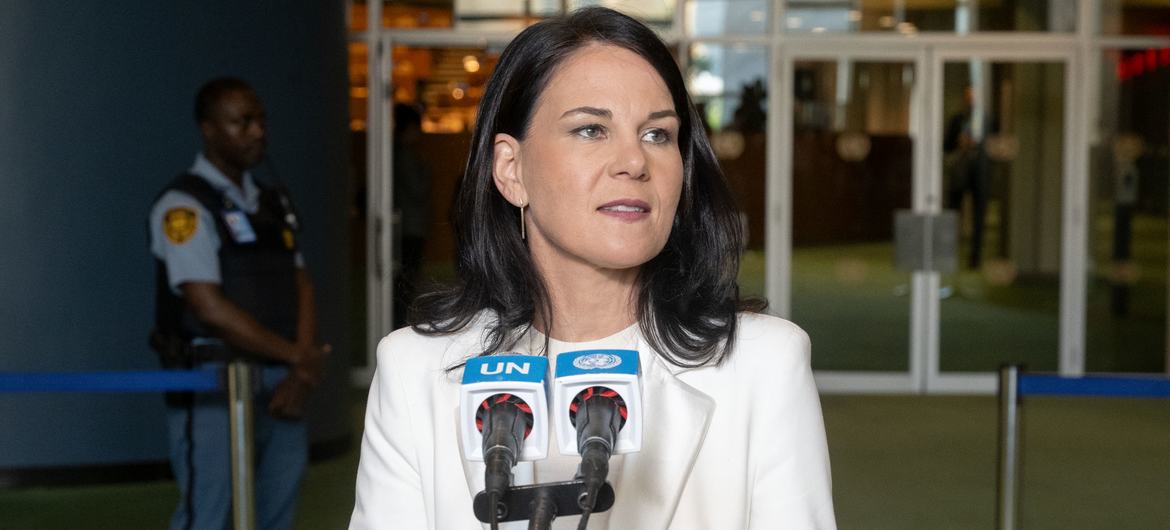
‘No ordinary session’: Baerbock opens UN General Assembly with call for courage and reform

This will be “no ordinary session,” she pledged, with the multilateral system beset by overlapping crises and heightened disunity.

A former foreign minister of Germany, Ms. Baerbock becomes only the fifth woman in history to preside over the General Assembly.

In a symbolic gesture linking past to present, she swore her oath on the UN’s founding Charter from the San Francisco Conference in 1945 – and accepted the Assembly’s ornate gavel from her predecessor, Philémon Yang of Cameroon.

The Charter itself, preserved by the US National Archives, has returned to UN Headquarters for the first time in decades.

Now on display through September, the 1945 document is more than a historical artifact – it is a living reminder of the collective pledge to build peace, uphold human rights and pursue shared values and goals through multilateral cooperation.

The gavel carries its own storied weight. A gift from Iceland, it is larger and more ornate than the ones used in UN conference rooms. The symbol of order in the “parliament of the world,” it is used to open and close meetings, adopt resolutions, and, at times, bring the Assembly to silence.

Assembly President Baerbock speaks to reporters outside the General Assembly Hall.

The world needs the United Nations

In her address, Ms. Baerbock acknowledged the grim realities facing millions across the globe – from children starving in Gaza and Afghan girls barred from school – to families in Ukraine hiding from missile attacks, and Pacific Islanders watching their homes swallowed by the sea.

Our world is in pain, indeed,” she told delegates in the General Assembly Hall.

But imagine how much more pain there would be without the United Nations.

Ms. Baerbock underscored the UN’s vital role in humanitarian assistance, citing the millions who rely on agencies such as the UN Children’s Fund (UNICEF), the World Food Programme (WFP) and the World Health Organization (WHO).

She urged Member States to make the UN “fit for the 21st century” by advancing reforms, implementing the Pact for the Future adopted last year, and focusing on substance over procedure.

The General Assembly must focus on its mandates and deliver on its commitments,” she said, promising to serve all 193 members equally, to be “a bridge builder,” and to ensure every voice is heard.

Among the priorities she set for the year ahead are implementing the UN80 reform agenda, guiding the process of selecting the next Secretary-General, and advancing peace, sustainable development, and human rights.

Secretary-General António Guterres addresses the first plenary meeting of the 80th session of the General Assembly.

The Charter is not self-executing: Guterres

Secretary-General António Guterres, congratulating Ms. Baerbock on her election, praised her vision and experience, while urging governments to summon the same resolve that brought nations together to establish the UN 80 years ago.

The United Nations provides the place. The Charter provides the tools,” he said. “But nothing can happen without this Assembly – all of you – working as one.

Mr. Guterres stressed the need to heal divisions, recommit to international law, accelerate action on the Sustainable Development Goals, and transition to renewable energy while supporting developing countries.

He pointed to last year’s Pact for the Future as a “shot in the arm” for multilateralism and called on Member States to “re-build trust and faith in one another.”

Philémon Yang (right), President of the General Assembly at its 79th session presents the Assembly’s iconic gavel to Annalena Baerbock (centre), President of the Assembly at its 80th session. On the left is Secretary-General António Guterres.

‘Collective promise’ remains

Earlier in the day, outgoing Assembly President Philémon Yang closed the 79th session, highlighting initiatives on humanitarian law, small arms control, sustainable development, and child labour – as well as dialogues on multilingualism and the role of women in mediation.

Mr. Yang, who emphasised gender equality and Security Council reform during his tenure, also oversaw the 80th anniversary commemoration.

Member States made clear that in spite of rising global conflicts, the Charter, and the United Nations itself, represent a collective promise for a better future world,” he said.

A year of high stakes

Ms. Baerbock’s presidency comes at a pivotal moment for the United Nations.

Alongside navigating conflicts from Ukraine to Sudan, the Assembly will oversee the implementation of the Pact for the Future and prepare for the critical selection of the next Secretary-General.

She challenged delegates to embrace courage and unity: “If girls in Afghanistan or parents in Gaza can wake up – in the darkest hours of life – and push forward, then so can we. We owe it to them. But we owe it also to ourselves, because there is simply no alternative.”

Source link

Child obesity level surpasses underweight cases worldwide for the first time, UNICEF warns

One in 10 children aged 5 to 19 – 188 million worldwide – are now living with obesity, placing them at heightened risk of chronic diseases such as type-2 diabetes, heart conditions, and certain cancers.

“When we talk about malnutrition, we are no longer just talking about underweight children,” said UNICEF Executive Director Catherine Russell.

“Obesity is a growing concern that can impact the health and development of children. Ultra-processed food is increasingly replacing fruits, vegetables and protein at a time when nutrition plays a critical role in children’s growth, cognitive development and mental health”, she added.

The report, Feeding Profit: How Food Environments are Failing Children, draws on data from over 190 countries and highlights a stark shift.

One in five overweight

Since 2000, the number underweight among five to 19-year-olds has dropped from nearly 13 per cent to 9.2 per cent.

In the same period, obesity has tripled, from three per cent to 9.4 per cent. Today, obesity rates exceed underweight in every region except sub-Saharan Africa and South Asia.

The situation is particularly acute in the Pacific Islands, where traditional diets have been displaced by cheap, energy-dense imported foods.

High-income countries are not exempt: 27 per cent of children in Chile, and 21 per cent in both the United States and United Arab Emirates, are affected.

Globally, one in five children and adolescents, or 391 million, are overweight, with nearly half now classified as obese.

Children are considered overweight when they are significantly heavier than what is healthy for their age, sex and height.

Obesity is a severe form of overweight and leads to a higher risk of developing insulin resistance and high blood pressure, as well as life-threatening diseases later in life, including type-2 diabetes, cardiovascular disease, and certain cancers.

A consumer in Mongolia eats a sugary desert.

Marketing to blame

The report points to powerful commercial forces shaping these outcomes. Ultra-processed and fast foods, high in sugar, salt, unhealthy fats and additives, dominate children’s diets and are aggressively marketed, influencing children’s diets.

In a UNICEF poll of 64,000 young people across 170 countries, 75 per cent reported seeing ads for sugary drinks, snacks, or fast food in the previous week.

Sixty per cent said the ads made them want to eat the products. Even in conflict-affected countries, 68 per cent of young people said they were exposed to these advertisements.

These patterns, UNICEF warns, carry staggering economic consequences. By 2035, the global cost of overweight and obesity levels is projected to exceed $4 trillion annually. In Peru alone, obesity-related health issues could cost over $210 billion across a generation.

Government must act

Still, some governments are taking action. Mexico – where sugary drinks and ultra-processed foods make up 40 per cent of children’s daily calories – has banned their sale in public schools, improving food environments for more than 34 million children.

UNICEF is urging governments worldwide to follow suit with sweeping reforms: mandatory food labelling, marketing restrictions, and taxes on unhealthy products; bans on junk food in schools; stronger social protection programmes; and safeguards to shield policymaking from industry interference.

“In many countries we are seeing the double burden of malnutrition, the existence of stunting and obesity. This requires targeted interventions,” said Ms. Russell.

Nutritious and affordable food must be available to every child to support their growth and development. We urgently need policies that support parents and caretakers to access nutritious and healthy foods for their children”, she concluded.
 

Attacks on schools surge by ‘staggering’ 44 per cent over the past year

Over 41,000 incidents of violence against school-age children were reported by the UN in 2024.

Countries with the highest levels of violations in were Israel and the Occupied Palestinian Territory, notably the Gaza Strip, the Democratic Republic of the Congo (DRC), Somalia, Nigeria, and Haiti.

In a message to mark the International Day to Protect Education, commemorated annually on 9 September, the UN Secretary-General, António Guterres said that “each violation carries profound consequences, not only for teachers and young learners, but for the future of entire communities and countries,” adding that “no child should risk death to learn.”

The UN chief’s Annual Report on Children and Armed Conflict for 2024 highlights not only an upsurge in attacks on schools but also a 34 per cent increase in rape and other forms of sexual violence perpetrated against children.

In addition, the number of children victims of what the UN calls grave violations increased by 17 per cent as a result of abduction, recruitment, and other types of violence, characterised by the UN as “an alarming escalation in brutality.”

Gaza children deprived of right to education

In Gaza where more than 2.3 million people have been displaced by the two-year-long war, 660,000 children remain out of school and classrooms have been converted into shelters. 

“There is no education now. We live inside the school, where we are displaced, eating and sleeping,” said Diana, a child living in Gaza. 

Despite the ongoing conflict more than 68,000 children in Gaza have been reached through temporary learning spaces offering education and psychosocial support.

The UN Children’s Fund, UNICEF, is also recycling pallets into school furniture and converting supplied boxes into tables and chairs.

© UNICEF/Oleksii Filippov

Boys play amidst the ruins of a school in Kharkiv, Ukraine.

Barriers to education in Ukraine

In Ukraine, 5.3 million children face barriers to education, and around 115,000 are completely out of school due to the ongoing war.

“1,850 facilities have been damaged since the beginning of the conflict,” said Nelson Rodrigues, Education Specialist at UNICEF.

With many schools on the front lines either closed or operating remotely, over 420,000 children attend school fully online, while one million use a hybrid model. 

UNICEF has supported the rehabilitation of 57,000 war-affected school facilities, which has allowed a considerable number of children to return to the classroom. 

The UN agency has also provided catch-up and remedial learning, enabling children to recover from disruptions and continue their education. 

Meanwhile, between January and July of this year, the UN and its humanitarian partners have supported 370,000 children and teachers, mainly in front-line and host communities. 

Respect schools 

Parties to conflict anywhere in the world are obliged under international law, to respect schools as places of safety, and hold accountable those responsible for attacks.

“The pen, the book, and the classroom are all mightier than the sword,” said UN Secretary-General Guterres.

“Let’s keep it that way and protect the fundamental right of every child to learn in safety and peace.”  

Source link

Military spending worldwide hits record $2.7 trillion

The world is spending far more on waging war than in building peace,” the UN Secretary-General António Guterres said at a press briefing for his new report on the threat posed by the steady rise in military expenditure.

Spending on security needs increased across all five global regions during 2024, marking the steepest year-on-year rise for at least the last three decades. Compared to the $2.7 trillion directed to military budgets, the world could eliminate extreme poverty for just under $300 billion.

A more secure world begins by investing at least as much in fighting poverty as we do in fighting wars,” said Mr. Guterres.

A choice between aid or arms

The alarming amount spent on arms-related costs last year alone is 750 times the 2024 UN regular budget. It also equates to almost 13 times the development assistance provided by the OECD’s development assistance committee in 2024, indicating a stark trade-off between military expenditure and sustainable development.

“Redirecting even a fraction of today’s military spending could close vital gaps – putting children in school, strengthening primary health care, expanding clean energy and resilient infrastructure, and protecting the most vulnerable,” said Mr. Guterres.

For a small portion of what was invested in militaries this past year – and the previous decade – the world could fund education for every student in low and lower middle-income countries, eliminate child malnutrition globally, fund climate change adaptation in the developing world, and bring the international community closer to achieving the Sustainable Development Goals (SDGs), the UN estimates.

“Rebalancing global priorities is not optional – it is an imperative for humanity’s survival,” said the UN disarmament chief Izumi Nakamitsu at the press briefing.

‘Sustainable development is in jeopardy’

With only one of the five of the SDGs on track, Mr. Guterres stressed that “our shared promise of sustainable development is in jeopardy.”

While more is being spent on militaries, less is being spent for social investment, poverty reduction, education, health, environmental protection and infrastructure – hindering progress on nearly all the SDGs and undermining the UN Charter, the UN’s cornerstone document. 

“But we know that development is a driver of security and multilateral development cooperation works,” said UN Development Programme (UNDP) deputy chief Haoliang Xu.

“When people’s lives improve, when they have access to education, healthcare, economic opportunities and when they can live lives of dignity and self determination, we will have more peaceful societies and a more peaceful world.”

A new security approach

“Investing in people is investing in the first line of defense against violence in any society,” said Mr. Guterres.

The report calls for a more human-centered and multidimensional approach that priorities diplomacy, international cooperation, and paves the way for sustainable development.

In a vicious cycle, lack of economic opportunity, poverty, and underdevelopment breeds instability – fuelling violence and a rise in State expenditure on the military, the UN report contends.

Investing in development and sustainable security has the potential to stop today’s arms race and alleviate the need for military spending. 

The evidence is clear: excessive military spending does not guarantee peace,” said Mr. Guterres. “It often undermines it – fuelling arms races, deepening mistrust, and diverting resources from the very foundations of stability.”

Source link

Peacekeeping: A lifeline for millions seeking a ‘future without fear’

Governments and civil society organizations have so far submitted more than 60 contributions to a review process mandated under the Pact for the Future, agreed by Member States last year.

The UN has an 80-year legacy that includes deploying multidimensional peacekeeping operations that combine police, troop and civilian personnel; special political missions engaged in conflict prevention, peacemaking and peacebuilding, and electoral support initiatives.

‘A lifeline for millions’

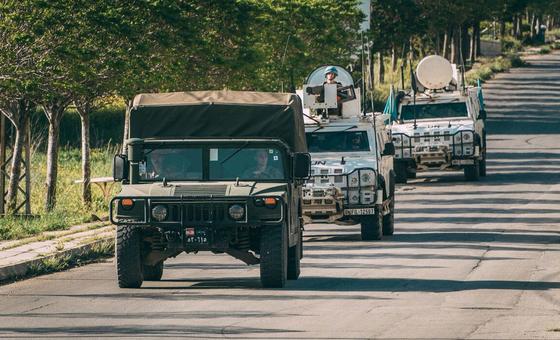
Peacekeeping is the largest and most visible activity in the field, with more than 60,000 men and women from 115 countries currently serving with 11 missions across the globe.

Peacekeeping is not a luxury; it is a lifeline for millions who count on it for a future without fear,” said Jean-Pierre Lacroix, Under-Secretary-General for Peace Operations.

He warned that today, “achieving lasting political solutions seems increasingly challenging.”  Last year, 61 active conflicts raged across the planet, according to the Sweden-based Uppsala Conflict Data Program – the highest number since 1946. 

“Conflicts have become protracted, involving more actors and often proxy forces, making negotiated solutions more difficult to achieve,” he said, indicating that the future will likely see more civilians who will require protection.

“It means the need for peace operations increases, potentially alongside other types of operations, including peace enforcement,” he added, and that “the contexts for deployment may be more uncertain and full success harder to achieve.”

Responsive and adaptable

Mr. Lacroix said the future requires “a UN that is capable and ready to respond through missions that are adaptable and tailored to the needs on the ground, guided by strong political strategies and leveraging the tools, capacities and expertise” of the UN and partners. 

Peace operations must first have “clear and prioritised mandates” that should also reflect the voice of host states, troop and police contributing countries, regional actors, local communities and other stakeholders.

He called for harnessing “the capacities of digital technologies and artificial intelligence to support the analysis of data as well as to assess the effectiveness of our responses through time.” 

Furthermore, pursuing political solutions to conflict should remain a priority, alongside protecting civilians, supporting the strengthening of government accountability.

Promotion and protection of human rights and the advancement of the women, peace and security agenda must also be prioritised. 

Additionally, “sustained and uncompromising efforts to uphold the UN Secretary-General’s zero tolerance policy on SEA (sexual exploitation and abuse)” must continue.

Political solutions crucial

Mr. Lacroix stressed that while “the UN’s ability to deliver on the imperative to protect people is very often the benchmark by which we are judged,” peacekeeping is not meant to be indefinite.

“To advance durable political solutions that enable peacekeeping to withdraw without a relapse into conflict requires the strong, unified and ongoing support of this Council – through the adoption of clear, prioritized mandates, active political engagement and statements of support,” he said.

These actions must be matched by countries continuing to pay the dues they owe the UN “in full and on time,” he added.

New tech ‘weaponised on an industrial scale’

Rosemary DiCarlo, UN Under-Secretary-General for Political and Peacebuilding Affairs, also commented on the current challenging environment.

She said that “conflicts have become more internationalised”, with influence from regional or global actors.  Meanwhile, non-state armed groups continue to proliferate, with many using terrorist tactics with no clear political agenda.

“New technologies, from AI to drones, are being weaponized on an industrial scale, increasing both the lethality of violence and the likelihood of escalation. And transnational drivers, such as organized crime, are now a regular facet of the conflict landscape,” she said.

Changing landscape

To inform the review, her office analysed the history of UN “special political missions” since the Organization’s establishment, identifying three priorities.

She noted that most missions today are deployed in the absence of a comprehensive peace agreement and often in politically volatile situations, even ongoing civil war.

“In such situations, the initial goals of our missions should be more limited – such as preventing a deterioration of violence, achieving a ceasefire, or helping a fragile incipient peace process get off the ground,” she said. 

The second priority should be improving coordination between peace operations and UN country teams, while the third is to end mandates which attempt to provide a one-size-fits-all approach.

Ms. Di Carlo concluded by highlighting how the failure or weak implementation of mandates is often related to lack of political support, whether in countries where missions are deployed, or the wider region, or among Security Council members themselves.

We will therefore need to engage with a laser-like focus on bringing the emphasis back to the political questions at the heart of each conflict and finding multilateral responses to them,” she said. 
Source link

Sudan’s people tortured and killed in ‘slaughterhouses’, rights probe says

Shortly after presenting a mandated report to the Human Rights Council in Geneva on Tuesday, chair of the Fact-Finding Mission on Sudan, Mohamed Chande Othman, insisted that both the Sudanese Armed Forces (SAF) and Rapid Support Forces (RSF) militia had carried out atrocity crimes.

Among the testimonies gathered for the report, survivors from RSF detention sites described the locations as “slaughterhouses”.

Tortured, staved, denied medical care

In one notorious RSF facility, dozens of detainees died between June and October this year after being tortured, denied food and medical care, the independent rights expert said.

Equally, in SAF-run detention facilities, “civilians were also subjected to torture, including electric shock, sexualized abuse and they were held in cells so overcrowded that some prisoners had to sleep standing,” he added.

In addition, girls as young as 12 were forced into marriage, “sometimes under the threat of death to their families”, the fact-finding mission chair continued.

“Men and boys were also subjected to sexualized torture and such acts are rooted in racism, prejudice and impunity and they devastate entire communities.”

Highlighting the lack of diplomatic solutions to the conflict which began in April 2023, and its massive impact of the war on civilians, report co-author Mona Rishmawi insisted that “everybody knows you cannot rape, you cannot loot, you cannot destroy property. You cannot starve people…But if there is no accountability, of course they will continue doing it.”

Extermination goal

Asked why the report had decided not to describe what has been happening in Sudan as genocide, Ms. Rishmawi replied that the evidence “basically looks at more or less the same kind of violations as genocide”.

She added: “You kill, [you provide] no food, no water, you don’t allow food production. You don’t allow access to food, to markets…and you don’t allow access to humanitarian aid. What you do want is to kill the population…So, the effect of this is really the crime against humanity…of extermination.”

Hunger crisis

The investigative body created by the Human Rights Council in October 2023 highlighted the devastating humanitarian emergency that has resulted from the war.

“In displacement camps such Zamzam and Abu Shouk, witnesses describe children dying of hunger and dehydration in the streets, including people eating animal food,” said Joy Ngozi Ezeilo, Expert Member of the Fact-Finding Mission.

Addressing the council earlier, fact-finding mission chair Mr. Othman insisted that the war was “destroying not only lives but also the means of survival”, with hospitals, markets, water and electricity systems – and even humanitarian convoys – systematically attacked.

“Markets, the backbone of food access, have been repeatedly bombed,” he said, adding that in October 2024, SAF airstrikes on El Koma market killed at least 45 civilians.

Dying of thirst

“Two months later, Kabkabiya market was struck, killing more than 100. In March this year, SAF bombed Tora market during peak hours, killing and injuring hundreds.”

The mission report underscored how the RSF had also shelled markets, pillaged entire areas and destroyed Zamzam camp’s market.

RSF drone strikes hit the Merowe Dam and water towers, leaving communities without drinking water, while “one mother told us she lost all four of her children to thirst while fleeing”, said Mr. Othman, who like the other members of the panel is an independent human rights expert and not a UN staff member.

Source link

Nepal PM resigns after deadly crackdown on youth protests; UN urges calm

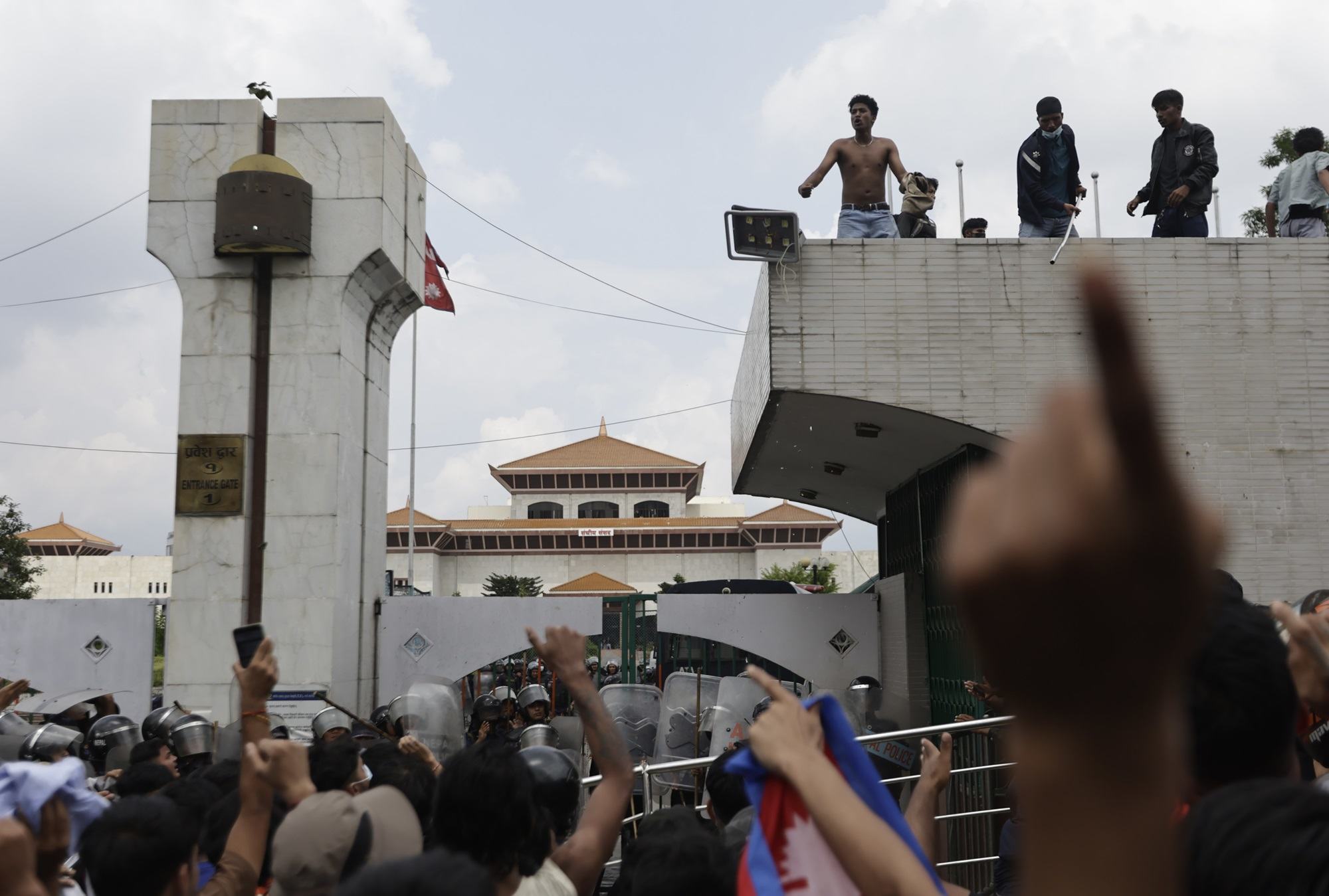
The unrest, which began Monday as a self-styled “Gen Z protest” against rampant corruption, nepotism and curbs on social media, quickly escalated after security forces responded with force.

Most of the dead and wounded were young demonstrators shot by police. Many remain hospitalised in a critical condition.

By Tuesday, demonstrations had spread across the country, with Government buildings, political party offices, and even the Parliament in Kathmandu set ablaze.

Some political leaders’ homes were attacked, police stations overrun, and the international airport has been closed.

The Prime Minister was reportedly evacuated by helicopter from his official residence and his resignation was announced shortly afterward.

Several ministers at both the federal and provincial level – as well as members of parliament – have also stepped down in protest at the handling of the demonstrations, deepening the political fallout.

Violence is not the answer

Expressing deep concern over the deaths and rapid deterioration, UN human rights chief Volker Türk warned that “violence is not the answer” and called on authorities and demonstrators alike to de-escalate the spiralling crisis.

In a statement from Geneva, Mr. Türk said he was “appalled by the escalating violence” and the “unnecessary and disproportionate use of force” against largely young demonstrators.

Dialogue is the best and only way to address the concerns of the Nepalese people. It is important that the voices of young people are heard,” he stressed, urging both security forces to show restraint and protesters to refrain from destructive acts.

While condemning the crackdown, he also voiced concern about violence by some demonstrators.

“I am disturbed by reports of public buildings, businesses and private residences being attacked and, in some instances, set ablaze. Equally, I am concerned by reports of physical attacks on senior government officials.”

UN chief echoes call for restraint

The Secretary-General’s Spokesperson said at Tuesday’s daily briefing for journalists in New York that the UN chief is “closely following the situation.”

Stéphane Dujarric said António Guterres was “very saddened by the loss of life” and reiterated his call for restraint to prevent further escalation.

The authorities must comply with international human rights law, and protests must take place in a peaceful manner that respects life and property,” Mr. Dujarric said, noting the dramatic images emerging from Nepal.

Call for prompt investigations

The UN Country Team in Nepal echoed those calls, extending condolences to the families of the dead and urging authorities to ensure that law enforcement responses remain “proportionate and in line with international human rights standards.”

Freedom of expression, access to information and peaceful assembly are fundamental rights protected under Nepali and international law,” the UN team said.

“All allegations of excessive use of force should be investigated promptly in an independent, transparent and impartial manner,” it added.

Some protesters climb atop the gates of Nepal’s Parliament in Kathmandu on Monday, in youth-led demonstrations against corruption.

Youth-led mobilisation

The protests mark the latest and most intense in a series of youth-led mobilizations in Nepal in recent years. Students and young professionals have repeatedly taken to the streets to demand accountability from the political class.

Monday’s demonstrations saw thousands marching in the capital, Kathmandu, and other cities carrying placards calling for an end to graft and nepotism.

But protests turned violent as security forces moved to disperse crowds, leaving at least 19 dead and hundreds injured, according to media reports.

The deaths fuelled widespread anger and communities of the diaspora staged solidarity rallies abroad.

By Tuesday afternoon, demonstrators had stormed Parliament, the Supreme Court and Singh Durbar, the central administrative complex in Kathmandu, setting fire to parts of it.

Reports indicate that protesters also targeted the residences of the president, former prime ministers and ministers, and that some prison inmates escaped after police abandoned their posts.

UN ready with support

High Commissioner Türk appealed to all sides to avoid further escalation, recalling Nepal’s history of emerging from conflict to forge peaceful democratic institutions.

The world has admired Nepal’s emergence from conflict to become a peaceful democracy,” he said.

“Together with the United Nations system, my Office stands ready to support dialogue and trust-building measures that can help de-escalate tensions and restore confidence.”

The UN Country Team in Nepal reinforced that message, emphasising that “the voices of young Nepalis have been heard loud and clear” and warning that lasting stability will depend on concrete steps to address the root causes of their grievances.

Source link

Ukraine: Russian strike on village kills over 20, mostly pensioners

The attack on Yarova injured nearly 20 others. Many elderly civilians have decided to stay at home in frontline communities, despite the escalating danger from Russia’s continuing offensive, said Assistant Secretary-General Matthias Schmale, the UN’s top humanitarian official in the country.

“This lasting violence continues to tear lives apart. In recent days, the Donetsk region has seen a rise in civilian casualties and damage as hostilities have intensified,” he said in a statement.

“On behalf of the United Nations and the humanitarian community, we stand with all families grieving their loved ones and with all those injured. Attacks affecting civilians as they go about their daily lives are unconscionable.”

‘Relentless’ attacks on healthcare

Ambulances attacked, chronically ill patients lacking care and no peace in sight: for millions of Ukrainians, the run-up to another winter of war is just the latest life-or-death challenge they face, the UN health agency (WHO) said on Tuesday.

Speaking from Kyiv in the wake of deadly strikes on the Ukrainian capital by Russia on Sunday, WHO’s representative in the country, Dr. Jarno Habicht, told reporters in Geneva that more than 800 drones and missiles were involved in the latest attack, making it one of the biggest since the start of the war in February 2022.

“This is a reality [which] many aid workers, humanitarians, but most importantly, millions of Ukrainians are living day and night,” he said.

Mission to the frontline

Dr. Habicht described his recent mission to the frontline Zaporizhzhia region which he said had suffered “relentless” attacks, including on healthcare.

The strikes are continuous,” he insisted, explaining that WHO is constantly delivering medical kits to the facilities where patients with trauma injuries receive care. “We have daily injuries, unfortunately, across Ukraine,” he said.

The WHO official pointed to a concerning 12 per cent year-on-year increase in attacks affecting health infrastructure in the country. One in four attacks is against an ambulance, he said.

“If we think about non-war environments, when anybody calls an ambulance, this is for a reason…This is for a reason of life and death,” he said. “But in Ukraine, the ambulances are under attack.”

According to UN humanitarian affairs coordination office, OCHA, on Monday, casualties from the latest attacks were reported in a number of other cities including Odesa, Chernihiv, Kharkiv, Kremenchuk, Kryvyi Rih and Kherson. Strikes also targeted energy infrastructure, disrupting power and water supplies ahead of the winter season, OCHA said.

“We need to prepare for a winter in war because we don’t see peace in sight,” Dr. Habicht insisted.

Following his Zaporizhzhia visit and discussion with the authorities and health workers there, he highlighted the need to keep heating stations open as the cold season approaches and ensure that clean water is available in healthcare facilities.

Dr. Habicht also underscored the magnitude of the mental health burden of the conflict, which will “stay for generations”.

Urgent needs

According to WHO’s latest Health Needs Assessment conducted in Ukraine in April, seven in 10 people reported mental health issues, anxiety, depression and severe stress over the last 12 months, “directly linked to attacks on civilian infrastructure”.

The WHO representative added that as he visited hospital wards on Monday in Zaporizhzhia he saw a number of men and women over 60 needing rehabilitation support after suffering a stroke. “All the other diseases are continuing at the time of war,” he said, stressing that “recovery cannot wait” for patients with chronic diseases such as cancer and heart conditions.

Increased funding is needed for the humanitarian response in Ukraine and to support recovery and restoration efforts. But only 35.5 per cent of the required resources (around $46 million) have been made available for humanitarian partners, allowing WHO and its partners to reach one million people out of its three million target.

Source link

World News in Brief: UN chief condemns Russian attacks on Ukraine, Gaza crisis continues, protecting civilians in DR Congo

Secretary-General António Guterres said it marked a “further escalation” of the conflict.

Authorities reported more than 80 civilian casualties, including a national non-governmental organization (NGO) worker and her two-month-old son in Kyiv.

Other affected cities included Zaporizhzhia, Odesa, Chernihiv, Kharkiv, Kremenchuk, Kryvyi Rih and Kherson. Energy infrastructure was also hit, causing temporary power and water outages ahead of winter, with repair crews working to restore services.

“Attacks against civilians and civilian infrastructure violate international humanitarian law. They are unacceptable and must end immediately,” UN Spokesperson Stéphane Dujarric said Monday at the regular news briefing in New York.

“The Secretary-General reiterates his call for a full, immediate and unconditional ceasefire as a first step towards a just, comprehensive and sustainable peace in Ukraine, one that fully upholds Ukraine’s sovereignty, independence and territorial integrity, in line with the UN Charter, international law and relevant UN resolutions,” he added.

Meanwhile, humanitarian support continues. On 5 September, UN agencies and partners delivered medical kits and hygiene supplies to roughly 1,000 people in several Donetsk villages, marking the tenth convoy to the region this year.

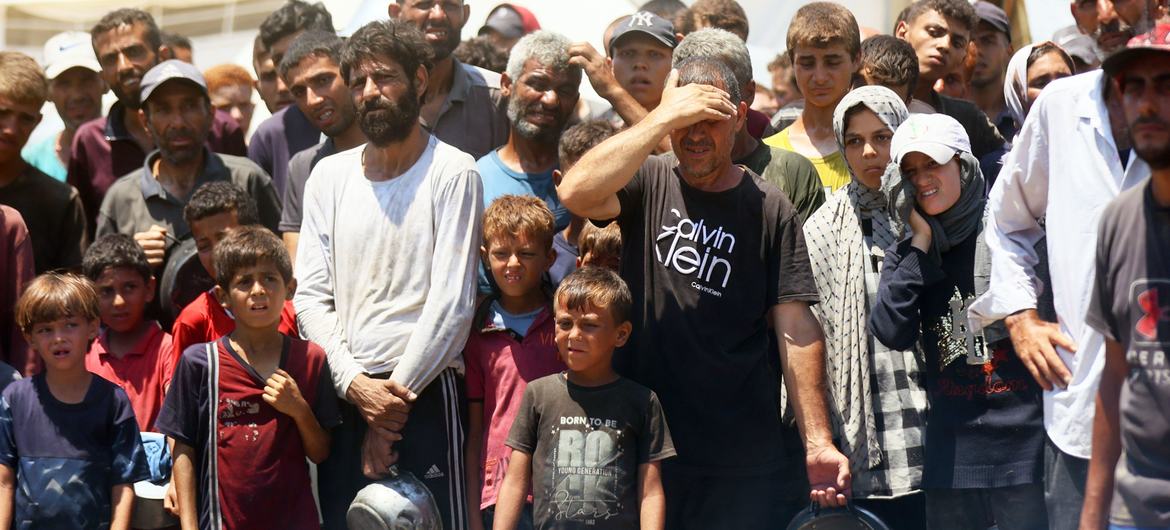
People seek food at a community kitchen in western Gaza City.

Gaza: Civilian toll continues to climb

Civilians in Gaza continue to face mounting deaths, displacement and famine as hostilities continue, with UN agencies warning that the window to prevent widespread starvation is closing.

According to local health authorities, some 67 people were killed and 320 injured in the past 24 hours, Mr. Dujarric said, adding that since the end of the ceasefire in mid-March nearly 12,000 people have died amid repeated displacement and attacks.

“We continue to condemn all killings of civilians,” he said.

The humanitarian situation remains dire. The UN aid coordination office, OCHA, noted urgent needs for food, water and shelter.

“Our colleagues remind us that over 80 per cent of Gaza is either under displacement orders or within militarized areas,” Mr. Dujarric added.

The Gaza Ministry of Health reported that over 100 people, a quarter of them children, have died from malnutrition since famine was confirmed in Gaza governorate.

Humanitarian operations remain heavily constrained.

Only 11 of 24 coordinated missions were facilitated on Sunday, including fuel collection at crossings, while others were denied or cancelled. Humanitarians were able to distribute water in northern Gaza and collect food shipments from Kerem Shalom, Karem Abu Salem and Zikim crossings.

UN peacekeepers in DR Congo continue to protect population against ‘grave danger’

Hundreds of thousands of people fleeing conflict in the eastern Democratic Republic of the Congo (DRC) continue to be protected against “grave danger” by United Nations peacekeepers, according to the head of UN Peace Operations.

Jean-Pierre Lacroix was speaking at the end of a mission to the DRC, where he visited the troubled Ituri and North Kivu regions.

Mr. Lacroix emphasised that hundreds of thousands of Congolese people, including displaced people, rely on the UN peacekeeping mission, MONUSCO for daily protection, particularly in the areas of Fataki and Beni, in North Kivu, where joint operations with the Congolese armed forces continue against armed groups.

USG Lacroix on the role of MONUSCO

Dire situation continues

The security situation in the eastern DRC remains dire, despite diplomatic efforts to bring lasting peace to the country.

The DRC is currently facing one of the most acute humanitarian emergencies in the world, with food insecurity on the rise and 5.9 million Congolese currently internally displaced.

“People are protected here by our MONUSCO colleagues, and they are provided with humanitarian support and protection”, said Mr. Lacroix adding that the UN remains committed to supporting government efforts towards peace and stability in the country.

Source link

Guterres strongly condemns terror attack in Jerusalem

UN Secretary-General António Guterres strongly condemned the terror attack, his Spokesperson said in a statement.

“He conveys his heartfelt condolences to the families of the victims and wishes a full and speedy recovery to those who were wounded,” it said.

The incident took place at a busy intersection in Ramot, located in the northern outskirts of Jerusalem, on Monday morning.

Shot waiting for the bus

The gunmen reportedly opened fire on passengers waiting to board buses. Video footage from the scene showed that several buses had been hit extensively during the assault.

The attackers were identified by authorities as two Palestinians from the occupied West Bank. They were killed by a soldier and a civilian who were at the scene.

A Spanish national was among the victims, according to the country’s foreign ministry.

The shooting took place against the backdrop of the ongoing war in Gaza which has killed more than 63,000 Palestinians and injured more than 161,000 others, according to the local health authorities.


Source link

Leadership of women crucial to UN’s reinvention at 80, says former Assembly President

On Tuesday, Germany’s Annalena Baerbock will become the first European woman to hold the post and only the fifth female President in the Assembly’s history.

On the eve of Baerbock’s inauguration, UN News spoke with one of her predecessors. María Fernanda Espinosa, a former Minister of Defence and Foreign Affairs of Ecuador, led the Assembly from 2018 to 2019 as the first woman from Latin America and the Caribbean to do so.

Hard work and skilled diplomacy

Espinosa described the General Assembly as “the laboratory of international law,” noting that the role of President demands “hard work, good diplomacy, and the ability to conduct fair negotiations.”

The last woman to preside over the Assembly said she sees in Annalena Baerbock all the qualities needed for a “brilliant performance” as the next President. She stressed that the German leader takes office at a time of “profound structural change within the institution, linked in part to financial challenges.”

Espinosa believes Baerbock will play an “absolutely central” role in implementing reforms under the UN80 process, as well as advancing commitments related to the Pact for the Future, adopted in 2024.

For Espinosa, the UN’s own history proves that it is “an irreplaceable organization, one humanity cannot do without – but which nonetheless must be reinvented.”

Annalena Baerbock, President-elect of the eightieth session of the UN General Assembly, addresses the reporters following her election.

‘Why not a woman as Secretary-General?’

While welcoming the election of the Assembly’s fifth female President in New York, Espinosa said this restructuring also provides an opportunity to rethink leadership styles and to finally consider a woman for the post of Secretary-General. The next appointment is expected in 2026.

“The real question is: why not?” she asked, stressing that a woman could bring qualities such as “strong management and bridge-building.” She added that a female Secretary-General would also represent an act of “historic justice,” after 80 years of male leadership at the UN’s helm.

The former Ecuadorian diplomat acknowledged one of the UN’s biggest challenges: the gap between resolutions adopted in the General Assembly and their translation into national policies and regulations. This, she said, prevents multilateral decisions from producing tangible improvements in people’s lives.

To address this, she called for a “more inclusive and networked multilateralism,” in which citizens are informed about, engaged with, and able to monitor the international decisions being made.

Building consensus behind the scenes

Espinosa emphasized that “most of the work of the Presidency takes place behind the scenes,” dealing with divisions and forging consensus.

She noted that the incoming President will increasingly face responsibilities linked to peace and security, as well as sustainable development.

Espinosa recalled that the very first resolution adopted by the General Assembly concerned the discovery of atomic energy, underscoring the need to adapt to a new force that could be harnessed for peaceful purposes but also cause “terrible effects.”

She highlighted defining moments during her own presidency, including the difficult negotiations that led to the adoption of the first Global Compact for Migration in 2018.

The diplomat also expressed pride in internal advances, such as the decision to phase out single-use plastics at the UN, recognizing the harm they cause to human health and ecosystems. 

Source link

Afghanistan quake: ‘Communities are struggling with basic survival’

Briefing correspondents in New York via video link, Shannon O’Hara spoke from Jalalabad on the conditions in Afghanistan just days after the magnitude 6 earthquake and its devastating aftershocks.

“We saw families whose lives had been shattered just within a few minutes,” the head of strategy for OCHA in Afghanistan said.

Left with nothing

“The earthquake had destroyed their homes, their farms and their livelihoods, leaving them with absolutely nothing.”

OCHA has managed to reach 49 damaged villages in the Nangarhar, Kunar and nearby affected provinces in eastern Afghanistan.

As humanitarian workers struggle to reach more regions, current reports show that nearly 40,000 people have been impacted by the earthquake, while over 5,000 homes have been destroyed.

Aid workers face challenges

“Even before the earthquake, these villages were difficult to reach,” said Ms. O’Hara. “Now, with the earthquake, it takes extraordinary effort to get there.”

A narrow, one-way road on the mountainside which was “blocked by large rocks from landslides and many vehicles trying to get up and down the valley” is the only way to get to affected areas from Jalalabad, said Ms. O’Hara.

A 100-kilometre drive took Ms. O’Hara and her team more than six and a half hours. To reach victims, first response teams have to drive – and often travel for hours on foot.

‘The heaviest burden’

Emergency responders are prioritising aid to women, children, and locals with disabilities.

“In Afghanistan, in recent years, women and girls have been pushed to the very margins of society and survival,” said Ms. O’Hara. “We know from previous earthquakes and other crises that women and girls always bear the heaviest burden.”

A estimate from UN reproductive health agency, UNFPA, shows that 11,600 pregnant women have been affected by the destruction – in a country that already has one of the highest maternal mortality rates in region.

OCHA is working to ensure that “that women are represented in health teams and more women aid workers are supporting distributions, along with nutrition, psychosocial and other counseling services,” said Ms. O’Hara.

Alarming potential for disease outbreak

The natural catastrophe has resulted in families living without clean water and sanitation in tents or “under open skies, exposed to rain and cold,” said Ms. O’Hara.

“With cholera endemic in the region and initial assessments indicating that 92 per cent of these communities are practicing open defecation, the potential for a cholera outbreak is alarming,” she continued.

While UN agencies are distributing meals and sanitation kits, efforts need to be scaled up.

“The affected communities are struggling with basic survival,” she stressed.

Urgent action needed

So far, 43,000 victims have received ready-to-eat meals and UN agencies are also providing tents, blankets and sanitation kits to assist families. But humanitarian efforts risk being disrupted if heavy rain floods IDP sites or if potential aftershocks bring more landslides. Snow from the approaching winter season is also expected to block vital roads.

“If we don’t act now, these communities may not survive the coming winter,” said Ms. O’Hara. “Additional funding is urgently needed.”

OCHA has already released $10 million for life-saving supplies and an emergency response plan is currently being finalized.

“Without immediate support the weeks ahead risk compounding this tragedy with preventable disease outbreaks, further displacement and additional loss of life.”

UNOCHA/Ahmad Khalid Khaliqi

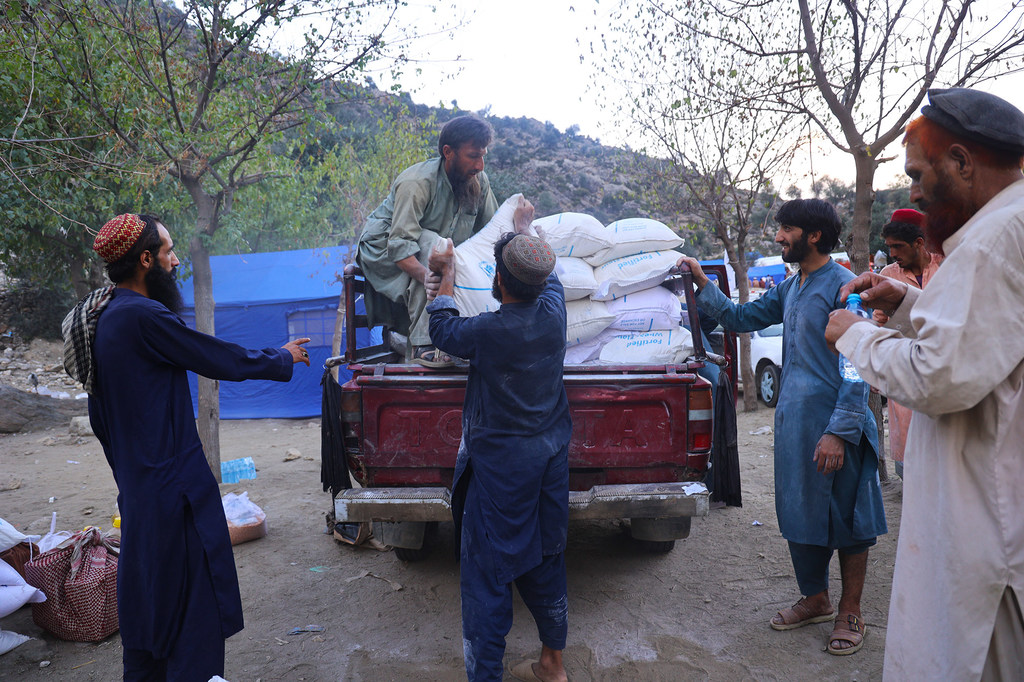
Food aid is delivered to people affected by the earthquake in eastern Afghanistan.

Fresh supplies land in Kabul

A new consignment of more than 35 metric tonnes of life-saving medical supplies landed in Kabul on Monday, to enhance the World Health Organization’s (WHO) emergency response.

WHO has now prepositioned and delivered nearly 80 metric tonnes of emergency health supplies to the country since the disaster.

The newly arrived cargo, mobilised through WHO’s logistics hub in Dubai, includes trauma and emergency surgery kits, primary health care kits, noncommunicable disease kits and essential medicines.

These supplies will be dispatched to health facilities and mobile health teams in the hardest-hit areas, following the ongoing needs assessments.

UN ready to assist Nepal following deadly protests over social media ban

Police used tear gas and opened fire on protesters attempting to storm the parliament complex in the capital, Kathmandu, according to media reports. 

Curfews have been imposed in parts of the city and in Rupandehi, with restrictions on movement effective in Pokhara.

‘So unlike Nepal’

UN Resident Coordinator Hanaa Fikry Ahmed Singer described the situation as “so unlike Nepal” and feared that casualty numbers will rise. 

“Lots of my staff here are crying,” she told UN News in an interview.  “They haven’t seen violence in their lifetime.”

The protests came just days after the Nepalese Government blocked more than 20 social media platforms such as WhatsApp, X and Facebook, as well as websites such as YouTube, for failing to register with the authorities.

The Government wanted them to align to the internal laws as well because they have been concerned about misinformation, hate speech and social harmony, and to ensure oversight and monitoring,” she said.

“However, the decision was widely criticised as being too broad and has been perceived by many, particularly young people who are very global, like all parts of the world now, they consider this as a restriction on freedom of expression and access to digital spaces.”

Concern for civilians

Ms. Ahmed Singer voiced deep concern for the safety of civilians and underscored the urgent need to ensure unrestricted medical access to the injured. 

“The immediate priority now is the protection of civilians, particularly young people who are at the forefront of the protests,” she said.

Social media came back online shortly before the interview.  The senior humanitarian official said she posted a message on X calling upon all parties to exercise maximum restraint, adhere to basic principles on use of force and firearms, and ensure that people can safely and peacefully exercise their democratic rights.

“The most important now is unrestricted access to medical care as well for those that are injured, if needed,” she said.
Supportive role

Meanwhile, UN agencies in the country – such as the World Health Organization (WHO), the UN Children’s Fund (UNICEF), and the UN human rights office, OHCHR – are monitoring developments closely.

They are preparing health and other forms support if needed and stand ready to facilitate dialogue. 

“Our role really is to remind everybody to ensure the protection of civilians, safeguard fundamental freedoms, and support Nepal in its commitment to international human rights norms and standards,” she said. 

Source link

UN provides urgent support after ‘massive’ Russian attack across Ukraine

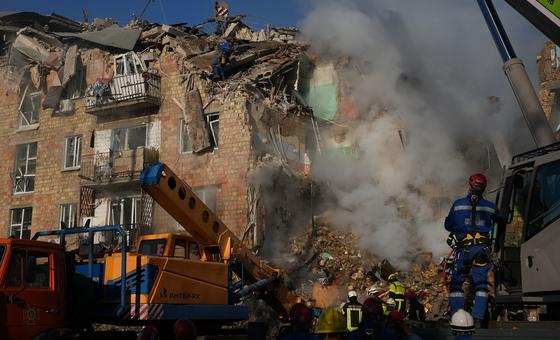
More than 800 drones were launched in waves designed to overwhelm Ukrainian air defences, according to news reports, and a Government building was hit in the capital Kyiv for the first time.

Ukrainian authorities reported that four had been killed, with 44 injured. Air-raid sirens continued for 11 hours straight across the capital and although a majority were shot down more than 50 drones and nine missiles hit their targets.

“Yet again, attacks impacted homes, a government building, a kindergarten and other civilian infrastructure in Kyiv and Chernihiv, Kharkiv, Kremenchuk, Kryvyi Rih, Odesa, Sumy region, Zaporizhzhia – leaving behind loss, destruction and grief,” said UN Humanitarian Coordinator for Ukraine, Matthias Schmale, in a post on social media.

The top aid official said that together with authorities, the UN and humanitarian partners had mobilised to provide urgent support to civilians and civilian areas where damage was sustained.

Civilians should never be a target

“Civilians and civilian infrastructure are protected under international humanitarian law – they are not a target,” he continued.

The UN Children’s Fund, UNICEF, said that the news of a baby being killed along with their young mother in an attack on an apartment building in Kyiv was “devastating”. At least one other child was injured during the attacks on Sumy.

“Ukraine endured another terrifying night of attacks that impacted multiple cities. More young lives brutally cut short,” the agency tweeted.

The attacks came following weeks of high profile diplomacy from Western allies of the Ukrainian Government to broker a lasting peace deal between Kyiv and Moscow.

President Volodymyr Zelenskyy said in a social media post following the attacks that “such killings now, when real diplomacy could have already begun long ago, are a deliberate crime and a prolongation of the war.”

Source link

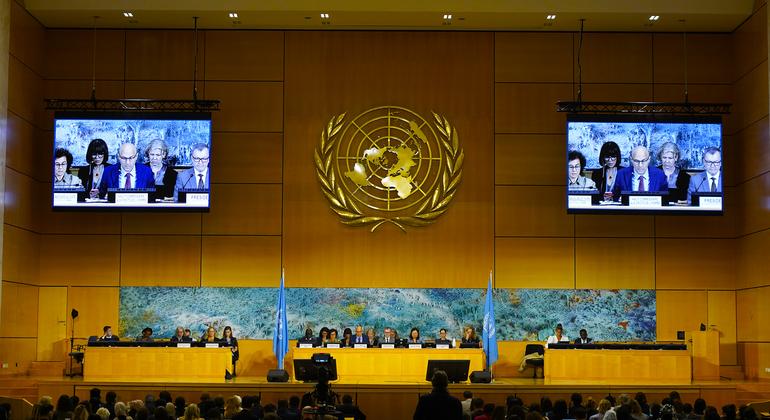
UN rights chief denounces ‘glorification of violence’ and attack on rule of law

“No one is safe when human rights are under attack,” Mr. Türk told the Human Rights Council, warning that the rules of war “are being shredded”.

“Some States are becoming an extension of their ruler’s personal power,” he insisted.

In his customary address to the UN’s top rights forum at the beginning of a new session in Geneva, the High Commissioner for Human Rights decried that “pro-war propaganda is everywhere”, from military parades to “ramped-up rhetoric” from leaders.

“Sadly, there are no peace parades or ministries of peace, he stressed, while calling for countries to stand firm against the growing “erosion” of international law.

The High Commissioner also defended the importance of standing behind multilateral accords as “the foundation of peace, our global order and our daily lives, from trade rules to the global internet, to our fundamental rights”.

World order at risk

Today, governments “are disregarding, disrespecting and disengaging” the existing rules-based world order that was established after 1945 to prevent another world war, the UN rights chief insisted, in a call for accountability.

The danger is that when States ignore violations of the law, “they become normalised,” Mr. Türk said. “When States apply the law inconsistently, they undermine the legal order everywhere. It is time for States to wake up and to act.”

Condemning the continued illegal detention of United Nations staff in Yemen as a “direct attack on the UN system”, Mr. Türk also called the United States’ withdrawal “from the Paris Agreement and from global bodies, including this Council…deeply regrettable”, noting that other States were following suit.

The High Commissioner also warned of the negative consequences of the decision by Estonia, Finland, Latvia, Lithuania and Poland to leave the Ottowa Treaty on land mines, while identifying the “new trend of disparaging” the 2030 Agenda for Sustainable Development, which all countries had agreed to a decade ago.

An A to Z of rights concerns

As is usual at the start of Council sessions, the High Commissioner highlighted situations of concern around the world, from Afghanistan – where the “erasure” of women and girls from public life “is almost complete” – to Haiti which is “plunging deeper into lawlessness; Nigeria, which is seeing a resurgence of Boko Haram extremism; and Syria – whose transition to peace remains “fragile”.

In Ukraine, following the largest drone assault of the conflict, Russia’s full-scale invasion “has turned even more deadly”.

In Sudan, besieged El Fasher is under constant bombardment and the risk of further atrocities remains, Mr. Türk said, while in Myanmar, four years since the military coup, people remain caught up in “a harrowing human rights calamity”.

Turning to the eastern Democratic Republic of the Congo, “damning evidence” indicates continued “grave violations and abuses” by all parties to the conflict, the High Commissioner continued, while Gaza is now a “graveyard”, amid Israel’s “mass killing” of Palestinian civilians.

Where are steps to stop Gaza genocide?

We are failing the people of Gaza…Where are the decisive steps to prevent genocide?” he asked. “Why are countries not doing more to avert atrocity crimes? They must stop the flow to Israel of arms that risk violating the laws of war.”

The Human Rights Council meets in three scheduled sessions every year at UN Geneva. 

Continuing his tour d’horizon of country situations of concern in addition to thematic issues, Mr. Türk maintained that progress sought by his office, OHCHR, to protect the rights of Uyghur and other Muslim minorities in China has “yet to materialise”.

In West Africa, meanwhile, restrictions on LGBTQ+ people are growing in some countries considering criminalising consensual same-sex relations, the High Commissioner said, just as the rights of migrants and refugees are being increasingly violated.

Asylum alert

“Iran and Pakistan have forcibly returned millions of Afghans to their country and India has also deported groups of Rohingya Muslims by land and sea,” he insisted.

Similarly, Germany, Greece, Hungary, and other European countries “have also sought to limit the right to seek asylum”, Mr. Türk insisted. He took note of concerns about the United States’ reported agreement with El Salvador, South Sudan, Eswatini, Rwanda and others, to deport third country nationals, and underlined Kuwait’s decision to revoke citizenship for thousands of people in recent years, “leaving many stateless”. 

Poll appeal

On imminent national elections across Africa, Mr. Türk also cited serious concerns over polling preparations in Cameroon, Côte d’Ivoire, Guinea, Guinea Bissau, Malawi, Tanzania and Uganda.

“In many of these countries, the authorities are resorting to harassment, exclusion or detention of opposition leaders; restrictions on media freedom; bans on peaceful protest; and crackdowns on human rights defenders,” he said.

The UN rights chief also urged the Ethiopian authorities to ensure conditions for free, fair and inclusive elections, amid concerns about arbitrary detentions of journalists.

As part of the UN’s efforts to improve and promote human rights everywhere, Mr. Türk urged all countries to do more so that “every child – whether a future farmer, digital worker, doctor or shopkeeper” understands that human rights “are our birthright”.

He added: “The vast majority of people around the world are crying out for human rights and freedoms…No one is safe when human rights are under attack. Abuses committed against one group are always part of a broader pattern of oppression and lead to the wider erosion of fundamental freedoms”.

Source link

Window to prevent famine spreading in Gaza is ‘closing fast’, UN warns

Tom Fletcher’s statement amid what he described as “a massive military offensive” by Israeli forces against Palestinians in Gaza City, and the failure of ceasefire negotiations with Hamas militants.

By the end of September famine will likely have spread into Deir al Balah and Khan Younis, he said, unless there is a huge influx of humanitarian aid: “Death, destruction, starvation and displacement of Palestinian civilians are the result of choices that defy international law and ignore the international community.”

The horror can be stopped, he continued, if aid is allowed in at scale.

Mr. Fletcher called again for an immediate ceasefire, the protection of civilians, the release of all hostages held inside Gaza by Hamas and other militants and the release of arbitrarily detained Palestinians.

He also insisted on the implementation of the International Court of Justice’s (ICJ) provisional measures which call for prevention of genocidal acts and the immediate and effective delivery of urgent basic services to Gaza’s civilian population.

No money, nowhere to go

Ahead of a second airstrike on a Gaza City high rise apartment block on Saturday in as many days which Israeli forces claimed was being used by Hamas – which the militant group denied – Israel reportedly dropped leaflets warning residents to relocate to the south.

UN News’s correspondent spoke to families trying to survive in the city amid Israel’s ongoing offensive, who are facing an impossible choice over staying or fleeing.

Abu Amer Al-Sharif, A Palestinian in Gaza City.

Abu Amer al-Sharif said, “we are at a loss,” sitting in front of what remains of his house in the city that used to be home to over one million people.

They had salvaged some belongings – but moving again seemed a daunting task.

“You know the financial burden, including transportation costs and rent for new housing. There are no salaries from the authorities and people have no income. Families are required to pay thousands of dollars for the places they move to, in addition to transportation costs. On top of that, our property is damaged,” Abu Amer said.

‘I live on the rubble’

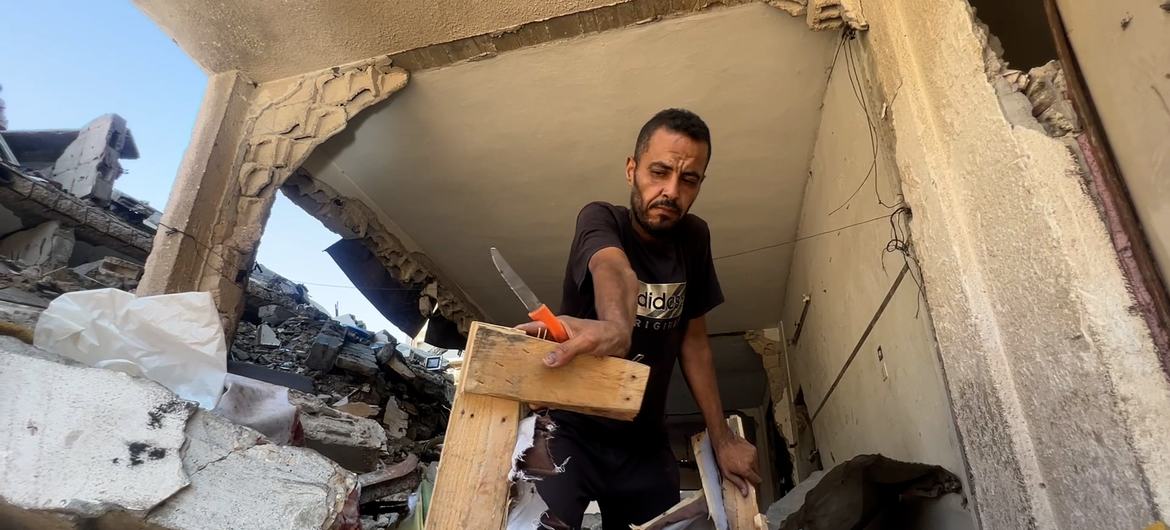
In the same neighborhood, Hossam Madi stands amid the rubble of his home, breaking up furniture to sell as firewood.

We don’t have enough money to move to the southern Gaza Strip,” he said bluntly.

Hossam Madi, a resident of Sheikh Radwan in northern Gaza City removes some of his belongings from his destroyed home.

“I break wood to sell it to buy a kilo of flour for breakfast or lunch. We have nothing. Look at our house, look what happened to it. I am living on the rubble, and now I will take my things and move to western Gaza.”

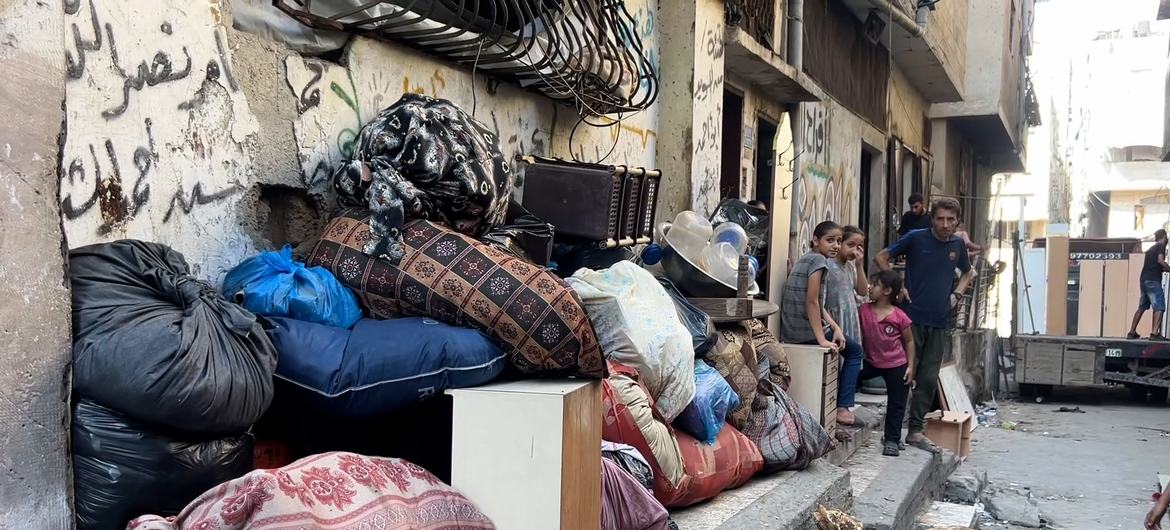
Saqr Abu Sultan said he wasn’t sure where they were headed, loading his family’s belongings onto a three-wheeled cart in preparation for leaving the Sheikh Radwan neighborhood.

The situation is chaotic now. We’re trying to evacuate, but we don’t know where to go, despite the constant talk of safe areas,” he said.

Abu Amer Al-Sharif and his family in Gaza City remove their belongings and household items from their home, preparing for yet another displacement..

Source link

How Local Leadership Powers Indonesia’s Climate Ambitions

Indonesia’s national climate strategy aims to achieve net-zero emissions by 2060. A key component of this strategy is for forests to absorb 140 million tonnes of CO₂ annually, equivalent to taking 30 million cars off the road.

Riau’s contribution to this goal is critical.

The province has historically faced some of the highest rates of deforestation and land degradation, largely due to peatland drainage, fires and rapid land-use conversion to agriculture.

Green for Riau

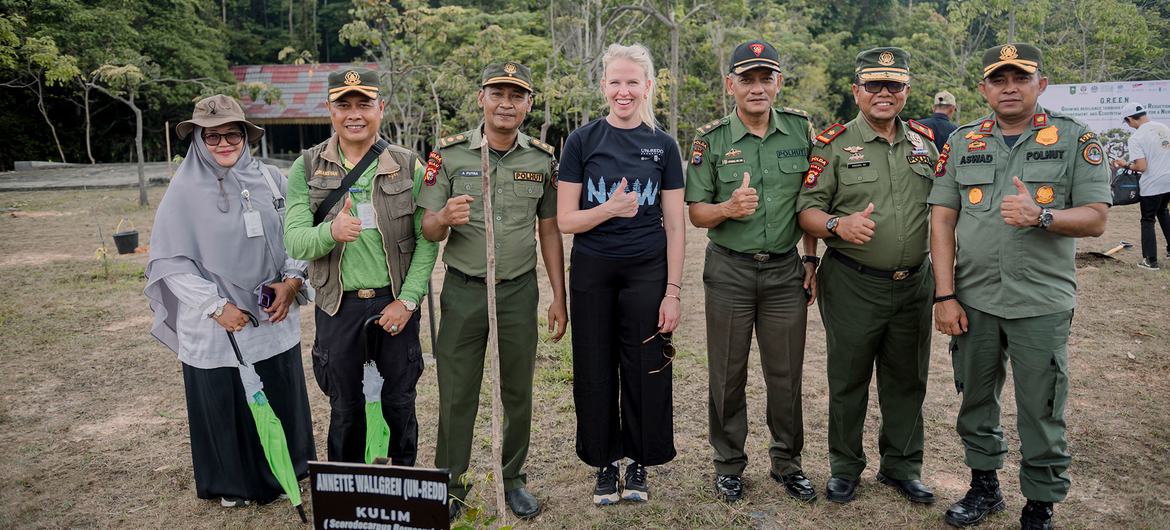
Launched earlier this year, the Green for Riau initiative is transforming the implementation of forest-based climate solutions to these challenges.

“Economic and climate goals can very much co-exist,” said Abdul Wahid, Governor of Riau. “This is what our programme is about. We are proud to lead the way in showing that local action can deliver global results.”

The new initiative, a collaboration between the Government of Indonesia, the UN Environment Programme (UNEP) and the Food and Agriculture Organization (FAO), with support from the United Kingdom, is already finding local solutions to global problems.

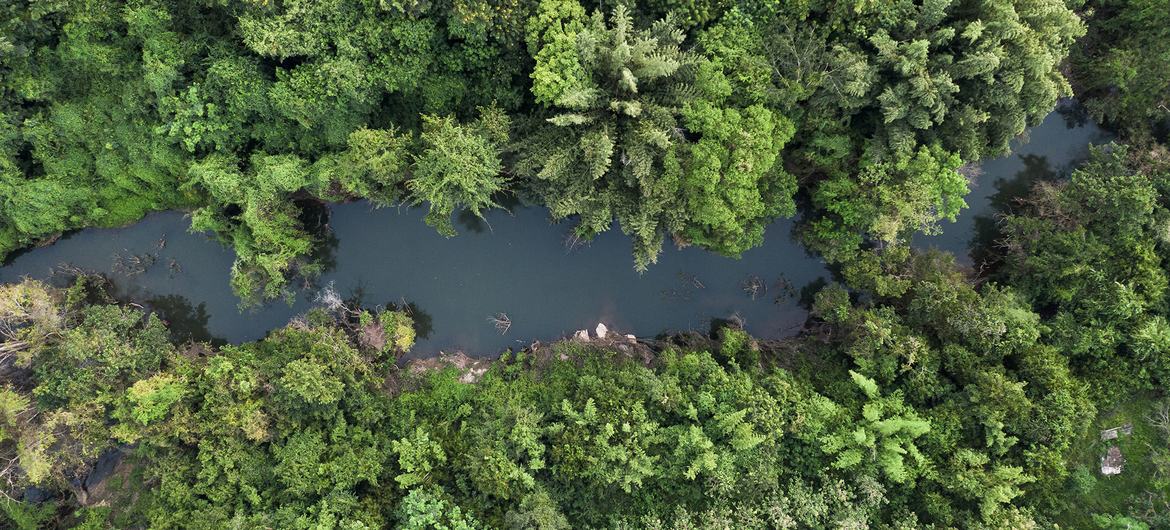
Indonesia is home to vast tropical rainforests.

Local leadership is key

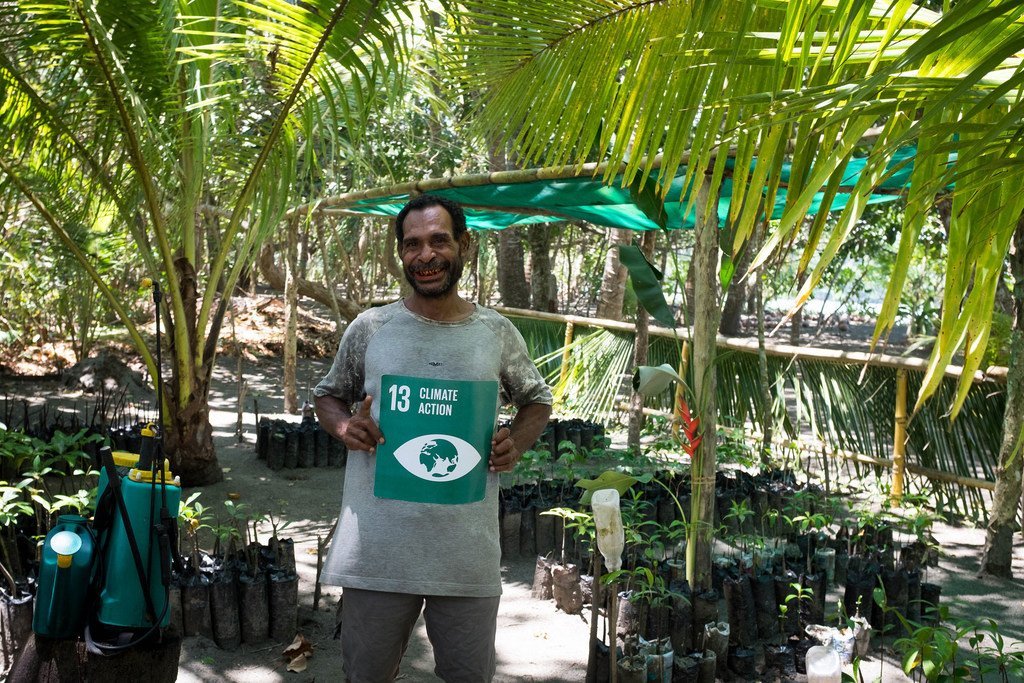
Local leadership is key to achieving the Sustainable Development Goals (SDGs). While national governments pass legislation and set up the policy framework, implementing these policies falls to local authorities who lead the transition to a green economy.

Nearly half of Riau’s seven million residents live in rural areas, many of whom depend on forests for their livelihoods. The initiative supports these communities through sustainable agroforestry, eco-tourism and non-timber forest products, ensuring that conservation efforts go hand-in-hand with economic development.

“By aligning provincial action with national climate goals, Riau is showing how the Sustainable Development Goals can be realised from the ground up,” said Gita Sabharwal, the UN Resident Coordinator for Indonesia, on her return from Riau last month. “This shows how local leadership can drive national and global impact.”

Rewarding emission reductions

At the heart of the transformation is the REDD+ mechanism, which stands for Reducing Emissions from Deforestation and Forest Degradation.

The mechanism supports and rewards measurable emission reductions. Riau, with nearly five million hectares of carbon-rich peatland is poised to become Indonesia’s first province to access REDD+ finance.

The approach is also about marrying technology with consent and customary knowledge. International organizations calculate carbon credits using artificial intelligence (AI) tools, satellite imagery, field verification and carbon forecasting models, in line with global REDD+ guidelines.

AI meets generations of local wisdom

Beyond forest monitoring, AI can generate robust data needed to unlock climate finance, supporting emissions tracking, reporting verification and benefit sharing.

You cannot entirely depend on AI for environmental decision making; it needs to take into account traditional practices developed from observing nature for generations

But, the effectiveness of these new technologies, particularly in environmental decision making, depends on the knowledge included as input.

To be transformative, AI systems must be designed to respect, integrate and learn from customary knowledge systems.

“You cannot entirely depend on AI for environmental decision making,” said Datuk H. Marjohan Yusuf, Chairman of the Council of the Malay Customary Institute of Riau.

“It needs to take into account adat, or local wisdom, traditional practices developed and learned from observing nature for generations.”

During the launch of Green for Riau, customary communities signed a joint declaration, aligning with national legal frameworks and policies that recognise and strengthen the rights and roles of customary communities in forest protection.

This commitment will guide the development of safeguards and the distribution of benefits in accordance with Indonesia’s Social Safeguards Information System in compliance with national and international standards.

“This project is not only protecting forests; it is also empowering communities,” said Marlene Nilsson, Deputy Director of UNEP in Asia-Pacific. “Riau’s leadership is a model for how to drive climate action while supporting livelihoods and biodiversity.”

Green Riau is a joint effort with Indonesia, local leaders and UN agencies to protect forests and advance climate goals.

Model for inclusive climate finance

With UN support and community involvement, new schemes under REDD+ provide incentives to local populations to safeguard rather than exploit forests. This also strengthens land-use governance and sets up financial frameworks to attract both public and private investment into forests. 

The benefits go beyond carbon. Riau is home to iconic and endangered species such as the Sumatran orangutan, tiger and elephant. Protecting these habitats safeguards biodiversity and enhances climate resilience.

The initiative is piloting REDD+ results-based payments at the provincial level, providing a scalable model for inclusive, high-integrity forest finance. This will be done through REDD’s facilitation of mutual recognition arrangements between the government and international carbon crediting programmes.

Forest transition could unlock millions

These efforts could unlock hundreds of millions of dollars annually in carbon finance and develop an investment pipeline, creating a sustainable funding stream for conservation and development.

“Riau is becoming the first Indonesian province to adopt global standards for sustainable forest management,” Ms. Sabharwal said. “This bold step will unlock high-integrity, results-based payments and demonstrates how global standards can translate into sustainable, inclusive growth.”

At the 2025 REDD+ investment roundtable in London, global investors expressed strong interest in supporting Riau’s forest transition, Ms Nilsson said, providing an example for other jurisdictions in Indonesia and beyond.

“The interest from financers signals that climate solutions rooted in local leadership and customary knowledge are not only just, but viable,” she said.