Sinking islands, vanishing forests: World leaders call for urgent climate action

Their appeals, sharpened by rising seas, failed harvests and disappearing ecosystems, echoed Secretary-General António Guterres’s warning at a climate summit that the world is already in the “dawn of a new energy era” – one where clean energy must replace fossil fuels, and where finance and justice remain at the heart of the global response.

“The bottom-line: clean is competitive and climate action is imperative,” he declared, calling for “dramatic emissions cuts” aligned with 1.5°C goal of the landmark Paris Agreement on climate change, agreed by all nations in 2015.

“We know it can be done … COP30 in Brazil must conclude with a credible global response plan to get us on track,” he added, referring to the 30th UN climate change conference in November, which aims to accelerate global efforts to limit temperature rise and advance commitments on emissions, adaptation and climate finance.

The UN chief’s urgency provided the backdrop as world leaders presented compelling accounts of climate peril and promise on the second day of the Assembly’s annual general debate.

Spain – Accelerate energy transition

King Felipe VI of Spain addresses the general debate of the General Assembly’s eightieth session.

The “triple planetary crisis” – climate change, pollution and biodiversity loss – featured prominently in the address by King Felipe VI of Spain, who underscored that governments must accelerate a just energy transition.

He pressed for tripling renewable capacity, doubling efficiency and advancing decarbonisation in time for COP30, where Spain hopes to see consensus and ambition.

“These objectives are as ambitious as they are necessary,” he said, cautioning that hesitation can no longer be part of the global equation.

▶ Watch the address.

Panama – Nature, the first line of defense

President José Raúl Mulino Quintero of Panama addresses the general debate of the General Assembly’s eightieth session.

For Panama, which has long championed conservation despite contributing little to global emissions, the call was for integrated action.

President José Raúl Mulino Quintero unveiled the country’s ‘Nature Pledge,’ a single framework, uniting commitments on climate, biodiversity and land.

He stressed that as a carbon-negative country, Panama will go even further by restoring 100,000 hectares of priority ecosystems, from mangroves to watersheds.

“Nature is our first line of defense against climate change,” he said, linking national resilience to global solidarity.

▶ Watch the address.

Comoros – Small island, big stakes

President Azali Assoumani of Comoros addresses the general debate of the General Assembly’s eightieth session.

In the Indian Ocean, the Comoros faces a different frontline.

President Azali Assoumani spoke of rising seas, coastal erosion and intensifying cyclones that threaten the archipelago’s villages and ecosystems.

He urged equitable, simplified access to climate finance, insisting that small island states cannot wait on cumbersome mechanisms while their homes wash away.

At the same time, he highlighted his country’s ‘Emerging Comoros Plan,’ built on renewable potential, blue economy resources and digital transition.

But without international support, he warned, such plans risk being hampered by debt and global inaction.

▶ Watch the address.

Namibia – Linking climate action to desertification

President Netumbo Nandi-Ndaitwah of Namibia addresses the general debate of the General Assembly’s eightieth session.

Namibia’s President Netumbo Nandi-Ndaitwah tied climate impacts directly to her country’s daily struggles, citing prolonged droughts and floods that have dried rivers and disrupted lives.

She announced Namibia’s bid to host the Africa regional hub of the Green Climate Fund, positioning the country as a bridge for climate finance on the continent.

And she reinforced the need to implement the ‘Namib Declaration’ to combat land degradation, linking climate action with the fight against desertification.

▶ Watch the address.

Guyana – Nature’s tangible value

President Mohamed Irfaan Ali of Guyana addresses the general debate of the General Assembly’s eightieth session.

In South America, Guyana’s President Mohamed Irfaan Ali emphasised that climate and development cannot be separated.

He described how his country is protecting forests, strengthening sea defenses and advancing a low carbon development strategy to prove that economic growth can go hand-in-hand with environmental stewardship.

Guyana, he noted, has become a seller of carbon credits under international standards, showing that “nature has tangible value.”

▶ Watch the address.

Marshall Islands – Promises won’t save sinking atolls

President Hilda Heine of Marshall Islands addresses the general debate of the General Assembly’s eightieth session.

For the Marshall Islands, a Pacific nation of more than 1,200 islands and 29 coral atolls climate change is a question of survival.

President Hilda Heine delivered one of the day’s most urgent interventions, warning that promises alone cannot save sinking atolls.

“We’ve heard the promises – but promises don’t reclaim land in atolls. They don’t develop mangrove defenses, shore up our hospitals and schools against rising seas or preserve cultural stability tied to land that is slipping under waves,” she said.

“Those things require money.”

Ms. Heine pressed the international community to close the trillion-dollar climate finance gap, particularly for adaptation and loss and damage.

As COP30 approaches, she said nations must not only honor their pledges but also deliver stronger plans that show a clear pathway to phasing out fossil fuels and halving global emissions within this decade.

▶ Watch the address.

‘Warring world crying out for peace’ says UN chief as leaders gather in New York

UN Secretary-General António Guterres has called for a renewed global push to end wars and divisions, stressing that “peace cannot wait” as the world observes the International Day of Peace.

“Lives are being ripped apart, childhoods extinguished, and basic human dignity discarded, amidst the cruelty and degradations of war,” Mr. Guterres said in his message for the Day. “All they want is peace.”

He noted that modern conflict is no longer confined to battlefields, with its consequences spilling across borders, driving displacement, poverty, and instability. “We must silence the guns. End the suffering. Build bridges. And create stability and prosperity,” he urged.

Theme Calls for Collective Action

The International Day of Peace was first established by the UN General Assembly in 1981 as a day devoted to non-violence and ceasefire. This year’s theme, Act Now for a Peaceful World, emphasizes the need for urgent action to prevent conflicts, counter hate and disinformation, and strengthen peacebuilding efforts, particularly through the involvement of women and young people.

Mr. Guterres underscored the close relationship between peace and sustainable development, pointing out that nine of the ten countries lagging most in development are also plagued by conflict. He warned against racism and dehumanisation, advocating instead for “the language of respect” and dialogue.

The observance comes on the eve of the UN General Assembly’s annual high-level week, where leaders from across the world gather in New York to debate pressing global challenges, from ongoing wars and climate disruption to gender equality and the risks and opportunities posed by artificial intelligence.

“The timing underlines the need for a concerted international push for peace, as divisions widen and instability grows,” the Secretary-General said. Concluding his message, he reminded nations and communities alike: “Where we have peace, we have hope. Peace cannot wait — our work starts now.”

UNDP: Peace and Development Intertwined

In a statement issued the same day, UNDP’s Acting Administrator Haoliang Xu stressed that peace is the foundation of development. Xu highlighted that in 2024, governments spent approximately US$2.7 trillion on military budgets, while only a small fraction—about US$47.2 billion, was allocated to peacebuilding and prevention efforts.

UNDP further argued that development actors are crucial partners in stabilisation: by investing in justice, governance, and inclusive institutions, and by supporting women and youth roles in conflict-affected regions, peace becomes more durable.

Civil Society Voices

Labour unions, non-governmental organisations, and other civil society actors underscored that peace is not simply the absence of war but requires fairness and equality.

For example, Unifor, a large Canadian trade union, released a statement affirming that peace must rest on dignity, justice, and human rights. The union observed that civilians—in particular workers, health care personnel, families, children—bear disproportionate burden during conflicts. Unifor called for ceasefires, de-escalation of violence, and increased support for humanitarian and development agencies.

These actors also spoke out against trends of rising militarisation at the expense of essential services—health, education, housing—and warned that neglect in these areas undermines long-term peace and stability.

Beyond the UN Secretariat and civil society, organisations that represent countries or regions emphasised that peace must go hand in hand with democracy, human rights, and inclusion.

The Community of Democracies (CoD) reaffirmed its commitment to the UN’s Sustainable Development Goals (SDGs), particularly SDG 16 (peace, justice, and strong institutions). Its Secretary-General Thomas E. Garrett stressed that sustainable peace requires the meaningful participation of women, youth, and marginalized groups, and that democratic governance bolsters efforts toward reconciliation and enduring peace.

Several member states (implicitly through these organisations and joint statements) echoed that investing in peace-building, prevention, and inclusive development is not merely moral but pragmatic: peace is foundational to stability, prosperity, and human wellbeing.

Also Read: London’s Far-Right Rally Sends Shockwaves Through South Asian Communities

World News in Brief: Pandemic Treaty Update, DR Congo Ebola Response, More Casualties in Ukraine

Pandemic Treaty

Tedros Adhanom Ghebreyesus called the world’s first pandemic trety “a generational accomplishment”, while speaking at the start of a meeting of the Intergovernmental Working Group on the WHO Pandemic Agreement, taking place in Geneva through Friday. It comes four months after countries adopted the pact.

Tedros said the next step “is to bring this historic achievement to fruition” by finalizing the Pathogen Access and Benefit-Sharing (PABS) system. He urged countries to use this week to pave the way to developing the platform, with the ultimate goal of adoption next year.

“It is in every country’s interest that this process is not delayed any further. Because, as we are all aware, the next pandemic or major global health emergency is not a question of if, but when,” he said.

DR Congo: UN and partners support Ebola response in Kasai province

The Democratic Republic of the Congo (DRC) is facing an Ebola outbreak in Kasai province, located in the southwest, with 35 confirmed cases including 27 deaths.

The UN and partners are supporting the Government in the response, the Spokesperson for the Secretary-General said on Monday in New York. Stéphane Dujarric told reporters that partners working in health have facilitated the delivery of over 350 doses of the Ebola vaccine to the Bulape health zone, the epicentre of the outbreak.

“We have also mobilized rapid response teams focusing on case detection and surveillance, clinical case management, infection and prevention control, and risk communication and community engagement,” he added.

Meanwhile, health partners are mobilizing to contain the outbreak. He warned, however, that gaps in medical supplies and logistical capacity are hindering the response, and urgent funding is needed.

Ukraine: Dozens of casualties reported in weekend hostilities

Hostilities continued over the weekend in Ukraine, with the Donetsk region particularly affected, the UN Office for the Coordination of Humanitarian Affairs (OCHA) reported on Monday.

Several civilians have been killed and 40 injured in the region since Friday, while local authorities also documented damage to nearly 190 civilian facilities, including homes, schools, a hospital and a pharmacy.

Other parts of Ukraine also experienced hostilities which damaged homes, farmland and other civilian infrastructure. Nearly 5,000 people remain without electricity in the Zaporizhzhia region.

OCHA said the continuing violence has forced more than 2,700 people, including roughly 340 children, to flee their homes between 12 and 14 September.

What is South-South cooperation, and can it be the gateway to a fairer world?

In practical terms, South-South cooperation is a process whereby developing countries – regardless of their actual geographical location – seek to achieve their individual or shared development goals through the exchange of knowledge, skills, and resources, in partnerships involving governments, regional organisations, civil society, academia, and the private sector.

The experiences and goals of most countries in what is known as the Global South, intersect as they continue to chart their post-colonial future and strive to meet the development needs of their people.

In recognition of mutual cooperation between these nations, the UN established the UN Office for South-South Cooperation (UNOSSC) in 1974, supporting these efforts on the international stage and within the UN system.

Dima Al-Khatib speaking on South-South and triangular sharing of experiences and innovative approaches in multi-dimensional evaluation, during a conference at FAO Headquarters in Rome, Italy.

Pioneering innovators

Ahead of the International Day for South-South Cooperation, marked on 12 September, UNOSSC Director Dima Khatib told UN News that countries of the South – home to 80 per cent of the world’s population – possess huge levels of untapped human and natural resources, and tremendous potential to drive development forward.

“We believe that countries in the Global South not only have challenges but also have solutions and innovations and we must support, encourage, and highlight their pioneering role in these areas,” she declares.

Nevertheless, the challenges are real and daunting, including rising geopolitical tensions, debt burdens, a widening digital divide, and social complexities, at a time of declining humanitarian and development funding from developed countries.

This harsh landscape is motivating developing countries to look for development financing by cooperating more closely with each other.

Ms. Khatib points to recent studies conducted by her office that demonstrate that South-South cooperation has the potential to change the economic equation, create jobs, and build local capacity, in countries ranging from Ethiopia, to Paraguay, Rwanda and others.

Shot of a 100% electric bus near Expo City in Dubai United Arab Emirates, where the UN Climate Change Conference (COP28) is under way.

Exciting potential in the Middle East

In the Middle East, it’s bearing fruit in areas such as renewable energy, digital transformation, and climate change adaptation. For example, Morocco’s experience with large-scale solar farms has been used as a model for renewable energy projects in parts of sub-Saharan Africa.

Ms. Al-Khatib says that Gulf countries are not only providing financial support in times of crisis but have also become leaders in sharing their expertise.

She points to Saudi Arabia, which shares its extensive experience in seawater purification with countries facing drought, and Masdar City in the United Arab Emirates, which conducts research – and develops capabilities that benefit countries in the Global South.

The UN official also notes that the Islamic Development Bank has been a key driver of progress, facilitating knowledge exchange among its 57 member states and supporting initiatives such as advanced irrigation technologies, sustainable agriculture, and climate-resilient infrastructure.

A driving force for multilateralism

Ms. Khatib notes that countries in the Global South are not only coming together, but also demonstrating their ability to take the lead, citing the India-UN Development Partnership Fund and the India-Brazil-South Africa Fund, both of which are hosted by UNOSSC.

She emphasises that this demonstrates the power of collective action and sends a strong message that cross-border cooperation is both possible and effective.

Amid the tense international political climate the world is witnessing today, South-South cooperation can be a driving force for renewing and strengthening multilateralism, but it is not a replacement for cooperation between all countries.

The senior UN official says there can be no divide between the countries of the Global North and the Global South, but rather, “we must build bridges,” a task to which the United Nations is well suited, given its core mandate to treat all countries equally.

Photo: Dominic Sansoni/World Bank

Quay cranes on docks in Sri Lanka. The global economy is critically dependent on the international merchant fleet of carriers and tankers to keep commodities moving swiftly, safely and efficiently.

Source link

World News in Brief: Afghan quake update, diplomacy continues to end Sudan war, UN honours victims of 9/11

Women and children face heightened risks, while operational challenges – including restrictions on female UN staff – threaten life-saving relief efforts.

The twin quakes, measuring 6.0 and 6.2, struck on 31 August and 4 September, flattening entire villages in Kunar, Nangarhar, Laghman and Nuristan provinces. Mountainous terrain and landslides blocked key roads, leaving air transport as the only reliable access. 

Assessments indicate over 6,700 homes were destroyed or damaged, forcing most families to shelter in the open without privacy, clean water, or basic services.

Ensuring critical healthcare

UNFPA, the UN reproductive health agency, has deployed health teams to the hardest-hit areas, providing maternal and reproductive healthcare, psychosocial support and counselling. More than 9,500 people have received assistance so far.

“Women and children in particular are extremely traumatized,” said a psychosocial counsellor. “Our goal is to support their emotional and mental health and provide whatever assistance we can, including medicines and dignity kits.”

Among the affected, UNFPA estimates some 11,600 pregnant women face heightened risk due to limited access to health services.

“For pregnant women, a natural disaster can turn an already challenging time into a life-threatening crisis,” said UNFPA Representative Kwabena Asante-Ntiamoah.

World Health Organization (WHO) mobile teams have been deployed to provide trauma care, maternal and child health services, mental health support, immunizations, and emergency nutrition.

The agency has also dispatched 43 tonnes of medical supplies and provided over 4,500 consultations through its clinics.

Sudan: UN envoy heads to region in call for dialogue towards peace

The UN Secretary-General’s Personal Envoy for Sudan, Ramtane Lamamra, has travelled to East Africa to address the ongoing civil conflict there and push for negotiations towards a peace deal.

 In a post on X earlier this week, Mr. Lamamra called on combatants and political actors in Sudan “to engage in constructive dialogue leading to a sustainable solution.”

The goal of the visit is to make progress on the protection of civilians and to strengthen multilateral mediation efforts in the country.

Push for high level consultations

To achieve that, he is working together with the African Union to organize a ministerial-level consultative group meeting in Addis Ababa.

As the rival militaries continue to attack civilians and vital infrastructure, many displaced people and other communities are receiving reduced food assistance, or none at all.

“We continue to reiterate our calls for an end to this conflict that has left 25 million people acutely hungry,” said the UN Secretary General’s Spokesperson Stéphane Dujarric at a press conference on Thursday.

UN honours 9/11 anniversary, stands with New Yorkers

Marking the 24th anniversary of the 11 September terror attacks, the UN reaffirmed its enduring solidarity on Thursday with the people of New York, the city where it has been headquartered for nearly 80 years. 

“New York has hosted the United Nations for 80 years and has been the home to many of our colleagues, as well as to diplomats, staff, and of course all the Secretaries-General. We continue to stand in solidarity with the people of New York, as we did 24 years ago,” said UN Spokesperson Stéphane Dujarric. 

The attacks on the twin towers of the World Trade Center in downtown Manhattan claimed nearly 3,000 lives from over 90 countries and left thousands more injured. 

Decades later, survivors and first responders continue to face long-term health challenges, including respiratory illnesses, cancer, and mental health struggles. 

A place to call home

“New York City has hosted our UN Headquarters for decades and is the place many colleagues call home – so do I,” said Secretary-General António Guterres.

“Today, my thoughts are with everyone who lost loved ones on 9/11, and with all the people of New York City,” he added, in a social media post. 

The UN emphasised its ongoing commitment to commemorate the worst terror attack in US history, honouring the victims, and supporting New Yorkers as the city continues its journey of resilience and healing. 

Source link

World News in Brief: UN chief condemns Russian attacks on Ukraine, Gaza crisis continues, protecting civilians in DR Congo

Secretary-General António Guterres said it marked a “further escalation” of the conflict.

Authorities reported more than 80 civilian casualties, including a national non-governmental organization (NGO) worker and her two-month-old son in Kyiv.

Other affected cities included Zaporizhzhia, Odesa, Chernihiv, Kharkiv, Kremenchuk, Kryvyi Rih and Kherson. Energy infrastructure was also hit, causing temporary power and water outages ahead of winter, with repair crews working to restore services.

“Attacks against civilians and civilian infrastructure violate international humanitarian law. They are unacceptable and must end immediately,” UN Spokesperson Stéphane Dujarric said Monday at the regular news briefing in New York.

“The Secretary-General reiterates his call for a full, immediate and unconditional ceasefire as a first step towards a just, comprehensive and sustainable peace in Ukraine, one that fully upholds Ukraine’s sovereignty, independence and territorial integrity, in line with the UN Charter, international law and relevant UN resolutions,” he added.

Meanwhile, humanitarian support continues. On 5 September, UN agencies and partners delivered medical kits and hygiene supplies to roughly 1,000 people in several Donetsk villages, marking the tenth convoy to the region this year.

People seek food at a community kitchen in western Gaza City.

Gaza: Civilian toll continues to climb

Civilians in Gaza continue to face mounting deaths, displacement and famine as hostilities continue, with UN agencies warning that the window to prevent widespread starvation is closing.

According to local health authorities, some 67 people were killed and 320 injured in the past 24 hours, Mr. Dujarric said, adding that since the end of the ceasefire in mid-March nearly 12,000 people have died amid repeated displacement and attacks.

“We continue to condemn all killings of civilians,” he said.

The humanitarian situation remains dire. The UN aid coordination office, OCHA, noted urgent needs for food, water and shelter.

“Our colleagues remind us that over 80 per cent of Gaza is either under displacement orders or within militarized areas,” Mr. Dujarric added.

The Gaza Ministry of Health reported that over 100 people, a quarter of them children, have died from malnutrition since famine was confirmed in Gaza governorate.

Humanitarian operations remain heavily constrained.

Only 11 of 24 coordinated missions were facilitated on Sunday, including fuel collection at crossings, while others were denied or cancelled. Humanitarians were able to distribute water in northern Gaza and collect food shipments from Kerem Shalom, Karem Abu Salem and Zikim crossings.

UN peacekeepers in DR Congo continue to protect population against ‘grave danger’

Hundreds of thousands of people fleeing conflict in the eastern Democratic Republic of the Congo (DRC) continue to be protected against “grave danger” by United Nations peacekeepers, according to the head of UN Peace Operations.

Jean-Pierre Lacroix was speaking at the end of a mission to the DRC, where he visited the troubled Ituri and North Kivu regions.

Mr. Lacroix emphasised that hundreds of thousands of Congolese people, including displaced people, rely on the UN peacekeeping mission, MONUSCO for daily protection, particularly in the areas of Fataki and Beni, in North Kivu, where joint operations with the Congolese armed forces continue against armed groups.

USG Lacroix on the role of MONUSCO

Dire situation continues

The security situation in the eastern DRC remains dire, despite diplomatic efforts to bring lasting peace to the country.

The DRC is currently facing one of the most acute humanitarian emergencies in the world, with food insecurity on the rise and 5.9 million Congolese currently internally displaced.

“People are protected here by our MONUSCO colleagues, and they are provided with humanitarian support and protection”, said Mr. Lacroix adding that the UN remains committed to supporting government efforts towards peace and stability in the country.

Source link

World News in Brief: Afghanistan quake update, Guterres in Papua New Guinea, Ebola returns to DR Congo, UN condemns attack on peacekeepers in South Sudan

Since the initial earthquake on Sunday in eastern Nangarhar province, landslides and several strong aftershocks have disrupted the work of rescue teams.

In an update, the UN Children’s Fund, UNICEF, said that access routes remain blocked in various locations including the districts of Chawkay and Nurgal, both in Kunar province, although the authorities have deployed earth-moving machinery to restore access.

Latest estimates indicate that approximately half a million people have been affected – including 263,000 children – while at least 5,000 homes have suffered partial or total damage.

Tremors continue

Among the UN agencies operating there, UN Habitat noted that the earthquake had caused massive upheaval in a remote region where recent returnees from Pakistan and Iran were just beginning to settle.

“There are still more earthquakes every day in the region, causing landslides and making access even harder,” said UN Habitat’s Stephanie Loose in the capital, Kabul.

She noted that women and girls were the main victims because of strict rules preventing them from leaving their homes alone.

“Many of them, due to cultural norms or restrictions imposed, didn’t dare to leave their houses; nor are there sufficient female doctors in the country, and I understand they are not able to reach the women who would need it,” Ms. Loose said.

Papua New Guinea’s on the frontline of climate change, warns Guterres

Papua New Guinea and the Pacific islands are climate change’s “Ground Zero” whose precious rain forests and ecosystems deserve the world’s support to ensure they’re protected, the UN Secretary-General said on Thursday.

Speaking from Papua New Guinea where he visited the world’s third largest rainforest and sat down with civil society representatives, António Guterres highlighted the challenges brought about by climate change in the region.

It’s the first ever visit to the southwest Pacific nation by a sitting Secretary-General.

Earlier, he repeated his warning that the 1.5 degree limit on the rise in global temperatures agreed to under the 2015 Paris Agreement remains in jeopardy.

And although scientists say that it is still possible to limit global warming, the UN chief urged countries to unveil their new national climate plans to reduce emissions and “seize the opportunities” arising from the renewable energy revolution.

New Ebola outbreak declared in DR Congo

Health authorities in the Democratic Republic of the Congo (DRC) have declared an outbreak of Ebola virus disease in Kasai province where 28 suspected cases and 15 deaths – including four health workers – have been reported as of Thursday.

The outbreak is concentrated in the Bulape and Mweka health zones in Kasai Province, in the south-central region of DRC. Symptoms of the rare – but severe – and often fatal illness, include fever, vomiting, diarrhoea and haemorrhaging.

Samples tested on 3 September at the country’s National Institute of Biomedical Research in the capital Kinshasa confirmed the cause of the outbreak as the Ebola Zaire strain.

Experts deployed

A national Rapid Response Team assisted by UN World Health Organization (WHO) experts in epidemiology, infection prevention and control – as well as case management – has been deployed to Kasai province.

Communication experts have also been deployed to reach communities and help them understand how to protect themselves.

Additionally, WHO is delivering two tonnes of supplies including personal protective equipment, mobile laboratory equipment and medical supplies.

The area is difficult to reach and at least a day’s drive from the provincial capital Tshikapa, with few air links.   

“We’re acting with determination to rapidly halt the spread of the virus and protect communities,” said Dr Mohamed Janabi, WHO Regional Director for Africa.

“Banking on the country’s long-standing expertise in controlling viral disease outbreaks, we’re working closely with the health authorities to quickly scale up key response measures to end the outbreak as soon as possible.”

Cases likely to rise

Case numbers are likely to increase as transmission is ongoing.

The country has a stockpile of treatments, as well as 2,000 doses of the Ervebo Ebola vaccine already prepositioned in the capital city Kinshasa that will be quickly moved to Kasai to vaccinate contacts and frontline health workers.   

The DRC’s last outbreak affected the northwestern Equateur province in April 2022.

It was brought under control in under three months thanks to the robust efforts of the health authorities. In Kasai province, previous outbreaks of Ebola virus disease were reported in 2007 and 2008. In the country overall, there have been 15 outbreaks since the disease was first identified in 1976.

UN condemns attack on peacekeepers in South Sudan

The UN peacekeeping mission in South Sudan, UNMISS, has condemned an attack by a local armed group which targeted “blue helmets” in Western Equatoria state.

The militants subsequently seized a small cache of weapons and ammunition. The incident occurred while peacekeepers were conducting a patrol between Tambura and Mapuse.

“We emphasise that any attack against peacekeepers may constitute a war crime,” UN Spokesperson Stéphane Dujarric said at the daily press briefing in New York on Thursday.

“These peacekeepers are deployed to protect civilians at a time when access and security remain fragile across Western Equatoria,” he added.

Meanwhile, widespread flooding is also impacting hundreds of thousands of people in several parts of the world’s youngest nation, which became embroiled in civil war soon after gaining independence in 2011.

A fragile 2018 peace accord is in danger of unravelling amid fresh offensives and deteriorating humanitarian conditions.

Flooding affects 270,000

Local reports suggest that over 270,000 people are affected by flooding in 12 counties across four states.

These areas were already grappling with floods, displacement, food security and cholera, said Mr. Dujarric, with farmland, homes and humanitarian facilities now submerged, disrupting access to education, health, nutrition and water services.

UN humanitarians say overcrowding at relocation sites has led to tensions among displaced families at the same time, reports of waterborne diseases and snake bites are increasing public health risks.

Peacekeepers serving with the UN Mission in South Sudan (UNMISS) have increased their presence and intensified vehicle patrols, navigating treacherous, rain-soaked routes both day and night.

World News in Brief: Pakistan floods, countries lag on climate reporting, concern over attack on peacekeepers in south Lebanon, cuts hit human rights investigations

In a statement released by his Spokesperson, the UN chief noted that the disaster driven by severe monsoon conditions had been exacerbated by climate change, impacting around 1.5 million people.

Hundreds of thousands of people need humanitarian aid while more than 3,000 homes, over 400 schools and some 40 health facilities have suffered some level of damage.

Solidarity with the people

“The Secretary-General commends Pakistani authorities for relocating more than one million people in Punjab. He expresses his solidarity with the Government and people of Pakistan, extends his heartfelt condolences to the families of those who have lost their lives, and wishes a swift recovery to those who have been injured.”

The UN and other humanitarian organizations are working closely with the Pakistani authorities to assess the full impact of the floods on communities, identify further needs and also address any gaps in the response.

The UN’s Emergency Relief Coordinator, Tom Fletcher, has released $600,000 from the Regional Humanitarian Pooled Fund for relief and recovery efforts, and discussions are underway with the Government on a specific response plan.

Dozens of countries lag on climate reporting, warns UN climate chief

UN Climate Change Executive Secretary Simon Stiell has warned that 37 countries have yet to submit one or more mandatory reports under the Paris Agreement’s transparency framework, stressing that “no country can be left behind.”

Speaking at the Global Transparency Forum in Songdo, Republic of Korea, the UNFCCC chief said the Enhanced Transparency Framework (ETF) is not just technical bookkeeping but “a vital enabling tool” for stronger climate action.

It helps governments attract investment, design more ambitious policies and accelerate progress on clean energy and resilience, he added.

‘Smart investment’

To date, more than 100 nations have submitted their first Biennial Transparency Reports (BTRs), which Mr Stiell called a “smart investment” bringing economic and social benefits.

Over 10,000 experts from 140 developing countries have received training on the ETF, with 1,200 certified reviewers and 1,400 officials now using its tools.

The first global synthesis of BTRs will be published ahead of November’s COP30 climate change conference in Brazil, offering an early snapshot of progress on mitigation, adaptation and support. Mr Stiell said the findings would guide the next Global Stocktake.

“What is measured can be acted upon. What is reported helps build trust. And what is shared becomes a force for change,” he stressed.

Lebanon: UN voices serious concern over Israeli attack on peacekeepers

The UN has expressed serious concern over an Israeli attack on peacekeepers clearing roadblocks in southern Lebanon on Tuesday.

Briefing reporters in New York on Wednesday, UN Spokesperson Stéphane Dujarric said Israeli military drones had dropped grenades in the vicinity of peacekeepers serving with the UN mission, UNIFIL, “who were carrying out mandated tasks in support of implementation of Security Council resolution 1701.”

That’s the resolution which authorises peacekeepers to monitor the cessation of hostilities agreement between Israel and Hezbollah of 2006 and support the Lebanese armed forces as Israel withdrew from southern Lebanon. UNIFIL patrols the Blue Line of separation.

In a statement on social media, UNIFIL described the drone attack as one of the most serious on its personnel since the cessation of hostilities agreement between the two sides last November. The mission stressed that Israeli forces had been informed in advance of the road clearance work.

Drones crossed into Israel

“One grenade impacted within 20 metres and three within approximately 100 metres of UN personnel and vehicles,” said the UN Spokesperson.

“The drones were then observed returning south of the Blue Line. Thankfully, none of our colleagues were injured.”

The Secretary-General stresses that any acts which endanger peacekeepers’ lives are “completely unacceptable”, Mr. Dujarric continued.

UN chief António Guterres is also demanding that the parties uphold their responsibilities “to ensure the safety and security of the peacekeepers and inviolability of UN premises.”

Funding cuts hampering the work of the Human Rights Council, says President

The Human Rights Council is set to meet on Monday in Geneva – an opportunity for UN Member States to discuss action to address conflicts around the world, as well as other issues of global importance, from climate change to disability rights.

Important as this work is, it’s feared that cost-cutting measures that are already affecting UN agencies and bodies like the Council could limit its reach, President Jürg Lauber told journalists on Wednesday.

This includes independent rights investigators known as Special Rapporteurs, he said: “When the Council decides to have an investigative mechanism or a special rapporteur or an issue, they need resources,” he said.

Research, travel impacted

“They need they get support from the Secretariat to do research, to write reports. They need to travel to a country to see the situation. There’s also less money available, which means they don’t get necessarily all the research and assistance they need to do their work,” he continued.

Mr. Lauber said it was “very clear” that dwindling financial resources were impacting meetings during Council sessions and the basic implementations of investigative mandates.

He added that the funding cuts could also prevent people or groups in countries of concern from sharing their testimonies with investigators.

And he noted that reduced funding could also limit how much technical support and advice the Council is able to give to governments seeking to promote and protect human rights.

Source link

World News in Brief: Executions surge in Iran, nuclear test threat, Burkina Faso declares top official unwelcome

At least 841 people have been put to death by the Government of Iran since the beginning of the year, with ethnic minorities and migrants “disproportionately targeted”, said OHCHR spokesperson Ravina Shamdasani.

Some executions have been carried out publicly, she added, with seven reported this year based on available information: “The real situation might be different. It might be worse given the lack of transparency in the use of the death penalty.”

Imminent executions

Eleven people now face imminent execution; six have been charged with “armed rebellion” owing to their alleged membership of the Mojahedin-e-Khalq group.  

Five others are on death row in connection with their participation in the 2022 protests, following the death in police custody of Mahsa Amini, who was detained by Iran’s so-called morality police for not wearing her hijab correctly.  

Ms. Shamdasani reiterated calls from UN rights chief Volker Türk for Iran to impose a moratorium on the application of the capital punishment, as a step towards its abolition.

UN chief warns against ‘playing with fire’ as nuclear test threat looms

UN Secretary-General António Guterres has issued a stark warning on the International Day against Nuclear Tests, urging world leaders to halt the threat of renewed detonations.

“Stop playing with fire. Now is the time to silence the bombs before they speak again,” he said in his message, which coincides with the 80th anniversary of the first nuclear test on 16 July 1945 – in the New Mexico desert under the Manhattan Project.

A deadly legacy

Since then, more than 2,000 nuclear tests have been carried out worldwide.  

Atmospheric tests in the early decades of the nuclear era spread radioactive fallout across continents, contaminating land and seas, displacing communities and leaving survivors facing health crises passed down through generations.

The international day was declared by the UN General Assembly in 2009, following Kazakhstan’s closure of the Semipalatinsk test site.

It has since become a rallying point for governments, civil society and campaigners pressing for an end to nuclear testing and progress towards full disarmament.

Mr. Guterres stressed that nuclear testing remains a grave danger amid rising geopolitical tensions. He urged States to ratify the Comprehensive Nuclear-Test-Ban Treaty (CTBT), adopted by a large majority in 1996 but still not in force nearly three decades later.

“We must never forget the horrific legacy of over 2,000 nuclear tests,” the Secretary-General said. “The world cannot accept this.”

Burkina Faso declares UN Coordinator persona non grata  

The UN chief has expressed regret of the decision by authorities in Burkina Faso to declare the UN’s Resident and Humanitarian Coordinator in the country, Carol Flore-Smereczniak, persona non grata.

In a statement on Friday, António Guterres said that the transitional authorities had announced the diplomatic sanction declaring her unwelcome, on 18 August.

The UN chief expressed “full confidence” in her “professionalism and dedication and in the broader United Nations system in Burkina Faso.”

During her tenure, Ms. Flore-Smereczniak – who has now left the country – led UN efforts working closely with the Burkinabe authorities to support development initiatives and provide humanitarian assistance.

UN will continue to support Burkinabe

The statement stresses that the UN Charter makes clear the doctrine of persona non grata does not apply to UN officials, as staff members appointed by the Secretary-General are responsible solely to the Organization, and Member States undertake to respect their exclusively international character.

In line with the Charter, the United Nations enjoys privileges and immunities, including the right of its staff to remain and carry out their mandated work.

“Only the Secretary-General, as the Chief Administrative Officer of the Organization, has the authority to decide – after careful investigation – on the withdrawal of any United Nations official.”

Mr. Guterres reaffirmed the UN’s commitment to continue supporting the people of Burkina Faso, and to keep working with the national authorities.  

Source link

World News In Brief: Iran sanctions, Yemen floods appeal, new SDG advocates

“I can tell you that the Secretary-General is aware that today, the Security Council received this joint letter from the three countries,” UN Spokesperson Stéphane Dujarric told journalists.

The three European nations were signatories to the 2015 Joint Comprehensive Plan of Action (JCPOA), an agreement that granted Iran sanctions relief in exchange for strict limits on uranium enrichment, stockpile levels and centrifuge use, alongside robust monitoring and verification by the International Atomic Energy Agency (IAEA).

Snapback clause

The agreement includes a so-called “snapback mechanism” that allows for the reinstatement of sanctions within 30 days if Iran is found to be non-compliant. 

“The Secretary-General urges the JCPOA participants and the Security Council to continue negotiations to find a diplomatic solution that ensures the peaceful nature of the Iranian nuclear programme and brings about economic benefits to the people of Iran,” Mr. Dujarric said.

He said the coming weeks offer “a window of opportunity” to deescalate tensions and pursue a peaceful resolution.

The Secretary-General also underscored the urgency of avoiding a renewed military conflict, and prioritising dialogue. 

In Yemen, IOM appeals for support amid deadly flooding

The UN migration agency, IOM, appealed on Thursday for international support for war-ravaged Yemen, after violent storms devastated communities, destroying homes and sweeping away livelihoods.

Latest assessments by the International Organization for Migration across 73 displacement sites indicate that well over 46,000 people have been affected.

Yemen has been in crisis since Houthi rebels took up arms against the internationally-recognised Government, seizing control of the capital Sanna’a in 2014.

An uneasy truce largely holds but clashes continue internally, together with Houthi attacks on Red Sea shipping and exchanges of airstrikes with Israel rooted in the Gaza conflict.

‘Another devastating blow’

“The floods in Yemen are another devastating blow for families who have already lost so much,” said Abdusattor Esoev, IOM’s Chief of Mission in Yemen.

The governorates of Ibb, Sana’a, Ma’rib, Al Hodeidah, and Ta’iz are among the worst hit, with floods damaging homes, farmland, and public infrastructure.

The latest crisis in Yemen mirrors last year’s devastating floods, which caused widespread damage and loss of life.

This year’s storms have been even more intense and demonstrate how climate change is deepening vulnerabilities across the country and pushing communities further into crisis, IOM said.

UN chief welcomes two new sustainability advocates

The UN chief welcomed two new Sustainable Development Goals (SDGs) advocates on Thursday: Masai Ujiri, Co-Founder of Giants of Africa and former Vice-Chairman and President of the Toronto Raptors; and Muniba Mazari – an award-winning advocate for disability rights, inclusion, and gender equality.

“The SDG Advocates play a vital role in inspiring global action and ambition to achieve the Sustainable Development Goals,” said Secretary-General António Guterres.

Through his non-profit Giants of Africa, Mr Ujiri uses basketball as a transformative tool to create opportunities for youth across Africa and beyond.

“Sport doesn’t just unite people – it breaks down barriers, builds hope and transforms entire communities,” he said.

Pakistan’s ‘Iron Lady’

Ms Mazari, known as the “Iron Lady of Pakistan” has inspired millions through her personal story and her commitment to championing marginalised communities after a spinal cord injury left her using a wheelchair.

“Inclusion is not a privilege; it is a right. I am proud to be an SDG Advocate and to elevate the voices of those who are often unheard,” she said.

Mr Ujiri and Ms Mazari join a global cohort of leaders committed to accelerating progress and inspiring action across all 17 SDGs.

Source link

World News in Brief: More deaths in Ukraine, lengthy detentions in Egypt, AI governance, US postal tariffs

Since Friday, 11 civilians have been killed and more than 90 wounded, according to the authorities. Schools and energy infrastructure also were damaged.

The Donetsk region in eastern Ukraine was the most affected, with the town of Kostiantynivka particularly hard hit. 

Six other regions – Sumy, Kharkiv, Kherson, Mykolaiv, Dnipro and Zaporizhzhia – were also impacted, with homes, schools, ambulances and power infrastructure in front-line areas sustaining damage.

In response, aid organizations have distributed repair materials, hot meals and drinks, in addition to providing psychological support.

Families on the run

Meanwhile, humanitarians continue to support people fleeing hostilities in the Donetsk and Dnipro regions.

OCHA said over 2,000 people, many of them children, were evacuated from Donetsk between Friday and Monday. 

“With growing pressure on the transit site in the town of Pavlohrad, authorities and aid organizations opened new facilities in the village of Voloske, Dnipro region, and the town of Lozova, Kharkiv region,” the agency said.

Evacuees receive medical and psychosocial support, hot meals, water and hygiene supplies, and can register for cash assistance before moving on to safer areas. 

At the same time, humanitarians are also supporting arrivals in other parts of Ukraine.

Egypt urged to end ‘rotation’ detention practice targeting Government critics

The UN human rights office, OHCHR, called on Tuesday for Egypt to end a practice known as “rotation” which allows Government critics to be held arbitrarily and for prolonged periods even after serving their sentences or completing maximum pre-trial detention.

Human rights defenders, activists, lawyers, journalists, peaceful protesters and political opponents are among those who have been targeted.

The latest case concerns poet Galal El-Behairy, who was arbitrarily detained after completing a prison term on 31 July 2021 for writing songs and poetry critical of the Government. 

He has since faced similar charges in two different cases under the counter-terrorism law and the penal code. The latest charges were brought on 19 August 2025, extending his detention for at least 15 more days.

Suppressing critical voices

Rotation “has become a tool by which the Egyptian Government represses those perceived to be critical of its policies,” OHCHR Spokesman Thameen Al-Kheetan told journalists in Geneva.

“Most of those targeted by ‘rotation’ should not have been detained or jailed in the first place, as the charges brought against them are often related to the exercise of their legitimate rights to freedom of expression and peaceful assembly,” he said.

OHCHR urged the Egyptian authorities to immediately end the practice and release all those who have been subjected to it. 

UN announces two new mechanisms to promote cooperation on AI governance

The UN Secretary-General welcomed the General Assembly’s decision on Tuesday to establish two new mechanisms to promote international cooperation on the governance of artificial intelligence (AI).

The establishment of the UN Independent International Scientific Panel on AI and the Global Dialogue on AI Governance marks a significant step forward in global efforts to harness the benefits of the technology while addressing its risks.  

The development underlines commitment by Member States to build on the Global Digital Compact adopted as part of the Pact for the Future last September, UN Spokesperson Stéphane Dujarric told journalists in New York.

Fostering inclusion, informing decision-making

He said the Global Dialogue will provide an inclusive platform within the UN for States and stakeholders to discuss the critical issues concerning AI facing humanity today.

The Scientific Panel will serve as a crucial bridge between cutting-edge AI research and policymaking, he added.

“By providing rigorous, independent scientific assessments, it will help the international community to anticipate emerging challenges and make informed decisions about how we govern this transformative technology,” he explained.

The Secretary-General will soon launch an open call for nominations for the Scientific Panel, which will present its annual reports at the Global Dialogue on AI Governance to take place in July 2026 in Geneva and 2027 in New York.

In the interim, all stakeholders are urged “to support this historic initiative and contribute to building a future where artificial intelligence serves the common good of all humanity.”

This post office was officially opened on 4 September 1981 in Karagwe District, Kagera Region in Tanzania

UN postal agency striving to keep packages moving ahead of US duty-free deadline

The UN postal agency says it is taking all possible measures to keep packages flowing to the United States after dozens of countries suspended service. 

“Maintaining the trust of the billions of people served by the postal network is our top priority,” said Universal Postal Union (UPU) Director General Masahiko Metoki. 

Starting on 29 August, the US announced that it will suspend duty-free “de minimis” measures for low-value packages.  

That means packages worth less than $800 will no longer be exempt from customs duties and may require new processing requirements. There is no impact on letters. 

A big change

The UPU noted that while each country has the sovereign right to adopt its own customs policies, the change “will entail considerable operational changes for postal operators around the world” – given the short notice. 

Postal services in at least 25 countries have suspended their outbound postal services to the US, citing uncertainties related to transit, according to the UPU. 

The UN agency says it is working to help countries adjust to new customs duty collection and remittance process and is in contact with the US Government to develop practical solutions.   

Source link

Killing of journalists in Gaza hospital attack ‘should shock the world’: UN rights office

OHCHR Spokesperson Thameen Al-Kheetan said condemnation of the two strikes by Israeli forces on the Nasser Hospital in Khan Younis now needs to be channelled into a demand for accountability and justice for all those killed.

At least 20 died, including four health workers and five journalists, later named as Ahed Abu Aziz, Hussam al-Masri, Mariam Dagga, Mohammed Salama and Moaz Abu Taha. They worked for outlets including Middle East Eye, the Associated Press, Al Jazeera and Reuters.

Two strikes

Video taken at the scene shows a second strike apparently targeting rescuers who had arrived at the scene of the initial attack on southern Gaza’s largest medical facility on Monday.

“We know that one of the five journalists appears to have been killed in the first air strike while three others including the women journalist appear to have been killed in the second air strike. This is a shock and this is unacceptable,” said Mr. Al-Kheetan.

“At least 247 Palestinian journalists have been killed in Gaza since the 7th of October 2023,” he continued.

“These journalists are the eyes and the ears of the whole world and they must be protected…This raises many, many questions about the targeting of journalists and all of these incidents must absolutely be investigated and those responsible must be held accountable.

He added that OHCHR was continuing to corroborate the factual details of Monday’s strikes, adding that targeting journalists as well as hospitals is forbidden under international law.

The head of UN cultural agency, UNESCO – which advocates for press freedom and journalists’ safety – also condemned the killings, reiterating her call to respect UN Security Council resolution 2222, unanimously adopted in 2015 on the protection of journalists, media professionals and associated personnel as civilians in situations of conflict.

Audrey Azoulay said UNESCO is providing emergency assistance to journalists in the Gaza Strip, including psychosocial assistance, access to working equipment, and capacity-building

Investigations must ‘yield results’

Israeli Prime Minister Benjamin Netanyahu responded to the killings expressing regret, describing the incident as a “tragic mishap”. He said the Israeli military would carry out “a thorough investigation.”

The OHCHR spokesperson told journalists in Geneva that Israeli authorities had carried out investigations in the past, as the occupying power.

“But these investigations need to yield results. There needs to be justice. We haven’t seen results or accountability measures yet,” he said.

More to follow…

Source link

Health and aid workers targeted in conflicts around the world, UN agency says

Attacks against health facilities doubled between 2023 and 2024, and more than 900 health workers were killed last year, the agency reported.

Humanitarian aid workers were also killed in record numbers in 2024. Yet, 2025 is outpacing even these dark statistics at a time when funding for humanitarian work is shrinking and support services established over decades are struggling to operate.

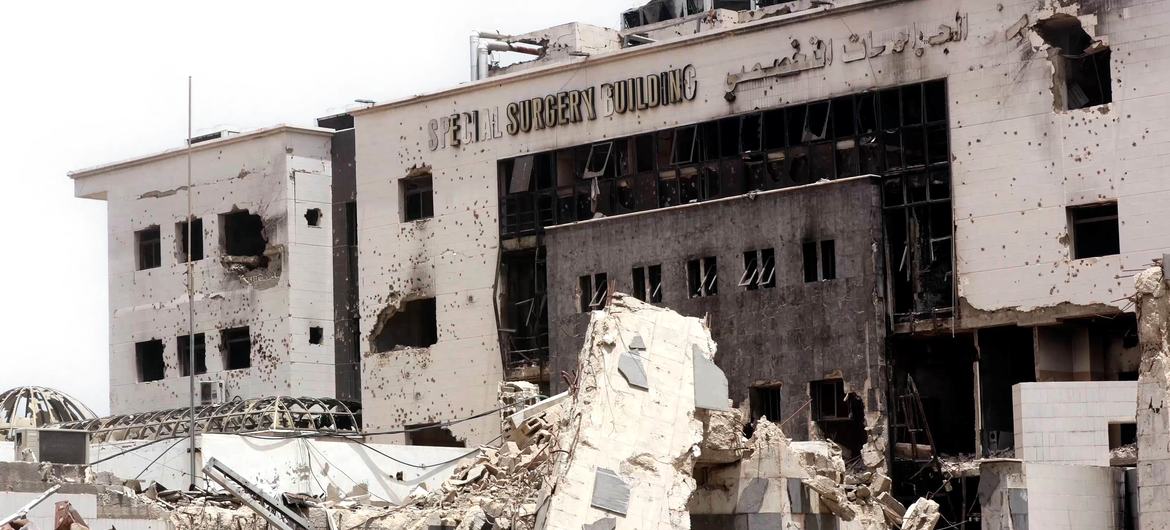
The Special Surgery Building at Al-Shifa Medical Complex in central Gaza City has been reduced to rubble.

Assault on Gaza’s health system

The nearly two-year-long war has devastated Gaza’s health system, leaving thousands without access to essential services. Now, as famine takes hold, miscarriages, premature births and low birth weight cases have surged, while newborn deaths are increasing, the UN agency warned.

PULL QUOTE: Life must continue even when bombs are going off.

“Because the delivery room was under direct fire, I delivered babies in hospital hallways,” said Ayda, a senior midwife in northern Gaza. “For lights, we used mobile phones. Despite the lack of supplies and water, our hands continued to work. Life must continue even when bombs are going off.”

Since October 2023, the World Health Organization (WHO) has documented over 720 attacks on healthcare in Gaza, with at least 1,580 health workers killed and as yet unknown numbers arrested and detained by Israel. Among them was Ayda, who just days after sharing her story, was killed in an airstrike along with 37 members of her family.

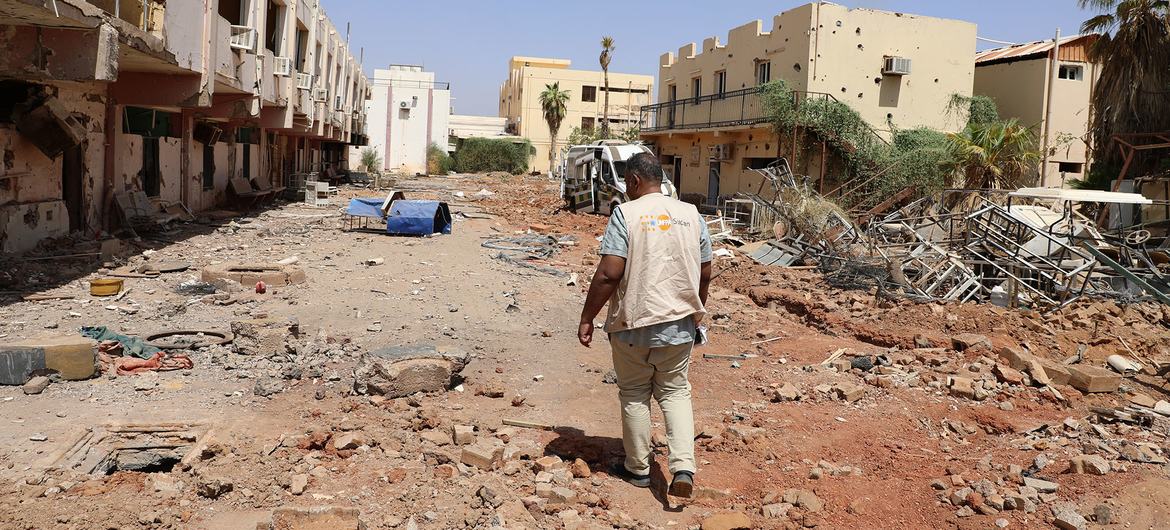
Dr. Khalid Badreldin completed his studies at the Ibrahim Malik Hospital in Khartoum, which now lays in ruins.

Delivering amid devastation in Sudan

In a field of rubble that used to be part of the Ibrahim Malik Hospital in Khartoum, Dr. Khalid Badreldin, a reproductive health analyst with UNFPA in Sudan, recalled performing his first surgery and delivering his first baby there.

“Now, I find it like this,” he said, lamenting the now shuttered hospital that was once a major provider of emergency treatment and maternal and neonatal services. The hospital has joined more than 80 per cent of health facilities in Sudan’s conflict zones that are no longer operational.

Meanwhile, midwives in Khartoum, the capital, are taking “huge risks to reach women in their homes”, explained Hawaa Ismael, who works at the UNFPA-supported Kararai Health Centre.

“It was exhausting, working day and night, but it’s our duty, and I’m proud of what we’ve done.”

On the other side of the country, staff at the El Fasher Maternity Hospital have come under attack, with one midwife killed when her home was shelled on Thursday and another kidnapped.

Haiti’s spiralling crisis

Clinics and hospitals have been deliberately targeted in the crisis that has gripped Haiti over the past 18 months, further weakening a health system already hobbled after years of conflict, looting and financial collapse.

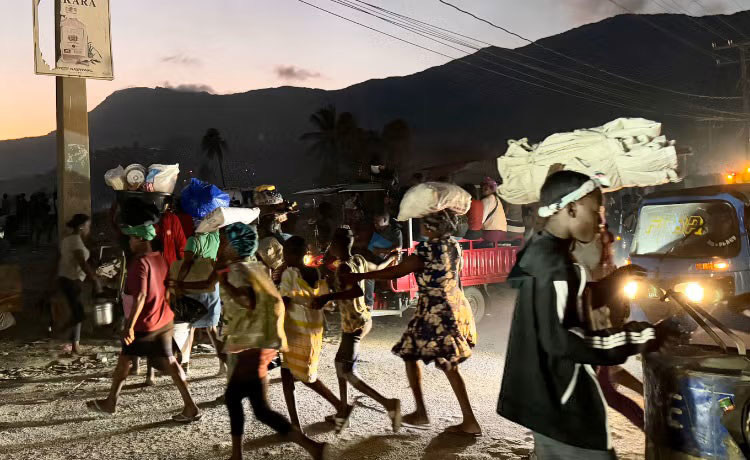
In Haiti, people carrying their belongings flee in near darkness.

The State University Hospital, the country’s largest, was attacked at its reopening ceremony in December 2024, following a 10-month closure, with several people killed, according to reports. In the same month, armed gangs set fire to the Bernard Mevs Hospital in Port-au-Prince, the capital, and in April, attacks forced Mirebalais University Hospital to close.

Organized gangs are waging a brutal campaign to seize control of the capital, with sexual violence rampant. An estimated 1.2 million women and girls are in urgent need of protection against gender-based violence, but due to ongoing insecurity, three out of UNFPA’s four safe spaces in Port-au-Prince were recently forced to close and relocate. As access to emergency services remains extremely limited, just one quarter of rape survivors receive care within the critical 72-hour period.

© UNOCHA/Viktoriia Andriievska

Ukraine’s largest pediatric health centre, Okhmatdyt Children’s Hospital in Kyiv, was hit on 8 July 2024 in one of the worst missile attacks on the country.

Heavy toll in Ukraine

Since January 2025, the World Health Organization (WHO) has recorded over 300 attacks by Russia on healthcare facilities, services and personnel in Ukraine, where women and girls are often compelled to find safer places to shelter and give birth.

I was afraid to give birth, but life goes on. We want to live too.

“Every day brings stress,” said Anastasiia from Sloviansk, on the frontline Donetsk region. “Even if there’s no immediate strike, the fighting nearby is loud and constant. I was afraid to give birth, but life goes on. We want to live too.”

Her region lacks a neonatal intensive care unit and while doctors can perform a Caesarian section, they could not provide full care if complications arose. As her due date approached, Anastasiia travelled some 20km to reach the Kharkiv Regional Perinatal Centre despite the city being regularly subjected to bombings, drone strikes and artillery shelling.

The response workers who help women like Anastasiia often face risks.

“When we arrive at the sites of attacks or in cases of violence, we don’t have time to slow down,” explained Roman, who works with a UNFPA mobile psychosocial support team in Dnipro. “It’s like our own reactions are on hold. Only later, when we look back and discuss it, do we realise how difficult it actually was.”

Under fire in DR Congo

In the restive eastern Democratic Republic of the Congo (DRC), most facilities providing maternal healthcare have been bombed or looted.

Midwife Loti Kubuya Mielor assists a newly arrived displaced woman who gave birth in a shelter in Goma, DR Congo.

Indeed, just one third of hospitals in the region and one in five health centres are able to function. UNFPA’s mobile health teams are often the only option women have.

Displaced since February 2023, Francine Toyata recalled her recent travel through “darkness and chaos” with her mother to reach a UNFPA-supported mobile health clinic to give birth in the Rutshuru territory of North Kivu province.

“It is for women like Francine that we do this work,” said Nelly, her midwife.

As the conflict escalates, bombs have started hitting camps for internally displaced people, and mobile health clinics and listening centres have also been looted and destroyed.

“We were not safe,” Nelly added. “We need more support to meet these urgent needs.”

Source link

World News in Brief: Gaza humanitarian update, more killings in Sudan, ending impunity in Myanmar

Multiple strikes overnight into Friday were reported in the Jabalya Al Balad and An Nazla neighbourhoods, the UN Office for the Coordination of Humanitarian Affairs (OCHA) said in its latest update.

As a result, around 900 people reportedly fled towards the Sheikh Radwan neighbourhood and western Gaza City.

Safe passage, more aid

The UN and partners again reminded parties to the conflict of their obligation to protect civilians, in line with international law, including humanitarian workers and people who cannot or choose not to move. 

“Those fleeing must be allowed to do so safely. They must also be allowed to return if they wish to do so, as the situation allows,” OCHA said.

The agency underscored the need to ensure that people have access to aid and basic services, whether they leave or stay.

Supplies also must be allowed to enter the Gaza Strip through all available crossings and corridors, and humanitarians must have safe, predictable and sustained access to deliver aid at scale.

Hospitals under strain

Meanwhile, as strikes continue to intensify across the enclave, casualties are flooding hospital emergency departments.  

Humanitarians warned that the expansion of military operations would further cripple the collapsing healthcare system. 

Nearly half of all hospitals and field hospitals are located in Gaza City, accounting for some 40 per cent of bed capacity in the entire enclave.  Additionally, many medical facilities in the south are operating several times over their bedspace capacity.

Humanitarians stressed that access to healthcare must be immediately restored to avert more preventable deaths. 

Sudan: UN rights office horrified by recent killings in El Fasher 

Recent brutal attacks by the paramilitary Rapid Support Forces (RSF) in Sudan have left at least 89 people dead in North Darfur state, the UN human rights office, OHCHR, said on Friday

The RSF have been battling the Sudanese Armed Forces (SAF) for control of the country for more than two years.

OHCHR said RSF attacks on the besieged North Darfur capital El Fasher and the adjoining Abu Shouk camp for displaced people resulted in the killing of at least 89 civilians, though the actual number could be higher.

The attacks took place over a 10-day period ending on 20 August.

Apparent summary executions 

At least 32 civilians were killed in attacks between 16 and 20 August, while at least 57 were killed in previous attacks on 11 August.

OHCHR was particularly horrified that 16 of the most recent killings appear to have been summary executions, Spokesman Jeremy Laurence told journalists in Geneva.

“Most of the victims were killed in Abu Shouk camp and belonged to the African Zaghawa tribe, according to information gathered by our Office,” he said.

“In another case in the El Fasher area, a victim was asked which tribe he belonged to. He was killed after responding that he was from the African Berti tribe.” 

Meanwhile, the humanitarian situation in El Fasher has reached a critical stage after more than a year of siege, and there is growing risk of famine in the city and other areas of North Darfur.

OHCHR was appalled by two separate attacks on UN humanitarian convoys in North Darfur this month and in June, saying such attacks only worsen the human rights situation for civilians.

© UNICEF/Ilvy Njiokiktjien

Ending impunity for violence critical for Rohingya in Myanmar

The UN human rights office has also called for ending impunity in the violence against the Rohingya people in Myanmar and ensuring their rights to security, citizenship and equality.

It said the Rohingya – a mostly Muslim minority community in predominantly Buddhist Myanmar – continue to suffer, eight years after a deadly crackdown by the military.

More than 700,000 fled to Bangladesh in the wake of the assault which began on 25 August 2017, joining others who had escaped earlier waves of attacks. 

Break the cycle

OHCHR said that ending impunity and ensuring the Rohingya’s rights to security, citizenship and equality, are essential for breaking the cycle of violence.

The Rohingya mainly live in Myanmar’s Rakhine state, and the office noted that the human rights and humanitarian situation there have sharply deteriorated since November 2023, further deepening the already life-threatening conditions they face.

OHCHR urged the international community to step up support for the Rohingya by increasing humanitarian funding to secure access to basic needs, essential services, and to ensure accountability. 

Source link

World News in Brief: Sudan hospitals under fire, world remembers victims of terrorism, DR Congo

A grenade attack inside Zalingei Hospital in Darfur State, led Médecins Sans Frontières (MSF) to suspend all of its activities there yesterday.  

MSF had previously led a cholera emergency response at the medical facility, providing life-saving treatment for 160 patients in the past two weeks alone.  

“The rules of war are clear that the wounded and sick, medical personnel and hospitals be protected at all times,” said UN Spokesperson Stéphane Dujarric, at the regular briefing on Wednesday.  

Do not give up on Sudan

In concert with the Sudanese Ministry of Health and humanitarian partners, the UN continues working to expand access to cholera vaccines across the country, including more than two million reached during a recent campaign across Khartoum, Al Jazirah and Sennar States.

With famine having been confirmed in parts of Sudan, the UN and its partners are also working to deliver food assistance wherever they can — but ongoing conflict has threatened their ability to access some locations.  

For the first time since the conflict began in April 2023, the World Food Programme (WFP) reached rural areas of North Darfur State on 14 August and provided over 50,000 displaced people with food.  

On 19 August, Luca Renda, the Sudan representative of the UN Development Programme (UNDP) in Sudan, lauded the work of humanitarians who continue to provide lifesaving assistance despite extreme risk to their own safety.  

“Sudanese humanitarians continue to deliver. They cross frontlines. They navigate insecurity and bureaucracy. They risk everything to reach people in need. They have not given up and neither must we.”

International Day honours victims of terrorism

Thursday, 21 August, marks the eighth commemoration of the International Day of Remembrance of and Tribute to the Victims of Terrorism.  

Although the violent scourge is condemned worldwide, victims and survivors of terrorism often feel their voices are not heard and struggle to have their needs supported and rights upheld, especially when few Member States have the resources to help them recover.

This year’s theme is United by Hope: Collective Action for Victims of Terrorism, highlighting the power of solidarity among victims to turn pain into purpose and drive meaningful change.

In observance of the day, the UN Office of Counterterrorism will host a virtual event and a panel discussion featuring five survivors of terrorism from different regions.

“On this solemn day, we honour the victims and survivors of terrorism everywhere – saluting their courage, acknowledging their pain, and reaffirming our enduring commitment to peace, justice, and human rights, Secretary-General António Guterres, said in a video message.

Mr. Guterres welcomed the launch of the UN-supported Victims of Terrorism Associations Network, which works to empower victims and amplify their voices.

“Victims of terrorism are showing the way: supporting one another, speaking out, and championing the rights of all those affected,” he continued, urging governments, civil society and the international community to “match their courage.”

DR Congo: Deadly violence continues in the east 

Violence continues in eastern Democratic Republic of the Congo (DRC) in the form of deadly attacks by the Allied Democratic Forces militia across North Kivu between 9 and 16 August.  

“Yesterday, gunfire was reported near the UN Mission’s base in Bayoo and also close to the base of Uganda People’s Defence Forces (UPDF) in Bule, in Ituri Province,” said UN Spokesperson Stéphane Dujarric during Wednesday’s briefing in New York.  

The UN mission, MONUSCO, activated security protocols and deployed patrols to secure the area and nearby sites hosting internally displaced people.

Peacekeeping efforts

Meanwhile, MONUSCO’s Commander led a delegation to Komanda in Ituri Province, to meet community representatives and honour victims of a massacre perpetrated by the ADF in July, which killed hundreds of civilians.  

From 15 to 18 August, at the request of local communities, UN peacekeepers also deployed a Mobile Operating Base in Soleniama, Ituri, to support demobilisation efforts, with the help of religious leaders. 

Source link

UN honours fallen aid workers on World Humanitarian Day

The first eight months of 2025 show no sign of a reversal of this disturbing trend, with 265 humanitarian workers killed as of 14 August, according to figures released on World Humanitarian Day.

Attacks on humanitarian workers, assets and operations violate international law and undermine the lifelines that sustain millions of people trapped in war and disaster zones.  

“Even one attack against a humanitarian colleague is an attack on all of us and on the people we serve,” said Tom Fletcher, head of the UN Office for the Coordination of Humanitarian Affairs (OCHA), speaking in Geneva.

At Headquarters in New York City, the UN hosted a commemoration ceremony for the victims of the bombing of the United Nations headquarters its office in Baghdad in 2003, which cost the lives of 22 people. Some of the survivors attended the event.

Protect aid workers

“Humanitarians carry hope where there is despair,” said Mr. Fletcher at the World Humanitarian Day 2025 Commemoration Ceremony in Geneva.  

“They bring humanity where there is inhumanity.”  

Yet, humanitarian workers are under attack.  

In 2024, most of the aid workers killed were national staff serving their communities and were attacked in the line of duty or in their homes.  

Since October 2023, 520 aid workers, mostly staff with UN Palestine refugee agency UNRWA, have been killed in Gaza — the deadliest place for humanitarians for the second year running.  

OCHA demanded that Member States protect civilians and aid workers, and hold perpetrators accountable.

Despite the dangers, “humanitarians will not retreat”, said Mr. Fletcher.

Humanitarians in the Middle East  

Across the Middle East, civilians, including humanitarian workers, “are being killed, injured, and attacked in shocking numbers,” said the UN Resident and Humanitarian Coordinators in the Occupied Palestinian Territory (OPT), Syria, Yemen and Lebanon in a joint statement this Tuesday.  

Since August 2024, at least 446 humanitarian workers have been killed, wounded, kidnapped or detained in these locations. “The world is failing humanitarian workers and the people they serve,” the statement read.  

Renewing their call for the respect of international humanitarian and human right laws, the officials called on the international community to “protect those who protect humanity.”  

Source link

World Humanitarian Day 2025: Aid workers mull record toll of their own

Speaking to UN News from the wartorn enclave to mark World Humanitarian Day, Olga Cherevko from the UN aid coordination office, OCHA, said that exhausted aid workers continue to show up for work “day in and day out”.

Approaching two years since the start of the war in Gaza, Ms. Cherevko emphasized the commitment of her Palestinian colleagues, “the doctors, the nurses, aid workers who many of them have, lost everything and several times over”.

Red lines crossed

In comments in support of aid workers everywhere, UN Secretary-General António Guterres pointed out that humanitarian teams “are the last lifeline for over 300 million people” impacted by conflict or disaster.

Despite their lifesaving role, funding cuts are having a serious and negative impact on the world’s most vulnerable people, Mr. Guterres warned, while those who provide aid are increasingly under attack as “red lines are crossed with impunity”.

This is despite the fact that such attacks are prohibited under international law, the UN chief continued, noting that although governments have pledged action to protect them, “what is missing is political will – and moral courage…Humanitarians must be respected and protected. They can never be targeted.”

Powerless to help

From her base in Deir Al-Balah in central Gaza, Ms. Cherevko reflected on the nature of humanitarian work today and the frustration that aid teams often face when their lifesaving missions are delayed, preventing them from delivering assistance at scale.

“I think as a humanitarian, I feel powerless sometimes in Gaza because I know what it is that we can do as humanitarians when we’re unable to do so, both here in Gaza and in any other humanitarian crisis,” she explained.

“The fact that we continue to face massive impediments for delivering aid at scale, when our missions are delayed, when our missions lasted 12, 14, 18 hours; the routes that we’re given are dangerous, impassible or inaccessible.”

Surge in killings

Latest data indicates a 31 per cent surge in aid worker deaths compared to 2023, driven by the relentless conflict in Gaza.

The Strip saw 181 humanitarian workers killed in 2024, with 60 more fatalities in Sudan. More widely, violence against aid workers increased in 21 countries in 2024 compared to the previous year, with State actors the most common perpetrators.

Worryingly, there is no sign that the trend is slowing this year, with 265 aid workers killed as of 14 August this year, according to provisional data from the Aid Worker Security Database.

Amid early reports that Hamas has agreed to a 60-day ceasefire in Gaza and ongoing uncertainty about the Israeli plan to pursue a complete military takeover of the enclave, OCHA’s Ms. Cherevko highlighted the need for a permanent end to the conflict.

Aid teams are exhausted and “everyone’s still showing up (to work), but courage alone and commitment alone isn’t going to feed people, isn’t going to save people”, she insisted. “What we need is, again, a permanent ceasefire. We need political solutions to this conflict and a resolution to this crisis.”

World News in Brief: Gaza aid crisis latest, deadly floods in India and Pakistan, funding cuts exacerbate Somalia drought

In an alert from the World Food Programme (WFP), the agency said that half a million people “are on the brink of famine”, a claim backed up by multiple humanitarian agencies. The latest worrying data is showing widespread acute malnutrition.

A ceasefire is the only way to scale up aid deliveries, the UN agency insisted. It explained that although teams are doing everything they can to deliver food assistance, only 47 per cent of the daily target amount is getting in.

No meals, no bread

Unless the fighting stops, organized aid distributions and WFP-supported hot meals and bakeries can’t restart, the agency stated.

The UN relief agency for Palestine refugees, UNRWA, reported on Monday that instead of being able to prepare for the start of a new school year, children in Gaza are instead searching for water and queuing for food while their classrooms have “turned into crowded refuges”.

Three years of schooling has now been lost, the agency stressed in a tweet.

UN chief expresses ‘deep sorrow’ over deadly flash floods in India and Pakistan

UN Secretary-General António Guterres on Monday expressed his deep sorrow at the tragic loss of life due to flash floods in India and Pakistan in recent days, with many still missing and forecasts showing the possibility of further flooding and landslides ahead.

Indian rescue services responded to a deadly flood on Friday which reportedly killed at least 60 after it crashed through a village in the Himalayas while in remote villages of northwestern Pakistan, torrents of water killed more than 300, according to news reports.

Hundreds were also injured, Pakistani authorities reported. Buner district was the worst hit, with more than 200 deaths reported there, said the provincial disaster management authorities.

Standing in solidarity

“The Secretary-General offers his sincere condolences to the victims’ families and stands in solidarity with those affected by this disaster,” said the statement issued by his Spokesperson.

UN country teams in India and Pakistan have also been placed are at the disposal of authorities although no request for assistance has been made so far.

Impacts of Somalia drought made worse by funding cuts: OCHA

In Somalia, severe drought and funding cuts are undermining lifesaving assistance there, the UN aid coordination office, OCHAsaid on Monday.

Because of the reduction in the amount of support for aid work, food assistance has declined, health centres are closing and malnutrition is high, the UN agency warned.

OCHA said that 4.6 million people now face high levels of food insecurity while two million more are at risk from funding cuts.

Funding cuts mean ‘lives lost’

Without scaled-up support, “lives will be lost and progress reversed” across the east African nation, where cash shortfalls have left one million people without food assistance every month.

The global trend seeing less humanitarian assistance has curtailed vital support for healthcare across Somalia. So far this year, it has impacted at least 150 medical facilities and left hundreds of thousands of Somalis without the medical care they need.

OCHA noted that because of the cuts, the number of people being targeted for assistance in Somalia has had to be reduced by a staggering 72 per cent.

Source link

World News in Brief: Cholera strikes Sudan and beyond, humanitarian needs grown for returning Afghans, rising insecurity in DR Congo

So far this year, cholera has killed more than 4,300 people across 31 countries. These figures are underestimates and there is particular concern for those impacted by war in Sudan, Chad, the Democratic Republic of the Congo, South Sudan and Yemen.  

In Sudan, the disease has already claimed over 1,000 lives since 1 January. It has reached every state in the country, one year after the outbreak started, according to WHO.

Cases rise in war-torn Darfur

With the sub-Saharan rainy season now underway, the UN agency is worried about a spike in the waterborne disease, linked to the huge numbers of people fleeing ongoing violence.

“While cases have plateaued or decreased in some areas, including Khartoum, they are rising in the Darfur region and neighboring Chad. In Tawila, North Darfur,” said WHO’s Kathryn Alberti.

Refugees have quadrupled the population from close to 200,000 to over 800,000, causing immense strain on water and sanitation systems, she added.

“People have as little as three litres of water daily and this is for cooking, washing, cleaning and drinking.”  

To respond to the problem, WHO and partners have set up task forces, deployed rapid response teams for surveillance and stockpiled essential cholera supplies in Darfur – although “large parts” of Darfur and Kordofan remain unreachable.

Humanitarian needs keep growing in Afghanistan

Four years after the de-facto Taliban regime took over Afghanistan, more than half of the population needs vital aid, according to the UN humanitarian office (OCHA).

Women and girls are particularly vulnerable due to the increasingly restrictive policies that Taliban authorities have imposed, excluding them from education, the workforce and public life.

“Humanitarian aid is a lifeline for women and girls who are otherwise unable to access essential services and assistance,” said UN Spokesperson Stéphane Dujarric, at Friday’s daily briefing in New York.  

1.7 million returnees 

OCHA also warned that the return of 1.7 million Afghan citizens from Iran and Pakistan this year has further increased humanitarian needs, as most have limited community ties and are struggling to find shelter and ways of making a living.

To support the response of the under-resourced host communities, the UN Central Emergency Response Fund (CERF) recently released $10 million, and additional funding is in the pipeline from the Afghanistan Humanitarian Fund.

But more resources are urgently needed. This year’s Humanitarian Needs and Response Plan in Afghanistan is just 25 per cent funded, with $624 million received of the $2.4 billion that are needed, and another influx of refugees is expected ahead of Pakistan’s 1 September deadline for Afghan Proof of Registration cardholders to exit.

Insecurity also rising in DR Congo’s restive east

In the war-torn eastern parts Democratic Republic of the Congo, OCHA says insecurity is on the rise in Djigu territory, in Ituri province.

Clashes between multiple armed groups and the Congolese armed forces in several areas has resulted in nearly 50 civilian deaths and more than 30 injuries in the past month alone there.

In the same period, violence and insecurity have led to the displacement of more than 80,000 people in Djugu.

In the attacks, homes were looted or burned, and those who fled are now sheltering in schools, churches and other public buildings.

Targeted killings

There have been three targeted attacks on sites hosting internally displaced people.

These clashes have severely limited humanitarian access, depriving around 250,000 people of essential services. In the Nizi health district in the Ituri territory, nine out of 12 health facilities are now out of service.

The UN and its humanitarian partners are ready to respond, but they need unimpeded, safe access to do so.

“All parties must take urgent measures to protect civilians and facilitate humanitarian access. Civilians must be protected at all times, in line with international law,” stressed Mr. Dujarric on Friday. 

Source link

World News in Brief: Shipwreck off Italy kills at least 27, anniversary of Taliban takeover, Peru amnesty law

UNHCR is supporting at least 60 survivors who have been brought ashore, but the Italian coast guard warned more bodies could still be recovered.  

According to local news reports, the passengers were travelling from Libya in the hopes of reaching Italy.

Migrants and refugees heading to Italy from the African coast often use leaky or overcrowded boats organized by human traffickers and travel via the often-deadly Mediterranean route, aiming to reach Lampedusa.

In a social media statement on Thursday, the High Commissioner for Refugees, Filippo Grandi, reported that over 700 refugees and migrants have died in the Central Mediterranean in 2025.

“All responses – rescue at sea, safe pathways, helping transit countries and addressing root causes – must be strengthened,” he said.  

UN Women marks four years since Taliban takeover

UN Women Afghanistan Special Representative Susan Ferguson addressed the widescale erosion of human rights of women in the country in a briefing to reporters in New York on Thursday, just ahead of the fourth anniversary of the Taliban takeover.

Since the takeover, dozens of permanent decrees have curtailed women’s and girls’ rights and dignity.  

The most severe women’s rights crisis in the world is being normalised,” she told correspondents at the daily noon briefing from Kabul.  

For example, last year’s “morality law” crystallised the systematic erasure of women from public life, codifying long-standing social norms.

Banned from schools and most jobs, women “continue to feel – and often are – unsafe in public places, in their communities or families, and are unable to reap the benefits of an increase in the overall security situation since the takeover,” Ms. Ferguson stressed.

Migration and women-run organizations

This year, 1.7 million Afghans have returned, but women among them cannot interact with male aid workers to access education, healthcare or economic support.  

Women-run organizations are therefore essential, providing healthcare, psychosocial services and protection from violence.

However, this March, it was reported across civil society organizations that funding cuts have meant layoffs for 50 per cent of women staffers, and over one-third of these organizations warned they may have to scale back or close.

These organizations are trying to keep going – but they urgently need more financial assistance.

“We must keep investing in their NGOs, their businesses and their voice in international dialogues,” Ms. Ferguson concluded.

Türk: Peru amnesty law is an ‘affront’ to victims of country’s war

The UN’s top human rights official Volker Türk on Thursday described Peru’s amnesty law as an “affront” to victims of the country’s armed conflict.

The development comes after the President of Peru signed into law legislation a day earlier granting amnesty to the armed forces, the national police and self-defence committees, for crimes committed between 1980 and 2000.  

An estimated 70,000 people were killed during the conflict and at least 20,000 were disappeared, according to the National Commission on Truth and Reconciliation. 

‘Backwards step’

Mr. Türk said that hundreds of cases, both concluded and ongoing, will be affected by the new law. And he described it as a “backwards step” in the search for justice for gross human rights violations committed.

“It is an affront to the thousands of victims who deserve truth, justice, reparations, and guarantees of non-recurrence, not impunity,” Mr. Türk said.

International law, to which Peru is bound, clearly prohibits amnesties and statutes of limitations for gross violations of human rights and serious violations of humanitarian law.

OHCHR called for its immediate reversal. 

Source link