Teachers are the ‘guardians of our future’, says UN deputy chief

Their work, said UN Deputy Secretary-General Amina Mohammed, is “the beating heart of education, the cornerstone of sustainable development, and the guardians of our future.”

Speaking Thursday at the opening of the UNESCO World Summit on Teachers in Santiago, Chile, Ms. Mohammed called for urgent global action to address the deepening teacher crisis.

“Let us honour their influence with the policies and the respect that teachers need, and future generations deserve,” she urged, laying out a five-point plan to support educators and strengthen education systems worldwide.

A crisis with global consequences

The deputy UN chief warned that the world is facing a “deepening teacher crisis” that threatens progress across the Sustainable Development Goals.

“We are failing our teachers,” she said, pointing to a global shortfall of 44 million educators needed to meet universal education targets by 2030.

She described the crisis as “a slow-burning emergency” that is undermining learning outcomes, widening inequalities, and weakening the social fabric of communities. “We must respond to those truths,” she said.

No single actor can fix this alone

UNESCO Director-General Audrey Azoulay also addressed the Summit, emphasizing the complexity of the challenge. “No single actor will be able to bridge the gaps we see, and that is what brings us together here in Santiago,” she said.

Ms. Azoulay highlighted the multiple causes behind the crisis: low and often delayed salaries, an aging teacher workforce, surging school enrolments without matching resources, and persistent gender inequalities – especially in STEM fields. Tackling these issues, she said, requires “level heads and clear thinking.”

The numbers are stark

To meet global education goals by 2030, the world must recruit 44 million teachers – more than double the population of Chile. Yet, instead of progress, gains are being reversed.

“Too many young teachers are leaving within their first years,” Ms. Mohammed said, citing low pay, heavy workloads, and lack of professional development. “Ultimately, we are asking the impossible of teachers: to build the future without the tools, trust and conditions they need.”

Financing the future

The cost of recruiting the teachers needed by 2030 is estimated at $120 billion annually. But education financing is falling short.

“More than 40 per cent of the world’s population lives in countries where governments spend more on debt interest payments than on education or health,” she warned.

Aid to education is projected to drop by 25 per cent between 2023 and 2027, with a 12 per cent fall already recorded last year.

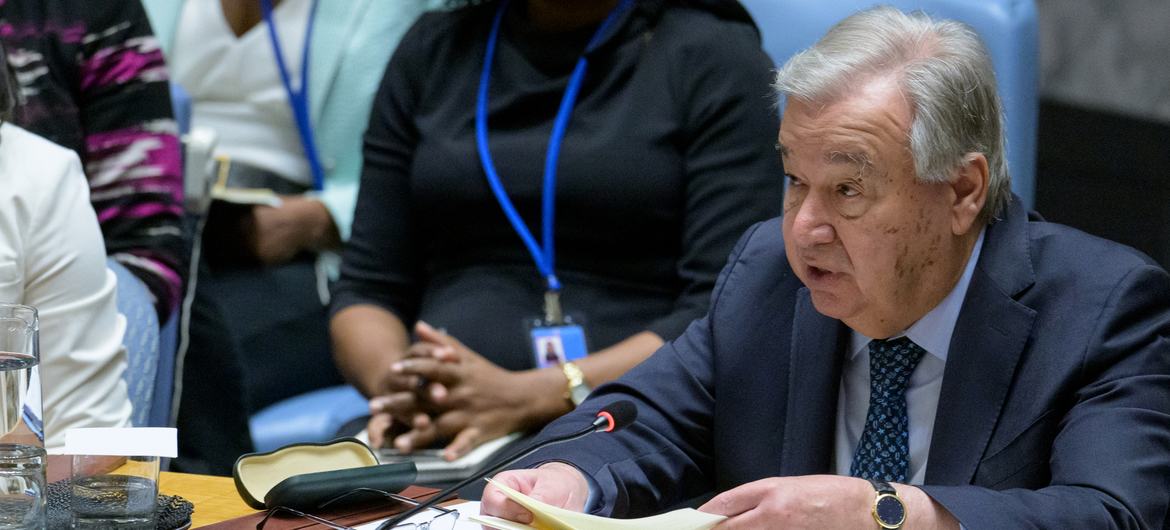
Deputy Secretary General Amina Mohammed delivers remarks to the World Summit on Teachers in Santiago, Chile.

Five areas for urgent action

Ms. Mohammed laid out a five-point plan to tackle the global teacher crisis:

  1. Elevate the profession: Implement the High-Level Panel’s recommendations — fair pay, stable contracts, safe workplaces, manageable class sizes, investment in upskilling, and clear career pathways.
  2. Finance education: Make education a top budget priority. Expand domestic funding, pursue debt relief, and consider a Global Fund for Teachers in Emergencies.
  3. Advance gender equality: Recognize and elevate women’s leadership in a profession dominated by women but often lacking female decision-makers.
  4. Support digital transformation: Train teachers to lead inclusive digital learning, especially as AI reshapes the job market. Equip classrooms and prioritize human agency.
  5. Protect teachers in crisis zones: From Gaza to Sudan and Ukraine, educators are risking their lives. “We owe them more than admiration – we owe them protection, resources, and unwavering support.”

From Summit to action

Ms. Mohammed urged leaders to turn the summit’s outcomes into concrete commitments ahead of the World Social Summit in Doha this November.

She proposed:

  • National teacher compacts with time-bound targets on recruitment, retention, and pay.
  • A financing track that links aid and debt swaps to teacher investments.
  • A teacher-led digital pact to set standards for AI and ed-tech, with funded training.

“Quality education is the foundation of everything we hope to achieve with the Sustainable Development Goals,” she concluded. “Without teachers, none of it is possible.”

Source link

‘The people of Haiti are in a perfect storm of suffering,’ warns UN chief

Six million people are in need of humanitarian assistance, while 1.3 million people – half of them children – having been forced to flee their homes, he added.

‘Shamefully overlooked’

Haiti now ranks among the five hunger hotspots worldwide that are of “highest concern,” said the UN chief. Yet it remains the world’s least funded humanitarian appeal. Less than 10 per cent of the $908 million needed has been received.

The UN chief lamented the level of international neglect, describing Haiti as “shamefully overlooked and woefully underfunded,” as armed groups continue to block humanitarian access and attack aid workers.

Due to the lack of resources, around 1.7 million people risk receiving no humanitarian assistance at all. “This is not a funding gap. It is a life-and-death emergency,” he said, urging donors to act before lifesaving operations grind to a halt.

Across the country, basic services have collapsed, and mass displacement has left children without education, healthcare or any sense of safety. As of April, gang violence had interrupted the schooling of some 243.000 children, as attacks on schools continued.

‘Unimaginable suffering’

The head of the UN Children’s Fund (UNICEF), Catherine Russell, told ambassadors Haiti’s youth are enduring “unimaginable suffering amidst the brutal armed violence.”

She noted that last year the UN in Haiti had verified more than 2,000 grave violations against children – a nearly 500 per cent increase on the previous year.

The Caribbean nation last year was among the five worst offenders worldwide, Ms. Russell added, including cases of summary execution.

Even more concerning, she said, was the 700 per cent increase in cases of recruitment and use of children by armed groups, alongside a 54 per cent increase in killing and maiming, according to Ms. Russell.

Children now account for a staggering 50 per cent of all active gang members in Haiti.

“I ask Members of this Council to use all available leverage to protect children,” she said, and to support “concrete actions” which will prevent violations from spiralling still further.

‘Signals of hope’

Despite the bleak outlook across Haiti and soaring levels of violence and lawlessness, “there are emerging signals of hope,” said the Secretary-General.

Closer coordination between the Prime Minister’s Task Force, the Haitian National Police and Security Council-backed Multinational Security Support Mission (MSS) is improving operations on the ground, he said.

But, more decisive international support is required to protect and expand these fragile gains.

The Kenyan-led mission was authorised by the Security Council in October 2023 and aims to help over-stretched Haitian authorities stem the gang violence and restore national security, especially in the capital.

Mr. Guterres welcomed efforts by the Security Council to advance his proposal to strengthen the MSS through UN logistical and operation support, and urged ambassadors “to act without delay and authorise an international force, supported by the UN through logistical and operational backing, and predictable financing.”

Source link

Famine in Gaza: ‘a failure of humanity itself,’ says UN chief

UN Secretary-General António Guterres said the results of the Integrated Food Security Phase Classification (IPC) analysis were no mystery: “It is a man-made disaster, a moral indictment – and a failure of humanity itself.

“Famine is not about food; it is the deliberate collapse of the systems needed for human survival.”

Famine conditions are projected to spread from Gaza Governorate to Deir Al Balah and Khan Younis Governorates in the coming weeks, the IPC estimates.

UN agencies have collectively and consistently highlighted the extreme urgency of delivering immediate and full-scale humanitarian aid given the escalating hunger-related deaths, rapidly worsening levels of acute malnutrition and plummeting levels of food consumption in Gaza – with hundreds of thousands going days without anything to eat.

Israel’s obligations

“As the occupying power, Israel has unequivocal obligations under international law – including the duty of ensuring food and medical supplies of the population,” said the UN chief, reacting to the famine declaration from the IPC, which is endorsed by dozens of governments, UN agencies and NGOs as the key evidence-based measure of food insecurity and malnutrition.

See our UN News explainer here.

Mr. Guterres said Israel’s denial of its duties could not be allowed to continue: “No more excuses. The time for action is not tomorrow – it is now.”

Silence the guns, release the hostages

UN agencies operating in Gaza joined the UN chief in calling for an immediate ceasefire to finally allow unimpeded, large-scale humanitarian response and the immediate release of all hostages taken by Hamas and other militants during the 7 October 2023 terror attacks.

Agencies also expressed grave concern over the threat of the intensified military offensive on Gaza City and any further escalation in the conflict, as it would have further devastating consequences for civilians where famine conditions already exist.

“Many people – especially sick and malnourished children, older people and people with disabilities – may be unable to evacuate,” they said in a joint statement.

Famine set to expand

By the end of September, more than 640,000 people will face ‘catastrophic’ levels of food insecurity – classified as IPC Phase 5 – across the Gaza Strip.

An additional 1.14 million people in the enclave will be in phase 4 with a further 396,000 people facing phase 3 ‘crisis’ conditions.

Conditions in North Gaza are estimated to be as severe – or worse – than in Gaza City. However, limited data prevented an IPC classification, highlighting the urgent need for access.

Classifying famine means that the most extreme category is triggered when three critical thresholds – extreme food deprivation, acute malnutrition and starvation-related deaths – have been breached. The latest analysis now affirms on the basis of reasonable evidence that these criteria have been met, UN agencies said.

Briefing journalists on Friday at UN headquarters in Geneva, the UN Emergency Relief Coordinator Tom Fletcher said it was a famine that could have been prevented “if we had been allowed.”

A young severely malnourished girl is helped into her clothes.

Famine in a fertile land

“Yet food stacks up at borders because of systematic obstruction by Israel. It is a famine within a few hundred metres of food, in a fertile land.

It is a famine that we repeatedly warned of – but that the international media has not been allowed in to cover, to bear witness,” he added.

“It is a famine in 2025. A 21st century famine watched over by drones and the most advanced military technology in history. It is a famine openly promoted by some Israeli leaders as a weapon of war.”

On a wider scale, Mr. Fletcher said it was “the world’s famine. It is a famine that asks ‘but what did you do?’ A famine that will and must haunt us all.”

Malnutrition among children in Gaza is accelerating “at a catastrophic pace”, said UN agencies, who note that in July alone, more than 12,000 children were identified as acutely malnourished – the highest monthly figure ever recorded and a six-fold increase since the start of the year.

First Middle East famine

Since the last IPC Analysis in May, the number of children expected to be at severe risk of death from malnutrition by the end of June 2026 has tripled from 14,100 to 43,400.

The new assessment reports the most severe deterioration since the IPC began analysing acute food insecurity and acute malnutrition in Gaza Strip, and it marks the first time a famine has been officially confirmed in the Middle East region.

Since July, food and aid supplies entering Gaza increased slightly but remained vastly insufficient, inconsistent and inaccessible compared to the need.

Meanwhile, approximately 98 percent of cropland in the territory is damaged or inaccessible – decimating the agriculture sector and local food production – and nine of ten people have been serially displaced from homes. 

UN rights chief decries ‘relentless intensification’ of US sanctions against International Criminal Court staff

His call comes a day after four more Court personnel – two judges and two deputy prosecutors – were slapped with sanctions in connection with efforts to investigate alleged war crimes committed by the US and Israel.

This follows sanctions imposed earlier on four other judges and the ICC Prosecutor. Measures imposed could include blocking financial access to property or assets in the US, as well as travel bans.

‘Assault on the rule of law’

The relentless intensification of US reprisals against international institutions and their personnel must stop,” said Mr. Türk. 

“Sanctioning judges and prosecutors at national, regional or international levels, for fulfilling their mandate in accordance with international law standards, is an assault on the rule of law and corrodes justice.”

The sanctions stem from an executive order signed by US President Donald Trump in February in response to the UN-backed Court issuing arrest warrants for Israeli Prime Minister Benjamin Netanyahu and former defense minister Yoav Gallant for alleged war crimes and crimes against humanity in Gaza.

The ICC is also probing war crimes allegedly committed in Afghanistan by all sides during years of conflict, including the US, following the allied invasion of the country in October 2001.

Neither the US nor Israel are party to the Rome Statute, the treaty that established the ICC.

It’s time countries step up

Mr. Türk called for the withdrawal of the sanctions against the ICC personnel and those targeting the Special Rapporteur on the human rights situation in the Occupied Palestinian Territory.

The independent expert, Francesca Albanese, receives her mandate from the UN Human Rights Council in Geneva. For more details, read our story here.

“In the meantime, I call on States to take immediate steps to protect all of them, including by taking measures to encourage corporations operating within their jurisdiction not to implement the sanctions against these individuals,” Mr. Türk said.

States need to step up to defend the institutions they have created to uphold and defend human rights and the rule of law. Those working to document, investigate and prosecute serious violations of international law should not have to work in fear.”

About the International Criminal Court

The ICC investigates and tries individuals charged with genocide, war crimes, crimes against humanity and the crime of aggression. Read our explainer here.

Some of the cases include situations in Sudan, the Democratic Republic of the Congo and Libya. 

In March 2023, the Court issued an arrest warrant for Russian President Vladimir Putin in connection with alleged war crimes concerning the deportation and “illegal transfer” of children from occupied Ukraine.

The ICC was established in 2002 and is based in The Hague, in the Netherlands.  

Source link

Amid massive destruction of Gaza City, UN chief renews ceasefire call

“It is vital to reach immediately a ceasefire in Gaza,” the Secretary-General told reporters on the sidelines of the Ninth Tokyo International Conference on African Development (TICAD9), “and the unconditional release of all hostages and to avoid the massive death and destruction that a military operation against Gaza City would inevitably cause.

Around one million people still live in the city – Gaza’s largest – in the north of the war-torn enclave. The Israeli army has reportedly described it as a stronghold of Hamas, the terror group whose deadly attacks in Israel and hostage-taking sparked the war on 7 October 2023.

The UN chief also condemned the Israeli Government’s decision to approve a long-shelved settlement expansion project in the occupied West Bank.

The decision by the Israeli authorities to expand illegal settlement construction, which would divide the West Bank, must be reversed. All settlement construction is a violation of international law,” he insisted.

The settlement is believed to have permission for well over 3,000 houses, schools and a clinic, cutting off East Jerusalem from the occupied West Bank, which Israel captured during the 1967 Six-Day war after defeating Egypt, Jordan and Syria.

Urban destruction

Meanwhile in Gaza City, whole urban areas are being “totally destroyed”, the UN understands, with further destruction now underway in the south and southeast, as military manoeuvres continue.

Recent attacks have been particularly devastating in the Az Zaytoun neighbourhood of the city, the UN human rights office (OHCHRreported on Wednesday.

Highlighting more than 50 attacks on residential buildings and entire blocks in Gaza City since 8 August, OHCHR warned that its “systematic destruction” had begun.

Acute malnutrition soaring

Meanwhile, UN aid teams highlighted the catastrophic impact of the accelerating Israeli military operation, with acute malnourishment soaring among children in Gaza City to 28.5 per cent, or more than one in four youngsters.

“Children continue to die from man-made starvation,” UNRWA said in a statement, noting that it has screened more than 95,000 children aged six months to five years for malnutrition across the Gaza Strip since March 2025, after the ceasefire collapsed.

While the ceasefire still held in early March and relief supplies were allowed into Gaza in far greater quantities than today, malnutrition rates were six times lower in Gaza City, at 4.5 per cent, according to the UN agency for Palestinians, UNRWA. 

Across Gaza, acute malnutrition rose to nearly 16 per cent in mid-August, more than three times higher than the 5.2 per cent level recorded by the UN agency in March, it said.

Vital services in danger

Today, services provided by UNRWA in Gaza City are at “severe risk”, the agency warned, pointing to the tens of thousands of people who still live in its shelters and the “many more” who remain in surrounding areas.

There is particular concern for UNRWA’s Gaza Field Office compound – its largest logistics hub in northern Gaza – as the UN agency’s operations in the south have been “crippled” by displacement orders and bombardment.

As an indication of UNRWA’s key role in aid and relief provision across Gaza, it noted that last month alone, it provided more than 100,000 medical consultations and screened 3,500 children for malnutrition in Gaza City.

UNRWA also delivered drinking water to 220,000 people, domestic water to 250,000 and cleared hundreds of tons of waste.

Education and protection specialists from the UN agency reached thousands more in temporary learning spaces or by offering counselling, recreational activities and risk awareness training about the dangers of lethal unexploded weapons.

“While our colleagues, like the rest of the UN, are determined to stay and deliver, all of these services are now at risk as the military operations intensify,” UNRWA said.

Source link

Plastic pollution talks adjourn, but countries want to stay engaged: UNEP chief

“This has been a hard-fought 10 days against the backdrop of geopolitical complexities, economic challenges and multilateral strains,” said Inger Andersen, Executive Director of the UN Environment Programme (UNEP). “However, one thing remains clear: despite these complexities, all countries clearly want to remain at the table.”   

Speaking to media at the end of Intergovernmental Negotiating Committee (INC) talks at the UN in the Swiss city, Ms. Andersen emphasized how Member States had expressed a clear wish to continue engaging in the process, recognising their significant differences regarding plastic pollution.

“While we did not land the treaty text we hoped for, we at UNEP will continue the work against plastic pollution – pollution that is in our groundwater, in our soil, in our rivers, in our oceans and yes, in our bodies,” she said.

World view

“People are demanding a treaty,” the UN agency head continued, before underscoring the hard work that lies ahead to maintain the momentum needed to ink a binding international accord.

Delegates from 183 nations attested to the convening power and importance of the proposed agreement, with some Pacific island representatives – complete with dazzling fresh blooms in their hair – rubbing shoulders with other participants, drained by the final all-night negotiating session.

The resumed fifth session of talks – referred to as INC-5.2, after previous talks in Busan known as INC-5.1 – gathered more than 2,600 participants at the UN Palais des Nations. In addition to the approximately 1,400 country delegates, there were close to 1,000 observers representing at least 400 organizations.

NGO voices heard

The session also involved the active participation of civil society – including Indigenous Peoples, waste pickers, artists, young people and scientists. They raised their voices through protests, art installations, press briefings and events in and around the Palace of Nations.

The goal of the negotiations was to agree on a text for the legally binding instrument to end plastic pollution “and highlight unresolved issues requiring further preparatory work ahead of a diplomatic conference”, UNEP said.

In addition to meetings together in UN Geneva’s vast assembly hall, four contact groups were created to tackle key issues including plastic design, chemicals of concern, production caps, finance and compliance instruments.

Despite “intensive engagement”, Members of the Intergovernmental Negotiating Committee was unable to reach consensus on the proposed texts, UNEP explained.

Chair’s action call

“Failing to reach the goal we set for ourselves may bring sadness, even frustration. Yet it should not lead to discouragement. On the contrary, it should spur us to regain our energy, renew our commitments, and unite our aspirations,” said INC Chair, Luis Vayas Valdivieso.

“It has not happened yet in Geneva, but I have no doubt that the day will come when the international community will unite its will and join hands to protect our environment and safeguard the health of our people.” 

The INC process began in March 2022 when the UN Environment Assembly passed resolution 5.2 to develop an international legally binding instrument on plastic pollution, including in the marine environment.   

“As this session concludes, we leave with an understanding of the challenges ahead and a renewed and shared commitment to address them,” said Jyoti Mathur-Filipp, Executive Secretary of the INC Secretariat. “Progress must now be our obligation.”  

Source link

Malnutrition deaths mark ‘latest in the war on children’ in Gaza: UNRWA chief

These young deaths are “the latest in the war on children and childhood in Gaza,” Philippe Lazzarini, head of UN Palestine refugee agency UNRWA, said in a tweet on Wednesday.

The toll also includes some 40,00 boys and girls reported killed or injured due to bombardment and airstrikes, at least 17,000 unaccompanied and separated children, and one million deeply traumatised youngsters who are not getting an education. 

“Children are children,” he said.

 “No one should stay silent when children die, or are brutally deprived of a future, wherever these children are, including in Gaza.”

A sombre reunion

Thousands of sick children in Gaza need urgent medical evacuation, according to UN aid coordination office OCHA.

Olga Cherevko, a spokesperson for the agency, recalled the moment she recognized a young girl requiring treatment in a Gaza hospital after a year’s interval, once again suffering from malnourishment.

“I remembered her long eyelashes,” the veteran humanitarian told UN News, describing seven-year-old Janah, who she came across at Gaza City’s Patient Friendly Hospital on Tuesday.

“The first time I met her was in the IMC Field Hospital in southern Gaza in April 2024. Back then, she was severely malnourished and was getting treatment. And she gradually became better and was released eventually and went home.”

Seven-year-old Janah is treated at Gaza City’s Patient Friendly Hospital.

Evacuation saves lives

However, Janah was now back in hospital “because the malnutrition became aggravated and the condition that she has also is not properly diagnosed and cannot be properly diagnosed.” 

The girl is on a list of people to be medically evacuated for treatment outside Gaza.  The most recent evacuations took place last week when the World Health Organization (WHO) supported the transfer of 15 critically ill children to Jordan, but more than 14,800 people are still waiting.

Ms. Cherevko stressed the importance of ensuring that evacuations continue to save as many lives as possible.

More aid needed

She also pointed out that for children and adults with pre-existing conditions, their situation becomes worse with malnutrition.

“It wouldn’t be this way if they had proper nutrition, because these conditions existed before the starvation crisis and they weren’t getting as sick as they are now,” she said.

“This is why it’s imperative to make sure that we have proper conditions on the ground for adequate volumes of supplies to be entering – everything from food to medicine to nutrition to shelter,” she continued. 

“And these lifelines have to be really enabled for us to be able to deliver this aid to the people in need.” 

Source link

‘Nuclear weapons have no place in our world,’ UN chief tells mayors in Nagasaki

Inspired by the hibakusha, survivors of the atomic bombings at the end of World War Two who turned their suffering into a powerful appeal for peace, António Guterres renewed his call for a world free of nuclear weapons in a video message to the 11th General Conference of Mayors for Peace in Nagasaki.

United against nuclear weapons, the conference is an opportunity for mayors from around the world to discuss and adopt key priorities in support of global denuclearisation.

‘No place in our world’

“Nuclear weapons have no place in our world,” said Mr. Guterres in his video-message, as they only offer the “illusion of safety and the certainty of devastation,” he said.

Calling for the total elimination of nuclear weapons, the Secretary-General urged all participants at the conference to “keep mobilising communities, inspiring young people, and building peace from the ground up.”

“I urge all States to recommit to nuclear disarmament,” he said.

A better world

I commend Mayors for Peace for your unwavering commitment to a better world,” said Secretary-General, as the organization aims at creating real momentum for the realisation of a peaceful world without nuclear weapons.

In honour of the hibakusha, and in the memory of the victims of Hiroshima and Nagasaki, Mr. Guterres made an impassioned call for action to end the nuclear threat once and for all.

Read more about the work of the hibakusha here in previous UN News coverage, and listen to this extraordinary story of survival in our Lid is On podcast:

Source link

Israeli plan to take complete control of Gaza must stop now, says UN rights chief

“A complete military takeover of the occupied Gaza Strip must be immediately halted,” insisted Volker Türk, UN High Commissioner for Human Rights, after the Israeli security cabinet approved a plan for a full-scale Israeli military takeover in the battered enclave.

The development runs contrary to international law, Mr. Türk continued, referring to a ruling of the International Court of Justice that Israel must end its occupation and achieve a two-State solution giving Palestinians the right to self-determination.

Any further escalation of the conflict between Hamas and Israel that has devastated Gaza and killed tens of thousands “will result in more massive forced displacement, more killing, more unbearable suffering, senseless destruction and atrocity crimes”, the UN rights chief said.

Aid access call

In a short statement, Mr. Türk insisted that rather than intensifying the conflict, “the Israeli Government should put all its efforts into saving the lives of Gaza’s civilians by allowing the full, unfettered flow of humanitarian aid”.

At the same time, all hostages must be immediately and unconditionally released by Palestinian armed groups, he continued, adding that Palestinians arbitrarily detained by Israel must also also be released.

“The war in Gaza must end now. And Israelis and Palestinians must be allowed to live side by side in peace,” the High Commissioner said.

Little change in dire aid situation 

Since war erupted in Gaza after Hamas-led deadly terror attacks in Israel in October 2023, aid agencies have warned repeatedly that Israeli bombardment, mass evacuation orders and relief restrictions have created a humanitarian catastrophe.

Even UN staff who are still working in the enclave report being unable to find enough to eat, according to the UN agency for Palestinian refugees, UNRWA. Despite Israel’s 27 July announcement of daily military pauses in western Gaza “to improve humanitarian responses”, far too little aid is getting through, humanitarians insist. 

According to the UN human rights office, OHCHR, since 27 May, at least 1,373 Palestinians have been killed while seeking food; 859 in the vicinity of the non-UN aid distribution organization the Gaza Humanitarian Foundation (GHF); another 514 victims died along the routes of food convoys.

Echoing widespread concerns for the people of Gaza, the head of the UN World Health Organization (WHO), warned that other Gazans have only limited access to basic services and food, while malnutrition is widespread and hunger-related deaths are rising.

“In July, nearly 12,000 children under five years were identified as suffering from acute malnutrition, the highest monthly figure ever recorded,” said Tedros Adhanom Ghebreyesus.

In comments to journalists on Thursday, the WHO chief said that so far this year, 99 people have died from malnutrition, including 29 children under five, adding that these reported numbers are likely underestimates. 

Source link

Landlocked nations ‘invisible to much of the world’: UN trade and development chief

At a major UN conference underway this week in Awaza, Turkmenistan, calls are growing to tackle the high trade costs, investment gaps and growing digital divide that continue to hold these countries back.

Despite progress in some areas, landlocked developing nations – from Bolivia to Bhutan and Burkina Faso – account for just 1.2 per cent of global exports, even though they represent over seven per cent of the world’s countries. Their populations face some of the highest levels of poverty, food insecurity and economic vulnerability anywhere.

These countries are invisible to much of the world,” not able to draw the attention needed to their unique challenges, said Rebeca Grynspan Secretary-General of the UN trade and development body, UNCTAD, speaking to UN News on the margins of the third UN Conference on Landlocked Developing Countries (LLDC3).

Without international attention and coordinated action, they will remain stuck in structural limbo, she emphasised.

High costs, low returns

One of the most persistent challenges they face is geography itself.

Without direct access to seaports, they must rely on neighbouring transit countries to move goods – often through outdated or inefficient infrastructure.

This translates into trade costs that are, on average, 1.4 times higher than those of coastal countries, according to UNCTAD. In some cases, export procedures can stretch into weeks or months due to border delays, fragmented regulations and limited digital systems.

Ms. Grynspan highlighted that in customs procedures, digital tools can cut waiting times at borders from three days to three hours. To that end, regional agreements and digital initiatives have emerged as lifelines.

UNCTAD head Rebeca Grynspan speaking to UN News.

One standout example is the Framework Agreement on Facilitation of Cross-Border Paperless Trade, championed by the UN Economic and Social Commission for Asia and the Pacific (ESCAP). Now in force among several Asia-Pacific countries, it helps reduce paperwork, automate customs and harmonise standards, making processes faster, cheaper and more transparent.

Paperless trade also has the potential to reduce corruption and ease language-related challenges.

ESCAP estimates that implementing cross-border paperless trade measures could reduce trade costs by up to 30 per cent for countries in the region without direct sea access and increase export potential for the whole of Asia and the Pacific by nearly $260 billion.

Infrastructure and integration

Even when goods reach border crossings, weak domestic transport networks further slow trade down. Roads and railways are often underdeveloped, underfunded or vulnerable to climate shocks.

Regional infrastructure – like the African North Corridor – is crucial,” Ms. Grynspan said, citing examples where wait times at borders have dropped by more than 150 per cent due to corridor investment and coordination.

But infrastructure alone is not enough – it must be paired with digital systems and strong regional partnerships.

“For landlocked countries, regional integration is very important because when you integrate regionally, you are in a better position because goods pass through you…[making you] part of global value chains with value added.”

In landlocked countries like Bhutan (pictured), roads are a vital lifeline. But limited and costly transport infrastructure restricts mobility, inflates trade costs, and hinders access to markets, education, and healthcare.

Escaping the commodity trap

Another structural challenge is heavy dependence on commodities. Over 80 per cent of landlocked developing countries rely on raw materials like minerals, oil or agricultural goods, making them highly exposed to global price swings and long-term decline in terms of trade.

You educate your people, but then they have nowhere to work because commodities do not give you the quality jobs that you need for the future,” said Ms. Grynspan.

The path forward lies in economic diversification, especially toward value-added manufacturing, digital services and knowledge-based sectors – industries that are less constrained by geography.

The investment conundrum

Yet to realise that potential, these countries need investment and they are not getting enough.

Despite more than 135 legal and policy reforms aimed at attracting foreign capital, foreign direct investment has declined by an average of 2 per cent over the past decade.

ESCAP’s analysis confirms this gap: landlocked countries in Asia are receiving far less infrastructure investment per person compared with coastal countries, even though their transport requirements are proportionally higher.

Governments are trying to make their countries more attractive [but] investment is not coming in,” Ms. Grynspan said.

High risk factors, lack of guarantees, and a reliance on short-term financing are deterring investors.

Multilateral development banks need to help us,” she added. “We need long-term, affordable financing and lowered cost of capital.” 

Source link

The world is demanding action over plastic pollution: UN environment chief

The world wants and indeed needs a plastic conventional treaty because the crisis is getting out of hand – and people are frankly outraged,” said Inger Andersen, UNEP Executive Director of the UN Environment Programme (UNEP), the UN agency leading the talks.

“We know that plastic is in our nature, in our oceans, and yes, even in our bodies…What is sure is that no one wants to live with the plastic pollution.”

Out of control

Unless an international accord is inked, plastic production and waste is projected to triple by 2060, causing significant damage – including to our health – according to UNEP.

Switzerland’s top environment official Katrin Schneeberger echoed the call for a legally binding treaty, insisting that plastic waste “is choking our lakes, harming wildlife and threatening human health. This is more than just an environmental issue, it is a global challenge that demands urgent and collective action.”

Speaking to journalists on the sidelines of the treaty negotiations, Ms. Schneeberger underscored that there was “no call for a production cap” by producing countries.

Spirit of compromise?

Reaching a shared understanding that measures are needed on both the production and consumption sides can help unlock the negotiations,” she said in her capacity as Director of the Swiss Federal Office for the Environment.

Supporters of a deal have compared it to the Paris Climate Accord in terms of its significance. They have also pointed to the pressure allegedly being brought to bear against a deal by petrostates, whose crude oil and natural gas provide the building blocks of plastics.

“We will not recycle our way out of the plastic pollution crisis: we need a systemic transformation to achieve the transition to a circular economy,” UNEP Executive Director Inger Andersen has insisted in previous comments on the need for global regulations on plastics.

Virtuous circle

With 10 days of talks scheduled on the treaty at the UN in Geneva, supporters of an accord hope that the deal will cover the full life cycle of plastics, from design to production and disposal.

The treaty should “promote plastic circularity and prevent leakage of plastics in the environment”, according to the text now guiding negotiations led by the Intergovernmental Negotiating Committee (INC).

At 22 pages, the INC document contains 32 draft articles which will be discussed line by line. The text is designed to shape the future instrument and serves as a starting point for negotiations by countries meeting in Geneva.

“Some [countries] will have to deal with reduction, others will have to deal with mechanical recycling and others will deal with alternatives,” Ms. Andersen said. “Let’s see how we can get to this through the negotiations. I think there’s a lot of good faith in the working group right now.”

The UNEP-led talks follow a decision in 2022 by Member States to meet and develop an international legally binding instrument to end the plastic pollution crisis, including in the marine environment, within two years.

The scale of the problem is massive, with straws, cups and stirrers, carrier bags and cosmetics containing microbeads just a few of the single-use products ending up in our oceans and landfill sites.

In comments to journalists, Ms. Andersen recalled touring Pakistan after deadly flooding killed more than 1,000 people in 2022 and seeing that debris and plastic were “a big part of the problem and so this is why we’re here, to find a solution while not leaving anyone behind and while ensuring that the economic wheels would keep turning”.

Disabling effect

Campaigners gathering on the sidelines of the negotiations expressed their hopes for as ambitious a treaty as possible.

They included Shellan Saling, from California, who’s the interim chair of the Youth Plastic Action Network (YPAN). “Plastic affects everything from climate change to health to fertility to even birth defects; it affects physical disabilities, as well as invisible disabilities,” she told UN News on Monday.

Any treaty inked in Geneva will have to be sufficiently robust to accommodate the needs of all countries of the world whose approach differs regarding plastic design, production, waste and recycling. It will also have to stand the test of time, Ms. Andersen said.

UN News interview with YPAN interim chair Shellan Saling

Source link

Deputy UN chief urges bold action to transform food systems at global summit in Addis Ababa

Delivering closing remarks at the UN Food Systems Summit +4 Stocktaking Moment (UNFSS+4) in Addis Ababa, co-hosted by Ethiopia and Italy, Ms. Mohammed praised the growing momentum behind food systems transformation.

But she also warned that with just five years left to 2030, “hunger and malnutrition persist. Climate shocks, conflict, debt, and inequality are widening the cracks in our systems.”

“Too often food systems are seen as part of our challenges,” she said. “When in fact, they can be one of the greatest solutions to deliver for people, planet, peace and prosperity.”

A global process for transformation

The UN Food Systems Summit process was launched in 2021 “in the midst of a global pandemic” to catalyse national and global action to make food systems more inclusive, resilient and sustainable.  

The 2025 stocktake brought together over 3,000 participants from governments, civil society, Indigenous Peoples, youth, and the private sector to assess progress and renew commitments.

To date, more than 130 countries have developed National Pathways for food systems transformation, supported by UN agencies and development partners.

Moving the UNFSS process forward

In her address, Ms. Mohammed highlighted several areas of progress and called for urgent, coordinated action:

  • Food systems as climate solutions: 
    “Food and agriculture are now part of the climate plans of 168 countries,” she said, noting their potential to reduce emissions and build resilience.
  • School meals as a strategic investment: 
    Over 170 countries are implementing school meal programmes. These are not just meals – they are investments in children, our farmers, and the future.
  • Cities driving innovation: 
    Urban centres are leading efforts to reduce food waste and strengthen local supply chains. Cities are showing what innovation looks like on the ground.
  • Inclusion is essential: 
    Ms. Mohammed called for inclusion of youth, Indigenous Peoples, women, and marginalized communities. “These are powerful commitments to transform food systems for people and the planet that you have helped inspire.”
  • Financing must match ambition: 
    She urged donors and development banks to align investments with national pathways.  

“As we conclude this Stocktake, we must acknowledge that we met in the face of challenges that test our moral values and threaten the future sustainability of our planet, underscoring the urgency of our work together.”

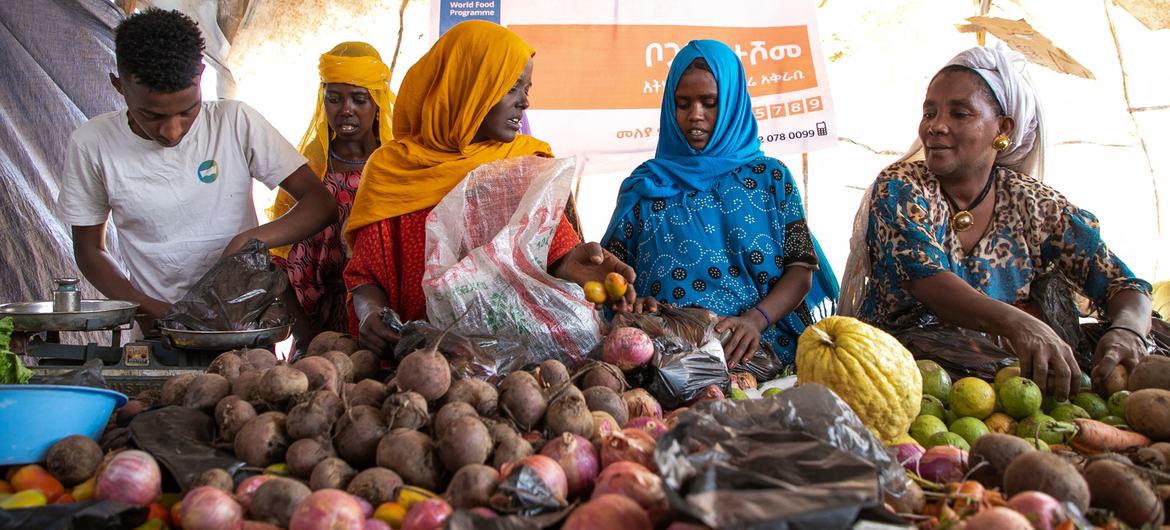
A food market in the Amhara region of Ethiopia.

Global hunger declines, but regional disparities persist

The Summit, which has been running in the Ethiopian capital since 27 July, saw the launch of the State of Food Security and Nutrition in the World 2025 (SOFI) report, which revealed a modest decline in global hunger – but a troubling rise in food insecurity in Africa and Western Asia  

Jointly produced by FAO, IFAD, UNICEF, WFP and WHO, the report highlights how persistent food price inflation has undermined access to healthy diets, especially for low-income populations. Vulnerable groups – including women, children, and rural communities – remain disproportionately affected.

The report calls for:

  • Coherent fiscal and monetary policies to stabilize markets
  • Open and resilient trade systems
  • Targeted social protection for at-risk populations
  • Sustained investment in resilient agrifood systems

While noting an encouraging decrease in the global hunger rate, the report underscored that progress is uneven. SOFI 2025 serves as a critical reminder that the international community must intensify efforts to ensure that everyone has access to sufficient, safe, and nutritious food.  

Hope for those who need it most

At a key side event on Tuesday, Ms. Mohammed appealed for long-term, inclusive solutions to food insecurity in crisis-affected regions. She highlighted the staggering toll of acute malnutrition, noting that over 37 million children under five will face acute malnutrition this year – nearly 10 million of them suffering from severe wasting, the deadliest form of undernutrition.

“Communities are trapped in relentless cycles of hardship,” she said. “But courage is on display at all moments.”

Ms. Mohammed urged governments and partners to move beyond short-term interventions and embrace transformative, locally driven solutions. She praised countries embedding resilience into national strategies and combining traditional knowledge with science to rebuild food systems.

“These governments are not waiting for permission – they are leading,” she said.

She outlined three priorities for action: Catalytic finance that builds local capacity; Coordinated responses that bridge humanitarian and development divides; and Community-centred approaches, especially for women and youth.

“Food systems transformation is especially critical in complex settings,” she said. “It drives food security, resilience, stability, and inclusive growth.”

She wrapped up the event with a call to strengthen multilateralism and unlock opportunity “for and with those who need it most.”

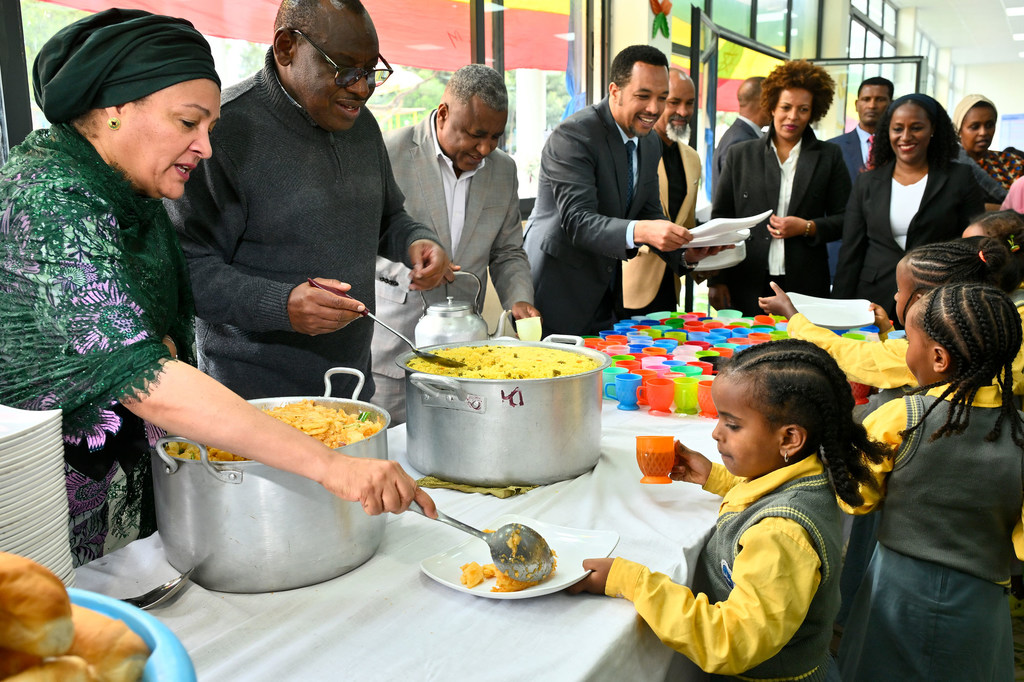
UN Deputy Secretary-General Amina Mohammed (left) serves food to children at a UN Food Systems Summit event in Addis Ababa, Ethiopia.

Looking ahead

Ms. Mohammed closed the Summit with a call to action:

“Our movement has shown what is possible when we work together in deliberate ways across sectors, stakeholders, and countries with a shared purpose.”

She called on governments and people everywhere to build on what has been accomplished and continue to work together for peace and to realize the vision of the 2030 Agenda.

“Let’s continue to lead the way – together.”

Source link

‘Famine silently begins to unfold’ in Gaza, UNRWA chief says

Philippe Lazzarini, Commissioner-General for the UN Relief and Works Agency for Palestinian Refugees (UNRWA), said that is what one of its workers told him on Thursday morning.  

This sobering comment comes amidst increasingly severe malnutrition for children and adults throughout the Gaza Strip.  

“When child malnutrition surges, coping mechanisms fail, access to food and care disappears, famine silently begins to unfold,” Mr. Lazzarini said in a tweet.   

Bombs are not the only thing that kills

Gaza has faced relentless bombardment for almost three years, but Tedros Adhanom Ghebreyesus, Director-General of the World Health Organization (WHO), said at a briefing on Wednesday that it is not just the bombs which are killing Palestinians.  

Starvation is “another killer”.

Reportedly at least 100 people have died from hunger, and WHO has documented at least 21 cases of children under the age of five dying from malnutrition.  

Additionally, Mr. Lazzarini said one in five children in Gaza City is malnourished, a number increasing every day that unhindered humanitarian aid is denied. He said these children urgently need treatment, but supplies remain low.  

Between early March and mid-May – 80 consecutive days – no aid was allowed into the Gaza Strip, pushing the population to the brink of famine. While minimal aid has since entered, Tedros emphasised that it is not enough.  

“Food deliveries have resumed intermittently, but remain far below what is needed for the survival of the population,” he said. 

A boy in Gaza waits for food.

Safe havens are no longer safe

Tedros reported that between 27 May and 21 July, over 1,000 people in Gaza have been killed while trying to access food.  

Many of these have died in or around sites operated by the Gaza Humanitarian Foundation (GHF), an American-run and Israeli-backed aid distribution organization which the UN has repeatedly said violates well-established principles of international humanitarian law.

“Parents tell us their children cry themselves to sleep from hunger. Food distribution sites have become places of violence,” Tedros said.  

In addition to risking their lives when seeking out desperately needed humanitarian assistance, hospitals – which have been systematically targeted, according to UNFPA – are no longer safe havens.  

“Hospitals, which are supposed to be safe havens, have regularly been attacked, and many are no longer functioning,” Tedros said.  

He recalled that on Monday, a WHO staff residence, a humanitarian site, was attacked, with male personnel being stripped and interrogated, women and children forced to flee on foot in the midst of violence and one WHO staff member detained. 

“Despite this, WHO and other UN agencies are staying in Gaza. Our commitment is firm. UN agencies must be protected while operating in conflict zones,”  Tedros said.  

An UNRWA school turned shelter in Al Bureij, Gaza, lies in ruins following a missile attack in May 2025.

Frontline workers face hunger

In addition to the Palestinians in Gaza who are “emaciated, weak and at high risk of dying”, aid workers are also feeling the effects of the sustained lack of supplies.

Most UNRWA workers are surviving on a meagre bowl of lentils each day, Mr. Lazzarini said, leading many of them to faint from hunger at work.  

“When caretakers cannot find enough to eat, the entire humanitarian system is collapsing,” he said.  

Some parents are too hungry to care for their children, and even those who do reach clinics for treatment are often too tired to follow the advice provided.  

Mr. Lazzarini noted that UNRWA alone has 6,000 trucks of desperately needed food and medical supplies in Jordan and Egypt. He called for this and other aid to be immediately let through.

“Families are no longer coping. They are breaking down, unable to survive. Their existence is threatened,” he said.  “Allow humanitarian partners to bring unrestricted and uninterrupted humanitarian assistance to Gaza.” 

Source link

‘Bet on youth’ to realise Africa’s digital potential, UN deputy chief says

In 2024, only 34 per cent of women and 45 per cent of men on the continent used the internet, compared to global averages of 65 and 70 per cent. Meanwhile, 98 per cent of Africans under the age of 18 do not complete school with even basic STEM (science, technology, engineering and mathematics) skills, reflecting long-term underinvestment in education.  

This slow progress in digital integration and STEM education is impeding Africa’s ability to reach the Sustainable Development Goals (SDGs) by 2030, the report noted. The “digital divide” hits marginalised groups hardest, including women and rural communities.  

“Africa is a vast and populous continent, rich in natural endowments and talents. Yet much of that potential remains underutilised,” said Philémon Yang, the President of the General Assembly in a message to the meeting.  

The potential of youth

Deputy Secretary-General Amina Mohammed, told delegates that Africa must “bet on youth.”

By 2050, there will be over 850 million young people in Africa.   

“This is an incredible opportunity. Realising this potential means investing in STEM education now. It means building digital infrastructure that connects talent to opportunity,” Ms. Mohammed said.

But current systems do not sufficiently support young innovators – three-fourths of young Africans have insecure employment, lacking basic protections.

This lack of social protection is part of a wider labour rights gap, the report noted. In 2023, only 19 per cent of people in Africa had access to at least one form of social protection –such as social security or health insurance – compared to 53 per cent globally.

“Strong social protection is not just about safety nets. It is about creating the stability that allows societies to take risks, innovate and grow,” Ms. Mohammed said. 

People-cantered approaches

The report calls on governments and partners to adopt a people-cantered approach that promotes digital and technological innovation while also decent work, rights and intellectual property.  

“Resilience cannot be achieved without governance that places people at the centre of policy design and implementation,” the report said.

Speakers also stressed that African expertise must guide solutions.

“We reaffirm our collective determination to ensure that Africa’s development is led by its own people, grounded in knowledge, innovation and social justice,” said Ahmadou Lamin Samateh, Minister of Health of the Gambia, speaking for the African Group.

Power of partnerships

In his message, Mr. Yang said no single African country can achieve full digital integration alone; regional cooperation and multilateral support are essential.

“[Digital tools] can offer a way into the future… [but] no country can close these gaps alone…multilateral cooperation with the United Nations at its centre has secured eight decades of unprecedented human progress,” he said.

Ms. Mohammed emphasised the possibilities “when we get this right.”

“The choice is ours — we can continue business-as-usual and watch the 2030 Agenda slip away or we can support systemic transformation.” 

Source link

‘Peace is a choice’: UN chief urges diplomacy as wars spread from Gaza to Ukraine

This is the only sustainable path to global security, he told ministers at a high-level open debate of the Security Council on Tuesday.

The Secretary-General emphasised that the UN Charter’s tools – negotiation, mediation, conciliation, arbitration and more – remain a lifeline when tensions escalate, grievances fester and states lose trust in each other.

These tools are needed now more than ever, he stressed, as conflicts rage and international law is violated with impunity.

The cost is staggering – measured in human lives, shattered communities and lost futures. We need look no further than the horror show in Gaza – with a level of death and destruction without parallel in recent times.”

The risk of starvation looms and aid operations are being denied the space and safety to function. UN premises, such as the UN Office for Project Services (UNOPS) and the World Health Organization (WHO)’s main warehouse, have been hit despite parties being notified of their locations.

“These premises are inviolable and must be protected under international humanitarian law – without exception,” Mr. Guterres reiterated.

Peace is a choice – make it

From Gaza to Ukraine, from the Sahel to Sudan, Haiti and Myanmar, “conflict is raging, international law is being trampled, and hunger and displacement are at record levels,” he continued, adding that terrorism, violent extremism and transnational crime also remain “persistent scourges” pushing security further out of reach.

Peace is a choice. And the world expects the Security Council to help countries make this choice.

Mr. Guterres pointed to the UN Charter’s bedrock obligation in Article 2.3 that “all Members shall settle their international disputes by peaceful means”, and to Chapter VI, which empowers the Security Council to support “negotiation, enquiry, mediation, conciliation, arbitration, judicial settlement, resort to regional agencies or arrangements, or other peaceful means of their own choice.”

Action 16 of last year’s Pact for the Future urges states to recommit to preventive diplomacy, he said, commending Pakistan – the Council President for July – for tabling a resolution encouraging fuller use of those tools, which was adopted unanimously at the meeting.

Secretary-General António Guterres addresses the Security Council high-level open debate.

P5 must overcome divisions

Security Council members – “in particular its permanent members” – must overcome divisions, the Secretary-General said, reminding them that even during the Cold War, Council dialogue underpinned peacekeeping missions and humanitarian access, and helped prevent a third world war.

He urged members to keep channels open, build consensus and make the body “more representative” of today’s geopolitical realities with more inclusive, transparent and accountable working methods.

Mr. Guterres also urged deeper cooperation with regional and subregional organizations.

Mediation can work even amid war, he said, noting the third anniversary of the Black Sea Initiative and a related memorandum with Russia that enabled grain movements during the conflict in Ukraine.

Renew commitment to multilateralism

States must honour their obligations under the Charter; international human rights, refugee and humanitarian law, and the principles of sovereignty, territorial integrity and political independence, Mr. Guterres said.

As we mark the 80th anniversary of our Organization and the Charter that gave it life and shape, we need to renew our commitment to the multilateral spirit of peace through diplomacy,” he said.

I look forward to working with you to achieve the international peace and security the people of the world need and deserve.

Security Council open debate

A signature event of the Pakistani presidency, Tuesday’s open debate was chaired by Deputy Prime Minister and Foreign Minister Mohammad Ishaq Dar.

The session aimed to assess the effectiveness of existing mechanisms for pacific dispute settlement, examine best practices and explore new strategies for tackling protracted conflicts.

It also sought to enhance cooperation with regional organizations, boost capacity-building and resource mobilisation, and align future efforts with the conflict-prevention vision outlined in the Pact for the Future.

Source link

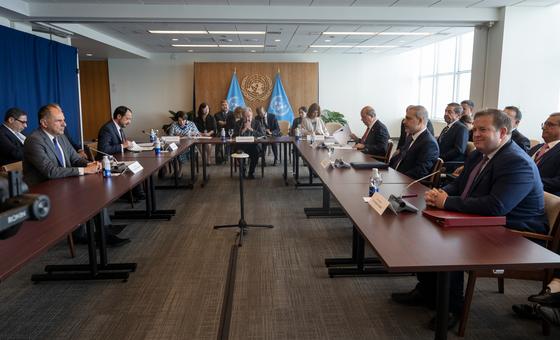
UN chief reports progress in Cyprus talks, urges swift implementation of trust measures

Mr. Guterres was speaking to reporters after hosting Greek Cypriot leader Nikos Christodoulides and Turkish Cypriot leader Ersin Tatar at the UN Headquarters in New York.

Today’s discussions were constructive. Both leaders reviewed the progress on the six initiatives they agreed to in March to build trust,” he said.

Out of these six initiatives, four have been achieved: the creation of a technical committee on youth, initiatives on the environment and climate change, restoration of cemeteries, and an agreement on demining that will be closed once the final technical details are established.

“And discussions will continue on the remaining two,” the UN chief added, referring to the opening of four crossing points on the divided island and solar energy in the buffer zone.

New initiatives

In addition, the leaders reached a common understanding on new initiatives, including a consultative body for civil society engagement, exchanging cultural artifacts, improving air quality monitoring, and addressing microplastic pollution.

It is critical to implement these initiatives – all of them – as soon as possible for the benefit of all Cypriots,” Mr. Guterres said.

The Secretary-General also confirmed that he will meet both leaders again during the UN General Assembly’s high‑level week in September. Another informal meeting in the same format is planned later this year.

A long road ahead

There’s a long road ahead. And it is important to think about what the future can mean – for all Cypriots,” he said.

But these steps clearly demonstrate a commitment to continuing a dialogue on the way forward and working on initiatives that benefit all Cypriots,” he added.

Secretary-General Guterres speaks to the media at the UN Headquarters, in New York.

Supporting dialogue

The United Nations has been playing a central role in efforts towards a comprehensive and mutually acceptable settlement to the Cyprus issue, supporting dialogue between Greek Cypriot and Turkish Cypriot leaders.

While sufficient common ground has not been found to allow for the resumption of formal negotiations, engagement towards that end continues – including informal meetings convened by the Secretary-General and other top UN officials.

Meanwhile, the UN Peacekeeping Force in Cyprus (UNFICYP), deployed since 1964, remains on the ground, helping to maintain stability across the island.

Source link

UN rights chief condemns the killing of scores of civilians in Sudan

Since 10 July, the UN human rights office, OHCHR, has verified that the Rapid Support Forces

 (RSF) have killed at least 60 civilians in North Kordofan’s Bara locality, while civil society groups have reported that up to 300 were killed.

The Sudanese Armed Forces (SAF) also hit two villages in West Kordofan from 10 to 14 July, killing at least 23 civilians and causing more than 30 injuries.

Most recently, on Thursday, an SAF airstrike in Bara killed at least 11 civilians who were all members of a single family.

According to the High Commissioner’s statement, these deaths come amid worrying reports that the RSF is mobilising for an offensive on the capital of North Kordofan state, El Obeid.  

Continued concern for El Fasher  

At another major hotspot in the Sudan conflict, the besieged city of El Fasher in North Darfur state, the RSF has conducted multiple attacks recently. They include a ground attack on 11 and 12 July, which reportedly resulted in civilian casualties.  

The High Commissioner subsequently “expressed continued concern for the safety of civilians in El Fasher.”

“Callous disregard for civilians’ lives and safety”

The statement stressed that the High Commissioner “deplored the killing of dozens of civilians by both parties.”

“It is distressing that more than two years since the conflict began parties to the conflict in Sudan continue to demonstrate callous disregard for civilians’ lives and safety,” he said.  

“An escalation of hostilities in North Darfur and Kordofan will only further aggravate the already severe risks to civilians and the dire humanitarian situation in a conflict that has already wrought untold suffering on the Sudanese people,”  

Mr. Türk urged those with influence to prevent further escalation and ensure parties uphold their obligations under international law, including the protection of civilians.  

The High Commissioner renewed his calls for the warring parties to ensure safe and unimpeded access to humanitarian aid and to prevent violations of international law.  

“All alleged violations must be fully and independently investigated and those responsible brought to justice,” he concluded. 

Source link

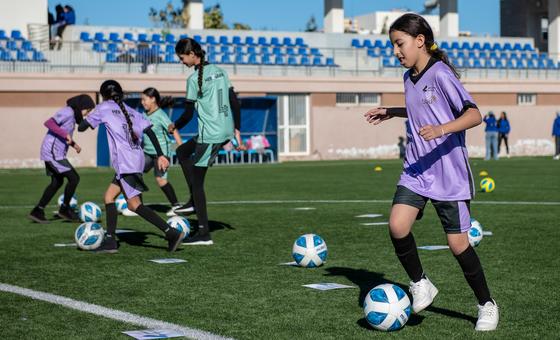
We need to value women in sport, UN rights chief says

The playing field is still far from level,” Mr. Türk said.  

In the past few years, topflight women’s sporting competitions have achieved increased global prominence with around a billion people watching the FIFA Women’s World Cup in 2023. This visibility and attention have prompted important conversations about stereotypes and power dynamics in women’s sports.

He noted that certain groups face barriers and discrimination in the women’s sporting world — LGBTIQ+ women, women wearing headscarves, women with disabilities and women from marginalized ethnic and racial groups.  

We need to build up a world of sport in which women and girls, in all their diversity, are equally valuable, visible and paid.”

A ‘stark’ pay gap

While professional male footballers earn, on average, $1.8 million annually at the top clubs, women athletes at top clubs have an average income of $24,000. And the average woman athlete, not at top clubs, earns even less than that, rounding out to approximately $10,900 per year.  

“Without a stable income, women are forced to take other jobs, leaving them with less time and energy to focus on training and improving,” Mr. Türk said.  

The wage gap is made even more unsustainable by a lack of sufficient protections in the workplace – minimal, if any, maternity leave – and few places to​​ turn to for redress when harassment occurs.  

Women are also very underrepresented in leadership of professional clubs and federations. Of the 31 federations, women chaired only three.

Despite such sobering statistics, some federations have begun to institute changes, enshrining maternity and adoption leave and establishing pay equity agreements.  

Driving social change

Mr. Türk called on Member States to institute comprehensive anti-discrimination systems which promote pay equality and ensure that violence and harassment in sports is brought to justice.  

He also said that the media can and should be a “force for good” in portraying women’s success stories in sports and by ensuring that their coverage is accurate and ethical.  

Sports can drive social change … and inspire and promote fairness, respect and equal opportunities for all. Today let’s champion a sporting world where women and girls can thrive.” 

Source link

Syria: UN chief urges de-escalation as Sweida violence escalates, Israel strikes Damascus

News reports estimate that the sectarian violence in the predominantly Druze city of Sweida, south of the capital, has killed more than 200.

Israel explained its attacks in the heart of the capital and on pro-government forces in Sweida as a defensive move in support of the Druze community, which has a significant presence within Israel and in the Israeli-occupied Golan.  

The strikes on the defence ministry in Damascus also hit an area near the presidential palace, according to news reports and Syrian authorities.

Pledging to protect the Druze minority but also following up on its threat to attack any Syrian military operations taking place south of the capital, Israel said it would intensify strikes if government forces did not withdraw from the region, according to news reports.

Syrians ‘robbed’ of opportunity for peace

“The Secretary-General is alarmed by the continued escalation of violence in Sweida” and “unequivocally condemns all violence against civilians,” said UN Spokesperson Stéphane Dujarric on Wednesday.  

It was the second day in a row that the UN chief has intervened to highlight the increasing civilian toll and “reports of arbitrary killings and acts that fan the flames of sectarian tensions and rob the people of Syria of their opportunity for peace.”  

Mr. Guterres further condemned Israel’s “escalatory airstrikes” on Sweida, Daraa and central Damascus, together with “reports of the IDF’s redeployment of forces in the Golan,” the highly-contested mountainous region along the border of the two countries. 

The UN also called on Israel to cease any violations of Syria’s sovereignty and respect for the 1974 Disengagement of Forces Agreement

The UN chief also reiterated the need to support “a credible, orderly and inclusive political transition in Syria in line with the key principles of Security Council Resolution 2254.”

Extending his condolences to the people of Syria, the Secretary-General reiterated his call for an immediate de-escalation of violence measures to facilitate humanitarian access.  

Civilians in peril

Mr. Dujarric said UN humanitarians were warning that “the deadly hostilities continue to put civilians at risk, with ongoing reports of significant displacement and damage to critical infrastructure, including water, electricity and telecommunications networks,” Mr. Dujarric said.  

Access to Sweida and the impacted areas remains severely constrained due to insecurity and road closures, and civilians are unable to reach shelters.  

The UN Humanitarian Coordinator in Syria, Adam Abdelmoula, said that the UN and its humanitarian partners plan to assess the needs and provide essential assistance in Sweida as soon as conditions allow.

Mr. Dujarric underscored that medical services in Sweida and the neighbouring Daraa Governorate are overstretched and hospitals are almost at capacity.  

While the World Health Organization (WHO) has dispatched emergency medical supplies to Daraa, deliveries to Sweida have yet to get through due to the fighting. 

SECURITY COUNCIL LIVE: ‘Aid must go where needs are greatest’ in Gaza, urges UN relief chief

The UN Security Council is meeting on the escalating humanitarian crisis in Gaza, where fresh Israeli evacuation orders have uprooted tens of thousands amid relentless bombardment claiming hundreds of civilian lives in recent weeks – many of them children. “Food is running out. Those seeking it risk being shot. People are dying trying to feed their families,” UN relief chief Tom Fletcher has just told ambassadors. Follow our real-time updates and key moments through our live UN Meetings Coverage page. UN News App users can join here.

Source link