UN chief condemns latest Houthi attacks on Red Sea shipping

According to news reports, the Yemen-based rebel group – which has been battling the internationally-recognised Government for control of the country since the early 2010s – attacked the Liberian-flagged, Greek-operated Eternity C on Monday and again on Tuesday, causing it to sink on Wednesday morning.

Four crew members are reported to have died.

With 15 crew still missing as of Friday, the group also reportedly took an unspecified number of the seafarers to what rebels described as a “safe location.”

Weekend assault

This came after the Houthis launched missiles and drones at another Liberian-flagged, Greek-operated cargo ship in the Red Sea on Sunday, Magic Seas. The crew was forced to abandon ship, but all 22 members were rescued, according to reports.

Since the start of the war in Gaza in October 2023, the Houthis have targeted Israeli and commercial ships in the Red Sea deemed to be en route to Israel, in solidarity with Palestinians in the enclave.

In May, following US airstrikes on Houthi strongholds and missile infrastructure, the group agreed a deal with Washington to stop targeting US warships – however, they did not pledge to end attacks on other vessels allegedly linked to Israel.

Strong condemnation: Guterres

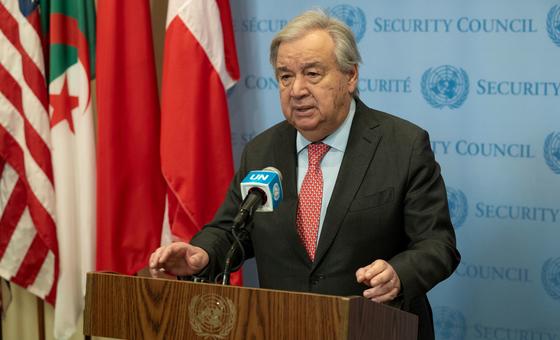
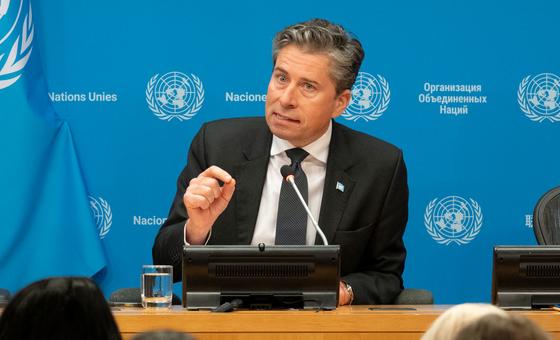
UN Spokesperson Stéphane Dujarric read a statement from Secretary-General António Guterres on Friday at UN Headquarters, saying the UN chief “strongly condemns the resumption of Houthi attacks on civilian vessels transiting the Red Sea, especially the attacks that took place over 6 to 8 July 2025.”

Mr. Guterres said the “unacceptable” attacks endangered the safety and security of crewmembers, violated freedom of navigation, disrupted maritime transport, and posed serious environmental, economic, and humanitarian risks.

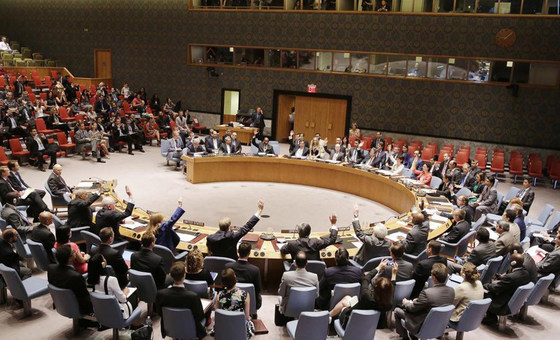
Mr. Guterres also emphasised that international law must be respected by all parties, stressing that UN Security Council resolution 2768 related to Houthi attacks against merchant and commercial vessels must be fully respected.

The United Nations remains committed to continuing its efforts towards broader de-escalation in the region as well as continued engagement with Yemeni, regional and international actors to secure a sustainable and peaceful resolution to the conflict in Yemen,” he concluded.

Source link

‘Cooperation is humanity’s greatest innovation,’ UN chief declares at BRICS summit

Speaking at the 17th BRICS summit in Rio de Janeiro, Brazil, he emphasised the human impact of environmental devastation and climate change.  And as environmental disasters increase, the sustainable development goals are also being left behind.  

Across the world, lives and livelihoods are being ripped apart, and sustainable development gains left in tatters as disasters accelerate,” Mr. Guterres said. 

The impact on human health is atrocious…the vulnerable and the poorer pay the highest price.” 

BRICS was founded by Brazil, Russia, India and China in 2006. South Africa joined in 2011 and Egypt, Ethiopia, Indonesia, Iran, Saudi Arabia and the United Arab Emirates joined the group since. Collectively, these eleven States represent over half of the world’s population and approximately one-third of the world’s GDP.  

Artificial intelligence must benefit all

On Sunday, Mr. Guterres addressed a session on strengthening multilateralism, economic-financial affairs and artificial intelligence, where he called for efforts to “minimize the risks and maximize the potential” of the breakthrough technology.

Artificial intelligence is reshaping economies and societies. The fundamental test is how wisely we will guide this transformation, how we minimize the risks and maximize the potential for good,” he said.  

To maximize the potential, the Secretary-General argued that AI cannot be “a club of the few but must benefit all,” calling for the “real voice” of developing countries to be included in global AI governance.

He also said that human rights and equity must be the guiding principles which shape any international governance structure for AI.  

“We cannot govern AI effectively – and fairly – without confronting deeper, structural imbalances in our global system,” he said.  

Collaboration is key

UN Secretary-General António Guterres stressed the need for peace amid conflicts in Gaza, Ukraine, Sudan and Myanmar.

He called for urgent reform of global institutions, noting that bodies like the Security Council and international financial systems were “designed for a bygone age, a bygone world, with a bygone system of power relations.”

“The reform of the Security Council is crucial,” he said, highlighting also calls from the recent financing for development conference in Sevilla.

Priorities include greater voice for developing countries in global governance, effective debt restructuring, and tripling multilateral bank lending – especially in concessional and local-currency terms.

Call for reform

Mr. Guterres concluded his remarks highlighting the power of cooperation and trust.

At a time when multilateralism is being undermined, let us remind the world that cooperation is humanity’s greatest innovation,” he said.

Let us rise to this moment – and reform and modernize multilateralism, including the UN and all the systems and institutions to make it work for everyone, everywhere.” 

Source link

UN chief ‘deeply saddened’ by devastating Texas floods as toll climbs past 80

In a statement issued on Monday by his spokesperson, António Guterres said he was “deeply saddened by the tragic loss of life, notably of a large number of children,” during what should have been a time of celebration.

Friday, 4 July, marked Independence Day in the United States – a time when families and communities traditionally gather for outdoor celebrations.

The Secretary-General extended his “heartfelt condolences to the families of the victims” and expressed solidarity with all those affected, including the people of Texas and the government of the United States.

According to media reports, the floods – triggered by heavy rainfall over the July Fourth weekend – caused massive damage in parts of central Texas, particularly along the Guadalupe River. The deluge struck Camp Mystic, killing at least 27 campers and counselors.

Catherine Russell, Executive Director of the UN Children’s Fund (UNICEF), said in a post on social media that “all of us at UNICEF are heartbroken at the reports coming out of Central Texas.”

Our hearts and thoughts are with those mourning loved ones and those still waiting for news of the missing, including children,” she said.

Search and recovery efforts continue as the region braces for more rain, according to media reports.

Source link

UN chief condemns Russian strikes on Ukraine, warns of nuclear safety risk

In a statement issued by his spokesperson, António Guterres expressed alarm over the dangerous escalation and the rising toll on civilians.

He reiterated that attacks against civilians and critical infrastructure are prohibited under international law and called for an immediate and unconditional ceasefire.

“These strikes disrupted the power supply to the Zaporizhzhia Nuclear Power Plant, once again underlining the ongoing risks to nuclear safety,” UN Spokesperson Stéphane Dujarric said.

“The Secretary-General reiterates his call for a full, immediate and unconditional ceasefire in Ukraine as a first step towards a just, comprehensive and sustainable peace, in line with the UN Charter, international law and relevant UN resolutions.”

Fragile situation

The airstrikes on Friday severed the nuclear plant’s last external power connection, forcing the ZNPP to rely on emergency diesel generators for more than three hours, according to the International Atomic Energy Agency (IAEA).

Power was eventually restored, but the incident marked the ninth time the plant has lost all off-site electricity since the full-scale invasion began in 2022.

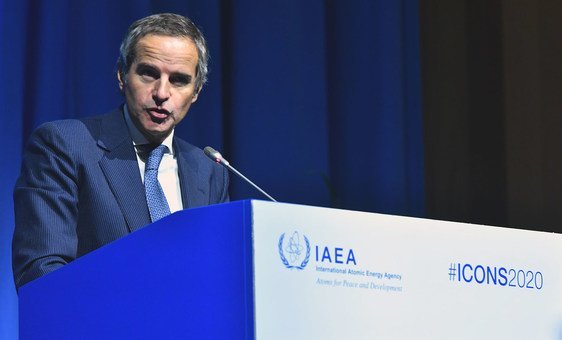
Rafael Mariano Grossi, Director General of the nuclear watchdog, warned that the situation remains extremely fragile.

“What was once virtually unimaginable – that a major nuclear power plant would repeatedly lose all of its external power connections – has unfortunately become a common occurrence,” he said.

Nuclear safety deterioration

Located in southern Ukraine, the Zaporizhzhia plant is the largest nuclear power facility in Europe. Although its six reactors have been in cold shutdown since 2024, they still require electricity to cool reactor cores and spent fuel pools to prevent overheating and potential radioactive release.

During the blackout, 18 diesel generators were activated to maintain critical cooling functions. The plant has enough diesel on site for at least ten days, with contingency plans in place to secure further supplies if needed, IAEA reported.

The ZNPP has become dramatically more vulnerable since the war began. Prior to the conflict, it had access to ten external power lines; it now relies on just one.

IAEA teams remain based at the site and continue to monitor the situation closely.

Source link

UN chief ‘appalled’ by worsening Gaza crisis as civilians face displacement, aid blockades

Multiple attacks in recent days have killed and injured scores of Palestinians at sites hosting displaced people and others attempting to access essential supplies, according to a statement from UN Spokesperson Stéphane Dujarric on Thursday.

“The Secretary-General strongly condemns the loss of civilian life,” Mr. Dujarric said.

On just one day this week, nearly 30,000 people were forced to flee under new Israeli relocation orders, with no safe place to go and clearly inadequate supplies of shelter, food, medicine or water, he added.

Critical systems shutting down

With no fuel having entered Gaza in over 17 weeks, the UN chief is also “gravely concerned that the last lifelines for survival are being cut off.”

“Without an urgent influx of fuel, incubators will shut down, ambulances will be unable to reach the injured and sick, and water cannot be purified,” Mr. Dujarric said.

“The delivery by the United Nations and partners of what little of our lifesaving humanitarian aid is left in Gaza will also grind to a halt.”

The Secretary-General reiterated his call for safe and sustained humanitarian access so aid can reach people in desperate need.

“The UN has a clear and proven plan, rooted in the humanitarian principles, to get vital assistance to civilians – safely and at scale, wherever they are,” Mr. Dujarric said.

The Secretary-General reiterated his call for an immediate and permanent ceasefire and the unconditional release of all hostages held by Hamas and other groups. He reminded all parties that international humanitarian law must be upheld.

Displacement continues

Displacement remains relentless. On Wednesday, Israeli authorities issued a new evacuation order in parts of Gaza City, affecting some 40,000 people and including a displacement site, a medical point and one of the few neighbourhoods that had remained untouched by such orders since before the March ceasefire.

Since that ceasefire collapsed, over 50 such orders have been issued, now covering 78 per cent of Gaza’s territory.

“Add the Israeli-militarized zones and that percentage jumps to 85 – leaving just 15 per cent where civilians can actually stay,” Mr. Dujarric said, briefing reporters at the UN Headquarters, in New York.

Those areas are overcrowded and severely lacking in services or proper infrastructure.

“Imagine having just over two million people in Manhattan – which is actually slightly bigger – but instead of buildings, the area is strewn with the rubble of demolished and bombed-out structures, without infrastructure or basic support,” the UN Spokesperson said.

“And in Gaza, these remaining areas are also fragmented and unsafe.”

Adhering to bans on mines only in peace time will not work: UN rights chief

Estonia, Finland, Latvia, Lithuania, Poland and Ukraine have taken or are considering steps to withdraw from the Convention on the Prohibition of the Use, Stockpiling, Production and Transfer of Anti-Personnel Mines and on their Destruction – known also as the Ottawa Convention, after the Canadian city where the process was launched.

“These weapons risk causing persistent and long-term, serious harm to civilians, including children,” Volker Türk, UN High Commissioner for Human Rights, said in a statement. “Like other international humanitarian law treaties, the Ottawa Convention was principally designed to govern the conduct of parties to armed conflicts.”

“Adhering to them in times of peace only to withdraw from them in times of war or for newly invoked national security considerations seriously undermines the framework of international humanitarian law.”

A threat to civilians

Anti-personnel mines are one of the two main types of mines and target people – as opposed to anti-vehicle mines. However, because both of these mines are triggered automatically, they result in huge numbers of civilian deaths, especially children.

Their deadly risks linger long after hostilities end, contaminating farmland, playgrounds, and homes, and posing a constant threat to unsuspecting civilians.

Agreed in 1997, the Ottawa Convention prohibits signatories from using, stockpiling, producing or transferring anti-personnel mines due to the threat that these weapons pose to civilians, especially children.  

In the two-and-a-half decades since it was passed, the Ottawa Convention has 166 States parties, has led to the a marked reduction in the use of anti-personnel mines.  

Trends reversing

However, in recent years, these positive trends have begun to reverse with the number of civilians killed and injured by mines increasing by 22 per cent in 2024 – 85 per cent of the casualties were civilians and half of them were children.  

Despite progress, some 100 million people across 60 countries still live under the threat of landmines.

In Ukraine, for instance, the UN Mine Action Service (UNMAS) estimates that more than 20 per cent of the country’s land is contaminated – amounting to 139,000 square kilometres.

Similarly, landmines remain still a significant threat in Cambodia, decades after the end of the conflict and years of de-mining efforts.

Uphold international law

Mr. Türk urged all parties to the Ottawa Convention to uphold their international legal obligations regarding anti-personnel mines and on non-signatories to join the Convention.  

“With so many civilians suffering from the use of anti-personnel mines, I call on all States to refrain from leaving any international humanitarian law treaty, and to immediately suspend any withdrawal process that may be underway.”  

Source link

Space is not the final frontier – it is the foundation of our future: UN deputy chief

Addressing delegates at a UN forum on peaceful uses of outer space, Amina Mohammed urged greater international cooperation as the world becomes increasingly reliant on satellites for everything from disaster response to climate monitoring.

Space is not the final frontier. It is the foundation of our present,” she said.

“Without satellites orbiting overhead right now, global food systems would collapse within weeks. Emergency responders would lose their lifelines. Climate scientists would be flying blind. And our hopes of achieving the Sustainable Development Goals (SDGs) would be out of reach,” she added.

Expanding access to space

For nearly seven decades, the UN Committee on the Peaceful Uses of Outer Space – the forum’s official name, has advanced international cooperation through five space treaties, sustainability guidelines and the Space 2030 Agenda.

Ms. Mohammed highlighted the UN’s efforts through the Office for Outer Space Affairs (OOSA), in helping make space more accessible – particularly for the more than half of UN Member States that still lack a satellite in orbit.

OOSA’s programmes are opening opportunities for youth and women in developing countries, cultivating a more inclusive new generation of space leaders.

It also supports countries in building their space capabilities through technical workshops and assistance for emerging programmes, having assisted Kenya, Guatemala, Moldova and Mauritius in launching their first satellites.

Similarly, it is helping countries like Tonga, Trinidad and Tobago and Ghana, use satellite data to create detailed digital models of entire cities, allowing faster disaster response and saving lives.

Space and sustainable development

Fresh from the Fourth International Conference on Financing for Development in Sevilla, Spain, Ms. Mohammed stressed that the areas the UN defines as critical for sustainable development acceleration all depend on space technologies.

She also relayed a critical message from the conference: “In an era of constrained investment, we must align capital with high-impact solutions,” she said. “Space is one of them.”

The view from space shows no countries, no borders – only one shared planet, one common home. Let that perspective guide you as you build the governance frameworks for space exploration and use,” she concluded.

Let us make space a catalyst for achieving the SDGs.” 

Source link

Human rights can be a ‘strong lever for progress’ in climate change, says UN rights chief

Speaking at the Human Rights Council in Geneva, High Commissioner Volker Türk asked Member States whether enough was being done to protect people from the escalating impacts of climate change  

“Are we taking the steps needed to protect people from climate chaos, safeguard their futures and manage natural resources in ways that respect human rights and the environment?” asked delegates at the ongoing session of the Human Rights Council in Geneva.  

His answer was simple – we are not doing nearly enough.  

Mr. Türk emphasised that while climate change presents dire risks human rights – especially for the most vulnerable – it also can be a strong lever for progress.  

Central to this is a “just transition” away from environmentally destructive activities.  

“What we need now is a roadmap that shows us how to rethink our societies, economies and politics in ways that are equitable and sustainable,” he said.  

The right to decent work 

One of the main avenues through which the Council – UN’s highest intergovernmental body on human rights – examined the connection between human rights and climate change was the right to decent work.

“Because of climate change, the very human right of decent work is fundamentally challenged today,” said Moustapha Kamal Gueye, a senior official at the International Labor Organization (ILO).

He warned that 80 million full-time jobs will no longer exist in 2030 if the world continues its current climate trajectory. More than 70 per cent of the global workforce – 2.4 billion workers – will be exposed to excessive heat at some point on the job.  

These alarming statistics underscored the urgent need for robust social protection systems, including social security, for workers as the climate crisis continues to intensify, Mr. Gueye said. Less than 9 per cent of workers in the 20 most climate-impacted countries have any form of social protection.  

“From a climate resilience perspective, nations are far from achieving the human right to social protection,” Mr. Gueye said. “Investments in social protection need to be scaled up, and this must move from shock-responses to institutionalised and rights-based approaches.”

On a more hopeful note, he added, a shift towards low-carbon economies can potentially generate over 100 million new jobs by 2030. However, he cautioned that, that these jobs may not emerge where others are lost, reinforcing the need for strong safety nets and planning.  

‘Defossilize’ the economy and knowledge

Elisa Morgera, the UN special rapporteur on human rights and climate change, also presented her latest report, which calls for “defossilization” of economies. Phasing out fossil fuels, she said, is the most effective way to reduce climate impacts while protecting human rights.

Of course, this is not a simple task, as Ms. Morgera noted that fossil fuels have invaded all parts of our lives and economies.  

“Fossil fuels are everywhere: in our food systems, in our ocean and in our bodies, including in our brains – in many cases without us knowing or choosing for them to be in our lives,” Ms. Morgera said.  

Ms. Morgera – who is mandated and appointed by the Human Rights Council, and is not a UN staff member – also stressed the need to “defossilize knowledge,” noting how fossil fuel interests have distorted public understanding and attacked climate defenders.

While geopolitical divisions may slow progress, she insisted that action can begin now at every level. “We can nourish hope and share concrete learning that can inspire a course correction, within the current decade, toward a safe climate for all.” 

A people-centred approach

Mr. Türk concluded his remarks reinforcing that a just transition must ensure no one is left behind.

“If we don’t safeguard people’s lives, their health, their jobs and their future opportunities, the transition will replicate and exacerbate the injustices and inequalities in our world,” he said.  

Mr. Gueye echoed that message: “The global climate agenda is a human story and it is about human rights. The ambition that nations and the global community seek cannot be confined to numerical targets and indicators – it must fundamentally be about people.” 

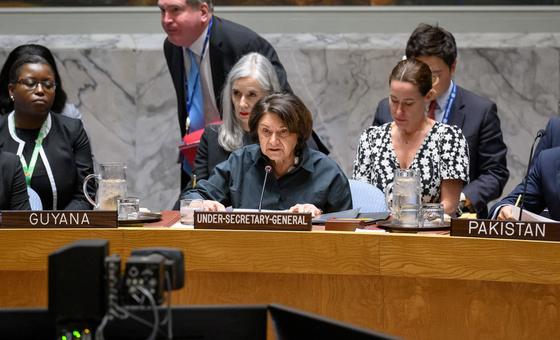
DR Congo: Conflict survivors ‘have been through hell,’ says UN aid chief

Speaking from the Goma region, whose main city was overrun by Rwanda-backed M23 rebels in January, UN Emergency Relief Coordinator Tom Fletcher explained that people had suffered “decades of trauma”.

The last few months have been “particularly horrific for so many”, he added, referring to the lawless fall-out from heavy fighting this year between the rebel fighters and the regular DRC army that has been linked to serious human rights abuses, including potential war crimes.

“Most striking today and yesterday has been the stories of sexual violence, and sitting with women who tell horrific stories which are too horrific for me to tell here and who are trying to find the courage to rebuild their lives,” the UN relief chief said.

We’re there providing that support to them, trying to help them rebuild, but they have been through hell.”

Peace call

All those newly displaced by the M23 rebel advance are in addition to the five million people already living in displacement camps in eastern DRC. Today, more than 20 million people need relief assistance. “They are desperate for this conflict to end,” Mr. Fletcher continued.

A day after NATO Member States agreed to a five per cent increase in funding for their collective defence, investment in the humanitarian work of the UN and its partners is at rock bottom.  

In DRC, a full 70 per cent of UN aid programmes was historically funded by the United States – “amazing generosity over decades” – Mr. Fletcher noted. But today “we’re seeing most of that disappearing”, he insisted, forcing the humanitarian community to make “brutal choices, life-and-death choices” about who receives help.

“For these women – the survivors of sexual violence, for the kids who told me they needed water, for the communities that told me they needed shelter, medicine, these cuts are real right now and people are dying because of the cuts,” the top UN official explained.

Aid teams haven’t stopped

Despite the difficulties linked to the protracted nature of the conflict in DRC and the massive needs, UN aid teams and their partners are “working hard to get access to those communities,” Mr. Fletcher insisted – “trying to get the airport back open, trying to get roads open, trying to unblock checkpoints that are impeding our aid from getting through”.

In an attempt to square the circle of the steadily diminishing amount of aid funding provided globally, Mr. Fletcher recently announced a “hyper-prioritized” plan to save 114 million lives this year. But that is dependent on receiving the necessary funding. “All we’re asking for to do that is one per cent of what the world spent on defence last year,” he continued.

After visiting and connecting with communities impacted time and again by the fighting, the top UN official insisted that they should not be forgotten. “They are the frontlines of the humanitarian effort,” he said.

Communities on front line

“I suppose the glimmer of hope in all of this is, yes, we can work in that more efficient and prioritized way and will do that; but also, the communities here who are – basically – they’ve come through so much and they are determined to support each other.”  

And despite rising antipathy in some countries towards international cooperation including the work and peace-promoting efforts of the United Nations, Mr. Fletcher insisted that reasons for optimism remain.

“I really strongly believe there is a movement out there that will back this work, that will support this work,” he told UN News. “We’ve got to find them. We’ve got to enlist them, and we’ve got to show them that we can deliver for them.

“And, you know, I have not given up on human kindness and human solidarity. I have not given up on the UN Charter for a second. And this work is at the heart of it.” 
Source link

SECURITY COUNCIL LIVE: Political Affairs chief hails Iran-Israel ceasefire as ‘significant achievement’


The Security Council is meeting over the future of the Joint Comprehensive Plan of Action put in place in 2015 to prevent Iran from weaponising its ambitious nuclear programme, which has been in effective limbo since the US withdrawal in 2018 and Iran’s rejection of parts of the deal. UN political affairs chief Rosemary DiCarlo described the US-brokered ceasefire overnight between Israel and Iran as a “significant achievement” and “an opportunity to avoid a catastrophic escalation and achieve a peaceful resolution of the Iran nuclear issue.” Follow our Meetings Coverage Section live coverage below and UN News app users can follow here.

Source link

Iran-Israel war: IAEA chief stresses need for strong new nuclear deal

“I welcome announcements on Iran situation. Resuming cooperation with [the International Atomic Energy Agency (IAEA)] is key to a successful agreement,” said Rafael Grossi, Director General of the (IAEA).

In a short online post on X, Mr. Grossi added that he had offered to meet Iranian Foreign Minister Abbas Araghchi on working together, “stressing this step can lead to a diplomatic solution to the long-standing controversy” over Iran’s nuclear programme.

Tehran prison concern

Meanwhile, the UN human rights office, OHCHR, insisted that a notorious Tehran prison known for holding dissidents should not be a target, a day after a reported Israeli strike on the complex.

OHCHR spokesperson Thameen Al-Kheetan told media in Geneva that Evin prison is not a military objective, according to the laws of war.

“Targeting it constitutes a grave breach of international humanitarian law”, he said.

OHCHR does not have specific details about what the alleged attack, Mr. Al- Kheetan said, but there have reportedly been fires inside the prison and a number of injuries.

Casualty count

An updated casualty count from the Iranian authorities on Tuesday indicated that 610 people have been killed including 49 women and 13 children since 13 June. That number includes two pregnant women and one infant along with 4,746 injured, including 185 women and 65 minors.

Seven hospitals, four health units and six emergency bases and nine ambulances have been damaged, the Iranian health authorities said.

Some 28 Israeli citizens have reportedly been killed by Iranian missile strikes to date.

Civilians must be protected

Political prisoners including journalists are held at Evin prison, but whether they are detained “arbitrarily” or in connection with “crimes they’ve actually committed”, the inmates must be protected, Mr Al-Kheetan insisted.

According to media reports on Tuesday, Iran said that it transferred all the inmates out of the prison after it was hit by an Israeli strike, moving them to other prisons around the capital in order to repair damage.

A fragile ceasefire proposed by the United States seemed to take hold briefly on Tuesday morning, before reports of further Iranian missile strikes on Israel, disputed by Tehran.

The conflict began with Israeli air attacks on 13 June and escalated over the weekend with US forces striking Iranian nuclear facilities. Hundreds of civilians have reportedly been killed in the Israeli airstrikes, while Iran’s retaliatory strikes killed close to 30 people in Israel.

Asked about signs of a crackdown on dissent by the Iranian authorities in the context of the Israeli and US military campaign against the country, the OHCHR spokesperson stressed that it was “difficult to verify information” coming from Iran, given the lack of access.

He confirmed seeing reports about Iranians being “arrested for cyber activities and publishing content related to the Israeli attacks on Iran, according to NGOs”.

Mr. Al-Kheetan also spoke of reports that nine men have been executed in Iran since Israel attacked the country on 13 June.

He called on the Iranian authorities to “completely respect the rights to freedom of expression and information, at all times”, insisting that journalists “must be able to do their work without any obstacles”.

Iranian citizens reportedly arrested and accused of espionage or collaboration with Israel “must have their full rights in terms of legal procedures and a fair trial”, he said.

“If these arrests are arbitrary, those persons must be freed immediately and unconditionally,” he concluded.

Human Rights Council concerns

On Monday, independent human rights experts reiterated their concerns about Iran’s “use of broadly defined national security offences, some of which are punishable by death”, in the context of recent reported executions on espionage charges.

Last week, the UN deputy human rights chief, Nada Al-Nashif, told the Human Rights Council that at least 975 people were executed in Iran last year – the highest number of reported executions since 2015.

She also briefed the Council on the use of torture in Iranian prisons and the ongoing targeting of minorities, journalists and human rights defenders.

Source link

Bearing the brunt of war: UNICEF chief meets some of Sudan’s 700,000 child refugees crossing into Chad

In neighbouring Chad, children make up 61 per cent of the 860,000 Sudanese refugees and a staggering 68 per cent of the 274,000 Chadian returnees – that’s over 700,000 young lives uprooted by violence.

Chad, already one of the world’s poorest countries, has the fourth-highest child mortality rate in the world, despite significant progress in recent years.

The Government of Chad and humanitarian partners have been providing support, but the migration crisis remains overwhelming: measles and malnutrition are spreading, the risk of Sudan’s cholera outbreak spilling into Chad remains high.

Only one in three children are enrolled in school and essential services are stretched to the brink.

Horrific memories 

UN Children’s Fund (UNICEF) Executive Director Catherine Russell concluded a three-day visit to Chad on Monday, where she met with refugee children and families displaced by the fighting and chaos across the Sudanese border.

Hundreds of thousands of the most vulnerable children are bearing the brunt of both the war in Sudan and the lack of essential services for those who have fled to Chad,” Russell said.

In eastern Chad, Ms. Russell “met women and children who arrived with little but the horrific memories they carry” and heard their stories of killings, mass rapes and homes burned to the ground.

She visited families newly arrived in Adré, an overwhelmed border town now hosting six refugees for every resident.

Russell also met President Mahamat Idriss Déby Itno to reaffirm UNICEF’s long-term commitment to Chad and discuss support for the country’s newly launched National Development Plan 2030.

The people of Chad have shown extraordinary generosity,” she said. “But they cannot face this crisis alone. We must stand in solidarity with them – and with the children of Sudan – by strengthening national systems and communities on the frontlines.”

Ramping up response

In Adré and surrounding areas, UNICEF-supported teams have vaccinated thousands of children, provided safe drinking water to tens of thousands, established child-friendly spaces and set up services for survivors of gender-based violence.

The agency is also working closely with Chadian authorities to scale up system-wide investments in health, including polio vaccination campaigns, as well as education and social protection.

But urgent funding gaps remain. Of the $114 million required for UNICEF’s 2025 humanitarian response in Chad, only 34 per cent has been secured.

Source link

Iran-Israel crisis: IAEA chief urges access to damaged nuclear sites

Rafael Grossi, head of the International Atomic Energy Agency (IAEA), was addressing the agency’s Board of Governors, amid fresh reports of new Israeli missile strikes on Iranian military sites in Tehran and elsewhere earlier on Monday. Iranian weapons fire has also been reported across Israel. 

Mr. Grossi – who also addressed an emergency meeting of the UN Security Council on Sunday – insisted that the agency’s weapons inspectors should return to Iran’s nuclear sites and account for their stockpiles.

There is particular concern about 400 kilogrammes of uranium enriched to 60 per cent by Iran.

Under the terms of a 2015 nuclear deal with the international community, Iran is permitted to enrich the naturally occurring radioactive material to less than four per cent.

“Craters are now visible at the Fordow site, Iran’s main location for enriching uranium at 60 per cent, indicating the use of ground-penetrating munitions; this is consistent with statements from the United States,” he told the IAEA Board of Governors. “At this time, no one including the IAEA, is in a position to have fully assessed the underground damage at Fordow.”

Mr. Grossi said that taking into account the highly explosive payload used in the US attacks, “very significant damage is expected to have occurred” to the highly sensitive centrifuge machinery used to enrich uranium at Fordow.

Several sites hit

Fordow is one of several nuclear-related sites across Iran that are known to have been damaged in the strikes by the United States, including those in Esfahan, Arak and Tehran.

In comments to the UN Security Council in New York on Sunday, the IAEA chief said that although radiation levels remained normal outside these nuclear facilities, deep concerns remained about Iran’s operational nuclear plant at Bushehr.

Any strike on Bushehr could trigger a massive radiation release across the region –  “the risk is real”, Mr. Grossi said.

Eleven days after Israel launched air and missile strikes at Iranian military and nuclear sites, some 430 people are believed to have been killed in Iran, most of them civilians.

According to Israeli reports, 25 people have been killed and more than 1,300 injured by Iranian missile strikes.

UN chief ‘gravely alarmed’ by US bombing of Iranian nuclear sites

“I am gravely alarmed by the use of force by the United States against Iran today,” said the UN chief, reiterating that there is no military solution.

This is a dangerous escalation in a region already on the edge – and a direct threat to international peace and security.”

President Donald Trump delivered a televised address to the nation from the White House at 10pm local time and said that Iran’s nuclear facilities at Fordo, Natanz and Isfahan had been “totally obliterated” describing the long-range bombing raid as a “spectacular military success.”

President Trump called on Iran’s leadership to now “make peace” and return to negotiations over its nuclear programme or suffer a far greater wave of attacks.

Iranian authorities have yet to confirm the extent of the damage to the three sites in central Iran. Earlier in the day, Iran’s foreign minister reportedly warned the US against any involvement in the Iran-Israel conflict which erupted on 13 June.

Deadly strikes

At least 430 Iranians are believed to have been killed during waves of strikes since then with around 3,500 injured, according to figures from the Iranian health ministry.

In Israel, 24 civilians have died in the retaliatory attacks according to local authorities with more than 400 missiles reportedly fired towards the country.

B-2 bombers were involved in the US strikes, President Trump confirmed, dropping so-called “bunker buster” bombs on the uranium enrichment site at Fordow which is buried deep inside a mountain south of the capital Tehran.

‘Avoid a spiral of chaos’

In his statement, the Secretary-General reiterated his concerns voiced in the Security Council during Friday’s emergency meeting on the crisis that the conflict “could rapidly get out of control – with catastrophic consequences for civilians, the region, and the world.”

He called on all Member States to de-escalate the situation which threatens the stability of the Middle East and beyond, calling for everyone to uphold their obligations under the UN Charter and international law.

At this perilous hour, it is critical to avoid a spiral of chaos,” he added calling for an immediate return to negotiations between the warring parties.

There is no military solution. The only path forward is diplomacy. The only hope is peace.”

Source link

From Syria, UN refugee chief calls for greater solidarity with displaced people

The UN High Commissioner for Refugees, Filippo Grandi, sounded the alarm on Friday, World Refugee Day, in a message from Syria.

He said the abject failure to end conflicts – including in Sudan, Ukraine, the Democratic Republic of the Congo and Gaza – continues to create immense suffering. 

Difficulty seeking shelter

“Yet the innocent people who run for their lives as the bullets fly and the missiles rain down are unjustly stigmatised, making it harder to escape danger and to find somewhere to recover and rebuild,” he said.

Their situation is further compounded by brutal cuts to humanitarian aid, affecting millions who desperately need assistance. 

At this critical juncture, it is vital that we reaffirm our solidarity with refugees – not just with words but with urgent action,” he said.

He added that inspiring examples already exists, from countries that continue to welcome and host refugees, to local communities that “open their homes, workplaces and hearts” to them, as well as “the countless individual acts of kindness and compassion that reveal our common humanity.”

Share the responsibility

Mr. Grandi said the international community can and must support these countries and communities by sharing the responsibility for protecting refugees, calling in particular for action by wealthier States, development banks, businesses and others.

The High Commissioner spent the Day in Syria, where some 600,000 people have returned from neighbouring countries after 14 years of war. Overall, more than two million Syrians have gone back to their homes and communities since the fall of the Assad regime last December.

“In a region that has suffered so much violence – and suffers even now – we are nonetheless presented with an opportunity to help Syrians achieve stability and prosperity. We must not let it pass by,” he said.

Mr. Grandi met Syrian families who spent more than a decade as refugees, whose deep joy at being among familiar faces and surroundings serve as reminder of refugees’ yearning for home. 

“Now more than ever, we must stand with refugees to keep alive their hopes of a better future,” he said. 

Source link

UN relief chief calls for solidarity, with humanitarians ‘literally under attack’

Tom Fletcher was speaking at the annual stock-take of his sector known as the ECOSOC Humanitarian Affairs Segment, which brings together UN Member States and organizations, humanitarian and development partners, as well as the private sector and affected communities.

He said this year’s theme – renew global solidarity for humanity – “could not be more urgent.”

“We need you right now,” he said. “We’re in a moment of conflict, of transactional politics, of selfishness, of division, of polarization. And global solidarity – the lifeblood of what we do – is in retreat.”

Moreover, “at this moment, when the needs are at their highest, the funding is also in retreat.”

Crises, climate and cutbacks

Mr. Fletcher reminded participants of “some uncomfortable truths,” noting that the Middle East currently “teeters on the edge of a wider war.”  

At the same time, people in Gaza are starving as food aid rots at border crossings, girls in Afghanistan are banned from school, women in war-torn Sudan are experiencing horrific violence, and gangs are terrifying families in Haiti.

This is happening amid the climate crisis “which will drive more humanitarian needs in the coming years than any other factor that we discuss today,” he said.

“Meanwhile, our teams, our humanitarian staff, the bravest of us, are not hesitating to go towards the sound of gunfire, the sound of danger to drive those convoys through those checkpoints and they are being killed in record numbers, while those responsible for killing them roam free.”

‘Life and death decisions’

Just six months ago, Mr. Fletcher launched a $44 billion appeal to reach 190 million people worldwide this year.  

In the wake of the deepest cuts ever to humanitarian operations globally, the plan was this week “hyper-prioritized” to focus on the most critical areas, with $29 billion in funding to support 114 million.

He acknowledged that “we’re left with the cruelest of equations when we make those life and death decisions, literally, about who to save.” 

Humanitarians “will save as many lives as we can with the resources that you give us,” and they are asking world leaders to give only one per cent of what they spent on defense last year.

“This isn’t just a call for money, of course. It is a call for global responsibility, for a shared commitment to end the suffering,” he said.

New humanitarian pact

“We also make this call that all of us find a moment to come off our talking points and to find the individual moment of courage and creativity to support this effort.”

Mr. Fletcher said the humanitarian movement will continue and is being re-designed from the ground up

“We’ll find new allies, we’ll find new sources of funding, we’ll find new ideas, we won’t just patch up the old model. We will also forge a new one. A bold humanitarian pact with the people we serve,” he said.

Women at the forefront

The pact will be “more local, more lean, more green,” and will include people on the frontlines of crisis who “know better than anyone what they need.”

Furthermore, the UN’s highest-level humanitarian coordination forum – the Inter-Agency Standing Committee (IASC) – has voiced unequivocal commitment that women and girls will lead this humanitarian reset and will back women humanitarian leaders in this work.

 “These leaders, the real leaders of our movement, don’t work for the UN or international NGOs. They are not part of the logos, and egos, and silos of our systems,” he said.

“They have something much more powerful – they are rooted in their communities with the trust of their communities and an unshakeable belief that even in these darkest moments we can choose to help each other. They are there for us and we must be there for them.”

Boosting effectiveness

The Economic and Social Council (ECOSOC) is one of the six main UN organs.

Since 1998, it has held the Humanitarian Affairs Segment to strengthen the coordination and effectiveness of UN humanitarian efforts.

Previous meetings have focused on issues such as addressing food security and recovery from the COVID-19 pandemic. 

Source link

Brutal cuts mean brutal choices warns UN relief chief, launching ‘survival appeal’

“We have been forced into a triage of human survival,” said Mr. Fletcher. “The math is cruel, and the consequences are heartbreaking. Too many people will not get the support they need, but we will save as many lives as we can with the resources we are given.”

New priorities

The appeal aims to reprioritise individual country plans in pursuit of two main goals: first, to reach people and places facing the most urgent humanitarian needs, and second, to prioritise life-saving support based on existing planning for the 2025 humanitarian response.  

This is intended to ensure that limited resources are directed where they can do the most good, as quickly as possible.

Rather than limiting lifesaving aid to a predetermined matrix, humanitarian partners are focused on addressing the most urgent needs in ways that respect the dignity of affected people, allowing them to choose what they need most, OCHA said.

The appeal prioritises but does not replace the Global Humanitarian Overview 2025 (GHO), launched last December, which covers 180 million vulnerable people across 70 countries. The GHO calls for $44 billion, but at the halfway point of the year, less than 13 per cent of that amount has been received.

A call for global solidarity

“Brutal funding cuts leave us with brutal choices,” said Fletcher. “All we ask is one per cent of what you chose to spend last year on war. But this isn’t just an appeal for money – it’s a call for global responsibility, for human solidarity, for a commitment to end the suffering.” 

Source link

Israel-Iran crisis: UN chief urges calm after overnight strikes

Any military escalation in the Middle East should be censured, the UN chief said in a short statement issued by his spokesperson’s office.

“He is particularly concerned by Israeli attacks on nuclear installations in Iran while talks between Iran and the United States on the status of Iran’s nuclear programme are underway,” said Farhan Haq, Deputy Spokesperson for the Secretary-General.

In an update on Friday, the head of the UN-backed atomic watchdog announced that the Iranian authorities had confirmed that the Natanz enrichment site had been “impacted” without affecting existing radiation levels.

The Iranian nuclear safety authorities also reported that the Esfahan and Fordow sites had not been impacted.

“This development is deeply concerning,” said Rafael Grossi, head of the International Atomic Energy Agency (IAEA). “I have repeatedly stated that nuclear facilities must never be attacked, regardless of the context or circumstances, as it could harm both people and the environment. Such attacks have serious implications for nuclear safety, security and safeguards, as well as regional and international peace and security.”

According to reports, the Israeli military attacks targeted Iran’s nuclear programme at various sites across the country late Thursday.

Iranian media reported the death of Hossein Salami, chief of the country’s Revolutionary Guards, along with nuclear scientists.

The development comes as the United States was scheduled to begin a fresh round of negotiations with Tehran on Saturday in Oman. Israeli schools closed on Friday in anticipation of a riposte by Iran, with reports that some 100 drones were launched towards Israel in the early hours. 

Source link

UN chief ‘deeply saddened’ as Air India crash claims lives of over 200 on board

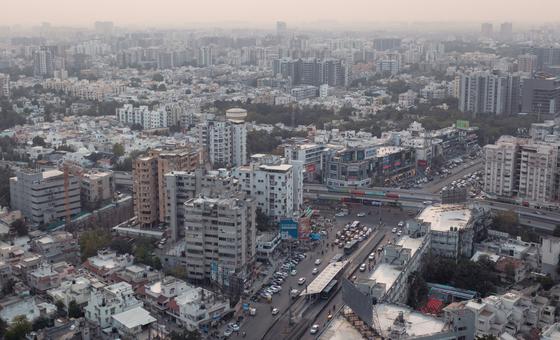
The plane – a Boeing 787-8 Dreamliner – crashed into a medical college about a mile from the city’s main airport reportedly killing five students and injuring around 50 who have been hospitalised.

The full extent of deaths and injuries on the ground has yet to be established but one British-Indian passenger on the plane miraculously survived the crash, reportedly telling journalists that there had been a loud noise around 30 seconds after take-off.

Heartfelt condolences

In a statement issued by his Spokesperson, Secretary-General António Guterres extended his heartfelt condolences to the families of the victims and to the people and Government of India, and to other countries who have lost citizens during the disaster.

He wished a swift and full recovery to all those injured as a result of the tragedy.

According to news reports, there were 169 Indian nationals, 53 Britons, seven from Portugal and one Canadian on the flight.

Officials at the crash site reported that the jet had continued to skid after crash landing, dragging along the ground before bursting into flames. Hundreds of police and emergency workers remain at the scene, combing through the wreckage for survivors. 

President of the UN General Assembly Philémon Yang said in a social media post that his thoughts were with all the victims and those impacted by the disaster, adding, “may they find strength and solace during this difficult time.”

Source link

US decision to sanction ICC judges ‘deeply corrosive’ to justice: UN rights chief

Mr. Türk was responding to an announcement by Marco Rubio, the US Secretary of State, on Thursday, of measures targeting the judges, who are overseeing a 2020 case of alleged war crime committed in Afghanistan by US and Afghan military forces, and the 2024 ICC arrest warrants issued against Israeli Prime Minister Benjamin Netanyahu and Yoav Gallant, the former Defence Minister.

“I am profoundly disturbed by the decision of the Government of the United States of America to sanction judges of the International Criminal Court – specifically four women judges, from Benin, Peru, Slovenia and Uganda – who had been part of rulings in the situations in Afghanistan or in the State of Palestine,” said Türk, who called for the prompt reconsideration and withdrawal of the measures.

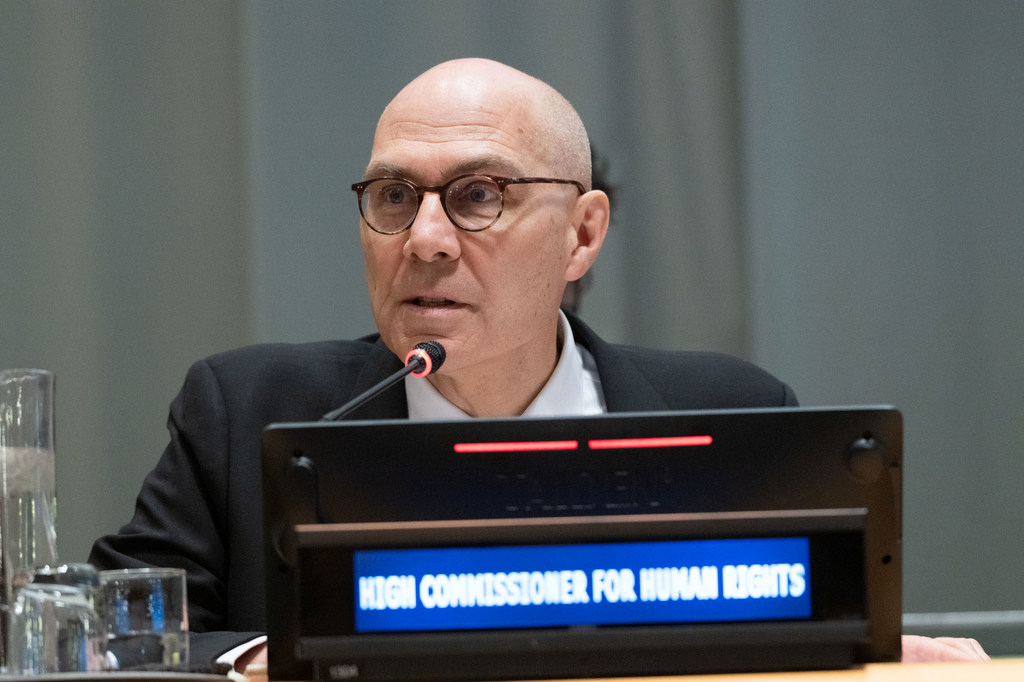
Volker Türk, UN High Commissioner for Human Rights, briefs a General Assembly informal meeting on missing persons.

The sanctions, the statement continues, attack the judges for performing their judicial functions, an act which, he said, runs “directly counter to respect for the rule of law and the equal protection of the law – values for which the U.S. has long stood.”

The statement by Mr. Türk follows the ICC’s strongly worded press release on Thursday, describing the sanctions as “a clear attempt to undermine the independence of an international judicial institution which operates under the mandate from 125 States Parties from all corners of the globe.”

The ICC reinforced its position on Friday with a release from the Assembly of State Parties –the management oversight and legislative body of the court – rejecting the US sanctions which, it declared, “risk undermining global efforts to ensure accountability for the gravest crimes of concern to the international community and erode the shared commitment to the rule of law, the fight against impunity, and the preservation of a rules-based international order.”

Source link