US strikes on Iran’s nuclear sites ‘marks perilous turn’: Diplomacy must prevail, says Guterres

After ten days of airstrikes initiated by Israel aimed at crippling Iran’s nuclear programme which have led to deadly daily exchanges of missile fire between Tehran and Tel Aviv, the UN chief said that diplomacy must now prevail.

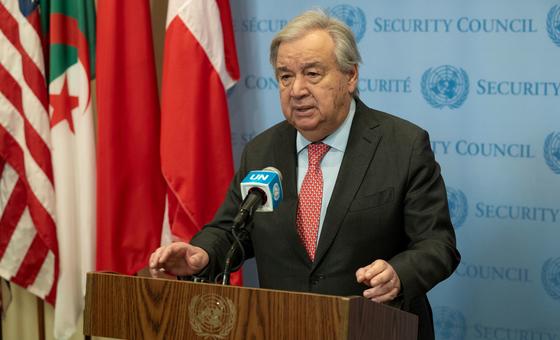
We now risk descending into a rathole of retaliation after retaliation,” he said, responding to the US intervention overnight in support of Israel’s military campaign, which targeted three facilities involved in uranium enrichment.

Return to serious negotiations essential

We must act – immediately and decisively – to halt the fighting and return to serious, sustained negotiations on the Iran nuclear programme,” Mr. Guterres added.

He told ambassadors the citizens of the wider Middle East region could not endure yet another cycle of destruction. Demanding a ceasefire, he also put Iran on notice that it must “fully respect” the Non-Proliferation Treaty on the development of nuclear weapons as a cornerstone of peace and security worldwide.

Iran has consistently denied the allegation from Israel and others that its ambitions are to become a nuclear armed State, versus developing atomic energy for purely peaceful purposes.

Israel, the US and Iran face a stark choice. “One path leads to a wider war,” the UN chief continued, “deeper human suffering and serious damage to the international order. The other leads to de-escalation, diplomacy and dialogue.”

Grossi warns of major risks following strikes

The head of the UN’s atomic energy watchdog, the IAEA, warned ambassadors the recent military strikes by Israel and now the US on nuclear sites in Iran have badly compromised safety and could pose serious risks if the situation worsens.

International Atomic Energy Agency Director General Rafael Grossi said the attacks had caused “a sharp degradation in nuclear safety and security”, even though there had been no radiation leaks which could potentially impact the public so far.

The IAEA chief warned ambassadors that if the short window of opportunity to return to dialogue closes then the destruction could be “unthinkable” while the global nuclear non-proliferation regime “as we know it could crumble and fall.”

Mr. Grossi confirmed that Iran’s main enrichment facility at Natanz had suffered major damage, including to key power infrastructure and underground halls containing uranium materials.

He said the main concern inside the site was now chemical contamination, which can be dangerous if inhaled or ingested.

Massive radiation leak still possible

He also listed damage at other nuclear-related sites across the country, including Esfahan, Arak and Tehran, adding that while radiation levels outside remained normal, the attacks had raised alarm over Iran’s operational nuclear plant at Bushehr.

Mr. Grossi warned that any strike on Bushehr could trigger a massive radiation release across the region. “The risk is real,” he said. “Military escalation threatens lives and delays the diplomacy that’s needed to resolve this crisis.”

He urged all sides to show restraint and said the IAEA stood ready to send experts back in to help monitor and protect damaged nuclear sites.

Senior political affairs official: ‘No military solution’

Assistant Secretary-General for Political Affairs Miroslav Jenča told ambassadors that the world is facing “a dangerous moment” following the US bombing mission, as Iran considers potential retaliation.

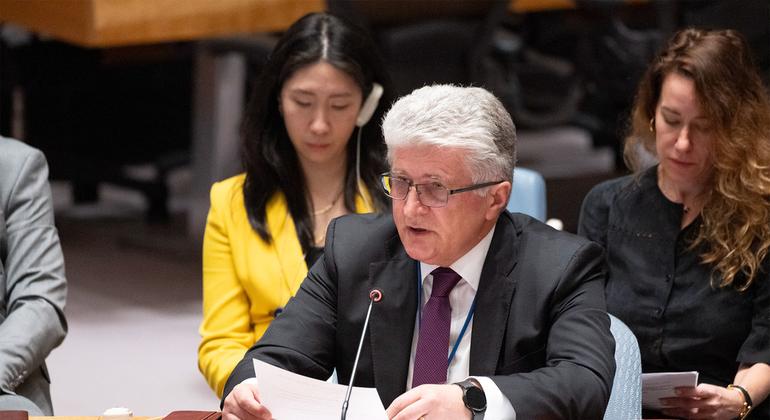
He warned the council that the region risks being “engulfed in further instability and volatility”, with “no military solution to this conflict”.

Mr. Jenča confirmed extensive damage at Iranian sites, citing open-source satellite imagery and Iranian reports that tunnels and buildings at the Fordow nuclear facility had been hit. He urged Tehran to grant IAEA inspectors access “as soon as safety conditions allow”.

Death toll mounting

Hostilities between Iran and Israel are now into their tenth day, and Mr. Jenča said the humanitarian toll is mounting. “Most [of the 430 killed in Iran] have been civilians,” he noted, while also citing Israeli reports of 25 dead and over 1,300 injured.

He also flagged growing threats from non-State armed groups, including the Houthis in Yemen, warning that their retaliation could widen the conflict. Iran’s parliament, meanwhile, has voiced support for closing the crucial trading route through the narrow Strait of Hormuz.

The world will not be spared from the ramifications of this dangerous conflict,” Mr. Jenča said, urging countries to act in line with international law and the UN Charter.

Source link

SECURITY COUNCIL LIVE: ‘Diplomacy must prevail’ over Iran following US military intervention, urges Guterres

The UN Secretary-General told the Security Council on Sunday that the bombing of Iran’s nuclear sites by the United States marks a “perilous turn”, warning that the region cannot endure yet another “cycle of destruction.” António Guterres said the must be an immediate ceasefire and returned to “serious, sustained negotiations.” We’ll have live updates from our Meetings Coverage team below and app users can follow here.

Source link

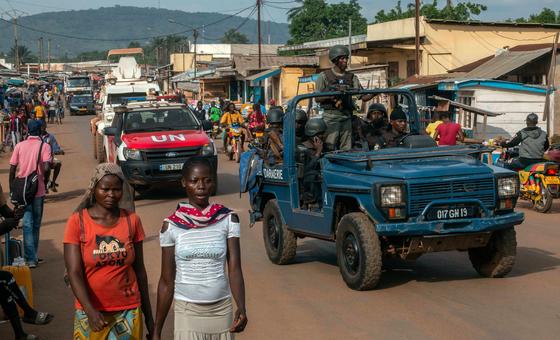
Guterres condemns deadly attack on peacekeepers in Central African Republic

The ambush took place on Friday along the Birao-Am Dafock axis in the volatile Vakaga Prefecture, in northeastern CAR, close to the border with conflict-hit Sudan.

According to the stabilization mission, MINUSCA, the patrol was targeted by “unidentified armed elements” in the locality of Am-Sissia.

Attack may be a war crime

In a statement released by his Spokesperson on Sunday, Secretary-General António Guterres extended his deepest condolences to the bereaved families, as well as to the Government and people of Zambia, and wished a swift recovery to the injured soldier.

He stressed that attacks against UN peacekeepers may constitute war crimes under international law and urged the Central African authorities “to spare no effort in identifying the perpetrators of this tragedy so that they can be brought to justice swiftly”.

This marks the third fatal attack against MINUSCA peacekeeping patrols since the start of 2025.

In March, a Kenyan peacekeeper was killed in the Haut-Mbomou prefecture, and a month earlier, a Tunisian ‘blue helmet’ lost his life in the north. Earlier this week, two Nepalese peacekeepers were injured during an assault in the southwest.

Valentine Rugwabiza, head of the UN mission, decried the “multiplication of attacks against peacekeepers” and echoed the call for justice, urging the authorities to act decisively against those responsible.

Since its deployment in 2014, MINUSCA has suffered significant losses, with around 150 peacekeepers paying the ultimate price.

The 17,000-strong force was established to help stabilise CAR, a country wracked by decades of political instability, armed conflict, and humanitarian crises.

According to a February report by the UN refugee agency (UNHCR), worsening insecurity across parts of the country has forced MINUSCA to step up patrols in several regions, including areas near the border with Sudan where violence and displacement have surged in recent months amid the brutal civil war between rival militaries there.

The Secretary-General reaffirmed the UN’s solidarity with the people and Government of CAR, underlining the world body’s continued commitment to peace and stability in the region.

Source link

What is financing for development?

These are part of 17 goals agreed by nearly every country, called the Sustainable Development Goals (SDGs). The plan is to hit these targets by 2030.

But we’re falling behind. One big reason? There just isn’t enough consistent funding to make real progress.

That’s why world leaders, economists, and other decision-makers are meeting at the end of this month in Sevilla, Spain, for a major event called the Fourth International Conference on Financing for Development. It’s being called a “once-in-a-decade opportunity” to rethink how the world pays for sustainable development.

What is financing for development?

At its core, financing for development works to answer a simple question – how does the world pay for a fairer and more balanced system of aid, trade and development? 

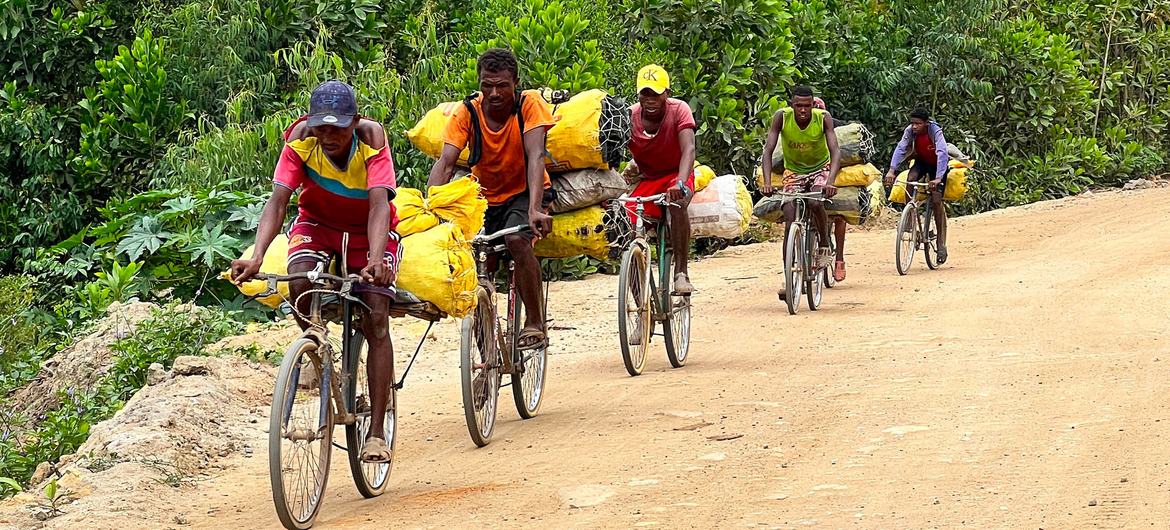
Traders in Madagascar. one of the most under-developed countries in Africa, transport charcoal to market.

The answer from the global community has been to create a system which mobilizes the entire international financial architecture – taxes, subsidies, trade, financial and monetary policies — towards the development agenda.

The architecture aspires to be as inclusive as possible, engaging a wide array of funding sources empowering countries to become more self-sufficient so their citizens can lead healthy, productive, prosperous and peaceful lives.

Financing for development is basically about “changing the way the system works to make it so that developing countries are able to…actually invest in their futures,” Shari Spiegel, Director of Financing for Sustainable Development at the UN’s Department of Economic and Social Affairs (DESA), told UN News

Among these sources of financing are multilateral development banks that provide financial and technical support to developing countries. Revised international and national trade and tax policies also work to jump-start developing economies.

And, official development assistance (ODA) creates a channel through which aid from developed countries can flow directly to developing countries.

Why is financing for development important? 

From rising debt and falling investment to shrinking aid and missed development goals, the current system is failing the people it is meant to serve. 

People everywhere are paying the price:

  • Debt is rising, investment is falling, and donor aid is shrinking.
  • 600 million people could still be living in extreme poverty by 2030 if we don’t change course and it will take many more decades to reach the SDGs.
  • Today, 3.3 billion people live in countries that spend more on paying off debt than on health or education.
  • Moreover, billions of people will continue to live in countries which must prioritize debt payments over development.
  • That means less money for schools, hospitals, clean water, and jobs – the  basics that people need to thrive.

And for the people who face the consequences of the world’s inaction, this is an unacceptable timeline.

What systemic changes need to be made?

With trade barriers growing and official development assistance decreasing annually, a business-as-usual approach to financing for development is unsustainable. 

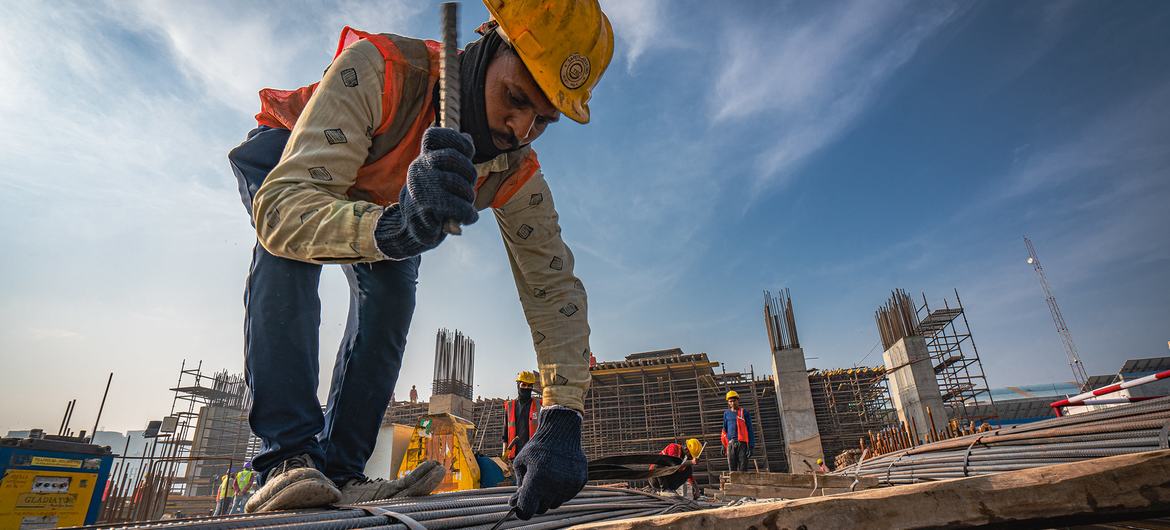
Work has begun on a rapid transit system connecting Delhi to Meerut in Uttar Pradesh, India.

The upcoming conference in Sevilla provides an opportunity to change course, to mobilize finance at scale and reform the rules of the system to put people’s needs at the centre.

The conference will bring together countries, civil society representatives and financial experts to discuss new approaches to financing for development.

Crucially, this conference will also give developing countries a seat at the table, so their needs are addressed in international financial decision-making. 

What role does debt play?

In the current financing system, developing countries continue to pay exorbitant amounts to service their debt while also facing borrowing costs which can be as much as two or four times higher than their developed counterparts.

These costs tend to rise especially during or directly after times of crisis, creating a feedback loop through which developing countries cannot afford to develop the very structures which would enable them to pay these costs.

“Faced with sky-high debt burdens and cost of capital, developing countries have limited prospects of financing the sustainable development goals,” the UN Secretary-General, António Guterres said. 

© UNICEF/Allessio Romenzi

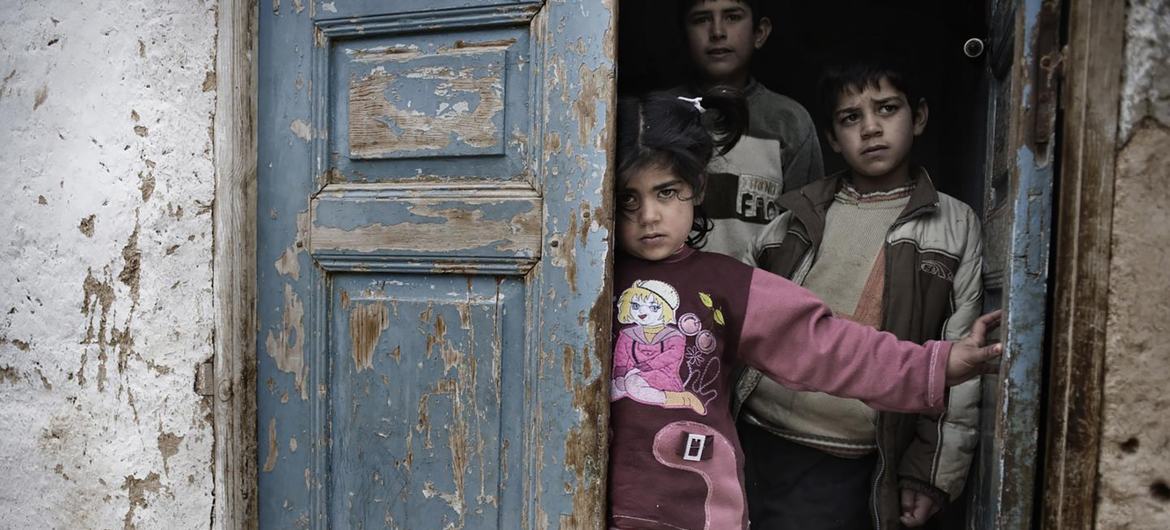
Children stand in the doorway of a home in a poverty stricken neighborhood in Lebanon. (file)

What can be expected from the conference?

The Secretary-General has said that it will take “big ideas” and “ambitious reforms” to get back on track to ending poverty, hunger and inequality.

“[The conference] presents a unique opportunity to reform an international financial system that is outdated, dysfunctional and unfair,” UN chief António Guterres has said.

Member States reached agreement on a draft which will launch an ambitious package of reforms and actions countries need to take to close the $4 trillion financing gap.

The United States pulled out of the conference process on Tuesday during final negotiations over the outcome document, saying that it couldn’t get on board with the draft. 

Reform will come in part from effectively mobilizing all stakeholders – private and public, formal and informal, developing and developed – and aligning their incentives and commitments towards a sustainable future.   

This includes emphasising multilateralism as the foundation of all development, increasing taxes which directs public funds towards international development goals, lowering the cost of capital for developing countries, restructuring existing debt and searching for even more innovative methods of finance.

“Sevilla is a moment in time. It’s really the beginning, not the end of the process. So now the question is, how do we implement the commitments?” said Ms. Spiegel.

Reforming a broken financing system is challenging but Ms. Spiegel is optimistic that multilateralism is up to the task. 

Source link

UN chief ‘gravely alarmed’ by US bombing of Iranian nuclear sites

“I am gravely alarmed by the use of force by the United States against Iran today,” said the UN chief, reiterating that there is no military solution.

This is a dangerous escalation in a region already on the edge – and a direct threat to international peace and security.”

President Donald Trump delivered a televised address to the nation from the White House at 10pm local time and said that Iran’s nuclear facilities at Fordo, Natanz and Isfahan had been “totally obliterated” describing the long-range bombing raid as a “spectacular military success.”

President Trump called on Iran’s leadership to now “make peace” and return to negotiations over its nuclear programme or suffer a far greater wave of attacks.

Iranian authorities have yet to confirm the extent of the damage to the three sites in central Iran. Earlier in the day, Iran’s foreign minister reportedly warned the US against any involvement in the Iran-Israel conflict which erupted on 13 June.

Deadly strikes

At least 430 Iranians are believed to have been killed during waves of strikes since then with around 3,500 injured, according to figures from the Iranian health ministry.

In Israel, 24 civilians have died in the retaliatory attacks according to local authorities with more than 400 missiles reportedly fired towards the country.

B-2 bombers were involved in the US strikes, President Trump confirmed, dropping so-called “bunker buster” bombs on the uranium enrichment site at Fordow which is buried deep inside a mountain south of the capital Tehran.

‘Avoid a spiral of chaos’

In his statement, the Secretary-General reiterated his concerns voiced in the Security Council during Friday’s emergency meeting on the crisis that the conflict “could rapidly get out of control – with catastrophic consequences for civilians, the region, and the world.”

He called on all Member States to de-escalate the situation which threatens the stability of the Middle East and beyond, calling for everyone to uphold their obligations under the UN Charter and international law.

At this perilous hour, it is critical to avoid a spiral of chaos,” he added calling for an immediate return to negotiations between the warring parties.

There is no military solution. The only path forward is diplomacy. The only hope is peace.”

Source link

‘One Earth, One Health’: Yoga Day provides respite in a tumultuous world

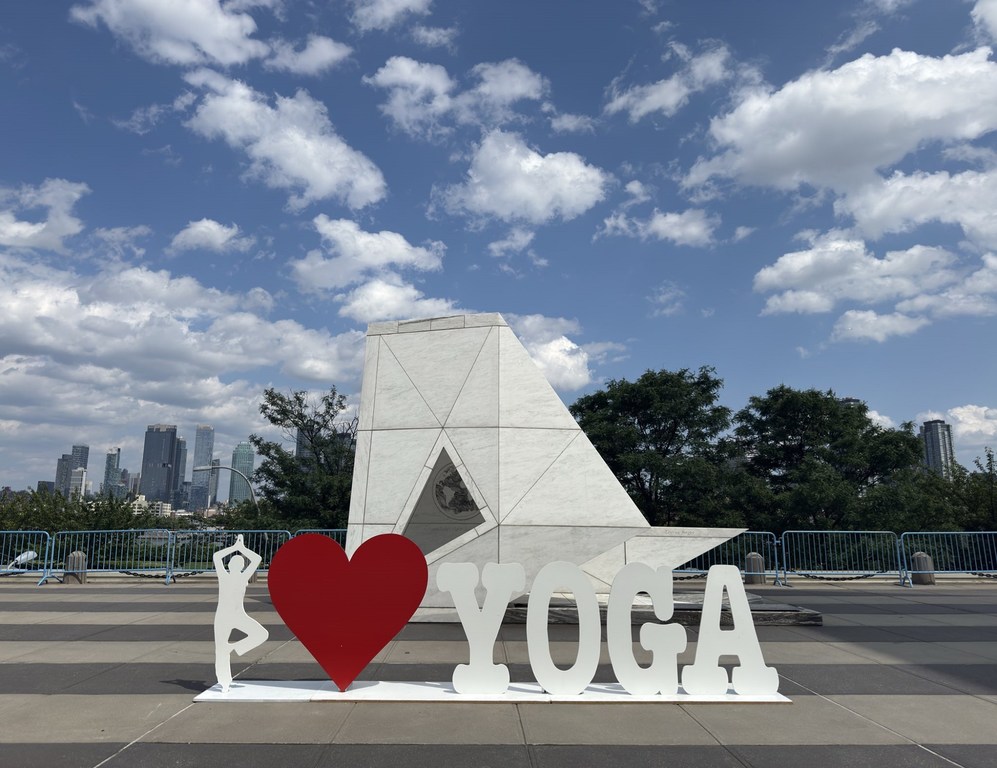
This powerful message of International Yoga Day, observed annually on 21 June, reverberated through UN Headquarters in New York on Friday as hundreds gathered to embrace the ancient, holistic practice.

A familiar tradition now each year, the North Lawn once again transformed into an open-air yoga studio overlooking the East River.  Following a stretch of rainy, gray days, the sky had finally cleared, making it a bright, warm day.

And yoga enthusiasts, including diplomats, UN officials and staff, took full advantage of it, rolling out their mats – flexing bodies and minds.

Peter Rogina, founder of Project Peace Lights, was delighted to return to the headquarters and fondly recalled the 2019 event, which was moved indoors to the General Assembly Hall due to rain.

“I love the opportunity to practice with such a large group of people, the energy is just amplified…And I also have my son with me, so to introduce him to this experience, I am also very excited.”

Lama Aria Drolma is a Buddhist teacher and meditation expert.

A Buddhist monastic Lama Aria Drolma comes to the UN every year to participate in the event. Her path has taken her from the world of corporate modeling to a more reflective place of inner peace and meditation.

“When I was a young child growing up in India, I used to practice yoga. It touches not only the body but also the soul. It’s very meditative as well. I find yoga to be one of the healthiest things we all can do to take care of our health.”

‘One family’

The emphasis on personal wellness also highlighted the benefits of yoga going beyond individuals to encompass the health of the entire planet.

Organized by the Permanent Mission of India to the UN in collaboration with the UN Secretariat, the theme of this year’s event was, Yoga for One Earth, One Health.

India’s Permanent Representative Ambassador P. Harish noted how it underscores a vital truth: personal well-being and planetary health are deeply interconnected.

“In caring for ourselves, we begin to care for Earth, reflecting the enduring Indian ethos of Vasudhaiva Kutumbakam, or the whole world is one family.”

“The 11th edition of the Yoga Day offers us an opportunity to reflect on how yoga has grown into a global force for well-being, touching people across age-groups, geographies and walks of life,” he added.

Echoing that, Didi Ananda Radhika Acharya from Ananda Marga Women’s Welfare Center pointed out that more than just an exercise, yoga is  a way to discover the sense of oneness with yourself, the world and nature.

“On the outside, we are our bodies, within that lies our mind. Deep further inside, there is something that is always witnessing us, observing us. That is our soul. Through Yoga, we can reach that inner space. When we delve into the depths of our mind through yoga, we realize how deeply connected we all are.”

A symbol of hope

Participants on the lawn ranged from experienced practitioners to curious first timers, engaged in basic yoga asanas (poses), breathing techniques and stretching exercises.

Permanent Mission of India to the UN

Marking International Day of Yoga at UN Headquarters in New York City. (20 June 2025)

The key highlight of the programme was a guided meditation session by the renowned physician and a leading figure on integrative well-being, Dr. Deepak Chopra.

Marta Shedletsky from Sivananda Yoga Vedanta Center in New York attended the session seeking a sense of community, trust – and hope. The venue held a special meaning for her.

“What’s going on in the world these days, with all the turmoil and all the wars that are going on, this place feels like a symbol of hope for a better future and the possibility of peace.”

UN reiterates call for urgent de-escalation amid Iran-Israel conflict, worsening Gaza crisis

In a joint call to de-escalate, UN agencies have warned that further conflict risks triggering new displacement in a region already strained by decades of war and instability.

The UN refugee agency (UNHCR) noted military strikes have led people in both Iran and Israel to flee their homes in search of safety from tit-for-tat missile strikes.

“Movements have been reported from Tehran and other parts of Iran, with some choosing to cross into neighbouring countries,” the agency stated. Meanwhile, “shelling has caused people in Israel to seek shelter elsewhere in the country and in some cases abroad.”

This region has already endured more than its share of war, loss, and displacement – we cannot allow another refugee crisis to take root,” said UN High Commissioner for Refugees Filippo Grandi. “The time to de-escalate is right now. Once people are forced to flee, there’s no quick way back – and all too often, the consequences last for generations.”

UNHCR urged countries in the region to respect the right to seek asylum and ensure humanitarian access to those affected, while calling on all parties to protect civilians and civilian infrastructure.

Nuclear risks rise as Iran facilities hit

The conflict escalated sharply following Israeli airstrikes on multiple Iranian nuclear-related sites in the past week, including a centrifuge manufacturing workshop in Esfahan, according to the UN’s International Atomic Energy Agency (IAEA).

“This is the third such facility that has been targeted over the past week,” Director General Rafael Mariano Grossi confirmed, noting that the facility had been under IAEA surveillance as part of the Joint Comprehensive Plan of Action (JCPOA) – the nuclear deal signed with Iran in 2015, which the United States pulled out of in 2017.

“We know this facility well. There was no nuclear material at this site and therefore the attack on it will have no radiological consequences,” he said. However, Mr. Grossi warned that continued strikes on nuclear infrastructure are severely undermining nuclear safety and security.

Though they have not so far led to a radiological release affecting the public, there is a danger this could occur.”

The IAEA has been tracking damage to sites in Esfahan, Arak, Karaj, Natanz and Tehran since the Israeli military campaign against Iran began on 13 June. T

he agency has been providing regular updates to the UN Security Council, which has yet to reach consensus on a response. On Friday, ambassadors debating the escalation heard during an emergency meeting in New York heard UN Secretary-General António Guterres warn that if fighting escalated it could “ignite a fire no one can control.”

Gaza in ruins, Palestinians face starvation

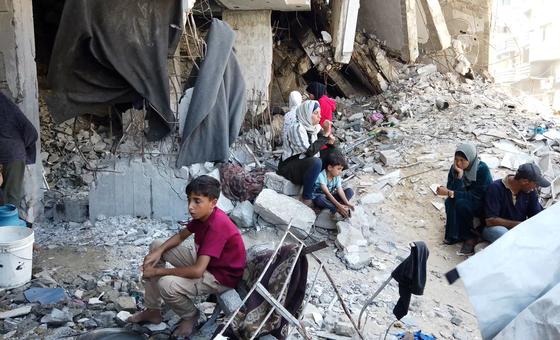
The mounting regional crisis is unfolding against the backdrop of the war in Gaza, where humanitarian conditions continue to deteriorate.

On Saturday, the head of the UN agency for Palestine refugees (UNRWA), Philippe Lazzarini, painted a grim picture of life in the enclave during an address to the Organisation of Islamic Cooperation in Istanbul.

In Gaza, two million people are being starved,” he said bluntly. “The newly created, so-called ‘aid mechanism’ is an abomination that humiliates and degrades desperate people. It is a death-trap, costing more lives than it saves.”

Lazzarini described a territory devastated by nearly two years of conflict, with more than 55,000 reported dead by local authorities in the Strip – the majority of them women and children.

Survivors, he said, “are shadows of their former selves; their lives forever changed by unspeakable trauma and profound loss.”

In the occupied West Bank, displacement and destruction of public infrastructure are altering the demography of Palestinian camps, he added, in what he described as an effort to erase the prospect of a Palestinian State under the UN-backed two-State solution and strip Palestinians of refugee status.

UNRWA in the crosshairs

UNRWA has become an objective of this war,” Mr. Lazzarini warned, citing the deaths of at least 318 of the agency’s staff in Gaza since the 7 October terror attacks on Israel by Hamas and other militants, the expulsion of international staff, and a campaign of disinformation aimed at crippling its funding.

Despite these pressures, UNRWA continues to provide lifesaving services, including over 15,000 health consultations per day, waste management and shelter support.

UNRWA’s financial situation is now “dire,” the agency chief said. “Without additional funding, I will soon have to take unprecedented decisions affecting our operations across the region.”

He appealed to Member States to act urgently: “The sudden loss or reduction of UNRWA’s services will only deepen suffering and despair across the occupied Palestinian territory. It might spark unrest in the neighbouring countries. This is something that the region cannot afford, especially now.”

Why is the manosphere on the rise? UN Women sounds the alarm over online misogyny

With more than 5.5 billion people connected online – nearly all of them active on social media – digital platforms have become central to how people interact, UN Women highlights.

However, they are also being weaponised to spread misogyny and hate. Once confined to fringe internet forums, the manosphere now reaches into schoolyards, workplaces, and is sometimes upending intimate personal relationships.

“We are seeing an increasing trend of young men and boys looking to influencers for guidance on issues like dating, fitness, and fatherhood,” said Kalliopi Mingeirou, Chief of the Ending Violence Against Women and Girls Section at UN Women.

Looking for answers to feel more secure about themselves, these boys encounter “strength” in online communities who also promote harmful attitudes that distort masculinity and fuel misogyny.

Boys are looking for ‘validation online’

“These spaces are really taking advantage of those insecurities and a need for validation…very often circulating messages that are very dismissive of women and girls’ positions in society and are often very misogynistic, portraying a very bad picture of women’s rights activists, for example,” Ms. Mingeirou told UN News.

According to the Movember Foundation, a leading men’s health organization and partner of UN Women, two-thirds of young men regularly engage with masculinity influencers online.

While some content offers genuine support, much of it promotes extreme language and sexist ideology, reinforcing the idea that men are victims of feminism and modern social change.

The most recent UN Secretary-General’s report on violence against women and girls notes that groups within the manosphere are united in their rejection of feminism and their portrayal of women as manipulative or dangerous.

These narratives are increasingly being amplified by social media algorithms that reward provocative and polarizing content.

Misogynistic content harms girls and boys

Stressing that anonymity makes amplification of sexist and hate speech on platforms easier, Ms. Mingeirou told us the abuse not only damages their mental and physical wellbeing but also poses “a serious risk for democracy in general”.

“Women and girls are feeling less comfortable to be exposed to the risks and threats when they engage in digital platforms – and we often see women journalists, women politicians who tend to not engage, because they are afraid of the impact it has on them”.

Underlying that stereotypes create anxiety and harm boys and men alike, Ms. Mingeirou added that safe spaces need to be created, so everyone can look for guidance without being subjected to harmful content.

A threat beyond the internet

The manosphere’s toxic narratives are no longer confined to obscure online spaces. Their influence is seeping into broader culture and politics, trivializing gender-based violence and reinforcing discriminatory stereotypes.

In extreme cases, these ideologies intersect with other forms of radicalization, including racism, homophobia, and authoritarianism. Misogyny online quickly becomes misogyny offline.

“We have growing evidence that in some of the community mass shootings or extreme incidents against the community, very often the perpetrators were also heavily engaged in such misogynistic online platforms, conveying messaging connecting with broader ideologies that puts all of us at risk”, Ms. Mingeirou continued.

These communities do not all speak with one voice, but they are united in portraying feminism as dangerous, women as manipulative, and men as victims of social change. Their ideas are gaining ground, particularly among boys and young men, amplified by algorithms that prioritize sensational and extreme content. The manosphere’s narratives are no longer confined to niche corners of the internet. They are shaping how people think, how they vote, and how they treat others.

© Unsplash/John Schnobrich

With more than 5.5 billion people connected online, digital platforms have become central to how people interact.

A rights-based response

As the world marks the 30th anniversary of the Beijing Declaration and Platform for Action, UN Women is warning that the rise of online misogyny poses a direct threat to the progress made toward gender equality.

In response, the agency is scaling up efforts to counter toxic digital environments. Their multi-pronged approach includes:

  • Research and data collection on the spread and impact of online hate.
  • Policy advocacy for digital safety and regulation.
  • Support for survivors of online abuse.
  • Public education campaigns challenging toxic masculinity.
  • Youth-focused programming aimed at building digital resilience and promoting gender equality.
  • Calling on the media to take a more active role in addressing this issue.

Education as Prevention

Ultimately, education is one of the most effective tools for dismantling the foundation of misogynistic ideology. Talking to children and adolescents about gender equality, healthy relationships, and digital citizenship is crucial to preventing harmful attitudes from taking root.

“It’s not just about protecting girls,” Ms. Mingeirou said. “It’s about creating a world where boys and girls alike can grow up free from the toxic pressures of harmful gender expectations.”

Source link

Ukraine: Security Council hears of escalating attacks, diplomatic developments

“As we are facing renewed escalation on the ground and crisis elsewhere, it is critical to maintain focused attention on the urgent need for peace in Ukraine,” said UN Assistant Secretary-General Miroslav Jenča – one of two senior officials briefing the ambassadors.

In the three weeks since the Council last met on Ukraine, Russia has carried out unrelenting large-scale attacks on cities and towns, resulting in a significant rise in civilian casualties.

Deadly Kyiv attack 

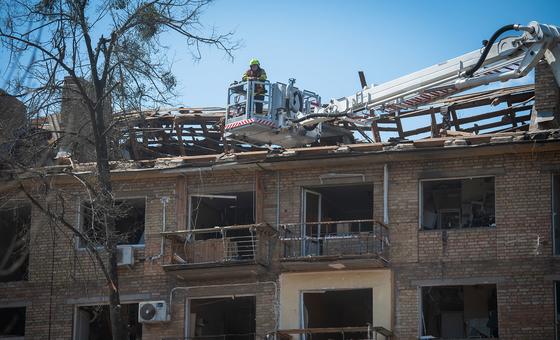
A combined drone and missile attack on the capital Kyiv overnight on 16-17 June was one of the deadliest there in a year. At least 28 civilians were killed and more than 130 injured. Many others are still reported missing under the rubble of the 35 apartments destroyed that night.

Attacks also reportedly occurred in Odesa, Zaporizhzhia, Chernihiv, Zhytomyr, Kirovohrad, Mykolaiv and Kyiv provinces that same night, with two civilians reportedly killed and scores injured in Odesa. 

“These levels of death and destruction risk dimming hope for an immediate ceasefire and threaten to undermine prospects for a lasting peace,” he said. 

‘Dramatic increase’ in casualties

Data from the UN human rights office, OHCHR, reveals that at least 13,438 civilians, including 713 children, have been killed since Russia launched its full-scale invasion of Ukraine in February 2022. Another 33,270 civilians have been injured, including over 2,000 children.

The number of civilian casualties in the first five months of this year alone totaled 5,144 – nearly 50 per cent higher than in the same period in 2024. Of this number, 859 were killed and 4,285 injured. 

“This dramatic increase is a result of intensified use of long-range weapons, both missiles and loitering munitions, against cities across Ukraine,” said Mr. Jenča. 

Ukrainian authorities report that between 1 and 17 June, Russian forces launched at least 3,340 long-range drones, including loitering munitions and decoy drones, and 135 missiles into the country. This compares to 544 long-range munitions launched during the whole of June 2024.

Attacks reported in Russia 

Escalating violence also continues to be reported in Russian regions that border Ukraine, though at a far lower level.  

In the Kursk region, a woman died in hospital a day after being injured in a Ukrainian drone attack while a man was killed, and five others injured, in a strike on a recreational centre. The UN was not able to verify these reports. 

“Let me once again unequivocally state – attacks against civilians and civilian infrastructure are strictly prohibited under international humanitarian law, wherever they occur,” said Mr. Jenča, reiterating the UN’s condemnation.

Diplomatic developments welcomed 

Meanwhile, “important diplomatic developments have taken place on the challenging path towards a lasting peace in Ukraine.”  

Ukrainian and Russian delegations held their second face-to-face meeting in Istanbul on 2 June.  They reportedly exchanged written memoranda outlining their respective visions for a ceasefire and parameters for a future peace settlement. 

The sides also reached agreement for the large-scale exchange of prisoners of war, mortal remains and civilian detainees. Swaps have been carried out since then, with the latest round taking place earlier on Friday. The mortal remains of 6,057 Ukrainian and 78 Russian servicepersons also have been returned as of 16 June.

“We welcome the continuation of all meaningful diplomatic efforts, including the recent talks in Istanbul. We urge the sides to make tangible progress towards a ceasefire and a lasting settlement through continued talks,” said Mr. Jenča.

In the face of escalation, he called for redoubling efforts “to ensure that the fragile diplomatic process is not only sustained but becomes irreversible.”

Civilians bear the brunt

In the meantime, civilians continue to bear the severe consequences of the war, said Edem Wosornu, Director of Operations at the UN Office for the Coordination of Humanitarian Affairs (OCHA).

“As the war continues, millions of lives are impacted every day. Essential  services are disrupted, and vulnerabilities are deepening for nearly 13 million people in need of assistance,” she said.

Roughly 3.7 million people are displaced inside Ukraine, including 60,000 newly displaced from frontline regions since January alone. Almost six million citizens are now refugees, mainly in Europe.

Amid the intensifying hostilities, the Government continues to order the mandatory evacuation of families with children from front-line villages, she said.  However, for some people in these locations “attacks are so frequent  that evacuations themselves become a risky prospect.”

Humanitarians at risk

Ms. Wosornu noted that humanitarians also face growing threats. This year, two aid workers have been killed and 24 injured while delivering assistance, and some 68 incidents of violence impacting relief personnel, assets and facilities have been recorded. 

She said that “despite an operating environment beset by multiple risks and challenges,” humanitarians remain committed and engaged, and their operations continue. Between January and May, they reached some 3.4 million people with life-saving aid, including food, water, medicines, health services and livelihood support.

Humanitarians are seeking $2.6 billion for Ukraine this year, and $816 million, has been secured, she said, stressing the importance importance of “timely financial support”.

End the war

Ms. Wosornu concluded her remarks by renewing earlier calls for the Council to take urgent, collective action in three areas, including protecting civilians and ensuring safe humanitarian access to all in need.  

Ambassadors were also urged to ensure sustained financial support as “declining funding trends” threaten aid efforts.

Her final request was an appeal to “end this war, and until then, ensure that humanitarian concerns are a central part of discussions on a pause in fighting or longer-term agreement.” 

Source link

UN Peacebuilding Commission ‘more needed than ever’ amid rising conflict

They shared their experiences at an event this week at UN Headquarters to mark 20 years of the Peacebuilding Commission (PBC).

The intergovernmental advisory body supports countries emerging from conflict in areas such as governance, justice, reconciliation, institution-building and sustainable development.

Pain and promise

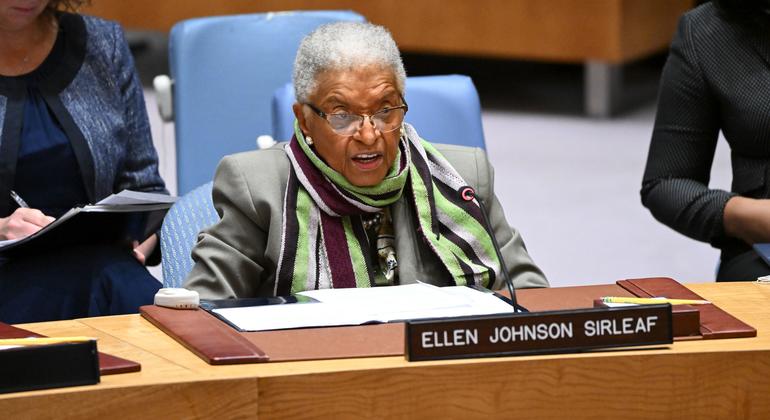
Liberia’s story is one of pain, but also of promise,” Ms. Johnson-Sirleaf said in a video message.

“A nation once brought to its knees by protracted conflict now stands as a testimony to what is possible when national will is matched by international solidarity.”

In August 2003, the Liberian Government, two rebel groups and several political parties signed a peace accord in Accra, Ghana, after 14 years of civil war.

Building a new Liberia

“Knowing that Liberia could not return to what it was, we had to construct a new nation based on new governance structures of inclusion, transparency, justice and hope,” said the former President and Nobel Peace Prize laureate.

Critical institutions such as the Central Bank, the judiciary, the anti-corruption commission, and even civil society organizations, had to be restructured or built from the ground up. And women played a central role in peace efforts by leading advocacy, mediation and community rebuilding.

“Importantly, also, Liberia’s path to peace could not be walked alone,” she said.

Ms. Johnson-Sirleaf pointed to the essential role played by the international community through the UN and its peacekeeping Mission UNMIL, regional bloc ECOWAS, the African Union, the European Union, and other entities.

‘A work in progress’

She also expressed gratitude to multilateral and bilateral partners – including the PBC – whose technical, financial and moral support laid the foundations for the peace enjoyed today.

“Liberia’s peace remains a work in progress,” she said. “We still face challenges -economic fragility, governance bottlenecks and the aspirations of a youthful population seeking opportunity. But we have also come a long way.”

The PBC has backed peacebuilding efforts in more than 30 countries and regions, for example supporting democratic transition in The Gambia and collaborating with Timor Leste to advance stability.

Its “intervention and decisiveness at a critical juncture is not only manifestly historic but serves as a cardinal reference point for preventive diplomacy and international solidarity,” said Gambia’s Foreign Minister Mamadou Tangara.

Conflicts on the rise

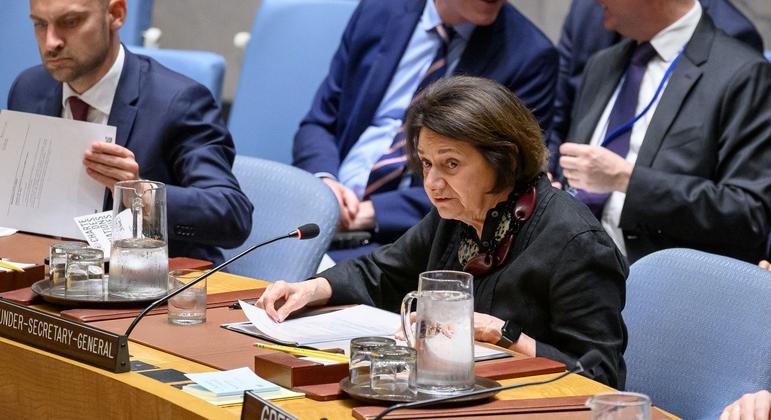
Rosemary DiCarlo, UN Under-Secretary-General for Political and Peacebuilding Affairs, remarked that the event was being held at a time when conflicts are becoming more numerous, more protracted and more complex, and as negotiated settlements are becoming even harder to achieve.

Against this backdrop, the role of the Peacebuilding Commission remains critical and more needed than ever,” she said.

She highlighted the Pact for the Future, adopted by UN Member States last September, which recognizes the central role of civil society, women and youth, and the value of UN partnerships with regional organizations and international financial institutions.

“Crucially, the Pact decided on the strengthening of the Peacebuilding Commission,” she said.  “Our task is to translate this ambition into practical progress.”

Still relevant today

Ms. DiCarlo said the PBC “should be equipped, strengthened and empowered to assist interested Member States to develop and implement national strategies for prevention and peace building.”

It should also have more systematic and robust links to other UN bodies and processes, such as the Security Council, and engage more deeply with regional organizations, international financial institutions and other key partners.

“The Commission is no longer a new institution, but its relevance and potential are undiminished at a time of increasing need. We must equip it to invest to deliver fully on its mandate.” 

Source link

For too long, ‘unbound horrors’ have unfolded in Sudan

Since civil war erupted in April 2023 between the generals of the national army and their former allies-turned rivals, the Rapid Support Forces (RSF) militia, vast areas of the country have been left in ruins.

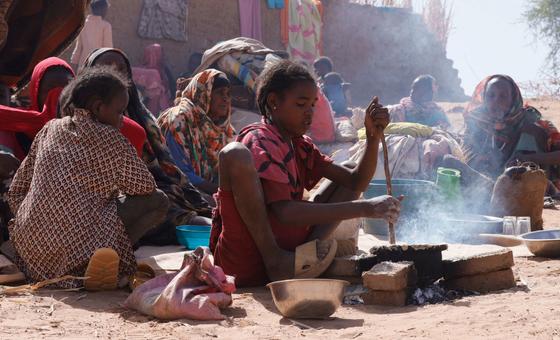
The conflict has fuelled the world’s largest displacement crisis, with more than 12 million people forcibly displaced, the majority of them women and children.

The recent escalation poses a grave risk of further deterioration in what is already a “brutal and deadly conflict”, raising serious concerns for civilian protection, said Volker Türk, the UN High Commissioner for Human Rights (OHCHR), in a statement.

Displacement camps under siege

Following a year-long siege, the RSF launched a renewed assault on the displacement camps around El Fasher on Monday, after months of intensified mobilisation, including the recruitment of children across Darfur.

The operation echoed the RSF’s ground offensive on Zamzam camp in April, which resulted in hundreds of civilian deaths, widespread sexual violence, and a deepening humanitarian emergency.

Between 10 and 13 April alone, the RSF reportedly killed more than 100 civilians in areas around El Fasher.

Trapped civilians

In South Kordofan state, fighting between the parties vying for control of the strategic town of Al Debibat has trapped thousands of civilians.

Meanwhile, in North Kordofan state, the RSF have reportedly surrounded the city of El Obeid, which is currently held by the SAF and allied groups.

The RSF commander has announced that the group may attack the city in the coming days.

“We know where further escalation will lead,” said Mr Türk.

For too long, “the world has witnessed the unbound horrors unfolding in Sudan”, he said, “civilians must be protected at all costs.”

Duty to protect

The UN rights chief urged “the parties to ensure civilians can safely leave El Fasher, Al Debibat, and El Obeid,” as well as other locations where people may be trapped.

Mr. Türk called on all parties to refrain from “attacking civilian objects,” and to ultimately lay down their weapons and put an end to hostilities.

OHCHR also called on “all States to exert their influence to press for a durable political solution,” and to ensure that parties to the conflict respect international humanitarian law, calling for an end to the flow of arms into the country.

Source link

‘A fire no one can control’: UN warns of spiralling Iran-Israel war

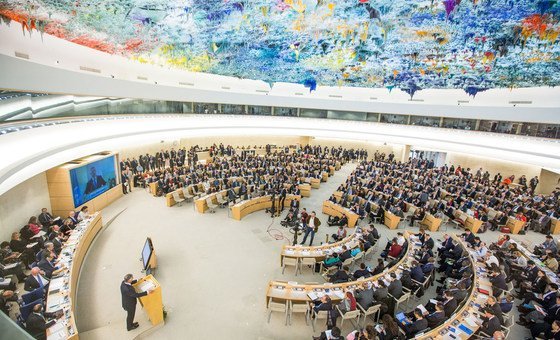
In an address to the UN Security Council on Friday, Mr. Guterres made an urgent plea for de-escalation, calling the spiralling confrontation a defining moment for the future of global security.

We are not drifting toward crisis – we are racing toward it,” he said.

“This is a moment that could shape the fate of nations…the expansion of this conflict could ignite a fire no one can control,” he warned.

Widespread panic, destruction

The Secretary-General’s remarks came amid a mounting civilian toll in both Israel and Iran, and as several nuclear sites in Iran have come under direct military assault.

Over 100 targets have been struck across Iran, including military and nuclear infrastructure such as the Natanz and Isfahan nuclear facilities and the Khondab heavy water reactor.

Iranian officials report over 224 civilian deaths, with some estimates twice as high. More than 2,500 have been injured reportedly – while major cities like Tehran have seen mass displacements, fuel shortages and widespread panic.

Iran has responded with its own barrage of missile strikes on Israel, hitting cities such as Tel Aviv, Haifa and Beersheba. Critical civilian sites, including the Soroka Medical Center and the Weizmann research institute, have been damaged. Twenty-four Israelis are confirmed dead, with more than 900 injured.

Give peace a chance

Mr. Guterres urged both parties to give diplomacy a chance, reiterating the need for full Iranian cooperation with the UN nuclear energy watchdog, IAEA, and warning that the “only thing predictable about this conflict is its unpredictability.”

He also called for unity within the Security Council and adherence to the UN Charter.

“The Non-Proliferation Treaty is a cornerstone of international security,” he said. “Iran must respect it. But the only way to bridge the trust gap is through diplomacy – not destruction.”

A wide view of the Security Council meeting on the Israel-Iran crisis.

Regional fallout expanding

Rosemary DiCarlo, UN Under-Secretary-General for political affairs, echoed those concerns, providing a grim overview of the violence and rising human toll.

“The vast majority are civilians,” she said, warning of a “humanitarian crisis in real time.”

The regional fallout is expanding, with airspace restrictions now spanning Lebanon to Iraq. Missiles from Yemen’s Houthi forces have targeted Israel and occupied Palestinian territory, while armed groups in Iraq are reportedly mobilizing.

“Any further expansion of the conflict could have enormous consequences for international peace and security,” Ms. DiCarlo cautioned.

She also highlighted global economic implications, noting that trade through the vital Strait of Hormuz has fallen 15 per cent amid rising tensions.

Grave warnings on nuclear safety

The most alarming update, however, came from IAEA Director General Rafael Grossi, who warned the Council that Israeli attacks on Iranian nuclear facilities are degrading critical safety systems and placing millions at potential radiological risk.

At Natanz, the destruction of electricity infrastructure and direct strikes on enrichment halls have led to internal contamination. While no radiological release has been detected outside the facility, Mr. Grossi warned that uranium compounds now pose significant health hazards within.

At Isfahan, multiple buildings – including a uranium conversion plant and a metal processing facility – were hit. At Arak’s Khondab reactor site, damage was sustained, though the facility was not operational.

The greatest risk, however, is the Bushehr Nuclear Power Plant, which remains operational.

A direct strike, Mr. Grossi warned, “could result in a high release of radioactivity to the environment.”

Millions at risk

Even disruption of its external power supply could lead to a core meltdown. In the worst-case scenario, radiation would affect populations hundreds of kilometres away and require mass evacuations.

Mr. Grossi also warned against any attack on the Tehran Nuclear Research Reactor, which could endanger millions in the capital.

Nuclear facilities and material must not be shrouded by the fog of war,” he said. “We must maintain communication, transparency and restraint.

Pledge to stay

Concluding his briefing, Mr. Grossi pledged that the IAEA would continue to monitor and report on nuclear safety conditions in Iran and reiterated his readiness to mediate.

He stressed the agency “can guarantee, through a watertight inspections system,” that nuclear weapons will not be developed in Iran, urging dialogue.

“The alternative is a protracted conflict – and a looming nuclear threat that would erode the global non-proliferation regime.”

From Syria, UN refugee chief calls for greater solidarity with displaced people

The UN High Commissioner for Refugees, Filippo Grandi, sounded the alarm on Friday, World Refugee Day, in a message from Syria.

He said the abject failure to end conflicts – including in Sudan, Ukraine, the Democratic Republic of the Congo and Gaza – continues to create immense suffering. 

Difficulty seeking shelter

“Yet the innocent people who run for their lives as the bullets fly and the missiles rain down are unjustly stigmatised, making it harder to escape danger and to find somewhere to recover and rebuild,” he said.

Their situation is further compounded by brutal cuts to humanitarian aid, affecting millions who desperately need assistance. 

At this critical juncture, it is vital that we reaffirm our solidarity with refugees – not just with words but with urgent action,” he said.

He added that inspiring examples already exists, from countries that continue to welcome and host refugees, to local communities that “open their homes, workplaces and hearts” to them, as well as “the countless individual acts of kindness and compassion that reveal our common humanity.”

Share the responsibility

Mr. Grandi said the international community can and must support these countries and communities by sharing the responsibility for protecting refugees, calling in particular for action by wealthier States, development banks, businesses and others.

The High Commissioner spent the Day in Syria, where some 600,000 people have returned from neighbouring countries after 14 years of war. Overall, more than two million Syrians have gone back to their homes and communities since the fall of the Assad regime last December.

“In a region that has suffered so much violence – and suffers even now – we are nonetheless presented with an opportunity to help Syrians achieve stability and prosperity. We must not let it pass by,” he said.

Mr. Grandi met Syrian families who spent more than a decade as refugees, whose deep joy at being among familiar faces and surroundings serve as reminder of refugees’ yearning for home. 

“Now more than ever, we must stand with refugees to keep alive their hopes of a better future,” he said. 

Source link

Gaza horrors continue as the weakest succumb to injuries and disease

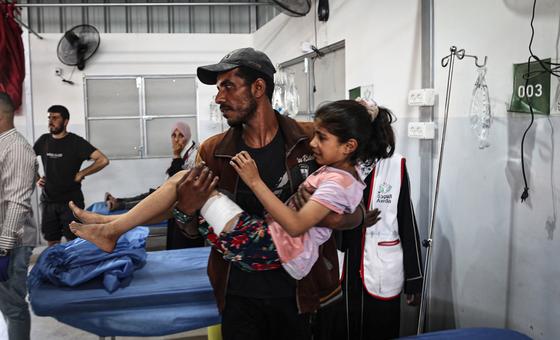
“I met a little boy who was wounded by a tank shell at one of these sites on the final day of me leaving Gaza – I learnt that this little boy had since died of those injuries,” said UN Children’s Fund (UNICEF) spokesperson James Elder. “That speaks to both what is happening at these sites and what is not happening when it comes to medical evacuations.”

A recent online video featuring a dying 13-year-old Abed al-Rahman who Mr. Elder met while on mission in Gaza has been seen thousands of times since it was published on 6 June. In the clip, Abed explains that he has been asking for pain relief for his shrapnel wounds, but none is available.

Speaking to journalists from Amman, Mr. Elder explained that partly destroyed hospitals including Nasser Medical Complex in Khan Younis continue to treat wounded children, despite a shortage of medicine and medical supplies.

“Humanitarian aid is so much more than food in a box; it’s oxygen kits, it’s ventilators, it’s hygiene packs; it’s medicines, it’s incubators,” he explained. “It’s all those things the United Nations was doing just a couple of months ago.”

Mr. Elder added that parents whose children need oxygen have been leaving hospital “because of the fear that Nasser may come under attack again. As the doctors told me, if you have a child who needs oxygen and they leave without the oxygen, they will, over a matter of time, die in a tent.”

Desperation, starvation

The dire shortage of the most basic life-sustaining aid linked to Israeli restrictions continues to create desperation and starvation across Gaza.

“I spoke to a grandmother in tears saying, how am I possibly to get to these sites?” Mr. Elder explained. “I’ve met young men who’ve been seven times and never returned with anything. So, there’s a complete lack of equity. There’s a complete lack of sites. You cannot distribute aid in a militarised zone, in a combat zone, by one party to the conflict.”

Those most susceptible to the lack of fresh drinking water, food and fuel are the weakest Gazans: the young, pregnant women, the elderly and amputees, Mr. Elder said. 

It would be impossible for them to walk the long distances required to fetch scant supplies from controversial non-UN aid hubs.

Lethal choice

“You have half a million people facing starvation with a lethal choice of being forced into very small pockets where most people can’t access into what are officially known as combat sites,” the UNICEF spokesperson explained. “We know children [who have been] killed at these sites.”

Meanwhile, malnutrition and the impact of it on people’s weakened immune systems continues to take its toll, the UN World Health Organization (WHO) warned.

“The latest reports say 610 patients have been admitted due to severe malnutrition complications,” said WHO spokesperson Christian Lindmeier. “But what does that mean? That means these are the lucky ones who made it so far to get to a place. 

“This does not count the many who were too weak to reach any point, who are too weak, who cannot be transported because the roads are blocked, because there are no ambulances, or because the hospitals, some of the health emergency centres have been shelled and bombed and are being constantly shelled and bombed.”

Source link

WHO warns of a health financing emergency

Speaking at the regular Friday press briefing in Geneva for humanitarian agencies, she warned that as wealthier nations make deep spending cuts, both international aid and national health systems are facing serious disruption.

Dr. Chalkidou highlighted recent decisions by the United States, several European governments, and EU bodies to freeze or scale down health aid.

WHO forecasts indicate that global health investment is likely to drop by up to 40 per cent this year, down $10 billion from just over $25 billion in 2023. The estimated $15 billion spent on health aid would bring the figure down to the lowest level in a decade.

Impacts in developing countries

This funding shortage is creating a health finance emergency in many developing countries – particularly in sub-Saharan Africa – which depend on external aid to finance their health systems.

In numerous countries, US-financed healthcare programmes were the primary source of external aid, accounting for as much as 30 per cent of current health spending in countries like Malawi, and around 25 per cent in Mozambique and Zimbabwe.

Since 2006, external aid per capita in low-income countries has consistently exceeded domestic health spending.

Many sub-Saharan nations face soaring debt burdens – some spending twice as much on debt servicing as on health – making reallocation of resources difficult.

The consequences are severe: Dr. Chalkidou referred to a survey by WHO showing that countries today are reporting health service disruptions “not seen since the peak of COVID-19”.

Solutions

To address this crisis, WHO is urging countries to reduce aid dependency, boost revenue through improved taxation—including health taxes on products like tobacco and alcohol—and work with multilateral banks to secure low-interest loans for cost-effective health investments.

WHO also plans to attend the upcoming International Conference on Financing for Development in Seville, where global leaders are expected to address the health financing crisis and hopefully make new commitments.

MIDDLE EAST CRISIS: Live updates for 20 June


One week since the Israel-Iran conflict erupted, diplomatic efforts to end the war are ramping up in Geneva today as foreign ministers from France, Germany, the UK and the European Union prepare to meet their Iranian counterpart. In New York, meanwhile, the UN Security Council is also set to discuss this latest worrying escalation, against the backdrop of the ongoing emergency in Gaza. We’ll be covering these developments and more across the UN system today. UN News app users can follow here.

Source link

‘We are at a point of no return’: grave violations against children surge for third year

This number represents a 25 per cent increase from 2023, marking the third consecutive year that violations have increased. 22,495 violations were committed against children themselves while the remaining targeted infrastructure such as schools and humanitarian aid intended for and used by children.

“The cries of 22,495 innocent children who should be learning to read or play ball — but instead have been forced to learn how to survive gunfire and bombings — should keep all of us awake at night,” said the Special Representative of the UN Secretary-General for Children and Armed Conflict, Virginia Gamba.

The report only details violations which could be independently verified by the United Nations, meaning the actual number of grave violations and children affected are likely much higher.

‘Children should not be a casualty of war’

The report attributed the increase to indiscriminate attacks — especially urban warfare — in addition to disregard for peace agreements and deepening humanitarian crises worldwide.

“Children living amidst hostilities are being stripped of their childhood … When we allow this to happen, we are not just failing to protect children – we are taking away their chance to grow up safe, to go to school, and to live a life with dignity and hope,” Ms. Gamba said.

In addition to the broader increase, the number of children subjected to multiple grave violations increased by 17 per cent.

The highest number of violations, 8,554, occurred in Israel and the Occupied Palestinian Territories – more than double the number in the Democratic Republic of the Congo (DRC) which followed.

Governments ‘blatantly’ ignore international law

The report noted that while non-State actors played an out-sized role in violations against individual children, government actors were the main forces responsible for killing and maiming children, attacking schools and hospitals, and denying humanitarian access.

“Instead of recognizing the special protection afforded to children, governments and armed groups around the world blatantly ignore international law that defines a child as anyone under 18,” Ms. Gamba said.

The report listed eight countries whose government forces violated international law and committed grave violations against children — the DRC, Israel, Myanmar, Somalia, South Sudan, Sudan, Syria and Russia.

‘A wake-up call’

In 2024, 16,482 children formerly associated with armed forces or groups received protection or reintegration support, but numbers of violations against children still remain staggeringly high.

The Secretary-General called on all Member States to adhere to their obligations under international law by upholding the rights and special protections of children while also expanding services to treat children who are victims of conflict.

Ms. Gamba reiterated this call, saying that the increase in grave violations should be a “wake-up call” and reminding the international community that indifference to such violations will not bring peace.

“We face a choice that defines who we are: to care, or to turn away …  We all share the duty to act—with urgency, with determination—to bring this suffering to an end. Not tomorrow. Not someday. Today,” she concluded. 

Source link

World News in Brief: Global investment plunges, hurricane season in Haiti, rising cholera and hunger in South Sudan

Their latest data shows that the outlook for international investment this year “is negative”, a sharp course correction from January, when “modest” growth seemed possible.

The reasons for this range from trade tensions and tariffs whose main effect has been a “dramatic increase in investor uncertainty”, said UNCTAD Secretary-General Rebeca Grynspan.

She said that investment in renewable energy, water and sanitation fell by some 30 per cent and that agriculture saw a 19 per cent drop in investor confidence.

Only the health sector saw an increase of nearly 20 per cent, Ms. Grynspan said, although that only accounts for “less than $15 billion globally”.

‘Very real consequences’

“Behind those numbers are very real consequences. Jobs not created,” she said. “Infrastructure not built, sustainable development delayed. What we see here is not just a downturn. It is a pattern.”

Ms. Grynspan also cited “growing geopolitical tensions” in addition to rising trade barriers around the world as reasons for the fall in global investment for development.

In critical sectors as hi-tech industries and rare earth minerals, governments are also tightening screening measures on proposed foreign investment, the UN agency noted.

Supplies to limit hurricane impact in Haiti critically low

The Humanitarian Country Team in Haiti warned Wednesday that funding and pre-positioned contingency supplies are critically low ahead of what is forecast to be an above-average hurricane season.

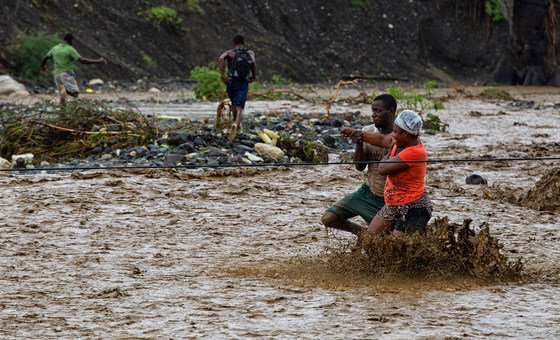
Haiti is highly vulnerable to extreme weather, with 96 per cent of the population at risk. Forecasts project 12 to 19 tropical storms and up to five major hurricanes this year.

The alert comes as the fragile island nation grapples with a worsening humanitarian crisis. Armed gangs control much of the country, the collapse of essential services and growing displacement have left 5.7 million people food insecure, 1.3 million displaced and 230,000 living in makeshift shelters ill-equipped to withstand severe weather.

Limited preparations  

Humanitarian actors have pre-positioned limited stocks of essential items, but they are at a record low for a hurricane season posing such high risk.  

For the first time, Haiti will begin the hurricane season without pre-positioned food supplies or the financial resources necessary to initiate a rapid response.  

Meanwhile, UN Humanitarian Office (OCHA) is coordinating missions with UN agencies and partners to assess how to safely resume aid operations in high-need areas, following their suspension on 26 May due to insecurity.

“I am deeply concerned for communities, families, and vulnerable groups who have already been affected by violence and are living in precarious conditions,” said Ulrika Richardson, Humanitarian Coordinator in Haiti, calling for immediate support.

As of mid-June, the $908 million Humanitarian Response Plan for Haiti is just 8 per cent funded.

Worsening cholera and hunger in South Sudan

OCHA raised the alarm on Thursday over rising malnutrition and cholera cases in war-torn South Sudan.

An estimated 2.3 million children under five urgently need treatment for acute malnutrition, a 10 per cent increase since last July.

This crisis is unfolding amid the world’s most severe cholera outbreak this year, with almost 74,000 cases and at least 1,362 deaths reported as of 16 June.  

The start of the rainy season and waning immunity risk a significant surge in infections.

UN response

The 2025 Humanitarian Needs and Response Plan for South Sudan is only 20 per cent funded.

Despite limited resources and many challenges, the UN and partners have scaled up efforts, delivering vaccines and life-saving aid to contain the disease and protect the most vulnerable.

“This dire situation is a stark reminder that we need funding urgently to expand food assistance, to expand nutrition and expand health services to those who need it the most,” said UN Spokesperson Stéphane Dujarric at the daily briefing in New York. 

Source link

UN warns of mounting humanitarian toll as Israel-Iran hostilities continue

UN High Commissioner for Human Rights Volker Türk on Thursday called for “maximum restraint” and reiterated that both Israel and Iran are bound by international humanitarian law.

“The widescale, continuing attacks by Israel across Iran, and the missile and drone strikes launched in response by Iran, are inflicting severe human rights and humanitarian impacts on civilians, and risk setting the whole region ablaze,” he said in a statement.

The only way out of this spiralling illogic of escalation is maximum restraint, full respect for international law, and return in good faith to the negotiating table,” he stressed.

Appalling collateral damage

The UN rights chief also expressed deep concern over the impact on civilians.

It is appalling to see how civilians are treated as collateral damage in the conduct of hostilities,” he said, adding that threats and inflammatory rhetoric by senior officials on both sides suggest a “worrying intention” to inflict harm on civilians.

The airstrikes, missile and drone attacks – launched by both Israel and Iran since 13 June – have caused heavy damage to civilian infrastructure and claimed hundreds of lives.  

According to Iranian authorities, at least 224 people have been killed, while human rights groups report significantly higher figures. In Israel, officials report 24 deaths and more than 840 injuries so far.

Widespread panic

Warnings from both governments have also prompted widespread panic among civilians.

Israel’s call for civilians to evacuate on Tuesday triggered panic across Tehran, resulting in heavy traffic jams on highways. Movement has reportedly been hampered across the country by fuel shortages, leading to hours-long queues at petrol stations.

Concern for refugees

The Office of the UN High Commissioner for Refugees (UNHCR) expressed grave concern over the deteriorating humanitarian situation, adding that it is monitoring reports that people are on the move within Iran and that some are leaving for neighbouring countries.

UNHCR Spokesperson Babar Baloch cautioned that the situation remained fluid and hard to verify.

Iran has long hosted the largest Afghan refugee population in the world. Now, its own people are experiencing devastation and fear,” Mr. Baloch added.

He also emphasised the principle of non-refoulement, calling on neighbouring countries to grant protection to anyone fleeing violence, and not turn them back.

UNHCR Spokesperson Baloch on the crisis.

Iran hosts an estimated 3.5 million refugees and those in refugee-like situations, including some 750,000 registered Afghans and over 2.6 million undocumented individuals.

Regional worries

There is already regional fallout, with missile launches from Yemen towards Israel and the Occupied Palestinian Territory and heightened tensions reportedly involving armed groups in Iraq, according to OCHA.

This escalation takes place as the region already grapples with mounting humanitarian needs, sharply reduced funding, and constrained operational space for humanitarian action,” the Office said in a flash update issued on Wednesday.

“De-escalation is vital to preventing further suffering of civilians and population displacements,” OCHA underscored.

Source link