In Southeast Asia, Guterres presses the case for climate action

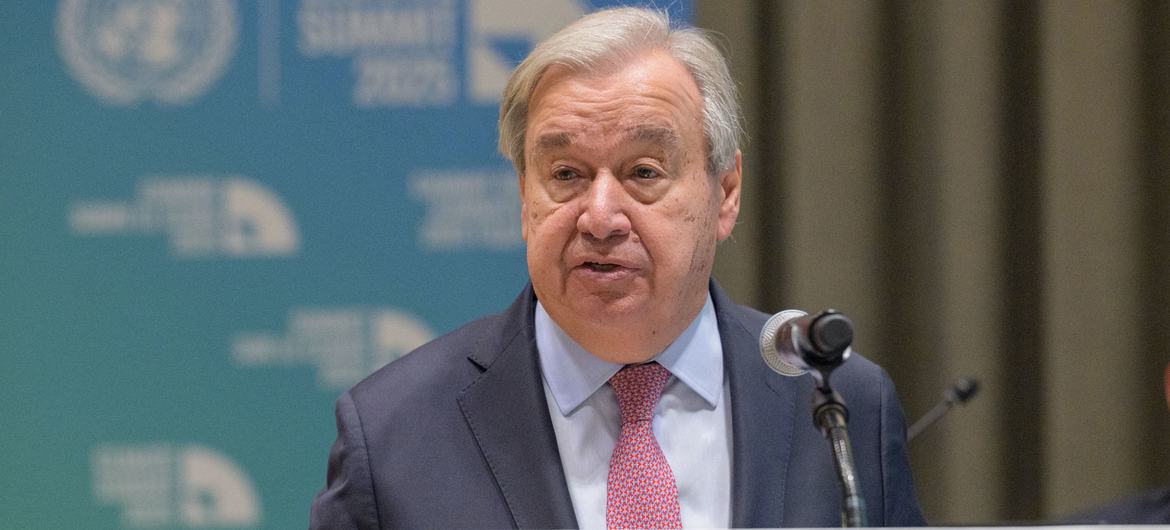
Addressing a joint summit between the UN and Southeast Asian nations in Kuala Lumpur on Monday, Secretary-General António Guterres described the region as “a beacon of cooperation” and a vital pillar of global stability.

With Timor-Leste’s accession, he said, the collective spirit of the regional organization known as ASEAN had “grown stronger,” making the bloc an essential partner in shaping “a more balanced and interlinked world.”

The Association of Southeast Asian Nations now has 11 full members, alongside partners which include China, India, the European Union, Russia and Australia.

The UN, for its part, has a comprehensive partnership framework with the bloc as well as plans for joint action.

Peace, Myanmar and regional stability

Mr. Guterres outlined four areas of deepening collaboration – peace and prevention; sustainable development and financial justice; climate action and digital transformation.

He commended ASEAN countries for their strong contributions to peacekeeping and regional mediation efforts.

The UN chief praised Malaysia for helping to facilitate a ceasefire between Cambodia and Thailand, and reiterated the importance of dialogue and restraint in the South China Sea to uphold international law and freedom of navigation.

Turning to Myanmar, the Secretary-General condemned ongoing violence, describing the humanitarian situation as “appalling.”

“Thousands are dead. Millions displaced. Humanitarian needs are soaring,” he said, calling for an immediate halt to hostilities, protection of civilians, and “the release of those arbitrarily detained, including democratically elected leaders.”

He reaffirmed the UN’s support for ASEAN’s 2021 Five-Point Consensus to resolve Myanmar’s protracted conflict following the coup – and the Security Council resolution demanding a ceasefire that same year.

A fairer financial system

The Secretary-General also made a strong call for overhauling what he described as an “outdated and unfair” global financial architecture that leaves developing nations “locked out of prosperity.”

“It is high time for reform,” he said, noting that ASEAN economies remain underrepresented in global financial institutions despite their growing economic weight.

Climate change target ‘on life support’

In his keynote address, the Secretary-General warned that the target on limiting global warming to 1.5 degrees Celsius above pre-industrial levels “is on life support,” urging both developed and developing nations to step up climate ambition ahead of COP30 in Brazil next month.

On digital transformation, he underscored the UN’s commitment to ensuring artificial intelligence serves humanity.

Standing together

At a press conference following the Summit, Mr. Guterres said ASEAN “offers a vision of hope” amid global uncertainty.

“The United Nations is proud to be ASEAN’s partner,” he said, “as we work to ensure a better, more peaceful future for people across the southeast Asian region and around the world.”

High stakes and high flavour: Indigenous chef brings Amazonian soul to COP30

Indigenous chef and activist Tainá Marajoara will serve dishes rooted in ancestral Amazonian traditions, showcasing the biodiversity and spirituality of Brazil’s Indigenous Peoples.

Between rounds of negotiations, delegates will be treated to flavours such as maniçoba, açaí and pirarucu – all prepared with more than 10 tonnes of agroecological ingredients sourced through fair and sustainable food systems.

A taste of ancestral wisdom

“Our kitchen will feature canhapira, an Indigenous Marajoara dish that remains part of local cuisine today,” Ms. Marajoara explained. 


The dish comes from the Marajoara people, an Indigenous group native to Marajó Island, a vast river island where the Amazon meets the Atlantic.

“There will be plenty of açaí. We managed to secure its inclusion despite earlier controversy.

“We’ll also serve maniçoba, a dish made from cassava leaves cooked for seven days with pork, as well as tucupi, jambu, tacacá, and the Amazon’s iconic fish, pirarucu. We plan to buy at least two tonnes of it alone.”

Tainá is the founder of Ponto de Cultura Alimentar Iacitatá, the cultural and culinary collective selected to oversee the COP30 kitchen, which will serve everyone attending – from presidents to porters. 

© Courtesy of Tainá Marajoara

The indigenous activist and chef Tainá Marajoara, from Brazil, at the Food and Agriculture Museum and Network in Rome.

Peace meal

More than just a meal, the ancestral cook sees this culinary effort as a statement. “We want to show that it is possible to live in peace. We need to live in peace,” she said.

“Throughout COP30, we are building a space of ancestral diplomacy, making it clear that recognising the link between Indigenous and local communities and food sovereignty is urgent.

“As long as ancestral lands are violated and violence spreads across forests, rivers, and fields, our people and our culture are being killed.”

Speaking from Rome, where she was attending the World Food Forum at the UN Food and Agriculture Organization (FAO) headquarters, Ms. Marajoara stressed the COP30 kitchen will embody the values of sustainability, justice, and respect for life.

UN News/Felipe de Carvalho

Tucupi is a yellow broth extracted from wild cassava, traditional in Amazonian cuisine.

Rooted in climate justice

For the Chef, Indigenous food systems represent much more than sustenance, they are a living form of environmental stewardship and spiritual connection.

“This knowledge has been invisible for too long,” she said. “Leading the COP30 kitchen is an act of cultural and ancestral diplomacy.”

She hopes the initiative will become a model for future international events. “This will be the first COP to feature a community-based, family-farming kitchen. It proves that it can be done, and it shouldn’t stop here. Let COP30 become a historic milestone, one that inspires similar initiatives across the world.”

Food and conservation

Ms. Marajoara emphasised that food sovereignty and environmental conservation are inseparable.

“The world is in collapse,” she warned. “There is no more time for endless negotiations. Protecting Indigenous and local community territories is a concrete, effective way to safeguard the planet’s climate.”

Climate science and early warnings key to saving lives

“Early-warning systems work,” he told the World Meteorological Organization (WMO) in Geneva. “They give farmers the power to protect their crops and livestock. Enable families to evacuate safely. And protect entire communities from devastation.”

“We know that disaster-related mortality is at least six times lower in countries with good early-warning systems in place,” the UN chief said.

He added that just 24 hours’ notice before a hazardous event can reduce damage by up to 30 per cent.

In 2022, Mr. Guterres launched the Early Warnings for All initiative aiming to ensure that “everyone, everywhere” is protected by an alert system by 2027.

Progress has been made, with more than half of all countries now reportedly equipped with multi-hazard early-warning systems. The world’s least developed countries have nearly doubled their capacity since official reporting began “but we have a long way to go,” the UN chief acknowledged.

At a special meeting of the World Meteorological Congress earlier this week, countries endorsed an urgent Call to Action aiming to close the remaining gaps in surveillance.

Extreme weather worsens

WMO head Celeste Saulo, who has been urging a scale-up in early-warning system adoption, warned that the impacts of climate change are accelerating, as “more extreme weather is destroying lives and livelihoods and eroding hard-won development gains”.

She spoke of a “profound opportunity to harness climate intelligence and technological advances to build a more resilient future for all.”

Weather, water, and climate-related hazards have killed more than two million people in the past five decades, with developing countries accounting for 90 per cent of deaths, according to WMO.

Mr. Guterres emphasized the fact that for countries to “act at the speed and scale required” a ramp-up in funding will be key.

Surge in financing

“Reaching every community requires a surge in financing,” he said. “But too many developing countries are blocked by limited fiscal space, slowing growth, crushing debt burdens and growing systemic risks.”

He also urged action at the source of the climate crisis, to try to limit fast-advancing global warming to 1.5 degrees Celsius above pre-industrial era temperatures – even though we know that this target will be overshot over the course of the next few years, he said.

“One thing is already clear: we will not be able to contain global warming below 1.5 degrees in the next few years,” Mr. Guterres warned. “The overshooting is now inevitable. Which will mean that we’re going to have a period, bigger or smaller, with higher or lower intensity, above 1.5 degrees in the years to come.”

Still, “we are not condemned to live with 1.5 degrees” if there is a global paradigm shift and countries take appropriate action.

At the UN’s next climate change conference, where states are expected to commit to reducing greenhouse gas emissions over the next decade, “we need to be much more ambitious,” he said. COP30 will take place on 10-21 November, in Belén, Brazil.

“In Brazil, leaders need to agree on a credible plan in order to mobilize $1.3 trillion per year by 2035 for developing countries, to finance climate action,” Mr. Guterres insisted.

Developed countries should honour their commitment to double climate adaptation funding to $40 billion this year and the Loss and Damage Fund needs to attract “substantial contributions,” he said.

Mr. Guterres stressed the need to “fight disinformation, online harassment and greenwashing,” referring to the UN-backed Global Initiative on Climate Change Information Integrity.

“Scientists and researchers should never fear telling the truth,” he said.

He expressed his solidarity with the scientific community and said that the “ideas, expertise and influence” of the WMO, which marks its 75th anniversary this week, are needed now “more than ever”.

Record rise in carbon dioxide levels during 2024: UN weather agency

The surge was driven by continued human emissions, more wildfire activity and weakened absorption by land and ocean “sinks” – a development that threatens to create a vicious climate cycle.

Tripling since the 1960s

The WMO’s latest Greenhouse Gas Bulletin shows that CO₂ growth rates have tripled since the 1960s, accelerating from an annual average increase of 0.8 parts per million (ppm) to 2.4 ppm per year, in the decade from 2011 to 2020.

The rate jumped by a record 3.5 ppm between 2023 and 2024 – the largest increase since monitoring began in 1957.

Average concentrations reached 423.9 ppm in 2024, up from 377.1 ppm when the bulletin was first published in 2004.

Roughly half of  CO₂ emitted remains in the atmosphere, while the rest is absorbed by land and oceans; storage that is weakening as warming reduces ocean solubility and worsens drought.

The 2024 spike was likely amplified by an uptick in wildfires and a reduced uptake of CO₂ by land and the ocean in 2024 – the warmest year on record, with a strong El Niño weather pattern effect.

“There is concern that terrestrial and ocean CO₂ sinks are becoming less effective, which will increase the amount of CO₂ that stays in the atmosphere, thereby accelerating global warming. Sustained and strengthened greenhouse gas monitoring is critical to understanding these loops,” said Oksana Tarasova, WMO senior scientific officer who coordinates the bulletin research.

Other record highs

Methane and nitrous oxide – the second and third most significant long-lived greenhouse gases – also set new emission records.

Methane levels rose to 1,942 ppb, 166 per cent above pre-industrial levels, while nitrous oxide hit 338 ppb – a 25 per cent increase.

The heat trapped by CO2 and other greenhouse gases is turbo-charging our climate and leading to more extreme weather. Reducing emissions is therefore essential not just for our climate but also for our economic security and community well-being,” said WMO Deputy Secretary-General Ko Barrett.

Monitoring and action

The WMO issued the report ahead of the COP30 climate conference in Belém, Brazil, beginning in November, emphasising that sustained global monitoring is vital for guiding climate action.

The ‘clean revolution is unstoppable’ but will it arrive too late?

In recent years, one of the bright spots amid gloomy predictions about the climate has come from the International Renewable Energy Agency (IRENA) – an Abu Dhabi-based intergovernmental body – which has consistently pointed out the plummeting costs and soaring efficiency of clean energy sources, such as solar and wind power.

On Tuesday, IRENA launched its latest progress report, which reiterated the impressive rise of renewables – 2024 saw a record-breaking additional 582 Gigawatts of renewable energy capacity – but warned that this is still far from the annual increase necessary to wean us off the fossil fuels which are accelerating global warming.

“The clean energy revolution is unstoppable,” said Mr. Guterres in reaction to the study.

Renewables are deployed faster and cheaper than fossil fuels – driving growth, jobs, and affordable power. But the window to keep the 1.5°C limit within reach is rapidly closing. We must step up, scale up and speed up the just energy transition – for everyone, everywhere.”

Indonesia is modernizing its electricity grid.

Still off track

At the COP28 UN climate conference, governments committed to produce 11.2 Terawatts of energy from renewable sources by 2030.

So, whilst the 2024 figure is impressive, it’s still way off the 1,122 GW of capacity that needs to be added every year, if that goal is to be reached in time.

The report calls on the world’s richest countries to take the lead in turning away from polluting energy sources such as coal and oil and raise their share of renewables to around 20 per cent of global capacity by the end of the decade.

A major increase in investment for the transition is urgently needed, the reports states, to fund upgrades to electricity grids, supply chains, and clean-tech manufacturing for solar, wind, batteries and hydrogen.

Indirect disaster effects cost the world nearly $2 trillion per year, Guterres says on International Day

Most of the exorbitant costs of disaster are preventable with proper funding and planning —one of the main messages for this year’s International Day for Disaster Risk Reduction, themed Fund Resilience, Not Disasters, observed on Monday.

“Every dollar invested in resilience saves many more in avoided losses and protects the dignity of those most at risk. The choice is ours. We can continue to fund disaster response or we can invest in resilience,” said Amy Pope, chief of the International Organization for Migration (IOM).

In 2024 alone, nearly 46 million people were displaced by disasters, the highest number ever recorded, but disaster risk reduction efforts remain severely underfunded, according to the IOM. 

Preventable disaster costs

“As the climate crisis accelerates, disasters are multiplying and amplifying – devastating lives and livelihoods, erasing decades of development gains in an instant,” said UN Secretary-General António Guterres in his message to mark the Day. 

“The cost to the global economy is staggering: an estimated $2 trillion every year, when indirect costs are taken into account.”

Indirect costs include the wider social and ecosystem losses that come as a result of natural catastrophes. Earthquakes, floods, storms, droughts and heatwaves made up 95 per cent of direct costs in the past two decades, according to the report. 

“Wildfires in Europe and the Americas, and devastating earthquakes in Myanmar and Afghanistan prove that no country is immune, but the heaviest toll falls on communities already struggling with conflict, poverty, and hunger,” said Ms. Pope.

Different natural catastrophes affect different regions in the world. In South Sudan, annual floods can submerge houses, farmland and schools, forcing people to flee their homes and increasing food insecurity. 

As a disaster prevention measure, dykes have been constructed in South Sudan with the support of the IOM, protecting farmland and restoring livelihoods. 

Promoting disaster reduction 

The International Day for Disaster Risk Reduction was established in 1989 to foster a global culture of risk-awareness and celebrate how communities around the world are reducing their exposure to disasters. 

“The impact of disasters depends in large part on the choices we make, how strong our infrastructure is, how much we invest in prevention, and how well we protect the most vulnerable,” said Ms. Pope.

With planning and funding, the negative impacts of disasters can be reduced. Accordingly, this year’s Day call is for an increase in disaster risk funding and for the development of risk-adapted and resilient private investment. 

Mr. Guterres stressed that for every decision they make, the public and private sectors must take risk into account to minimise exposure and vulnerability to hazards. 

“On this Day, let’s commit to meet surging risk with a surge in funds, and build a safer and more equitable future for all,” he said. 

‘No end’ expected to floods and storms as global heating continues

Water-related hazards continue to cause major devastation this year,” said Celeste Saulo, WMO Secretary-General. “The latest examples are the devastating monsoon flooding in Pakistan, floods in South Sudan and the deadly flash floods in the Indonesian island of Bali. And unfortunately, we see no end to this trend.”

Ms. Saulo highlighted that these emergencies have been happening amid increasingly warm air temperatures, which allow more water to be held in the atmosphere leading to heavier rainfall.

Her comments coincided with the publication of a new WMO report on the state of the world’s waterways, snow and ice which notes that 2024 was the hottest in 175 years of observation, with the annual mean surface temperature reaching 1.55 °C above the pre-industrial baseline from 1850 to 1900.

Storm Boris legacy

Against this backdrop in September 2024, central and eastern Europe experienced devastating flash-floods caused by deadly Storm Boris which uprooted tens of thousands of people. Similar disasters are likely to happen more often, even though they should – in theory – be extremely rare.

In the Czech Republic, several rivers flooded in an extreme fashion “that actually statistically should only occur every 100 years,” said Stefan Uhlenbrook, WMO Director of Hydrology, Water and Cryosphere Division.

A ‘century event’ happened…unfortunately, statistics show that these extreme events might become even more frequent,” he said, his comments echoing uncertainty over global water security, linked to the WMO report’s findings that only one-third of the world’s river basins have been at “normal” levels. 

Himalayan deluge

Another example of the increasingly erratic behaviour of the world’s water cycle is the extremely heavy rainfall that has affected parts of Himachal Pradesh or Jammu and Kashmir.

The region saw extremely heavy rainfall when it was not expected; the monsoon came early,” said Sulagna Mishra, WMO Scientific Officer. “So, this is what we are talking about as the unpredictability of the system is growing, more and more.”

Turning to the impact of last year’s pronounced El Niño weather phenomenon, WMO’s report indicates that it contributed to severe drought in the Amazon basin last year.

Equally, northwest Mexico and the northern part of North America saw below-average rainfall, as did southern and southeastern Africa.

“El Niño at the start of 2024 played a role,” explained Ms. Saulo, “but scientific evidence shows that our changing climate and rising temperatures lead to more extreme events, both droughts and floods.”

Our connected world

The WMO report’s other findings confirm wetter-than-normal conditions over central-western Africa, Lake Victoria in Africa, Kazakhstan and southern Russia, central Europe, Pakistan and northern India, southern Iran and north-eastern China in 2024.

One of the key messages of the UN agency report is that what happens to the water cycle in one part of the world has a direct bearing on another.

Melting glaciers continue to be a major concern for meteorologists because of the speed at which they are disappearing and their existential threat to communities downstream and in coastal areas.

“2024 was the third straight year with widespread glacial loss across all regions,” Ms. Saulo said. “Glaciers lost 450 gigatonnes, this is the equivalent of a huge block of ice seven kilometres in height, seven kilometres wide and seven kilometres deep, or 180 million Olympic swimming pools, enough to add about 1.2 millimetres to global sea level, increasing the risk of floods for hundreds of millions of people on the coasts.”

The report also highlights the critical need for improved data-sharing on streamflow, groundwater, soil moisture and water quality, which remain heavily under-monitored.  

Guterres urges countries to ‘seize this historic opportunity’ as renewable energy use grows

The latest push follows the release of two reports on Tuesday which affirmed that the so-called “renewables revolution” is accelerating at unprecedented rates.

For the first time ever, renewable energy has generated more power than coal, according to new analysis by Ember, a global think tank working to speed up the clean energy transition.

Energy shift underway

Solar and wind outpaced the growth in global electricity demand in the first half of this year, resulting in a small decline in coal and gas when compared to the same period in 2024.

This represents “a crucial turning point,” according to Ember’s Senior Electricity Analyst, Małgorzata Wiatros-Motyka.

“Solar and wind are now growing fast enough to meet the world’s growing appetite for electricity. This marks the beginning of a shift where clean power is keeping pace with demand growth,” she said in a press release.

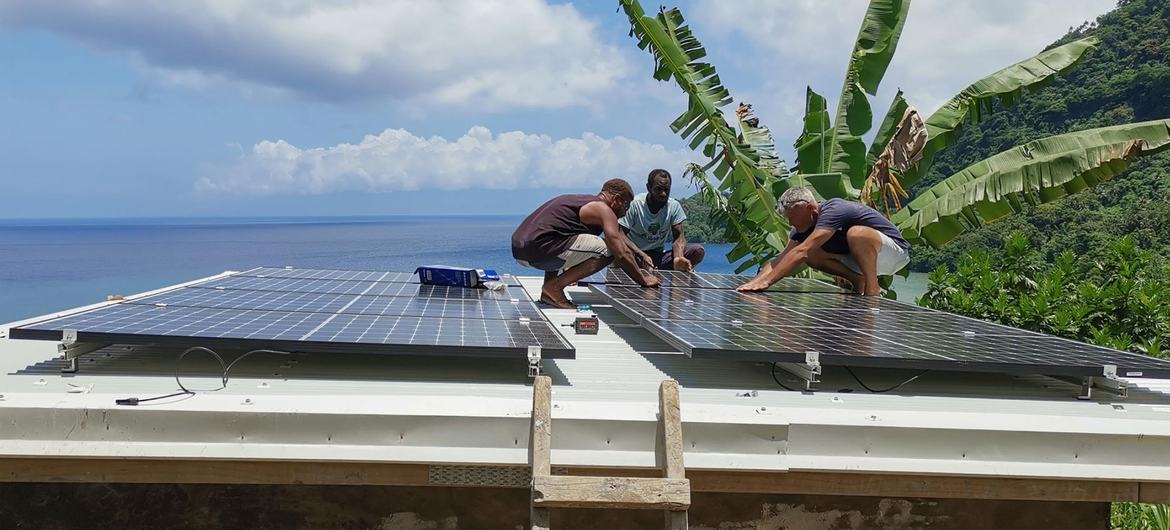
People in Vanuatu in the southwestern Pacific install solar panels on a roof.

Solar-powered success

In a separate report, the International Energy Agency (IEA) revealed how installed renewables power continues to grow and is expected to double by 2030.

Global renewable power capacity is projected to increase by 4,600 gigawatts (GW) – “roughly the equivalent of adding China, the European Union and Japan’s total power generation capacity combined,” the agency said.

Growth is being led by the rapid rise of solar PV (photovoltaic) technology, which converts sunlight into energy.  It will account for around 80 per cent of the increase, followed by wind, hydro, bioenergy and geothermal.

‘A better future for all’

In response to the news, UN Secretary-General António Guterres tweeted that “the clean energy future is no longer a distant promise – it’s here.” 

He urged the international community to “seize this historic opportunity and supercharge the global shift towards a better future for all.”

The reports echo the findings of the Secretary-General’s Moment of Opportunity report, issued in July.

They also reflect messages by world leaders attending his Climate Summit held last month during high-level week as part of the lead-up to the COP30 conference in Brazil this November. 

However, the UN chief has consistently stressed that whilst progress has been made, the energy transition is not yet fast or fair enough

Therefore, efforts need to be stepped up if the world is to meet the goal of limiting global temperature rise to 1.5 degrees Celsius above pre-industrial levels, as outlined in the Paris Agreement on climate change. 

‘The extraordinary power of ordinary people’: World leaders spotlight youth as agents of progress

Annalena Baerbock, President of the General Assembly and one of the youngest persons to ever hold the office, stressed that youth are “the designers of their future” but should not have to build it alone.

Drawing on conversations with young leaders from Ethiopia to Afghanistan, she highlighted the challenges today’s youth face – from conflict and crisis to cyberbullying and unemployment – as well as the transformative change they are driving, such as digital innovation and climate advocacy.

The recent landmark International Court of Justice (ICJ) advisory opinion on climate obligations, prompted by youth activists, underscores how determined young people can reshape global policy. Their commitment can spark hope and intergenerational solidarity.

Bangladesh: Youth driving democratic renewal

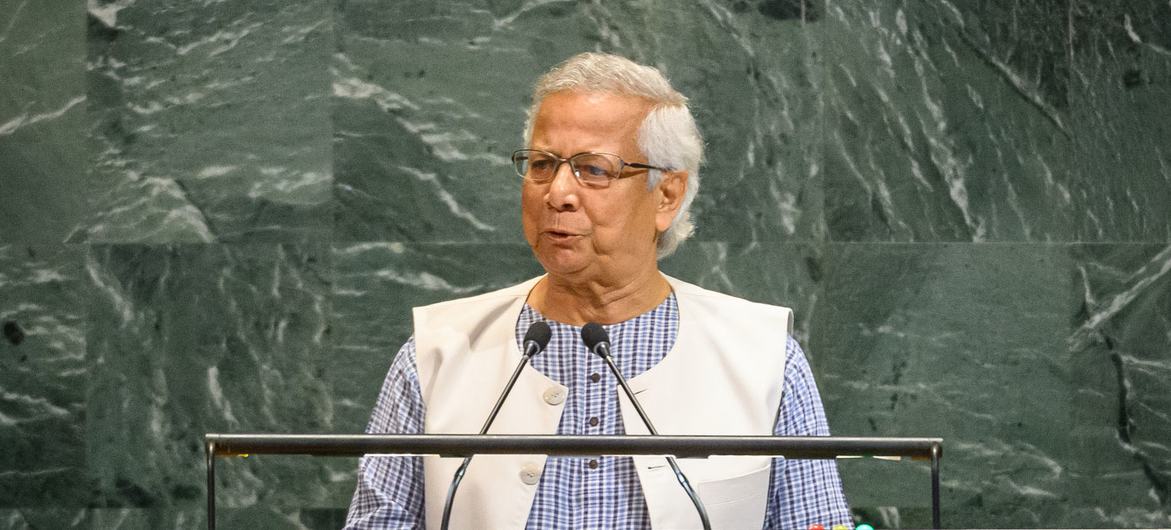
Muhammad Yunus, Chief Adviser of the interim Government of Bangladesh, addresses the general debate of the General Assembly’s eightieth session.

The transformative potential of youth was starkly evident in Bangladesh, one year after the ‘July Revolution’ ended decades of authoritarian rule.

At the Assembly’s general debate fourth day, Chief Adviser Muhammad Yunus described the uprising as “a reminder of the extraordinary power of ordinary people,” crediting the country’s young majority with defeating tyranny and opening the path toward a more just and equal society.

Stemming from the demands of the movement, 11 independent commissions – addressing themes that ran from governance to women’s rights – have now been established and over 30 political parties signed a ‘July Declaration’ pledging to uphold democratic reforms.

Looking ahead, he stressed the importance of empowering Bangladesh’s young majority and women, noting that the country aims “to shape every young person, not only as a job seeker, but also as a job creator,” while advancing protections against harassment and expanding women’s public roles.

▶ Watch the address.

Greece: Safeguards in the digital age

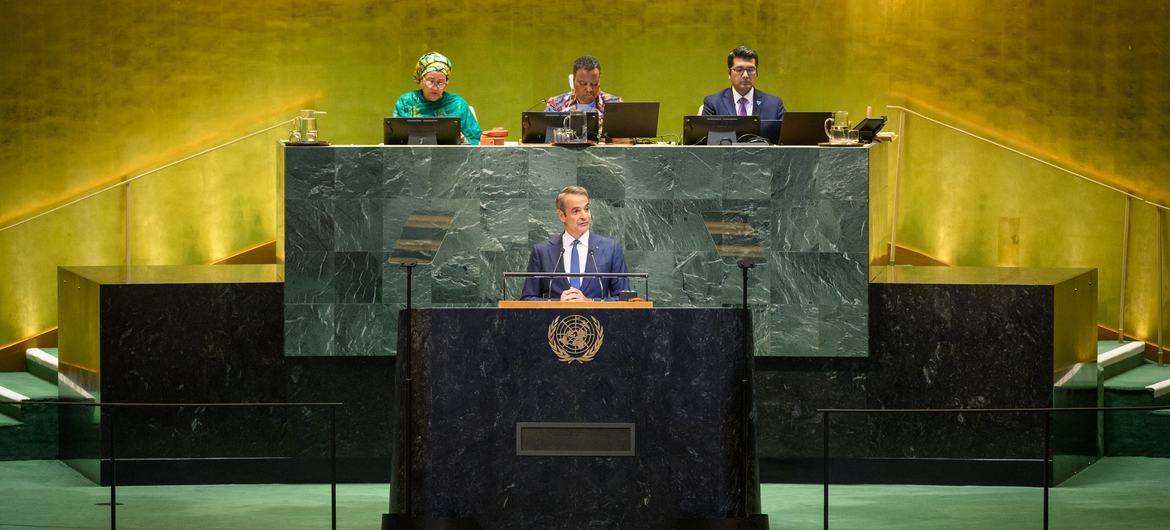
Prime Minister Kyriakos Mitsotakis of Greece addresses the general debate of the General Assembly’s 80th session.

Prime Minister Kyriakos Mitsotakis of Greece emphasized the mental health and safety of children in an era dominated by digital technology and artificial intelligence.

Warning that “we are running a massive unsupervised experiment with the brains of our children and teenagers,” he highlighted the dangers of cyberbullying, addictive content and harmful material online.

Greece has banned phones in schools and launched Kids Wallet, a government-backed app enabling parents with simple, effective tools to manage their children’s smartphone use.

Mr. Mitsotakis also proposed a pan-European “digital age of majority” to ensure age-appropriate access to online platforms, framing these measures as part of a broader effort to protect young minds while supporting safe engagement with technology.

“Just as society once set firm rules for smoking, drinking or wearing a seatbelt, we must now confront today’s challenge with equal clarity: big platforms can no longer profit at the expense of our children’s mental health,” he said.

▶ Watch the address.

Solomon Islands: Youth leading climate action

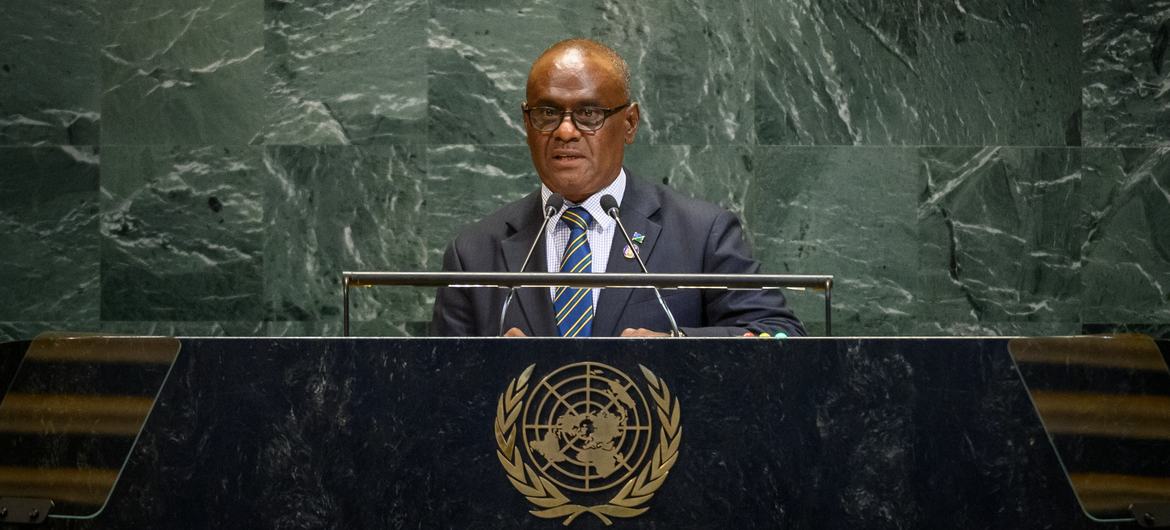
Prime Minister Jeremiah Manele of Solomon Islands addresses the general debate of the General Assembly’s 80th session.

The pivotal role of youth in global challenges was further highlighted by Prime Minister Jeremiah Manele of the Solomon Islands.

He noted that the youth in the Pacific “have stood at the forefront of this initiative, reminding us that the strength of the Pacific lies in our unity,” referencing the youth-led campaign that prompted the International Court of Justice (ICJ)’s landmark advisory opinion on climate obligations.

Mr. Manele emphasized that the ruling, which affirmed States’ responsibilities to protect the climate for present and future generations, is more than a legal finding – it is “a call to the international community that only together can we honour the 1.5°C commitment, protect the most vulnerable, and secure a just and sustainable future for all nations and peoples.”

Youth-led advocacy, he said, has brought the urgency of small island communities’ climate plight to the global stage, demonstrating how collective action can protect the most vulnerable and safeguard the planet for future generations.

▶ Watch the address.

Trinidad and Tobago: Small nations, global impact

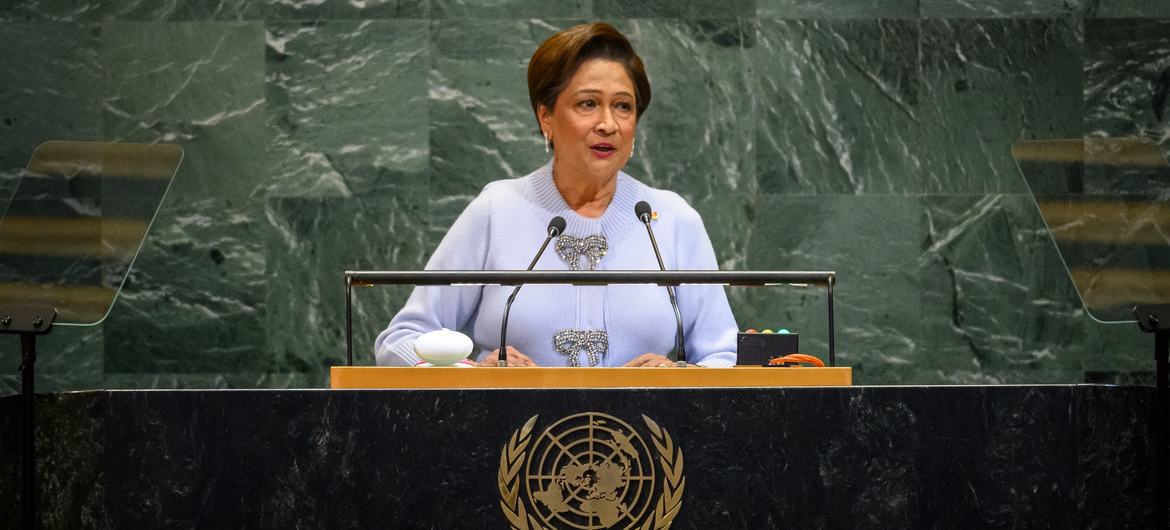
Prime Minister Kamla Persad-Bissessar of Trinidad and Tobago addresses the general debate of the General Assembly’s 80th session.

Prime Minister Kamla Persad-Bissessar of Trinidad and Tobago illustrated how even smaller nations can wield global influence when youth and children’s welfare are prioritized.

She highlighted domestic initiatives such as the Children’s Authority and Children’s Life Fund, expanded early childhood education and alignments with the global development agenda – all efforts aimed at ensuring the next generation thrives.

The Prime Minster also stressed that gender equality is inseparable from sustainable peace and development, noting that “women and girls must be equal partners in peace and sustainability.”

▶ Watch the address.

Malta: Real benefits of multilateralism

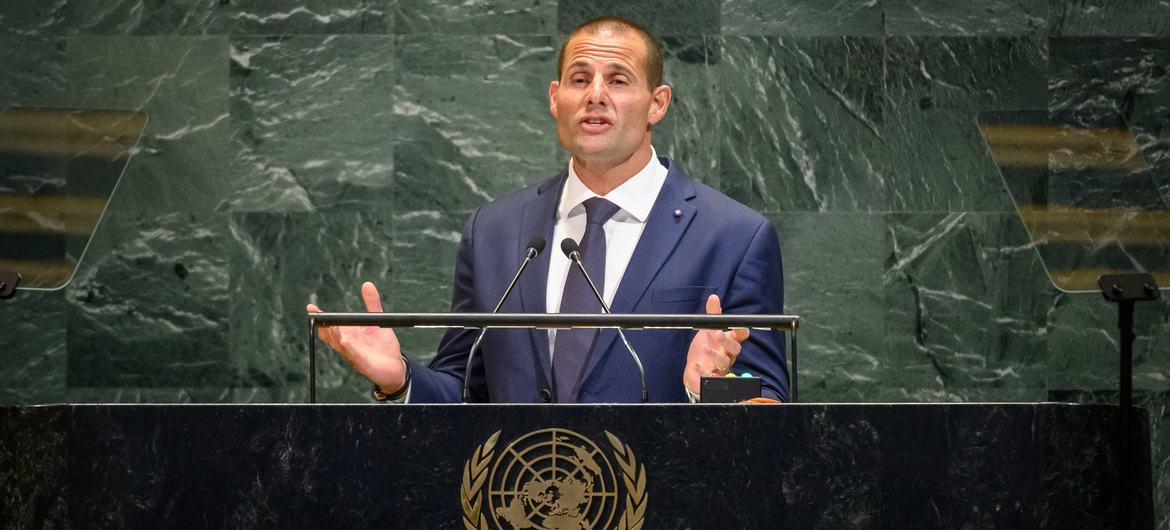
Prime Minister Robert Abela of Malta addresses the general debate of the General Assembly’s 80th session.

Prime Minister Robert Abela of Malta offered a reminder that words alone cannot end conflict, hunger, or child malnutrition – but collective action can.  

He said the life expectancy of children born in 1945, which hovered in the mid-forties, with those born in 2025, who can now expect to live into their mid-seventies.  

“That didn’t happen by luck or accident,” Mr. Abela said. “It happened by will and resolve. It happened by effort. And it happened also because of the positive work conducted by the agencies of this United Nations.”  

Reflecting on these gains, he emphasized that multilateralism remains critical:  

“We won’t keep our peoples safe, our planet protected or our prosperity preserved unless we work together, listen to each other and act in concert.”

▶ Watch the address.

Sinking islands, vanishing forests: World leaders call for urgent climate action

Their appeals, sharpened by rising seas, failed harvests and disappearing ecosystems, echoed Secretary-General António Guterres’s warning at a climate summit that the world is already in the “dawn of a new energy era” – one where clean energy must replace fossil fuels, and where finance and justice remain at the heart of the global response.

“The bottom-line: clean is competitive and climate action is imperative,” he declared, calling for “dramatic emissions cuts” aligned with 1.5°C goal of the landmark Paris Agreement on climate change, agreed by all nations in 2015.

“We know it can be done … COP30 in Brazil must conclude with a credible global response plan to get us on track,” he added, referring to the 30th UN climate change conference in November, which aims to accelerate global efforts to limit temperature rise and advance commitments on emissions, adaptation and climate finance.

The UN chief’s urgency provided the backdrop as world leaders presented compelling accounts of climate peril and promise on the second day of the Assembly’s annual general debate.

Spain – Accelerate energy transition

King Felipe VI of Spain addresses the general debate of the General Assembly’s eightieth session.

The “triple planetary crisis” – climate change, pollution and biodiversity loss – featured prominently in the address by King Felipe VI of Spain, who underscored that governments must accelerate a just energy transition.

He pressed for tripling renewable capacity, doubling efficiency and advancing decarbonisation in time for COP30, where Spain hopes to see consensus and ambition.

“These objectives are as ambitious as they are necessary,” he said, cautioning that hesitation can no longer be part of the global equation.

▶ Watch the address.

Panama – Nature, the first line of defense

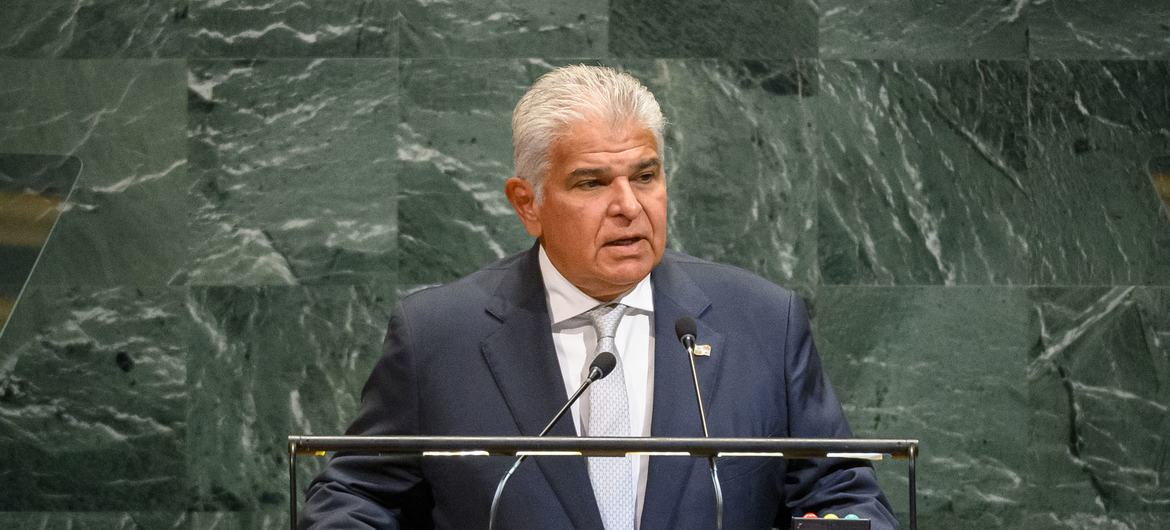
President José Raúl Mulino Quintero of Panama addresses the general debate of the General Assembly’s eightieth session.

For Panama, which has long championed conservation despite contributing little to global emissions, the call was for integrated action.

President José Raúl Mulino Quintero unveiled the country’s ‘Nature Pledge,’ a single framework, uniting commitments on climate, biodiversity and land.

He stressed that as a carbon-negative country, Panama will go even further by restoring 100,000 hectares of priority ecosystems, from mangroves to watersheds.

“Nature is our first line of defense against climate change,” he said, linking national resilience to global solidarity.

▶ Watch the address.

Comoros – Small island, big stakes

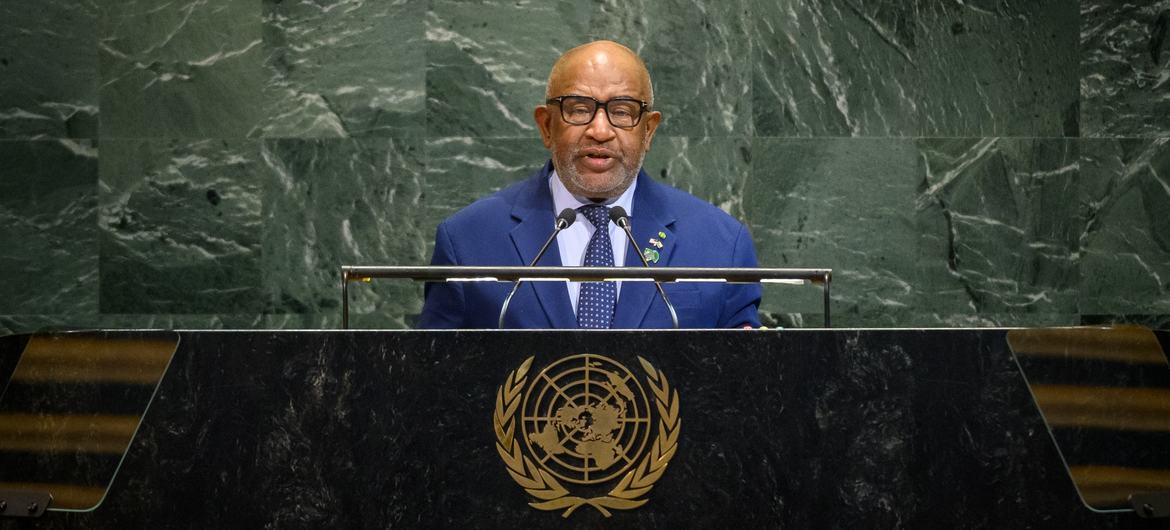
President Azali Assoumani of Comoros addresses the general debate of the General Assembly’s eightieth session.

In the Indian Ocean, the Comoros faces a different frontline.

President Azali Assoumani spoke of rising seas, coastal erosion and intensifying cyclones that threaten the archipelago’s villages and ecosystems.

He urged equitable, simplified access to climate finance, insisting that small island states cannot wait on cumbersome mechanisms while their homes wash away.

At the same time, he highlighted his country’s ‘Emerging Comoros Plan,’ built on renewable potential, blue economy resources and digital transition.

But without international support, he warned, such plans risk being hampered by debt and global inaction.

▶ Watch the address.

Namibia – Linking climate action to desertification

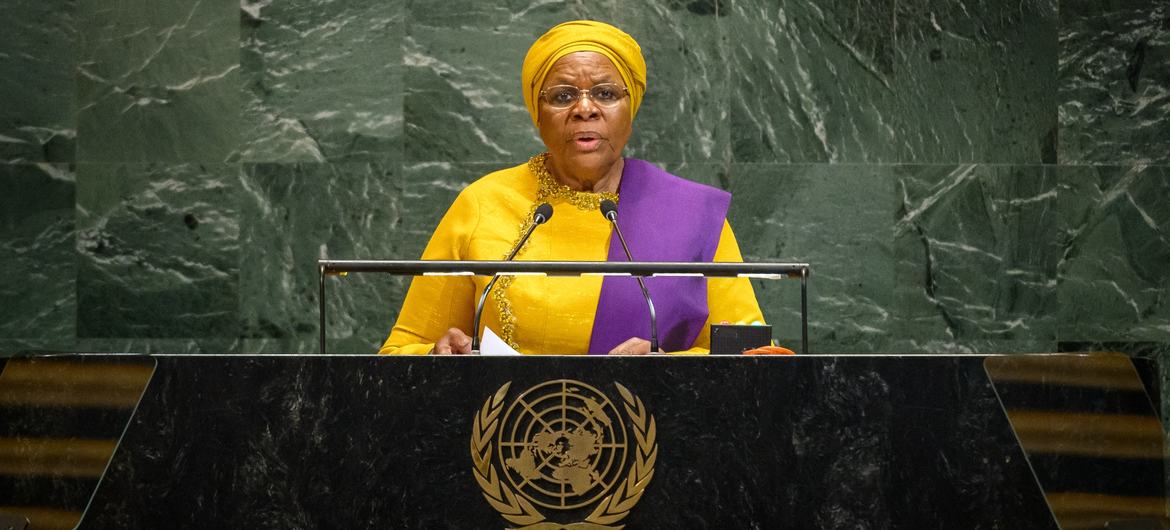
President Netumbo Nandi-Ndaitwah of Namibia addresses the general debate of the General Assembly’s eightieth session.

Namibia’s President Netumbo Nandi-Ndaitwah tied climate impacts directly to her country’s daily struggles, citing prolonged droughts and floods that have dried rivers and disrupted lives.

She announced Namibia’s bid to host the Africa regional hub of the Green Climate Fund, positioning the country as a bridge for climate finance on the continent.

And she reinforced the need to implement the ‘Namib Declaration’ to combat land degradation, linking climate action with the fight against desertification.

▶ Watch the address.

Guyana – Nature’s tangible value

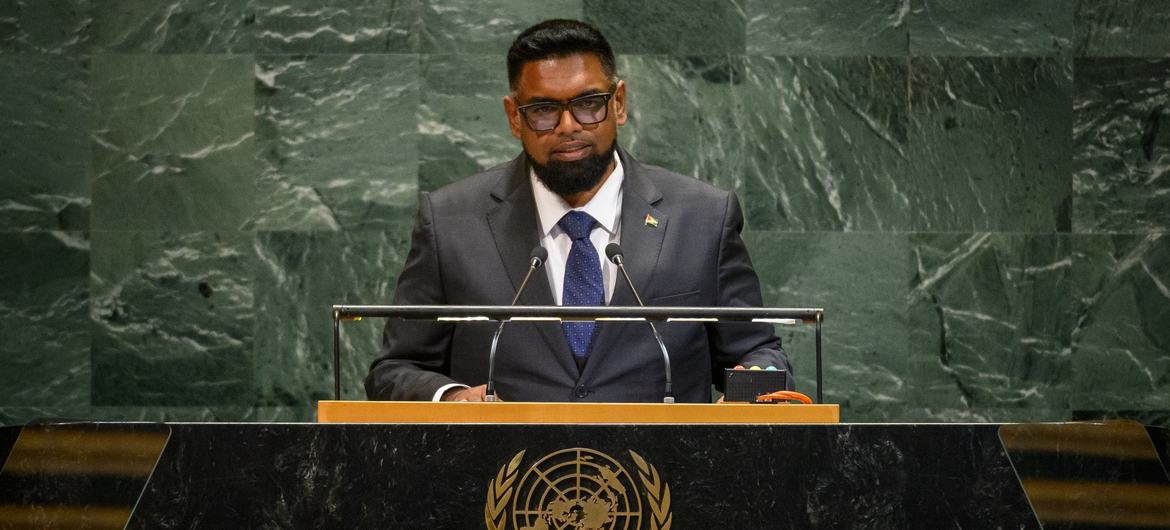
President Mohamed Irfaan Ali of Guyana addresses the general debate of the General Assembly’s eightieth session.

In South America, Guyana’s President Mohamed Irfaan Ali emphasised that climate and development cannot be separated.

He described how his country is protecting forests, strengthening sea defenses and advancing a low carbon development strategy to prove that economic growth can go hand-in-hand with environmental stewardship.

Guyana, he noted, has become a seller of carbon credits under international standards, showing that “nature has tangible value.”

▶ Watch the address.

Marshall Islands – Promises won’t save sinking atolls

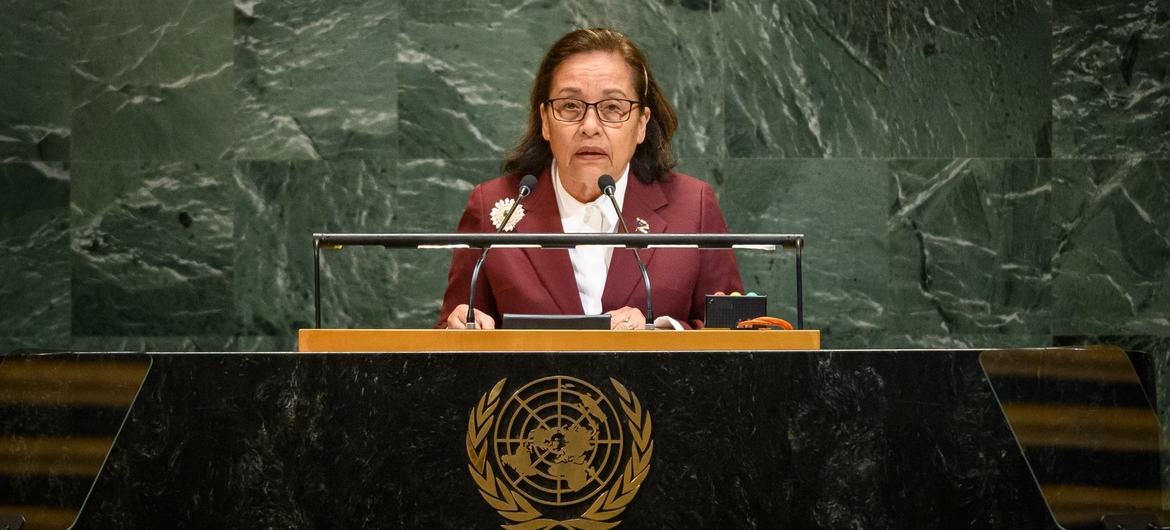
President Hilda Heine of Marshall Islands addresses the general debate of the General Assembly’s eightieth session.

For the Marshall Islands, a Pacific nation of more than 1,200 islands and 29 coral atolls climate change is a question of survival.

President Hilda Heine delivered one of the day’s most urgent interventions, warning that promises alone cannot save sinking atolls.

“We’ve heard the promises – but promises don’t reclaim land in atolls. They don’t develop mangrove defenses, shore up our hospitals and schools against rising seas or preserve cultural stability tied to land that is slipping under waves,” she said.

“Those things require money.”

Ms. Heine pressed the international community to close the trillion-dollar climate finance gap, particularly for adaptation and loss and damage.

As COP30 approaches, she said nations must not only honor their pledges but also deliver stronger plans that show a clear pathway to phasing out fossil fuels and halving global emissions within this decade.

▶ Watch the address.

New national climate plans unveiled at high-level summit ahead of COP30 conference

The game-changing summit was convened by Secretary-General António Guterres alongside President Luiz Inácio Lula Da Silva of Brazil, host of the COP30 conference which kicks off in November in the Amazonian city of Belém.

At the outset, leading climate scientists Johan Rockström and Katharine Hayhoe provided a stark assessment of global efforts so far to honour the Paris Agreement, the landmark 2015 treaty that seeks to limit global temperature rise to 1.5 degrees Celsius above pre-industrial levels.

‘A deep concern’

Ten years on, greenhouse gas emissions that cause global warming continue to rise, and annual global temperature change exceeded 1.5 degrees for the first time last year.

“This is a deep concern,” said Professor Rockström, chief scientist at Conservation International. “An even deeper concern is that warming appears to be accelerating, outpacing emissions.”

Yet it is still possible to meet the1.5-degree goal and the two experts highlighted solutions, including transitioning from fossil fuels to clean energy sources and transforming food systems to eliminate waste. 

We cannot prevent this catastrophe alone. But together, we can. By setting stronger targets, moving on faster timelines, and making deeper commitments,” said Professor Hayhoe, a winner of the 2019 UN Champions of the Earth Prize.

Secretary-General António Guterres addresses the Climate Summit 2025, a high-Level special event on Climate Action.

More action needed: Guterres

Under the Paris Agreement, governments are required to submit climate plans called Nationally Determined Contributions (NDCs) laying out bold action for the next decade.

The treaty has made a difference, the Secretary-General said, as projected global temperature rise dropped from four degrees to less than three over the past 10 years, if current plans are fully implemented.

“Now, we need new plans for 2035 that go much further, and much faster,” he said. “Delivering dramatic emissions cuts aligned with 1.5 degrees; covering all emissions and sectors; and accelerating a just energy transition globally.”

He stressed that COP30 “must conclude with a credible global response plan to get us on track” and outlined five crucial areas for action: accelerating the transition to clean energy, drastically cutting methane gas emissions, forest conservation, cutting emissions from heavy industry, and ensuring climate justice for developing nations.

President Luiz Inácio Lula da Silva of Brazil addresses the Climate Summit 2025, a high-Level special event on Climate Action.

Do your ‘homework’, urges Lula

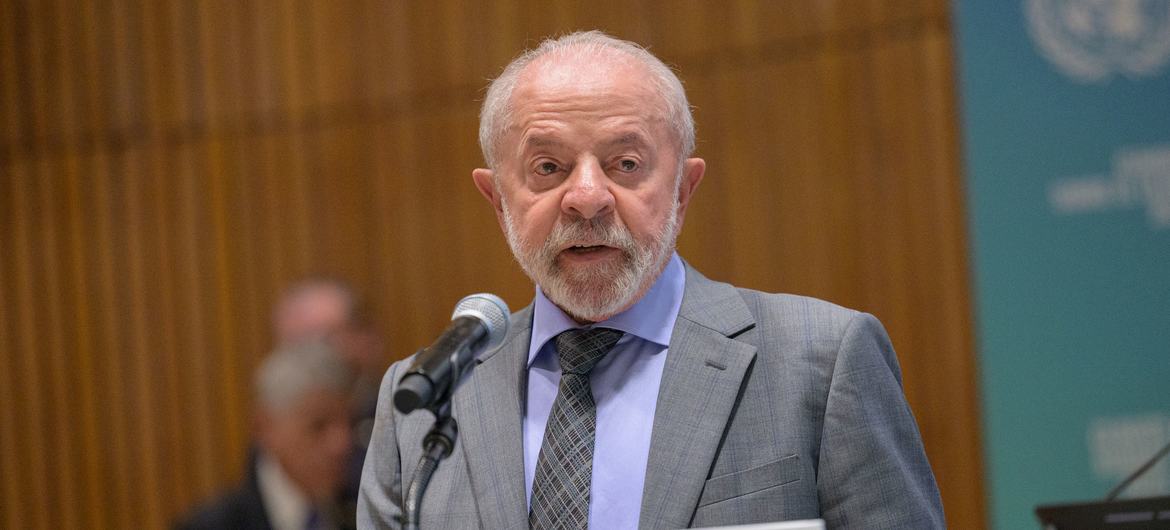
With just a few weeks until COP30, President Lula wondered “whether the world will arrive in Belém with its homework done.”

He said that “the energy transition opens the door to a productive and technological transformation comparable to the Industrial Revolution” and NDCs “are the road map that will guide each country through this change.”

For its part, Brazil has committed to reducing all greenhouse gas emissions between 59 per cent and 67 per cent, covering all sectors of the economy, he said, and continues efforts to end deforestation by 2030.

Commitment from China and Europe

At the meeting, President Xi Jinping of China announced that by 2035, the country will reduce economy-wide net greenhouse gas emissions by seven to 10 per cent from peak levels.  

The country will also increase the share of non-fossil fuels in total energy consumption to over 30 per cent, expand wind and solar power capacity sixfold compared to 2020 levels, and make “new energy vehicles” the mainstream in new vehicle sales, he said in a video message.

Meanwhile, “the clean transition is moving on” in the European Union, where emissions are down nearly 40 per cent since 1990, said European Commission President Ursula von der Leyen. 

European countries are also “doubling down on global partnerships” and will remain the world’s largest providers of climate finance, she said, while also mobilizing up to 300 billion Euros to support the clean energy transition worldwide.

Vulnerable nations ‘between hope and hardship’

For Belize, the 1.5-degree goal “is not an aspiration” but “a threshold between hope and hardship, between flourishing communities and forced displacement, between shared prosperity and irreversible loss,” said Prime Minister Johnny Briceño.

Its new NDC covers concrete actions, such as expanding renewable electricity generation to cover 80 per cent of domestic needs by 2035, restoring some 25,000 hectares of degraded forest, and planting a million trees over the next three years. 

“But let me be clear, ambition can only succeed if matched by support for small climate vulnerable nations like Belize. 

“This means scaled up, predictable finance; accessible technology and genuine partnerships,” he said, noting that “success depends on all of us acting with unprecedented urgency, solidarity and climate justice.” 


Shipping faces ‘stormy seas’ as trade slows and costs rise

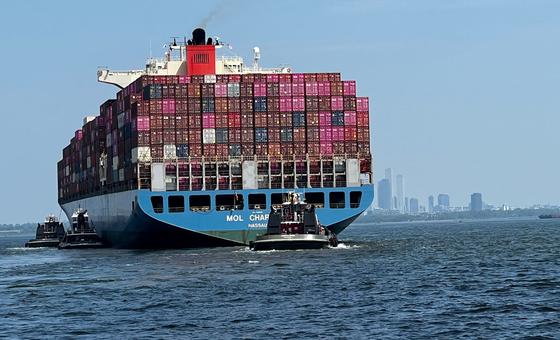
After firm expansion last year, seaborne trade volumes are forecast to rise by just 0.5 per cent in 2025, the slowest pace in years, according to the agency’s Review of Maritime Transport 2025, launched in Geneva.

The slowdown comes as geopolitical tensions, new trade barriers and climate pressures reshape shipping routes, push up costs and expose vulnerabilities in the global economy.

The transitions ahead – to zero carbon, to digital systems, to new trade routes – must be just transitions,” said UNCTAD Secretary-General Rebeca Grynspan. “They must empower, not exclude. They must build resilience, not deepen vulnerability.”

Routes in flux, costs rising

Shipping carries over 80 per cent of the world’s merchandise for export and import, making it a critical barometer of global commerce.

UNCTAD reported that rerouting caused by crises in the Red Sea in 2024 and continuing tensions near the Strait of Hormuz have forced ships onto longer journeys, adding delays and costs.

At the Geneva launch, Regina Asariotis, Chief of UNCTAD’s Trade Logistics Branch, warned that vulnerable economies are paying the heaviest price:

“The global environment has become more complex. Geopolitical tensions are forcing costly reroutings, tariffs are disrupting trade flows, and freight rates are high and volatile.

Small island developing States, least developed countries, and net food importing nations are the most vulnerable, because higher freight costs quickly translate into more expensive imports and food insecurity.”

Ports under pressure

Global ports are struggling with congestion, longer waiting times and the pressure to modernise. UNCTAD highlighted the urgent need to invest in digital systems such as maritime single windows and port community platforms to cut costs and delays.

But many developing countries continue to lag behind in digitalisation. With cyber threats on the rise, the report warns that cybersecurity has become a critical priority for maritime logistics.

Climate challenge

The shipping industry’s greenhouse gas emissions rose by five per cent in 2024, the report said. Yet only eight per cent of the world fleet’s tonnage is currently equipped to use alternative fuels.

The International Maritime Organization will consider a Net-Zero Framework in October, including a global fuel standard and carbon pricing mechanism. UNCTAD says clear regulatory signals, fleet renewal and new fuel infrastructure are vital to reduce emissions.

Human cost at sea

Beyond trade flows and emissions, the report stressed the human toll. Seafarer abandonment cases reached a record high in 2024, leaving crews stranded without pay or support.

Amendments to the Maritime Labour Convention entering into force in 2027 will strengthen rights to repatriation and shore leave, but UNCTAD stressed that effective enforcement is essential.

Policy priorities

The review calls for governments and industry to work together on:

  • Stable trade policies to reduce uncertainty and restore confidence in supply chains;
  • Investment in sustainable, green and resilient port and shipping infrastructure;
  • Faster digitalisation and stronger cybersecurity;
  • Fleet renewal and cleaner fuels; and
  • Support for vulnerable economies to mitigate higher costs.

“Persistent high transport costs risk hitting developing countries the hardest,” Ms. Grynspan said. “Maritime transport must be resilient, inclusive and sustainable if we are to weather the turbulent waters ahead.”

Climate Summit 2025: The path to COP30

The summit, which takes place on 24 September at UN Headquarters, is designed as a launchpad for COP30 but, unlike the sprawling negotiations of a UN climate conference, this is a targeted high-level event where Heads of State, Government leaders, businesses, and civil society are expected to present concrete pledges and new national climate plans. 

‘Bold action for the next decade’ 

According to the organisers, the summit has a clear mandate: parties to the Paris Agreement – the landmark 2015 pledge to climate change treaty – must bring forward new or updated NDCs (Nationally Determined Contributions, or pledges to take measures to address the climate crisis) that reflect “bold action for the next decade.”  

UN chief António Guterres has made it plain: existing pledges are nowhere near sufficient, and only a fraction of member states have up-to-date NDCs for 2025. Current national plans, according to the UNFCCC, would only cut global emissions by 2.6 per cent by 2030 compared to 2019 levels, a tiny fraction of the 43 per cent reduction that scientists say is needed to keep global temperatures to no more than 1.5 degrees Celsius above pre-industrial levels. 

The summit therefore serves as both a pressure point and an opportunity. Leaders are expected not just to restate commitments, but to announce new NDCs, show how they will be implemented, and highlight how they align with the accelerating clean energy transition. 

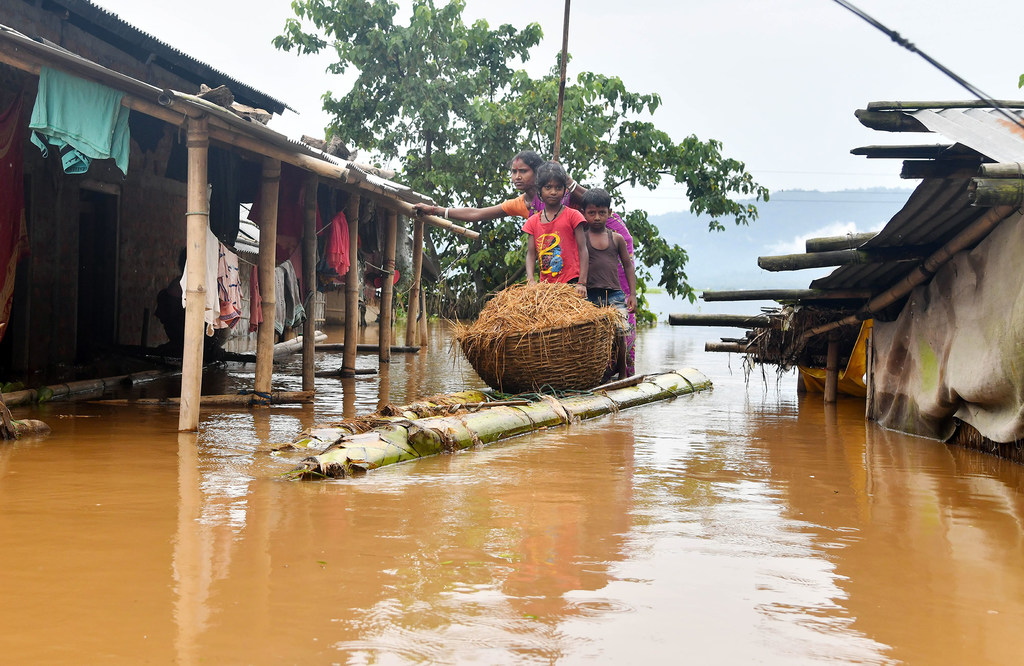
Floodwaters in Morigaon, India (file 2020)

Why Now? 

The urgency of the summit is sharpened by both scientific and political realities. The UN World Meteorological Organization reported that 2024 was the hottest year on record, with average global temperatures 1.6 degrees Celsius above pre-industrial levels. Meanwhile, the international political landscape has grown more fractured. 

The United States, which withdrew from the Paris Agreement in early 2025, remains one of the largest historical emitters. Its retreat from climate finance and clean-energy commitments has left developing nations questioning whether the promised flows of support will materialise. 

At the same time, real momentum exists. Clean energy investment topped $2 trillion in 2024, outpacing fossil fuels for the first time, and initiatives such as the proposed Fossil Fuel Non-Proliferation Treaty are gaining traction. The summit will test whether these positive trends can be harnessed and scaled. 

Marcelo Camargo/Agência Brasil

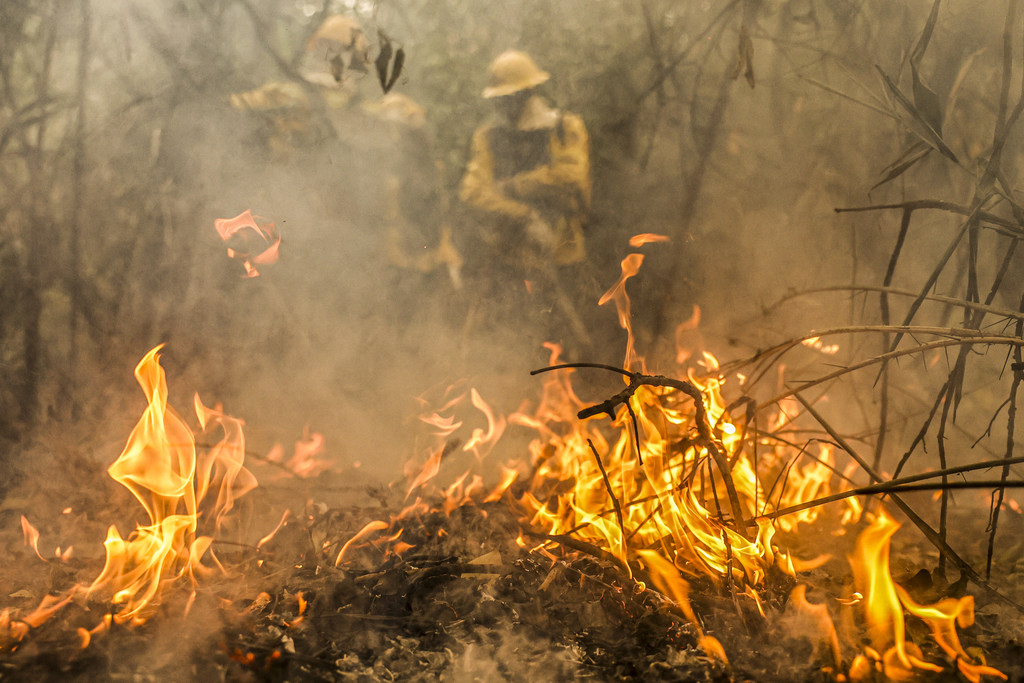
Firefighters in the Pantanal, Brazil (file 2024)

Reading between the lines 

The Climate Summit is not a negotiating session, but its outcomes will set the tone for COP30 in Belém. Brazil has promised to centre that conference on climate justice, forest protection, and renewable energy. Yet success in Belém will depend heavily on what happens in New York this week. 

Observers will watch closely for three signals. First, will major emitters bring plans that close the emissions gap?  Second, is climate finance scaled up beyond symbolic pledges, especially for the Loss and Damage Fund (which has attracted just under $789 million in pledges so far, far short of what is needed)?  And finally, will leaders acknowledge that expanding coal, oil, and gas is incompatible with Paris targets?   

Without progress on these fronts, COP30 risks becoming another forum of unmet expectations. 

High stakes 

For the UN Chief, the summit is about more than process. It is about rebuilding trust in multilateralism at a time when global divides are widening and demonstrating that climate action can unlock economic and social benefits. “The opportunities of climate action have never been clearer,” the UN has stressed, pointing to job creation, health improvements, and energy security linked to clean energy expansion. 

Still, for communities in Pakistan and India displaced by destructive floods, or for farmers in the Horn of Africa facing drought, the summit is less about opportunity than survival. The gap between climate impacts and the political response has never felt wider. 

From words to action 

The UN Climate Summit of September 2025 is not a substitute for COP30, but it may prove just as decisive. It is the arena where leaders can reset ambition, inject credibility, and build momentum toward Brazil. 

If it can deliver bold new pledges, credible finance, and a clear direction on fossil fuels, it could help salvage the promise of Paris. 

Sudan War: Cholera Vaccination Campaign Begins in Darfur

The World Health Organization (WHO)’s Deputy Representative to the country Hala Khudari reported on Tuesday that the outbreak, which started in July 2024 in Kassala, has spread to all 18 states of the country.

More than 113,600 cases have been registered so far and over 3,000 deaths – a “concerning case fatality rate” of 2.7 per cent.

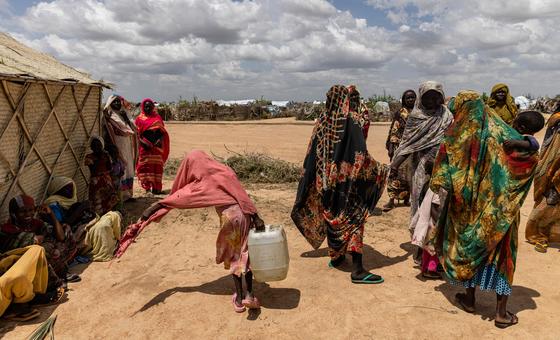
Speaking from Port Sudan, she said that the past year saw surges in White Nile and Khartoum among other states, resulting from the impact of the conflict and increased population movement. This critical situation has been compounded by severely limited basic services such as water, food and health, caused by ongoing heavy fighting between the Sudanese army and the paramilitary Rapid Support Forces.

Cholera is an acute intestinal infection that spreads through bacteria-contaminated food and water. According to WHO, it can kill within hours when not treated, and case fatality rates above one per cent indicate “serious gaps in case management and delayed access to care”.

Conditions ripe for disease

The resurgence of cholera in Sudan has been fuelled by heavy rains and flooding, overcrowding and lack of access to clean water in displacement sites and within communities.

In the Darfur region, where cholera has been spreading since May, the number of cases continues to increase amid “severe access constraints” which are impeding the response, including inaccessible roads due to the rainy season, Ms. Khudari said. As of two days ago 12,739 cases and 358 deaths were reported in more than half of all the localities of the five Darfur states.

In certain localities in West Darfur, the case fatality rate has been as high as 11.8 per cent, she said.

Ms. Khudari explained that WHO and partners have been working to control the outbreak with a vaccination campaign in the worst-hit communities. It began last Sunday “after weeks of preparations to overcome access, transport and logistical challenges”.

The campaign aims to protect 1.86 million people in six priority localities of the Darfurs.

The WHO representative said that the “biggest challenge” in launching the campaign was to “actually get the vaccines there”. She described the difficulties in delivering the life-saving immunizations and supporting supplies via “long routes” to Nyala in South Darfur state earlier this month, amid ongoing security concerns.

El Fasher survivors

Preparations are ongoing to launch the campaign by the end of September in Tawila in North Darfur State, which hosts more than 575,000 internally displaced people, most of whom have fled from the besieged city of El Fasher.

The vaccines are being deployed in Sudan with the support of the UN Children’s Fund (UNICEF), whose spokesperson Ricardo Pires raised the alarm over the severe risks of cholera for children.

Children under five have been “disproportionately affected”, he told reporters, and so far at least 380 have died.

Access to life-saving treatment for cholera in Sudan is limited as the almost two-and-a-half-year-old violent conflict has devastated the health system.

The outbreak comes at a time when “more than 70 per cent of hospitals in conflict-affected areas are non-operational, with health centres being damaged or destroyed during the conflict, lacking supplies and even staff, as well as facilities being often used as shelter,” Mr. Pires stressed.

The UNICEF spokesperson also underscored the impact of “relentless” attacks on the country’s power and water infrastructure which have off cut millions of people including many children from safe and clean water, forcing families to collect water from unsafe and contaminated sources.


France Joins UK, Canada, Australia and Portugal in Recognising Palestinian Statehood

France joins UK, Canada, Australia and Portugal in recognising Palestinian statehood at UN-backed conference

United Nations/New York: UN Secretary-General António Guterres on Monday reiterated that nothing can justify the October 7, 2023 Hamas attacks on Israel, nor the “collective punishment” inflicted on the Palestinian people in their aftermath. Calling for an “immediate” ceasefire in Gaza, he urged the release of all hostages and the opening of safe, unconditional and unhindered humanitarian corridors.

Speaking at the resumed international conference on Palestine, co-chaired with Saudi Arabia, Guterres warned that the viability of a two-state solution is being undermined by “relentless” settlement expansion, the “creeping threat of annexation” and a surge in settler violence in the West Bank.

“The time for peace has come because we are just a few moments away from no longer being able to seize peace,” he told delegates. “Let’s be clear: statehood for the Palestinians is a right, not a reward. Denying it would be a gift to extremists everywhere.”

France Backs Palestinian Statehood

The conference, held after the General Assembly overwhelmingly endorsed the first phase outcome declaration in July, saw fresh diplomatic momentum. The United Kingdom, Canada, Australia and Portugal formally recognised the State of Palestine on Sunday. French President Emmanuel Macron announced that Paris would follow suit, a declaration that drew lengthy applause.

“The recognition of the legitimate rights of the Palestinian people takes nothing away from the rights of the people of Israel, which France has supported from Day One,” Macron said. “This recognition is the only solution that will allow Israel to live in peace.”

Saudi Foreign Minister Faisal bin Farhan Al Saud praised the countries that had recognised Palestine and urged others to “take a similar historic step.” Such recognition, he said, would “support efforts towards the implementation of the two-State solution, achieve permanent and comprehensive peace in the Middle East, and create a new reality of stability and prosperity.”

ALSO READ: London’s Far-Right Rally Sends Shockwaves Through South Asian Communities

UN General Assembly President Annalena Baerbock acknowledged scepticism around the two-state formula, noting that the UN’s earliest resolutions on the issue date back to its founding years. But she stressed that pursuing the alternative would mean conceding to “evil” and risk “the end of this institution.”

“This is not a naïve wish,” Baerbock insisted. “The international community is committed not only to the principle of two states but to identifying tangible, timebound and irreversible steps for its realisation, backed by decisive measures and international guarantees.”

The conference underscored a growing shift among Western powers towards recognising Palestinian statehood, even as conditions on the ground remain volatile. For Guterres and other leaders, the message was clear: without urgent steps, the two-state solution risks slipping out of reach, with grave consequences for peace and security in the Middle East and beyond.

Palestine Issue Dominates UNGA, Overshadowing Other Global Crises

The question of Palestine has taken centre stage at the United Nations, overshadowing the annual high-level week of the General Assembly where world leaders traditionally outline their global visions from the iconic green marble podium.

Even as wars rage in Ukraine and elsewhere, and the UN itself confronts crises on its 80th anniversary, the Palestinian statehood debate has seized the spotlight. A summit on Palestine is set for Monday, a day before the formal opening of the high-level session.

The momentum accelerated on Sunday when Britain and several other Western nations announced formal recognition of Palestine. France, co-convening Monday’s summit with Saudi Arabia, is expected to follow suit, joining 152 of the UN’s 193 member states — including India — that already recognise Palestinian statehood.

US Denies Visa to Palestine President

Yet, Palestinian President Mahmoud Abbas will not attend in person. The US denied him a visa, forcing the Assembly to vote on allowing him to speak remotely. In a striking show of support, 145 countries backed the move, with only the US, Israel and three others opposed, and six abstentions.

The strong endorsement reflects the growing tide of sympathy for Palestinians amid Israel’s offensive in Gaza, where nearly 75,000 people — most of them civilians — are reported killed. Israeli Prime Minister Benjamin Netanyahu has further inflamed tensions by vowing to expand Jewish settlements in the West Bank.

Still, the surge of recognition will remain largely symbolic. The US is expected to veto any Security Council bid for full UN membership, while Netanyahu appears unmoved by international censure.

Beneath the headlines, the UN faces its own existential questions. Secretary-General Antonio Guterres had hoped the 80th anniversary would spotlight his UN80 reform agenda, “Shifting Paradigms: United to Deliver”, which seeks to streamline the body’s work around peace and security, sustainable development and human rights. The official theme of this year’s high-level week, “Better Together: 80 Years and More for Peace, Development and Human Rights,” reflects that ambition.

ALSO READ: Canada, Australia and UK Recognise Palestine’s Statehood, Palestine Welcomes

But enthusiasm is tempered. The UN confronts a severe financial crunch, worsened by US President Donald Trump’s threat to cut Washington’s contributions, and global confidence in the institution has waned, a recent poll found only 58% of people worldwide still trust it.

Modi Skips This Year’s Gathering

Adding to the uncertainty, key global leaders, Prime Minister Narendra Modi, Russian President Vladimir Putin and Chinese President Xi Jinping, are skipping this year’s gathering.

By tradition, Brazil will open the debate, with President Luiz Inácio Lula da Silva barely making it to New York after US visa complications hit members of his delegation. Trump will follow, also by tradition, and his speech is expected to set the tone, given his confrontational trade policies and geopolitical brinkmanship.

Meanwhile, real diplomacy will unfold on the sidelines, in bilateral and multilateral meetings aimed at navigating the increasingly unpredictable Trump era.

Representing India, External Affairs Minister S. Jaishankar began his diplomatic outreach on Sunday with a meeting with Philippine Foreign Secretary Theresa Lazaro. She later posted on X that the discussion “reaffirms our 2 countries’ commitment as Strategic Partners to actively develop cooperation in political, defence and security, the maritime domain, etc.”

As the General Assembly opens, the world’s attention may officially be on the UN’s 80th anniversary, but it is Palestine’s long-contested statehood that is commanding the spotlight.

Canada, Australia and UK Recognise Palestine’s Statehood, Palestine Welcomes

Palestine has hailed the coordinated move by Canada, Australia and the United Kingdom to formally recognise it as an independent and sovereign state, calling the decision a step in line with international law and legitimacy resolutions.

In a statement shared on X, Palestine’s Mission to the United Nations said its Ministry of Foreign Affairs “welcomes and expresses gratitude” to the three countries for what it described as “courageous decisions” that affirm the Palestinian right to statehood.

The recognition was announced on Sunday in synchronised declarations from Ottawa, Canberra and London, marking a significant diplomatic shift aimed at reviving prospects for a two-state solution in the Middle East.

Australian Prime Minister Anthony Albanese and Foreign Minister Penny Wong, in a joint statement, said recognition was effective immediately and underscored Australia’s “longstanding commitment” to the two-state framework. “Australia recognises the legitimate and long-held aspirations of the people of Palestine to a state of their own,” they said, adding that the move was tied to international efforts to secure a Gaza ceasefire and the release of hostages taken during the October 7, 2023 attacks.

Palestine Authority pledges reforms

They stressed that the Palestinian Authority had renewed its recognition of Israel’s right to exist and pledged reforms in governance, elections, finance and education, while making clear that Hamas would have “no role in Palestine.”

UK Prime Minister Keir Starmer echoed that position in a video message, saying Britain’s recognition was intended to “revive the hope of peace for Palestinians and Israelis” and to lay the ground for renewed dialogue.

Canadian Prime Minister Mark Carney, in a statement, sharply criticised Israel’s current policies, accusing its government of systematically blocking Palestinian statehood through settlement expansion and a prolonged military campaign in Gaza. He said Canada’s recognition was rooted in “principles of self-determination and fundamental human rights” and aligned with Ottawa’s longstanding foreign policy traditions.

“This recognition is not a panacea,” Carney cautioned, “but it is a necessary step to preserve the possibility of a two-state solution and to help build the promise of a peaceful future for both Israel and Palestine.”

The joint move by three major Western powers is expected to intensify international pressure on Israel, which has consistently opposed recognition of Palestinian statehood outside a negotiated settlement.

The Great American Dream Now Carries a Steep Price Tag

The American dream, long pursued by Indian engineers and graduates, has suddenly become costlier. A new proclamation by US President Donald Trump has imposed a $100,000 annual surcharge on H-1B visa applications, sending shockwaves through India’s education and technology sectors.

The fee hike strikes hardest at early-career professionals. With median salaries for computer science graduates in the US ranging between $65,000 and $80,000, employers say the surcharge makes it unviable to sponsor young hires. Immigration experts warn approvals may now be limited to senior, high-value executives.

“Effectively, this closes the door for younger engineers who once formed the backbone of US tech companies,” said a New Delhi-based consultant. “The future Satya Nadellas or Sundar Pichais may never get the chance to begin that journey.”

India Bears the Brunt

Nearly 70% of all H-1B approvals go to Indian nationals, far ahead of other countries. Estimates suggest about 442,000 Indians currently hold these visas, mainly in software, data, and AI roles. Lawyers say the new levy acts as a filter, concentrating approvals among elite profiles at multinationals while squeezing out recruits from mid-tier outsourcing firms.

Education consultants in India report growing anxiety among families weighing the cost of US degrees with uncertain career pathways. IT giants, traditionally the largest H-1B sponsors, are now recalibrating staffing strategies. “Expect a pivot to offshore delivery hubs in Bengaluru, Hyderabad, and even Mexico,” noted a Mumbai-based strategist.

A Gold Card for the Wealthy

In contrast, Trump has unveiled a “Gold Card” programme for wealthy foreigners. Those donating $1 million individually, or $2 million corporately, can secure expedited immigrant visas. Critics call it a system skewed toward the rich.

“This is meritocracy turned on its head,” said a Washington policy analyst. “The message is clear — the middle class faces barriers, while the wealthy can buy their way in.”

The administration defends the move citing job data. A Federal Reserve Bank of New York study showed unemployment rates of 6.1% among computer science graduates and 7.5% among computer engineering graduates aged 22–27 — double the rates in some non-technical fields. Underemployment, too, was high at over 16%.

Officials argue the US produces enough technical graduates and must prioritise domestic hiring. But industry leaders caution that layoffs and restructuring in 2023–24, coupled with AI-driven changes, have already reshaped demand. Companies still require talent but may now prefer to keep it offshore.

The H-1B pipeline has historically powered both corporate America and Indian aspirations. It gave US firms cost-efficient talent and helped create communities of Indian origin that flourished across industries. Analysts warn that shutting this route will choke the next generation of global leaders.

“A country that once opened its doors to talent is now signalling that opportunity is for the wealthy, not the aspiring,” said a senior Indian IT executive.

H-1B Fee To Apply Only For New Petitions, Not Renewals, Says White House

The White House has clarified that the newly announced $100,000 H-1B visa fee will apply only to fresh petitions, not to renewals or current visa holders. “This is a one-time fee that applies only to new visas. It will first be levied in the next lottery cycle,” a senior official told Indian media on Saturday.

White House spokeswoman Taylor Rogers said the intent was to curb misuse by firms filing mass petitions. “This action discourages spamming the system and ensures fairness for American workers,” she added.

President Donald Trump, who signed the proclamation on Friday, said the measure would ensure companies considered local talent first. “We need workers, we need great workers — and this ensures that,” he remarked.

Commerce Secretary Howard Lutnick defended the steep cost, saying it would push firms to train domestic graduates instead of over-relying on foreign hires. “It’s just not economic to keep bringing in people when we have skilled graduates here,” he said.

The US issues about 85,000 new H-1B visas annually, with India-born professionals accounting for nearly three-fourths of approvals in 2023. The fee announcement has sparked unease in India’s IT industry, which depends heavily on the program to deploy skilled staff in the US. Experts warn the new costs may force firms to rethink business models or raise client fees.

‘Warring world crying out for peace’ says UN chief as leaders gather in New York

UN Secretary-General António Guterres has called for a renewed global push to end wars and divisions, stressing that “peace cannot wait” as the world observes the International Day of Peace.

“Lives are being ripped apart, childhoods extinguished, and basic human dignity discarded, amidst the cruelty and degradations of war,” Mr. Guterres said in his message for the Day. “All they want is peace.”

He noted that modern conflict is no longer confined to battlefields, with its consequences spilling across borders, driving displacement, poverty, and instability. “We must silence the guns. End the suffering. Build bridges. And create stability and prosperity,” he urged.

Theme Calls for Collective Action

The International Day of Peace was first established by the UN General Assembly in 1981 as a day devoted to non-violence and ceasefire. This year’s theme, Act Now for a Peaceful World, emphasizes the need for urgent action to prevent conflicts, counter hate and disinformation, and strengthen peacebuilding efforts, particularly through the involvement of women and young people.

Mr. Guterres underscored the close relationship between peace and sustainable development, pointing out that nine of the ten countries lagging most in development are also plagued by conflict. He warned against racism and dehumanisation, advocating instead for “the language of respect” and dialogue.

The observance comes on the eve of the UN General Assembly’s annual high-level week, where leaders from across the world gather in New York to debate pressing global challenges, from ongoing wars and climate disruption to gender equality and the risks and opportunities posed by artificial intelligence.

“The timing underlines the need for a concerted international push for peace, as divisions widen and instability grows,” the Secretary-General said. Concluding his message, he reminded nations and communities alike: “Where we have peace, we have hope. Peace cannot wait — our work starts now.”

UNDP: Peace and Development Intertwined

In a statement issued the same day, UNDP’s Acting Administrator Haoliang Xu stressed that peace is the foundation of development. Xu highlighted that in 2024, governments spent approximately US$2.7 trillion on military budgets, while only a small fraction—about US$47.2 billion, was allocated to peacebuilding and prevention efforts.

UNDP further argued that development actors are crucial partners in stabilisation: by investing in justice, governance, and inclusive institutions, and by supporting women and youth roles in conflict-affected regions, peace becomes more durable.

Civil Society Voices

Labour unions, non-governmental organisations, and other civil society actors underscored that peace is not simply the absence of war but requires fairness and equality.

For example, Unifor, a large Canadian trade union, released a statement affirming that peace must rest on dignity, justice, and human rights. The union observed that civilians—in particular workers, health care personnel, families, children—bear disproportionate burden during conflicts. Unifor called for ceasefires, de-escalation of violence, and increased support for humanitarian and development agencies.

These actors also spoke out against trends of rising militarisation at the expense of essential services—health, education, housing—and warned that neglect in these areas undermines long-term peace and stability.

Beyond the UN Secretariat and civil society, organisations that represent countries or regions emphasised that peace must go hand in hand with democracy, human rights, and inclusion.

The Community of Democracies (CoD) reaffirmed its commitment to the UN’s Sustainable Development Goals (SDGs), particularly SDG 16 (peace, justice, and strong institutions). Its Secretary-General Thomas E. Garrett stressed that sustainable peace requires the meaningful participation of women, youth, and marginalized groups, and that democratic governance bolsters efforts toward reconciliation and enduring peace.

Several member states (implicitly through these organisations and joint statements) echoed that investing in peace-building, prevention, and inclusive development is not merely moral but pragmatic: peace is foundational to stability, prosperity, and human wellbeing.

Also Read: London’s Far-Right Rally Sends Shockwaves Through South Asian Communities