
Palestine Issue Dominates UNGA, Overshadowing Other Global Crises

The question of Palestine has taken centre stage at the United Nations, overshadowing the annual high-level week of the General Assembly where world leaders traditionally outline their global visions from the iconic green marble podium.

Even as wars rage in Ukraine and elsewhere, and the UN itself confronts crises on its 80th anniversary, the Palestinian statehood debate has seized the spotlight. A summit on Palestine is set for Monday, a day before the formal opening of the high-level session.

The momentum accelerated on Sunday when Britain and several other Western nations announced formal recognition of Palestine. France, co-convening Monday’s summit with Saudi Arabia, is expected to follow suit, joining 152 of the UN’s 193 member states — including India — that already recognise Palestinian statehood.

US Denies Visa to Palestine President

Yet, Palestinian President Mahmoud Abbas will not attend in person. The US denied him a visa, forcing the Assembly to vote on allowing him to speak remotely. In a striking show of support, 145 countries backed the move, with only the US, Israel and three others opposed, and six abstentions.

The strong endorsement reflects the growing tide of sympathy for Palestinians amid Israel’s offensive in Gaza, where nearly 75,000 people — most of them civilians — are reported killed. Israeli Prime Minister Benjamin Netanyahu has further inflamed tensions by vowing to expand Jewish settlements in the West Bank.

Still, the surge of recognition will remain largely symbolic. The US is expected to veto any Security Council bid for full UN membership, while Netanyahu appears unmoved by international censure.

Beneath the headlines, the UN faces its own existential questions. Secretary-General Antonio Guterres had hoped the 80th anniversary would spotlight his UN80 reform agenda, “Shifting Paradigms: United to Deliver”, which seeks to streamline the body’s work around peace and security, sustainable development and human rights. The official theme of this year’s high-level week, “Better Together: 80 Years and More for Peace, Development and Human Rights,” reflects that ambition.

ALSO READ: Canada, Australia and UK Recognise Palestine’s Statehood, Palestine Welcomes

But enthusiasm is tempered. The UN confronts a severe financial crunch, worsened by US President Donald Trump’s threat to cut Washington’s contributions, and global confidence in the institution has waned, a recent poll found only 58% of people worldwide still trust it.

Modi Skips This Year’s Gathering

Adding to the uncertainty, key global leaders, Prime Minister Narendra Modi, Russian President Vladimir Putin and Chinese President Xi Jinping, are skipping this year’s gathering.

By tradition, Brazil will open the debate, with President Luiz Inácio Lula da Silva barely making it to New York after US visa complications hit members of his delegation. Trump will follow, also by tradition, and his speech is expected to set the tone, given his confrontational trade policies and geopolitical brinkmanship.

Meanwhile, real diplomacy will unfold on the sidelines, in bilateral and multilateral meetings aimed at navigating the increasingly unpredictable Trump era.

Representing India, External Affairs Minister S. Jaishankar began his diplomatic outreach on Sunday with a meeting with Philippine Foreign Secretary Theresa Lazaro. She later posted on X that the discussion “reaffirms our 2 countries’ commitment as Strategic Partners to actively develop cooperation in political, defence and security, the maritime domain, etc.”

As the General Assembly opens, the world’s attention may officially be on the UN’s 80th anniversary, but it is Palestine’s long-contested statehood that is commanding the spotlight.

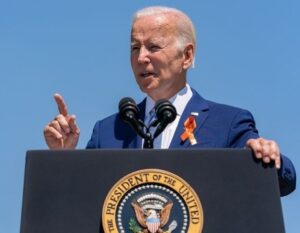
UN General Assembly Session: Biden to present plan on Security Council Expansion

At next week’s high-level UN General Assembly (UNGA) meeting, US President Joe Biden will present a ideas for moving forward the Security Council reform process that includes expanding it, according to Washington’s Permanent Representative Linda Thomas-Greenfield.

Giving a basic outline of US plans for “moving the needle forward” on reforms, she said on Friday that “the President will present a bit more on this in his speech”.

“We will advance efforts to reform the UN Security Council that includes forging consensus around sensible and credible proposals to expand Security Council membership,” Thomas-Greenfield, who is a member of Biden’s cabinet, said while briefing reporters about the country’s priorities for the Assembly session, which will draw leaders from several countries.

“We will be having discussions with our P3 colleagues as well as others on the way forward,” she said using the acronym “P3” for the three Western permanent members, the US, Britain and France.

President Joe Biden.(photo:Instagram)

Secretary of State Antony Blinken “will also be engaging this week on the commitments we’ve made and how we see the process moving forward”, she said.

“And we will have further discussions with other member states on how we can just move the needle on this so that we can make some progress on UN reform and Security Council reform.”

Thomas-Greenfield confirmed that Biden would address the Assembly on September 21, a break with the tradition of the US President as the second speaker after Brazil at the opening of the annual high-level session known as the General Debate that starts on September 20.

This is because Biden is scheduled to be in London on Monday for Queen Elizabeth’s funeral.

Prime Minister Narendra Modi is staying away from the UN meeting this year, as are Presidents Xi Jinping of China and Vladimir Putin of Russia, who all met this week in Samarkand, Uzbekistan, at the 22nd Shanghai Cooperation Organisation Summit.

French President Emmanuel Macron will be in New York at the UN meeting and UK Prime Minister Liz Truss will make her debut there on the world stage following her election last week.

While the US, along with Britain and France, supports India getting a permanent seat on the Council, Washington’s agenda for reforms is broader.

Thomas-Greenfield laid out what she said were six new principles for the Council, one of which is expanding its membership.

Another relates to Russia blocking the Council from acting on its invasion of Ukraine and its fallout by using its veto power.

“Bilateral disputes must never be an excuse for obstructing the Council’s mandate or forgoing one’s responsibilities,” she said.

She proposed drastically cutting down the use of vetoes, tagging on the assurance that “we will refrain from the use of the veto except in rare, extraordinary circumstances”.

She pointed out that since 2009, Russia has cast 26 vetoes, in 12 of which China joined it, while the US had only used it only four times during that period.A

Another principle Thomas-Greenfield proposed was bringing transparency to the Council while enhancing cooperation.

“Council members should engage frequently and substantively with the General Assembly and other UN bodies and UN member states”, she said.

“These principles are the start of a dialogue, one that President Biden, Secretary Blinken, and myself and so many others will pick up and take into our conversations during High-Level Week and in the weeks ahead.

“Our hope is to rally the world behind the Charter that we all committed to 77 years ago in San Francisco, and together, we will work to shape and reform it and the system it has created for the future,” she said.

Her adding the key qualifiers “sensible and credible” to the Council expansion proposal opens it to several suggestions.

The ideas for reform that have been proposed by several countries and groups include adding permanent members with veto power or without it (which India is amenable to); instead only giving extended terms beyond the current two years to some elected members, and expanding only non-permanent membership under present terms.

The other issue is which countries get the permanent memberships.

It is a touchy matter for the US which is uneasy about certain countries from the African or Arab block getting permanent seats just as China and Russia are leery about the possible elevation of some countries.