‘A moral failure’: Security Council hears about grave violations against children caught in war

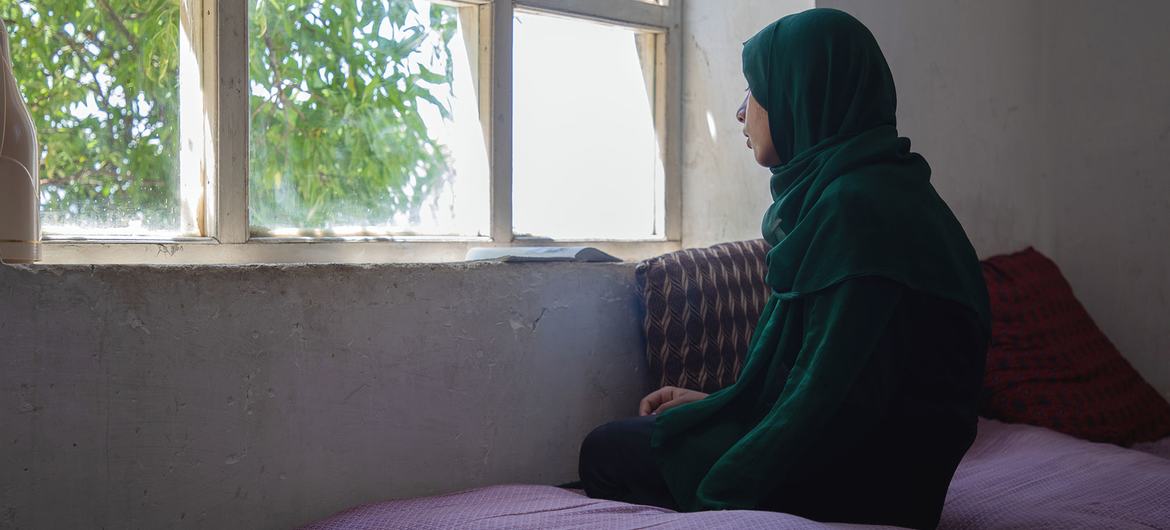
“From that day on, our home became a travel bag and our path became that of displacement … My childhood was filled with fear and anxiety and people I was deprived of,” she said, speaking via videoconference from Syria.  

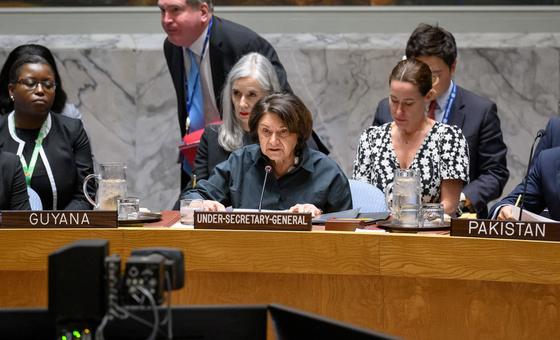
Seema Sen Gupta, director of child protection and migration at UNICEF, briefs the Security Council. 

Sila, now 17, described her experiences during the Syrian Civil War to a meeting of the UN Security Council held on Wednesday to discuss the findings of the Secretary-General’s latest report on Children and Armed Conflict.

The report documented a 25 per cent increase in grave violations against children in 2024, the largest number ever recorded in its 20-year history. 

This year’s report from the Secretary-General once again confirms what too many children already know — that the world is failing to protect them from the horrors of war,” said Sheema Sen Gupta, director of child protection at the UN Children’s Fund (UNICEF).

“Each violation against children in every country around the globe represents a moral failure.”

The real scale of the harm

The report presented to the Security Council is published annually to document grave violations against children affected by war. It relies entirely on data compiled and verified by the UN, meaning that the real numbers are likely much higher than reported.  

In 2024, the report documented a record 41,370 grave violations — including killing and maiming, rape, abduction and the targeting of infrastructure such as schools which supports children.  

“Each child struck by these attacks carries a story, a stolen life, a dream interrupted, a future obscured by senseless violence and protracted conflict,” said Virginia Gamba, the Secretary-General’s Special Representative for Children and Armed Conflict, whose office produced the report.  

Virginia Gamba, the Secretary-General’s Special Representative for Children and Armed Conflict, briefs the Security Council. 

While many of these violations occurred during times of conflict — especially as urban warfare is on the rise — grave violations can persist even after a conflict ends. 

They persist in the unexploded ordinances which still pepper the ground.  

“Every unexploded shell left in a field, schoolyard, or alley is a death sentence waiting to be triggered,” said Ms. Sen Gupta.  

They persist in the spaces which remain destroyed, impeding children from accessing healthcare and education.  

And they persist in the trauma and injuries which never fully leave a child.  

Scars that never heal

Children who survive the grave violations do not escape unscathed — if they suffered violence, the injuries will stay with them for a lifetime. And even if they were not injured, the trauma remains.

“The physical and psychological scars borne by survivors last a lifetime, affecting families, communities and the very fabric of societies,” said Ms. Gamba.  

This is why UNICEF and its partners have worked to provide reintegration programmes and psychosocial support for children who are victims of grave violations.

Sila said that the trauma of her childhood is still with her, and has pushed her to become an advocate for children in conflicts.  

“From that moment on, nothing has felt normal in my life. I’ve developed a phobia of any sound that resembles a plane, of the dark, and even of silence,” she said.  

‘This cannot be the new normal’

Ms. Gamba called for “unwavering condemnation and urgent action” from the international community in order to reverse the worrying trends which the report details.  

We cannot afford to return to the dark ages where children were invisible and voiceless victims of armed conflict… Please do not allow them to slip back into the shadows of despair,” she said. 

Current funding cuts to humanitarian aid are impeding the work of UN agencies and partners to document and respond to grave violations against children.

In light of this, Ms. Sen Gupta’s call for the Security Council was simple: “Fund this agenda.”

She said that the international community cannot allow this to become “a new normal,” and reminded the members of the Security Council that children are not and should never be “collateral damage.”

Despite the devastation which the report detailed, there were “glimmers of hope” according to Ms. Sen Gupta. For example, the Syrian National Army signed an action plan which will prevent the recruitment, killing and maiming of children.  

Sila also spoke of hope — she hopes that hers is the last generation to suffer these grave violations.  

“I am from a generation that survived. Physically,” she said. “Our bodies survived but our hearts are still living in fear. Please help us replace the word displacement with return, the word rubble with home, the word war with life.” 

Source link

Iran: Return to inspections top priority for UN nuclear agency

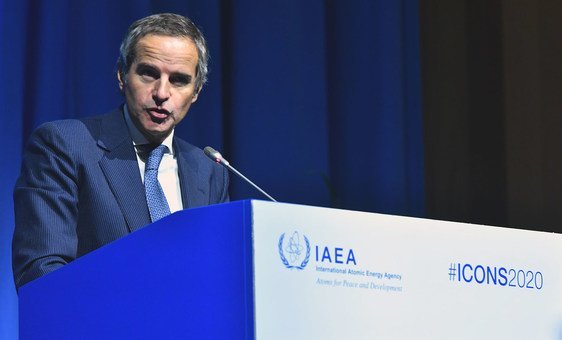
Rafael Mariano Grossi was speaking to reporters in Austria following a briefing to the Government in Vienna.

Israel began launching air and missile strikes against Iranian military and nuclear sites nearly two weeks ago, and the United States carried out surprise bombing raids on three Iranian uranium enrichment facilities this past weekend.

A ceasefire between Iran and Israel, announced on social media by US President Donald Trump on Monday night, is fragile but holding. 

However, the extent of damage to Iran’s enriched uranium stockpile remains unclear.

Iran says protective measures taken

Following the initial attacks, Iran informed the IAEA that it would take “special measures” to protect its nuclear materials and equipment.

Mr. Grossi told journalists that he has received a letter from the Iranian Foreign Minister which said protective measures have been taken.

“They did not get into details into what that meant, but clearly that was the implicit meaning of that. So, we can imagine that this material is there,” he said. To confirm this, and to evaluate the situation, “we need to return,” he added.

Inspections vital

On Wednesday, Iran’s parliament approved a bill to suspend cooperation with the IAEA, according to media reports, which has to be approved by the executive branch of the Government.

Mr. Grossi said he wrote to Foreign Minister Abbas Araghchi on Tuesday requesting that they meet “to analyze the modalities” for inspections to continue.

He stressed that the international community “cannot afford” for the inspection regime to be interrupted.

The IAEA chief was also asked about Iran’s plans to withdraw from the Non-Proliferation Treaty (NPT), a key international accord aimed at preventing the spread of nuclear weapons.

The move would be “very regrettable,” he said. “I hope this is not the case. I don’t think this would help anybody, starting with Iran. This would lead to isolation, all sorts of problems.” 

Energy access has improved, but more funding is needed to address disparities: WHO

While the rate of basic access to energy has increased since 2022, the current pace is insufficient to reach universal access by 2030, one of the UN’s Sustainable Development Goals (SDGs), according to a report published by the WHO and partners this Wednesday.

The report highlights the role of cost-effective distributed renewable energy — a combination of mini-grid and off-grid solar systems — in accelerating energy access, particularly as the populations who remain unconnected mostly live in remote, lower-income, and fragile areas.

Regional disparities

“Despite progress in some parts of the world, the expansion of electricity and clean cooking access remains disappointingly slow, especially in Africa,” said Fatih Birol, Executive Director of the International Energy Agency (IEA), as 85 per cent of the global population without electricity access reside in sub-Saharan Africa.

In the region, renewables deployment has rapidly expanded; however, on average, it remains limited to 40 watts of installed capacity per capita — only one eighth of the average in other developing countries.

Clean cooking

As regional disparities persist, an estimated 1.5 billion people residing in rural areas still lack access to clean cooking, while over two billion people remain dependent on polluting and hazardous fuels such as firewood and charcoal for their cooking needs.

Yet, the use of off-grid clean technologies, such as household biogas plants and mini-grids that enable electric cooking, can offer solutions that reduce the health impacts caused by household air pollution.

“The same pollutants that are poisoning our planet are also poisoning people, contributing to millions of deaths each year from cardiovascular and respiratory diseases, particularly among the most vulnerable, including women and children,” said Tedros Ghebreyesus, WHO Director-General.

Lack of financing

The report identified the lack of sufficient and affordable financing as a key reason for regional inequalities and slow progress.

While international public financial flows to developing countries in support of clean energy have increased since 2022, the developing world received significantly fewer flows in 2023 than in 2016.

“This year’s report shows that now is the time to come together to build on existing achievements and scale up our efforts,” said Stefan Schweinfest, Director of the UN Statistics Division, as the report called for strengthened international cooperation between the public and private sectors to scale up financial support for developing countries, especially in sub-Saharan Africa. 

$1 towards a girl’s education = $3 for the global economy: That’s how development works

Every dollar invested in girls’ education yields an average return of $2.80 – translating into billions in additional GDP. Similarly, each dollar spent on water and sanitation saves $4.30 in healthcare costs.

Simple math, not miracles

These aren’t miracles – they’re measurable outcomes. Maths doesn’t recognize gender or infrastructure; it simply reflects the truth in numbers. And those numbers make a compelling case: helping countries with the least resources benefits everyone, including those with the most.

Even a single dollar, strategically invested, can make a profound difference.

For example, allocating just $1 per person annually to combat non-communicable diseases could prevent nearly seven million deaths by 2030. Likewise, every dollar spent on disaster risk reduction can save up to $15 in recovery costs.

Yet despite such compelling evidence, development aid is often misunderstood – seen by some as mere charity, and by others as a vehicle for profiteering.

Equity, not charity

The latest UN Development Programme report on Afghan women entrepreneurs challenges the skeptics.

It highlights that these women are not seeking charity – they’re asking for a fair chance to succeed. Earning their own income gives them a measure of independence, which in turn strengthens the communities they live in.

Against all odds, they are generating income, creating jobs, and building fuller, more enriching lives.

Expanding access to public and private financing, guaranteeing loans, offering preferential terms in international markets, and reinforcing support networks can fuel business growth and foster a more prosperous future – whether in Afghanistan or Ecuador, or anywhere in between.

FFD4 faces strong headwinds

These examples – from education and health to entrepreneurship and disaster resilience – paint a clear, data-driven narrative: smart investments in development pay dividends for everyone.

That message should be front and center at the upcoming Fourth UN Conference on Financing for Development which will be held in the Spanish city of Sevilla, from 30 June to 3 July. But the summit, known by its clunky acronym FFD4, faces stiff headwinds.

Even as countries negotiating at UN Headquarters in New York agreed a week ago on a sweeping outcome document – set to be adopted at the close of the conference and intended to guide the future of global development aid – some nations are pulling back.

Notably, the United States has announced it will not send a delegation to Sevilla at all.

And even though there are some notable exceptions, including Spain, which has increased its development financing budget allocations by 12 per cent, the uncertain landscape ahead has led UN Secretary-General Antono Guterres to lament that “global collaboration is being actively questioned.”

This questioning is reflected in the $4 trillion annual deficit in development financing, as well as the abandonment of earlier commitments and delivery of aid by donors at what the Secretary-General has called “a historic speed and scale.”

Moreover, the Sustainable Development Goals, signed by all world leaders just 10 years ago, are a long way off track.

What is at stake in Seville?

Success in Sevilla “will require other countries to fill the global leadership vacuum and demonstrate credible commitment to multilateral cooperation, which is essential for our survival,” states Jayati Ghosh, professor of economics at the University of Massachusetts, Amherst.

Meaningful steps forward must include deep reforms of the international financial system. As it stands, it fails to meet the needs of developing countries while steadfastly protecting the interests of wealthier nations.

Consider this: developing countries face interest rates at least twice as high as those paid by developed nations. And today, the average rates charged by private creditors to these countries have reached their highest levels in 15 years.

What aid gives, debt takes away

Developing countries spent a record $1.4 trillion on external debt service in 2023, the highest in 20 years.

Meanwhile, in 2024, more than 1.1 billion people live in developing countries where external debt servicing accounts for more than 20 per cent of government revenue, and nearly 2.2 billion live in developing countries where the percentage is higher than 10 per cent.

Interest payment on this debt hinders development by preventing investment in health infrastructure and education services, to cite just two examples.

Debt restructuring is therefore essential, because much of the hope for development is lost in the give and take of aid and debt.

Promoting investment in what works

Eradicating hunger, advancing gender equality, protecting the environment, confronting climate change, and saving our oceans are not radical ideas.

Despite claims from some highly ideological viewpoints that the Sustainable Development Goals represent an extremist agenda, they are, in fact, a shared baseline – an urgent set of priorities that humanity demands and that the leaders of 193 countries committed to in 2015.

Despite the noise made by those who oppose development aid and multilateralism, they are a minority, says Spain’s Secretary of State for International Cooperation.

Ana Granados Galindo sees Seville as “a beacon of global solidarity.”

Meanwhile, as the world gears up for FFD4, mathematics, statistics, and Afghan women continue to work their common sense ‘development magic’.

Source link

Bold new initiative aims to strengthen and improve the UN, senior officials tell Member States

The informal meeting on the UN80 Initiative also provided a chance for ambassadors to share their views on the reform agenda, launched by Secretary-General António Guterres in March.

UN80 is centred around three workstreams focused on efficiencies and improvements, a mandate implementation review, and structural changes and programme realignments across the entire UN system.

Improving the UN

It also aims to reinforce the UN’s capacity to respond to global challenges such as conflict, displacement, and the climate crisis, while also managing external pressures effectively, such as shrinking budgets and growing political divisions. 

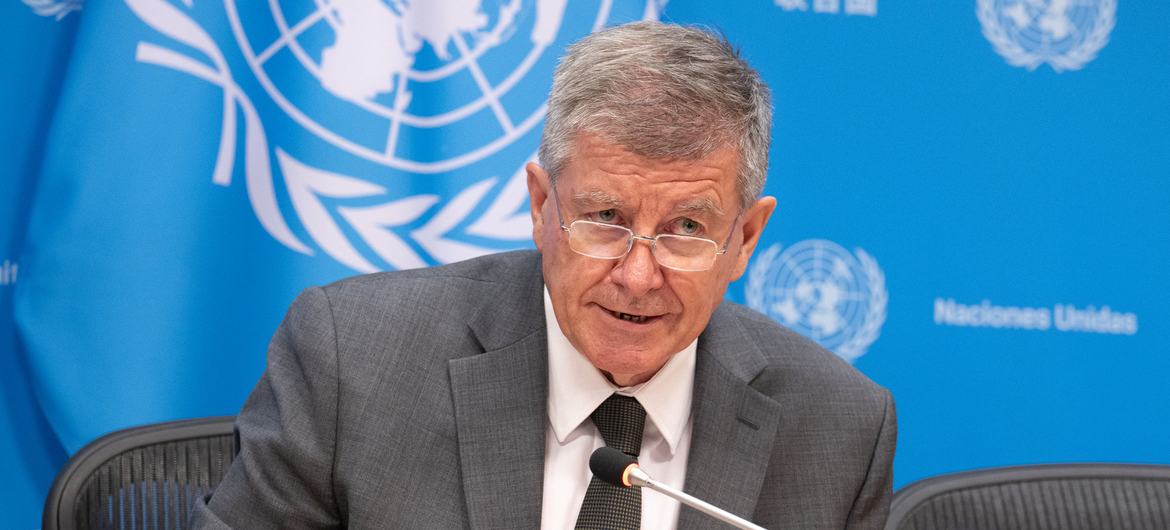
I think the UN80 Initiative is often characterised, but I think mischaracterised, simply as an exercise in downsizing in economy,” said Guy Ryder, Under-Secretary-General for Policy and chair of the Task Force overseeing the plan.

“But the Secretary-General has been rather clear in saying that whilst we have to respond to the resource situation, the overall intention of the Initiative is to strengthen and improve the workings of the UN system.”  

Learn why UN80 matters to the world in our explainer here.

Widespread impact

Mr. Ryder alongside UN Controller Chandramouli Ramanathan (who prepares and oversees the budget and manages the Organization’s funds) presented updates on two workstreams during the morning session of the day-long meeting.

He set the scene with a slideshow outlining the background for UN80 and the circumstances confronting the UN today.

Over the years, it has adopted some 40,000 mandates delivered by “a fairly numerous and complex constellation of entities,” more than 140.

In 2023, the global body delivered some $69 billion in support and services worldwide, with “the lion’s share”, $31 billion or around 45 per cent, going to humanitarian action.  

This was followed by development, $21 billion (30 per cent), peace and security, $9 billion (13 per cent), and human rights, $1 billion, or less than one per cent.

“We believe that the global population, in one manner or another…is connected to the global agenda of the United Nations,” he said.  Additionally, some 440 million lives are directly impacted by its development work, and 140 million people in crisis situations receive support

Reduction in resources

Mr. Ryder said the $69 billion mark two years ago represented “a peak” and it is estimated that the UN has some $50 billion in resources available today amid “a situation of significant uncertainty.”

This 30 per cent reduction means “we’re down to 380 million people who we’re able to reach directly in development work, and we’re down to 110 million as a reduction in emergency situations of our humanitarian spending.”

In light of this context, “maybe we can streamline the manner in which we implement the mandates that you hand down; maybe we can optimize the structures which form this archipelago of entities,” he suggested.

“The success of the UN80 Initiative depends on us being able to increase the impact that our work in the UN system has on the people who we are here to serve.”

Proposals to enhance efficiency

Mr. Ramanathan briefed delegates on workstream one.  He said a working group was established to develop concrete proposals to enhance efficiency, reduce duplication, standardize services, and relocate functions to existing lower-cost duty stations where appropriate. 

The “exhaustive list” includes measures such as consolidating existing human resources, finance and procurement services into unified support hubs. The process would start in New York and Geneva as they host the largest number of Secretariat entities and staff.

Another proposal involves having payroll operations centralized in three global processing centres, compared to 10 locations today.

The working group is finalising the proposals to be submitted to the Secretary-General and “if approved, they will be incorporated into the revised estimates for the 2026 proposed programme budget for the consideration of the General Assembly by 1 September,” said Mr. Ramanathan.

“Separately from the UN80 Initiative, we are reviewing the programme budget proposals for 2026 with a view to achieving between 15 and 20 per cent reductions for 2026, including a 20 per cent reduction in work force, post reduction, but with a focus on preserving capacity at entry levels and reducing senior posts where feasible,” he added.

A ‘universe of mandates’

Mr. Ryder returned to present workstream two, where the first step involved mapping out “the universe of mandates” that the UN implements, with initial focus on Secretariat departments and offices, peacekeeping operations, political missions, regional commissions and other bodies.

The Pact for the Future and the 2030 Agenda for Sustainable Development were among the most frequently cited mandates.  

The overall “landscape” of mandates means that the Secretariat services some 400 intergovernmental organs and roughly 27,000 meetings each year and processes some 2,300 pages of documentation on average every day, amounting to around $360 million annually. 

A mandate resource registry has been produced, and a report should be available by the end of July which will inform the way forward.

Concern over proposed budget cuts

During the session, several representatives expressed their views on UN80, such as Iraqi Ambassador Dr. Abbas Kadhom Obaid, who spoke on behalf of the Group of 77 and China.

He voiced concern over the proposed 15 to 20 per cent budget reductions, and the 20 per cent staff reduction, requesting more insight into how these figures were determined.

“This is important since we know that the departments, divisions, in the Organization’s funds, programmes and agencies vary greatly,” he said.

“We must also protect the geographical and gender balance in the context of any downsizing.  As the Group has reiterated several times, the matters of transparency, accountability and inclusivity are paramount during this process.”

Fit for the future

The meeting took place just days before the 80th anniversary of the signing of the UN Charter on 26 June 1945, as General Assembly President Philémon Yang noted in his opening remarks.

He said it was a time to “reflect on the last 80 years and all that this Organization has achieved, and also a time to look to the future,” so the UN can remain fit for purpose – and ready for the next 80 years.  

Source link

UN urges renewed diplomacy on Iran nuclear deal, hails Tehran-Tel Aviv ceasefire as ‘significant achievement’

Amid this relative calm, the United Nations has renewed its call for a diplomatic solution to the Iran nuclear issue, warning that the objectives of the Joint Comprehensive Plan of Action (JCPOA) – and the resolution that endorsed it – remain unmet.

Addressing a planned Security Council meeting on Tuesday to try and revive the deal amid the dramatic military escalation of the past 12 days, UN political affairs chief Rosemary DiCarlo said the fragile ceasefire announced by Donald Trump overnight provided “an opportunity to avoid a catastrophic escalation and achieve a peaceful resolution of the Iran nuclear issue.

The 2015 Iran nuclear deal – more formally known as the JCPOA and backed by the Security Council – offered Tehran sanctions relief in exchange for strict limits on uranium enrichment, stockpile levels and centrifuge use, alongside robust monitoring and verification by the International Atomic Energy Agency (IAEA).

But the accord has remained in limbo since the United States withdrew in 2018, followed by Iran’s rollbacks of its nuclear-related commitments.

With key provisions under resolution 2231 set to expire on 18 October – unless the Council decides otherwise – the UN’s top political official has warned that the window for reviving diplomacy is narrowing.

With less than four months before resolution’s remaining nuclear-related restrictions are set to expire on 18 October – unless extended by the Council – the UN’s top political official warned that the agreement’s key aims remain elusive.

Diplomacy kneecapped?

Ms. DiCarlo told ambassadors the recent surge in violence had significantly undermined diplomatic momentum.

The military escalation between Israel and Iran since 13 June and United States air strikes on Iran’s nuclear facilities on 21 June complicated prospects for achieving full implementation of resolution 2231,” Ms. DiCarlo said.

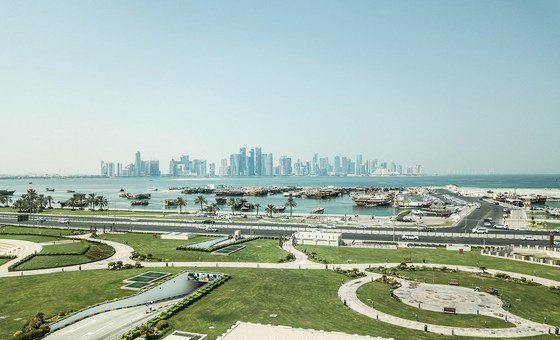
Iran’s strikes yesterday on a base in Qatar further exacerbated insecurity in an already tense region.

Despite five rounds of bilateral talks between Iran and the US, facilitated by Oman in recent months, Ms. DiCarlo noted that efforts “did not produce a way forward” to restore full JCPOA implementation.

A sixth round of talks was called off due to the outbreak of hostilities.

Meanwhile, the toll from the recent conflict has been sobering. According to Iranian authorities, at least 606 people were killed and more than 5,300 injured since hostilities erupted on 13 June. Israeli officials reported 28 deaths and nearly 1,500 injuries.

Time running out

While divisions persist, Ms. DiCarlo said JCPOA participants – China, France, Germany, Iran, Russia, and the United Kingdom – had all reiterated their commitment to finding a diplomatic solution.

In a joint statement shared with the Secretary-General in March, China, Iran and Russia stressed the importance of resolution 2231’s provisions and timelines. China separately proposed a “step-by-step and reciprocal approach” to settle the nuclear issue.

“Diplomacy, dialogue and verification remain the best option to ensure the exclusively peaceful nature of Iran’s nuclear programme,” Ms. DiCarlo said.

EU Ambassador Stavros Lambrinidis briefs the Security Council as the Coordinator of the Joint Commission established by the JCPOA.

Deal, not force, key to resolution: European Union

Echoing UN appeals for dialogue, the European Union stressed that “a lasting solution to the Iranian nuclear issue can only be through a negotiated deal, not military action.

Briefing the Council on behalf of EU High Representative Kaja Kallas, Ambassador Stavros Lambrinidis underscored the urgent need “to come back to a diplomatic solution.”

Ensuring that Iran does not acquire or develop a nuclear weapon remains a key security priority for the EU, he said.

He added that Iran’s accelerating nuclear activities and the absence of IAEA oversight – compounded by the economic fallout from US sanctions – have severely undermined the JCPOA, despite sustained EU efforts to preserve it through diplomacy.

Mr. Lambrinidis reaffirmed that diplomacy must prevail, with the IAEA remaining central to monitoring and verification efforts going forward.

US urges Iran to return to talks

Ambassador Dorothea Shea, Acting US Representative, said Iran’s increase in nuclear activity lacked “any credible civilian justification.”

Even after the IAEA Board of Governors found it noncompliant with nuclear safeguards, she noted, “it is regrettable that certain members of this Council have opted to turn a blind eye to, if not encourage, Iranian noncompliance.”

The US “will not turn a blind eye to Iran’s noncompliance and ongoing threat to regional stability,” she continued.

Ambassador Shea said the 21 June “precision operation effectively fulfilled our narrow objective – to degrade Iran’s capacity to produce a nuclear weapon,” after which President Trump coordinated a ceasefire between Iran and Israel.

“In this critical moment,” she concluded, “we must all urge Iran to seize this opportunity for peace and prosperity and abide by its international obligations.”

UK calls ceasefire a first step

UK Ambassador Barbara Woodward welcomed the ceasefire brokered by President Trump but warned that “the situation remains extremely fragile.”

Expressing that “now is the time for a return to diplomacy,” she urged Iran to engage in talks without delay, warning that its nuclear programme has exceeded “any credible civilian justification.”

She said all diplomatic levers will be deployed for a negotiated outcome and to “ensure Iran does not develop a nuclear weapon.”

Iran: Diplomacy can and must resolve differences

Iran’s Ambassador, Amir Saeid Iravani, said that his country “never initiated this war” and that “once the aggressors stopped their attacks, Iran stopped its lawful military response as well”.

Mr. Saeid also expressed his country’s strong commitment to diplomacy as the path through which differences can and should be resolved.

“Iran continues to believe that a diplomatic resolution to nuclear and sanction issues is possible,” Mr. Saeid said.

He called on the Security Council to condemn Israel’s and the United States’ attacks on Iran and their IAEA-protected nuclear facilities and work to ensure that they never happen again.

Ambassador Iravani added that Iran upheld Council resolution 2231 and the JCPOA, and that remedial measures were “fully consistent” with these two instruments.

Israel warns diplomacy with Iran has failed

Israeli Ambassador Danny Danon defended his country’s military operation against Iran, describing it as a necessary move to neutralise a “double existential threat” from Tehran’s nuclear and missile programmes.  

He said Israel achieved complete air superiority and removed key regime targets, acting in coordination with the US.

Ambassador Danon accused Iran of deceiving the world for years, using diplomacy as cover to advance its nuclear weapons programme.

“There is still time,” he said, “to take meaningful and decisive action to ensure that the threat of a nuclear Iran does not return stronger than before.”

“We are often told that diplomacy must be given a chance – it was given every chance, every round, every channel, every deadline – but so far it has failed, the regime in Tehran never had any intention of complying.”

Video feed of the Security Council meeting.

Source link

Aftermath of Tripoli clashes puts Libya’s fragile stability to the test

Nearly 15 years after Gaddafi’s fall, Libya remains split between the internationally recognised Government of National Unity in Tripoli, and the rival Government of National Stability in Benghazi.

Although a truce was reached on 14 May, the outbreak of fighting last month in the capital “temporarily disrupted UN development and humanitarian operations,” said top UN envoy Hanna Tetteh.

Fragile Truce

On 18 May, with support from the UN Support Mission in Libya (UNSMIL), the Presidential Council established a Truce Committee.

Composed of key security actors, the body has been mandated to monitor the upholding of the ceasefire, facilitate a permanent end to the fighting and ensure the protection of civilians.

As UNSMIL works to ease tensions and prevent further clashes, the Presidential Council has also set up a temporary Security and Military Arrangement Committee, tasked with sustaining peace and reorganising security forces in the capital.

The truce, however, remains fragile, and the overall security situation unpredictable,” said Ms. Tetteh.

Alleged grave violations

The armed clashes that erupted in May resulted in civilian deaths and injuries, as well as damage to critical civilian infrastructure, underscoring the shortcomings of State security forces in adhering to international humanitarian and human rights law, she continued.

Ms. Tetteh expressed alarm over mass graves found in Abu Slim, citing emerging evidence of serious human rights violations – including extrajudicial killings, torture, and enforced disappearances – allegedly by State security forces.

“The presence of charred remains, unidentified bodies in morgues, and a suspected unofficial detention site at Abu Salim Zoo underscores the scale and gravity of these abuses,” she said.

Demand for change

Many Libyans are deeply disillusioned with the prolonged transitional period and have lost confidence in the current institutions and leadership,” said Ms. Tetteh.

As civilians increasingly doubt the current leadership’s willingness to put national interests above their own, there is strong demand for a political process that allows public participation, enables elections, and delivers a democratic government with a clear mandate for real change.

UNSMIL intends to present a time-bound and politically pragmatic roadmap – with the goal of reaching the end of the transitional process – by the time of her next briefing, Ms. Tetteh told ambassadors.

I urge all parties to engage in good faith and to be ready to forge consensus on this roadmap,” she said.

Source link

SECURITY COUNCIL LIVE: Political Affairs chief hails Iran-Israel ceasefire as ‘significant achievement’


The Security Council is meeting over the future of the Joint Comprehensive Plan of Action put in place in 2015 to prevent Iran from weaponising its ambitious nuclear programme, which has been in effective limbo since the US withdrawal in 2018 and Iran’s rejection of parts of the deal. UN political affairs chief Rosemary DiCarlo described the US-brokered ceasefire overnight between Israel and Iran as a “significant achievement” and “an opportunity to avoid a catastrophic escalation and achieve a peaceful resolution of the Iran nuclear issue.” Follow our Meetings Coverage Section live coverage below and UN News app users can follow here.

Source link

Power to the people; funding community-led development in Somalia

In the heart of Galmudug State, Somalia, the dream of two young women, Iftin and Aminaa, to attend university in Abudwaq was fraught with challenges.

Frequent power cuts and a long, dark and possibly dangerous road between the campus and town made it nearly impossible for them and other girls to attend evening classes.

Determined to find a solution, they approached the International Organization for Migration’s (IOM) Co-Funding System (CFS), which provides matching funding for community-led projects and which is designed to empower local communities in Somalia to take charge of their development and recovery.

© IOM/Spotlight Communications

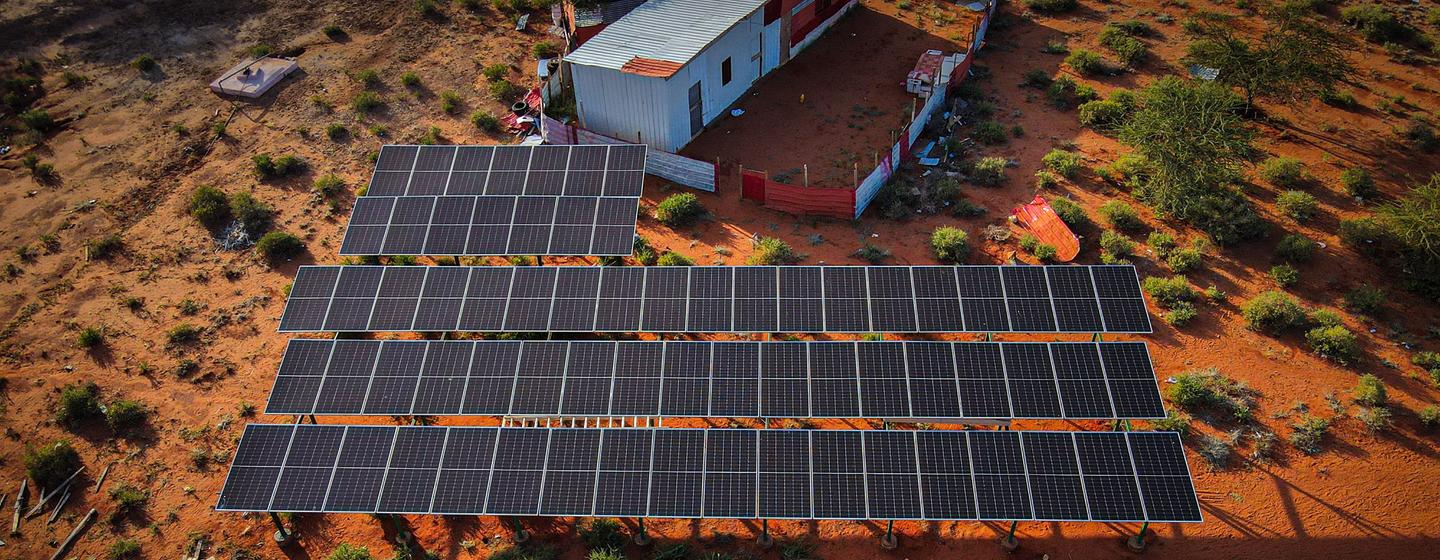
Solar panels provide consistent power to the university in Abudwaq, Galmadug.

Rallying 19 other women students, Iftin and Aminaa submitted a simple yet transformative proposal….. to crowdfund for solar streetlights and a solar energy system for the school.

By July 2022, the girls had raised $10,000. IOM matched this amount and added $50,000 more.

The result was a well-lit and secure road from Abudwaq town to the university and a fully functional solar energy system.

The system now powers the university around the clock with clean energy.

The impact didn’t stop there.

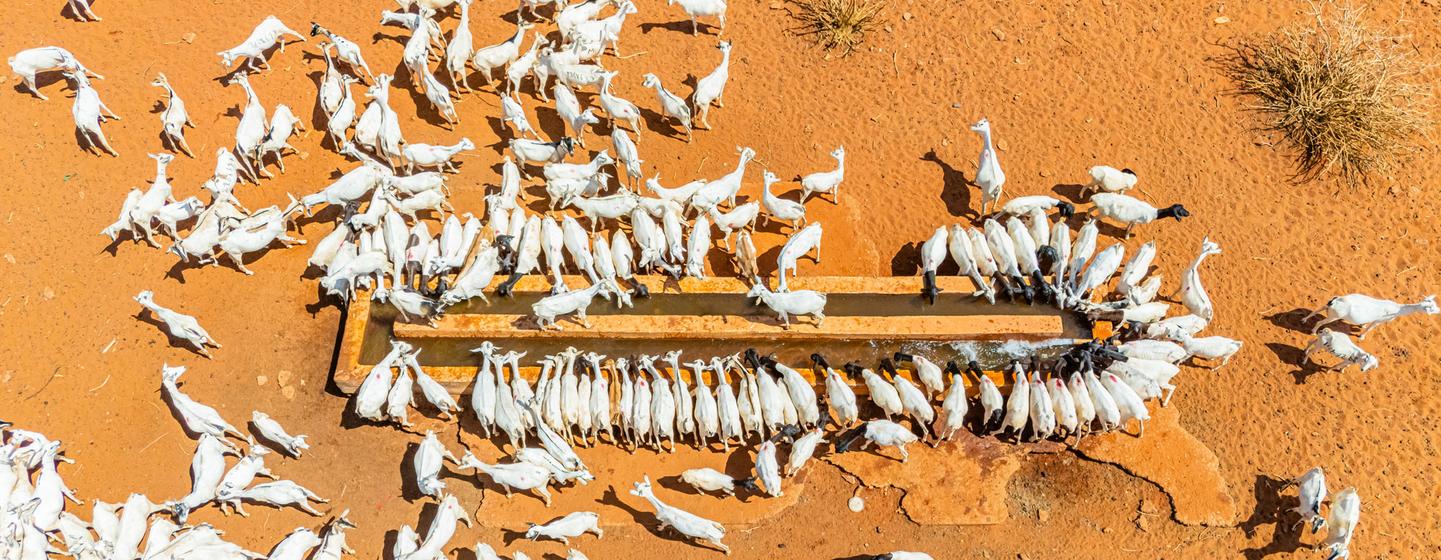
The community later decided to connect a nearby borehole to the system, providing clean, free water to all of Abudwaq and nearby pastoralist communities, who now bring their livestock to drink and graze near the water source.

Animals water at a borehole powered by solar energy.

“Abudwaq was not one of our original target locations,” explained Mohamed Mohamud Hussein, an IOM officer working on community-based planning. “But we considered the proposal because it was well thought out, transformational for the community, and aligned with the CFS’s mandate and priorities around ownership and sustainability.”

Iftin and Aminaa’s determination set an example for other communities across Somalia.

Community power

Piloted by IOM in 2021, the CFS has become one of Somalia’s most innovative recovery tools. It puts power in the hands of local communities.

By the end of 2024, 42 projects had been completed, reaching over 580,000 people across 22 districts in central Somalia.

Nine more are ongoing. Close to 1,600 community and diaspora members contributed, raising over $500,000, which IOM matched with $2.3 million.

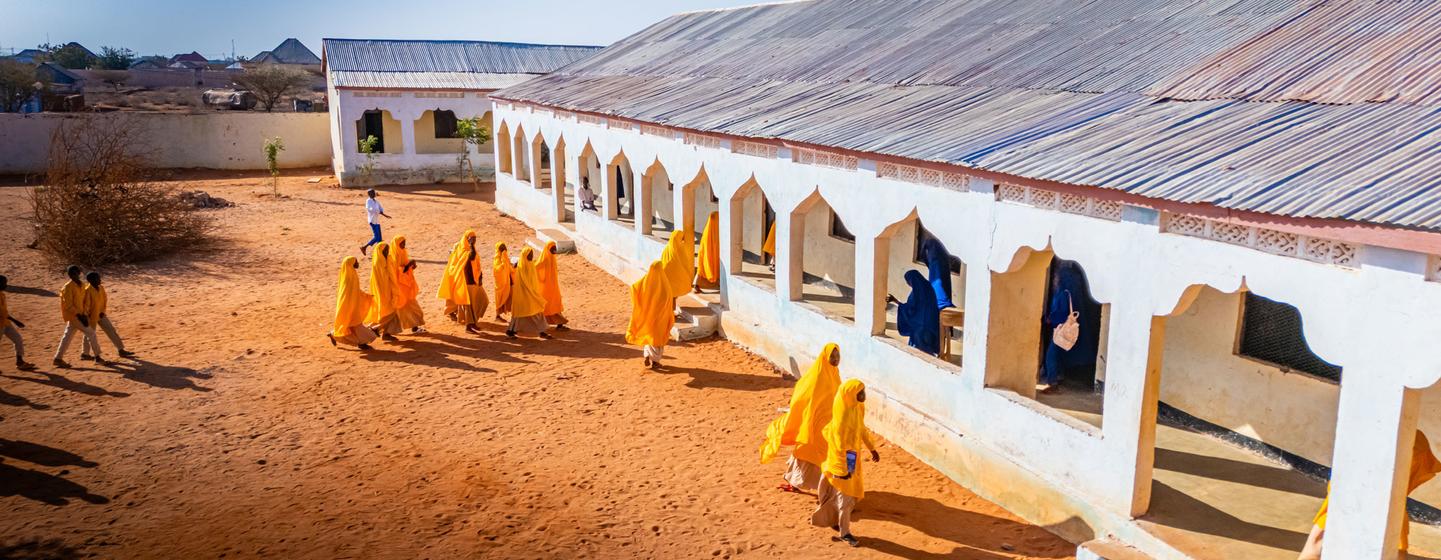
Even in fragile settings, collective action is making a difference. In Farjano, a settlement for internally displaced persons in Galmudug State, the construction of a new primary school did more than provide classrooms. It has restored hope.

A new primary school was built in Farjano financed by IOM’s Co-Funding System.

“For the very first time, all my children could go to school – and it was free,” said Shamso, a mother of three.

In Mataban, a newly built youth stadium fostered unity and a sense of shared identity. Groups that had once avoided each other began to spend time together. “The stadium brought us together in ways we never imagined,” said Mustaf, a resident of Mataban. “It’s not just for sports – it’s where our community feels united.”

By requiring communities to identify their needs and raise initial funds, the CFS takes a bottom-up rather than traditional top-down approach to development.

It ensures that projects are not only community-driven but also have a higher chance of long-term success and impact

The Fourth International Conference on Financing for Development (FFD4) which begins in Sevilla, Spain on 30 June, aims to reform financing at all levels, and will no doubt consider the local solutions and community-driven initiatives which have proven so successful in Somalia.

Source link

‘Still reeling’: Myanmar quakes worsen humanitarian crisis in fractured country

The 28 March quake measuring 7.7 on the Richter scale, struck central regions with deadly force, killing some 3,800 people and injuring over 5,000, according to UN estimates.

The disaster devastated infrastructure and homes across Mandalay, Sagaing and Magway, displacing tens of thousands more in a country already grappling with over 3.2 million internally displaced persons (IDPs) since the 2021 military coup.

Communities are still reeling from the earthquakes – the strongest the country has experienced in a century,” said Jorge Moreira da Silva, Executive Director of the UN Office for Project Services (UNOPS), speaking to journalists at the UN Headquarters in New York via video from Beijing after a three-day visit to Myanmar.

The devastation caused by the quakes compounded the existing challenges of conflict, displacement and severe humanitarian needs.

Needs outpace resources

UNOPS, which maintains the largest UN presence in Myanmar with nearly 500 staff, mobilized $25 million within weeks of the disaster and has reached half a million people with lifesaving support.

“My colleagues worked swiftly with partners to deliver emergency shelters, clean water, and deploy infrastructure specialists for rapid assessments,” Mr. da Silva said.

However, he warned that far greater international support is needed to meet the scale of needs.

The World Bank estimates total damages at nearly $11 billion, with full reconstruction expected to cost two to three times more. Over 2.5 million tonnes of debris must also be cleared to enable recovery.

Mr. da Silva emphasized that reconstruction must be people-centred, inclusive, and linked to peacebuilding efforts.

“We echo calls from across the UN for an end to violence,” he said. “Recovery and reconstruction should support Myanmar’s journey to peace and reconciliation. Protection of civilians must be a priority.

Women and girls face disproportionate risks

The humanitarian fallout has hit women and girls particularly hard – many of whom were among those killed or injured – and now face growing protection risks.

According to the UN reproductive health agency, UNFPA, more than 4.6 million women of reproductive age – including over 220,000 currently pregnant – are at heightened risk.

Damage to health facilities, worsened by monsoon flooding and insecurity, has disrupted access to emergency obstetric care and menstrual hygiene. Gender-based violence meanwhile, is rising sharply in overcrowded, poorly lit shelters.

UNOPS Executive Director Jorge Moreira da Silva meets with a woman and her newborn child at a health clinic.

Health system under pressure

The risk of waterborne diseases such as cholera and vector-borne illnesses like dengue and malaria is also rising.

According to the World Health Organization (WHO) while no major outbreaks had been reported as of 31 May, cases of acute watery diarrhoea and skin infections are ticking up.

Monsoon rains have worsened conditions in temporary shelters, where overcrowding and poor sanitation raise serious health concerns. Mental health remains fragile, with 67 per cent of respondents in a recent survey reporting emotional distress linked to the quake and ongoing conflict.

WHO and its partners have delivered more than 300,000 vaccine doses – including tetanus and rabies – but access remains limited, and health services underfunded.

Protracted crisis

More than 3.25 million people remain displaced within Myanmar since the military coup of February 2021, with at least another 176,000 seeking refuge in neighbouring countries, according to refugee agency, UNHCR.

This excludes the hundreds of thousands of Rohingya refugees from earlier waves of violence.

Myanmar also remains one of the world’s deadliest countries for landmines and explosive remnants of war.

In the first nine months of 2024 alone, 889 casualties were reported – raising fears the toll could surpass the record 1,052 deaths and injuries documented in 2023.

Resettlement changed her life. Now she’s fighting for others to have the same chance

Currently, she’s a qualified refugee and human rights lawyer in New Zealand – but on Tuesday she recalled becoming displaced aged 14 and described the harrowing limbo that followed.

Invisible and alone

“I grew up invisible to the world,” she said. “Without rights, opportunities, or safety.”

That all changed in 2018, when her family was offered resettlement in New Zealand – a decision she said gave her back dignity, hope, and a future.

Today, she advocates for others as a legal professional and helps shape global resettlement policy as an advisor to the Core Group on Resettlement and Complementary Pathways (CRCP) which is supported by UN refugee agency, UNHCR.

Ms. Changezi’s powerful testimony set the tone for the release of the agency’s Projected Global Resettlement Needs 2026 report.

Syrians on the move

UNHCR estimates that 2.5 million refugees will require resettlement next year, a decrease from the 2.9 million estimated for 2025.

While this marks a shift – mainly due to changed conditions in Syria that are allowing for some voluntary returns – the figure remains historically high.

The largest groups in need include Afghans, Syrians, South Sudanese, Sudanese, Rohingya and Congolese refugees. Major countries of asylum like Iran, Türkiye, Pakistan, Ethiopia and Uganda continue to host large refugee populations, with many individuals facing urgent needs that resettlement can address.

Resettlement offers not only protection, but also a pathway to dignity and inclusion,” said UNHCR spokesperson Shabia Mantoo. “It is a demonstration of meaningful international solidarity,” she added.

Worrisome decline

Yet the message from UNHCR was also one of concern. Resettlement quotas for 2025 are expected to fall to their lowest level in two decades — below even the disruptions seen during the COVID-19 pandemic. This decline threatens to undo progress and places vulnerable refugees at greater risk.

In that context, Ms. Changezi’s story became more than a personal account – it was a rallying call. “Resettlement is more than a humanitarian act,” she told journalists. “It is a strategic investment in our shared future.”

Contributing to host societies

Ms. Changezi emphasized that refugees are not defined by their vulnerability. Across the globe, resettled refugees are rebuilding communities, launching businesses, and strengthening social and economic systems in their new homes. “We offer solutions. We drive innovation,” she insisted.

UNHCR is urging states to not only maintain their existing resettlement programmes but to expand them – swiftly and ambitiously. It is also calling for more flexible and responsive systems that can meet the needs of refugees across different regions and contexts.

Despite the challenges, over 116,000 refugees were resettled through UNHCR-supported programmes last year.

The international target for 2026 is to resettle 120,000 individuals – a goal UNHCR says is well within reach if states act decisively.

Ms. Changezi closed her remarks with a reminder that the promise of resettlement is not abstract. “Multiply my story across millions,” she said. “The long-term impact is extraordinary – not just for refugees, but for the societies that embrace them.”

Source link

Iran-Israel war: IAEA chief stresses need for strong new nuclear deal

“I welcome announcements on Iran situation. Resuming cooperation with [the International Atomic Energy Agency (IAEA)] is key to a successful agreement,” said Rafael Grossi, Director General of the (IAEA).

In a short online post on X, Mr. Grossi added that he had offered to meet Iranian Foreign Minister Abbas Araghchi on working together, “stressing this step can lead to a diplomatic solution to the long-standing controversy” over Iran’s nuclear programme.

Tehran prison concern

Meanwhile, the UN human rights office, OHCHR, insisted that a notorious Tehran prison known for holding dissidents should not be a target, a day after a reported Israeli strike on the complex.

OHCHR spokesperson Thameen Al-Kheetan told media in Geneva that Evin prison is not a military objective, according to the laws of war.

“Targeting it constitutes a grave breach of international humanitarian law”, he said.

OHCHR does not have specific details about what the alleged attack, Mr. Al- Kheetan said, but there have reportedly been fires inside the prison and a number of injuries.

Casualty count

An updated casualty count from the Iranian authorities on Tuesday indicated that 610 people have been killed including 49 women and 13 children since 13 June. That number includes two pregnant women and one infant along with 4,746 injured, including 185 women and 65 minors.

Seven hospitals, four health units and six emergency bases and nine ambulances have been damaged, the Iranian health authorities said.

Some 28 Israeli citizens have reportedly been killed by Iranian missile strikes to date.

Civilians must be protected

Political prisoners including journalists are held at Evin prison, but whether they are detained “arbitrarily” or in connection with “crimes they’ve actually committed”, the inmates must be protected, Mr Al-Kheetan insisted.

According to media reports on Tuesday, Iran said that it transferred all the inmates out of the prison after it was hit by an Israeli strike, moving them to other prisons around the capital in order to repair damage.

A fragile ceasefire proposed by the United States seemed to take hold briefly on Tuesday morning, before reports of further Iranian missile strikes on Israel, disputed by Tehran.

The conflict began with Israeli air attacks on 13 June and escalated over the weekend with US forces striking Iranian nuclear facilities. Hundreds of civilians have reportedly been killed in the Israeli airstrikes, while Iran’s retaliatory strikes killed close to 30 people in Israel.

Asked about signs of a crackdown on dissent by the Iranian authorities in the context of the Israeli and US military campaign against the country, the OHCHR spokesperson stressed that it was “difficult to verify information” coming from Iran, given the lack of access.

He confirmed seeing reports about Iranians being “arrested for cyber activities and publishing content related to the Israeli attacks on Iran, according to NGOs”.

Mr. Al-Kheetan also spoke of reports that nine men have been executed in Iran since Israel attacked the country on 13 June.

He called on the Iranian authorities to “completely respect the rights to freedom of expression and information, at all times”, insisting that journalists “must be able to do their work without any obstacles”.

Iranian citizens reportedly arrested and accused of espionage or collaboration with Israel “must have their full rights in terms of legal procedures and a fair trial”, he said.

“If these arrests are arbitrary, those persons must be freed immediately and unconditionally,” he concluded.

Human Rights Council concerns

On Monday, independent human rights experts reiterated their concerns about Iran’s “use of broadly defined national security offences, some of which are punishable by death”, in the context of recent reported executions on espionage charges.

Last week, the UN deputy human rights chief, Nada Al-Nashif, told the Human Rights Council that at least 975 people were executed in Iran last year – the highest number of reported executions since 2015.

She also briefed the Council on the use of torture in Iranian prisons and the ongoing targeting of minorities, journalists and human rights defenders.

Source link

Gaza: Over 400 Palestinians killed around private aid hubs, UN rights office says

The alert comes nearly a month since the Israeli and US-backed Gaza Humanitarian Foundation (GHF) started operating on 27 May in select hubs, bypassing the UN and other established NGOs.

Its food distribution points have been associated frequently with confusion and shooting as desperate and hungry Gazans rush to fetch supplies, said UN human rights office spokesperson Thameen Al-Keetan.

“Israel’s militarized humanitarian assistance mechanism is in contradiction with international standards on aid distribution,” he insisted. “The weaponization of food for civilians, in addition to restricting or preventing their access to life-sustaining services, constitutes a war crime and, under certain circumstances, may constitute elements of other crimes under international law.”

In its latest update on the emergency, the UN aid coordination office, OCHA, reported that “scores of people of all ages are being killed and injured every day” in the shattered enclave.

“Humanitarian operations of sufficient scale are not facilitated, leaving unaddressed the critical needs of those who have so far survived,” it said.

Shelled or shot 

In Geneva, meanwhile, OHCHR’s Mr. Al-Keetan explained that private aid hub victims were either “shelled or shot” by the Israel Defense Forces. They have endangered civilians and contributed to the “catastrophic humanitarian situation in Gaza”, he maintained.

At least 93 people have also been reportedly killed by the Israeli army while attempting to approach the few remaining aid convoys of the UN and other aid partners still operating in Gaza.

In a previous alert, the UN human rights office has condemned the possible summary execution of Palestinian staff associated with the Gaza Humanitarian Foundation by armed men allegedly affiliated with Hamas.

“These killings must end immediately, and those responsible held to account,” the UN office said in a statement.

Most vulnerable miss out

The OHCHR spokesperson noted that women and children, along with older people and those with disabilities continue to face “multiple challenges” accessing food in Gaza today.

Looting of aid convoys is now commonplace in Gaza after more than 20 months of daily Israeli bombardment as a result of a near-total blockade on humanitarian supplies including food, fuel and medicine.

The result is that Gaza’s most vulnerable individuals are unable to access any of this diverted aid, the UN human rights office told UN News.

To date, at least 3,000 Palestinians have been injured in incidents associated with the non-UN aid hubs and looting.

“Desperate, hungry people in Gaza continue to face the inhumane choice of either starving to death or risk being killed while trying to get food,” the UN human rights office explained.

Ongoing aid obstacles

Although the UN and other aid providers still function in Gaza, they are reliant on the Israeli authorities to facilitate their missions. On Saturday and Sunday, only eight out of 16 requests for humanitarian operations were approved, aid teams reported.

“Half of [the missions] were denied outright, hindering the tracking of water and fuel, the provision of nutrition services and the retrieval of the bodies,” said Alessandra Vellucci, Director of the Information Service at UN Geneva.

Her comments followed a warning from the UN’s top aid official in Gaza on Sunday who described dire scenes and “carnage”.

“It is weaponized hunger. It is forced displacement. It’s a death sentence for people just trying to survive. All combined, it appears to be the erasure of Palestinian life from Gaza,” said OCHA’s Head of Office in the Occupied Palestinian Territory, Jonathan Whittall.

Telecommunications have now been restored across Gaza after damaged fibre cables were repaired at the weekend.

“For the first time in days, humanitarian teams have had more than 24 hours of relatively stable connectivity – something that is essential to coordinate emergency relief and save lives,” OCHA said in Monday evening’s update.

But without urgent fuel deliveries, telecommunications “will go down again very soon”, the UN aid wing warned.

Fuel crisis

“Fuel is also needed to keep emergency rooms running, power ambulances, and operate water desalination and pumping stations,” it explained.

“Right now, teams on the ground are rationing what little fuel remains and working to retrieve stocks stored inside Gaza, in areas that are hard to reach.”

Access to Nasser Medical Complex is also limited because there is not enough fuel for transportation “and health workers and patients fear for their safety”, OCHA continued.

“Last week, in Khan Younis, in-patient admissions at field hospitals increased threefold, largely due to access challenges at Nasser, which also saw an influx of trauma patients and has been overwhelmed since.”

Most of Gaza remains under displacement orders issued by the Israeli military, including another one on Monday for two neighbourhoods in Khan Younis city, reportedly following Palestinian rocket fire from these areas.

“These neighbourhoods were already subject to earlier displacement orders and include two hospitals – Al Amal and Nasser,” OCHA said. “While Israeli authorities have clarified that the hospitals are not required to evacuate, OCHA says the designation is nonetheless hindering access to those critical facilities for both patients and medical staff.”

What time is it on the Moon? It’s all relative…

Surely, you might think, we can just agree that one Earth time zone can be used for “Moon time”? Coordinated Universal Time (UTC), for example. How hard can it be? Unfortunately, this doesn’t work, for several reasons.

Here on Earth, timekeeping is easy to take for granted: we divide our world into 24 time zones, based on longitude and the planet’s rotation, and can tell the time based on the position of the Sun in the sky.

But on the Moon, the rules are different: one lunar “day” is approximately 29.5 Earth days long, and the Moon’s equatorial regions can experience up to 14 days of continuous sunlight. On some of the Moon’s tallest mountains, dubbed “peaks of eternal light,” the Sun never sets.

On top of that, physicists and science fiction fans will know that time isn’t the same on the Moon as it is on Earth. Place two perfectly synchronised clocks – one on Earth and one on the Moon – and, after just one Earth day, the lunar clock would be ahead by about 56 microseconds. That might not sound like much, but for spacecraft navigation, this tiny discrepancy could be critical.

Uniting efforts to standardize lunar time

For a Moon time zone to work, aspiring lunar actors will need to agree on a common time standard that is reliable, traceable to Earth-based time, and usable by everyone. UNOOSA is helping to lead the charge to make this a reality.

In 2024, the UN’s International Committee on Global Navigation Satellite Systems (ICG) established a dedicated working group to focus on lunar positioning, navigation and timing, standardise lunar time and trace it back to UTC that we use on Earth, for the benefit of all future lunar missions.

Peace on Earth, peace on Moon

Coordinating seamless timekeeping on the Moon is part of a broader UN mission to ensure that lunar activities, whether public, private, scientific, or commercial, are safe, peaceful and sustainable. To that end, UNOOSA convened the first United Nations Conference on Sustainable Lunar Activities in June 2024, gathering heads of space agencies, legal experts, astronauts, companies, and academics from across the globe to discuss common ground, share concerns, and reaffirm the need for transparent, inclusive lunar governance mechanisms.

© NASA/Jordan Salkin/Keegan Bar

View of Earth from the NASA Earth Observatory

One such mechanism to further international cooperation is the new Action Team on Lunar Activities Consultation (ATLAC), which is designed to help foster dialogue and formulate recommendations on how lunar exploration and activities can be coordinated internationally. ATLAC will work to finalize its workplan for the significant coming years and identify priority topics – such as coordinated lunar timekeeping – to ensure lunar activities proceed in a cooperative and orderly manner.

Humanity is entering a new era of lunar exploration featuring a record number of spacefaring nations and organizations that could reshape our relationship with our closest celestial neighbours for generations to come.

Member States will be able to work with UNOOSA to preserve the Moon as a domain of global cooperation, guided by the Outer Space Treaty’s core principle that “the exploration and use of outer space, including the Moon, shall be carried out for the benefit and in the interests of all countries.”

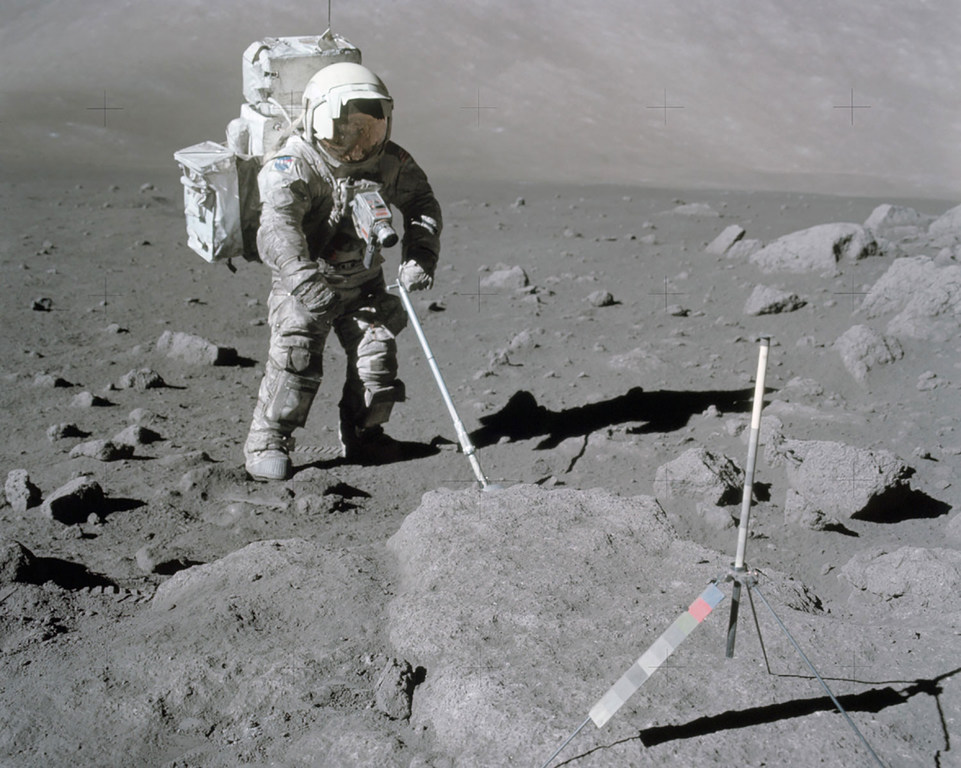
NASA astronaut Harrison Schmitt on the moon (file, 1972)

Source link

UN80 Initiative: What it is – and why it matters to the world

“This is a good time to take a look at ourselves and see how fit for purpose we are in a set of circumstances which, let’s be honest, are quite challenging for multilateralism and for the UN,” says Guy Ryder, Under-Secretary-General for Policy and chair of the UN80 Task Force.

Known as the UN80 Initiative, this process seeks not only to improve efficiency, but also to reassert the value of multilateralism at a time when trust is low and needs are high. It aims to reinforce the UN’s capacity to respond to today’s global challenges – ranging from conflict, displacement, and inequality to climate shocks and rapid technological change – while also responding to external pressures such as shrinking budgets and growing political divisions in the multilateral space.

“We will come out of this with a stronger, fit-for-purpose UN, ready for the challenges the future will undoubtedly bring us,” explains Mr. Ryder.

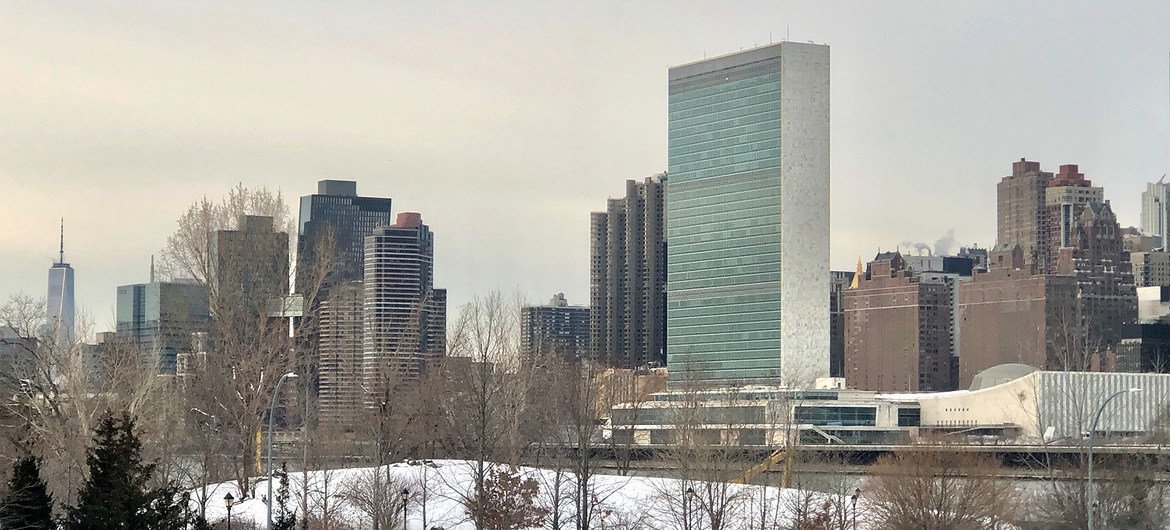
View of the UNHQ building from Roosevelt Island, New York

Three tracks of reform

At the heart of UN80 are three major workstreams. The first is focused on improving internal efficiency and effectiveness, cutting red tape, and optimizing the UN’s global footprint by relocating some functions to lower-cost duty stations. Mr. Ryder notes that burdensome administrative procedures and duplications are being targeted.

“We want to see what we can do better. We want to look at those areas where we think we can improve efficiencies and strip out unnecessary bureaucratic processes,” he outlines.

The second workstream is a mandate implementation review, which involves examining nearly 4,000 mandate documents underpinning the UN Secretariat’s work. A mandate refers to a task or responsibility assigned to the organisation by the Member States, usually through resolutions adopted by UN organs such as the General Assembly or the Security Council.

These mandates guide what the UN does – from peacekeeping operations and humanitarian aid to human rights and environmental action.  Over the decades, at least 40,000 mandates have accumulated, sometimes overlapping or becoming outdated, which is why reviewing them is a key part of the UN80 initiative .

“Let’s take a look at them,” Mr. Ryder says. “Let’s see where there may be duplication, where we can prioritise and de-prioritise, and find redundancies.”

But reviewing this mountain of mandates is not new. “We’ve tried this exercise before. We had a look at these bulky mandates back in 2006. It didn’t work very well.” Mr. Ryder reflects.

This time, however, the process is favoured by one key factor. “This time, we’ve got the data and analytical capacities. We’re applying artificial intelligence techniques to provide much more and better organised information to Member States – a more compelling case that could drive, I think, a productive process.”

He emphasises that the responsibility for deciding what to retain, revise, or discontinue rests squarely with the Member States.

“These mandates belong to Member States. They created them, and only they can evaluate them. We can look at the evidence, we can put that to Member States, but eventually they are the decision-makers on mandates and on very much else that the UN80 initiative brings.”

The third stream explores whether structural changes and programme realignment are needed across the UN System. “Eventually, we might want to look at the architecture of the United Nations system, which has become quite elaborate and complicated,” Mr. Ryder adds. Proposals are also likely to emerge from the mandate implementation review.

Guy Ryder, Under Secretary-General for Policy and Chair of the UN80 taskforce

A task force and a system-wide lens

To tackle reform across such a complex system, the Secretary-General established seven thematic clusters under the UN80 Task Force; each coordinated by senior UN leaders from across the system. These cover peace and security, humanitarian action, development (Secretariat and UN system), human rights, training and research, and specialised agencies.

“It’s important to say that at a moment when the system is under pressure, the system is responding as a system,” the UN80 Taskforce chair notes. “This is not just New York, not just the Secretariat. It is system-wide.”

Each cluster is expected to produce proposals to improve coordination, reduce fragmentation, and realign functions where needed. Several clusters have already submitted initial ideas. A broader set of proposals will follow in July.

UNFICYP/Katarina Zahorska

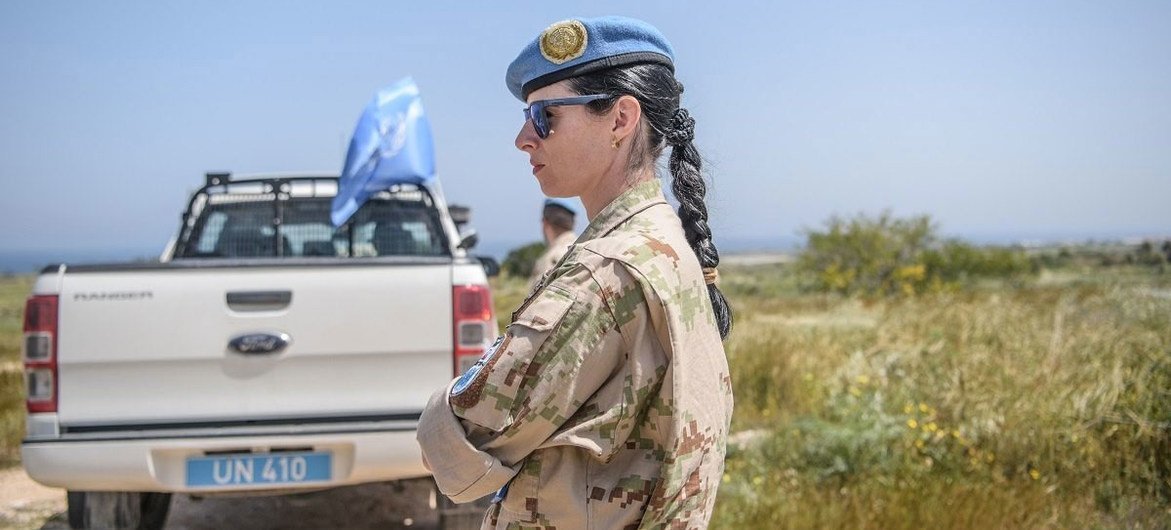
The United Nations works to prevent conflict, support peace processes, and protect civilians—upholding its core mandate to maintain international peace and security.

Reform, not retrenchment

Attention around the UN80 Initiative has largely focused on proposed budget cuts and staff reductions, raising concerns that it is mainly a cost-saving exercise. Mr. Ryder underscores that this view misses the bigger picture.

“Yes, we do face financial challenges. No need to avert our eyes from that. But this is not a cost-cutting, downsizing exercise. We want to make the UN stronger,” he says.

Still, the financial pressures across the system are undeniable. A revised programme budget for 2026, due in September, is expected to include significant reductions in funding and posts for Secretariat entities — a consequence of persistent cash flow constraints linked to delayed and incomplete contributions from Member States.

“The UN80 Initiative wants to improve the impact and effect of multilateralism and the UN,” Mr. Ryder explained. “Now, that does not mean – we wish it were otherwise – that we do not have to take a look at our budget and our resources in different parts of the system.”

“Organisations have faced some wrenching decisions, and this is happening every day. That’s the reality of our circumstances,” he adds.

Mr. Ryder contends that financial sustainability and mission impact are not mutually exclusive – but must be pursued in tandem. “We have to reconcile the two objectives of making ourselves financially sustainable in the difficult circumstances we find ourselves in, but also be attentive, as always, to the impact that we have in delivering on our responsibilities under the Charter,” he said.

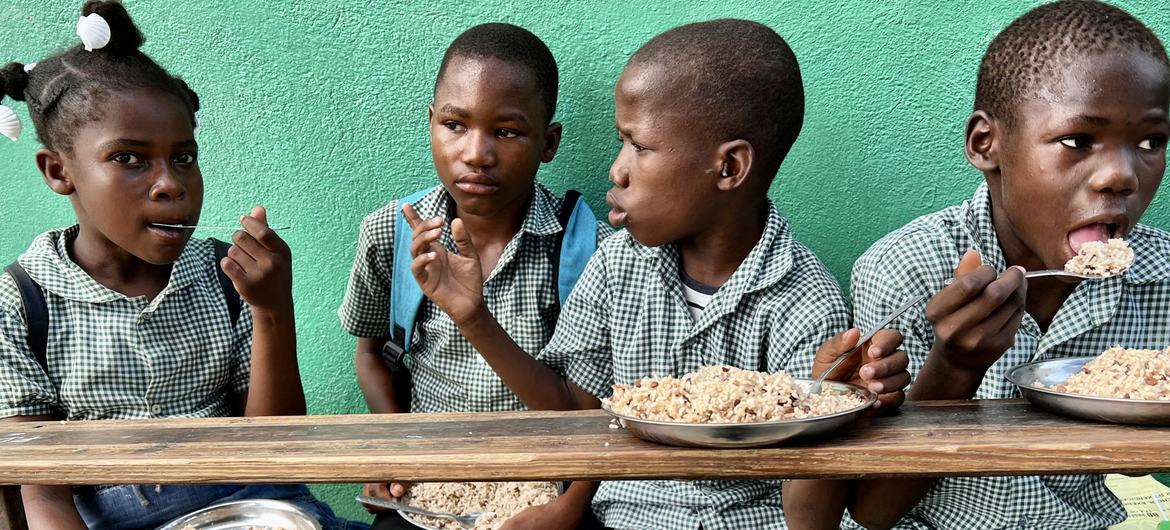
Children in Haiti eat a meal provided as part of WFP’s school feeding programme.

Why UN80 matters to people everywhere

Rather than mere bureaucratic reform, UN80 is ultimately about people, those who rely on the UN’s support during crisis, conflict, or development challenges.

“If the UN is able to transform itself, to make improvements, sometimes through difficult decisions, that can mean those life-saving interventions reach the people we serve more effectively,” Ryder says.

The UN remains the essential, one-of-a-kind meeting ground to advance peace, sustainable development and human rights for all.

“This is the United Nations taking seriously its responsibilities to the people we serve”, Mr. Ryder says.

Right now, the UN assists over 130 million displaced people, provides food to more than 120 million, supplies vaccines to nearly half the world’s children, and supports peacekeeping, human rights, elections, and climate action across the globe. The UN’s development work has helped build peaceful, stable societies.

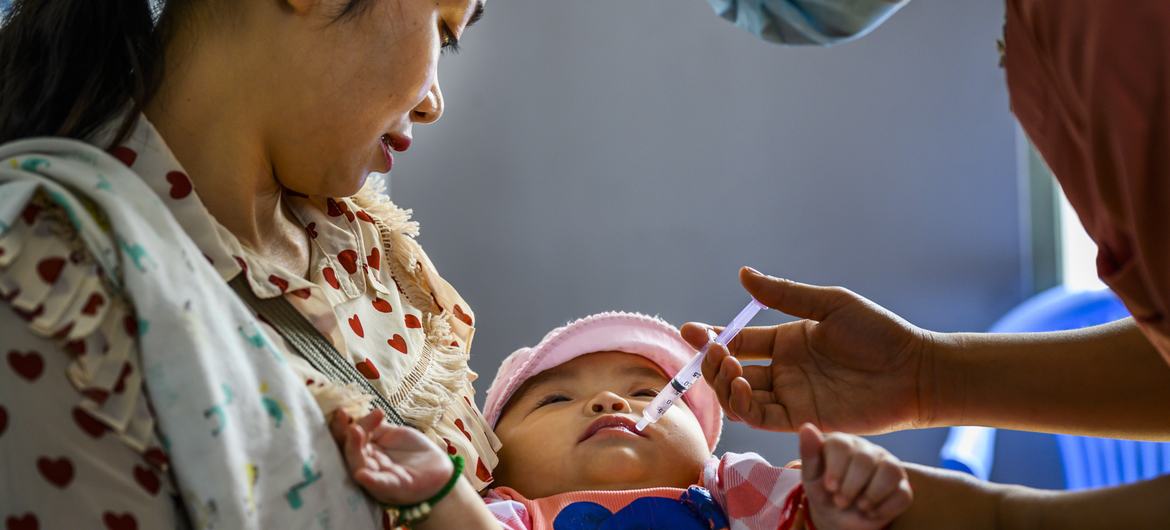
UNICEF-supported vaccination in remote Shan State village, Myanmar

What happens next

The UN80 Task Force will present its proposals to the Secretary-General, who has already indicated the first areas where outcomes are expected. A working group on efficiencies in the UN Secretariat, led by Under-Secretary-General Catherine Pollard, is expected to deliver initial proposals by the end of June. A report on the mandate implementation review will follow at the end of July.

This work under the first two workstreams will help inform broader thinking around structural changes and programme realignment across the UN system. Proposals under the third workstream will be put forward to Member States in the coming months and into next year.

Although the work is just beginning, Mr. Ryder believes the UN has the right tools – and a clear sense of ambition and urgency.

“We’re progressing well. There’s a lot of homework being done now,” he said. “As the weeks go by, this will be shifting more and more to the Member States’ space, and that’s when we’ll see results.”

Eventually, Member States will need to decide how to act on the findings. “They’re going to have to decide what they want to do. Will they wish to set up an intergovernmental process? The Secretary-General has mentioned this as a possibility already.”

UN Secretary-General António Guterres briefs the media about the UN80 Initiative.

Defining success

So, what does success look like?

“A UN system which is able to deliver more effectively, to strengthen and consolidate trust in multilateral action,” Mr. Ryder says. “A system which can convey to public opinion and political decision-makers that this is an organisation worth investing in. That this should be your preferred option when it comes to meeting the challenges of the future.”

For the UN80 Task Force chair, it comes down to credibility, capability, and public trust – and ensuring the UN remains not just relevant, but essential.

“We should all care about this,” he says. “If we take the view that multilateralism is the best instrument we have for meeting global challenges, then we need to make sure we renovate, refresh, and make that machinery as effective and as fit for purpose as it can possibly be.”


Source link

80 years later, the UN Charter is a ‘living miracle,’ Secretary-General says

The UN Charter “is more than parchment and ink; it is a promise – of peace, dignity and cooperation among nations,” the Secretary-General said.

Almost 80 years after it was signed, Mr. Guterres underlined that the Charter was just the beginning, enshrining ideas and principles which the world works to implement on a daily basis.

Born from war

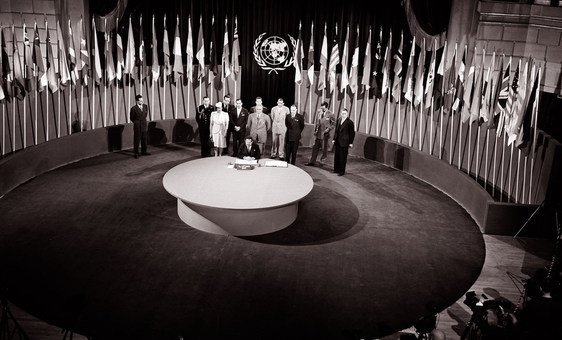
In the wake of the Second World War, representatives from almost 50 nations convened in San Francisco to put together an organization committed to the idea of “never again” — never again would a war of this magnitude devastate the world.

Instead, the world would choose peace and diplomacy, equality and prosperity.

“For a world mired in endless cycles of conflict and human suffering, the Charter and the principles it represented – dialogue, diplomacy, cooperation, and solidarity — was a path to a better, more peaceful, and prosperous future,” said UN General Assembly President Philémon Yang. The Charter was signed on 26 June 1945, almost exactly 80 years ago. However, it did not take effect until 24 October 1945 after the signatories’ legislative bodies had ratified it.

The Charter, which is considered an international treaty, is a legal instrument which binds all Member States to the principles and commitments laid out within it.

Since its ratification, the UN Charter has paved the way for other landmark international agreements including the 1948 Universal Declaration of Human Rights and the 2024 Pact for the Future.

“The decades since have only proven the Charter’s enduring legacy. It has shaped decades of progress — guided international action on decolonisation, protected human rights and promoted justice and sustainable development,” said Mr. Yang.

‘A living miracle’

The exhibit contextualizes the Charter as a document from the past which continues to live in our present and will help shape the future.

“As we look ahead, we would be wise to remember our past, celebrate our successes and build our future on the foundation of the UN Charter,” Mr. Yang said.

Mr. Guterres said that this exhibit is a moment for people to reflect on the artifacts of the UN’s founding — to see the photos, the videos and the documents which have shaped this global organization.

He acknowledged that while the world faces new challenges like climate change and technology, in addition to age-old challenges, the UN Charter can be a guiding force if the world is willing to carry the spirit of the Charter and its commitment to peace into the future.

“The UN is a living miracle — and the women and men of the United Nations bring this miracle to life every day and everywhere,” the Secretary-General said. 

Source link

Guterres condemns Iran attack on Qatar

It comes in the wake of reports that Iran launched missiles at an American military base in Qatar in retaliation for the US bombing three of its nuclear facilities this past weekend.

Iran reportedly fired seven missiles at Al Udeid Air Base, where some 10,000 troops reportedly are stationed.  All but one were intercepted by Qatar and no casualties were reported, according to international media.

End the fighting

The development marks the latest step in more than a week of missile strikes between Iran and Israel, and the situation has escalated with US involvement.

From the outset of the crisis, the Secretary-General has repeatedly condemned any military escalation in this conflict, including today’s attack by Iran on the territory of Qatar. He further reiterates his call on all parties to stop fighting,” the statement said.  

The Secretary-General urged all Member States to uphold their obligations under the UN Charter and other rules of international law. 

Source link

Bearing the brunt of war: UNICEF chief meets some of Sudan’s 700,000 child refugees crossing into Chad

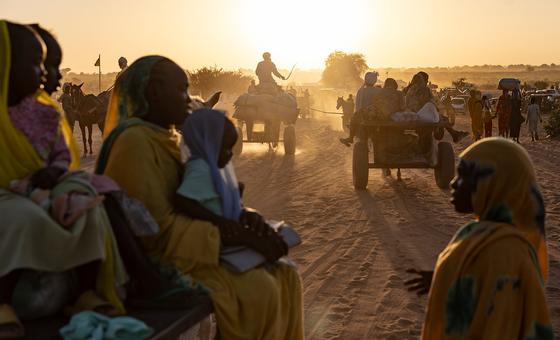
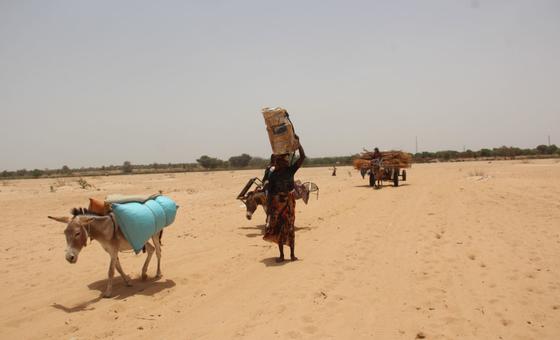
In neighbouring Chad, children make up 61 per cent of the 860,000 Sudanese refugees and a staggering 68 per cent of the 274,000 Chadian returnees – that’s over 700,000 young lives uprooted by violence.

Chad, already one of the world’s poorest countries, has the fourth-highest child mortality rate in the world, despite significant progress in recent years.

The Government of Chad and humanitarian partners have been providing support, but the migration crisis remains overwhelming: measles and malnutrition are spreading, the risk of Sudan’s cholera outbreak spilling into Chad remains high.

Only one in three children are enrolled in school and essential services are stretched to the brink.

Horrific memories 

UN Children’s Fund (UNICEF) Executive Director Catherine Russell concluded a three-day visit to Chad on Monday, where she met with refugee children and families displaced by the fighting and chaos across the Sudanese border.

Hundreds of thousands of the most vulnerable children are bearing the brunt of both the war in Sudan and the lack of essential services for those who have fled to Chad,” Russell said.

In eastern Chad, Ms. Russell “met women and children who arrived with little but the horrific memories they carry” and heard their stories of killings, mass rapes and homes burned to the ground.

She visited families newly arrived in Adré, an overwhelmed border town now hosting six refugees for every resident.

Russell also met President Mahamat Idriss Déby Itno to reaffirm UNICEF’s long-term commitment to Chad and discuss support for the country’s newly launched National Development Plan 2030.

The people of Chad have shown extraordinary generosity,” she said. “But they cannot face this crisis alone. We must stand in solidarity with them – and with the children of Sudan – by strengthening national systems and communities on the frontlines.”

Ramping up response

In Adré and surrounding areas, UNICEF-supported teams have vaccinated thousands of children, provided safe drinking water to tens of thousands, established child-friendly spaces and set up services for survivors of gender-based violence.

The agency is also working closely with Chadian authorities to scale up system-wide investments in health, including polio vaccination campaigns, as well as education and social protection.

But urgent funding gaps remain. Of the $114 million required for UNICEF’s 2025 humanitarian response in Chad, only 34 per cent has been secured.

Source link

Human Rights Council hears concerns over displacement, genocide risks and migrant trafficking

Of the record 83 million people internally displaced worldwide, at least 1.2 million were displaced by crime-related violence in 2024 – more than double the 2023 figure – amid a global decline in support for international norms, human rights and the rule of law.

The growing reach of organised crime in driving displacement and rights violations was the focus of a report delivered Monday morning by the Special Rapporteur on the human rights of internally displaced persons, Paula Gaviria Betancur.

Driving displacement

As violent conflicts worsen globally, displacement is increasingly driven by the threat of violence or the desire of criminal groups to control territory, resources and illicit economies.

Additionally, in places like Sudan, Palestine and the Democratic Republic of the Congo (DRC), occupying powers and criminal groups are systematically uprooting communities to alter demographics, treating IDPs as military targets.

“Displacement is no longer just a consequence of conflict – it is increasingly its deliberate objective,” Ms. Betancur warned.

In these regions, either the State enables impunity for violent groups or national security operations worsen the crisis by punishing victims and fuelling further displacement, eroding state legitimacy.

IDPs in these contexts “face grave violations of their human rights,” including “murder, violent assault, kidnapping, forced labour, child recruitment and sexual exploitation,” she said.

The rise in global displacement is the result of systemic failure – the failure of States and the international community to tackle its root causes,” Ms. Betancur concluded, calling for stronger support for the UN and accountability for criminal groups.

Genocide risks in conflict areas

Virginia Gamba, Special Adviser on the Prevention of Genocide, briefed the council on escalating risks in Sudan, Gaza, the DRC and beyond during Monday’s session.

In Sudan, where over 10.5 million have been displaced since fighting erupted in April 2023, both the Sudanese Armed Forces and the Rapid Support Forces (RSF) are committing grave rights violations.

Ethnically motivated attacks by the RSF in certain regions mean “the risk of genocide, war crimes and crimes against humanity in Sudan remains very high,” Ms. Gamba underscored.

Turning to Gaza, she called the scale of civilian suffering and destruction “staggering and unacceptable,” noting the conflict has also fuelled rising antisemitism and Islamophobia worldwide.

Hate speech fuelling violence

As attacks on civilians and ethnic violence continue in the DRC, hate speech and discrimination have surged.

But this surge is also occurring worldwide, further exacerbating the risk of genocide.

“Hate speech – which has been a precursor for genocide in the past – is present in far too many situations, often targeting the most vulnerable,” said Ms. Gamba, highlighting refugees, Indigenous peoples and religious minorities.

For genocide prevention, she urged greater efforts to monitor hate speech, expand education efforts, and strengthen partnerships with regional organizations.

The task of preventing genocide remains critical and urgent—the moment to act is now,” she stressed.

Trafficking of migrant domestic workers

Special Rapporteur on trafficking in persons, Siobhán Mullally, presented her report on the trafficking risks faced by migrant domestic workers.

“The specific nature of domestic work, and weak regulatory responses by States, produce a structural vulnerability to exploitation,” Ms. Mullally said.

The crisis disproportionately affects women, as they make up the majority of domestic workers and 61 per cent of trafficking victims detected globally in 2022.

Conditions of domestic work

Many women from disadvantaged communities are promised jobs abroad, but upon arrival, realise they have been conned. They endure violence, labour abuses and sexual exploitation but are unable to pay the exorbitant penalty for terminating their work contracts.

Ms. Mullally cited the legacy of slavery, gendered and racialised views of domestic work and intersecting discrimination as key factors behind poor conditions and trafficking risks.

Most States lack the political will to enforce labour laws in the domestic work sector, reinforcing this crisis, she said, calling for stronger labour laws, safe migration pathways, bilateral agreements grounded in human rights and an end to the criminalisation of trafficking victims.

Source link

Tobacco control efforts protect three-quarters of the world’s population, WHO report finds

The World Health Organization (WHO) published its 2025 report on the Global Tobacco Epidemic on Monday, focusing on the six policies outlined in the WHO MPOWER tobacco control measures.

Since 2007, 155 countries have implemented at least one of those policy prescriptions which has resulted in over 6.1 billion people – that’s three-quarters of the world’s population – now benefitting: however, major gaps still remain.

Here are the six policy recommendations: 

  • Monitoring tobacco use and prevention policies;
  • Protecting people from tobacco smoke with smoke-free air legislation;
  • Offering help to quit tobacco use;
  • Warning about the dangers of tobacco with pack labels and mass media;
  • Enforcing bans on tobacco advertising, promotion and sponsorship; and
  • Raising taxes on tobacco.

Striking Gains

Some 110 countries now require graphic health warnings on tobacco packaging and WHO’s new report reveals the strategy has delivered striking gains in the fight against consumption.

As one of the key measures under the WHO Framework Convention on Tobacco Control (FCTC), graphic health warnings make the harms of tobacco visibly clear and difficult to ignore.

There has also been a growing trend to regulate the use of e-cigarettes or ENDS – Electronic Nicotine Delivery Systems – with the number of countries regulating or banning ENDS increasing from 122 in 2022, to 133 in 2024.

Major Gaps

Although very effective, 110 countries have failed to launch any anti-tobacco campaigns since 2022, despite the grim statistic that around 1.3 million people continue to die from second-hand smoke every year.

Forty countries still have not adopted a single MPOWER measure and over 30 countries are still allowing cigarette sales without mandatory health warnings. The UN health agency is calling for urgent action in areas where momentum is lagging.

Government must act boldly to close remaining gaps, strengthen enforcement, and invest in the proven tools that save lives,” said Ruediger Krech, WHO’s Director of Health Promotion.