Slight decrease in global hunger as inequalities widen, says UN interagency report

The report estimates 8.2 per cent of the global population (673 million individuals) experienced hunger in 2024, down from 8.5 per cent in 2023 and 8.7 per cent in 2022.

Latin America and Asia saw improvements, with the prevalence of undernourishment falling by 1.2 percent in Asia and 1 percent in Latin America and the Caribbean between 2022 and 2024.

However, 20 per cent of the African population and 12.7 per cent of people in Western Asian face hunger, showing evidence of an unfortunately steady rise.

Of the projected 512 million people who could be chronically undernourished by 2030, almost 60 per cent will be in Africa.

Sustainable Development progress

Together, these figures and the report’s assessment of nutrition targets under the Sustainable Development Agenda underscore the immense challenge of achieving the global goal of Zero Hunger.

Among child nutrition indicators, the prevalence of stunting among under-fives declined 3.2 per cent from 2012 to 2024, but the proportion of children overweight or wasting remains largely unchanged.

Also notable was the increase in anaemia among women aged 15 to 49 and adult obesity.

Crucially, while global food insecurity declined only slightly from 2023 to 2024, 335 million more people were affected in 2024 than in 2019, before the COVID-19 pandemic, and 683 million more than in 2015, when the Sustainable Development Agenda was adopted.

Covid-era food inflation

The report was published by five UN agencies: the Food and Agriculture Organization (FAO), the International Fund for Agricultural Development (IFAD), the UN Children’s Fund (UNICEF), the World Food Programme (WFP), and the World Health Organization (WHO).

They noted that hunger and food security estimates remain above pre-pandemic levels due to a “perfect storm” of COVID-19 inflation, the war in Ukraine and climate shocks.

Speaking at the report’s preview on 22 July, FAO Chief Economist Máximo Torero Cullen highlighted the finding that fiscal and monetary policies during the COVID-19 pandemic boosted demand and inflation.

Combined with food and commodity trade restrictions linked to the war in Ukraine and ongoing climate shocks, these factors drove food inflation up dramatically, hindering the post-pandemic recovery in food security and nutrition.

This perfect storm hit low- and lower-middle-income countries especially hard, driving food inflation even higher than the already elevated global average.

As a result, although the number of people able to afford a healthy diet increased globally from 2019 to 2024 despite rising prices, it declined in low- and lower-middle-income countries, where prices rose even more sharply.

Recommendations and funding needs

The report recommends a combination of policy responses to fight global food price inflation. These include targeted fiscal measures to protect the most affected, credible and transparent monetary policies to keep inflation in check and strategic investments in agrifood systems.

The report and agency leaders also underscored that funding is desperately needed to address global challenges.

“Hunger remains at alarming levels, yet the funding needed to tackle it is falling,” stressed WFP Executive Director, Cindy McCain.

“This year, funding cuts of up to 40 percent mean that tens of millions of people will lose the vital lifeline we provide,” she added.

“While the small reduction in overall rates of food insecurity is welcome, the continued failure to provide critical aid to people in desperate need will soon wipe out these hard-won gains, sparking further instability in volatile regions of the world.”

Syria: Fragile ceasefire in Sweida ‘largely holding’ amid volatility

Declared on July 19, the ceasefire followed a harrowing wave of sectarian clashes, Israeli airstrikes and grave human rights violations.

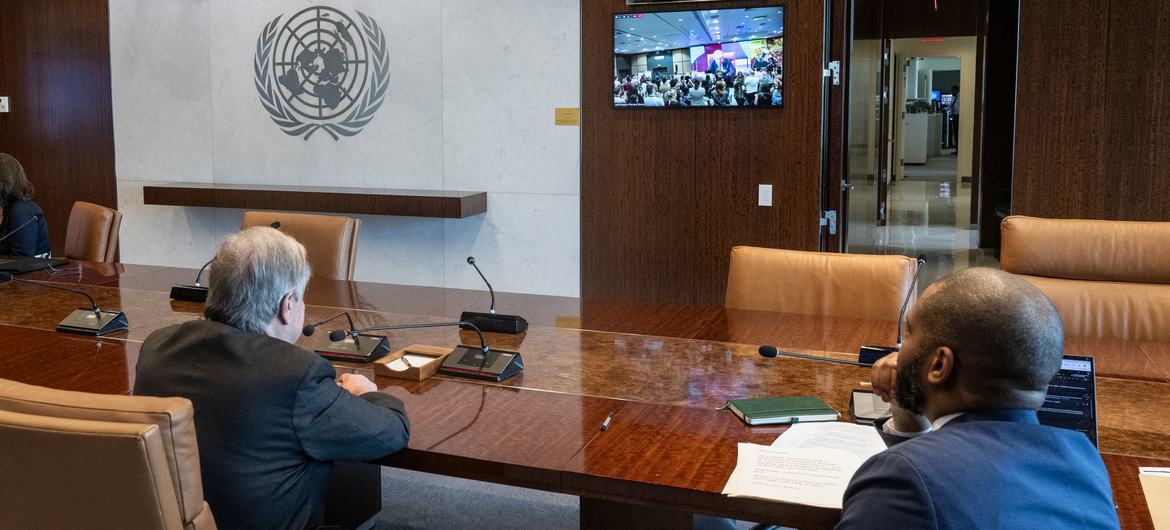
UN Special Envoy for Syria Geir Pedersen told ambassadors in the Security Council on Monday that the recent escalation had “rocked” the country’s already precarious transition and highlighted the need for “major course corrections” on security and political fronts.

Syrians are reeling after appalling violence in Sweida – violence that should not have happened and which also saw unacceptable foreign intervention,” Mr. Pedersen said.

Escalation and fallout

The unrest began on July 12 when mutual kidnappings escalated into armed conflict between Druze groups and Bedouin tribes, drawing in Syrian security forces.

The violence spiralled, with reports of extrajudicial executions, desecration of corpses and looting. Footage circulated widely on social media fanned sectarian tensions and disinformation.

Though fighting has largely subsided, Mr. Pedersen warned the situation “remains tense and volatile.” Civilians suffered the most, with hundreds killed and widespread accounts of abuses by both state and non-state actors.

“I condemn the appalling violations against civilians and combatants in Sweida. I also condemn Israel’s intervention,” he said, referring to airstrikes around Sweida and Damascus that reportedly caused civilian and security force casualties.

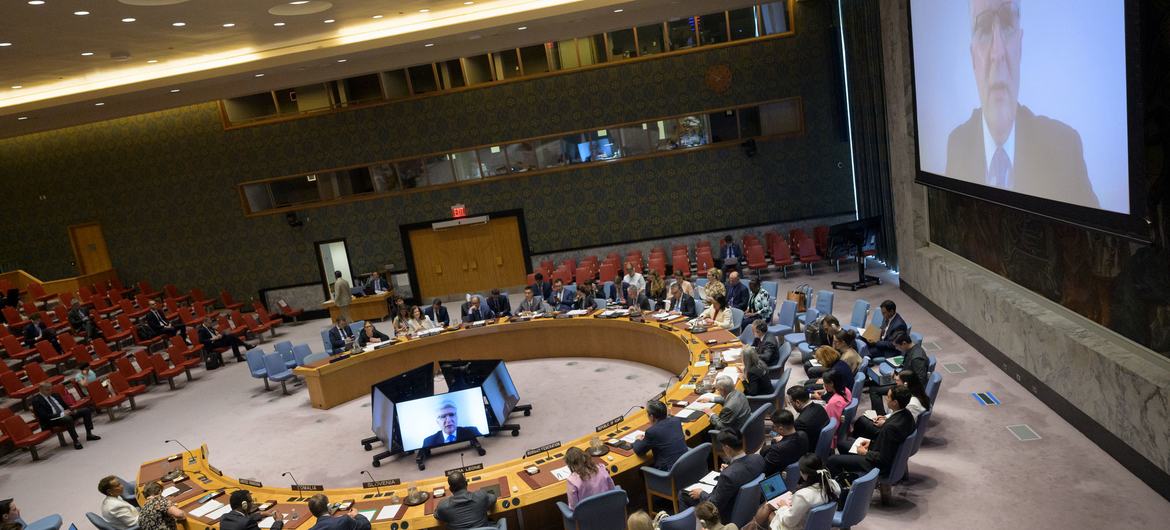
A wide view of the Security Council meeting on the situation in Syria. On screen is Geir Pedersen, Special Envoy of the Secretary-General for Syria.

Humanitarian crisis worsens

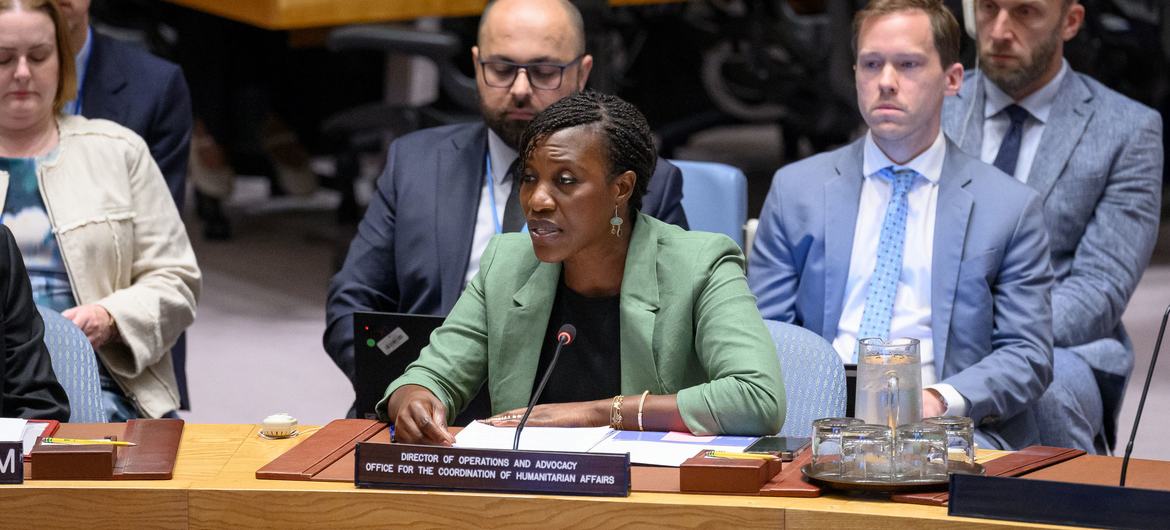
Humanitarian needs are escalating sharply. Edem Wosornu, Director of Operations at the UN Office for the Coordination of Humanitarian Affairs (OCHA), described Sweida as “teetering on the edge of collapse.

“The recent violence in Sweida has displaced an estimated 175,000 people…a third of the population in the governorate, where two-thirds of people were already in need of assistance,” she told ambassadors.

Hospitals are overwhelmed and face severe shortages of electricity, supplies and personnel. The World Health Organization (WHO) confirmed five attacks on healthcare in Sweida, including the killing of two doctors, obstruction and targeting of ambulances

Vital infrastructure, including water systems are critically damaged, and food, fuel and medicine remain scarce. Aid access remains limited due to insecurity.

While three UN-supported aid convoys reached Sweida with food, fuel and health supplies, Ms. Wosornu stressed the need for “sustained humanitarian access” and protection for aid workers and infrastructure.

Droughts and wildfires deepen suffering

The violence coincided with devastating wildfires in Lattakia that displaced over 1,100 people and destroyed farmland.

The fires were worsened by “the worst drought-like conditions Syria has seen in 36 years,” Ms. Wosornu said, with water reservoirs falling to historic lows.

UN agencies are responding with clean water, health services and food assistance.

Edem Wosornu, Director of the Operations at OCHA, briefs UN Security Council members on the situation Syria.

Comprehensive political reforms

Special Envoy Pedersen emphasised that sustainable peace in Syria hinges on inclusive political reform, security sector transformation and transitional justice.

“The state has a clear duty to act professionally and with discipline, even when under attack. It must take control of its forces and ensure visible accountability,” he said.

A new People’s Assembly is expected in September, a key step in the transitional framework. Mr. Pedersen warned that unless the process is inclusive, transparent and representative, it risks deepening public mistrust.

Transition simply cannot fail

The Syrian political transition simply cannot fail,” he said.

Ms. Wosornu echoed the call for international solidarity, urgent funding and a halt to hostilities. Only 12 per cent of the revised $3.2 billion humanitarian appeal has been met.

“Our assistance is falling far short of meeting the level of needs,” she said, “If Syria is to recover, such violence must stop.

Broadcast of the Security Council meeting on the situation in Syria.

UN condemns deadly attack on worshippers in DR Congo

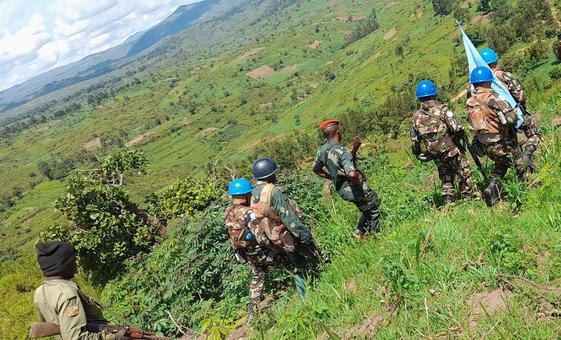
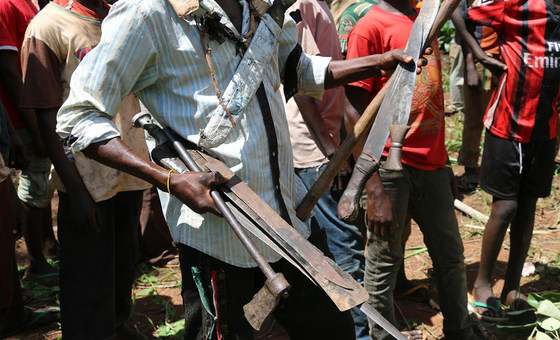
Elements of the ADF, an Islamic State-affiliated insurgent group that originated in neighbouring Uganda, carried out the attack in Komanda town, Irumu territory, Ituri province.

At least 49 civilians were killed, including nine children. Several other people were injured and abducted, and shops and homes were set on fire. 

Most of the victims were reportedly worshippers killed with bladed weapons during a night vigil at a church.

The incident comes after ADF attacks earlier in the month killed 82 civilians in Ituri and North Kivu provinces, which MONUSCO condemned on 23 July. 

The group has committed grave human rights violations against civilians since its founding in 1995 and has been under UN sanctions since June 2014.

‘Deep outrage’ over attacks

MONUSCO expressed “deep outrage at these heinous acts of violence, which constitute serious violations of international humanitarian law and infringements on human rights.” 

The peacekeeping mission also extended condolences to the bereaved families, urged Congolese authorities to investigate these killings, and reiterated the UN Secretary-General’s call for all foreign armed groups to lay down their weapons unconditionally and return to their countries of origin.

“These targeted attacks against defenceless civilians, particularly in places of worship, are not only appalling but also in violation of all human rights standards and international humanitarian law,” said Vivian van de Perre, Deputy Special Representative of the UN Secretary-General for Protection and Operations and Acting Head of MONUSCO. 

She added that the Mission “will continue to work tirelessly alongside the Congolese authorities to protect the population in line with its mandate.”

Response on the ground

MONUSCO is supporting local authorities in their response by organising burials and providing medical care to the wounded. 

The peacekeeping mission is also intensifying security efforts in and around the city of Komanda. 

The Mission is committed to working with Congolese authorities and communities “to help prevent future attacks, protect civilians, reduce tensions, and contribute to the stabilization of areas affected by armed violence.” 

Source link

Guterres: ‘Breaking point’ reached in Israel-Palestine conflict, urgent action needed on two-State solution

Speaking Monday morning at the high-level conference on the peaceful settlement of the question of Palestine and the implementation of the two-State solution, the UN chief painted a stark picture of a conflict that continues to “take lives, destroy futures, and destabilise the region and our world.”

“We know that the Israeli-Palestinian conflict has endured for generations – defying hopes, defying diplomacy, defying countless resolutions, defying international law,” Mr. Guterres said. “But we also know its persistence is not inevitable. It can be resolved. That demands political will and courageous leadership. And it demands truth.”

The truth is: we are at a breaking point. The two-State solution is farther than ever before.

The Secretary-General denounced the 7 October Hamas attacks on Israel and hostage-taking as acts of terror he has “repeatedly condemned.” At the same time, he said “nothing can justify the obliteration of Gaza that has unfolded before the eyes of the world.”
He also spoke out against the starvation of civilians, the killing of tens of thousands, mass displacement, settler violence and the “creeping annexation” of the occupied West Bank – a move he called “illegal”.

Stop undermining two-State solution

Unilateral actions that would forever undermine the two-State solution are unacceptable and they must stop,” he said. “These are not isolated events. They are part of a systemic reality that is dismantling the building blocks of peace in the Middle East.”

The three-day conference is mandated by the General Assembly through resolutions ES-10/24 and 79/81, is co-organized by France and Saudi Arabia. It includes plenary sessions and thematic roundtables on issues such as security arrangements, humanitarian needs, reconstruction, and the economic viability of a future Palestinian state.

A group photograph of senior UN officials and ministers attending the high-level international conference.

Move beyond ‘well-meaning rhetoric’

In his speech, Mr. Guterres urged Member States not to let the event become “another exercise in well-meaning rhetoric.”

“It can and must serve as a decisive turning point – one that catalyses irreversible progress towards ending the occupation and realising our shared aspiration for a viable two-State solution,” he said.

Reiterating the long-standing UN position, the Secretary-General said the two-State solution remains the only viable path to peace – with Israel and Palestine living side-by-side within secure, recognised borders, based on the pre-1967 lines, with Jerusalem as the capital of both States.

It is the sine qua non [Latin for indispensable or absolutely essential] for peace across the wider Middle East,” he concluded.

More to follow…

Jean-Noël Barrot, Minister for Europe and Foreign Affairs of France; Faisal bin Farhan Al Saud, Minister of Foreign Affairs of Saudi Arabia; and Mohammad Mustafa, Prime Minister of the State of Palestine also spoke at the meeting.

The meeting continues with wrap-up sessions of the thematic roundtables. 

A plenary meeting in the General Assembly Hall will take place at 3 PM New York time.

You can follow the live coverage of the conference here.

LIVE COVERAGE: High-level conference on two-State solution for Israel and Palestine

A world in which a sovereign State of Palestine and Israel co-exist peacefully seems a distant prospect, particularly in light of the 7 October 2023 attacks by Hamas on Israel, and the subsequent Israeli bombardment of Gaza. A high-level UN conference opening on 28 July will, nevertheless, serve as the latest UN-backed attempt to find a way to end the conflict. 

While Gaza ceasefire remains elusive, UN readies for Conference around Israel-Palestine two-State solution

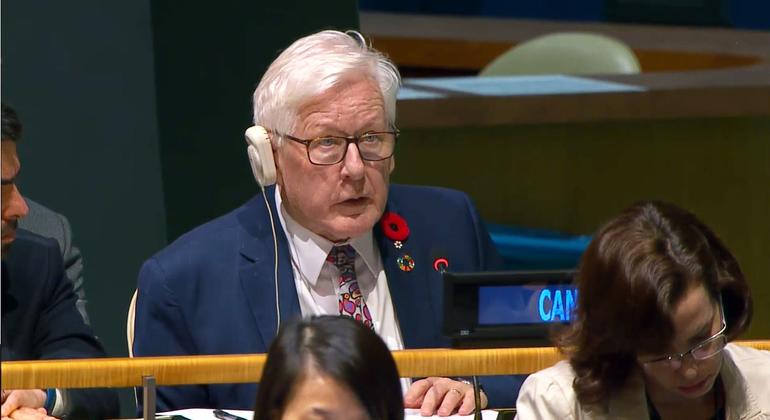
“It’s not a peace conference,” Bob Rae, Canada’s Ambassador to the UN, told UN News ahead of the event, mandated by the General Assembly, in which his country will play a leading role.

“It’s a way of trying to maintain the debate and get beyond the sticking points to the solutions. We hope there’ll be some listening, and we hope there’ll be some learning on the basis of what we hear.”

Mr. Rae’s caution reflects the high levels of uncertainty and concern surrounding the two-State solution. Neither one of the two parties to the conflict will be taking part, and the United States, a strong backer of Israel, is not expected to participate.

In an address to the Security Council in April, UN Secretary-General António Guterres warned that the process is “at risk of vanishing altogether.” Political will to achieve the goal, he said, “feels more distant than ever.”

However, in an exchange with the press on 5 June Mr. Guterres also said, “And for those that doubt about the two-state solution, I ask: What is the alternative? Is it a one-State solution in which either the Palestinians are expelled, or the Palestinians will be forced to live in their land without rights?” 

He reminded that it was “the duty of the international community to keep the two-state solution alive and then to materialize the conditions to make it happen.”

The Canadian Ambassador said that, whilst the organisers of the event continue to urge Israel and Palestine to engage with the conference, they understand the difficult situation they both find themselves in. “Many citizens [of Israel] are still being held as hostages by Hamas. They’ve suffered this tremendous attack, the worst attack on the Jewish population anywhere in the world since 1940. And now we’re having to deal with the outcome of that which has been the war in Gaza, which is hugely traumatic for the Palestinians and for many members of the Arab community.”

Making a difference on the ground

The conference, held in the Trusteeship Council at UN Headquarters in New York, was convened as a result of the adoption of a General Assembly Resolution (Resolution ES-10/22) in 2024. In a concept note released ahead of the event, the two nations declared that international consensus on the two-State solution “still enjoys near-universal support,” and that it is “clearly the only way to satisfy the legitimate aspirations, in accordance with international law, of both Israelis and Palestinians…and create the conditions for regional peace and stability.”

In a swipe at the failure of previous efforts to bring about peace, the statement declares that “the aim of this international conference would not be to ‘revive’ or to ‘relaunch’ another endless process, but to implement, once and for all, the two-State solution.”

In a preparatory meeting for the conference held at the UN in May, Anne-Claire Legendre, Middle East and North Africa advisor to French President Emmanuel Macron, said that “ the prospects of a Palestinian State must be maintained. Irreversible steps and concrete measures for the implementation thereof are necessary,” and called for a lasting ceasefire, an immediate influx of humanitarian aid and the release of hostages.

Her counterpart, Manal bint Hassan Radwan, head of the Saudi Arabian negotiating team, added that  efforts to end fighting and secure release of hostages and detainees must be “anchored in a credible and irreversible political plan that addresses the root cause of the conflict and offers a real path to peace, dignity and mutual security.”

“There has to be the basis for a broader political solution. It’s not just about saying there’s going to be a ceasefire and that will solve the problem. How do we reconstruct Gaza? How do we change the governance of Gaza? How do we approach the West Bank? How do we deal with issues which have long been the source of a lack of agreement between the parties? Let’s not forget that there has been one really successful negotiation, which was based on the 1993 Oslo Accords, and since that time we have not had a lot of substantive agreements. We’ve got to try to find a way to create a framework for actual discussion.”

Source link

Amid starvation in Gaza, Sudan, Guterres slams hunger ‘as a weapon of war’

The development comes as UN Secretary-General António Guterres cautioned that conflict-driven hunger is spreading “from Gaza to Sudan and beyond”.

“Hunger fuels instability and undermines peace. We must never accept hunger as a weapon of war,” he said in a video message to the UN Food Systems Summit Stocktake in Addis Ababa. 

Meanwhile, citing reports Monday that “more children died today of hunger”, the UN agency for Palestinian refugees, UNRWA, said that it hoped to receive permission to bring in thousands of trucks loaded with food, medicine and hygiene supplies that Israel has blocked from entering Gaza for months.

“They are currently in Jordan and Egypt waiting for the green light,” the UN agency explained, adding that “at least 500/600 trucks” are needed every day to prevent more people from starving. More than 100 people have now starved to death in Gaza, UNRWA said, while local health authority reports indicate more than 40 deaths from malnutrition this month alone.

“Opening all the crossings and flooding Gaza with assistance is the only way to avert further deepening of starvation among the people of Gaza,” the UN agency maintained.

Humanitarian pauses

Its comments follow a major policy shift over the weekend when the Israeli army announced the establishment of a daily humanitarian pause from 10am to 8pm local time, in areas where its troops are not active. Child malnutrition has been on the rise in Gaza, particularly since 2 March when Israel imposed a near-total blockade, UNWRA has said.

According to a map supplied by the Israeli authorities, the humanitarian pause applies to a thin strip of Gaza encompassing Al-Mawasi in the southwest, Deir Al-Balah in the centre and Gaza City in the north. 

On Sunday, a convoy of more than 100 trucks carrying aid supplies reportedly entered the Strip via the Kerem Shalom border crossing in the south.

Aid desperatedly needed

While welcoming that development, the UN aid coordination office, OCHA, highlighted the staggering scale of needs on the ground in Gaza. 

One in three people “hasn’t eaten for days”, insisted Tom Fletcher, UN Emergency Relief Chief and head of OCHA. “People are being shot just trying to get food to feed their families. Children are wasting away. This is what we face on the ground right now.”

In his statement, Mr. Fletcher acknowledged “progress” on the aid front, but stressed that “vast amounts of aid are needed to stave off famine and a catastrophic health crisis”. He said that UN agencies and the humanitarian community remain mobilized “to save as many lives as we can”. 

In addition to Israel’s temporary boost for increased aid in Gaza, customs restrictions on food, medicine and fuel from Egypt have reportedly been lifted. Secure routes for UN humanitarian convoys have also been designated.

“We need sustained action, and fast, including quicker clearances for convoys going to the crossing and dispatching into Gaza,” Mr. Fletcher said, underscoring the need for “multiple trips per day to the crossings so we and our partners can pick up the cargo; safe routes that avoid crowded areas; and no more attacks on people gathering for food”. 

Meeting on two-State solution

Meanwhile in New York, France and Saudi Arabia on Monday launched a new diplomatic initiative to push for a two-State solution between Israel and the Palestinian people. 

The three-day conference begins as President Emmanuel Macron announced that France will formally recognize Palestine in September, the first of the G7 nations to do so.

A UN General Assembly resolution from 1947 established the partition of Palestine – then under British mandate – into two independent states, one Jewish and the other Arab. The State of Israel was declared in 1948. 

UN warns of ‘catastrophic hunger’ in Gaza as Israel announces humanitarian pauses

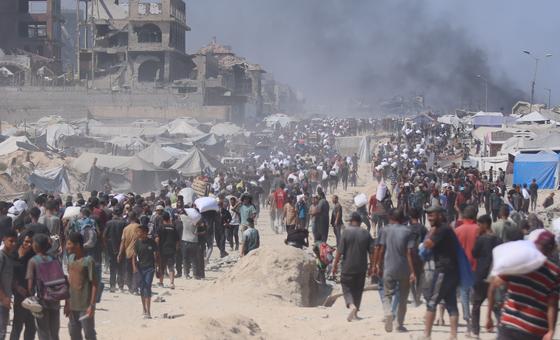
But as starvation tightens its grip and “children are dying before our eyes,” UN officials and aid workers warn that the measures fall far short of the much-needed ceasefire and unfettered aid access that could help stem the spiralling humanitarian catastrophe.

“Welcome announcement of humanitarian pauses in Gaza to allow our aid through,” UN Emergency Relief Coordinator Tom Fletcher said on X. “In contact with our teams on the ground who will do all we can to reach as many starving people as we can in this window.”

Also reacting via the platform, UNICEF said: “This is an opportunity to begin to reverse this catastrophe and save lives.”

According to the agency, since the collapse of the ceasefire between Israel and Hamas in March, children have been trapped in a nightmare and deprived of the basics to survive.

“The entire population of over two million people in Gaza is severely food insecure. One out of every three people has not eaten for days, and 80 per cent of all reported deaths by starvation are children,” the agency continued.

UNICEF emphasized that while it has never stopped delivering, “we can do a lot more if additional designated humanitarian corridors are created to facilitate the movement of our convoys – as well as commercial trucks, which are essential.”

‘A lifeline – if upheld and expanded’

The UN World Food Programme (WFP) also welcomed Israel’s announcement and its intent to open designated corridors for aid convoys in Gaza, “where hunger has reached catastrophic levels.”

With nearly half a million people facing famine-like conditions and a third of the population going days without food, WFP said in a press statement that the measures could offer a lifeline – if upheld and expanded.

Despite recent deliveries, including 350 truckloads last week, aid workers continue to face extreme risks and logistical hurdles. WFP said it has enough food stockpiled or en route to feed Gaza’s 2.1 million residents for three months, but without a ceasefire and consistent access, the scale of need far outpaces current efforts.

“An agreed ceasefire is the only way to reach everyone,” the agency stressed, calling for predictable and safe conditions to prevent further loss of life.

‘An entirely preventable crisis’

At the same time, the UN World Health Organization (WHO) warned that malnutrition in Gaza is spiralling out of control, with a sharp rise in deaths – most of them in July – marking what it calls a “dangerous trajectory.”

Of the 74 malnutrition-related deaths recorded this year, 63 occurred this month alone, including 24 children under five. Many died before reaching medical care, their bodies showing signs of severe wasting.

“This crisis is entirely preventable,” WHO said in a press release, citing the deliberate obstruction of aid for the mounting toll.

Children are bearing the brunt. Over 5,000 children have already been treated for malnutrition in July, many with the most life-threatening form. But Gaza’s four specialized treatment centers are overwhelmed, running low on fuel and supplies, and staffed by exhausted health workers.

“The health system is on the brink,” WHO warned, as disease spreads rapidly through communities with no clean water or sanitation.

The crisis is also devastating pregnant and breastfeeding women, over 40 per cent of whom are now severely malnourished. And it’s not just hunger that’s killing people—it’s the desperate search for food, according to WHO.

Since late May, more than 1,000 people have been killed and over 7,000 injured while trying to access aid. WHO is calling for an immediate ceasefire and a sustained surge of diverse, nutritious food and medical supplies.

“This flow must remain consistent and unhindered,” the agency said, urging protection for civilians, health workers, and humanitarian operations.

‘The world will judge this conference’

Looking ahead to the High-Level Conference on Palestine set to open on Monday at UN Headquarters in New York, the UN High Commissioner for Human Rights issued a strong call for immediate action to end Israel’s unlawful occupation and the ongoing devastation in Gaza.

“Countries that fail to use their leverage may be complicit in international crimes,” Volker Türk warned in a statement, urging governments to seize the moment for concrete measures that pressure Israel to halt the carnage and recommit to a two-state solution.

The UN rights chief described Gaza as a “dystopian landscape of deadly attacks and total destruction,” where children are starving and families are being killed in their search for food. The militarized aid distribution system, supported by the US and Israel, is failing to meet the scale of need.

“We can never forget that more than 300 of our own colleagues have been killed,” he added.

Moreover, in the occupied West Bank, violence by Israeli forces and settlers continues unabated, with homes demolished and water supplies cut off.

Mr. Türk reiterated condemnation of the 7 October attacks by Hamas but emphasized that the scale of suffering inflicted on Palestinians since then cannot be justified.

Calling for an immediate, permanent ceasefire, the release of hostages and detainees, and a massive surge in humanitarian aid, he concluded:

“The people of the world will judge this Conference on what it delivers.”

Source link

Pollution, melting microbes, undamming rivers, risks for elders: 4 key climate issues

From ancient microbes awakening in melting glaciers to toxic pollutants unleashed by floods, the dangers are no longer distant or theoretical. They are here, and they are growing.

The Frontiers Report 2025, released by the UN Environment Programme (UNEP), highlights four critical areas where environmental degradation intersects with human vulnerability: legacy pollution, melting glacier microbes, undamming rivers and climate risks for an ageing population that is growing.

The report paints a vivid picture of how climate change is not only altering ecosystems but also exposing communities – especially the most vulnerable – to new and intensifying dangers. Some issues may be local or relatively small-scale issues today, but have the potential to become issues of regional or global concern if not addressed early, the report warned.

UNEP Executive Director Inger Andersen said action must be taken “to protect people, nature and economies from threats that will only grow with each passing year”.

Here’s what’s at stake and why it matters to all of us:

UN Nepal/Narendra Shrestha

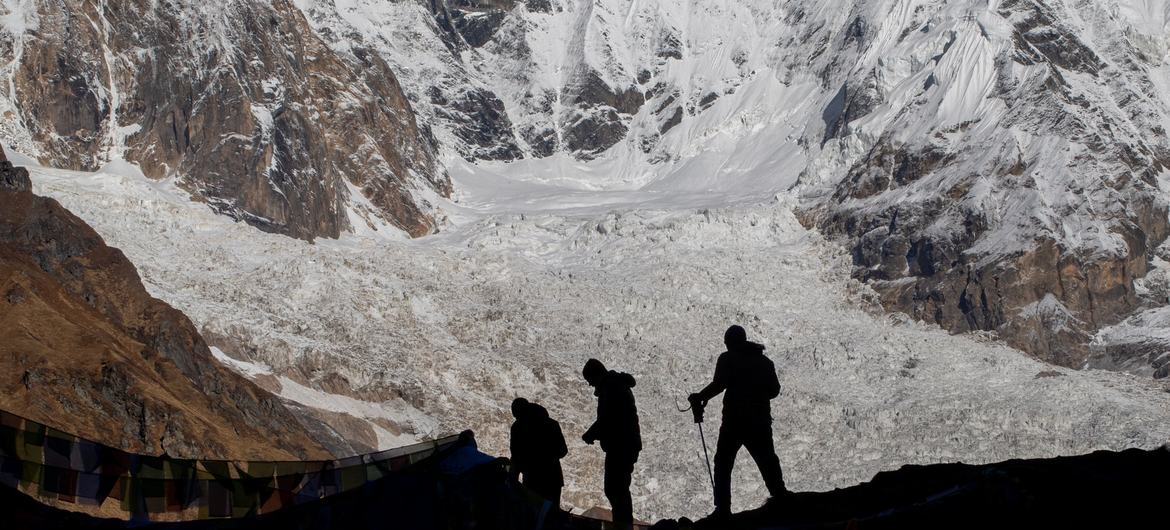
UN Secretary-General António Guterres visits the Annapurna base camp in Nepal in 2023. (file)

Melting glacier microbes

Climate scientists are saying many glaciers will not survive this century unless action is taking to slow the melting rate caused by climate change. That means those living downstream will face a tide of floods alongside threats posed by reactivated microbes in a warming cryosphere or frozen parts of the Earth.

Frozen in ice sheets, glaciers and permafrost are bacteria, fungi and viruses. While most are dead, some are dormant and some are active. As global temperatures hit record highs, these microorganisms will become more active in many ecosystems. Even if the melting can be slowed down by mitigating greenhouse gas emissions, efforts must assess and prepare for possible threats from potential pathogens.

Also crucial is documenting and preserving cryospheric microorganisms, which can shed light on the history of climate and evolution, help in finding therapies for diseases and develop innovative biotechnologies.

© UNICEF/Felipe Chic Jiménez

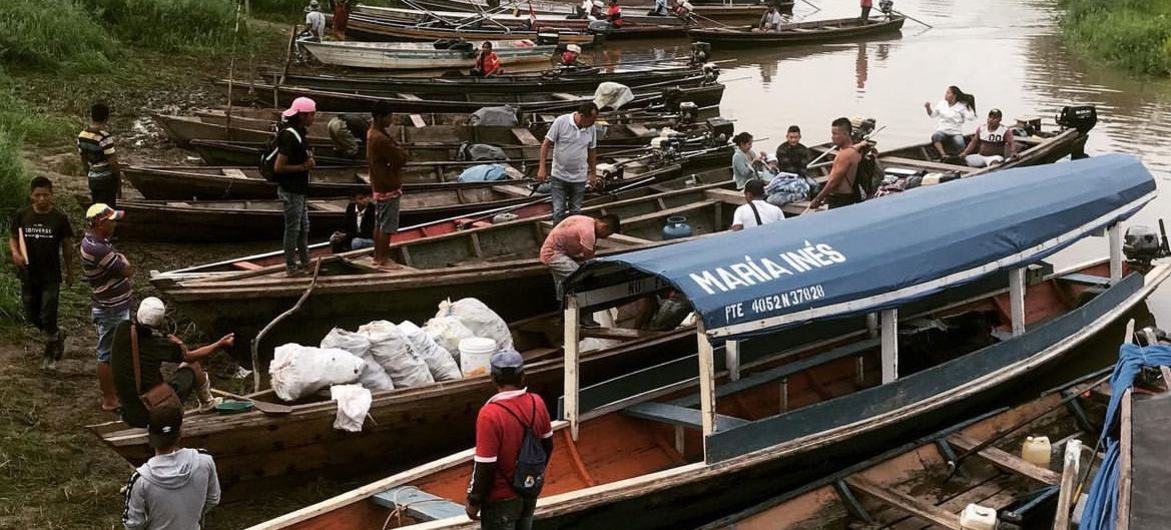
Indigenous communities in the Amazonía region in southern Colombia. (file)

Dismantling dams

In the Colombian Amazon, river water levels have dropped by up to 80 per cent, restricting access to drinking water and food supplies, leading to shuttering 130 schools, increasing children’s risk of recruitment, use and exploitation by non-State armed groups and resulting in increased respiratory infections, diarrhoeal diseases, malaria and acute malnutrition among youngsters under age five.

Part of what is making the problem worse in Colombia and other hot spots around the world are the plethora of dams operating at a time when climate change is triggering droughts around the world. Drought is keeping more than 420,000 children out of school in Brazil, Colombia and Peru alone, according to a report by the UN Children’s Fund (UNICEF).

As such, there is a growing need to remove dams and other barriers to rehabilitate river ecosystems, a process increasingly initiated by local communities, Indigenous Peoples, women and youth. Rivers and streams can recover remarkably once barriers are gone, but other stressors, from pollution to climate change, need to be addressed in parallel. Understanding the restoration outcomes of barrier removal is necessary not only to guide future removals, but also to inform decisions about existing and future barriers.

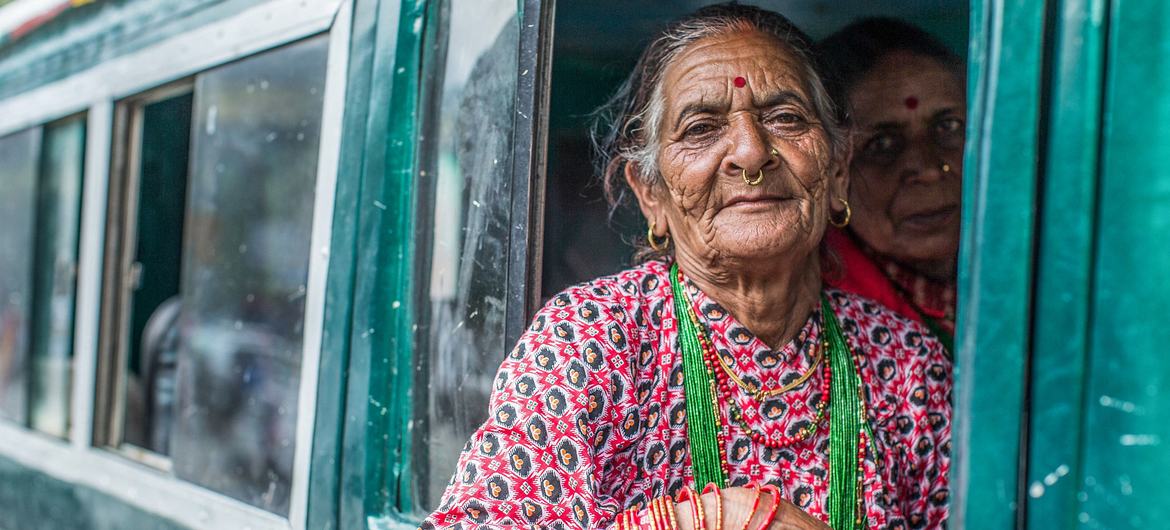
Elderly people suffer disproportionately from climate change consequences.

Climate risks for the elderly

Older people face increased risks during extreme weather and suffer more from ongoing environmental degradation. As the World Meteorological Organization (WMO) predicts ever more hot weather, the elderly are suffering disproportionately, as seen in rising numbers of deaths and illnesses amid recent heat waves around the world.

At the same time, the world’s ageing population is growing: the global share of people over 65 years old will rise from 10 per cent in 2024 to 16 per cent by 2050. Most of them will live in cities, where they will be exposed to extreme heat and air pollution and experience more frequent disasters.

Older people are already more at risk, so effective adaptation strategies will need to evolve to protect these older populations.

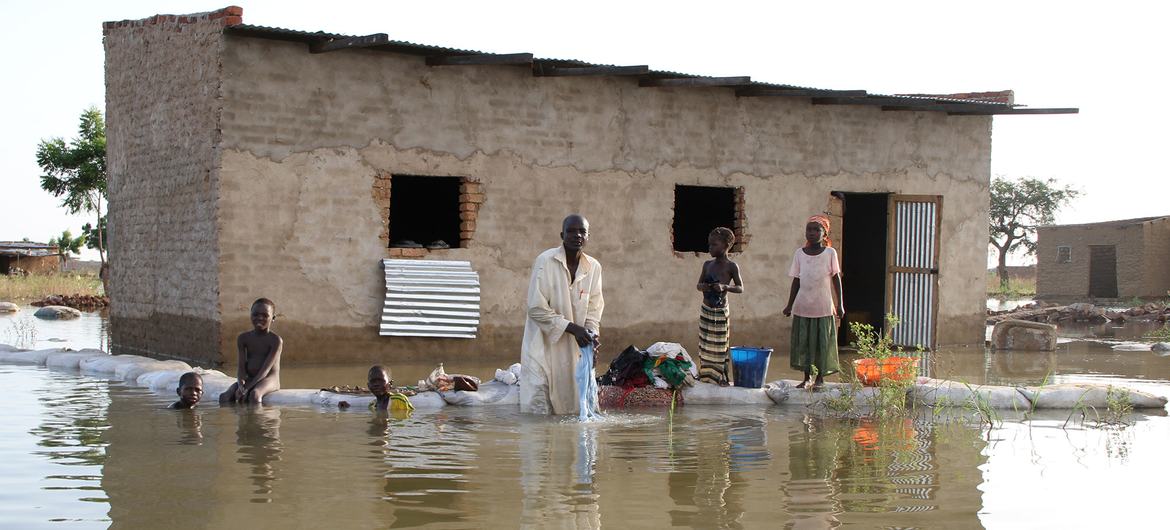
A family outside their flood damaged home in N’Djamena, Chad. (file)

Legacy pollutants

Flooding has crippled communities in all regions of the world as the number of extreme weather events climb. Among the hidden dangers are legacy pollutants that have been secreted into the ground over time and released as extreme rainfall and floods wash away sediments and debris.

The Pakistan floods of 2010, flooding in the Niger Delta in 2012 and Hurricane Harvey off the coast of Texas in 2017 are all examples when floodwaters stirred up sediments, releasing heavy metals and persistent organic pollutants.

Evaluating sediments to understand hazards, rethinking flood protection to lean on nature-based solutions and investments in natural remediation of contaminated sediments are all options to deal with this problem.

Read the full Frontiers Report here.

UN urges restraint as Thailand-Cambodia clashes displace thousands; Security Council meets

The clashes, which began on 24 July, reportedly involved exchanges of gunfire, artillery shelling and rocket fire, with Thailand having conducted airstrikes inside Cambodian territory.

UN humanitarian officials confirmed civilian casualties, including children.

More than 131,000 people in Thailand and over 4,000 in Cambodia have been displaced, according to relief partners. Temporary shelters, including schools and temples, are overcrowded, and food, shelter and medical assistance are urgently needed.

The United Nations stands ready to support humanitarian efforts if requested, spokesperson Stephanie Tremblay said at a regular briefing in New York.

Protect children at all times

The UN Children’s Fund (UNICEF) also appealed for “maximum restraint”.

June Kunugi, Regional Director for East Asia and the Pacific – based in Bangkok – urged both countries to protect children and the critical services they depend on, in line with their obligations under international law, including the Convention on the Rights of the Child.

Children must be protected at all times and their safety and wellbeing must be prioritised, while schools must remain safe spaces for learning,” she said.

Security Council private meeting

At UN Headquarters in New York, ambassadors convened for an emergency private meeting of the Security Council to discuss the situation.

Representatives of Thailand and Cambodia were said to be in attendance, with Khaled Khiari, Assistant Secretary-General for the Asia and the Pacific at the UN Department of Political Affairs (DPPA), briefing.

Private meetings of the Security Council are closed to the public, but considered a formal meeting.

A longstanding dispute

The last major flare-up between the two countries occurred in 2011, when days of border fighting near the historic Preah Vihear temple – a UNESCO World Heritage Site – left multiple casualties on both sides.

Then-Secretary-General Ban Ki-moon had called for an immediate, verifiable ceasefire and urged both countries to resolve their dispute through dialogue, not military means.

That escalation followed a 2008 troop build-up around the 11th-century Hindu temple, which sits on the Cambodian side of the border.

Source link

Gaza: More deaths reported as starvation spreads

In an update on Friday, OCHA said that the starvation crisis is deepening across the enclave, with the local health authorities announcing that two more people had died from starvation the previous day.

Hunger and malnutrition increase the risk of illnesses that weaken the immune system, particularly among women, children, older people and persons with disabilities or chronic diseases, with deadly consequences. 

Food scarcity also impacts pregnant and breastfeeding women, increasing the risk of their babies being born with health complications and affecting mothers’ ability to breastfeed. 

Aid constrictions

The small trickle of supplies making it into the Strip is nowhere near adequate to address the immense needs as Israeli authorities continue to impose constraints on humanitarians and hamper their response. 

Out of 15 attempts to coordinate humanitarian movements inside Gaza on Thursday, four were outright denied, three were impeded, one was postponed and two others had to be cancelled by the organisers, with only five missions facilitated.

Even though the limited amount of fuel received yesterday was fully allocated to community kitchens, healthcare and water and sanitation facilities, the fuel shortage continues as the quantities entering Gaza remain insufficient to maintain essential facilities.

UN preparations

Despite severe constraints, UN teams are prepared to ramp up aid delivery and address these severe needs as soon as they are allowed to do so. 

For the UN to accelerate the delivery of food aid, health services, clean water and waste management, nutrition supplies and shelter materials, Israel must open its crossings, allow fuel and equipment in and permit humanitarian staff to operate safely.

The Under-Secretary-General for Humanitarian Affairs, Tom Fletcher, said in a social media post on Thursday that “we must save as many lives as we can – and we have a plan.” 

The plan he shared with Member States outlines the necessary steps to stop the horror and alleviate constraints on humanitarian operations. 

Mr. Fletcher has also written to the head of the Gaza Humanitarian Foundation (GHF), the aid distribution model backed by Israel and the United States, reiterating that the UN is ready to engage with any partner to provide desperately needed humanitarian aid to Gaza.

He stressed that any such partnership must adhere to the globally accepted principles of humanity, impartiality neutrality and independence, with aid going where needs are greatest and without discrimination and that humanitarians answer to civilians in need, not the warring parties. 

Mr. Fletcher also said that he welcomes dialogue on how to reach as many people as possible to alleviate suffering without causing harm. 

Syria: Deadly sectarian violence displaces thousands in Sweida; healthcare attacked

Since 13 July, around 176,000 people have been displaced from Sweida,  according to the UN Office for the Coordination of Humanitarian Affairs (OCHA).

Mostly migrating to neighbouring Dar’a and Rural Damascus governorates, civilians are fleeing violent clashes between Bedouin tribal fighters, Syrian caretaker government forces and Druze militias.

Meanwhile in the north of the country, local authorities reported that a large explosion struck an ammunition depot in Ma’arrat Tasmarin, in Idleb Governorate, on Thursday, reportedly killing six people and injuring at least 140 others.

Although Syrian Civil Defense teams attempted to evacuate people and transfer the injured for medical care, secondary explosions in the vicinity significantly hindered emergency response efforts.

Attacks on healthcare

In Sweida, health facilities are under immense strain, with staff operating in extremely difficult conditions, while access to healthcare remains a challenge.

As WHO confirmed five attacks on healthcare, including the killing of at least two doctors, the organization also reported on the obstructions to and targeting of ambulances as well as the temporary occupation of hospitals.

“We know healthcare must never be a target. In fact, health facilities, patients and health workers must be actively protected,” said Dr. Christina Bethke, WHO acting representative in Syria, speaking from Damascus to journalists at the UN in Geneva on Friday.

Dr. Bethke said that Sweida’s hospitals are facing shortages of staff, electricity, water, and basic supplies, with the morgue at the city’s main hospital reaching capacity earlier this week.

“Ensuring that doctors, nurses and supplies can reach people safely is not just vital for saving lives, it is a responsibility under international law that all sides must uphold,” Dr. Bethke said.

Limited access

As different groups control different pathways, poor security conditions are restricting access to Sweida, limiting the ability of the UN and partners to deliver aid to those affected by the violence.

While access to the city remains limited, WHO has been able to deliver vital supplies to health facilities in Dar’a and Damascus governorates, including trauma supplies, essential medicine and hospital support.

In response to rising violence both in Sweida and in the north, UN humanitarian coordinator in Syria Adam Abdelmoula  launched an extension of the 2025 humanitarian appeal, which is currently less than 12 per cent funded. 

Source link

In hard-hitting human rights address, Guterres calls for urgent action on Gaza, authoritarianism and climate justice

Recalling his own experience living under dictatorship in Portugal, Mr. Guterres told participants at the Global Assembly of the international rights charity Amnesty International on Friday that the fight for human rights is “more important than ever”.

He called on States to uphold international law and defend human rights “consistently and universally, even or especially when inconvenient”, urging collective action to restore global trust, dignity and justice.

‘A moral crisis’

Mr. Guterres painted a stark picture of a world in turmoil, citing multiple ongoing crises, foremost among them, the war in Gaza.

While reiterating his condemnation of the 7 October 2023 terror attacks by Hamas and other Palestinian armed groups in Israel, the Secretary-General said that “nothing can justify the explosion of death and destruction since”.

The scale and scope is beyond anything we have seen in recent times,” he said.

I cannot explain the level of indifference and inaction we see by too many in the international community. The lack of compassion. The lack of truth. The lack of humanity.

Key takeaways from the address

  • Gaza – “A moral crisis that challenges the global conscience”
  • Ukraine – Call for a “just and lasting peace” based on the UN Charter, international law and resolutions
  • Authoritarianism – A “global contagion”, with political repression, attacks on minorities and shrinking civic space
  • Climate justice – Bold action needed to cut emissions; clean energy transition must uphold human rights
  • Digital threats – Concern over algorithmic spread of hate and falsehoods; manipulation via social media
  • Call to action – “Human rights are the solution, foundation of peace and engine of progress”

UN staff ‘neither dead nor alive’

He described UN staff in Gaza as working in “unimaginable conditions”, many of them so depleted they “say they feel neither dead nor alive”.

Since late May, he noted, more than 1,000 Palestinians have been killed trying to access food – not in combat, but “in desperation – while the entire population starves”.

This is not just a humanitarian crisis. It is a moral crisis that challenges the global conscience.

Ready to scale up aid

Mr. Guterres said the UN stands ready to dramatically scale up humanitarian operations “as we successfully did during the previous pause in fighting”, but called for an “immediate and permanent ceasefire”, the unconditional release of all hostages and full humanitarian access.

“At the same time, we need urgent, concrete and irreversible steps towards a two-State solution,” he stressed.

He also spoke about other conflicts, including Sudan as well as Russia’s invasion of Ukraine, where he called for a “just and lasting peace” based on the UN Charter, international law and relevant UN resolutions.

Secretary-General Guterres (left) addresses Amnesty International’s Global Assembly via video link.

Rising authoritarianism

The Secretary-General warned that authoritarian tactics are on the rise globally.

We are witnessing a surge in repressive tactics aiming at corroding respect for human rights,” he said. “And these are contaminating some democracies.

Political opposition movements are being crushed, accountability mechanisms dismantled, journalists and activists silenced, civic space strangled and minorities scapegoated.

Rights of women and girls in particular are being rolled back, most starkly, he said, in Afghanistan.

“This is not a series of isolated events. It is a global contagion.”

Weaponization of technology

He decried the growing weaponization of digital platforms, saying algorithms are “boosting the worst of humanity, rewarding falsehoods, fuelling racism and misogyny and deepening division”.

He called on governments to uphold the Global Digital Compact adopted by countries at the UN General Assembly last September and to take stronger action to combat online hate and disinformation.

© ICJ-CIJ/Frank van Beek

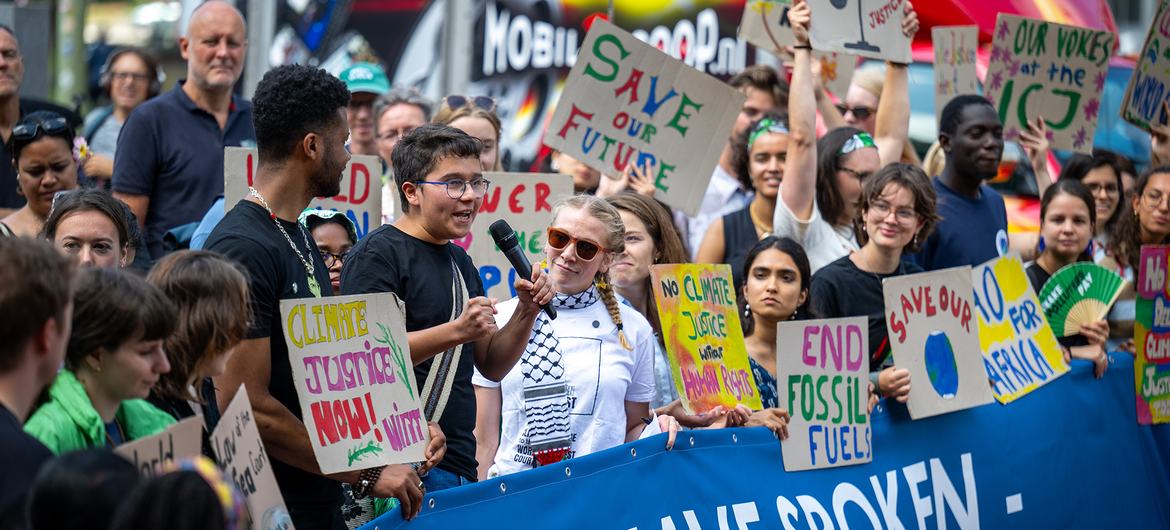
Activists outside the International Court of Justice (ICJ) in The Hague as the Court delivers its advisory opinion on the obligations of States in respect of climate change.

Climate justice is human rights

Turning to climate, Mr. Guterres described the environmental emergency as a “human rights catastrophe”, with the poorest and most vulnerable communities suffering most.

He welcomed the International Court of Justice (ICJ)’s advisory opinion this week, affirming that climate change is a human rights issue and that States have obligations under international law to protect the global climate system.

But, he cautioned against a transition to clean energy that sacrifices human rights.

“We cannot accept a clean energy future built on dirty practices…We cannot accept enormous violations of human rights, many of them against children, in the name of climate progress.”

He called for urgent emissions cuts, a just transition away from fossil fuels and real financing for developing countries to adapt, build resilience and recover from loss and damage.

A legacy of activism

The Secretary-General concluded by praising Amnesty International’s decades of activism, calling its work “indispensable” to the global human rights movement.

When you stand for human rights, you stand with what is right,” he told delegates.

“Your courage continues to change lives. Your persistence is shifting the course of history. Let’s keep going. Let’s meet this moment with the urgency it demands. And let’s never, ever give up.

Founded in 1961, Amnesty International is a global human rights movement that campaigns to end abuses and promote justice. The organization has long worked in collaboration with the United Nations, participating actively in the development of international human rights law and mechanisms.

Today’s speech by Mr. Guterres is first-ever address by a UN Secretary-General to Amnesty International’s Global Assembly, the charity’s highest decision-making body. The UN chief spoke via a video link to the event in Prague.

Source link

Gaza First Person: ‘The best of humankind in a place abandoned by humanity’

Sonia Silva has been working in the embattled enclave since the beginning of November 2023, just one-month after the terror attack by Hamas and other armed groups in southern Israel that sparked the brutal conflict.

She spoke to UN News about the misery people have experienced in recent days.

“In my one year and eight months in Gaza, this past week has been by far the worst. The only comparable experience was the Rafah incursion in May 2024, when the border was closed, but this week has been significantly more intense.

I live in UNICEF accommodation in Deir Al-Balah, a city in central Gaza.

Sonia Silva, UNICEF Head of Office in Gaza.

When you drive from south to north in the Gaza Strip, it looks as if there has just been a major natural disaster. The level of destruction has reached an unprecedented scale, devastating civilian infrastructure and entire neighborhoods.

Buildings are no longer standing. People are living in destroyed houses, tents and on the streets.

Seeing humanity in this condition is scary and fills me with a sense of doom and fear.

Terrifying offensive

Deir Al-Balah is or had been different.

It’s one of the few places in the Gaza Strip where urban infrastructure remains. It has been somewhat spared, compared to other areas.

That is until last Sunday evening, when a terrifying offensive was unleashed on Deir Al-Balah.

I have yet to see the level of destruction over the last few days, but reports indicate it is significant.

A building was destroyed by a rocket blast only 100 metres from where I normally sleep.

But, for 72 hours my colleagues and I barely slept. The explosions and gunfire were incessant.

It is stronger than you.

Your body knows something is wrong and is in an upper state of alertness.

I was not scared, but I was deeply concerned about my national colleagues who were very close to the crossfire and who were trying to comfort young children.

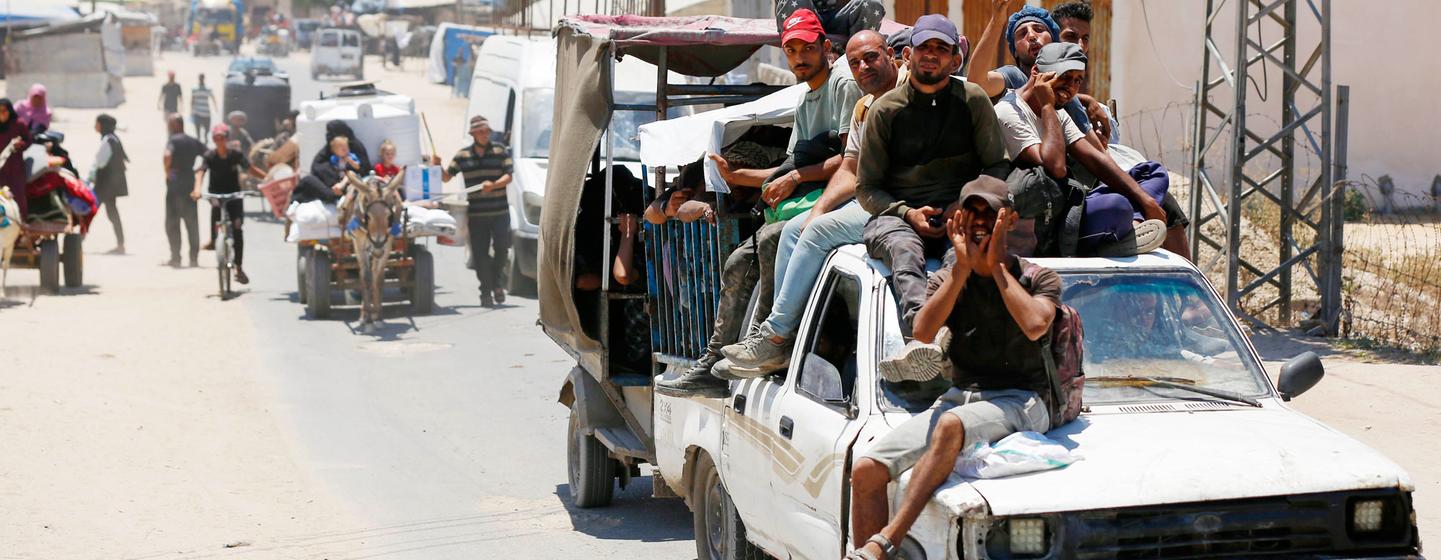
Families evacuate from Deir Al-Balah in the Gaza Strip

I am fortunate because I am an international civil servant and am entitled to a break. Every 4 to 6 weeks, I get to leave, I get to rest, I get to recharge my batteries.

But, not my Palestinian colleagues and their families, who have lived through this for more than 21 months, who have lost everything, their loved ones and belongings.

They don’t get to switch off.

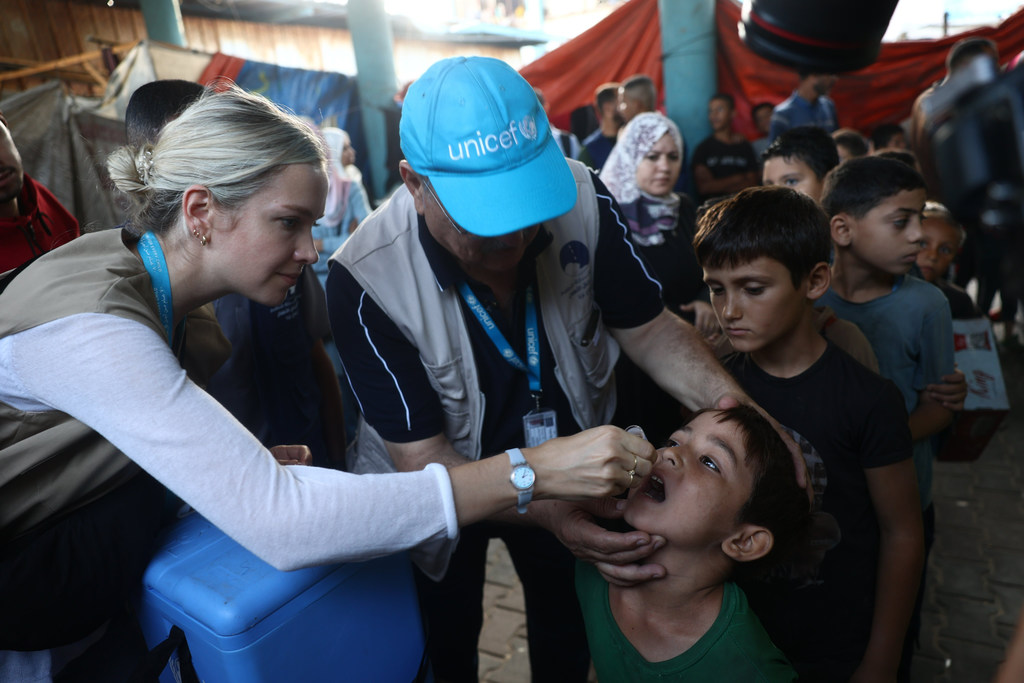
UNICEF staff vaccinate children against polio in September 2024.

The ongoing shortages of food are making things worse. It affects the entire population, including our frontline partners, our national colleagues and all the supporting staff.

What has struck me most about Gaza is that despite the hardship, colleagues keep going, colleagues keep teasing each other, colleagues who have lost everything show the utmost generosity and solidarity.

I would like to pay tribute to all of my colleagues and our partners who are hanging on to fragments of hope for a better life but still keep essential services running.

They are the best of humankind in a place abandoned by humanity.”

Source link

UN warns of escalating human toll in Ukraine amid relentless aerial attacks, mounting aid shortfall

“Nowhere is safe in Ukraine,” said Miroslav Jenča, Assistant Secretary-General for Europe at the UN Department of Political Affairs (UNDPPA).

Citing figures from the UN human rights office, OHCHR, he said civilian casualties reached a three-year high in June, with 6,754 civilians killed or injured in the first half of 2025 alone.

Russian forces launched over 5,000 long-range munitions against Ukraine so far in July, including a record-breaking 728 drones in a single day. Major cities such as Kyiv and Odesa have been hit by swarms of missiles and drones.

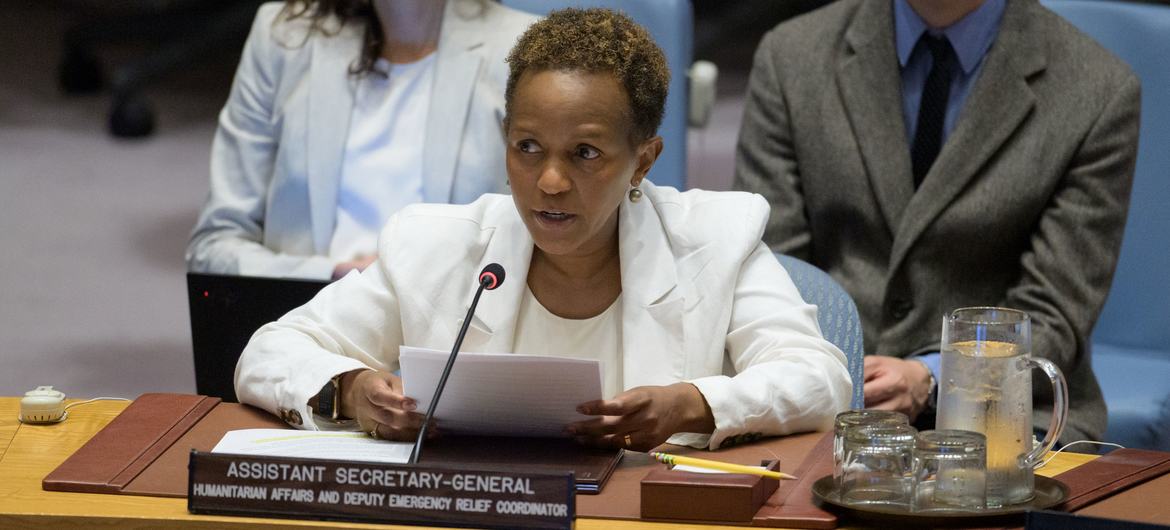
Assistant Secretary-General for Humanitarian Affairs Joyce Msuya echoed those words, saying “there is no safe place left in Ukraine” as the use of explosive weapons in populated areas has left cities reeling.

A rehabilitation centre for persons with disabilities in Kharkiv, maternity wards, schools, and energy infrastructure have all come under fire in recent weeks.

Joyce Msuya, UN Deputy Emergency Relief Coordinator, briefs the Security Council meeting on maintenance of peace and security of Ukraine.

Spiralling humanitarian situation

The humanitarian impact is worsening sharply, she continued.

“Nearly 13 million people need assistance, but limited funding means we can reach only a fraction of them,” Ms. Msuya warned. As of now, only 34 per cent of the $2.6 billion required for this year’s humanitarian response has been received.

Ukraine’s displacement crisis also continues to grow. Over 3.7 million people remain displaced within the country, while nearly six million are refugees abroad. More than 26,000 people have newly registered at transit centres since April alone.

Strikes in Russia

The senior UN officials also expressed concern over reported civilian casualties from Ukrainian drone strikes inside Russia, including in Belgorod, Kursk and Moscow.

While the UN could not independently verify these incidents, Mr. Jenča reiterated: “International law clearly prohibits attacks against civilians and civilian infrastructure. We strongly condemn all such attacks – wherever they occur.”

Concerns over nuclear safety

Attacks near Ukraine’s nuclear facilities have further alarmed the UN.

Earlier this month, drone strikes hit Enerhodar, where Zaporizhzhia Nuclear Power Plant staff live, and drones have been detected near other operating plants.

“Any nuclear incident must be avoided at all costs,” Mr. Jenča said.

ASG Miroslav Jenča (on screen) briefs the Security Council meeting on the maintenance of peace and security of Ukraine.

Political momentum needed

While some diplomatic movement continues – including recent prisoner exchanges and talks in Istanbul – UN officials called for intensified political will toward a ceasefire.

“The heartbreaking and rising human toll of the past nearly three-and-a-half years of war underscores the urgency of a complete, immediate and unconditional ceasefire,” Mr. Jenča said, “as the first step towards a just and lasting peace.”

Source link

1.3 million Sudanese return home, offering fragile hope for recovery

“The thousands of people seeking to return home are driven by hope, resilience and an enduring connection to their country,” said Othman Belbeisi, regional director of the International Organization of Migration (IOM).  

While this development does offer hope, many of these people are returning to states and cities whose resources have been devastated by over two years of war.  

Since conflict broke out in April 2023, over 12 million Sudanese have been forcibly displaced, representing the largest displacement crisis in the world.

One-third of these displaced people have fled into neighbouring countries such as Chad and South Sudan, which are increasingly struggling to support the influx of refugees.  

“Not only do [the returnees] mark a hopeful but fragile shift, they also indicate already stretched host countries under increasing strain,” said Mamadou Dian Balde, the regional coordinator for the UN’s refugee agency, UNHCR.  

‘A race against time’

IOM emphasized that for these returns to accord with international law, they must be voluntary and dignified. Most of the 1.3 million Sudanese returnees are heading to Khartoum, Al Jazirah and Sennar states where the impact of the conflict is still very acute.  

In Khartoum specifically, many buildings — including the UNHCR office — are in ruins and public infrastructure, such as roads and power plants, has been compromised or destroyed.  

“Without urgent action, people will be coming back to cities that are in ruins. We are in a race against time to clear the rubble and provide water, power and healthcare,” said Abdallah Al Dardair, director of the Arab States for the UN Development Programme (UNDP).  

Additionally, Khartoum is already housing many internally displaced people and people who had formerly sought asylum in Sudan before the war broke out.  

Returnees also face danger from unexploded ordnance and high rates of gender-based and sexual violence against women and girls. To address the psychosocial and protection needs of these women and girls, safe spaces have been set up in Khartoum and Al Jazirah states.

Key to recovery 

In highlighting the hope that these returns signal, Mr. Belbeisi emphasized that returnees must be seen as active participants in the recovery of conflict-ridden Sudan.  

“Those heading home are not passive survivors, they are vital to Sudan’s recovery. Yes, the humanitarian situation is dire, but with the right support, returnees can revive local economies, restore community life, and foster hope where it’s needed most,” he said.

However, humanitarian work in and around Sudan is drastically underfunded — only 23 per cent of the estimated $4.2 billion dollars needed for the next year has been received, meaning that life-saving services may have to be scaled back.  

“More than evidence of people’s desire to return to their homeland, these returns are a desperate call for an end to the war so that people can come back and rebuild their lives,” Mr. Balde said.   

Source link

SECURITY COUNCIL LIVE: Situation in Ukraine

The UN Security Council is meeting on Friday morning to discuss the situation in Ukraine amid mounting concerns over the intensifying hostilities and growing humanitarian needs. Senior UN political affairs and humanitarian officials are expected to brief the Council. Follow our live coverage from UN News, in coordination with UN Meetings Coverage, for updates from the chamber. UN News App users can follow here.

Source link

Women and girls of African descent: celebrating contributions, recognizing challenges

It recognizes their immense contributions to society but also acknowledges the challenges they face due to the double burden of racism and sexism.

Although woman and girls of African descent embody strength, resilience, and untapped potential, they remain among the most marginalized groups globally due to the intersection of racial, gender, and socio-economic discrimination.

For example, they suffer alarming maternal mortality rates, according to the UN’s reproductive health agency, UNFPA. Oftentimes, cases are not related to income or education, but rather to racism and structural inequality stemming from a legacy of slavery and colonialism.

“The good news though, is these things are not irreversible,” Patricia DaSilva, a senior programme adviser with the agency told UN News.

“We can fix them. We have the solutions for many of the problems that we are facing in terms of maternal health for women and girls of African descent.”

Data and solutions

UNFPA advocates for stronger health systems and investment in midwifery programmes, culturally sensitive training for healthcare providers, and improvements in data collection.

The agency also invests in partnerships, such as an initiative in the Pacific region of Colombia, home to large communities of people of African descent.

“We have worked with the traditional midwives for them to integrate ancestral knowledge with modern health practices. And this includes supporting accurate birth registration,” she said.

“It sounds like a really simple thing, but when you are in a remote community without access to technology, without access to administrative offices, it becomes this really, really important issue.”

Agents of change

Ms. DaSilva upheld the theme for the International Day, which focuses on women and girls of African descent as leaders, not just beneficiaries.

“I think it is important that the international community, the global community, understands that women and girls of African descent are not recipients of aid.  They are leaders. They are innovators. They are agents of change,” she said.

“We have an opportunity and even an obligation and a responsibility to support the efforts to resource their solutions, to elevate their voices and continue to really double our efforts to dismantle the structural barriers that continue to impede their progress.”

The first celebration of the International Day coincides with the start of the Second International Decade for People of African Descent, which runs through 2034.

Source link

Two ex-militia leaders in Central African Republic sentenced for war crimes, crimes against humanity

Alfred Yekatom and Patrice-Edouard Ngaïssona received prison sentences of 15 and 12 years for their roles in brutal attacks against civilians – primarily from the country’s mainly Muslim Seleka population – during the 2013-14 civil war.

They were found guilty “beyond any reasonable doubt” of leading and facilitating attacks on civilians in the capital, Bangui, and the country’s west.

Thousands of people were killed in the violence that swept CAR following a 2012 coup led by the mainly Muslim rebel coalition, Séléka. The fighting took on a deeply sectarian tenor as Anti-Balaka militia started a brutal campaign of reprisal attacks.

Long list of crimes

The ICC’s Trial Chamber V found Mr. Yekatom responsible for a number of crimes he committed in the context of the attack on Bangui (the capital of CAR), the events at Yamwara (a school where he had established a base), and during the advance of his group on the PK9-Mbaïki axis.

These included murder, torture, forcible transfer and deportation, directing an attack against a building dedicated to religion and persecution.

Mr. Ngaïssona was convicted for aiding and abetting many of the same crimes, including persecution, forcible displacement and cruel treatment.

Both men were also found to have targeted Muslims based on the Anti-Balaka’s perception of collective guilt for Seleka abuses.

The judges sentenced Mr. Yekatom to 15 years and Mr. Ngaïssona to 12 years, with time already served to be deducted.

Charges of war crimes of pillaging and directing an attack against a religious building during the attack on Bossangoa were not upheld against Mr. Ngaïssona, and those of conscription, enlistment and use of children were not upheld against Mr. Yekatom.

‘Instrumentalization of religion’

The Chamber noted that while religion was instrumentalised by armed groups during the conflict, the violence was not initially religious in nature.

Many witnesses testified that Muslims and Christians had lived peacefully together prior to the conflict.

The convictions mark the conclusion of a trial that began in February 2021. Over the course of proceedings, the Prosecution called 114 witnesses, while the Defense teams called 56. A total of 1,965 victims participated in the trial through legal representatives.

Source link

World News in Brief: Thailand-Cambodia border hostilities, humanitarian efforts in Syria and attacks across Ukraine

The dispute dates to 1953 when France first mapped the border, but tensions resurfaced in May after the death of a Cambodian soldier in a border skirmish.

Secretary-General António Guterres is “following with concern” reports of the clashes, his Deputy Spokesperson Farhan Haq told journalists in New York.

“The Secretary-General urges both sides to exercise maximum restraint and address any issues through dialogue and in a spirit of good neighbourliness, with a view to finding a lasting solution to the dispute,” he said.

Inter-agency humanitarian assistance in Syria

The Office for the Coordination of Humanitarian Affairs (OCHA) led an inter-agency visit to Rural Damascus governorate in Syria on Thursday to assess needs and provide assistance to more than 500 families displaced by recent violence in nearby Sweida governorate.

The UN agencies visited the Sayyeda Zeinab community and plan to visit the neighbouring Dar’a Governorate in the coming days, where humanitarians are supporting tens of thousands of people displaced by violence.

In Rural Damascus and Dar’a, OCHA and its partners are expanding protection services for displaced people. This includes psychosocial first aid and case management support for children.

Also on Thursday, the World Food Programme (WFP) distributed urgent food assistance to displaced families. The agency additionally continues to provide assistance across the country, including to Syrians returning home after a decade of conflict.

Limited access to Sweida

On Wednesday, a second convoy from the Syrian Arab Red Crescent (SARC) arrived in Sweida, with UN agencies providing support.

The convoy included food, wheat flour, fuel, medicines and health supplies. Medical supplies were delivered to the Sweida national hospital, and wheat flour was dispatched to bakeries.

Across Sweida, Rural Damascus and Dar’a governorates, the UN has distributed over 1,600 dignity kits to displaced women and girls. UN partners are also providing recreational activities, awareness sessions on gender-based violence and support for women and children.

But despite efforts in neighbouring governorates and increasing support in Sweida, full and direct access to the conflict-ridden governorate itself is limited due to security constraints.

Nonetheless, the UN is continuing dialogue with Syrian authorities to facilitate direct access to Sweida.

Nationwide attacks in Ukraine

OCHA further reported that at least five civilians were killed, and 46 others injured, in attacks across several regions of Ukraine over the past two days.

Kharkiv in the northeast was one of the more affected regions, where a glide bomb strike injured at least 16 people on Thursday, and fighting killed three and injured five others on Wednesday.

Additionally, overnight attacks in central Ukraine injured seven people in Cherkasy and four in Odesa City, damaging homes, health centres, schools, shopping areas and a market.

Civilians in the southern Kherson region, the eastern Donetsk region and the southeast Zaporizhzhia region were also affected.

Evacuations and humanitarian response

Following the overnight attacks in Cherkasy and Odesa, aid workers assisted first responders by providing first aid, meals, shelter materials, hygiene kits, emotional support and legal assistance to affected families.

Amid the hostilities, nearly 600 people were evacuated from the Donetsk region, and, in the past day, another 24 were evacuated from the northeastern region of Sumy.

Source link