Arun has been associated with India International Times since 2018 and he has been a key reporter in covering science and space related stories. He can be reached at arunKnn@indiainternationaltimes.com.
Since 13 July, around 176,000 people have been displaced from Sweida, according to the UN Office for the Coordination of Humanitarian Affairs (OCHA).
Mostly migrating to neighbouring Dar’a and Rural Damascus governorates, civilians are fleeing violent clashes between Bedouin tribal fighters, Syrian caretaker government forces and Druze militias.
Meanwhile in the north of the country, local authorities reported that a large explosion struck an ammunition depot in Ma’arrat Tasmarin, in Idleb Governorate, on Thursday, reportedly killing six people and injuring at least 140 others.
Although Syrian Civil Defense teams attempted to evacuate people and transfer the injured for medical care, secondary explosions in the vicinity significantly hindered emergency response efforts.
Attacks on healthcare
In Sweida, health facilities are under immense strain, with staff operating in extremely difficult conditions, while access to healthcare remains a challenge.
As WHO confirmed five attacks on healthcare, including the killing of at least two doctors, the organization also reported on the obstructions to and targeting of ambulances as well as the temporary occupation of hospitals.
“We know healthcare must never be a target. In fact, health facilities, patients and health workers must be actively protected,” said Dr. Christina Bethke, WHO acting representative in Syria, speaking from Damascus to journalists at the UN in Geneva on Friday.
Dr. Bethke said that Sweida’s hospitals are facing shortages of staff, electricity, water, and basic supplies, with the morgue at the city’s main hospital reaching capacity earlier this week.
“Ensuring that doctors, nurses and supplies can reach people safely is not just vital for saving lives, it is a responsibility under international law that all sides must uphold,” Dr. Bethke said.
Limited access
As different groups control different pathways, poor security conditions are restricting access to Sweida, limiting the ability of the UN and partners to deliver aid to those affected by the violence.
While access to the city remains limited, WHO has been able to deliver vital supplies to health facilities in Dar’a and Damascus governorates, including trauma supplies, essential medicine and hospital support.
In response to rising violence both in Sweida and in the north, UN humanitarian coordinator in Syria Adam Abdelmoula launched an extension of the 2025 humanitarian appeal, which is currently less than 12 per cent funded.
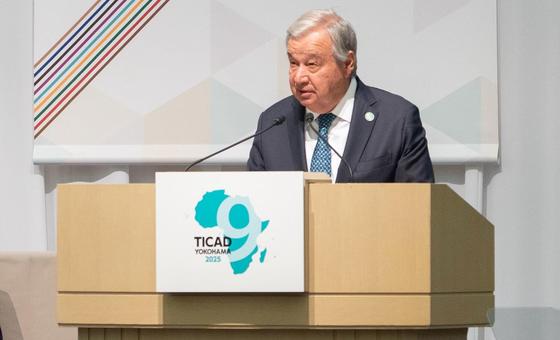
Recalling his own experience living under dictatorship in Portugal, Mr. Guterres told participants at the Global Assembly of the international rights charity Amnesty International on Friday that the fight for human rights is “more important than ever”.
He called on States to uphold international law and defend human rights “consistently and universally, even or especially when inconvenient”, urging collective action to restore global trust, dignity and justice.
‘A moral crisis’
Mr. Guterres painted a stark picture of a world in turmoil, citing multiple ongoing crises, foremost among them, the war in Gaza.
While reiterating his condemnation of the 7 October 2023 terror attacks by Hamas and other Palestinian armed groups in Israel, the Secretary-General said that “nothing can justify the explosion of death and destruction since”.
“The scale and scope is beyond anything we have seen in recent times,” he said.
“I cannot explain the level of indifference and inaction we see by too many in the international community. The lack of compassion. The lack of truth. The lack of humanity.”
Key takeaways from the address
Gaza – “A moral crisis that challenges the global conscience”
Ukraine – Call for a “just and lasting peace” based on the UN Charter, international law and resolutions
Authoritarianism – A “global contagion”, with political repression, attacks on minorities and shrinking civic space
Climate justice – Bold action needed to cut emissions; clean energy transition must uphold human rights
Digital threats – Concern over algorithmic spread of hate and falsehoods; manipulation via social media
Call to action – “Human rights are the solution, foundation of peace and engine of progress”
UN staff ‘neither dead nor alive’
He described UN staff in Gaza as working in “unimaginable conditions”, many of them so depleted they “say they feel neither dead nor alive”.
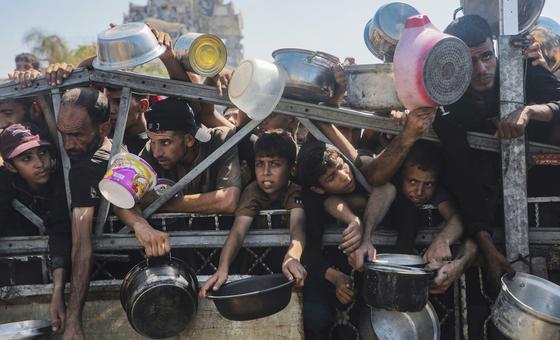
Since late May, he noted, more than 1,000 Palestinians have been killed trying to access food – not in combat, but “in desperation – while the entire population starves”.
“This is not just a humanitarian crisis. It is a moral crisis that challenges the global conscience.”
Ready to scale up aid
Mr. Guterres said the UN stands ready to dramatically scale up humanitarian operations “as we successfully did during the previous pause in fighting”, but called for an “immediate and permanent ceasefire”, the unconditional release of all hostages and full humanitarian access.
“At the same time, we need urgent, concrete and irreversible steps towards a two-State solution,” he stressed.
He also spoke about other conflicts, including Sudan as well as Russia’s invasion of Ukraine, where he called for a “just and lasting peace” based on the UN Charter, international law and relevant UN resolutions.
Secretary-General Guterres (left) addresses Amnesty International’s Global Assembly via video link.
Rising authoritarianism
The Secretary-General warned that authoritarian tactics are on the rise globally.
“We are witnessing a surge in repressive tactics aiming at corroding respect for human rights,” he said. “And these are contaminating some democracies.”
Political opposition movements are being crushed, accountability mechanisms dismantled, journalists and activists silenced, civic space strangled and minorities scapegoated.
Rights of women and girls in particular are being rolled back, most starkly, he said, in Afghanistan.
“This is not a series of isolated events. It is a global contagion.”
Weaponization of technology
He decried the growing weaponization of digital platforms, saying algorithms are “boosting the worst of humanity, rewarding falsehoods, fuelling racism and misogyny and deepening division”.
He called on governments to uphold the Global Digital Compact adopted by countries at the UN General Assembly last September and to take stronger action to combat online hate and disinformation.
Activists outside the International Court of Justice (ICJ) in The Hague as the Court delivers its advisory opinion on the obligations of States in respect of climate change.
Climate justice is human rights
Turning to climate, Mr. Guterres described the environmental emergency as a “human rights catastrophe”, with the poorest and most vulnerable communities suffering most.
But, he cautioned against a transition to clean energy that sacrifices human rights.
“We cannot accept a clean energy future built on dirty practices…We cannot accept enormous violations of human rights, many of them against children, in the name of climate progress.”
The Secretary-General concluded by praising Amnesty International’s decades of activism, calling its work “indispensable” to the global human rights movement.
“When you stand for human rights, you stand with what is right,” he told delegates.
“Your courage continues to change lives. Your persistence is shifting the course of history. Let’s keep going. Let’s meet this moment with the urgency it demands. And let’s never, ever give up.”
Founded in 1961, Amnesty International is a global human rights movement that campaigns to end abuses and promote justice. The organization has long worked in collaboration with the United Nations, participating actively in the development of international human rights law and mechanisms.
Today’s speech by Mr. Guterres is first-ever address by a UN Secretary-General to Amnesty International’s Global Assembly, the charity’s highest decision-making body. The UN chief spoke via a video link to the event in Prague.
Sonia Silva has been working in the embattled enclave since the beginning of November 2023, just one-month after the terror attack by Hamas and other armed groups in southern Israel that sparked the brutal conflict.
She spoke to UN News about the misery people have experienced in recent days.
“In my one year and eight months in Gaza, this past week has been by far the worst. The only comparable experience was the Rafah incursion in May 2024, when the border was closed, but this week has been significantly more intense.
I live in UNICEF accommodation in Deir Al-Balah, a city in central Gaza.
Sonia Silva, UNICEF Head of Office in Gaza.
When you drive from south to north in the Gaza Strip, it looks as if there has just been a major natural disaster. The level of destruction has reached an unprecedented scale, devastating civilian infrastructure and entire neighborhoods.
Buildings are no longer standing. People are living in destroyed houses, tents and on the streets.
Seeing humanity in this condition is scary and fills me with a sense of doom and fear.
Terrifying offensive
Deir Al-Balah is or had been different.
It’s one of the few places in the Gaza Strip where urban infrastructure remains. It has been somewhat spared, compared to other areas.
That is until last Sunday evening, when a terrifying offensive was unleashed on Deir Al-Balah.
I have yet to see the level of destruction over the last few days, but reports indicate it is significant.
A building was destroyed by a rocket blast only 100 metres from where I normally sleep.
But, for 72 hours my colleagues and I barely slept. The explosions and gunfire were incessant.
It is stronger than you.
Your body knows something is wrong and is in an upper state of alertness.
I was not scared, but I was deeply concerned about my national colleagues who were very close to the crossfire and who were trying to comfort young children.
Families evacuate from Deir Al-Balah in the Gaza Strip
I am fortunate because I am an international civil servant and am entitled to a break. Every 4 to 6 weeks, I get to leave, I get to rest, I get to recharge my batteries.
But, not my Palestinian colleagues and their families, who have lived through this for more than 21 months, who have lost everything, their loved ones and belongings.
They don’t get to switch off.
UNICEF staff vaccinate children against polio in September 2024.
The ongoing shortages of food are making things worse. It affects the entire population, including our frontline partners, our national colleagues and all the supporting staff.
What has struck me most about Gaza is that despite the hardship, colleagues keep going, colleagues keep teasing each other, colleagues who have lost everything show the utmost generosity and solidarity.
I would like to pay tribute to all of my colleagues and our partners who are hanging on to fragments of hope for a better life but still keep essential services running.
They are the best of humankind in a place abandoned by humanity.”
“Nowhere is safe in Ukraine,” said Miroslav Jenča, Assistant Secretary-General for Europe at the UN Department of Political Affairs (UNDPPA).
Citing figures from the UN human rights office, OHCHR, he said civilian casualties reached a three-year high in June, with 6,754 civilians killed or injured in the first half of 2025 alone.
Russian forces launched over 5,000 long-range munitions against Ukraine so far in July, including a record-breaking 728 drones in a single day. Major cities such as Kyiv and Odesa have been hit by swarms of missiles and drones.
Assistant Secretary-General for Humanitarian Affairs Joyce Msuya echoed those words, saying “there is no safe place left in Ukraine” as the use of explosive weapons in populated areas has left cities reeling.
A rehabilitation centre for persons with disabilities in Kharkiv, maternity wards, schools, and energy infrastructure have all come under fire in recent weeks.
Joyce Msuya, UN Deputy Emergency Relief Coordinator, briefs the Security Council meeting on maintenance of peace and security of Ukraine.
Spiralling humanitarian situation
The humanitarian impact is worsening sharply, she continued.
“Nearly 13 million people need assistance, but limited funding means we can reach only a fraction of them,” Ms. Msuya warned. As of now, only 34 per cent of the $2.6 billion required for this year’s humanitarian response has been received.
Ukraine’s displacement crisis also continues to grow. Over 3.7 million people remain displaced within the country, while nearly six million are refugees abroad. More than 26,000 people have newly registered at transit centres since April alone.
Strikes in Russia
The senior UN officials also expressed concern over reported civilian casualties from Ukrainian drone strikes inside Russia, including in Belgorod, Kursk and Moscow.
While the UN could not independently verify these incidents, Mr. Jenča reiterated: “International law clearly prohibits attacks against civilians and civilian infrastructure. We strongly condemn all such attacks – wherever they occur.”
Concerns over nuclear safety
Attacks near Ukraine’s nuclear facilities have further alarmed the UN.
Earlier this month, drone strikes hit Enerhodar, where Zaporizhzhia Nuclear Power Plant staff live, and drones have been detected near other operating plants.
“Any nuclear incident must be avoided at all costs,” Mr. Jenča said.
ASG Miroslav Jenča (on screen) briefs the Security Council meeting on the maintenance of peace and security of Ukraine.
Political momentum needed
While some diplomatic movement continues – including recent prisoner exchanges and talks in Istanbul – UN officials called for intensified political will toward a ceasefire.
“The heartbreaking and rising human toll of the past nearly three-and-a-half years of war underscores the urgency of a complete, immediate and unconditional ceasefire,” Mr. Jenča said, “as the first step towards a just and lasting peace.”
“The thousands of people seeking to return home are driven by hope, resilience and an enduring connection to their country,” said Othman Belbeisi, regional director of the International Organization of Migration (IOM).
While this development does offer hope, many of these people are returning to states and cities whose resources have been devastated by over two years of war.
Since conflict broke out in April 2023, over 12 million Sudanese have been forcibly displaced, representing the largest displacement crisis in the world.
One-third of these displaced people have fled into neighbouring countries such as Chad and South Sudan, which are increasingly struggling to support the influx of refugees.
“Not only do [the returnees] mark a hopeful but fragile shift, they also indicate already stretched host countries under increasing strain,” said Mamadou Dian Balde, the regional coordinator for the UN’s refugee agency, UNHCR.
‘A race against time’
IOM emphasized that for these returns to accord with international law, they must be voluntary and dignified. Most of the 1.3 million Sudanese returnees are heading to Khartoum, Al Jazirah and Sennar states where the impact of the conflict is still very acute.
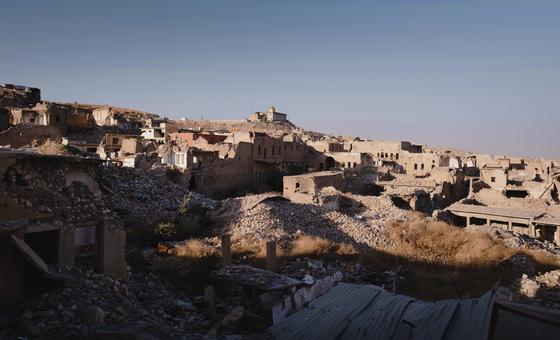
In Khartoum specifically, many buildings — including the UNHCR office — are in ruins and public infrastructure, such as roads and power plants, has been compromised or destroyed.
“Without urgent action, people will be coming back to cities that are in ruins. We are in a race against time to clear the rubble and provide water, power and healthcare,” said Abdallah Al Dardair, director of the Arab States for the UN Development Programme (UNDP).
Additionally, Khartoum is already housing many internally displaced people and people who had formerly sought asylum in Sudan before the war broke out.
Returnees also face danger from unexploded ordnance and high rates of gender-based and sexual violence against women and girls. To address the psychosocial and protection needs of these women and girls, safe spaces have been set up in Khartoum and Al Jazirah states.
Key to recovery
In highlighting the hope that these returns signal, Mr. Belbeisi emphasized that returnees must be seen as active participants in the recovery of conflict-ridden Sudan.
“Those heading home are not passive survivors, they are vital to Sudan’s recovery. Yes, the humanitarian situation is dire, but with the right support, returnees can revive local economies, restore community life, and foster hope where it’s needed most,” he said.
However, humanitarian work in and around Sudan is drastically underfunded — only 23 per cent of the estimated $4.2 billion dollars needed for the next year has been received, meaning that life-saving services may have to be scaled back.
“More than evidence of people’s desire to return to their homeland, these returns are a desperate call for an end to the war so that people can come back and rebuild their lives,” Mr. Balde said.
The UN Security Council is meeting on Friday morning to discuss the situation in Ukraine amid mounting concerns over the intensifying hostilities and growing humanitarian needs. Senior UN political affairs and humanitarian officials are expected to brief the Council. Follow our live coverage from UN News, in coordination with UN Meetings Coverage, for updates from the chamber. UN News App users can follow here.
It recognizes their immense contributions to society but also acknowledges the challenges they face due to the double burden of racism and sexism.
Although woman and girls of African descent embody strength, resilience, and untapped potential, they remain among the most marginalized groups globally due to the intersection of racial, gender, and socio-economic discrimination.
For example, they suffer alarming maternal mortality rates, according to the UN’s reproductive health agency, UNFPA. Oftentimes, cases are not related to income or education, but rather to racism and structural inequality stemming from a legacy of slavery and colonialism.
“The good news though, is these things are not irreversible,” Patricia DaSilva, a senior programme adviser with the agency told UN News.
“We can fix them. We have the solutions for many of the problems that we are facing in terms of maternal health for women and girls of African descent.”
Data and solutions
UNFPA advocates for stronger health systems and investment in midwifery programmes, culturally sensitive training for healthcare providers, and improvements in data collection.
The agency also invests in partnerships, such as an initiative in the Pacific region of Colombia, home to large communities of people of African descent.
“We have worked with the traditional midwives for them to integrate ancestral knowledge with modern health practices. And this includes supporting accurate birth registration,” she said.
“It sounds like a really simple thing, but when you are in a remote community without access to technology, without access to administrative offices, it becomes this really, really important issue.”
Agents of change
Ms. DaSilva upheld the theme for the International Day, which focuses on women and girls of African descent as leaders, not just beneficiaries.
“I think it is important that the international community, the global community, understands that women and girls of African descent are not recipients of aid. They are leaders. They are innovators. They are agents of change,” she said.
“We have an opportunity and even an obligation and a responsibility to support the efforts to resource their solutions, to elevate their voices and continue to really double our efforts to dismantle the structural barriers that continue to impede their progress.”
The first celebration of the International Day coincides with the start of the Second International Decade for People of African Descent, which runs through 2034.
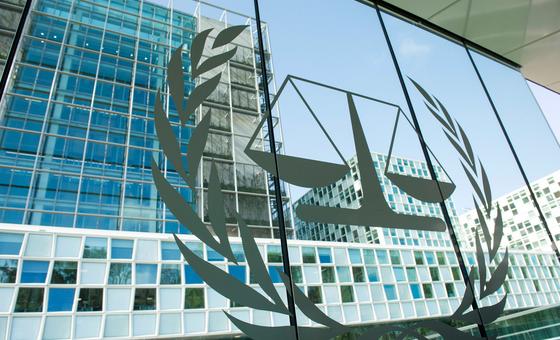
Alfred Yekatom and Patrice-Edouard Ngaïssona received prison sentences of 15 and 12 years for their roles in brutal attacks against civilians – primarily from the country’s mainly Muslim Seleka population – during the 2013-14 civil war.
They were found guilty “beyond any reasonable doubt” of leading and facilitating attacks on civilians in the capital, Bangui, and the country’s west.
Thousands of people were killed in the violence that swept CAR following a 2012 coup led by the mainly Muslim rebel coalition, Séléka. The fighting took on a deeply sectarian tenor as Anti-Balaka militia started a brutal campaign of reprisal attacks.
Long list of crimes
The ICC’s Trial Chamber V found Mr. Yekatom responsible for a number of crimes he committed in the context of the attack on Bangui (the capital of CAR), the events at Yamwara (a school where he had established a base), and during the advance of his group on the PK9-Mbaïki axis.
These included murder, torture, forcible transfer and deportation, directing an attack against a building dedicated to religion and persecution.
Mr. Ngaïssona was convicted for aiding and abetting many of the same crimes, including persecution, forcible displacement and cruel treatment.
Both men were also found to have targeted Muslims based on the Anti-Balaka’s perception of collective guilt for Seleka abuses.
The judges sentenced Mr. Yekatom to 15 years and Mr. Ngaïssona to 12 years, with time already served to be deducted.
Charges of war crimes of pillaging and directing an attack against a religious building during the attack on Bossangoa were not upheld against Mr. Ngaïssona, and those of conscription, enlistment and use of children were not upheld against Mr. Yekatom.
‘Instrumentalization of religion’
The Chamber noted that while religion was instrumentalised by armed groups during the conflict, the violence was not initially religious in nature.
Many witnesses testified that Muslims and Christians had lived peacefully together prior to the conflict.
The convictions mark the conclusion of a trial that began in February 2021. Over the course of proceedings, the Prosecution called 114 witnesses, while the Defense teams called 56. A total of 1,965 victims participated in the trial through legal representatives.
The dispute dates to 1953 when France first mapped the border, but tensions resurfaced in May after the death of a Cambodian soldier in a border skirmish.
Secretary-General António Guterres is “following with concern” reports of the clashes, his Deputy Spokesperson Farhan Haq told journalists in New York.
“The Secretary-General urges both sides to exercise maximum restraint and address any issues through dialogue and in a spirit of good neighbourliness, with a view to finding a lasting solution to the dispute,” he said.
Inter-agency humanitarian assistance in Syria
The Office for the Coordination of Humanitarian Affairs (OCHA) led an inter-agency visit to Rural Damascus governorate in Syria on Thursday to assess needs and provide assistance to more than 500 families displaced by recent violence in nearby Sweida governorate.
The UN agencies visited the Sayyeda Zeinab community and plan to visit the neighbouring Dar’a Governorate in the coming days, where humanitarians are supporting tens of thousands of people displaced by violence.
In Rural Damascus and Dar’a, OCHA and its partners are expanding protection services for displaced people. This includes psychosocial first aid and case management support for children.
Also on Thursday, the World Food Programme (WFP) distributed urgent food assistance to displaced families. The agency additionally continues to provide assistance across the country, including to Syrians returning home after a decade of conflict.
Limited access to Sweida
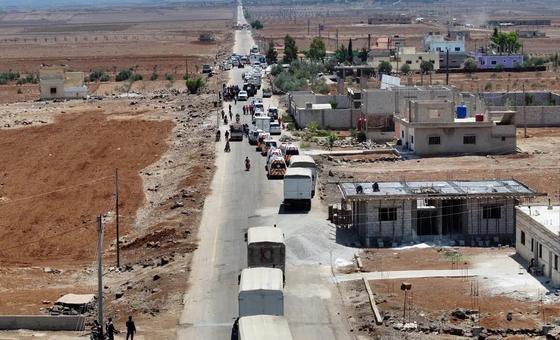
On Wednesday, a second convoy from the Syrian Arab Red Crescent (SARC) arrived in Sweida, with UN agencies providing support.
The convoy included food, wheat flour, fuel, medicines and health supplies. Medical supplies were delivered to the Sweida national hospital, and wheat flour was dispatched to bakeries.
Across Sweida, Rural Damascus and Dar’a governorates, the UN has distributed over 1,600 dignity kits to displaced women and girls. UN partners are also providing recreational activities, awareness sessions on gender-based violence and support for women and children.
But despite efforts in neighbouring governorates and increasing support in Sweida, full and direct access to the conflict-ridden governorate itself is limited due to security constraints.
Nonetheless, the UN is continuing dialogue with Syrian authorities to facilitate direct access to Sweida.
Nationwide attacks in Ukraine
OCHA further reported that at least five civilians were killed, and 46 others injured, in attacks across several regions of Ukraine over the past two days.
Kharkiv in the northeast was one of the more affected regions, where a glide bomb strike injured at least 16 people on Thursday, and fighting killed three and injured five others on Wednesday.
Additionally, overnight attacks in central Ukraine injured seven people in Cherkasy and four in Odesa City, damaging homes, health centres, schools, shopping areas and a market.
Civilians in the southern Kherson region, the eastern Donetsk region and the southeast Zaporizhzhia region were also affected.
Evacuations and humanitarian response
Following the overnight attacks in Cherkasy and Odesa, aid workers assisted first responders by providing first aid, meals, shelter materials, hygiene kits, emotional support and legal assistance to affected families.
Amid the hostilities, nearly 600 people were evacuated from the Donetsk region, and, in the past day, another 24 were evacuated from the northeastern region of Sumy.
“I started feeling very idealistic about the UN, and I’ve never lost that feeling,” Mr. Stewart told UN News in an exclusive interview.
In early August, he steps down as the Special Representative of the Secretary-General and head of the UN Peacekeeping Force in Cyprus (UNFICYP).
His departure comes at a moment of cautious optimism on the island. Just last week, the Secretary-General reported that talks between the Greek Cypriot and Turkish Cypriot leaders were “constructive”, with “common understanding” on new initiatives.
Mr. Stewart called the talks “an important step” in maintaining momentum.
“We are at a bit of a challenging moment for Cyprus because of upcoming elections in the north and other dynamics,” he explained. “The intent was to keep the ball rolling and keep the momentum going, and I think that succeeded.”
SRSG Colin Stewart speaks to UN News.
Peace by preventing sparks
Looking back at his tenure in Cyprus, Mr. Stewart likened UNFICYP’s daily work to stamping out sparks before they ignite.
“There are all sorts of activities happening in the buffer zone every day, each with the potential to escalate,” he said. “Our job is to prevent those sparks from bursting into flames. When I report to the Security Council that things are calm, it means we have been successful.”
Our job is to prevent sparks from bursting into flames. When I report to the Security Council that things are calm, it means we have been successful.
The numbers bear out his point: in more than half a century of UN peacekeeping on the island, not a single shot has been fired between the two militaries.
“Some people ask why the peacekeeping mission is still needed, given that it’s been peaceful for 50 years…the answer is simple – it’s peaceful because the mission has been doing its job. Without it, the deep mistrust between the sides could easily spiral into confrontation.”
Lessons on trust and empathy
Mr. Stewart also served as the Special Adviser on Cyprus, leading the Secretary-General’s good offices to support a comprehensive settlement. The greatest obstacle, he said, lies not in public sentiment but in political will.
“The people get along fine,” he noted. “Millions cross from one side to the other every year without incident. But among political leaders, distrust runs so deep that even the idea of compromise is viewed negatively.”
This distrust, he said, is rooted in decades of hardline narratives that portray the other side as an enemy rather than a partner. Breaking those narratives is essential.
“Peacebuilding requires not just negotiation but a willingness to dismantle these rigid narratives and build empathy,” he said. “And we do this all the time at an individual level. Bring two people who have each lost something in front of each other, and they can quite readily sympathise with each other and share a common grief.”
This belief in the power of empathy, he added, resonates far beyond Cyprus: in many conflicts, peace emerges when people begin to recognise the humanity – and suffering – on the other side.
Peacekeeping not one-size-fits-all
Mr. Stewart’s career has given him a panoramic view of peacekeeping’s evolution.
In Timor-Leste, he saw how UN support can help a fledgling state build resilience. In Addis Ababa, as part of the UN Office to the African Union, he witnessed the power of partnerships. And in Western Sahara, he experienced the limits of peacekeeping when a ceasefire failed to hold.
He highlighted that peacekeeping is not a one-size-fits-all mode – it is modular – “a bit of this and a bit that”, tailored to the circumstances and working with a wide range of partners.
“I guess I have lived through the evolution of peacekeeping and seen many different aspects of it, [but] I am ever more convinced that peacekeeping is an absolutely essential tool for the international community.”
A quiet exit
Now preparing for life after the UN, Mr. Stewart is clear: he has no plans to return in any advisory or consulting role.
“For me, retirement means retirement,” he said with a smile.
“I want to do all the things I’ve been postponing for my whole career – live in a house I own, spend time with my teenage son who is going to high school…that is the life that I have in mind.”
Idealism remains intact
Concluding the interview, I asked if he had any final words. As he looked around for ideas, I suggested, “maybe your first day on the job.”
He recalled his beginning in the United Nations, a journey that started with the referendum for self-determination in Timor-Leste in the 1990s, against the backdrop of intimidation, violence and a fragile security environment.
I started off feeling very idealistic about the UN, and I’ve never lost that feeling…the UN is here to do good things – the right things
“It was our watch, our responsibility to put on a free and fair vote,” he said, “and that was going to be impossible under these circumstances.” Yet, despite the odds, the Timorese vote went ahead, and the result was clear — a success against all expectations.
“That was a very heady, exciting experience to start in the UN…it started me off feeling very idealistic about the UN, and I’ve never lost that feeling that, you know, the UN is here to do good things, to do the right things.”
As he steps away from the UN, Mr. Stewart says that idealism remains intact.
“It might take time, but we will succeed…even though people get discouraged because it’s very, very hard for all kinds of reasons that are out of our control, it’s a wonderful principle to be serving. So, I leave wishing only the best for my colleagues who will continue the fight.”
Philippe Lazzarini, Commissioner-General for the UN Relief and Works Agency for Palestinian Refugees (UNRWA), said that is what one of its workers told him on Thursday morning.
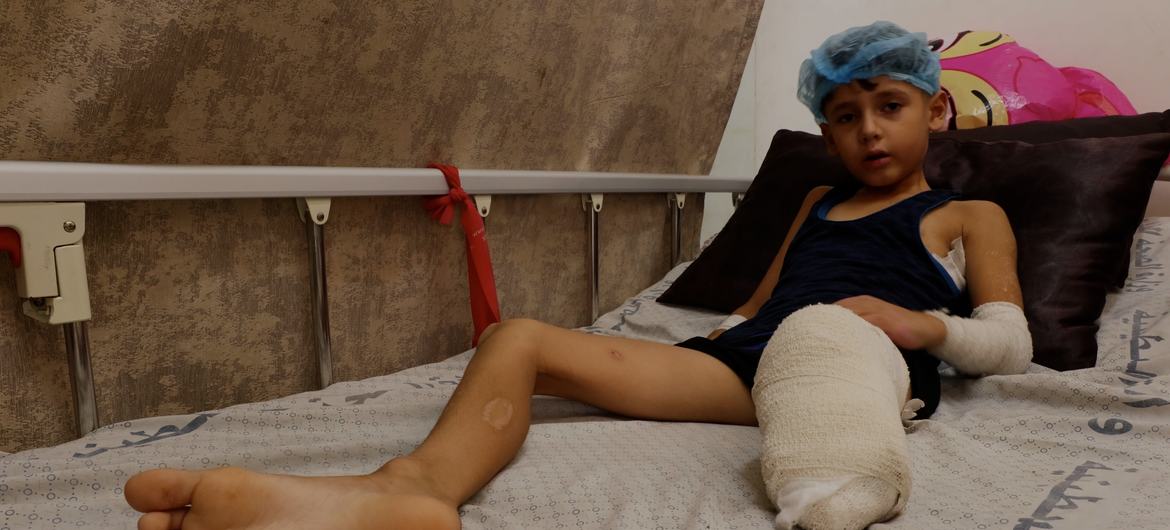
This sobering comment comes amidst increasingly severe malnutrition for children and adults throughout the Gaza Strip.
“When child malnutrition surges, coping mechanisms fail, access to food and care disappears, famine silently begins to unfold,” Mr. Lazzarini said in a tweet.
Bombs are not the only thing that kills
Gaza has faced relentless bombardment for almost three years, but Tedros Adhanom Ghebreyesus, Director-General of the World Health Organization (WHO), said at a briefing on Wednesday that it is not just the bombs which are killing Palestinians.
Starvation is “another killer”.
Reportedly at least 100 people have died from hunger, and WHO has documented at least 21 cases of children under the age of five dying from malnutrition.
Additionally, Mr. Lazzarini said one in five children in Gaza City is malnourished, a number increasing every day that unhindered humanitarian aid is denied. He said these children urgently need treatment, but supplies remain low.
Between early March and mid-May – 80 consecutive days – no aid was allowed into the Gaza Strip, pushing the population to the brink of famine. While minimal aid has since entered, Tedros emphasised that it is not enough.
“Food deliveries have resumed intermittently, but remain far below what is needed for the survival of the population,” he said.
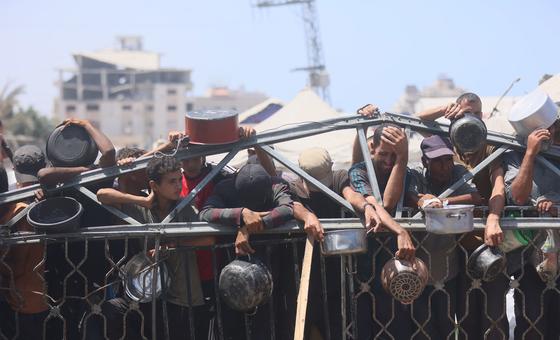
A boy in Gaza waits for food.
Safe havens are no longer safe
Tedros reported that between 27 May and 21 July, over 1,000 people in Gaza have been killed while trying to access food.
Many of these have died in or around sites operated by the Gaza Humanitarian Foundation (GHF), an American-run and Israeli-backed aid distribution organization which the UN has repeatedly said violates well-established principles of international humanitarian law.
“Parents tell us their children cry themselves to sleep from hunger. Food distribution sites have become places of violence,” Tedros said.
In addition to risking their lives when seeking out desperately needed humanitarian assistance, hospitals – which have been systematically targeted, according to UNFPA – are no longer safe havens.
“Hospitals, which are supposed to be safe havens, have regularly been attacked, and many are no longer functioning,” Tedros said.
He recalled that on Monday, a WHO staff residence, a humanitarian site, was attacked, with male personnel being stripped and interrogated, women and children forced to flee on foot in the midst of violence and one WHO staff member detained.
“Despite this, WHO and other UN agencies are staying in Gaza. Our commitment is firm. UN agencies must be protected while operating in conflict zones,” Tedros said.
An UNRWA school turned shelter in Al Bureij, Gaza, lies in ruins following a missile attack in May 2025.
Frontline workers face hunger
In addition to the Palestinians in Gaza who are “emaciated, weak and at high risk of dying”, aid workers are also feeling the effects of the sustained lack of supplies.
Most UNRWA workers are surviving on a meagre bowl of lentils each day, Mr. Lazzarini said, leading many of them to faint from hunger at work.
“When caretakers cannot find enough to eat, the entire humanitarian system is collapsing,” he said.
Some parents are too hungry to care for their children, and even those who do reach clinics for treatment are often too tired to follow the advice provided.
Mr. Lazzarini noted that UNRWA alone has 6,000 trucks of desperately needed food and medical supplies in Jordan and Egypt. He called for this and other aid to be immediately let through.
“Families are no longer coping. They are breaking down, unable to survive. Their existence is threatened,” he said. “Allow humanitarian partners to bring unrestricted and uninterrupted humanitarian assistance to Gaza.”
At the end of the conference, Member States adopted a Ministerial Declaration by a vote of 154-2-2, with the United States and Israel voting against the document and Paraguay and Iran abstaining.
“We strongly reaffirm our commitment to effectively implement the 2030 Agenda [which]… remains our overarching roadmap for achieving sustainable development and overcoming the multiple crises we face,” the declaration said.
15 years of HLPF
The HLPF has happened on an annual basis since 2010 and is convened by the Economic and Social Council (ECOSOC) to discuss the progress, or lack thereof, on the 17 Sustainable Development Goals (SDGs), which were adopted in 2015 as part of the 2030 Agenda and aspire to create a more equitable and inclusive world.
Negotiations regarding the ministerial document were led by representatives from Czechia and St. Vincent and the Grenadines, who highlighted the significance of the proceedings.
“This year’s deliberations have held particular significance. Ten years after the adoption of the 2030 Agenda, a range of interlinked and persistent challenges continues to jeopardise the full realisation of the SDGs,” said Jakub Kulhánek, permanent representative of Czechia and one of the two lead facilitators of the declaration.
The clock is ticking
In the ministerial declaration, Member States said that time is running out to achieve the SDGs, which remain severely off track.
According to the Secretary-General’s report on the Goals, which was released on the first day of the HLPF, only 18 per cent of the SDGs are on track to be achieved by 2030, with over half making progress that is too slow.
While the ministerial declaration addressed each of the five SDGs in the spotlight at the forum, Member States particularly emphasised the role of poverty in impeding sustainable development and the worsening climate crisis that is threatening all aspects of the development agenda.
The declaration called both of these issues some of the “greatest global challenges” that the world faces.
In keeping with SDG 16, which underlines the role that institutions like governments must play in promoting peace, Member States also affirmed that strong governance and partnership is essential to realising peace as a prerequisite for development.
“We recognise that sustainable development cannot be realised without peace and security, and peace and security will be at risk without sustainable development,” it stated.
Plan of Action
In the midst of challenges to multilateralism, Member States said that the declaration was an affirmation of the UN’s commitment to multilateralism, which is celebrating its 80th anniversary this year.
“At a time when serious doubts about the future of multilateralism persist, your steadfast commitment has been both reassuring and inspiring,” said Mr. Kulhánek.
Member States, in the declaration, affirmed a commitment to urgently working towards the SDGs in order to achieve a better world.
“We will act with urgency to realise its vision as a plan of action for people, planet, prosperity, peace and partnership, leaving no one behind.”
Briefing the Security Council on Thursday, Khaled Khiari, Assistant Secretary-General for the Middle East, said the OIC remains an “indispensable” partner in efforts to promote peace, uphold international law and deliver durable political solutions in a range of crisis contexts.
Headquartered in Jeddah, Saudi Arabia, the OIC has 57 member states and five observers, representing significant political, economic cultural and religious constituency.
“Its voice carries considerable weight in some of the world’s conflict-affected situations,” Mr. Khiari said.
“The UN values this partnership, not only as a matter of institutional cooperation, but as an essential component of our efforts to promote durable peace, inclusive governance and respect for international and human rights law.”
He emphasized that the cooperation aligns with Chapter VIII of the UN Charter, which encourages partnerships with regional organizations in maintaining peace and security, and with the Pact for the Future – adopted by Member States last September to revitalize multilateralism and tackle global challenges through collective action.
Helping resolve crises
Mr. Khiari outlined joint UN-OIC work in Gaza, including the recent endorsement by the bloc and the League of Arab States of a recovery and reconstruction plan, as well as collaboration on the question of Jerusalem through an annual conference held in Dakar, Senegal.
In Sudan, where over two years of war have brought devastating humanitarian consequences, he welcomed the OIC’s backing for international mediation, including support for the UN Secretary-General’s Personal Envoy, Ramtane Lamamra.
Turning to Afghanistan, Mr. Khiari praised the OIC’s role in the UN-led “Doha Process,” noting its continued engagement with the Taliban de facto authorities and advocacy for the rights of Afghan women and girls – an area where the OIC’s moral and religious standing carries particular influence.
On Myanmar, the OIC remains an essential voice in global efforts to ensure a safe, dignified and voluntary return of the Rohingya to Rakhine state. He noted sustained coordination between the UN Secretary-General’s Special Envoy and the OIC in pushing for accountability and citizenship rights.
A wideview of the Security Council as ASG Khaled Khiari briefs members about cooperation between the UN and the Organisation of Islamic Cooperation.
Cooperation on global issues
Assistant Secretary-General Khiari also highlighted the growing collaboration between the two organizations on elections, including training on observation and women’s political participation. A new staff exchange programme is also helping to strengthen institutional ties.
He acknowledged the OIC’s leadership in countering Islamophobia and all forms of religious intolerance, an area where the UN has stepped up efforts, including through the appointment of a Special Envoy.
Counter-terrorism cooperation has also advanced, following a March 2024 memorandum of understanding. Joint initiatives include technical support, parliamentary engagement, and rights-based prevention strategies.
“As we move forward with the implementation of the Pact for the Future,” Mr. Khiari concluded, “the UN-OIC partnership will remain critical to defusing tensions, advancing sustainable peace, and reinforcing multilateral norms and principles.”
These abuses include threats, cases of torture, mistreatment and arbitrary arrest and detention, according to the UN Assistance Mission in Afghanistan (UNAMA) and the Office of the UN High Commissioner for Human Rights (OHCHR).
The report said these violations were committed against Afghans “based on their profile” and targeted women, media workers and civil society members as well as individuals affiliated with the former government that fell in 2021 and its security forces, despite the Taliban’s claims that such individuals benefit from an amnesty.
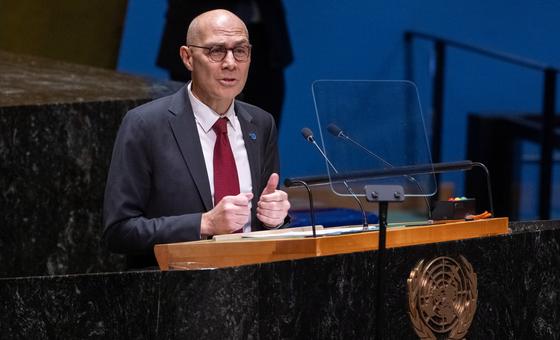
“No one should be returned to a country where they are at risk of being persecuted because of their identity or personal history,” said Volker Türk, the UN High Commissioner for Human Rights.
“In Afghanistan, this situation is even more pronounced for women and girls, who are subjected to a series of measures that amount to persecution solely on the basis of their gender.”
Since 2023 and the start of large-scale deportation campaigns launched by Iran and Pakistan, millions of Afghans have returned to their country. In 2025 alone, more than 1.8 million people have returned to Afghanistan, 1.5 million of them from Iran.
Women under house arrest
The UN refugee agency, UNHCR, recently estimated that the total could reach three million by the end of the year, returning to a country facing a severe humanitarian crisis.
The situation of women forcibly returned is particularly dire. A former television journalist, who left the country after the Taliban’s takeover in August 2021, described how, after being involuntarily returned to Afghanistan, she saw her prospects vanish.
“I am very worried for my personal safety and feel immense frustration with the current situation imposed on women in [my province]. I can unequivocally say that I am effectively under house arrest. There are no job opportunities, no freedom of movement and no access to education – whether to learn or to teach – for women and girls,” she testified.
Many people are also forced to live in hiding since returning to Afghanistan due to real or feared threats from the de facto authorities. This is the case for individuals affiliated with the former government and its security forces, who have had to go into hiding for fear of reprisals, despite the public amnesty announced by the de facto authorities.
Living in hiding
A former official described how, after returning in 2023, he was detained for two nights in a house where he was severely tortured, beaten with sticks, cables and wood, subjected to water torture and faced a mock execution.
Other refugees returned from Iran must frequently change locations to avoid being identified, such as one former judge.
“I try to stay hidden because I know that the prisoners who were detained because of my decisions are now senior government officials and are still looking for me. If they find me, I’m sure they’ll kill me. They already threatened me when I was a judge,” they said.
Faced with these serious abuses, the UN is urging States not to return anyone to Afghanistan who faces a real risk of serious human rights violations.
“Member States should expand resettlement opportunities for at-risk Afghans and ensure their protection, giving priority to those most likely to suffer human rights violations if returned to Afghanistan, including women and girls, individuals affiliated with the former government and security forces, media professionals, civil society activists and human rights defenders,” the report said.
Marking its 30th anniversary, ISA is the world’s authority on the deep-sea beyond national jurisdiction. Washington may have passed an order on deep-sea licensing in international waters earlier this year, but the authority’s chief Leticia Carvalho said the United States, which is not an ISA member, “is going at it alone”.
“The rest of the world is united and cohesive and all behind of the rule of the law and the International Seabed Authority,” Ms. Carvalho told UN News. “ISA is a super power. We have all the knowledge, we have the ability given by the law, we have the mandate.”
Indeed, under international law, the deep seabed beyond national jurisdiction belongs to no single nation, Ms. Carvalho said, inviting the United States to join ISA.
To address these concerns, ISA has been drafting a mining code as a way to ensure that the deep-sea remains protected and does not turn into the “Wild West” of exploitation, she said.
Read our explainer on ISA and why it matters now here.
Costly search for rare minerals
Rare minerals needed to satiate demands for producing tech items from batteries to solar panels have driven interest in the deep-sea and what it offers. From cobalt to zinc, a plethora of rare earth minerals have been observed by explorations of the ocean floor.
ISA has issued 31 contracts for mineral exploration to 21 firms from 20 countries as of 2024, according to the UN’s World Economic Situation and Report 2025. While commercial mining in international waters has not yet commenced, pending the finalisation of an international code for deep-sea mining by the ISA, right now, countries can pursue deep-sea mining within their own territorial waters or “exclusive economic zones”.
Even after the international code is in place, those engaged in deep-sea mining will continue to face major challenges due to high capital requirements and operational costs relative to conventional mining and the enormous technical uncertainties associated with the unique problems surrounding mining on the ocean floor, according to the UN report.
“We must bring together our global efforts in climate action, biodiversity preservation and marine protection,” he said in a message marking ISA’s anniversary, commending its commitment to finding balanced and effective solutions. “The deep ocean remains one of our last frontiers. It holds great promise, but also requires great caution.”
For 30 years, the authority has helped protect this shared realm through peaceful, sustainable and inclusive governance, and today, it is navigating complex challenges with care and clarity, he said, emphasising that “as we mark this milestone, let us advance cooperation grounded in science, and keep working together to safeguard the ocean for the benefit of all people, everywhere.”
The deep-sea contains a plethora of life and rare earth minerals.
Mining code and more
In addition to achieving progress on a draft mining code at its ongoing annual session at headquarters in Kingston, Jamaica, ISA launched its Deep-Sea Biobank last month in a bid to preserve and share knowledge.
The initiative aims to collect and preserve samples from the ocean floor that will benefit all nations, especially developing countries, Ms. Carvalho said, adding that the goal is to study the minerals, exploration and exploitation potential, but also to preserve and to study biodiversity and genetics.
“The future that I see is we need to really take care, cherish [and] nurture the deep-sea,” Ms. Carvalho said. “The future of ISA is stronger, enhanced, wider and wiser. We will know much more than we know now.”
Deadly sectarian violence has displaced more than 145,000 people in the southern city, some of whom have fled to neighbouring Dar’a and Rural Damascus governorates.
The convoy carried a range of critical support, including food, wheat flour, fuel, medicines and health supplies.
OCHA coordinated with the SARC to prepare the convoy, which included supplies from UN agencies.
Engagement and support
The Office continues to engage with authorities and partners to facilitate an inter-agency UN mission to Sweida as conditions allow.
The UN is also working with partners to deliver a range of assistance to people displaced to Dar’a and Rural Damascus, including food, water, and health and protection services.
Mobile medical teams have so far provided more than 3,500 consultations, including trauma care, maternal health and psychosocial support while nearly 38,000 people have received food aid.
Additionally, over 1,000 kits containing non-food items were distributed in Dar’a and Rural Damascus, helping more than 5,000 people.
OCHA said UN inter-agency missions to assess needs and provide assistance to both governorates are planned for the coming days.
The first convoy to Sweida arrived on Sunday. The 32 trucks brought food, water, medical supplies and fuel provided by the UN World Food Programme (WFP), the UN Children’s Fund (UNICEF) and other partners.
Nearly 1.3 million people in the Caribbean country have fled their homes, with an additional 15,000 uprooted last week after armed attacks in the communes of Dessalines and Verrettes in the Artibonite department.
Further, the UN Children’s Fund (UNICEF) and its partners have screened more than 217,000 children for acute malnutrition in 2025. Some 21,500 children have been admitted for acute malnutrition treatment, representing a mere 17 per cent of the 129,000 children who are projected to need lifesaving services this year.
This malnutrition stems from severe food insecurity across the country. The Integrated Food Security Phase Classification (IPC) reported that an estimated 5.7 million people – more than half of Haiti’s population – faced high levels of acute food insecurity between March and June this year.
Education emergency
Haiti’s children also face an education emergency. More than 1,600 schools remain closed in Haiti, an increase of over two thirds compared to the start of the year.
“Without access to education, children, of course, are more vulnerable to exploitation and recruitment by gangs,” UN Spokesperson Stéphane Dujarric told journalists at Headquarters in New York
In response, UNICEF has provided learning opportunities to more than 16,000 children, and the agency has given over 100,000 children mental health and psychosocial support.
Insecurity and lack of funds straining access
Despite dire humanitarian needs and commendable efforts by UN agencies, the current support “is just a fraction of what is needed in Haiti”, Mr. Dujarric emphasised.
Insecurity continues to constrain the humanitarian response, causing access challenges, supply shortages and the closure of health facilities.
Subsequently, the many displaced families in urgent need of hygiene supplies, food, emergency shelter, medical assistance and other essential items are often unable to access them.
Humanitarian response is also hampered by a severe lack of funds.
“Haiti remains, as I have said here many times, the least funded of our underfunded country appeals globally,” Mr. Dujarric stressed. More than halfway through the year, the Haitian humanitarian response plan has received less than 9 per cent of the $908 million required.
While WFP has been able to hold hunger at bay across northern Nigeria in the first half of 2025, funding shortfalls are jeopardising such efforts, with life-saving programmes set to grind to a halt by the end of July.
Without immediate funding, millions of vulnerable people will be left without food assistance as WFP’s food and nutrition stocks have been completely exhausted, with the organization’s last supplies leaving warehouses in early July.
With life-saving assistance set to end after the current round of distributions is completed, millions of vulnerable people will face impossible choices: endure increasingly severe hunger, migrate, or even risk possible exploitation by extremist groups in the region.
Children at risk
“Nearly 31 million people in Nigeria are now facing acute hunger, a record number,” said WFP Country Director David Stevenson, with children set to be among the worst affected if vital aid ends.
With more than 150 WFP-supported nutrition clinics in Borno and Yobe states set to close if funding is not renewed, over 300,000 children under the age of two will lose access to potential life-saving treatment.
“This is no longer just a humanitarian crisis,” he said. “It’s a growing threat to regional stability, as families pushed beyond their limits are left with nowhere to turn.”
Extremist groups
In conflict-affected areas in the north, escalating violence from extremist groups is driving mass displacement, with some 2.3 million people across the Lake Chad Basin having been forced to flee their homes.
As mass displacement strains already limited resources and pushes communities to the brink, the lack of emergency food assistance risks increasing recruitment by these groups.
“When emergency assistance ends, many will migrate in search of food and shelter. Others will adopt negative coping mechanisms – including potentially joining insurgent groups – to survive,” said Mr. Stevenson.
“Food assistance can often prevent these outcomes,” he added, as WFP urgently seeks $130 million to sustain food and nutrition operations through the end of the year.
Mathare, one of the country’s largest slums, houses upwards of 500,000 people in five square kilometres, cramming them together and storing the human waste they produce in uncovered rivulets. But when he recounted the visit later to UN News, this was not the image that stuck with him the most.
Without formal sewage systems, rivulets in the Mathare slum in Nairobi hold human waste.
What he remembered most clearly was a group of boys and girls, dressed in navy blue school uniforms — the girls in skirts and the boys in pants, both with miniature ties underneath their vests — surrounded by squawking chickens and human waste.
There was no formal, or UNICEF-funded, school nearby. But the Mathare community had come together to create a school where their children might just have the chance to break an intergenerational cycle of poverty and invisibility.
“That was a message for me that development should be localized. There is something happening at the community [level],” said Mr. Jobin.
Globally, over one billion people live in overcrowded slums or informal settlements with inadequate housing, making this one of the largest development issues worldwide, but also one of the most underrecognized.
One of the goals aspires to create sustainable cities and communities. However, with close to three billion people facing an affordable housing crisis, this goal remains unrealized.
“Housing has become a litmus test of our social contract and a powerful measure of whether development is genuinely reaching people or quietly bypassing them,” said Rola Dashti, Under-Secretary-General for the UN Economic and Social Commission for Western Asia (ESCWA).
Housing as a mirror for inequalities
An apartment building at an informal settlement in Mumbai, India.
With over 300 million unhoused people worldwide, sometimes it is easy to forget about the one billion people who are housed but inadequately. These people, who populate informal settlements and slums, live in unstable dwellings and in communities where few services are provided.
“Housing reflects the inequalities shaping people’s daily lives. It signals who has access to stability, security and opportunity and who does not,” said Ms. Dashti.
Children living in slums or informal settlements are up to three times more likely to die before their fifth birthday. They are also 45 per cent more stunted than their peers as a result of poor nutrition.
Women and girls are more likely to experience gender-based violence. And human trafficking and child exploitation are also more prevalent.
An intergenerational invisibility
People in informal settlements are often not a part of the national census, according to Mr. Jobin, meaning that they are not taken into consideration in policies, social programmes or budgets. Even if they were given social protections, these settlements rarely have addresses at which families could receive cash transfers.
This is why experts often say that the people living in informal settlements and slums are invisible in official data and programmes.
“You’re born from an invisible family, so you become invisible,” Mr. Jobin said. “You don’t exist. You’re not reflected in policies or budgeting.”
This invisibility makes it almost impossible to escape poverty.
“You become a prisoner of a vicious circle that entertains itself and then you reproduce yourself to your kid,” he said, referring to an inescapable cycle of deprivation.
The urban paradox
More and more people are migrating into urban centres, leading to the growth of these informal settlements. And with their growth, comes more urgency to address the issues.
The World Bank estimates that 1.2 million people each week move to cities, often seeking the opportunities and resources that they offer. But millions of people are never able to benefit, instead becoming forgotten endnotes in an urban paradox that portrays urban wealth as a protection against poverty.
By 2050, the number of people living in informal settlements is expected to triple to three billion, one-third of whom will be children. Over 90 per cent of this growth will occur in Asia and Africa.
“These statistics are not just numbers — they represent families, they represent workers and entire communities being left behind,” said Anacláudia Rossbach, Under-Secretary-General of UN Habitat which is working to make cities more sustainable.
The Mathare slum in Nairobi houses 500,000 people within 5 square kilometres.
Housing as a human right
It is not just national and local governments which struggle to contend with informal settlements — organizations like UNICEF are also “blind”, Mr. Jobin said, regarding the scope of problems in informal settlements.
Development partners face twin issues in designing interventions — there is not enough national data and informal governance, or slum lords, can be more critical for coordinating programs than traditional governmental partners.
“We know the issue … But somehow we have not really been able to intervene,” he said.
Ms. Mohammed emphasized that we need to begin to see adequate and affordable housing as more than just a result of development — it is the foundation upon which all other development must rest.
“Housing is not simply about a roof over one’s head. It’s a fundamental human right and the foundation upon which peace and stability itself rests.”
The UN’s principal judicial body ruled that States have an obligation to protect the environment from greenhouse gas (GHG) emissions and act with due diligence and cooperation to fulfill this obligation.
This includes the obligation under the Paris Agreement on climate change to limit global warming to 1.5°C above pre-industrial levels.
The court further ruled that if States breach these obligations, they incur legal responsibility and may be required to cease the wrongful conduct, offer guarantees of non-repetition and make full reparation depending on the circumstances.
‘A victory for our planet’
UN Secretary-General António Guterres issued a video message welcoming the historic decision, which came a day after he delivered a special address to Member States on the unstoppable global shift to renewable energy.
“This is a victory for our planet, for climate justice and for the power of young people to make a difference,” he said.
Reasoning of the Court
The court used Member States’ commitments to both environmental and human rights treaties to justify this decision.
Firstly, Member States are parties to a variety of environmental treaties, including ozone layer treaties, the Biodiversity Convention, the Kyoto Protocol, the Paris Agreement and many more, which oblige them to protect the environment for people worldwide and in future generations.
But, also because “a clean, healthy and sustainable environment is a precondition for the enjoyment of many human rights,” since Member States are parties to numerous human rights treaties, including the UN’s Universal Declaration of Human Rights, they are required to guarantee the enjoyment of such rights by addressing climate change.
Case background
In September 2021, the Pacific Island State of Vanuatu announced that it would seek an advisory opinion from the court on climate change. This initiative was inspired by the youth group Pacific Island Students Fighting Climate Change, which underscored the need to act to address climate change, particularly in small island States.
After the country lobbied other UN Member States to support this initiative in the General Assembly, on 29 March 2023, it adopted a resolution requesting an advisory opinion from the ICJ on two questions: (1) What are the obligations of States under international law to ensure the protection of the environment? and (2) What are the legal consequences for States under these obligations when they cause harm to the environment?
The UN Charter allows the General Assembly or the Security Council to request the ICJ to provide an advisory opinion. Even though advisory opinions are not binding, they carry significant legal and moral authority and help clarify and develop international law by defining States’ legal obligations.
This is the largest case ever seen by the ICJ, evident by the number of written statements (91) and States that participated in oral proceedings (97).
The ‘world court’
The ICJ, informally known as the “world court”, settles legal disputes between UN Member States and gives advisory opinions on legal questions that have been referred to it by UN organs and agencies.
It is one of the six main organs of the UN alongside the General Assembly, the Security Council, the Economic and Social Council (ECOSOC), the Trusteeship Council and the Secretariat and is the only one not based in New York.