UN aid office denounces attacks on Gaza hospital

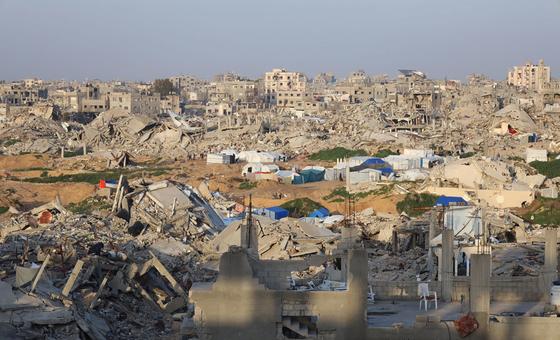
OCHA reported that hostilities intensified overnight, with an attack by Israeli forces on the European Gaza Hospital in Khan Younis which killed and injured several people. 

A team from the World Health Organization (WHO) was also inside the hospital at the time.

The hospital premises were hit again on Wednesday morning, reportedly leading to additional casualties.

A ‘decimated’ health system

“These attacks not only further degrade Gaza’s already decimated healthcare system, but also further traumatize patients and medical staff at these facilities,” OCHA said.

The UN Office has documented at least 686 attacks impacting healthcare in the Gaza Strip since war erupted in October 2023, following the deadly Hamas-led attacks on Israel.

OCHA said escalating military activities and increasing explosive ordnance contamination are heightening safety risks for civilians, including aid workers, before stressing once again that civilians and healthcare facilities must always be protected.

First responders in northern Gaza reported that at least 80 people had been killed in the past day following Israeli strikes, including around 50 who died when homes were struck in northern Jabalia.

More displacement orders

Meanwhile, Israel has issued two new displacement orders in North Gaza since Tuesday night, following Palestinian rocket fire.  

Eight neighbourhoods have been affected and humanitarians have already observed some fleeing in search of relative safety.

More than 436,000 people are estimated to have been displaced to various areas of Gaza since 18 March.

Whether they leave or stay, civilians must be able to access the essentials for their survival,” OCHA said.

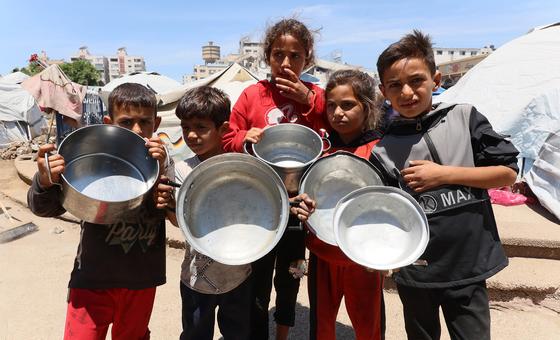
© UNICEF/Mohammed Nateel

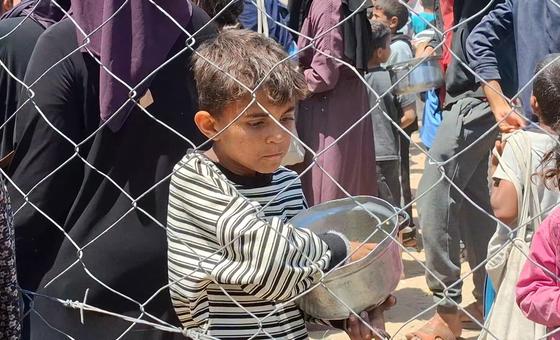
Displaced child in Gaza City

End aid blockade

The agency also continues to call for the immediate lifting of the blockade of Gaza. No cargo, including aid, has entered for more than 70 days.

The humanitarian situation is deteriorating, which has led to dwindling stocks in local markets and rising prices of the few supplies that remain available.

For example, during the first week of May, a single 25-kilogramme bag of wheat flour was being sold in Gaza City for the equivalent of more than $415 – a more than 3,000 per cent increase when compared with the last week of February.

“The blockade is also hampering the provision of hot meals in Gaza, with only about 250,000 individual meals now being provided each day through some 65 community kitchens,” OCHA said.

“This is compared to 25 April – less than three weeks ago – when 180 community kitchens were producing nearly 1.1 million meals on a daily basis.” 

Humanitarian partners have more than 171,000 metric tonnes of food in the region, ready for whenever the blockade is lifted.

This is enough to sustain Gaza’s entire population, roughly 2.1 million people, for up to four months.  

In Berlin, broad backing for UN peacekeeping as global threats mount

UN Secretary-General António Guterres meanwhile warned that peace operations are under growing strain and must adapt to meet today’s rising threats.

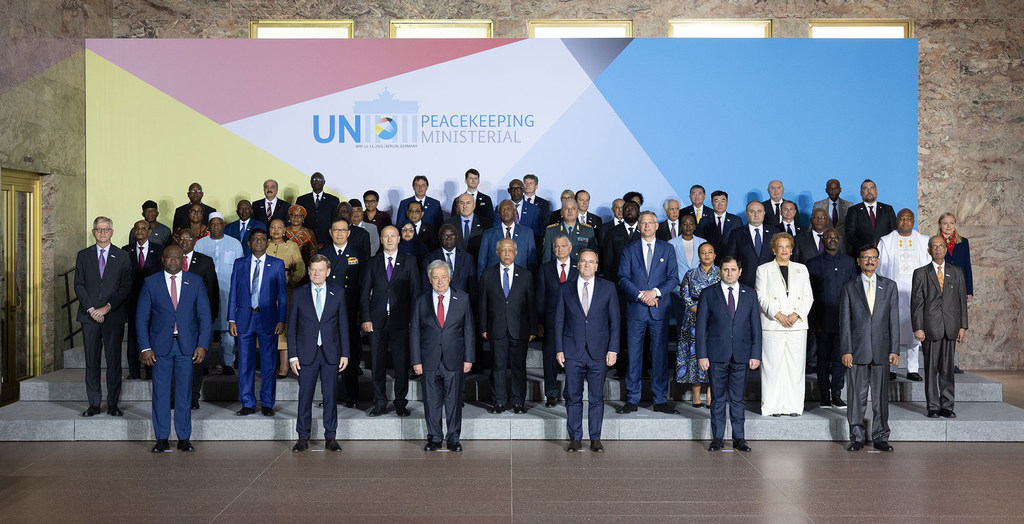
The two-day conference on peacekeeping, hosted by the Government of Germany, brought together over 1,000 participants – including defence and foreign ministers – to reaffirm commitment to the UN’s flagship tool for maintaining peace and stability.

It concluded on Wednesday with a wide array of pledges, including 88 military and police units, specialized training, and investments in emerging technologies and strategic communications.

Difference between life and death

In trouble spots around the world, ‘blue helmets’ can mean the difference between life and death,” Mr. Guterres said in his opening remarks.

“Now more than ever, the world needs the United Nations. And the United Nations needs peacekeeping that is fully equipped for today’s realities and tomorrow’s challenges.”

Germany, which currently contributes troops to UN missions in South Sudan, Lebanon, and Western Sahara, announced €82 million (around $91.7 million) in funding, along with commitments in training, renewable energy solutions and drone technology.

“Germany continues to be a steadfast supporter of UN peacekeeping,” said Defense Minister Boris Pistorius.

Broad and diverse commitments

A total of 74 UN Member States made specific pledges, ranging from uniformed personnel to training and strategic support.

This includes pledges which will bolster military and police units, including airlift and rapid deployment capabilities (53 national contributions), specialized training (59), technological enhancements (18), advancing the Women, Peace and Security Agenda (38) and safety and protection (16).

Eleven countries also committed to improving accountability and conduct, including support to the trust fund for victims of sexual exploitation and abuse, and eight nations supporting the UN’s efforts to counter mis- and disinformation through strategic communications.

Deminers with the UN peacekeeping mission in Mali, MINUSMA, clearing an airstrip in Kidal region. (file photo)

Mounting pressures

At a press conference following the meeting, Secretary-General Guterres acknowledged that peacekeepers operate in an increasingly complex and dangerous environment, citing a record number of global conflicts, the targeting of peacekeepers by drones and improvised explosive devices (IEDs) and the rising threat from disinformation campaigns.

We need to ask some tough questions about the mandates guiding these operations, and what the outcomes and solutions should look like,” he said, speaking alongside German Foreign Minister Johann Wadephul and Defence Minister Pistorius.

Every context is different, and missions must be adapted accordingly.

The UN chief also stressed the importance of sustained financial backing, highlighting that many missions continue to struggle with cash flow shortages due to delayed payments from Member States.

“It is absolutely essential that all Member States respect their financial obligations, paying their contributions in full and on time,” he said.

Crucial reforms

The Berlin meeting feeds into the UN’s broader reform efforts, including an ongoing Review of Peace Operations announced in last year’s Pact for the Future, aimed at making peacekeeping and peace enforcement more flexible, cost-effective, and aligned with real-world needs.

This year’s Ministerial also coincides with the 80th anniversary of the United Nations and the 10-year anniversary of the 2015 New York Summit on Peacekeeping. It follows similar high-level meetings in Accra, Seoul, Vancouver and London.

Peacekeeping remains one of the UN’s most visible activities, with over 61,000 uniformed personnel from 119 countries currently deployed across 11 missions, supported by more than 7,000 civilian staff.

Source link

US-Houthi ceasefire ‘a welcome opportunity’ to advance peace efforts in Yemen

Ambassadors were briefed by the UN Special Envoy for Yemen, Hans Grundberg, who commended Oman for its efforts to achieve the agreement which came into effect on 6 May.

He said the cessation of hostilities represented an important and necessary de-escalation in the Red Sea following the resumption of deadly US airstrikes on Houthi-controlled areas in Yemen.

Resolve the conflict

However, recent events show that the country is still ensnared in wider regional tensions, he said, pointing to Houthi attacks on Ben Gurion Airport in Israel and Israel’s subsequent strikes on Hudaydah Port, Sana’a Airport, and other locations.

“Nevertheless, the announcement of 6 May provides a welcome opportunity on which we must collectively build to refocus on resolving Yemen’s conflict and advancing a Yemeni-owned peace process,” he said.

The Houthis, also known as Ansar Allah, and Yemeni Government forces, backed by a Saudi-led coalition, have been battling for control of the country for more than a decade.

‘Yemenis want to move forward’ 

“The challenges facing Yemen are immense: from the deep and significant levels of mistrust between the parties, with some still reportedly preparing for war, to near economic collapse,” Mr. Grundberg told the Council

He said the UN will continue to work to bring the sides to the table to identify and agree on solutions that are acceptable to all.

“Yemenis want to move forward – the status quo is untenable,” he insisted.  “And while the frontlines may currently appear relatively stable, what Yemen has now is not peace.”

He stressed the need for continued engagement by the international community to help the Yemeni people realize their desire to build a stable, prosperous and safe country.

Release detained staff

Mr. Grundberg used the briefing to again highlight the plight of personnel from the UN, international and national NGOs, civil society and diplomatic missions, who continue to be arbitrarily detained by the Houthis.

“Not only is their detention in violation of international law, but it has also caused a significant chilling effect throughout the international community, which only has one outcome: undermining support to Yemen, which will sadly impact the Yemenis most in need,” he said.

He welcomed the recent release of staff members from the Dutch Embassy and international organization, saying “this demonstrates what is possible, but these releases are woefully insufficient.”

Message to the people

The Special Envoy concluded his remarks by stating that Yemenis have endured over 10 years of instability, uncertainty and economic collapse.

Speaking directly to the population, he reiterated that “I see you. I hear you. You have not been forgotten – and I won’t relent in my efforts to pursue peace and stability in Yemen.”

He urged the warring parties “to be courageous and choose dialogue,” emphasizing that “the United Nations will not waiver in its commitment to support you in finding a negotiated settlement to this conflict.”

A mother holds her 10-month-old girl who is suffering from stunting and malnutrition in Abyan, Yemen.

Humanitarians ‘running out of time’: Fletcher

UN Emergency Relief Coordinator Tom Fletcher, who also briefed the Council, shared the Special Envoy’s relief at the cessation of hostilities in Yemen.

He stressed, however, that “Yemen is not out of the woods” as the humanitarian situation is deteriorating, with children most affected. 

“Half of Yemen’s children – or 2.3 million – are malnourished. 600,000 of them severely so,” he said.

Childhood killers on the rise

Moreover, “malnutrition is not just about hunger,” he added, as it attacks immunity, leaving children vulnerable to deadly infections like pneumonia and diarrhoea – both leading causes of child mortality in Yemen. 

The country also has one of the worst immunisation rates in the world as only 69 per cent of children under a year old are fully immunized and 20 per cent have received no vaccinations at all.

As a result, diseases such as cholera and measles are rising.  In 2024, Yemen accounted for over a third of global cholera cases and 18 per cent of related deaths, in addition to having one of the highest measles burdens globally.

“Children are not alone in being disproportionately impacted,” said Mr. Fletcher, as malnutrition also affects 1.4 million pregnant and breastfeeding women in Yemen, placing mothers and newborns at grave risk. 

Overall, some 9.6 million women and girls are in severe need of life-saving humanitarian support, he said.

Appeal to the Council

He warned, however, that humanitarians “are running out of time and resources” as their 2025 response plan for Yemen is barely nine per cent funded.

“These shortfalls have very real consequences,” he said. “Nearly 400 health facilities – including 64 hospitals – will stop operating, impacting nearly seven million people.” 

Meanwhile, funding for 700 midwives is quickly running out and 20 therapeutic feeding centres and more than 2,000 therapeutic feeding programmes have already been forced to close down. 

Mr. Fletcher made three requests to the Council, calling first for action to ensure respect for international humanitarian law, including protection of civilians as well as access to all those in need.

He urged ambassadors to also provide scaled-up, flexible funding to sustain critical aid operations.

“Third, and as the Special Envoy has underlined, back efforts towards lasting peace,” he concluded. 

World News in Brief: Sudan refugees, aid for Syrian returnees, MERS alert in Saudi Arabia, Venezuela urged to end secret detentions

The UN refugee agency, UNHCR, reported on Wednesday that most of the new arrivals are women and children.

Many have come from Zamzam camp and the city of El Fasher, locations targeted by paramilitary Rapid Support Forces, who’ve been fighting forces of the military government for more than two years.

In Chad, the high numbers of those arriving are putting significant strain on overwhelmed resources.

Exhausted and victimised

Aid teams say that many refugees arrive exhausted after walking for days because they are unable to afford transport.

They report being victims of targeted attacks, looting and sexual violence.

Numerous children have been injured, families separated, and others remain missing, the refugee agency said.

Immediate needs in Chad include shelter, food, medical care and psychological support but the $409 million refugee response appeal is only 20 per cent funded.

Syria’s returnees desperately need help to start over

Syrians trying to rebuild their lives in their war-torn country urgently need the support of the rest of the world to help them start again, UN aid agencies said on Wednesday.

Hopes rose this week in Damascus following Donald Trump’s move to end punitive sanctions – but after more than 13 years of civil war that ended with the fall of the Assad regime last December, many communities today face a range of basic problems.

These include unreliable access to electricity, clean water and healthcare.

Records destroyed

The destruction of public records is also preventing returnees from accessing essential services or claiming housing and land rights, according to the UN migration agency, IOM.

Its Director-General, Amy Pope, insisted Syrians were resilient and innovative but that they needed help, now. “Enabling (them) to return to a country that is on the path to stability and progress is critical for the country’s future,” she insisted.

A new IOM report from more than 1,100 communities across Syria found that work is scarce, partly because farming and markets are still struggling to recover.

Shelter reconstruction is also needed urgently, while unresolved property issues continue to prevent people from rejoining their communities.

Since January 2024, the UN agency has recorded more than 1.3 million returnees previously displaced within Syria, in addition to nearly 730,000 arrivals from abroad.

WHO issues warning over deadly MERS outbreak in Saudi Arabia

A recent outbreak of Middle East Respiratory Syndrome coronavirus (MERS-CoV) in Saudi Arabia has raised concerns after two people died from the disease between March and April.

The World Health Organization (WHO) has released updated guidelines to help contain the outbreak, which has seen nine confirmed cases – seven of them in the capital, Riyadh. Several of those infected were healthcare workers who caught the virus from a patient.

MERS is caused by a zoonotic coronavirus, from the same family of viruses as COVID-19. While WHO estimates the fatality rate to be around 36 per cent, the true figure may be lower, as mild cases often go undiagnosed.

Despite the recent cases, the risk of wider spread remains moderate at both the regional and global levels, according to WHO.

MERS is primarily carried by dromedary camels and can be passed to humans through direct or indirect contact with infected animals.

Human-to-human transmission usually happens in healthcare settings, through respiratory droplets or close contact.

No vaccine, no cure

Much like COVID-19, MERS can range from no symptoms at all to severe respiratory illness, including acute respiratory distress — and in some cases, death. There’s currently no vaccine or specific treatment.

To stop the virus from spreading, WHO urges hospitals and clinics to step up infection prevention and control measures, especially where suspected cases are being treated.

Since MERS was first identified in 2012, it has caused 858 deaths across 27 countries in the Middle East, Africa and South Asia.

Call for Venezuela to end secret detention of political opponents

Top independent human rights experts have urged the Venezuelan authorities to stop the reported practice of holding political opponents incommunicado.

In an alert on Wednesday, they insisted that these “targeted detentions” were illegal and amounted to enforced disappearance, a major human rights violation if proved and potentially an international crime.

They maintained that using secret detention was a deliberate strategy by the State “to silence opposition figures…and to instill fear among the population”.

Lack of legal protection

The mission pointed to a widespread lack of “effective judicial protection” for civil society in Venezuela and accused State security forces of colluding with the Public Prosecutor’s Office.

The services allegedly responsible for detentions include the national intelligence service, the national guard and military counterintelligence.

The mission’s independent rights experts also maintained that criminal courts and the Constitutional Chamber of the Supreme Tribunal of Justice were also “complicit” by ensuring that the alleged crimes went unpunished.

The Fact-Finding Mission on Venezuela was created by the Human Rights Council in 2019; its members are not UN staff and they work in an independent capacity.

‘Stop the 21st century atrocity’ in Gaza, Fletcher urges UN Security Council

Mr. Fletcher began his remarks by asking the international community to reflect on what it will tell future generations about action taken “to stop the 21st century atrocity to which we bear daily witness in Gaza.”

He wondered, for example, if “we will use those empty words: ‘We did all we could,’” and urged the Council to act decisively to prevent genocide from happening.

Shrinking spaces, overwhelmed hospitals

In addition to the aid blockade, civilians in Gaza have again been forcibly displaced and confined into ever-shrinking spaces, he said, as 70 per cent of the territory is either within Israeli-militarized zones or under displacement orders. 

Furthermore, the few remaining hospitals are overwhelmed, and medics cannot stem the trauma and the spread of disease.

I can tell you from having visited what’s left of Gaza’s medical system that death on this scale has a sound and a smell that does not leave you,” he said.

“As one hospital worker described it, ‘children scream as we peel burnt fabric from their skin.’”

We can save lives

Mr. Fletcher stressed that the UN and partners are desperate to resume humanitarian aid across Gaza, and the recent ceasefire showed that they can deliver.  Meanwhile, lifesaving supplies are waiting to enter the enclave.

“We can save hundreds of thousands of survivors. We have rigorous mechanisms to ensure our aid gets to civilians, and not to Hamas,” he insisted.

“But Israel denies us access, placing the objective of depopulating Gaza before the lives of civilians,” he said. 

“It is bad enough that the blockade continues.  How do you react when Israeli Ministers boast about it? Or when attacks on humanitarian workers and violations of the UN’s privileges and immunities continue, along with restrictions on international and non-governmental organizations.”

Reject ‘cynical’ US-Israeli aid alternative 

Mr. Fletcher recalled that Israel has clear obligations under international humanitarian law, and as the occupying power must agree to aid and facilitate it.  

“For anyone still pretending to be in any doubt, the Israeli-designed distribution modality is not the answer,” he stated, noting that among other things, the plan “makes starvation a bargaining chip.”

It is cynical sideshow. A deliberate distraction. A fig leaf for further violence and displacement,” he told ambassadors.  “If any of that still matters, have no part in it.”

He also addressed the increasing violence in the West Bank, where the situation is the worst in decades, with entire communities destroyed and refugee camps depopulated.

Insist on accountability

Mr. Fletcher noted that international humanitarian workers have been the only international civilian presence in Gaza over the past 19 months, and they have briefed the Council on what they witness daily.

We have described the deliberate obstruction of aid operations and the systematic dismantling of Palestinian life, and that which sustains it, in Gaza,” he said.

The International Court of Justice (ICJ) is now considering whether a genocide is taking place there and “will weigh the testimony we have shared. But it will be too late,” he warned.

He said the ICJ has recognized the urgency and indicated clear provisional measures that should have been acted on – but Israel has failed to do so. 

Moreover, previous reviews of the UN’s conduct in cases of large-scale violations of international human rights and humanitarian law have pointed to the collective failure to speak to the scale of violations while they were being committed.

“For those killed and those whose voices are silenced: what more evidence do you need now?” he asked.  “Will you act – decisively – to prevent genocide and to ensure respect for international humanitarian law? Or will you say instead, ‘we did all we could?’”.

He told the Council that the degradation of international law is corrosive and infectious, and it is undermining decades of progress on civilian protection.

Humanity, the law, and reason must prevail,” he said.  “This Council must prevail. Demand this ends. Stop arming it. Insist on accountability.”

Fear future judgement

Mr. Fletcher called for Israel to stop killing and injuring civilians, and to lift the brutal blockade so that humanitarians can save lives.

He urged Hamas and other Palestinian armed groups to release all hostages immediately and unconditionally, and to stop putting civilians at risk during military operations. 

“And for those who will not survive what we fear is coming – in plain sight – it will be no consolation to know that future generations will hold us in this chamber to account. But they will,” he said.   

“And, if we have not seriously done “all we could’, we should fear that judgement.” 

Source link

US deportations raise serious human rights concerns

His Office, OHCHR, has received information that over 100 Venezuelan deportees are being detained at a notorious prison in El Salvador. 

OHCHR said 142,000 people were deported from the US between 20 January and 29 April, according to official data.

Harsh treatment in detention

In particular, the fate and whereabouts of at least 245 Venezuelans and some 30 Salvadorans sent to El Salvador remain unclear. 

Many were deported under the US Alien Enemies Act as alleged members of criminal groups and have reportedly been detained at the Centre for Terrorism Confinement (CECOT) in the Central American country.

Detainees at the maximum-security prison are treated particularly harshly, without access to legal counsel or family members and have no contact with the outside world.

Serious rights concerns

OHCHR has received information from family members and lawyers regarding more than 100 Venezuelans believed to be held in CECOT. 

The reports indicate that many were not informed of the US Government’s intention to deport them to be detained in a third country.  

Furthermore, many had no access to a lawyer and were unable to challenge the lawfulness of their removal before being flown out.

“This situation raises serious concerns regarding a wide array of rights that are fundamental to both US and international law,” Mr. Türk said.

They include the rights to due process, protection from arbitrary detention, equality before the law, and protection from exposure to torture or other irreparable harm in other States.

Families feel powerless

Neither the US or Salvadoran authorities have published official lists of the detainees, and their legal status in El Salvador remains unclear. 

Many family members interviewed by OHCHR voiced deep distress at not knowing where, and in what circumstances, their loved ones are being held. Some only became aware when they recognized their relatives from videos on social media of them in or being taken to CECOT. 

“Families we have spoken to have expressed a sense of complete powerlessness in the face of what has happened and their pain at seeing their relatives labelled and handled as violent criminals, even terrorists, without any court judgment as to validity of what is claimed against them,” said Mr. Türk.

“The manner in which some of the individuals were detained and deported – including the use of shackles on them – as well as the demeaning rhetoric used against migrants, has also been profoundly disturbing,” he added.

The High Commissioner welcomed the essential role that the US judiciary, legal community and civil society are playing to ensure the protection of human rights in this situation.

“I have called on the US Government to take the necessary measures to ensure compliance with due process, to give prompt and full effect to the determinations of its courts, to safeguard the rights of children, and to stop the removal of any individual to any country where there is a real risk of torture or other irreparable harm,” he said. 

Source link

Number of internally displaced breaks new record with no let-up in conflicts, disasters

“These figures are a clear warning: without bold and coordinated action, the number of people displaced within their own countries will continue to grow rapidly,” said Amy Pope, Director General of International Organization for Migration.

The recent rise in conflicts worldwide – particularly in Sudan, the Republic of the Congo, Lebanon, Ukraine and Palestine has pushed millions more into displacement, adding to the tens of millions who already live in protracted displacement in countries such as Afghanistan, Colombia, Syria and Yemen. 

Disasters surging

The number of displaced due to disasters has risen massively, climbing from last year’s 26.8 million to 45.8 million. “The number of disaster displacements in 2024 was nearly double the annual average of the past decade,” IOM said in a new report issued by the internal displacement monitoring centre (IDMC).

Almost 30 countries and territories have reported unprecedented disaster displacement – with cyclones accounting for more than one in two people forced from their homes. The United States alone makes up about one in four of those displaced globally by disasters.

With the frequency, intensity and duration of weather hazards continuously worsening owing to climate change, there is little to suggest that the trend will not continue.

“This report is a call for preventive action, to use data and other tools to anticipate displacement before it happens and for the humanitarian and development sectors to work together with governments to develop longer-term solutions to prevent displacement,” Ms. Pope stressed.

Conflict and violence

Displacement caused by conflict and violence remains high and continues to be a major cause for displacement, too – although it did decrease slightly in 2024, compared to the previous 12 months.

Over 20 million conflict-related displacements have been recorded and almost half of these stem from Sudan and the Democratic Republic of the Congo.

“These latest numbers prove that internal displacement is not just a humanitarian crisis; it’s a clear development and political challenge that requires far more attention than it currently receives,” said Alexandra Bilak, director of IOM’s Internal Displacement Monitoring Centre.

“The cost of inaction is rising, and displaced people are paying the price,” she added.

Source link

Half of women’s organizations in crisis zones risk closure within six months

Across 73 countries, 308 million people now rely on humanitarian aid – a number that continues to rise. Women and girls are disproportionately affected by these crises, facing preventable pregnancy-related deaths, malnutrition, and alarming levels of sexual violence.

Despite the growing need, the humanitarian system is facing severe funding shortfalls, threatening life-saving services for women and girls.

Programmes suspended

According to a UN survey conducted among 411 women-led and women’s rights organizations providing services in crisis areas, 90 per cent have already been hit by funding cuts.

A staggering 51 per cent have been forced to suspend programmes, including those that support survivors of gender-based violence.

Pushed to the brink, almost three-quarters of the organizations surveyed also reported having to lay off staff – many at significant levels.

Already underfunded even before the recent wave of cuts, women’s organizations serve as a “lifeline” for women and girls, particularly in crisis settings.

With these organizations serving as cornerstones of humanitarian response, Sofia Calltorp, Chief of UN Women Humanitarian Action, called the situation “critical”, as funding cuts threaten essential, life-saving services.

Local women’s leadership

Despite the growing challenges, women’s organizations remain unwavering – “leading with courage, advocating for their communities, and rebuilding lives with resilience and determination,” said the UN gender equality agency.

In light of the findings, UN Women recommends prioritising and tracking direct, flexible, and multi-year funding to local women-led and women’s rights organizations whose work is under threat.

Placing local women’s leadership and meaningful participation at the centre is a core pillar of a humanitarian reset. “Supporting and resourcing them is not only a matter of equality and rights, but also a strategic imperative,” said Ms Calltorp.

As funding cuts bite, UN chief announces new dawn for peacekeeping

Addressing the UN Peacekeeping Ministerial 2025 in the German capital, the Secretary-General told dozens of ministers from more than 130 countries that peacekeepers remain key to “help countries move from conflict to peace.”

“In trouble spots around the world, blue helmets can mean the difference between life and death,” he insisted. “They are also a clear demonstration of the power of multilateral action to maintain, achieve and sustain peace.”

Despite the proven value of peacekeeping missions in ensuring a durable peace in countless countries from Cambodia to Liberia and Timor Leste, Mr. Guterres warned that today’s challenges have made this task much harder.

“We are now facing the highest number of conflicts since the founding of the United Nations and record numbers of people fleeing across borders in search of safety and refuge,” he said, before alluding to additional obstacles caused by an absence of political support for peacekeeping mandates.

The UN’s peacekeeping budget runs on a July-June cycle and has unpaid arrears of $2.7 billion.

Practical approach

To counter this and in the face of “dramatic financial constraints” now affecting the UN in its entirety, the Secretary-General announced an urgent review of operations to inspire a new peacekeeping model that is “fit for the future.”

In coming years, “a clear exit strategy” for peacekeepers will be key, Mr. Guterres said, as well as working with Member States and the Security Council “to ensure that any new mandates “are prioritized and achievable with the resources available.”

Other clues about what UN peacekeeping 2.0 could look like post-reform might be gleaned from the missions that the UN chief referred to in his speech in Germany.

Active missions such as UNIFIL in Lebanon have already shown that it is possible to adapt to today’s challenges while still ensuring peace and aid deliveries, Mr. Guterres noted.

And in a nod to MINUSCA in the Central African Republic, the Secretary-General highlighted its work in protecting civilians “and assisting the government to extend its reach beyond the capital where people are in desperate need.”

In the Democratic Republic of the Congo, too and despite ongoing fighting there, peacekeepers from MONUSCO also remain in the field and protect vulnerable populations, the UN chief maintained.

As Member States prepared to announce financial pledges for peacekeeping on Wednesday, Mr. Guterres stressed that the overall budget for missions represented only 0.5 per cent of global military spending.

Peacekeeping “is only as strong as Member States’ commitment to it,” stressed Mr. Guterres.

Amid massive cuts to UN funding by Member States, it remains to be seen if the upbeat mood in Berlin translates into desperately needed financial support for the global body’s peacekeeping operations.

“UN peacekeeping today is more vibrant than ever,” insisted Boris Pistorius, Minister of Defence of Germany. “It is and will remain a cornerstone of international stability. Let us commit to making it even more effective for the sake of those who depend on it.”

Cutbacks

The UN chief’s push to streamline the global body comes a day after his call to push ahead with major efficiency improvements and cost-cutting in response to the chronic liquidity crisis caused by Member States falling into arrears.

Important as these sweeping structural reforms are – with potential staff downsizing of up to 20 per cent – they are not the answer to the failure of some countries to pay the Organization to fulfil the mandates they have given it, Mr. Guterres insisted.

According to information provided by the UN Controller to the General Assembly’s Fifth Committee (Administrative and Budgetary), only $1.8 billion has been received against the $3.5 billion regular budget assessments for 2025 – a shortfall of around 50 per cent.

In the budget line for unpaid assessments these amounted to $2.4 billion on 30 April, with the United States owing about $1.5 billion, China $597 million, Russia $72 million, Saudi Arabia $42 million, Mexico $38 million and Venezuela $38 million. An additional $137 million has yet to be paid by other Member States.

For International Tribunals, total contributions outstanding totalled $79 million on 30 April.

© Bundeswehr/Jana Neumann

At the 2025 UN Peacekeeping Ministerial in Berlin, Secretary General António Guterres underscored the vital role of UN peacekeeping and urged Member States to help shape peace operations fit for the future.

Source link

GAZA LIVE: Security Council to meet on aid crisis amid ‘critical risk of famine’ due to Israeli blockade

The Security Council is set to meet this afternoon at 3 PM in New York to discuss the deepening crisis in Gaza, where humanitarians warn of “a critical risk of famine” and aid shipments have been blocked for over 70 days. UN relief chief Tom Fletcher is expected to brief ambassadors. Follow live for key updates from UN Headquarters and reports from the region. App users can follow coverage here.

Gaza: 57 children reported dead from malnutrition, says WHO

Since the aid blockade began on 2 March, 57 children have reportedly died from the effects of malnutrition, according to the Ministry of Health.

If the situation persists, nearly 71,000 children under the age of five are expected to be acutely malnourished over the next 11 months.

Briefing journalists in Geneva, WHO’s representative in the Occupied Palestinian Territory Dr. Rik Peeperkorn said that that Israel’s complete aid embargo has left only enough WHO supplies to treat 500 children with acute malnutrition – “a fraction of the urgent need”

“People are trapped in this cycle where a lack of diversified food, malnutrition and disease fuel each other,” he warned.

Dr. Peeperkorn’s comments follow the publication on Monday of a new analysis by the UN-backed food security alert scale known as the IPC showing that one in five people in Gaza – 500,000 – faces starvation, while the entire 2.1 million population of the Strip is subjected to prolonged food shortages. WHO is a member of the IPC.

An escalating hunger crisis

“This is one of the world’s worst hunger crises, unfolding in real time,” Dr. Peeperkorn said.

The UN health agency representative spoke of his recent visit to Kamal Adwan hospital in north Gaza, where each day more than 300 children are screened at a WHO-supported nutrition centre. During the visit, the hospital reported more than 11 per cent of cases with global acute malnutrition.

Describing the affected children, he said, “I’ve seen them [in the] wards… A child of five years old, and I thought he’s two and a half”.

WHO supports 16 outpatient and three inpatient malnutrition treatment centres in the enclave with lifesaving supplies, but the stopping of aid by Israel and shrinking humanitarian access are threatening its ability to sustain these operations.
Dr. Peeperkorn insisted on the long-term damage from malnutrition which “can last a lifetime”, with impacts including stunted growth, impaired cognitive development and health.

“Without enough nutritious food, clean water, access to health care, an entire generation will be permanently affected,” he warned.

The WHO official stressed that the agency was “constantly” raising with Israeli authorities the need to get supplies into the Strip. Some 31 WHO aid trucks are at a standstill in Al-Arish in Egypt just a few dozen kilometres away from the Rafah border crossing with Gaza and more supplies are positioned in the West Bank, ready to move “any day when this is allowed”.

‘Health care is not a target’

Turning to attacks on health care, Dr. Peeperkorn said that the burn unit of Nasser Medical Complex in the southern town of Khan Younis was reportedly hit by an Israeli airstrike on Tuesday, killing two and injuring 12. The attack has resulted in the loss of 18 hospital beds in the surgical department including eight “critical” intensive care beds.

Media reported that a Palestinian journalist was killed in the attack during treatment for injuries sustained in a previous airstrike.

“Health care is not a target,” Dr. Peeperkorn concluded. He reiterated calls for the protection of health facilities, an immediate end to the aid blockade, the release of all hostages held by Palestinian armed groups and for a ceasefire “which leads to lasting peace”. 

UN aviation council finds Russia responsible for downing of Malaysian Airlines flight

The council of the International Civil Aviation Organization (ICAO) voted on Monday that Russia failed to uphold its obligations under international air law which requires that States “refrain from resorting to the use of weapons against civil aircraft in flight.”

The case was brought by the Netherlands and Australia.

“This represents the first time in ICAO’s history that its Council has made a determination on the merits of a dispute between Member States under the Organization’s dispute settlement mechanism,” the UN agency said.

Caught in conflict

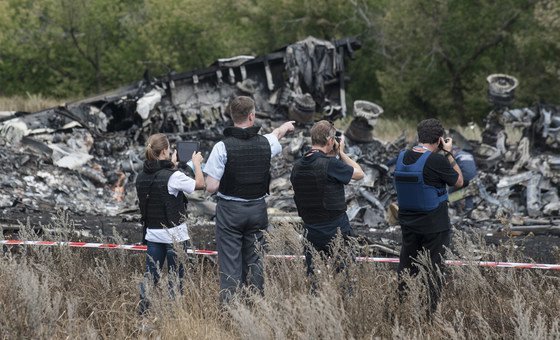
Flight MH17 was heading from Amsterdam to Kuala Lumpur when it was shot down over eastern Ukraine amid the armed conflict between pro-Russian rebels and Ukrainian military forces.

All 283 passengers and 15 crew members were killed.  They represented some 17 nationalities and included 196 Dutch citizens, 43 Malaysians and 38 Australian citizens or residents.

The Netherlands established a Joint Investigation Team (JIT) in August 2014 together with Australia, Malaysia and Belgium, as well as Ukraine.

The JIT determined that flight MH17 was shot down by a missile launched from a Buk TELAR installation that was transported from Russia to a farm field in eastern Ukraine in an area controlled by separatists.

In November 2022, a Dutch court convicted three men – two Russians and a Ukrainian – for murder.  They were tried in absentia and sentenced to life in prison. Another Russian man was acquitted.

Breach of civilian aviation treaty

That same year, the Netherlands and Australia launched the case with ICAO, the UN agency that develops and implements global aviation strategies and technical standards.

The case centered on allegations that Russia’s conduct in the downing of the aircraft by a surface-to-air missile over eastern Ukraine constituted a breach of Article 3 of the Convention on International Civil Aviation.

War in Ukraine has escalated since the crash following the start of Russia’s full-scale invasion of the country in February 2022.  

More than 13,000 civilians have been killed to date, and over 31,000 injured, according to the UN human rights office, OHCHR

Source link

World News in Brief: Sudan aid update, child migrant deaths at sea, nursing shortages, invasive pest scourge

Port Sudan – the main entry point for humanitarian supplies and personnel into the country – came under attack for the ninth consecutive day. As the UN’s main humanitarian hub in Sudan, drone strikes on the coastal city have gravely impacted aid delivery.

Nonetheless, UN Humanitarian Air Service (UNHAS) flights were able to resume on 8 May, providing a continuation of a key humanitarian lifeline as the war between rival militaries for control of Sudan continues, UN Spokesperson Stéphane Dujarric confirmed.

Targeting of civilian infrastructure has sparked panic and displacement. The International Organization for Migration (IOM) reported last week that 600 people were displaced within Port Sudan alone because of the attacks.

Catastrophic situation in North Darfur

The UN Humanitarian Coordinator for Sudan, Clementine Nkweta-Salami, warned on Sunday that the situation in the North Darfur camps of Abou Shouk “is catastrophic.”

Although the UN and its partners continue to scale up their humanitarian response, both camps remain, in effect, cut off from aid.

Ms Nkweta-Salami issued an urgent call for a ceasefire and humanitarian pauses to allow life-saving deliveries to resume.

Call for action after deaths of migrant children at sea

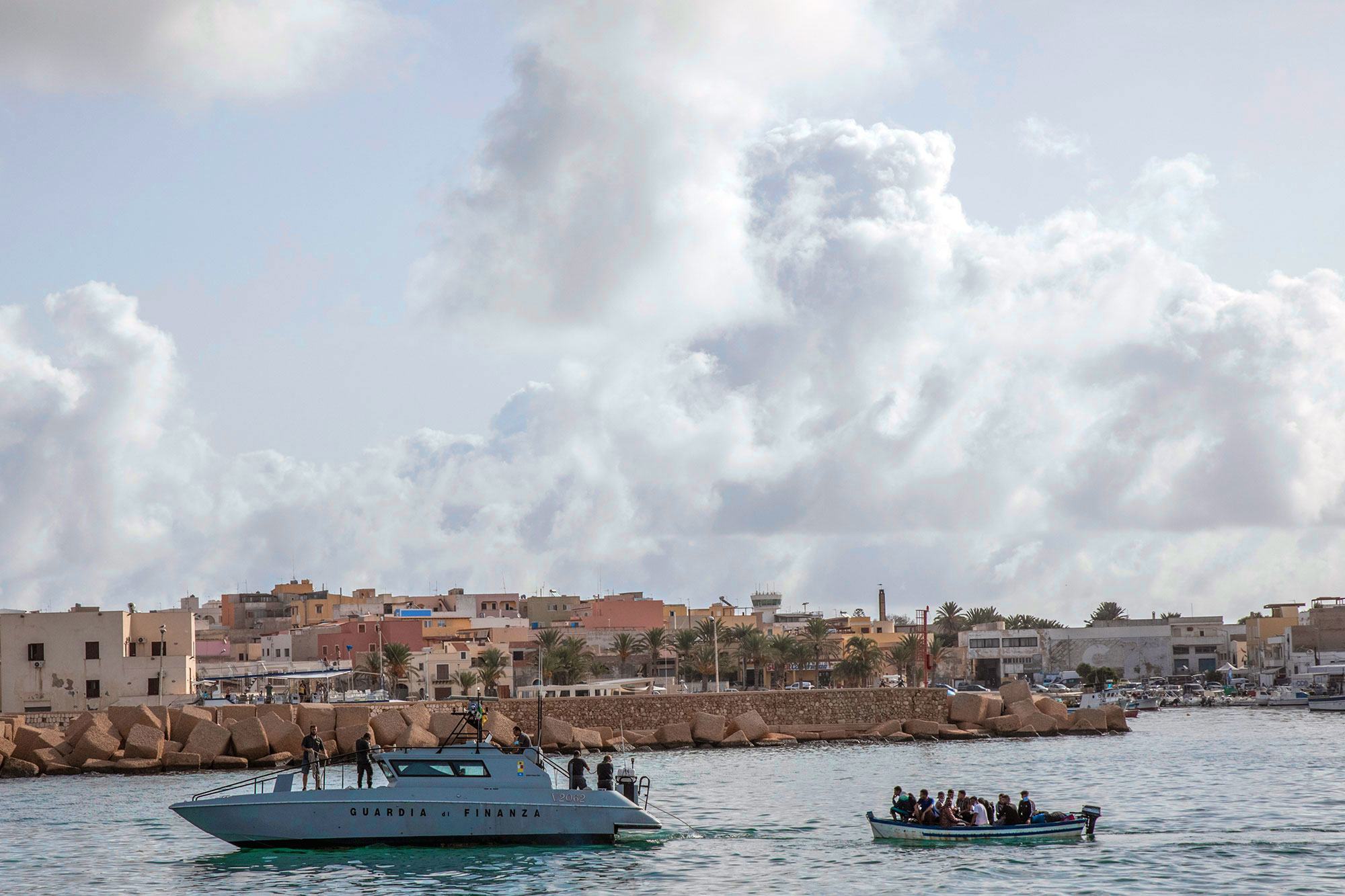
Two young children, aged 3 and 4, have died from dehydration aboard a rubber dinghy found adrift in the central Mediterranean, the UN Children’s Fund (UNICEF) said on Monday.

The vessel, which departed Libya carrying 62 migrants including several children, had reportedly been stranded for days after its engine failed.

Refugees and migrants in a wooden boat are rescued near the Italian island of Lampedusa in the Mediterranean Sea.

According to survivors, the children had died nearly a day before rescuers arrived.

One additional passenger is believed to have drowned earlier in the journey. Many others onboard suffered severe chemical burns caused by contact with a mixture of seawater and spilled fuel – injuries which require urgent medical attention.

All surviving passengers were eventually rescued and transferred to Lampedusa by the Italian coast guard.

‘Devastating reminder’

Regina De Dominicis, UNICEF Regional Director for Europe and Central Asia, called the incident “another devastating reminder” of the deadly risks migrants face.

She stressed the need for coordinated search and rescue missions, and greater investment in support services for migrant families.

“The central Mediterranean remains one of the most dangerous migration routes in the world,” Ms. De Dominicis said. “Without immediate action, more lives will continue to be lost.”

UNICEF continues to call on governments to meet their obligations under international law and protect vulnerable children seeking safety.

Nursing workforce grows, but deep inequalities persist worldwide

The number of nurses around the world has increased in recent years, but a new UN report published on Monday shows that many countries and regions still face serious shortages, highlighting ongoing inequalities in access to nursing care.

Low-income countries are particularly affected, struggling with too few nurses to meet the needs of their growing populations, said the UN World Health Organization (WHO) which crunched the data.

Poor prospects at home

While these countries are training new nurses at a faster rate than wealthier nations, challenges such as rapid population growth and limited job opportunities are making it hard to close the gap, WHO added.

These imbalances in where nurses are working mean that millions still don’t have access to basic health services.

This is holding back efforts to achieve universal health coverage, protect global health, and meet international development goals linked to health.

“We cannot ignore the inequalities that mark the global nursing landscape,” said WHO Director-General Tedros Adhanom Ghebreyesus.

WHO is urging governments to create more nursing jobs and ensure they are fairly distributed, especially in communities where healthcare services are lacking.

Plant pests continue to threaten global food supplies

Protecting crops from pests is key to ensuring everyone has enough to eat, said the head of the UN Food and Agriculture Organization (FAO) on Monday, who stressed that access to food is a basic human right.

Each year, around 40 per cent of the world’s crops are lost to plant pests and diseases, causing over $220 billion in economic damage.

Invasive pests turn up the heat

Migratory pests like locusts and armyworms are among the biggest threats, especially in regions already hit hard by conflict and climate change.

Countries in the Near East and North Africa – including Algeria, Libya and Tunisia – are currently dealing with a serious outbreak of desert locusts that began in the Sahel.

These insects destroy crops and pastureland, putting food supplies for both people and animals at risk, and threatening the survival of farming communities.

“No country can face these challenges alone,” said FAO Director-General QU Dongyu, at a high-level conference in Italy marking the International Day of Plant Health.

He called for greater international cooperation and more funding to tackle cross-border pests and diseases.

Source link

UN chief calls for major reforms to cut costs and improve efficiency

Briefing Member States in New York on Monday Mr. Guterres outlined wide-ranging effort to revamp how the UN system operates – cutting costs, streamlining operations, and modernizing its approach to peace and security, development and human rights.

“These are times of peril,” he said, “but they are also times of profound opportunity and obligation. The mission of the United Nations is more urgent than ever.

Three main objectives

Launched in March, the UN80 Initiative centres on three priorities: enhancing operational efficiency, assessing how mandates – or key tasks – from Member States are implemented, and exploring structural reforms across the UN system.

The conclusions will be reflected in revised estimates for the 2026 budget in September this year, with additional changes that require more detailed analysis presented in 2027.

‘Meaningful’ budget reductions

Mr. Guterres said the changes are expected to yield “meaningful reductions” in the overall budget. For example, the departments for political and peacekeeping affairs could see a 20 per cent reduction in staff by eliminating duplication.

This level of reduction, he said, could serve as a benchmark across the UN system – while also considering unique factors for each department.

Additional examples include consolidating all counter-terrorism work within the main Office of Counter-Terrorism (UNOCT), ending building leases and relocating posts away from expensive “duty stations” where cost of living is high.

“There might be immediate, one-off costs involved in relocating staff and providing potential termination packages,” he said, “but by moving posts from high-cost locations, we can reduce our commercial footprint in those cities and reduce our post and non-post costs.

UN Secretary-General António Guterres briefs on the UN80 Initiative.

Efficiencies and upgrades

The first workstream focuses on efficiencies and improvements, developing a new model that improves consolidation, looks at centralising services, relocating to cheaper locations, and expanding the use of automation and digital platforms.

Mr. Guterres said departments the UN’s headquarters in New York and Geneva have been asked to review whether some teams can be relocated to lower-cost duty stations, reduced or abolished.

Reviewing mandates

The second workstream involves a review of how existing mandates are being carried out – not the mandates themselves, which are the purview of Member States only.

A preliminary review identified more than 3,600 unique mandates for the Secretariat alone. A full and more detailed analysis is now underway.

Mr. Guterres emphasised that the sheer number of mandates – and the bureaucracy needed to implement them – places a particular burden on smaller Member States with limited resources.

“Based on this work, Member States may wish to consider the opportunity to conduct themselves a review of the mandates,” he added.

Structural change

The third workstream – focused on structural reform – is already underway, Mr. Guterres said.

Nearly 50 initial submissions have already been received from senior UN officials, reflecting what Mr. Guterres described as “a high level of ambition and creativity.”

Key work areas have been identified for review. These include peace and security, development, human rights, humanitarian, training and research and specialised agencies.

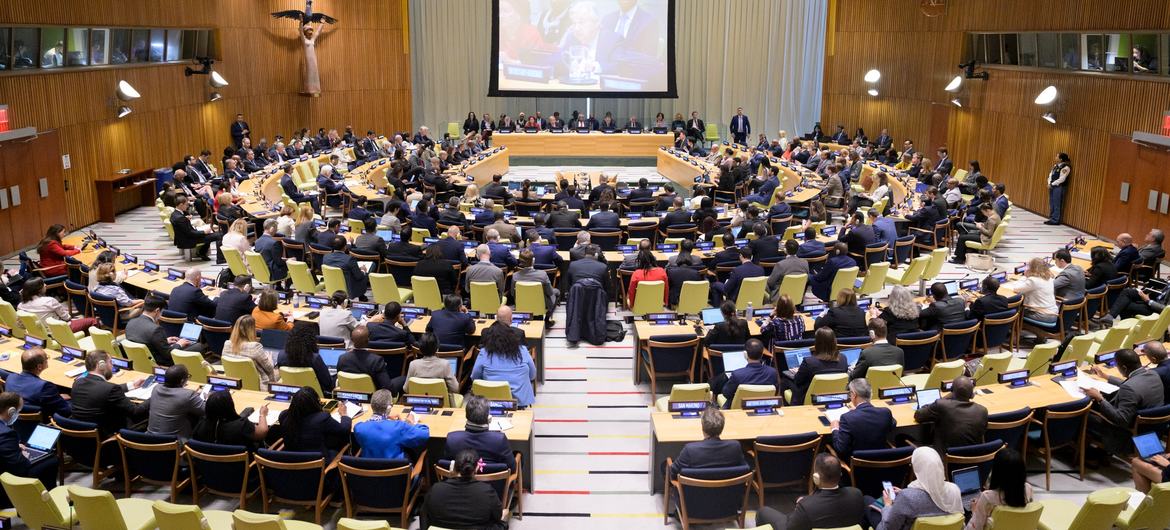
A wide view of the informal meeting of the General Assembly plenary that heard a briefing by the Secretary-General on the UN80 Initiative.

Not an answer to liquidity crisis

Mr. Guterres also touched on the UN dire cashflow situation, noting that the initiative “is not an answer” to the months-long liquidity crisis but by being more cost effective, it should help limit the impact.

The liquidity crisis is caused by one simple fact – the arrears,” he said, adding that structural reform is not the answer to a fundamental failure by some Member States to pay what they owe on time to meet running costs.

Unpaid dues

According to information provided by the UN Controller to the General Assembly’s Fifth Committee (Administrative and Budgetary), only $1.8 billion has been received against the $3.5 billion regular budget assessments for 2025 – a shortfall of around 50 per cent.

As of 30 April, unpaid assessments stood at $2.4 billion, with the United States owing about $1.5 billion, China ($597 million), Russia ($72 million), Saudi Arabia ($42 million), Mexico ($38 million), and Venezuela ($38 million). An additional $137 million is yet to be paid by other Member States.

For the peacekeeping budget (which runs on a July-June cycle), including prior-period arrears, the unpaid amount totals $2.7 billion. For the International Tribunals, total contribution outstanding was $79 million as of 30 April.

Close consultation

The Secretary-General told Member States he would be consulting with them  closely and regularly on the cash crisis and needed reforms, seeking guidance  and presenting concrete proposals for countries to act on.

UN staff members and their representatives are being consulted and listened to, he added: “Our concern is to be humane and professional in dealing with any aspect of the required restructuring.

In conclusion, he highlighted that the UN80 Initiative is a “significant opportunity” to strengthen the UN system and deliver for those who depend on it.

In response to the suggestion that the UN should focus on just the one key pillar of peace and security, he said it would be wrong to ditch development and human rights – all three are essential he underscored.

Let us seize this momentum with urgency and determination, and work together to build the strongest and most effective United Nations for today and tomorrow.”

Source link

Gaza: Guterres hails hostage release, renews ceasefire call

Edan Alexander, a 21-year-old American-Israeli national and soldier with the Israel Defense Forces (IDF), had been held by Hamas since the brutal 7 October 2023 attacks on Israel in which roughly 1,200 people were killed and another 250 taken hostage.

He is believed to be the last living American held by militants in Gaza, according to media reports.

Free all remaining hostages

The Secretary-General “is profoundly relieved that Mr. Alexander has been freed and is now returning to his family and loved ones after this harrowing ordeal,” said UN Spokesperson Stéphane Dujarric in a statement.

The UN chief renewed his urgent call for an immediate, permanent ceasefire and the immediate and unconditional release of all remaining hostages, he added, stressing that hostages must be treated humanely and with dignity.

“He calls on all parties to immediately ensure rapid, unhindered, and safe humanitarian relief, including the delivery of critical services, for all civilians in need. Aid is not negotiable,” Mr. Dujarric said.

End the hostilities

The Secretary-General also commended the sustained mediation efforts of Egypt, Qatar, and the United States to bring an end to the fighting.  

He urged “all parties to build on today’s release to reach a comprehensive agreement that will ensure the release of all hostages, an end to the hostilities, the provision of humanitarian aid and the long-overdue alleviation of the human suffering in Gaza,” the statement concluded.

Food security experts warned on Monday that Gaza’s entire population, more than two million people, remains “at critical risk of famine” due to the war and Israel’s blockade on aid entry, effective since 2 March. 

Source link

UN migration agency helping migrants in the US return home voluntarily

In a statement on Monday, the UN agency said it is supporting Assisted Voluntary Return (AVR) – not deportation – for those who decide to leave the US.

At the request of the US Government, IOM is helping people who register to go back to their countries of origin voluntarily.

AVR is a well-established, rights-based approach that helps migrants navigate complex global migration systems, regain control over their lives, and make informed choices,” the agency said.

Safe, dignified returns

“Our role is to ensure that those who lack the means to return on their own can do so in a safe, dignified, and informed way,” IOM added.

The agency made it clear that the US determines its own policies on migration. “IOM does not facilitate or implement deportations. Our involvement begins only after an individual gives informed consent to receive assistance.”

In these instances, “IOM ensures that people have access to accurate information and essential services, in line with international standards.”

The announcement comes as the US seeks to expand deportation of undocumented migrants in continuation of a policy President Donald Trump began nearly 10 years ago under his first administration.

He returned to office in January for a second term and has been cracking down on illegal immigration through raids, detentions and deportations. 

In a video posted to social media on Friday, President Trump said that he had signed an Executive Order “to launch the first-ever self-deportation programme for illegal aliens,” offering free flights from the US and payment of an “exit bonus.”

Support for a life-changing decision

IOM was established in 1951 and promotes humane and orderly migration.

For decades the agency has supported AVR programmes in more than 100 countries, “helping people without resources, legal options, or support return to their countries of origin safely and with dignity,” it said.

IOM noted that in the US, “many migrants face a challenging reality – navigating complex systems with limited options and resources,” and “this initiative provides support to those who choose to return, helping them make a life-changing decision with care and clarity.” 

Source link

Gaza: Starvation looms for one in five people, say food security experts

“Goods indispensable for people’s survival are either depleted or expected to run out in the coming weeks…The entire population is facing high levels of acute food insecurity,” said the Integrated Food Security Phase Classification (IPC) platform.

In its latest update, the IPC estimated that one in five people in Gaza – 500,000 – faces starvation.

Prices have soared for basics such as a 25 kilogramme sack of wheat flour, which now costs between $235 and $520, representing a 3,000 per cent price spike since February.

“In a scenario of a protracted and large-scale military operation and continuation of the humanitarian and commercial blockade, there would be a critical lack of access to supplies and services that are essential to survival,” the IPC said.

New strikes on UN shelters

The development comes amid continuing reports of Israeli bombardment across Gaza on Monday. 

On Saturday, another school run by the UN agency for Palestine refugees, UNRWA was hit, this time in Gaza City at around 6.30pm, reportedly killing two people and injuring an unknown number.

A day earlier, four more people were reportedly killed when another UNRWA facility was bombed in Jabalia camp, north Gaza. The agency’s office was “completely destroyed” and three surrounding buildings sustained severe damage, including a distribution centre. There were no supplies in the distribution centre when it was hit, owing to the continuing Israeli blockade, UNRWA said, noting that it ran out of food for Gaza “more than two weeks ago”. 

Echoing the wider aid community’s rejection of the Israeli plan to manage deliveries of food and non-food items across Gaza’s governorates, the IPC deemed it “highly insufficient to meet the population’s essential needs for food, water, shelter and medicine”.

IPC’s assessments help aid agencies decide where needs are greatest around the world. Food insecurity is measured on a scale of one to five, with IPC1 indicating no hunger and IPC5 denoting famine conditions.

According to the latest data, 15 per cent of people in the governorates of Rafah, North Gaza and Gaza are classified as IPC5. Most of the remainder are little better off.

Israel plan scepticism

Amid this disastrous and deteriorating situation, Israel’s proposed distribution plan will likely create “significant access barriers [to aid] for large segments of the population”, the IPC said.

And pointing to Israel’s recently announced large-scale military operation across the Gaza Strip and persistent obstacles impeding the work of aid agencies, it warned that there was “a high risk that ‘Famine (IPC Phase 5)’ will occur” between now and 30 September.

With hunger everywhere, a high number of households have reported having to resort to “extreme coping strategies” such as collecting rubbish to sell for food. But one in four of this number say that “no valuable garbage remains”, while social order “is breaking down” the IPC reported.


Source link

Climate change takes increasingly extreme toll on African countries

Extreme weather and climate change impacts are hitting every single aspect of socio-economic development in Africa and exacerbating hunger, insecurity and displacement,” the UN World Meteorological Organization (WMO) said on Monday.

WMO said that average surface temperature across Africa in 2024 was approximately 0.86°C above the 1991–2020 average.

North Africa recorded the highest temperature – 1.28°C above the 1991-2020 average; it is the fastest-warming sub-region of Africa.

Marine heat spike

Sea surface temperatures were also the highest on record. “Particularly large increases in sea surface temperatures have been observed in the Atlantic Ocean and Mediterranean Sea,” WMO said.
Data shows that almost the entire ocean area around Africa was affected by marine heatwaves of strong, severe or extreme intensity last year and especially the tropical Atlantic.

Head of WMO, Celeste Saulo, warned that climate change is an urgent and escalating problem across the African continent “with some countries grappling with exceptional flooding caused by excessive rainfall and others enduring persistent droughts and water scarcity”.

El Niño influence

Highlighting Africa’s particular vulnerability to our warming planet – caused mainly by rich nations burning fossil fuels – the UN agency said that floods, heatwaves and droughts forced 700,000 people out of their homes across the continent last year.

WMO also noted that the El Niño phenomenon was active from 2023 into early 2024 and “played major roles in rainfall patterns” across Africa.

In northern Nigeria alone, 230 people died in floods last September that swept across the capital of Borno state, Maiduguri, displacing 600,000, severely damaging hospitals and contaminating water in displacement camps.

Regionally, rising waters caused by torrential rains ravaged West Africa and impacted a staggering four million people. 

Conversely, Malawi, Zambia and Zimbabwe suffered the worst drought in at least two decades, with cereal harvests in Zambia and Zimbabwe 43 per cent and 50 per cent below the five-year average, respectively.

Heat shock

Heatwaves are also a growing threat to health and development and Africa, WMO said, noting that the past decade has also been the warmest on record. Depending on the dataset, 2024 was the warmest or second-warmest year.

Blistering temperatures already impact children’s education, with schools closing in March 2024 in South Sudan as temperatures reached 45°C. Worldwide, at least 242 million pupils missed school because of extreme weather in 2024, many of them in sub-Saharan Africa, according to the UN Children’s Fund, UNICEF.

Beyond education, rising temperatures across the continent are making Africa more water-scarce and food-insecure, with North African countries the hardest-hit.

South Sudan focus

Erratic weather patterns across Africa are also hindering farming, driving food insecurity and displacing people who have already had to flee war already, WMO explained.

Last October, for example, flooding affected 300,000 people in South Sudan – a hefty figure for a nation of 13 million, scarred by years of civil strife and where infrastructure is poor.

The disaster wiped out cattle, adding up to between 30 and 34 million farm animals – roughly two per inhabitant – and stagnant water fuelled diseases. Families who had been self-sufficient had to seek help once again.

“When someone slides back into being fed, it affects their dignity,” said Meshack Malo, South Sudan Country Representative for the UN Food and Agriculture Organization (FAO).

At the forefront of climate change, the troubled East African country is already dealing with a crippling economic crisis, mass displacement made worse by the war in neighbouring Sudan, as well as escalating tensions at home and pervasive violence.

Fighting in Sudan has derailed the South Sudanese economy, which relies on oil exports for 90 per cent of its national revenue, reports indicate.

Destructive cycle

When South Sudan is not hit by floods, it is plagued by drought.

“This cyclic change between floods and drought, makes the country affected almost a good part of the year,” said Mr. Malo.  

Flooding has worsened and become more intense and frequent in recent years.

“That means that any short rain then can easily trigger the flooding, because water and the soil remain quite saturated,” Mr. Malo added. “So that intensity and frequency makes this situation worse.”

With road access disrupted for aid trucks, UN agencies such as the World Food Programme (WFP) must airlift food assistance – a costly, impractical solution, as humanitarian funding dwindles.

Pushing back  

In the South Sudanese town of Kapoeta, the FAO has helped to reduce the number of dry months from six to two, by harvesting and storing water to protect crops at risk from climate change.  

“The impact of drought is no longer felt as much,” FAO’s Mr. Malo said, speaking to UN News from the capital, Juba.

Worth its salt

In countries that lack water resources for crop irrigation, climate resilience and adaptation are critical, Dr. Ernest Afiesimama of the WMO Regional Office for Africa in Addis Ababa, told journalists.

And while desalination – the process of removing salt from seawater – may be a solution for some, for many African nations it is not viable.

Rather than turning to desalination as a panacea, investing in adaptation measures including early warning systems for action and preparedness is urgently needed, environmental scientists say.  “Considering the challenges in sub-Saharan Africa, [desalination] presents a complex economic, environmental and social challenge, and there is a question about its long-term sustainability and equity,” said Dr. Dawit Solomon, Contributor at Accelerating Impacts of CGIAR Climate Research for Africa (AICCRA).  

“Africa is facing a high climate change bill. Imagine the continent which is struggling economically and then facing this additional risk multiplier,” Dr. Salomon added.


Source link

Guterres welcomes India-Pakistan ceasefire | UN News

The UN chief’s statement, released on Saturday, came shortly after news broke of a decision by the two countries to de-escalate a situation that has caused widespread alarm in recent days.

Tensions had been steadily raising, after a group of gunmen fired on tourists visiting Jammu and Kashmir on 22 April, killing at least 26 and injuring scores more. India and Pakistan both administer parts of the Himalayan region but claim the territory in its entirety, and it has been a scene of unrest for decades.

In the past week, fears grew of an outright military confrontation, and the UN expressed deep concern over deteriorating relations between the two South Asian neighbours, with Mr. Guterres telling journalists that tensions were higher than they had been in years, and reiterating calls for maximum restraint.

There were reports of jubilation in both India and Pakistan at news of the ceasefire, which is believed to be the result of talks mediated by the US, and was announced by representatives of all three countries on social media platforms. However, there have since been reports of skirmishes, including drone attacks.

The Secretary-General welcomed the ceasefire agreement as a positive step toward ending current hostilities and easing tensions, and said that he hopes the agreement will “contribute to lasting peace and foster an environment conducive to addressing broader, longstanding issues between the two countries.”

Source link

Field of Dreams: Football Breathes Life into Yemen’s Camps

The tournament is more than a sporting event. It’s a lifeline. In Ma’rib Governorate, where over 2.3 million internally displaced people have settled, families live in makeshift shelters, often after being forced to flee multiple times. Water is scarce, the heat is unforgiving, and access to education and health care is limited at best. In these conditions, there is little space for childhood, let alone for play.

Yet when the whistle blows, something shifts. On the field, children and young adults are no longer defined by conflict. For a moment, they become teammates, competitors and determined athletes, focused on the game and nothing else.

This year’s tournament, which is organised by the International Organisation for Migration (IOM) brought together youth from more than a dozen displacement sites, including Salwa, Al-Ramsa and Al-Sowayda. In areas where daily life can feel heavy and isolated, the matches created a sense of connection and community.

Among the players is Basheer, a 26-year-old displaced from his home and now living in the heart of Salwa displacement site. Basheer shoulders far more than just his own future. He is the sixth of seven brothers and the only one with a steady income. Every day, he works on a minibus, shuttling people back and forth across town from early morning to late afternoon. On a good day, he brings home 20,000 Yemeni rials – barely enough to cover food.

The rest of the family depends on him. His brothers are out of work. The eldest managed to reach the Kingdom of Saudi Arabia and sends money when he can, but the support is irregular. Most days, they survive on whatever Basheer is able to bring home.

Football, for Basheer, is more than a distraction. It’s a refuge. A rare moment of focus and joy in a life shaped by duty and survival. “Football takes me to another world,” says Basheer. “When I’m playing, I forget everything else.”

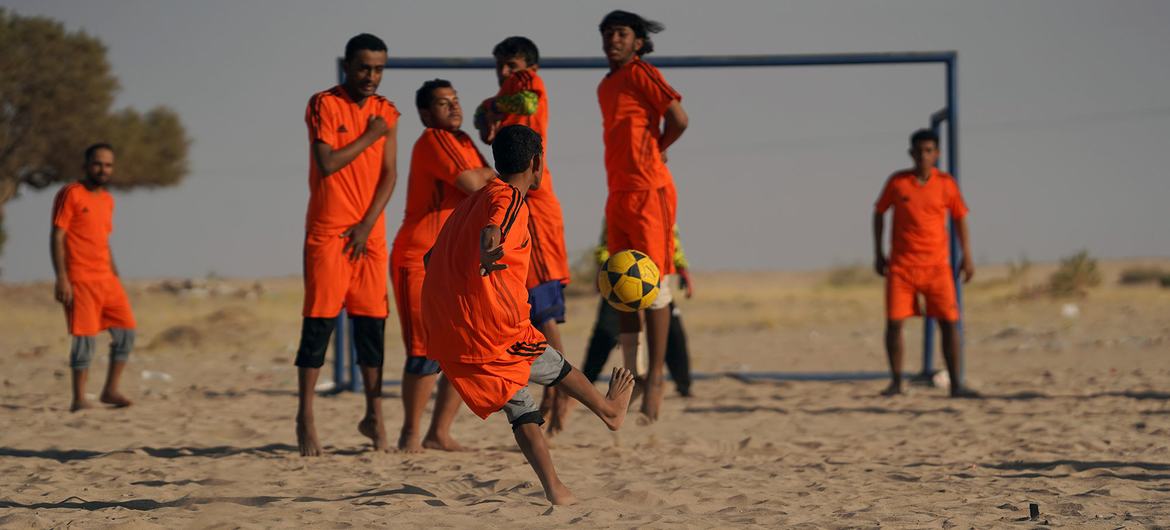
Player in football tournament for displaced people in Ma’rib, Yemen

‘Some came barefoot and played all day under the burning sun’

Despite its popularity, this year’s tournament faced a serious challenge: a lack of funding. In previous years, IOM had managed to fully equip the teams. Players received football boots, socks, kits and even proper goalposts. This year, IOM’s Camp Coordination and Camp Management team could only provide basic jerseys.

Jamal Alshami, an IOM field assistant and one of the long-time organisers, feared the turnout would suffer and that players might lose interest or feel discouraged. But the opposite happened.

“Even more players joined than last year,” he recounts. “Some came barefoot and played all day under the burning sun. They were happy just to be there.”

Displacement takes a toll on mental health. Life in the camps is stressful and isolating. But sport, and football in particular, gives young people a way to reconnect with themselves and with each other. “When people are displaced, they leave behind everything. That includes the things they used to enjoy,” says Mr. Alshami. “That’s why these activities matter. They help people relax and reconnect with something they once loved.”

That sense of joy was felt far beyond the players themselves. Spectators gathered along the sidelines, cheering with every goal. Commentators brought the matches to life with their lively calls. Even camp managers paused their work to watch. For a few hours each day, the camps felt different. They felt louder, lighter and full of life.

With Ma’rib continuing to receive new waves of displacement, IOM is working to bring mental health and psychosocial support closer to the ground. This includes sports, youth clubs and cultural events. Football, in this context, is more than a game. It is a reminder of identity. A way to heal. A moment of normal life in a place where very little feels normal.

Players in football tournament for displaced people in Ma’rib, Yemen