‘We can do better’ for pedestrian and cyclist safety worldwide

These are the exact sort of urban initiatives which the UN Global Road Safety Week – kicking off on Monday – aims to celebrate and promote.

First established in 2007, this year’s week is dedicated to the theme “Make walking and cycling safe.”

Walking and cycling should be the most ordinary, and therefore, the safest mode of transport,” said Dr. Etienne Krug, who chairs the group known as the UN Road Safety Collaboration and directs the World Health Organization’s efforts to tackle social and economic conditions which impact human health.

Stats tell a story

In September 2020, the UN General Assembly passed a resolution which established the Decade of Action for Road Safety 2021-2030 and set a goal to reduce road traffic deaths by at least 50 percent by the end of the decade.

While progress has been made, WHO says that more action is needed across all policy sectors.

Each year, 1.2 million people are killed in road traffic incidents, with pedestrians and cyclists accounting for over one-quarter of these deaths. These deaths are not distributed equally around the world. Rather, 90 per cent of road traffic deaths occur in low- and middle-income countries.

Moreover, the UN estimates that at least 90 per cent of the world’s roads do not meet pedestrian safety standards and only 0.2 per cent of roads have dedicated cycle lanes, leaving pedestrians and bikers dangerously exposed. 

A holistic approach

Improving pedestrian and cyclist safety has far-reaching benefits for communities, in terms of health, economic and environmental outcomes.

“Walking and cycling improve health and make cities more sustainable. Every step and every ride [helps] to cut congestion, air pollution and disease,” said Dr Tedros Adhanom Ghebreyesus, WHO Director-General.

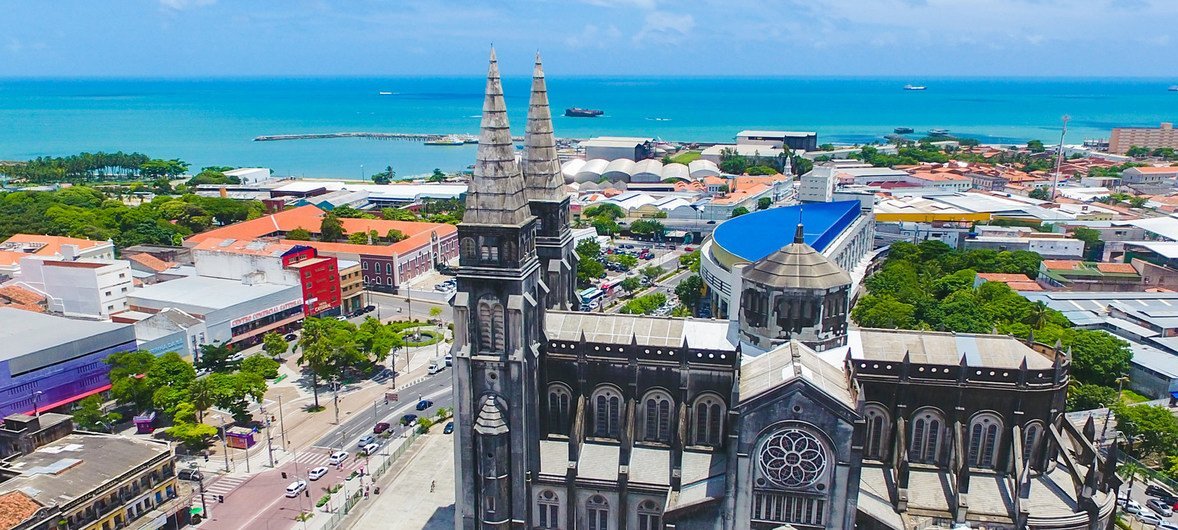
Take, for example, Fortaleza in Brazil – the five-fold expansion of their cycling network led to a 109 per cent increase in pedestrian activity and made children twice as likely to play outside in the areas that were redesigned.

In Norway, the Fyllingsdalstunnelen tunnel which is decorated with murals and protected by security cameras works to reduce carbon emissions and encourage walking and cycling.

To support the continuation of improvements like these during UN Road Safety Week, WHO has provided policy-makers with a toolkit outlining tangible initiatives which include integrating walking and cycling initiatives into other policy sectors and building more extensive infrastructure for pedestrians and cyclists.

“We need [to] and we can do better,” Dr Krug said.

Fortaleza, Brazil.

Source link

UN warns copper shortage risks slowing global energy and technology shift

In its latest Global Trade Update, released this week, UNCTAD describes copper as “the new strategic raw material” at the heart of the rapidly electrifying and digitising global economy.  

But with demand set to rise more than 40 per cent by 2040, copper supply is under severe strain – posing a critical bottleneck for technologies ranging from electric vehicles and solar panels to AI infrastructure and smart grids.

More than just metal

Copper is no longer just a commodity,” said Luz María de la Mora, Director of the International Trade and Commodities Division at UNCTAD.

Valued for its high conductivity and durability, copper is essential to power systems and clean energy technologies. It runs through homes, cars, data centres and renewable infrastructure.

Yet developing new mines is a slow and expensive process, and fraught with environmental risks – often taking up to 25 years from discovery to operation.

Meeting projected demand by 2030 could require $250 billion in investment and at least 80 new mining projects, according to UNCTAD estimates.

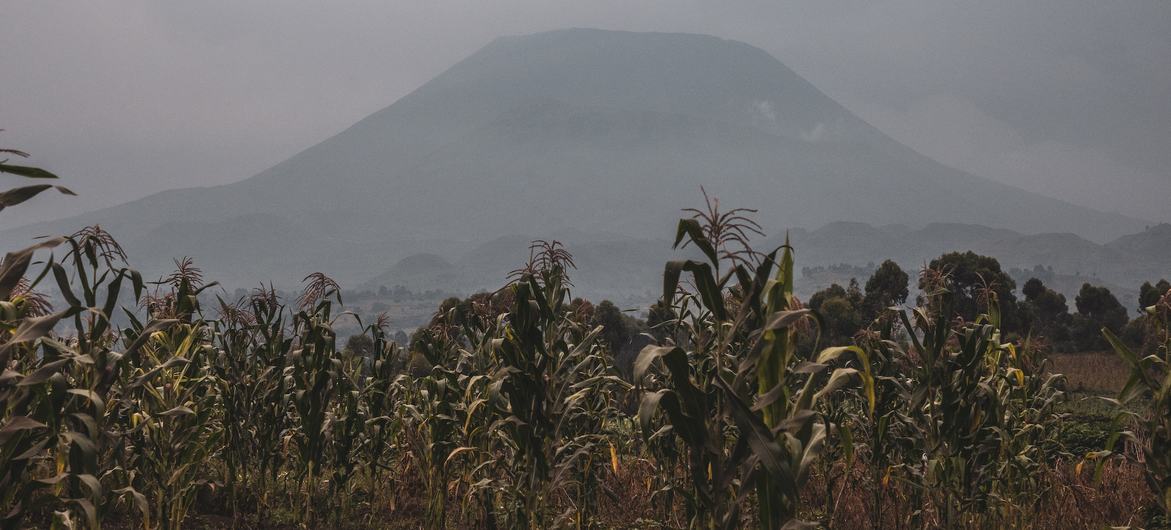
The Democratic Republic of the Congo holds some of the world’s largest copper reserves, yet most of the metal is exported, limiting the country’s ability to benefit fully from this valuable resource.

Uneven geography, unequal gains

Over half of the world’s known copper reserves are concentrated in just five countries – Chile, Australia, Peru, the Democratic Republic of the Congo and Russia.

However, much of the value-added production occurs elsewhere, particularly in China, which now imports 60 per cent of global copper ore and produces over 45 per cent of the world’s refined copper, says the UN.

This imbalance leaves many developing countries stuck at the bottom of the value chain, unable to fully benefit from their resources.

“Digging and shipping copper is not enough,” the report states.

To move up the ladder, copper-rich developing countries must invest in refining, processing and manufacturing – this means strengthening infrastructure and skills, establishing industrial parks, offering tax incentives and pursuing trade policies that support higher-value production.”

Tariff and trade barriers

UNCTAD also highlights the challenge of tariff escalation, where duties on refined copper are relatively low – typically below two per cent – but can rise to as high as eight per cent for finished products like wires, tubes and pipes.

These trade barriers discourage investment in higher-value industries and lock countries into roles as raw material suppliers, the report warns.

To address this, UNCTAD is urging governments to streamline permitting, reduce trade restrictions, and develop regional value chains to help developing economies climb the industrial ladder.

Scrappy solution

With new mining projects facing long lead times, recycling is emerging as a vital part of the solution.

In 2023, secondary sources accounted for 4.5 million tonnes – nearly 20 per cent of global refined copper output. The United States, Germany and Japan are the top exporters of copper scrap, while China, Canada and the Republic of Korea are major importers.

“For developing countries, copper scrap could be a strategic asset,” UNCTAD notes.

“Investing in recycling and processing capacity can reduce import dependence, support value-added trade and advance a more circular, sustainable economy.”

Test case for critical materials

Copper, UNCTAD says, is a likely “test case” for how global trade systems handle rising demand for critical materials amid growing pressures.

“The age of copper has arrived…but without coordinated trade and industrial strategies, supply will remain under strain and many developing countries risk missing out,” the report concludes.

Source link

World News in Brief: ‘Massive’ needs in Sudan, DR Congo aid shortfall, support for Congolese refugees and Angola cholera relief

The UN estimates that in the past few weeks, over 330,000 people have fled into Tawila after the Rapid Support Forces (RSF) launched violent attacks in the Zamzam and Abu Shouk displacement camps and in El Fasher, the regional capital. 

Over 100,000 people also remain trapped in El Fasher. 

‘Massive’ humanitarian needs

Since the beginning of the civil war in Sudan in April 2023, over 18,000 civilians have been killed and over 13 million have been forced from their homes. 

According to UN estimates, over 30.4 million Sudanese are in desperate need of humanitarian aid. 

The World Food Programme (WFP) has provided food assistance to over 300,000 people from the Zamzam displacement camp. Yet, UN Humanitarian Affairs Coordinator Tom Fletcher noted on Thursday that needs remain “massive” in the region. 

“Our humanitarian colleagues also underscore the urgent need for stepped-up, flexible funding to sustain and expand life-saving support for people in need in North Darfur and elsewhere in Sudan,” said UN Deputy Spokesperson Farhan Haq, briefing reporters on Friday. 

However, with ongoing drone strikes in Port Sudan, the main entry point for humanitarian supplies, and increasing violence in North Darfur, providing life-saving assistance has become increasingly difficult. 

“We call once again on all parties to facilitate safe, unhindered and sustained access to the area, via all necessary routes,” Mr. Haq said. 

© UNICEF/Jospin Benekire

A displaced family sit in front of their makeshift shelter in Goma, North Kivu province, DR Congo.

DR Congo: Dire impact of funding cuts amidst cholera outbreak   

Funding shortfalls have forced the humanitarian community to re-prioritise its response plan to alleviate the crisis in the Democratic Republic of the Congo (DRC), the UN aid coordination office OCHA said on Friday. 

Nearly seven million people have already been forcibly displaced by violence since advances by M23 rebels earlier this year.

While the 2025 UN humanitarian plan aims to provide life-saving interventions to 11 million people across the DRC at a cost of $2.5 billion, only $233 million has been received so far. 

Despite escalating needs in the wake of the crisis in the east of the country, “that’s only half the amount we had secured by this time last year,” Farhan Haq told journalists in New York.

Congolese health authorities are facing shortages of medical supplies as the DRC is now facing a cholera outbreak in six provinces.

OCHA is calling for greater protection of civilians in conflict-affected areas, and more support to prevent the collapse of essential services and address the root causes of the crisis.

UN fund allocates over $4 million to support Congolese refugees, Angola cholera outbreak

Two new allocations from the UN Central Emergency Response Fund (CERF) will support Congolese refugees in Uganda and efforts to combat a deadly cholera outbreak in Angola. 

UN Emergency Relief Coordinator Tom Fletcher released the funding on Friday.

More than 60,000 people have fled violence in the Democratic Republic of the Congo (DRC) for neighbouring Uganda since January.

The first allocation, for $2.5 million, will allow the UN and partners to provide life-saving assistance to over 40,000 refugees, including clean drinking water, food, healthcare and nutrition support.

The $1.8 million CERF contribution in Angola will support the urgent response to the country’s worst cholera outbreak in two decades.

Since the beginning of the year, the outbreak has spread to 17 out of 21 provinces, with more than 18,000 cases and 586 deaths reported as of 7 May. 

The funding will go towards scaling up the response and helping to prevent further spread of the disease. 

Source link

UNFPA calls on US to reconsider ban on future funding

In a statement, UNFPA said the move – which invokes a 1985 legal provision known as the Kemp-Kasten Amendment – is based on “unfounded claims” about the agency’s work in China. These allegations, it noted, have “long been disproven”, including by the US Government itself.

The Kemp-Kasten amendment states that no funds can go to any organization or programme which support any “coercive abortion or involuntary sterilization,” as determined by the US president.

The funding cut now in effect is in addition to termination notices already issued for more than 40 existing humanitarian projects, representing roughly $335 million in support.

Impact on the most vulnerable

UNFPA – formally the UN Population Fund – said the loss of US support will significantly undermine efforts to prevent maternal deaths, especially in conflict-affected and crisis-hit regions.

It will cut essential support for millions of people living in humanitarian crises and for midwives preventing mothers from dying in childbirth – work that is a ‘best-buy’ in development, a cost-effective investment that generates positive returns over generations,” the agency stated.

The US, a founding and long-standing partner, has over the decades helped strengthen global health systems and save countless lives, UNFPA said.

“Over the past four years alone, with the US Government’s life-saving investments, we prevented more than 17,000 maternal deaths, nine million unintended pregnancies and nearly three million unsafe abortions by expanding access to voluntary family planning,” the agency added.

Call to reconsider

UNFPA urged Washington to reconsider its position and “reclaim its position as a leader in global public health, saving millions of lives.”

“Funding UNFPA – the only United Nations agency dedicated to reproductive health and rights – is the surest way of reducing the risk of coercive practices around the world,” the agency said.

It also emphasised its continued commitment to dialogue with the US Government through the UNFPA Executive Board, where the United States has been an active member for over 50 years.

The agency also vowed to continue to work tirelessly under its mandate to uphold the health, safety, and dignity of women and girls worldwide.

Source link

More than 50 million in West and Central Africa at risk of hunger

More than 36 million are struggling to meet their basic food needs, which is projected to rise to over 52 million during the lean season from June to August, latest analysis reveals.

This includes almost three million people facing emergency conditions, and 2,600 people in Mali who are at risk of catastrophic hunger.

Although needs are at a historic high, resources are limited, with millions of lives at stake. 

Without immediate funding, WFP will be forced to scale down even further both in the number of people reached and the size of food rations distributed,” said Margot van der Velden, Regional Director for West and Central Africa. 

‘Extremely difficult and dire’ 

In 2019, only four per cent of the population was food insecure compared to 30 per cent today, according to Ollo Sib, a senior research adviser with WFP.

“We hope that our voice will be heard because this food security situation in the Sahel remains extremely difficult and dire,” he said, speaking from Dakar to journalists in Geneva.

Mr. Sib recently travelled to some of the affected areas, such as communities in northern Ghana grappling with unprecedented drought.

“They were forced to replant two to three times, and for them, each failed sowing is an additional financial burden as the cost of fertilisers and seeds were extremely high in those locations,” he said.

The assessment team also went to northern Mali, which is the only place in the region where people are facing catastrophic food security conditions.

“We had the opportunity to interact with pastoralist elders who typically sell their livestock to buy cereals,” he said. 

“This year they were worried because the cost of food rose by 50 per cent compared to the five-year average. But at the same time, they are not able to access markets to sell their goods.” 

Fighting, food inflation and floods

WFP said unyielding conflict is among the factors driving deepening hunger in West and Central Africa.  

Fighting has displaced more than 10 million of the most vulnerable people across the region, including more than two million refugees and asylum seekers, in Chad, Cameroon, Mauritania and Niger. 

Nearly eight million more have been internally displaced, mainly in Nigeria and Cameroon. 

Meanwhile, food inflation exacerbated by rising food and fuel costs are pushing hunger levels to new highs.

At the same time, recurrent extreme weather “erodes the ability of families to feed themselves,” WFP said. 

© WFP/Desire Joseph Ouedraogo

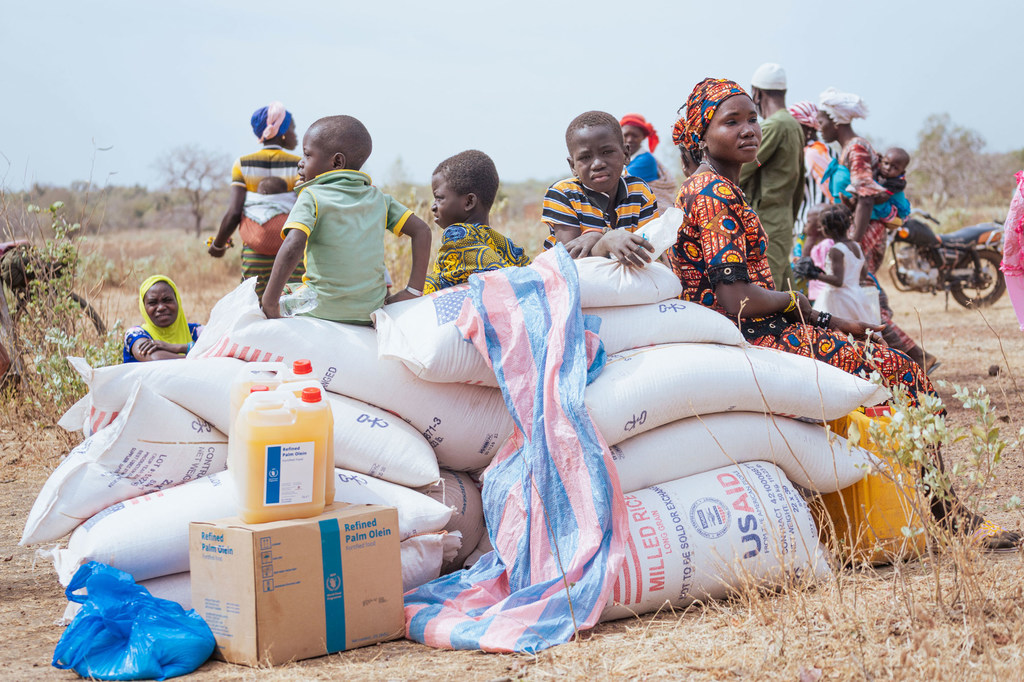
Vulnerable populations in Morolaba, Burkina Faso, receive emergency airlifted food assistance.

Five million at risk

WFP stands ready to respond and scale up vital assistance in West Africa and the Sahel. The UN agency is seeking $710 million to support its life-saving operations through the end of October.

The aim is to reach almost 12 million people this year with critical assistance.

So far, teams have already reached three million of the most vulnerable including refugees, internally displaced people, malnourished children under five, and pregnant or breastfeeding women and girls.

The agency said that five million risk losing assistance unless urgent funding is found.

Address root causes

WFP also called for governments and partners to invest in sustainable solutions aimed at building resilience and reducing long-term dependency on aid.

Since 2018, the UN agency has been working with regional governments to address the root causes of hunger through a programme that has rehabilitated over 300,000 hectares of land to support over four million people in more than 3,400 villages. 

Source link

Costa Rica’s refugee lifeline at breaking point amid funding crisis

“Without funding, asylum seekers are left in limbo – undocumented, unsupported and increasingly desperate,” said Ruvendrini Menikdiwela, Assistant High Commissioner for Protection.

Her comments follow a 41 per cent budget cut to the UN agency’s operations in the country that have had devastating consequences. “This is not about luxuries; the assistance we’re cutting is critical and lifesaving,” she insisted.

The Central American nation today hosts more than 200,000 refugees and asylum seekers – adding up to nearly four per cent of its population.

More than eight in every 10 are from Nicaragua, fleeing deepening political and social turmoil linked to serious allegations of “systemic repression”, according to independent rights experts reporting to the Human Rights Council.

Despite economic constraints, Costa Rica has continued to offer safety and hope to those escaping persecution, UNHCR said.

Safe spaces at risk

On a recent official tour of Costa Rica, Ms. Menikdiwela described meeting indigenous Miskito women who had fled gender-based violence and established safe spaces, despite language and cultural barriers. “Their courage is humbling,” she said. “But the loss of services threatens everything they’ve tried to rebuild.”

The UN agency  has warned that legal support, mental health services, education, job training and child protection initiatives have already been scaled back or suspended.

Many were tailored to vulnerable women and children in remote areas.

No right to a job, school or healthcare

Because of the cuts, the capacity to register new arrivals has plummeted by 77 per cent. But without documentation, refugees cannot legally work, attend school or access healthcare. With over 222,000 claims backlogged, some cases may now take up to seven years to process.

“The Government’s plea to me was simple,” Ms. Menikdiwela said. “‘Help us to help these people.’”

Costa Rica has long played a leadership role in regional and global refugee protection frameworks. But this solidarity is now stretched to breaking point, the UN agency said, in an appeal for $40.4 million to maintain its operations in the country Rica through 2025.

“This is a stark reminder that protection must be backed by resources,” Ms. Menikdiwela warned. “If the international community does not step up, the consequences will be severe – not just for those already in Costa Rica – but for stability in the wider region as well.”

Source link

Haiti: Displaced families grapple with death ‘from the inside’ and out

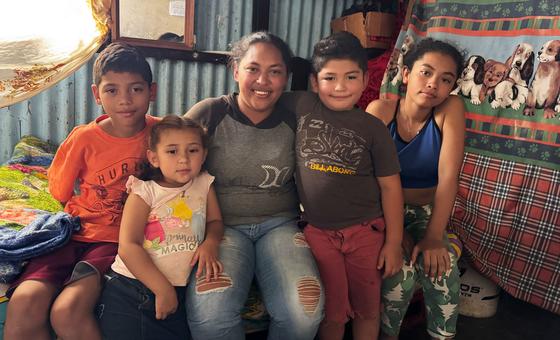
In March, the family fled the gangs again – this time to Boucan-Carré where Leineda’s treatments were put on hold:

Sometimes, we suffer from silent illnesses that destroy us from the inside,” Christiana said.

Gangs on the march

In the past few months, armed gangs in Haiti have been expanding their reach beyond Port-au-Prince towards the Centre and Artibonite Departments, displacing around 64,000 from those areas, according to UN estimates.

Humanitarian efforts to reach displaced communities have been disrupted by regional insecurity and funding shortages.

“What we’re seeing on the ground is unimaginable. Communities are being displaced daily, and the images of women and children fleeing for their lives with nothing are heartbreaking,” said Wanja Kaaria, the UN World Food Programme’s (WFP) Haiti director.

Attacks beyond the capital

The assassination of Haiti’s President Jovenel Moïse in 2021 triggered widespread gang violence in the capital Port-au-Prince. Around 85 per cent of the city is now controlled by gangs. Over one million Haitians have been displaced because of this violence.

In recent months, organised crime groups have expanded their attacks into the Centre Department in western Haiti and neighboring Artibonite in northern Haiti.

In late March, one of the gangs attacked Mirebalais, killing at least 15 civilians and leading to a jailbreak of 515 inmates. In late April, gang members attacked the commune of Petite-Rivière in Artibonite, killing dozens and damaging scores of homes.

Other gang attacks have occurred in the suburbs of Port-au-Prince and throughout Centre, including in Hinche, Boucan-Carré and Saut d’Eau.

Navigating humanitarian aid blockages

After these attacks in the Centre and Artibonite Departments, over 64,000 people have been displaced according to estimates from the UN International Organization for Migration (IOM).

“Across Haiti and as we have seen this week in the Centre region especially, children are trapped in a cycle of fear and suffering, reliving the same nightmare day after day. What they need most urgently is an end to the violence,” Geeta Narayan, United Nations Children’s Fund (UNICEF) representative in Haiti, said.

As a result of ongoing gang activity and security conditions in the region, local authorities have had to scale back humanitarian aid deliveries. UN Children’s Fund, UNICEF, has cancelled planned field missions.

This is particularly difficult for displaced families who are fully reliant on this aid. Danise, a mother of two, has been displaced many times – first leaving her home in Jérémie, then being deported from the Dominican Republic, next, fleeing violence in Mirebalais before finally settling in Boucan Carré.

“I barely have anything to give [my children],” Danise said. “I always have to wait for food distributions to feed them…I just want to go home.”

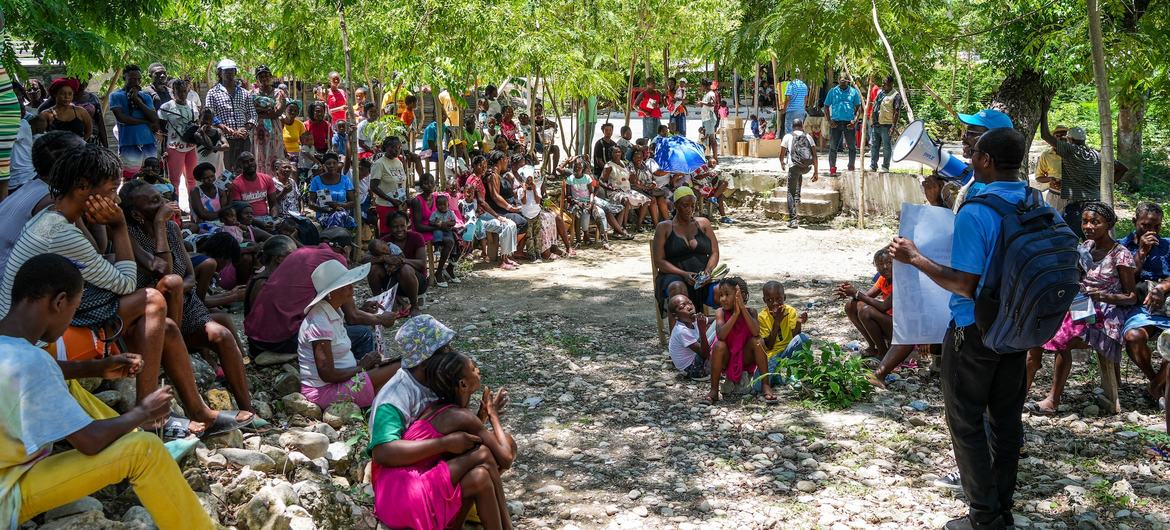
Dozens of people displaced from the Haitian communes of Mirebalais and Saut-d’Eau attend hygiene awareness sessions in Boucan Carré.

Providing relief to displaced communities

In spite of deteriorating security, UN aid teams are working with local partners and departmental authorities to continue providing resources to displaced civilians.

“[Displaced people have had their] lives upended – entire families struggling to access water, healthcare or adequate shelter.”

The Office for the Coordination of Humanitarian Affairs (OCHA) “remains engaged alongside local authorities and partners to strengthen humanitarian action, despite limited resources, and continues to advocate for increased support,” Modibo Traore, OCHA’s Head of Office in Haiti, said.

Across the Centre Department, UNICEF has reached 8,500 people with resources, including six mobile clinics.

“We are scaling up our response in the Centre department, providing critical health care, reaching thousands of children with psychosocial support, safe water and access to education where it’s needed most,” Ms. Narayan said.

WFP is also working in the Centre Department to provide hot meals and food kits to displaced communities and has provided assistance to over 13,100 displaced individuals in this region as of early May.

This is the moment to step up. The future of Haiti depends on the actions we take today
– WFP Country Director Wanja Kaaria

“WFP food assistance offers dignity for families now living with little hope. However, funding constraints are impeding us from responding at scale.” Ms Kaaria said.

WFP estimates that it will need $72.4 million over the next 12 months and UNICEF estimates that it will need $1.2 million over the next six months to deal with the ongoing displacements in Haiti.

“This is the moment to step up. The future of Haiti depends on the actions we take today,” Ms Kaaria said.

Finding dignity through care

In recent days, young Leineda has begun to receive the treatment she needs for malnutrition at the Boucan Carré site.

“I feel happy today because before, we didn’t have any doctors to examine us or understand our pain,” Christiana said. The presence of the doctors brings back a sense of dignity. It helps us.”

Source link

Gaza: UN agencies reject Israeli plan to use aid as ‘bait’

UN Children’s Fund (UNICEF) spokesperson James Elder insisted that the Israeli proposal to create a handful of aid hubs exclusively in the south of the Strip would create an “impossible choice between displacement and death”.

The plan “contravenes basic humanitarian principles” and appears designed to “reinforce control over life-sustaining items as a pressure tactic”, he told journalists in Geneva. “It’s dangerous to ask civilians to go into militarized zones to collect rations…humanitarian aid should never be used as a bargaining chip”.

The Gaza Strip has been under a complete aid blockade for more than two months and humanitarians have warned repeatedly that food, water, medicines and fuel have been running out.

Kids and elderly at risk

If the Israeli plan were to happen, Gaza’s most vulnerable individuals – the elderly, children with disabilities, the sick and the wounded who cannot travel to designated distribution zones – would face “horrendous challenges” retrieving aid, the UNICEF spokesperson maintained.

The Israeli aid distribution blueprint presented to UN humanitarians envisages only 60 aid trucks per day entering Gaza – “one-tenth of what was being delivered during the ceasefire” between Israel and Hamas which held from 19 January to 18 March.

“It’s not nearly enough to meet the needs of 1.1 million children, 2.1 million people,” Mr. Elder insisted. “There is a simple alternative: lift the blockade, let humanitarian aid in, save lives.”

Thousands of trucks in limbo

Stressing the success of the UN-led aid scale up during the ceasefire, humanitarian affairs coordination office spokesperson Jens Laerke urged the Israeli authorities to “facilitate the aid that we and our partners have available just a few kilometres away” just outside Gaza.

UNRWA, the largest aid provider in the Strip, said that the UN agency has “over 3,000 trucks of aid” that are stuck outside Gaza.

Juliette Touma, Director of Communications, deplored the fact that such a “big dollar figure” was going to waste, when the food could be reaching hungry children and when medicine could be used to treat people with chronic diseases.

“The clock is ticking. The gates must reopen, the siege must be lifted as soon as possible,” she insisted, while calling for the release of Israeli hostages and a return to a standard flow of humanitarian supplies.

Inside Gaza, aid teams warn that the situation is desperate. “Even those [food] lines are now gone because food is running out,” said UNRWA’s Ms. Touma.

Nothing left to queue for

In an update on Thursday, OCHA said that more than 80 community kitchens have been forced to shut since late April, owing to the lack of supplies. This number is rising “by the day”, fuelling “widespread” hunger in Gaza, the UN aid coordination office said.

Rebutting Israeli allegations that aid reaching Gaza has been diverted by militant groups, both Ms. Touma and UN World Health Organization (WHO) spokesperson Dr. Margaret Harris described “end-to-end” systems put in place to counter this risk.

“Our supplies are reaching the health facilities they’re meant to serve,” said Dr. Harris, adding that the UN health agency had not witnessed any aid diversion within the health care system.

“It is not about failure of aid delivery within Gaza. It is about not being allowed to bring it in,” Dr. Harris concluded.

In a further note of caution about the Israeli plan, UNICEF’s Mr. Elder insisted that the proposed use of facial recognition as a precondition to access aid ran against all humanitarian principles to “screen and monitor beneficiaries for intelligence and military purposes”.

He recalled that the ceasefire earlier this year had resulted in a “huge” improvement in children’s nutrition.

“It meant food in the markets, repaired water systems…It meant people could access health care safely. It meant health care facilitators had medicines that they need.”

‘Boastful’ denials of aid

Fast forward to today and food, water, medicines – “everything for a child to survive” – is being blocked, Mr. Elder said — “and in many ways, boastfully blocked”.

The UNICEF spokesperson also expressed concern that the Israeli plan risks separating family members “while they move back and forth to try and get aid” from the designated locations in a territory that “lacks any safety” amid ongoing bombardments.

Source link

‘She cries in her sleep’: Deeper crisis looms beneath devastation from Myanmar quake

“I hate earthquakes. Earthquakes took my mother and my aunt away,” five-year-old Khin Yadanar told the UN Children’s Fund (UNICEF), after both her mother and aunt were killed when a brick wall collapsed on them.

Around 6.5 million children were already in need of humanitarian assistance before the earthquake, which compounded existing vulnerabilities resulting from the brutal civil war between multiple armed opposition groups and the military junta which seized power in a February 2021 coup.

Families now face a further threat from flooding and landslides with the arrival of the monsoon season.

Midwives are lifelines

As health services collapsed after the earthquake, “women, especially pregnant mothers, were severely impacted,” said Yu Yu, a midwife in Mandalay, speaking to the UN’s reproductive health agency, UNFPA.

Amidst the chaos, midwives have emerged as frontline heroes. Undeterred by aftershocks and confronting both physical obstacles and emotional challenges, midwives provided hope and life-saving support.

Yu Yu notably recalls the case of one of her patients who suddenly became stranded, unable to reach any medical facilities as she went into labour following the quake.

Without hesitation, Yu Yu rushed to her side: “When I reached her, she was exhausted, overwhelmed by fear and financial insecurity following the earthquake,” she recalled.

On that day, Yu Yu saved both mother and child, as the baby’s umbilical cord had wrapped itself around the infant’s neck.

UNFPA has deployed mobile clinics to ensure that women and girls continue to receive essential healthcare and protection services.

A 10-year-old boy with his parrot on his shoulder at a temporary camp set up in the aftermath of devastating earthquake that struck Myanmar.

Deep trauma

“She cries in her sleep, and I worry something inside her has broken,” said Thida, mother of eight-year-old Thiri, speaking to UNICEF.

Beneath the visible devastation of the earthquake lies a deeper crisis: the profound psychological trauma that young survivors carry.

“I was so scared. My heart was beating so fast – and all I could think about was my parrots and cats at home,” said Thurein Oo, a ten-year-old boy who was praying at a mosque when the tremor struck.

Across earthquake-affected areas, parents are witnessing similar signs of distress in their children – sudden anxiety, emotional withdrawal, and sleepless nights, say UN aid workers.

In response to this growing mental health crisis, UNICEF and its partners have mobilised to provide critical psychological support to affected communities.

Setting up child-friendly spaces, UNICEF aims to promote psychosocial wellbeing, build resilience, and restore a sense of normalcy to children’s routines. Through various activities such as drawing, children learn to cope with their trauma.

“I coloured a picture of my mother,” said Khin, who lost her mother in the quake. “I feel better when I draw.”

Although the physical rebuilding of homes and infrastructure will likely take years, the emotional and psychological toll the earthquake has had on children cannot be left untreated.

“I like coming here,” said Thurein, referring to one of these spaces. “I feel safe, and I made a new friend who also lost his home,” he added.

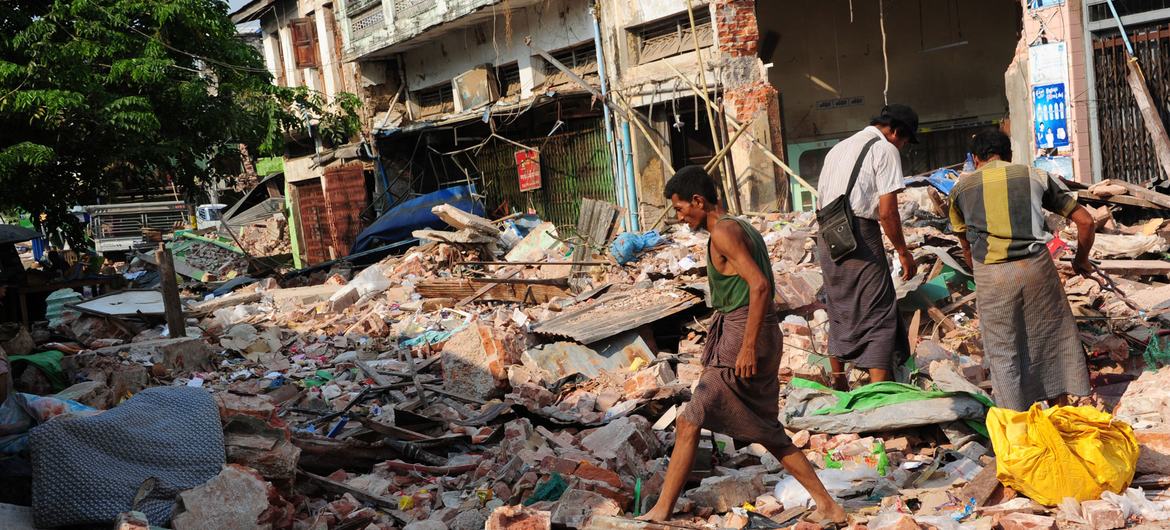
Earthquake survivors survey the ruins of their homes in Pyinmana, Myanmar following the earthquake there.

Proactive planning

While earthquakes are among the deadliest natural hazards, it is the collapse of buildings that causes the most devastating effects. As such, proactive disaster risk reduction – such as making structures earthquake-resistant – is essential to reducing deaths and economic losses.

Focusing on risk-sensitive urban development, UN-Habitat and the UN office for disaster risk reduction (UNDRR) are also working across Myanmar to mitigate the risks future earthquakes could pose.

While little can be done to prevent natural hazards such as earthquakes from occurring, much can be done to mitigate their effects.

As rebuilding efforts are underway, the UN is dedicated to “ensuring that each step we take makes the rebuilt areas stronger and more resilient than before,” said Anacláudia Rossbach, Executive Director of UN-Habitat.

UN Security Council extends South Sudan mission amid rising instability

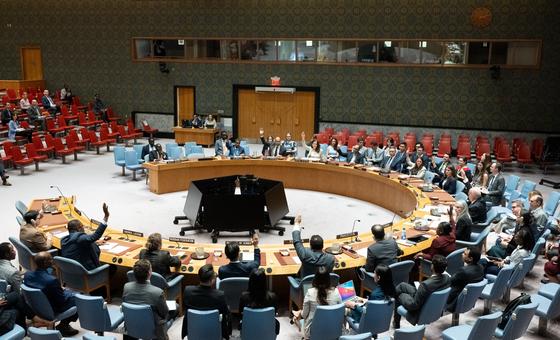
Introduced by the United States and supported by 11 other Council members, the resolution extended the mandate of UNMISS until 30 April next year.

This action follows a short nine-day “technical rollover” approved by the Council on 30 April to allow more time for negotiations.

Through the text – adopted on Thursday – the Security Council authorized the peacekeeping mission to “use all necessary means” to implement its mandate – including the protection of civilians, assisting aid delivery, supporting implementation of the 2018 peace agreement, and investigating violations of international law.

Three nations – China, Pakistan, and Russia – abstained.

Volatile situation on the ground

The renewal comes amid an increasingly volatile political and security situation in South Sudan.

Head of UNMISS Nicholas Haysom warned ambassadors in April that the fragile 2018 Revitalized Peace Agreement – signed by historic rivals President Salva Kiir and former First Vice President Riek Machar – is unravelling.

The political standoff, including the arrest of Mr. Machar, has reportedly escalated into open military confrontation, while misinformation and hate speech are fuelling ethnic divisions and instability.

“This situation is darkly reminiscent of the conflicts of 2013 and 2016, which cost over 400,000 lives,” Mr. Haysom said.

UNMISS mandate

The resolution maintains the mission’s overall force ceilings at 17,000 troops and 2,101 police, including 88 justice and corrections advisors.

The Council also expressed its readiness to consider adjusting force levels and capacity-building based on future conditions.

The resolution expressed “deep concern” over delays in implementing the 2018 agreement, urging South Sudan’s leaders to urgently show political will and build mutual trust. It urged the parties to engage in open and constructive dialogue.

It also stressed that the “organization and funding of free and fair elections is the responsibility of the South Sudanese authorities”, calling on the transitional government to adopt an appropriate legislative framework to fund national elections.

The resolution also condemned the use of sexual violence, recruitment of child soldiers and interference in any humanitarian operations.

UNMISS was initially established by the Security Council in 2011, following South Sudan’s independence from Sudan, to help maintain peace and stability at the time when the young nation faced significant internal conflicts and humanitarian challenges.

Broadcast of the Security Council meeting.

Ditch ‘ideological goals’: US

Speaking before the adoption, US Acting Representative Dorothy Shea called on the international community to bring South Sudan “back from the brink.”

She cited deteriorating conditions on the ground, including recent attacks against civilians and infrastructure. She also noted ongoing challenges facing UNMISS – including being asked to vacate its Tomping base – which undermine the mission’s ability to carry out its mandate.

“In short, as I hope we can all agree, the goal of UNMISS should be to render itself unnecessary by ushering in a lasting peace. The day that a peacekeeping operation is no longer required in South Sudan will be a bright one,” Ambassador Shea said.

She added that UN peacekeeping mandates, including UNMISS, “should not pursue ideological goals that are difficult to define and even more challenging to implement on the ground, but rather focus on core Chapter VII functions,” referring to the Chapter of the UN Charter stressing action to further international peace and security.

Unnecessarily politicised: Pakistan

Pakistan, which abstained from the resolution alongside China and Russia, explained its position.

Deputy Permanent Representative Muhammad Usman Iqbal Jadoon said UN Peacekeeping Missons should enjoy “complete and unified support” of the Security Council.

“However, this task is complicated when mandate resolutions are unnecessarily politicised,” he said, stating that mission mandates “must be tailored to the needs on the ground, not the political priorities of Council members.”

The resolution contained issues “which have no direct link” with UNMISS, preventing consensus among the 15 Council member States, he added.

That said, Mr. Jadoon reiterated his country’s full support for UNMISS and its leadership.

“UNMISS remains a force of stability in South Sudan. We greatly appreciate the dedication of its personnel and peacekeepers, who are performing their duties under difficult conditions.”

Source link

Guterres welcomes election of Pope Leo ‘at a time of great global challenges’

His Holiness Pope Leo XIV – born Robert Francis Prevost – is the first person from the United States to lead the Catholic Church, although he also holds Peruvian citizenship after working in the Latin American country for many years.

He was selected by cardinals voting at the Vatican and later greeted thousands gathered in St. Peter’s Square with a message of peace.

Strong voices needed

Mr. Guterres extended heartfelt congratulations to the new pontiff and Roman Catholics everywhere. 

 “The election of a new Pope is a moment of profound spiritual significance for millions of faithful around the world, and it comes at a time of great global challenges,” he said.

 “Our world is in need of the strongest voices for peace, social justice, human dignity and compassion.”

Building on the legacy

 The Secretary-General said he looks forward to building on the long legacy of cooperation between the UN and the Holy See – nurtured most recently by the late Pope Francis – to advance solidarity, foster reconciliation, and build a just and sustainable world for all.

 “It is rooted in the first words of Pope Leo,” he noted.  “Despite the rich diversity of backgrounds and beliefs, people everywhere share a common goal: May peace be with all the world.”

© FAO/Giuseppe Carotenuto

António Guterres, UN Secretary-General (fourth from right) greets an official in front of St. Peter’s Basilica at the funeral of Pope Francis.

Pope Leo, 69, was born and grew up in the midwestern city of Chicago and spent years working as a missionary in Peru, before becoming a bishop and then rising to head the international Order of St. Augustine.

He became a cardinal in 2023 and went on to run the Vatican office that selects and manages Catholic bishops worldwide. 

He succeeds Pope Francis – the first Pope from Latin America – who died in April after serving for 12 years.

Following his death, the UN Secretary-General recalled that “Pope Francis was a transcendent voice for peace, human dignity and social justice” who “leaves behind a legacy of faith, service and compassion for all — especially those left on the margins of life or trapped by the horrors of conflict.” 

Source link

UN rights body rules Guatemala failed displaced Mayan Peoples

The landmark decision, announced on Thursday, also considered the harm caused to succeeding generations.

Forced displacement is permanent in nature until the victims benefit from a safe and dignified return to their place of habitual residence or are voluntarily resettled elsewhere,” said Committee member Hélène Tigroudja.

Conflict, displacement and violations

The Committee found that the 269 members of the K’iche’, Ixil and Kaqchikel Mayan Indigenous Peoples were violently uprooted from their traditional lands and forced to seek refuge in the capital, Guatemala City, in violation of the International Covenant on Civil and Political Rights (ICCPR).

They were forcibly displaced during “scorched earth” operations amid internal armed conflict in the 1980s.

Mayan leaders approached the Committee in 2021, claiming their rights under the UN treaty were violated.

Although they had reached a settlement with the Government and agreed on several reparation measures under the 2011 National Compensation Programme – which foresaw, in particular, the resettlement and construction of alternative housing – it was never implemented.

‘Stripped of cultural identity’

The UN Committee’s decision noted that while in the capital city, Mayans were also forced to conceal and ultimately change their identities, representing another violation.

The uprooting of the victims from their natural environment and lands had a deep, devastating, and lasting impact as they were irremediably stripped of their cultural identity,” Ms. Tigroudja said. 

“They had to abandon their cultural practices, stop wearing their traditional clothing and stop speaking their language, which also constitutes an irreparable loss for their children and grandchildren,” she added.

Transgenerational trauma

In a new approach, the Committee considered that the State violated not only the rights of those who were forcibly displaced but also the rights of third-generation children born in displacement, thus transmitting the trauma of being uprooted. 

“Indigenous Peoples’ rights are, by definition, intergenerational.  Transmission is a key condition for the continuity of Indigenous Peoples’ existence and cultures,” Ms. Tigroudja said.

The Committee also highlighted that the forced displacement and accompanying violence resulted in the victims having to leave behind the buried bodies of their relatives. 

Burial rites disrupted

Moreover, they were unable to perform funeral rituals for family members who died or were executed or forcibly disappeared during the conflict, in violation of their right not to be subjected to torture and inhumane treatment. 

In Mayan culture, not performing funeral rites is considered a moral transgression which can lead to spiritually caused illnesses that can manifest as physical diseases and can affect the entire lineage,” Ms. Tigroudja explained. 

“These are not only performative ceremonies and rituals but an integral part of the physical, moral and spiritual integrity of members of the communities as well as of the communities as a whole,” she added.

Action by authorities

The Committee requested Guatemala to search for and hand over the remains of the disappeared family members so that funeral rituals can be carried out in accordance with cultural requirements. 

The Government is also urged to undertake other measures, including providing victims, their children and grandchildren with the necessary medical, psychological and/or psychiatric treatment; and publicly acknowledging responsibility.

About the Committee

The Human Rights Committee comprises 18 independent experts who monitor implementation of the International Covenant on Civil and Political Rights (ICCPR).

More than 170 States are party to the UN treaty. Committee members are elected by States parties and serve in their personal capacity. They are not UN staff and do not receive payment for their work. 

Source link

World News in Brief: South Sudan urged to avoid slide to war, Türk calls on EU not to weaken landmark law, Ukraine and Mali updates

The Quartet is calling on the country’s leaders to end hostilities and return to dialogue to fully implement the 2018 peace agreement known as the Revitalized Agreement on the Resolution of the Conflict in the Republic of South Sudan (R-ARCSS).

South Sudan, the world’s youngest nation, gained independence in 2011 but soon descended into a brutal civil war. A 2018 peace agreement has held together but now threatens to fully unwind between the president and his vice presidential rival.

Regional pressure

In recent weeks, the Quartet has observed air and ground attacks that have led to loss of life, the destruction of homes, and the displacement of civilians. Humanitarian facilities have also been targeted, while hate speech and ethnic tensions are on the rise.

The Quartet welcomed a recent joint visit by the African Union and IGAD to South Sudan as a sign of regional support for peace. It also called on all sides to cooperate with ceasefire monitors investigating recent violence.

South Sudan’s leaders must commit to inclusive dialogue, the release of political detainees, and renewed efforts to carry out the peace deal, the Quartet stressed.

A return to war would betray the people’s hope for peace and stability, they warned. Only a political solution can ensure free and fair elections at the end of the current transitional period.

UN rights chief urges EU not to weaken landmark corporate responsibility law

UN human rights chief Volker Türk has called on the European Union to protect a key law that holds large companies accountable for human rights and environmental harm.

The EU’s Corporate Sustainability Due Diligence Directive (CSDDD), adopted last year, requires businesses to identify and address any negative impact their activities may have on people or the planet.

But changes now being discussed in Brussels as part of a broader reform package could weaken the law, Mr. Türk warned on Wednesday.

“The CSDDD, by far the most ambitious business and human rights regulatory initiative anywhere in the world, has rightly been welcomed by companies, policy makers, civil society, and national human rights institutions alike,” he said.

“A large number of businesses have already taken steps to ensure they comply with it.”

Detailed review

UN human rights office, OHCHR, has published a detailed review of the EU proposal, pointing to ways it could undermine this groundbreaking directive.

Mr. Türk urged lawmakers to keep the law in line with global standards, such as the UN Guiding Principles on Business and Human Rights.

“While some streamlining… could be advantageous, it would be counterproductive to water down its alignment with international standards,” he said.

April deadliest month for civilians in Ukraine since September

April was the deadliest month for civilians in Ukraine since September 2024, with at least 209 people killed and 1,146 injured, the UN Human Rights Monitoring Mission in Ukraine (HRMMU) reported on Wednesday.

In its monthly update, the Mission said that 97 per cent of casualties occurred in areas controlled by Ukraine, with nearly half caused by missile and loitering munitions attacks by Russian forces.

“Kryvyi Rih, Sumy, Dnipro, Zaporizhzhia, Kyiv, and Kharkiv all endured devastating attacks,” said Danielle Bell, Head of HRMMU. “The sharp rise in casualties was mainly due to the intensified use of ballistic missiles in major cities.”

Among the deadliest incidents:

  • On 4 April, a missile strike on Kryvyi Rih killed 20 civilians and injured 63.
  • On Palm Sunday (13 April), two missiles hit Sumy, killing at least 31 and injuring 105.
  • A 24 April attack on Kyiv killed 11 and injured 81.

Children were especially affected. At least 19 were killed and 78 injured in April – the highest monthly total since June 2022.

The wave of attacks continued into May, with cities including Kharkiv, Odesa and Kyiv again coming under fire.

UN experts raise alarm over Mali’s suspension of political parties

Independent UN human rights experts have strongly criticised Mali’s military authorities for suspending all political parties and activities, calling the move a clear violation of basic rights.

© MINUSMA/Harandane Dicko

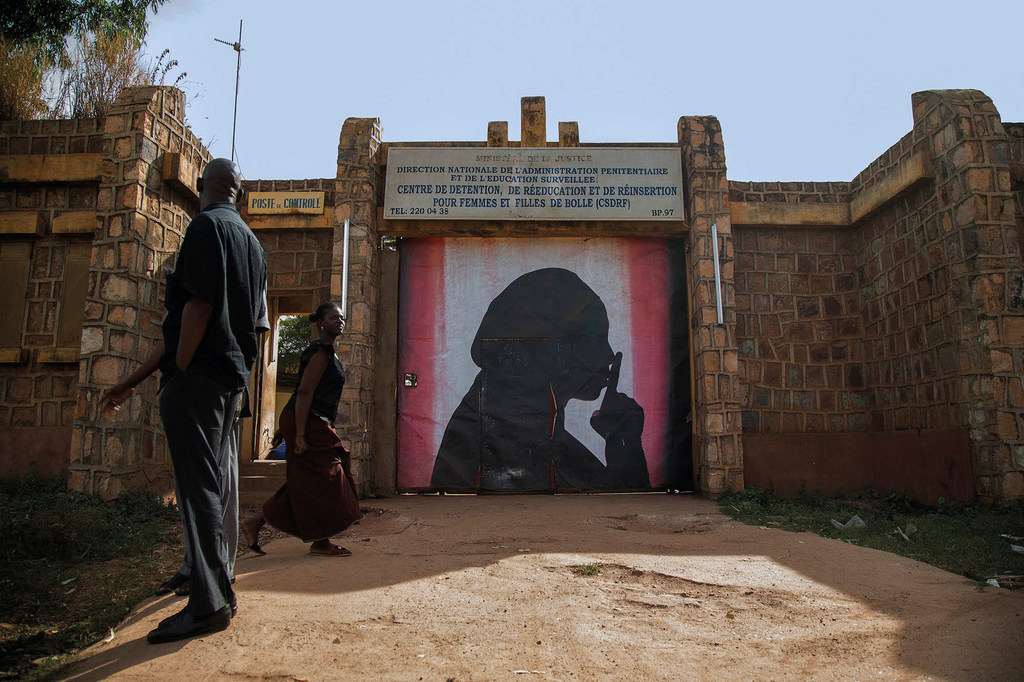
A detention centre in Bamako, Mali. (file)

The decision, announced on 7 May via state television, halts political activity “until further notice.” The junta, which took power following coups in 2020 and 2021, said the suspension was necessary to maintain public order.

The three UN Human Rights Council-appointed experts described it as a direct violation of human rights and called for the order’s immediate repeal.

They also called on the National Transitional Council to strike down a bill introduced on 30 April, which repealed legislation governing how political parties operate.

“If passed into law, the 30 April bill will place Mali in contravention of its human rights obligations, notably on freedoms of association and expression,” the experts stressed.”

Protests

In response to the 30 April bill, opposition parties organised a pro-democracy rally in the capital Bamako on 3 May which drew hundreds of demonstrators. The parties reportedly demanded a timeline to end military rule and a return to constitutional order.

Another protest is planned for Friday to oppose the decree against political parties.

The experts said Malian authorities must work to counteract “the current climate of suppression of the civic space”.

“The right to peacefully assembly is essential to the health of a vibrant political community,” the experts said. “The Malian Transitional authorities must scrupulously respect it and abstain from acts of intimidation and repression that risk the physical integrity and the rights of demonstrators.”

Special Rapporteurs and Independent Experts are appointed by the Geneva-based Human Rights Council. They serve in their individual capacity, independent of the UN system and national governments. They are not UN staff and draw no salary

Source link

UNRWA condemns ‘storming’ of schools in East Jerusalem

According to the agency, heavily armed personnel entered the schools in Shu’fat refugee camp on Thursday while classes were in session, forcing more than 550 Palestinian girls and boys – some as young as six – out of their classrooms.

One UNRWA staff member was detained, and all of the agency-run schools in East Jerusalem were subsequently evacuated as a precaution.

‘Assault on children’

This is an assault on children. An assault on education,” UNRWA Commissioner-General Philippe Lazzarini said in a statement.

Storming schools and forcing them shut is a blatant disregard of international law.

He added that by enforcing the closure orders issued against UNRWA schools in April, Israeli authorities are denying Palestinian children their basic right to learn.

These schools are inviolable premises of the United Nations. UNRWA schools must continue to be open to safeguard an entire generation of children,” Mr. Lazzarini said.

Immediate risk

Roland Friedrich, Director for UNRWA Affairs in the West Bank, warned the Palestine refugee children are at an “immediate risk” of losing their access to education.

“Israel’s actions today are a grave violation of its obligations as a UN Member State under international law,” he said in a social media post.

He called on the international community to uphold UNRWA’s mandate and humanitarian space in the West Bank.

Gaza: Water, sanitation crisis deepens

Meanwhile, the humanitarian crisis in Gaza continues unabated, with more than three-quarters of households reporting reduced access to water, ten weeks into Israel’s aid blockade.

A survey conducted by humanitarians in April found that 90 per cent of families faced critical water shortages, often having to choose between basic hygiene and cooking. They also reported an increase in reliance on private vendors for drinking water – with public infrastructure in ruins.

Fuel shortages and limited access to repair equipment, have further complicated the situation. The southern Gaza desalination plant remains offline due to a severed power line, while key water pipes damaged earlier this year have yet to be repaired.

Overflowing waste and rodent infestation

The UN aid coordination office, OCHA, also reported widespread sanitation issues, including a lack of functioning latrines, soap shortages and sewage overflows in hard-hit areas like Jabalia and Nazla.

Overcrowded shelters are facing rodent and insect infestations, further raising fears of disease outbreaks amid strained medical services, OCHA said, warning of a looming public health disaster if the crisis continues unchecked.

Port Sudan: No let-up in drone attacks as UN chief urges peace

The UN chief warned that any further escalation of the conflict could result in massive civilian casualties and worsen the already catastrophic humanitarian situation across the country.

The expansion of the conflict into an area that has served as a place of refuge for a large number of displaced people is alarming,” he said in a statement issued by his Spokesperson’s office.

Mr. Guterres’s appeal follows days of drone strikes on key infrastructure in Port Sudan that have opened a new front in the fighting between forces of the military government and heavily armed paramilitaries.

The city is a main entry point for relief supplies, hosting airports and direct access to the Red Sea. It is also a shelter for hundreds of thousands of displaced people and the seat of government after generals lost control of the capital Khartoum to the Rapid Support Forces (RSF).

Aid flights suspended

In response to the drone attacks, flights of the UN Humanitarian Air Service (UNHAS) to and from Port Sudan have been suspended since 4 May.

The UN World Food Programme (WFP) which manages the airline said that operations will resume as soon as conditions allow. For the moment, amid reported gun and weapons fire overnight, the insecurity has impacted the movement of aid workers into Sudan and across the country.

A country in flux

Drone strikes have also been reported elsewhere in Sudan, including the states of Kassala and River Nile. In Kassala, strikes near the airport displaced about 2,900 people and led to the temporary suspension or relocation of some aid activities, according to the UN aid coordination office, OCHA.

As of Wednesday evening, River Nile State was still without power following a drone strike on the transformer station in Atbara on 25 April. The outage has contributed to growing fuel and bread shortages and long queues at petrol stations and bakeries.

The situation remains dire across Sudan, the UN chief continued, citing intense attacks on critical infrastructure since January that have hampered people’s access to essential services and left them without food, clean water, healthcare and electricity.

“All parties to the conflict must comply with their obligations under international humanitarian law,” Mr. Guterres insisted. “They must not direct attacks against civilians and civilian objects; must take all feasible precautions to avoid, and in any event to minimize, incidental civilian casualties; and must allow and facilitate rapid and unimpeded passage of humanitarian relief for civilians in need.”

Sudan’s war stems from the breakdown in the transition to civilian rule following the overthrow in April 2019 of Omar al-Bashir, who had been president for 30 years.

Mr. Guterres decried a “lack of political will” by the warring parties to engage in constructive dialogue as they pursued their military goals.

“Dialogue is the only way to achieve the peace that the people of Sudan demand,” the Secretary-General insisted.

A hunger catastrophe

The turmoil caused by relentless heavy fighting across Sudan has reportedly killed more than 18,800 civilians and injured tens of thousands more. UN aid agencies say that the country’s people are in the grip of the largest hunger catastrophe on the planet.

Today, more than half of Sudan’s population – 30.4 million people – need humanitarian assistance, including more than 15 million children. They lack access to food, water, shelter, electricity, education and healthcare, aid veterans have warned repeatedly.

“Across Sudan, 25 million people face acute hunger,” WFP spokesperson Leni Kinzli told UN News. “And people are displaced across the country, nearly 13 million people forced from their homes. We are seeing waves of displacement in North Darfur, where around 450,000 people have fled horrific levels of violence.

Reaching those in need

Despite the dangers, UN agencies and partners are doing everything they can to reach the most vulnerable uprooted by intensifying attacks on government-controlled El Fasher town and Zamzam displacement camp.

“We’ve distributed assistance food assistance and emergency food packages to 335,000 people who recently fled that violence in and around El Fasher,” Ms. Kinzli explained. “We are also ramping up assistance in Khartoum, aiming to support one million people across the coming month.”

Distributions are ongoing in Jabalia, in the South of Khartoum, which is one of the risk of famine areas, as well as the central Khartoum neighbourhood of Burri, “where we finally reached the centre of the city…just last week”, the WFP officer noted.

To reach 21 million people in desperate need this year the UN needs $4.2 billion which is only seven per cent funded.

And over the next six months, WFP requires around $700 million to ramp up assistance and expand assistance to seven million people per month. 

Source link

DPR Korea ploughing ahead with nuclear and ballistic missile programme

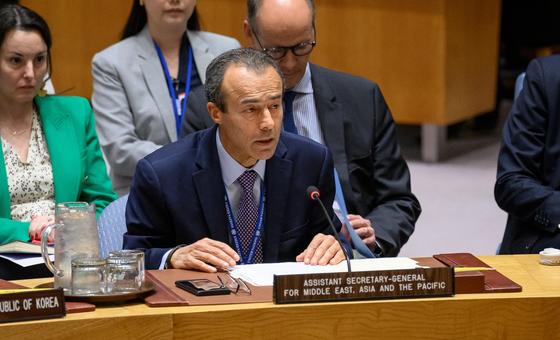
Briefing ambassadors in the Security Council on Wednesday, Assistant Secretary-General Khaled Khiari described a troubling pattern of weapons testing and growing nuclear ambition from DPRK – more commonly known as North Korea.

This includes the launch of an intercontinental ballistic missile (ICBM) in October 2024 and an intermediate-range hypersonic missile last January.

Meanwhile, the International Atomic Energy Agency (IAEA) has reported “open displays” of undeclared uranium enrichment at Yongbyon and Kangson.

“These events have been accompanied by statements reiterating the DPRK’s intention to further develop nuclear and ballistic missile capabilities, including tactical nuclear warheads, military reconnaissance satellites, and the construction of a ‘nuclear-powered strategic missile submarine’,” Mr. Khairi said.

North Korea’s persistent pursuit of nuclear weapons and ballistic missile programmes – in violation of multiple Security Council resolutions – “continues to undermine the global nuclear disarmament and non-proliferation regime,” he warned.

Ensuring compliance

Mr. Khiari reiterated the UN’s call for compliance with the Treaty on the Non-Proliferation of Nuclear Weapons (NPT) and IAEA safeguards, calling on DPRK to sign and ratify the Comprehensive Nuclear-Test-Ban Treaty.

He also echoed Secretary-General António Guterres’ call for all countries to ensure that their relations with the DPRK “entirely abide” by the relevant Council sections.

We recall the obligations for all Member States to implement the relevant sanctions measures,” he said.

Broader security risks

He also noted broader regional tensions, warning that the Korean Peninsula “remains tense,” amid heightened military activity, limited dialogue between north and south – and the growing nuclear risk.

He cautioned that the potential for miscalculation is increasing and urged renewed diplomatic efforts toward sustainable peace and the complete, verifiable denuclearization of the Korean Peninsula.

These must be anchored in dialogue and diplomacy, Mr. Khiari said.

Addressing humanitarian needs

Beyond the security situation, Mr. Khiari urged ambassadors not to forget the reportedly dire humanitarian situation in the country.

We reiterate the call on the DPRK to facilitate the return of the UN Country Team to strengthen support for its people and advance the 2030 Agenda for Sustainable Development,” he said.

Source link

Port Sudan: Aid officials call for greater protection as drone attacks continue

The escalation is occurring as war grinds on between the Sudanese Armed Forces (SAF) and the paramilitary Rapid Support Forces (RSF), who appear to be targeting airports in each other’s areas of control.

“Very concerned by ongoing drone strikes on Port Sudan,” UN Emergency Relief Coordinator Tom Fletcher tweeted on Wednesday. 

“International humanitarian law must be respected. Constant care must be taken to spare civilians and civilian infrastructure.”

Suffering will worsen

The latest strikes in Port Sudan took place early on Tuesday morning, reportedly targeting the international airport and other infrastructure, including a fuel storage facility and a power transformer. 

The UN Resident and Humanitarian Coordinator in Sudan, Clementine Nkweta-Salami, issued a statement that day, saying the attacks “will deepen humanitarian suffering and needs, as well as exacerbate the already severe access and logistical challenges that humanitarian actors face in the delivery of urgently needed aid to the rest of the country.” 

She underlined that the airport is a “lifeline for humanitarian operations” as it is the primary entry point for aid personnel, medical supplies and other life-saving relief. 

“Moreover, the availability of fuel in Port Sudan is critical to the dispatch of humanitarian supplies to areas across Sudan in dire need of assistance,” she added.

She stressed that damage to critical infrastructure could also disrupt supply chains and increase the price of basic goods, thus worsening what is already the world’s largest humanitarian crisis.

Displacement and aid suspension

Drone attacks have also affected Kassala and River Nile states, according to the UN humanitarian affairs office OCHA.

Earlier this week, strikes near the airport in Kassala displaced about 2,900 people and led to the temporary suspension or relocation of some aid activities.

Meanwhile, River Nile state is still facing a power blackout following a drone strike on the transformer station in Atbara on 25 April. The outage is contributing to growing fuel and bread shortages and long lines at gas stations and bakeries.

Cease hostilities now

Ms. Nkweta-Salami noted that since January, attacks on infrastructure across Sudan, such as power stations, water sub-stations, and oil refineries, have caused widespread electricity outages and disrupted access to essential services, including safe drinking water, healthcare and food supplies. 

These are serious violations of international humanitarian law and “reflect a consistent failure to comply with the principles of distinction, proportionality and precaution,” she said. 

“Every measure must be taken to spare civilians and civilian objects,” she said. “Once again, I call on all those involved in this conflict to cease hostilities.”

Source link

Absent faces, destroyed homes – young students paint the pain of Gaza

Their paintings and drawings range from a portrait of an esteemed Palestinian poet and family members killed in conflict, to a sky blackened by thick smoke – and a child crying in front of his mother’s corpse.

The poignant images are currently on display at UNRWA’s Remal School in Gaza City, which has been transformed into a shelter.

Remembrance and loss

The exhibition provides an opportunity for the children and young people to express and discuss their feelings after nearly 18 months of war.

Fatima al-Za’anin, who was displaced from Beit Hanoun in northern Gaza, cried as she spoke about her artwork. “I painted the Palestinian poet Mahmoud Darwish, I drew mama, baba, my sister and my grandfather,” she said.

Fatima stopped talking to cry once more and turned to a small pencil drawing peppered with red spots. “I drew martyrs’ bodies that were torn to pieces,” she explained.

She pointed to another drawing of a boy called Mohammed “who wished he had one person left in his family, but there was no one left,” she said. “I painted a child who lamented his mother, whom he had lost.”

A specialist from the UNRWA Psychological Support Centre stood beside Fatima and praised her courage in expressing her feelings.

17 year-old Na’emat Haboob, the sole survivor of her family and displaced from Jabalia Camp, stands beside her artwork—a moving tribute to her mother, who was killed in the war.

Praying for comfort

Na’emat Haboob, a 17-year-old student, touched one of her paintings as she spoke about it. The image is of the face of her mother, who was killed in the war. 

“This is mama’s painting.  Thank God I could draw it while I’m trying to get over losing her.  I hope everyone will pray for her.” 

Na’emat continued to run her fingers over the painting as if she wanted to touch her mother’s face and said: “May God grant me comfort for losing her and my siblings.”

May God grant me comfort for losing her and my siblings

She credited the mental health team at the Remal shelter for their support, saying it gave her the strength to turn her pain into art. 

Her grief welled up again and she was unable to go on. Comforted by a hug from the counsellor, she was able to continue, saying the psychological support she receives at the shelter enables her to keep studying. 

“I seek to develop my talents after what I’ve been through during the war,” she said. “I want to try hard to be what my mother wished for me.”

Malak Fayad, a displaced from Beit Hanoun (Gaza) shares the meaning behind her artwork with fellow displaced visitors, using art as a way to express her experiences, resilience, and hope amid the devastation of war.

Lives transformed, hopes destroyed

Another student, Malak Fayyad, stood in front of her colourful paintings. One depicts the clear blue sky and sea of Gaza, showing birds, trees and landscapes. It is a copy of a work she had previously painted which hung proudly on a wall in her family’s home. 

But the house was destroyed along with all their belongings, including the painting.

“I painted it again to remember Gaza as it was, and next to it another painting clouded by black smoke from weapons,” Malak said, before highlighting other works she created, including one which “shows how our lives have been transformed after the destruction and bombing.”

Another of her paintings depicts a Palestinian man who appears to be carrying a bag in the form of a house. She said it “shows that the Palestinian always carries with him the Palestinian cause, even when he is displaced and forced to leave his home.”

The war in Gaza has destroyed hopes of a better future, according to another young artist, Malak Abu Odeh.  

“Not only displacement and destruction, but the war has taken away from us our dearest people, our relatives and loved ones,” she said.

“We’re not well, but I would like to thank the mental health team who are trying to entertain us, help us and support us.”

Commitment to deliver

UNRWA continues to provide psychosocial support services across the Gaza Strip. The agency said its teams responded to around 3,000 cases between 21 and 27 April. 

This support included individual counselling, awareness-raising sessions and response to gender-based violence cases in its health centres, medical points and shelters. 

Source link

New horror in Gaza as double strike on school shelter kills 30

The UN agency for Palestine refugees, UNRWA, maintained that Israeli forces hit the school in Al Bureij, Middle Gaza, at around 6pm on Tuesday and again at 10.20pm.

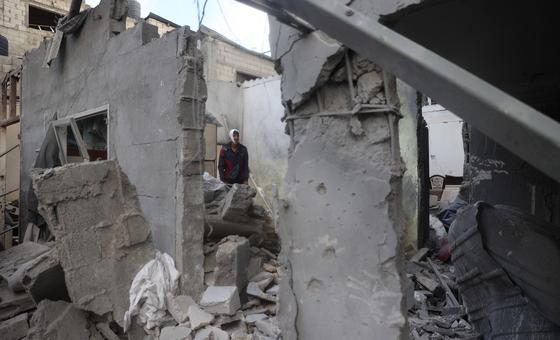
The school sustained severe damage and a fire broke out in the shelter, making it difficult to evacuate the casualties. Residents had to open a hole in the wall to evacuate the dead and wounded,” UNRWA told UN News.

Since the start of the war between Hamas and Israel on 7 October 2023, more than 400 schools have received a direct hit, according to satellite imagery analyzed by the UN.

Deadly aftermath

Footage from the scene provided by the UN agency showed walls and floors blown out in the main school building.

In the courtyard, hundreds of people can be seen standing amid crumpled metal sheeting on the morning after the attack, with rubble and wooden planks strewn around where their shelters had been standing just hours earlier.

“Our colleagues are reporting that surviving parents and children are trying to salvage their belongings among the blood and body parts of their relatives and neighbours,” UNRWA said.

The agency noted that fatalities included women and children, while search and rescue operations are ongoing for several people still missing.

Many of those living at the school when it was hit have been displaced “countless times” by the war, which began on 7 October 2023, following Hamas-led terror attacks on Israel, UNRWA stressed.

The attack also sparked a fire in an adjacent school where more tents and temporary shelters were burned and damaged.

Education destroyed

According to the UN Satellite Service, UNOSAT, 95.4 per cent of schools in Gaza have sustained damage since the start of the war.

Of the enclave’s 564 schools, 501 will either need full reconstruction or major rehabilitation work to be functional again.

“There is no humanity left in Gaza, and no humanity left as the world continues to watch day after day as families are bombed, burned alive and starved,” UNRWA said after the latest attack.

Failed strategy won’t work: Türk

In a related development, the UN human rights chief Volker Türk on Wednesday condemned Israel’s reported plans to forcibly transfer Gaza’s population to a small area in the south of the Strip.

The move fuels concern that Israel’s intention is to make life for Palestinians “increasingly incompatible with their continued existence in Gaza”, he said in a statement.

Surviving parents and children are trying to salvage their belongings among the blood and body parts of their relatives and neighbours – UNRWA

“There is no reason to believe that doubling down on military strategies, which, for a year and eight months, have not led to a durable resolution, including the release of all hostages, will now succeed,” insisted the UN High Commissioner for Human Rights.

Expanding the offensive on Gaza “will almost certainly cause further mass displacement, more deaths and injuries of innocent civilians, and the destruction of Gaza’s little remaining infrastructure”, he continued.

Rights experts warn of irreversible consequences

Escalating atrocities in Gaza mark a critical moral turning point and demand urgent international action, UN-appointed independent human rights experts said in a statement.

While States debate terminology – is it or is it not genocide? – Israel continues its relentless destruction of life in Gaza,” they warned, citing attacks by land, air and sea, and a soaring civilian death toll.

“No one is spared – not children, persons with disabilities, nursing mothers, journalists, health professionals, aid workers, or hostages,” they said, noting that on 18 March alone, 600 Palestinians were reportedly killed, 400 of them children. The independent experts are appointed by the Human Rights Council, are not UN staff members and receive no salary for their work.

Occupied West Bank update

In the occupied West Bank, meanwhile, UN aid teams warned of worsening conditions for Palestinian communities because of “violence by Israeli forces and settlers”.

The alert comes after Israeli forces on Monday demolished more than 30 structures in Khallet Athaba, a hamlet in Hebron governorate, displacing nearly a dozen families – or around 50 people.

“This constitutes most of the structures in the community and marks the third and largest demolition there since February,” said UN aid coordination office, OCHA. It noted that the area is designated by Israel as a military training zone.

In addition, Israeli forces also began demolishing six homes in Nur Shams refugee camp in Tulkarm on Monday, impacting 17 families. They are among more than 100 buildings slated for demolition, following an Israeli notice issued at the start of the month.

Forcible transfer fears

OCHA described how dozens of families in the camp were given little time on Monday to collect their belongings before their homes were demolished.

The agency highlighted the “strong push” to uproot Palestinians living in the area “once again raising concerns about the risks of forcible transfer of the population”.

Under international law, Israel as the occupying power, has the responsibility to protect Palestinians in the West Bank and ensure their safety and dignity, OCHA insisted.

Humanitarian partners are mobilizing assistance, but urgent international engagement is needed to stop these coercive measures and protect vulnerable communities, the UN aid office said.


Source link

DR Congo aid operation reaches Beni with food supplies for thousands

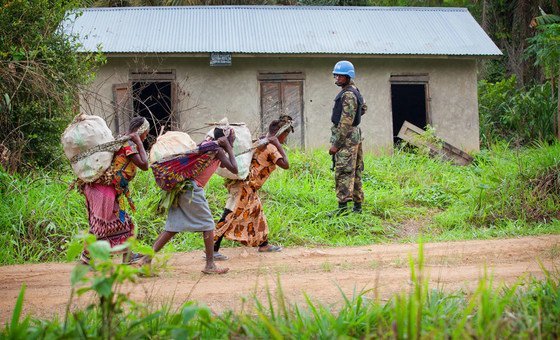
The UN World Food Programme (WFP) said that trucks packed with cereals, beans and cooking oil reached the city of Beni in North Kivu province from neighbouring Uganda, amid clashes between Rwanda-backed M23 rebel fighters and Congolese forces.

Aid for 140,000

WFP said that it intends to use the thousands of tonnes of relief supplies transported to warehouses in Beni to help around 140,000 people living in Lubero territory, south of the city of Butembo.

Violence escalated on 2 May across Lubero territory, uprooting some 30,000 people, according to the UN aid coordination office, OCHA.

The development comes amid ongoing peace talks in Qatar between the DRC Government and the M23 rebels. At previous talks in April, both sides pledged to work towards peace.

Amid rampant insecurity caused by proliferating armed groups, the Rwandan-backed M23 rebels have been at war for years with the Congolese army and allied forces in the mineral-rich region. In 2021, negotiations between the group and Kinshasa collapsed.

January offensive

Hostilities ramped up in January this year when M23 fighters captured Goma, the capital of North Kivu Province. A month later they seized Bukavu, the capital of South Kivu and threatened to take Kinshasa, on the other side of the huge country.

Since then, ongoing fighting has caused mass displacement, killed more than 7,000 people and fuelled fears of regional conflict.

A total of 21 million people need humanitarian assistance in DRC today. UN aid teams and partners remain on the ground to help and have condemned the looting of aid warehouses by armed groups which have destroyed food and medicine.

Source link