About Arun Kumar N

Arun has been associated with India International Times since 2018 and he has been a key reporter in covering science and space related stories. He can be reached at arunKnn@indiainternationaltimes.com.

Jazz takes centre stage in Chicago for 2026

The announcement came from UN culture agency (UNESCO) on Wednesday, as this year’s day was being celebrated in the capital of the United Arab Emirates (UAE), Abu Dhabi.

The focus there was on ‘Arabic Jazz’, a tapestry of musical traditions, which included the use of classical instruments from the region such as the oud, qanun and ney.

Following the jazz synthesis which ended on a high note in the UAE, the spotlight now turns to Chicago – where many would argue the golden era of jazz began as pioneers from New Orleans headed north during the 1920s.

The midwestern city will host the renowned All-Star Global Concert, directed by UNESCO Goodwill Ambassador Herbie Hancock, featuring some of the world’s most celebrated jazz artists.

What better way for UNESCO to celebrate the 250th anniversary of the United States than by sharing its rich musical heritage with the world?” said Audrey Azoulay, UNESCO’s Director-General.

Rich jazz pedigree

Chicago has played a pivotal role in the evolution of the genre for over a century. In the 1920s, musicians journeyed up the Mississippi and found in Chicago a vibrant creative hub. Legends like Louis Armstrong, King Oliver, and Jelly Roll Morton helped define the “Chicago style” of jazz – marked by bold solos, improvisation, big band arrangements, and the rising prominence of the saxophone.

Today, the city remains a stronghold of jazz culture, home to renowned events such as the Chicago Jazz Festival and iconic venues including the Green Mill and the Jazz Showcase, which has been a cornerstone of the scene for 75 years.

Multiple Grammy Award-winning jazz pianist and Goodwill Ambassador for the UN Educational, Scientific and Cultural Organization (UNESCO), Herbie Hancock, performs at the inaugural International Jazz Day Concert at UN Headquarters. (2012)

UNESCO’s Goodwill Ambassador Herbie Hancock, a native of Chicago, reflected on what jazz has meant to him.

It was in my high school auditorium in Chicago that I discovered jazz – an experience that ignited a lifelong passion,” he said. “Jazz opened doors to creativity, self-expression, and freedom.”

Events throughout the year

In addition to the Global Concert, Chicago will host a range of events throughout 2026 to celebrate International Jazz Day, including concerts, educational programmes, discussions, and community activities.

These will be organized in collaboration with the Chicago Jazz Alliance, the Ravinia Festival, the City of Chicago, the Illinois Arts Council, the State of Illinois, and other partners.

Launched by UNESCO in 2011, International Jazz Day is observed annually on April 30 in over 190 countries. It celebrates the power of jazz as a force for peace, intercultural dialogue, and human dignity.

Source link

Haiti: Mass displacement and deportation surge amid violence

Between January 1 and March 31, at least 1,617 people were killed and 580 others injured in violence involving gangs, self-defence groups, or other members of the population, as well as during security force operations, according to the United Nations Integrated Office in Haiti (BINUH).

At least 161 kidnappings for ransom were recorded, 63% of which occurred in the Artibonite department.

Large-scale attacks

This period saw a surge in criminal group activity aimed at expanding territorial control in Port-au-Prince and surrounding areas. Aiming at destabilising Pétion-Ville, the communes of Delmas and Kenscoff were particularly targeted.  In the Centre department, gangs attacked Mirebalais and Saut d’Eau to control roads to the Dominican Republic and facilitate the escape of over 515 inmates from Mirebalais prison.

The UN noted that actions by self-defence groups and unorganised members of the ‘Bwa Kalé’ movement remained a major source of human rights abuse, resulting in at least 189 deaths of individuals accused of gang ties or petty crimes.

The UN also raised alarm over at least 802 deaths during security operations, with 20% being civilians hit by stray bullets. Additionally, 65 summary executions were reportedly carried out by police officers and the Government Commissioner of Miragoâne.

Sexual violence

More than 333 women and girls survived sexual violence, 96% of whom were raped, often gang raped by gangs. At least 35 children were killed, and ten others injured, during gang attacks, police operations, or vigilante acts. Many were also trafficked and forcibly recruited by gangs.

Although the judicial system remains dysfunctional, authorities—supported by the UN—have begun efforts to address impunity. The Transitional Presidential Council adopted a decree to create specialised judicial units for mass crimes, sexual violence, and financial crimes.

Increase in deportations

Responding to a rise in deportations from the Dominican Republic, the International Organization for Migration (IOM) has increased operations in Belladère and Ouanaminthe. Around 20,000 Haitians were returned in April — the highest monthly total this year.

“The situation in Haiti is becoming increasingly critical. Every day, deportations and gang violence worsen an already fragile situation,” said Amy Pope, IOM Director General.

The sharp increase in extremely vulnerable deportees — especially women, children, and newborns — is alarming. Since 22 April, IOM and partners have assisted an average of 15 pregnant women and 15 lactating mothers daily at the Belladère and Ouanaminthe border crossings.

Population displacement

This deportation surge coincides with another emergency in the Centre department. Gang violence in Mirebalais and Saut d’Eau displaced over 51,000 people, according to IOM. While many found shelter with host families, about 12,500 are residing in 95 informal sites with limited access to services. Over 4,000 have sought refuge in Belladère alone.

Gang control of Mirebalais has isolated Belladère, blocking humanitarian access, medical supplies, and aid. Essential resources such as food, water, and medicine are running out.

“This is a deepening crisis that extends beyond the capital, with cross-border deportations and internal displacement converging on Belladère,” said Grégoire Goodstein, IOM Chief of Mission in Haiti. “Delivering aid is becoming increasingly difficult, as humanitarian actors are trapped alongside those they are trying to help.”

In coordination with the Directorate of Civil Protection, IOM is providing drinking water and hygiene kits tailored to the needs of women and children. First aid, medical referrals, and psychosocial support are being offered.

Temporary shelters have been set up, including hotel accommodations for lactating mothers. IOM is also working with Haiti’s National Migration Office and Ministry of Public Health to ensure newborns and mothers receive immediate health care and vaccinations.

Source link

UNRWA warns against closure of six schools in East Jerusalem

It’s a grave threat to the right of those children to education,” Roland Friedrich, Director of UNRWA Affairs for the West Bank, told UN News.

The development follows two Israeli laws that went into effect in late January which ban UNRWA from operating in its territory and prohibit Israeli authorities from having any contact with the agency.

UNRWA is the largest provider of healthcare, education and other services for nearly six million Palestine refugees across the Middle East, including in war-torn Gaza.

This week the International Court of Justice – the UN’s highest court – began hearings to examine Israel’s restrictions on the work of the UN and other international organizations in Gaza and the Occupied Palestinian Territories.

Mr. Friedrich spoke about how the affected students are anxious over the prospect of being shut out of the classroom.  He also underlined UNRWA’s commitment to continue to deliver in East Jerusalem “as long as we can.”

This interview has been edited for clarity and length.

Roland Friedrich: Roughly four weeks ago we received notifications from the Israeli Ministry of Education that the three schools we operate in Shu’fat refugee camp and another three schools we operate inside East Jerusalem shall be closed. 

We have 800 students in these schools and these children have no adequate access to education beyond these schools. This is very concerning for the children, for their families, and it comes while the school year is still ongoing. So, this is unprecedented. It’s a grave threat to the rights of those children to education and it’s very concerning particularly because these closure orders are supposed to come into effect on 8 May, which is less than a week from now.

UN News: What other UNRWA programmes are at risk in the West Bank?

Roland Friedrich: I think we have to make a distinction between our work in occupied East Jerusalem, which according to the Israeli legislation is banned, and our work in the rest of the West Bank where, according to Israel, all our work is not banned. 

In East Jerusalem we operate, in addition to the six schools with 800 children, two health centres – one in the Old City and another in Shu’fat refugee camp – with  roughly 60,000 patients: vulnerable patients who have no adequate access to other health facilities, patients with non-communicable diseases, patients who have West Bank ID who have no access to alternative health facilities, and low-income patients. 

We are also responsible for garbage collection in Shu’fat refugee camp, which is on the Palestinian side of the so-called separation barrier. 

In addition to that, we also operate a vocational training centre in the north of Jerusalem, also on the Palestinian side of the barrier, with 350 trainees, all from the West Bank. 

Our main headquarters in occupied East Jerusalem is in the Sheikh Jarah neighbourhood. We currently cannot operate from it because of continuing security threats: threats to the safety and security of our staff, ongoing attacks against the compound. 

We again had an arson attack against these facilities three weeks ago, and continuous destruction of the fence, of cameras, of security infrastructure with high material damage. 

So that’s a place that’s not safe for our staff to work despite the fact that it is a facility protected by the privileges and immunities of the United Nations. 

When it comes to the West Bank overall, our operations there largely continue. That means our 90 schools, our 41 health centres, our microfinance installations, continue to operate. 

But we do have a severe humanitarian crisis in the northern West Bank due to an ongoing Israeli security forces operation that started in late January and that has led to the displacement of more than 40,000 Palestinian refugees from three refugee camps.  

UN News: What messages did you hear from students, parents and teachers during your latest visit to Shu’fat camp? How is the community coping with this uncertainty?

Roland Friedrich: There is anxiety among children. They are worried that they can’t continue the school year, which runs until the end of June. They’re worried that they will be separated from their friends. 

They’re worried that they will lose access to education. They are worried that they will have to be placed in education facilities that are maybe very far away or not available at all.

These are free schools, and we teach from grades one to nine. A lot of them are young girls who feel safe there in an appropriate learning environment that they will possibly lose.

Parents are also concerned. UNRWA has been delivering services in that refugee camp since the 1960s, predating Israeli occupation of East Jerusalem, so there’s a history of UNRWA teaching in that place and an appreciation for the quality of the services we deliver. 

Given the fact that all international UN staff have not received visas from the Israeli authorities since late January, it’s our local staff on the ground who are taking high risks in continuing to serve their communities.

UN News: In this challenging environment, what steps is UNRWA considering to support the continuity of its services in East Jerusalem?

Roland Friedrich: We’ve been very clear since these laws against UNRWA entered into effect on 29 January. We’ve been seeking to live up to our humanitarian commitment, to our mandate to continue to deliver these services to communities in East Jerusalem.

There have been legal efforts by Israeli civil society organizations before the courts against these laws and against these disclosure orders. Some of these proceedings are still pending.

We clearly call upon all actors to respect the obligations under international law, particularly to respect the inviolability of the premises of the United Nations in East Jerusalem. 

We are providing these services based on a mandate by the General Assembly.

UNRWA clearly enjoys full privileges and immunities like any other UN agency, and our staff there are taking grave personal risks.

We are assessing the situation on a daily basis. Is it still safe for our staff to operate or not? As a matter of principle, we will be there as long as we can. 


Source link

Syria: UN envoy warns of escalating violence in Syria

He described the latest clashes as “unacceptable” and warned of the risk of further escalation in what he called an “extremely fragile situation”.

Fighting erupted earlier this week in Ashrafiah Sahnaya, a town southwest of the capital, when unknown gunmen attacked a security checkpoint.

The following day, another deadly clash took place in the nearby suburb of Jaramana. In total, at least 16 civilians and security personnel were reported killed.

‘Immediate steps’ needed to protect civilians

“The reports of civilian casualties, and casualties among security personnel, are deeply alarming,” said Mr Pedersen in a statement. “Immediate steps must be taken to protect civilians, de-escalate tensions, and prevent any further incitement of communal conflict.”

The violence comes as tensions reportedly remain high between Syria’s interim Government and Druze communities near the capital.

The Druze, a religious minority in Syria, have been engaged in talks about their inclusion in the new Syrian State, following the overthrow of the Assad regime last December.

Many in the community are reportedly calling for some level of autonomy, concerned over the Islamist background of some of Syria’s current leadership.

Amid the domestic unrest, Israel has also carried out military strikes in Syria, reportedly targeting what the Prime Minister described as an “extremist group” allegedly preparing to attack the Druze population south of Damascus.

A second strike reportedly killed a Syrian security officer outside the capital.

Syrian sovereignty ‘must be fully respected’

Mr. Pedersen condemned the Israeli attacks, saying they must stop. “Syria’s sovereignty must be fully respected.”

He stressed the importance of accountability for those responsible for killing civilians and fuelling tensions.

“There can be no progress without genuine inclusion, trust-building, and meaningful dialogue,” he said.

The Special Envoy welcomed efforts already underway to calm the situation and urged all sides to work together to prevent further bloodshed.

Dialogue, not destruction

With tensions still simmering following last month’s sectarian violence in Latakia, which claimed over 1,000 lives, the UN is calling for restraint and unity at a critical juncture for Syria’s future.

“The people of Syria have suffered too much for too long,” Mr Pedersen said.

They deserve peace, dignity, and a future built on dialogue, not destruction.”

Source link

UN alert over deepening crisis in Sudan as famine spreads and violence escalates

In a statement issued by his Spokesperson on Wednesday, UN Secretary-General António Guterres said he was “appalled” by the deteriorating situation in North Darfur, where the regional capital, El Fasher, is under intense and sustained attack.

The onslaught comes just two weeks after deadly assaults on the nearby Zamzam and Abu Shouk displacement camps, where hundreds of civilians, including humanitarian workers, were reportedly killed.

Mass displacement

More than 400,000 people have fled Zamzam camp alone, with the majority now seeking safety in Tawila, west of El Fasher.

There are also increasing reports of harassment, intimidation and arbitrary detention of displaced people at checkpoints, adding to the already dire humanitarian emergency.

“With the conflict now in its third year and increasingly destabilizing the broader region, the Secretary-General reiterates his call for the facilitation of safe and unhindered humanitarian access to all areas of need by all necessary routes,” UN Spokesperson Stéphane Dujarric said.

He also called for the protection of civilians, in line with the warring parties’ clear obligations under international humanitarian law.

Refugee movements from Sudan.

Accountability is paramount

Perpetrators of serious violations must be held accountable,” Mr. Dujarric stressed.

The civil war between rival militaries – the national Sudanese Armed Forces (SAF) and the paramilitary Rapid Support Forces (RSF) and allied militias – has claimed tens of thousands of lives and driven more than 12.7 million people from their homes, including nearly four million as refugees in neighbouring countries.

Violence and insecurity has also sparked a catastrophic hunger crisis, with over half the population suffering acute food insecurity and famine conditions confirmed in various regions, leaving millions at risk of starvation.

Emergency response underway in Tawila

Despite the escalating violence and dwindling funds, humanitarian agencies continue their efforts to deliver lifesaving aid.

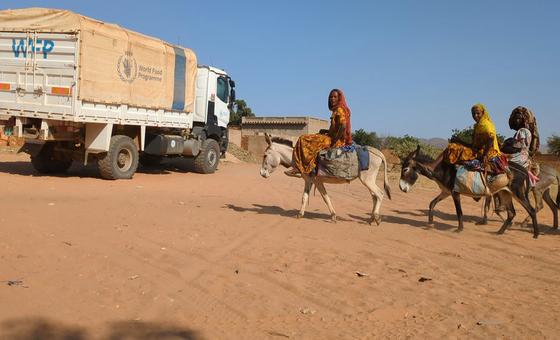
The UN relief coordination office, OCHA, reported on Wednesday that an inter-agency convoy led by UN Deputy Humanitarian Coordinator Antoine Gérard crossed into Darfur from Chad earlier this week via the Adré border, en route to Tawila.

The convoy is transporting critical supplies including nutrition and medical items, dignity kits, and other essential goods.

Food and nutrition assistance for approximately 220,000 people has already reached Tawila, with the UN World Food Programme (WFP) confirming that distributions began this week and are already 20 per cent complete.

Additional convoys are in motion, including one expected to depart Chad on Wednesday with 19 trucks of nutrition supplies.

Aid reaches capital Khartoum

WFP has begun the first food distributions in the centre of the capital Khartoum since the conflict erupted two years ago.

Deliveries of 70 metric tonnes of food to the Burri neighbourhood are set to begin on Thursday, attempting to reach nearly 8,000 people.

Aid distributions have also started in Alazhari, one of the areas at high risk of famine, where 20,000 people are receiving assistance.

Despite these efforts, WFP warned that the impending rainy season and severe funding shortfalls could undermine recent progress.

The agency, which assists about four million people monthly, aims to expand coverage to seven million – but that still represents only a fraction of those in need.

Source link

First Person: Myanmar aid workers brave conflict and harsh conditions to bring aid to earthquake victims

Thein Zaw Win, Communications and Advocacy Analyst in the Yangon Office of the UN sexual and reproductive health agency (UNFPA) saw the devastating consequences of the quake during a week-long visit to the Mandalay region, one of the regions most severely affected by the disaster.

Thein Zaw Win, Communications and Advocacy Analy​st at UNFPA’s Yangon Office, speaks with​ a woman impacted by the recent earthquake in Mandalay, Myanmar.

“I was in Yangon when the earthquake struck. In the aftermath, news reports gradually began indicating that many cities had suffered significant casualties. Buildings, roads, homes, schools, and hospitals were reduced to rubble and people were trapped beneath the debris.

Communication systems were down, so I decided to travel to the affected areas and support the relief efforts.

Women and girls needed lifesaving support, including sexual and reproductive health services and maternal care, dignity kits, hygiene items, and other essential supplies as soon as possible.

Within 72 hours, the UNFPA country office had deployed a Rapid Response Team to deliver essential services to the affected population, working with partners on the ground.

The journey from Yangon to Mandalay usually takes about eight hours, but we struggled to get through, due to damaged roads and collapsed bridges. We had to find alternate routes and, at times, even navigate through the rugged fields beside the main road.

Now that the rainy season has started, the roads are even worse, and travelling has become increasingly difficult. It took us more than 10 hours to reach Mandalay.

A woman affected by earthquake receives relief items including UNFPA’s dignity kits during UN joint distribution in Sagaing, Myanmar.

In some areas of the city, debris blocked the roads. Tower blocks had collapsed and many areas had been reduced to complete rubble. Desperate families sought refuge in temporary shelters, on the streets, or in front of their damaged homes.

Tremors continued for several days. Frequent power outages during the night mean that some affected areas were plunged into darkness, making it unsafe to go anywhere. Reaching those affected and delivering aid under these conditions remains a considerable challenge.

My responsibility is to engage with communities affected by the disaster, and share their stories to a broader audience. It is also vital to raise awareness of the realities and needs on the ground so that we can secure support for emergency assistance. This is my mission.

I met a woman in Mandalay who visited our mobile clinic. She had lived in the city all her life but had never seen such devastation. Everything collapsed in a matter of seconds. She was deeply worried about the damage to healthcare facilities, as well as her ability to access medical care.

© UNOCHA/Myaa Aung Thein Kyaw

A woman in Mandalay, Myanmar, looks on at the devastation caused by the earthquake.

Amidst this crisis, the UNFPA team has provided services ranging from hygiene supplies, protection from gender-based violence, and mental health support for women and girls. They also support maternal and newborn care services. I saw for myself the unwavering resilience of humanitarian workers, and the way that UN agencies, civil society organizations, and NGOs work together.

Myanmar was already suffering from political instability and now it has been further devastated by this destructive earthquake. It is extremely difficult to deliver aid to communities in Sagaing and Mandalay, where armed conflict is ongoing.

In the present context, with monsoon conditions imminent, people are terrified of what this season may bring.

The country is also experiencing the impact of the decline in global aid funding.

UNFPA, like other UN agencies and humanitarian organizations, is dealing with constraints on resources, and we have issued an appeal for emergency assistance to support populations in critical need.

The suffering of women and children affected by the earthquake is profoundly distressing, and we need all of our strength and resilience to help them.

It is a heartbreaking experience to witness the despair in people’s eyes and to listen to their stories of loss, but we are trying to give them the dignity and hope they rightfully deserve in these difficult times.”

‘Recovery must move ahead’ in southern Lebanon, top aid official says

Imran Riza made the appeal following a visit to Bint Jbeil and Tyre districts on Tuesday.

What I saw in South Lebanon was both depressing and inspiring. The scale of destruction – to villages, health facilities, and water systems – is disturbing,” he said in a statement.

Fighting, ceasefire and escalation

The crisis stems from fighting that erupted between Hezbollah militants in Lebanon and Israeli forces following the 7 October 2023 Hamas-led attacks on Israel, which killed some 1,200 people.

Israel launched an incursion into southern Lebanon in late September 2024 and carried out airstrikes across the country that killed thousands and displaced nearly a million people. 

Last November, Lebanon and Israel signed a ceasefire agreement to end the fighting. 

It called for Israeli forces and Hezbollah militants to withdraw from the south, while the Lebanese military would redeploy to the region to guarantee the peace alongside troops from UN peacekeeping mission UNIFIL, who monitor the Blue Line of separation between the two countries. 

Since then, ceasefire violations have occurred and violence has escalated, including recent Israeli strikes on areas of Lebanon’s capital, Beirut, reportedly targeting Hezbollah.

‘No time to lose’

Mr. Riza described the people he met in the south as truly inspiring. 

It’s clear they want to return home, rebuild, and restart their productive lives,” he said.

“Everyone continues to feel a palpable sense of insecurity. Many still lack basics like water and electricity. Too many are still displaced, their homes flattened.”

He said people spoke of their need for peace, safe movement, basic services, and support to rebuild.

“They also shared the trauma they and their children have endured, and the importance of addressing mental health in the wake of what they have lived through,” he added.

The Humanitarian Coordinator stressed the critical need for sustained funding to restore water, electricity, healthcare, and education, and to assist people eager to get on with their lives.

“There is no time to lose – recovery must move ahead,” he said.

Diplomats reinforce support for UN mission

Meanwhile, diplomats from dozens of countries showed their solidarity with UNIFIL’s work in south Lebanon in a visit to the mission’s headquarters in Naqoura on Tuesday.

The diplomatic visit included representatives of 38 countries, including all five permanent members of the UN Security Council

Peacekeepers from 47 countries currently serve with UNIFIL, which was established in March 1978 to confirm Israel’s withdrawal from Lebanon. 

Its mandate was most recently defined in Security Council resolution 1701 (2006), which called for a full cessation of hostilities between Hezbollah and Israel following their 34-day war on Lebanese territory that year. 

An encouraging sign

UNIFIL Head and Force Commander, Lt. Gen. Aroldo Lázaro, welcomed the delegation and noted it would have been impossible to host the diplomats just a few months ago. 

Your presence here is an encouraging indication of the increased stability in the south and the progress made since the understanding on a cessation of hostilities came into effect on 27 November 2024,” he said. 

“The support of UNIFIL’s troop-contributing countries – and the countries who contribute in other ways – is essential to restoring stability to south Lebanon and along the Blue Line. I thank them and their peacekeepers serving on the ground for their continued contributions.”

The delegation also visited two UNIFIL positions along the Blue Line, near Marwahin and in Labbouneh. 

Ambassadors expressed their appreciation for the mission’s important work. 

Source link

Millions will die from funding cuts, says UN aid chief

“Cutting funding for those in greatest need is not something to boast about…the impact of aid cuts is that millions die,” warned Emergency Relief Coordinator Tom Fletcher.

Speaking from an overcrowded hospital in Kandahar in southern Afghanistan where three or four patients have to share a bed, Mr. Fletcher warned that the financial crisis has already forced UN aid teams to close 400 primary health centres across the country so far.

His warning echoes dire announcements of drastic cost-cutting measures in response to chronic – and now acute – funding shortfalls, including an end to selected aid programmes by numerous UN relief agencies. These include the World Food Programme (WFP), the World Health Organization (WHO), the UN Children’s Fund (UNICEF), the UN aid coordination office (OCHA), the UN refugee agency (UNHCR) and UNAIDS.

Life-or-death call

Back in Afghanistan, the reality of funding cuts continues to play out in its hospitals “where you can see doctors making the most horrific decisions about which lives to save and which lives not to save”, Mr. Fletcher said at Mirwais Regional Hospital.

The lack of investment in aid relief has also affected female Afghan health workers whose salaries are being cut by up to two-thirds, Mr. Fletcher continued. The plight of women in the country is well documented and has been condemned by the international community, having deteriorated following numerous prohibitive edicts issued by the de facto authorities who overran Kabul in 2021.

As part of his official visit to Afghanistan, Mr. Fletcher met de facto provincial governor Mullah Shirin Akhund to discuss the need to address Afghanistan’s humanitarian crisis. It comes after more than four decades of conflict that have left almost half the population – some 22.9 million people – needing humanitarian assistance to survive.

Women’s key role

In earlier talks during his official visit, Mr. Fletcher stressed that development was not possible without girls’ education and their full participation in the country’s economy.

Amid soaring malnutrition, a lack of basic services and dire economic forecasts, Afghanistan has few resources to cope with the arrival of a growing number of Afghan refugees sent back by neighbouring countries including Pakistan and Iran.

The scale of the pushbacks is enormous, with more than 250,000 Afghans returned in April alone, including 96,000 who were forcibly deported. On Tuesday, the UN refugee agency, UNHCR, voiced particular alarm over the fate of women and girls, who face increasing repression under Taliban rule.

While in Kandahar, Mr. Fletcher also visited a reception centre where the UN and humanitarian partners provide support, including health check-ups and cash. He said that the closure of hundreds of health facilities in the region had denied more than three million people access to primary care.

Plague of rats and insects provide latest challenge for war-shattered Gazans

One displaced woman told UN News’s correspondent in Gaza: “In all camps, we suffer from biting insects, especially fleas,” adding that “our children suffer from severe pain due to itching and stinging.

“We tried to treat it in simple ways, but the right medicines are not available at the medical centre.”

While biting insects found in Gaza are not immediately life-threatening, the presence of rodents, including rats, can increase the risk of the spread of infectious diseases which the health system in Gaza may be unable to treat.

Inadequate sanitation

The lack of adequate sanitation, including limited access to clean toilets, general overcrowding as people try to find places to live amongst the rubble of Gaza – and the challenges of removing rubbish from the streets – have amplified the threat posed by rats.

Teams from UNRWA, the UN agency which supports the people of Gaza, have initiated intensive clean-up operations as well as environmental and health awareness campaigns. The number of dermatology consultations in health facilities has also increased.

UNRWA workers are actively moving through tents for displaced people in Khan Younis in the southern part of the Gaza Strip spraying pesticides to counter the spread of insects, fleas and rodents.

Uncollected trash in Gaza is encouraging rats.

UNRWA teams have worked in approximately 50 displacement sites in the Mawasi area of ​​Khan Younis.

They have focused on locations where there is overcrowding, improper waste disposal, the presence of livestock and the lack of hygiene materials.

“Because of the intense heat and sleeping on the sand, we were exposed to biting insects, rodents, and mosquitoes,” said one resident as he watched an UNRWA environmental health officer spraying insecticides around temporary shelters.

A doctor from UNRWA’s Environmental Health team explains to mothers how to treat insect bites.

Educational Sessions

In a nearby tent, a group of women gathered around awareness-raising instructors from the agency’s Environmental Health Office for an educational session on how to guard against insects and rodents.

The meetings target women, girls and adolescents to familiarize them with how to face this health challenge.

Meanwhile, Gaza continues to struggle since the 7 October 2023 attacks by Hamas on Israel precipitated the shattering conflict.

No humanitarian aid or supplies have entered the Gaza Strip since 2 March 2025, due to Israel’s total blockade.

UNRWA says vital humanitarian supplies, including food, fuel, medical aid and vaccines for children, are almost exhausted.

The agency warned that pesticide stocks are expected to run out within days in southern Gaza, while they have already run out in the central areas and north of the Strip.

Ukraine: Ceasefire a critical first step on the road to durable peace

Under-Secretary-General Rosemary DiCarlo addressed ambassadors alongside UN deputy relief chief, Joyce Msuya, who updated on the dire humanitarian situation in the country amid ongoing Russian attacks.

Ms. DiCarlo said the meeting was taking place at a potential inflection point in the three-year war, as the past few weeks have seen intensified shuttle diplomacy towards a possible peace deal. 

‘Glimmer of hope’

These initiatives offer a glimmer of hope for progress towards a ceasefire and an eventual peaceful settlement,” she said.

“At the same time, we continue to witness relentless attacks on Ukrainian cities and towns.”

Russian forces have carried out recent deadly strikes, such as the massive, combined missile and drone attack last week on several regions, including the capital Kyiv.  

Multiple residential buildings in the city were hit. At least 12 people were reported killed and more than 70 others injured, including children, making it the deadliest attack on the capital in nine months. 

This followed several other deadly strikes, including one in Sumy city on Palm Sunday that reportedly killed 35 people.  Another in Kryvyi Rih killed 18, including nine children – the deadliest single strike against children since the start of the full-scale Russian invasion.

The UN human rights office, OHCHR, verified that as of 24 April, 151 civilians have been killed, and 697, injured so far this month in Ukraine. 

Verification is ongoing, but numbers are expected to surpass the March figures, which were already 50 per cent higher than in February.

She also noted recent media reports quoting local Russian authorities that indicate civilian casualties in the Kursk, Bryansk and Belgorod regions in Russia, including alleged Ukrainian strikes on 23 and 24 April that reportedly killed three people in the Belgorod region.

“We condemn all attacks against civilians and civilian infrastructure, wherever they occur,” she said.

Diplomatic efforts encouraged

Ms. DiCarlo noted that the UN Secretary-General has repeatedly called for de-escalation and a durable ceasefire in Ukraine.

“In this regard, we are encouraged by the diplomatic efforts underway,” she said.

“We take note of yesterday’s announcement by the Russian Federation of a 72-hour truce planned for the period from 8 to 10 May.”

It follows a similar Russian announcement on 19 April of a 30-hour Easter truce, “and Ukrainian authorities reportedly agreed to mirror any such steps, reiterating their earlier support for a 30-day ceasefire proposed by the United States,” she said.

“Regrettably, hostilities continued during Holy Week, with both sides accusing each other of violations.”

She recalled that a month earlier, the Secretary-General welcomed separate announcements by the US, Russia and Ukraine regarding a 30-day moratorium on strikes against energy infrastructure and the resumption of negotiations on the safety of navigation in the Black Sea.

Despite these commitments, however, attacks against energy infrastructure persisted,” she said. 

Political will valuable

Ms. DiCarlo said the continued exchange of prisoner of war by both sides – including the largest to date, when 500 people were swapped on 20 April – “shows that with political will, diplomacy can yield tangible results even in the most difficult circumstances.”

She concluded her remarks by pointing to the forthcoming 80th anniversary of the Second World War, which serves as a reminder “with even greater urgency” of the centrality of the UN Charter and international law in safeguarding peace and security.

“The Russian Federation’s full-scale invasion of Ukraine stands as an egregious challenge to these fundamental principles, jeopardizing stability in Europe and threatening the broader international order,” she said.

“What is needed now is a full, immediate and unconditional ceasefire as a critical first step towards ending the violence and creating the conditions for a just, comprehensive and sustainable peace.”

Joyce Msuya, UN Deputy Emergency Relief Coordinator, briefs the Security Council meeting on maintenance of peace and security of Ukraine.

Millions in need

Ms. Msuya reported that the humanitarian situation in Ukraine has worsened despite ceasefire opportunities. Overall, nearly 13 million people need assistance.

“So far this year, not a single day has passed without civilians being killed or injured in attacks,” she said. 

The operating environment also remains highly dangerous for humanitarians. 

Aid workers under attack

“From 1 January to 23 April, there were 38 verified security incidents impacting humanitarian staff within 20 kilometers of the frontline. This has left three aid workers dead and 21 injured while delivering life-saving assistance,” she said.

Ms. Msuya reiterated earlier calls for the Council to take urgent, collective action on Ukraine in three areas.

She urged ambassadors to ensure the protection of civilians – including humanitarian and health workers – and critical infrastructure. 

Her second point stressed the need to increase financial support for humanitarian operations as underfunding is forcing critical programmes to scale down. 

Finally, she called for a just peace: “Every effort, whether aimed at a temporary pause or a lasting agreement, must prioritize the protection and needs of civilians.” 

Source link

Two-State solution nearing point of no return, warns UN chief

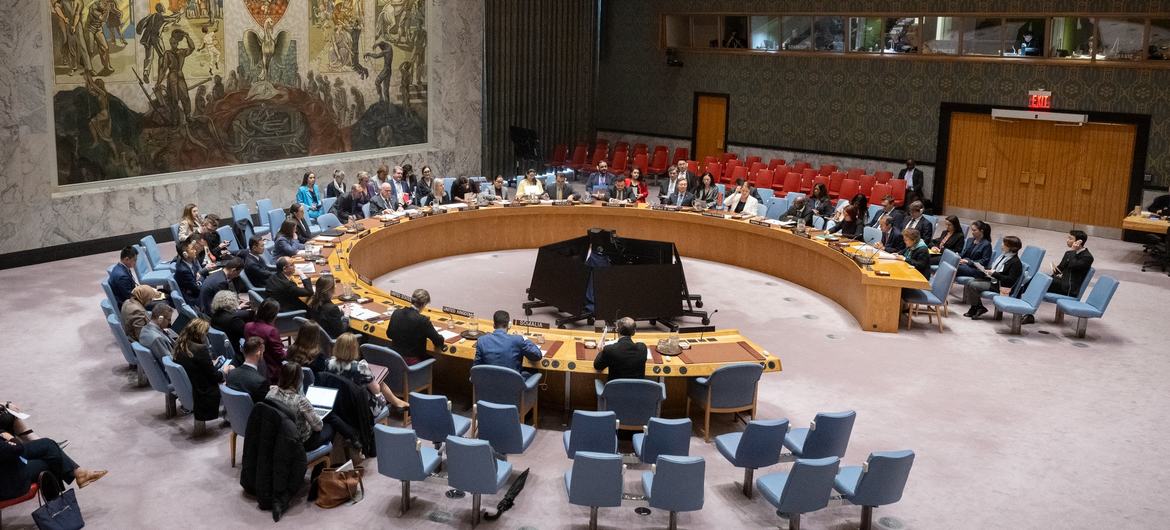
Addressing a Security Council debate on Tuesday, António Guterres said the Middle East stands at a critical crossroads.

The promise of a two-State solution is at risk of vanishing altogether,” he said. “Political will to achieve that goal feels more distant than ever.

He stressed that this erosion undermines the rights of both Palestinians and Israelis to live in peace and security, while denying Palestinians their legitimate national aspirations.

Gaza crisis ‘beyond imagination’

Mr. Guterres expressed deep concern over the worsening crisis in Gaza, where nearly 2,000 Palestinians have been killed since the March ceasefire collapsed.

He condemned the ongoing blockade of aid – including food, fuel and medicine – which has pushed over two million people into a humanitarian emergency he called “beyond imagination.”

“I am alarmed by statements from Israeli officials suggesting aid is being used as leverage for military gain,” he said. “Aid is not a bargaining chip. It is non-negotiable.

He renewed calls for an immediate and lasting ceasefire, the unconditional release of all hostages, and full humanitarian access. He also underscored the need to uphold international law, protect UN personnel and facilities, and ensure accountability for attacks on aid workers.

Tensions in the West Bank

Turning to the West Bank including East Jerusalem, the Secretary-General described a worsening situation marked by Palestinian displacement, home demolitions, restricted movement and expanding Israeli settlements that are reshaping the territory in violation of international law.

Palestinians are being contained and coerced,” he said – contained in areas under growing military pressure and coerced out of others where settlements are expanding.

Settler violence continues to rise amid impunity, while Palestinian attacks on Israelis also persist in both Israel and the occupied West Bank.

Secretary-General Guterres briefs the Security Council.

A pivotal moment for peace

With the region in turmoil, Mr. Guterres urged countries to move beyond statements and outline specific steps to revive the two-State solution.

“This is not a time for box-ticking,” he said. “The clock is ticking – and time is running out.”

He called on the international community to prevent a future of endless occupation and violence through sustained and serious action.

Leaders must deliver

The Secretary-General highlighted the upcoming high-level conference co-chaired by France and Saudi Arabia as a key chance to reenergise international support.

I urge Member States to go beyond declarations and consider concrete steps to save the two-State solution – before it disappears altogether,” he said.

“At this hinge point in history, leaders must show courage, act with resolve, and deliver peace for Palestinians, Israelis, the region, and the world.”

Source link

World News in Brief: Guterres on India-Pakistan tensions, eastern DR Congo update, weather boost for locusts in Africa

UN Secretary-General Guterres has spoken to leaders on both sides on India-Pakistan tensions.

“This morning, he spoke separately by telephone with Muhammad Shebaz Sharif, the Prime Minister of the Islamic Republic of Pakistan, and he also spoke earlier in the day with Subrahmanyam Jaishankar, the Minister for External Affairs of the Republic of India,” said UN Spokesperson Stéphane Dujarric, briefing journalists at UN Headquarters in New York.

During the calls the UN chief reiterated his strong condemnation of the 22 April terrorist attack, noting “the importance of pursuing justice and accountability for these attacks through lawful means.”

He expressed major concern over “rising tensions between India and Pakistan and he also underscored the need to avoid a confrontation that could result in tragic consequences,” added Mr. Dujarric.

The Secretary-General also offered to help mediate in support of any de-escalation efforts.

Escalating violence displaces thousands in eastern DR Congo

Ongoing violence in eastern Democratic Republic of the Congo (DRC) is uprooting families, crippling essential services, and placing civilians at growing risk, the UN humanitarian affairs office (OCHA) warned on Tuesday.

Fresh fighting in South Kivu province has forced communities to flee and left at least 10 civilians dead in Walungu territory alone, according to local authorities. “The violence is disrupting both economic life and the delivery of urgently needed humanitarian aid,” said OCHA.

Multiple rape cases

In nearby Kalehe, Minova hospital has reported multiple cases of rape and physical assault in recent days amid worsening insecurity. Meanwhile, clashes in Fizi territory last week led to health centres being looted and schools burned, threatening already fragile public services.

OCHA urged all combatants to respect international humanitarian law and ensure the protection of civilians. “Humanitarian access must be safe and unhindered,” the agency stressed.

The surge in displacement comes as eastern DRC remains gripped by fighting between the M23 rebel group and government forces, particularly in North Kivu. Since January, the violence has displaced hundreds of thousands.

In Walikale territory, civilians are trapped in a dangerous cycle of displacement and return, OCHA said, calling for strengthened protection and support for affected communities.

Locust swarms can devastate crops and pastures in many parts of Africa and elsewhere.

Favourable weather fuels desert locust surge in North Africa

Unusually high levels of desert locust infestations have been reported during the current breeding season, raising alarms across affected regions, the UN Food and Agriculture Organization (FAO) warned on Tuesday.

“Desert locusts remain among the most devastating migratory pests on the planet,” said UN Spokesperson Stéphane Dujarric, emphasising the threat they pose to food security and livelihoods.

A single swarm of locusts can cover anywhere from one to several hundred square kilometres and may contain up to 80 million adult locusts. In just 1 km², they can eat as much food in a day as 35,000 people.

Feeding on crops and pastureland, they pose a threat to crops grown for both people and livestock, risking starvation in communities that depend on agriculture for survival.

Clement weather for pests

According to the FAO, favourable weather conditions have created suitable breeding grounds for the flying pests. Winds and rainfall patterns have facilitated the movement of desert locusts from the Sahel to North Africa.

The FAO recommends conducting intensive ground surveys across key areas where locust breeding is likely to occur.

The area spanning from south of the Atlas Mountains in Morocco, through the Sahara in Algeria, and extending to southern Tunisia and western Libya is particularly at risk.

“Surveys and control operations are particularly urgent in locations where winter and early spring rains have created suitable breeding conditions,” said Cyril Piou, the FAO’s Locust Monitoring and Forecasting Officer.

Early detection and rapid response are critical to preventing a wider crisis, the UN food agency underscores.

Source link

Stuck in the middle? Indebted nations plot path to growth amid global trade upheaval

The High-Level Conference of Middle-Income Countries (MICs), held on 28 and 29 April, was attended by senior representatives from 24 MICs, many of which are highly indebted, leaving them little room for spending on developing their economies.

Since 2000, only 27 countries transitioned from middle income to high-income status, and many have experienced reversals back to middle-income level: 11 nations switched back and forth at least once before reaching their current high-income status.

“The transition of middle-income countries to high-income status while meeting sustainable development ambitions calls for the bolstering of financing for development,” said Armida Salsiah Alisjahbana, Executive Secretary of the UN Economic and Social Commission for Asia and the Pacific (ESCAP) at the opening of the event. “This calls for domestic policy reforms aimed at expanding fiscal space, maintaining debt sustainability and channeling resources towards productive investments.”

The Makati Declaration on Middle-Income Countries calls for the UN to support MICs in accessing development financing, including via innovative financing mechanisms, and to provide support in a number of areas, ranging from programs and initiatives to mitigate and adapt to the climate crisis to digital transformation and making countries more resilient to global shocks (see full list of measures below).

Delegates at the High-Level Conference of Middle-Income Countries (April 2025)

“We recognize that middle-income countries experience frequent growth slowdowns, and if left unaddressed, this loss of economic dynamism can cause countries to get stuck in what is referred to as the “middle-income trap,” the Declaration states. “We stress that middle-income countries continue to face specific challenges related to, inter alia, high levels of inequalities, low growth, persistent poverty, unemployment, loss of biodiversity, the adverse effects of disaster risks and climate change, reliance on primary commodity exports, high levels of external debt and the volatility of exchange rates and capital flows, and digital divide.”

MICs will strengthen cooperation among themselves and offer increasing resources under technical cooperation between countries in the global South, which could become particularly important given the recent reduction in development support from traditional donors of the global North.

“We are re-moulding traditional development partnerships as more MICs, including the Philippines, increase resources for South-South and technical cooperation,” said Enrique Manalo, Secretary for Foreign Affairs of the Philippines at the event. “This is a trend that, if scaled up, could potentially result in game-changing dividends for the global development system.”

The Like-Minded Group of MICs are “as champions of multilateralism,” he added. “Carving a steady path for all middle-income countries behooves us to support strongly an international rules-based order underpinned by equity and justice.”

Source link

Hundreds of thousands of Afghans forced back into danger, says UNHCR

According to the UN refugee agency (UNHCR), over 250,000 Afghans returned in April alone – among them, 96,000 who were forcibly deported. The agency voiced particular alarm over the fate of women and girls, who face increasing repression under Taliban rule.

The large-scale returns are putting even greater pressure on already stretched humanitarian resources and worsening the plight of millions struggling to survive.

“They face increasing restrictions in terms of access to employment, education and freedom of movement,” said agency spokesperson Babar Baloch.

We keep telling the governments of Iran and Pakistan that returns to Afghanistan must be voluntary, safe and dignified,” he continued.

Aside from women and girls, forcibly returned human rights activists and journalists as well as ethnic or religious minority groups are among those who face the biggest dangers back in Afghanistan.

Massive needs

These risks are further compounded by rising needs, where half the population relies on humanitarian assistance. Since 2023, more than 3.5 million people have returned to the country.

Such high numbers of returnees only increase the risk of further internal displacement and attempts to reach Europe, Mr. Baloch noted.

UNHCR is seeking $75 billion to assist returnees and help stabilize the region. Afghans represented the largest group of irregular arrivals from Asia Pacific to Europe in 2024, at more than four in 10.

Additional funds will allow UNHCR in Afghanistan to provide returnees with urgent assistance including access to services, livelihoods, reintegration services, travel and financial assistance – “with emphasis on reaching women and girls,” Mr. Baloch explained.

The agency also plans to address immediate protection needs and enhance reception capacity.

Source link

Myanmar quake: Ongoing aftershocks spread fear

Aid agencies warned on Tuesday that more than 6.3 million people remain in urgent need of support in the worst-affected central areas around Mandalay.

People [are] forced to sleep outside, safe water is scarce, health services are disrupted,” said UN aid coordination office, OCHA, in an appeal for more support from the international community.

The latest aftershock struck late on Sunday night and measured 4.4 on the Richter scale, said UN partner the International Federation of Red Cross and Red Crescent Societies (IFRC).

This is provoking widespread fear within a population already traumatised and also fear within the responders themselves,” said Nadia Khoury, IFRC Head of Delegation in Myanmar, speaking from Yangon.

Millions impacted

While the attention of the international community has faded, dispossessed families still need help rebuilding their lives, said OCHA’s Christina Powell.

The emergency for most is far from over – it is another crisis on top of the challenges already facing the people of Myanmar,” said Ms. Powell. “People told me they are too afraid to go back into their homes, worried they could collapse at any moment with the ongoing aftershocks.”

In badly affected areas including Mandalay and Bago in the south of the country, some communities already suffered unprecedented floods last September. The earthquakes brought another wave of devastation.

Assessments indicate that the quakes damaged or destroyed 55,000 homes in the Central Asian nation, where civil war has raged since a military coup in February 2021.

In Mandalay, OCHA reported that locals have continued to deliver food and household items to people still living on the roadside or in community shelters. But needs are widespread and include shelter, food, personal hygiene kits and even toilets, said OCHA’s Tin Aung Thein.

These people are already vulnerable depending solely on their daily wages. For their recovery, international support is greatly needed.”

Over the last month, IFRC has provided life-sustaining support – including safe drinking water, healthcare, tarpaulins for tents and items for women and children – to more than 110,000 people.

The aid organization has also delivered 250 metric tons of aid and helped distribute over 220,000 litres of safe drinking water to Myanmar every day. Its $121 million appeal is only 15 per cent funded.  

Right to live in dignity

Ms. Powell of OCHA urged the international community to step up and support the population’s right to “live in safety and dignity”.

“Additional and quick disbursement of resources and sustained access to all communities are vital to ensure that the situation does not deteriorate even further,” Ms. Powell insisted. 

MIDDLE EAST LIVE: Security Council meets on Gaza crisis as starvation threat grows

The Security Council will meet on Tuesday to discuss the situation in the Middle East, with French Foreign Minister Jean-Noël Barrot presiding. The UN Secretary-General is expected to brief ambassadors as the humanitarian crisis in Gaza deepens, with reports from the UN Palestine refugee relief agency (UNRWA) this morning that children are “going to bed starving” amid the two-month Israeli aid blockade and continuing bombardment. App users can follow coverage here.

Source link

Children in Gaza ‘going to bed starving’ amid blockade

“The siege on Gaza is the silent killer of children, of older people,” said Juliette Touma, spokesperson for the UN agency for Palestine refugees, UNRWA.

“Families – whole families, seven or eight people – are resorting to sharing one can of beans or peas,” she told journalists in Geneva. “Imagine not having anything to feed your children. Children in Gaza are going to bed starving.

Today, thousands of trucks carrying relief supplies continue to be denied entry to Gaza. “We have just over 5,000 trucks in several parts of the region with lifesaving supplies that are ready to come in,”Ms. Touma continued.

“This decision is crippling the humanitarian efforts…and threatening the lives and survival of civilians in Gaza, who are also going through heavy bombardment day in, day out.”

Rafah levelled

Destruction to the southern city of Rafah has left it “obliterated”, UNRWA said. Formerly the largest entry point for aid into the enclave via Egypt, aerial videos purportedly of Rafah show buildings levelled as far as the eye can see.

“Rafah is nothing like the city it used to be…In every direction there is only destruction,” the UN agency said.

Forced displacement orders have been in place for 97 per cent of the city, uprooting around 150,000 people.

Almost 12 months ago, the Israeli military moved in displacing 1.4 million people, leaving homes, health facilities and shelters damaged or destroyed.

Starting from scratch

Across Gaza, more than 90 per cent of the population have been displaced “not once, not twice, some people have been displaced 12 times or 13 times…so they have to start from scratch.”

Before the war erupted in October 2023, Gazans relied on 500 trucks a day to deliver the food and other basic goods that they needed. But no humanitarian or commercial supplies have entered since 2 March.

This is by far the longest ban on aid moving into the Strip since the start of the war in October 2023, following deadly Hamas-led terror attacks on Israel that killed some 1,250 people and left more than 250 taken hostage.

The blockade has emptied warehouses of food, medical supplies, shelter materials and safe water – fuelling a black market “where prices have increased from 10 to 20, sometimes 40 times…You cannot give anything to your children and you’re seeing your children starving”, Ms. Touma said.

According to the UN World Food Programme (WFP) food prices rose 1,400 per cent increase in recent weeks compared to the ceasefire period from 19 January to 18 March 2025.

Last Friday, the UN agency delivered its last remaining stocks to community kitchens that provide hot meals of lentil soup and rice. The kitchens are expected to fully run out of food within days while another 16 closed over the weekend. In addition, all 25 WFP-supported bakeries have now closed.

“We’re likely to see more community kitchens closing down for the simple reason that they need supplies,” Ms. Touma explained.

Daily challenges for Gazans include finding food and fuel to cook, because of a lack of cooking gas. “Families are resorting to burning plastic to cook their meals,” UNRWA’s Ms. Touma said. 

Source link

UN launches network to support victims and survivors of terrorism

The UN Office of Counter-Terrorism (UNOCT) launched the Victims of Terrorism Associations Network (VoTAN) on Monday.

The network is a key outcome from the first UN Global Congress of Victims of Terrorism, held in September 2022. It brings together victims and survivors of terrorism, victims’ associations and civil society organizations from across the globe.

The goal is to provide a safe space for victims and survivors to support each other, build resilience and engage as advocates, educators, and peacebuilders.

Solidarity, advocacy and assistance

Vladimir Voronkov, UN Under Secretary-General for Counter-Terrorism, expressed solidarity with all victims regardless of nationality, ethnicity, or religion, and paid tribute to their courage and resilience.

In the face of unimaginable personal tragedy, many have chosen to raise their voices, becoming powerful advocates for solidarity and tolerance,” he said, while also calling for greater support.

“In many cases, the needs of victims and survivors are urgent and underfunded. International and national assistance remains critical,” he stressed.

Understanding victims’ needs

The development of VoTAN received financial support from Spain and its launch marks an important step which will allow victims to connect and support each other, said the country’s Foreign Minister José Manuel Albares Bueno.

Synergies between civil society and governments are essential to understanding the needs of victims, so we trust that other Member States, especially those belonging to the Group of Friends, will also support the Global Network,” he added. 

The Group of Friends of Victims of Terrorism, chaired by Spain and Iraq, was established nearly six years ago to uphold the need to protect victims’ rights. 

Co-chair Abbas Kadhom Obaid Al-Fatlawi, Chargé d’Affaires at the Permanent Mission of the Republic of Iraq, reaffirmed the Group’s solidarity with all those affected. 

They all have our utmost respect and commitment to continue doing everything necessary to make them feel recognised, cared for and protected,” he said.

Transforming pain into purpose

The event concluded with statements from five victims of terrorism and victims’ associations. 

Grace Acan from Uganda highlighted “the critical importance of collaboration, resilience and partnership” in her remarks. 

“Through partnerships, we can amplify our voices, advocate for justice and ensure that the needs of victims are met with compassion and urgency,” she said.

Together, we can transform our pain into purpose, creating a safer, more inclusive world for all.” 

Source link

Gazans face hunger crisis as aid blockade nears two months

Both the UN agency that assists Palestine refugees, UNRWA, and the World Food Programme (WFP) report that food stocks are now exhausted, even as supplies of lifesaving assistance pile up at border crossings waiting to be brought in.

Humanitarians continue to warn that hunger is spreading and deepening in the enclave, amid the blockage, access constraints, ongoing Israeli military operations and a rise in looting.

Scarcity, sharing and shame

UNRWA shared the testimony of a woman called Um Muhammad who is staying at a shelter in Gaza City and prepares food for 11 family members daily. Although she still has some flour, most families nearby have already run out.

“When I knead and bake, I feel very ashamed of myself, so I distribute some bread to the children who come asking for a piece of bread,” she said.

“We eat one meal a day, dividing bread among each person daily. We eat canned goods, lentils, and rice. When this stock runs out, I don’t know what we will do because what is available in the market is scarce.”

Longest blockade

Gaza has a population of more than two million people who mostly depend on aid, but no humanitarian or commercial supplies have entered since 2 March when Israel imposed a full blockade on the territory.  

This is by far the longest ban on aid moving into the Strip since the start of the war in October 2023, following the deadly Hamas-led terror attacks on Israel.

The situation has led to shortages – not just of food, but other items including medicine, shelter supplies and safe water.  WFP recently noted a 1,400 per cent increase in food prices when compared to the ceasefire period, which lasted from 19 January to 18 March of this year.

Malnutrition and looting

On Friday, the UN agency delivered its last remaining stocks to hot meals kitchens, which have been a lifeline in recent weeks. The kitchens are expected to fully run out of food within days, and another 16 closed over the weekend.  Furthermore, all 25 WFP-supported bakeries are now shuttered.

There has been an increase in reports of looting incidents, the UN humanitarian affairs office OCHA said on Monday. Over the weekend, armed individuals reportedly ransacked a truck in Deir Al-Balah and a warehouse in Gaza City.

Meanwhile, the latest famine review analysis by the Integrated Food Security Phase Classification (IPC) got underway this week.

Humanitarian partners warn that the nutrition situation across Gaza is worsening. Since January, about 10,000 cases of acute malnutrition among children have been identified, including 1,600 cases of severe acute malnutrition

Although treatment supplies remain available in the south, accessing them continues to be extremely challenging due to operational and security restrictions.

Healthcare also affected

OCHA stressed that the depletion of critical stocks in Gaza goes far beyond food. For example, trauma-related medical supplies are running out at a time when the number of people injured in mass casualty incidents continues to increase. 

Gaza also lacks surgical supplies, including gowns, drapes and gloves.  The World Health Organization (WHO) informed that their warehouse has run out of therapeutic milk, intravenous antibiotics and painkillers, as well as spare parts for ambulances and oxygen stations. 

Partners working in health add that an increasing number of critical staff are being denied access to Gaza, with a rise in the denial of entry for emergency medical teams, particularly highly specialized professionals – including orthopedic and plastic surgeons – and a recent restriction of movement across the enclave.  

Aid awaiting entry

As the aid ban continues, humanitarians are doing everything possible to reach people with whatever supplies remain available.

They also have stocks of food and other lifesaving items ready and waiting to enter the Gaza Strip as soon as border crossings re-open.

This includes nearly 3,000 UNRWA trucks of aid, while WFP has more than 116,000 metric tonnes of food assistance – enough to feed one million people for up to four months. 

Source link

UN warns of $4 trillion shortfall threatening global development goals

Speaking at UN Headquarters in New York, Secretary-General António Guterres, General Assembly President Philémon Yang and Economic and Social Council President Bob Rae stressed the need for more resources and a global financial overhaul.

Without an effective response, they stressed, the world risks falling even further behind on ending poverty, fighting climate change, and building new sustainable economies.

They were addressing the ECOSOC annual forum on financing for development, which follows last week’s World Bank and International Monetary Fund (IMF) Spring Meetings where global growth, trade tensions and the rising debt burden in developing countries were front and centre.

Everyone loses in a trade war

This year’s ECOSOC Forum comes at a pivotal time,” Mr. Guterres told delegates, warning that global cooperation itself is under threat.

He pointed to rising trade tensions as a major risk, noting that while fair trade is a clear example of the benefits of international collaboration, the surge in trade barriers poses a “clear and present danger” to the global economy – as seen in recent downgrades to global growth forecasts by the IMF, the World Trade Organization (WTO), and UN economists.

In a trade war, everybody loses – especially the most vulnerable countries and people, who are hit the hardest,” he said.

We must shift into overdrive

Mr. Guterres highlighted how many donors are pulling back from aid commitments while soaring borrowing costs drain public investments, putting the SDGs “dramatically off track.”

With just five years to reach the SDGs, we need to shift into overdrive,” he stressed, urging countries to deliver bold outcomes at the upcoming Fourth International Conference on Financing for Development, in Seville.

“Against this turbulent background, we cannot let our financing for development ambitions get swept away.”

Secretary-General António Guterres (right) addresses the ECOSOC 2025 Forum on Financing for Development Follow-up. At his left is Philémon Yang, President of the General Assembly.

Crushing debt burdens

ECOSOC President Bob Rae echoed these concerns, emphasising that over three billion people live in countries where governments spend more on interest payments than on health or education.

“We desperately need a more affordable debt architecture – it’s that simple,” he said, calling for urgent reforms that would allow countries a fair chance to repay what they owe while investing in their futures.

He also sounded the alarm over rising trade barriers – citing recent moves by major economies, like the United States, to impose new tariffs.

Trade is not a four-letter word,” Mr. Rae said, “it is a positive way for countries to exchange goods and services and emerge from poverty.”

He urged countries not to see trade as a zero-sum game – where there are only winners and losers – and embrace fair, open trading systems as a path to shared prosperity.

Calls for reform

General Assembly President Philémon Yang underscored the consequences of rising debts and shrinking fiscal space.

In more than 50 developing countries, governments now spend over 10 percent of their revenues on debt servicing – and in 17 of them, over 20 percent – a clear warning sign of default, according to UN economists.

“Our inability to reform the international financial architecture is severely restricting capital access,” Mr. Yang warned, stressing that closing the financing gap – now estimated at over $4 trillion annually – is critical to achieving the SDGs.

Time is of the essence. Let us use this ECOSOC Forum to bridge divides, build trust, and lay the foundation for success.

The 17 Sustainable Development Goals are all interconnected, for instance progress on SDG 2 to end hunger is closely tied to advances in health and education.

Looking ahead to Seville

As negotiations continue towards an agreed outcome in Seville, Secretary-General Guterres highlighted three priority areas – tackling unsustainable debt, strengthening multilateral development banks and unlocking new streams of sustainable finance.

He called for mobilizing more domestic resources, innovative financing solutions, better controls on illicit financial flows and stronger partnerships with the private sector.

ECOSOC President Rae added that the conversation must move beyond declarations to concrete, measurable action.

We need innovation, creativity and partnerships that deliver lasting and transformative impact,” he said.

The Fourth International Conference on Financing for Development – to be held from 30 June to 3 July in Seville, Spain – represents a critical opportunity to rebuild the global financial system to unleash the investments urgently needed to achieve the SDGs.

Source link