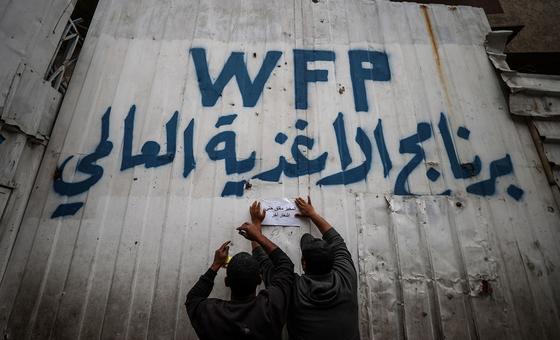
Gaza: As last fuel supplies run out, aid teams warn of catastrophe

Speaking from Gaza City in the north of occupied territory, Olga Cherevko from the UN aid coordination office, OCHA, said that water pumps had stopped at one site for displaced people there on Wednesday “because there’s no fuel”.

“We are really – unless the situation changes – hours away from a catastrophic decline and a shutdown of more facilities if no fuel enters or more fuel isn’t retrieved immediately,” she told UN News.

In its latest update on the emergency, OCHA said that without the immediate entry of fuel or access to reserves, 80 per cent of Gaza’s critical care units essential for births and medical emergencies will shut down.

More killed seeking aid

The development comes as Gaza’s authorities reported that 15 people had been killed near an aid distribution hub in the centre of the Strip on Thursday.

On Tuesday, unverified videos of another incident circulating on social media showed dead bodies lying in the street near a relief facility in the southern city of Khan Younis, reportedly following artillery fire.

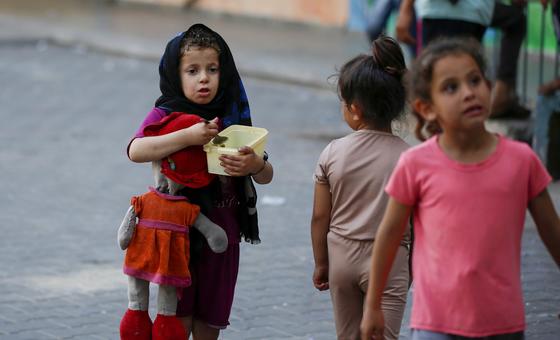
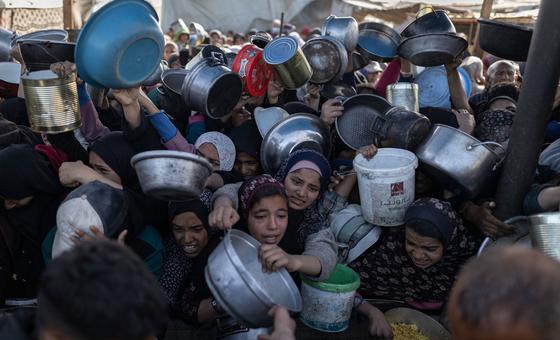
Finding food is a daily challenge for increasingly desperate Gazans who are “simply waiting for food and hoping to find something in order not to watch their children starve in front of their eyes”, Ms. Cherevko explained.

She added: “I spoke with a woman a couple of days ago where she told me that she went with a friend of hers who is nine months pregnant in hopes of finding some food.

Of course, they didn’t manage because they were too afraid to enter areas where there could be incidents like the ones that have been reported over the past few days.”

Search for shelter

Back in Gaza City, OCHA’s Ms. Cherenko said that conditions in shelters in Gaza are now “absolutely horrific” and increasingly crowded – “there are people coming from the north constantly,” the veteran aid worker added, while others are also moving back northwards, likely to be closer to the entry points for aid convoys.

The amount of aid entering Gaza today remains extremely limited and far below the 600 trucks a day that used to reach the enclave before the war began in October 2023. In its latest update, OCHA reported that “starvation and a growing likelihood of famine” are ever-present in the enclave. An estimated 55,000 pregnant women now face miscarriage, stillbirth and undernourished newborns as a result of the food shortages.

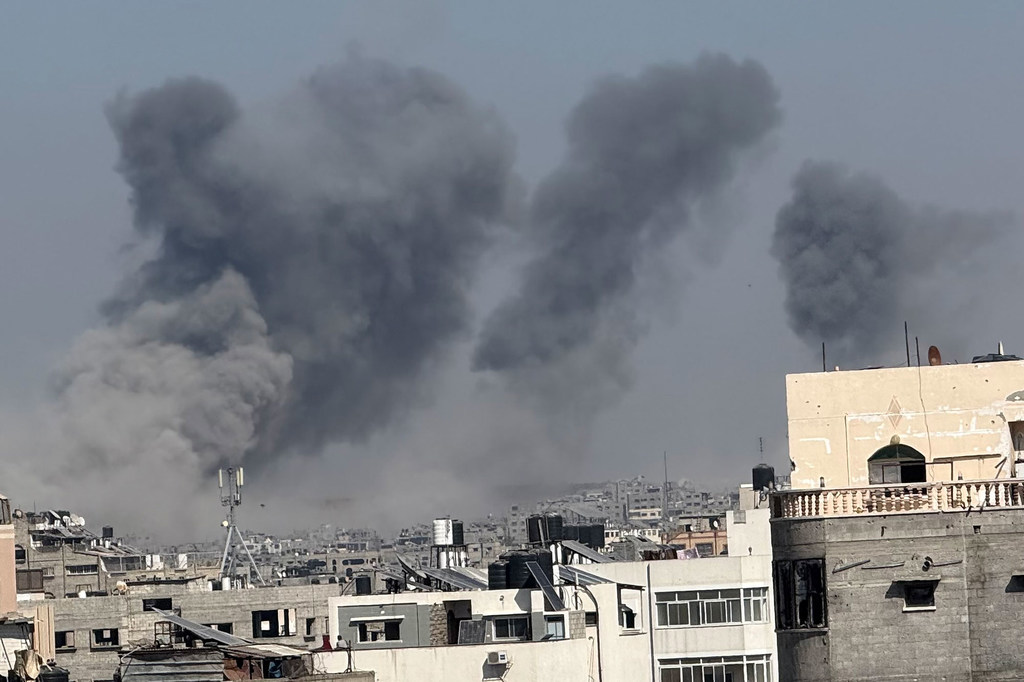
Smoke from explosions rises from the Shujaia neighborhood of Gaza City.

Starvation diet

“With the very limited volume of aid that is entering, everyone continues to face starvation and people are constantly risking their lives to try to find something,” Ms. Cherevko continued.

You eat or [you’re] left with the choice of starving to death.”

After more than 20 months of war, sparked by Hamas-led terror attacks in Israel, 82 per cent of Gaza’s territory is either an Israeli militarized zone or affected by evacuation orders.

Three months since hostilities re-escalated on 18 March, more than 680,000 people have been newly displaced. “With no safe place to go, many people have sought refuge in every available space, including overcrowded displacement sites, makeshift shelters, damaged buildings, streets and open areas,” OCHA said.

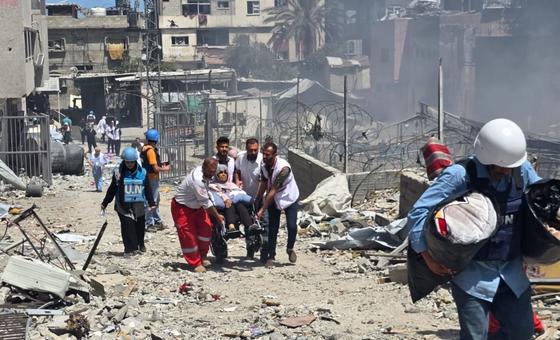
Source link

UN rights office ‘horrified’ by deadly violence at Gaza food distribution sites

The UN human rights office (OHCHR) in the Occupied Palestinian Territory on Wednesday called on the Israeli military to cease the use of lethal force near aid convoys and food distribution sites.

It cited “repeated incidents” of Palestinians being shot or shelled while seeking food, warning that such attacks could constitute war crimes under international law.

“We are horrified at the repeated incidents, continuously reported in recent days across Gaza, and we call for an immediate end to these senseless killings,” the office said in a statement.

Hundreds killed

Since 27 May, when the Gaza Humanitarian Foundation (GHF), an initiative backed by Israel and the United States began food distribution in southern Gaza – bypassing the established UN-led system – hundreds have been killed and many more wounded near four distribution points or while waiting to pick up aid.

In one of the deadliest recent incidents, Israeli military reportedly shelled a crowd waiting for UN food trucks in southern Gaza on 17 June, killing at least 51 people and injuring some 200 others, according to Gazan health authorities.

A day earlier, three Palestinians were reportedly killed and several injured in a similar incident in western Beit Lahiya.

There is no information to suggest that the people killed or injured were involved in hostilities or posed any threat to the Israeli military or to staff of GHF distribution points,” OHCHR said.

Protect civilians, aid workers

The UN World Food Programme (WFP), which has managed to dispatch only 9,000 metric tons of food within Gaza over the past month – a fraction of what is required for the 2.1 million people in need – echoed calls for immediate protection of civilians and aid workers.

“Far too many people have died while trying to access the trickle of food aid coming in,” the agency said in a separate statement.

“Any violence resulting in starving people being killed or injured while seeking life-saving assistance is completely unacceptable.”

Massive scale-up needed

The UN emergency food relief agency said the fear of starvation and desperate need for food is causing large crowds to gather along well-known transport routes, hoping to intercept and access humanitarian supplies while in transit.

Only a massive scale-up in food distributions can stabilize the situation, calm anxieties and rebuild the trust within communities that more food is coming,” it said, calling urgently for safer convoy routes, faster permissions, restored communication channels and additional border openings.

“The time to act is now. Delays cost lives. We must be allowed to safely do our jobs,” the agency said.

Source link

Humanitarians must be able to deliver aid in Gaza, UN agencies insist

The humanitarian network is currently at a standstill because the internet shut down earlier this week after the last fibre cable route serving central and southern areas was cut during heavy fighting.

As the outage continues, partners are unable to communicate or coordinate response activities, and people in need remain isolated and without the information they need to access life-saving support and emergency services,” UN aid coordination office OCHA said in an update.

Connectivity a life or death issue

Restoring connectivity is urgent. OCHA said the Israeli military recently posted a warning on social media where areas marked in red on a map are considered dangerous combat zones, calling on people to stay away from them.

Although these areas apparently cover most of the Gaza Strip’s territory, most people have no way to access the announcement.

Meanwhile, partners working on telecommunications continue efforts to coordinate urgent repairs of the fibre optic cable routes in Gaza, including those that were previously damaged. 

However, since April, Israeli authorities have denied more than 20 requests to carry out this work.  

“It is critical that repair of the lines is enabled immediately,” OCHA said.

Humanitarian missions denied

The agency further reported that the Israeli authorities continue to deny many humanitarian movements aimed at providing support to Gaza’s population, which numbers over two million.

On Thursday, they rejected eight out of 18 UN attempts to coordinate such movements, including efforts to retrieve wheat flour and fuel supplies. 

Four other missions were unable to be accomplished, either because of impediments or because they had to be cancelled for security or logistical reasons. 

The remaining six missions, which included the movement of staff, were successful.

‘Recipe for chaos’

Conditions continue to deteriorate in Gaza after 20 months of war followed by a total blockade of aid and commercial goods which began on 2 March.

People are crammed in shelters, or living in tents, and lack basic essentials.  For example, the accumulation of solid waste is severely impacting health and environmental conditions, the UN Palestine refugee agency UNRWA said on Friday.

Israel temporarily lifted the ban in mid-May, and the UN was able to bring in small amounts of key aid items such as flour and medicines – though far from enough to prevent starvation from impacting the population.

Since late May, the UN and partners have been sidelined as a new aid distribution model began operations.

The Gaza Humanitarian Foundation, which is backed by Israel and the United States, uses private military contractors, according to media reports.  More than 200 people have been killed, and thousands more injured by gunfire near its hubs.

The mechanism is “a recipe for chaos,” UNRWA tweeted on Friday, echoing the words of its chief Philippe Lazzarini.

It is weaponising aid and resulting in fear, discrimination, and growing desperation,” the agency said.

“It is time to lift the siege and let the UN, including UNRWA, do the work. Aid must be delivered safely and at scale.”

‘Hunger must never be met by bullets’

The UN Humanitarian Affairs Coordinator Tom Fletcher underscored the need to act now in a statement issued late on Thursday.

“Hunger must never be met with bullets,” he said. “Humanitarians must be allowed to do their work. Lifesaving aid must reach people in need, in line with humanitarian principles.” 

Mr. Fletcher said attacks against civilians in Gaza “are unacceptable”, which includes the killing and injury of hungry people seeking food and those delivering aid.

He said UN humanitarian convoys have been intercepted by armed Palestinian gangs, endangering staff and drivers.

“Civilians in desperate need of the food we’re able to bring in, have not been spared; some have been shot by Israeli forces, and others crushed by trucks or stabbed while trying to retrieve food,” he added.

UN Relief Chief Tom Fletcher talks to a child at an UNRWA shelter during a visit to Gaza in February.

Let humanitarians work

He also mentioned incidents “concentrated around militarized distribution centres, where starving people tell us that Israeli forces opened fire on them.” 

Hospitals report that they have received 245 fatalities and over 2,150 injuries from these areas over the past two weeks,” he said.

Furthermore, the Gaza Humanitarian Foundation said on Thursday that Palestinians involved in their distribution were killed, injured, and captured by Hamas.

“Without immediate and massively scaled-up access to the basic means of survival, we risk a descent into famine, further chaos, and the loss of more lives,” the UN relief chief warned.

“We stand ready, as we have repeatedly emphasized, to deliver life-saving aid at scale,” he said.  “Let us do our work.”

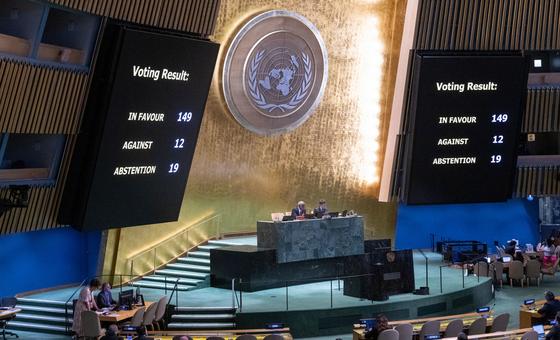
UN General Assembly adopts Gaza ceasefire resolution by overwhelming majority

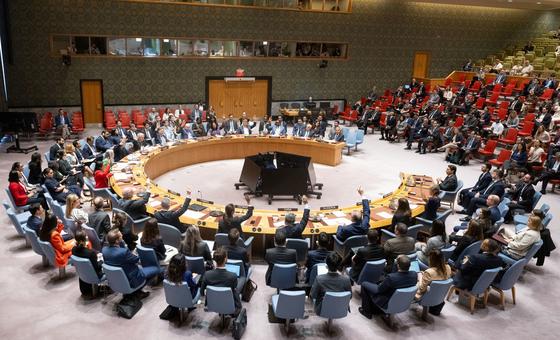
The move followed the Security Council’s failure to pass a similar resolution last week due to a lone veto by permanent member the United States.

The resolution was backed by 149 Member States, with 12 voting against and 19 abstaining. Among those opposing the resolution were the United States and Israel, who were joined among others by Argentina, Hungary and Paraguay.

India, Georgia, Ecuador, Romania and Ethiopia were among the countries abstaining.

End starvation as weapon of war

Brought forward by over 20 countries, it strongly condemns the use of starvation as a weapon of war, demands a full lifting of the Israeli blockade on humanitarian aid, and insists on the protection of civilians under international law.

Although General Assembly resolutions are not legally binding, they carry significant political and moral weight.

On 4 June, the Security Council failed to adopt its draft resolution after a veto by the United States, a permanent member.

Meanwhile, famine conditions continue to threaten lives across Gaza, and reports persist of civilians being killed or injured while trying to access food at distribution points operated independently of the UN but supported by Israel and the US.

Assembly steps into as Security Council stalls

Opening the special session, General Assembly President Philémon Yang said that “the horrors in Gaza must end” after 20 months of war. He criticised the Security Council’s ongoing paralysis and inability to fulfil its core responsibility to uphold peace and security.

He called the situation on the ground “unacceptable”, highlighting the deprivation of food, water and medicine for civilians, the continued captivity of hostages, and the need for urgent international action.

Mr. Yang noted that next week’s high-level meeting in New York on implementing a two-State solution, chaired by France and Saudi Arabia, saying it would offer a chance for renewed commitment towards peace in the Occupied Palestinian Territory.

Key elements of the resolution:

  • Ceasefire: Calls for an immediate, unconditional and permanent ceasefire by all parties.
  • Hostages: Demands the immediate and unconditional release of all hostages held by Hamas and other armed groups.
  • Implementation: Urges the full and immediate implementation of Security Council resolution 2735 (2024), including the ceasefire, hostage and prisoner exchanges, return of displaced persons, and withdrawal of Israeli troops from Gaza.
  • International law: Reaffirms that all parties must uphold international humanitarian and human rights law, with particular attention to civilian protection and accountability for violations.
  • Starvation as a weapon: Strongly condemns the use of starvation and the denial of aid as tactics of war.
  • Humanitarian access: Demands the full, safe and unimpeded delivery of aid – including food, medicine, water, shelter and fuel – throughout Gaza.
  • Detention practices: Calls for the humane treatment and release of those arbitrarily detained, and the return of remains.
  • ICJ advisory opinion: Recalls the request for an urgent advisory opinion from the International Court of Justice on Israel’s obligations in the Occupied Palestinian Territory.
  • End of blockade: Demands Israel immediately lift the blockade on Gaza and open all border crossings for aid deliveries.
  • Accountability: Urges Member States to take necessary steps to ensure Israel complies with its international legal obligations.
  • UN and humanitarian personnel: Calls for full respect for the work and immunity of UN staff and humanitarian workers.
  • Protection of aid workers: Urges both humanitarian and UN bodies to ensure the safety of their personnel.
  • Medical neutrality: Underscores the duty to protect medical workers, health facilities, and transport routes.

You can catch up with the full meeting by going to our live coverage of the emergency session and today’s developments in Gaza, here.

Source link

GAZA LIVE: UN General Assembly to vote on resolution demanding immediate, unconditional and permanent ceasefire

The General Assembly meets at 3pm in New York on Thursday in emergency session following the Security Council’s failure to adopt a resolution on 4 June calling for an immediate and permanent ceasefire in Gaza, which was vetoed by permanent member the United States. As starvation looms across the Strip, mass casualties continue to be reported of desperate civilians trying to access food at Israel and US-backed distribution sites. App users can follow our live coverage here.

Rising hunger in Gaza highlights urgent need for ‘unfettered’ aid supplies

Only around 6,000 tonnes of wheat flour have entered the war-torn enclave since Israel began to allow limited supplies back in last month.  

However, 10,000 tonnes are urgently needed in the face of rising malnutrition, according to the UN aid coordination office OCHA.

The only way to address the situation on the ground is by re-opening additional crossings,” said OCHA’s Olga Cherevko, speaking to UN News from Khan Younis.

Beyond food aid

She also stressed the need to allow “unlimited and unfettered supply of aid to enter,” which includes items that go beyond food such as shelter materials, fuel, cooking gas, “and other necessary elements to sustain life in Gaza.”

Ms. Cherevko urged the Israeli authorities to make the task of delivering aid easier by “providing a safe and enabling environment,” reducing waiting times for humanitarian missions and ensuring access to people in need. 

People in Gaza are suffering from harsh living conditions. Since March, Israeli restrictions on border crossings have tightened, making it even more difficult for Gaza’s population – more than two million people – to access food. 

Senior UN officials, including Secretary-General António Guterres and Humanitarian Affairs chief Tom Fletcher, have described the aid that has entered as merely  “a trickle” or a  “a drop in the ocean”.

Difficult decisions

Although markets are crowded with people, they lack two essential elements: liquidity and goods.

Most residents thus face three bitter choices: either seek food aid from the newly established US and Israel-backed distribution mechanism, which has already claimed dozens of lives in recent days; watch their children starve; or pay dearly for what’s left of the goods and looted humanitarian aid in markets.

“Prices are unnatural, much higher than in Europe,” civil servant Akram Yousef recently told our UN News correspondent in Gaza.

“The situation is very difficult, and we have been like this for two years. In addition to displacement, homelessness, bombing, destruction, and devastation, traders are raising prices, and citizens are unable to bear this burden. What can we do?”

More than 20 months of conflict have made living conditions in the Gaza Strip unbearable, and the cost of living is now among the highest in the world. 

Ahmed Al-Bahri, who was displaced from Beit Lahia with his family, said a loaf of bread now sells for seven shekels, or roughly $2.

There is no flour, no milk, no diapers for children, or anything to eat,” he said. “We live in a state of constant hunger. Where can I get seven shekels to buy a loaf of bread for my child? What is this child’s sin?”

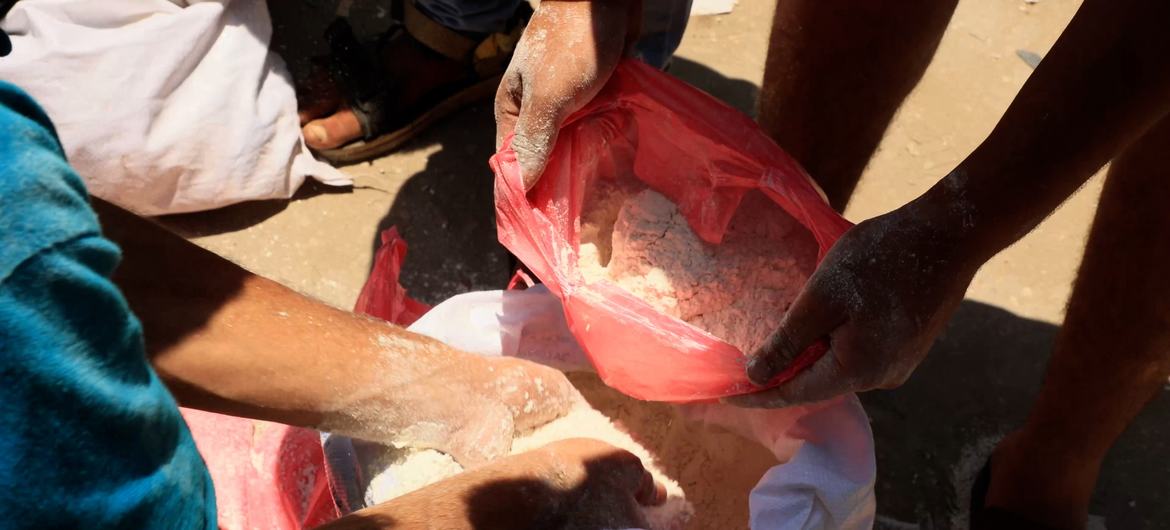
A flour seller in Gaza.

Exorbitant fees 

The cessation of Palestinian banks’ operations since the start of the war in October 2023 has exacerbated the suffering. 

People are forced to use phone apps to withdraw money from their bank accounts and to access their pensions through local merchants who charge exorbitant commissions.

Mr. Youssef, the civil servant, said the commission for withdrawing his salary was 20 per cent, but over time it has increased to nearly 50 per cent.

‘We have become envious of the dead’

Several residents told UN News that the price of one kilogramme of flour is now 100 shekels, equivalent to roughly $29.

“If a salary is 2,000 shekels, it becomes 1,000 shekels after commission,” another man, Ashraf Al-Deiri, explained.

“The daily expenses of an average or small family are no less than 500 shekels (roughly $143). So, we are experiencing great suffering and need someone to have mercy on us and stand by us.”

A young man called Raed Tafesh expressed shock over the high prices, especially since most of his peers are unemployed and lack any source of income. 

We don’t earn a single shekel. We are not employed, and we don’t have jobs. We are dying slowly. We have become envious of the dead,” he said.

The tragic conditions are reflected in the eyes of mothers and fathers who see their children starving, such as Nimir Ghazal.  She said her salary is not even enough to buy fruits, vegetables or any healthy food for her children.

“Sometimes I cry when my hungry children ask for a piece of bread. A kilo of flour costs 100 shekels, and lentils cost 50. One kilo is not enough for my family, but I buy it and share it among them,” she said.

UN efforts continue

On Monday, UN teams were able to collect some supplies, mainly flour, from the Kerem Shalom border crossing.  The aid was bound for Gaza City when hungry and desperate people snatched it directly from the trucks.

There have also been previous instances of looting and attacks on truck drivers which the UN categorically rejects. 

OCHA has emphasized that Israel, as the occupying power, bears responsibility for maintaining public order and safety in Gaza. This should include allowing more essential supplies to enter through multiple crossings and roads to meet humanitarian needs and help curb looting. 

Source link

Israeli attacks on Gaza schools could be crimes against humanity: UN probe

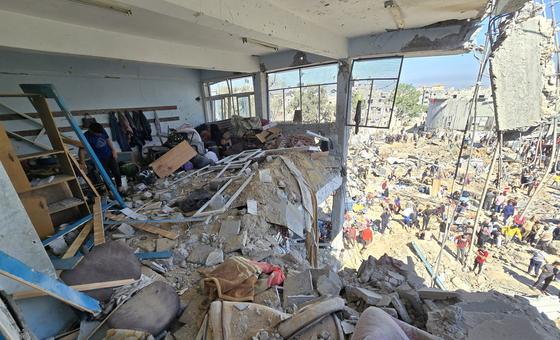
The UN Human Rights Council-mandated Independent International Commission of Inquiry (COI) report found that Israeli forces have used airstrikes, shelling, burning, and controlled demolitions to damage or destroy more than 90 per cent of schools and university buildings across Gaza.

This destruction in the wake of the 7 October 2023 Hamas-led terror attacks on Israel has made education impossible for over 658,000 children, many of whom have been out of school for nearly two years.

“We are seeing more and more indications that Israel is carrying out a concerted campaign to obliterate Palestinian life in Gaza,” said Navi Pillay, Chair of the Commission.

“Israel’s targeting of the educational, cultural and religious life of the Palestinian people will harm the present generations and generations to come, hindering their right to self-determination.”

Classroom-turned military base

The COI documented cases where Israeli forces seized and used educational institutions as military bases, including the conversion of part of Al-Azhar University’s Al-Mughraqa campus into a synagogue for troops.

The report also noted one instance where Hamas militants used a school for military purposes. Such conduct is a breach of international humanitarian law, which mandates the distinction between civilian objects and military targets.

Targeting of religious sites

More than half of Gaza’s religious and cultural sites have been damaged or destroyed, including places serving as refuges for civilians – killing hundreds, including women and children.

The Commission stated that Israeli forces knew or should have known the cultural significance of these sites and failed to prevent harm.

In the occupied West Bank, including East Jerusalem, Israeli authorities appropriated, developed and profited from cultural heritage sites representing Palestinian, Jewish and other cultures, while displaced Palestinian residents.

They have also blocked or severely restricted Palestinians from accessing the sites.

“Attacks on cultural and religious sites have deeply impacted intangible culture, such as religious and cultural practices, memories and history,” said Ms. Pillay.

“The targeting and destruction of heritage sites, the limiting of access to those sites in the West Bank and the erasure of their heterogenic history erode Palestinians’ historical ties to the land and weaken their collective identity.”

Recommendations

The Commission called on Israel to immediately cease attacks on cultural, religious, and educational institutions and to end the seizure and military use of such facilities. It urged Israel to end its occupation and settlement activities, especially near religious and cultural sites, and to comply fully with International Court of Justice (ICJ) orders.

Investigators also urged Palestinian authorities to protect and preserve cultural heritage sites, including those of diverse origins, calling on de facto authorities in Gaza to stop using civilian objects for military purposes.

Humanitarian crisis spiralling

UN agencies continue to warn of a worsening humanitarian crisis in Gaza.

The UN Children’s Fund (UNICEF) highlighted the case of a five-year-old malnourished child whose recovery depends on adequate food and sustained care.

Aid at scale must be allowed into Gaza for children’s health and survival,” the agency urged.

‘Another day of death traps’

Philippe Lazzarini, head of the UN agency assisting Palestine refugees, expressed deep concern over delays and obstacles in aid delivery, urging Israel to allow the UN safe and unhindered access to bring in supplies and distribute it safely.

“This is the only way to avert mass starvation including among one million children,” he said.

Mr. Lazzarini warned that casualties and injuries continue to be reported daily at US-backed distribution points managed by Israeli and private security forces – creating in effect, daily death traps.

He described the system as humiliating, forcing thousands of hungry and desperate people to walk tens of miles, while excluding the most vulnerable and those living too far from aid centres.

Source link

Gaza: Search for food puts lives on the line

Since the end of May, aid distribution in Gaza has been carried out by a mechanism backed by Israel and the United States bypassing UN agencies and their established partners, which has been plagued by deadly incidents and chaos.

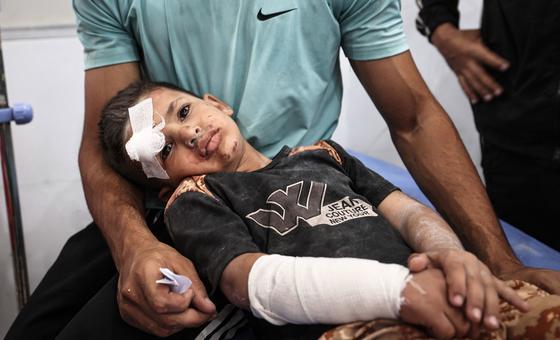
On Monday, UN partner the International Committee of the Red Cross (ICRC) reported that 29 casualties arrived at its field hospital in west Rafah that morning, eight of whom had died. 

Almost all had explosive trauma wounds, with two others suffering gunshot wounds. 

Forced to choose

“The UN reiterates that civilians must always be protected,” said Deputy Spokesperson Farhan Haq, speaking from Headquarters in New York.

No person, anywhere, should be forced to choose between risking one’s life and feeding one’s family.”  

Fuelling aid efforts

Meanwhile, fuel stocks in Gaza are dangerously low, putting further strain on critical services and humanitarian operations. 

Mr. Haq said that some 260,000 litres of fuel were looted in northern Gaza over the weekend.

Prior to this, the UN had repeatedly tried to reach these stocks to retrieve them, but the Israeli authorities denied these attempts – with 14 denials since 15 May. 

“Our attempts to reach fuel supplies in Rafah, in the south of Gaza, also continue to be denied,” he added.

“The UN warns that unless a solution is found in the coming days, the entire aid operation could come to a standstill.”

© UNRWA/Louise Wateridge

Palestinians who have taken refuge in a UNRWA school in Deir al-Balah camp in central Gaza are struggling to survive as they lack access to basic humanitarian needs in the central Gaza city of Deir al-Balah.

‘Desperate, starving people’

Mr. Haq also updated on efforts to bring desperately needed humanitarian assistance into the Gaza Strip, where the entire population, more than two million people, faces famine conditions.

On Monday, the UN led a mission to deliver supplies that entered the enclave via the Kerem Shalom border crossing to Gaza City, which was still ongoing. 

Since Israel allowed limited amounts of aid to enter on 19 May, the UN and partners have only been able to collect about 4,600 metric tonnes of wheat flour from Kerem Shalom.

“Most of it was taken by desperate, starving people before the supplies reached their destinations. In some cases, the supplies were looted by armed gangs,” he said.

Resume aid flow now

Mr. Haq emphasized that as the occupying power, Israel bears responsibility when it comes to public order and safety in Gaza. 

“That should include letting in far more essential supplies, through multiple crossings and routes, to meet humanitarian needs and help reduce looting,” he said.

UN partners working on food security estimate that between 8,000 and 10,000 metric tonnes of wheat flour is required to reach all families across Gaza with at least a single bag.

He stressed that “the sustained and unrestricted flow of aid into Gaza must resume as soon as possible.” 

Dangerous routes, driver shortages and delays

He said no missions to collect supplies from Kerem Shalom took place at the weekend as Israel informed that the crossing would remain closed on Friday and Saturday.

Humanitarians also continue to face major impediments that affect their ability to conduct these operations, including unacceptably dangerous routes, a severe shortage of vetted drivers, and delays.

West Bank update

Mr. Haq also touched on the situation in the occupied West Bank.

He said operations by the Israeli forces in the north have continued over the past week, destroying roads and disrupting Palestinians’ access to essential services. 

The UN and partners continue to respond, including by providing water, sanitation and hygiene assistance to tens of thousands of displaced Palestinians.  

Gaza: Women and girls struggle to manage their periods amid crisis

Globally, 1.8 billion people menstruate, yet for many, especially in crises zones, it’s far more than an inconvenience.

In war-torn Gaza, around 700,000 women and girls of menstruating age, including thousands experiencing their first period, face this challenge under relentless bombardment and in cramped, unsanitary conditions with little privacy.

A human rights issue

The United Nations’ sexual and reproductive health agency, UNFPAwarns that the lack of access to menstrual products, clean water, and soap makes it nearly impossible for women and girls to manage their periods with dignity.

Since March, Israel’s aid blockade has depleted hygiene supplies in Gaza, including sanitary pads. The authorities temporarily lifted the ban last month and UN agencies were able to bring in limited amounts of items such as flour and medicine.

Since the end of May, aid is now being distributed through a system backed by the United States and Israel, bypassing the UN and other humanitarian agencies, but it falls far short of what is needed.

Nearly 90 per cent of the territory’s water and sanitation infrastructure has been damaged or destroyed, and fuel for water pumping is no longer available.

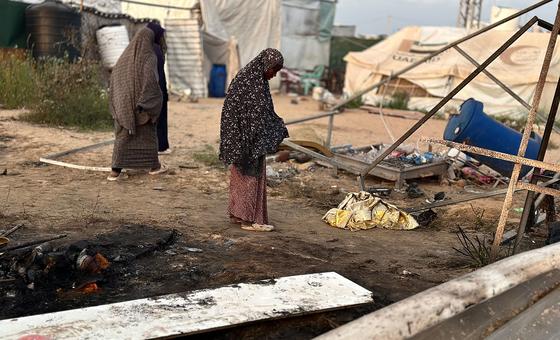
Women stand in a damaged displacement settlement in Khan Younis, Gaza.

“I sat in silence crying”

Speaking to UNFPA, a young girl recalled getting her period while sheltering in a crowded displacement camp.

“I only had one pad, so I wrapped it in toilet paper to make it last. I couldn’t wash, and the pain was horrible. I sat in silence crying until the end of the day.”

As nine in 10 households face extreme water shortages, the lack of clean water, soap, and privacy has turned menstruation into a source of anxiety, isolation, and shame. “Sometimes I need pads and soap more than I need food,” said Aisha*, a displaced girl.

Desperate measures, dangerous consequences

With less than a quarter of the over 10 million sanitary pads needed each month available, women and girls are forced to improvise. Many use torn clothes, sponges, or old rags, often without proper cleaning.

“I tore my only shirt into pieces so my daughters could use them instead of pads,” shared a father of four displaced from Jabalia.

These makeshift solutions are not only painful and undignified, but they can also cause infections and long-term reproductive health issues. With the health system on the brink of collapse, thousands of women may go untreated.

The psychological burden is equally severe. “Every time my period comes, I wish I weren’t a girl,” said one of the girls.

Stripping away dignity

Speaking from a health care perspective, but also as a woman, a doctor in Gaza described treating women coping with menstruation, pregnancy, and childbirth under horrifying conditions.

“These should be natural experiences, not sources of distress and pain. I see strength in women’s eyes, but I also see deep pain and the stripping away of dignity,” she said.

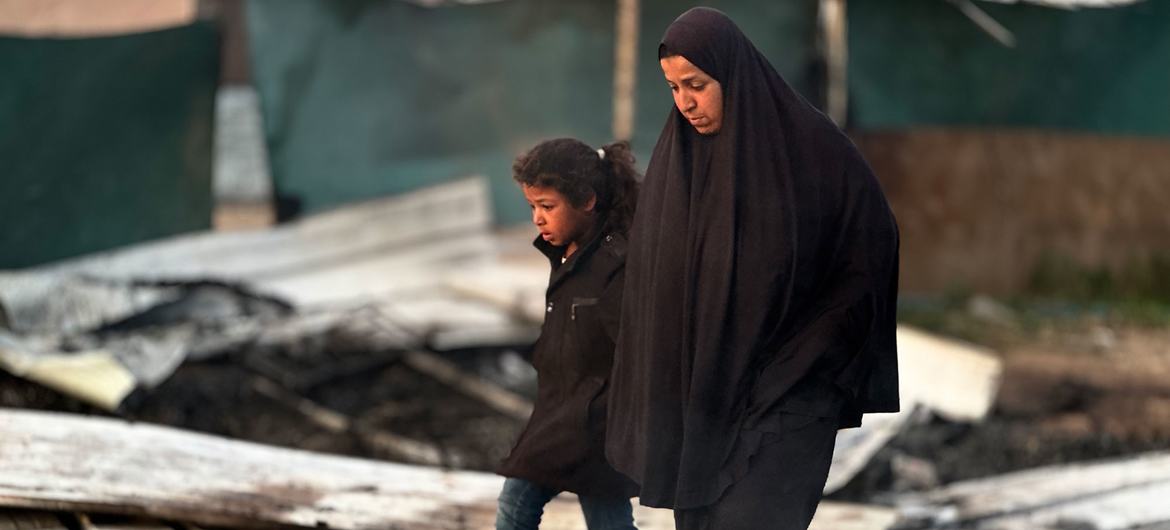
A woman and child walk through the rubble of Gaza.

In emergencies, women and girls are among the most vulnerable. According to UN agencies, they face heightened risks due to displacement and the breakdown of normal protection structures and support. They also face increased care-related tasks such as providing food and water.

“Food keeps us alive, but pads, soap, and privacy let us live with dignity,” said Maysa*, a displaced woman in Khan Younis. “When we receive hygiene kits, it feels like someone finally sees us.”

How UNFPA is responding

As a frontline responder, UNFPA is working to ensure menstrual health is integrated across humanitarian efforts in Gaza. Since October 2023, the agency has provided more than 300,000 women and girls with two-month supplies of disposable menstrual pads and distributed postpartum kits to over 12,000 new mothers.

Yet, three months into a total aid blockade, stocks were nearly exhausted. With border crossings closed, hygiene kits are no longer reaching those in need. The recent entry of some aid distributed by the Gaza Humanitarian Foundation included food, flour, medicine and nutrition support according to media reports.

The UN continues to call for urgent support for women and girls caught in some of the world’s most neglected crises.

*Names have been changed for protection.

Number of aid workers killed in Gaza conflict, highest in UN history: Guterres

Ahead of a memorial service at Headquarters in New York, Secretary-General António Guterres told journalists that the men and women being honoured “were not just names on a list” but “extraordinary individuals – each one a story of courage, compassion, and service.”

“They were driven by the pursuit of peace. By the urgency to ease human suffering. And by the conviction that every person, everywhere, deserves dignity and protection,” he said, speaking in front of the Security Council chamber.

He acknowledged that the past year has been especially devastating for UN humanitarian workers. 

“More than one in every 50 UNRWA staff in Gaza has been killed in this atrocious conflict. This is the highest staff death toll in United Nations history,” he said.

Some were killed delivering life-saving aid; others alongside their families; others while shielding the vulnerable.”

‘No room for impunity’

The Secretary-General said the sacrifice of all 168 fallen colleagues is a tragedy but also a reminder of the responsibility carried by every staff member every day.

It is important for the world to see this, he added, “because as we mourn those lost, we must also recognize the living.”

Mr. Guterres saluted staff members still serving in crisis zones across the globe for their courage and resilience.

“And to the world, I say: We will not grow numb to suffering. We will not accept the killing of UN personnel,” he stressed.

“We will not accept the killing of humanitarians, journalists, medical workers, or civilians as the new normal anywhere and under any circumstances. There must be no room for impunity.”

Remembering lives lost

Since 2011, the UN has held an annual service at Headquarters to honour personnel who have lost their lives in the line of duty during the previous year.

Those who paid the ultimate price in 2024 worked with UNRWA, the UN Secretariat, the UN refugee agency UNHCR, the UN Office for Project Services (UNOPS), and the World Food Programme (WFP).

They came from 31 countries and were teachers, engineers, doctors, administrators, humanitarians, peacekeepers, and more. Above all, they were sons and daughters, husbands and wives, fathers and mothers, and brothers and sisters.

Shortly after the press briefing, the Secretary-General joined some of their relatives, UN staff members and senior officials for the memorial service in the Trusteeship Council. Many others across the world followed the event online.

‘They were the best of us’

The Secretary-General noted that working for the UN “is far more than just a job” – it’s a calling. 

“All our fallen colleagues answered the call to serve humanity,” he said. “They did so in their own ways – without fanfare – and with determination.  They represented humanity in action.” 

He remarked that “at a time when some may question international cooperation or the very notion of multilateralism, we would all do well to remember these lives taken far too soon.”

“Let us take inspiration from how they lived,” he said. “And let us vow that the memory and mission of our fallen colleagues will endure. They were the best of us. Let them live on through our work.”

Legacy lives on

The president of the UN Staff Union in New York, Narda Cupidore, echoed this message.  She said they embodied the mission of the whole UN “and they paid the ultimate price.” 

“Let this honouring be more than a moment of silence,” she said. “Let it be a call for action. A call to protect those who serve. A call to ensure that anyone who serves under the blue flag does so with the full protection, support and respect.”

Ms. Cupidore said the legacy of the fallen colleagues “lives on in our work, in our advocacy and in our unshakeable belief that the world is worth striving for.” 

Source link

In Gaza, daily food intake has fallen well below ‘survival’ level

Latest data simulations from the Food and Agriculture Organization (FAO) point to the average Gazan eating just 1,400 calories per day – “or 67 per cent of what a human body needs to survive” (2,300 calories) as of May.

Between October 2023 and the end of December 2024, average intake was 1,510 calories per day, or 72 per cent of the minimum recommended amount.

“The findings reveal systemic and escalating violations of both international human rights law and international humanitarian law, particularly concerning the right to adequate food, the prohibition of starvation as a method of warfare, and the protection of civilians in armed conflict,” FAO insisted.

Even based on its most optimistic food availability scenario, the UN agency estimated that energy intake was just 1,470 calories per person per day on 11 May, during the complete aid blockade imposed by Israel, beginning 2 March.

This has critical implications for hunger and undernutrition, especially for families without cash and/or able-bodied men, as well as children, pregnant and lactating women, person with disabilities and the elderly,” FAO explained.

The agency noted that its analysis is in line with dire warnings of acute hunger across Gaza issued by UN-backed food security experts last month, based on the lack of available wheat flour, pulses, rice, dairy products, and vegetable oil.

Without an improvement in the amount of aid being allowed into Gaza for distribution by established agencies, FAO warned that the already dire humanitarian situation could deteriorate even further.

This is despite repeated calls to Israel from the United Nations including from the Secretary-General to allow more aid in at scale, in line with “binding orders” issued by the International Court of Justice to fully cooperate with the UN and ensure that aid reaches the people of Gaza without delay.

Unknown numbers of dead

Gaza’s population today is approximately 2.1 million, down from 2.23 million in October 2023 before the war began following Hamas-led terror attacks in Israel.

Citing the Palestinian authorities, FAO said that as of 30 April, 52,400 Palestinians had been reported killed, while another 11,000 were feared missing, presumably under the rubble.

While more than 60,000 children have been born in the Gaza Strip during the conflict, “an unknown number of Palestinians have died of natural causes or indirectly from the conflict, due to hunger, untreated diseases or injuries since October 2023”, FAO said.

The UN agency also referred to a June 2024 article by the authoritative medical journal The Lancet suggesting that up to 186,000 people would likely die from indirect causes because of the conflict, at a “conservative” rate of four indirect deaths for every direct death.

According to FAO’s simulation, 2,297 tonnes – equivalent to 120 trucks – per day are required to deliver food baskets providing 2,100 calories per person per day to the entire population of the Gaza Strip. On Wednesday, UN teams requested access for 130 truckloads of aid via Kerem Shalom, but only 50 carrying flour were approved to enter from Israel.

Source link

US vetoes Security Council resolution demanding permanent ceasefire in Gaza

The text, co-sponsored by Algeria, Denmark, Greece, Guyana, Pakistan, Panama, the Republic of Korea, Sierra Leone, Slovenia, and Somalia – collectively known as the E-10 – received 14 votes in favour, with the US casting the lone vote against.

As one of the council’s five permanent members, the US holds veto power – a negative vote that automatically blocks any resolution from going forward.

Had it been adopted, the draft would have demanded “an immediate, unconditional and permanent ceasefire in Gaza” to be respected by all parties.

Release all hostages

The text reaffirmed the Council’s earlier call for the “immediate, dignified and unconditional release of all hostages held by Hamas and other groups.”

The draft also expressed grave concern over the “catastrophic humanitarian situation” in Gaza – following more than the months of almost total Israeli aid blockade – including the risk of famine, highlighted by recent international food security assessments.

It reaffirmed the obligation of all parties to comply with international law, including international humanitarian and human rights law.

Resume flow of aid

In addition to a ceasefire, the draft resolution demanded the “immediate and unconditional lifting of all restrictions” on the entry and distribution of humanitarian aid in Gaza, calling for safe and unhindered access for UN and humanitarian partners across the enclave.

It also urged the restoration of essential services, in accordance with humanitarian principles and prior Security Council resolutions.

The text voiced support for ongoing mediation efforts led by Egypt, Qatar, and the United States to revive the phased ceasefire framework outlined in resolution 2735 (2024), which envisions a permanent cessation of hostilities, the release of all hostages, the exchange of Palestinian prisoners, the return of all remains, full Israeli military withdrawal from Gaza, and the start of a long-term reconstruction plan.

Draft resolution unacceptable: United States

Speaking ahead of the vote, acting US Representative Dorothy Shea described the draft resolution as “unacceptable”.  

“US opposition to this resolution should come as no surprise – it is unacceptable for what it does say, it is unacceptable for what it does not say, and it is unacceptable for the manner in which it has been advanced,” she said.

“The United States has been clear,” she continued, “we would not support any measure that fails to condemn Hamas and does not call for Hamas to disarm and leave Gaza.”

She added that Hamas has rejected numerous ceasefire proposals, including one over the weekend that would have provided a pathway to end the conflict and release the remaining hostages.

“We cannot allow the Security Council to award Hamas’ intransigence,” Ms. Shea said, stressing, “Hamas and other terrorists must have no future in Gaza. As Secretary [Marco] Rubio has said: ‘If an ember survives, it will spark again into a fire’.” 

‘The world is watching’

The failure of the resolution comes as the humanitarian crisis in Gaza deepens, with UN agencies warning of the total collapse of health services, growing displacement, and a rising death toll around the new privatized US-Israel led aid distribution system which bypasses established agencies.

“The world is watching, day after day, horrifying scenes of Palestinians being shot, wounded or killed in Gaza while simply trying to eat,” said UN relief chief Tom Fletcher earlier on Wednesday.

Source link

SECURITY COUNCIL LIVE: US vetoes new resolution calling for immediate Gaza ceasefire, unconditional release of hostages


The United States has vetoed a new draft resolution on Gaza, standing as the lone vote against the text which called for an immediate, unconditional and permanent ceasefire, the unconditional release of hostages held by Hamas and others and the immediate lifting of all aid restrictions. Follow live coverage from our Meetings Coverage Section and UN News app users can follow here.

Source link

Gaza: UN relief chief welcomes growing support for aid teams to resume vital work

We value the support of more and more Member States who are joining our call: Let us work,” Mr. Fletcher said, his comments coinciding with the announcement that the US and Israeli-backed aid hub in southern Gaza operating independently of the UN had been suspended on Wednesday.

“The world is watching, day after day, horrifying scenes of Palestinians being shot, wounded or killed in Gaza while simply trying to eat,” Mr. Fletcher said.

New Security Council resolution

The development comes ahead of a Security Council meeting on Gaza on Wednesday seeking agreement on a draft resolution calling for an immediate ceasefire and the release of all remaining hostages taken during Hamas-led terror attacks in Israel on 7 October 2023.

The resolution push is the result of lobbying by the body’s 10 non-permanent Members. It remains to be seen if it will garner the support of the US and the four other countries that hold just five permanent seats on the 15-Member body: China, France, the UK and Russia. Any one of them could veto it.

Meanwhile in Gaza, local authorities on Wednesday claimed that at least 12 people including children had been killed in an Israeli strike on a school-turned-shelter in the southern city of Khan Younis.

In his appeal, Mr. Fletcher noted that medical teams had confirmed treating “hundreds of trauma cases” in recent days after footage showed chaotic scenes of Palestinians rushing to take food from the US and Israeli-run aid hubs in southern Gaza.

Yesterday alone, dozens were declared dead at hospitals after Israeli forces said they had opened fire,” Mr. Fletcher continued.

He insisted: “Open the crossings – all of them. Let in lifesaving aid at scale, from all directions. Lift the restrictions on what and how much aid we can bring in. Ensure our convoys aren’t held up by delays and denials.”

Gaza: UN rights chief condemns new killings around private aid hub

Attacks directed against civilians constitute a grave breach of international law and a war crime,” the High Commissioner said in a statement, issued after Palestinians were reportedly killed seeking assistance for a third day running.

Mr. Türk also urged Israel to respect “binding orders” issued by the International Court of Justice to fully cooperate with the UN and ensure that aid reaches the people of Gaza “without delay” and “at scale”.

“There is no justification for failing to comply with these obligations,” he said.

Access calls denied

The controversial new aid initiative run by the Gaza Humanitarian Foundation bypasses the work of UN aid agencies which have repeatedly appealed for unimpeded access to Gaza in order to bring in thousands of tonnes of supplies. To date, the little aid that has been allowed into the enclave has fallen far short of what is needed.

In an update, the UN World Health Organization (WHO) insisted that it still had “teams on the ground” in Gaza ready to distribute supplies where they are needed across the war-torn enclave, if only they could be allowed to move.

“We have right now 51 trucks waiting loaded with medical supplies to go to those few hospitals that are still functional,” said WHO spokesperson Tarik Jasarevic. “We need access so that we can bring in supplies within Gaza to health facilities so they can function. Unfortunately, what is happening is just the opposite. There is no hospital in north Gaza functional anymore.”

On Monday, Mr. Jasarevic said that a WHO team went to the Indonesian Hospital in northern Gaza “and basically evacuated all remaining patients and medical staff…now that hospital is completely empty”. In Jabalia, also in northern Gaza, three Israeli soldiers were reportedly killed on Monday when their vehicle struck an explosive device.

Most vulnerable miss out

Critics of the US-Israeli scheme – which include the UN – have warned that it prevents children, the elderly and those with disabilities from receiving aid, since recipients often have to walk long distances to retrieve boxes of supplies distributed on a first-come, first-serve basis.

“The wilful impediment of access to food and other life-sustaining relief supplies for civilians may constitute a war crime,” Mr. Türk said.

His lengthy statement also condemned “the threat of starvation” faced by Gazans today, the “20 months of killing of civilians and destruction on a massive scale”.

Gazans have also been repeatedly displaced by evacuation orders from the Israeli military and faced “intolerable, dehumanizing rhetoric and threats by Israel’s leadership to empty the Strip”, the UN rights chief noted. All of these facts constitute elements of the most serious crimes under international law, he insisted.

‘Am I going to get shot?’

Jeremy Laurence, spokesperson for the UN human rights office, OHCHR, highlighted the High Commissioner’s call for a prompt, independent investigation into the dozens of reported killings in Gaza since the new aid hub opened on 27 May.

“I think there’s so much which has happened in the past three days apart from the tragic circumstances of human beings trying to gather food to survive and then being killed in the process,” he told journalists in Geneva. “[Gazans] are being forced to walk to these centres and now they’re terrified. Probably they go there and they’re thinking, ‘Am I going to get food or am I going to get shot?’”

Mr. Laurence noted multiple media reports on killings around the southern Gaza aid hub in recent days indicating engagement by helicopters, naval vessels, tanks and ground troops.

“We are aware of those reports,” he said, noting that the Israel Defense Forces (IDF) had also published an account on X of what had happened on Tuesday.

“My colleagues who are working on the ground have conducted interviews with witnesses and they do report fire from the IDF on those trying to access the food distribution centres. We’ve received reports from other organizations on the ground to a similar effect.”

He added: “We’ve gathered our own information; we’ve spoken to witnesses on the ground who have shared what they have seen, heard and felt themselves.”

Asked to explain what the High Commissioner meant when he expressed concerns that the “most serious crimes under international law” may have been committed, Mr. Laurence explained that this referred to war crimes, crimes against humanity and genocide.

Source link

Lifting of Israeli blockade ‘the only way to avert mass starvation’ in Gaza: UNRWA chief

Philippe Lazzarini posted on social media saying that aid distribution “has become a death trap,” citing reports from international medical staff on the ground and local health authorities who reported at least 31 deaths and more than 150 injured as civilians were lining up to receive aid from the Israel and United States-backed Gaza Humanitarian Foundation – which bypasses existing aid agencies.

‘Humiliating system’

“A distribution point by the Israeli-American plan was put far south in Rafah,” Mr. Lazzarini said on X.

This humiliating system has forced thousands of hungry and desperate people to walk for tens of miles to an area that’s all but pulverized due to heavy bombardment by the Israeli army.”

He said aid delivery and distribution “must be at scale and safe. In Gaza, this can be done only through the United Nations including UNRWA.”

Gaza’s defence agency said Israeli forces had been responsible for the gunfire. The Gaza Humanitarian Foundation – which uses private contractors and involves Israel Defense Forces (IDF) to secure its sites – has strongly denied that civilians were fired on, accusing Hamas militants of misinformation.

Disputed events

The IDF said on social media that reports of them firing towards residents receiving aid from the foundation were false: “Findings from an initial inquiry indicate that the IDF did not fire at civilians while they were near or within the humanitarian aid distribution site.”

The IDF posted video which it said showed gunmen shooting at civilians collecting aid, adding that “Hamas is doing everything in its power to prevent the successful distribution of food in Gaza.”

Medical staff at Nasser hospital in nearby Khan Younis told media outlets that around 79 people were admitted on Sunday, mostly with gunshot wounds, along with the bodies of some of those killed. Journalists on the scene posted video footage of bodies being carried on carts along with wounded arrivals.

‘Lift the siege’

UNRWA chief Lazzarini called on Israel to lift the three-month old aid blockade and allow safe and unhindered access. “This is the only way to avert mass starvation including among one million children.”

Highlighting the difficulties of clearly establishing facts on the ground due to Israel’s ban on international media from entering the Gaza Strip, the UNRWA chief said that amid competing narratives and “disinformation campaigns in full gear,” the ban on eyewitness reporting must be lifted immediately.

Gaza: Guterres urges probe into killings at food distribution sites

More than 30 people were killed and over 100 wounded while waiting in the early morning to get food from two sites in Rafah and Middle Gaza run by the newly established Gaza Humanitarian Foundation (GHF), according to media reports.

The organization is backed by Israel and the United States and uses private US security contractors supervised by the Israeli military. Aid distributions began at the end of May, bypassing the UN and other humanitarian agencies.

Risking their lives

UN chief António Guterres issued a statement on Monday saying he was “appalled” by the reports.

“It is unacceptable that Palestinians are risking their lives for food,” he said.

“I call for an immediate and independent investigation into these events and for perpetrators to be held accountable.”

He stressed that Israel has clear obligations under international humanitarian law to agree to and facilitate humanitarian aid. 

Allow UN operations

“The unimpeded entry of assistance at scale to meet the enormous needs in Gaza must be restored immediately,” he said.

The UN must be allowed to work in safety and security under conditions of full respect of humanitarian principles.

Meanwhile, the Secretary-General continues to call for an immediate permanent, sustainable ceasefire in Gaza and the immediate and unconditional release of all hostages.

“This is the only path to ensuring security for all. There is no military solution to the conflict,” he said.

More to follow… 

Source link

Helpless in the face of hunger: Gaza families pray for deliverance – or death

Zeenat and her husband, Moamen Abu Asr, live with their children in a flimsy canvas tent, one of thousands that now line Gaza’s coastline. 

Once a place of rest and leisure, the beach has become a last refuge for Palestinians displaced by relentless Israeli bombardment and military operations.

As displacement orders push people into ever smaller pockets of land, the strip of coast around Gaza’s seaport has turned into a makeshift camp. Its frayed tents and overcrowded conditions reflect the gravity of a humanitarian crisis that has plunged to unprecedented depths after more than 600 days of conflict between Israeli forces and Hamas.

The seaport, once a centre of Gaza’s fishing economy, is now a wasteland. All the boats have been destroyed, and in their place stands a sprawling encampment – a harsh and barren environment with almost none of the basic necessities for survival.

Moamen Abu Asr fixing a water tank by his tent.

A family with nothing left

Moamen and his family have been living in the camp for around two months, surviving in a tent cobbled together from salvaged mats and broken utensils recovered from nearby rubble.

He sits outside with his children, scrolling through pictures on his phone – fragments of a past life left behind in Shujaiya, east of Gaza City, when residents were ordered to evacuate without warning.

“There have been times when we’ve been displaced once every two months,” he told UN News. “Every day is suffering for us. We came to Gaza port with no food, no water – not even our iron tent.”

“There is nothing of life’s basics for us,” he said. To feed his family, Moamen repairs small water tanks for five shekels – about $1.43 – barely enough for anything in a place where prices have soared. “One kilo of flour is a hundred shekels [around $28.60],” he explained. “Our situation is very difficult, and we do not know what to do. By God, this is not life. We would rather die.”

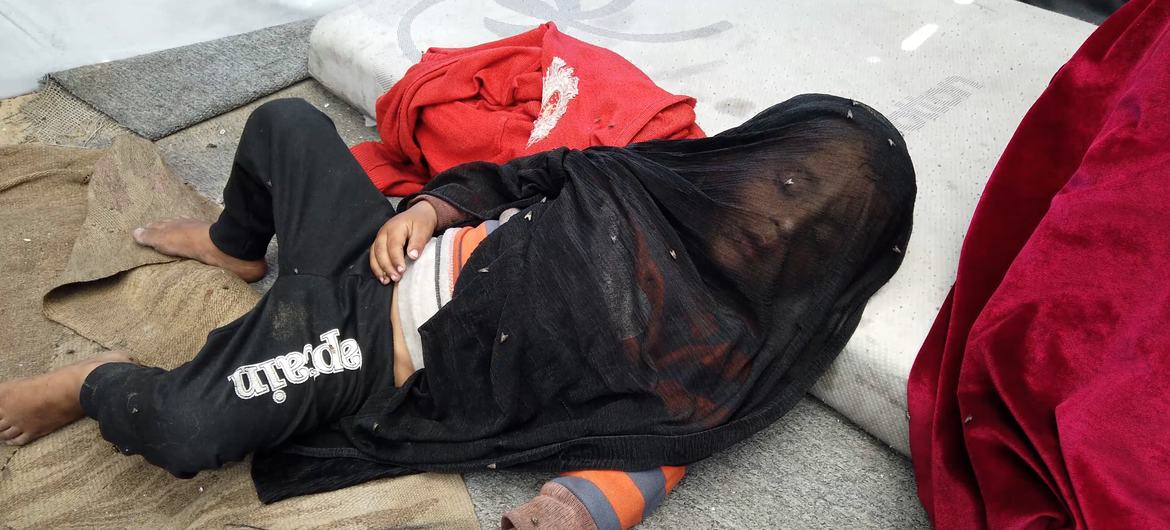
Flies hover over one of the Abu Asr family’s sleeping children in their tent in Gaza.

‘We live on water’

The humanitarian situation has worsened since March, when Israeli authorities imposed a complete blockade on aid. Though this was slightly eased in recent weeks, the limited trickle of supplies cannot meet the overwhelming demand. Desperate civilians, starving and fearful, have resorted to looting whatever aid does arrive.

In their tent, Zeenat washes a few cooking utensils – all she could find in the communal makeshift kitchen. Most days, there is no food to prepare.

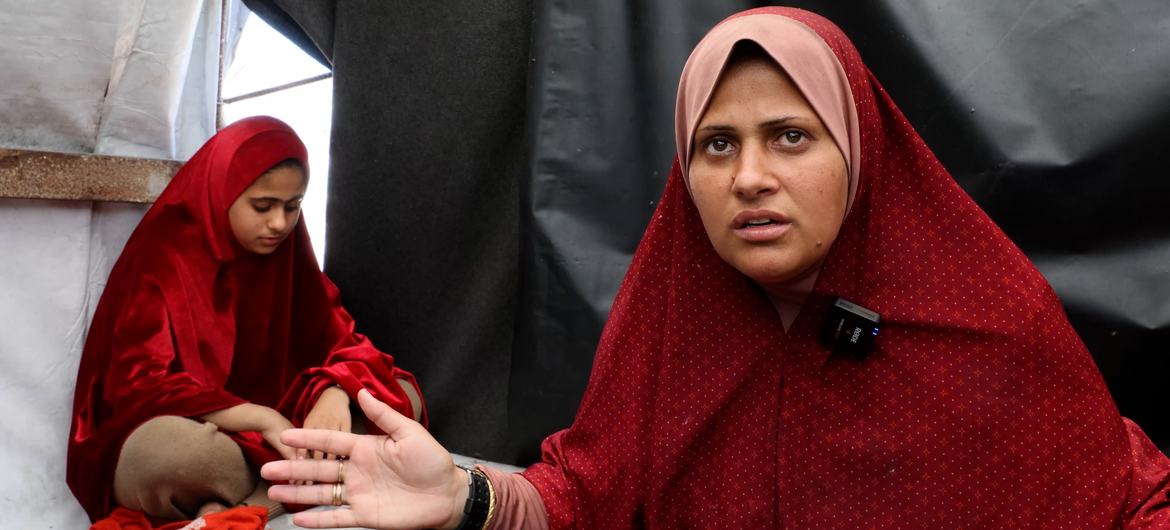
“Yesterday I cried a lot about my son,” she said. “He told me, ‘Mum, I want to eat.’ I stood helpless, not knowing what to do. The food didn’t come from the charity kitchen. We now live on fresh water. I recommend it to my children to help fill their stomachs. Today, thank God, we got a plate of food and ate it.”

Zeinat Abu Asr describes the hardship her family is facing in Gaza.

‘Enough is enough’

Conditions in the tent are dire. Flies swarm everywhere, and stray dogs – thin and hungry – prowl nearby. “Yesterday, a dog came into the tent and was pulling on a tarpaulin while my son was sleeping. I thought it was pulling my baby. I screamed and my husband kicked the dog out.”

“We don’t know where to go or what to do. They uprooted us. Our hearts are extinguished. We can’t be patient anymore. Our patience has run out.”

The tents scattered along Gaza’s coastline are a stark symbol of the deepening humanitarian tragedy. The cries of hunger are louder than any voice of hope. There is no shelter left – only the sea remains.

Nothing encapsulates the despair more than Zeenat’s final plea: “Let the war end. Give us a break. Otherwise, let all countries come together and drop a nuclear bomb on us and end our misery, because we are tired of this life. Enough is enough.”

Gaza ‘hungriest place on earth’, as Israel continues stranglehold on aid

“Gaza is the hungriest place on Earth,” OCHA spokesperson Jens Laerke told reporters in Geneva, stressing that it is the only defined territory in the world where the entire population is at risk of famine.

The aid operation that we have ready to roll is being put in an operational straitjacket that makes it one of the most obstructed aid operations, not only in the world today, but in recent history,” he said.

Mr. Laerke explained that out of nearly 900 aid trucks that were approved to enter from the Israeli side since the reopening of the Kerem Shalom border crossing between Israel and the war-torn enclave ten days ago, less than 600 have been offloaded on the Gaza side.

An even lower number has been picked up for distribution in Gaza, he said, pointing to the “congested, insecure” routes which humanitarians are assigned to use by the Israeli authorities, as well as “significant delays” in the approvals.

Drip-feed of desperation

The OCHA spokesperson stressed that the limited number of truckloads coming in is a “trickle”.

It is drip-feeding food into an area on the verge of catastrophic hunger,” he insisted.

Mr. Laerke added that many of the trucks were “swarmed by desperate people” on the way.

“It’s a survival reaction by desperate people who want to feed their families,” he said, adding that the aid on the trucks “had been paid for by the donors to go to those people”.

“I don’t blame them one second for taking the aid that essentially is already theirs, but it’s not distributed in a way we wanted,” he explained.

On Wednesday, hungry crowds overran a UN World Food Programme (WFP) warehouse in Deir Al-Balah in central Gaza, where limited stocks of wheat flour had been pre-positioned for use by the few bakeries able to resume operations.

The incident reportedly left two people dead. In a statement WFP reiterated warnings over “the risks imposed by limiting humanitarian aid to hungry people in desperate need of assistance”.

‘Paid for’ aid must be delivered

OCHA’s Mr. Laerke insisted once again on the fact that the UN and partners have “tens of thousands of pallets of food and other life-saving assistance” ready to enter Gaza to relieve the suffering.

The aid has been paid for by the world’s donors, who expect us on their behalf to deliver it. It is cleared for customs, it is approved and it’s ready to move,” he said.

A new US and Israeli-backed aid distribution scheme run by a private entity called the Gaza Humanitarian Foundation started operating independently of the UN this week in the Strip.

On Tuesday at least 47 Palestinians were reportedly shot and injured trying to collect aid from its distribution facility in the south, according to information received by UN human rights office, OHCHR.

Aid scheme to bypass UN ‘not working’

In reaction to the incident OCHA head in the Occupied Palestinian Territory Jonathan Whittall warned on Wednesday that the US-Israeli distribution scheme was “engineered scarcity: four distribution hubs located in central and southern Gaza, secured by private US security contractors, where those Palestinians who can reach them will receive rations.”

Mr. Laerke told reporters that this “alternative modality” is “not working” as it does not meet people’s needs.

He added that it constitutes a “violation of basic principle of impartiality”, and that criteria for getting aid have to be based on need, and not the ability to walk for kilometres to a distribution point.

It creates chaos, and it creates a situation that is extremely dangerous for people,” Mr. Laerke said. “Even if you enter one of those distribution points, pick up a package, the minute you’re out of it… Are you a target for looters again? Yes, you are.”

The OCHA spokesperson reiterated calls by the humanitarian community for the reopening of all crossing points into Gaza, to enable delivery from all corridors, including from Jordan and Egypt.

“We need to be able to deliver food directly to families where they are,” as has been the case in the past, he said.

Highlighting the challenges for humanitarian access, Mr. Laerke said that over 80 per cent of the Gaza Strip is currently within Israeli militarized zones or under displacement orders. Since the ceasefire between Israel and Hamas collapsed on 18 March nearly 635,000 people in the enclave have been displaced yet again.

Source link

Desperate hunger drives crowd to storm UN food warehouse in Gaza

UN agencies warn that the decimated enclave is teetering on the brink of further chaos after months of war and the collapse of all essential services.

The incident took place at WFP’s Al-Ghafari facility in Deir Al-Balah, where limited stocks of wheat flour had been pre-positioned for use by the few bakeries which have been able to resume operations.

Tragic consequences

Corinne Fleischer, WFP’s Regional Director for the Middle East, described it as a “tragedy [that] should never have happened”.

She called for immediate and steady flow of aid to avoid further scenes desperation.

When people know food is coming, desperation turns to calm,” she said.

The storming of the warehouse is the latest sign of a hunger crisis spiralling out of control after 80 days of near-total blockade on aid into Gaza. While limited supplies of aid have resumed, “it is a drop in the ocean of what is urgently needed,” UN officials have said.

In a statement, WFP said it has consistently warned of alarming and deteriorating conditions on the ground, and the risks of limiting humanitarian aid – despite the looming threat of famine.

The agency reiterated its call for safe, unimpeded humanitarian access to enable orderly food distributions across Gaza immediately.

Collapse of fishing sector

The UN-led Protection Cluster – a coalition of UN entities and NGOs working on protecting civil rights during crisis – warned on Thursday of a collapse of Gaza’s fishing sector.

The sector was a vital source of food and livelihoods before the conflict erupted on 7 October 2023, when Hamas and other Palestinian armed groups attacked Israeli communities.

Monitoring from the UN human rights office, OHCHR, “found a consistent pattern” of Israeli military attacks on fishers in Gaza.

This included firing on vessels at sea by Israeli Naval Forces, as well as drone attacks at sea and on land.

According to the UN Food and Agriculture Organization (FAO), Gaza’s fishing industry is now operating at just 7.3 per cent of its pre-October 2023 capacity, with the fleet all but decimated.

Around 94 per cent of trawlers, 100 per cent of large fishing vessels and 70 per cent of smaller boats have been destroyed.

This dramatic decline is having a devastating impact on food security, income generation, and community resilience across Gaza, triggering negative coping strategies and risks to fishers,” the Protection Cluster said in a report.

Darkest point

Meanwhile, the UN Humanitarian Country Team (HCT) warned that the humanitarian situation in Gaza, six hundred days into the crisis, is at its darkest point yet.

As relentless, deadly bombardment and mass displacement intensify, families are being starved and denied the basic means of survival,” the team said in statement on Wednesday, adding that conditions for humanitarians to deliver aid safely and at scale are absent.

The HCT noted that over the past days, it had submitted 900 truckloads for Israeli approval – about 800 were cleared and just over 500 were cleared for offloading on the Israeli side of Kerem Shalom.

However, humanitarians have been able to collect only about 200 on the Palestinian side of the crossing due to insecurity and restricted access.

“While letting us bring in some nutrition and medical supplies, as well as flour, Israeli authorities have banned most other items, including fuel, cooking gas, shelter and hygiene products,” the HCT said.

Let us work

The UN and partners underscored Israel’s obligations under international humanitarian law, and urged it to treat civilians humanely, with respect for their inherent dignity, refrain from forcible transfer and facilitate the aid that is needed.

“We echo the Secretary-General’s calls: a permanent ceasefire, the immediate and unconditional release of all hostages, and full humanitarian access,” it said, adding:

We are ready to save lives. Let us work. The window to prevent famine is closing fast.

Source link