World News in Brief: Hunger in the English- and Dutch-speaking Caribbean, climate and displacement crisis in Somalia, World Breastfeeding Week

Across the region, nations face food-related challenges notably due to geographical remoteness, lack of local available resources and exposure to climate change. 

“The Caribbean is particularly vulnerable to natural hazards and supply chain disruptions, which can cause increases in food prices,” said, Brian Bogart. head of WFP for the region.

“It’s deeply concerning that many people are struggling to afford the food they need,” he said. 

Supply chain challenges

Rising food prices are a major concern for the region, with food inflation consistently outpacing overall inflation rates, with local production efforts challenged by increasing operational costs. 

In 2025, 30 per cent of Caribbean people reported eating less than usual, a trend notably triggered by increased food costs and global geopolitical factors.

As the region significantly relies on imported agricultural inputs, “strengthening and diversifying supply chains and trade routes across the region is essential,” said Mr. Bogart. 

He added that in a region particularly impacted by climate disasters, “these efforts will help make food more accessible and affordable while supporting faster recovery in times of crisis.” 

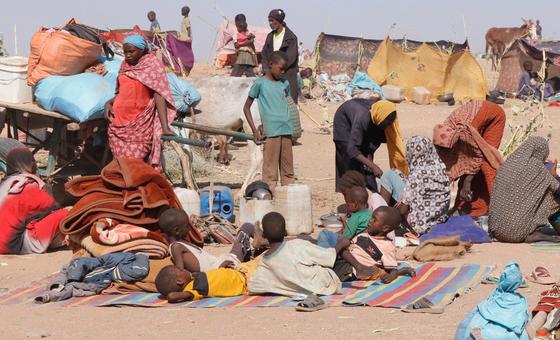
A girl moves a container full of water at a site for displaced people in Dolow, Somalia. (file)

UN migration agency highlights deepening climate and displacement crisis in Somalia

Climate shocks and mass displacement caused by conflict have uprooted some 3.6 million people in Somalia, according to the International Organization for Migration (IOM). 

Almost half the population has been impacted by the climate crisis, the UN agency added.

IOM Deputy Director General Ugochi Daniels concluded a four-day visit to Somalia this week where she expressed solidarity for communities who continue to endure relentless droughts, floods and conflict.

Ms. Daniels also noted that communities are finding solutions to withstand the worst impacts of the climate crisis, but they need international support from the Green Climate Fund urgently.

IOM is active across Somalia in displacement sites and in rural and other fragile areas. Its work includes promoting land restoration and so-called “environmental peacebuilding”, which aims to reduce tensions over shared resources.

Another IOM initiative encourages Somalis to invest in their own development by providing additional funding.

Last year, communities contributed more than half a million dollars toward projects such as solar energy, clean water access and small-scale farming – investments all matched by more than $2 million from IOM. 

World Breastfeeding Week: Invest in health systems and policies to benefit mums and babies

This Friday (1 August) marks the start of World Breastfeeding Week and this year’s theme calls for investing in health systems as well as policies, laws and programmes that prioritize women, babies and breastfeeding.

The World Health Organization (WHO) said investing in breastfeeding support is one of the most powerful tools policy-makers have to improve public health, strengthen economies, and secure the well-being of future generations.

The UN agency explained that breastfeeding protects child health and improves survival, especially in the first months of life.  For infants, breastmilk is more than food: it also provides protection against many common illnesses like diarrhoea, pneumonia and infections.

Mothers also benefit as breastfeeding reduces the risk of postpartum haemorrhage, as well as breast and ovarian cancers, heart disease, and type 2 diabetes.

WHO urges governments to allocate dedicated funding for breastfeeding support, including for when new mums come home, along with maternity protections like paid leave after giving birth. 

Source link

LIVE: UN Security Council meets on crisis in Ukraine

The UN Security Council meets Friday afternoon to discuss the ongoing crisis in Ukraine, where recent attacks have left dozens dead or injured. A senior UN political affairs official is expected to brief on the situation. Follow our live coverage from UN News, in coordination with UN Meetings Coverage, for real-time updates and key developments from the chamber. UN News App users can follow the coverage here.

Source link

In Myanmar, conflict and floods collide as UN warns of deepening crisis

Farhan Haq, UN Deputy Spokesperson, stressed the need for unimpeded relief operations and a peaceful path out of crisis.

The UN remains concerned by ongoing violence in Myanmar, including aerial bombardment hitting civilians and civilian infrastructure,” he said, at the regular press briefing in New York.

Civilians and humanitarian workers must be protected.

His remarks come as monsoon rains and flooding – worsened by Cyclone Wipha – swept through parts of the country, further straining regions already destabilized by conflict and a devastating earthquake in March.

Millions forced to flee

The crisis left more than 3.3 million people internally displaced, with another 182,000 seeking refuge abroad since the military coup in February 2021, according to the latest UN figures. In addition, over 1.2 million – mostly members of the minority Muslim Rohingya community – were forced to flee the country, driven by waves of violence.

The largest exodus took place in August 2017, when nearly one million Rohingya fled brutal violence and attacks by security forces, likened to a “textbook example of ethnic cleansing” by then UN High Commissioner for Human Rights Zeid Ra’ad Al Hussein.

Disasters and fighting has forced millions across Myanmar to flee their homes in search of safety. Many shelter in IDP camps like this one in central Myanmar.

Floods, landslides upend lives

In the flood-affected areas of Bago, Kayin and Mon states, more than 85,000 people have been affected, with homes destroyed, roads cut off and emergency services overstretched.

Relief partners report significant shortages of food, safe drinking water and medical supplies. In Taungoo district (Bago) alone, three flood-related deaths have been confirmed, while six more people reportedly died in a landslide in Shan state.

The pathway out of the deteriorating situation in Myanmar requires an end to the violence 
– UN spokesperson Farhan Haq

The pathway out of the deteriorating situation in Myanmar requires an end to the violence and unimpeded access for relief workers and supplies,” Mr. Haq stressed, noting that health systems are also under acute strain.

Disease outbreaks rising

A humanitarian bulletin from the World Health Organization (WHO)-led Health Cluster warns that floodwaters are driving spikes in acute watery diarrhoea, dengue and malaria.

There are deep concerns over outbreaks of vaccine-preventable diseases like measles, and polio is increasing due to low immunization rates and poor hygiene conditions in overcrowded camps.

WHO has verified 27 attacks on healthcare facilities so far this year, with other monitoring groups reporting over 140 additional incidents.

Meanwhile, severe funding shortages – exacerbated by cuts in United States funding – have forced the suspension of services at 65 health facilities and 38 mobile clinics across Myanmar. Services at a further 28 mobile clinics have been scaled down.

Hakha, the capital of Chin state in Myanmar.

Elections under military cannot be credible

The political context remains grim. Since the February 2021 military coup, which overthrew the elected government and imprisoned top leaders including State Counsellor Aung San Suu Kyi, Myanmar has seen a steady escalation of armed conflict and repression.

The junta’s plans to hold elections have drawn deep concern, including from the UN.

The Secretary-General reiterates his concern over the military’s plan to hold elections amid ongoing conflict and human rights violations, and without conditions that would permit the people of Myanmar to freely and peacefully exercise their political rights,” said Mr. Haq.

He recalled Security Council Resolution 2669, adopted in 2022, which called for the immediate release of all arbitrarily detained prisoners, including President Win Myint and Aung San Suu Kyi; upholding democratic institutions and processes; and pursuing in constructive dialogue and reconciliation in accordance with the will and interests of the people of Myanmar.

Commitment to stay and deliver

Despite the volatility and access constraints, UN agencies remain committed to reaching affected populations.

As of July, nearly 306,000 people had received health services in 59 earthquake-hit townships – just 67 per cent of the target population, reflecting the limited funding and security challenges faced by aid workers.

The United Nations is committed to staying and delivering in Myanmar,” Mr. Haq affirmed, “and to working with all stakeholders, including ASEAN and other regional actors, to attain sustainable peace.

Source link

Sudan gripped by deadly crisis as hunger, disease and heat intensify

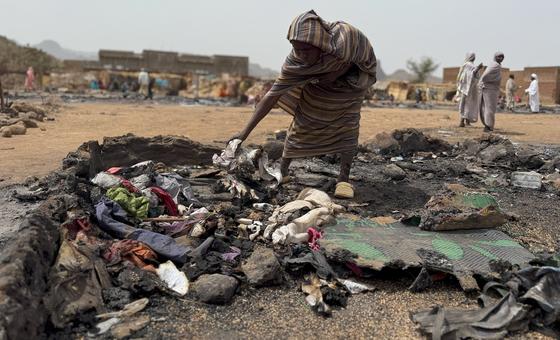
In El Fasher, the capital of North Darfur that has been under siege for 15 months, the catastrophic humanitarian situation is worsening. Food shortages and soaring prices have forced community-run kitchens to shut down. Widespread hunger and malnutrition have reportedly caused several deaths and driven some residents to eat animal feed.

In the Tawila locality of North Darfur, humanitarian organizations have had to strengthen their responses to rising cholera cases. They have expanded the capacities of treatment centres, but needs remain dire. With medical supplies running low, clean water supplies and the construction of latrines are urgent necessities.

In East Darfur state, the Lagawa displacement site, hosting over 7,000 people, is facing severe food shortages and repeated armed attacks. Doctors are warning that the ongoing conflict continues to block the delivery of aid, so vulnerable families are left without access to food or healthcare.

Extreme heat and torrential rains

Meanwhile, floods and storms are displacing families and destroying homes across the country.  

In the Rahad locality of North Kordofan state, heavy rains on Monday displaced around 550 people and damaged or destroyed more than 170 homes.

Torrential rains in the eastern state of Kasssala have devastated the Gharb Almatar displacement site, affecting more than 6,000 people. Many tents were flooded, exposing children to cold, hunger and unsanitary conditions. Displaced families urgently need cash assistance, shelter and protection.

In the coastal city of Port Sudan, extreme heat continues to endanger lives, with three reported deaths and 50 cases of sunstroke this week amid soaring temperatures and widespread power outages.  

As temperatures reach 47 degrees Celsius (116.6 degrees Fahrenheit), overwhelmed hospitals are prompting health workers to call for urgent support, including cooling equipment, medical supplies and personnel.

Call for increased funding

With these crises compounding, international support is desperately needed. The 2025 response plan, which seeks $4.2 billion to assist 21 million of the most vulnerable people across Sudan, is only 23 per cent funded to date.

OCHA once again calls on international donors to scale up funding for the response. 

Source link

Cholera outbreak in West and Central Africa poses crisis for children

“The heavy rains, widespread flooding and the high level of displacement are all fuelling the risk of cholera transmission and putting the lives of children at risk,” said UNICEF regional director for West and Central Africa Gilles Fagninou.

Cholera is an acute diarrhoeal infection caused by consuming food or water contaminated with bacteria. The disease can be treated with oral rehydration solution and antibiotics, but can be fatal within hours if untreated.

Young children are particularly vulnerable to cholera due to factors such as poor hygiene, inadequate sanitation and access to safe water and a greater risk of severe dehydration.

Regional hotspots

Active outbreaks in the hotspots of the Democratic Republic of the Congo (DRC) and Nigeria are fuelling the risk of cross-border transmission to neighbouring countries.  

The DRC is the hardest hit country in the region, reporting more than 38,000 cases and 951 deaths in July. 

Children under five now account for nearly 26 per cent of cases in the DRC, and without stronger containment measures, they may face the worst cholera crisis since 2017.

The situation in the capital, Kinshasa, is particularly critical as intense rainfall and widespread flooding have caused cases to surge sharply over the past four weeks. Straining an already overwhelmed healthcare system, the city is now facing an alarming case fatality rate of eight per cent.

Nigeria is the second most affected country in the region, with 3,109 suspected cholera cases and 86 deaths as of the end of June. Cholera is endemic in the country, where major outbreaks have re-occurred in recent years.

Region-wide crisis

Chad, Republic of Congo, Ghana, Côte d’Ivoire and Togo are also facing ongoing epidemics.

A total of 612 cholera cases were reported in Ghana as of 28 April, 322 cases and 15 deaths in Côte d’Ivoire as of 14 July and 209 cases and five deaths in Togo as of June 22.  

Niger, Liberia, Benin, the Central African Republic and Cameroon are also under close surveillance due to their vulnerability.

UNICEF response

Urgent and scaled-up efforts are needed to prevent further spread and contain the disease across the region.

Throughout the outbreaks, UNICEF has delivered lifesaving health, water, hygiene and sanitation supplies to treatment facilities and communities.  

The agency has also supported cholera vaccinations, scaled up preparedness and response efforts and encouraged families to seek timely treatment and improve their hygiene practices.

“We are in a race against time, working hand in hand with the authorities to deliver essential healthcare, safe water and proper nutrition to children already at risk of deadly diseases and severe acute malnutrition,” said Mr. Fagninou.  

“Together with an array of partners, we are strengthening community engagement and extending our reach to remote and underserved areas, making every effort to ensure that no child is left behind.”

UNICEF West and Central Africa urgently requires $20 million over the next three months to scale up critical support in health, WASH, risk communication and community engagement. 

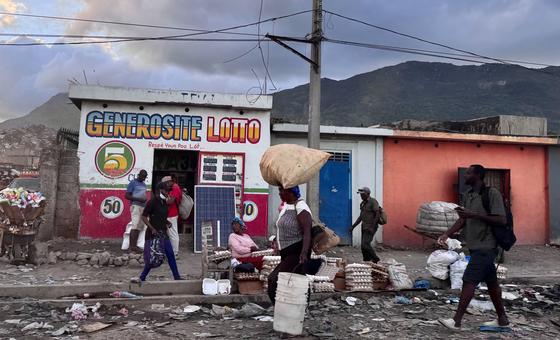
Haiti: Violence and displacement driving humanitarian crisis as funding needs go unmet

Nearly 1.3 million people in the Caribbean country have fled their homes, with an additional 15,000 uprooted last week after armed attacks in the communes of Dessalines and Verrettes in the Artibonite department.

Further, the UN Children’s Fund (UNICEF) and its partners have screened more than 217,000 children for acute malnutrition in 2025. Some 21,500 children have been admitted for acute malnutrition treatment, representing a mere 17 per cent of the 129,000 children who are projected to need lifesaving services this year.  

This malnutrition stems from severe food insecurity across the country. The Integrated Food Security Phase Classification (IPC) reported that an estimated 5.7 million people – more than half of Haiti’s population – faced high levels of acute food insecurity between March and June this year.  

Education emergency

Haiti’s children also face an education emergency. More than 1,600 schools remain closed in Haiti, an increase of over two thirds compared to the start of the year.  

“Without access to education, children, of course, are more vulnerable to exploitation and recruitment by gangs,” UN Spokesperson Stéphane Dujarric told journalists at Headquarters in New York

In response, UNICEF has provided learning opportunities to more than 16,000 children, and the agency has given over 100,000 children mental health and psychosocial support.      

Insecurity and lack of funds straining access

Despite dire humanitarian needs and commendable efforts by UN agencies, the current support “is just a fraction of what is needed in Haiti”, Mr. Dujarric emphasised.

Insecurity continues to constrain the humanitarian response, causing access challenges, supply shortages and the closure of health facilities.

Subsequently, the many displaced families in urgent need of hygiene supplies, food, emergency shelter, medical assistance and other essential items are often unable to access them.  

Humanitarian response is also hampered by a severe lack of funds.

“Haiti remains, as I have said here many times, the least funded of our underfunded country appeals globally,” Mr. Dujarric stressed. More than halfway through the year, the Haitian humanitarian response plan has received less than 9 per cent of the $908 million required.  

Source link

Syria crisis: Hundreds killed in ongoing violence, hospitals overwhelmed

Briefing reporters in Geneva, UN human rights office, OHCHR, spokesperson Ravina Shamdasani highlighted “credible” reports of “widespread violations and abuses, including summary executions and arbitrary killings, kidnappings, destruction of private property and looting of homes” in the city of Sweida.

“Among the reported perpetrators were members of the security forces and individuals affiliated with the interim authorities, as well as other armed elements from the area, including the Druze and Bedouin,” she said.

Many hospitals are struggling to cope with the influx of injured, the UN refugee agency UNHCR also noted.

Forced to flee

On Friday morning, OHCHR colleagues reported that clashes were continuing and that “a lot of people are trying to flee or have fled the area”, Ms. Shamdasani continued.

Latest updates from the UN humanitarian affairs coordination office, OCHA, on Thursday indicated that nearly 2,000 families had been displaced from areas affected by the fighting.

Hundreds have reportedly been killed since sectarian violence involving the Druze and Bedouin communities erupted on 12 July, triggering an intervention by Syrian security forces.

OHCHR’s Ms. Shamdasani highlighted an incident on 15 July in which at least 13 people were killed when “armed individuals affiliated with the interim authorities deliberately opened fire at a family gathering”.

Briefing an emergency meeting of the Security Council in New York on Thursday, UN Assistant Secretary-General Khaled Khiari also referenced reports of “civilians, religious figures and detainees being subjected to extrajudicial executions and humiliating and degrading treatment”. He urged all parties to protect civilians and civilian infrastructure.

Rumours and fact-checking

Ms. Shamdasani stressed that the UN human rights office has been trying to verify the information through “contacts on the ground…families of people who were killed, eyewitnesses”, but that obtaining reliable estimates of the death toll remains challenging.

“There are lots of videos circulating,” she said. “Some claim to be fighters who are in the area filming the abuses and violations they’re carrying out. We are trying to verify some of these videos, but there’s a lot of disinformation out there and a lot of it is being used to incite further violence to inflame tensions.”

The OHCHR spokesperson also expressed concern about reports of civilian casualties resulting from Israel’s airstrikes on Sweida, Dara’a and central Damascus.

“Attacks such as the one on Damascus on Wednesday pose great risks to civilians and civilian objects,” she warned, calling for the strikes to cease.

Israel had launched the strikes pledging to protect the Druze community.

The violence and displacement have sparked “considerable” humanitarian needs, with the health and aid systems struggling to keep up, said William Spindler of the UN refugee agency UNCHR.

“Many of the hospitals have been overwhelmed by the number of people who have been injured in the recent fighting,” he said.

According to OCHA, the UN World Health Organization (WHO) has dispatched enough trauma and emergency surgery kits for 1,750 interventions to the area, but many “remain undelivered due to access constraints”.

Since the displaced had to flee at very short notice, they are in desperate need of essentials – blankets, jerry cans, solar lamps – but providing these items has been a challenge.

Too risky to enter

“We have this in stock and we are ready to deliver them as soon as the security allows it,” Mr. Spindler said. “For now, this has not been possible.”

Mr. Spindler also warned of water shortages due to electricity outages. He said that people are unable to buy bottled water or food because of the insecurity.

UNHCR has an office in rural Sweida and Mr. Spindler expressed concern about the impact of the hostilities on the agency’s operations, infrastructure and personnel.

“We know that humanitarian infrastructure has been affected,” he said, describing an incident on 15 July in which a warehouse of the Syrian Arab Red Crescent was severely damaged by shelling.

The UNHCR spokesperson called on all parties to the conflict to respect and protect humanitarian premises, personnel and assets “in accordance with international humanitarian law”.

From crisis to classroom: How the UN supports education in conflict zones

Of the 234 million school-age children affected by conflict globally, 85 million children are completely out of school.  

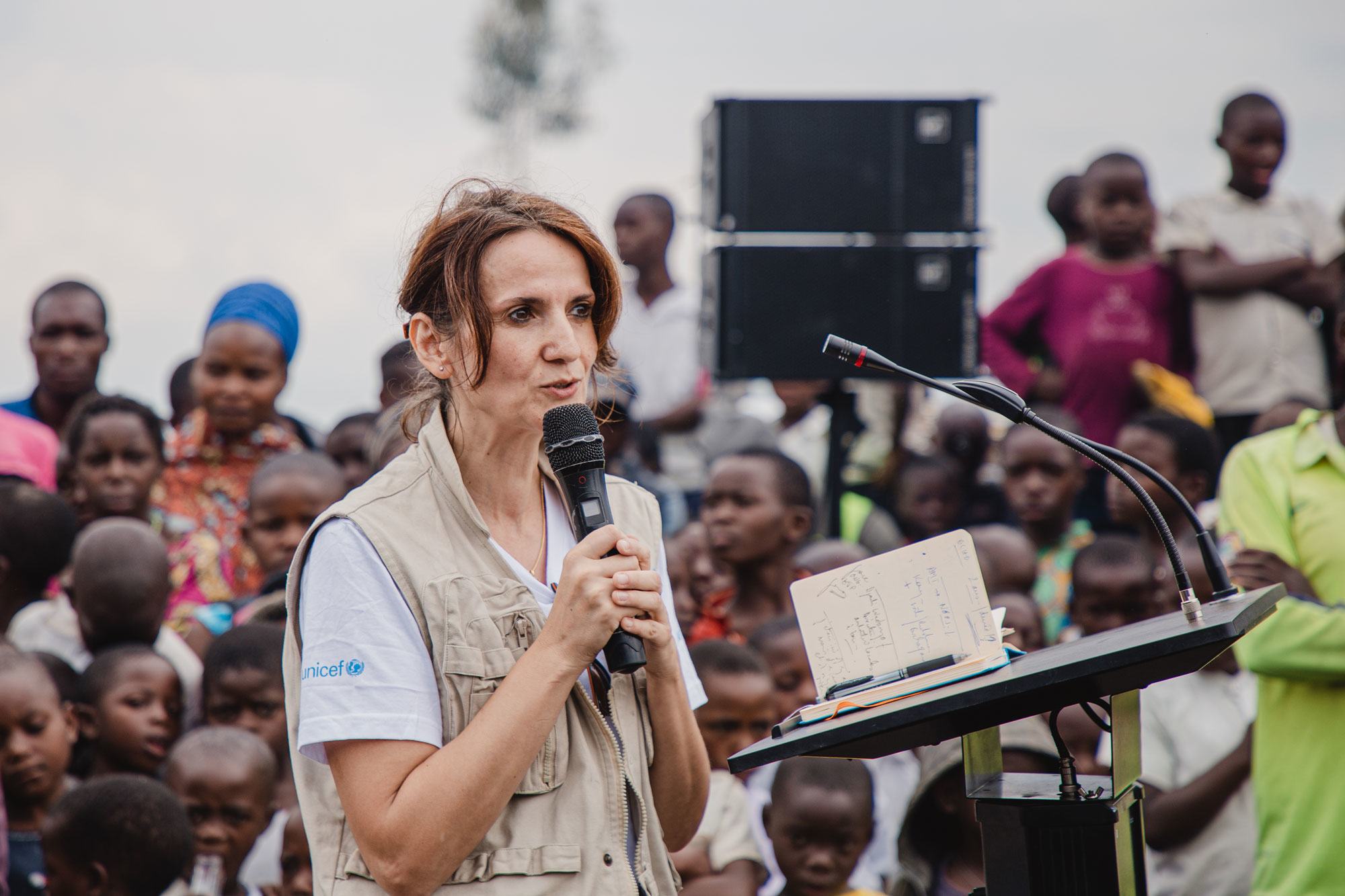
The figures are “unprecedented,” Helena Murseli, who leads the UN Children’s Fund’s (UNICEF) Global Education in Emergencies team, told UN News

© UNICEF/Jospin Benekire

UNICEF’s Helena Murseli.

“These are not isolated incidents. They are part of a global pattern of escalating conflict that affects children’s right to learn,” she said.  

Childhood without education

In the short and long-term, the consequences of missing out on education during violent crises are severe.

“Education is not just lifesaving, it’s also life-sustaining and life-changing,” Ms. Murseli emphasised.

“When schools close, families also lose their anchor. Children miss the structure, the safety, the normalcy that education provides,” she said. “The day-to-day reality becomes about immediate survival, rather than building a future for them.”

Ms. Murseli stressed that the long-term impacts are just as or even more significant. “Education breaks cycles of conflict and poverty. When entire generations miss school, countries lose the human capital needed for recovery and development. We risk creating what we call a ‘lost generation’—children who grow up knowing only crisis, without the skills or hope to rebuild their society.”

Sudan: The world’s largest education crisis

In terms of numbers, Sudan is the world’s largest education emergency. An estimated 19 million children are out of school, and 90 per cent of schools are closed nationwide due to ongoing violent conflict.

To help address this crisis, Ms. Murseli highlighted that over 2.4 million children have returned to school through more than 850 UNICEF-run Makanna centres – meaning “our space” in Arabic.  

UNICEF has also supported over 250,000 children with holistic education services, providing students with water, sanitation, nutrition and protection so they’re able to successfully continue their studies.  

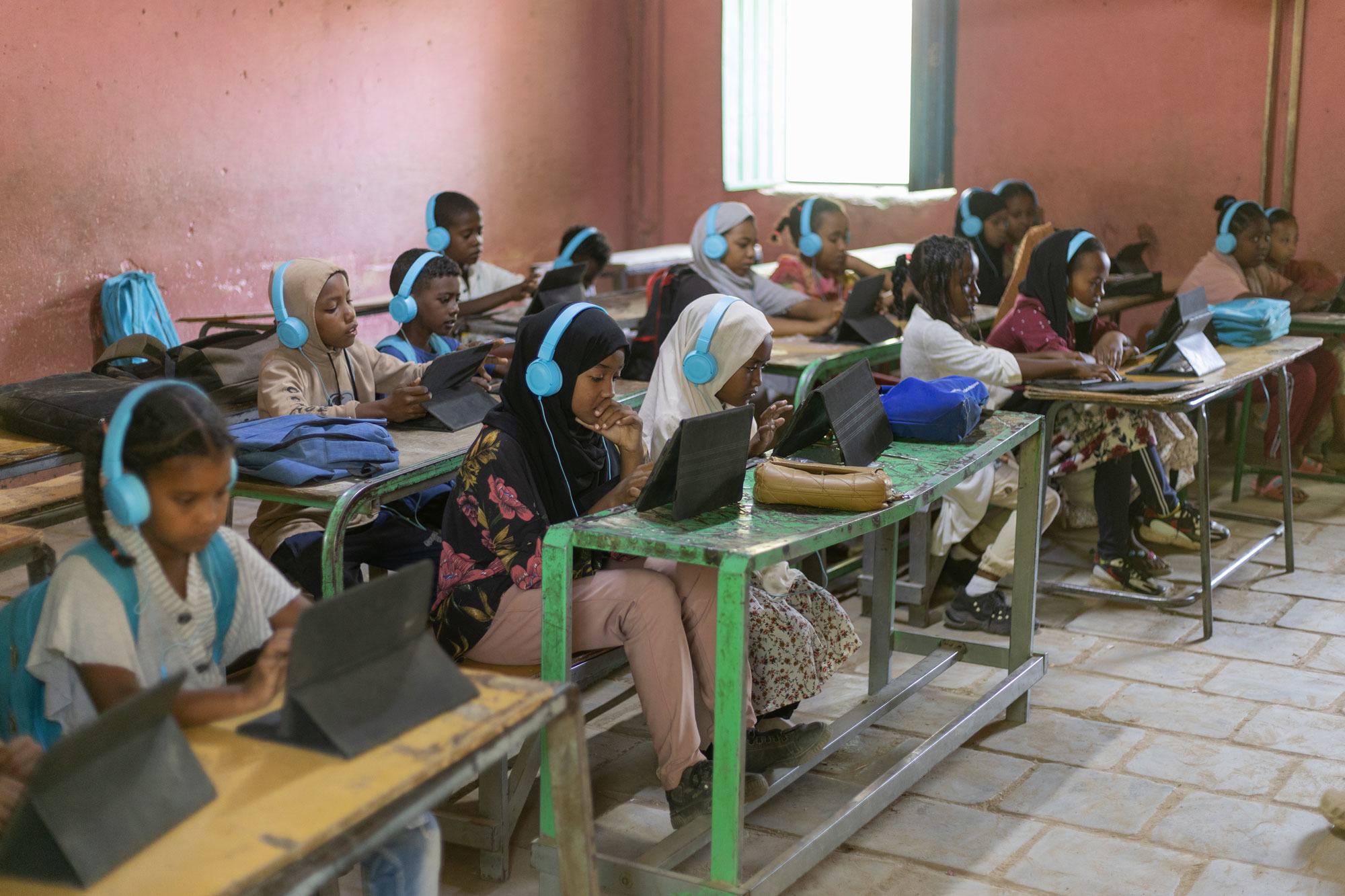
The also organization utilises solar-powered tablets for education, “perfect for a country with more than 10 hours of daily sunshine,” said Ms. Murseli.

© UNICEF/Ahmed Mohamdeen Elfatih

Children in Kassala, Sudan, study with the help of digital tablets.

Additionally, a $400 million Transitional Educational Plan led by the UN’s education organization (UNESCO) aims to restore access to education and vocational training.

Looking ahead, UNICEF’s education support project in Sudan plans to support relatively stable states with printed materials and remote learning tools. 

Systematic destruction of schools in Gaza

The war in Gaza and the destruction of 95 per cent of educational infrastructure has left over 660,000 children out of school – nearly all of Gaza’s school-aged population.

Many former UN-run schools are now being used as shelters for displaced people.

A report to the UN Human Rights Council found that Israeli forces systematically destroyed education infrastructure in Gaza and described these actions as possible war crimes. 

Learning with what’s available

According to Ms. Murseli and the UN Palestinian refugee agency (UNRWA) more than 68,000 children in Gaza have been reached through temporary learning spaces offering education and psychosocial support.

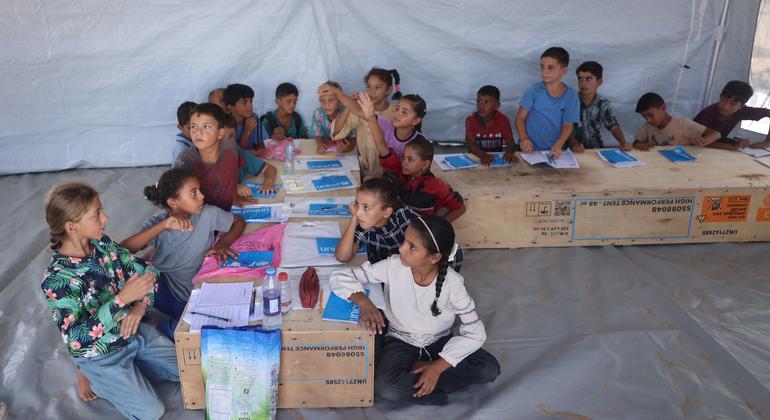
UNICEF is also recycling pallets into school furniture and converting supplied boxes into tables and chairs.  

© UNICEF/Mohammed Nateel

In addition, digital tools to study literacy and numeracy lessons have been provided to nearly 300,000 Palestinian refugee children. 

Ukraine: education under fire

Within Ukraine, 5.3 million children face barriers to education, and around 115,000 are completely out of school due to the ongoing war.

With many schools on the front lines either closed or operating remotely, over 420,000 children attend school fully online, while 1 million use a hybrid model. 

However, ongoing energy shortages have reduced access to online learning to as little as two and a half hours each day, and in-person school is often disrupted by indiscriminate attacks.

In Russian-controlled areas of Ukraine, the UN Human Rights Office said that authorities are enforcing a militarised, patriotic curriculum and banning the Ukrainian language – actions that violate international law, which requires occupying powers to respect children’s national identity and education.

Catch-up classes and safe spaces

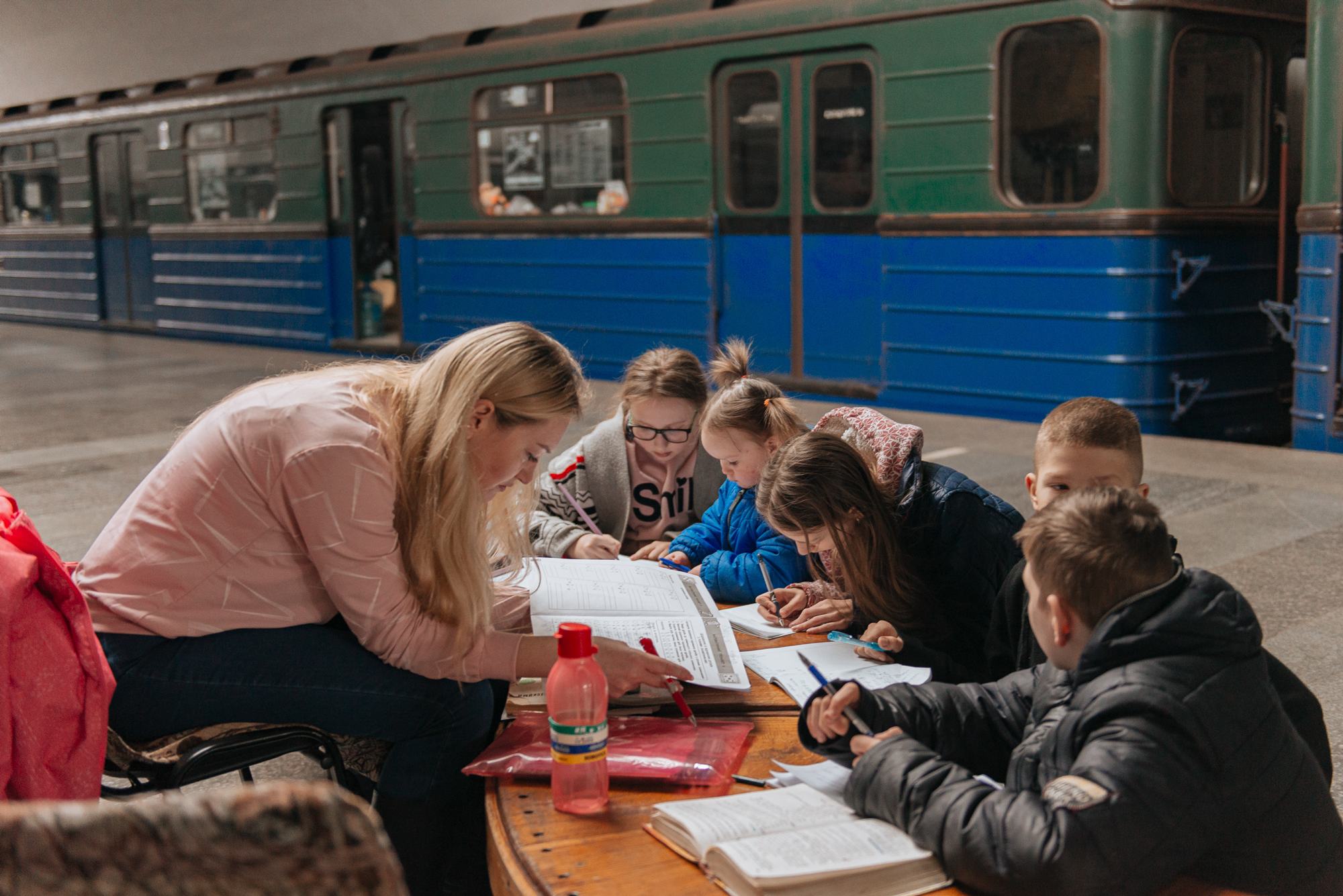
UNICEF has established 150 student learning centres in frontline areas and offers twice-weekly catch-up classes in maths and Ukrainian language.  

To adapt to the situation on the front lines, Ms. Murseli also highlighted UNICEF’s running of schools in underground metro systems and bomb shelters.

© UNICEF/Kristina Pashkina

Children study in a shelter in Kharkiv metro in Ukraine.

In 2025, the organization aims to help over 500,000 children across the country access formal education and recreational activities.  

To increase safety, UN Ukraine has also launched an initiative to create protected shelters for students and staff during air raids. 

The costs of inaction

As crises deepen and humanitarian funding continues to decline, education programmes have faced dramatic cuts.  

Ms. Murseli underscored that as humanitarian funding could drop up to 45 per cent by the end of this year, “despite being families’ top priority in emergencies, education receives only 3 per cent of humanitarian aid.”

“I think we are at the critical turning point where we need urgent prioritisation of education and not further cuts,” she said.  

Amid rhetoric of a “humanitarian reset” – saving funds by making the humanitarian system more effective – Ms. Murseli emphasised that holistic education programmes that provide students with the humanitarian resources to thrive are the key to withstanding crises and development in the aftermath.

“We’re talking about 234 million children’s future and ultimately, global stability and development. The cost of inaction far exceeds the investment needed to get every crisis-affected child learning,” she concluded.  

Source link

Malnutrition crisis deepens for Sudan’s children as war rages on

Across the five states that make up Darfur, UNICEF data revealed a 46 per cent increase in the number of children treated for SAM in January to May 2025 compared to the same period last year.

The rate of acute malnutrition has surpassed emergency levels set by the World Health Organization (WHO) in 9 of the 13 localities across Darfur.

In North Darfur alone, over 40,000 children were admitted for SAM treatment in the first five months of the year – double the number from the same period last year.

Besieged and starved

This malnutrition surge comes amid intensifying conflict in North Darfur since April. Entire neighborhoods have been besieged, hospitals targeted by airstrikes, roads rendered impassable while aid convoys have faced looting and violent attacks.

The situation is particularly catastrophic in El Fasher, where humanitarian access has been nearly completely severed since the RSF militia besieged the city – the last held by Government forces in the region – and cut off assistance in April of 2023.

UNICEF successfully delivered a batch of supplies to El Fasher earlier this year, but efforts to send additional aid have been blocked.

Children in Darfur are being starved by conflict and cut off from the very aid that could save them,” said Sheldon Yett, UNICEF Representative for Sudan. “This is a moment of truth; children’s lives depend on whether the world chooses to act or look away.”

The crisis has triggered mass displacement in the area: in April, nearly 400,000 people fled the Zamzam camp near El Fasher. Many walked up to 70 kilometres to reach Tawila, where more than 500,000 displaced people survive with little access to food, water, or adequate shelter.

Nationwide crisis

SAM is the deadliest form of malnutrition, and children suffering from it are highly vulnerable to life-threatening complications and face a high risk of death without proper treatment.

And the crisis isn’t limited to the Darfur states – SAM admissions rose by more than 70 per cent in North Kordofan, 174 per cent in Khartoum State and a staggering 683 per cent in Al Jazirah State.

However, the report noted that the rise in admissions in Al Jazirah and Khartoum is partially due to improved security and humanitarian access, enabling more families to reach health centres.

Compounding the crisis is Sudan’s lean season – a period of food scarcity between harvests – which is rapidly increasing the risk of mass child mortality, particularly in areas already nearing famine thresholds.

Cholera outbreaks, measles cases and collapsing health services are further aggravating the crisis, putting vulnerable children at even greater risk.

UNICEF response

UNICEF and its partners are saving lives by treating the wounded and malnourished, drilling wells and distributing food. But despite their best efforts, the violence is driving needs faster than they can be met.

UNICEF is calling on all parties to allow unimpeded humanitarian access to affected populations and urges renewed diplomatic pressure on all sides for a cessation of hostilities.

The agency is also appealing to the international community for more lifesaving funds. An additional $200 million is needed this year to sustain and expand essential nutrition services, including treatment for acute malnutrition.

Source link

UN warns of deepening health crisis in Gaza amid mass casualty incidents

Across the Gaza Strip, as people desperately search for food, mass casualty incidents are reported almost daily, UN Spokesperson Stéphane Dujarric, told reporters at his regular briefing in New York.

Hospitals, already under immense strain, are struggling to cope and lack of essential supplies – including fuel and medicines – is placing even greater pressure on overstretched teams.

The war has also had a devastating impact on health workers. According to Gazan health authorities, more than 1,500 medical staff have been killed in Gaza since October 2023.

Medical supplies arrive – but much more is needed

The World Health Organization (WHO) reported that 11 trucks carrying medical aid, including surgical supplies, assistive devices, orthopaedic instruments and other essential medical items, had entered the Strip on Tuesday.

These supplies are set to be distributed to various health facilities across Gaza.

“The health needs remain immense. Much more medical supplies are needed. We urgently call for the unimpeded entry of fuel, food, and health aid at scale into Gaza through all possible routes,” Tedros Adhanom Ghebreyesus, WHO General-Director, said in a post on social media.

Mr. Dujarric echoed that message, calling for the opening of all crossings and corridors “to ensure the consistent, frequent and large-scale distribution of aid to people in need, wherever they are.”

Disease risk rising

Against the backdrop of access challenges, the spectre of deadly disease outbreaks is also rising.

In northern Gaza, 10 water wells have stopped functioning due to lack of fuel, and another 25 are operating only partially and could soon shut down.

“Shorter pumping hours, reduced water production and limited solid waste collection provide fertile ground for diseases to spread – especially among vulnerable people including children, older people and pregnant women,” Mr. Dujarric said.

No hygiene items have entered Gaza since early March 2025, he noted, added that the ongoing shortage of cleaning and sanitation supplies is severely affecting health and impeding an effective medical response.

Source link

UN warns of worsening humanitarian crisis in Sudan as displacement, hunger and disease escalate

The situation is particularly dire in El Fasher, the capital of North Darfur province, which has witnessed some of the worst episodes of the ongoing conflict between rival militaries.

Those remaining in El Fasher are facing “extreme shortages” of food and clean water, with markets repeatedly disrupted, UN Spokesperson Stéphane Dujarric told journalists at the regular news briefing in New York.

Across the city, nearly 40 per cent of children under five are suffering from acute malnutrition, including 11 per cent with severe acute malnutrition.

Most of the surrounding water infrastructure has also been destroyed or rendered non-functional due to minimal maintenance and fuel shortages, Mr. Dujarric added.  

El Fasher displacement

Since April 2023, an estimated 780,000 people have been displaced from El Fasher town and the nearby Zamzam displacement camps, including nearly 500,000 in April and May of this year.

Famine conditions have been confirmed in the area since last August.

About three-quarters of Zamzam camp’s residents fled to various locations across Tawila, where the UN and its partners have scaled up critical humanitarian assistance.

Cholera outbreak continues

Mr. Dujarric further warned that the breakdown of water and sanitation services, combined with low vaccination coverage, has sharply increased the risk of disease outbreaks, including cholera.

So far this year, Sudan has reported more than 32,000 suspected cholera cases.

According to the UN Office for Coordination of Humanitarian Affairs (OCHA) cholera cases continue to rise across Darfur, with over 300 suspected cases and more than two dozen deaths reported in South Darfur state last week alone.

“Conflict and collapsing infrastructure continue to drive the spread of the disease and impede response efforts,” Mr. Dujarric stressed.

Unprecedented and complex crisis

Since war erupted between the former allies-turned-rivals, the Sudanese Armed Forces (SAF) and Rapid Support Forces (RSF) in April 2023, tens of thousands of civilians have been killed and more than 12 million forced to flee their homes – including approximately four million as refugees in neighbouring countries.

The crisis is unfolding against a backdrop of extreme vulnerability, as the country remains highly susceptible to the impacts of climate change and disasters.

From severe droughts to deadly floods, the compounded effects of conflict and environmental instability are pushing communities to the brink, leaving them struggling to survive. Famine has already been declared in some parts of the country, putting millions of lives at risk.

Lack of resources hamstring response

Despite growing needs, the $4.2 billion humanitarian response plan for 2025, which aims to assist around 21 million of the most vulnerable people, remains only 21 per cent funded, having received $896 million so far.

Tom Fletcher, UN Under-Secretary-General for Humanitarian Affairs, underscored the gravity of the situation in El Fasher.

Civilians in the area remain cut off from aid and face the risk of starvation, he said in a post on social media.

Appealing for an urgent humanitarian pause, he warned that “every day without access costs lives.” 

Source link

UN chief ‘appalled’ by worsening Gaza crisis as civilians face displacement, aid blockades

Multiple attacks in recent days have killed and injured scores of Palestinians at sites hosting displaced people and others attempting to access essential supplies, according to a statement from UN Spokesperson Stéphane Dujarric on Thursday.

“The Secretary-General strongly condemns the loss of civilian life,” Mr. Dujarric said.

On just one day this week, nearly 30,000 people were forced to flee under new Israeli relocation orders, with no safe place to go and clearly inadequate supplies of shelter, food, medicine or water, he added.

Critical systems shutting down

With no fuel having entered Gaza in over 17 weeks, the UN chief is also “gravely concerned that the last lifelines for survival are being cut off.”

“Without an urgent influx of fuel, incubators will shut down, ambulances will be unable to reach the injured and sick, and water cannot be purified,” Mr. Dujarric said.

“The delivery by the United Nations and partners of what little of our lifesaving humanitarian aid is left in Gaza will also grind to a halt.”

The Secretary-General reiterated his call for safe and sustained humanitarian access so aid can reach people in desperate need.

“The UN has a clear and proven plan, rooted in the humanitarian principles, to get vital assistance to civilians – safely and at scale, wherever they are,” Mr. Dujarric said.

The Secretary-General reiterated his call for an immediate and permanent ceasefire and the unconditional release of all hostages held by Hamas and other groups. He reminded all parties that international humanitarian law must be upheld.

Displacement continues

Displacement remains relentless. On Wednesday, Israeli authorities issued a new evacuation order in parts of Gaza City, affecting some 40,000 people and including a displacement site, a medical point and one of the few neighbourhoods that had remained untouched by such orders since before the March ceasefire.

Since that ceasefire collapsed, over 50 such orders have been issued, now covering 78 per cent of Gaza’s territory.

“Add the Israeli-militarized zones and that percentage jumps to 85 – leaving just 15 per cent where civilians can actually stay,” Mr. Dujarric said, briefing reporters at the UN Headquarters, in New York.

Those areas are overcrowded and severely lacking in services or proper infrastructure.

“Imagine having just over two million people in Manhattan – which is actually slightly bigger – but instead of buildings, the area is strewn with the rubble of demolished and bombed-out structures, without infrastructure or basic support,” the UN Spokesperson said.

“And in Gaza, these remaining areas are also fragmented and unsafe.”

Iran crisis: UN stays and delivers

“In the early morning hours of 13 June, a number of attacks took place in Tehran, and other parts of Iran,” said Stefan Priesner, UN Resident Coordinator in Iran.

“Then over the next 12 days there were multiple attacks by either side…we know that there have been at least 627 people killed and almost 5,000 injured in Iran.

Underlining that the UN remained in Iran through the duration of the conflict, Mr. Priesner noted that discussions are ongoing with the Government on “how to adapt existing UN programmes to meet the country’s post-conflict needs”, he told journalists in Geneva via Zoom.

Tehran insight

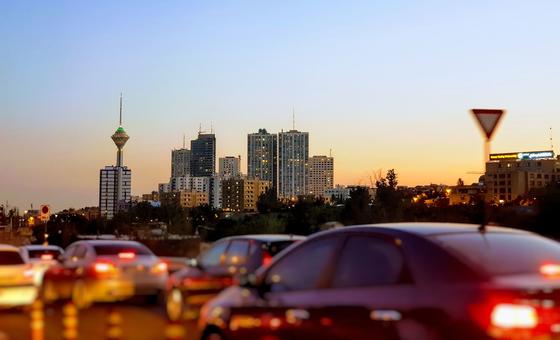
Speaking from the Iranian capital, the UN official confirmed reports that Tehran had seen a population movement as several residents left the city seeking safety from the missile strikes. He mentioned the solidarity that Iranians had shown towards each other, with families in the north and the countryside hosting those coming from Tehran.

Looking ahead, Mr. Priesner said “we know that the health sector has very specific needs given the damage.” 

Stefan Priesner, UN Resident Coordinator in Iran.

The UN’s development and humanitarian presence in Iran spans 18 agencies with approximately 50 international staff and 500 national staff.

Last year’s budget amounted to around $75 million with two-thirds dedicated to the country’s roughly 3.5 million refugees or people in a refugee like situations.

Iran has been hosting one of the largest – and most protracted – refugee situations in the world for over four decades with inclusive policies for example in the fields of access to health and education, and UN has supported these efforts over the years.

The remainder of the budget is allocated for development projects including climate adaptation and mitigation work. Mr. Priesner said there was need for significant additional funding to support the most vulnerable groups in Iran including children, the elderly, female-headed households and persons with disabilities.

The UN official confirmed reports that increasing numbers of Afghan refugees have been heading back to their country across the Iranian border either voluntarily or through deportation.

According to the UN refugee agency, UNHCR, 36,100 Afghans returned on 26 June alone. The number of daily returns has continued to increase since 13 June, it said.

Every day, and sometimes every few hours, buses arrive and stop at the Afghanistan-Iran border, carrying exhausted and desperate Afghan refugee families with all their belongings,” said Arafat Jamal, UNHCR Representative in Afghanistan.

Afghanistan returnees’ plight

“Many are returning to a country they barely know, forced out of Iran after decades of living there. The recent Israel-Iran war accelerated their return, pushing numbers to a record high, while deep funding cuts have made humanitarian aid operations increasingly challenging.”

Having just returned from the Islam Qala border area, UNHCR Representative Arafat Jamal told UN News that the flow of people into Afghanistan has surged since the conflict, rising from around 5,000 daily crossings to a recent peak of nearly 30,000.

The UNHCR official warned that Afghan returnees are arriving in an impoverished country that is unprepared to support them. Women and girls who had access to education and jobs in Iran now return to a country where “extreme gender injustice” makes such opportunities impossible, he said.

Arafat Jamal, UNHCR Representative in Afghanistan, on returns from Iran.

New UN report charts path out of debt crisis threatening global development

On Friday, Deputy Secretary-General Amina Mohammed launched a new report, Confronting the Debt Crisis: 11 Actions to Unlock Sustainable Financing.

She was joined by experts Mahmoud Mohieldin and Paolo Gentiloni, along with Rebeca Grynspan, Head of the UN Conference on Trade and Development (UNCTAD).

A growing crisis

“Borrowing is critical for development,” Ms. Mohammed said, but today, “borrowing is not working for many developing countries, over two-thirds of our low income countries are either in debt distress or at a high risk of it.”

The crisis is accelerating, Ms. Grynspan warned.

More than 3.4 billion people now live in countries that spend more on interest payments than on health or education – 100 million more than last year.

Debt service payments by developing countries have soared by $74 billion in a single year, from $847 billion to $921 billion.

“The nature of this crisis is mostly connected to the increase of debt servicing costs,” Mr. Gentiloni explained. “Practically, the debt services costs doubled in the last ten years.”

Prepared by the UN Secretary-General’s Expert Group on Debt, the report reinforces the commitments put forward in the Compromiso de Sevilla, the outcome document of the Fourth International Conference on Financing for Development – taking place next week.

A path forward

The report outlines 11 actions that are both technically feasible and politically viable.

Mr. Mohieldin explained that the recommendations fall under two key goals: providing meaningful debt relief and preventing future crises.

It identifies three levels of action:

At the multilateral level: repurpose and replenish funds to inject liquidity into the system, with targeted support for low-income countries.

At the international level: establish a platform for borrowers and creditors to engage directly.

At the national level: strengthen institutional capacity, improve policy coordination, manage interest rates, and bolster risk management.

“These are eleven proposals that are doable and that only need the political will of all the actors to be able to make them real,” Ms. Grynspan stressed.

Source link

Short-range drone attacks deepen crisis on Ukrainian frontlines

According to the rights mission, while the majority (89 per cent) of civilian casualties were documented in Ukrainian-controlled territory as a result of attacks by the Russian armed forces, the remaining occurred in territory occupied by Russian authorities, including in attacks that struck public transport and clearly marked ambulances.

While individually less destructive than artillery or missiles, “the sheer scale and increasing frequency of short-range drone attacks have made them one of the deadliest weapons in Ukraine,” said Danielle Bell, Head of HRMMU.

Not compliant with laws of war

Forcing residents to drastically restrict their movements, limiting access to essential goods and affecting livelihoods, the large number of short-range drone attacks exacerbated an already dire humanitarian situation.

Most short-range drones have on-board cameras that provide operators with a real-time view of potential targets.

However, the high number of civilian casualties resulting from drone attacks suggests that these weapons have been deployed in ways that violate international humanitarian law, in particular the principles of distinction and precaution, HRMMU noted.

In some instances, drone operators appear to have intentionally attacked civilians or civilian objects, including medical transport and personnel, which would amount to war crimes, it added.

“It is clear that these weapons are not being used in compliance with the laws of war,” Ms. Bell said.

Call for accountability

Information verified by the mission showed that the number of civilian casualties from short-range drones steadily increased in late 2023 and early 2024, before spiking in July 2024 and reaching record numbers in April 2025.

Casualties continued in May and June, such as during a strike on a minibus in Kostiantynivka, Donetsk region, on 23 June, in which the 65-year-old driver was killed.

On 22 May, a 58-year-old woman, a local volunteer, was killed in a frontline village in Kharkiv region when a drone dropped a munition on the balcony of a two-story residential building, according to the HRMMU.

“Each of these attacks must be investigated,” Ms. Bell said.

“Those responsible for targeting civilians and humanitarian personnel must be held to account.”

Source link

Myanmar human rights crisis deepens as aid collapses, attacks intensify

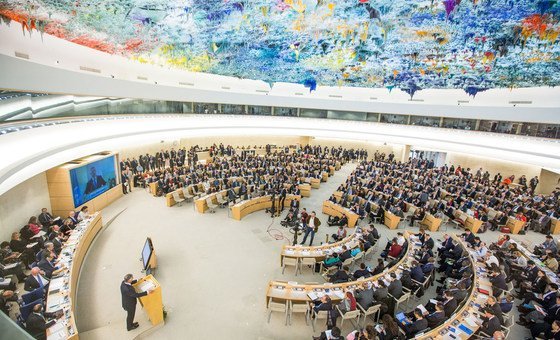
In a stark briefing to the Human Rights Council in Geneva, UN High Commissioner for Human Rights Volker Türk described a country gripped by war, repression and deepening suffering.

Since the military coup in February 2021, nearly 6,800 civilians have been killed and over 22,000 remain arbitrarily detained, he said. Humanitarian needs have soared, with nearly 22 million people in need of assistance and more than 3.5 million displaced by conflict.

“The report I am presenting today is about the people of Myanmar and their aspirations for a better future,” Mr. Türk said.

Despite massive challenges, people from across society are striving to build a peaceful, sustainable, democratic and diverse Myanmar, grounded in human rights.

A crisis worsened

However, conditions on the ground have only worsened.

Following a 28 March earthquake that killed nearly 4,000 people and left six million in urgent need, the military intensified attacks instead of facilitating relief, Mr. Türk said.

The UN human rights office, OHCHR, documented more than 600 military strikes since the quake – 94 per cent of them occurring during supposed ceasefires – with schools, religious sites and other protected locations frequently targeted.

Situation in Rakhine

The situation in Rakhine state remains particularly dire, with civilians – the minority Muslim Rohingya in particular – caught between the Myanmar military and the Arakan Army, an ethnic armed group. In addition, the military’s ongoing obstruction of humanitarian access has worsened an already acute crisis.

Throughout the country, economic collapse and the breakdown of public institutions have compounded the suffering.

Nearly four in five people now live below or just above the poverty line and an estimated 1.3 million have fled the country – many undertaking perilous journeys by land and sea. So far in 2025, nearly one in five people attempting sea crossings in the region have been reported dead or missing.

End violence, ensure accountability

The High Commissioner’s report outlined four key pathways to lay the groundwork for a transition toward a peaceful and democratic Myanmar: justice and accountability, democratic governance; economic reform to serve the people, and sustained international engagement.

Mr. Türk stressed that accountability must begin with the release of all political prisoners and prosecution of those responsible for grave human rights violations.

“It is imperative for the military to immediately end the violence, allow unhindered humanitarian access and release all arbitrarily detained people,” he said.

Amid the turmoil, planning for a future with human rights front and centre offers people a sense of hope. We owe it to the people of Myanmar to make that hope a reality.

Millions have lost their homes and livelihoods due to the earthquakes that struck Myanmar in late March.

Independent expert’s alarm

Tom Andrews, the UN Special Rapporteur on the situation in Myanmar, echoed the High Commissioner’s warnings, raising alarm over a collapse in international humanitarian support and the military’s repression.

“The junta has chosen to use aid as a weapon,” he told the Council.

“I have spoken with humanitarian workers physically blocked at checkpoints and received reports of earthquake survivors evicted from shelters with no place to go.”

Mr. Andrews, who has been appointed and mandated by the Human Rights Council and is not a UN staff member – also warned that drastic cuts in international funding have already had severe consequences.

As of 27 June, the $1.14 billion comprehensive humanitarian response plan for the country is only 12 percent funded and the $275 million addendum for the earthquake response is about 37 per cent.

At a time when the people of Myanmar need an enhanced level of support from the international community, they are getting the opposite, Mr. Andrews said, warning that the cost in human lives and human suffering will soon very likely get “significantly worse.”

This dangerous trend begs the question – do human rights matter?” he asked.

Because if human rights matter, if saving the lives of children in Myanmar matters, why are so many governments reluctant to invest even a modest amount of resources to save lives?

Source link

Guterres calls for immediate Gaza ceasefire as humanitarian crisis reaches ‘horrific proportions’

Speaking to reporters at UN Headquarters ahead of his departure to Spain for the International Conference on Financing for Development, the Secretary-General said that while the Israel-Iran conflict had dominated recent headlines, the plight of civilians in Gaza remained urgent and dire.

Families have been displaced again and again – and are now confined to less than one-fifth of Gaza’s land,” he said.

Even these shrinking spaces are under threat. Bombs are falling – on tents, on families, on those with nowhere left to run.

Search for food must never be a death sentence

Mr. Guterres described the situation as the most severe since the onset of the war, citing acute shortages of food, fuel, medicine and shelter.

The search for food must never be a death sentence,” he said, highlighting the danger faced by Palestinians simply trying to survive.

He has repeatedly called for three urgent steps: an immediate ceasefire, the unconditional release of all hostages, and full, unimpeded humanitarian access.

On Friday, he again pressed for these demands, emphasising that aid workers are starving, hospitals are rationing life-saving supplies and civilians are trapped in unsafe zones.

Surge in aid urgently needed

“What’s needed now is a surge – the trickle must become an ocean,” he said.

The UN chief stressed that Israel, as the occupying power, is legally obliged to facilitate humanitarian relief.

“To those in power, I say: enable our operations as international humanitarian law demands. To those with influence, I say: use it,” he added.

Earlier this week, a small convoy of UN medical supplies entered Gaza for the first time in months, Mr. Guterres noted, adding that it only underscored the overwhelming scale of the need.

He also also cautioned that any aid delivery method must ensure civilian safety, stressing that “operations which place desperate people in or near militarized areas are inherently unsafe.”

We have the solution – a detailed plan grounded in the humanitarian principles of humanity, impartiality, neutrality, and independence,” he said.

It worked during the last ceasefire. So it must be allowed to work again.

Two-State solution critical

Mr. Guterres concluded with a broader political appeal:

The only sustainable path to re-establishing hope is by paving the way to the two-State solution. Diplomacy and human dignity for all must prevail.

Source link

‘Still reeling’: Myanmar quakes worsen humanitarian crisis in fractured country

The 28 March quake measuring 7.7 on the Richter scale, struck central regions with deadly force, killing some 3,800 people and injuring over 5,000, according to UN estimates.

The disaster devastated infrastructure and homes across Mandalay, Sagaing and Magway, displacing tens of thousands more in a country already grappling with over 3.2 million internally displaced persons (IDPs) since the 2021 military coup.

Communities are still reeling from the earthquakes – the strongest the country has experienced in a century,” said Jorge Moreira da Silva, Executive Director of the UN Office for Project Services (UNOPS), speaking to journalists at the UN Headquarters in New York via video from Beijing after a three-day visit to Myanmar.

The devastation caused by the quakes compounded the existing challenges of conflict, displacement and severe humanitarian needs.

Needs outpace resources

UNOPS, which maintains the largest UN presence in Myanmar with nearly 500 staff, mobilized $25 million within weeks of the disaster and has reached half a million people with lifesaving support.

“My colleagues worked swiftly with partners to deliver emergency shelters, clean water, and deploy infrastructure specialists for rapid assessments,” Mr. da Silva said.

However, he warned that far greater international support is needed to meet the scale of needs.

The World Bank estimates total damages at nearly $11 billion, with full reconstruction expected to cost two to three times more. Over 2.5 million tonnes of debris must also be cleared to enable recovery.

Mr. da Silva emphasized that reconstruction must be people-centred, inclusive, and linked to peacebuilding efforts.

“We echo calls from across the UN for an end to violence,” he said. “Recovery and reconstruction should support Myanmar’s journey to peace and reconciliation. Protection of civilians must be a priority.

Women and girls face disproportionate risks

The humanitarian fallout has hit women and girls particularly hard – many of whom were among those killed or injured – and now face growing protection risks.

According to the UN reproductive health agency, UNFPA, more than 4.6 million women of reproductive age – including over 220,000 currently pregnant – are at heightened risk.

Damage to health facilities, worsened by monsoon flooding and insecurity, has disrupted access to emergency obstetric care and menstrual hygiene. Gender-based violence meanwhile, is rising sharply in overcrowded, poorly lit shelters.

UNOPS Executive Director Jorge Moreira da Silva meets with a woman and her newborn child at a health clinic.

Health system under pressure

The risk of waterborne diseases such as cholera and vector-borne illnesses like dengue and malaria is also rising.

According to the World Health Organization (WHO) while no major outbreaks had been reported as of 31 May, cases of acute watery diarrhoea and skin infections are ticking up.

Monsoon rains have worsened conditions in temporary shelters, where overcrowding and poor sanitation raise serious health concerns. Mental health remains fragile, with 67 per cent of respondents in a recent survey reporting emotional distress linked to the quake and ongoing conflict.

WHO and its partners have delivered more than 300,000 vaccine doses – including tetanus and rabies – but access remains limited, and health services underfunded.

Protracted crisis

More than 3.25 million people remain displaced within Myanmar since the military coup of February 2021, with at least another 176,000 seeking refuge in neighbouring countries, according to refugee agency, UNHCR.

This excludes the hundreds of thousands of Rohingya refugees from earlier waves of violence.

Myanmar also remains one of the world’s deadliest countries for landmines and explosive remnants of war.

In the first nine months of 2024 alone, 889 casualties were reported – raising fears the toll could surpass the record 1,052 deaths and injuries documented in 2023.

Senior envoy warns Iran-Israel conflict is deepening crisis in Afghanistan

Roza Otunbayeva, the Secretary-General’s Special Representative and head of the UN Assistance Mission in Afghanistan (UNAMA), said the ongoing missile attacks between Iran and Israel are already having a tangible impact.

This conflict is already having an effect in Afghanistan, disrupting trade and increasing the prices of basic goods and fuel, and prompting the return of additional Afghans from Iran,” she said, echoing the Secretary-General’s urgent call for de-escalation.

Anticipating more returnees

More than 600,000 Afghans have returned from neighbouring Pakistan and Iran this year, and she said UN agencies are preparing for potential cross-border movements from Iran considering the “concerning developments” in the region.

Returns from Iran alone in the past few days have been over 10,000 per day,” she said.  

Local communities and the de facto Taliban authorities “have made huge efforts to absorb returnees, but without international assistance, there are limits to safe, orderly and peaceful returns.”

Concerns over engagement

Ms. Otunbayeva updated the Council on the UN’s ongoing engagement with Taliban leaders who returned to power nearly four years ago.

This “Comprehensive Approach” aims to achieve an Afghanistan that is at peace with itself and its neighbours, fully reintegrated into the international community, meets its international obligations, and without going through another cycle of violence.

She stressed that it “does not seek to normalize the status quo but rather ensure that multiple key issues of concern – in particular upholding the country’s international obligations – remain at the core of engagement efforts.”

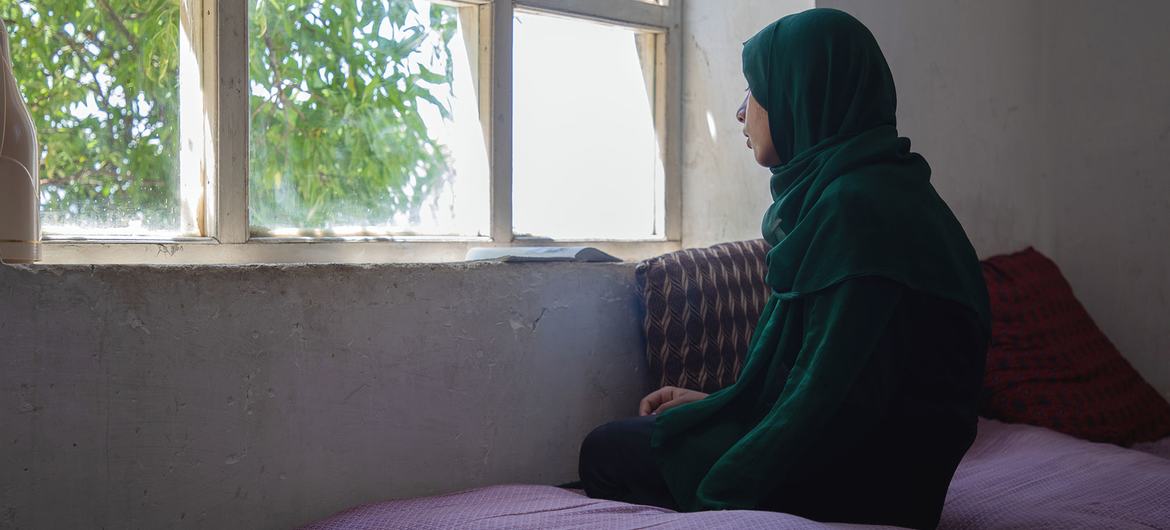
A teenage girl in Afghanistan stays at home as she is no longer allowed to attend school.

Erasure of women and girls’ rights continues

She said the international community “remains extremely concerned that engagement has not improved the unacceptable situation of Afghan women and girls, promoted inclusive governance, or prevented a marked deterioration in human rights.”

Meanwhile, the de facto authorities have conveyed grievances around frozen assets, sanctions, non-recognition, the need for greater development assistance, and an end to aid dependency.

She noted that the UN will convene meetings of two working groups on counter-narcotics and the private sector to be held in Doha, Qatar, in the coming days, calling this “an important development that gives momentum to multilateral engagement and builds confidence in the value of mutual cooperation.”

Relative stability, restrictive policies

Ms. Otunbayeva said Taliban rule has provided relative stability and security in Afghanistan, promoted modest economic growth and foreign investment, initiated dormant infrastructure projects, and deepened diplomatic ties abroad, particularly in the region.

However, authorities “continue to implement highly restrictive and discriminatory policies on the Afghan people,” as embodied in the “law on the propagation of virtue and prevention of vice,” which took effect last August. 

This law “cemented” the Taliban’s systematic, state-sponsored policies that exclude women and girls from participation in public life, including access to education, employment, freedom of movement, and freedom of expression.

Reintegration at risk

Through this law, the de facto authorities are continuing to pursue a path that distances Afghanistan from its international obligations and hinders Afghanistan’s eventual reintegration into the international system,” she said.

“We cannot forget the unacceptable situation of Afghan women and girls, even if their continued marginalisation under increased enforcement of more and more decrees no longer generates headlines.”

The ongoing ban on girls’ education beyond primary school “is the clearest sign of the Taliban’s discrimination against women and continues to set Afghanistan apart from the world,” she said, calling once again for the ban to be lifted and for girls and women to again have the right to education.

One in five going hungry

Joyce Msuya, UN Assistant Secretary-General for Humanitarian Affairs, highlighted how funding cuts are impacting Afghanistan, where half of all people require assistance to survive. 

The population faces “persistent and acute humanitarian needs compounded by decades of conflict, entrenched poverty, an ever-harsher climate, severe restrictions on the rights of women and girls and highly constrained funding environment,” she said.

Today, one in every five Afghans is hungry, 3.5 million children are acutely malnourished and roughly 3.7 million children are out of school, including 2.2 million girls over age 11 who are banned from education. Additionally, the maternal mortality rate is over 2.5 times the global average. 

Health facilities shuttered

She said the aid cuts continue to hamper humanitarian response, and 420 health facilities have been forced to shut their doors, affecting more than three million people.

“Almost 300 nutrition sites have closed, depriving 80,000 acutely malnourished children, pregnant women, and new mothers of essential treatment,” she added.

“Despite challenges, and at great risk, our Afghan female colleagues continue to deliver aid, going where others cannot, listening to communities who would otherwise not be heard, and standing by those who might otherwise be forgotten,” she said.

Hardships increase

Sima Bahous, Executive Director of UN Women, upheld calls for more diplomacy to address the spiralling crisis in the Middle East and Iran.

“The growing regional and global insecurity will only deepen the hardships faced by Afghan women and girls, compounding poverty, displacement, violence and deprivation,” she warned.

Additionally, the ability of the UN and partners to support Afghan women has been drastically undermined by legal and bureaucratic barriers which make it harder than ever to hire women, let alone reach them, at a time when deep cuts to aid budgets “have ever more devastating consequences.”

‘Unshakeable determination’

“Yet, we stay, and we deliver, as we always have,” said Ms. Bahous, highlighting how UN Women continues to navigate through endless restrictions and negotiate with the Taliban.

“And, Afghan women continue to lead the way,” she added.  “They have opened underground schools; organized in silence; built lives in those slivers of space left to them. They have shown unshakable determination, even when the world faltered.” 

Source link

Iran-Israel crisis: IAEA chief urges access to damaged nuclear sites

Rafael Grossi, head of the International Atomic Energy Agency (IAEA), was addressing the agency’s Board of Governors, amid fresh reports of new Israeli missile strikes on Iranian military sites in Tehran and elsewhere earlier on Monday. Iranian weapons fire has also been reported across Israel. 

Mr. Grossi – who also addressed an emergency meeting of the UN Security Council on Sunday – insisted that the agency’s weapons inspectors should return to Iran’s nuclear sites and account for their stockpiles.

There is particular concern about 400 kilogrammes of uranium enriched to 60 per cent by Iran.

Under the terms of a 2015 nuclear deal with the international community, Iran is permitted to enrich the naturally occurring radioactive material to less than four per cent.

“Craters are now visible at the Fordow site, Iran’s main location for enriching uranium at 60 per cent, indicating the use of ground-penetrating munitions; this is consistent with statements from the United States,” he told the IAEA Board of Governors. “At this time, no one including the IAEA, is in a position to have fully assessed the underground damage at Fordow.”

Mr. Grossi said that taking into account the highly explosive payload used in the US attacks, “very significant damage is expected to have occurred” to the highly sensitive centrifuge machinery used to enrich uranium at Fordow.

Several sites hit

Fordow is one of several nuclear-related sites across Iran that are known to have been damaged in the strikes by the United States, including those in Esfahan, Arak and Tehran.

In comments to the UN Security Council in New York on Sunday, the IAEA chief said that although radiation levels remained normal outside these nuclear facilities, deep concerns remained about Iran’s operational nuclear plant at Bushehr.

Any strike on Bushehr could trigger a massive radiation release across the region –  “the risk is real”, Mr. Grossi said.

Eleven days after Israel launched air and missile strikes at Iranian military and nuclear sites, some 430 people are believed to have been killed in Iran, most of them civilians.

According to Israeli reports, 25 people have been killed and more than 1,300 injured by Iranian missile strikes.