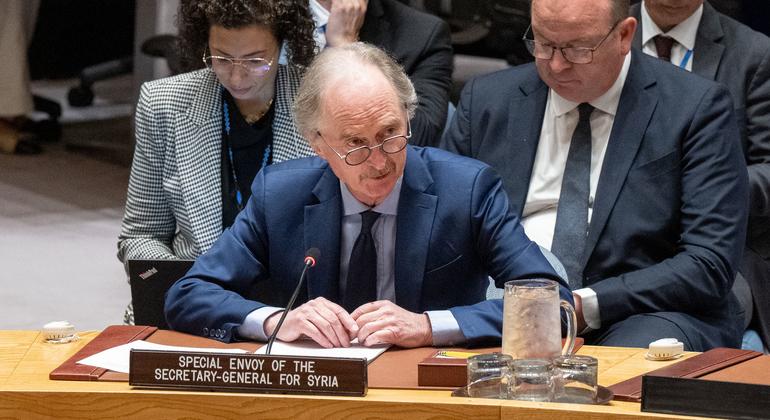
SECURITY COUNCIL LIVE: Political Affairs chief hails Iran-Israel ceasefire as ‘significant achievement’


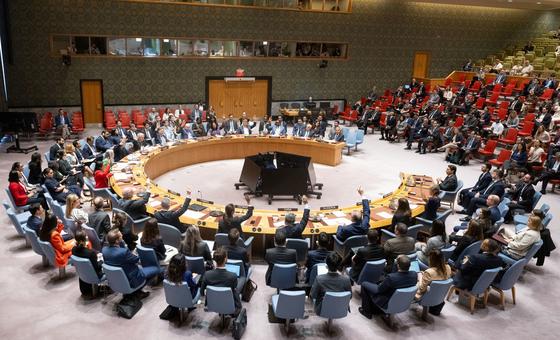
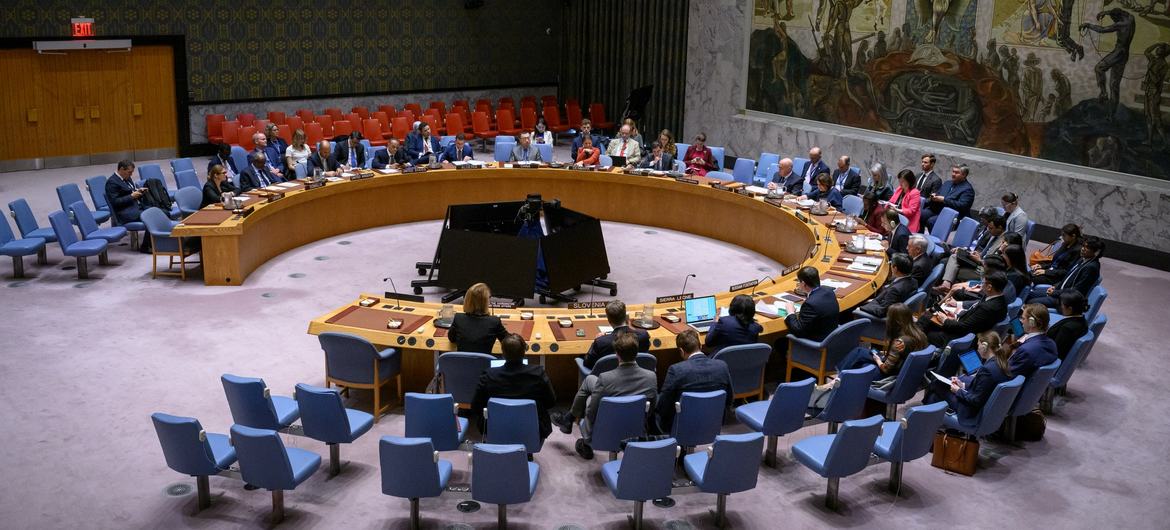
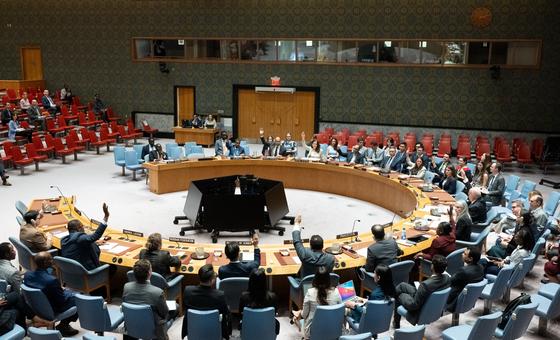
The Security Council is meeting over the future of the Joint Comprehensive Plan of Action put in place in 2015 to prevent Iran from weaponising its ambitious nuclear programme, which has been in effective limbo since the US withdrawal in 2018 and Iran’s rejection of parts of the deal. UN political affairs chief Rosemary DiCarlo described the US-brokered ceasefire overnight between Israel and Iran as a “significant achievement” and “an opportunity to avoid a catastrophic escalation and achieve a peaceful resolution of the Iran nuclear issue.” Follow our Meetings Coverage Section live coverage below and UN News app users can follow here.

Source link

Human Rights Council hears concerns over displacement, genocide risks and migrant trafficking

Of the record 83 million people internally displaced worldwide, at least 1.2 million were displaced by crime-related violence in 2024 – more than double the 2023 figure – amid a global decline in support for international norms, human rights and the rule of law.

The growing reach of organised crime in driving displacement and rights violations was the focus of a report delivered Monday morning by the Special Rapporteur on the human rights of internally displaced persons, Paula Gaviria Betancur.

Driving displacement

As violent conflicts worsen globally, displacement is increasingly driven by the threat of violence or the desire of criminal groups to control territory, resources and illicit economies.

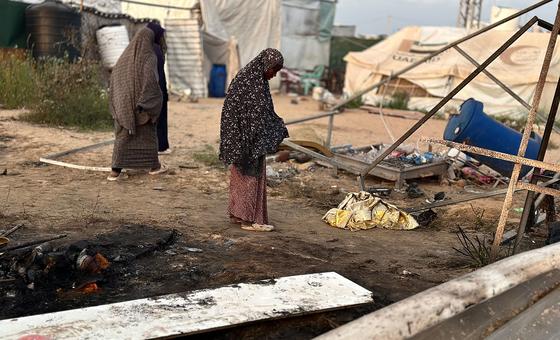
Additionally, in places like Sudan, Palestine and the Democratic Republic of the Congo (DRC), occupying powers and criminal groups are systematically uprooting communities to alter demographics, treating IDPs as military targets.

“Displacement is no longer just a consequence of conflict – it is increasingly its deliberate objective,” Ms. Betancur warned.

In these regions, either the State enables impunity for violent groups or national security operations worsen the crisis by punishing victims and fuelling further displacement, eroding state legitimacy.

IDPs in these contexts “face grave violations of their human rights,” including “murder, violent assault, kidnapping, forced labour, child recruitment and sexual exploitation,” she said.

The rise in global displacement is the result of systemic failure – the failure of States and the international community to tackle its root causes,” Ms. Betancur concluded, calling for stronger support for the UN and accountability for criminal groups.

Genocide risks in conflict areas

Virginia Gamba, Special Adviser on the Prevention of Genocide, briefed the council on escalating risks in Sudan, Gaza, the DRC and beyond during Monday’s session.

In Sudan, where over 10.5 million have been displaced since fighting erupted in April 2023, both the Sudanese Armed Forces and the Rapid Support Forces (RSF) are committing grave rights violations.

Ethnically motivated attacks by the RSF in certain regions mean “the risk of genocide, war crimes and crimes against humanity in Sudan remains very high,” Ms. Gamba underscored.

Turning to Gaza, she called the scale of civilian suffering and destruction “staggering and unacceptable,” noting the conflict has also fuelled rising antisemitism and Islamophobia worldwide.

Hate speech fuelling violence

As attacks on civilians and ethnic violence continue in the DRC, hate speech and discrimination have surged.

But this surge is also occurring worldwide, further exacerbating the risk of genocide.

“Hate speech – which has been a precursor for genocide in the past – is present in far too many situations, often targeting the most vulnerable,” said Ms. Gamba, highlighting refugees, Indigenous peoples and religious minorities.

For genocide prevention, she urged greater efforts to monitor hate speech, expand education efforts, and strengthen partnerships with regional organizations.

The task of preventing genocide remains critical and urgent—the moment to act is now,” she stressed.

Trafficking of migrant domestic workers

Special Rapporteur on trafficking in persons, Siobhán Mullally, presented her report on the trafficking risks faced by migrant domestic workers.

“The specific nature of domestic work, and weak regulatory responses by States, produce a structural vulnerability to exploitation,” Ms. Mullally said.

The crisis disproportionately affects women, as they make up the majority of domestic workers and 61 per cent of trafficking victims detected globally in 2022.

Conditions of domestic work

Many women from disadvantaged communities are promised jobs abroad, but upon arrival, realise they have been conned. They endure violence, labour abuses and sexual exploitation but are unable to pay the exorbitant penalty for terminating their work contracts.

Ms. Mullally cited the legacy of slavery, gendered and racialised views of domestic work and intersecting discrimination as key factors behind poor conditions and trafficking risks.

Most States lack the political will to enforce labour laws in the domestic work sector, reinforcing this crisis, she said, calling for stronger labour laws, safe migration pathways, bilateral agreements grounded in human rights and an end to the criminalisation of trafficking victims.

Source link

SECURITY COUNCIL LIVE: ‘Diplomacy must prevail’ over Iran following US military intervention, urges Guterres

The UN Secretary-General told the Security Council on Sunday that the bombing of Iran’s nuclear sites by the United States marks a “perilous turn”, warning that the region cannot endure yet another “cycle of destruction.” António Guterres said the must be an immediate ceasefire and returned to “serious, sustained negotiations.” We’ll have live updates from our Meetings Coverage team below and app users can follow here.

Source link

Ukraine: Security Council hears of escalating attacks, diplomatic developments

“As we are facing renewed escalation on the ground and crisis elsewhere, it is critical to maintain focused attention on the urgent need for peace in Ukraine,” said UN Assistant Secretary-General Miroslav Jenča – one of two senior officials briefing the ambassadors.

In the three weeks since the Council last met on Ukraine, Russia has carried out unrelenting large-scale attacks on cities and towns, resulting in a significant rise in civilian casualties.

Deadly Kyiv attack 

A combined drone and missile attack on the capital Kyiv overnight on 16-17 June was one of the deadliest there in a year. At least 28 civilians were killed and more than 130 injured. Many others are still reported missing under the rubble of the 35 apartments destroyed that night.

Attacks also reportedly occurred in Odesa, Zaporizhzhia, Chernihiv, Zhytomyr, Kirovohrad, Mykolaiv and Kyiv provinces that same night, with two civilians reportedly killed and scores injured in Odesa. 

“These levels of death and destruction risk dimming hope for an immediate ceasefire and threaten to undermine prospects for a lasting peace,” he said. 

‘Dramatic increase’ in casualties

Data from the UN human rights office, OHCHR, reveals that at least 13,438 civilians, including 713 children, have been killed since Russia launched its full-scale invasion of Ukraine in February 2022. Another 33,270 civilians have been injured, including over 2,000 children.

The number of civilian casualties in the first five months of this year alone totaled 5,144 – nearly 50 per cent higher than in the same period in 2024. Of this number, 859 were killed and 4,285 injured. 

“This dramatic increase is a result of intensified use of long-range weapons, both missiles and loitering munitions, against cities across Ukraine,” said Mr. Jenča. 

Ukrainian authorities report that between 1 and 17 June, Russian forces launched at least 3,340 long-range drones, including loitering munitions and decoy drones, and 135 missiles into the country. This compares to 544 long-range munitions launched during the whole of June 2024.

Attacks reported in Russia 

Escalating violence also continues to be reported in Russian regions that border Ukraine, though at a far lower level.  

In the Kursk region, a woman died in hospital a day after being injured in a Ukrainian drone attack while a man was killed, and five others injured, in a strike on a recreational centre. The UN was not able to verify these reports. 

“Let me once again unequivocally state – attacks against civilians and civilian infrastructure are strictly prohibited under international humanitarian law, wherever they occur,” said Mr. Jenča, reiterating the UN’s condemnation.

Diplomatic developments welcomed 

Meanwhile, “important diplomatic developments have taken place on the challenging path towards a lasting peace in Ukraine.”  

Ukrainian and Russian delegations held their second face-to-face meeting in Istanbul on 2 June.  They reportedly exchanged written memoranda outlining their respective visions for a ceasefire and parameters for a future peace settlement. 

The sides also reached agreement for the large-scale exchange of prisoners of war, mortal remains and civilian detainees. Swaps have been carried out since then, with the latest round taking place earlier on Friday. The mortal remains of 6,057 Ukrainian and 78 Russian servicepersons also have been returned as of 16 June.

“We welcome the continuation of all meaningful diplomatic efforts, including the recent talks in Istanbul. We urge the sides to make tangible progress towards a ceasefire and a lasting settlement through continued talks,” said Mr. Jenča.

In the face of escalation, he called for redoubling efforts “to ensure that the fragile diplomatic process is not only sustained but becomes irreversible.”

Civilians bear the brunt

In the meantime, civilians continue to bear the severe consequences of the war, said Edem Wosornu, Director of Operations at the UN Office for the Coordination of Humanitarian Affairs (OCHA).

“As the war continues, millions of lives are impacted every day. Essential  services are disrupted, and vulnerabilities are deepening for nearly 13 million people in need of assistance,” she said.

Roughly 3.7 million people are displaced inside Ukraine, including 60,000 newly displaced from frontline regions since January alone. Almost six million citizens are now refugees, mainly in Europe.

Amid the intensifying hostilities, the Government continues to order the mandatory evacuation of families with children from front-line villages, she said.  However, for some people in these locations “attacks are so frequent  that evacuations themselves become a risky prospect.”

Humanitarians at risk

Ms. Wosornu noted that humanitarians also face growing threats. This year, two aid workers have been killed and 24 injured while delivering assistance, and some 68 incidents of violence impacting relief personnel, assets and facilities have been recorded. 

She said that “despite an operating environment beset by multiple risks and challenges,” humanitarians remain committed and engaged, and their operations continue. Between January and May, they reached some 3.4 million people with life-saving aid, including food, water, medicines, health services and livelihood support.

Humanitarians are seeking $2.6 billion for Ukraine this year, and $816 million, has been secured, she said, stressing the importance importance of “timely financial support”.

End the war

Ms. Wosornu concluded her remarks by renewing earlier calls for the Council to take urgent, collective action in three areas, including protecting civilians and ensuring safe humanitarian access to all in need.  

Ambassadors were also urged to ensure sustained financial support as “declining funding trends” threaten aid efforts.

Her final request was an appeal to “end this war, and until then, ensure that humanitarian concerns are a central part of discussions on a pause in fighting or longer-term agreement.” 

Source link

Development is ‘the first line of defense against conflict,’ Guterres tells Security Council

Ambassadors met to debate how poverty, inequality, and underdevelopment are fuelling conflict and instability, at a time when hostilities are increasing and demand for humanitarian aid is rising as resources dwindle.  

Every dollar spent on prevention could save up to $103 in conflict-related costs, according to the International Monetary Fund (IMF). 

Sustainable development critical

Conflicts are proliferating and lasting longer, said Mr. Guterres. At the same time the global economy is slowing and trade tensions are rising, as aid budgets are being slashed while military spending soars. 

He warned that if current trends continue, two thirds of the world’s poor will live in conflict-affected or fragile countries by the end of this decade. 

“The message is clear,” he said.  “The farther a country is from sustainable and inclusive development, the closer it is to instability, and even conflict.”

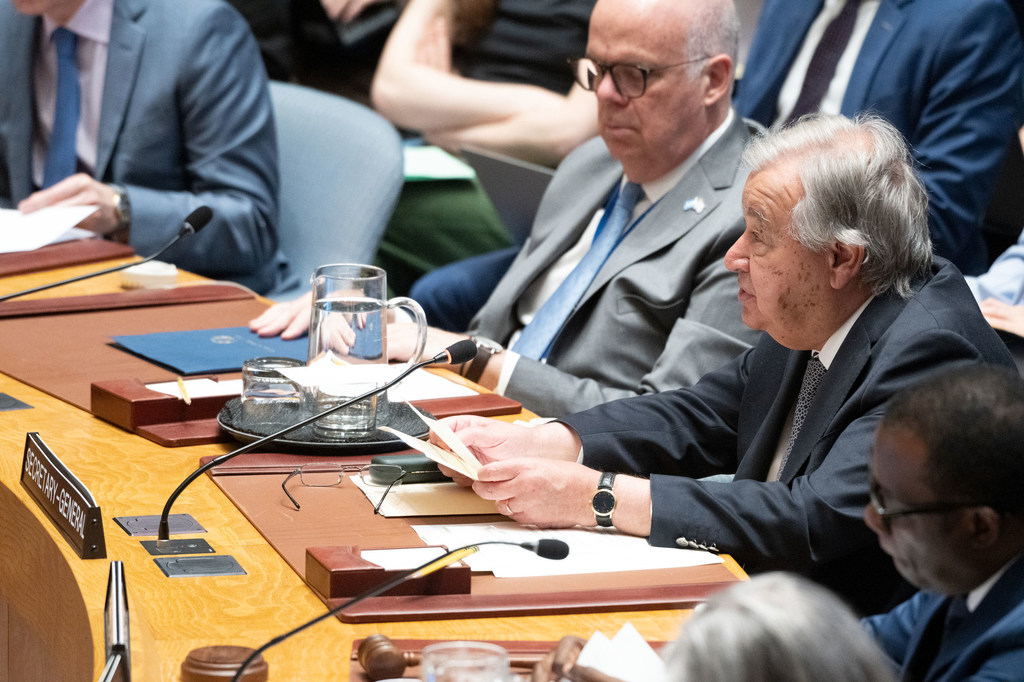
Secretary-General António Guterres briefs the Security Council meeting on Poverty, Underdevelopment, and Conflict.

Give peace a (fighting) chance

The Secretary-General highlighted how the UN has worked to advance the three pillars of peace, development and human rights.  

These efforts began with its establishment 80 years ago and continue today, “guided by the simple principle that prevention is the best cure for instability and conflict, and there is no better preventive measure than investing in development,” he said.

“Development gives peace a fighting chance. It’s the first line of defence against conflict. But right now, we’re losing ground,” he said, noting that “the engine of development is sputtering.”

World falling short

Currently, two-thirds of the targets under the Sustainable Development Goals (SDGs) are lagging 10 years after adoption. 

“The world is falling short by over $4 trillion annually in the resources developing countries need to deliver on these promises by 2030,” he added.

Furthermore, “developing countries are being battered and bruised by limited fiscal space, crushing debt burdens and skyrocketing prices.”

Fix the ‘engine’

The Secretary-General pointed to the fourth Conference on Financing for Development, which begins next week in Spain, as an important moment “to fix and strengthen this essential engine.”

He called for renewed commitments towards securing public and private finance for the areas of greatest need, providing urgent relief for debt-laden countries, and reforming the outdated global financial architecture.

The Council debate “could not be more prescient,” said Kanni Wignaraja, the UN Development Programme’s (UNDP) Assistant Secretary-General and Regional Director for Asia and the Pacific.

Break the cycle

Global human development has stalled just as violent conflicts have surged to levels not seen in eight decades, she said, before presenting three priorities for investment to help break the cycle, including protecting household economies.

“In fragile settings, where peace and security have been shattered, development that goes directly to the local level becomes the first line of peoples’ defence and survival. And their hope for recovery,” she said.

“From these local economies – where livelihoods are restored, water and electricity can flow again, women’s businesses in particular reopen, farmers can trade food, and there is basic finance to allow markets to stay afloat – from this, comes the resources to build back broken capabilities and resilience.”

Address systemic imbalances

The Chairperson of the African Union (AU) Commission, Mahmoud Youssouf Ali, recalled how the continent loses billions of dollars annually to conflict, which could be channelled into schools, hospitals, infrastructure and innovation.

He said the international community must also acknowledge that poverty and underdevelopment “are not confined within national borders” but are global challenges that require global response.

“If we are to uphold international peace and security, we must address the systemic imbalances – economic, political, and institutional – that continue to fuel deprivation, exclusion, and instability across regions,” he said.

In this regard, the AU called for enhanced support to African-led peace operations, particularly those deployed in regions where poverty and underdevelopment are deeply entrenched. 

Critical juncture requires collective action

The debate was convened by Guyana, which holds the rotating Council presidency this month.

The country’s Foreign Minister, Hugh Todd, remarked that with the world “at a critical juncture where the interlinkages between peace, security and development have never been more pronounced,” collective and decisive action is required.

He cautioned against “prioritizing only political solutions in conflicts where poverty and underdevelopment feature prominently,” as creating conditions for socio-economic stability and well-being are also critical for peace.

Mr. Todd urged countries to address issues such as lack of access to education, unemployment, exclusion, and greater participation of women and youth.

“Currently, the global youth population is the highest in history, with most young people concentrated in developing countries,” he said.

“For us to harness their full potential, they must be given adequate economic opportunities and be involved in decision making on peace and security.” 

Source link

Human Rights Council hears alarming updates on executions in Iran and global civic space crackdown

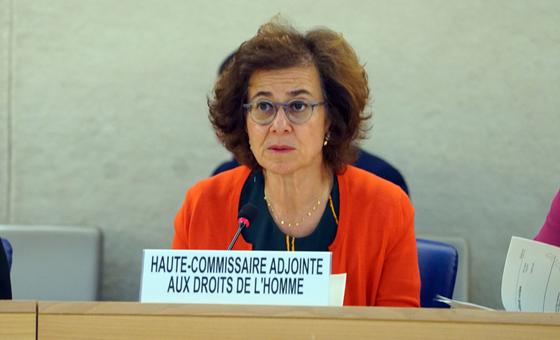
At least 975 people were executed in Iran in 2024, the highest number reported since 2015, according to a report Deputy High Commissioner for Human Rights, Nada Al-Nashif, presented to the Geneva-based Council on Wednesday. 

Of the total executions, just over half were for drug-related offenses, 43 per cent for murder, two per cent for sexual offenses, and three per cent for security-related charges. At least four executions were carried out publicly. 

“These cases are marked by serious allegations of torture and due process violations, including lack of access to a lawyer,” said Ms. Al-Nashif. 

Violence and discrimination against women

At least 31 women were reportedly executed in Iran last year, up from 22 in 2023. Of the 19 women executed for murder, nine had been convicted of killing their husbands in cases involving domestic violence or forced or child marriage, areas in which Iranian women have no legal protections.

Some executions were reportedly linked to protests that began in September 2022 under the banner “Women, Life, and Freedom.”

Beyond executions, femicide cases surged, with 179 reported in 2024 compared to 55 the year before. Many stemmed from so-called “honour” crimes or family disputes, often involving women and girls seeking divorce or rejecting marriage proposals.

Ms. Al-Nashif also warned that the suspended Chastity and Hijab Law, if enacted, would pose a serious threat to women’s rights. Penalties for violations such as improper dress could include heavy fines, travel bans, long-term imprisonment, or even the death penalty.

In addition, of the 125 journalists prosecuted in 2024, 40 were women, many reporting on human rights and women’s rights issues.

Religious and ethnic minorities

“In 2024, the death penalty continued to have a disproportionate impact on minority groups,” Ms. Al-Nashif told the Council.

At least 108 Baluchi and 84 Kurdish prisoners were executed in 2024, representing 11 and 9 per cent of the total, respectively.

The report also raised concerns over the lack of official data on the socioeconomic conditions of ethnic and ethno-religious minorities and non-citizens, which hampers efforts to assess their situation and measure the impact of targeted policies and programmes.

Looking ahead

While Iran continued engagement with the Office of the UN High Commissioner and other human rights mechanisms, it denied access to the Independent International Fact-Finding Mission on the Islamic Republic of Iran.

“Our Office remains ready to continue and build on its engagement with the Iranian authorities on the range of issues highlighted in the report of the Secretary-General for the promotion and protection of all human rights,” Ms. Al-Nashif concluded. 

Global ‘Super Election’ cycle undermined democratic participation

In the Council’s afternoon session, Gina Romero, UN Special Rapporteur on the rights to freedom of peaceful assembly and association, presented her report on how the 2023–2025 “super election” cycle has affected civic space around the world.  

In 2024, half of the world’s population elected their local, national and international representatives. While Ms. Romero’s report on this cycle does not assess the integrity of the elections, it identifies troubling global patterns of systematic repression of the exercise of peaceful assembly and association.

“The misuse of restrictive laws, smear campaigns, disinformation targeting civil society intensified globally in the super electoral cycle, undermining electoral participation and freedom of association,” she said.  

Political repression and violence

As criminal justice systems are used to repress the opposition, leaders and members of political parties faced undue restrictions and political persecution. Civil society activists and election observers have also faced harassment, arbitrary detention, torture and murder.  

“When political parties, civil society, and peaceful assemblies are suppressed, genuine political pluralism and competition cannot exist,” argued Ms. Romero. “I stress that these conditions are incompatible with free and genuine elections and risk legitimising undemocratic rule.”

Minority representation

Ms. Romero also underscored that women’s political leadership remains severely underrepresented, while LGBTIQ individuals and their organizations faced attacks during the super electoral cycle.  

Both groups experienced physical and online political violence, restricting their electoral participation and accelerating the decline of their rights after the elections.

Calls to protect freedoms  

Amid global crises and a rapid democratic decline, Ms. Romero emphasized the urgent need to protect the rights to peaceful assembly and association throughout the entire electoral cycle.  

She outlined key recommendations, including strengthening legal protections before elections, ensuring accountability afterward, regulating digital technologies and promoting non-discriminatory participation throughout.  

“Dissent is a fundamental element of democratic societies,” she concluded in Spanish. “Rather than being suppressed, it should be welcomed and permanently protected.” 

Source link

Israeli actions in Palestinian territories constitute war crimes, Human Rights Council hears

“The goal of the Israeli government is abundantly clear: the destruction of life in Gaza.”

That’s how Navi Pillay, Chair of the Commission of Inquiry on the Occupied Palestinian Territory, opened her statement to the 59th session of the Council on Tuesday.

Calling the war in Gaza “the most ruthless, prolonged and widespread attack against the Palestinian people since 1948,” Ms. Pillay addressed the findings of the Commission’s report, released to the HRC on 6 May.

Attacks on educational facilities in Gaza

It found that 90 per cent of Gaza’s schools and universities have been damaged or destroyed by Israeli attacks – including airstrikes, shelling, burning and controlled demolitions.

“With the loss of education, Palestinians are also losing their source of stability, hope and possibility of a future,” said Ms. Pillay.

By not issuing adequate warnings to civilians sheltering inside, these attacks caused extensive casualties, amounting to war crimes, including knowingly launching attacks that caused excessive and disproportionate civilian harm, and the crime against humanity of extermination.

The Commission found no military necessity to justify the destruction of schools, concluding that the intent was to restrict long-term Palestinian access to education.

Notably, while Israeli forces often claimed they were targeting Hamas operatives allegedly based in schools, the Commission verified only one instance of Hamas using a school for military purposes, compared to the systematic Israeli use of schools as military bases.

Education restrictions in the West Bank

Ms. Pillay also warned that education in the West Bank remains under threat. Demolition orders, military raids, restrictions, and operations have significantly reduced school days, while settler violence has endangered students and teachers. The Israeli government has either incited or failed to prevent such violence, she said.

Attacks on religious and cultural sites

In Gaza, Israeli forces have damaged 53 per cent of religious and cultural sites.

Many were being used for refuge or worship, causing further civilian casualties, constituting war crimes and, in some cases, the crime against humanity of extermination.

This completely avoidable damage “has a cascading effect and deeply affects intangible cultural elements, such as religious and cultural practices, memories and history, undermining the identity of Palestinians as a people,” said Ms. Pillay.

Because Israeli forces should have known where these sites were and planned their assaults accordingly, the Commission found these acts constituted war crimes including intentionally targeting historic and religious sites and widespread destruction without military necessity.

Seizure of cultural heritage sites in the West Bank

In the West Bank and East Jerusalem, the Commission documented repeated cases of Israeli authorities or settlers seizing cultural heritage sites, displacing Palestinians, excluding non-Jewish history and restricting Palestinian access.

The report highlights increasing restrictions and assaults on Palestinians at Haram al-Sharif/Temple Mount, a long-standing flashpoint in East Jerusalem.

Ms. Pillay argued that through these actions, “Israel has been using cultural heritage and settlements as leverage for its unlawful territorial claims in the occupied West Bank, in flagrant defiance of multiple United Nations resolutions and the 2024 advisory opinion of the International Court of Justice (ICJ).”

These actions violate international law, including the right to cultural life, freedom of religion, and protection of cultural heritage.

Recommendations

Ms. Pillay concluded her speech by underscoring that Israel’s attacks on education, infrastructure and heritage sites aim to “erode Palestinians’ historical ties to the land and weaken their collective identity, thereby hindering their right to self-determination” and the possibility of a peaceful, sustainable two-State solution.

Accordingly, the Commission calls for Israel to end the unlawful occupation and enable Palestinian self-determination; stop attacks and seizures of educational, religious and cultural sites; end the systematic erasure of Palestinian history; and comply fully with international law, including the 2024 ICJ ruling.

Sudan’s war intensifies amid starvation, rights probe warns

Meanwhile in Sudan, heavy fighting continues to escalate as a “direct result” of the continued flow of arms into the country meaning that the war is far from over, top independent human rights investigators said on Tuesday, ahead of briefing the Human Rights Council.

In an update on the emergency in the northeast African nation, the Independent International Fact-Finding Mission for the Sudan highlighted the increased use of heavy weaponry in populated areas – and a sharp rise in sexual violence.

“Many Sudanese are dying from hunger and especially those who have been detained and in detention – they are dying and millions affected,” said Joy Ngozi Ezeilo, Expert Member of the Fact-Finding Mission.

“In terms of international responsibility, we urge all States to respect and enforce the arms embargo of the United Nations Security Council Resolution 1556,” she added.

Humanitarian relief continues to be weaponized and hospitals and medical facilities remain under siege, warned the investigators, whose mandate was established by the Council in October 2023.

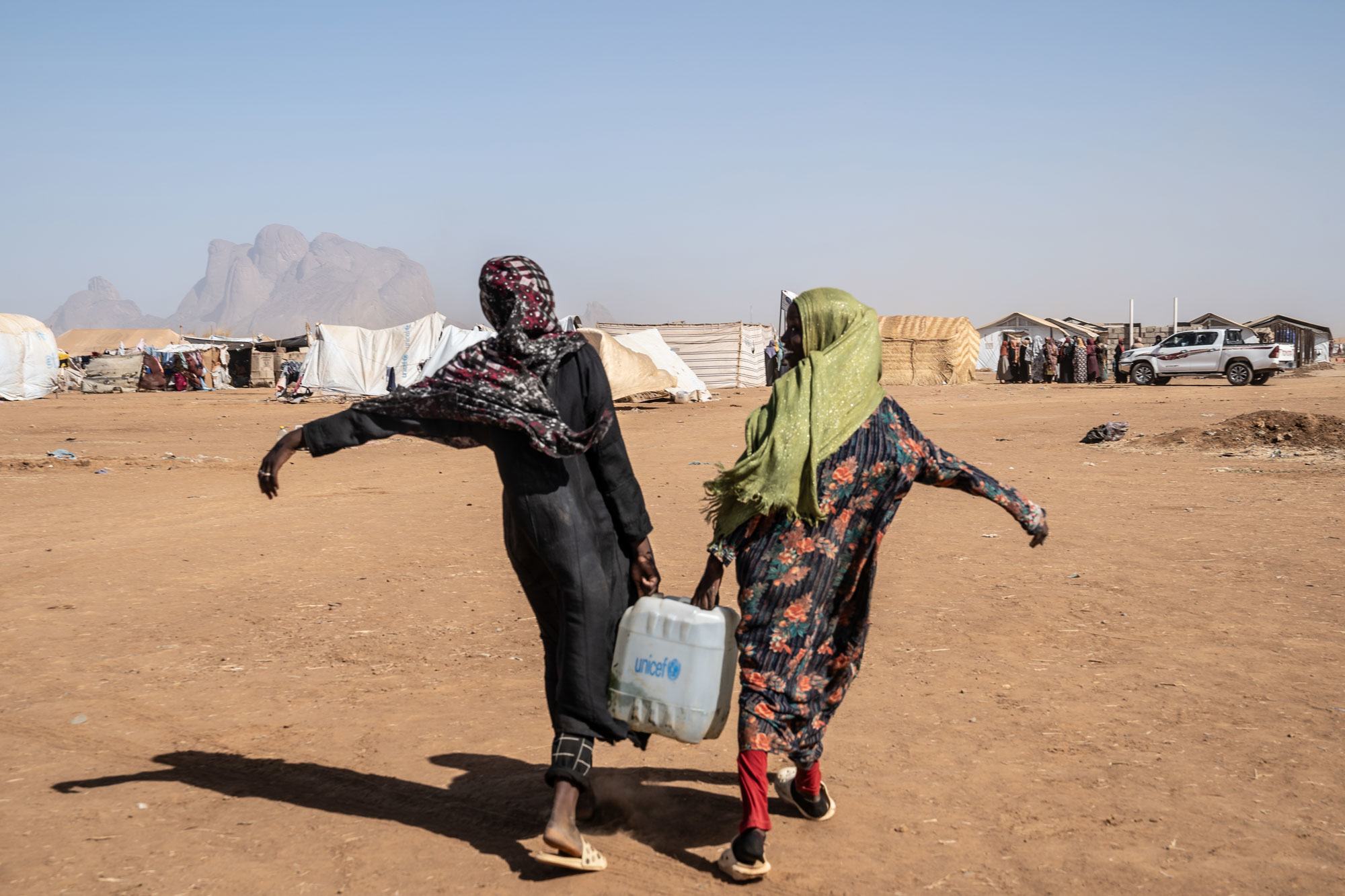
Two young women carry water at a site for displaced people in eastern Sudan.

Direct link

There is a direct link between the flow of arms in Sudan, armed hostilities and the resulting violence amounting to violations of international humanitarian law and human rights violations,” said Mohamed Chande Othman, Chair of the Fact-Finding Mission.

We know the kind of arms that are being used: heavy artillery, modern warfare, drones and in fact, they have escalated.”

Fellow investigator Mona Rishmawi insisted that testimonies gathered pointed to “both sides” continuing to commit war crimes – a reference to the Sudanese Armed Forces (SAF) and the Rapid Support Forces (RSF) which turned on each other in April 2023, following a breakdown in transition to civilian rule.

Around El Fasher, for instance, civilians have been “assaulted, detained and killed while villages have been attacked, burned and looted” by the RSF. During one RSF attack from 10 to 13 April, more than 100 civilians were reportedly killed, while a SAF bombing in Al Koma killed at least 15 civilians.

Now into its third year, the war has killed tens of thousands of civilians so far, displacing over 13 million Sudanese and subjecting many more to sexual violence, looting and the destruction of homes, health facilities, markets and other infrastructure. 

Crimes against humanity continue, “particularly in the context of persecution of certain ethnic groups”, Ms. Rishmawi insisted.

The result of restrictions to aid relief has been to drive famine, “especially in Darfur”, said the investigators, who are respected human rights experts and not UN staff.

In their latest update to the Human Rights Council, the investigators documented a sharp rise in sexual and gender-based violence, with women and girls subjected to rape, gang rape, abduction, sexual slavery and forced marriage, mostly in RSF-controlled displacement camps.

About UN experts

The members of both the Commission of Inquiry on the Occupied Palestinian Territory and the Fact-Finding Mission for the Sudan receive their mandates from the UN Human Rights Council.

They are not UN staff and do not receive payment for their work. 

Source link

‘Syria simply cannot withstand another wave of instability,’ Security Council hears

“Syria simply cannot withstand another wave of instability,” UN Deputy Special Envoy Najat Rochdi said on Tuesday in a briefing to the Security Council in New York. 

The risks of further escalation in the region are not hypothetical – they are immediate, severe, and risk unraveling the fragile progress toward peace and recovery in Syria.” 

She echoed the Secretary-General’s condemnation of military escalation in Middle East and his call on Israel and Iran to show maximum restraint. 

The UN Special Envoy for Syria, Geir Pedersen, has also expressed growing alarm over the potential consequences of any further escalation, which she also conveyed. 

‘Constructive and cooperative’ engagement 

Ms. Rochdi reported on the Special Envoy’s ongoing engagement in recent months, such as meetings with senior officials in Damascus, including interim foreign minister Asaad Hassan al-Shaibani. 

Their discussions focused on recent positive developments in international relations as well as the importance of prioritizing domestic affairs towards a genuinely inclusive political transition in which all Syrians have a stake. 

Overall, the meetings with Syrian officials “were marked by a constructive and cooperative tone, with a shared interest in strengthening engagement with the United Nations across multiple sectors,” she said.  

Road to transition 

“Particular attention was given to the next steps in the transition and to coordinating efforts with the newly established committees on transitional justice and missing persons,” she added. 

Among the important next steps is the establishment of a new People’s Assembly as the transitional legislative authority.  In this regard, she welcomed the recent presidential decree announcing the appointment of a supreme committee for elections to the Assembly. 

The committee will be responsible for supervising the indirect election of 100 of the 150 members of the People’s Assembly via electoral colleges, she explained.  It will also define the electoral timeframe and eligibility conditions for electors and candidates.  

“We encourage the Supreme Committee to take measures that safeguard inclusivity, transparency and openness in all stages of this process,” she said.

Developments in the northeast 

Turning to the northeast, Ms. Rochdi referred to the 10 March deal reached between the interim authorities and the Syrian Democratic Forces (SDF), which controls the region, to integrate the Kurdish-led group into the national army. 

The agreement “continues to present a historical opportunity to solve one of the key outstanding issues in this conflict and restore Syria’s sovereignty and unity, a priority which the Special Envoy discussed with interim Foreign Minister Shaibani.”

She also welcomed recent detainee exchanges as well as cooperation that enabled several Syrian families at the Al-Hol camp to return to the northwest. Thousands of people from several countries have been held for years at the notorious complex for their alleged ties to ISIL extremists.

“We stress the importance of negotiations moving forward in earnest with bold steps and an active spirit of compromise from both sides to implement the 10 March agreement,” Ms. Rochdi told ambassadors.

“This is a priority for stability in Syria and the region, for the restoration of Syria’s sovereignty, unity, independence and territorial integrity, and for the success of the overall political transition.”  

Women and civil society

Special Envoy Pedersen also engaged with a broad spectrum of Syrians including women, who continue to seek greater representation in leadership positions, including as candidates and delegates in the process for the People’s Assembly.

“Syrian civil society representatives also continue to be active on all fronts working for a new Syria founded on the principles of inclusivity, openness, and transparent participatory processes,” she added.

She stressed that the protection and safety of all components of society, along with prevention of incitement of communal tensions, “are absolute cornerstones for stability.” 

Attacks against specific communities

She noted that sporadic violent incidents continued in Homs, Hama and other regions, including killings, kidnappings and infringements on individual liberties. 

Furthermore, some of the people that the Special Envoy met in Damascus voiced concern over ongoing attacks targeting specific communities and groups, including Alawites, Druze, and women. 

 “While many interlocutors emphasized that these incidents did not appear to be systematic or part of official policy, they highlighted the persistent challenges faced by the interim authorities in controlling certain groups – whether affiliated with the interim authorities or operating independently,” she said.

Ms. Rochdi also pointed to encouraging signs the interim authorities have taken to ease tensions such as the recent issuance of a fatwa that prohibits revenge killings and extrajudicial retaliation. Additionally, recent decisions to reinstate judges who were removed by the former regime represent a welcome step towards rebuilding trust between the judiciary and the population.

Respect Syria’s sovereignty

Meanwhile, other security challenges persist, with sporadic and limited acts of violence this month, including at a border post with Iraq and on contact lines in Deir-ez-Zor, and in rural Homs. 

“The southwest saw a serious incident of Israeli artillery fire and airstrikes on military sites and weapons depots across southern Syria, in response to a rare incident of small rocket fires out of Syria into the Israeli-occupied Syrian Golan,” she continued, noting that two groups unaffiliated with the interim authorities claimed responsibility. 

Additionally, Israeli incursions, arrests, and drone strikes occurred last week in Beit Jinn in the Damascus countryside, which she said are unacceptable and must cease. 

Syria’s sovereignty, independence, and territorial integrity must be respected, along with the 1974 Disengagement of Forces Agreement. Diplomacy is possible and must be prioritised,” she said. 

Ms. Rochdi further reported that “ongoing activity by ISIL remains notable, including attacks on SDF positions, and a US drone strike on an ISIL figure in northwest Syria.”

Returnees and economic measures

Before concluding, Ms. Rochdi reported that despite the fragile security and socioeconomic situation in their homeland, nearly 600,000 people are estimated to have returned to Syria in the past six months, mostly from neighbouring countries.

An estimated 1.34 million displaced people inside Syria have also gone back to their areas of origin during the same period.  

She said the UN continues to welcome and encourage international actions which contribute to the reactivation of Syria’s economy. They include a six-month waiver of some US sanctions, the European Union’s (EU) lifting of economic sanctions, and a broad range of transactions authorized by the United Kingdom to facilitate commercial activity in some key sectors.

She also hailed a large contract for the construction of several gas and solar energy plants, signed between the interim authorities and a consortium of regional and international actors. 

“These projects are expected to supply more than half of Syria’s national electricity needs, representing a big leap toward energy security, economic revival, and infrastructure resilience,” she said.

More to follow on this story… 

Source link

‘Behind each crisis, people are suffering,’ Türk tells Human Rights Council

We are on an indefensible path of escalating conflict and open disregard for international human rights and humanitarian law,” said Volker Türk, addressing the UN Human Rights Council in Geneva.

Offering a global overview, he painted a stark picture of a world in crisis – with surging armed conflict, deepening climate disruption, emerging technological threats, and a worrying rise in authoritarianism.

Spiralling conflicts

Conflicts around the world are spiralling, as civilians are deliberately attacked and starvation and rape is used as weapons of war by parties. Yet, “accountability is often absent,” said Mr. Türk, who heads the office of human rights, OHCHR.  

From Ukraine to Myanmar, conflicts are plunging countries deeper into chaos and lawlessness.  

In Sudan, the number of arbitrary killings of civilians as rival militaries battle for control, tripled between February and April, OHCHR reports.  

In Gaza, “Israel has weaponised food and blocked lifesaving aid,” Mr. Türk continued, calling for an “immediate ceasefire leading to a two-State solution, with Gaza as an integral part of a Palestinian State.”  

Describing the military escalation between Israel and Iran as “deeply worrying,”  Mr. Türk appealed “for de-escalation and urgent diplomatic negotiations to end these attacks and find a way forward.”  

“This violence must end,” he said.  

Civil society under attack

Around the world, at least 625 human rights defenders and media workers were killed or disappeared in 2024, OHCHR has reported.  

That is one every 14 hours,” the human rights chief said.  

In many places around the world, civil society and the media are being vilified, harassed and silenced; yet it is civil society and the media who play a vital role holding power to account.  

As investigating and reporting human rights abuses and violations are necessary tools to mitigate conflict and build peace, Mr. Türk said he was “deeply disturbed” by attacks on the international institutions, including the International Criminal Court (ICJ).  

“Sanctioning judges and prosecutors at national, regional or international levels, for doing their jobs, is an assault on the rule of law and corrodes justice,” he said.  

Persecuted minorities

From anti-immigrant rhetoric to hate speech targeting the LGBTIQ+ community, one in five people across 119 countries reported experiencing discrimination in the past year, OHCHR said.  

Discrimination is neither rare nor random, it is widespread,” said Mr. Türk.  

For instance, data gathered by the UN shows that women face discrimination at more than double the level experienced by men.  

Highlighting the war on women and girls in Afghanistan, the de facto authorities continue to enforce a systematic policy of erasing women and girls from public life, he continued.  

In these troubled times, “we need governments and societies to stand up for human rights, in word and deed,” concluded Mr. Türk.  

Source link

Security Council meets in emergency session over Iran-Israel conflict, amid strikes and counterstrikes

The Council cleared its original schedule to address the rapidly evolving crisis, also hearing from the head of the UN-backed international nuclear watchdog, who warned of the grave risks to regional stability and nuclear safety.

Overnight from Thursday into Friday, Israeli military strikes targeted nuclear facilities across Iran, including the Natanz enrichment site. Media reports indicate that Hossein Salami, the head of the Islamic Revolutionary Guard Corps (IRGC), as well as several prominent nuclear scientists, were among those killed.

The strikes also caused significant damage, including reportedly dozens of civilian casualties. Airspace in the region has been largely closed and security forces are on high alert.

Additional Israeli strikes were reported late Friday local time as well as ballistic missile launches by Iran which have reportedly struck parts of Israel, including Tel Aviv.

Avoid conflagration at all costs: DiCarlo

Rosemary DiCarlo, UN Under-Secretary-General for political affairs told ambassadors that the repercussions of the attacks were already reverberating.

“I reaffirm the Secretary-General’s condemnation of any military escalation in the Middle East,” she said, urging both Israel and Iran to exercise maximum restraint and “avoid at all costs a descent into deeper and wider regional conflict”.

She also noted that the military escalation came just as “some significant diplomatic developments” were unfolding, including the planned resumption of United States-Iranian talks in Oman at the weekend. Latest reports indicate that Iran will no longer attend.

Ms. DiCarlo urged parties to stay the diplomatic course.

A peaceful resolution through negotiations remains the best means to ensure the peaceful nature of Iran’s nuclear programme,” she said.

“We must at all costs avoid a growing conflagration which would have enormous global consequences.”

Nuclear watchdog head urges protection of atomic sites

Also briefing the Council, Rafael Grossi, Director General of the International Atomic Energy Agency (IAEA), said his agency was in constant contact with the Iranian Nuclear Regulatory Authority to assess the status of affected facilities and determine broader impacts on nuclear safety and security.

Rafael Grossi (on screen), IAEA Director General briefs the Security Council.

He stressed that nuclear sites must never be targeted – under any circumstances.

Such attacks have serious implications for nuclear security, nuclear safety and safeguards, as well as regional and international peace and security,” Mr. Grossi said.

He stands ready to travel to the region at the earliest opportunity, he added, to assess the situation and support safety, security and non-proliferation efforts in Iran.

“It is clear that the only sustainable path forward for Iran, for Israel, the entire region and the international community is one grounded in dialogue and diplomacy to ensure peace, stability and cooperation.”

Mr. Grossi concluded by offering the IAEA as a neutral platform where “facts prevail over rhetoric” and where technical engagement replace escalation.

“I reaffirm my personal and the agency’s readiness to facilitate dialogue and support efforts that promote transparency, security and the peaceful resolution of nuclear issues in Iran.”

Broadcast of the Security Council meeting.

More to follow on this developing story…

US vetoes Security Council resolution demanding permanent ceasefire in Gaza

The text, co-sponsored by Algeria, Denmark, Greece, Guyana, Pakistan, Panama, the Republic of Korea, Sierra Leone, Slovenia, and Somalia – collectively known as the E-10 – received 14 votes in favour, with the US casting the lone vote against.

As one of the council’s five permanent members, the US holds veto power – a negative vote that automatically blocks any resolution from going forward.

Had it been adopted, the draft would have demanded “an immediate, unconditional and permanent ceasefire in Gaza” to be respected by all parties.

Release all hostages

The text reaffirmed the Council’s earlier call for the “immediate, dignified and unconditional release of all hostages held by Hamas and other groups.”

The draft also expressed grave concern over the “catastrophic humanitarian situation” in Gaza – following more than the months of almost total Israeli aid blockade – including the risk of famine, highlighted by recent international food security assessments.

It reaffirmed the obligation of all parties to comply with international law, including international humanitarian and human rights law.

Resume flow of aid

In addition to a ceasefire, the draft resolution demanded the “immediate and unconditional lifting of all restrictions” on the entry and distribution of humanitarian aid in Gaza, calling for safe and unhindered access for UN and humanitarian partners across the enclave.

It also urged the restoration of essential services, in accordance with humanitarian principles and prior Security Council resolutions.

The text voiced support for ongoing mediation efforts led by Egypt, Qatar, and the United States to revive the phased ceasefire framework outlined in resolution 2735 (2024), which envisions a permanent cessation of hostilities, the release of all hostages, the exchange of Palestinian prisoners, the return of all remains, full Israeli military withdrawal from Gaza, and the start of a long-term reconstruction plan.

Draft resolution unacceptable: United States

Speaking ahead of the vote, acting US Representative Dorothy Shea described the draft resolution as “unacceptable”.  

“US opposition to this resolution should come as no surprise – it is unacceptable for what it does say, it is unacceptable for what it does not say, and it is unacceptable for the manner in which it has been advanced,” she said.

“The United States has been clear,” she continued, “we would not support any measure that fails to condemn Hamas and does not call for Hamas to disarm and leave Gaza.”

She added that Hamas has rejected numerous ceasefire proposals, including one over the weekend that would have provided a pathway to end the conflict and release the remaining hostages.

“We cannot allow the Security Council to award Hamas’ intransigence,” Ms. Shea said, stressing, “Hamas and other terrorists must have no future in Gaza. As Secretary [Marco] Rubio has said: ‘If an ember survives, it will spark again into a fire’.” 

‘The world is watching’

The failure of the resolution comes as the humanitarian crisis in Gaza deepens, with UN agencies warning of the total collapse of health services, growing displacement, and a rising death toll around the new privatized US-Israel led aid distribution system which bypasses established agencies.

“The world is watching, day after day, horrifying scenes of Palestinians being shot, wounded or killed in Gaza while simply trying to eat,” said UN relief chief Tom Fletcher earlier on Wednesday.

Source link

SECURITY COUNCIL LIVE: US vetoes new resolution calling for immediate Gaza ceasefire, unconditional release of hostages


The United States has vetoed a new draft resolution on Gaza, standing as the lone vote against the text which called for an immediate, unconditional and permanent ceasefire, the unconditional release of hostages held by Hamas and others and the immediate lifting of all aid restrictions. Follow live coverage from our Meetings Coverage Section and UN News app users can follow here.

Source link

Five countries elected to serve on UN Security Council

They will serve through the end of 2027 on the UN body responsible for maintaining international peace and security.

They will join the five non-permanent members elected last year – Denmark, Greece, Pakistan, Panama, and Somalia – who will serve through 2026.

The Security Council has 15 members: five permanent members – China, France, Russia, the United Kingdom, and the United States – who hold veto power, and ten non-permanent members elected by the General Assembly for staggered two-year terms.

Elections are held annually by secret ballot, with seats allocated by regional group. Candidates must secure a two-thirds majority in the 193-member General Assembly to be elected.

More to follow…

Source link

Ukraine: Hopes for peace on life support, Security Council hears

The longer the war continues, the longer its regional and global impacts will be felt, and the more difficult it will be to find a peaceful resolution,” said Rosemary DiCarlo, UN Under-Secretary-General for Political and Peacebuilding Affairs.

She recalled the adoption of Security Council resolution 2774 in February – the first since Russia’s full-scale invasion of Ukraine in 2022 – which sparked a sense of optimism for a diplomatic solution.  

That has since been replaced by a sense of international frustration – and more suffering in Ukraine following the surge in attacks.

The hope that the parties will be able to sit down and negotiate is still alive, but just barely,” Ms. DiCarlo warned.

Rising civilian toll

Under-Secretary-General DiCarlo briefing the Security Council.

The weekend’s escalation has been described as the largest wave of attacks, with record numbers of long-range missiles and drones killing and injuring dozens of civilians and damaging homes and infrastructure in Kyiv, Kharkiv, Odesa, Mykolaiv, and other cities.

Russian regions bordering Ukraine also reported civilian casualties and infrastructure damage. According to the Russian Ministry of Foreign Affairs, nine civilians were killed and 117 injured by Ukrainian strikes between 19 and 25 May, with a further 17 civilians killed and over 100 injured the week before.

“The United Nations is not able to verify these reports. However, if confirmed, these figures serve as a vivid reminder of the rising civilian toll of Russia’s full-scale invasion of Ukraine, most egregiously in Ukraine, but also increasingly in the Russian Federation itself,” Ms. DiCarlo said.

International humanitarian law strictly prohibits attacks against civilians and civilian infrastructure, she stressed.

“They are unacceptable and indefensible – wherever they occur – and must stop immediately.”

‘Every delay costs lives’

OCHA Director Doughten briefing the Security Council.

Lisa Doughten, Director for Financing at the UN Office for the Coordination of Humanitarian Affairs (OCHA), painted a dire picture on the ground.  

Over 5,000 people – mostly from Kherson, Donetsk and Sumy regions – were newly displaced in the past week alone, adding to the 3.7 million already displaced across Ukraine. An estimated 1.5 million civilians in Russian-occupied areas remain largely cut off from humanitarian assistance.

Despite escalating challenges, humanitarian organizations – many of them local NGOs – continue to deliver food, water, hygiene kits and protection services.  

However, only a quarter of the $2.6 billion needed for the 2025 humanitarian response plan has been funded, leaving aid workers struggling to meet rising needs.

Every delay costs lives. Every dollar helps us reach the next family under fire with aid, educate the next child out of school, help evacuate people with disabilities, and sustain water in front-line communities,” Ms. Doughten said.

“The needs do not shrink. And so, our resolve cannot falter.”

A wideview of the Security Council meeting as members discuss the situation in Ukraine

The war is a strategic mistake: US

Sanctions for Russia are “still on the table” if they make the “wrong decision” to continue the catastrophic war against Ukraine, the representative of the United States, John Kelley, told ambassadors.

“President [Donald] Trump has emphasised from the beginning that this war was a strategic mistake and should never have happened; time is not on the side of any who would prolong it,” Mr. Kelley said.

The US also condemned Russia’s decision to launch record numbers of long-range missiles and drones against civilians and civilian infrastructure in Ukraine this past weekend.

Mr. Kelley noted that if Russia makes the “wrong decision to continue this catastrophic war,” the United States may be forced to end their negotiation efforts.

“To be clear, in doing so, we would not be ‘abandoning’ our principles or our friends. Rather, we would be recognising Russia’s refusal to work with us toward a desirable outcome,” he said.

Mr. Kelley also referenced President Trump’s conversation with Russian President Vladimir Putin on 21 May, saying that the US is expecting a “term sheet” which will outline a Russian ceasefire proposal.

“We will judge Russia’s seriousness towards ending the war not only by the contents of that term sheet, but more importantly, by Russia’s actions,” Mr. Kelley said.

Ukraine trying to derail peace: Russia

Russia’s Ambassador Vasily Nebenzya accused the Ukrainian Government of attempting to “deceive and mislead” President Donald Trump in order to push the US away from its central role brokering negotiations.

“As long as the spectre of the ‘Russian threat’ persists, [Volodymyr] Zelensky’s clique can avoid accountability for embezzled budget funds and Western – primarily American – aid, which now totals tens if not hundreds of billions of dollars,” Mr. Nebenzya said.

“Even their partners in Europe and the [Joe] Biden administration, who have also profited greatly from the conflict in Ukraine, are starting to grow weary of this.”

Regarding allegations that Russia is targeting civilians in Ukraine, he claimed the casualties are the result of Ukrainian air defense systems being “positioned near residential buildings and public infrastructure in violation of basic international humanitarian law.”

He stated that the true targets of Russian strikes are military-industrial sites, citing the destruction of ammunition depots and other weapons facilities in various Ukrainian regions.

Ukraine open to talks that ‘yield tangible results’

Khrystyna Hayovyshyn, Deputy Permanent Representative of Ukraine to the UN, said that the international community must increase pressure on Russia, including through sanctions, to end the “diplomatic stalemate” for which she squarely blamed Russia.

“Ukraine did not initiate this war, nor do we desire its continuation,” Ms. Hayovyshyn said.

She noted that President Volodymyr Zelensky remains willing to meet President Vladimir Putin at any point for direct talks, but that the Russian President has not made himself available – including failing to attend the negotiations in Türkiye where Mr. Zelensky was present.

“We are not afraid of talks,” she said. “We are for constructive talks.”

Ms. Hayovyshyn said that “only positive result” of the meeting in Türikye was the agreement from both Russia and Ukraine to each release 1,000 prisoners of war.

But she reiterated that Ukraine would not compromise on its territorial integrity or sovereignty when negotiating for peace.

“Achieving peace at any cost will not end the war. A comprehensive, just and lasting peace must rest on a fundamental respect towards non-negotiable principles,” she said.

Source link

SECURITY COUNCIL LIVE: Ambassadors debate safety of civilians with 36,000 lives lost during conflict last year

We’re live as the Security Council convenes for its annual open debate on the protection of civilians in armed conflict, with briefings from UN relief chief Tom Fletcher and the head of UN Women Sima Bahous. Ambassadors will discuss evolving threats, including use of heavy weapons and the rise of lethal autonomous killing machines such as drones. The UN has documented a spike in deaths, with Gaza, Lebanon, Myanmar, Sudan and Ukraine among the hardest-hit. Mobile app users can follow here.

Source link

‘Stop the 21st century atrocity’ in Gaza, Fletcher urges UN Security Council

Mr. Fletcher began his remarks by asking the international community to reflect on what it will tell future generations about action taken “to stop the 21st century atrocity to which we bear daily witness in Gaza.”

He wondered, for example, if “we will use those empty words: ‘We did all we could,’” and urged the Council to act decisively to prevent genocide from happening.

Shrinking spaces, overwhelmed hospitals

In addition to the aid blockade, civilians in Gaza have again been forcibly displaced and confined into ever-shrinking spaces, he said, as 70 per cent of the territory is either within Israeli-militarized zones or under displacement orders. 

Furthermore, the few remaining hospitals are overwhelmed, and medics cannot stem the trauma and the spread of disease.

I can tell you from having visited what’s left of Gaza’s medical system that death on this scale has a sound and a smell that does not leave you,” he said.

“As one hospital worker described it, ‘children scream as we peel burnt fabric from their skin.’”

We can save lives

Mr. Fletcher stressed that the UN and partners are desperate to resume humanitarian aid across Gaza, and the recent ceasefire showed that they can deliver.  Meanwhile, lifesaving supplies are waiting to enter the enclave.

“We can save hundreds of thousands of survivors. We have rigorous mechanisms to ensure our aid gets to civilians, and not to Hamas,” he insisted.

“But Israel denies us access, placing the objective of depopulating Gaza before the lives of civilians,” he said. 

“It is bad enough that the blockade continues.  How do you react when Israeli Ministers boast about it? Or when attacks on humanitarian workers and violations of the UN’s privileges and immunities continue, along with restrictions on international and non-governmental organizations.”

Reject ‘cynical’ US-Israeli aid alternative 

Mr. Fletcher recalled that Israel has clear obligations under international humanitarian law, and as the occupying power must agree to aid and facilitate it.  

“For anyone still pretending to be in any doubt, the Israeli-designed distribution modality is not the answer,” he stated, noting that among other things, the plan “makes starvation a bargaining chip.”

It is cynical sideshow. A deliberate distraction. A fig leaf for further violence and displacement,” he told ambassadors.  “If any of that still matters, have no part in it.”

He also addressed the increasing violence in the West Bank, where the situation is the worst in decades, with entire communities destroyed and refugee camps depopulated.

Insist on accountability

Mr. Fletcher noted that international humanitarian workers have been the only international civilian presence in Gaza over the past 19 months, and they have briefed the Council on what they witness daily.

We have described the deliberate obstruction of aid operations and the systematic dismantling of Palestinian life, and that which sustains it, in Gaza,” he said.

The International Court of Justice (ICJ) is now considering whether a genocide is taking place there and “will weigh the testimony we have shared. But it will be too late,” he warned.

He said the ICJ has recognized the urgency and indicated clear provisional measures that should have been acted on – but Israel has failed to do so. 

Moreover, previous reviews of the UN’s conduct in cases of large-scale violations of international human rights and humanitarian law have pointed to the collective failure to speak to the scale of violations while they were being committed.

“For those killed and those whose voices are silenced: what more evidence do you need now?” he asked.  “Will you act – decisively – to prevent genocide and to ensure respect for international humanitarian law? Or will you say instead, ‘we did all we could?’”.

He told the Council that the degradation of international law is corrosive and infectious, and it is undermining decades of progress on civilian protection.

Humanity, the law, and reason must prevail,” he said.  “This Council must prevail. Demand this ends. Stop arming it. Insist on accountability.”

Fear future judgement

Mr. Fletcher called for Israel to stop killing and injuring civilians, and to lift the brutal blockade so that humanitarians can save lives.

He urged Hamas and other Palestinian armed groups to release all hostages immediately and unconditionally, and to stop putting civilians at risk during military operations. 

“And for those who will not survive what we fear is coming – in plain sight – it will be no consolation to know that future generations will hold us in this chamber to account. But they will,” he said.   

“And, if we have not seriously done “all we could’, we should fear that judgement.” 

Source link

GAZA LIVE: Security Council to meet on aid crisis amid ‘critical risk of famine’ due to Israeli blockade

The Security Council is set to meet this afternoon at 3 PM in New York to discuss the deepening crisis in Gaza, where humanitarians warn of “a critical risk of famine” and aid shipments have been blocked for over 70 days. UN relief chief Tom Fletcher is expected to brief ambassadors. Follow live for key updates from UN Headquarters and reports from the region. App users can follow coverage here.

UN aviation council finds Russia responsible for downing of Malaysian Airlines flight

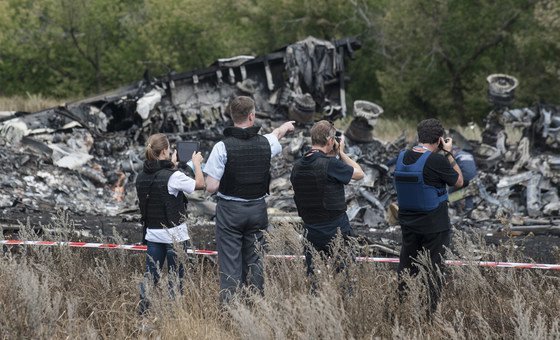
The council of the International Civil Aviation Organization (ICAO) voted on Monday that Russia failed to uphold its obligations under international air law which requires that States “refrain from resorting to the use of weapons against civil aircraft in flight.”

The case was brought by the Netherlands and Australia.

“This represents the first time in ICAO’s history that its Council has made a determination on the merits of a dispute between Member States under the Organization’s dispute settlement mechanism,” the UN agency said.

Caught in conflict

Flight MH17 was heading from Amsterdam to Kuala Lumpur when it was shot down over eastern Ukraine amid the armed conflict between pro-Russian rebels and Ukrainian military forces.

All 283 passengers and 15 crew members were killed.  They represented some 17 nationalities and included 196 Dutch citizens, 43 Malaysians and 38 Australian citizens or residents.

The Netherlands established a Joint Investigation Team (JIT) in August 2014 together with Australia, Malaysia and Belgium, as well as Ukraine.

The JIT determined that flight MH17 was shot down by a missile launched from a Buk TELAR installation that was transported from Russia to a farm field in eastern Ukraine in an area controlled by separatists.

In November 2022, a Dutch court convicted three men – two Russians and a Ukrainian – for murder.  They were tried in absentia and sentenced to life in prison. Another Russian man was acquitted.

Breach of civilian aviation treaty

That same year, the Netherlands and Australia launched the case with ICAO, the UN agency that develops and implements global aviation strategies and technical standards.

The case centered on allegations that Russia’s conduct in the downing of the aircraft by a surface-to-air missile over eastern Ukraine constituted a breach of Article 3 of the Convention on International Civil Aviation.

War in Ukraine has escalated since the crash following the start of Russia’s full-scale invasion of the country in February 2022.  

More than 13,000 civilians have been killed to date, and over 31,000 injured, according to the UN human rights office, OHCHR

Source link

UN Security Council extends South Sudan mission amid rising instability

Introduced by the United States and supported by 11 other Council members, the resolution extended the mandate of UNMISS until 30 April next year.

This action follows a short nine-day “technical rollover” approved by the Council on 30 April to allow more time for negotiations.

Through the text – adopted on Thursday – the Security Council authorized the peacekeeping mission to “use all necessary means” to implement its mandate – including the protection of civilians, assisting aid delivery, supporting implementation of the 2018 peace agreement, and investigating violations of international law.

Three nations – China, Pakistan, and Russia – abstained.

Volatile situation on the ground

The renewal comes amid an increasingly volatile political and security situation in South Sudan.

Head of UNMISS Nicholas Haysom warned ambassadors in April that the fragile 2018 Revitalized Peace Agreement – signed by historic rivals President Salva Kiir and former First Vice President Riek Machar – is unravelling.

The political standoff, including the arrest of Mr. Machar, has reportedly escalated into open military confrontation, while misinformation and hate speech are fuelling ethnic divisions and instability.

“This situation is darkly reminiscent of the conflicts of 2013 and 2016, which cost over 400,000 lives,” Mr. Haysom said.

UNMISS mandate

The resolution maintains the mission’s overall force ceilings at 17,000 troops and 2,101 police, including 88 justice and corrections advisors.

The Council also expressed its readiness to consider adjusting force levels and capacity-building based on future conditions.

The resolution expressed “deep concern” over delays in implementing the 2018 agreement, urging South Sudan’s leaders to urgently show political will and build mutual trust. It urged the parties to engage in open and constructive dialogue.

It also stressed that the “organization and funding of free and fair elections is the responsibility of the South Sudanese authorities”, calling on the transitional government to adopt an appropriate legislative framework to fund national elections.

The resolution also condemned the use of sexual violence, recruitment of child soldiers and interference in any humanitarian operations.

UNMISS was initially established by the Security Council in 2011, following South Sudan’s independence from Sudan, to help maintain peace and stability at the time when the young nation faced significant internal conflicts and humanitarian challenges.

Broadcast of the Security Council meeting.

Ditch ‘ideological goals’: US

Speaking before the adoption, US Acting Representative Dorothy Shea called on the international community to bring South Sudan “back from the brink.”

She cited deteriorating conditions on the ground, including recent attacks against civilians and infrastructure. She also noted ongoing challenges facing UNMISS – including being asked to vacate its Tomping base – which undermine the mission’s ability to carry out its mandate.

“In short, as I hope we can all agree, the goal of UNMISS should be to render itself unnecessary by ushering in a lasting peace. The day that a peacekeeping operation is no longer required in South Sudan will be a bright one,” Ambassador Shea said.

She added that UN peacekeeping mandates, including UNMISS, “should not pursue ideological goals that are difficult to define and even more challenging to implement on the ground, but rather focus on core Chapter VII functions,” referring to the Chapter of the UN Charter stressing action to further international peace and security.

Unnecessarily politicised: Pakistan

Pakistan, which abstained from the resolution alongside China and Russia, explained its position.

Deputy Permanent Representative Muhammad Usman Iqbal Jadoon said UN Peacekeeping Missons should enjoy “complete and unified support” of the Security Council.

“However, this task is complicated when mandate resolutions are unnecessarily politicised,” he said, stating that mission mandates “must be tailored to the needs on the ground, not the political priorities of Council members.”

The resolution contained issues “which have no direct link” with UNMISS, preventing consensus among the 15 Council member States, he added.

That said, Mr. Jadoon reiterated his country’s full support for UNMISS and its leadership.

“UNMISS remains a force of stability in South Sudan. We greatly appreciate the dedication of its personnel and peacekeepers, who are performing their duties under difficult conditions.”

Source link