Gaza: Security Council meets on hostage crisis amid ‘unbearable’ conditions facing Palestinian civilians

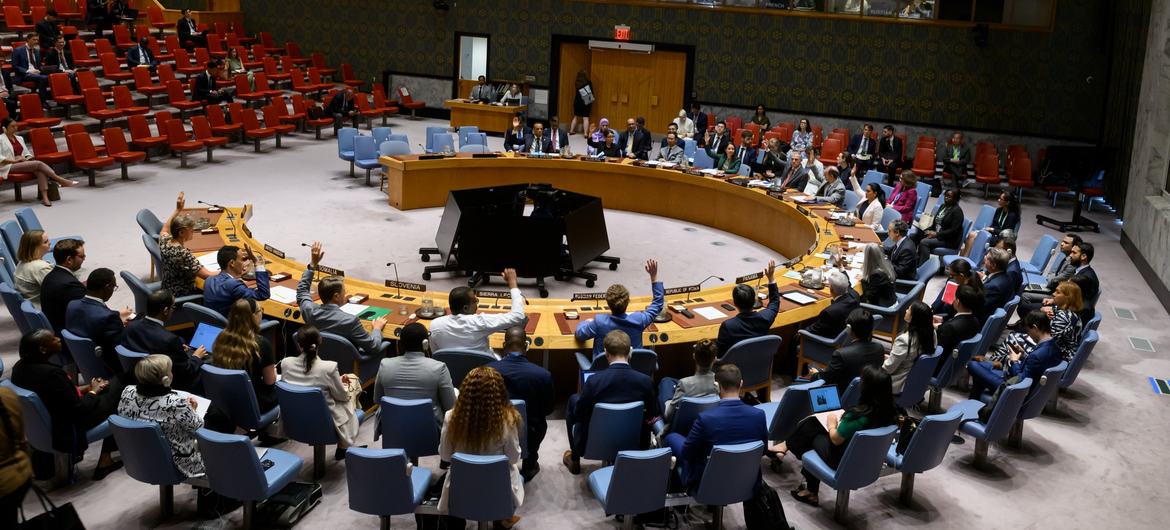
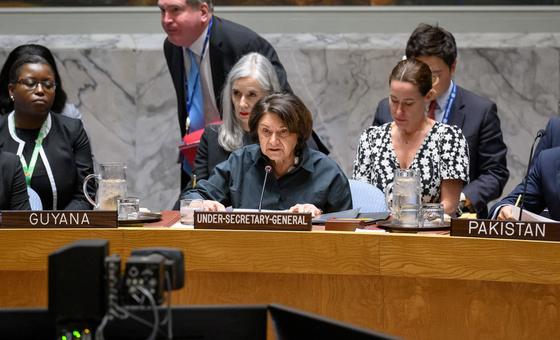
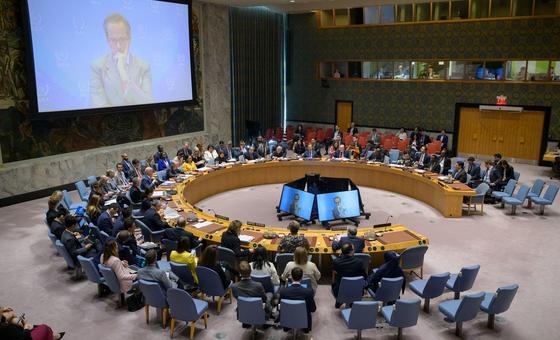
Assistant Secretary-General Miroslav Jenča briefed a Security Council meeting on Tuesday called by Israel to discuss the plight of hostages still being held in the war-ravaged enclave.

It comes after Hamas and Palestinian Islamic Jihad released images and videos of two emaciated hostages, Evaytar David and Rom Braslavsky, sparking outrage and condemnation. 

‘An affront to humanity itself’

The scenes of Evaytar apparently being forced to dig his own grave are appalling,” he said.

“These images, and their own accounts of their treatment, have horrified us all. They are an affront to humanity itself.”

Mr. Jenča acknowledged the presence of Mr. David’s brother, Ilay, who participated in the meeting via videoconference, saying the UN recognises “the profound pain and hardship endured by the families and loved ones of those who remain in captivity.”

He recalled that this week the Jewish community commemorated Tisha B’Av, a day of mourning and remembrance of tragedies endured throughout its history.

“I pay tribute to your courage and determination, and I share your dearest wish: for your brother, and all hostages held in Gaza, to be immediately and unconditionally released,” he said.

A war crime

Currently, 50 hostages continue to be held by Hamas and other Palestinian armed groups in horrific conditions and 28 are thought to be deceased, while freed hostages “have relayed distressing accounts of deprivation, ill-treatment, and abuse.”

Since the conflict began, Hamas and other armed groups have circulated dozens of videos of hostages, including statements made under duress and while clearly suffering, including the most recent footage of the two men.

“International law is clear,” said Mr. Jenča.  “Hostage-taking is prohibited – it is a war crime.”

He stressed that people deprived of their liberty must be treated humanely and with dignity and allowed to be visited by the International Committee of the Red Cross (ICRC). 

“They must never be subject to ill-treatment, abuse, or humiliation, as these would also constitute violations of relevant rules of international law,” he added, before reiterating UN Secretary-General António Guterres’s call on Hamas and other Palestinian armed groups for the immediate and unconditional release of all hostages. 

Gaza situation ‘unbearable’

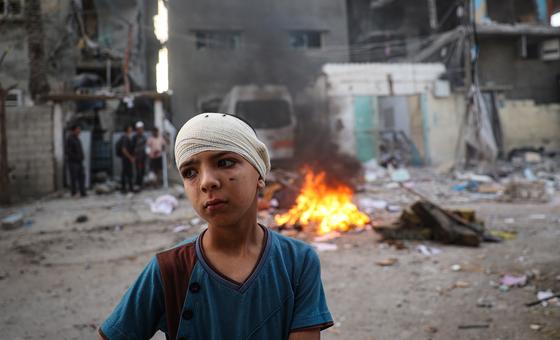
Meanwhile, “the situation in Gaza is horrifying – it is unbearable,” he continued, noting that “Palestinians are subjected to squalid, inhumane conditions on a daily basis.”

More than 60,000 Palestinians have been killed since the conflict began, according to local health authorities.

Since the end of May, over 1,200 Palestinians have been killed and over 8,100 injured while trying to access food supplies, including in the vicinity of militarized aid distribution sites,” said Mr. Jenča.

“The deaths and injuries continue to mount, day by day, with no end in sight to the suffering.”

This is happening as Israel continues to severely restrict humanitarian assistance entering Gaza, while the aid that is allowed to enter “is grossly inadequate.”

‘Hunger is everywhere’

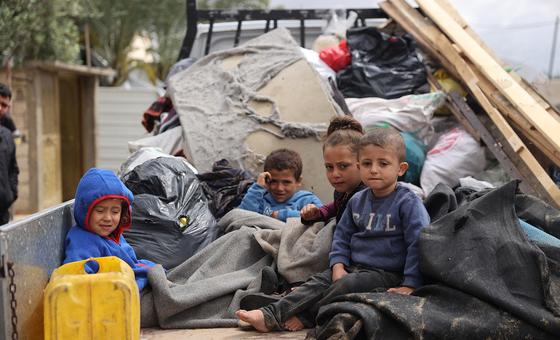
He told the Council that “hunger is everywhere in Gaza, visible in the faces of children and in the desperation of parents risking their lives to access the most basic supplies.”

Here, he echoed the Secretary-General’s condemnation of the ongoing violence in Gaza, including the shooting, killing, and injuring of people trying to get food. 

“International law is clear. Civilians must be respected, protected and never targeted or deliberately deprived of food or access to other lifesaving aid – doing so is a war crime,” he said.

“Israel must immediately allow and facilitate rapid and unimpeded passage of sufficient amounts of humanitarian relief for civilians in need, to avert further suffering and loss of life.”

Potential military expansion ‘deeply alarming’

Mr. Jenča also addressed latest reports regarding Israeli Prime Minister Benjamin Netanyahu’s possible decision to expand military operations through the entire Gaza Strip.

If true, they are “deeply alarming,” he said, as “this would risk catastrophic consequences for millions of Palestinians and could further endanger the lives of the remaining hostages in Gaza.”

He again turned to international law, which is clear that Gaza is and must remain an integral part of a future Palestinian State.

He cited the July 2024 Advisory Opinion by the International Court of Justice (ICJ) which declared that Israel is under an obligation to immediately cease all new settlement activities, evacuate all settlers from the Occupied Palestinian Territory, and to bring an end to its unlawful presence there as rapidly as possible.

No military solution

Mr. Jenča concluded his briefing by underlining the UN’s position that the only way to end the violence and humanitarian catastrophe in Gaza is through a full and permanent ceasefire, the immediate and unconditional release of all hostages and allowing aid to enter at scale and without obstruction.  

Civilians also must be guaranteed safe, unhindered access to assistance.

He stressed that there is no military solution to the conflict in Gaza or the broader Israel-Palestine conflict. 

“We must establish political and security frameworks that can relieve the humanitarian catastrophe in Gaza, start early recovery and reconstruction, address the legitimate security concerns of Israelis and Palestinians, and secure an end to Israel’s unlawful occupation and achieve a sustainable two-State solution,” he said.

This would mean “Israel and a fully independent, democratic, contiguous, viable and sovereign Palestinian State, of which Gaza is an integral part – living side by side in peace and security within secure and recognized borders, on the basis of the pre-1967 lines, with Jerusalem as the capital of both States.” 

Source link

SECURITY COUNCIL LIVE: Israel calls for focus on Gaza hostages’ plight

The Security Council is meeting to discuss rising concern in Israel and elsewhere over the dire conditions facing the hostages who remain in Gaza. It follows the release of recent videos by Hamas and other Palestinian militants showing emaciated captives, which the UN Secretary-General called “an unacceptable violation of human dignity.” A senior UN political affairs official reiterated the “unbearable” conditions faced by Palestinians across the war-ravaged enclave. Stay with UN News for live updates in coordination with UN Meetings Coverage. App users can follow the coverage here.

Source link

LIVE: UN Security Council meets on crisis in Ukraine

The UN Security Council meets Friday afternoon to discuss the ongoing crisis in Ukraine, where recent attacks have left dozens dead or injured. A senior UN political affairs official is expected to brief on the situation. Follow our live coverage from UN News, in coordination with UN Meetings Coverage, for real-time updates and key developments from the chamber. UN News App users can follow the coverage here.

Source link

SECURITY COUNCIL LIVE: Meeting on the situation in Ukraine

The UN Security Council meets Thursday morning to discuss threats to international peace and security, with a focus on the situation in Ukraine. The meeting was requested by Russia. Follow our live updates as UN News, in coordination with UN Meetings Coverage, brings you key highlights and takeaways from today’s session. UN News App users can follow the coverage here.

Source link

UN urges restraint as Thailand-Cambodia clashes displace thousands; Security Council meets

The clashes, which began on 24 July, reportedly involved exchanges of gunfire, artillery shelling and rocket fire, with Thailand having conducted airstrikes inside Cambodian territory.

UN humanitarian officials confirmed civilian casualties, including children.

More than 131,000 people in Thailand and over 4,000 in Cambodia have been displaced, according to relief partners. Temporary shelters, including schools and temples, are overcrowded, and food, shelter and medical assistance are urgently needed.

The United Nations stands ready to support humanitarian efforts if requested, spokesperson Stephanie Tremblay said at a regular briefing in New York.

Protect children at all times

The UN Children’s Fund (UNICEF) also appealed for “maximum restraint”.

June Kunugi, Regional Director for East Asia and the Pacific – based in Bangkok – urged both countries to protect children and the critical services they depend on, in line with their obligations under international law, including the Convention on the Rights of the Child.

Children must be protected at all times and their safety and wellbeing must be prioritised, while schools must remain safe spaces for learning,” she said.

Security Council private meeting

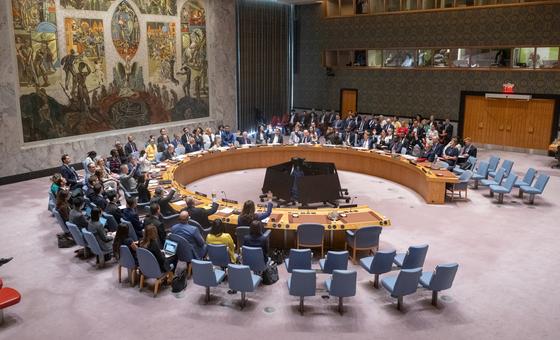
At UN Headquarters in New York, ambassadors convened for an emergency private meeting of the Security Council to discuss the situation.

Representatives of Thailand and Cambodia were said to be in attendance, with Khaled Khiari, Assistant Secretary-General for the Asia and the Pacific at the UN Department of Political Affairs (DPPA), briefing.

Private meetings of the Security Council are closed to the public, but considered a formal meeting.

A longstanding dispute

The last major flare-up between the two countries occurred in 2011, when days of border fighting near the historic Preah Vihear temple – a UNESCO World Heritage Site – left multiple casualties on both sides.

Then-Secretary-General Ban Ki-moon had called for an immediate, verifiable ceasefire and urged both countries to resolve their dispute through dialogue, not military means.

That escalation followed a 2008 troop build-up around the 11th-century Hindu temple, which sits on the Cambodian side of the border.

Source link

SECURITY COUNCIL LIVE: Situation in Ukraine

The UN Security Council is meeting on Friday morning to discuss the situation in Ukraine amid mounting concerns over the intensifying hostilities and growing humanitarian needs. Senior UN political affairs and humanitarian officials are expected to brief the Council. Follow our live coverage from UN News, in coordination with UN Meetings Coverage, for updates from the chamber. UN News App users can follow here.

Source link

SECURITY COUNCIL LIVE: Debate on the situation in the Middle East

The Security Council meets today for its quarterly open debate on the situation in the Middle East, with a focus on the worsening crisis in Gaza. UN Assistant Secretary-General Khaled Khiari is expected to brief on the situation in the war-ravaged enclave where food entry and distribution remain severely restricted, malnutrition is rising, and fuel and shelter supplies are critically scarce. UN News, in coordination with UN Meetings Coverage, brings you live updates from today’s discussions. UN News App users can follow here.

Security Council, in unanimous vote, presses nations to resolve disputes peacefully

The text, sponsored by Pakistan and adopted unanimously, reiterated that all States “shall settle their international disputes by peaceful means through dialogue, diplomatic engagement and cooperation in such a manner that international peace and security, and justice, are not endangered.”

It also reiterated that nations must “refrain in their international relations from the threat or use of force against the territorial integrity or political independence of any state, or in any other manner inconsistent with the Purposes of the United Nations.”

Highlighting the need to prevent disputes from arising and escalating, the resolution further called on Member States to take “necessary measures for the effective implementation of Security Council resolutions for peaceful settlement of disputes.”

Mediation and preventive diplomacy

The text encouraged the Secretary‑General to ensure that the United Nations can “lead and support mediation and preventive diplomacy efforts,” while continuing to deploy his good offices.

It also took note “with appreciation” of the work of the UN’s Mediation Support Unit (MSU) and urged the Secretariat to ensure the availability of “well-trained, experienced, independent, impartial, and geographically and linguistically diverse mediation experts at all levels.”

The MSU is the UN system-wide focal point on mediation expertise and support, providing tailored operational support to peace and dialogue processes globally.

Participation of women and youth

The resolution also underscored the importance of integrating inclusive approaches to peaceful settlement of disputes; ensuring the full, equal and meaningful participation of women, and meaningful participation of youth in conflict prevention and dispute resolution efforts.

It also highlighted the role of regional and subregional organizations in complementing UN efforts, calling for enhanced information-sharing and cooperation.

The Council further requested that the Secretary‑General present “concrete recommendations for further strengthening the mechanisms for peaceful settlement of disputes” within one year, alongside plans for an open debate to review progress.

Source link

SECURITY COUNCIL LIVE: High-level debate on peaceful settlements of dispute

The UN Security Council meets today for a high-level open debate on Promoting International Peace and Security through Multilateralism and Peaceful Settlement of Disputes, chaired by Pakistan’s Deputy Prime Minister and Foreign Minister Mohammad Ishaq Dar. UN Secretary-General António Guterres is expected to brief as over 80 Member States join discussions on strengthening diplomacy and mechanisms for conflict prevention. UN News, in coordination with UN Meetings Coverage, brings you live updates. UN News App users can follow here.

Source link

SECURITY COUNCIL LIVE: Emergency meeting on rising tensions in Syria

The Security Council met on Thursday afternoon for an emergency session on Syria after deadly violence in the south and a wave of Israeli airstrikes that reportedly hit military sites and key locations in Damascus. Khaled Khiari, a senior UN political affairs official briefed ambassadors, warning that renewed bloodshed could derail prospects for a credible, inclusive political transition and widen regional fault lines. UN News App users can follow here.

Source link

SECURITY COUNCIL LIVE: ‘Aid must go where needs are greatest’ in Gaza, urges UN relief chief

The UN Security Council is meeting on the escalating humanitarian crisis in Gaza, where fresh Israeli evacuation orders have uprooted tens of thousands amid relentless bombardment claiming hundreds of civilian lives in recent weeks – many of them children. “Food is running out. Those seeking it risk being shot. People are dying trying to feed their families,” UN relief chief Tom Fletcher has just told ambassadors. Follow our real-time updates and key moments through our live UN Meetings Coverage page. UN News App users can join here.

Source link

Yemen: Security Council extends UN mission in crucial port city amid escalating Red Sea strife

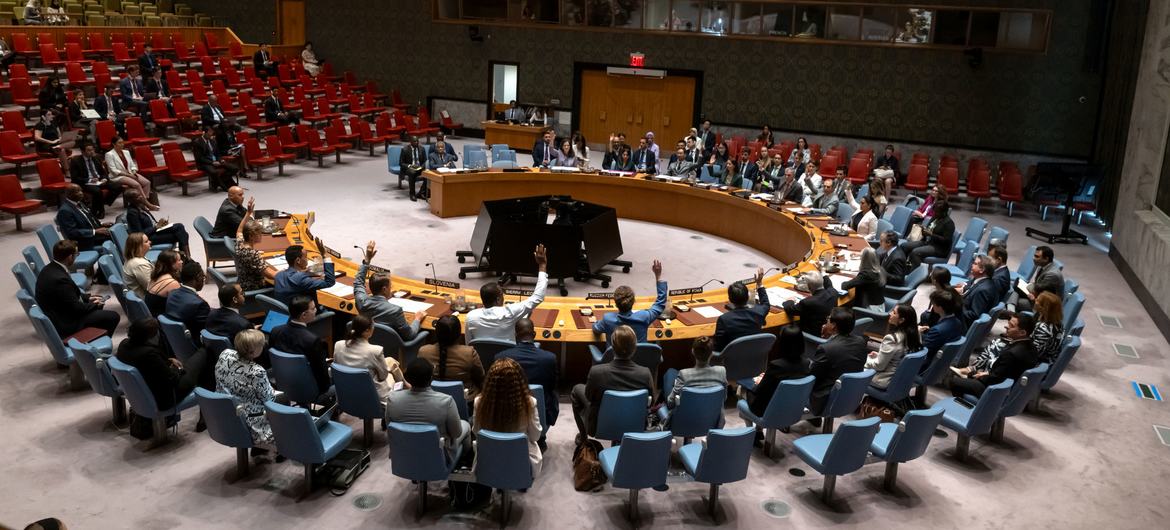
Adopted unanimously, the resolution extending the UN Mission to support the Hudaydah Agreement (UNMHA) until 28 January 2026, underscores the Mission’s critical role in maintaining fragile stability amid signs of renewed military escalation and deepening humanitarian need.

The resolution – 2786 (2025) – reaffirms the Council’s support for the 2018 Stockholm Agreement, including the ceasefire in the Houthi-controlled port city – and demilitarisation of its docks, where the majority of Yemen’s imports and vital aid shipments pass through.

The mission’s future

It also signals a growing debate over the mission’s future, requesting the Secretary-General to submit a review by November to enhance coordination and coherence of UN operations, “bearing in mind challenges” that have directly impeded UNMHA’s capacity to deliver.

The Security Council…expresses its intention to review the full range of options for UNMHA’s mandate, including assessing the future viability and sunsetting of the Mission, and make any necessary adjustments to gain efficiencies and reduce costs or otherwise, as may be required to UN operations in Hudaydah by developments on the ground, including inter alia a durable nationwide ceasefire,” the resolution noted.

UNMHA was established in 2019 to support implementation of the Stockholm Agreement between the Government of Yemen and Ansar Allah (as the Houthis are formally known), which sought to prevent major conflict over the region.

The mission monitors the ceasefire, facilitates redeployments and supports de-escalation through liaison mechanisms between the parties.

Tensions mounting

While the military situation on the ground remains tenuously stable, tensions are mounting on multiple fronts.

According to a letter from the Secretary-General to the 15-member Council in June, a growing number of ceasefire violations – averaging over 100 per day between June 2024 and May 2025 – highlight the fragile state of the region.  

Government-aligned forces fortified positions in anticipation of a possible offensive on the city, while Houthi units increased infiltration attempts and public mobilisation, including military-style youth camps in areas they control.

Security Council unanimously adopts Resolution 2786 (2025) extending until 28 January 2026 the mandate of the UN Mission to support the Hudaydah Agreement (UNMHA).

Deadly Red Sea passage

Compounding this, Houthi attacks on international shipping in the Red Sea have intensified. On 8 July, the commercial vessel Eternity C was sunk, killing several crew members and leaving others missing. This followed the sinking of the Magic Seas vessel two days earlier.

In a statement, UN Special Envoy Hans Grundberg condemned the attacks, calling them violations of international maritime law and warning they risked serious environmental and geopolitical fallout.

He called on Ansar Allah to cease attacks that risk escalating tensions in and around Yemen.

“[He urges them] to build on the cessation of hostilities with the United States in the Red Sea and to provide durable guarantees to the region and the wider international community, ensuring the safety of all those using this critical waterway,” the statement noted.

Significant operational constraints

Within Hudaydah itself, UNMHA faces significant constraints.  

The June letter by the Secretary-General details restrictions by Houthi authorities on UN patrols to the critical Red Sea ports – Hudaydah, Salif and Ras Issa.

Damage from repeated airstrikes, including by the US and Israel in response to Houthi attacks, has left key port infrastructure partially inoperable, disrupting fuel, food and medical imports.

With Hudaydah responsible for 70 per cent of Yemen’s commercial imports and 80 per cent of humanitarian deliveries, the stakes are high.

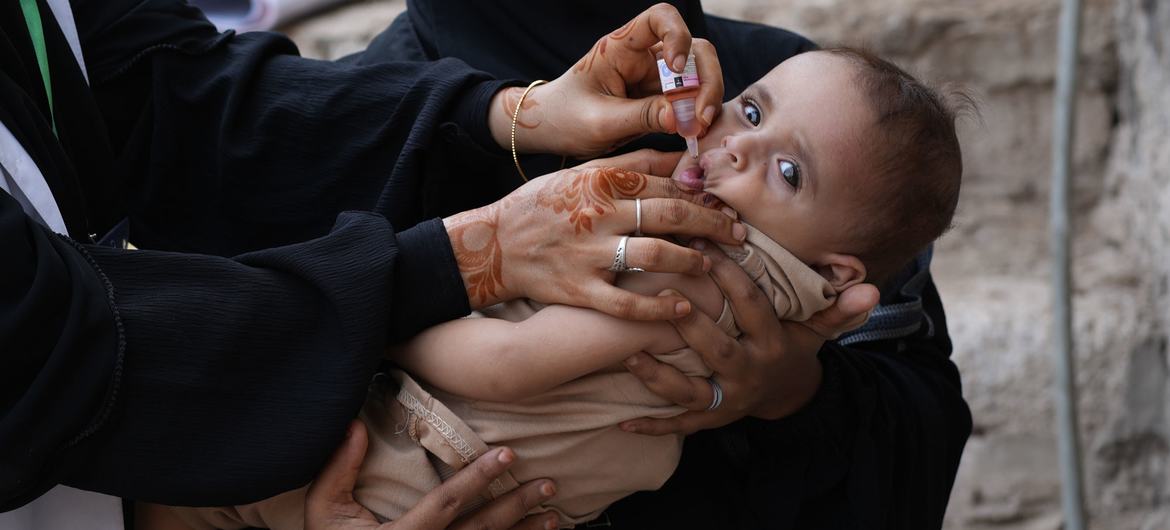
© UNICEF/Mahmoud Alfilastini

A child receives a polio vaccination in Yemen.

Polio vaccination drive

Meanwhile, a new round of polio vaccinations is underway in Government-controlled areas of southern Yemen, amid mounting concerns over the continued spread of the virus.  

From 12 to 14 July, health workers deployed across 12 governorates, aimed at curbing the outbreak of variant type 2 poliovirus.

The campaign, led by Yemen’s Ministry of Public Health with support from UN Children’s Fund (UNICEF) and World Health Organization (WHO), came as 282 cases have been reported since 2021, with environmental surveillance confirming ongoing transmission.

The campaign is essential to interrupt transmission and protect every child from the debilitating effects of polio,” said Ferima Coulibaly-Zerbo, acting WHO Representative in Yemen.

UNICEF’s Peter Hawkins echoed the urgency, warning of the “imminent threat” to unvaccinated children if immunisation gaps persist.

“But, through vaccination, we can keep our children safe,” he said.

Source link

Security Council renews UN’s Haiti mission amid spiralling crises

By adopting resolution 2785, the Council renewed the authorization of the UN Integrated Office in Haiti (BINUH), reaffirming support for a Haitian-led solution to the island nation’s overlapping crises.

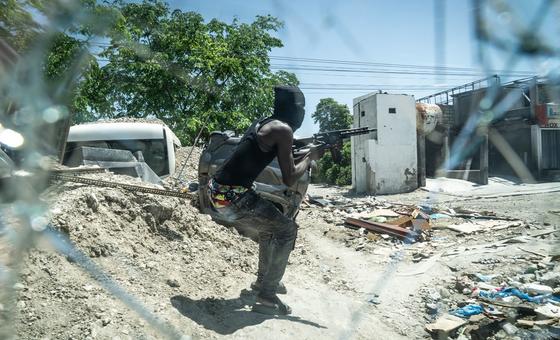
The decision comes as armed gangs maintain their grip on most of the capital, Port-au-Prince, with over 1.3 million people displaced and more than 4,000 killed in the first half of 2025 alone, according to UN figures.

Conditions have deteriorated dramatically amid growing food insecurity and the erosion of public institutions. Of particular concern is the safety of women and girls, with a sharp rise in reports of sexual violence since the start of the year – including rape, gang rape, and sexual enslavement.

Time is running out

The Security Council also “expressed its intention to consider, without delay” the recommendations by the Secretary-General on possible future roles for the UN in sustaining security and stability in Haiti.

In February, António Guterres presented the Council with a range of options.

Each new wave of criminal attacks against the communities and institutions of Haiti is a distressing sign that time is running out,” the UN chief said in a letter.

He urged Member States to support the Multinational Security Support (MSS) mission, which the Council authorized in October 2023 to assist Haiti’s national police in tackling gang violence and restoring order. He also emphasized that international efforts to improve security must be matched by national progress toward resolving the political crisis.

Several Council members voiced willingness to engage on the Secretary-General’s proposals. The Chinese representative, for instance, said Beijing was open to working with others to chart a constructive way forward.

“With regard to how to improve the situation in Haiti, including how to respond to the Secretary-General’s recommendations, we are ready to have candid communication with all parties, explore viable solutions and seek the broadest possible consensus,” said Geng Shuang, Deputy Permanent Representative of China to the UN.

Security Council adopts resolution extending the mandate of the UN Integrated Office in Haiti (BINUH) during the meeting on the question concerning Haiti.

Mission critical

The Council’s action was welcomed by Haiti’s Ambassador, who underscored the political and security stakes ahead of a critical 2026 transition timeline.

This extension should help Haitian authorities undertake a real, genuine political dialogue, to strengthen good governance, bolster security and bring about justice and promote human rights,” said Pierre Ericq Pierre, Permanent Representative to the UN.

He also expressed his Government’s expectation that the UN mission will support implementation of the national roadmap, including constitutional reforms and elections.

Emphasizing national ownership, he added: “BINUH must work as part of a holistic plan to support Haitian authorities in confronting the grave crisis shaking the country to its core.”

The United States, which led negotiations on the resolution alongside Panama, stressed the urgency of political progress and called on international partners to increase support.

“Less than one year remains on the Transitional Presidential Council’s planned roadmap for the restoration of democratic institutions,” said Ambassador Dorothy Shea, acting representative.

Supporting the security of elections and the participation of all sectors of society is key to sustainable political progress in Haiti. Without BINUH, realizing the vision of a stronger, more resilient society would be less likely.

New mission leadership

Council members also welcomed Carlos G. Ruiz Massieu, appointed as the new Special Representative of the Secretary-General and Head of BINUH, succeeding María Isabel Salvador.

Mr. Ruiz Massieu, who currently leads the UN Verification Mission in Colombia, brings decades of diplomatic and political experience, including in peace negotiations and institution-building.

The UN Integrated Office in Haiti (BINUH) – a special political mission – was established in 2019 to advise and support Haitian authorities on political dialogue, justice, human rights and governance.

It succeeded a series of UN peacekeeping and political missions on the island, dating back to 1993, including the large-scale MINUSTAH operation, which wrapped up in 2017 after 13 years.

Source link

Yemen deserves hope and dignity, Security Council hears

For over a decade, Yemen has endured conflict between Houthi rebels and government forces. Millions of lives and livelihoods remain at risk, and the conflict shows no sign of ending.

The appetite for a military escalation remains,” Hans Grundberg, UN Special Envoy for Yemen, told ambassadors.

While violence remains an immediate threat, he noted that the economy has now become the “most active frontline” of the conflict: the national currency in free fall and purchasing power rapidly declining, poverty is a daily threat.

The little money people do have in their pockets is either falling in value or literally falling apart,” he said.

Currently, 17 million people face food insecurity – a number that could rise to 18 million by September without swift and expanded humanitarian aid.  More than one million children under the age of five are suffering from life-threatening malnutrition, putting them at risk of permanent physical and cognitive harm.

“We haven’t seen this level of deprivation since before the UN-brokered truce in early 2022,” said Tom Fletcher, UN Under-Secretary-General for Humanitarian Affairs.

Regional instability deepens the crisis

Broader instability in the Middle East has further worsened Yemen’s situation, Mr. Grundberg said, pointing to recent attacks by Ansar Allah (as the Houthi rebels are formally called) on commercial ships in the Red Sea and retaliatory strikes by Israel on key Yemeni infrastructure, including ports and a power station.

Yemen must not be drawn deeper into the regional crisis that threatens to unravel the already extremely fragile situation in the country. The stakes for Yemen are simply too high,” he said.

Nevertheless, he noted that the ceasefire between Iran and Israel did spark hope that momentum for negotiations in Yemen might resume.

Still, he stressed that Yemen’s peace process must solely depend on regional dynamics.

“Yemen must advance regardless, moving from simply managing shocks and volatility to developing practical steps that lay the groundwork for lasting solutions,” he said.

Negotiations must prevail

Without meaningful peace negotiations, Yemen’s humanitarian crisis will only deepen, Mr. Grundberg warned.

A military solution remains a dangerous solution that risks deepening Yemen’s suffering,” he said.

He highlighted recent progress in Taiz governorate, where both parties agreed to jointly manage water supplies – a move that will provide safe drinking water to over 600,000 people.

This agreement also promotes sustainable water access, reducing reliance on humanitarian aid.

“While negotiations may not be easy, they offer the best hope for addressing, in a sustainable and long-term manner, the complexity of the conflict,” Mr. Grundberg said.

Call for international support

Mr. Grundberg called on the Security Council to continue prioritizing Yemen.

He also reiterated UN calls for all detained humanitarians, including UN staff, and called on donors to ensure sufficient funding to sustain aid organizations on the ground.

Yemen’s future depends on our collective resolve to shield it from further suffering and to give its people the hope and dignity they so deeply deserve,” Mr. Grundberg said.

UN Human Rights Council hears grim updates on Ukraine, Gaza and global racism

Escalating conflict in Ukraine

In an oral update, Ilze Brands Kehris, UN Assistant Secretary-General for Human Rights, reported a sharp escalation in hostilities in Ukraine.

Civilian casualties have surged, with April to June seeing nearly 50 per cent more deaths and injuries compared to the same period in 2024.

“More than 90 per cent of these casualties occurred in territory controlled by Ukraine,” she said, attributing the spike in part to intensified Russian drone and missile attacks.

Attacks using airburst warheads and repeated strikes on hospitals have instilled “terror and anxiety” among urban populations, she added. A June 16-17 nighttime attack in Kyiv killed more civilians than any other assault in the past year.

While ceasefire negotiations have produced some humanitarian gains – such as the exchange of prisoners of war and the return of deceased soldiers – Ms. Kehris underscored harrowing conditions in detention.

Over 117 former Ukrainian POWs interviewed by the UN rights office, OHCHR, reported torture, including sexual violence, in Russian captivity. Though less widespread, similar abuses have also been documented in unofficial Ukrainian detention facilities, prompting calls for transparent investigations.

The report also noted ongoing human rights violations in territories occupied by Russia, including restrictions on civic space and the exercise of freedom of expression.

“Peace is more imperative than ever,” Ms. Kehris said, reiterating calls for an immediate cessation of hostilities in line with international law.

Structural racism and intersectionality

Ashwini K.P., Special Rapporteur on contemporary forms of racism, delivered a thematic report focused on intersectionality as a tool for racial justice.

Drawing from experiences of Black feminists and expanded by studies focusing on Dalit, Indigenous, Muslim and Roma community members, the concept of intersectionality was presented as essential to dismantling systemic discrimination.

“Women of African descent, caste-oppressed communities, Roma, Arab and Muslim women, and other marginalized groups are disproportionately impacted due to overlapping forms of discrimination,” Ms. Ashwini said.

Her report detailed how states can integrate an intersectional approach, emphasising data disaggregation, participatory policymaking, legal recognition of multiple discrimination and historical accountability.

Ms. Ashwini highlighted the importance of reparatory justice for communities affected by colonialism and slavery and called on states – particularly those historically complicit – to implement bold reforms.

People search through the rubble of a destroyed building in the central Gaza Strip.

Deepening crisis in Gaza

Francesca Albanese, Special Rapporteur on the situation of human rights in the Palestinian territories occupied since 1967, also reported to the Council, with grim update on Gaza.

She described conditions as “apocalyptic” and reported over 200,000 people killed or injured since 7 October 2023, when Hamas and other Palestinian armed groups attacked Israeli communities – killing at least 1,200 people and taking more than 250 as hostages.

“In Gaza, Palestinians continue to endure suffering beyond imagination,” Ms. Albanese said, describing the Israeli-backed Gaza Humanitarian Foundation as a “death trap – engineered to kill or force the flight of a starved, bombarded, emaciated population marked for elimination.”

She also accused Israel of using the conflict as an opportunity to test new weapons and technology against the population of the enclave “without restraint”.

“The forever-occupation has provided an optimal testing ground for arms manufacturers and big tech with little oversight and zero accountability – while investors, and private and public institutions have profited handsomely,” she said.

“We must reverse the tide,” Ms. Albanese urged, calling on Member States to impose a full arms embargo on Israel, suspend all trade agreements and investment relation and enforce accountability, “ensuring that corporate entities face legal consequences for their involvement in serious violations of international law.”

Independent rights experts

Special Rapporteurs are independent human rights experts appointed and mandated by the Human Rights Council – the UN’s highest intergovernmental forum on human rights.

Forming a part of its Special Procedures, Special Rapporteurs and other independent experts are mandated to monitor and assess the rights situation in certain thematic or country situations.

They work in their individual capacity, are not UN staff and do not receive a salary. 

Source link

Haitian capital ‘paralysed and isolated’ by gang violence, Security Council hears

 Since January, the UN Integrated Office in Haiti (BINUH), recorded over 4,000 individuals deliberately killed – a 24 per cent increase compared to the same period in 2024.  

The capital city was for all intents and purposes paralysed by gangs and isolated due to the ongoing suspension of international commercial flights into the international airport,” Miroslav Jenča, Assistant Secretary-General for the Americas at the department of political affairs (DPPA), told ambassadors in the Security Council on Wednesday.

Having visited the country recently, he warned that, gangs have only “strengthened their foothold”, which now affects all communes of the Port-au-Prince metropolitan area and beyond, “pushing the situation closer to the brink.”

He called on the international community to act decisively and urgently or the “total collapse of state presence in the capital could become a very real scenario”.

Gang control expands

Ghada Fathi Waly, Executive Director of the UN Office on Drugs and Crime (UNODC), echoed that warning.

“As gang control expands, the state’s capacity to govern is rapidly shrinking, with social, economic and security implications,” she told ambassadors, briefing remotely from Vienna.

“This erosion of state legitimacy has cascading effects,” she said, with legal commerce becoming paralysed as gangs control major trade routes, such conditions worsening “already dire levels of food insecurity and humanitarian need,” she added.  

Rise of ‘vigilante’ groups

Amidst increasing public frustration with the limited protection capacity of the state, “vigilante” or self-defence groups are now gaining in popular appeal.  

Although some are motivated by the urgent need to protect their communities, many operate outside existing legal frameworks, in some cases, engaging in extrajudicial actions and colluding with gangs.  

The rise of these actors is pushing demand for guns and military-grade weapons, “fuelling illicit arms markets and raising the risk of licit weapons being diverted to criminal elements,” Ms. Waly said.  

Human trafficking

Meanwhile, the broader deterioration of the security and economic situation in the capital and the rest of the country continues to fuel a sharper escalation in human rights violations.  

Despite persistent under-reporting of sexual violence due to fear of reprisals, social stigma and lack of trust in institutions, BINUH reported an increase in sexual violence committed by gangs in the past three months.  

In May, Haitian police raided a medical facility in Pétion-Ville suspected of being involved in illicit organ trade, as allegations of trafficking in persons for the purpose of organ removal are now arising.  

As the situation in Haiti remains desperate, “there is not a moment to lose,” Mr. Jenča urged. 

Source link

Gaza: ‘Unbearable’ suffering continues, UN official tells Security Council

Briefing ambassadors in the Security Council, Assistant Secretary-General for the Middle East Khaled Khiari said more than 1,000 Palestinians had been killed since mid-June alone, many of them while seeking aid.

Citing figures from the Gazan health authorities, he reported that the total number of Palestinian fatalities since 7 October 2023 had surpassed 56,500.

The level of suffering and brutality in Gaza is unbearable,” Mr. Khiari said. “The continued collective punishment of the Palestinian people is unjustifiable.

Killed trying to access aid

Mr. Khiari cited multiple incidents involving the Israel Defense Forces (IDF) opening fire near food distribution points.

On 17 June, at least 50 people were killed and 200 injured in Khan Younis when an IDF tank opened fire on a crowd waiting for UN World Food Programme (WFP) aid trucks.

Once again a week later, IDF troops reportedly opened fire near Gaza Humanitarian Foundation sites, this time killing 49 Palestinians and injuring 197 others.

“We strongly condemn the loss of lives and injuries of Palestinians seeking aid in Gaza,” Mr. Khiari said. “We call for an immediate and independent investigation into these events and for perpetrators to be held accountable.”

He emphasised that the UN “will not participate in any aid delivery modality that does not comply with the fundamental humanitarian principles of humanity, impartiality, independence, and neutrality,” a sentiment which other UN officials have repeatedly said as well.

Strong condemnation

Mr. Khiari reiterated the UN’s strong condemnation of Hamas and other Palestinian armed groups for their attacks in Israel, which killed over 1,200 people and led to more than 250 being taken hostage. Fifty hostages, including one woman, remain in captivity.

Nothing can justify these acts of terror. We remain appalled that hostages may be subjected to ongoing ill-treatment and that the bodies of hostages continue to be withheld,” he said.

At the same time, he also condemned “the widespread killing and injury of civilians in Gaza, including children and women, and the destruction of homes, schools, hospitals and mosques.”

Rising violence in the West Bank

In the occupied West Bank, Israeli raids and settler violence have escalated.  

Mr. Khiari reported that a 15-year-old boy and an elderly woman were killed in separate incidents on 25 June. Armed settlers also killed several Palestinians during attacks in Surif and Kafr Malik.

The escalating violence in the occupied West Bank is alarming,” Khiari said, warning that military operations and settler expansion are leading to fatalities, displacement and destruction.

Iran-Israel ceasefire brings hope to the region

Mr. Khiari concluded his briefing with comments on the wider Middle East region, particularly the recent flare-up between Israel and Iran.

He welcomed the 24 June ceasefire agreement between the two countries, announced by US President Donald Trump, and credited US and Qatari mediation.

We hope that this ceasefire can be replicated in the other conflicts in the region – nowhere is this more needed than in Gaza,” he said.

Sudan: ‘Fighting shows no signs of abating,’ senior UN official tells Security Council

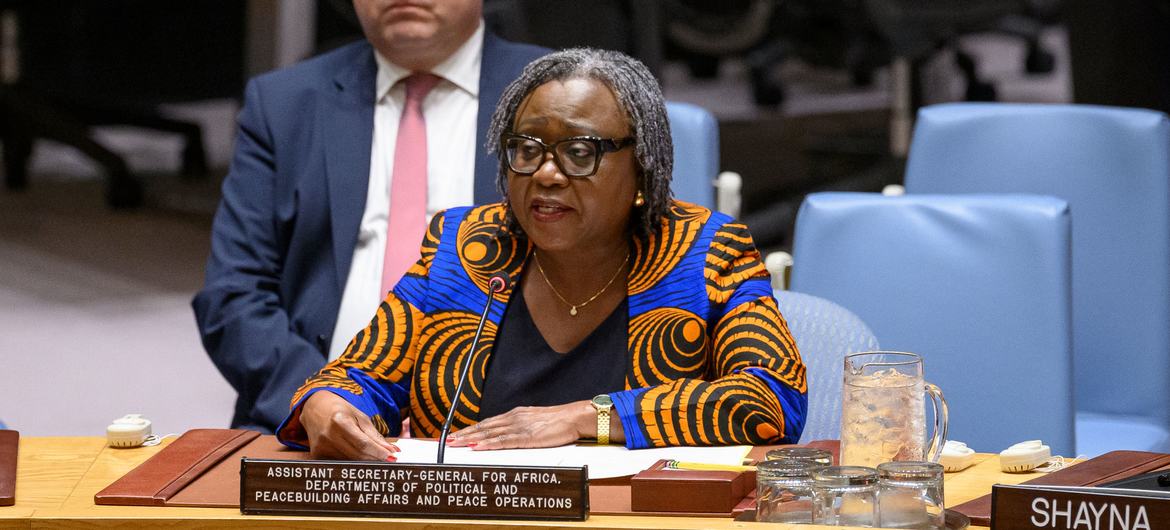
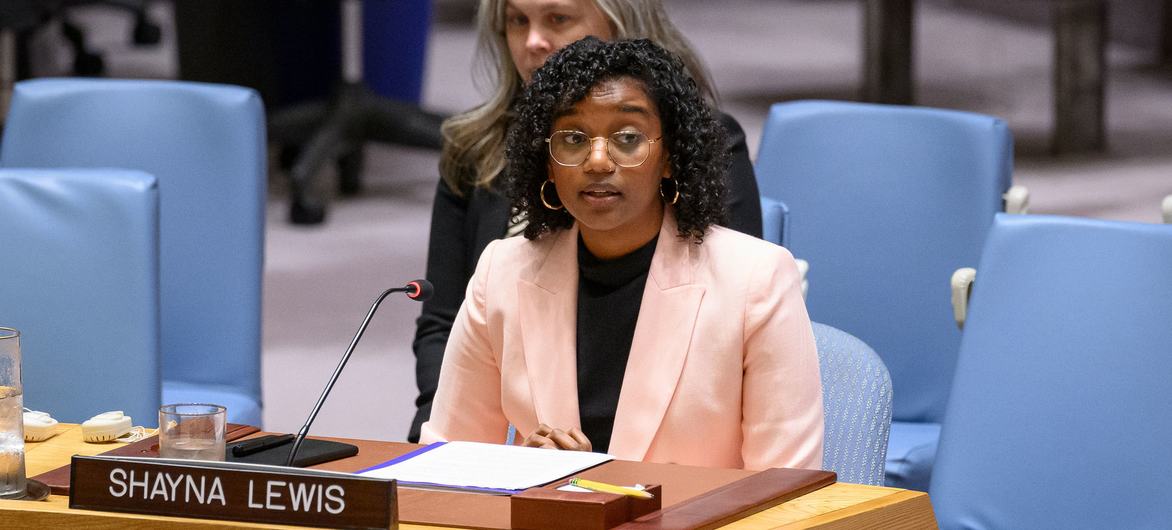
On Friday, the UN Security Council heard sobering briefings from Martha Ama Akyaa Pobee, UN Assistant Secretary-General for Africa, and Shayna Lewis, Sudan Specialist and Senior Advisor with Preventing and Ending Mass Atrocities (PAEMA), a US-based organization.

Ms. Pobee stressed that front lines continue to shift as the RSF and SAF press on with their military objectives, warning, “the warring parties appear unrelenting in their resolve to pursue military objectives.”

She noted the growing use of advanced weaponry, including long-range drones, which have expanded the violence into previously stable areas.

Martha Ama Akyaa Pobee, Assistant Secretary-General for Africa in the UN Department of Political and Peacebuilding Affairs and Peace Operations, briefs the Security Council meeting on the situation in Sudan.

Ms. Pobee further warned of the conflict spilling further into the region, citing recent reports of violent clashes in the tri-border area between Sudan, Libya and Egypt, involving the SAF, RSF and forces affiliated with the Libyan National Army.

Human rights violations

Ms. Pobee also referenced UN human rights reports documenting a tripling of arbitrary civilian killings between February and April this year.

“Entrenched impunity is fuelling these and other gross human rights violations and abuses. All parties to the conflict must be held accountable,” she stressed.

Ms. Lewis’s briefing focused on the worsening humanitarian situation, highlighting the over 15 million children now in need of assistance due to ongoing attacks on civilians.

Shayna Lewis, Senior Advisor and Sudan Specialist at Preventing and Ending Mass Atrocities (PAEMA), addresses the Security Council meeting on the situation in Sudan.

Returning from a recent visit to Sudan, she shared accounts of severely injured children in hospitals and stressed that up to 80 per cent of health facilities in conflict areas are no longer functioning.

She also cited examples of indiscriminate attacks on hospitals by both the SAF and RSF, including a suspected SAF drone strike on 21 June that hit a hospital in West Kordofan, killing over 40 people and destroying critical lifesaving equipment.

Both Ms. Lewis and Ms. Pobee raised alarm over the warring parties’ widespread use of sexual and gender-based violence against women and girls across Sudan.

Government of Hope

Despite the ongoing violence and human rights abuses, Ms. Pobee underscored the significance of the new “Government of Hope.”

On 31 May, a new interim Prime Minister was inaugurated, announcing reform plans and immediately appointing a cabinet of professional technocrats.

Ms. Pobee also acknowledged the efforts of the Personal Envoy of the UN Secretary-General for Sudan, Ramtane Lamamra, who has been engaging with the Prime Minister, civilian groups and the warring parties.

Through this crucial communication, the Personal Envoy is helping these stakeholders work toward an inclusive political resolution.

“I urge this Council – once again – to unite in lending full support to Personal Envoy Lamamra’s efforts, and to use its influence with the parties and their external backers to press for a genuine commitment to dialogue and de-escalation,” Ms. Pobee said.

Ambassadors also heard a briefing from the Chair of the Sudan Sanctions Committee, established by the Council pursuant to Resolution 1591 (2005), on the work of the Committee. Following the open briefing, the Council held closed consultations during which Personal Envoy Lamamra also briefed members.

Source link

Upcoming elections ‘crucial opportunity’ for Central African Republic, UN top official tells Security Council

December’s local, legislative and presidential elections “represent a crucial opportunity” to strengthen democratic governance, promote reconciliation and consolidate stability, Jean-Pierre Lacroix, Under-Secretary-General for Peace Operations told ambassadors in the Security Council.

The timely holding of presidential and legislative elections is a constitutional requirement, and the Government has consistently demonstrated its commitment to holding local elections, he added.

Although the final electoral roll is currently delayed due to technical difficulties, national authorities, supported by the UN peacekeeping mission, MINUSCA, have made significant efforts to advance the revision of the electoral register through nationwide registration.

“This process took place without major security incidents, reflecting effective collaboration between the Central African national defence forces and MINUSCA, as well as public interest in engaging with the political process,” said Mr. Lacroix.

Challenges remain

Although the 19 April agreement between the government and leaders of various opposition armed groups aimed to end hostilities in the country, violence – primarily perpetrated by armed groups and militias – continues to undermine stability.

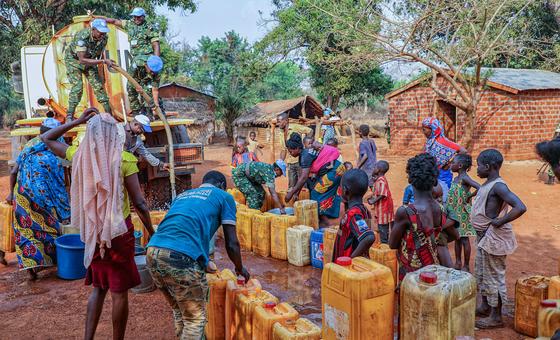
“The security situation remains fragile in border regions,” said Mr. Lacroix, noting the spillover effects of the conflict in neighbouring Sudan.

Last week, a Zambian peacekeeper was killed when suspected Sudanese armed elements opened fire on a MINUSCA patrol responding to reports of an attack against civilians in the north-east of the country.

Mr. Lacroix also informed the Security Council of human rights and humanitarian concerns.

Though progress has been made in advancing judicial accountability, notably by the Special Criminal Court, a lack of funding is expected to jeopardise the Court’s operations by September.

In addition, as urgent needs continue to outpace available resources, “the humanitarian situation remains dire,” said Mr. Lacroix, calling for strong support for lifesaving humanitarian assistance.

Source link

‘A moral failure’: Security Council hears about grave violations against children caught in war

“From that day on, our home became a travel bag and our path became that of displacement … My childhood was filled with fear and anxiety and people I was deprived of,” she said, speaking via videoconference from Syria.  

Seema Sen Gupta, director of child protection and migration at UNICEF, briefs the Security Council. 

Sila, now 17, described her experiences during the Syrian Civil War to a meeting of the UN Security Council held on Wednesday to discuss the findings of the Secretary-General’s latest report on Children and Armed Conflict.

The report documented a 25 per cent increase in grave violations against children in 2024, the largest number ever recorded in its 20-year history. 

This year’s report from the Secretary-General once again confirms what too many children already know — that the world is failing to protect them from the horrors of war,” said Sheema Sen Gupta, director of child protection at the UN Children’s Fund (UNICEF).

“Each violation against children in every country around the globe represents a moral failure.”

The real scale of the harm

The report presented to the Security Council is published annually to document grave violations against children affected by war. It relies entirely on data compiled and verified by the UN, meaning that the real numbers are likely much higher than reported.  

In 2024, the report documented a record 41,370 grave violations — including killing and maiming, rape, abduction and the targeting of infrastructure such as schools which supports children.  

“Each child struck by these attacks carries a story, a stolen life, a dream interrupted, a future obscured by senseless violence and protracted conflict,” said Virginia Gamba, the Secretary-General’s Special Representative for Children and Armed Conflict, whose office produced the report.  

Virginia Gamba, the Secretary-General’s Special Representative for Children and Armed Conflict, briefs the Security Council. 

While many of these violations occurred during times of conflict — especially as urban warfare is on the rise — grave violations can persist even after a conflict ends. 

They persist in the unexploded ordinances which still pepper the ground.  

“Every unexploded shell left in a field, schoolyard, or alley is a death sentence waiting to be triggered,” said Ms. Sen Gupta.  

They persist in the spaces which remain destroyed, impeding children from accessing healthcare and education.  

And they persist in the trauma and injuries which never fully leave a child.  

Scars that never heal

Children who survive the grave violations do not escape unscathed — if they suffered violence, the injuries will stay with them for a lifetime. And even if they were not injured, the trauma remains.

“The physical and psychological scars borne by survivors last a lifetime, affecting families, communities and the very fabric of societies,” said Ms. Gamba.  

This is why UNICEF and its partners have worked to provide reintegration programmes and psychosocial support for children who are victims of grave violations.

Sila said that the trauma of her childhood is still with her, and has pushed her to become an advocate for children in conflicts.  

“From that moment on, nothing has felt normal in my life. I’ve developed a phobia of any sound that resembles a plane, of the dark, and even of silence,” she said.  

‘This cannot be the new normal’

Ms. Gamba called for “unwavering condemnation and urgent action” from the international community in order to reverse the worrying trends which the report details.  

We cannot afford to return to the dark ages where children were invisible and voiceless victims of armed conflict… Please do not allow them to slip back into the shadows of despair,” she said. 

Current funding cuts to humanitarian aid are impeding the work of UN agencies and partners to document and respond to grave violations against children.

In light of this, Ms. Sen Gupta’s call for the Security Council was simple: “Fund this agenda.”

She said that the international community cannot allow this to become “a new normal,” and reminded the members of the Security Council that children are not and should never be “collateral damage.”

Despite the devastation which the report detailed, there were “glimmers of hope” according to Ms. Sen Gupta. For example, the Syrian National Army signed an action plan which will prevent the recruitment, killing and maiming of children.  

Sila also spoke of hope — she hopes that hers is the last generation to suffer these grave violations.  

“I am from a generation that survived. Physically,” she said. “Our bodies survived but our hearts are still living in fear. Please help us replace the word displacement with return, the word rubble with home, the word war with life.” 

Source link