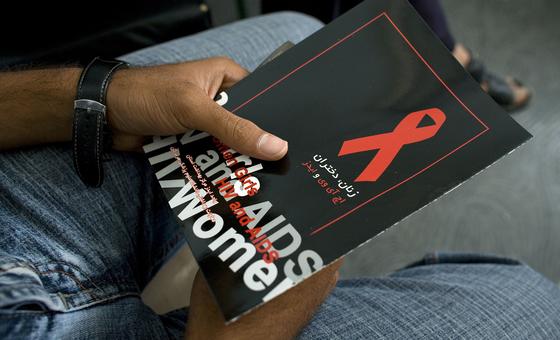
Injectable lenacapavir – LEN, for short – is a highly effective, long-acting antiretroviral alternative to daily oral pills and other shorter-acting options, according to the World Health Organization (WHO).
“While an HIV vaccine remains elusive, lenacapavir is the next best thing: a long-acting antiretroviral shown in trials to prevent almost all HIV infections among those at risk,” said Tedros Adhanom Ghebreyesus, WHO Director-General.
Test kit advantage
WHO’s support for the injectable drug is significant because HIV prevention efforts are stagnating around the world.
To make it easier for people to receive the injection close to home, the UN agency also recommends the use of rapid testing kits for the disease, as opposed to “complex, costly procedures”.
According to the agency, 1.3 million people contracted HIV in 2024; people most impacted were sex workers, men who have sex with men, transgender people, people who inject drugs, people in prisons, and children and teens.
“WHO is committed to working with countries and partners to ensure this innovation reaches communities as quickly and safely as possible,” insisted Tedros, in comments during the 13th International AIDS Society Conference (IAS 2025) on HIV Science, in Kigali, Rwanda.
The recommendation for LEN is also in line with the US health authorities which approved it in June.
Call for implementation
Although access to the LEN injection remains limited outside clinical trials today, WHO urged governments, donors and partners to incorporate LEN “immediately” within national combination HIV-prevention programmes.
Other WHO-supported HIV-prevention options include daily oral tablets, injectable cabotegravir – which is injected once every two months – and the dapivirine vaginal ring, as part of a growing number of tools to end the HIV epidemic.
“We have the tools and the knowledge to end AIDS…what we need now is bold implementation of these recommendations, grounded in equity and powered by communities,” said Dr Meg Doherty, Director of WHO’s Department of Global HIV, Hepatitis and STI Programmes and incoming Director of Science, Research, Evidence and Quality for Health.
HIV remains a major global public health issue.
By the end of 2024, an estimated 40.8 million people were living with HIV with an estimated 65 per cent in Africa. Approximately 630,000 people died from HIV-related causes globally, and an estimated 1.3 million people acquired HIV, including 120,000 children.
More positively, access to HIV drugs continues to expand, with 31.6 million people receiving treatment in 2024, up from 30.3 million a year earlier. Without anti-retroviral medication, the HIV virus attacks the body’s immune system, leading ultimately to the onset of AIDS.
Launched in June, the eight-week digital campaign draws on the enduring popularity of the beloved Smurfs to encourage young people – along with their parents and caregivers – to raise their voices on issues that matter to them.
The initiative is part of the UN’s ActNow effort for the Sustainable Development Goals (SDGs) and aims to empower individuals, especially children, to speak out and take action in their communities.
Voices for change
Featuring Rihanna, Hannah Waddingham, Billie Lourd and Amy Sedaris – who voice various characters in an upcoming Smurfs film – the campaign includes vibrant public service announcements (PSAs) and colourful social media cards.
“The Smurfs know the importance of speaking up and speaking out because everyone, every child, has the right to be heard,” said Hannah Waddingham, who voices Jezebeth in the movie.
“The power to create change is already inside you. You just have to act,” added Billie Lourd (Worry Smurf).
Amy Sedaris (Jaunty) summed it up simply: “It’s easy if you follow the Smurfs’ blueprint. Small actions can add up to make a big difference.”
The videos, produced in multiple formats, direct viewers to a dedicated “Speak Up with the Smurfs” section on the ActNow platform, which offers child-friendly tools and resources.
Join the Smurfs and speak up for a better world! | UN ActNow and UNICEF
Smurfing it up
To smurf things up a bit – campaign invites everyone to “smurf their voice” and help smurf a brighter future, one action at a time. Whether you’re five or fifty-five, there’s always a way to smurf positive change.
In Smurf-speak, “smurf” can mean just about anything – noun, verb, or adjective – but the message here is clear: smurf your voice, smurf your rights, smurf the future.
UNICEF’s involvement centres on ensuring the message reaches children everywhere – and that they are equipped to participate meaningfully in decisions affecting their lives.
Global rollout
The campaign is being promoted across Paramount Global’s platforms – including CBS, MTV, Nickelodeon, BET, Comedy Central, streaming services like Paramount+ and Pluto TV, and the free-to-air network Net 10 in Australia.
Smurf-themed content will also light up Times Square in New York City and appear in markets across Europe, Latin America and Asia.
Content is available in over a dozen languages, including Arabic, French, Spanish, Hindi, Kiswahili, and Japanese, to ensure broad accessibility.
About the Smurfs
First introduced in 1958, the Smurfs are small blue fictional characters known for their teamwork, mischief, and unique way of speaking.
Generations of children (like this author and his little ones) have followed their adventures, and their continued appeal has made them ideal messengers for values like cooperation, kindness and now, global citizenship.
By rallying a new generation to speak up – or smurf up – the campaign hopes to inspire meaningful, lasting change for children (and adults) everywhere.
In a statement late on Wednesday (local time), the UN Support Mission in Libya (UNSMIL) expressed deep concern over continued reports of armed group mobilisation in densely populated areas, urging all parties to refrain from the use of force and inflammatory rhetoric.
“The Mission strongly urges all parties to avoid any actions or political rhetoric that could trigger escalation or lead to renewed clashes,” it said.
UNSMIL stressed that protection of civilian lives and property under international law remains a binding obligation for all political and security actors.
“Those responsible for attacks against civilians will be held accountable,” the Mission said.
Pursue dialogue, not violence
The Mission reiterated its support for the implementation of security arrangements developed by the Truce and Security and Military Arrangements Committees, emphasising that “forces recently deployed in Tripoli must withdraw without delay.”
It also underscored that dialogue – not violence – remains the only viable path to achieving sustainable peace and stability in Tripoli and across Libya.
The appeal comes amid reports of military movements in the capital and renewed clashes between armed groups, reflecting the persistent volatility that has plagued Libya since the fall of former leader Muammar Gaddafi in 2011.
Political stalemate
The country remains divided between rival administrations in the east and west, with unity efforts repeatedly stalled.
A UN-brokered ceasefire signed in 2020 raised hopes for national elections, but progress has been hampered by political deadlock and sporadic outbreaks of violence – particularly in Tripoli.
In May, clashes erupted in several districts of the capital, reportedly triggered by the killing of a prominent militia leader. The fighting, which involved heavy weaponry in densely populated areas, forced hundreds of families to flee and further strained the city’s already fragile infrastructure.
Office spokesperson Ravina Shamdasani cited Kenyan police reports of at least 11 deaths, 52 injured police officers, and 567 arrests. The Kenya National Commission on Human Rights reported slightly different figures: at least 10 fatalities, 29 injuries, 37 arrests, and two abductions.
Protests erupted in 16 counties, with police reportedly using live ammunition, rubber bullets, tear gas and water cannons.
Ms. Shamdasani also noted reports of looting and destruction of public and private property in several locations.
Crisis escalation
This week’s violence follows the deaths of 15 protesters and hundreds of injuries during demonstrations on 25 June in Nairobi and elsewhere.
Those protests were initially triggered by the anniversary of last year’s anti-tax demonstrations, which left at least 60 deaths and dozens allegedly abducted by the police.
The protests on Monday marked the 35th anniversary of the 1990 Saba Saba protests, which paved the way to multi-party democracy in Kenya.
Call for accountability
Ms. Shamdasani said that UN High Commissioner for Human Rights Volker Türk, “repeats his call for all reported killings and other alleged violations and abuses of international human rights law, including with respect to use of force, to be promptly, thoroughly, independently and transparently investigated.”
She noted that Kenyan police announcement of an investigation into the 25 June incidents and added that the UN human rights office stands ready to support national authorities in their efforts, including on the investigations.
She stressed that under international law, law enforcement may only use lethal force when strictly necessary to protect life from an imminent threat.
High Commissioner Türk also renewed his call for calm, restraint, and full respect for the rights to freedom of expression, association, and peaceful assembly.
“It is essential that legitimate grievances at the root of these protests are addressed,” Ms. Shamdasani said.
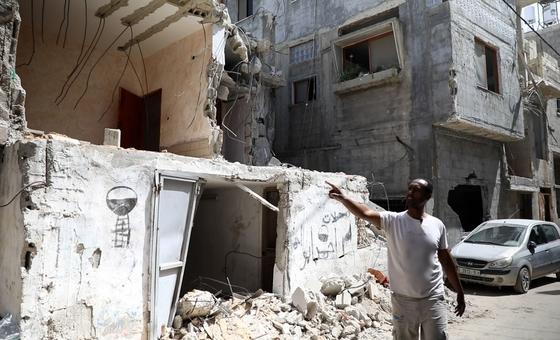
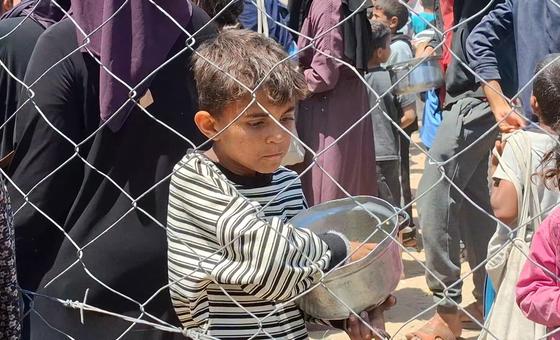
“Amid ongoing Israeli military operations, scores of people have reportedly been killed and injured, including while waiting for food,” the UN Office for the Coordination of Humanitarian Affairs (OCHA) said.
“Over the weekend, there were numerous reports of attacks hitting homes, as well as schools hosting displaced people,” it added.
Catastrophic hunger
OCHA noted that amid the “heavy constraints” on bringing in supplies and carrying out humanitarian operations across Gaza, people are going hungry.
“The World Food Programme (WFP) reports that one in five people faces catastrophic hunger, and more than 90,000 women and children urgently require treatment for malnutrition,” it said.
WFP has about 130,000 metric tons of food positioned in the region, ready to serve people in Gaza if improved access is granted.
Call for access
OCHA reiterated calls on Israel to facilitate the access and entry of essential supplies into Gaza, through the available crossing points and corridors, to address people’s desperate needs. Fuel, in particular, is urgently needed.
“The UN and its partners call on the Israeli authorities, with utmost urgency, to allow the entry of fuel into Gaza. This is critically needed for life-saving operations – including hospitals, water and sanitation equipment, telecommunications, moving cargo from crossings, and operating community kitchens,” it said.
Displacement continues
Mass displacement continues in the war-torn enclave.
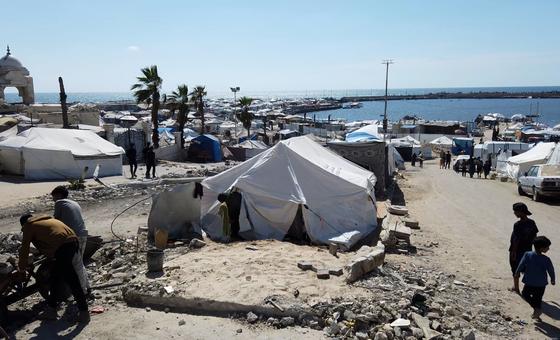
On Sunday, the Israeli military issued new evacuation orders for parts of Jabalya and Gaza City, impacting around 150,000 people. Those forced to flee join thousands already crowded into shelters lacking water, sanitation, and medical care. Shelter materials such as tents and timber have not entered Gaza in 17 weeks.
Most of the territory remains under displacement orders, OCHA said, and Israel, as the occupying power, has a legal obligation to protect civilians.
Search for the missing
Meanwhile, in war-torn Gaza, thousands of families remain trapped in a spiral of anxiety and despair as they search for their missing loved ones.
Among them is Anwar Hawas, a young woman in her twenties, searching desperately for Hadi, her 17-year-old autistic brother who has been missing for weeks.
“Every day I go out in the morning and return in the evening, hoping to find him,” she told UN News.
The Palestinian Central Bureau of Statistics reports that more than 11,000 individuals are missing in Gaza since the war started on 7 October 2023, the majority among them women and children.
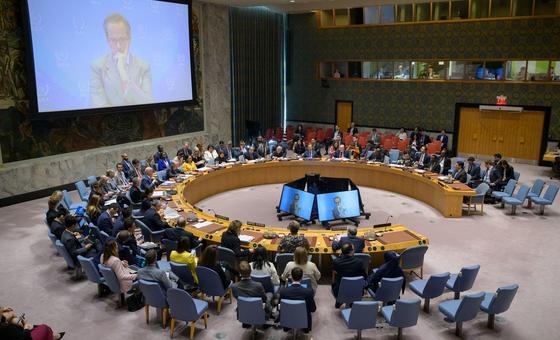
Amid this relative calm, the United Nations has renewed its call for a diplomatic solution to the Iran nuclear issue, warning that the objectives of the Joint Comprehensive Plan of Action (JCPOA) – and the resolution that endorsed it – remain unmet.
Addressing a planned Security Council meeting on Tuesday to try and revive the deal amid the dramatic military escalation of the past 12 days, UN political affairs chief Rosemary DiCarlo said the fragile ceasefire announced by Donald Trump overnight provided “an opportunity to avoid a catastrophic escalation and achieve a peaceful resolution of the Iran nuclear issue.”
The 2015 Iran nuclear deal – more formally known as the JCPOA and backed by the Security Council – offered Tehran sanctions relief in exchange for strict limits on uranium enrichment, stockpile levels and centrifuge use, alongside robust monitoring and verification by the International Atomic Energy Agency (IAEA).
But the accord has remained in limbo since the United States withdrew in 2018, followed by Iran’s rollbacks of its nuclear-related commitments.
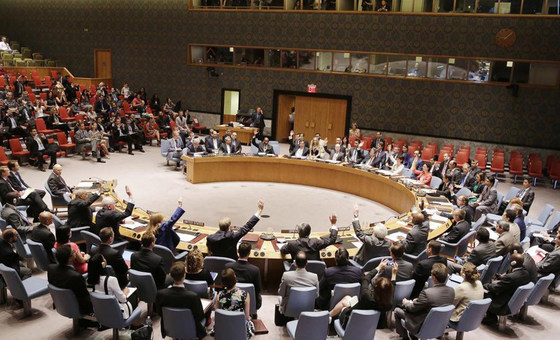
With key provisions under resolution 2231 set to expire on 18 October – unless the Council decides otherwise – the UN’s top political official has warned that the window for reviving diplomacy is narrowing.
With less than four months before resolution’s remaining nuclear-related restrictions are set to expire on 18 October – unless extended by the Council – the UN’s top political official warned that the agreement’s key aims remain elusive.
Diplomacy kneecapped?
Ms. DiCarlo told ambassadors the recent surge in violence had significantly undermined diplomatic momentum.
“The military escalation between Israel and Iran since 13 June and United States air strikes on Iran’s nuclear facilities on 21 June complicated prospects for achieving full implementation of resolution 2231,” Ms. DiCarlo said.
“Iran’s strikes yesterday on a base in Qatar further exacerbated insecurity in an already tense region.”
Despite five rounds of bilateral talks between Iran and the US, facilitated by Oman in recent months, Ms. DiCarlo noted that efforts “did not produce a way forward” to restore full JCPOA implementation.
A sixth round of talks was called off due to the outbreak of hostilities.
Meanwhile, the toll from the recent conflict has been sobering. According to Iranian authorities, at least 606 people were killed and more than 5,300 injured since hostilities erupted on 13 June. Israeli officials reported 28 deaths and nearly 1,500 injuries.
Time running out
While divisions persist, Ms. DiCarlo said JCPOA participants – China, France, Germany, Iran, Russia, and the United Kingdom – had all reiterated their commitment to finding a diplomatic solution.
In a joint statement shared with the Secretary-General in March, China, Iran and Russia stressed the importance of resolution 2231’s provisions and timelines. China separately proposed a “step-by-step and reciprocal approach” to settle the nuclear issue.
“Diplomacy, dialogue and verification remain the best option to ensure the exclusively peaceful nature of Iran’s nuclear programme,” Ms. DiCarlo said.
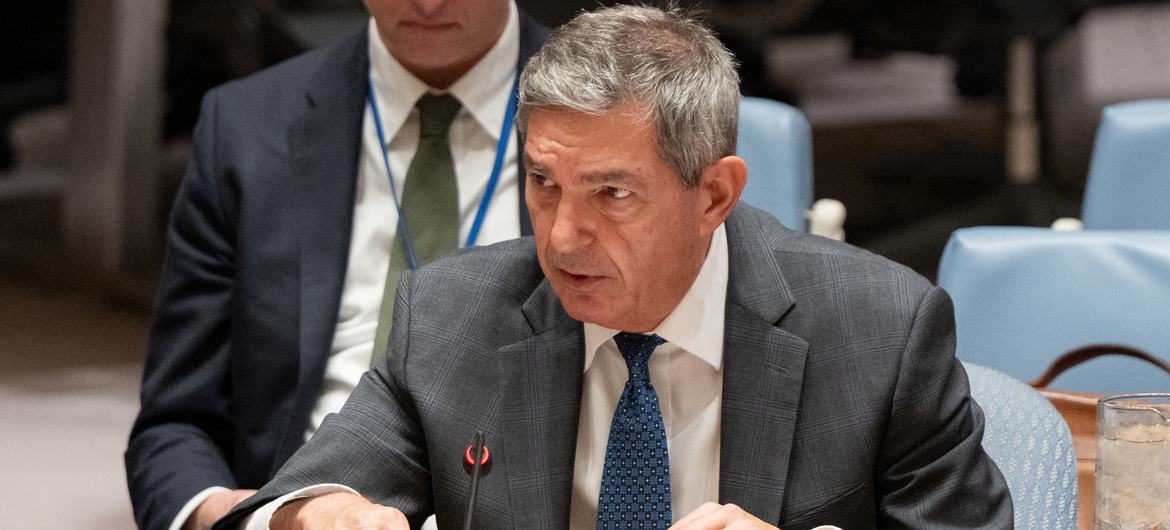
EU Ambassador Stavros Lambrinidis briefs the Security Council as the Coordinator of the Joint Commission established by the JCPOA.
Deal, not force, key to resolution: European Union
Echoing UN appeals for dialogue, the European Union stressed that “a lasting solution to the Iranian nuclear issue can only be through a negotiated deal, not military action.”
Briefing the Council on behalf of EU High Representative Kaja Kallas, Ambassador Stavros Lambrinidis underscored the urgent need “to come back to a diplomatic solution.”
Ensuring that Iran does not acquire or develop a nuclear weapon remains a key security priority for the EU, he said.
He added that Iran’s accelerating nuclear activities and the absence of IAEA oversight – compounded by the economic fallout from US sanctions – have severely undermined the JCPOA, despite sustained EU efforts to preserve it through diplomacy.
Mr. Lambrinidis reaffirmed that diplomacy must prevail, with the IAEA remaining central to monitoring and verification efforts going forward.
US urges Iran to return to talks
Ambassador Dorothea Shea, Acting US Representative, said Iran’s increase in nuclear activity lacked “any credible civilian justification.”
Even after the IAEA Board of Governors found it noncompliant with nuclear safeguards, she noted, “it is regrettable that certain members of this Council have opted to turn a blind eye to, if not encourage, Iranian noncompliance.”
The US “will not turn a blind eye to Iran’s noncompliance and ongoing threat to regional stability,” she continued.
Ambassador Shea said the 21 June “precision operation effectively fulfilled our narrow objective – to degrade Iran’s capacity to produce a nuclear weapon,” after which President Trump coordinated a ceasefire between Iran and Israel.
“In this critical moment,” she concluded, “we must all urge Iran to seize this opportunity for peace and prosperity and abide by its international obligations.”
UK calls ceasefire a first step
UK Ambassador Barbara Woodward welcomed the ceasefire brokered by President Trump but warned that “the situation remains extremely fragile.”
Expressing that “now is the time for a return to diplomacy,” she urged Iran to engage in talks without delay, warning that its nuclear programme has exceeded “any credible civilian justification.”
She said all diplomatic levers will be deployed for a negotiated outcome and to “ensure Iran does not develop a nuclear weapon.”
Iran: Diplomacy can and must resolve differences
Iran’s Ambassador, Amir Saeid Iravani, said that his country “never initiated this war” and that “once the aggressors stopped their attacks, Iran stopped its lawful military response as well”.
Mr. Saeid also expressed his country’s strong commitment to diplomacy as the path through which differences can and should be resolved.
“Iran continues to believe that a diplomatic resolution to nuclear and sanction issues is possible,” Mr. Saeid said.
He called on the Security Council to condemn Israel’s and the United States’ attacks on Iran and their IAEA-protected nuclear facilities and work to ensure that they never happen again.
Ambassador Iravani added that Iran upheld Council resolution 2231 and the JCPOA, and that remedial measures were “fully consistent” with these two instruments.
Israel warns diplomacy with Iran has failed
Israeli Ambassador Danny Danon defended his country’s military operation against Iran, describing it as a necessary move to neutralise a “double existential threat” from Tehran’s nuclear and missile programmes.
He said Israel achieved complete air superiority and removed key regime targets, acting in coordination with the US.
Ambassador Danon accused Iran of deceiving the world for years, using diplomacy as cover to advance its nuclear weapons programme.
“There is still time,” he said, “to take meaningful and decisive action to ensure that the threat of a nuclear Iran does not return stronger than before.”
“We are often told that diplomacy must be given a chance – it was given every chance, every round, every channel, every deadline – but so far it has failed, the regime in Tehran never had any intention of complying.”
Rafael Grossi, head of the International Atomic Energy Agency (IAEA), was addressing the agency’s Board of Governors, amid fresh reports of new Israeli missile strikes on Iranian military sites in Tehran and elsewhere earlier on Monday. Iranian weapons fire has also been reported across Israel.
There is particular concern about 400 kilogrammes of uranium enriched to 60 per cent by Iran.
Under the terms of a 2015 nuclear deal with the international community, Iran is permitted to enrich the naturally occurring radioactive material to less than four per cent.
“Craters are now visible at the Fordow site, Iran’s main location for enriching uranium at 60 per cent, indicating the use of ground-penetrating munitions; this is consistent with statements from the United States,” he told the IAEA Board of Governors. “At this time, no one including the IAEA, is in a position to have fully assessed the underground damage at Fordow.”
Mr. Grossi said that taking into account the highly explosive payload used in the US attacks, “very significant damage is expected to have occurred” to thehighlysensitive centrifuge machinery used to enrich uranium at Fordow.
Several sites hit
Fordow is one of several nuclear-related sites across Iran that are known to have been damaged in the strikes by the United States, including those in Esfahan, Arak and Tehran.
In comments to the UN Security Council in New York on Sunday, the IAEA chief said that although radiation levels remained normal outside these nuclear facilities, deep concerns remained about Iran’s operational nuclear plant at Bushehr.
Any strike on Bushehr could trigger a massive radiation release across the region – “the risk is real”, Mr. Grossi said.
Eleven days after Israel launched air and missile strikes at Iranian military and nuclear sites, some 430 people are believed to have been killed in Iran, most of them civilians.
According to Israeli reports, 25 people have been killed and more than 1,300 injured by Iranian missile strikes.
The UN Secretary-General told the Security Council on Sunday that the bombing of Iran’s nuclear sites by the United States marks a “perilous turn”, warning that the region cannot endure yet another “cycle of destruction.” António Guterres said the must be an immediate ceasefire and returned to “serious, sustained negotiations.” We’ll have live updates from our Meetings Coverage team below and app users can follow here.
According to the World Health Organization (WHO), this sort of large-scale life-saving is possible, if midwifery care is universally accessible and consistent with international standards.
“Expanding and investing in midwifery models of care is one of the most effective strategies to improve maternal and newborn health globally,” said Dr. Anshu Banerjee, director for maternal, child and adolescent health and ageing at WHO.
In a recently released report, WHO outlined how individual countries, with the support of the international community, can mobilise relevant stakeholders and institute policies which support midwives.
Midwifery models of care
Midwives worldwide work diligently to provide a continuum of care to women, including care surrounding sexual and reproductive health, pregnancy, childbirth and postnatal care.
Emphasizing personalized and culturally conscious approaches, midwifery is especially helpful in reducing access barriers for women in rural or conflict-affected regions where hospitals may not be accessible.
“Skilled midwives help women trust in their bodies, their abilities and their care…ensuring women are consistently part of decision making and have access to the information they need,” said Ulrika Rehnstrom Loi, a midwifery expert at WHO.
The WHO report emphasised that midwifery models of care are especially important as concerns of over-medicalisation in childbirth become more pronounced.
“In a world where childbirth is increasingly medicalised, [midwives] offer a person-centered evidence-based approach that respects the physiological process of birth, restores dignity and autonomy to maternity care,” said Anna Ugglas, Chief Executive of the International Confederation of Midwives.
Implementing a global imperative
Currently, the world faces a global shortage of around one million midwives. Concentrated and cross-sectoral action is needed to reverse this shortage.
“Midwifery models of care are not just smart solutions — they are a necessity,” Ms. Ugglas said.
The WHO report outlined that increasing the number of midwives worldwide requires policy action across many sectors, including health and education, in addition to advocacy campaigns.
In Morocco, the Association of Midwives conducted an awareness campaign which distributed flyers and cultivated partnerships with women and civil society organizations.
This campaign ultimately led to legislation in 2016 which defined what midwifery was, the first of its kind in Morocco.
Like the Moroccan example indicates, the report said that policymaking, advocacy and implementation must all happen simultaneously and that each country must adopt an approach which is specific to their context.
“[Midwifery] approaches improve outcomes, maximize resources and can be adapted to all countries,” said Dr. Banerjee.
Case study in rural midwifery
A campaign in the West Bank led by the Palestinian Red Crescent Society, the Palestine Committee of Norway and the Palestinian Ministry of Health worked to address the challenges that women in rural areas face when accessing care.
Through coordinating with hospitals and community members, the campaign expanded midwifery services to six regional hospitals and 37 villages between 2013 and 2016. This led to a 20 per cent decrease in unplanned caesarean sections and a 21 per cent decline in preterm birth rates.
And these were just the short-term effects, but Mr. Banerjee said that expanded midwifery access can have longer-term effects too.
“[Midwifery models of care] also enhance women’s and families’ experiences of care – building trusted partnerships for health at this critical stage of life.”
Any military escalation in the Middle East should be censured, the UN chief said in a short statement issued by his spokesperson’s office.
“He is particularly concerned by Israeli attacks on nuclear installations in Iran while talks between Iran and the United States on the status of Iran’s nuclear programme are underway,” said Farhan Haq, Deputy Spokesperson for the Secretary-General.
In an update on Friday, the head of the UN-backed atomic watchdog announced that the Iranian authorities had confirmed that the Natanz enrichment site had been “impacted” without affecting existing radiation levels.
The Iranian nuclear safety authorities also reported that the Esfahan and Fordow sites had not been impacted.
“This development is deeply concerning,” said Rafael Grossi, head of the International Atomic Energy Agency (IAEA). “I have repeatedly stated that nuclear facilities must never be attacked, regardless of the context or circumstances, as it could harm both people and the environment. Such attacks have serious implications for nuclear safety, security and safeguards, as well as regional and international peace and security.”
According to reports, the Israeli military attacks targeted Iran’s nuclear programme at various sites across the country late Thursday.
Iranian media reported the death of Hossein Salami, chief of the country’s Revolutionary Guards, along with nuclear scientists.
The development comes as the United States was scheduled to begin a fresh round of negotiations with Tehran on Saturday in Oman. Israeli schools closed on Friday in anticipation of a riposte by Iran, with reports that some 100 drones were launched towards Israel in the early hours.
Speaking via videoconference, UN Special Envoy for Yemen Hans Grundberg said the country remains trapped in a prolonged political, humanitarian and development crisis.
“Yemen is so much more than the containment of a threat,” he said. “The cost of inaction is high.”
Mr. Grundberg stressed the urgent need for progress towards a sustainable political solution, calling on all parties to show the will to move beyond the current deadlock.
Meanwhile, over 17 million people, nearly half of Yemen’s population, are estimated to be suffering acute malnutrition.
Without sustained humanitarian support, six million more could face emergency levels of food insecurity, said Joyce Msuya, Assistant Secretary-General of UN humanitarian wing (OCHA), speaking on behalf of Humanitarian Affairs chief Tom Fletcher.
Economic hardships
“Yemeni citizens continue to shoulder the impact of an economy in freefall,” said Mr. Grundberg, calling for more international support to alleviate the humanitarian and economic hardships they face.
Despite operating under extremely difficult conditions, humanitarian efforts in Yemen continue, but the UN’s response remains constrained and far from meeting the scale of need, according to OCHA.
Still, there are signs of progress. “There is real scope to make progress on the economy,” said Special Envoy Hans Grundberg, pointing to the reopening last May of a key road between Aden and Sana’a, closed for nearly seven years, which has restored a faster and more direct route for civilians and commercial traffic.
“With trust and the right tools, there remains hope,” said Deputy Emergency Relief Coordinator Joyce Msuya.
Fragile frontlines
Marking one year since the arbitrary detention by Houthi rebels – or Ansar Allah – of dozens of aid workers, civil society representatives and diplomatic personnel, Mr Grundberg urged Security Council members to use their “powerful voices” to exert maximum pressure on the group for the unconditional release of the detainees.
While attacks on shipping in the Red Sea and counter measures by Western forces have largely abated since a cessation of hostilities agreement between the United States and the Houthi leadership, the group has launched several recent attacks targeting Israel, in solidarity with the Palestinian cause in Gaza.
With multiple frontlines still fragile and the risk of renewed fighting ever-present, the UN continues to work on a roadmap to help Yemen move beyond its divisions, secure a comprehensive ceasefire, implement critical economic measures and advance an inclusive political process.
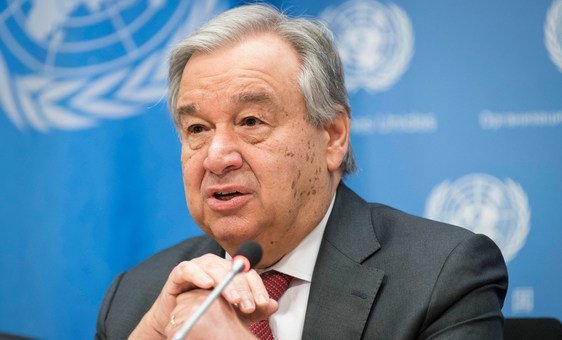
“It is absolutely essential to keep alive the two-State solution perspective with all the terrible things we are witnessing in Gaza and the West Bank,” Mr. Guterres told reporters at UN Headquarters in New York.
He was responding to a question about his message to leaders gathering at a high-level international conference later this month on a comprehensive and lasting peace in the region.
“And for those that doubt about the two-State solution, I ask: What is the alternative? Is it a one-state solution in which either the Palestinians are expelled or forced to live in their land without rights?”
Mandated by the UN General Assembly, the high-level event is aimed at charting an “action-oriented” path toward a comprehensive and lasting peace based on the two-State formula.
The meeting will include thematic roundtables on key issues such as security, humanitarian reconstruction, and the economic viability of a Palestinian state.
The text, endorsed by all ten elected members of the Council, received support from the other four permanent members, but was vetoed by the United States.
“We are always disappointed when ceasefires do not materialise, releases of hostages [do not happen] and humanitarian aid is not distributed or is distributed in a way that puts at risk the lives of so many Palestinians,” he said, responding to another correspondent.
The Secretary-General reiterated that only a permanent ceasefire, the unconditional release of all hostages, and unimpeded humanitarian access would allow the UN to deliver meaningful relief to civilians in Gaza.
He emphasised that during previous temporary ceasefires, the UN was able to mobilise large-scale assistance.
“It is absolutely essential to keep alive the two-State solution perspective with all the terrible things we are witnessing in Gaza and the West Bank,” Mr. Guterres told reporters at UN Headquarters in New York.
He was responding to a question about his message to leaders gathering at a high-level international conference later this month on a comprehensive and lasting peace in the region.
“And for those that doubt about the two-State solution, I ask: What is the alternative? Is it a one-state solution in which either the Palestinians are expelled or forced to live in their land without rights?”
Mandated by the UN General Assembly, the high-level event is aimed at charting an “action-oriented” path toward a comprehensive and lasting peace based on the two-State formula.
The meeting will include thematic roundtables on key issues such as security, humanitarian reconstruction, and the economic viability of a Palestinian state.
The text, endorsed by all ten elected members of the Council, received support from the other four permanent members, but was vetoed by the United States.
“We are always disappointed when ceasefires do not materialise, releases of hostages [do not happen] and humanitarian aid is not distributed or is distributed in a way that puts at risk the lives of so many Palestinians,” he said, responding to another correspondent.
The Secretary-General reiterated that only a permanent ceasefire, the unconditional release of all hostages, and unimpeded humanitarian access would allow the UN to deliver meaningful relief to civilians in Gaza.
He emphasised that during previous temporary ceasefires, the UN was able to mobilise large-scale assistance.
More than 30 people were killed and over 100 wounded while waiting in the early morning to get food from two sites in Rafah and Middle Gaza run by the newly established Gaza Humanitarian Foundation (GHF), according to media reports.
The organization is backed by Israel and the United States and uses private US security contractors supervised by the Israeli military. Aid distributions began at the end of May, bypassing the UN and other humanitarian agencies.
Risking their lives
UN chief António Guterres issued a statement on Monday saying he was “appalled” by the reports.
“It is unacceptable that Palestinians are risking their lives for food,” he said.
“I call for an immediate and independent investigation into these events and for perpetrators to be held accountable.”
He stressed that Israel has clear obligations under international humanitarian law to agree to and facilitate humanitarian aid.
Allow UN operations
“The unimpeded entry of assistance at scale to meet the enormous needs in Gaza must be restored immediately,” he said.
“The UN must be allowed to work in safety and security under conditions of full respect of humanitarian principles.
Meanwhile, the Secretary-General continues to call for an immediate permanent, sustainable ceasefire in Gaza and the immediate and unconditional release of all hostages.
“This is the only path to ensuring security for all. There is no military solution to the conflict,” he said.
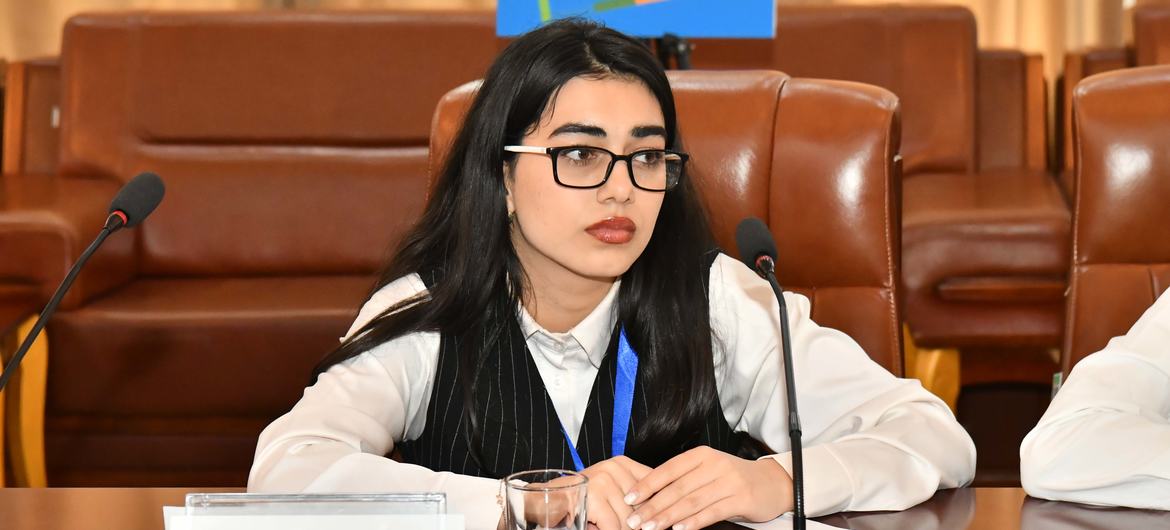
At the end of April, Fariza Dzhobirova attended a Model United Nations Conference on Glaciers’ Preservation in Tajikistan’s capital, Dushanbe, where she represented Switzerland.
For Ms. Dzhobirova, it was a rehearsal of sorts for the actual High-levelConference on Glaciers’ Preservation which began on Thursday in Dushanbe. There, she will serve as a panel member representing her own country.
“The [Model UN] conference gave me a platform to raise my voice, collaborate with like-minded peers from across the region and develop policy recommendations that we hope will influence real-world decisions,” she said.
The High-level Conference on Glaciers’ Preservation, hosted by the Government of Tajikistan and supported by variety of United Nations agencies, will work to underline the extreme urgency of melting glaciers, elevating it as a global climate and development challenge.
Will glaciers survive the 21st century?
Glaciers, alongside ice sheets, account for over 70 per cent of the world’s freshwater resources and are integral to many local economies, providing water, sustaining agriculture and generating energy.
However, due to the increasing temperature of the planet, glaciers are melting at unprecedented rates – scientists predict that if the current rate of melting continues, many glaciers will not survive the 21st century.
In Tajikistan alone, 30 per cent of glaciers have disappeared over the last century, disrupting local and national water supplies and agricultural patterns. And Slovenia and Venezuela have lost all their glaciers.
Just yesterday, one day before the conference was set to begin, a partial glacier collapse in Switzerland buried most of a small village, according to news reports.
“The death of a glacier is more than just the loss of ice,” said World Meteorological Organization (WMO) Secretary-General Celeste Saulo.
Youth voices are the present and the future
Before the conference, Parviz Boboev from the UN ountry team in Tajikistan sat down with Ms. Dzhobirova to discuss what motivates her climate activism.
Fariza Dzhobirova, a young climate activist from Tajikistan, represents Switzerland at a Model United Nations conference on glacier preservation.
Parviz Boboev: What inspired you to get involved in the climate movement?
Fariza Dzhobirova: Growing up in Tajikistan, where more than 90% of our freshwater comes from glaciers, I’ve seen how climate change is already impacting people’s lives. Rivers are shrinking, water is becoming less accessible, and natural disasters like landslides and floods are affecting more and more communities.
I’ve met a family who lost their home because of mudflow. I saw a teenage girl from that family of the same age as me that had totally different problems because of this climate-related disaster. I was thinking about my classes. She was thinking about how to survive.
My message is that young people are not just the future — we are the present, and we are ready to contribute today
And I know there are many examples similar to this – farmers whose land can no longer be irrigated and children whose futures are at risk. Seeing this pain and injustice made it impossible for me to stay silent or uninvolved.
Participating in the upcoming Glaciers’ Preservation conference means a lot to me. It’s about raising the voices of people who are often left out of global discussions. For me, it’s a chance to speak on behalf of my generation and my country, and to show that young people are ready to be part of the solution.
Parviz Boboev: What message do you hope to share at the conference about the impact of climate change on your community and generation?
Fariza Dzhobirova: Being invited to speak is a great responsibility for me. It’s a chance to represent not only Tajikistan, but the voice of a generation.
My message is that young people are not just the future — we are the present, and we are ready to contribute today. Climate change is not only about the environment — it’s about how we live, how we work, how we learn. It affects our opportunities, our mental health, our ability to plan for the future. And yet, many young people are still excluded from decision-making processes.
At the conference, I want to encourage leaders and policymakers to truly listen not just to the facts and data, but to the experiences and hopes of young people. When you give youth a platform, you don’t just invest in their potential — you strengthen the resilience and sustainability of entire communities.
Parviz Boboev: Youth voices are becoming increasingly important in global climate conversations. How do you see the role of young people in shaping solutions?
Fariza Dzhobirova: I truly believe that young people have a unique role to play in shaping more just, inclusive and forward-looking climate solutions. We bring fresh ideas, the courage to question outdated systems and a strong sense of responsibility for the future.
In countries like Tajikistan, where glaciers are directly connected to people’s livelihoods, youth are already stepping up. What we need now is more trust and investment in young people. We don’t expect to solve everything alone, but we do hope to be included — in dialogue, in decision-making, and in designing real solutions.
Protecting glaciers and water resources is not just a technical challenge; it’s a human one. By working together — across generations and borders — we can make our region stronger, more resilient, and more united in the face of climate change.
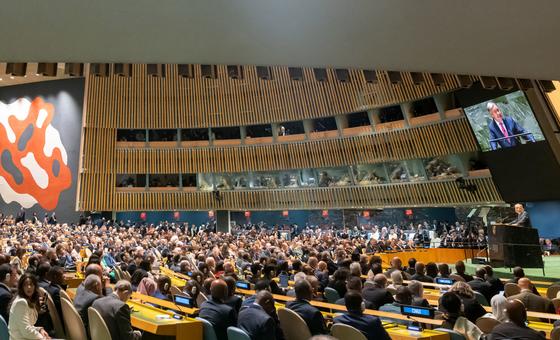
With a growing shortfall in contributions – $2.4 billion in unpaid regular budget dues and $2.7 billion in peacekeeping – the UN has been forced to cut spending, freeze hiring, and scale back some services.
Officials warned that this risks eroding the UN’s credibility and its capacity to fulfil mandates entrusted to it by Member States.
Switzerland, speaking also on behalf of Liechtenstein, said the issue goes beyond accounting. “Each delay in payment, each hiring freeze, each cancelled service chips away at trust in our ability to deliver,” the delegate said.
Retain unspent funds as ‘protective buffer’
One proposed solution is to allow the UN to temporarily keep unspent funds at year’s end, instead of returning them to Member States as credits. Currently, this return is mandatory – even if the funds arrive late in the year, giving the UN little time to spend them.
The suggested change would act as a buffer to keep operations running, particularly in January when payments tend to lag.
Delegates also backed limited use of “special commitments” — emergency funding tools — early in the year to bridge gaps caused by delayed contributions.
While these fixes may help, several speakers, including those from Kazakhstan, Norway, and the United Kingdom, emphasized that the root cause is the continued late or non-payment of dues.
Norway noted such temporary measures won’t solve the underlying problem and urged Member States to support bold financial reforms.
‘Real operational risks’
The European Union stressed that the crisis is not abstract. “These are real operational risks,” its delegate said, adding that the burden cannot fall solely on countries that pay on time.
Singapore, speaking for the Southeast Asian group of nations, ASEAN, echoed concern that the UN’s liquidity problems have become routine.
He cited the UN Economic and Social Commission for Asia and the Pacific’s (ESCAP) need to shut its offices for three months and suspend travel and hiring.
Particularly troubling to many was the fact that one country – unnamed in the meeting but widely known to be the United States – is responsible for over half of all unpaid dues, reportedly withholding funds for political reasons.
Russia called for more transparency in how the UN manages cash-saving measures, cautioning against actions taken without Member State input.
Paying dues
Catherine Pollard, the UN’s top management official, noted that since 9 May, a handful of countries have paid in full across several budget categories, while the number of nations who have paid in full for the regular budget stands at 106 for the year.
Still, with only 61 countries having met all their obligations in full, the message from Member States was clear: without broad, timely financial support, the UN’s ability to serve the world – especially in times of crisis – is at serious risk.
For full coverage of all meetings at the General Assembly, Security Council and elsewhere at UN Headquarters please visit our Meetings Coverage Section here. You can find the full report on this meeting, here.
Mr. Fletcher began his remarks by asking the international community to reflect on what it will tell future generations about action taken “to stop the 21st century atrocity to which we bear daily witness in Gaza.”
He wondered, for example, if “we will use those empty words: ‘We did all we could,’” and urged the Council to act decisively to prevent genocide from happening.
Shrinking spaces, overwhelmed hospitals
In addition to the aid blockade, civilians in Gaza have again been forcibly displaced and confined into ever-shrinking spaces, he said, as 70 per cent of the territory is either within Israeli-militarized zones or under displacement orders.
Furthermore, the few remaining hospitals are overwhelmed, and medics cannot stem the trauma and the spread of disease.
“I can tell you from having visited what’s left of Gaza’s medical system that death on this scale has a sound and a smell that does not leave you,” he said.
“As one hospital worker described it, ‘children scream as we peel burnt fabric from their skin.’”
We can save lives
Mr. Fletcher stressed that the UN and partners are desperate to resume humanitarian aid across Gaza, and the recent ceasefire showed that they can deliver. Meanwhile, lifesaving supplies are waiting to enter the enclave.
“We can save hundreds of thousands of survivors. We have rigorous mechanisms to ensure our aid gets to civilians, and not to Hamas,” he insisted.
“But Israel denies us access, placing the objective of depopulating Gaza before the lives of civilians,” he said.
“It is bad enough that the blockade continues. How do you react when Israeli Ministers boast about it? Or when attacks on humanitarian workers and violations of the UN’s privileges and immunities continue, along with restrictions on international and non-governmental organizations.”
Reject ‘cynical’ US-Israeli aid alternative
Mr. Fletcher recalled that Israel has clear obligations under international humanitarian law, and as the occupying power must agree to aid and facilitate it.
“For anyone still pretending to be in any doubt, the Israeli-designed distribution modality is not the answer,” he stated, noting that among other things, the plan “makes starvation a bargaining chip.”
“It is cynical sideshow. A deliberate distraction. A fig leaf for further violence and displacement,” he told ambassadors. “If any of that still matters, have no part in it.”
He also addressed the increasing violence in the West Bank, where the situation is the worst in decades, with entire communities destroyed and refugee camps depopulated.
Insist on accountability
Mr. Fletcher noted that international humanitarian workers have been the only international civilian presence in Gaza over the past 19 months, and they have briefed the Council on what they witness daily.
“We have described the deliberate obstruction of aid operations and the systematic dismantling of Palestinian life, and that which sustains it, in Gaza,” he said.
The International Court of Justice (ICJ) is now considering whether a genocide is taking place there and “will weigh the testimony we have shared. But it will be too late,” he warned.
He said the ICJ has recognized the urgency and indicated clear provisional measures that should have been acted on – but Israel has failed to do so.
Moreover, previous reviews of the UN’s conduct in cases of large-scale violations of international human rights and humanitarian law have pointed to the collective failure to speak to the scale of violations while they were being committed.
“For those killed and those whose voices are silenced: what more evidence do you need now?” he asked. “Will you act – decisively – to prevent genocide and to ensure respect for international humanitarian law? Or will you say instead, ‘we did all we could?’”.
He told the Council that the degradation of international law is corrosive and infectious, and it is undermining decades of progress on civilian protection.
“Humanity, the law, and reason must prevail,” he said. “This Council must prevail. Demand this ends. Stop arming it. Insist on accountability.”
Fear future judgement
Mr. Fletcher called for Israel to stop killing and injuring civilians, and to lift the brutal blockade so that humanitarians can save lives.
He urged Hamas and other Palestinian armed groups to release all hostages immediately and unconditionally, and to stop putting civilians at risk during military operations.
“And for those who will not survive what we fear is coming – in plain sight – it will be no consolation to know that future generations will hold us in this chamber to account. But they will,” he said.
“And, if we have not seriously done “all we could’, we should fear that judgement.”
The UN chief warned that any further escalation of the conflict could result in massive civilian casualties and worsen the already catastrophic humanitarian situation across the country.
“The expansion of the conflict into an area that has served as a place of refuge for a large number of displaced people is alarming,” he said in a statement issued by his Spokesperson’s office.
Mr. Guterres’s appeal follows days of drone strikes on key infrastructure in Port Sudan that have opened a new front in the fighting between forces of the military government and heavily armed paramilitaries.
The city is a main entry point for relief supplies, hosting airports and direct access to the Red Sea. It is also a shelter for hundreds of thousands of displaced people and the seat of government after generals lost control of the capital Khartoum to the Rapid Support Forces (RSF).
Aid flights suspended
In response to the drone attacks, flights of the UN Humanitarian Air Service (UNHAS) to and from Port Sudan have been suspended since 4 May.
The UN World Food Programme (WFP) which manages the airline said that operations will resume as soon as conditions allow. For the moment, amid reported gun and weapons fire overnight, the insecurity has impacted the movement of aid workers into Sudan and across the country.
A country in flux
Drone strikes have also been reported elsewhere in Sudan, including the states of Kassala and River Nile. In Kassala, strikes near the airport displaced about 2,900 people and led to the temporary suspension or relocation of some aid activities, according to the UN aid coordination office, OCHA.
As of Wednesday evening, River Nile State was still without power following a drone strike on the transformer station in Atbara on 25 April. The outage has contributed to growing fuel and bread shortages and long queues at petrol stations and bakeries.
The situation remains dire across Sudan, the UN chief continued, citing intense attacks on critical infrastructure since January that have hampered people’s access to essential services and left them without food, clean water, healthcare and electricity.
“All parties to the conflict must comply with their obligations under international humanitarian law,” Mr. Guterres insisted. “They must not direct attacks against civilians and civilian objects; must take all feasible precautions to avoid, and in any event to minimize, incidental civilian casualties; and must allow and facilitate rapid and unimpeded passage of humanitarian relief for civilians in need.”
Sudan’s war stems from the breakdown in the transition to civilian rule following the overthrow in April 2019 of Omar al-Bashir, who had been president for 30 years.
Mr. Guterres decried a “lack of political will” by the warring parties to engage in constructive dialogue as they pursued their military goals.
“Dialogue is the only way to achieve the peace that the people of Sudan demand,” the Secretary-General insisted.
A hunger catastrophe
The turmoil caused by relentless heavy fighting across Sudan has reportedly killed more than 18,800 civilians and injured tens of thousands more. UN aid agencies say that the country’s people are in the grip of the largest hunger catastrophe on the planet.
Today, more than half of Sudan’s population – 30.4 million people – need humanitarian assistance, including more than 15 million children. They lack access to food, water, shelter, electricity, education and healthcare, aid veterans have warned repeatedly.
“Across Sudan, 25 million people face acute hunger,” WFP spokesperson Leni Kinzli told UN News. “And people are displaced across the country, nearly 13 million people forced from their homes. We are seeing waves of displacement in North Darfur,where around 450,000 people have fled horrific levels of violence.”
Reaching those in need
Despite the dangers, UN agencies and partners are doing everything they can to reach the most vulnerable uprooted by intensifying attacks on government-controlled El Fasher town and Zamzam displacement camp.
“We’ve distributed assistance food assistance and emergency food packages to 335,000 people who recently fled that violence in and around El Fasher,” Ms. Kinzli explained. “We are also ramping up assistance in Khartoum, aiming to support one million people across the coming month.”
Distributions are ongoing in Jabalia, in the South of Khartoum, which is one of the risk of famine areas, as well as the central Khartoum neighbourhood of Burri, “where we finally reached the centre of the city…just last week”, the WFP officer noted.
To reach 21 million people in desperate need this year the UN needs $4.2 billion which is only seven per cent funded.
And over the next six months, WFP requires around $700 million to ramp up assistance and expand assistance to seven million people per month.
In a note to correspondents issued by his spokesperson on Tuesday, Secretary-General António Guterres called for military restraint from both countries.
“The world cannot afford a military confrontation between India and Pakistan,” the note said.
On Monday, the Secretary-General had warned that the tensions between the two South Asian neighbours had reached “their highest in years.”
He offered his good offices to both governments to help defuse tensions and promote diplomacy, stressing that “a military solution is no solution.”
Addressing journalists outside the Security Council at UN Headquarters in New York, Mr. Guterres expressed deep concern over deteriorating relations between the two South Asian neighbours, saying they had reached “their highest in years.”
He reiterated his condemnation of the 22 April terror attack in the Pahalgam area of Jammu and Kashmir, which killed at least 26 civilians and injured many more.
“Targeting civilians is unacceptable – and those responsible must be brought to justice through credible and lawful means,” Mr. Guterres said.
“It is also essential – especially at this critical hour – to avoid a military confrontation that could easily spin out of control.”
The Security Council is due to meet behind closed doors later on Monday to discuss the rising tensions between the two nations.
UN ready to help de-escalate
He offered his good offices to both governments to help defuse tensions and promote diplomacy, stressing that “a military solution is no solution.”
“Now is the time for maximum restraint and stepping back from the brink,” he said.
Mr. Guterres also praised both countries for their long-standing contributions to UN peacekeeping operations and expressed hope that their shared history of cooperation could form the basis for renewed dialogue.
“The United Nations stands ready to support any initiative that promotes de-escalation, diplomacy, and a renewed commitment to peace,” he said.