World News in Brief: Houthi-Israel tensions, Sudan cholera cases rise, deadly attacks in Ukraine

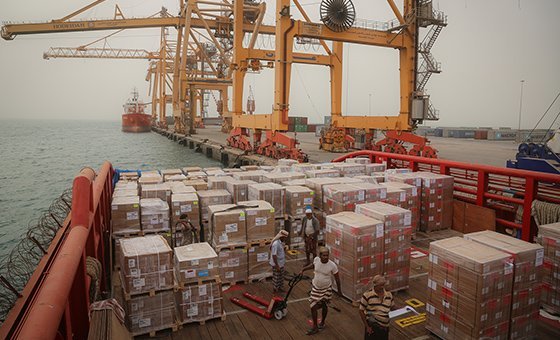
These strikes occurred while the UN Mission to support the Hudaydah Agreement – established in 2018 to support the ceasefire between the Government of Yemen and the Houthis – was patrolling at locations to the northern parts of the Port. 

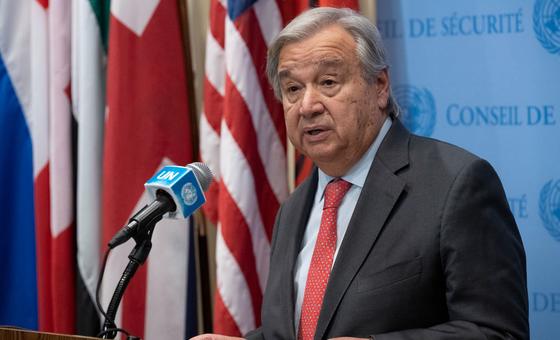
The Secretary-General also expressed deep concern about the continuing missile and drone strikes conducted by the Houthis against Israel. 

Risk of further escalation

Concerned about the risk of further escalation, the UN recalled that international law, together with international humanitarian law, must be respected by all parties at all times, including the obligations to respect and protect civilian infrastructure. 

“The Secretary-General remains profoundly concerned about the risk of further escalation in the region,” said Mr. Dujarric. 

As the UN Chief reiterated his call for “all involved to cease all military actions and exercise maximum restraint,” he also renewed his call for the immediate and unconditional release of all UN and other personnel arbitrarily detained by the Houthi authorities. 

Sudan: Crisis worsens as cholera and floods drive needs higher  

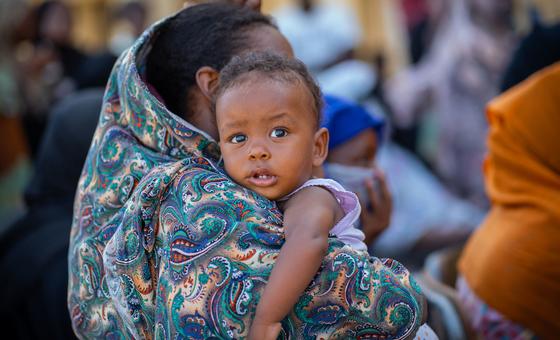
The humanitarian crisis in Sudan continues to deepen as cholera spreads, flooding displaces communities, and thousands of people return to areas with little to no support, according to the UN Office for the Coordination of Humanitarian Affairs (OCHA).

In the locality of Tawiola, in North Darfur State, over 1,300 confirmed cases of cholera in just one week were reported on Sunday by an association of Sudanese doctors. 

While local and international partners have set up cholera treatment centres, the current capacity is far from sufficient to cope with the rising caseload.  

As Tawila hosts several hundred thousand displaced people, partners on the ground have been struggling to keep pace with the growing needs, notably as such needs are set to increase as the upcoming rainy season sets in. 

Vulnerable returnees 

Across Sudan, people returning to their communities face serious challenges, including the lack of essential services and the threat posed by explosive remnants of war. 

In White Nile State, some residents have begun returning after being displaced for a year. Yet, an assessment by OCHA and its partners last week found that health, water, sanitation and hygiene support is urgently needed, even more so ahead of the rainy season.

Similarly, in eastern Sudan, OCHA warns that many families returning to Kassala State are struggling to cope with the impact of heavy rains and flooding, as heavy rains destroyed more than 280 homes in the village of Tirik earlier in July. 

Additionally, as insecurity continues to impede the work of humanitarians, challenges faced by returnee families often lead them to return to displacement sites, undermining the sustainability of return efforts. 

In this context, OCHA called for increased international support to meet soaring needs across Sudan. 

Ukraine: At least 20 civilians reportedly killed in recent attacks  

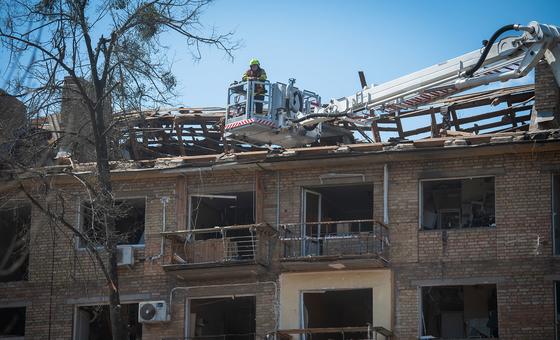
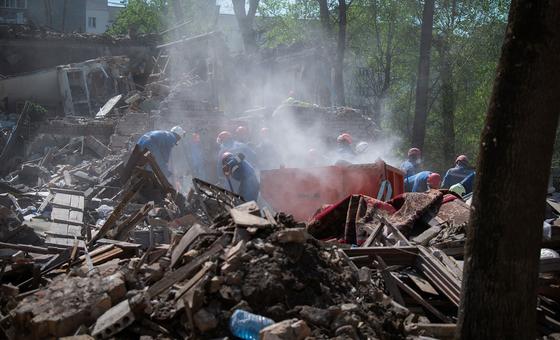
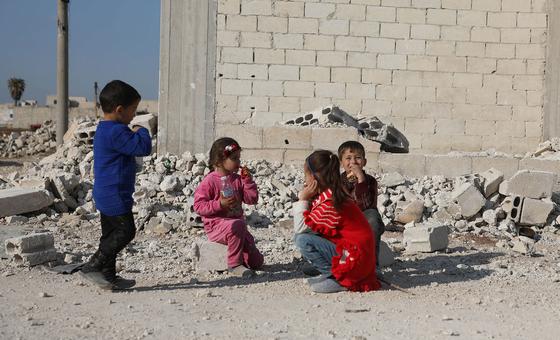
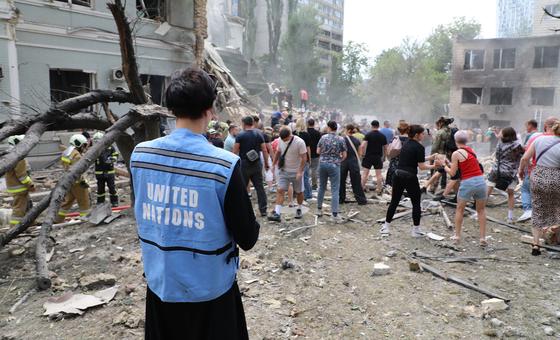
In Ukraine, attacks over the weekend and into Monday reportedly killed over 20 civilians and injured more than 100 others, including several children, according to authorities.

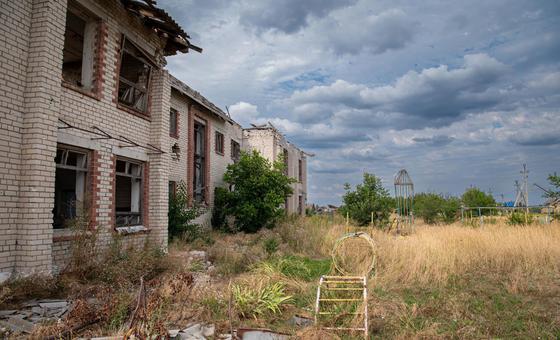
The strikes affected the capital Kyiv, as well as western and front-line regions, damaging homes, schools, and a health facility.

In Kyiv, a kindergarten, metro stations, shops and residential buildings were hit. 

The Ivano-Frakivsk region in western Ukraine which hosts many displaced people and had previously been less affected by hostilities, suffered the largest attack since the full-scale Russian invasion in February 2022.  

Frontline regions  

Meanwhile, in areas near the frontlines in the Donetsk, Dnipro and Kherson regions, hostilities caused civilian casualties and further damage to schools, a health facility, and apartment buildings. Odesa, Kharkiv, Sumy and other regions also reported that homes and shops were destroyed.  

With support from UN agencies, and coordinating with local authorities and first respondents, humanitarian organizations on the ground continue to provide shelter materials, non-food items, legal aid, psychosocial support and assistance for children across the country.  

Source link

Sudan: UNICEF condemns weekend attacks that killed 35 children

At least 24 boys, 11 girls and two pregnant women reportedly were among the victims of the violence, which occurred over the weekend in communities around the city of Bara, including the villages of Shag Alnom and Hilat Hamid. 

UNICEF fears that with dozens more injured and many still missing, the number of child casualties could rise further.

‘A complete disregard for human life’

“These attacks are an outrage,” Executive Director Catherine Russell said in a statement issued on Tuesday.

“They represent a terrifying escalation of violence, and a complete disregard for human life, international humanitarian law, and the most basic principles of humanity.”

Former allies turned rivals – the Sudanese Armed Forces (SAF) and the paramilitary Rapid Support Forces (RSF) – have been battling for control of the country since April 2023 and fighting has intensified recently in the Kordofan region which encompasses three states.

End the violence now

“UNICEF condemns the attacks in the strongest possible terms,” said Ms. Russell.

She called on all parties to end the violence immediately and to uphold their obligations under international law, including international humanitarian law, as well as the principles of distinction, proportionality and precaution.

The UNICEF chief stressed that civilians – particularly children – must never be targeted. Furthermore, all alleged violations must be independently investigated, and those responsible held to account.

Impunity cannot be tolerated for violations of international law, especially when children’s lives are at stake,” she said.

Ms. Russell extended the agency’s deepest condolences to the families of the victims, and to anyone impacted by this heinous violence.

No child should ever experience such horrors,” she said. “Violence against children is unconscionable and must end now.” 

Source link

Ukraine: Civilians under fire in record numbers as attacks surge

According to the UN human rights office, OHCHR, at least 139 civilians have been killed and 791 injured so far in July alone.

“The devastating physical and psychological impact on civilians of repeated attacks in this and other conflicts cannot be captured by numbers alone,” said OHCHR spokesperson Liz Throssell on Tuesday.

Escalating attacks

On the night of 12 July, Russian forces reportedly launched nearly 600 Shahed-type unmanned attack and decoy drones, along with 26 missiles, killing two civilians and injuring 41.

Damage was reported across multiple regions, including Chernivtsi, Lviv, Cherkasy, Volyn and Kirovohrad – all far from active combat zones. Earlier that same week, Russian forces reportedly launched a record-breaking 728 long-range drones in a single 24-hour period.

June marked the deadliest month for civilians in over three years.

“People are having to spend hours sheltering (…) in basements, corridors and available refuges such as metro stations,” said Ms. Throssell. “In some cases, they’re unable to get to shelter at all.”

Health under pressure

The UN World Health Organization (WHO) meanwhile has verified 2,504 attacks on health facilities and personnel in Ukraine since the start of the full-scale invasion by the Russian Federation on 24 February 2022.

These strikes have hit hospitals, ambulances and first responders, including in so-called “double tap” attacks where secondary strikes follow the initial impact.

“This means more than two attacks every day…Healthcare is not a safe place for patients and healthcare workers,” said Dr. Jarno Habicht, WHO Representative in Ukraine.

Access to healthcare remains especially limited in frontline areas, where personnel and supplies are scarce.

Only 69 per cent of residents in those areas have seen a primary care doctor, compared to 74 per cent nationally. WHO mobile teams operating in 82 locations have conducted more than 7,500 consultations in 2025 so far.

The psychological toll is also wearing people down. A recent assessment found that seven out of 10 people reported anxiety, depression or severe stress over the last 12 months, while one in two said they had experienced significant stress in just the past two months.

To address this, WHO and national partners have trained more than 125,000 health workers and expanded mental health services through more than 220 community resilience centres.

Despite continued deliveries of trauma kits and medical supplies by UN and humanitarian partners, the response remains critically underfunded. As of mid-July, only 35.5 per cent of the required $129 million for 2025 has been secured, leaving more than two million people without adequate medical support.

Call for accountability

In Geneva, Ms. Throssell highlighted the UN human rights chief’s calls for an immediate end to hostilities and for efforts toward a just and lasting peace.

“The Russian Federation’s full-scale armed attack on Ukraine must urgently be halted and work on a lasting peace in line with international law must intensify,” Volker Türk said in a statement.

The High Commissioner emphasized that any sustainable solution must include accountability for serious human rights violations, the return of deported children, protection for civilians in occupied areas, humane treatment of prisoners of war, and restoration of humanitarian corridors.

Source link

UN chief condemns latest Houthi attacks on Red Sea shipping

According to news reports, the Yemen-based rebel group – which has been battling the internationally-recognised Government for control of the country since the early 2010s – attacked the Liberian-flagged, Greek-operated Eternity C on Monday and again on Tuesday, causing it to sink on Wednesday morning.

Four crew members are reported to have died.

With 15 crew still missing as of Friday, the group also reportedly took an unspecified number of the seafarers to what rebels described as a “safe location.”

Weekend assault

This came after the Houthis launched missiles and drones at another Liberian-flagged, Greek-operated cargo ship in the Red Sea on Sunday, Magic Seas. The crew was forced to abandon ship, but all 22 members were rescued, according to reports.

Since the start of the war in Gaza in October 2023, the Houthis have targeted Israeli and commercial ships in the Red Sea deemed to be en route to Israel, in solidarity with Palestinians in the enclave.

In May, following US airstrikes on Houthi strongholds and missile infrastructure, the group agreed a deal with Washington to stop targeting US warships – however, they did not pledge to end attacks on other vessels allegedly linked to Israel.

Strong condemnation: Guterres

UN Spokesperson Stéphane Dujarric read a statement from Secretary-General António Guterres on Friday at UN Headquarters, saying the UN chief “strongly condemns the resumption of Houthi attacks on civilian vessels transiting the Red Sea, especially the attacks that took place over 6 to 8 July 2025.”

Mr. Guterres said the “unacceptable” attacks endangered the safety and security of crewmembers, violated freedom of navigation, disrupted maritime transport, and posed serious environmental, economic, and humanitarian risks.

Mr. Guterres also emphasised that international law must be respected by all parties, stressing that UN Security Council resolution 2768 related to Houthi attacks against merchant and commercial vessels must be fully respected.

The United Nations remains committed to continuing its efforts towards broader de-escalation in the region as well as continued engagement with Yemeni, regional and international actors to secure a sustainable and peaceful resolution to the conflict in Yemen,” he concluded.

Source link

Short-range drone attacks deepen crisis on Ukrainian frontlines

According to the rights mission, while the majority (89 per cent) of civilian casualties were documented in Ukrainian-controlled territory as a result of attacks by the Russian armed forces, the remaining occurred in territory occupied by Russian authorities, including in attacks that struck public transport and clearly marked ambulances.

While individually less destructive than artillery or missiles, “the sheer scale and increasing frequency of short-range drone attacks have made them one of the deadliest weapons in Ukraine,” said Danielle Bell, Head of HRMMU.

Not compliant with laws of war

Forcing residents to drastically restrict their movements, limiting access to essential goods and affecting livelihoods, the large number of short-range drone attacks exacerbated an already dire humanitarian situation.

Most short-range drones have on-board cameras that provide operators with a real-time view of potential targets.

However, the high number of civilian casualties resulting from drone attacks suggests that these weapons have been deployed in ways that violate international humanitarian law, in particular the principles of distinction and precaution, HRMMU noted.

In some instances, drone operators appear to have intentionally attacked civilians or civilian objects, including medical transport and personnel, which would amount to war crimes, it added.

“It is clear that these weapons are not being used in compliance with the laws of war,” Ms. Bell said.

Call for accountability

Information verified by the mission showed that the number of civilian casualties from short-range drones steadily increased in late 2023 and early 2024, before spiking in July 2024 and reaching record numbers in April 2025.

Casualties continued in May and June, such as during a strike on a minibus in Kostiantynivka, Donetsk region, on 23 June, in which the 65-year-old driver was killed.

On 22 May, a 58-year-old woman, a local volunteer, was killed in a frontline village in Kharkiv region when a drone dropped a munition on the balcony of a two-story residential building, according to the HRMMU.

“Each of these attacks must be investigated,” Ms. Bell said.

“Those responsible for targeting civilians and humanitarian personnel must be held to account.”

Source link

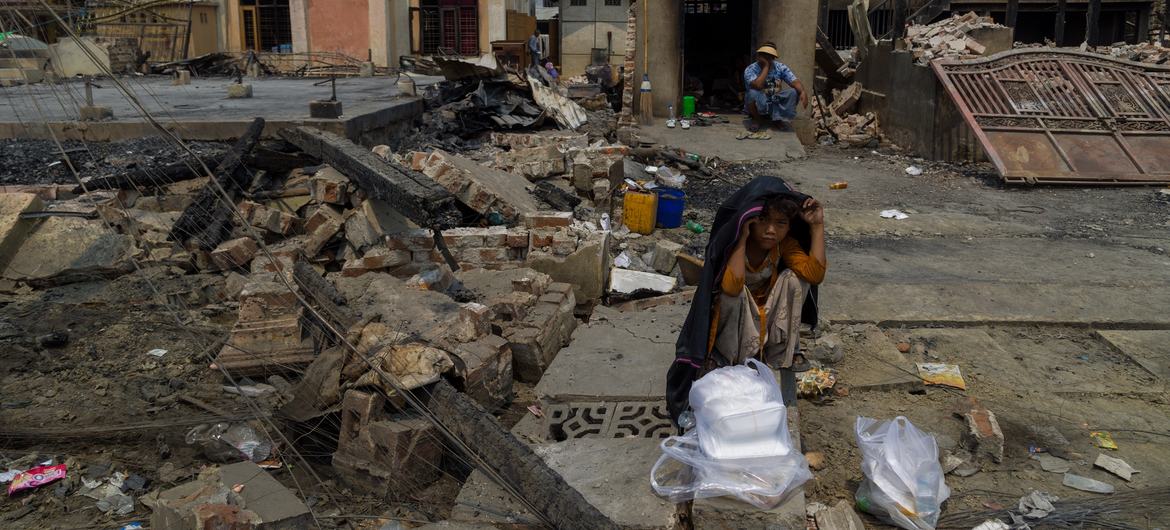
Myanmar human rights crisis deepens as aid collapses, attacks intensify

In a stark briefing to the Human Rights Council in Geneva, UN High Commissioner for Human Rights Volker Türk described a country gripped by war, repression and deepening suffering.

Since the military coup in February 2021, nearly 6,800 civilians have been killed and over 22,000 remain arbitrarily detained, he said. Humanitarian needs have soared, with nearly 22 million people in need of assistance and more than 3.5 million displaced by conflict.

“The report I am presenting today is about the people of Myanmar and their aspirations for a better future,” Mr. Türk said.

Despite massive challenges, people from across society are striving to build a peaceful, sustainable, democratic and diverse Myanmar, grounded in human rights.

A crisis worsened

However, conditions on the ground have only worsened.

Following a 28 March earthquake that killed nearly 4,000 people and left six million in urgent need, the military intensified attacks instead of facilitating relief, Mr. Türk said.

The UN human rights office, OHCHR, documented more than 600 military strikes since the quake – 94 per cent of them occurring during supposed ceasefires – with schools, religious sites and other protected locations frequently targeted.

Situation in Rakhine

The situation in Rakhine state remains particularly dire, with civilians – the minority Muslim Rohingya in particular – caught between the Myanmar military and the Arakan Army, an ethnic armed group. In addition, the military’s ongoing obstruction of humanitarian access has worsened an already acute crisis.

Throughout the country, economic collapse and the breakdown of public institutions have compounded the suffering.

Nearly four in five people now live below or just above the poverty line and an estimated 1.3 million have fled the country – many undertaking perilous journeys by land and sea. So far in 2025, nearly one in five people attempting sea crossings in the region have been reported dead or missing.

End violence, ensure accountability

The High Commissioner’s report outlined four key pathways to lay the groundwork for a transition toward a peaceful and democratic Myanmar: justice and accountability, democratic governance; economic reform to serve the people, and sustained international engagement.

Mr. Türk stressed that accountability must begin with the release of all political prisoners and prosecution of those responsible for grave human rights violations.

“It is imperative for the military to immediately end the violence, allow unhindered humanitarian access and release all arbitrarily detained people,” he said.

Amid the turmoil, planning for a future with human rights front and centre offers people a sense of hope. We owe it to the people of Myanmar to make that hope a reality.

Millions have lost their homes and livelihoods due to the earthquakes that struck Myanmar in late March.

Independent expert’s alarm

Tom Andrews, the UN Special Rapporteur on the situation in Myanmar, echoed the High Commissioner’s warnings, raising alarm over a collapse in international humanitarian support and the military’s repression.

“The junta has chosen to use aid as a weapon,” he told the Council.

“I have spoken with humanitarian workers physically blocked at checkpoints and received reports of earthquake survivors evicted from shelters with no place to go.”

Mr. Andrews, who has been appointed and mandated by the Human Rights Council and is not a UN staff member – also warned that drastic cuts in international funding have already had severe consequences.

As of 27 June, the $1.14 billion comprehensive humanitarian response plan for the country is only 12 percent funded and the $275 million addendum for the earthquake response is about 37 per cent.

At a time when the people of Myanmar need an enhanced level of support from the international community, they are getting the opposite, Mr. Andrews said, warning that the cost in human lives and human suffering will soon very likely get “significantly worse.”

This dangerous trend begs the question – do human rights matter?” he asked.

Because if human rights matter, if saving the lives of children in Myanmar matters, why are so many governments reluctant to invest even a modest amount of resources to save lives?

Source link

Ukraine: Security Council hears of escalating attacks, diplomatic developments

“As we are facing renewed escalation on the ground and crisis elsewhere, it is critical to maintain focused attention on the urgent need for peace in Ukraine,” said UN Assistant Secretary-General Miroslav Jenča – one of two senior officials briefing the ambassadors.

In the three weeks since the Council last met on Ukraine, Russia has carried out unrelenting large-scale attacks on cities and towns, resulting in a significant rise in civilian casualties.

Deadly Kyiv attack 

A combined drone and missile attack on the capital Kyiv overnight on 16-17 June was one of the deadliest there in a year. At least 28 civilians were killed and more than 130 injured. Many others are still reported missing under the rubble of the 35 apartments destroyed that night.

Attacks also reportedly occurred in Odesa, Zaporizhzhia, Chernihiv, Zhytomyr, Kirovohrad, Mykolaiv and Kyiv provinces that same night, with two civilians reportedly killed and scores injured in Odesa. 

“These levels of death and destruction risk dimming hope for an immediate ceasefire and threaten to undermine prospects for a lasting peace,” he said. 

‘Dramatic increase’ in casualties

Data from the UN human rights office, OHCHR, reveals that at least 13,438 civilians, including 713 children, have been killed since Russia launched its full-scale invasion of Ukraine in February 2022. Another 33,270 civilians have been injured, including over 2,000 children.

The number of civilian casualties in the first five months of this year alone totaled 5,144 – nearly 50 per cent higher than in the same period in 2024. Of this number, 859 were killed and 4,285 injured. 

“This dramatic increase is a result of intensified use of long-range weapons, both missiles and loitering munitions, against cities across Ukraine,” said Mr. Jenča. 

Ukrainian authorities report that between 1 and 17 June, Russian forces launched at least 3,340 long-range drones, including loitering munitions and decoy drones, and 135 missiles into the country. This compares to 544 long-range munitions launched during the whole of June 2024.

Attacks reported in Russia 

Escalating violence also continues to be reported in Russian regions that border Ukraine, though at a far lower level.  

In the Kursk region, a woman died in hospital a day after being injured in a Ukrainian drone attack while a man was killed, and five others injured, in a strike on a recreational centre. The UN was not able to verify these reports. 

“Let me once again unequivocally state – attacks against civilians and civilian infrastructure are strictly prohibited under international humanitarian law, wherever they occur,” said Mr. Jenča, reiterating the UN’s condemnation.

Diplomatic developments welcomed 

Meanwhile, “important diplomatic developments have taken place on the challenging path towards a lasting peace in Ukraine.”  

Ukrainian and Russian delegations held their second face-to-face meeting in Istanbul on 2 June.  They reportedly exchanged written memoranda outlining their respective visions for a ceasefire and parameters for a future peace settlement. 

The sides also reached agreement for the large-scale exchange of prisoners of war, mortal remains and civilian detainees. Swaps have been carried out since then, with the latest round taking place earlier on Friday. The mortal remains of 6,057 Ukrainian and 78 Russian servicepersons also have been returned as of 16 June.

“We welcome the continuation of all meaningful diplomatic efforts, including the recent talks in Istanbul. We urge the sides to make tangible progress towards a ceasefire and a lasting settlement through continued talks,” said Mr. Jenča.

In the face of escalation, he called for redoubling efforts “to ensure that the fragile diplomatic process is not only sustained but becomes irreversible.”

Civilians bear the brunt

In the meantime, civilians continue to bear the severe consequences of the war, said Edem Wosornu, Director of Operations at the UN Office for the Coordination of Humanitarian Affairs (OCHA).

“As the war continues, millions of lives are impacted every day. Essential  services are disrupted, and vulnerabilities are deepening for nearly 13 million people in need of assistance,” she said.

Roughly 3.7 million people are displaced inside Ukraine, including 60,000 newly displaced from frontline regions since January alone. Almost six million citizens are now refugees, mainly in Europe.

Amid the intensifying hostilities, the Government continues to order the mandatory evacuation of families with children from front-line villages, she said.  However, for some people in these locations “attacks are so frequent  that evacuations themselves become a risky prospect.”

Humanitarians at risk

Ms. Wosornu noted that humanitarians also face growing threats. This year, two aid workers have been killed and 24 injured while delivering assistance, and some 68 incidents of violence impacting relief personnel, assets and facilities have been recorded. 

She said that “despite an operating environment beset by multiple risks and challenges,” humanitarians remain committed and engaged, and their operations continue. Between January and May, they reached some 3.4 million people with life-saving aid, including food, water, medicines, health services and livelihood support.

Humanitarians are seeking $2.6 billion for Ukraine this year, and $816 million, has been secured, she said, stressing the importance importance of “timely financial support”.

End the war

Ms. Wosornu concluded her remarks by renewing earlier calls for the Council to take urgent, collective action in three areas, including protecting civilians and ensuring safe humanitarian access to all in need.  

Ambassadors were also urged to ensure sustained financial support as “declining funding trends” threaten aid efforts.

Her final request was an appeal to “end this war, and until then, ensure that humanitarian concerns are a central part of discussions on a pause in fighting or longer-term agreement.” 

Source link

World News in Brief: Global growth slows, deadly Ukraine attacks, Haiti hurricane hunger risk, legal migration for refugees

Growth is projected to weaken to 2.3 per cent, or nearly half a percentage point lower than expected at the start of the year, according to the Global Economic Prospects report.

“The global outlook is predicated on tariff rates close to those of late May prevailing,” it said.

“Accordingly, pauses to previously announced tariff hikes between the United States and its trading partners are assumed to persist.”

Although a global recession is not expected, average global growth is on track to be the slowest of any decade since the 1960s.

Poor countries suffer

Growth forecasts are being slashed in nearly 70 per cent of all economies, with the poorest countries most affected.

In most developing countries, nearly 60 per cent, growth should average 3.8 per cent in 2025 before reaching an average 3.9 per cent in the following two years – more than a percentage lower than the average in the 2010s.

The slowdown will impact efforts by developing countries in areas such as job creation, poverty reduction and closing income gaps with richer economies.

“The world economy today is once more running into turbulence. Without a swift course correction, the harm to living standards could be deep,” said Indermit Gill, Senior Vice President and Chief Economist.

The report calls for rebuilding trade relations as “economic cooperation is better than any of the alternatives – for all parties,” he said.

Countries are also urged to improve business climates and to promote employment by ensuring workers are equipped with necessary skills.

At least three dead in new Russian drone assault on Ukrainian cities 

A massive new wave of Russian drone attacks has killed at least three civilians and left Kyiv, Odesa and Zaporizhzhia engulfed in clouds of thick smoke, aid teams said on Tuesday. 

The attack was reportedly one of the largest since Russia’s full-scale invasion more than three years ago.

In an online update, the UN aid coordinating office, OCHA, said that a maternity ward in Odesa had come under fire, causing injuries and widespread damage to homes. 

Another terrible night

The UN Children’s Fund, UNICEF, underscored the impact of the violence on civilians, citing 16-year-old Sonya from Kyiv in an online post. “It was a terrible night,” she said. “The sounds were so frightening – a buzzing sound that was getting closer and explosions every five minutes.”

Russia has intensified its airstrikes on Ukraine in recent days. 

According to Moscow, it stepped up its bombing campaign in retaliation for Ukraine’s suprise drone attacks deep inside Russian territory last week codenamed operation spiderweb.

Amid the ongoing conflict, UN humanitarian teams and partners continue to work to help civilians in cities across Ukraine.

They provide first aid, protection services, food, construction materials and other support including counselling and legal advice.

Haiti: Hurricane season is here, but there are no food supplies

The World Food Programme (WFP) has reported that for the first time ever, it has no prepositioned food supplies in Haiti for the hurricane season, which lasts from June to November. 

WFP also said staffers do not have the financial resources to respond quickly to an emergency weather event in the country. 

Other UN agencies have prepositioned water and sanitation kits for 100,000 and health supplies for 20,000 people. However, these are not sufficient, especially in the absence of food, to meet needs during an emergency. 

“The current lack of contingency stocks and operational funds leaves Haiti’s most at-risk communities dangerously unprotected at a time of heightened vulnerability,” Deputy Spokesperson Farhan Haq said in a briefing Tuesday. 

Famine-like conditions

Food insecurity and malnutrition are already rampant, with over half the population facing acute hunger. Haiti is one of five countries worldwide which is experiencing famine-like conditions. 

Continuing armed violence by gangs in the capital and in other regions has displaced over one million people, compounding the hunger crisis and limiting access to other basic services such as clean water and health care. 

UN agencies in the country estimate that they will need $908 million to continue providing life-saving resources in Haiti, but currently, they have only received $78 million in emergency support. 

Refugees find hope through legal migration

Nearly one million refugees from eight countries with high asylum recognition rates were granted entry permits to 38 destination countries between 2019 and 2023, according to a new report from UN refugee agency, UNHCR, and the Organisation for Economic Co-operation and Development (OECD), Safe Pathways for Refugees

These permits were issued through existing systems for work, study, or family reunification.

“Refugees are using the same legal channels that millions rely on every day,” said Ruven Menikdiwela, UNHCR’s Assistant High Commissioner for Protection. 

“We don’t need new systems – just safer access to the ones already in place.”

In 2023 alone, nearly 255,000 permits were issued, marking a 14 per cent increase from 2022 and the highest number recorded since tracking began in 2010. 

Countries such as Germany, Canada, the United States, the United Kingdom and Sweden have played a leading role. 

UNHCR is urging States to remove obstacles for refugees and integrate them into regular migration systems. It also calls for stronger partnerships to expand access to legal pathways amid growing displacement and strained asylum systems. 

Source link

Israeli attacks on Gaza schools could be crimes against humanity: UN probe

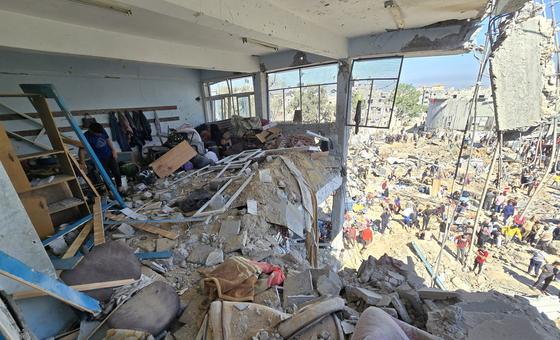
The UN Human Rights Council-mandated Independent International Commission of Inquiry (COI) report found that Israeli forces have used airstrikes, shelling, burning, and controlled demolitions to damage or destroy more than 90 per cent of schools and university buildings across Gaza.

This destruction in the wake of the 7 October 2023 Hamas-led terror attacks on Israel has made education impossible for over 658,000 children, many of whom have been out of school for nearly two years.

“We are seeing more and more indications that Israel is carrying out a concerted campaign to obliterate Palestinian life in Gaza,” said Navi Pillay, Chair of the Commission.

“Israel’s targeting of the educational, cultural and religious life of the Palestinian people will harm the present generations and generations to come, hindering their right to self-determination.”

Classroom-turned military base

The COI documented cases where Israeli forces seized and used educational institutions as military bases, including the conversion of part of Al-Azhar University’s Al-Mughraqa campus into a synagogue for troops.

The report also noted one instance where Hamas militants used a school for military purposes. Such conduct is a breach of international humanitarian law, which mandates the distinction between civilian objects and military targets.

Targeting of religious sites

More than half of Gaza’s religious and cultural sites have been damaged or destroyed, including places serving as refuges for civilians – killing hundreds, including women and children.

The Commission stated that Israeli forces knew or should have known the cultural significance of these sites and failed to prevent harm.

In the occupied West Bank, including East Jerusalem, Israeli authorities appropriated, developed and profited from cultural heritage sites representing Palestinian, Jewish and other cultures, while displaced Palestinian residents.

They have also blocked or severely restricted Palestinians from accessing the sites.

“Attacks on cultural and religious sites have deeply impacted intangible culture, such as religious and cultural practices, memories and history,” said Ms. Pillay.

“The targeting and destruction of heritage sites, the limiting of access to those sites in the West Bank and the erasure of their heterogenic history erode Palestinians’ historical ties to the land and weaken their collective identity.”

Recommendations

The Commission called on Israel to immediately cease attacks on cultural, religious, and educational institutions and to end the seizure and military use of such facilities. It urged Israel to end its occupation and settlement activities, especially near religious and cultural sites, and to comply fully with International Court of Justice (ICJ) orders.

Investigators also urged Palestinian authorities to protect and preserve cultural heritage sites, including those of diverse origins, calling on de facto authorities in Gaza to stop using civilian objects for military purposes.

Humanitarian crisis spiralling

UN agencies continue to warn of a worsening humanitarian crisis in Gaza.

The UN Children’s Fund (UNICEF) highlighted the case of a five-year-old malnourished child whose recovery depends on adequate food and sustained care.

Aid at scale must be allowed into Gaza for children’s health and survival,” the agency urged.

‘Another day of death traps’

Philippe Lazzarini, head of the UN agency assisting Palestine refugees, expressed deep concern over delays and obstacles in aid delivery, urging Israel to allow the UN safe and unhindered access to bring in supplies and distribute it safely.

“This is the only way to avert mass starvation including among one million children,” he said.

Mr. Lazzarini warned that casualties and injuries continue to be reported daily at US-backed distribution points managed by Israeli and private security forces – creating in effect, daily death traps.

He described the system as humiliating, forcing thousands of hungry and desperate people to walk tens of miles, while excluding the most vulnerable and those living too far from aid centres.

Source link

World News in Brief: Guterres condemns antisemitic attacks, ILO to debate pros and cons of working online, Sudan, Ukraine updates

A man was arrested in Boulder after reportedly using a flamethrower and Molotov cocktails to set people on fire at an event in support of Israeli hostages in Gaza on Sunday.

The suspect reportedly yelled “Free Palestine” during the attack and now faces federal hate crime charges along with multiple felonies.

The attack injured at least eight people, ranging in age from 52 to 88. The injuries have been described by local police as ranging from minor to “very serious”.

Holocaust memorial targeted

In a further antisemitic act in Paris, vandals targeted the Shoah Memorial, three synagogues and the Jewish restaurant Chez Marianne on Saturday morning, according to news reports.

Photos show green paint splashed on the Le Mur Des Justes wall, which lists names of French men and women who helped Jews during the World War II.

No suspects have been arrested so far and no group has claimed responsibility, news reports noted.

UN Spokesperson Stéphane Dujarric told correspondents at the Noon Briefing in New York that “The Secretary-General condemns these acts.”

“The United Nations firmly stands against all forms of antisemitism, as well as all other manifestations of extremism and any incitement to religious hatred and violence, and he calls for swift action to hold those responsible accountable,” 
Mr. Dujarric said.

UN labour agency sheds light on potential risks of online work

Governments, employers, and workers from the 187 UN ILO Member States are currently meeting in Geneva for the International Labour Organization’s annual conference.

The potential pitfalls of online platforms will be one key area for debate, as countries mull reforms to protect workers and promote development.

Digital platforms have grown rapidly in recent decades in line with the gig economy, boosting online education, tourism and transport, for example.

Lack of protections

But although businesses that use digital platforms offer flexibility for workers, there’s concern that they don’t offer enough social protection or decent conditions.

According to senior ILO official Angelika Muller many online workers lack protections as part of the informal economy.

As such, many face poor working conditions while many employers turn to  algorithms to evaluate worker performance.

Member States are also expected to agree on new ways to help countries transition from the informal to the formal economy and address the issue of health dangers from exposure to biological hazards at work.

Attacks on Sudanese civilians continue

On May 29, the World Food Programme’s facility in Al Fasher was repeatedly shelled, resulting in extensive damage, according to a report on Monday from UN aid coordination office, OCHA.

The next day, Eldaman International Hospital in Al Obeid was struck by a drone attack, killing at least six health workers and injuring more than 15 others.

Both attacks were reportedly carried out by the Rapid Support Forces (RSF) militia which has been fighting the Sudanese Armed Forces (SAF) for control of the country since April 2023.

Acting Resident and Humanitarian Coordinator for Sudan, Kristine Hambrouck, released a statement on Sunday calling the attacks a “blatant violation of international humanitarian law,” calling on all sides to protect civilian lives.

UN relief chief Tom Fletcher, also expressed concern over these attacks in a social media post Monday: “These attacks must stop.”

Continued cholera threats

Meanwhile, in Khartoum state, strikes on electricity infrastructure have aggravated water shortages, forcing many residents to rely on unsafe water sources and endangering over one million children with waterborne diseases, as cholera continues to spread across Sudan.

Thanks to the efforts of health workers and community volunteers, daily cholera cases in the capital region have fallen compared to previous weeks.

There have been more than 16,500 cases and over 340 reported deaths in Khartoum since the outbreak began.

Dozens of cases are also emerging in the South Darfur state, prompting officials to declare a health emergency and appeal for urgent support to contain the outbreak.

With UN support, local health authorities have established treatment centers and initiated surveillance and community health efforts. 

is urging the international community to act now to ensure that aid reaches those most in need, to halt the spread of cholera, and to protect the millions of civilians at risk.

Recent attacks on Ukrainian civilians 

The UN on Monday reported that attacks in Ukraine over the weekend and Monday left more than 20 civilians dead, including one child, and injured over 100 others.

Civilian infrastructure – including homes, medical and educational facilities and power and gas lines – was also affected.

Notably, the attacks occurred just hours before Ukrainian and Russian delegations met for a second round of preliminary peace talks in Türkiye on Monday.

Humanitarian response

Humanitarian organizations are providing critical support to affected families, including emergency repair materials, legal and psychological assistance, and evacuations from areas where heavy fighting is continuing.

On 30 May, an inter-agency convoy delivered essential aid – including solar lamps, charging stations, kitchen sets, diapers, food, hygiene items and first aid kits – to over 700 residents in the frontline Mylivska community of Kherson.

Source link

‘My husband died in my arms’: Russian drone attacks on Ukrainians amount to crimes against humanity, UN investigators report

“Russian armed forces have committed the crimes against humanity of murder and the war crimes of attacking civilians, through a months-long pattern of drone attacks targeting civilians on the right bank of the Dnipro River in Kherson Province,” the Independent International Commission of Inquiry on Ukraine said.

Attacks have been carried out since July 2024 in Kherson city and 16 localities stretching over more than 100 kilometres in river front areas under Ukrainian Government control. 

They are ongoing and nearly 150 civilians have been killed and hundreds more injured to date, according to official sources.

Attacks ‘planned and organised’

“The recurrence of these attacks for over 10 months, against multiple civilian targets and in a wide geographic area, demonstrates that they are widespread and systematic and have been planned and organised, requiring the mobilisation and allocation of necessary resources,” the report said.

The Commission examined over 300 publicly available videos of attacks and over 600 text posts on Telegram channels and, where possible, identified victims. 

Over 90 residents from affected areas were interviewed, including victims, witnesses, local authorities and medical personnel. 

Civilians were targeted “in various circumstances, mainly when they were outdoors, both on foot or while using any type of vehicles” the report said. Most victims were men, but women and children also were affected.

‘My husband died in my arms’

A woman from Poniativka village recounted that in September 2024, she was walking home with her husband and suddenly heard a drone. It was already above their heads and immediately dropped an explosive, giving them no time to seek shelter. Both were injured. 

My husband died in my arms, bleeding to death, because the ambulance did not arrive on time. I tried to stop the bleeding with a T-shirt, but it was not enough,” she said.

Videos posted on Telegram

Russian forces mostly used civilian drones that are widely commercially available, which were then modified.

The weaponized versions of these drones allow their operators, via an embedded camera, to remotely track, aim, and drop explosives on targets. They can return to their point of origin to be reused,” the report said.

“Occasionally, perpetrators employed suicide drones that are also equipped with cameras but that explode upon impact on their targets.”

Hundreds of the video feeds have been regularly disseminated on Russian Telegram channels, some of which have thousands of subscribers. 

“The video footage that they posted displays the attacks and the resulting death, injury, damage, or destruction, and is styled like video games, often accompanied by background music and threatening text,” the report said.

Ambulances targeted

Furthermore, ambulances also have been targeted and struck by drones to prevent them from reaching victims, and some have died because they could not get to a medical facility in time. 

“A 45-year-old man from Stanislav village recounted that in November 2024, a drone dropped an explosive near him as he was riding a moped, badly injuring his leg. An ambulance arrived, and while he was receiving first aid, a drone dropped two explosives on the ambulance,” the report said.

The Commission stressed that the use of drones to target civilians and civilian objects is a violation of the fundamental principle of international humanitarian law as such attacks may only be directed at military objects.

“The Commission therefore concludes that Russian armed forces perpetrated the war crime of intentionally directing attacks against civilians in Kherson Province,” it said, while “posting videos of civilians being killed and injured amounts to the war crime of outrages upon personal dignity.”

‘Drones were attacking everything’

The drone attacks have spread terror among residents of the affected areas. Many wait for cloudy days to go out, or seek cover under trees, where possible. 

“Drones were attacking everything; minibuses, cars, pedestrians…every time you went out of the house, you had to check the sky and look out for a buzzing sound and, in any case, run,” a man from Antonivka settlement told the Commission.

Moreover, fear is further induced by frequent messages posted on Telegram, such as “Get out of the city before the leaves fall, you who are destined to die.”

“The recurrent drone attacks, the widely disseminated videos showing them, and numerous posts explicitly exhorting the population to leave suggest a coordinated state policy, on the part of the Russian authorities, to force the population of Kherson Province to leave the area,” investigators said.

They concluded Russian forces may have committed the crime against humanity of forcible transfer of population.

Mandate from Human Rights Council

The commission is mandated by the UN Human Rights Council to investigate all alleged violations and abuses of human rights, violations of international humanitarian law and related crimes in the context of the aggression against Ukraine by Russia.

The three Commissioners serve in their individual capacity and are independent from any government or organization, including the UN.


Source link

UN rights chief calls for end to daily killings in Ukraine after deadly weekend attacks

The majority of those killed and injured were in major cities such as Kyiv, Kharkiv, and Mykolaiv, or in populated areas in other regions.

Meanwhile, large numbers of long-range drones launched into Russia by Ukrainian armed forces injured at least 11 civilians over the weekend, according to Russian authorities.

Silence the guns

High Commissioner Volker Türk underscored the urgency for an end to hostilities.

“It is time to put an end to Russia’s invasion of Ukraine, to commit to – and implement – a comprehensive ceasefire that stops the daily killing and destruction, and to start genuine peace negotiations, built on respect for international law,” he said.

He highlighted that – even amid ongoing hostilities – people deprived of their liberty must be protected. Summary executions, torture and all forms of inhumane and degrading treatment of prisoners are always prohibited, in any circumstances, and must stop immediately.

In addition, civilian detainees should be released as soon as the lawful reason for their detention ceases to exist and their protection against refoulement must be ensured, he said.

Relief, but also loss

High Commissioner Türk welcomed the recent exchange of prisoners of war and civilian detainees.

Nearly 900 prisoners of war and 120 civilians from each side were exchanged. Most of the civilians appeared to have been detainees, but details on individuals included in the exchange are not yet available, according to his office, OHCHR.

“Many families can now breathe a sigh of relief because their loved ones have finally returned home,” Mr. Türk said.

“But at the same time, other families have lost relatives and their homes, as their communities across Ukraine came under attack.”

Impact on children

In a separate statement, the UN Children’s Fund (UNICEF) expressed deep concern for the impact of the latest attacks on Ukraine’s children.

Munir Mammadzade, UNICEF Representative in Ukraine, said that in the past three days, at least three children were reportedly killed in Zhytomyr, and at least 13 children were injured in several regions across the country.

“Ukraine’s children have suffered for far too long. How many more futures must be stolen? The senseless violence and loss of young lives must stop,” Mr. Mammadzade said.

According to UNICEF, more than 220 children were killed or injured between January and April 2025 – a 40 per cent increase compared to the same period last year.

“Attacks on civilian areas must end, and children must always be protected,” Mr. Mammadzade emphasised. “Above all, children need an end to this war.”

Source link

UN aid office denounces attacks on Gaza hospital

OCHA reported that hostilities intensified overnight, with an attack by Israeli forces on the European Gaza Hospital in Khan Younis which killed and injured several people. 

A team from the World Health Organization (WHO) was also inside the hospital at the time.

The hospital premises were hit again on Wednesday morning, reportedly leading to additional casualties.

A ‘decimated’ health system

“These attacks not only further degrade Gaza’s already decimated healthcare system, but also further traumatize patients and medical staff at these facilities,” OCHA said.

The UN Office has documented at least 686 attacks impacting healthcare in the Gaza Strip since war erupted in October 2023, following the deadly Hamas-led attacks on Israel.

OCHA said escalating military activities and increasing explosive ordnance contamination are heightening safety risks for civilians, including aid workers, before stressing once again that civilians and healthcare facilities must always be protected.

First responders in northern Gaza reported that at least 80 people had been killed in the past day following Israeli strikes, including around 50 who died when homes were struck in northern Jabalia.

More displacement orders

Meanwhile, Israel has issued two new displacement orders in North Gaza since Tuesday night, following Palestinian rocket fire.  

Eight neighbourhoods have been affected and humanitarians have already observed some fleeing in search of relative safety.

More than 436,000 people are estimated to have been displaced to various areas of Gaza since 18 March.

Whether they leave or stay, civilians must be able to access the essentials for their survival,” OCHA said.

© UNICEF/Mohammed Nateel

Displaced child in Gaza City

End aid blockade

The agency also continues to call for the immediate lifting of the blockade of Gaza. No cargo, including aid, has entered for more than 70 days.

The humanitarian situation is deteriorating, which has led to dwindling stocks in local markets and rising prices of the few supplies that remain available.

For example, during the first week of May, a single 25-kilogramme bag of wheat flour was being sold in Gaza City for the equivalent of more than $415 – a more than 3,000 per cent increase when compared with the last week of February.

“The blockade is also hampering the provision of hot meals in Gaza, with only about 250,000 individual meals now being provided each day through some 65 community kitchens,” OCHA said.

“This is compared to 25 April – less than three weeks ago – when 180 community kitchens were producing nearly 1.1 million meals on a daily basis.” 

Humanitarian partners have more than 171,000 metric tonnes of food in the region, ready for whenever the blockade is lifted.

This is enough to sustain Gaza’s entire population, roughly 2.1 million people, for up to four months.  

Port Sudan: No let-up in drone attacks as UN chief urges peace

The UN chief warned that any further escalation of the conflict could result in massive civilian casualties and worsen the already catastrophic humanitarian situation across the country.

The expansion of the conflict into an area that has served as a place of refuge for a large number of displaced people is alarming,” he said in a statement issued by his Spokesperson’s office.

Mr. Guterres’s appeal follows days of drone strikes on key infrastructure in Port Sudan that have opened a new front in the fighting between forces of the military government and heavily armed paramilitaries.

The city is a main entry point for relief supplies, hosting airports and direct access to the Red Sea. It is also a shelter for hundreds of thousands of displaced people and the seat of government after generals lost control of the capital Khartoum to the Rapid Support Forces (RSF).

Aid flights suspended

In response to the drone attacks, flights of the UN Humanitarian Air Service (UNHAS) to and from Port Sudan have been suspended since 4 May.

The UN World Food Programme (WFP) which manages the airline said that operations will resume as soon as conditions allow. For the moment, amid reported gun and weapons fire overnight, the insecurity has impacted the movement of aid workers into Sudan and across the country.

A country in flux

Drone strikes have also been reported elsewhere in Sudan, including the states of Kassala and River Nile. In Kassala, strikes near the airport displaced about 2,900 people and led to the temporary suspension or relocation of some aid activities, according to the UN aid coordination office, OCHA.

As of Wednesday evening, River Nile State was still without power following a drone strike on the transformer station in Atbara on 25 April. The outage has contributed to growing fuel and bread shortages and long queues at petrol stations and bakeries.

The situation remains dire across Sudan, the UN chief continued, citing intense attacks on critical infrastructure since January that have hampered people’s access to essential services and left them without food, clean water, healthcare and electricity.

“All parties to the conflict must comply with their obligations under international humanitarian law,” Mr. Guterres insisted. “They must not direct attacks against civilians and civilian objects; must take all feasible precautions to avoid, and in any event to minimize, incidental civilian casualties; and must allow and facilitate rapid and unimpeded passage of humanitarian relief for civilians in need.”

Sudan’s war stems from the breakdown in the transition to civilian rule following the overthrow in April 2019 of Omar al-Bashir, who had been president for 30 years.

Mr. Guterres decried a “lack of political will” by the warring parties to engage in constructive dialogue as they pursued their military goals.

“Dialogue is the only way to achieve the peace that the people of Sudan demand,” the Secretary-General insisted.

A hunger catastrophe

The turmoil caused by relentless heavy fighting across Sudan has reportedly killed more than 18,800 civilians and injured tens of thousands more. UN aid agencies say that the country’s people are in the grip of the largest hunger catastrophe on the planet.

Today, more than half of Sudan’s population – 30.4 million people – need humanitarian assistance, including more than 15 million children. They lack access to food, water, shelter, electricity, education and healthcare, aid veterans have warned repeatedly.

“Across Sudan, 25 million people face acute hunger,” WFP spokesperson Leni Kinzli told UN News. “And people are displaced across the country, nearly 13 million people forced from their homes. We are seeing waves of displacement in North Darfur, where around 450,000 people have fled horrific levels of violence.

Reaching those in need

Despite the dangers, UN agencies and partners are doing everything they can to reach the most vulnerable uprooted by intensifying attacks on government-controlled El Fasher town and Zamzam displacement camp.

“We’ve distributed assistance food assistance and emergency food packages to 335,000 people who recently fled that violence in and around El Fasher,” Ms. Kinzli explained. “We are also ramping up assistance in Khartoum, aiming to support one million people across the coming month.”

Distributions are ongoing in Jabalia, in the South of Khartoum, which is one of the risk of famine areas, as well as the central Khartoum neighbourhood of Burri, “where we finally reached the centre of the city…just last week”, the WFP officer noted.

To reach 21 million people in desperate need this year the UN needs $4.2 billion which is only seven per cent funded.

And over the next six months, WFP requires around $700 million to ramp up assistance and expand assistance to seven million people per month. 

Source link

Port Sudan: Aid officials call for greater protection as drone attacks continue

The escalation is occurring as war grinds on between the Sudanese Armed Forces (SAF) and the paramilitary Rapid Support Forces (RSF), who appear to be targeting airports in each other’s areas of control.

“Very concerned by ongoing drone strikes on Port Sudan,” UN Emergency Relief Coordinator Tom Fletcher tweeted on Wednesday. 

“International humanitarian law must be respected. Constant care must be taken to spare civilians and civilian infrastructure.”

Suffering will worsen

The latest strikes in Port Sudan took place early on Tuesday morning, reportedly targeting the international airport and other infrastructure, including a fuel storage facility and a power transformer. 

The UN Resident and Humanitarian Coordinator in Sudan, Clementine Nkweta-Salami, issued a statement that day, saying the attacks “will deepen humanitarian suffering and needs, as well as exacerbate the already severe access and logistical challenges that humanitarian actors face in the delivery of urgently needed aid to the rest of the country.” 

She underlined that the airport is a “lifeline for humanitarian operations” as it is the primary entry point for aid personnel, medical supplies and other life-saving relief. 

“Moreover, the availability of fuel in Port Sudan is critical to the dispatch of humanitarian supplies to areas across Sudan in dire need of assistance,” she added.

She stressed that damage to critical infrastructure could also disrupt supply chains and increase the price of basic goods, thus worsening what is already the world’s largest humanitarian crisis.

Displacement and aid suspension

Drone attacks have also affected Kassala and River Nile states, according to the UN humanitarian affairs office OCHA.

Earlier this week, strikes near the airport in Kassala displaced about 2,900 people and led to the temporary suspension or relocation of some aid activities.

Meanwhile, River Nile state is still facing a power blackout following a drone strike on the transformer station in Atbara on 25 April. The outage is contributing to growing fuel and bread shortages and long lines at gas stations and bakeries.

Cease hostilities now

Ms. Nkweta-Salami noted that since January, attacks on infrastructure across Sudan, such as power stations, water sub-stations, and oil refineries, have caused widespread electricity outages and disrupted access to essential services, including safe drinking water, healthcare and food supplies. 

These are serious violations of international humanitarian law and “reflect a consistent failure to comply with the principles of distinction, proportionality and precaution,” she said. 

“Every measure must be taken to spare civilians and civilian objects,” she said. “Once again, I call on all those involved in this conflict to cease hostilities.”

Source link

World News in Brief: Deadly attacks in South Sudan and Ukraine, World Court rejects Sudan case, lifesaving aid in Yemen

According to the UN relief coordination office (OCHA), the hospital in Old Fangak was struck early Saturday, killing seven civilians and injuring at least 20 more. The attack also destroyed vital supplies and forced the withdrawal of aid workers, leaving the town’s population without access to critical care.

“People in these areas are already battling flooding, food shortages and disease,” said Marie-Helene Verney, the UN’s acting Humanitarian Coordinator in South Sudan.

Too many lives at risk

“The destruction of critical health infrastructure and continued fighting puts innocent South Sudanese lives at risk.”

The bombing follows a wave of similar attacks in Upper Nile state, where health facilities in Ulang and Nasir have been targeted in recent months. The latest strike has heightened fears of renewed conflict as political and ethnic tensions rise nationwide.

The UN is now airlifting essential supplies to the area, but access remains limited. The violence has displaced over 130,000 people in the past two months, and aid agencies warn that South Sudan’s broader $1.7 billion humanitarian plan remains only 16 per cent funded.

Large scale attacks on densely populated cities across Ukraine

The UN’s top humanitarian official in Ukraine on Monday condemned a series of Russian strikes this weekend on densely populated towns and cities.

Between Friday and Monday, at least 12 people were killed and more than 100 others injured in attacks thar targeted Kharkiv, Kyiv and Cherkasy, and other regions in Ukraine.

These attacks also damaged homes, schools, a hospital and other civilian infrastructure, according to local authorities and partners, UN Deputy Spokesperson Farhan Haq told journalists in New York.

In the aftermath of the strikes, “humanitarian organizations provided first aid, psychosocial support, emergency shelter kits, repair materials, meals and drinks,” Mr. Haq said.

In the Kharkiv region, a fire triggered by a strike near the city of Izium on Sunday, burned 85 hectares of land and damaged over a dozen buildings. There were no casualties reported, Mr. Haq added.

Meanwhile, UN agencies alongside partners reached 600,000 people so far this year with first aid, medical transport, primary care and mental health support, including at transit centres for displaced people.

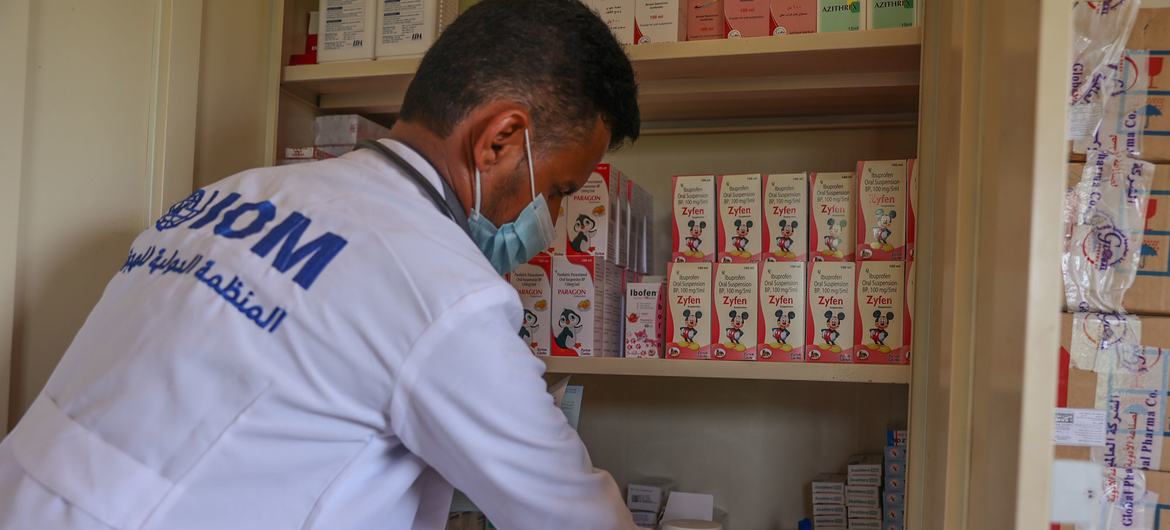
An IOM-supported health worker in Yemen accesses medical supplies.

Yemen: UN delivers lifesaving medical supplies

The UN International Organization for Migration (IOM) on Monday delivered critical medical supplies to seven health facilities in Yemen, where a collapsing health system and chronic shortages continue to endanger millions.

With support from the Government of the United Kingdom, IOM shipments are reaching hospitals and clinics in Aden, Lahj, Shabwah, Al Bayda and Sana’a – facilities serving both migrants and local communities.

“Every day, our teams see the impact of empty medicine shelves and overwhelmed clinics, on families and entire communities,” said Abdusattor Esoev, head of IOM in Yemen.

“By delivering essential supplies and supporting frontline staff, we are not just responding to urgent needs – we are keeping health services running for those who have nowhere else to turn.”

Crisis on crisis

The intervention comes amid an alarming health crisis.

Nearly 20 million people in Yemen require medical assistance in 2025, but over half of the country’s health facilities are only partially functioning or have shut down altogether. Funding gaps have left 382 facilities unsupported, forcing many to close or drastically cut services.

IOM’s assistance includes essential medicines, surgical equipment and infection prevention tools, as well as infrastructure repairs and support for health workers.

For many in the strife-torn country, IOM-supported clinics remain the only source of free medical care.

ICJ rejects Sudan’s genocide case against UAE

The International Court of Justice (ICJ) has rejected Sudan’s case accusing the United Arab Emirates (UAE) of complicity in genocide in Darfur, citing a lack of jurisdiction.

In the decision, the UN’s top judicial body ruled on Monday by a vote of 14 to two that it could not proceed with the case brought by Sudan under the Convention on the Prevention and Punishment of the Crime of Genocide (Genocide Convention) and declined to impose any provisional measures, as Sudan had requested.

The Court also removed the case from its general list by a vote of nine to seven.

“Having come to the conclusion that it manifestly lacks jurisdiction, the Court is precluded from taking any position on the merits of the claims made by Sudan,” the ruling stated.

Complicity charge

Sudan had accused the UAE of backing the paramilitary Rapid Support Forces (RSF), alleging its support amounted to complicity in genocidal acts against the non-Arab Masalit population in West Darfur.

The conflict between the RSF and the Sudanese army has claimed thousands of lives and displaced over 12.7 million people since April 2023.

The Court noted that while it could not hear the case, all States remain bound by their obligations under the Genocide Convention.

Source link

Sudan drone attacks raise fears for civilian safety and aid efforts

These attacks appear to be the latest in a series of retaliatory military operations, conducted by the Rapid Support Forces and the Sudanese Armed Forces, targeting airports in each other’s areas of control,” UN Deputy Spokesperson Farhan Haq told reporters in New York on Monday.

The fighting between troops of the military Government and former allies-turned-rivals for power, the RSF, began in April 2023. The war has devastated much of the country, killing thousands and displacing over 8.6 million people, according to UN agencies.

As conflict rages in Khartoum, Darfur, and other areas, Port Sudan on the Red Sea coast has remained a relative safe haven and a key hub for UN and international relief efforts.

Multiple drone strikes

The RSF carried out drone attacks on a military base and other targets on Sunday near the airport – and on Monday, there was a second series of attacks targeting fuel depots in the eastern part of Port Sudan, according to latest news reports.

© UNICEF/Ahmed Mohamdeen Elfatih

Mothers tend to their children suffering from severe acute malnutrition at a hospital in Port Sudan.

The RSF has not so far claimed responsibility for Monday’s strikes which left fuel storage facilities ablaze in what the army characterised as an attack on civilian infrastructure.

The Secretary-General is “concerned with the recent reports of drone attacks on military and civilian infrastructure” in the area, which until now had largely been spared from the devastation of the year-long war.

Call for urgent dialogue

Mr. Haq stressed that the attack on Port Sudan was a “worrying development threatening the protection of civilians and humanitarian operations” in the city, which has become a lifeline for humanitarian aid across the country.

The Secretary-General “renews his call for urgent dialogue between the warring parties towards an immediate cessation of hostilities and an inclusive political process,” Mr. Haq said. “This is essential to prevent further escalation, protect civilians, and put Sudan back on a path towards peace and stability.”

On the humanitarian front, the UN’s aid coordination office OCHA said the drone strikes have not directly affected its operations in Port Sudan.

UN aid operations continuing

“None of our offices, premises or warehouses have been impacted, and we continue to carry out our regular operations,” Mr. Haq confirmed.

However, he added that the situation is being closely monitored, and that UN Humanitarian Air Service flights in and out of the city have been temporarily paused.

Beyond Port Sudan, recent strikes on power stations across Sudan have disrupted electricity and clean water supplies – worsening conditions for displaced families and returnees.

We call on all parties to this conflict to ensure that civilians and civilian infrastructure are not targeted,” the Deputy Spokesperson said. “Wars have rules, and international humanitarian law must be respected.”

© UNICEF/Ahmed Mohamdeen Elfatih

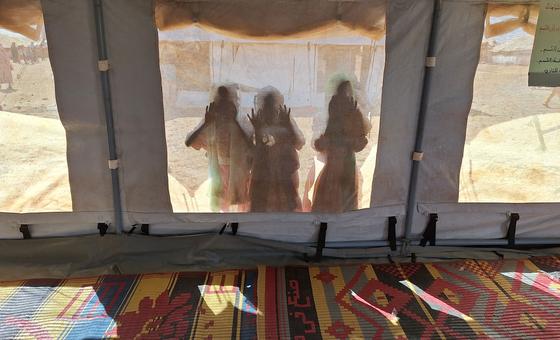
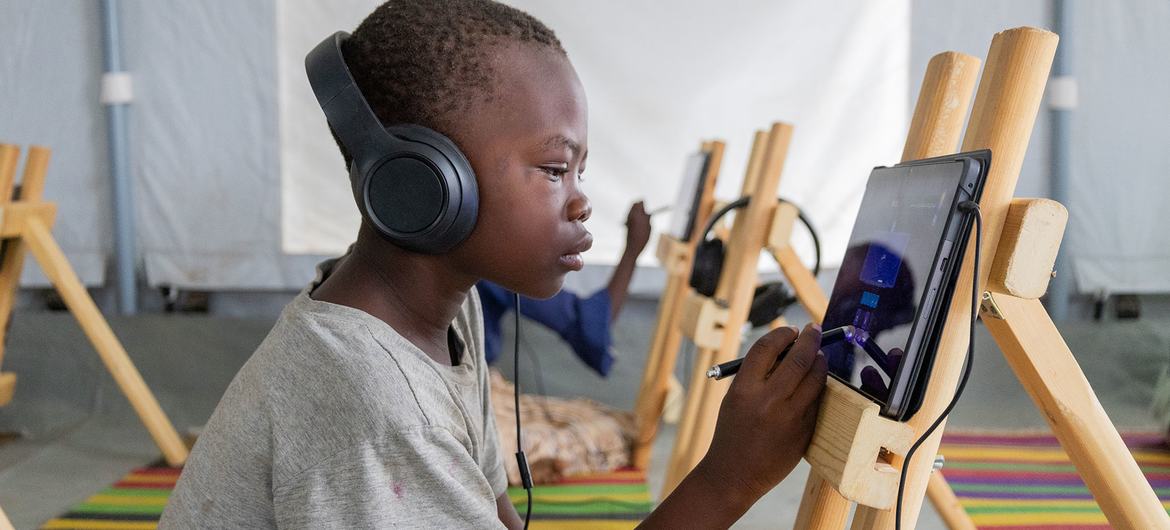
Children participate in an e-learning session at the Al Seniyaa internally displaced people’s gathering site in Port Sudan.

Guterres condemns violence against civilians in Syria, urges Israel to stop attacks

UN Spokesperson Stéphane Dujarric said on Friday that the Secretary-General “has been monitoring with alarm the reports of violence in the suburbs of Damascus and in the south of Syria, including reports of civilian casualties and assassination of local administration figures.”

More than 100 people have reportedly been killed in recent days during clashes with sectarian overtones, including in Suweyda governorate.

Call for restraint

Mr. Dujarric said the Secretary-General condemns all violence against civilians, including acts which could risk inflaming sectarian tensions.

In this context, the UN chief also condemned Israel’s violation of Syria’s sovereignty, including the latest airstrike near the presidential palace in Damascus.

“It is essential that these attacks stop and that Israel respect Syria’s sovereignty, unity, territorial integrity, and independence,” the Spokesperson added.

The Secretary-General unequivocally called on all concerned to cease all hostilities, exercise utmost restraint and avoid further escalation. 

He was encouraged by intra-Syrian efforts to de-escalate the violence and maintain security and stability. 

Mr. Guterres took note of the statement by Syria’s interim President Ahmed al-Sharaa, which prioritizes “dialogue and cooperation within the framework of national unity.” He also appealed to the interim authorities to transparently and openly investigate all violations. 

Rights experts’ warning

Experts appointed by the UN Human Rights Council also warned that the recent surge in violence “is deeply troubling” for peace efforts in Syria

The Commission of Inquiry on Syria said the fighting, combined with ongoing Israeli airstrikes, raises the risk of further fragmentation and harm to civilians.

Members noted that hate speech and incitement on social media are fuelling tensions, urging all sides to stop hostilities and commit to dialogue.

While a local agreement has reportedly been reached between Damascus authorities and community leaders, the interim government remains responsible for protecting civilians.

The Commission also called for credible investigations into alleged abuses.

“Impunity for grave violations has in the past been a consistent driver of Syria’s conflict and must not be allowed to persist,” it said. 

“Only by upholding the rule of law and ensuring justice, accountability and reparations for victims and their families can Syria begin to rebuild trust across its fractured communities.”

Independent voices

The Commission of Inquiry was initially established in August 2011 and its mandate has been consistently renewed, most recently in April.

The three Commissioners serve in their individual capacity and are independent from any government or organization, including the UN.

They are not UN staff and do not receive payment for their work.  

Source link

Myanmar crisis deepens as military attacks persist and needs grow

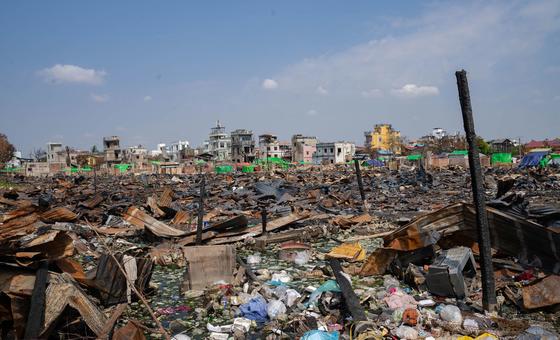
The 28 March quakes killed over 3,800 people and damaged or destroyed more than 55,000 homes across multiple regions, including Bago, Kayin, Magway, Mandalay, Southern Shan, Naypyitaw and Sagaing.

Families already displaced by years of conflict now face early torrential rains, extreme heat and rising risk of disease. Nearly 20 million people – more than a third of the population – needed assistance even before the earthquakes.

Unremitting violence

Despite the scale of the disaster, High Commissioner for Human Rights Volker Türk warned on Friday that the Myanmar military has launched at least 243 attacks – including 171 airstrikes – since the massive tremors.

Most of the attacks occurred after 2 April, despite both the military and the opposition National Unity Government (NUG) announcing unilateral ceasefires which were largely unobserved.

It is imperative that the military immediately stop all attacks on civilians and civilian objects,” he said in his statement, calling for a genuine and permanent nationwide halt to hostilities and a return to civilian rule.

He underscored the need to put the people of Myanmar first, prioritise their rights, and achieve a peaceful resolution.

Instead of further futile investment in military force, the focus must be on the restoration of democracy and the rule of law in Myanmar,” Mr. Türk said.

Delays putting lives at risk

UN humanitarians in the country also warn that the situation remains dire.

Speaking to journalists in New York via video link from Yangon, Humanitarian Coordinator ad interim Marcoluigi Corsi said that one month on, people are still living in the open and facing increasingly difficult conditions.

The suffering is immense and the stakes are very high,” he said on Thursday, urging the international community to translate funding pledges into rapid, large-scale support.

“Every delay means more lives at risk and more communities in Myanmar struggling to rebuild.”

Lack of funding imperils response

Agencies have reached 600,000 people with water, sanitation and hygiene services. They have also provided nearly 500,000 people with food assistance and over 100,000 with emergency shelter.

But the response remains constrained by severe underfunding.

Mr. Corsi called on donors to urgently disburse their pledged amounts. Without timely action, the crisis would get worse, he warned.

Lives depend on our collective commitment to delivering the support that is desperately needed…the time to act is now,” he said.

The $275 million addendum to the 2025 humanitarian response plan has received just $34 million – or about 12 per cent – leaving affected communities without assistance.

Disease outbreak risk

According to the UN World Health Organization (WHO) over 450,000 people require critical health services, but only about 33,600 have been reached so far.  

Disease outbreaks are also a growing concern as nine of the 20 townships most at risk for cholera fall within earthquake-affected areas. Stagnant water from delayed rubble removal is creating mosquito breeding grounds, driving up the risk of malaria and dengue.  

Limited access to medicines and medical supplies are further straining already overstretched health facilities.

Source link

Outrage as Russian overnight attacks on Ukraine cities kill at least nine civilians

Reports indicate that the latest Russian strikes damaged 12 buildings in the capital, causing widespread damage to homes, businesses and key services, while phones have been heard ringing from the rubble.

Other Ukrainian cities targeted included Zhytomyr – due west of Kyiv – and the northeastern cities of Sumy –  where a daytime missile strike killed at least 34 people on 13 April – and Kharkiv – where the authorities reported 24 drone and missile strikes in total.

“The casualty count is expected to rise as emergency teams continue search-and-rescue operations amid,” said the UN aid coordination office, OCHA.

The development follows Ukrainian President Volodymyr Zelensky’s reported decision on Wednesday to reject a US-led proposal to seek a peace deal with Russia that would have involved ceding territory lost during the war. In theory, this would include the eastern Ukrainian regions of Donetsk, Luhansk, Kherson and Zaporizhzhia, in addition to Crimea, which Russia annexed illegally in 2014.

“Last night’s large-scale attack by the armed forces of the Russian Federation on residential areas in Kyiv and surrounding regions is yet another appalling violation of international humanitarian law,” said the UN’s top aid official in Ukraine, Matthias Schmale.

Children and a pregnant woman were among the more than 70 people injured by Wednesday night’s reported missile and drone strikes. “This senseless use of force must stop… Civilians must never be targets”, insisted Mr. Schmale, UN Humanitarian Coordinator for Ukraine.

Echoing that message, the UN Children’s Fund, UNICEF, appealed for an end to the use of explosive weapons in civilian areas.

Source link