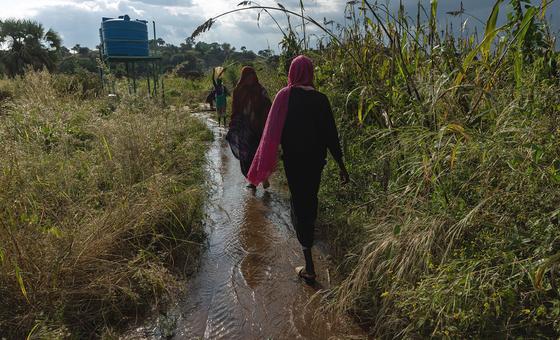
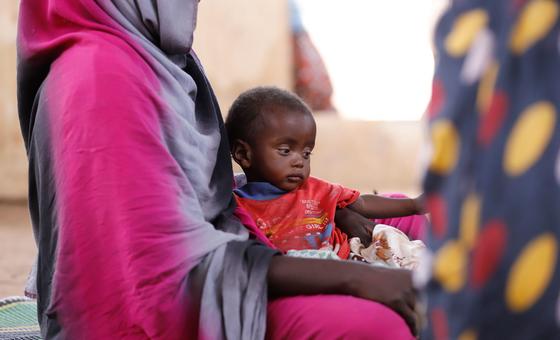
Cholera spreads in North Darfur, 640,000 children under threat, UNICEF warns

More than 1,180 cholera cases – including an estimated 300 in children – and at least 20 deaths have been reported in Tawila, a town that has absorbed over half a million people fleeing violence since April.

Across the wider Darfur region, the toll is even more alarming: nearly 2,140 cases and at least 80 fatalities as of 30 July.

Despite being preventable and easily treatable, cholera is ripping through Tawila and elsewhere in Darfur, threatening children’s lives, especially the youngest and most vulnerable,said Sheldon Yett, UNICEF Representative in Sudan.

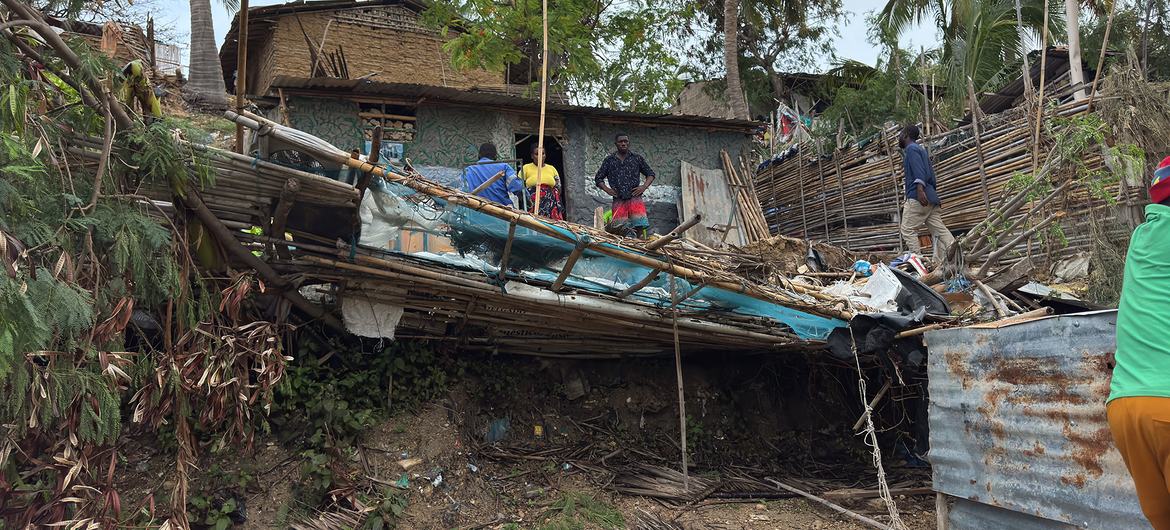
With hospitals bombed and many health facilities shuttered, Tawila – located just 70 kilometres from the besieged state capital El Fasher – has become a flashpoint of overlapping crises.

Limited access to clean water, poor sanitation and overcrowded camps have created ideal conditions for the disease to spread.

Deepening catastrophe

The cholera outbreak is unfolding against a backdrop of deepening catastrophe. Since the war between rival militaries erupted in April 2023, critical infrastructure has been decimated, millions displaced and food systems dismantled.

Famine has already been declared in at least 10 locations, including the vast Zamzam camp, with over a dozen more areas at risk.

Sudan’s extreme vulnerability to climate shocks – from droughts to devastating floods – has further compounded the crisis, leaving families to navigate the deadly intersection of conflict, hunger, disease and environmental collapse.

Over 640,000 children at risk

More than 640,000 children under five in North Darfur alone are now at risk. Recent assessments show that the number of children suffering from severe acute malnutrition in the region has doubled in the past year.

Children whose bodies are weakened by hunger are far more likely to contract cholera and to die from it,” UNICEF warned.

They cannot wait a day longer.

Call for action

UNICEF is urgently calling on all parties to ensure sustained, safe and unimpeded humanitarian access. Bureaucratic delays, looted aid convoys and active fighting have hampered the delivery of vital supplies, including vaccines, therapeutic food and medical kits.

The agency is scaling up its emergency response in Tawila and across Darfur, distributing Oral Rehydration Salts (ORS), chlorinated water and hygiene kits.

Nearly 30,000 people in Tawila now have daily access to safe drinking water, while outreach teams are raising awareness on prevention and early treatment.

Funds urgently needed

To support long-term containment, UNICEF plans to deliver more than 1.4 million doses of oral cholera vaccine and bolster treatment centres.

Additional supplies – soap, latrine slabs, plastic sheeting – are being readied, though access remains the greatest obstacle.

Since the outbreak was officially declared in August 2024, more than 94,000 cholera cases and over 2,370 deaths have been reported across 17 of Sudan’s 18 states. UNICEF says it urgently requires $30.6 million to fund its emergency cholera response.

Source link

Gaza children starving despite Israeli ‘tactical pauses’, UN says

Speaking at the regular news briefing in New York, UN Deputy Spokesperson Farhan Haq said that even four days into the announced pauses, “we are still seeing casualties among those seeking aid and more deaths due to hunger and malnutrition.”

He added that parents are “struggling to save their starving children” and warned that the current conditions for aid delivery are “far from sufficient”.

The UN Office for the Coordination of Humanitarian Affairs (OCHA) said that while it is using every available window to deliver supplies during the unilateral pauses, the scale of need vastly outpaces what is getting through.

“A permanent ceasefire is needed more than ever,” Mr. Haq said, emphasising that “unilateral tactical pauses alone do not allow for the continuous flow of supplies required to meet immense needs levels in Gaza.”

Access a major hurdle

Access remains one of the biggest hurdles.

Entry through the Kerem Shalom/Karem Abu Salem crossing requires multiple layers of approval from Israeli authorities, including safe passage, cessation of bombardment and the literal opening of locked gates.

“Yesterday, three facilitated missions allowed our staff to collect cargo containing food from the Kerem Shalom and Zikim crossings and allowed for fuel to be transferred within Gaza,” Mr. Haq said.

“However, the others faced impediments, particularly delays in receiving the green light to move by the Israeli authorities, and one had to be cancelled.”

Extreme hunger haunts children

The situation was echoed by Ricardo Pires, UNICEF’s communication manager, who returned from Gaza this week.

“It’s absolutely apocalyptic,” he told UN News. “Children are being injured and killed while trying to get food and aid while suffering from malnutrition and hunger.”

Mr. Pires said that two out of the three criteria for a famine declaration have been met, according to the latest alert by food security experts.

UNICEF and other agencies are also grappling with the collapse of basic infrastructure.

Perfect storm of suffering for children

“We’re at the brink of a man-made drought,” Mr. Pires said, with only 40 per cent of water production functioning and children turning to contaminated sources, risking deadly disease.

“Children are dehydrated. They are reverting to contaminated water, which will make them sick, with deadly diseases or diarrhoea outbreaks and in some cases, even meningitis,” he added.

“It is a complete perfect storm of suffering for children.”

UN News interview with UNICEF Communication Manager Ricardo Pires.

Source link

Cholera outbreak in West and Central Africa poses crisis for children

“The heavy rains, widespread flooding and the high level of displacement are all fuelling the risk of cholera transmission and putting the lives of children at risk,” said UNICEF regional director for West and Central Africa Gilles Fagninou.

Cholera is an acute diarrhoeal infection caused by consuming food or water contaminated with bacteria. The disease can be treated with oral rehydration solution and antibiotics, but can be fatal within hours if untreated.

Young children are particularly vulnerable to cholera due to factors such as poor hygiene, inadequate sanitation and access to safe water and a greater risk of severe dehydration.

Regional hotspots

Active outbreaks in the hotspots of the Democratic Republic of the Congo (DRC) and Nigeria are fuelling the risk of cross-border transmission to neighbouring countries.  

The DRC is the hardest hit country in the region, reporting more than 38,000 cases and 951 deaths in July. 

Children under five now account for nearly 26 per cent of cases in the DRC, and without stronger containment measures, they may face the worst cholera crisis since 2017.

The situation in the capital, Kinshasa, is particularly critical as intense rainfall and widespread flooding have caused cases to surge sharply over the past four weeks. Straining an already overwhelmed healthcare system, the city is now facing an alarming case fatality rate of eight per cent.

Nigeria is the second most affected country in the region, with 3,109 suspected cholera cases and 86 deaths as of the end of June. Cholera is endemic in the country, where major outbreaks have re-occurred in recent years.

Region-wide crisis

Chad, Republic of Congo, Ghana, Côte d’Ivoire and Togo are also facing ongoing epidemics.

A total of 612 cholera cases were reported in Ghana as of 28 April, 322 cases and 15 deaths in Côte d’Ivoire as of 14 July and 209 cases and five deaths in Togo as of June 22.  

Niger, Liberia, Benin, the Central African Republic and Cameroon are also under close surveillance due to their vulnerability.

UNICEF response

Urgent and scaled-up efforts are needed to prevent further spread and contain the disease across the region.

Throughout the outbreaks, UNICEF has delivered lifesaving health, water, hygiene and sanitation supplies to treatment facilities and communities.  

The agency has also supported cholera vaccinations, scaled up preparedness and response efforts and encouraged families to seek timely treatment and improve their hygiene practices.

“We are in a race against time, working hand in hand with the authorities to deliver essential healthcare, safe water and proper nutrition to children already at risk of deadly diseases and severe acute malnutrition,” said Mr. Fagninou.  

“Together with an array of partners, we are strengthening community engagement and extending our reach to remote and underserved areas, making every effort to ensure that no child is left behind.”

UNICEF West and Central Africa urgently requires $20 million over the next three months to scale up critical support in health, WASH, risk communication and community engagement. 

Dreams amid the rubble: Gaza’s women speak of homes, loss and hungry children

In Gaza City, families living in tents reveal a shared, grim reality.

Many have been forced to flee the fighting dozens of times. Most find themselves homeless and hungry while facing an uncertain future.

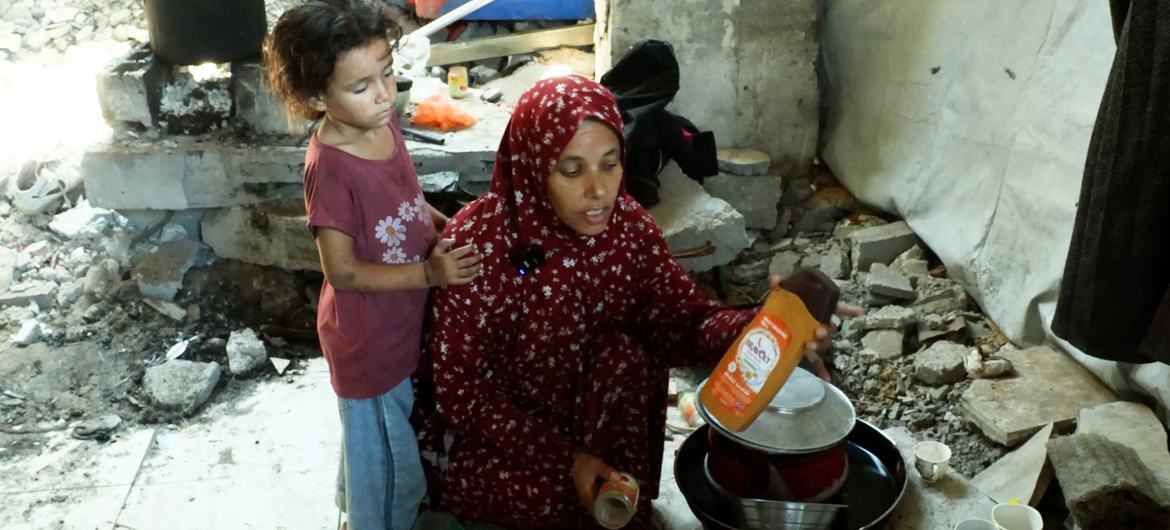
Khadija Manoun and her daughter in the space she uses as a kitchen inside a destroyed building.

Khadija Manoun: Kitchen of life’s leftovers

Khadija Manoun said she and her family have moved more than 20 times, from Jabalia in the northern Gaza Strip to a destroyed building in western Gaza, in search of shelter. She had owned a new fully furnished house, which she had built with a bank loan.

“I furnished my house well, with tiles and electrical appliances,” she said. “It had only been three years since I had the house. Then the war came and everything was lost.”

Today, everything has changed, Ms. Manoun said. Her spacious, fully equipped kitchen is now just a corner in the rubble, where a solitary soap dish borrowed from a neighbour sits. Metal utensils have been replaced with plastic tea containers to serve 10 people.

The bathroom was reduced to a corner covered with pieces of cloth that had been blankets. Her dressing room is now home to tattered suitcases.

“This is now my closet where I put everything,” she said. “I had a bedroom that had cost me 10,000 shekels.”

Her family sleeps on simple mattresses. Clean drinking water is a luxury that Khadija chases after, running between trucks, often returning with empty containers.

Amid all this, she sometimes reminisces, scrolling through photos on her mobile phone of her old home and the meals they used to eat.

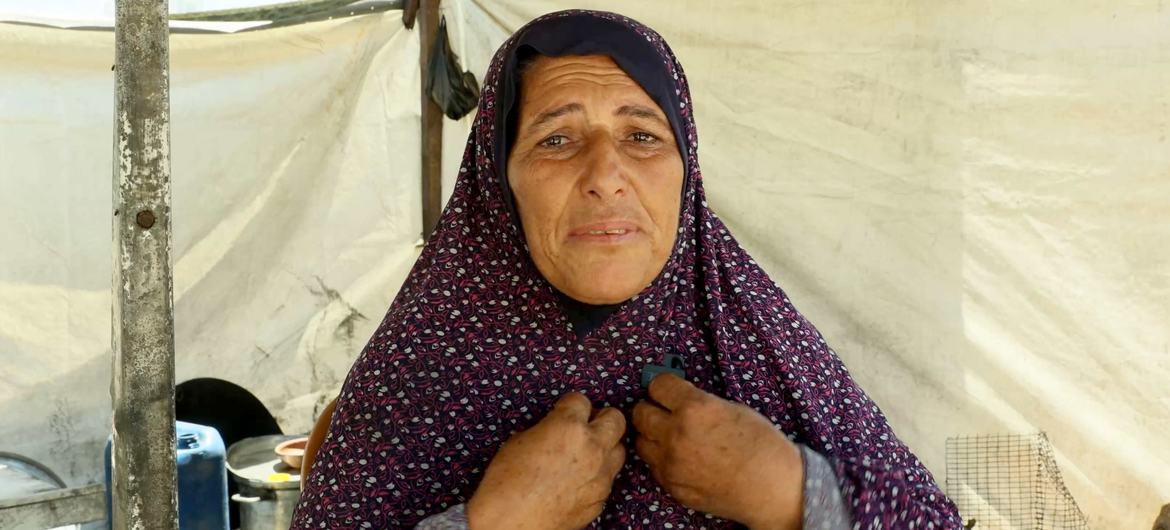
Badriya Barrawi, a displaced person in Gaza, is living among the ruins of destroyed buildings.

Badriya Barawi: Exhausted by hunger

In her modest tent on the beach west of Gaza City, Badriya Barawi, from Beit Lahia, sits, arranging what remains of her life. Tears stream from her eyes.

“Have mercy on us,” she said. “We are fed up and exhausted, mentally and physically. We can’t bear it any longer. How long will this life go on?”

She says her children are crying from the heat and hunger.

“We haven’t had bread for three days. This morning, I fed the children hummus, but is that enough for their stomachs?” said Ms. Barawi, who suffers from high blood pressure and diabetes.

She said she collapses daily from a lack of food.

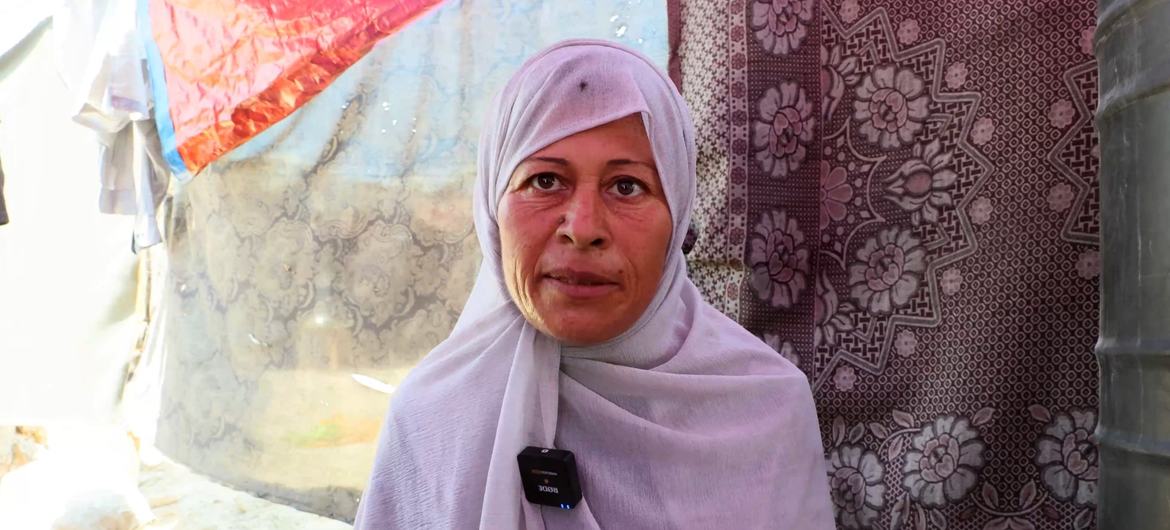
Hiyam Zayed is displaced from Beit Lahia in the northern Gaza Strip.

Hiyam Zayed: Trampled garden of dreams

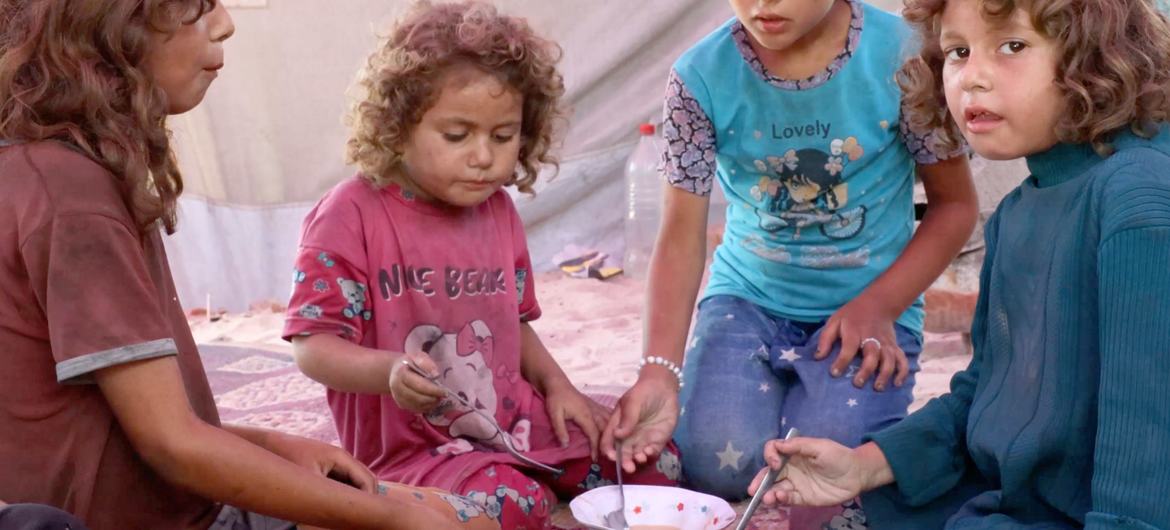
In a nearby tent, Hiyam Zayed and her eight daughters eat lentil soup without bread. Describing her former home, she said there were six rooms and a garden.

“I was happy in my home,” she said. “My daughters and I used to have fun there. They played on the roof or inside the rooms. We had a beautiful garden in front of the house, and we grew plants and ate its produce and raised chickens. My daughters were very happy. We fed them the best food and dressed them in the best clothes.”

She also said she used to have a washing machine, a fully equipped kitchen and a refrigerator “full of goodies”.

Now, everything is gone.

“No food, no washing machine, no feelings: we’ve become depressed,” she added.

“My daughters wear the worst clothes. I can’t find a way to bathe them. I used to turn on the water tap at home and water would run for drinking or bathing. Now, we live in a tent in the sand. I light a fire to cook after I used to have gas. I borrow cooking utensils.”

“How are we to blame for what happened, and who bears responsibility?” Ms. Zayed asked. “What is my fault and my children’s fault when we are displaced from one place to another and they die of hunger?”

Hiyam’s daughters eating a lunch of lentil soup, without bread, where they live, inside a destroyed building.

Mass displacement

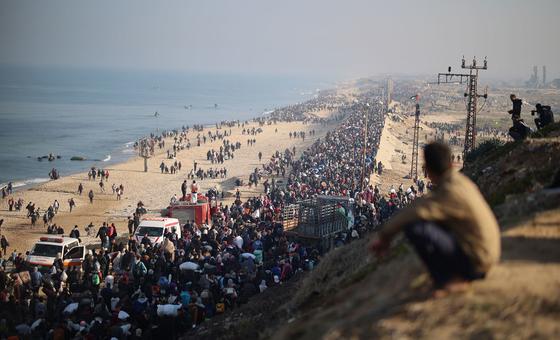
According to UN reports, more than two million Palestinians –the population of Gaza – live in about 15 per cent of the Strip’s area after the war caused widespread destruction of infrastructure and homes.

International organizations have warned that the continuation of the conflict threatens to have “catastrophic consequences” in the near term.

That includes a serious impact on children’s mental and physical health, the spread of disease and the disintegration of social structures.

This amid the absence of any clear path towards a political or humanitarian solution.

Source link

Gaza war: UN officials warn of unspeakable conditions as children bear the brunt

Tom Fletcher, the UN Emergency Relief Coordinator, said there was no “vocabulary” left to adequately describe conditions on the ground.

Food is running out. Those seeking it risk being shot. People are dying trying to feed their families. Field hospitals receive dead bodies, and medical workers hear stories firsthand from the injured – day after day after day,” he said.

Starvation rates among children reached their highest levels in June, with more than 5,800 girls and boys diagnosed as acutely malnourished.

“Last week, amid this hunger crisis, children and women were killed in a strike while waiting for the food supplements to keep them alive.”

UN Emergency Relief Coordinator Tom Fletcher briefs the Security Council

A classroom full of children, lost every day

UNICEF’s Executive Director Catherine Russell told ambassadors that an average of 28 children are killed in Gaza every day – “the equivalent of an entire classroom.”

Over the past 21 months, more than 17,000 children have been killed and 33,000 injured across Gaza.

Many of those children, she said, were struck “as they line up for lifesaving humanitarian aid – further proof that there is no safe place for civilians anywhere in Gaza.”

Children are not political actors. They do not start conflicts, and they are powerless to stop them. But they suffer greatly, and they wonder why the world has failed them,” she added.

“And make no mistake, we have failed them.”

Critical infrastructure collapse

Gaza’s health system “is shattered,” Mr. Fletcher reported – only 17 of 36 hospitals and 63 of 170 primary health centres are even partially functioning; shortages mean up to five babies share one incubator.

Seventy per cent of essential medicines are out of stock, half of all medical equipment is damaged, pregnant women are giving birth without care, women and girls manage their periods without basic supplies.

Meanwhile, water production capacity has plummeted leaving the entire enclave (95 per cent) facing water insecurity.

With clean water increasingly difficult to access, children have little choice but to drink contaminated water,” Ms. Russell said, noting that this is increasing the risk of disease outbreaks.

UNICEF Executive Director Catherine Russell briefs the Security Council

Aid impeded, fuel at trickle levels

Mr. Fletcher further described the scale of challenges to moving something as simple as a bag of flour into Gaza.

He noted multiple layers of approvals that Israel requires, scanning, re‑loading, multiple handoffs, damaged roads, delays at holding points, insecurity and desperate civilians grabbing supplies off trucks.

Last week – after almost 130 days – some fuel entered Gaza, as Israeli authorities agreed to allow two trucks in per day, five days a week. However, petrol – fuel for ambulances and other critical services – has not been permitted.

Between 19 May and 14 July, just 1,633 aid trucks – about 62 per cent of loads submitted for clearance – entered Gaza, far below the average of 630 daily truckloads moved during the previous ceasefire, Mr. Fletcher said.

Appeals to Israel, Hamas – and the Council

Both officials pressed for immediate, safe, sustained, demilitarised humanitarian access through all available crossings, consistent fuel flows, protection of civilians at distribution points, and restoration of the UN‑led aid pipeline that briefly functioned during earlier pauses in fighting.

They also reiterated the UN’s call for the immediate and unconditional release of all hostages held in Gaza and called on all parties – including Hamas and other armed groups – to respect international humanitarian law.

Mr. Fletcher asked the Security Council to assess whether Israel, as the occupying power, is meeting its obligations to ensure food and medical supplies reach civilians.

“We hold all parties to the standards of international law in this conflict. We don’t have to choose – and in fact, we must not choose – between demanding the end to the starvation of civilians in Gaza and demanding the unconditional release of all the hostages,” he said.

“We must reject antisemitism – we must fight it with every fibre of our DNA. But we must also hold Israel to the same principles and laws as all other States.”

Sudan: UNICEF condemns weekend attacks that killed 35 children

At least 24 boys, 11 girls and two pregnant women reportedly were among the victims of the violence, which occurred over the weekend in communities around the city of Bara, including the villages of Shag Alnom and Hilat Hamid. 

UNICEF fears that with dozens more injured and many still missing, the number of child casualties could rise further.

‘A complete disregard for human life’

“These attacks are an outrage,” Executive Director Catherine Russell said in a statement issued on Tuesday.

“They represent a terrifying escalation of violence, and a complete disregard for human life, international humanitarian law, and the most basic principles of humanity.”

Former allies turned rivals – the Sudanese Armed Forces (SAF) and the paramilitary Rapid Support Forces (RSF) – have been battling for control of the country since April 2023 and fighting has intensified recently in the Kordofan region which encompasses three states.

End the violence now

“UNICEF condemns the attacks in the strongest possible terms,” said Ms. Russell.

She called on all parties to end the violence immediately and to uphold their obligations under international law, including international humanitarian law, as well as the principles of distinction, proportionality and precaution.

The UNICEF chief stressed that civilians – particularly children – must never be targeted. Furthermore, all alleged violations must be independently investigated, and those responsible held to account.

Impunity cannot be tolerated for violations of international law, especially when children’s lives are at stake,” she said.

Ms. Russell extended the agency’s deepest condolences to the families of the victims, and to anyone impacted by this heinous violence.

No child should ever experience such horrors,” she said. “Violence against children is unconscionable and must end now.” 

Source link

First Person: How many more children must die before the world acts?

Juliette Touma, the director of communications for the UN agency for Palestine refugees, UNRWA, has visited Gaza several times during and before the war and has been reflecting on the children she has met there and in other conflict zones.

“Adam has been on my mind lately, more so than usual.

I met Adam years ago in the Yemeni port city of Hudaydah, back then under siege and heavy bombardment. In the very poor hospital ward, there lay Adam, 10 years old, weighing just over 10 kilogrammes. He could not speak, he could not cry. All he could do was make a hoarse sound of breathing. A few days later, Adam died from malnutrition.

A malnourished child inside a hospital in Sana’a, Yemen.

Deadly malnutrition

A couple of years before that, my colleague Hanaa calls from Syria late at night. She was in tears and could barely say a word. Hanaa eventually told me that Ali, a 16-year-old boy had died. In yet another town under siege, caught up in a war not of his making, he had also died from malnutrition.

The following morning, my supervisor, an epidemiologist, said “for a boy of 16 to die of malnutrition, that says a lot. He’s practically a man. It means there’s no food at all in that part of Syria.”

Back in Yemen in one of the few functioning children’s hospitals in the capital Sana’a, I was walking through the children’s ward during the peak of a cholera outbreak. Boys 15 and 16 years old, struggling to stay alive.

They were so weak and emaciated, they could barely turn around in their beds.

These images and stories haunted me over the years as they have for several among us who worked in severe hunger or famine-like situations.

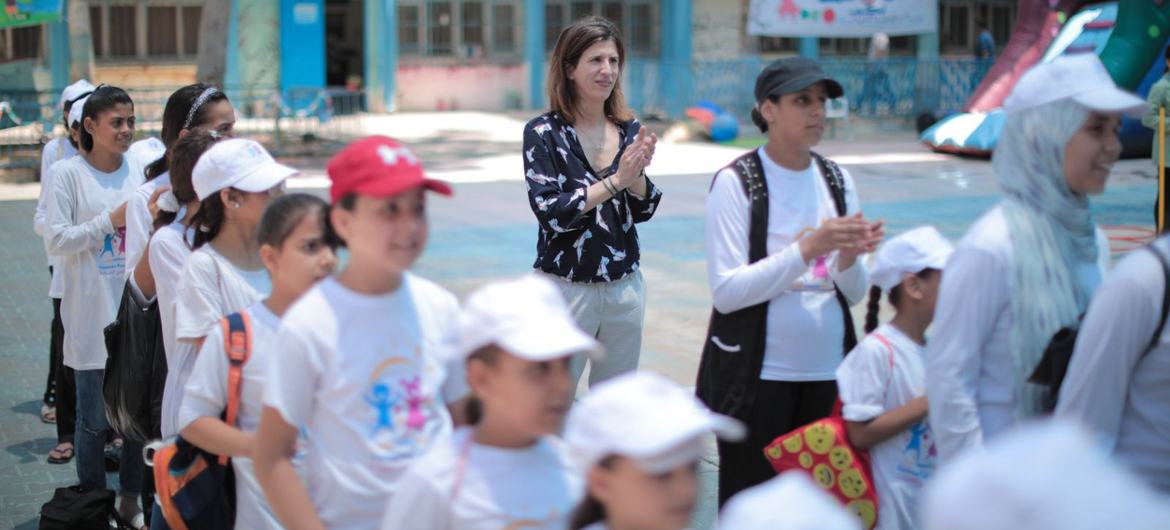
The author plays with students enjoying the “summer fun weeks” games in an UNRWA school in the Gaza Strip in 2023. (file)

Fatal hunger grows in Gaza

In 2022, when I had the great pleasure of going in and out of Gaza, I would visit children in UNRWA schools. Immaculately dressed, healthy looking, smiling, eager to learn, jumping up and down in the school playground to the sound of music.

Back then, Gaza was already under a blockade for more than 15 years. Food was, however, available on the markets through imports via Israel and locally farmed produce. UNRWA was also giving food aid to over one million people.

Images of Adam and Ali were quickly pushed to the back of my memory until a few weeks ago when they suddenly reappeared.

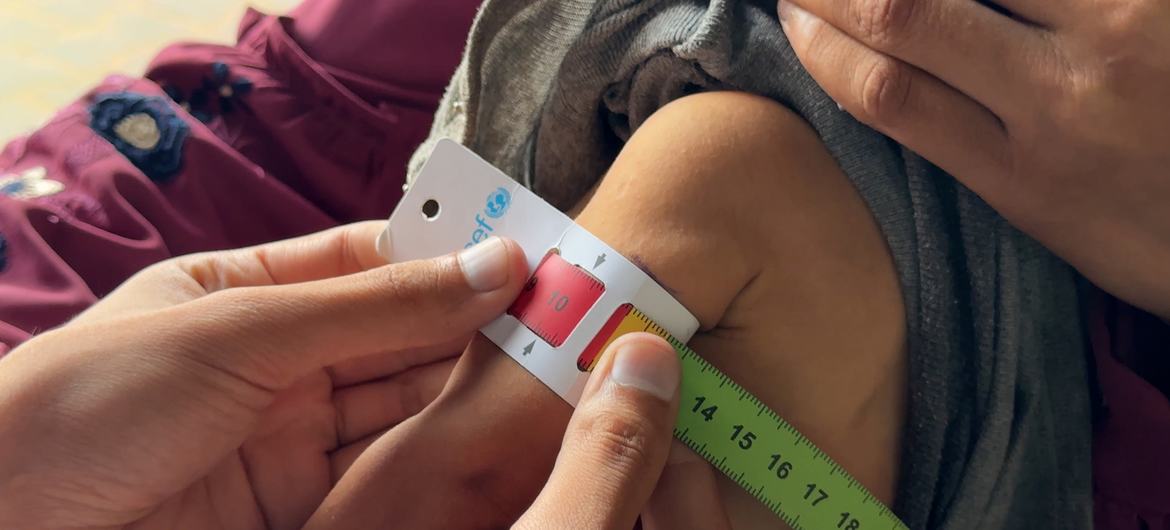
A growing number of children are being screened for malnutrition in Gaza.

Babies can survive, but will they?

Our Gaza teams started sending alarming photos of emaciated babies. The rates of malnutrition are rapidly increasing, spreading across the Gaza Strip. According to the World Health Organization (WHO), more than 50 children died of malnutrition since the siege began on 2 March.

UNRWA has meanwhile screened over 242,000 children in the agency’s clinics and medical points across the war-torn Strip, covering over half the children under age five in Gaza.  One in 10 children screened is malnourished.

Ahlam is seven months old. Her family was displaced every month since the war began, in search of non-existing safety. Shocked and her body weakened, Ahlam is severely malnourished. Like many babies in Gaza, her immune system has been damaged by trauma, constant forced displacement, lack of clean water, poor hygiene and very little food.

Ahlam can survive, but will she?

Bombs and scarce supplies

There are very little therapeutic supplies to treat children with malnutrition as basics are scarce in Gaza. The Israeli authorities have imposed a tight siege blocking the entry of food, medicines, medical and nutritional supplies and hygiene material, including soap.

While the siege is sometimes eased, UNRWA (the largest humanitarian organisation in Gaza) has not been allowed to bring in humanitarian assistance since 2 March.

Last week, Salam, another malnourished baby, died. She was a few months old. When she finally reached the UNRWA clinic, it was too late.

Meanwhile, eight children queuing for therapeutic support against malnutrition were killed when the Israeli forces hit the clinic they were in. One of my colleagues who drove past the clinic a few minutes later told me she saw mothers looking out into the abyss, weeping in silence, just like Adam did.

How many more babies must die before the world takes action?

Why should babies die of malnutrition in the 21st century, especially when it’s totally preventable?

At UNRWA, we have over 6,000 trucks of food, hygiene supplies and medicines outside Gaza waiting for the green light to go in.

The aid will mainly help little girls like Ahlam. UNRWA also has more than 1,000 health workers who can provide boys and girls with specialised nutritional services.

Amid the daily livestream of horrors we get from Gaza on our screens, one cannot help but ask how many more Ahlam’s and Salam’s have to die before taking action?

How much longer until a ceasefire is reached so that bombs stop falling on emaciated and dying children?”

Gaza: UNICEF mourns seven children killed queuing for water

The incident occurred in central Gaza on Sunday, according to media reports, which said that four other people also lost their lives due to the Israeli airstrike. 

The Israeli military said it had been targeting a terrorist but a “technical error” saw the munition stray off course.

Uphold protection of children

UNICEF Executive Director Catherine Russell noted that the incident came just days after several women and children were killed while lining up for nutritional supplies.

The Israeli authorities must urgently review the rules of engagement and ensure full compliance with international humanitarian law, notably the protection of civilians, including children,” she wrote in a statement posted on X.

The UN has repeatedly deplored the killing of Palestinians seeking food aid amid the dire humanitarian situation in Gaza, where food security experts have warned that the entire population, some 2.1 million people, is not getting enough to eat.

The risk of famine remains, according to UNICEF. In June, more than 5,800 children were diagnosed with malnutrition, including more than 1,000 children with severe acute malnutrition, representing an increase for the fourth consecutive month. 

Stockpiles of food available

Meanwhile, “truckloads of food and medical supplies are waiting in warehouses” just outside the enclave, UN Palestine refugee agency UNRWA said in a tweet.

It included a quote from one of its health workers who said that “in the past, I only saw such cases of malnutrition in textbooks and documentaries.  Today, I am treating them face to face in the health centre.”

UNRWA appealed for starvation of civilians to stop and for the siege to be lifted.  

Let the UN, including UNRWA, do its lifesaving work,” the tweet said.

The small quantities of aid and critical supplies that have entered Gaza so far are nowhere near enough to meet the immense needs, the UN humanitarian affairs office, OCHA, said later on Monday. 

It called for Israel to allow the urgent entry of aid at scale through all possible routes and corridors.  

Healthcare under attack

OCHA said health teams continue to suffer some of the worst impacts of the hostilities, with the Ministry of Health reporting on Sunday that another doctor had been killed over the previous 24 hours. 

Although the health system has been decimated and is on the brink of collapse, hospitals continue to respond to mass casualty incidents as much as they can.

The Israeli authorities have continued to issue displacement orders amid the ongoing hostilities and destruction, the agency added.

On Friday, a displacement order was put out for the Rimal area of Gaza city where some 70,000 people were staying at a dozen displacement sites.

Today, more than 86 per cent of Gaza’s territory is either under displacement orders or located within the Israeli-militarized zone. 

West Bank annexation ‘well underway’

Separately, UNRWA also highlighted the situation of Palestinians in the occupied West Bank against the backdrop of the war in Gaza.

Agency chief Philippe Lazzarini told an international conference in Switzerland on Monday that “annexation is well underway.”

UNRWA said “this is not just destruction: it is part of systematic forced displacement, a violation of international law, and a form of collective punishment.”

In January, Israeli forces launched operations in Tulkarm and Jenin in the West Bank, which UNRWA has previously said are the most extensive in two decades.

Humanitarians reported last week that the operations are causing massive destruction and displacement while attacks by Israeli settlers have intensified.

The high levels of violence continue, with OCHA reporting that two Palestinian men, one of whom was a US national, were killed near Ramallah on Friday during a settler attack.

Overall, more than 700 settler attacks have been recorded in the West Bank during the first half of this year. Over 200 communities have been affected, primarily in Ramallah, Nablus and Hebron governorates

Malnutrition crisis deepens for Sudan’s children as war rages on

Across the five states that make up Darfur, UNICEF data revealed a 46 per cent increase in the number of children treated for SAM in January to May 2025 compared to the same period last year.

The rate of acute malnutrition has surpassed emergency levels set by the World Health Organization (WHO) in 9 of the 13 localities across Darfur.

In North Darfur alone, over 40,000 children were admitted for SAM treatment in the first five months of the year – double the number from the same period last year.

Besieged and starved

This malnutrition surge comes amid intensifying conflict in North Darfur since April. Entire neighborhoods have been besieged, hospitals targeted by airstrikes, roads rendered impassable while aid convoys have faced looting and violent attacks.

The situation is particularly catastrophic in El Fasher, where humanitarian access has been nearly completely severed since the RSF militia besieged the city – the last held by Government forces in the region – and cut off assistance in April of 2023.

UNICEF successfully delivered a batch of supplies to El Fasher earlier this year, but efforts to send additional aid have been blocked.

Children in Darfur are being starved by conflict and cut off from the very aid that could save them,” said Sheldon Yett, UNICEF Representative for Sudan. “This is a moment of truth; children’s lives depend on whether the world chooses to act or look away.”

The crisis has triggered mass displacement in the area: in April, nearly 400,000 people fled the Zamzam camp near El Fasher. Many walked up to 70 kilometres to reach Tawila, where more than 500,000 displaced people survive with little access to food, water, or adequate shelter.

Nationwide crisis

SAM is the deadliest form of malnutrition, and children suffering from it are highly vulnerable to life-threatening complications and face a high risk of death without proper treatment.

And the crisis isn’t limited to the Darfur states – SAM admissions rose by more than 70 per cent in North Kordofan, 174 per cent in Khartoum State and a staggering 683 per cent in Al Jazirah State.

However, the report noted that the rise in admissions in Al Jazirah and Khartoum is partially due to improved security and humanitarian access, enabling more families to reach health centres.

Compounding the crisis is Sudan’s lean season – a period of food scarcity between harvests – which is rapidly increasing the risk of mass child mortality, particularly in areas already nearing famine thresholds.

Cholera outbreaks, measles cases and collapsing health services are further aggravating the crisis, putting vulnerable children at even greater risk.

UNICEF response

UNICEF and its partners are saving lives by treating the wounded and malnourished, drilling wells and distributing food. But despite their best efforts, the violence is driving needs faster than they can be met.

UNICEF is calling on all parties to allow unimpeded humanitarian access to affected populations and urges renewed diplomatic pressure on all sides for a cessation of hostilities.

The agency is also appealing to the international community for more lifesaving funds. An additional $200 million is needed this year to sustain and expand essential nutrition services, including treatment for acute malnutrition.

Source link

DR Congo: New initiative to eliminate HIV in children ‘a beacon of hope’

“Our country can no longer tolerate children being born and growing up with HIV, when tools exist to prevent, detect and effectively treat this infection,” President Félix Tshisekedi declared at a recent government conference in the south-eastern Lualaba province, as he launched the five-year initiative.

Backed by an initial commitment of $18 million in national funds, the Presidential Initiative to End Pediatric AIDS will focus on political leadership, systems strengthening and inclusive healthcare access particularly for children, adolescents, and pregnant women.

It also aligns well with DRC’s global commitments under the Sustainable Development Goal 3 (SDG 3) to ensure healthy lives and promote well-being for all.

Children lagging behind

The initiative marks a renewed commitment by the DRC to address children’s extremely limited access to HIV prevention and treatment services.

While the DRC has made notable strides in adult HIV response – 91 per cent of adults living with HIV now have access to antiretroviral treatment – children continue to lag far behind. 

Only 44 per cent of children living with HIV in the country currently receive lifesaving treatment, a figure that has remained unchanged for over a decade.

Every year, thousands of Congolese children are still infected, often due to a lack of screening among pregnant women, depriving the health system of a crucial opportunity to prevent mother-to-child transmission as well as saving the mother’s live.

“The eradication of paediatric AIDS is a moral imperative, an imperative of social justice and an indicator of dignity,” Mr. Tshisekedi said.

Four core priorities

The Presidential Initiative targets four core areas:

  • Improving early detection and treatment of HIV for children, adolescents and pregnant women
  • Preventing new infections in children, adolescents and mothers
  • Guarantee systematic and immediate treatment for those diagnosed
  • Remove structural barriers hindering young people’s access to health services 

A breath of fresh air

The UN Joint Programme on HIV/AIDS (UNAIDS) praised the initiative as an example of the national leadership needed to close critical gaps in global HIV response.

Susan Kasedde, UNAIDS Country Director in the DRC, commended the initiative as “a breath of fresh air” at a time when global development financing is under strain.

“At a time when development financing is experiencing turbulence and risk jeopardizing the systems that support the most vulnerable, President Tshisekedi’s leadership initiative is a beacon of hope,” she said.

According to UNAIDS, recent funding cuts are threatening critical HIV services, with stock of medication and condoms feared to run out within months. Key areas like antenatal testing, paediatric treatment and data quality monitoring have also been impacted. 

‘A moral failure’: Security Council hears about grave violations against children caught in war

“From that day on, our home became a travel bag and our path became that of displacement … My childhood was filled with fear and anxiety and people I was deprived of,” she said, speaking via videoconference from Syria.  

Seema Sen Gupta, director of child protection and migration at UNICEF, briefs the Security Council. 

Sila, now 17, described her experiences during the Syrian Civil War to a meeting of the UN Security Council held on Wednesday to discuss the findings of the Secretary-General’s latest report on Children and Armed Conflict.

The report documented a 25 per cent increase in grave violations against children in 2024, the largest number ever recorded in its 20-year history. 

This year’s report from the Secretary-General once again confirms what too many children already know — that the world is failing to protect them from the horrors of war,” said Sheema Sen Gupta, director of child protection at the UN Children’s Fund (UNICEF).

“Each violation against children in every country around the globe represents a moral failure.”

The real scale of the harm

The report presented to the Security Council is published annually to document grave violations against children affected by war. It relies entirely on data compiled and verified by the UN, meaning that the real numbers are likely much higher than reported.  

In 2024, the report documented a record 41,370 grave violations — including killing and maiming, rape, abduction and the targeting of infrastructure such as schools which supports children.  

“Each child struck by these attacks carries a story, a stolen life, a dream interrupted, a future obscured by senseless violence and protracted conflict,” said Virginia Gamba, the Secretary-General’s Special Representative for Children and Armed Conflict, whose office produced the report.  

Virginia Gamba, the Secretary-General’s Special Representative for Children and Armed Conflict, briefs the Security Council. 

While many of these violations occurred during times of conflict — especially as urban warfare is on the rise — grave violations can persist even after a conflict ends. 

They persist in the unexploded ordinances which still pepper the ground.  

“Every unexploded shell left in a field, schoolyard, or alley is a death sentence waiting to be triggered,” said Ms. Sen Gupta.  

They persist in the spaces which remain destroyed, impeding children from accessing healthcare and education.  

And they persist in the trauma and injuries which never fully leave a child.  

Scars that never heal

Children who survive the grave violations do not escape unscathed — if they suffered violence, the injuries will stay with them for a lifetime. And even if they were not injured, the trauma remains.

“The physical and psychological scars borne by survivors last a lifetime, affecting families, communities and the very fabric of societies,” said Ms. Gamba.  

This is why UNICEF and its partners have worked to provide reintegration programmes and psychosocial support for children who are victims of grave violations.

Sila said that the trauma of her childhood is still with her, and has pushed her to become an advocate for children in conflicts.  

“From that moment on, nothing has felt normal in my life. I’ve developed a phobia of any sound that resembles a plane, of the dark, and even of silence,” she said.  

‘This cannot be the new normal’

Ms. Gamba called for “unwavering condemnation and urgent action” from the international community in order to reverse the worrying trends which the report details.  

We cannot afford to return to the dark ages where children were invisible and voiceless victims of armed conflict… Please do not allow them to slip back into the shadows of despair,” she said. 

Current funding cuts to humanitarian aid are impeding the work of UN agencies and partners to document and respond to grave violations against children.

In light of this, Ms. Sen Gupta’s call for the Security Council was simple: “Fund this agenda.”

She said that the international community cannot allow this to become “a new normal,” and reminded the members of the Security Council that children are not and should never be “collateral damage.”

Despite the devastation which the report detailed, there were “glimmers of hope” according to Ms. Sen Gupta. For example, the Syrian National Army signed an action plan which will prevent the recruitment, killing and maiming of children.  

Sila also spoke of hope — she hopes that hers is the last generation to suffer these grave violations.  

“I am from a generation that survived. Physically,” she said. “Our bodies survived but our hearts are still living in fear. Please help us replace the word displacement with return, the word rubble with home, the word war with life.” 

Source link

‘We are at a point of no return’: grave violations against children surge for third year

This number represents a 25 per cent increase from 2023, marking the third consecutive year that violations have increased. 22,495 violations were committed against children themselves while the remaining targeted infrastructure such as schools and humanitarian aid intended for and used by children.

“The cries of 22,495 innocent children who should be learning to read or play ball — but instead have been forced to learn how to survive gunfire and bombings — should keep all of us awake at night,” said the Special Representative of the UN Secretary-General for Children and Armed Conflict, Virginia Gamba.

The report only details violations which could be independently verified by the United Nations, meaning the actual number of grave violations and children affected are likely much higher.

‘Children should not be a casualty of war’

The report attributed the increase to indiscriminate attacks — especially urban warfare — in addition to disregard for peace agreements and deepening humanitarian crises worldwide.

“Children living amidst hostilities are being stripped of their childhood … When we allow this to happen, we are not just failing to protect children – we are taking away their chance to grow up safe, to go to school, and to live a life with dignity and hope,” Ms. Gamba said.

In addition to the broader increase, the number of children subjected to multiple grave violations increased by 17 per cent.

The highest number of violations, 8,554, occurred in Israel and the Occupied Palestinian Territories – more than double the number in the Democratic Republic of the Congo (DRC) which followed.

Governments ‘blatantly’ ignore international law

The report noted that while non-State actors played an out-sized role in violations against individual children, government actors were the main forces responsible for killing and maiming children, attacking schools and hospitals, and denying humanitarian access.

“Instead of recognizing the special protection afforded to children, governments and armed groups around the world blatantly ignore international law that defines a child as anyone under 18,” Ms. Gamba said.

The report listed eight countries whose government forces violated international law and committed grave violations against children — the DRC, Israel, Myanmar, Somalia, South Sudan, Sudan, Syria and Russia.

‘A wake-up call’

In 2024, 16,482 children formerly associated with armed forces or groups received protection or reintegration support, but numbers of violations against children still remain staggeringly high.

The Secretary-General called on all Member States to adhere to their obligations under international law by upholding the rights and special protections of children while also expanding services to treat children who are victims of conflict.

Ms. Gamba reiterated this call, saying that the increase in grave violations should be a “wake-up call” and reminding the international community that indifference to such violations will not bring peace.

“We face a choice that defines who we are: to care, or to turn away …  We all share the duty to act—with urgency, with determination—to bring this suffering to an end. Not tomorrow. Not someday. Today,” she concluded. 

Source link

From Himalayan melt to drowning shores, children lead the climate fight

For young people living on the frontlines, climate change disrupts education, health and safety, casting a pall of uncertainty over the future.

As countries race to meet climate goals, the UN Children’s Fund (UNICEF) is stepping in to ensure that children’s voices are not just heard, but central to shaping solutions.

UN News spoke with the heads of UNICEF in Nepal and the Maldives to explore how the agency is empowering youth, embedding climate resilience in schools and driving child-inclusive climate action.

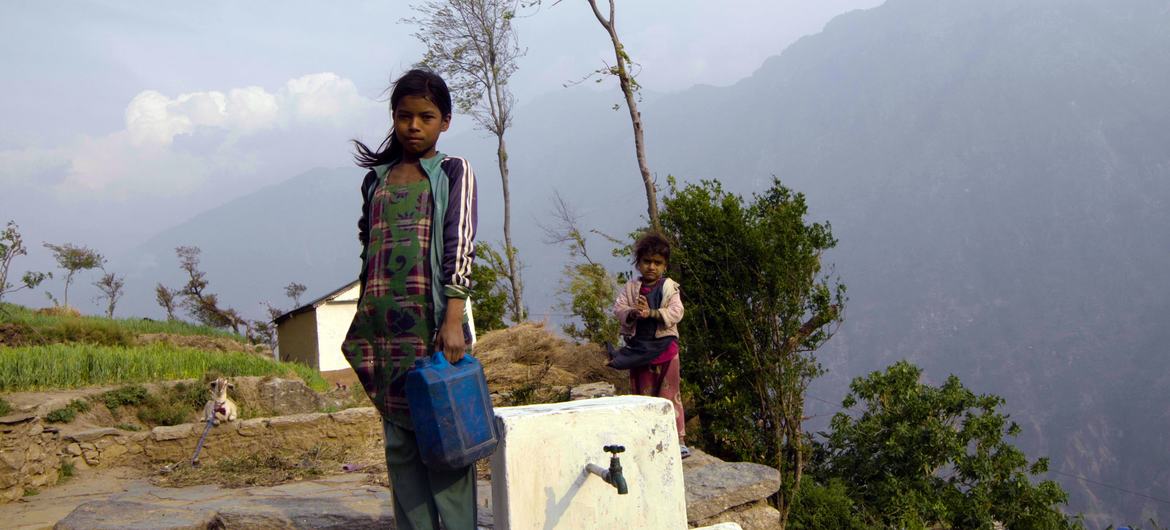
A young girl stands next to a tap with a small jerry can in a mountain village in Nepal. Many houses lack piped water, so children often fetch water on their way home from school.

A daily reality

In a remote village in western Nepal, 11-year-old Sabu and her friends face danger daily on their way to school. Intensifying and unpredictable rains trigger landslides that wash away roads, and floods that submerge homes and farmland.

Children live with anxiety and uncertainty. When it rains and there are floods, they have to trek, bridges are overrun, roads are muddy – and this is what they have to walk through day after day.”

It becomes a huge burden for children to carry,” says Alice Akunga, UNICEF Representative in Nepal.

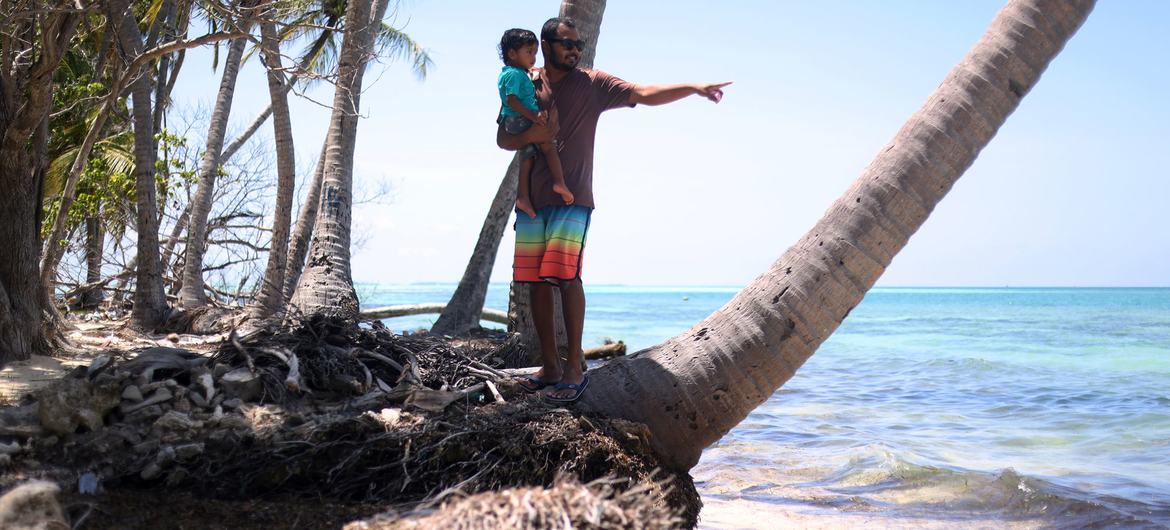
Thousands of kilometers away, in the low-lying Maldives, the threat takes a different but equally devastating form. Sea surges erode coastlines, flood homes and wash away infrastructure.

Erosion is a daily reality for children here…young people see their trees falling, homes at risk and they grow up with the constant fear of losing their islands,” explains Edward Addai, UNICEF Representative in the Maldives.

Climate change is not something far-off – it is part of their lives.

A father and his daughter on a stretch of severely eroded beach in Dhiffushi island, in the Maldives.

Kids at the heart of climate action

UNICEF’s work in both countries is guided by a simple principle: children must be at the heart of climate solutions. This means not only shielding them from impacts but also empowering them to be agents of change.

In Nepal, with the support of UN agencies, the government has integrated climate change education into the national curriculum. Classes go beyond theory, with teacher training, green school initiatives and practical actions like rainwater harvesting and waste management.

“We are supporting updating school safety frameworks…making them more resilient and absorb climate shocks such as heavy rains or floods,” Ms. Akunga said.

At the recently concluded Sagarmatha Sambaad – the Everest climate talks – UNICEF supported a national youth-led dialogue that brought together over 100 children and young people from across Nepal to engage with policymakers and submit a Children and Youth Declaration to the Prime Minister.

UNICEF Representative to Maldives Edward Addai speaks with a group of girls participating in a plastic clean up drive.

Youth leadership beyond classrooms

In the Maldives, the agency’s approach emphasises community engagement alongside education.

UNICEF has helped establish environmental clubs in schools, providing safe spaces for children to learn, discuss and act on climate issues. It is also working with the health system to introduce solar energy to hospitals, supplanting fossil fuels.

“These clubs are critical for nurturing leadership and connecting school activities to community projects,” Mr. Addai added.

Young people are also at the centre of the Government’s climate plans, engaging in direct dialogue with policymakers and strengthening intergenerational accountability. One such initiative is the Youth Track to COP, a platform co-led by UNICEF and government partners to prepare young people to meaningfully engage in national and global climate discussions.

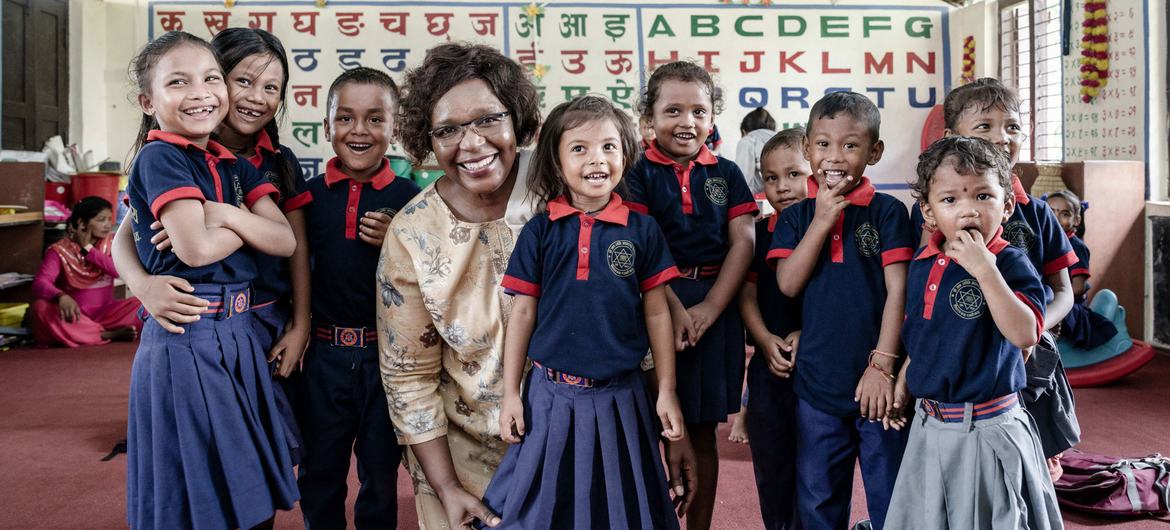
Alice Akunga, UNICEF Representative to Nepal, with a group of young children in a classroom.

Safeguarding the next generation

UNICEF is also supporting efforts to integrate child-sensitive policies into the countries’ Nationally Determined Contributions (NDCs) – the climate pledges under the Paris Agreement.

Nepal’s pledges include commitments to green schools and climate-resilient educational infrastructure. Children were actively involved in the consultations for Nepal’s latest NDC, sharing firsthand stories of how climate impacts their daily lives.

The Maldives’ emphasises youth engagement, clean water access and strengthened health systems in climate-vulnerable areas. Young people are also shaping policy through national mock COPs and direct participation in global climate forums.

This ensures that resilience efforts will extend beyond infrastructure to cover children’s health, education and mental wellbeing.

© UNICEF/Laxmi Prasad Ngakhusi

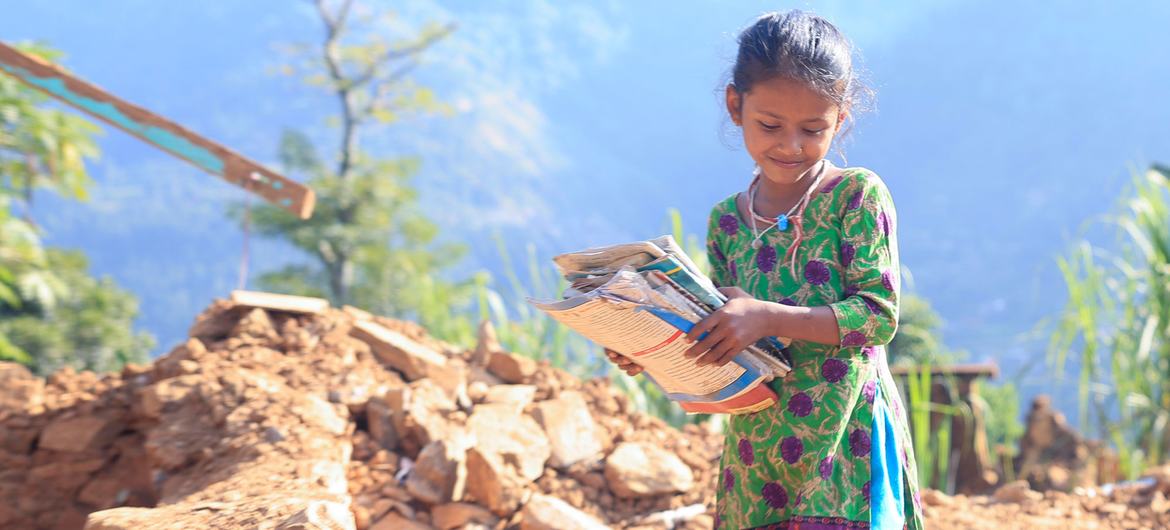
An eight-year-old girl retrieves her textbooks from the rubble of her home, destroyed in an earthquake in western Nepal.

Getting it right, for everyone

The UNICEF officials emphasised what a truly child-inclusive climate plan requires.

It recognises how climate change impacts every aspect of a child’s life – from their lungs to their learning to their access to clean water,” Ms. Akunga said.

“It ensures children can keep receiving health services, continue learning and adapt without anxiety or uncertainty. It’s about securing their survival, growth, and development no matter what climate shocks come.”

Mr. Edward added: “If we get it right for children, we get it right for society.”

“Children are the future caretakers of their land and communities. A climate plan that ignores children’s realities will fail everyone. But when children are healthy, educated, and included, society thrives,”

Children leading the way

Ms. Akunga recalled meeting Sabu, the 11-year-old girl, on a field visit.

“I met this child. I went to her village and met her parents…she has taken it upon herself and mobilised other young girls to learn about medicinal plants – how to nurture them and protect them from extreme weather conditions.”

She spoke of how Sabu is transferring knowledge from elders to peers – bridging generations – and impressing her community with her passion.

Despite the daunting challenges, children like Sabu are stepping up. They are organizing themselves, advocating for change and proposing solutions.

“Their voices matter…children are not just affected by climate change — they are essential partners in responding to it,” Ms. Akunga affirmed.

Mr. Addai echoed this sentiment: “By listening to children and including them in decisions, we build a world where the next generation can live safely and thrive.

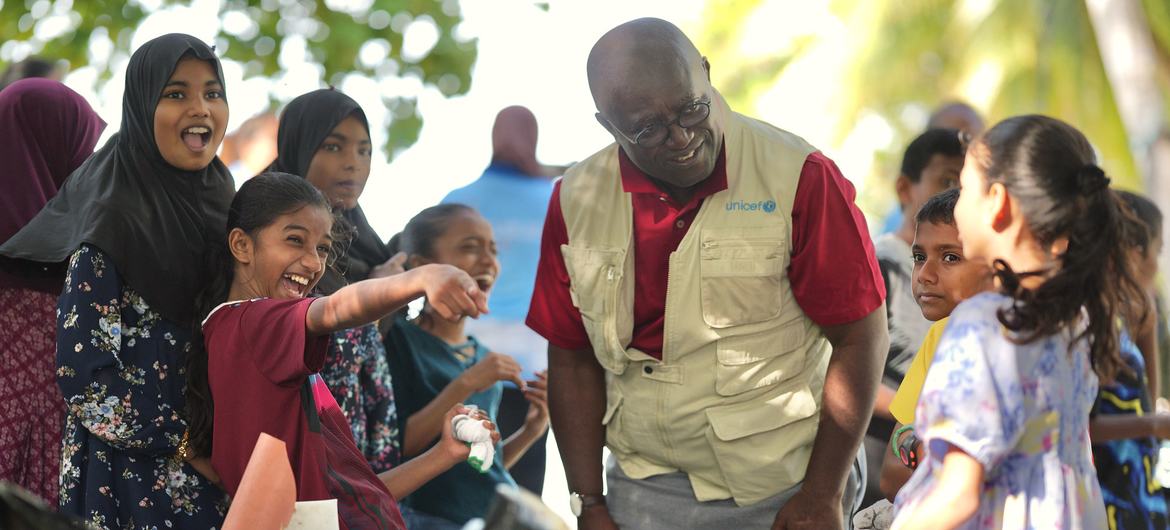
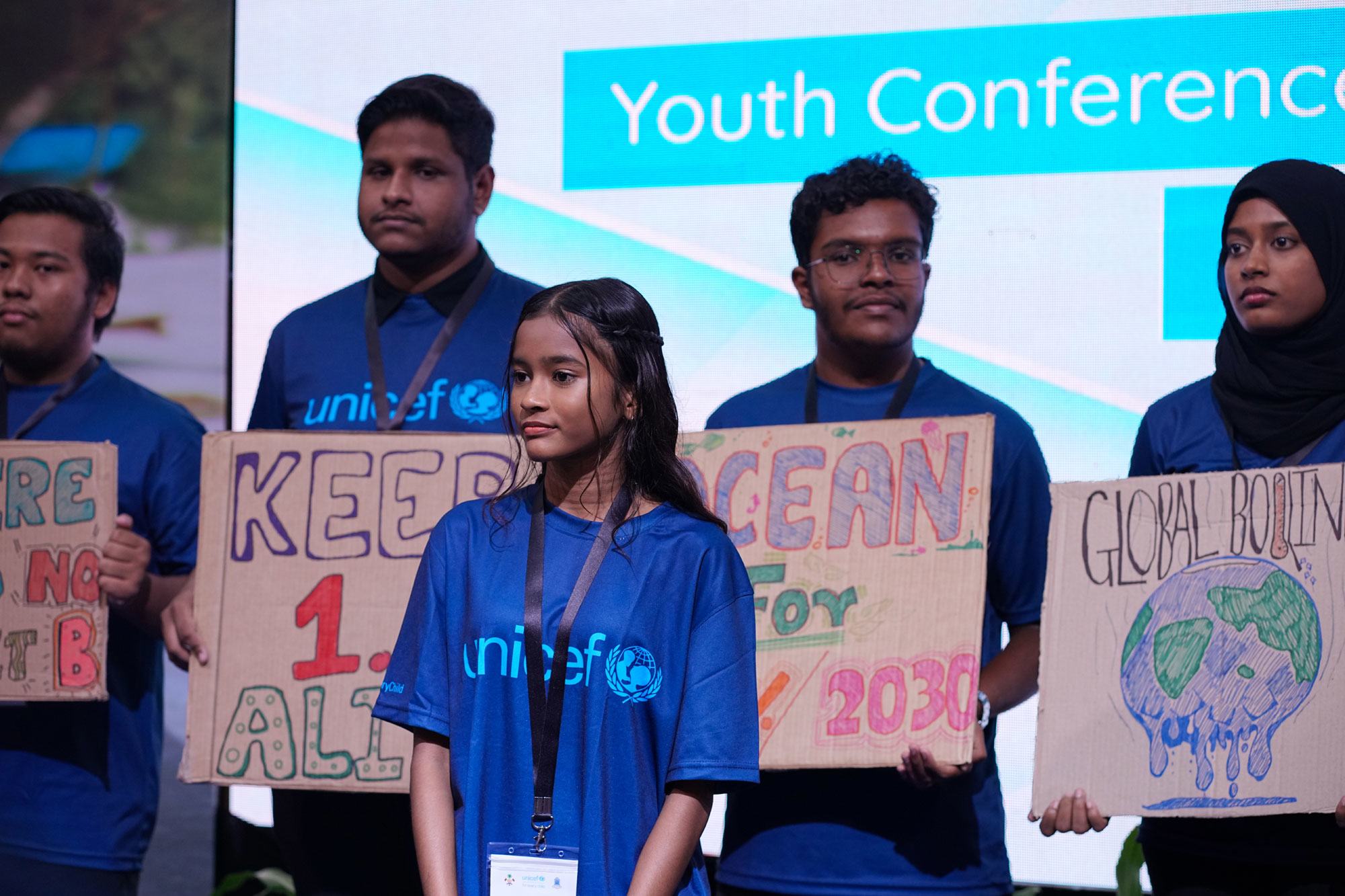
A group of young Maldivians at a national conference as the country prepares for the COP28 climate summit.


World News in Brief: Aid for Syria, children under attack in Mozambique, rights-based climate action

Despite limited resources, the UN and partners are reaching some 2.5 million people each month across the country. In May alone, more than one million people received assistance, according to the Office for the Coordination of Humanitarian Affairs (OCHA).

Cross-border aid has significantly increased this year. Since January, 1,185 humanitarian trucks have crossed from Türkiye into Syria – six times the number recorded during the same period last year. The uptick reflects growing needs and intensified delivery efforts.

Syria’s health system, however, remains under severe strain. Fewer than 60 per cent of hospitals and less than half of primary health centres are fully functional. Essential medicines are in short supply, treatment costs are beyond the reach of many families and overcrowded shelters continue to heighten the risk of disease outbreaks.

Meanwhile, explosive remnants of war and unexploded ordnance pose a deadly and ongoing threat to civilians. Since 8 December, 2024, more than 1,000 casualties have been reported – over 400 of them fatal and nearly 600 resulting in injuries – children accounting for over a third of the victims.

“The humanitarian community is calling for urgent support to expand risk education, professional clearance operations and assistance for survivors,” UN Spokesperson Stéphane Dujarric told journalists at the regular news briefing in New York.

Funding shortfalls are compounding the crisis. The Syria Humanitarian Response Plan requires $2 billion by the end of June to support 8 million of the most vulnerable people. To date, it has received just $236 million – less than 12 per cent of the total needed.

Northern Mozambique has been mired in what has been described as a “triple crisis” – violence and insecurity, climate shocks, and post-electoral unrest. (file photo)

Children targeted by armed groups in northern Mozambique

Children also continue to bear the brunt of a worsening crisis in Mozambique, where over 1.3 million people have been displaced by violence, extreme weather shocks and post-electoral unrest.

These crises have also left 5.2 million in urgent need of humanitarian assistance.

The situation is particularly dire in the northern Cabo Delgado province, which has witnessed a spike in reports of abduction, forced recruitment and use of children by non-state armed groups.

According to the UN Children’s Fund (UNICEF), at least three girls aged 12, 14 and 17 were killed in an attack last month, and eight other children abducted – highlighting the grave risks facing children in the conflict.

The agency expressed deep concern over such gross violations of children’s rights, stressing that “every child has the right to live in safety, free from violence and fear.”

UNICEF is working with partner agencies to assist impacted children and their families, support the safe return and reintegration of children abducted by non-state armed groups, and provide access to vital services such as health, protection, and education.

UN rights chief calls for bold climate action grounded in human rights

The UN’s top rights official warned on Tuesday that humanity’s survival is inseparable from the health of the planet.

Speaking at Oxford University, Volker Türk highlighted the need for a new kind of politics to tackle the climate crisis and rising global inequality, urging strong leadership to push for urgent, just and rights-based solutions.

“Not only have we created a false separation from nature, we are deluded enough to believe we can make nature bend to our will,” Mr. Türk said, criticizing the continued exploitation of fragile ecosystems.

The High Commissioner linked environmental degradation with systemic injustice, stating that the world’s richest one per cent are responsible for more carbon emissions than the poorest two-thirds. He stressed that those least responsible for the climate crisis are often the ones suffering its worst impacts.

He also expressed concern over the lack of adequate climate finance and called for reforms to international financial systems, noting growing support for a proposed fossil fuel non-proliferation treaty that would aim to end the expansion of new oil, coal and gas projects.

“Our rights call for all people, now and in the future, to live in safety, security and opportunity, on a healthy planet,” he said.

Mr. Türk concluded by urging governments, institutions and individuals to join a global movement for change, grounded in human rights, to address the climate emergency and build a more sustainable and equitable future.

Source link

Four children dead in ‘horrific’ attack on school bus in Baluchistan: UNICEF

The attack which left others wounded, took place in the district of Khuzdar, about 250 kilometres south of Quetta, Balochistan’s provincial capital. The area has long been troubled by separatist insurgency and militant activity.

Deadly journey

The school bus, which was reportedly transporting students to a Pakistani military-run school, was completely destroyed in the explosion that occurred around 10 kilometers from the centre of Khuzdar. News reports said more than 40 students were on board when it was targeted by a vehicle-borne explosive device. 

The UN Children’s Fund (UNICEF) strongly condemned the horrific attack, calling for an end to the devastating violence.

“Earlier today, children in Balochistan set out on what should have been a routine journey – eager to begin another day of learning alongside friends,” the agency said.

Instead, they were caught in a brutal act of violence. Young lives, dreams, and futures shattered. Families devastated. The physical and emotional scars left for child survivors to bear.”

Never target children

According to news reports, no militant group has claimed responsibility so far for the bus bombing.

Children are not, and must never be, the targets of violence,” UNICEF said. The agency extended deepest condolences to the families impacted, reiterating that simply going to school should never be a “dangerous act” for any child.

Source link

Gaza: 57 children reported dead from malnutrition, says WHO

Since the aid blockade began on 2 March, 57 children have reportedly died from the effects of malnutrition, according to the Ministry of Health.

If the situation persists, nearly 71,000 children under the age of five are expected to be acutely malnourished over the next 11 months.

Briefing journalists in Geneva, WHO’s representative in the Occupied Palestinian Territory Dr. Rik Peeperkorn said that that Israel’s complete aid embargo has left only enough WHO supplies to treat 500 children with acute malnutrition – “a fraction of the urgent need”

“People are trapped in this cycle where a lack of diversified food, malnutrition and disease fuel each other,” he warned.

Dr. Peeperkorn’s comments follow the publication on Monday of a new analysis by the UN-backed food security alert scale known as the IPC showing that one in five people in Gaza – 500,000 – faces starvation, while the entire 2.1 million population of the Strip is subjected to prolonged food shortages. WHO is a member of the IPC.

An escalating hunger crisis

“This is one of the world’s worst hunger crises, unfolding in real time,” Dr. Peeperkorn said.

The UN health agency representative spoke of his recent visit to Kamal Adwan hospital in north Gaza, where each day more than 300 children are screened at a WHO-supported nutrition centre. During the visit, the hospital reported more than 11 per cent of cases with global acute malnutrition.

Describing the affected children, he said, “I’ve seen them [in the] wards… A child of five years old, and I thought he’s two and a half”.

WHO supports 16 outpatient and three inpatient malnutrition treatment centres in the enclave with lifesaving supplies, but the stopping of aid by Israel and shrinking humanitarian access are threatening its ability to sustain these operations.
Dr. Peeperkorn insisted on the long-term damage from malnutrition which “can last a lifetime”, with impacts including stunted growth, impaired cognitive development and health.

“Without enough nutritious food, clean water, access to health care, an entire generation will be permanently affected,” he warned.

The WHO official stressed that the agency was “constantly” raising with Israeli authorities the need to get supplies into the Strip. Some 31 WHO aid trucks are at a standstill in Al-Arish in Egypt just a few dozen kilometres away from the Rafah border crossing with Gaza and more supplies are positioned in the West Bank, ready to move “any day when this is allowed”.

‘Health care is not a target’

Turning to attacks on health care, Dr. Peeperkorn said that the burn unit of Nasser Medical Complex in the southern town of Khan Younis was reportedly hit by an Israeli airstrike on Tuesday, killing two and injuring 12. The attack has resulted in the loss of 18 hospital beds in the surgical department including eight “critical” intensive care beds.

Media reported that a Palestinian journalist was killed in the attack during treatment for injuries sustained in a previous airstrike.

“Health care is not a target,” Dr. Peeperkorn concluded. He reiterated calls for the protection of health facilities, an immediate end to the aid blockade, the release of all hostages held by Palestinian armed groups and for a ceasefire “which leads to lasting peace”. 

Children in Gaza ‘going to bed starving’ amid blockade

“The siege on Gaza is the silent killer of children, of older people,” said Juliette Touma, spokesperson for the UN agency for Palestine refugees, UNRWA.

“Families – whole families, seven or eight people – are resorting to sharing one can of beans or peas,” she told journalists in Geneva. “Imagine not having anything to feed your children. Children in Gaza are going to bed starving.

Today, thousands of trucks carrying relief supplies continue to be denied entry to Gaza. “We have just over 5,000 trucks in several parts of the region with lifesaving supplies that are ready to come in,”Ms. Touma continued.

“This decision is crippling the humanitarian efforts…and threatening the lives and survival of civilians in Gaza, who are also going through heavy bombardment day in, day out.”

Rafah levelled

Destruction to the southern city of Rafah has left it “obliterated”, UNRWA said. Formerly the largest entry point for aid into the enclave via Egypt, aerial videos purportedly of Rafah show buildings levelled as far as the eye can see.

“Rafah is nothing like the city it used to be…In every direction there is only destruction,” the UN agency said.

Forced displacement orders have been in place for 97 per cent of the city, uprooting around 150,000 people.

Almost 12 months ago, the Israeli military moved in displacing 1.4 million people, leaving homes, health facilities and shelters damaged or destroyed.

Starting from scratch

Across Gaza, more than 90 per cent of the population have been displaced “not once, not twice, some people have been displaced 12 times or 13 times…so they have to start from scratch.”

Before the war erupted in October 2023, Gazans relied on 500 trucks a day to deliver the food and other basic goods that they needed. But no humanitarian or commercial supplies have entered since 2 March.

This is by far the longest ban on aid moving into the Strip since the start of the war in October 2023, following deadly Hamas-led terror attacks on Israel that killed some 1,250 people and left more than 250 taken hostage.

The blockade has emptied warehouses of food, medical supplies, shelter materials and safe water – fuelling a black market “where prices have increased from 10 to 20, sometimes 40 times…You cannot give anything to your children and you’re seeing your children starving”, Ms. Touma said.

According to the UN World Food Programme (WFP) food prices rose 1,400 per cent increase in recent weeks compared to the ceasefire period from 19 January to 18 March 2025.

Last Friday, the UN agency delivered its last remaining stocks to community kitchens that provide hot meals of lentil soup and rice. The kitchens are expected to fully run out of food within days while another 16 closed over the weekend. In addition, all 25 WFP-supported bakeries have now closed.

“We’re likely to see more community kitchens closing down for the simple reason that they need supplies,” Ms. Touma explained.

Daily challenges for Gazans include finding food and fuel to cook, because of a lack of cooking gas. “Families are resorting to burning plastic to cook their meals,” UNRWA’s Ms. Touma said. 

Source link

How the mother’s mood influences her baby’s ability to speak

Up to 70 percent of mothers develop postnatal depressive mood, also known as baby blues, after their baby is born. Analyses show that this can also affect the development of the children themselves and their speech. Until now, however, it was unclear exactly how this impairment manifests itself in early language development in infants.

In a study, scientists at the Max Planck Institute for Human Cognitive and Brain Sciences in Leipzig have now investigated how well babies can distinguish speech sounds from one another depending on their mother’s mood. This ability is considered an important prerequisite for the further steps towards a well-developed language. If sounds can be distinguished from one another, individual words can also be distinguished from one another. It became clear that if mothers indicate a more negative mood two months after birth, their children show on average a less mature processing of speech sounds at the age of six months.

The infants found it particularly difficult to distinguish between syllable-pitches. Specifically, they showed that the development of their so-called Mismatch Response was delayed than in those whose mothers were in a more positive mood. This Mismatch Response in turn serves as a measure of how well someone can separate sounds from one another. If this development towards a pronounced mismatch reaction is delayed, this is considered an indication of an increased risk of suffering from a speech disorder later in life.

“We suspect that the affected mothers use less infant-directed-speech,” explains Gesa Schaadt, postdoc at MPI CBS, professor of development in childhood and adolescence at FU Berlin and first author of the study, which has now appeared in the journal JAMA Network Open. “They probably use less pitch variation when directing speech to their infants.” This also leads to a more limited perception of different pitches in the children, she said. This perception, in turn, is considered a prerequisite for further language development.

The results show how important it is that parents use infant-directed speech for the further language development of their children. Infant-directed speech that varies greatly in pitch, emphasizes certain parts of words more clearly – and thus focuses the little ones’ attention on what is being said – is considered appropriate for children. Mothers, in turn, who suffer from depressive mood, often use more monotonous, less infant-directed speech. “To ensure the proper development of young children, appropriate support is also needed for mothers who suffer from mild upsets that often do not yet require treatment,” Schaadt says. That doesn’t necessarily have to be organized intervention measures. “Sometimes it just takes the fathers to be more involved.”

The researchers investigated these relationships with the help of 46 mothers who reported different moods after giving birth. Their moods were measured using a standardized questionnaire typically used to diagnose postnatal upset. They also used electroencephalography (EEG), which helps to measure how well babies can distinguish speech sounds from one another. The so-called Mismatch Response is used for this purpose, in which a specific EEG signal shows how well the brain processes and distinguishes between different speech sounds. The researchers recorded this reaction in the babies at the ages of two and six months while they were presented with various syllables such as “ba,” “ga” and “bu.

Also Read:

Evidence that babies react to taste, smell in the womb; Carrot for “laughter-face” response, kale for “cry-face” response: Study

Fish oil, vitamin D supplements during pregnancy lower risk of croup in babies

A scientific recipe that helps babies stop crying, calm down and sleep in bed

Voice control smart devices might hinder children’s social, emotional development: Study

Voice control smart devices, such as Alexa, Siri, and Google Home, might hinder children’s social and emotional development, argues an expert in the use of artificial intelligence and machine learning in healthcare, in a viewpoint published online in the Archives of Disease in Childhood.

These devices might have long term effects by impeding children’s critical thinking, capacity for empathy and compassion, and their learning skills, says Anmol Arora of the University of Cambridge.

While voice control devices may act as ‘friends’ and help to improve children’s reading and communication skills, their advanced AI and ‘human’ sounding voices have prompted concerns about the potential long term effects on children’s brains at a crucial stage of development.

There are three broad areas of concern, explains the author. These comprise inappropriate responses; impeding social development; and hindering learning.

He cites some well publicised examples of inappropriate responses, including a device suggesting that a 10-year old should try touching a live plug with a coin.

Children-wikipedia

“It is difficult to enforce robust parental controls on such devices without severely affecting their functionality,” he suggests, adding that privacy issues have also arisen in respect of the recording of private conversations.

These devices can’t teach children how to behave politely, because there’s no expectation of a “please” or “thank you”, and no need to consider the tone of voice, he points out.

“The lack of ability to engage in non-verbal communication makes use of the devices a poor method of learning social interaction,” he writes. “While in normal human interactions, a child would usually receive constructive feedback if they were to behave inappropriately, this is beyond the scope of a smart device.”

Preliminary research on the use of voice assistants as social companions for lonely adults is encouraging. But it’s not at all clear if this also applies to children, he notes.

“This is particularly important at a time when children might already have had social development impaired as a result of COVID-19 restrictions and when [they] might have been spending more time isolated with smart devices at home,” he emphasises.

Devices are designed to search for requested information and provide a concise, specific answer, but this may hinder traditional processes by which children learn and absorb information, the author suggests.

When children ask adults questions, the adult can request contextual information, explain the limitations of their knowledge and probe the child’s reasoning—a process that these devices can’t replicate, he says.

Searching for information is also an important learning experience, which teaches critical thinking and logical reasoning, he explains.

“The rise of voice devices has provided great benefit to the population. Their abilities to provide information rapidly, assist with daily activities, and act as a social companion to lonely adults are both important and useful, the author acknowledges.

“However, urgent research is required into the long-term consequences for children interacting with such devices,” he insists.

“Interacting with the devices at a crucial stage in social and emotional development might have long-term consequences on empathy, compassion, and critical thinking,” he concludes.


Frozen embryo transfers linked with high blood pressure risks in pregnancy; What is sibling comparison?

In vitro fertilization (IVF) using frozen embryos may be associated with a 74% higher risk of hypertensive disorders in pregnancy, according to new research published today in Hypertension, an American Heart Association journal.

In comparison, the study found that pregnancies from fresh embryo transfers – transferring the fertilized egg immediately after in vitro fertilization (IVF) instead of a frozen, fertilized egg – and pregnancy from natural conception shared a similar risk of developing a hypertensive disorder.

High blood pressure during pregnancy often signals preeclampsia, a pregnancy complication including persistent high blood pressure that can endanger the health and life of the mother and fetus. Approximately 1 out of every 25 pregnancies in the United States results in preeclampsia, according to the American Heart Association.

One IVF treatment process available utilizes frozen embryos: after an egg is fertilized by sperm in the lab, it is frozen using a cryopreservation process before being thawed and transferred to the uterus at a later date. The procedure is becoming more common because of the significantly improved freezing technology or cryopreservation methods that started in the late 2000s and because more patients are choosing to freeze embryos, according to the study authors. Yet, frozen embryo transfer is known to be associated with a higher risk of hypertensive disorders in pregnancy than both natural conception and fresh embryo transfer. However, prior to this study, it was unknown whether this was due to the freezing process or a risk factor from the parents.

“Frozen embryo transfers are now increasingly common all over the world, and in the last few years, some doctors have begun skipping fresh embryo transfer to routinely freeze all embryos in their clinical practice, the so-called ‘freeze-all’ approach,” said Sindre H. Petersen, M.D., the study’s lead author and a Ph.D. fellow at the Norwegian University of Science and Technology in Trondheim, Norway.

Researchers examined national data from medical birth registries from Denmark, Norway and Sweden of nearly 2.4 million women who were ages 20 to 44 years old who had single deliveries and gave birth during the study period – from 1988 through 2015. These data were the basis of a population-based study that also included a comparison of women who had both an IVF pregnancy and a naturally conceived pregnancy, called sibling comparison. This approach was used to isolate if the potential reason for the hypertensive disorders was attributable to parental factors or to the IVF treatment.

pregnant lady/Commons.wikimedia.org

The study included more than 4.5 million pregnancies, of which 4.4 million were naturally conceived; more than 78,000 pregnancies were fresh embryo transfers; and more than 18,000 pregnancies were frozen embryo transfers. Among all of the pregnancies, more than 33,000 were grouped for sibling comparison – mothers who conceived via more than one of these methods. The study is the largest to-date using sibling comparison. The odds of developing hypertensive disorders in pregnancy after fresh vs. frozen embryo transfers compared to natural conception were adjusted for variables such as birth year and the mother’s age.

“In summary, although most IVF pregnancies are healthy and uncomplicated,” Petersen said. “This analysis found that the risk of high blood pressure in pregnancy was substantially higher after frozen embryo transfer compared to pregnancies from fresh embryo transfer or natural conception.”

Specifically, the study found:

  • In the population analysis, women whose pregnancy was the result of a frozen embryo transfer were 74% more likely to develop hypertensive disorders in pregnancy compared to those who conceived naturally.
  • Among women who had both a natural conception and an frozen embryo transfer IVF conception (the sibling comparison), the risk of hypertensive disorders in pregnancy after frozen embryo transfer was twice as high compared to pregnancies from natural conception.
  • Pregnancies from fresh embryo transfer did not have a higher risk of developing hypertensive disorders compared to natural conception, neither in population level analysis nor in sibling comparisons.

“Our sibling comparisons indicate that the higher risk is not caused by factors related to the parents, rather, however, that some IVF treatment factors may be involved,” Petersen said. “Future research should investigate which parts of the frozen embryo transfer process may impact risk of hypertension during pregnancy.”

Among other findings, women in the study who gave birth after IVF pregnancies were average age 34 years for frozen embryo transfer, 33 years for fresh embryo transfer and 29 years for those who conceived naturally. About 7% of babies conceived from frozen embryo transfer were born preterm (before 40 weeks gestation) and 8% of babies after fresh embryo transfer were born preterm, compared to 5% of babies after natural conception.

In addition to preeclampsia, the researchers defined hypertensive disorders in pregnancy as a combined outcome, including gestational hypertension, eclampsia (the onset of seizures in those with preeclampsia) and chronic hypertension with superimposed preeclampsia.

One limitation of the study was the lack of data on the kind of frozen embryo cycle, so they were not able to pinpoint what part of the frozen cycle or frozen transfer may contribute to the higher risk of hypertensive disorders. Another limitation is that data from Scandinavian countries may limit generalizing the findings to people in other countries.

“Our results highlight that careful consideration of all benefits and potential risks is needed before freezing all embryos as a routine in clinical practice.  A comprehensive, individualized conversation between physicians and patients about the benefits and risks of a fresh vs. frozen embryo transfer is key,” said Petersen.